We live in an age of AI encroaching on everything we do. An age in which in particular it is going to have a noticeable effect on creativity, as the big guys look to it as a solution to that pesky problem of “having all the value being created by workers” and (some) small guys look to it, perhaps naively, perhaps without diligence, as a way to create work that competes.
And indeed, this has already happened to Panic, the publisher of Despelote, who found their second season of releases for the Playdate handheld infected–and I will use that pejorative–by generative AI, by a developer looking for shortcuts (as covered in a recent article.)
This kind of use is likely to become endemic in the games industry–for another example, 11 Bit Studios’ The Alters has also been discovered to have used ChatGPT for “placeholder” text.
The question I have however, is if these developers understand that generative AI is a flattening force. It is a product created by feeding it everything we’ve ever created, built only to mulch it up and spit it back out as slurry. Now, the big guys don’t care. What they want is a fat pipe of chemical lowest common denominator.
But how are you going to stand out if you fertilise your fields with that? Little knowing that it eats the fields it lies upon?
Maybe those who are using it to “compete” don’t care either. Maybe you just have to get what you can and get out before it’s all over. Maybe you can fool yourself there’ll be a Mars here too, once the earth is salted.
—
But instead of that… why not embrace your humanity? Why not spend all your effort on making something that reflects… you? Instead of creating what is common, what everyone recognises, why not create work that not everyone recognises, but in which they can find commonalities? Why not make something like Despelote?
An AI could not make Despelote. Only a human can, because only we are able to make the non-obvious connections in the story of our lives.
Here, designer Julián Cordero recreates the experience of being a child in Ecuador, but specifically during the Ecuadorian national football team’s historic qualifying campaign for the 2002 World Cup.
This is probably not the most obvious setting you can imagine when you are creating a game about the world of children and how it interacts with the world of adults. Similarly non-obvious are the decisions made in which to represent this, which it does in a form that I feel only video games could manage–while also introducing (in my opinion) a new kind of cinematic flair. One that does not look to mainstream cinema’s style but the art house.
It opens with you playing what appears to be a retro game: Tino Tini’s Soccer 99. Despite this being a reference to Dino Dini, and Kick Off 2 and the like being fucking rubbish (sorry, this is a Sensible Soccer house) this is actually a brilliant wee overhead-view football game that could be released on its own terms, with a simple and rewarding “flick-to-kick” control scheme. But as you play, you start to overhear your parents talking, and then, cinematically, quite unlike any other game I’ve played, the camera slowly pulls away from the television, until finally, your dad turns off the telly.
In Despelote, as it would have been for any of us, such is your lot as a child. You find yourself pulled around by your parents, told what to do–and given limited amounts of free time. And what matters is in that free time you don’t really have anything to do. You can run around, maybe you’ll find a ball to kick (beautifully, controlled just as in Tino Tini’s Soccer) but there’s nothing to hunt out, nothing to unlock, no rules for playing with the ball. It’s just you, some other kids who might want to aimlessly kick a ball about, and a world of strangers, almost all of whom are captivated by the ongoing football matches on the telly (unfortunately the game doesn’t really allow you to just stand and watch too–though you’re likely to run and check on the score when you pass a TV.)
I’m not going to lie–after the shine of kicking a ball wears off (which really does feel fucking great) and you realise what’s happening, Despelote is properly boring, and if you’re a progression-focused twat like me, you’ll probably really struggle with it. While it’s not exactly Jeanne Dielman (and you can play through Despelote in nearly half the time it would take you to get through that) it’s working in that kind of perhaps punishing milieu. It wants you to feel the boredom and frustration of the limits of childhood–and to strain against them as a child does.
Throughout, you get flashes of how Julián will grow up, how his love affair with football will evolve as he does; fragments of memory that ask you to remember that these childhood afternoons that maybe felt so boring were actually fleeting, and you can never have them back. It’s not as much about being Julián as it is about you–what these moments make you think about, how you remember your childhood. I remember my own childhood. Scotland in Italia 90. Then a flash of sitting in a car on a rainy day. Now I’m at an uncle’s, watching the penalties that ended the 1994 World Cup. Now I’m drunk for the first time, years later…
I remember.
I suppose there’s some concern about American exceptionalism here–after all, the Yanks don’t really like “soccer”. Maybe it’s unfair to imagine the American “gamer”, unable to take the steps from soccer to their own sports obsessions. After all, their “world” championships only include their teams [“And Canada’s!”–Canadiana Ed.] so that sense of a national collective that crosses political and societal boundaries may be a step too far. Maybe to many, Despelote is just foreign, and boring.
But that, to me, represents the state of the art. The boredom of Despelote is not what has stuck with me–what has stuck with me is the themes, the ideas. Someone is saying something–something about themselves, and hoping that it makes a connection with you, your experience.
It’s not perfect, but it’s human. These days, what more can I ask?
Will I ever play it again? It says all it needs to, once.
Final Thought: One of the more interesting background facts about Despelote is, of course, that Julián Cordero’s father directed Ratas, ratones, rateros, the “first Ecuadorian film with international-standard production values” which gives reason to why this game features (in my opinion) a different sort of cinematic influence. But I think this influence has also leads to one of the most amazing cameos I’ve ever seen in a video game: a DVD of Fishing With John!!!
Developed/Published by: Namco, Tose / Namco Released: 19/09/1986 Completed: 28/04/2025 Completion: Completed it–but with a complete collapse in dignity, having to abuse save states starting around area 14.
Well, it’s been a while since the Xevious klaxon has gone off here in exp. towers–I think the last time we mentioned it was actually Tower of Babel–but here it goes off because we’re only bloody playing the first “real” sequel to Xevious! And it’s yet another Famicom game with Nazo, aka “Mystery” in the title. They were mystery mad in Japan in the mid-80s!!!
If three years feels like quite a gap for a game as successful and influential as Xevious to get a sequel, it’s worth mentioning that this is actually the fourth game in the franchise. Xevious in the arcades got an update in the form of Super Xevious (to which this has no relation) and then–and this is true–Xevious creator Masanobu Endo made a game starring an enemy tank from Xevious, Grobda, because he thought it’d be funny.
Grobda seems pretty forgotten now–and I don’t think “the top-grossing arcade game in Japan for December 1984” is quite enough to believe it was that much of a success. But of course, we know that Xevious itself was a huge success on Famicom–so it only makes sense for Namco to bang out a sequel. In this case, Endo probably didn’t think it was funny–he was on record as believing that a direct sequel to Xevious was unnecessary, and he’d left the company a year earlier.
With Endo’s guiding hand missing, Namco–with the aid of Tose–did something that I think on paper makes sense. They looked at the huge success of Xevious, an Endo joint. They looked at the huge success of The Tower of Druaga (oh dear, set that klaxon off as well) also an Endo joint. They looked at how Tower of Druaga’s mystery design had been implemented into basically every other game coming out at this point, and thought: well, it’s chocolate and peanut butter, innit? Smash ‘em!!!
So with Xevious: GAMP No Nazo, you play Xevious levels where you have to do a particular action to progress–this is actually a bit less punitive than the original Tower of Druaga, where you can keep playing through the game with no way to win because you missed something. This can be as simple as defeating a boss (hardly a secret) or as annoying as finding hidden things in the level or interacting counter-intuitively with enemies.
To put none too fine a point on it, this doesn’t work. At all. It’s obvious that at least Japanese players had become comfortable working through obscure fucking nonsense without the cameraderie of the arcade, but a vertically scrolling shooter puts pressure on you in a way that Tower of Druaga’s mazes didn’t–you can’t navigate back to something you’ve missed, and having to do an extra loop in GAMP No Nazo to get back there is brutally punitive.
Because GAMP No Nazo is miserably hard. There’s no sense here of the push-and-pull “intelligence” of the enemies of the original, just walls of bullets and, frankly, unfair bullshit from the very start. The first level sets the tone by featuring clouds that obscure enemies and bullets meaning you can be killed by something you can’t even see.
Trying to find what’s required to get to the next level just isn’t fun because of the high tension and sense of a “wasted run” when you get to a point and progress. The things you’re asked to do aren’t very interesting, either–while I’m hardly going to ask for the misery of The Tower of Druaga and having to, like, kill enemies in order, or something, the game only thinks to do something obvious like offer you different routes in levels like… twice.
You can choose to play this like Xevious: to see how far you get, how high your score goes by just memorising all the requirements, which isn’t actually so bad. And the game… sort of works. But it’s not as fun as the original, feeling more predictable and rote before getting ever more absurdly difficult, and I certainly wasn’t sure why I was bothering at a point–each time I’d think “maybe this is ok, actually” I’d start a new run to try and get further and get killed by enemies hidden by clouds immediately, sapping any urge to continue.
Namco might have been able to get away with this bar for the fact that it’s mid-late 1986 and the Famicom has already seen the likes of Gradius and Metroid, and Castlevania is out in a week. They went big with this one–no more numbered boxes, a special golden cartridge–which raises the question if they knew they had a pig on hand that they hoped more lustrous lips might help. Because it feels like Namco is getting left behind in both tech and design on the Famicom: GAMP No Nazo doesn’t look or play any better than the original, and that came out in 1984! At this point, the Famicom is Konami’s to lose…
Will I ever play it again? It isn’t worth it.
Final Thought: Namco, obviously, will be ok. But the sad thing, really, is that Xevious won’t be. The series that really started it all will limp on with a few sequels, but won’t ever be an important factor in the shooter genre ever again.
The second of Playdate’s signature “seasons”–bundles of games for the becranked handheld launched on a weekly basis for a set number of weeks–launched on May 29th this year, and on the 6th of June, friend-of-exp. Brandon Sheffield posted this:
Wasn't feeling Wheelsprung in the new Playdate Season 2 drop, something felt off for me. And well! There you go. play.date/games/wheels…
And… surprising? If you’re unfamiliar with Panic, the Portland-based Mac app developer who have been flush enough to not just put out a boutique handheld but even do things like put out Katamari Damacy t-shirts back in the day just because they could (I had the silver one, and I still miss it) they’re supposed to be one of the good ones. Their publishing arm put out Thank Goodness You’re Here, the official exp. Game Of The Year 2024, a beautiful, hand-crafted experience of regional and human specificity, and have just recently released the similarly human work Despelote, so it seems odd that they’d be so ok with our era of AI slopification that they’d not only allow it on Playdate but intentionally publish products featuring it.
The developer of Wheelsprung, Nino van Hooff, did respond to Sheffield on Bluesky, stating:
“Github Copilot was used for auto-completing single lines of code … As for text: I used chat gpt as a kind of dictionary and to explore level names. It might come up with Rolling Ripple and I would use that as inspiration for Ripple Ride.”
Rolling Ripple? This kind of “I used it but only in genuinely unnecessary ways” sounds more like a slippery slope to me. You couldn’t ask your co-developer or playtesters or QA team or publisher for level names? You couldn’t… finish writing the lines yourself?
As someone who hadn’t picked up Playdate Season 2 yet, and who has a strict “no AI” policy, I was interested to know what Panic had to say over this. So I got in touch with them and though it took a while, they did actually get back to me. Cabel Sasser, Panic’s co-founder:
“We hadn’t considered the possibility that a Season Two game might use LLMs, and in hindsight, that was naive — we take full responsibility for that. In the future, we’ll change our Season application and make sure we ask detailed questions about any LLM use in submitted games up-front, setting proper expectations early on.”
But considering they missed this, did any of the other Playdate Season 2 games feature GenAI?
“We tripled checked, and no other Season 2 games use any LLM-generated content.”
Alright then, but what if you’ve got a similar “no AI” policy to mine, but you’ve already bought in?
“If a customer feels hoodwinked by Wheelsprung’s use of LLMs, we totally understand, and they can reach out to our support team directly. While we’re not sure what we can do yet (it’s very complicated) but we’re working on some ideas.”
So there you go. Though this is disappointing, it does sound like the concerns have been heard, and while I’ll continue to hold off purchasing Playdate S2 (and it’s what I’ll advise) I don’t feel I have to scrap an article on Despelote that I already had in progress now (phew). If you’ve already picked up Season 2, I do suggest getting in touch with their support–at least to let your opposition to GenAI/LLMs be known. Let’s not just hope that Panic will decide to implement a blanket ban on GenAI/LLM use in titles they publish or on Playdate–let’s make it clear that’s the right move.
And for what it’s worth: though I’ve just written an entire article on this, I’m not interested in the public shaming of the developer (or Panic). I simply hope this is a lesson in the insidious ways GenAI is being made inescapable and how it is being positioned to encroach on human creativity subtly enough that people overlook it. Think of the tools you use in your practice–there’s probably some stupid fucking AI button somewhere, promising to make your work just a little bit easier. It won’t, and it’ll make what you’re doing a little less human. A little less you.
But they want you to click it anyway. So they can pretend what they’re offering is actually useful, so they can raise more money to drop more city-sized data centers that suck up more lakes of water and more fossil fuel, ever accelerating our planet’s death spiral. Fuck that. Let’s be better than that. Let’s be one of the good ones.
Developed/Published by: Sandfall Interactive / Kepler Interactive Released: 24/04/25 Completed: 27/05/25 Completion: Completed it, but let’s not get ahead of ourselves with too many details yet.
Alright, so in order for me to critique Clair Obscur: Expedition 33, I’m going to have to go into far too much detail on why video games are hard to critique, a problem that left me as the only video game critic in the world (as far as I know.)
[If you really don’t want to read the next thousand-odd words at any point you can skip ahead. But don’t come crying to me if you don’t understand where I’m coming from.]
Video games are hard to critique because video games aren’t really just “one thing.” They don’t neatly fit into a single form where the audience can make an assumption that they know what the (ahem) experience of “experiencing” it is (is there a better way to say that?) While there are exceptions, of course, you can generally expect when you sit down to watch a film, you’re going to sit down and watch it. When you sit down to listen to an album, er, you sit down and listen to it.
(Other experiences are available.)
Now, absolutely, that’s the broadest expression of what you’re doing–consider it the first layer of experience. The hope, of course, is that in experiencing the work, you are absorbed to the point where you forget anything about your existence as a “person on a surface in a location” and instead exist in the world that is being presented–consider that the second layer of experience.
Now, that second layer does not remain static in the face of genre or stylistic choices. To take film as an example, editing, soundtrack, many “artificial” things happen that do not line up with our linear, continuous experience in the first layer. In some respects, these artificialites are not simply absorbed, we recognise them, we work with them. There can be some level of interactivity (if not affect upon) the works–we knit together a non-linear narrative as it goes. Our eyes scan the screen in a movie, our focus dances from instrument to voice at the insistence of the songwriting on an album.
Games, however, have a less “clean” line between the two layers of experience. “Play” is a different experience than “watch” in that first layer, and both change the type of absorption you experience in the second layer: you may be embodying a character rather than empathising. You may be in competition rather than conversation. And then within that genre and stylistic choices make different demands: maybe you are in “play” mode a lot. Maybe you are in “watch mode” a lot. Maybe the type of play changes.
As I’ve played a lot of old games by now, I’ve become interested in, and written about, the “transition points” of video games where technology has allowed newer forms to emerge. Don’t consider this definitive of the state of the art, but for the sake of my hypothesis, a summary:
Games begin as competition: think Pong or Breakout. There’s no narrative. You are, essentially, playing a game as people know it either against another or “the computer”. A sport. You may be able to win, but you may just be seeking a high score. Play, not watch.
Games evolve to have a narrative “reason” for the experience: think Space Invaders. There’s a framing, if not a narrative. If you can win, it’s not the “goal” as much as it is an end-point for “besting” the machine. Play, not watch, but with narrative context.
Games make the narrative a distinct part of the experience: think even as simple as Super Mario Bros. Suddenly the game becomes about the story. You’re “rescuing a princess”. Narrative is doled out like “reward” for your success in the game. When you finish the game, it’s like finishing a book. You can put it down. Play and watch!
It’s here that the concepts of “diegetic” and “non-diegetic” story come into play. The diegetic narrative in Super Mario Bros. is that you’re rescuing a princess. The non-diegetic story is that you’ve run forward and jumped over a block and then you ran into a koopa and you died and then you came back to life and you ran forward…
In some respects, this non-diegetic story is part of the magic of video games, in that it affects both layers of experience at the same time. On the first layer, you’re not sitting and watching: you’re pushing left, then A. But it seamlessly translates on the second layer to running left, and then jumping. But it doesn’t represent narrative.
So then you get games that try and make the narrative a “part” of the play, at various levels of success. Maybe you’re finding the narrative in the world via logs (not great). Maybe you’re pushing buttons during the cut-scenes (eurgh.) Maybe your character’s death and rebirth is explained via narrative, or you get to make choices that change the narrative–at some level of manageable granularity. Maybe they simply try and make what you’re doing in the game make such rock-solid sense diegetically that it all works seamlessly. Maybe they do that by forcing the player to do things whether they want to or not (and then smugly admonish them for it later).
It’s not, exactly, a solved problem. Nor is it, essentially, actually a problem. It simply reflects the nature of video games as an experience. Sometimes you are playing them. Sometimes you are watching them. Sometimes the mechanics are thematic with narrative, sometimes they aren’t. The first layer you inhabit changes (“I’m watching. I’m playing”) though this may not affect the second layer (“I’m rescuing a princess.”)
I don’t think there’s a kind of game that represents this split better than the JRPG.
Now, again, I don’t want to imply that I think there’s anything wrong with the way JRPGs use narrative and play. But they have, to me, always represented a particularly aggressive split between watching and playing (though don’t let me stop you yelling “but what about Hideo Kojima” or something.) JRPG battles, something you do famously a lot, almost exclusively happen in an “alternate reality” from the rest of the game right down to how you interface with them. Not even play maintains a consistency of experience.
[cough]
So that’s why when I write about Clair Obscur: Expedition 33, it feels ridiculous to try and write about it as a complete work. Because my remembered experience of it does not reflect something I can critique as a whole. The game merges exploration and a battle system to a narrative which, to be completely honest, never engage in a way where one was in my mind during the other. It’s entirely possible that it’s different for you–I’d be interested to know what you felt the game might be doing to make that possible for you–but ultimately what it means this is a tale of two parts. A game and a narrative.
Er, though we need more preamble…
Clair Obscur: Expedition 33: The First Impressions
Now, the thing about Clair Obscur is that I wasn’t originally interested in it at all. With a surfeit of JRPGs available–in fact, a surfeit of Persona-style JRPGs available–the idea of playing a Western one with “realistic” seeming graphics didn’t have much interest for me at all. But then friend-of-exp. Justin Decloux (buy his Blu-rays!) gushed about how much he loved it while other buzz was swelling, so I thought–fuck it. I’m trying to keep up with the cutting edge now! It can’t all be obscure Famicom releases!
I went in almost completely blind: I knew it was about a bunch of French people taking on an enemy, the Paintress, who every year killed the segment of the population who had reached a certain age, and it was a JRPG. But it wasn’t until I began playing it that I understood it wasn’t a “Logan’s Run” style “once you’re thirty, you die!” situation but a “every year the age counts down–so time is running out for everyone” situation. Compelling!
And Clair Obscur has a wonderful introduction, as we’re introduced to the main characters on the day of the Gommage, the day each year that section of the population is lost, and the day before the expeditioners head off on their quest to defeat the Paintress. Very quickly you learn about the hero Gustave, his ward Maelle, and experience the pain of his loss of a “what could have been” in Sophie, an old lover.
As a purely narrative experience, I genuinely thought it was incredible. I’ve never been so moved by a video game so quickly, with tears coming to my eyes. All the stakes were right there. I was blown away.
Anyway, then the wheels started to come off a bit.
Clair Obscur: Expedition 33: The Game
I’ll preface this by saying I think Clair Obscur is a very solid game. But it’s messy. Overambitious.
I’ll also start with the criticism that you might think is the most unfair. The world of Clair Obscur, once you are outside of Lumière… I don’t like it!!!
Everything is way, way too visually busy, and yet there’s very little I think to be absorbed by. Every location seems to be over-textured, noisy, but my most major issue is with enemies, who feel completely characterless and often unparsable; annoying to look at not in the way Michael Bay’s Transformers are but in a way that made me think of them anyway. I had no sense of awe when taking them on.
Which is a shame, because really here it’s the battle system that’s the star.
I say that, probably, because the environments do not feature good level design. Like, at all.
Clair Obscur: Expedition 33 has led to a lot of column inches (well… social media posts) about the lack of a mini-map, and I have to say that I would generally not be terrifically bothered by that if it wasn’t for the fact that Clair Obscur just does the exact RPG map thing which everyone already hates: you come to a crossroads. Do you go left or right? Is there anything telling you which way to go? No? Uh…
Yep, this is a game where I’d say for a significant portion of the running time you don’t have any good sense if you’re going in the “right” direction, and I think the messy environment art doesn’t help at all. It’s particularly problematic when the game features super-hard “battle system skill check” enemies on side-paths, and in the very first area I reached one and was like “wait, why the fuck is this game suddenly impossible, how am I ever going to complete this” when the actual way I was supposed to go was nearby, but not obvious at all.
So the “no map” issue people keep bringing up is one of those things where you have to look at the “note behind the note” to understand what the issue truly is. Er, not that it helps. It’s too late to do anything about it.
To get to the battle system: it’s excellent, with caveats. On the basic level, it is a traditional turn-based battle system, but featuring both quick-time events and dodging/parry mechanics based on timing. This creates an interesting problem: you need the reward for doing these to be high enough that you want to do them, but not so high that they need to be done perfectly every time. It’s interesting that the intuitive design–attacks are QTEs with on-screen prompts, dodging/parries are purely reactionary–probably makes it harder to balance, as decreased damage output only prolongs fights, whereas taking more damage fails them more quickly, yet QTEs are simply easier than parries.
Not that I’d switch them around, but Clair Obscur doesn’t exactly nail the mechanics–and has a strange sort of take on them anyway. The decision seems to have been made that the baseline is that the player isn’t really supposed to be successful at dodging–certainly not successful at parrying–very much at all because it’s so powerful (you don’t take a hit at all!) so enemies from the very beginning of the game have annoying, tricksy attacks, with odd windups, slowdowns and so on, so you have to learn each enemy very well before you can survive a battle without taking hits.
But!
The game also makes a lot of attacks able to nearly one-shot your characters! Clair Obscur makes the decision to be economical in its enemy encounter rate–you see them in the levels, there aren’t that many, they only respawn when you reach checkpoints–but expansive in battle length, so the design decisions seemingly made here is that players will, during lengthy battles, survive via healing enough to get to the point where they can start to dodge and parry. And the game is quite forgiving with healing and revives, giving you a fresh set every checkpoint.
My belief is that they tried to create a battle system with no “lows” or sense of grind, where every battle feels winnable, but hard fought, and always engaging. And I’d argue that they were mostly successful once the player re-aligns their expectations to that.
For example: you don’t have to hold onto healing/revives, so just use them. And you shouldn’t be trying to parry until you learn how to dodge that enemy’s attacks, because the timing is so severe. (I basically gave up on parries completely.)
Even at that though… I did get bored and annoyed with it at times, and I do wonder how much that has to do with how overcomplicated, yet oddly derivative, the character designs are. Each hero has an extremely specific design style–several of which are wholesale cribbed from Slay The Spire, which I understand, but feels… odd–and they all have huge skill trees. As with largely giving up on parries, I’ll be honest and say that I didn’t get how to upgrade my characters until I just sucked it up and followed a “best builds” guide, but even when I played around, the issue seems to be that each character’s design is played in such a specific way that it can be somewhat samey. Slay the Spire character designs work because you don’t actually know what cards you’re going to have in hand each turn–you’re working to build your deck across the game until you do. Here, you know what you’re playing each turn, and you just do that while hoping to hit your timings.
Don’t get me wrong. It’s still good, it’s generally enjoyable, but I do notice that the weaknesses are never more stark than when the game asks you to hone in on mechanics such as when you’re fighting the optional bosses (that you generally stumble into by accident.)
But the game is also forgiving: you can bump it down to easy whenever you like at no cost, so you can do it whenever something gets on your tits. I played through this on normal, bumping down to easy on optional bosses (who can still one shot you at that level!) and only had a touch of grinding at one or two points, not that I can remember why.
If this was all Clair Obscur was: no narrative, just a dungeon crawl, people would still like it a lot, and I think I’d still like it a lot. But it’s not just that, is it.
Clair Obscur: Expedition 33: The Narrative
Clair Obscur’s narrative is a fucking bin fire.
[deep breath]
Sorry, ok. You probably remember me saying in my first impressions that “I’ve never been so moved by a video game so quickly” by the game’s prologue. Which is true.
But as for the rest of the game… I hope you like information being obscured from the player unnaturally! Like, one of your favourite things should definitely be characters not asking the obvious question anyone would in the situation!
Now, you can write a story however you like. Personal taste and all. But from my perspective, I consider it a weakness when I can tell a story has been written to get to an emotional or narrative beat no matter what. When reality or characterisation falls to the wayside because you have to hit this beat and you have to hit it here.
One of the interesting things about Clair Obscur is that as much as the game is divided cleanly between “play” and “narrative” the narrative feels like it doesn’t show up as much as you’d expect–at least, the backbone of the narrative. Each area (“dungeon” equivalents) plays out with a little chatter, but a lot of character work and story is relegated to when you make camp, and as you can only do that outside of the dungeons if often has to be forced. You really feel the segmentation, and when the big narrative moments come, they are in stark relief, and it’s at the end of each act this “need to hit the beat” is clearest.
I have come to the conclusion that the narrative has been designed to manipulate you into feeling certain ways only to then work to contradict your feeling. But they don’t have the chops to make this smooth or believable. In fact, this is the first game I’ve played since (cringe) Bioshock Infinite where I felt I should just look up a timeline to actually try and understand what’s going in the game to make sure I wasn’t totally off base with my feelings on it–while it wasn’t completely necessary, ultimately, it did help (and I highly recommend this one by Nor if you want a look yourself.)
But let’s get into it.
Obviously, spoilers are going to start showing up… now. If you want to play this, and I’m not saying you shouldn’t exactly, you should consider my conclusion “fun but flawed!” and flip away from this tab to come back to in like 26 hours. See you soon!
Look, I’ll give them something. I didn’t know, at all, that I was going to get Aeris’d. It should have been obvious with Gustave’s wee skill tree and everything and it’s incredible that when I looked up a build for him I never got spoiled. But this a perfect example of a “we have to make this beat happen.”
Gustave fights a guy who killed the entire rest of the expedition, while already wounded to… to what exactly? Maelle is trapped, he’s not buying her time. Why is the baddie killing Gustave at this point anyway? This just happened to happen after most of the party jumped off a cliff?
It’s bollocks, and it’s fake, and I felt annoyed, not sad.
So then new protagonist Verso shows up, and proceeds to… not be asked by any of the characters any of the questions you’d probably ask. They just go on an adventure with him because he showed up and so that a character can later find incriminating information and go “oh no!” that leads to… well it doesn’t lead to much at all does it. They get to the end, they kill the Paintress and then… oh no! That wasn’t the real baddie!
Which is revealed by Verso reading a letter from his sister. Meaning that Verso didn’t know something that, based on everything else (not least that he killed the Paintress to free her, my interpretation being with the knowledge this was his “real” mother) he would probably know. Ok!
At which point we learn that this entire thing was all bollocks anyway because everyone lives in a painting created by the “real” (dead) Verso and his mother and father were fighting in it using their powers of creation and destruction. Ok!
Look, I kind of get the Act One To Act Two switch, as poorly handled as it was. I think there’s something kind of interesting in ripping away a character that I really enjoyed to replace them with Temu Jack Sparrow and then let me mistrust them (more than my party did!) to the point that I don’t use them in battles and let them get really behind in experience (which eventually matters).
But the Act Two to Act Three switch is just utterly mental in a way that I don’t think any player can prepare for, playing a weird sort of trick on the player for being absorbed in the second layer of experience. “Actually all these characters you’ve grown to love aren’t real.” “What, you mean like because they’re in a video game? I know that, but I’m absorbed in the reality of the narrative.” “No, because they’re paintings that think they’re real people… in a video game.”
I’m not going to get involved in a “if you prick us, do we not bleed?” analysis of this third-order existence because the game doesn’t go deep on it itself, instead revealing that, ultimately, every time they talked about how the painting in which the entire game happens has a “part of verso’s soul in it” they meant literally, and his soul was essentially a small boy that was being tortured to keep the painting alive.
That’s right folks. It’s Omelas. You’ve been living in Omelas. How do you feel now!!!
Well, it turns out a lot of you people out there are fine with Omelas. I mean I don’t need to play a video game to know that, I live in a world where Palestinian children are being murdered every day to no end, but it’s stark to see people feel annoyed that the game ends with the question “do you destroy a painting full of paint people to free a real person’s soul or do you trap all the paint people in Peaksville?” when what they want is a happy ending and damn the child.
(To be fair, the game is really fixated on making it sound like the option is between “let Maelle’s dad burn the painting or let the painting continue to exist because everything will be fine, no really, everything will be fine”.)
I need to emphasise: this is not the game you have been playing. At all. I am so thankful that the third act is just one dungeon (Unless you want to do a lot of side quest stuff) because what the hell. There’s like this perfectly interesting game about a quest to get death back to happening normally that suddenly becomes a story about a bunch of characters you’ve never met fighting over a painting.
In conclusion:
Will I ever play it again? No.
Final Thought: Alright, that’s not really a fair conclusion to my thoughts on the narrative. My conclusion, really, is to ask people to consider: what is the story they’re actually trying to tell? Because Clair Obscur: Expedition 33 feels like a game of Exquisite Corpse on an act by act basis, where the epic conclusion completely subsumes any themes or narrative you had experienced to that point to… to what? To make sure players got a choice of two endings??? They put all this effort in to force beats and then none of them seem to matter anyway???
So yes, some respects, Clair Obscur is a cautionary tale of the damage narrative can do to the layers of experiencing a game. In others, it’s a fun, flawed game with a shite story. And those are ten a penny.
Developed/Published by: Namco Released: 22/08/1986 Completed: 15/04/2025 Completion: Got the “Happy Ending” by shooting down the Air Successor in Mission 26. Version Played: Namco Museum Archives Vol. 1
Sky Kid is, with some reservations, a wee hidden gem of an arcade game. I described it as a “strange little dead-end in the side-scrolling shooter universe” when I wrote about it, and while I stand by that, I wonder now if my framing is a little wrong because of the post-Xevious, post-Gradius context. Playing Sky Kid again in its NES port, I was struck by the thought that it might be as much inspired by something like Choplifter. While it doesn’t match in terms of design really at all, there’s a spiritual lineage: one is a “simulation” of being a helicopter pilot, and the other is a “simulation” of being a biplane pilot. The concerns in either are not that of Xevious/Gradius, where you move a frictionless collision box around, but one where you have to use your helicopter/plane using its actual characteristics to survive and succeed.
I do think taken in that framing I like Sky Kid even more. Revisiting the arcade version before giving this version a run through I was struck by how bright and attractive it is, the pleasure of doing loops, and how unbelievably rewarding it was to nail an enemy base with a bomb dead on.
Sky Kid on NES is an excellent recreation of that in terms of play, but unfortunately, it just doesn’t look anywhere near as good due to the NES’s more muted colors. At this point in the NES (or rather, Famicom) lifecycle, it’s a bit of a disappointment, with for example Ghosts ‘n Goblins doing a much better job of capturing the character of the original game despite having the NES palette to work with. It’s not as bad as Pac-Land, but it doesn’t look much better. Someone over at Namco was letting them down.
There is some effort made here to make this a different(-ish) experience from the arcade–there are more levels, a few of them are shooting galleries, you get some wee interstitial animations–but we’re still not at the point where NES games are diverging from their arcade counterparts to be particularly deeper or richer, and Sky Kid gets every bit as frustrating as it was in the arcade as you work your way towards the end of this. In fact, maybe more frustrating. As in the original, the design doesn’t support bullet hell, but bullet hell is what it gives you.
As with the original, this plays better as a score attack, but I think when you have the chance to come home with a copy of The Legend of Zelda or Metroid by this point… well, it’s not even been a year since Sky Kid came out in arcades and it already feels out of date. A biplane in a world of jet fighters: charming, but you ain’t picking it.
Will I ever play it again? I like the arcade version. I have the arcade version. This one isn’t necessary.
Final Thought: What I don’t have is Sky Kid Deluxe, the arcade update which has a range of minor differences. It was released by Arcade Archives for Switch and PS4, which I definitely support in theory, but absolutely cannot justify purchasing because… well, I’ve played Sky Kid twice now. That’ll do. Maybe I’ll see it in an arcade one day, I’d like to.
Developed/Published by: Jaelco Released: 22/08/1986 Completed: 13/04/2025 Completion: Completed all 20 different levels (it loops.)
Well, more fool me. When I wrote about Ninja Jajamaru-kun, the game that precedes this in the series, I wrote that it “[didn’t do] enough to make me put up with ININ’s bullshit to get the sequels.”
Unfortunately, having a bunch of Nintendo gold coins to use up before they expired and seeing the Ninja JaJaMaru: Retro Collection going for $2.99 made me go “well, it’s basically free, why not.”
I’ll tell you why not: because… do ININ even like retro games? Are they just an avenue to prey on a group of willing suckers–i.e. retro game collectors? Because not only is the Ninja JaJaMaru: Retro Collection bare bones, it doesn’t even work correctly.
Now, feel free to consider this anecdotal because I’ve only tested this on my Nintendo Switch Lite–and no youtubers or the like have really covered this release in depth (I imagine it’s niche enough to not have done that well.) But if you try and play JaJaMaru no Daibouken with the included CRT shader on it creates so much slowdown that you actually can’t play the game. It completely tanks.
It runs fine if you don’t have the CRT shader on, but, frankly, I’m a CRT boy. I don’t care if it’s even that good a shader or filter (notable exception: the excretable one on the Astro City Mini) just as long as it does something to muddy up the graphics. The games were literally designed to be seen on a tiny crappy telly via a noisy RF cable, so it just feels wrong to me to see them all crispy and HD.
So that was $2.99 down the fucking drain–but at least I haven’t dropped money on the Turrican Anthology or something [“yet”–Ed.] But let it not be said I’m one for giving up. Thanks to my trusty Trimui Brick I could quickly and easily get set up to play this through with an acceptable CRT filter, and I suppose that’s the way I’ll play the rest of this collection (god knows I’m not picking up a Switch 2 to try and see if it improves the performance of a CRT shader…)
But, uh, let’s actually talk about JaJaMaru no Daibouken, eh?
It’s rubbish.
Will I ever play it again? No!
Final Thought: Oh, alright, I should probably say more than that. So… I suppose the interesting thing is that JaJaMaru no Daibouken came out just under a year after Super Mario Bros. (Ninja JaJaMaru-kun was released after Super Mario Bros. too, actually) and it’s the first obvious Super Mario Bros. clone I’ve played chronologically. Sure, it’s possible Pac-Land for Famicom was rushed out after matter of weeks in development (though unlikely) but that was based on a pre-existing design, and Wonder Boy doesn’t feel that much like Super Mario Bros. when we’re being completely honest.
But JaJaMaru no Daibouken feels like exactly what you get if you ask someone to take the art and engine from Ninja JaJaMaru-kun and turn it into Super Mario Bros.: it’s got side-scrolling levels, blocks JaJaMaru has to hit with his head to get coins and power-ups out of, and… well, I mean, that’s enough. It’s not exactly the Great Giana Sisters, but the “hit blocks with your head” thing is enough. Case closed!
I’ve previously mentioned that the original Super Mario Bros. doesn’t actually feel that good to play–we’ve just all misremembered that, because the later ones do–so I can’t really beat up on JaJaMaru no Daibouken for not controlling that well (floaty jumps and that.) What I can beat it up for is just being so bloody half-arsed. Levels look like they just threw down blocks in any old combination, and although the game features 20 levels, but half of those are boss battles that you don’t even have to complete–if you die, you just go to the next level and don’t even lose a life. And the game doesn’t have an ending or anything, it just loops. Which actually leads to the ridiculous situation that you can reach the “final” boss, fail to rescue Princess Sakura, and then… just go to the second loop. Deeply uninspiring.
JaJaMaru no Daibouken keeps a lot of the flavour of the (by this point) established JaJaMaru franchise, though, which doesn’t as much feel like something they did to differentiate as much as it’s just what they had lying around. The power-ups act like they do in the previous game and JaJaMaru’s uncontrollable frog pal Gamapakkun shows up too, albeit rarely. Though weirdly, the most interesting mechanic from JaJaMaru-kun, that you have to jump on enemies heads so you can shoot them, doesn’t show up here! (Maybe they thought it was getting too close to Giana Sisters-esque “let’s get sued” territory.) There’s an annoying learning curve in that you’ll never know which enemies kill you on touch and which don’t until, well, you’ve been killed by them, and weirdly one enemy that shows up right at the end, the Tanuki, can’t be killed but you can jump on their head to stun them. So… half of a mechanic from JaJaMaru-kun, for one enemy, just to confuse us, as a treat.
It’s all very inconsistent, but because of the terrible level design, you quickly work out that you’re just supposed to run through the levels ignoring all the enemies as much as possible. While it’s true this is optimum for Super Mario Bros. too, the level design there ensures you engage with enemies in interesting ways. Here your engagement is generally things like “oh an enemy spawned directly in front of me and killed me with a projectile before I could react.” or… actually it’s usually that one.
JaJaMaru no Daibouken is over very quickly, so it’s a very minor waste of life. But it is a waste, I won’t lie.
Developed/Published by: Infocom Released: 22/08/1986 Completed: 18/04/2025 Completion: Completed it. 304/304 points (though points are random and I believe you get them all just in the process of beating the game.)
Phworr, eh lads? Etc.
Right, that’s me got all the 90’s video game magazine parlance out of the way [“you forgot ‘or something’ and to do a made-up Ed’s note”–made-up Ed.] so I can put my “pretending to be a serious games historian” hat on for the first Infocom game I’ve played since Trinity–surprisingly, all the way back in 2023. If you’ve been following along, you’ll be aware I’ve been picking and choosing Infocom games to play through, leaning towards the work of Steven Meretzky, and I’ve been looking forward to playing this for a while, his “return” to a more normal sort of adventure game after the big swing (and commercial miss) of A Mind Forever Voyaging.
Based on a joke title Meretzky posted on a whiteboard featuring upcoming releases for Infocom, Leather Goddesses of Phobos is a strange release, I think. Infocom had always made games for adults, but never “adult” games, and there hadn’t really been any commercial “adult” games for years at this point. Softporn Adventure came out in 1981, and unless you’re Portuguese and have fond memories of Paradise Cafe for ZX Spectrum that was about your lot. So it seems like quite a gamble for Infocom to release something that appears so risque–but then Leather Goddesses of Phobos isn’t really an adult game at all. In fact, it’s barely smutty at its most extreme, and Meretzky, wanting to drum up a bit of controversy after the failure of an anti-Reaganite art game, decided “sex sells” and Infocom as a group went for it: digging through Meretzky’s papers, he sent a sheet of possible game ideas to the other imps (this may have been the standard procedure at Infocom?) for his next game, and Leather Goddesses of Phobos won out, where its sexual content was expressed as “very soft-core; see Barbarella as an example.” (it doesn’t even go that far, to my eyes.)
(The sheet is quite illuminating in general, a kind of ideation that I recognise as a game developer. We have another attempt, I think, to court a bit of controversy with “The Interactive Bible”, an interesting if not-yet-fully-baked design idea “Blazing Parsers” and then something that’s optimistically trying to make making a game quicker, “The Viable Idea.” Personally, I’m sad we never saw an Infocom spaghetti western.)
Unlike some other Infocom releases, I don’t really have any personal history with Leather Goddesses of Phobos outside of memories of the (very) mildly titillating screenshots of its sequel, Gas Pump Girls Meet the Pulsating Inconvenience from Planet X! In fact, the main thing I have to say is that I only realised this wasn’t called “Leather Goddess of Phobos” after playing it for a bit, which won’t make me cry “Mandela Effect” as much as “Goddesses is such an inelegant word, it’s bizarre it isn’t just Leather Goddess. My brain was correct, reality wasn’t.”
But anyway, what is it actually like to play Leather Goddess(es) of Phobos?
I’ve been a bit up and down on the Infocom games I’ve played–some might say unnecessarily hard on them, judging them by the coddled standards of 2025. But Leather Goddesses of Phobos gets off to a good start. Unlike Trinity, where you essentially never know what you’re actually trying to do overall, Leather Goddesses of Phobos more or less immediately has a character hand you a laundry list of items to collect, and then you go “oh, I guess I just have to collect these, then.”
As good as that is, it’s also a little… underwhelming. Having picked and chosen, I’m aware that I’ve not seen everything that Infocom has to offer, but I’m still surprised that I haven’t played an Infocom game since Deadline (their third game) that gave me any sense of anything except a static world. Leather Goddesses of Phobos gives you a Floyd-like companion (Trent, or Tiffany) but they barely seem to exist, and even when you meet characters in the world they feel so… un-interactive. Maybe, at best, they take part in a little vignette.
I suppose with Leather Goddesses of Phobos I’m really realising–and perhaps chafing against–the limitations of the text adventure at least in the mid-1980s. In some respects, you want a text adventure to have the feeling of a book; limitless, enveloping imagination. But in other respects, you want to play it like a game. You want to be reacted to. It’s probably, why, to be honest, characters have been so sparse in these games–because when you try and interact with a character, and they don’t do anything, or it feels wrong, the illusion of being on an adventure is broken. You’re not reading a book, you’re on a dark ride and suddenly the lights slam on and you’re aware you’re looking at a mannequin, not the king of Mars.
Somehow, the fact that characters in Deadline might like… walk into another room just abated that, and I’m not asking for characters to roam across the planet here, but maybe if they piped up a bit more. Felt a bit more worth talking to. The issue with making a “funny” game is that so much of comedy is character work, and here, really, the only character is the parser.
But I’m being a bit harsh, because Leather Goddesses of Phobos is otherwise an extremely solid classic rooms and items, bread and butter text adventure. The best I’ve played since Meretsky’s own Planetfall, and arguably the best I’ve played full stop. It’s understandable, accessible, and I never had to use an Invisiclue to the point where it just told me what to do–well, except in one particular case.
That one I’m just going to spoil, actually. One of the things that makes Leather Goddesses of Phobos work so well is how well integrated the feelies are. Sure, I don’t have the box to hand, but there’s a comic which includes a couple of direct hints for some puzzles, a map which is unbelievably necessary and helpful, and a scratch and sniff card, which I’m sure nearly 40 years later is completely useless even if you opened a brand new box, but which is a really cute and silly B movie-adjacent idea that’s perfectly fitting. One of the things it does is prompt you to “smell” things in the game to work out what they are (which it thankfully tells you in text–scratch and sniff cards have always barely worked). Early in the game (for me–the game is fairly open ended) you sniff and discover some chocolate, which, of course, you’ll hang on to. Later, for reasons, your mind will be transferred into a gorilla. But you’re not strong enough to break out of the cage. I assume you can see where this is going: you need to eat the chocolate to get strong enough to break out of the cage.
You know, that famous thing about gorillas. That chocolate makes them strong.
This is, obviously, nonsense. The only animal-related fact I know about chocolate is that it kills dogs and I certainly wasn’t hanging onto it in the game expecting I’d use it to kill a poodle or something [“you said ‘or something’ after all”–90s Ed.] Considering that banana is one of the most recognisable smells you could possibly use on a scratch-and-sniff card, I had to assume that Meretsky simply thought that giving you a banana would be too obvious a solution so went with the impossible to work out chocolate, but I couldn’t find anything in his notes to reflect that. According to the ever reliable Digital Antiquarian, Meretsky tested the scratch and sniff scents on the other imps to select the most recognisable scents to then use in the game, and I do think it adds insult to injury that one of those chosen scents actually *was* banana! But it’s used elsewhere!!!
I even found a playtester who complained about this exact puzzle:
“It is reasonable to not eat the chocolate and even suspect the sugar rush, but why oh why would you put the chocolate in the cage?”
I suppose he’s more complaining that this game features more than one puzzle which requires hindsight, and to be honest, they should have fixed those too. But in general, Leather Goddess of Phobos is logical and fair, while still managing to make puzzles funny and clever–the best of The Hitchiker’s Guide To The Galaxy without the worst of it. There’s a puzzle about kissing a frog that will immediately put you in mind of the famous babel fish (and which made me laugh out loud) and a puzzle involving a mysterious machine and wordplay that is so perfect and silly that it’s maybe one of my favourite things in an adventure game ever–possibly worth the price of admission alone.
The game does still undercut itself though–for seemingly no reason. There are definitely ways to manufacture yourself a no-win, dead man-walking situation, for example, all of which I miraculously managed to dodge due to the order I did things in, and I definitely had a few puzzles where by all rights I was just lucky to not have to resort to clues. One object on your list you need to specifically look somewhere you might not look to find, and then you need to be really specific with the parser to do what you need to do to get it. Another requires a vignette that you need to be in time for (though that one I immediately sussed what was up–the “dead end” was just so suspicious to me. But I reached it almost at the end of the game–if I’d got there early, I could have had to replay nearly the entire game.)
The game’s maze–which people find famously annoying–is a perfect example of how the game undercuts itself. You have the map in hand. You have the required clue. If you’re patient, it’s actually really satisfying to navigate it, and I did so… and then the torch I was using burned out, and I had to do the whole thing again much more efficiently. Close to hundreds of turns. It was so unnecessary! I was having fun!!! Why punish me for not being perfect!!!
These moments, however, are far rarer than you’d expect. I noted above that the game is fairly open ended, and I’m not sure if there’s a “preferred” way to work through the game, but as I said above in my playthrough I never entered a vignette where I didn’t have something to hand I needed (though it’s possible, I’m sure) and if I got stuck somewhere there was always somewhere else to go for me to solve something else. I never put this down annoyed–well, apart from the fucking maze. Well, not the fucking maze–the fucking torch (I honestly did think the maze was clever.)
I think the thing about Leather Goddesses of Phobos is… it’s probably as good as one of these things is going to get without a much more modern design philosophy. You know what you need to do and every time you sit down and play it you get a little closer to doing it–and it’s charming while you do it. But it’s never sexy. I did play it on the “LEWD” setting and took every opportunity for a bonk, because I’m still thirteen at heart, but my dander remained unfrothed; it doesn’t even reach the heights of Alter Ego! I guess I’ll see how I get on with [checks to-play list] Leisure Suit Larry??? Eugh!
Will I ever play it again? You know, it’s possible. It’s not likely, but it’s possible. And I will play Gas Pump Girls Meet the Pulsating Inconvenience from Planet X!, which I don’t believe anyone likes. Because why not.
Final Thought: In some respects, Leather Goddesses of Phobos suffers for not being something special like A Mind Forever Voyaging, but it also sort of is, as the last true success Infocom would release before the company began an unstoppable slide into oblivion, and for that alone it should be celebrated. At the very least, if you like text adventures, though, you know how to play them, and you can live with the idea you might have to reload a save on occasion, this is a solid couple of tevenings. Oh sorry, I mistyped… tevenings. There must be a mysterious machine around here somewhere for that…
Developed/Published by: Jon Ritman, Bernie Drummond / Ocean Software Released: 05/1986 Completed: 01/04/2025 Completion: Finished it. God help me I finished it.
It all seemed so simple.
Jon Ritman and Bernie Drummond’s “Head Over Heels” is a big video game (or should I say, computer game) in the personal history of Mathew; bought because it was so lauded in the likes of Amstrad Action, it really did blow me away once I played it: a true adventure featuring two protagonists with different abilities that you have to use together. It seemed like a work of genius to me.
So when I was looking over 1986’s releases, I noticed the pair’s previous isometric action adventure, Batman, and thought it might make sense to play. See if the magic of Head Over Heels was there from the beginning, and set the table for a replay of Head Over Heels at some point in the future.
I’d consider Batman a bit of a joke in the non-UK gaming community, probably because anyone who is looking up Batman video games is going to discover that the first Batman game is a ZX Spectrum release that features Batman wandering around an isometric, bizarrely decorated Batcave looking for parts of the “Batcraft” where the enemies look like melted dogs and basically touching anything kills you. It’s just so weird, lol!!!
What’s generally forgotten in the discussion is that in the mid-1980s, no one gave a fuck about Batman. It had been nearly twenty years since the TV show and Wikipedia notes that even Batman comics circulation had reached an “all time low” by 1985. His fortunes would turn around rapidly–The Dark Knight Returns would actually start being published before Ritman and Drummond’s Batman would come out–but considering the era, from Ocean’s perspective it will have been an opportunistic gamble: grab a cheap license on death’s door and try and squeeze some more juice out of it. And they did give it to one of their best developers, who’d already given them a lot of success with the Match Day franchise. Clearly it wouldn’t matter too much that he could barely remember who Batman was…
Anyway–I’m just going to cut to the chase here and say that this took me about six months to finish, and as a result I’ve lost most of the specific game history I’d dug up about it and all that remains is a lot of vague “I read somewhere that Ritman said…”. So don’t quote me on anything but my memory is that Ritman has been quoted as saying that he wanted to best Knight Lore, and then Drummond came in and started drawing like a cyclops head with flippers and he was like “alright!”
Knowing this, I should probably have played Knight Lore first, but getting into Rare’s entire back catalogue would be a whole other thing, so I can just say that even with a prior understanding of the isometric action adventure, Batman is a brutal experience.
First things first: it’s really hard to parse visually on the original ZX Spectrum. The environments are surprisingly detailed, but because it’s all in monochrome, it’s really quite hard to discern what everything is, and no way to tell what’s going to kill you when you touch it. I had hopes that the Amstrad CPC version with its wider range of colours might fix that, but there’s no consistency from room to room so it sort of just looks insane.
If you want to play this in 2025 with normal human eyes, there’s a fantastic remake by Retrospec (that’s, er, fifteen years old itself), or you can go back and play “Watman” a DOS remake from 2000 (so closer to the release of the original than now.) However if you’re really determined to play this (which I don’t recommend) what I recommend is to play the MSX2 remake. It’s pretty much what you’d imagine the ZX Spectrum original to be if it had full color–right down to the performance.
And, of course, then you get the ability to quicksave and load, because without that I’d have never been able to finish this in a million years.
The version I played looked like this. Significantly easier to parse.
It’s not simply that Batman is full of things that kill you. It’s that the game is designed to force you to play perfectly from the first screen. Enemies seem to have a truly random movement routine (hope you love shuffling around waiting for them to select a direction away from you) but that’s not an issue as much as that there’s no leeway in the collision detection, and in fact the game is designed around that, generally requiring that if you want to make a jump you actually have to position Batman so he’s got about one pixel left on the platform he’s “standing on” so you can reach the next. Hilariously, the manual makes excuses for this:
“To make certain jumps it is necessary to hang by the ‘merest thread’ on the edge of the Carbon Re-inforced Batcloak – you may need practice to perfect this feature!”
This isn’t even the funniest excuse in the manual, which also notes,
“The Joker and the Riddler do not appear ‘in person’ in the game, as Batman is all too familiar with their image. The henchmen they have selected are unfamiliar to Batman and this further complicates his task.”
So yes, the game is exacting. And with 150 rooms to explore, it’s also bloody confusing. It’s actually not as non-linear as you might think–a lot of directions you go don’t really head anywhere–but once you get deeper into the game your head will spin, and every game over feels like being kicked full in the groin when you realise how difficult it’s going to be to get back to where you were (although the game features a save system of sorts based on when you pick up particular collectibles, it’s unforgiving at best.)
And on top of all that, the puzzles are intense. I will have to go back to Knight Lore to see just how complicated things are there, but it’s a bit like when you go back and look at things like Wizardry or The Bard’s Tale. You’d expect that these genre originators would be simple, but somehow they’re significantly more complicated and off-putting.
Here, you can sense Ritman almost understanding how to provide an on-ramp for players as the game is designed that you first collect Batman’s gear, slowly growing his abilities as you go (you can’t even jump at first) in a smaller section of the map that’s particularly linear. But one of the very first puzzles will kill you multiple times because it requires that you walk the wrong way on an invisible conveyor belt and then do a pixel perfect jump????
It soon gets absolutely absurd. I’m not going to lie. After beating my head against this game for months off and on–struggling to understand the maps I was able to find (isometric maps on paper are confusing!)–I eventually just started watching and carefully following someone’s playthrough on YouTube (a playthrough that, notably, they die a bunch of times on.)
I usually love using contemporary maps and walkthroughs. But you try and work this from Amstrad Action Issue 9 out (it spreads over two more pages!)
This revealed to me that certain screens had insanely unintuitive solutions that I just don’t think I’d ever have worked out. The screen where you have to catch a wizard’s hat and then catch an enemy on top of said hat otherwise they’ll block your path. The screen where you have to manipulate several teapots to reveal a completely hidden piece of the batcraft. Or my favouite, the screen where you have to time dropping a spring on the top of an enemy’s head so you can ride them and jump off at the right time to get to the exit???
I have no idea how anyone did any of this in the first place. Playing Batman has to be ones of the most demoralising gaming experience I’ve ever had, genuinely feeling like being trapped in a carnival funhouse until I can solve a rubik’s cube while a car alarm goes off (don’t play this without making Batman’s footsteps silent…)
I’m aware, though, that a lot of people don’t feel this way, considering it’s been remade so many times! Which actually makes me extremely worried that Head Over Heels isn’t the masterpiece that I remember it being.
Well, guess I’ll find out soon enough!
Will I ever play it again? I played it more than anyone ever should.
Final Thought: Certain things just aren’t worth beating, and I’ve definitely given up on things before, but my fealty to my memory of Head Over Heels really was overpowering to the point where I thought I had to, that I would simply find something here. And to be fair, by the end of my playthrough, I was dying far less, and I could probably get through a significant chunk of the game now legitimately if I really wanted to.
Developed/Published by: Interplay Productions / EA (original), Krome Studios / InXile Entertainment (remaster) Released: 12/1985 Completed: 05/02/2025 Completion: Finished it.
I’ve been itching to play an old school western RPG recently–really want to see some numbers go up–and got really excited when I discovered The Gold Box Companion, a companion app for SSI’s legendary Dungeons and Dragons RPGs that–because I was too young for them at the time–completely passed me by.
However… I couldn’t help but feel I’d be skipping a bit too far forward on my (personally imposed) chronology if I jumped to playing Pools of Radiance–I wasn’t satisfied when I played Pirates! that I had the historical context I wanted–that I nosed around a bit to see if there was something I’d previously skipped that might fit the bill.
Hence: The Bard’s Tale.
Now, I’d previously skipped this because I’d heard that it was, frankly, a bit boring. Actually, I was basing that entirely on The Digital Antiquarian saying “long before the end of the first Bard’s Tale it’s starting to get a bit tedious” which probably isn’t entirely fair. But what drew me back was that The Bard’s Tale is one of those games that I think many who grew up in the “video game magazine” generation have–a game that I read about two sentences about but was always longing for.
It’s funny the things that lodge in your mind, isn’t it? Here’s the reader’s letter from Amstrad Action that’s stuck with me since literally 1991:
“Well, if this dork wants it so badly, it must be great!”
What’s funny is that in the intervening, uh, thirty years [“lies. The 90s are ten years ago”–Ed.] I managed to forget, I guess, that Amstrad Action’s “Balrog” ran an entire “The Bard’s Tale Club” section culminating with a short walkthrough just a few issues earlier.
Interestingly, I think this is one of those things where I can see myself maturing in real time–in the matter of months I went from a wean who skipped the Balrog section because it wasn’t about, like, arcade games, to a wee guy who was at least interested in them. That or a guy pretending to be a gnome caught my eye.
All I remember is that I’d missed my chance to get The Bard’s Tale. So, here I am, thirty [“ten… I’ll go as far as fifteen”–Ed.] years later, finally living my childish dreams.
First: if I’d got this in 1991 I’d have been completely baffled by it. Within a few short years I’d be playing Ultima Underworld, but I didn’t really even play that properly, and The Bard’s Tale requires, like Wizardry, a deep understanding of RPG character creation and party management. And also like Wizardry, it’s about as brutal as an RPG can get, killing your party or giving them debilitating, expensive-to-cure status effects that require you shlep all the way back to a temple to solve, in maps that wrap (no! Not again!!!) and are absolutely louping with spinners, traps and dark zones.
In some respects, I’m lucky that I mostly relied on luck and parental largesse to get computer games.
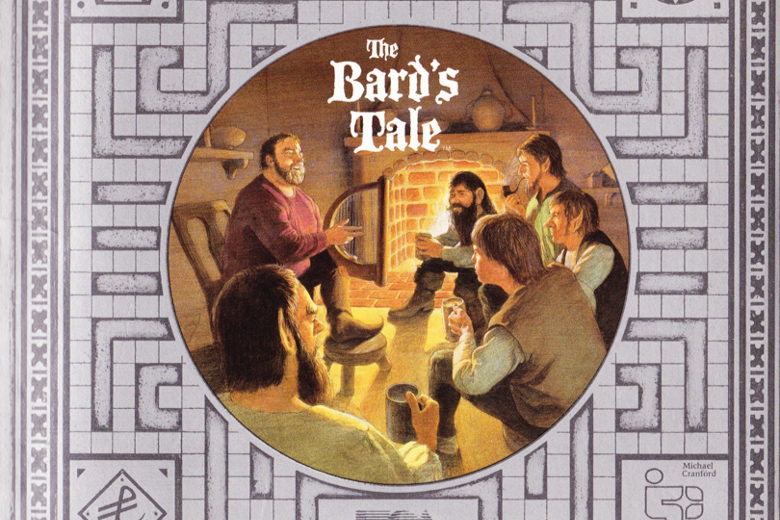
I’m also lucky that there’s a remake of The Bard’s Tale in the form of Krome Studios’ The Bards Tale Trilogy: Remastered, which rights-holder InXile Entertainment had them make (after, interestingly, a remaster from the team of one of the original developers, Rebecca Heineman unfortunately fell through). I’ll be honest, I was originally not planning on playing it, because it has genuinely awful Super2xSal-quality upscaled art. The game looks like this:
When in its best contemporary ports, it looked like this:
I know which I’d rather look at, though in some respects I thank god that the remake came out before they could us AI to upscale it all and make something that looked even worse. The benefit of playing this (nasty) looking versions outweigh the pain of looking at it though, because not only does it make a lot of quality of life improvements such as a shared inventory and doubled experience, it plays perfectly with a controller–so you can even play it with a Steam Deck comfortably.
If you’re a purist, however (and I don’t actually blame you) I have to admit that the version I played isn’t exactly The Bard’s Tale, as the “trilogy” version aligns all three games design, so in this version there are distance mechanics in the combat (enemies can start some distance from you and you have to advance on them) and bows and arrows are added, which I suspect changes the feel of the combat quite a bit. But to be honest, I can live with it. And I never used bows and arrows anyway.
Enough personal history. For the real history, you can of course go to someone like the aforementioned Digital Antiquarian, but it’s worth noting that even though The Bard’s Tale entered my own personal history in 1991, it was released in 1985 and is, I think surprisingly to modern eyes, the best selling computer RPG of the 1980s, selling a reported 407,000 copies.
I say surprisingly because The Bard’s Tale hasn’t lingered in the cultural imagination the way that RPGs such as Wizardry or Ultima have. It wasn’t first; it didn’t inspire much (Japanese RPGs were already divergent by 1985) and the series didn’t evolve any better than Wizardry did. By 1991, the year I discovered it, a cash-in construction set was released for anyone who hadn’t already moved on to the more active style of dungeon crawler begat by Dungeon Master, and it wouldn’t be seen again until The Bard’s Tale in 2004, which is a Bard’s Tale game in name only.
If you’re wondering what made The Bard’s Tale so successful, but then so irrelevant, it comes down to the fact that it is, ultimately, just a Wizardry clone that happened to come out on the popular C64 with nicer graphics than Wizardry years before Wizardry would reach the system, and be pushed by the already mature (and not yet fully soulless) EA.
Designed by Michael Cranford, it was his second attempt to directly make a Wizardry killer after HesWare’s apparently flawed Maze Master. For some reason, The Bard’s Tale is particularly known for the development team all sniping at each other publicly for years after the game’s launch (it even makes the Wikipedia) but it’s all so “he said, she said” and feels kind of… un-illuminating about the game. At least, it doesn’t add anything. The only part I find particularly interesting is that this game is officially called “Tales Of The Unknown: Volume I: The Bard’s Tale” because (and there is some argument over this) the series was supposed to be called “Tales Of The Unknown” but–and this might be a sign of EA’s encroaching soullessness–it was felt “The Bard’s Tale” was better known, so it got dropped.
(And if you’re wondering why I find that interesting, it’s because it would happen again with The Legend of Kyrandia, which was actually supposed to be the “Fables & Fiends” series. I’m not sure how many more examples of this there are.)
Anyway. As I said above, writing about the experience of playing The Bard’s Tale feels almost exactly like writing about Wizardry, bar for a few twists (I like to believe if they’d kept to “Tales Of The Unknown” maybe the sequels would have diverged more.) The main twist people get excited about is that you navigate the town in the same way that you navigate the dungeons (step-by-step 3D movement) but let me tell you this–it just means you have to do an annoying amount of schlepping about and fighting piddly enemies when you want to heal or level up, and I’d honestly rather a menu. The thing I felt like I felt I did the most in The Bard’s Tale was stand around outside the “Review Board” save scumming to try and make sure my level up rolls were good…
The rest of the game, despite featuring several dungeons, ultimately boils down to what you’ll do in Wizardry–try and find the best way to grind so you can kill the final boss. In the original game, this was a particular repeatable battle, which led to one of my best ever “this is too specific, that’s not how memes work” memes, clattering out to complete silence:
What a hilarious meme! You should repost this a hundred times.
But in the remake, which has a smoother curve (and only lets you do this battle once) you can get away with just ordinary grinding (thankfully). Now, the game does actually feature some puzzle solving–you do have to find and collect certain items–but moreso than Wizardry, I realised how much I miss a “proper” quest and side-quest system. Here you have to notice text prompts when you step in certain squares (which zoom off the screen immediately in the remake which means you’ll never see them–a big mistake) and piece them together, but getting deeper into dungeons is grimly unrewarding when that’s all you get. I started my game mapping this properly, but the maps get worse than Wizardry even faster! So much of the dungeons in this game are made up of “dark” squares that you feel like you’re navigating almost the entire game blind, to the point where I almost can’t imagine trying to complete this without having another map at hand and the in-game automap (I can hear the hardcore crusty RPG types rolling their eyes here…)
It could be alleviated, perhaps, if you could enjoy the combat, but there is almost no strategy to it. While it may partially be a flaw of the remake (where the updates fly off the screen at a hundred miles an hour) The Bard’s Tale has a bizarre difficulty scaling where you start by having your entire team killed by a single mouse holding a feather duster and about an hour later are fighting a squad of forty vampires at once. While it’s extremely funny to imagine them trying to all squeeze into a corridor, the problem is that your melee characters are just meat shields for your magic users. I made myself up the kind of squad that gets recommended for The Bard’s Tale and as much effort as I put into my critical-hit focused “Hunter” character (usually my favourite kind of RPG character! I love them crits!) I barely noticed them doing anything at all with their piddly single hit on one enemy compared to my magic users, who by mid-game have a spell that can wipe out every enemy you’re facing in a battle at once.
The game’s focus on the magic users makes it seem even odder that the series ended up going under The Bard’s Tale moniker. While your melee types are stuck in their starting class, your magic users are expected to change class each time they fill their classes’ spellbook, and they start again from level one keeping all their stats (quite unlike Wizardry…) meaning that by the end of the game you have spellcasters who look like Arnold Schwarzenegger in his prime hiding behind a flesh wall. The only reason you can’t ignore melee completely is that your magic users’ armour class is so bad–and that matters when you’re facing off against four squads of sixty enemies at least some of whom might get an individual hit off each before you’re able to hit them with the equivalent of a nuclear bomb.
(This magic user focus is symbolic of author intent, however. As Michael Cranford would explain in his GDC post-mortem of The Bard’s Tale and its sequel, he was “bored” by melee combat and was interested in making a game with seven different spell-casting classes that your characters would learn until they were able to become archmages, with melee combat your fallback when you ran out of mana. Although this was cut back to four classes with the archmage showing up in the sequel, this original idea explains everything about why The Bard’s Tale plays the way it does.)
But let’s be real here: the majority of The Bard’s Tale you spend not save-scumming level ups to make sure your spell-casters can mow down enemies like they’ve got a gatling gun is spend stumbling around in the dark or in battles you barely notice happening. The only real moments of tension are when you get given one of the many annoying status effects (reload–it’s not worth the hassle) or when you have to get out of the dungeon, because the game (sort of interestingly?) gives you absolutely no way to regenerate mana unless you’re outside1, so your grinding sessions are always limited by how long your mana lasts. But because you get so many level-ups with your magic users, it’s not much of a problem (by the middle of the game, I was staying down collecting three or four level ups before bothering to climb back out of a dungeon.)
The problem, sometimes, with playing a game like this is that devoid of the context–an old home computer, months of free time, it being the fucking 1980s–you play it as the object it is, rather than the experience it represented. Everything I’ve said is all true, but if you were loading this up on your C64 (or Amstrad!) with a bundle of paper maps in front of you and the latest “Bard’s Tale Club” tips, nursing your RPG party across months, slowly getting deeper into each dungeon, finding and writing down all the clues, I can see The Bard’s Tale as the evolution–a small evolution, but an evolution–of the Wizardry design it is.
You could recreate this if you really wanted! But the problem is that there are simply more fun, deeper, more interesting, less punishing ways to spend your time not even now–even then. Playing the first The Bard’s Tale, the same as playing the first Wizardry, you understand why they died out so quickly for not adapting. When they aren’t all you’ve got, they aren’t what you want.
The funny thing is, that I’ll still remember The Bard’s Tale fondly. Not for when I played it–but when I imagined it.
It looked like this on the CPC, too. Still better.
Will I ever play it again? You can continue the series seamlessly in The Bard’s Tale Trilogy, but the dungeons in the first game are so horrible I would never do this to myself.
Final Thought: Alright, you’ve read everything I’ve written and you still want to play this. You want to say you’ve played the most important RPGs! I get it. So next time, for supporters only: How to beat The Bard’s Tale!
You can find magic items that let you regenerate mana in dungeons but I never found any. And there’s the occasional regen spot in a dungeon, but I only found a couple. So the point stands, largely. ↩︎
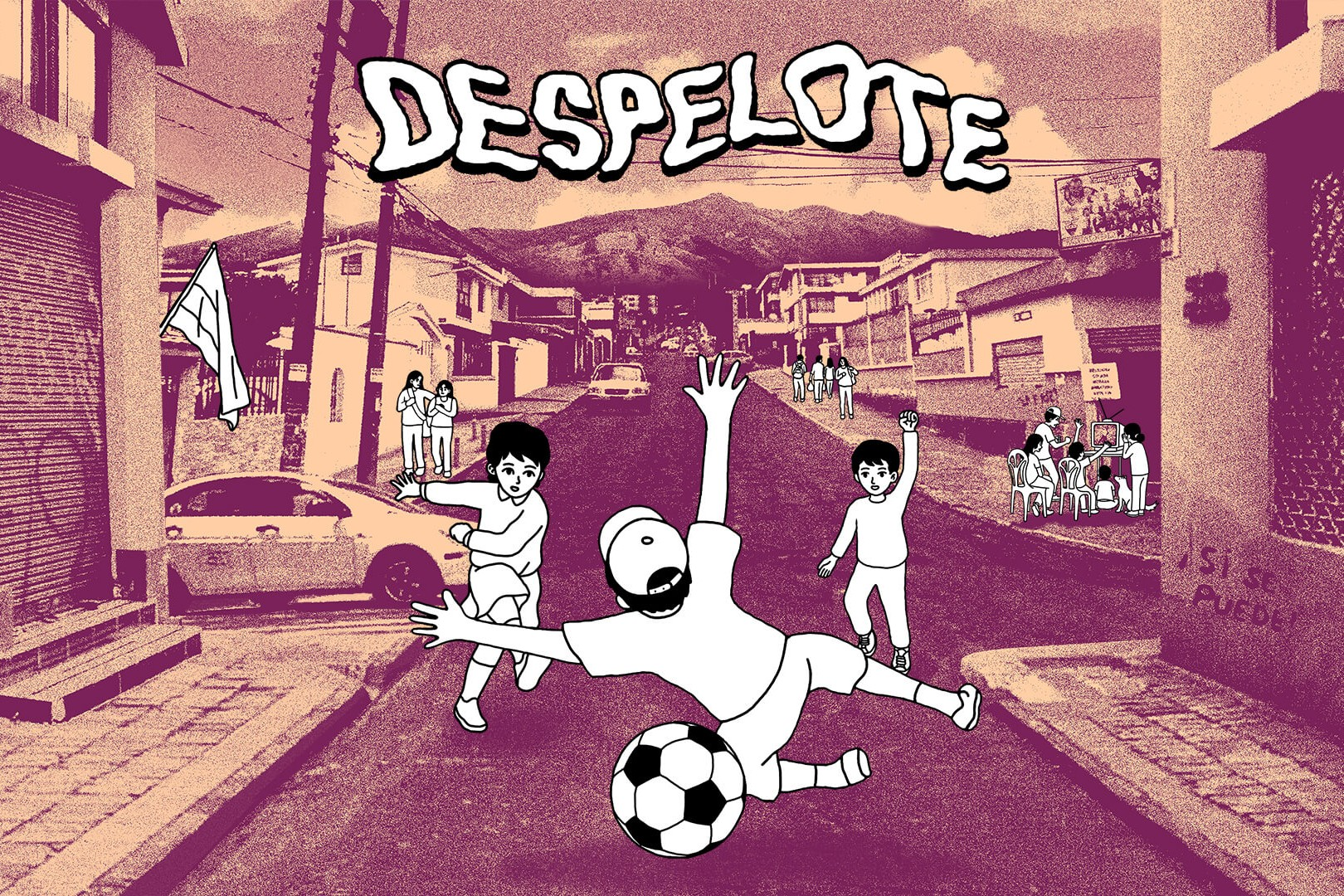


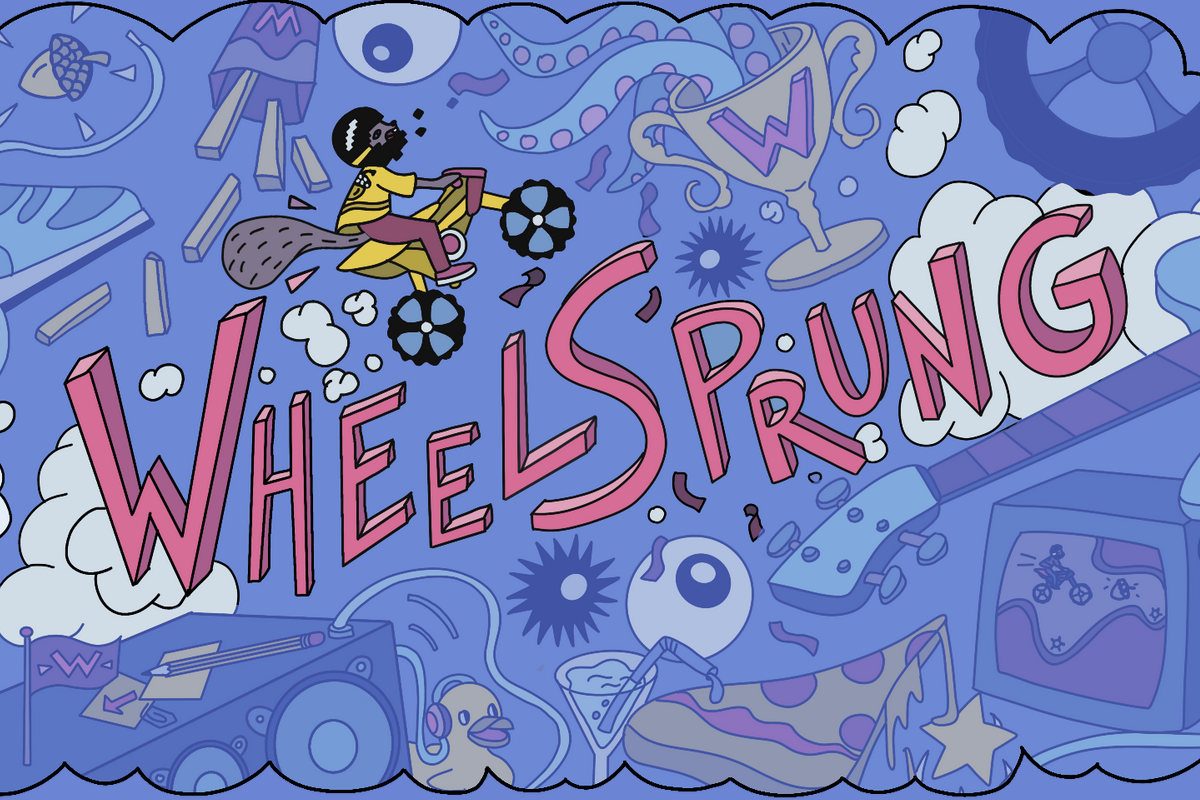
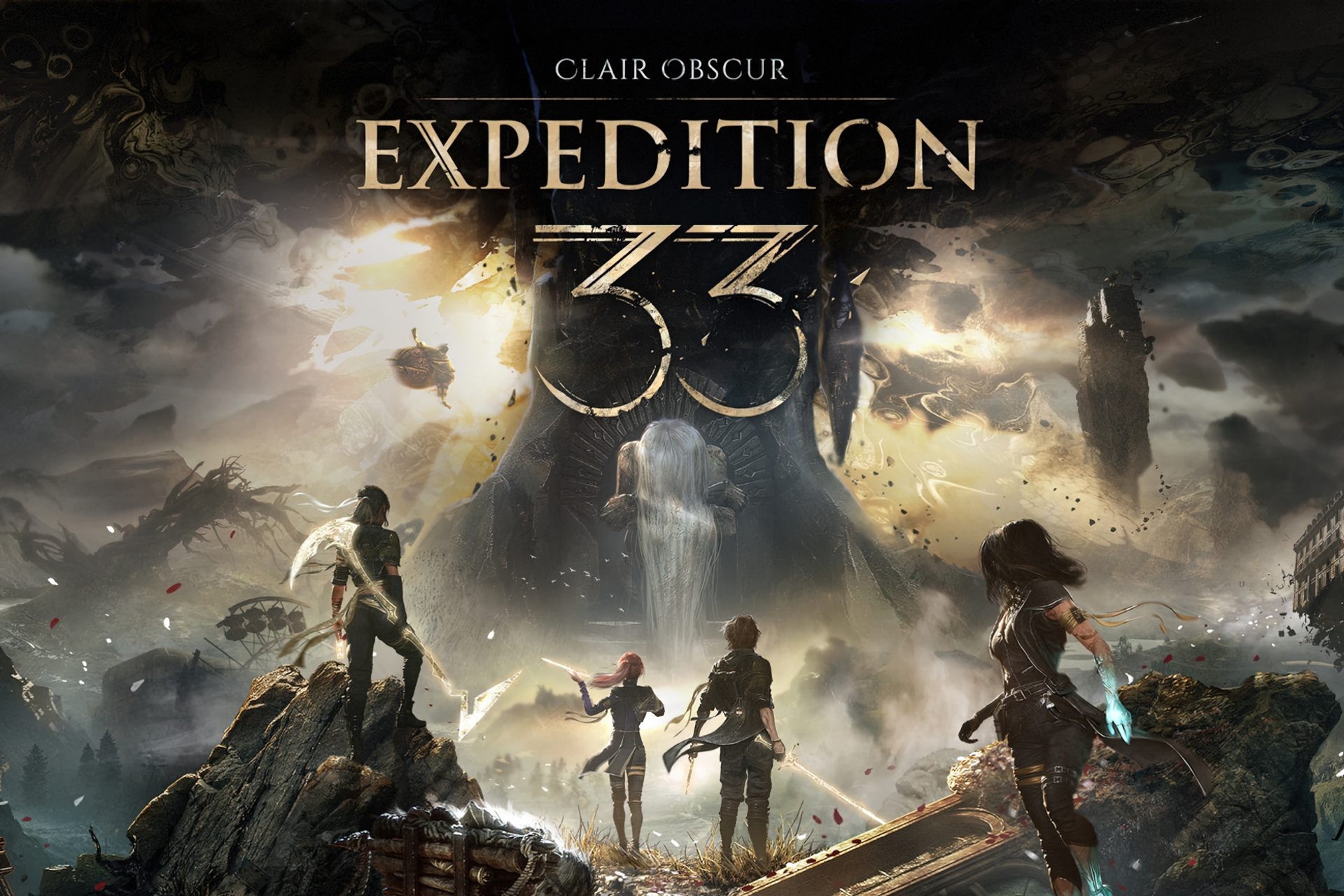


![Sky Kid [Famicom/NES] (Namco, 1986)](https://expzine.com/wp-content/uploads/2025/06/sky-kid-nes-front-cover.jpg)

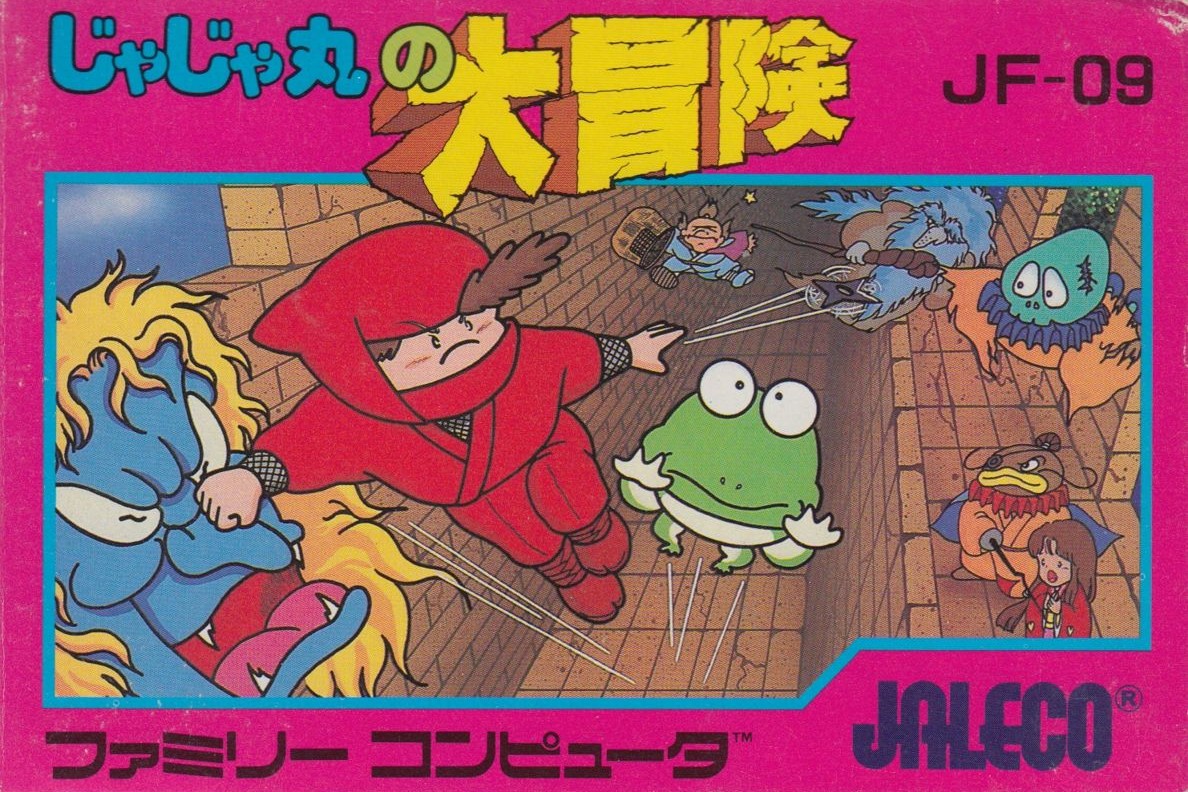

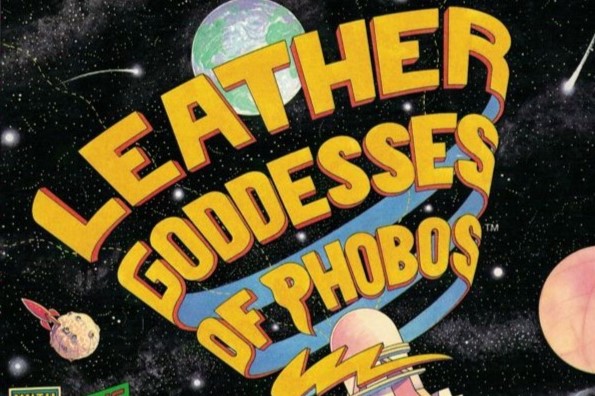

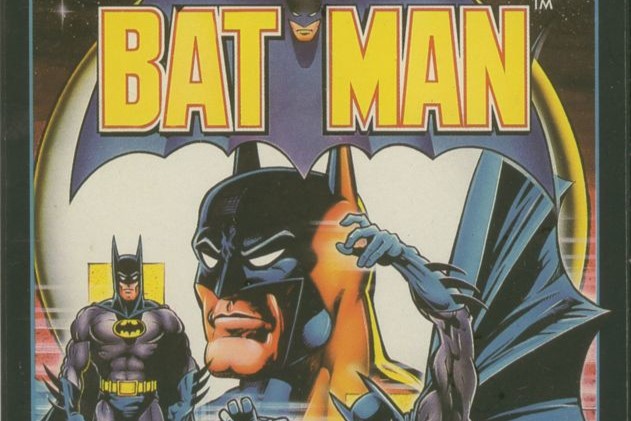


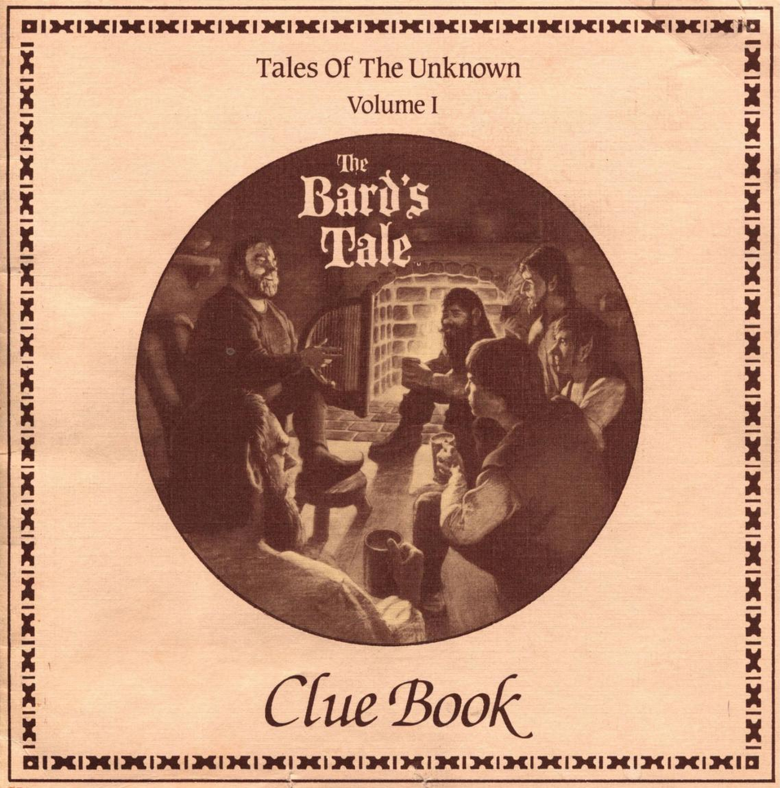
 Unlock with Patreon