To view this content, you must be a member of Mathew’s Patreon at $1 or more
 Unlock with Patreon
Already a qualifying Patreon member? Refresh to access this content.

Developed/Published by: Undercoders / Fireshine Games
Released: 15/07/2026
Completed: 18/08/2026
Completion: Finished it.
Are video games still… cool? I was trying to think about this. Being old, I remember the 90s and the era of the PlayStation, all Lara Croft on the cover of The Face and Wipeout demo kiosks at clubs, and when I think about it, the era of video games being actively cool feels like it ended with the Dreamcast. Maybe it’s a limited way of looking at things–connecting video games to youth and music culture via games like Rez and Jet Set Radio–but once you get into the PS3 and Xbox era… doesn’t it all feel a bit less organic, more corporate?
I know, I know. “Cool” is so completely undefinable, and so completely subjective and contextual. And it’s not like Sega weren’t a huge corporation (certainly Sony’s “cool” was a marketing effort.) But when I look at Jet Set Radio, I just see something that’s… cool. It makes it look effortless.
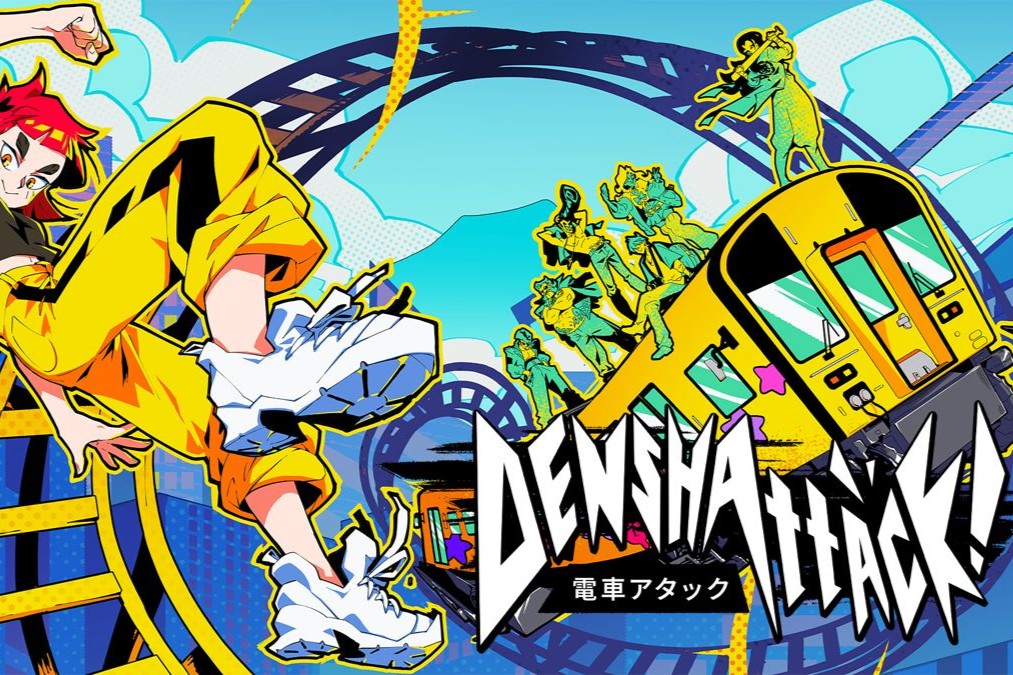
Denshattack! wants to reclaim that cool.
The thing about Jet Set Radio is that it’s… not actually that great? In fact, when I played it a few years ago on PlayStation Vita I was struck by how close it skirts to “actively bad.” The stiff, awkward controls. The horrible camera. The overall clumsiness. Awful enemies and boss battles. You never get to feel mastery, you never reach flow; ironically, you never ever feel cool playing it.
But the overall package is so incredible that it never tips you over into complete rejection (at least for me, anyway.) It’s perhaps the peak of style over substance, and therefore a valid swan song to the era of games being cool. It gets away with it.
Denshattack! does not.
Now, don’t get me wrong. Denshattack!–apart from some issues I had getting comfortable with the controls–has none of the rough edges you find with Jet Set Radio. It’s an incredibly efficient and focused bit of game design, really determined to give you all of the heights of mastery and pleasure with as little friction as possible. But it’s too focused, too efficient, and in slathering on a particular style of cool it comes across as pastiche. Denshattack! can never live up to the Jet Set Radio we have in our minds, because… how could it?
The design sounds good. Denshattack!’s core is, rather than Jet Set Radio, Tony Hawk’s Pro Skater, just that instead of being a skater in a skate park, you’re a train on a track, with the (silly, intentionally unexplained but completely accepted) ability to jump in the air and do tricks. Levels are a mix of A to B courses, levels where you have objectives and have to loop them till you’re done, race courses, trick courses (the closest in style to Tony Hawks’ skate parks) and boss battles. It’s a lot of variety!
The problem is that… and it sounds sort of stupidly obvious to say this… you’re a train on a track. You’re propelling forward at all times, and you don’t have many “interesting decisions” to make. Yes, you can switch tracks here and there, but there is none of the immediate, constant decision making in Tony Hawk’s; where to move next, which trick to pull, how to actually manufacture a long chain. Here, the track always flows towards you, and the level furniture that flows in your direction are the sum of your options.
It’s obvious that the developers know this, so the game–which is astonishingly long, with over sixty levels–introduces new mechanics throughout. The game doesn’t honestly feel that much like Tony Hawk’s once you’re a little way into it, instead feeling much more like a cross between a rhythm action game and the more dexterity-testing style of Metroidvania; it’s not “chain tricks” but “chain abilities, and trick between them.”
Like the worst examples of the Metroidvania, however, the problem is that you end up with what feels like forty things to do spread all across the controller, clicking shoulder buttons here and pushing other things elsewhere in rapid succession or you fail. This doesn’t create interesting situations or interactions, just lists of things to do in order. At least in a Metroidvania the abilities are there to be used on things you saw earlier, or traversal you have to work out; here again it’s more like a rhythm action game. It comes towards you. Do the move. Now this one.
Denshattack!, as a result, never transcends “fine.” There’s a few hours, I think, where after the controls click, it’s actively fun! But before long it feels very rote; rather than the sense you’re on a train to adventure, it feels more like you’ve clocked in at the video game factory and you’re stood at a conveyor belt, having to perform a set, pre-arranged actions as they flows towards you.
With the game as long as it is, Denshattack! is not so much “too much of a good thing” as “too much of a… thing.” There are many, many sicknesses in the video games industry now but the requirement that games be stuffed with content is absolutely one of them. I understand the impetus. Publishers want big numbers; players want as much bang for their buck as they can get, and Steam and other platforms absolutely incentivise high hour counts.
But in a game like Denshattack!, where the core design is slight, and the games it references are shorter with levels built around replayability… it feels like a completely wrong assumption was made by the team here. Every level has a bunch of stuff to do, to collect, and medals to get for either doing it as fast as possible, or with the highest score, but it’s just not that interesting to go back to do it! You can’t make a beeline to a particular item you missed, or find a favourite part of the level and trick that… even the micro decisions of movement you’d make in a track-based racing game are all missing. I still kept thinking, “Oh, I could go back to gold medal earlier levels with all my new skills” but there’s no particularly strong reason to do so–there’s so much content that you’re far better pushing forward.
Long, and I mean long before I was done with this I was bored out of my mind. It doesn’t help that there’s a lot of setting and narrative layered on that is simply not compelling either. There’s a good heart here–a cheerful anime protagonist gets together a rag-tag group of gangs to take down a corporation that’s been exploiting Japan–but much like the game’s design, it’s a fine enough idea without enough meat to actually support an actual… story.
I hate to be all Robert McKee here but a story needs, you know… characters with wants and needs in conflict, and scenes need to reflect that. In Denshattack!, nothing happens! Characters stand around and spout platitudes at each other in every cutscene. It’s all plot and no story, and it’s simply very dull. It feels so egregious because I can feel the game’s certainty that actually really amazing stuff happens. During the levels there are big moments (explosions, kaiju battles, all sorts) and there’s this drive towards a huge, powerful climax that really put me in mind of the climax of Hi-Fi Rush–everyone coming together in this beautiful, moving moment… but it’s completely flat because the characters were just… well, they were about as deep as the billboards you’d fly past on a train.
I think after attempting to beat Titanium Court to death for what it did to me, you might say I’m just being cruel now. That I’m punishing Denshattack! for simply offering too much, and for not nailing every aspect. And, well, maybe that’s fair. Denshattack! is… fine, and it’s only that it goes on for so long that made it such a miserable slog.
But I think game developers have got to learn to edit. Denshattack! is a perfectly fine experience if it’s four or six hours and I can go back and replay the levels if I want; I think I’d have come out overall positive on it, even. So if there’s one lesson from this I want to impress: cut what you’re making down to a diamond. No one wants the rest of the rock!!!
Will I ever play it again? No.
Final Thought: I mentioned the controls needing to click; if you think you’re the kind of person who could play this and stop before you’re tired of it, it’s worth saying that I found the controls utterly frustrating when I started. Rather than go for a classic Tony Hawks’ style system–d-pad, buttons–it goes with double analogues and triggers, and there’s a learning curve because of the issue of track switching: you have to tap left or right on the left thumbstick to switch tracks, but meanwhile when tricking you’re moving the right thumbstick left and right, and at least for my brain it felt like I should have been switching tracks during tricks but you’re not.
In something like Tony Hawks’ you’re initiating a “state change” via button presses (e.g. ”I am holding trick button, so pushing left means trick; when I release trick button, pushing left means move left”) and here you don’t have that anchor, so I was constantly messing up at first. It does become normal after a point, so it’s not something I can exactly ding the game for any more than I already have, but I was really close to giving this up at the point when it started to click.
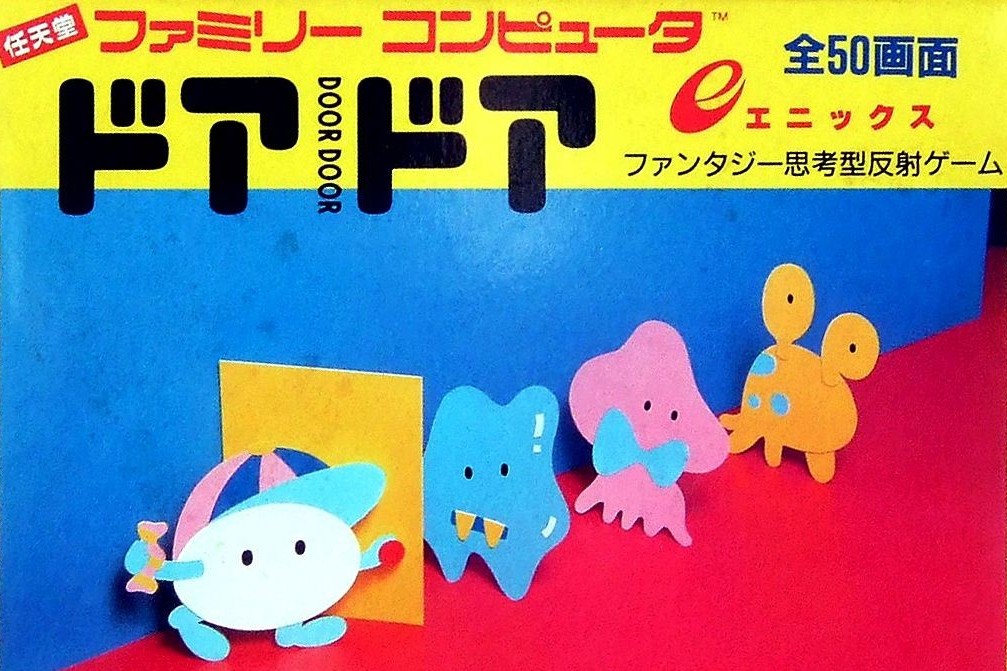

Developed/Published by: Chunsoft / Enix
Released: 18/07/1985
Completed: 31/08/2026
Completion: Made it to level 50, saving after ever level.
After playing the first (well, at least on Famicom) Square game for Pixels and Polygons Quarterly, King’s Knight, taking a look at the earliest output of the other eventual half of Square Enix, Enix, seemed to only make sense. However, much like Square, Enix’s early output was focused on the home computers of the era, so I’ll similarly skip to the first Famicom release, but Enix took a pretty interesting route into the video games industry that’s more than worth recounting.
Beginning as a publisher of real estate listings(!) in 1975, by 1982, after struggling to get a foothold as a trader/brokerage, owner Yasuhiro Fukushima had decided to make the (frankly, not obvious) transition into video game publishing. But how to get games, considering Fukushima knew nothing about making games, or even hiring the people to do so?
Well, according to Chris Kohler’s Power-Up: How Japanese Video Games Gave The World An Extra Life, inspired by the manga industry, which attracts new talent via contests, he thought he’d simply do the same thing, launching the “First Game Hobby Programming Contest” with three million yen in prize money (in return for claiming the copyright of the winning games…)
However, I think Fukushima was at least clued into the games industry enough that it wasn’t purely inspired by the manga industry. In this advert for the contest (via bowloflentils) Fukushima’s play is inspired by the “bedroom coder” boom of the US (and UK) promising to crown the first “new star” and promising they’ll become popular “like rock stars.”

This is pretty bold, but it attracted what would ultimately become legends of the industry such as Yuji Horii, so… fair enough? However, this contest does feel like a classic trick that’s still pulled today: run a contest for a small prize, then monetise the work of the winners, and laugh all the way to the bank.
But what’s that! In the small print: “we will pay royalties.”
Now, to be honest, I don’t have any idea how fair these royalty agreements were, but if we take Enix at their word, they’re extremely happy to crow about the success their previous winners had by the time of the third contest, explicitly showing Door Door creator Koichi Nakamura’s royalties:

So this obviously worked out for Enix, they’d upped the prize money, and become even more magnanimous, as by the third contest copyright is retained by the author–though they’ll get exclusive sales rights for the winning entries, so maybe it wasn’t functionally that different.
Indeed, this system gave Enix an incredible amount of games to release in a way that I’m sure many other publishers couldn’t compete with: in their first month of releases fresh off the contest, they put out an astonishing thirteen games (if records are to be believed) the majority of which hadn’t won anything so no initial outlay at all! But at this point, for these hobbyist coders, getting any royalties at all probably felt like hitting a jackpot.
But of course, as we see from the above advert, Door Door was the super mega jackpot. The kind where all the lights on the machine are going off and tokens are spilling onto the floor up to your knees.
And it didn’t even win that first contest! It came second to a turn-based strategy game!
Door Door is interesting because it doesn’t just have a place in history as Enix’s first big game, but also as Chunsoft’s first game. Chunsoft, weirdly, don’t seem to quite get their due in at least the western view of the Japanese game history, where I think their name is most often connected to the Mystery Dungeon/Shinren The Wanderer series.
Now, don’t get me wrong, that’s a great series, but Chunsoft developed the first five Dragon Quest games! Yuji Horii and Akira Toriyama didn’t just do it all by themselves!
And, frankly, they made Door Door. And Door Door is… great!
Inspired by Dig Dug–in fact Nakamura was originally making a clone, before switching to something simply inspired by the idea of herding enemies2–it’s almost surprising that I’d say it’s great, because Dig Dug is crap, and when you first play Door Door it’s going to feel slow and a tad unresponsive. The first time you climb a ladder, you’re going to be like… is this honestly how long it’s going to take to climb ladders in this game.
But frankly? Chill out. I approached Door Door a little differently than I have maybe other puzzely, actiony Famicom/NES titles, where I tend to binge them. Door Door’s slower pace and deterministic enemy design engendered a different tact: I loaded it onto my Trimui Brick and just played a couple of levels now and then in breaks and downtime. I treated it a bit more like… Picross… actually no, wait, I tend to binge that too. Perhaps more relatably something like Puzzmo: pop in, a little brainteaser, a palate cleanser, and then move on.
Now, to be fair: this obviously wasn’t the exact intention for Door Door. In fact, I dug around and I couldn’t find a way to continue in Door Door, which is disappointing, so it was intended for the player to get through it in one go. But it’s also 2026 and we’ve got quick saves and the author is dead, so it’s fine.

That said: if you did want to play it “for real” part of the reason Door Door is so good is that the game is an early masterpiece of teaching you how to play it while playing it. For everything that’s said about Super Mario Bros.’ famous first screen, Door Door does the exact same thing here, opening with a level with the hero, a door, and an enemy, where all you can do is open the door, getting the enemy into it, and then closing it, winning the level: teaching you that the entire game is about clearing the level of enemies by getting them to walk into doors–from the right direction (enemies can only walk into doors in the direction that they slide open.)
Did the Shigster see this before making Super Mario Bros? You might say “well, hang on. The original Door Door doesn’t have this design at all!” To which I’d respond: but the update Door Door mkII does–if anything it’s even more teacherly, the Famicom version more of a supercut–and that came out over six months before Super Mario Bros.!!!
Alright, it’s still a bit of an edge case, but Shiggy-Shig-Ah [“Stop this. It’s not the 90s any more”–Ed.] was kind of sniffy about Pac Land‘s influence, which makes me think he probably was inspired by Door Door mkII. I mean it was a huge hit!
Anyway, Door Door doesn’t just teach you once. What I love about Door Door is that it regularly gives you new “training” levels that teach you a technique that you can use from then on–and, in fact, from the beginning of the game. It’s almost Öoo like in its clever use of the hero Chun’s simple actions (just move, climb and jump!) when interacting with the enemies. You’ve always been able to do these things; you just don’t realise until the game forces to you do them.
The enemies are the other trick to the game: they’re deterministic, like Pac-Man’s foes, but in a slightly richer environment. So, for example, you’ll face enemies that beeline towards you, some that always climb ladders when they approach them, and the most threatening foe, the one that jumps whenever you do, meaning you can never dodge, them only run.
With all of these enemies on screen, there’s really a puzzle to every level, but it’s not really a “pressure/puzzle” platformer, one of my least favourite styles. The enemies are a threat, but because you can jump, and they’re pretty slow too, you can get a lot of time to lead them a merry dance as you try and work out the best way to dispatch them–and then, if you do die, when you restart any you’ve killed are still dead, allowing you to move forward, but ultimately the goal is to wipe them out all in one life (I’ll admit I died to move on a couple of times.)

Honestly, it’s really elegant, especially with the addition that if you can get a lot of enemies in one door at once and close it before they leave, you get a bonus, meaning there’s an incentive to use every skill you learn across the game to clump enemies together. So, for example, you’re taught early that you can jump to avoid opening doors. Then you can jump to get the jumping enemies to switch platforms–or stop them crossing the screen boundary. And soon this compounds, and you’re ripping through a few levels when you really meant to only do one while you waited for the tea to brew.
If there’s a problem with Door Door it’s that the design does allow the player to get into no-win situations (there are a lot of levels where there are less doors than enemies as part of the puzzle) which requires a bomb spawning for players to suicide, and that the last level is a bizarre test of timing your jumps that honestly I thought was just a corrupted screen. You can complete it, but considering it just loops the game, not even a congratulations, it’s not really worth doing.
But everything up to that point is! Not bad for a game that didn’t even win the contest it was made for!
Will I ever play it again? Honestly, after beating it I’ve had a few goes playing it for “real” with all my new Door Door skills and it’s not unpleasant.
Final Thought: What with the (possible) Miyamoto inspiration, I got a bit excited when I remembered that hated Phillips CD-i Mario game Hotel Mario was all about doors, thinking maybe there would have been a funny example of (not quite) simultaneous discovery there considering the game was made in America by people who would have never seen Door Door and Miyamoto never touched it. No such luck, Mario closes doors but he just jumps on enemies like usual. Oh well!
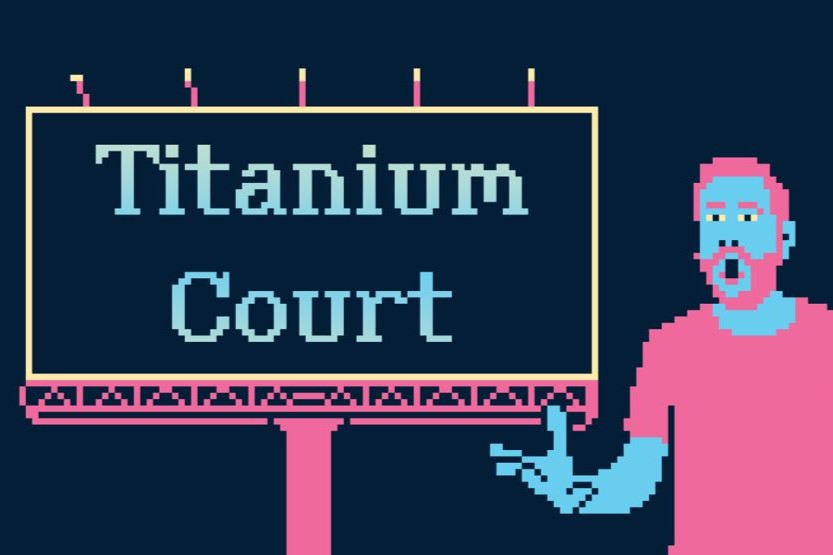

Developed/Published by: AP Thomson / Fellow Traveller
Released: 23/04/2026
Completed: 26/07/2026
Completion: I left.
In a weird sort of way, Titanium Court might be the most hyped game I’ve played in the last couple of years. Before AP Thomson even picked up his historic second Seumas McNally Grand Prize in a row I saw so many developers posting about an incredible game they couldn’t talk about, and then (once it was announced) posting that the incredible game that they previously couldn’t talk about was Titanium Court (and we should all be very jealous that they got to play it and/or be generally hype.) I was so intrigued that I decided to play Fortune-499, Thomson’s previous, visually similar game, and as a result of that was noticed and gifted a bunch of codes by Titanium Court publisher Fellow Traveller for the game’s demo to give away–which I’ll admit I thought might help exp. ride some of the wave of hype. Yep, I was pretty primed to play Titanium Court.
Whelp!
Do you know this feeling? You probably know this feeling. You’ve gone to see a movie, or maybe a play, that’s famously critically acclaimed. A piece of real art. Maybe it’s a satire, let’s say. You watch it, and, you know, it’s good! You’re following it, and you see what it’s doing. You appreciate it. But the audience is acting… weird. Everyone around you is laughing uproariously at jokes that you get, but aren’t, you know… funny. There’s something so performative about everyone around you. Like they’re all shouting “I get it! I get it! I’m at the level of the work I am viewing!”
When you leave, you wonder… wait, was that actually good? Or was it just something that made the audience feel good because it was “clever” and they understood it?
Titanium Court invites this comparison because I’m not sure I’ve ever played a game that’s more aggressively smug from the moment it opens, intentionally flowery in dialogue, and intentionally unclear on its game mechanics. It’s trying to confuse and bedazzle you so that once you get it, you feel sooo good for understanding it.
It’s a little patronising (at best) because Titanium Court is actually quite simple mechanically–the kind of idea that’s really “clever” if, I think, ultimately limited.
It’s a two-phase game. In one phase, you’re playing a classic match-3. In the second phase, you’re playing a set-and-go tower defence/real-time strategy. As I said above, it’s poorly explained, because “that’s the joke” and there’s a fair amount of meta dressing around this simple one-two: the idea is that you’re trapped in a faerie court that is currently engaged in a war, and every day you must try and win the day’s battles across a shifting landscape (yep, it’s a roguelike-like.) You can choose your “career” which affects your court’s abilities and/or win conditions, and then you play a number of rounds before a boss.

In each round, first you play the match-3. The aim of this segment is to make matches that gain you resources, remove enemy courts and, hopefully, place your court in an advantageous position, because the match-3 board is actually the map for the second phase. If you are surrounded by water or mountains, for example, no land enemies can reach you.
The intended tension in this section is that, generally, the most powerful strategy is to defend your court via the terrain, but, because you have to complete a set number of matches to get to the next stage–and match chains give you more moves–you can find yourself in a perfect position, but if you want or need more resources you might make a match and ruin your own position without enough moves to fix it.

In the second phase, you spend your resources to buy units that then spawn in a real-time battle. You can see the entire timeline, so your goal is to send out your harvester units (to get more resources) and then, if you need to engage in battle (and in almost all cases, you’re aiming to avoid it) send out enough units to defend your court or destroy the other courts. It’s not (especially) deep, being largely a numbers game as you can’t affect anything once things are in motion.
Around all of this are the machinations of the court, which you play via a simple top-down exploration game (it’s not unlike Fortune-499.) You wander around, choose who to talk to, and gradually unravel the mystery of the court and what you actually have to do to escape it properly (or not.)

Titanium Court is extremely, blatantly Shakespeare coded (A Midsummer Night’s Dream particularly) but even if there’s a character directly called Puck here it’s like if the play was populated by nothing but Pucks: annoying. If you go in blind, you wouldn’t grasp what I’ve explained about the game’s mechanics until you’ve been through several runs, and it’s not like the game is doing anything clever to “teach” you the mechanics as you go. It’s simply too in love with what it’s doing.
In Titanium Court’s favour, however, I do think the mechanical core, once you get it, has something compelling about it. The base mechanics are not especially interesting–honestly, it’s quite repetitive–but there’s enough variety layered on via careers and bosses and quirky things to find or do on certain runs (or across several runs) that there is–for a while–a reason to keep playing, even if every time you return to the court it’s like being at the world’s most irritating house party (wandering from room to room, getting involved in conversations with utter wanks.)
But the design simply does not hold up for as long as you’re expected to play it. It’s simply too easy to “solve” even with the roguelike-like design intending to provide enough moment-to-moment spice. Realistically, with almost all the careers you can steamroller runs by simply getting your court into the right position in the match-3 phase and just wobbling it back and forth till you run out of moves, and depending on the career you choose you can also massively abuse the game’s trading economy (or just select the correct units that match an optimum strategy and walk it.)
Titanium Court somewhat admits this (though I don’t think it’s as clever as the game thinks to do so) by allowing you to completely skip the actual “game” part of the game past a certain point, and from early on lets you skip the bosses to instead see AP Thomson perform his “We’ve got The Mountain Goats at home” shtick by playing entire songs, which is pleasant enough, but (honestly) it feels like you’re still at a horrible house party and someone’s pulled out a fucking acoustic guitar. Like, he’s good! But you still feel yourself cringing.
So Titanium Court–I suppose much like Fortune-499–hits the limits of the core design quickly, but unlike Fortune-499 it doesn’t choose to be short and authored around that. Instead Titanium Court takes being annoyingly smug to a level beyond what you could imagine (and it is genuinely hard to imagine it being more annoying and smug than it is at the beginning.) The middle bit of the game–when you’ve understood the game’s mechanics, and you’re having a jolly enough time doing runs, ticking off tasks, removing the “curses” that you’ve been told afflict the court and collecting the keys that you’ve been told will allow you to leave Titanium Court and complete the game… well that was all just to get you to realise…
Alright everyone, we’re going to spoiler town. If you think you might play Titanium Court and you don’t want to read on, my conclusion on the game is that it’s [rolls eyes, makes wanking motion with hand.] Do with that information what you will.

It’s all there to make you realise… to complete the game you just have to stop playing it.
This is, in my opinion, complete fucking drivel. I’m not the first person to say this (Willa Rowe’s piece, The Player’s The Thing talks about the mistaken nature of this twist in, frankly, a far more educated fashion than I’m going to) but the extent to which Titanium Court gets things backwards is, I think, remarkable.
I absolutely get the concept. Titanium Court’s core “idea” is based on the experience of playing old RPGs. You know when you visit a town, and characters have a few things they can say, and then when you exhaust what they have to say, they just repeat the last thing they said, forever?
Well, in Titanium Court, this is called “going stale” and it’s an affliction that affects the faeries of the court. As you (the player) exhaust them, they are trapped in this state, and to the other faeries, it’s a tragedy. Ultimately, their aim is to get rid of you as quickly as possible. Just Walk Out. You Can Leave!!!
Except, of course, you can’t. You have to collect keys to leave. And Titanium Court is an authored work. It’s not, like… a real place you’re visiting. Titanium Court is not like… like imagine you went to, uh… that Star Wars Disney hotel, right? When it was running. And everyone was given an exact script to say to you. And when you exhausted the script, they hauled off the actor and shot them in the head.
But you could leave at any point.
Now that’s a dilemma!
I mean, it’s not. You’d just leave, but the point is: these fairies aren’t real, and AP Thomson wrote them, and he’s created something where the tension, I guess, is supposed to be that we want to complete games and see the content he’s created versus not wanting a bunch of imaginary fairies to die, but he created the situation! He wrote all the beats!!!
The player isn’t causing any of this, they’re just playing their role. Now, I get that Thomson lampshades this by setting the game on a stage and actively telling the player they are playing a role, but then we face the idea that he’s expecting the player to engage with the story as told while also having an ironic detachment. This is a really advanced attempt to have his cake and eat it, and I guess I salute the chutzpah, but it’s ridiculous. It feels like he’s really trying to get you to just turn off the game, stop playing without resolution to make his point, because otherwise Titanium Court plays tricks to keep you playing: as soon as I collected my keys, I went to leave, but the script said something along the lines of “you feel there are things unresolved” so I thought “oh, I guess I’m not supposed to leave right away?” played a few more days, got increasingly bored, and then went to leave and… had all the keys stolen and had to re-earn them, practically doubling the amount of time I had to play [“You didn’t have to…”–AP Thomson] to actually leave and finish the game.
I haven’t been as fucked off with a game in years the way I was fucked off with this when all the keys got stolen, considering the plot is literally telling you “you are hurting these people with your presence.” I suspect there are more ways around to play this game–maybe you can just leave in the first place, maybe there are other ways to leave, maybe there’s something interesting that happens if you see the game to the very end and let everyone go stale–but Titanium Court also, intentionally, doesn’t let you play it again1 with the idea that you’re just supposed to share with others what happened to you and compare. I don’t hate that kind of thing–at least, I like games that try and offer a “this was your experience, others may have experienced something different” possibility space. But this aspect feels like another couched in an attempt to just be very, very clever.
I simply cannot see what people see in this game other than something that offers them just enough resistance that they feel big and clever for getting it. But “getting it” isn’t enough: what you’re getting has to offer you something meaningful. Titanium Court doesn’t. I don’t think its point even makes sense! I left and I didn’t look back; I only caused a few faeries to go stale. But the other ones? There’s no one there to hear what they have to say, no one there to prompt them. Isn’t that worse? To have something left to say and go unheard?
Will I ever play it again? I’m glad I can’t.
Final Thought: You know what? What they had to say was probably fucking annoying.
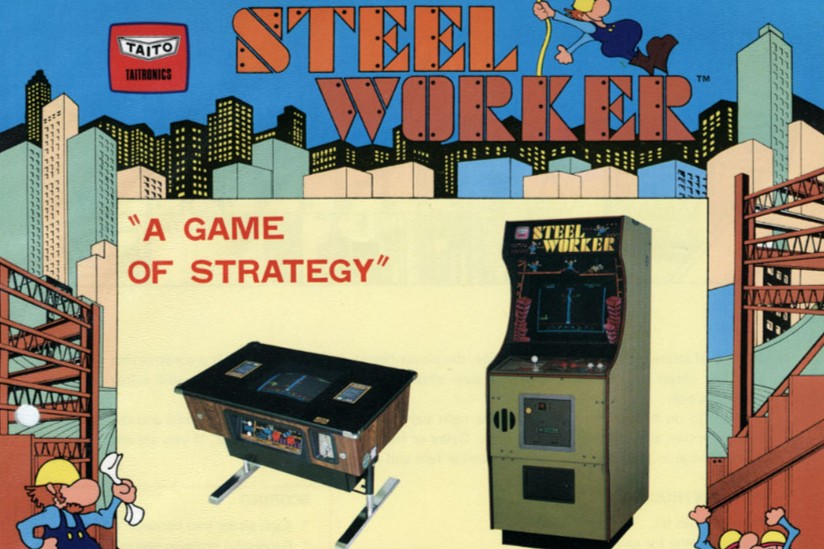

Developed/Published by: Taito
Released: March 1980
Completed: 08/08/2026
Completion: 3100 points, but if I wanted to stick with it I could do way better.
Steel Worker is the third Taito game (chronologically) available via the Egret II Mini system, though they chose to skip over two balloon-based arcade games (Balloon Bomber and Crazy Balloon) that supposedly came out of the same month as this, both of which have seen modern re-releases. I’m not sure what the bigger mystery is: why Taito was so into balloons in 1980 or why they’re against them now–maybe someone on the Egret II Mini team is scared of balloons? Based on my viewings of Taskmaster, more people are scared of them than you’d think?
Steel Worker is a really interesting one, because it’s another example of someone inventing a game idea before it can really be implemented well enough for it to become a huge success (or they just get some basic assumptions wrong.) I’ve seen this a few times–the Atari 2600 is really good for this one; Air Sea Battle is almost Space Invaders, Human Cannonball is almost Scorched Earth1–but Steel Worker is interesting because it’s almost Lemmings, but pre-figures it by almost ten years!
In Steel Worker, a tiny man is attempting to cross from one side of the screen to the other, and the player must select a variety of girders and stairs selected from a menu to ensure that he does so (said tiny man is the steel worker of the title, and as he approaches the end of one placed piece, he places the next if prompted in time.) You must ensure the girders he places connect with the central platform–which is set at different heights on each attempt/level–and time the crossing so the steel worker doesn’t get bonked by the pulley system that’s (seemingly pointlessly) just raising some containers up and down endlessly. To do that, you’ve got nine opportunities to reverse the direction of the worker, who speeds up his moment occasionally (and suicidally.)
Obviously, this sounds incredibly similar to Lemmings, like a simplified version where you’ve really only got builders. But it’s not quite so direct, because the interface and timing is so different, undoubtedly affected by the early hardware Steel Worker is running on.
For one, the game is fast–and the input is very strict. Once you have selected a piece for the steel worker to place, you can no longer move the cursor. From a modern perspective, you want to be able to selecting the pieces in quick succession, but the game is not about planning the route–it’s about the seconds between the last girder being placed and the race to select the next correct one from the menu in time, praying that the steel worker hasn’t sped up for some reason (because when he does, you’ve got no chance.)
So when you start playing Steel Worker, you’re going to wonder what all of the pieces are really for–because you’ll work out the quickest route using simple stairs fairly quickly and feel some success apart from the levels where the steel worker throws himself off the edge about one second after the level loads. But Steel Worker isn’t actually about getting to the other side of the screen as quickly as possible–it’s a high score game after all. You get 50 points for every girder you place up to fifteen times, so your goal is actually to place as many girders as possible while still being able to navigate to the end of the level. The idea is to end with a quite circuitous route to the end where tiny vertical stair shafts are your multiplier, playing chicken with the steel worker’s urge to kill himself at random (well, we all have intrusive thoughts, I guess.)
Steel Worker isn’t great. It’s a bit too random, and with only one obstacle on screen, it quickly gets boring. It might feel surprising there aren’t more obstacles to be avoided, but I suspect they simply couldn’t guarantee a safe route through a screen if they did so without designing multiple screens, and there probably wasn’t enough memory–I’m sure they thought randomly placing the central platform was enough variety.
It’s not, sadly, but I think anyone playing Steel Worker now would go “there’s something here to work with” which makes it all the odder that no one did at the time. The only design I can find that’s close to Steel Worker is the NES’s not-especially beloved Gumshoe, which was released over five years later (and not in Japan, weirdly) and that’s more of a lightgun auto-runner. Games such as Guttang Gottong–probably the earliest other “autonomous character” game I can find–are more of a sliding puzzle. Steel Worker really does stand alone as the first example of this kind of thing (well, at least as far as my research has taken me, anyway.)
I’d rather play Lemmings, though…
Will I ever play it again? Mmm. No. Though I did realise I technically own Balloon Bomber and Crazy Balloon because I’ve got a Taito Legends kicking about here somewhere. So I guess I have to look at those…
Final Thought: Lemmings has come up before, actually. In my writing about UFO 50 I’ve pointed out the collection’s anachronistic designs–which I don’t think is a criticism as such, but I’m do think it’s interesting where they’ve allowed more modern quality of life features and where they haven’t–and I definitely noted that Mortol fit more into the early 90s era than early 80s era. Nothing about Steel Worker changes that–they feature very different aspects of the Lemmings design–but Steel Worker does at least prove that these kinds of ideas were floating about in the ether in that era, just waiting to be implemented well!
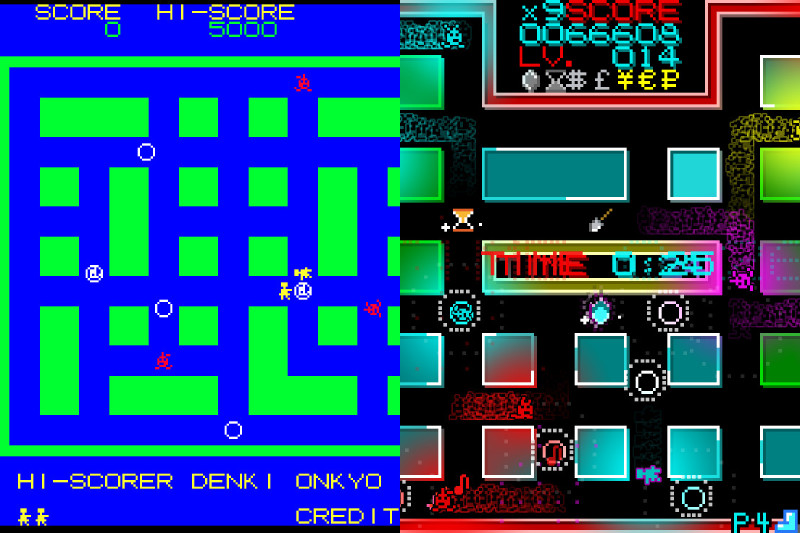


Developed/Published by: University of Tokyo Theoretical Science Group / Mindware
Released: November 1979/Early 19801 / 13/10/2017
Completed: 23/07/2026
Completion: Played them both a bunch of times!
Well, it felt like it was time–certainly chronologically, having recently played Lunar Rescue and Ozma Wars–to finally play the other game in the unofficial trifecta of Japanese video games that get referenced all the time along with Xevious and The Tower of Druaga.
Xevious and The Tower of Druaga are, of course, the creation of Masanobu Endō, probably the most glaring person to have never received a GDC Pioneer award considering basically every single shooter and action RPG was inspired by his work. But Heiankyo Alien has quite a different story: not the creation of one genius but instead spawned from the same kind of studenty collaboration and free thought that–if we’re really honest–begat the industry as a whole.
Heiankyo Alien is the creation of The University of Tokyo’s Theoretical Science Group, a student club that was actually about research into physics, chemistry, and mathematics and that. The story goes that when a journalist from the newspaper Asahi Weekly came to the university to interview the members of the microcomputer club he found the games “a bit lacking” and so the Theoretical Science Group sprang into action, brainstormed a game, explained the idea, and the rest is history.

Of course, I’m going to go on and explain a bit more of that history, because the game really was only an idea at this point. It wasn’t even like a type-in or anything. Just a loose concept (lord knows how unimpressive whatever the computer club had to be for TSG to get away with this.) TSG, however, went ahead and created a version of the game for Apple II in Basic which received interest from Namco and Sega, but the team decided to go with Denki Onkyo2 a now defunct company that seems to only exist now within the context of Heiankyo Alien, although it seems they’d previously knocked out a clone of Sega’s Head On and would (at least) subsequently develop a game called Dancing Queen that is similarly undumped and forgotten (outside of a tiny thumbnail of the arcade flyer?)
Anyway. The game was released, was a huge success, and would not just help create the maze chase genre beside Head On–and therefore lead to Pac-Man–but also inspire Space Panic and Lode Runner, essentially creating the entire platformer genre. Not that it’s especially obvious when you play it.

In Heiankyo Alien, you play a kebiishi, the equivalent of a police officer in Japan’s Heian era (thankfully, AKAB still scans) who must defend Japan’s capital Heiankyo3 from invading aliens by… burying them alive. It’s a bit weird, but it’s (apparently) inspired by the head priest of Todaiji Temple Kukai’s civil engineering skills (aka his hole-digging powers) rather than the TSG being particularly interested in what must be an exceptionally unpleasant way to die.
The Heiankyo setting is also particularly important, because the game’s strict grid-like layout is inspired by the city’s own grid–the game was localised for North America by Sega/Gremlin as Digger, but they could have picked any number of cities if they’d felt like it. I feel like Chicago Alien would have been a more alluring title, but I suppose people would ask why the cops are digging holes to trap aliens rather than shooting them (and digging the holes later, I guess.)
Here’s the bad news: Heiankyo Alien is not fun. The original version–or rather, the original Denki Onkyo version–is slow and random. The aliens aren’t seeking you out, which means that you can dig holes that they’re never going to touch, and the game gets increasingly annoying as you pick aliens off, as you end up having to chase the final alien about, trying to dig holes that you hope they’re going to fall into, usually without much success.
The game isn’t completely without incident; you still have to be careful when digging holes, because if you get trapped on the wrong side of one, you’ll die, and if an alien bumps another alien while it’s in a hole, it’ll rescue it, meaning that if you’re in that moment trying to bury them again, you’ll die as well. There are a lot of tactics that players discovered for Heiankyo Alien because it was so popular, given names such as “Akihabara Digging” and “Heart Digging” but what’s interesting is how quickly you’ll probably pick up on them as a modern gamer–most notably you’ll probably learn to do “Ito Digging” after the first time you get caught out by an alien popping out of a hole that you didn’t get to quick enough–just digging a hole next to them to catch them rather than risk anything.
Heiankyo Alien was almost certainly fascinatingly new at the time of its release, and I think it’s really amazing that it’s so accessible thanks to the rights owners, but it really doesn’t cut it now. So it’s lucky then that Mindware have created Heiankyo Alien 3671, ironically deeply inspired by Pac-Man Championship Edition, a derivative of the game derivative of it!

Heiankyo Alien 3671 redesigns Heiankyo Alien as a five minute score attack that’s far faster than the original and also far more complex, where the player’s aim is to build up multipliers and bonuses via collecting powerups and skilful play rather than simply concentrate on burying aliens alive.
Here’s what I’ll say about Heiankyo Alien 3671: unlike Pac Man Championship Edition, where it feels like you can “max out” what’s possible, here there’s so much going on I’m not sure you could. First, you need to be gaining levels: for every two enemies killed, you gain a level, which spawns a power up. Meanwhile, you need to be fortifying the map. Every block on the map you walk around you draw a line around, which increases your bonus: but green aliens destroy your fortifications, so you have to be seeking them out as quickly as possible.
There’s a lot more complexity than that, not all of which, I must admit, I’ve fully grasped. The changes are savvy; they stop players from attempting any of the defensive tactics of the original game, meaning players have to be constantly moving, performing risky digs, and absolutely trying to maximise their time.
My issue, really, is just that… I don’t like Heiankyo Alien’s main interaction! As in the later Lode Runner, stopping to dig a hole might be tense, but it’s also awkward and unrewarding when it doesn’t work. I do understand how much it’s meant to be a risk, a gamble, but it makes even this fast, exciting version of the game stop-start and frustrating if you end up just making a lot of wrong moves in a row, and I just could not gel with Heiankyo Alien 3671 at all. I still didn’t want to play it.
Heiankyo Alien is an important, and interesting, part of gaming history, but there’s definitely a reason why people remember Pac-Man better.
Will I ever play it again? Well, there’s a well regarded Game Boy version by Meldac, so… why not!
Final Thought: Mindware have an entire range of punched-up re-releases of early, largely forgotten Japanese games–indeed, Japanese type-ins such as Cosmic Cavern 3671 and Space Mouse 35th Anniversary Edition. It’s extremely cool, and I hope some of them are more fun than Heiankyo Alien!
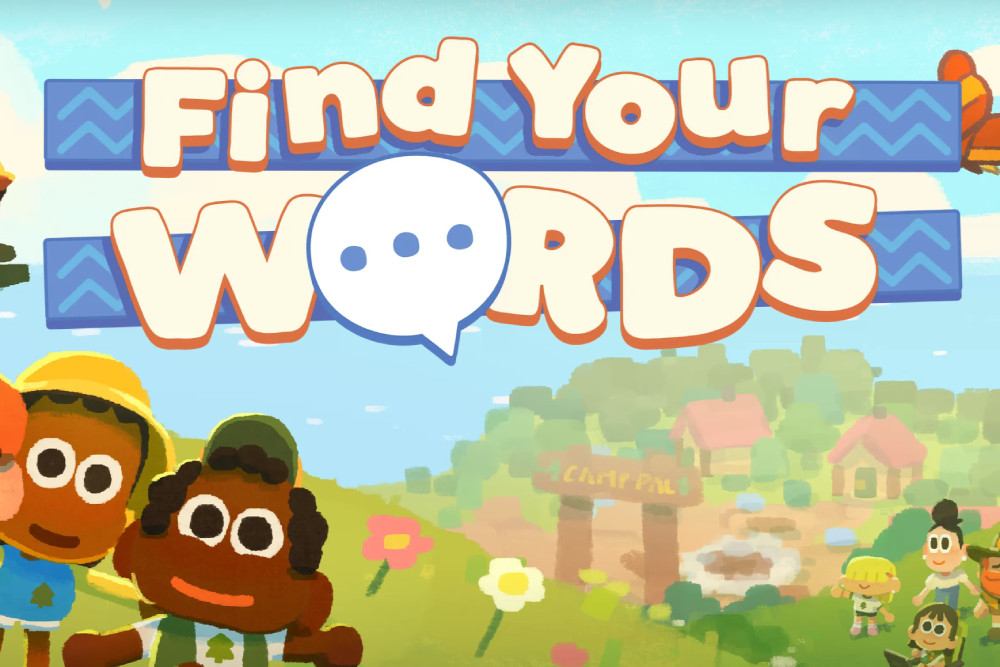

Developed/Published by: Capy
Released: 08/04/2026
Completed: 10/07/2026
Completion: Made all the friends!
Feel like I’ve been going pretty hard on articles recently so let’s have a nice easy one this week, eh? I’m a fan and acquaintance of Capy–I think I’ve played everything they’ve released, I worked in their offices while working on Sound Shapes–so I’m not going to argue from any position of objectivity (though if you’re new here, I never do) but I think Find Your Words is adorable, worthy, and worth anyone’s time considering it’s free.
To be honest, it being free is almost an… issue? While it doesn’t quite grind my gears like Evil Egg–the freeness of which still seems completely wrong–that it’s free makes it feel a bit churlish to complain about Find Your Words. But the problem is that I think there’s just so much more they could do!
Inspired by designers Jon Maur and Vic Ngyuen’s experience as the parents of non-verbal children, Find Your Words casts you as a non-verbal child going to summer camp for the first time, and takes you through the experience of making friends via AAC, or “augmentative and alternative communication.”
The fun thing here–and it must have at least partially been the genesis of the project–is that communication books, a form of AAC, are perfect as a communication tool in a video game. With a communication book, you have a limited number of symbols and can combine them to make simple sentences: you could select “where” and “beach” let’s say, show it to someone, and they’d know quite simply that you’re asking where the beach is.
When trying to create a “natural” form of communication for a video game, this so… elegant. There’s none of the problems of having the full freedom of text input, and there’s similarly none of the strict, “that isn’t quite what I wish I could say” of pre-selected statements.
Yes, the more options you have, the more difficult it is to ensure that you hit a sensible answer for each possibility–meaning you have to keep your context small. I do think that’s why Find Your Words is limited to a single day at a summer camp (and there are still situations where combinations that you think would work lead to unsatisfyingly generic answers.)
However… I think it’s ripe for further exploration. I know systems like this have existed before–even something like Ultima’s original “Name, job, bye” system has similarities–but I think I like it particularly here because I feel like we’ve gotten so stuck in the mindset of strict dialogue trees. Playing Find Your Words I could see, like, a detective game starring a non-verbal hero (a silent protagonist, as it were…) using this quite easily.
Honestly, it’s my main criticism of Find Your Words. It’s delightful, and I think meaningful. But I wish they’d got a little bit more… designery with the actual game. The communication tool isn’t particularly important to the game’s puzzles: you mostly make friends by finding them and saying the same simple things in different locations. I suppose for that reason it’d be a great game for a kid, or to play with a kid–though I did struggle to find all the birds, I guess because it doesn’t really use the game’s main mechanic.
That said, it doesn’t take that long and you can be done with this game in an hour and change; possibly why they chose to make it free (better to sell a supporter pack to fewer people than face many a steam refund from jerks?) and I certainly didn’t feel like I wasted my time. I just… do more with this! Please!!!
Will I ever play it again? There really isn’t any reason to, sadly–there’s no branching or anything as far as I can tell. It’s sweet, but it is simple.
Final Thought: At the very least, if they’re not going to do any more with this concept they should make some plushies of the bird designs. I love them!!! (Even if they were annoying to actually find in the game.)


Developed/Published by: Atari
Released: 09/1984
Completed: 05/05/2026
Completion: Destroyed the Death Star once, but on a later return trip Lando Calrissian and Nien Numb [“No! Not Nien Numb!”–Ed.] sadly died after destroying the reactor.
Uh… July the 28th… be with you? It had been a while since I played a Star Wars game, so May the 4th, despite being an annoying pun, did actually put me in mind to finally sit down and play Atari’s take on Return Of The Jedi seriously, a game that I’d say my entire of experience up to this point had been dying close to instantly because I found the fast isometric scrolling so difficult to look at, and the game so hard to control.
Here’s what I’ll say: even if you really put your head down, try and get used to what Return of the Jedi is serving up… it’s hard to look at and impossible to comfortably control (and before you ask: I did get some time with an actual machine1 with the yoke controller, and if anything that might have been worse.)
Atari’s take on Return Of The Jedi is sort of the black sheep of Atari’s Star Wars output. As it was released to capitalise on the film in a more timely manner than Atari’s Star Wars, it awkwardly precedes Atari’s arcade take on The Empire Strikes Back, and it’s the only game in the trilogy that doesn’t use vector graphics. In conversation with Retro Gamer, developer Dennis Harper recounted:
“Lyle Rains, our chief technical guy, gave me the assignment and he said that Atari had developed some innovative hardware that could store an enormous amount of playfield graphics using relatively little storage. Return Of The Jedi was to be the flagship game to show off this technology.”
Therefore–and inspired by Zaxxon–they decided to go for an isometric viewpoint, and create levels based on the climax of the film much the same way Atari’s take on Star Wars had: the speeder bike chase, the space ambush/attack on the shield generator, and the flight through the Death Star in the Millennium Falcon to destroy the reactor core.
In some respects, it’s a classic Atari arcade game of the era. It loops, you can choose to start on later levels for a score bonus, there’s as much digitised speech as they can jam in. But there’s something very unusual in it.
You won’t notice it if you start on the first level and don’t make it into the second, and so I imagine most people never saw it, because Return Of The Jedi is, as I said, extremely challenging to survive any length of time in. On the first level, you only get the speeder bike chase and the Death Star reactor core attack/escape. On the second, you experience the space ambush/shield generator attack level between them, and the game cuts between the action.
The only other example I can give of a game doing something like this, this early, is Karateka, which came out over a year later (I have no sense if Mechner had ever seen a Return Of The Jedi arcade machine) and which, arguably, is doing something a lot simpler with its cuts–simply letting you know there’s a dude running towards you. A closer comparison, really, would be something like Thirty Flights Of Loving in terms of cuts between action you’re still in control of, but that’s years later and, really, doing something different with its cinematic cuts.


In Return Of The Jedi, at one point you’re the Millennium Falcon with an X-Wing escort, fighting off TIE Fighters, then suddenly, you’re Chewbacca in a AT-ST, trying to dodge logs… then back again! Surprisingly, it’s not discombobulating at all (or at least, no more discombobulating than the game already is) and it does make me wonder, as Thirty Flights Of Loving did, if we haven’t missed something with the form by not engaging with cinematic cutting during play more. Harper believes he was the first to do this kind of cutting (I can’t find anything earlier, and I’ve annoyed the Gaming Alexandria discord enough as it is) and it came from a genuine attempt to recreate the parallel action from the film. The arcade flyer, interestingly, touts it as the “new ‘Split Wave’ movie technique.” Thanks to all that digitised speech, you get the sense of a battle across two fronts and the connection between them, with the level-ending cut-scene making clear that as you got the shield generator down on the ground, the Millennium Falcon can now get to the Death Star.
To be honest, I’m sure in a noisy arcade it just felt sort of random, and it really does require knowledge of the film to truly work, so it’s not exactly perfect, but I appreciate the attempt.
I’d probably appreciate it more, however, if Return Of The Jedi was just a little more… playable in the first place. The game is way, way way too fast when you’re actually playing it because the aspect ratio and isometric view mean you have almost no way to anticipate what’s coming. I didn’t get far–at all–and what I managed was pure grim memorisation. The isometric viewpoint plays strange little tricks, too. Flying into the Death Star? Fine. Flying out? Almost impossible. I’m certain for many people this game was just about surviving an escape from the Death Star even once–it certainly was for me.
Return Of The Jedi isn’t terrible, it just requires such a white-knuckle intensity that it’s never actually fun. If Star Wars gave you this great sense of “playing the movie” Return Of The Jedi keeps you at more of a distance and gives you a sense of “failing at recreating the movie.”
But hey. It’s still better than Death Star Battle.
Will I ever play it again? I’ll always hop on a Star Wars machine. But this? It’s just not fun!
Final Thought: One thing I particularly like about this game, however, is the strange interpretation of Star Destroyers that have a real “what if Klasky Csupo designed Star Wars?” feel to them. It’s not quite enough, but it’s something!