Tag: video games

  • Threes! (Vollmer/Wohlwend, 2014)

    Threes! (Vollmer/Wohlwend, 2014)

    Developed/Published by: Asher Vollmer and Greg Wohlwend
    Released: February 6th, 2014
    Completed: 9th February, 2014
    Completion: This is an interesting one. I got a high score of 9,420 and decided it made the most sense that I delete it and never play it again.
    Trophies / Achievements: 240/1000, but who cares about that kind of thing on iOS?

    Threes kind of completely breaks the idea of this blog, doesn’t it? You definitely can’t finish Threes. It’s not a thing you can do. There’s not even—like in many endless games—an amount of content you can see before you’re done, unless you definitely count seeing all the high numbers (who do have a bit of personality/back story?) as finishing it. That wasn’t going to happen.

    However, I spent six hours—more or less exactly, I checked—playing Threes on Sunday and at the end I decided I didn’t really ever want to play it again. I think that, contrary to what people demand of reviews, the point where the person playing the game gives up is a super interesting and educational point, and not enough developers really pay attention to that. In general, I force past that point (hell, I beat Duke Nukem Forever through gritted teeth) and that sickness is why I started this—to see if finishing things does gain me more than giving up earlier, whether I like it or not.

    So now here I am, trying to see if I learned something by stopping far before that point. In fact, my decision to stop with Threes was completely arbitrary. I didn’t top my high scores (I was third, that day, and I’ve slid down to fifth) I didn’t get some particular amount of achievement points; I just realised that to get a higher score was going to not simply require the expense of time, but that time would be exponentially increased by the randomness inherent in Threes.

    Threes. It’s simple. You can combine 1s and 2s to make 3s. But anything above that must be equal to combine: 3+3=6, 6+6=12, and so on. The board is 4×4; you move tiles by sliding them and the entire board slides that direction (unless a row or column is full.) Every slide introduces a new tile on the board. The game is over when the board is full.

    I probably didn’t need to explain it, but I did. It is—honestly—very very good. But after six hours I stopped playing. There’s a why to this, and one of the things someone might say to me is “ah but you didn’t understand…“ or “this isn’t a problem because…” no, you see… I already stopped. In six hours, the game actually un-clicked.

    In Threes, when you slide tiles, a new tile slides in on one of the rows (or columns) you were sliding. So if you slide only one row, the next tile (which you see the type of in advance) comes in. Brilliant; you have a 2 at the end of the row, you know a 1 is coming next, and it slides in. Perfect.

    However: lets say you’re sliding three rows. In one you have a 2, and a 1 is coming next. The other two rows? A 1 is really, really bad. You have a one in three chance of it coming in the right row. 

    OK, so maybe you should move something else, right? Get yourself into the right position. No, because that 1 is coming now.

    This can scupper an entire game. Is it fair? No, but when I question “should it be?” As far as I’m concerned, yeah, it should be.

    Another example: the white tiles. You’re not always sliding in a 1 or a 2; sometimes you slide in a bigger number. As a player, you almost always expect it to be a 3. Except, sometimes it’s not. Is there any way of knowing? Well, the designers have already stated they’ll be noting when the white tile is bigger than a 3 with a + symbol. Maybe this will help, but when your board has 3s, 6s, 12s, 24s and more on it, you’re more likely than not to end up sliding a new 12 right next to a 96, in a game-ending fashion. Is it fair?

    These two examples are good examples of things that there are probably ways to change, depending on the type of game you’re trying to make. Maybe you want that randomness! I think what I’ve noticed is that in a very mathematical game, I don’t. Like… at all. But here’s one problem that seems more difficult.

    You have a crowded board; a 96 and another 96 are some distance from each other. You want to combine them. However, every move you make brings a new tile on the board. So you have to spend most of your time making sure you are clearing the new tiles that come in—at a maximum, in general, you can allow a couple of moves before you start needing to clear multiple tiles in a single combo move—and every single one of those moves can just keep the 96s floating back and forth, never quite touching.

    But of course, allowing (say) more free movement? Could break it totally. Decreasing the number of tiles that comes in? Will definitely make it too easy.

    Now, I didn’t master Threes. If I had, maybe I’d be saying “this isn’t a problem, because…” as I was capable of (say) keeping the board so clean that I always had full movement, and could intuit moves allowing me to get my big numbers closer together (on the rare occasion they were far apart.)

    But I didn’t, and I’m not. Because after six hours of obsessive play, I stopped and, other than writing his, I haven’t looked back.

    Will I ever play it again? No, but there’s probably a version of this game I would.

    Final Thought: I played the entire thing with the sound down. I didn’t even know there was an (apparently good) soundtrack until yesterday.
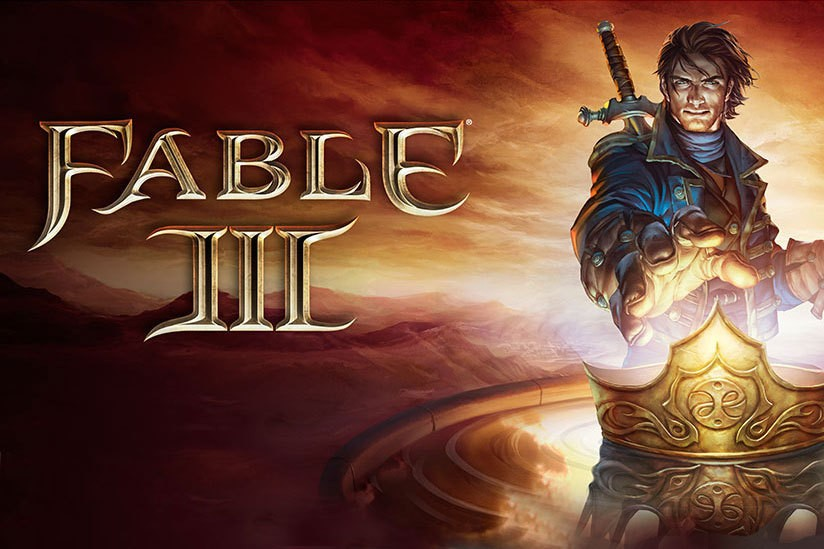
  • Fable III (Lionhead Studios, 2010)

    Fable III (Lionhead Studios, 2010)

    Developed/Published by: Lionhead Studios / Microsoft
    Released: October 26th, 2010
    Completed: 6th February, 2014
    Completion: Completed the main story (saving everyone), did basically all the non-collectables side quest and then, inexcusably, went on and beat both DLC.
    Trophies / Achievements: 725/1250

    Fable II was, for me, one of those games that just worked. I remember when it came out, it was received with some reservations—it was buggy, particularly, but also the strange tone that meant you could walk into a village, fart forty times and leave beloved—but from beginning to end, bugs and all, it was an experience I met at its level and it worked perfectly. It promised so much for the future.

    So you might wonder why it’s taken me four years to play Fable III. Well, because I’d heard (and in fact, seen) that it was complete pish. But for some reason I had bought it? And (apparently?) all the DLC? So I thought I might as well get it over with.

    Let me say this: Fable III is a complete failure. It’s a failure of such magnitude that not only does it take what was good about Fable II and break it in several places in the name of improvement, you’re not sure Lionhead Studios were even trying.

    It’s not the bugs! Well, in some cases it is the bugs. I mean, the criticised-for-being-slightly-too-hand-holdy breadcrumb trail, which worked completely in II, now disappears, doesn’t point the right direction, clips into the ground… it’s a disaster. The dog, a key part of II, is now totally unable to pathfind, barking for treasure before getting stuck on a wall and rotating on his axes. And “hand-holding” the innovation that Molyneux so carefully snake-oiled works only if you don’t run or, you know, go up a very slight incline or something, because then the other character can’t keep up and you both “hold hands” with six foot of air. Fable III is absolutely the buggiest game I have ever seen a major publisher put out. It’s pathetic.

    But that’s all quibbly stuff, really. The kind of thing you can get over if the core is really solid. It isn’t. The core is a group of ideas that (potentially) sound like good ideas, but which after prototyping you’d definitely think “this doesn’t work” unless you’re (I guess?) on some kind of tight deadline where you say “fuck it, we’ve announced it, we’ll bodge it.”

    A good example: No menus! So when you press start, you go into a magic room where you can do all the stuff you’d normally do in menus. Unless you pause in a cut-scene, when you get a menu. And if you want to do anything, like select a new weapon, it’s actually a menu, just in 3D and you have to use the triggers to control it. And if you want to see details you have to… use a menu anyway. Incredible.

    The fact is that playing Fable III you have no idea why they’d make any decision they did unless they were some extreme pressure to finish something—anything!—because they’d already spent the money on John Cleese and Stephen Fry and Simon Pegg and… it’s most obvious when you finally get to the “real” game—acting as King of Albion.

    This part is amazing. It belies a totally idiotic surface understanding of… fuck it, I don’t know, everything? You’re the king. You’re told “6.5 million people are going to die unless you have 6.5 million coins in your treasury at the end of the year.” Let’s put aside the biggest question of all (“How would having that money in the treasury help?”) and consider that, if you are playing an evil character, surely the aim would be to let everyone die? And why can’t you explain to people that there will be a war in less than a year and everyone needs to tighten their belt for a bit while you sort it out?

    You end up in the absurd position where making tough decisions to get money in the treasury is simplistically treated as “evil” and good decisions—which cost more money—can only be paid for by owning all of Albion and collecting rent. So: to be a “good” king you have to buy houses from the people you will go on to rent to and profit from, therefore reducing the entire country to serfdom. So moral!

    I’m actually pretty sure that they hacked the idea together anyway, considering that your evil brother tells you all the bad things he did were for the people, but there’s a cut-scene earlier where he explains how he’d see Albion burn before give it up (which doesn’t come to anything so I have to question if they remembered that they left that bit in.)

    I think my favourite bit is the game tells you have a year, skips wildly between days so really there’s only something like five proper days (although in-game days pass, they don’t count, because who would find something like that totally immersion-breaking?) and when you reach “121 days to go” the game basically ends no matter what and without warning. Fuck’s sake.

    Will I ever play it again? Fuck no. Though I had to play the DLC though to make sure it will never cross my diseased mind. It’s more of the same but mercifully brief.

    Final Thought: Right at the beginning of the game you’re asked to let the girlfriend you’ve just met and have no feelings for because you’ve literally just met them die or some people you’ve definitely never met. If you let her live, your hero leaves the castle and you never see her again. You’ll wonder, at least briefly, why your hero doesn’t care and why she’s never even mentioned again, and you’ll later discover that there’s a quest where you can reconnect with her but it disappears for no reason half-way through the game because fuck you that’s why.

    This essay is featured in Every Game I’ve Finished 14>24.

  • Gunhouse (Necrosoft, 2014)

    Gunhouse (Necrosoft, 2014)

    Developed/Published by: Necrosoft
    Released: January 15th, 2014
    Completed: 31st January, 2014
    Completion: It’s an endless game, but the story ends after day ten, so I called it a day there!
    Trophies / Achievements: n/a

    So! Gunhouse comes from the insides of the head of my pal Brandon Sheffield, so I feel like I can’t really critique his game honestly. Yep, that’s right chaps: CRONYISM. But I’m going to use it for everyone’s benefit, by using this spot to do a nice little design-heavy interview with Brandon, considering he’s easily accessible to me and that. So away we go.

    Why is the house three by six?

    The width and height of the puzzle area is determined by how much of the screen I thought I could devote to a puzzle section. In a game like 10,000,000 on iOS, you have most of the screen devoted to the puzzle, and very little to the art—which is okay, because the art is tiny pixels. But one of my aims with this game was to showcase Juan Ramirez’s art, because I quite like it, and we had a lot of other attempts previously, with completely different puzzle modes, that just made it too small. So I drew a Vita screen to scale, then tried to figure out how much space I could use. then I divided that space up into equal squares that I could actually get my index finger on without much trouble. That’s where it all came from!

    If you have a block on one side or the other, you have the choice of sliding it whichever way it’s facing, as a special or a gun, or trying to turn it into a 3×2. I’m pretty satisfied with that as a trade-off for beginning players, since once you’re more advanced, you can move that configuration of four tiny blocks over to the side before it becomes a big block, if you want. I think it leads to interesting thought processes that you don’t usually have in puzzle games. “Where do I want this to go?” is a question you only ask in games like Hexic and their ilk, but this one’s even simpler than that.

    Wider definitely has way more issues, and narrower has zero strategy.

    Why restrict the player to shifting left and right?

    That came from two things. For one, I didn’t want to make a puzzle game that had been made before, because that’s boring, and I felt that within my 6 rows, 3 columns approach, I would have to come up with something new anyway. you can’t get much of a match 3 going when you have such a small playfield. The use of sliding and gravity, since you can slide between one and three segments out of the field at a time, lets you move everything on the field to anywhere you want, provided you have enough practice and can start to see the patterns. As a handy point of reference, any tetrominos one sees are easily turned into squares, simply due to how they’re constructed—so you can either wait for those to show up, or create them, then make squares and rectangles from that. Some people requested swapping, multi-directional shifting, and the like, but I was never interested in that, simply because of how much it’d been done before, and because it would make the puzzle so much more boring with its limited space. Ultimately I wanted a puzzle game that made you think differently, and I think this one does.

    Also, sliding works really well with the loading guns/special weapons concept.

    Why highlight two types of block and give them a boost?

    That was to add more strategy—we wanted people to care more about which block they loaded and where, so we added “shapes” to the gun’s bullet patterns. The match blocks, as we call them, were to encourage people to care about when they load certain blocks. So if you care when and where you’re loading these blocks, you can actually plan a couple steps ahead, a la; “I know I can’t get that block in here right now, but I’m going to set it up for next time, and I’ll have a match right out of the gate.”

    There are only three types of block on the playfield at a time. Why have five possible blocks?

    That’s basically one of the biggest design flaws. We determined that that’s how many guns we would have (10), and then we randomised the guns that you’d get. But that was before upgrades and before the enemies moved in lanes, and before the guns had shapes, and it was a bit too late to change once the rest of that stuff came in. Right now what gun you have is randomised (I’ve determined that you can get through it with any combination though.) In an ideal world, you’d let people choose their three guns, and hopefully in the future we’ll be able to accommodate that. no promises though…

    So, three types of blocks for a 3×6 space makes the most sense?

    For the level of play we were seeing, yes. I personally liked 4 types of blocks, and we had that for a while, but it was to hard for basically everyone, so we scaled it back to three. But back when we had four types of blocks in one puzzle, you could also add small amounts of power to your guns by sliding in 2 or 3 small blocks. Getting rid of that was a good idea because people were just spamming with that, and not ever making big blocks.

    Did you explore any other alternatives to big blocks of a different type replacing guns already in a slot?

    We did consider having guns not replace each other, but simply add less ammo, and change the weapon type. We tried it, and found that people just didn’t care what they put where as much any more, and also it made the game too easy, and we didn’t want to rebalance at that point. It felt more spammy, and less like you were making choices.

    The building period ends with the shutter closing slowly. This tends to favour extra building at the last minute at the bottom. Intentional?

    That was an idea of Jim’s—he thought it might be fun to have a frantic final moment to slide stuff in, which can be pretty compelling if you’ve got the right match on screen, or have been building let’s say a 2×5 block, and you just got it, but the bottom edge is still on screen, so you can slide the whole thing in. Those kinds of moments feel pretty good I think. I was worried about favouring the bottom there, but since you can also do specials, it’s not a big deal. Another thing I did to make the bottom row more important was dramatically up the HP of the basic minions, to make the bottom row one you care about a bit more. They have 30% more HP than flying enemies, for example.

    Thanks again to Brandon Sheffield, who disagrees with me about Sonic 2 and finds “the tunnels more reactionary than memorisation-based.” He’s crazy!

    Will I ever play it again? It’s endless! Maybe! Though I’d be more interested in playing a beefed up sequel.

    Final Thought: One of the musical tracks by Disasterpeace put me right in mind of London Girl by the Pogues, for some reason.

  • Thomas Was Alone (Mike Bithell, 2012)

    Thomas Was Alone (Mike Bithell, 2012)

    Developed/Published by: Mike Bithell / Curve Studios
    Released: July 24, 2012
    Completed: 28th January, 2014
    Completion: Completed the entire game, including collecting all the little collectibles that aren’t really in the game for any good reason.
    Trophies / Achievements: 100%

    Thomas Was Alone has a really good soundtrack.

    Ah, I could leave it there, but I shouldn’t, really. Because Thomas Was Alone is definitely more remarkable than that! Even though it’s the soundtrack I liked best, it probably particularly works in the context of the game, which is an interesting attempt to properly merge some narrative with mechanics. I appreciate, actually, that it’s trying to do this by simplifying things as much as possible: it’s puzzle/platformer with story about some characters meeting, dealing with their own feelings about themselves and others, and working together. You, the player, take the role of the person making them work together by controlling them individually—using them to jump on each other’s heads to reach new platforms, and so on.

    Everything’s represented by blocks and the story is entirely told through narration from Danny Wallace, ex-journalist for TOTAL! magazine and an extra in the movie Yes Man, who I have literally just discovered was born in Dundee. Here, his English accent (sorry Danny, it’s not an insult) gives Thomas Was Alone a more intense “THIS IS BRITISH” feel than a Routemaster bus filled with black pudding and the Beatles hanging out the arse of it. It feels so whimsically Brit-me-do that I desperately want to fit it into the milieu of games like VVVVVV which are built upon earlier British games like Manic Miner and that; indeed switching characters makes me want to bring up something like Everyone’s a Wally.

    But that doesn’t really work, sadly, because while there’s definitely a really really strong argument that the game is just a load of blocks because it’s stripping things down—a bit like a science experiment—if you told me that Mike Bithell loaded up 2DToolkit in Unity, threw down some blocks and attached the default player behaviours to Thomas and said “that’ll do” I’d completely believe you. Because… it’s not really like this game feels particularly good. Some of it is stuff that you have to work around if you’re designing a game around block people. For example, making sure you make clipping the edge of a wall when jumping (because it’s a rectangle, and so are you) isn’t super annoying. Do you fiddle with the bounding box? Did Bithell do all this and fret and go “nah, nothing makes it nicer/that looks weird?” I can believe he did! But still, hmm.

    There are a lot of other quirks, too. The main one is that the story isn’t actually that simple. About twice it removes old characters and introduces new characters, and—this really isn’t spoiling anything, as the first sentence in the game makes it clear—you’re actually controlling artificial intelligences within a computer system. You can feel the whole thing straining to be a bit cleverer than it has to be. The fact that there are some references to things like Portal in it do make me feel like it’s a bit too inspired by Valve’s “if you make the player feel like they’re in on the joke, it doesn’t matter if the story fundamentals are wonky” thing.

    Now, I can imagine people strenuously arguing I’m being too literal here, but if the game is about AIs learning, the soundtrack and narration are nice, and the simplistic graphics work, but the game feel is… ehhh, do I really have to play it? Couldn’t someone just code some pathfinding AI that learns levels and watch the game play itself? It would actually bring the narrative home in a much stronger way. And I suppose that’s kind of a sad statement on narrative in games, eh?

    (At the very least, the other characters could have done something while I wasn’t playing them. They just stand there. Remember Everyone’s a Wally? Well, you don’t, but I mean when I mentioned it up there. The characters you weren’t playing wandered about with some very rudimentary AI. It made them feel real, you know?)

    Will I ever play it again? No.

    Final Thought: After everything I’ve said, here’s a thing Thomas Was Alone had going for it: it cost me $2.50 and it was less than three hours (I think, I didn’t count.) I actually had a quite nice time playing as a pre-sleep thing across a couple of nights. It was pleasant.

  • Sonic The Hedgehog 2 (Sega, 1992)

    Sonic The Hedgehog 2 (Sega, 1992)

    Developed/Published by: Sega Technical Institute / Sega
    Released: November 24th, 1992
    Completed: 26th January, 2014
    Completion: Completed once (on Xbox 360) and then I went back and finished it with all seven Chaos Emeralds on the copy that’s included on the Sega Mega Drive Collection for PSP. Yeah, really.
    Trophies / Achievements: n/a (didn’t play it on my own Xbox 360.)

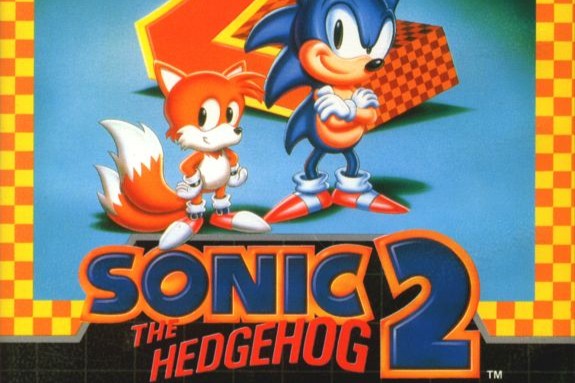
    Who would I be to critique Sonic The Hedgehog 2, eh? It’s a generally beloved entry in a franchise that’s, uh, generally beloved, as long as you’re only remembering the Mega Drive entries because you’ve been under a rock/have any sense. Well I’ll tell you who I am: ME.

    Let’s have a think about the Sonic games, being totally honest with ourselves. We’ve got a hedgehog guy (whose sprite I love perhaps irrationally; he just looks amazing) whose entire thing is “running fast.” In fact, if you’re not running fast, Sonic’s bagfuls of inertia mean that you’re slippy-sliding all over the place—or worse, desperately trying to get up enough speed to move a little bit, but not too far. And if you’ve found yourself stuck at the bottom of a ramp, be prepared to… be annoyed as you try to get him up it.

    Of course, you seasoned Sonic-a-manaics are like “but what about his spin dash, introduced in Sonic the Hedgehog 2… you twat?” to which I’ll say: it’s a hack. An inelegant hack to make up for the fact that the level design really doesn’t know what to do if you slow down at a point where it doesn’t want you to slow down.

    If you played through Sonic the Hedgehog (and I have, all the Chaos Emeralds and everything) you probably remember that after Green Hill Zone the development team seemed to have forgotten what they were trying to do with Sonic, with slow underwater zones, slow platforming levels with tiny platforms; basically they did everything they could to slow the game down. Thankfully Sonic The Hedgehog 2 isn’t quite as bad… except when it is. There are a lot more bits to run fast and free in, sure, as long as you’re willing to slam into an enemy you couldn’t see/fall into a bottomless pit/hit some spikes/whatever.

    Frankly, everything Sonic the Hedgehog 2 wants you to do is at cross purposes to that whole “Sonic go fast” core idea. You always want to collect 50 rings to get to the bonus stage, right? So what happens is that you creep through the level at a snail’s pace, collecting every ring you see, because if you run for even a second, you’ll probably hit something and lose them all. This wouldn’t be so bad if the bonus stages were something that you could wing it through, but no. I remember how the tunnels blew my mind when I was ten, but as an adult what I remember is how they are an exercise in memorisation (until, possibly, you blow up your mind.) Unlocking Super Sonic is so hard that I abused quick-saves to extremes just to do it, and it’s bloody unrewarding anyway—all you get for it is an invincible Sonic who has a suicidal level of inertia; in fact in several of the levels with difficult platforming I wanted to avoid rings!

    (And much like in Sonic the Hedgehog, collecting all the Emeralds merely gives you a very slightly different ending. Very, very, very… very slightly.)

    If you, as a kid (or whatever) managed to get Super Sonic on a Mega Drive, bloody hell, I salute you. Now get outside for some of that fresh air that your mum kept telling you to breathe across the months if not years it took.

    Will I ever play it again? No, but I’ll go onto Sonic the Hedgehog 3 soon(ish.)

    Final Thought: You can, if you like, think I’ve gone at this whole Sonic the Hedgehog thing wrongly! The levels are large and have enough different routes that they welcome replay to an extreme degree, meaning that for a kid determined to get all the Chaos Emeralds, repeated play against the extreme difficulty is close to a Spelunky-like experience. I’m exaggerating, obviously, but for a while there’s always something new to see. Unfortunately that’s mere happenstance; the game rewards memorisation and dedication rather than skill. And if you want to complain that you could just play it without trying to 100% it—and yeah, the game is pretty fun, fiddly platforming/awkward level design aside, to play casually—they shouldn’t have put all that extra stuff in then if it makes it less fun, should they?

  • Saints Row: The Third (Volition, 2011)

    Saints Row: The Third (Volition, 2011)

    Developed/Published by: Volition, Inc. / THQ
    Released: November 15th, 2011
    Completed: 26th January, 2014
    Completion: Final mission completed both ways, and every activity and gang operation in Steelport completed.
    Trophies / Achievements: 50%

    The Saints Row series is one of those things that people who should know better seem to love. An open world crime-em-up that revels in its stupidity, grotesque violence and bad taste, it seems to have its worst excesses often forgiven because of a character creator that allows you to create anything; heck, a grotesquely obese woman with a man’s voice if you feel like it (which I’m sure makes the otherwise pervasive casual sexism feel utterly bizarre.)

    (I made myself, because I always do. And I managed the best facsimile of myself ever thanks to clothing options allowing you to wear a hoodie with the hood up and—something game developers always seem to miss, despite being a shower of specky bastards—glasses.)

    Do you know what, though? I’ll admit Saints Row: The Third is, at points, inspired. Where Rockstar is awkwardly determined that its work be taken seriously—Goodfellas, except Henry Hill eats at Fanny burger and drives a Vulva—Volition barely bother their arse to make it coherent. So it’s not really about the parts where the game comes apart, but where it comes together.

    For me, it was the point a few missions in where, having just fallen out of an airplane, I (and it was me) dive down to catch Shaundi, a key character, in mid air—only to notice that another airplane was preparing to collide with us. And, scripted moment it may have been, but the point where I (yeah, me, only with Nolan North’s voice) tell Shaundi “remember how happy you were when I caught you?” only to drop her, fly through the plane’s windscreen and out the other end, and catch her again… well, it was pretty much the best thing I’d seen since I last watched the bit in Fast and Furious 6 where Vin Diesel reveals he can fly. It felt like an entire cinema going mental, but I was at home.

    After that kind of genius, I mean… the fact that so much of the game is probably some of the weakest gunplay I’ve experienced since, I don’t know, Saints Row 2 is barely a dampener. The driving at least feels excellent, so when you step out of the car and you mostly stand or strafe about getting filled with bullets—hoping you can kill enough (too many) dudes that you don’t have to awkwardly run behind a wall to restore your health—you just kind of get on with it.

    To be honest, a lot of the game is—in fact, as a lot of these open-world games reveal themselves to be—a real-estate simulation. You wander/drive about, buy stores/do activities/kill dudes to claim part of the map, and you wait for the money to roll in. Saints Row: The Third does this pretty well (even if I did sort of wish I could just click on the map to buy stuff rather than have to drive there, but then there’d barely be any game at all) and as a result I did actually end up doing everything in the game so I could fill in the whole map and feel satisfied. I didn’t have a bad time doing it, but if I was going to recommend one of these games Saints Row: The Third pales in comparison with Sleeping Dogs, which manages to do open world with a fairly coherent story, memorable city and genuinely successful mechanics (all of ‘em: man shooting, face punching, thing driving). However, as far as I’ve been told, Saints Row IV re-uses the city from The Third but turns the dial so far up the series has morphed completely into a superhero title, which is rather pleasing as I’ll be happy to return to Steelport at some point in the future for some more occasionally inspired antics.

    Will I ever play it again? No.

    Final Thought: It’s not just the character creator that gives the player a sense of ownership in Saints Row: The Third. The game constantly throws THIS? or THAT? questions at you that slightly change the world/deny you other options. It doesn’t make a huge difference but it’s nice to feel that in your world you chose to—for example—blow up a tower and see that reflected for the rest of the game. Look, it’s not Mass Effect, but somehow these small changes with obvious, direct effects really worked for me, ok?

  • Ikachan (Pixel, 2013)

    Ikachan (Pixel, 2013)

    Developed/Published by: Pixel / Nicalis
    Released: January 31st, 2013 (original PC version: June 23rd, 2000)
    Completed: 11th January, 2014
    Completion: Completed it!
    Trophies / Achievements: N/A
    Version Played: 3DS

    Ikachan is mostly notable as one of the games Cave Story developer Pixel (Daisuke Amaya) created before, uh, Cave Story. No, wait. I probably mean particularly notable at that, because Ikachan does feel in some ways a dry-run for Cave Story. It’s got exploration, some story, an exp./upgrade system, amnesiac hero who wakes up in a cave system… it most likely uses an earlier version of the same engine, too.

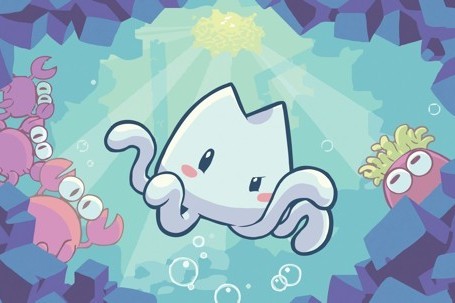
    But, um, just because it’s notable doesn’t really mean it’s that interesting. Ikachan is—literally—about an hour’s worth of content. You play a wee squid and your main interaction is to aim left or right and tap “A” to make him float about. It’s mostly an avoid-em-up (you know, carefully tap just fast enough to stay above spikes, but not go into the ones above you, etc.) and unlike Cave Story, where (and it’s been years since I played it, so I might be over-estimating it) everything comes together, in Ikachan I was struck by how… unnecessary most of the play additions beyond that feel. You can collect exp. and level up, but all it does is add some hearts (that could have been there in the first place.) You “Metroid style” unlock some abilities that allow you to open new areas… twice (each area you visit… once.) You run some VERY simple fetch quests and talk to sea urchins repeatedly in that classic “I don’t know what to do so I guess I’ll talk to all the villagers again” way.

    Oh, and there are two boss encounters (sorta) which are rubbish.

    Ikachan is probably most interesting in that it’s a short, direct example of the type of game that’s got an acceptably fun mechanic (you know, the floating thing) that it fails to exploit at all in the name of a lot of other nonsense. Indeed, after an hour (and potentially $5, though I picked this up for $3 in a sale) you’ll feel dissatisfied simply on the basis that you feel that you could have spent more time doing squid stuff (floating about) than talking to villagers and collecting fish to level up.

    This should probably have stayed a freeware game, or they should have added more squid stuff. Notice I’m not saying “make it longer.” This isn’t a time spent equals value thing. This is a “time spent doing fun core game mechanics is better than time spent doing non-essential game twaddle” thing. But look, I’m not going to tell Pixel what to do with his back catalogue. The guy developed Cave Story!

    Will I ever play it again? No.

    Final Thought: Yes yes going to see a film costs $12 and it’s an hour and a half and a coffee costs $3 and it’s done in fifteen minutes but those are totally different value propositions so I’m totally allowed to feel like the $3 I spent on this was unwise.

  • Crimson Shroud (Level-5, 2012)

    Crimson Shroud (Level-5, 2012)

    Developed/Published by: Level-5, Nex Entertainment / Level-5
    Released: December 13th, 2012
    Completed: 9th January, 2014
    Completion: Completed New Game and New Game+, getting the good ending.
    Trophies / Achievements: N/A

    Crimson Shroud, eh? Where to begin? Well, I started this blog largely to work out my usually conflicting feelings on the games that I finish (and, honestly, to work out my definitely conflicting feelings on the fact that I feel I simply must finish the games I start) so Crimson Shroud is definitely a “key text.” Because If I’m honest, all I want to—can do—when writing it up is give it a kicking for its many, many deficiencies, but by virtue of it very clearly being an auteur work and something I played largely while half-watching TV, I sorta remember it… fondly?

    So. Crimson Shroud is a game from Yasumi Matsuno (he of Vagrant Story fame) that’s supposed to make you feel like you’re playing through a table-top RPG campaign. This doesn’t really work. Yes, the visuals of the table-top figurines sort of work (though they’re oddly ugly; low-fi in a clumsy fashion) but the fact that your main interaction with the game is through very traditional Final Fantasy-esque battles—just with some dice mechanics plastered on—kind of messes it up. And then there’s the writing, which implies (like Japanese RPGs tends to) that you are the main character. It’s awkward, as the visual novel-esque way the story is represented makes it feel as if you are being told a story about characters rather than living as them—though this might be a factor of the English translation.

    Probably worse for the whole table-top RPG feeling is just how strictly the game sticks to other JRPG conventions. The game may have a limited number of locations and maybe less than twenty individual battles total, but forces you to grind one battle (two, in New Game+) endless times to hopefully get a drop required to progress. The game strongly implies that your characters would rather AVOID these battles (it even gives you a pre-battle opportunity to flee) so it’s no surprise that most people get stuck/give up in chapter two, unless they look up a FAQ (which might be intentional, who knows.)

    I’ll be honest and say that I gave up four times before that, in my lack of comfortable progress through the tutorial. It introduces a few concepts to you before it explains them or their complementary mechanics ; I kept restarting it in the hope that it would click (it eventually does: during the second chapter grind, which gives you some space to feel out the characters and battle system. This is far from ideal.)

    I think, however, that the worst of Crimson Shroud is in its UI. Throwing dice is fine—gimmicky, and it mostly just serves to slow battles down—but the part that matters most in a game without traditional levelling, the crafting and selection of gear, is tragic. I still don’t grasp how the game displays which item is better (there’s a mess of stats) and one of the most important aspects of the gear—the spells that are attached—aren’t fully shown unless you scroll down and select them individually. Any gear reorganisation takes forever and is an unpleasant headache of memorisation.

    Crimson Shroud is, by all accounts, not very good. But something about it is alluring. Matsuno has created a world with far more setting than you would expect for an eight dollar RPG, with a complex backstory that made me want to play through the New Game+ for the good ending (which is a bit of a cheat to double the game length, and one which I regret because the good ending doesn’t really explain anything.) What’s sad, of course, is that it isn’t like this world-building would be remarkable in anything except a game—I certainly wouldn’t read Crimson Shroud if it was a novel. More honestly, the game gets its hooks in by offering a very classic reward mechanic—grind, sort loot, get powerful, grind—wrapped up in a style and setting that’s just interesting enough that if you do most of the grinding with the telly on in the background you’re pretty sure you had a nice time.

    Will I ever play it again? The Japanese version has a New Game++ with parodic dialogue, which was mercifully cut from the English translation. So unless I learn Japanese as well as I’d love to (I won’t) no.

    Final Thought: I was sure I remember someone—Adam Saltsman?—describing Crimson Shroud’s story as a search for a pair of mystical panties, but I really have no idea what he was on about. One of us has misunderstood the story totally.

    This essay is featured in Every Game I’ve Finished 14>24.

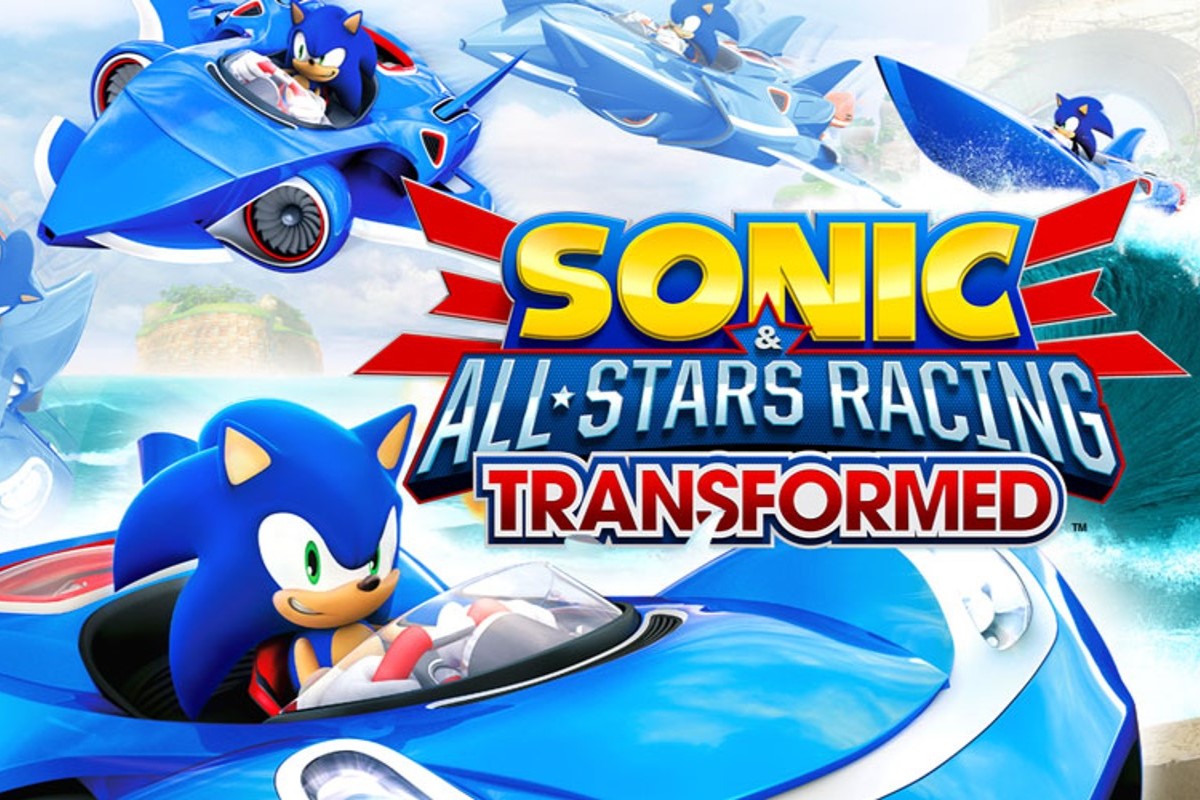
  • Sonic & All Stars Racing Transformed (Sumo Digital, 2012)

    Sonic & All Stars Racing Transformed (Sumo Digital, 2012)

    Developed/Published by: Sumo Digital / Sega
    Released: December 18th, 2012
    Completed: 4th January, 2014 (Completed every level of “World Tour” on at least Medium difficulty, completed Grand Prix as far as unlocking Mirror Grand Prix. Reached “S Class License.”)
    Trophies / Achievements: 42%

    This is probably a good way to start (what was at one point) a Tumblr called “every game I’ve finished” considering by all accounts I haven’t really finished it, unless you strictly count getting as far as seeing the credits as a completion (and that happens mid-way through the World Tour mode, anyway.) But the astonishingly clumsily named Sonic & All Stars Racing Transformed is definitely one of those games that you eventually run out of steam on and just have to put away—especially because beating pretty much the entire game on Expert to unlock everything requires a level of dedication to a mascot racer that is beyond me.

    S&ASRT, as I’ll call it I guess, is something I’d heard praised, though in retrospect I can’t really tell why. Developed by Sumo Digital (who let’s not forget worked on the superb ports of Outrun 2) this is the kind of game that seems to exist as a very vague way to exploit Sega’s long list of brilliant IP without having to use any of it properly by, you know, making a new game in a series, because, well, it might fail. So better to slightly please people who want to see another Skies of Arcadia by including Vyse as a playable racer, but making sure Sonic, who must still be a big selling point to somebody (children? Do children even like Sonic now?) is front and center as much as possible. Boom, two demographics sorted: people who like Sonic, and people who will put up with Sonic so they can see some old Sega shit.

    This kind of thing can sort of work—Sega All Stars Tennis is actually a fairly decent way to whack on your nostalgia penis for a few hours, with, for example, the Space Harrier levels totally working—but the whole thing does, at best, leave you feeling a bit empty when compared to, you know, going back and actually playing Space Harrier. This is totally exacerbated by S&ASRT’s position as a mascot racer. You might think “oh cool! a Golden Axe level!” only to discover that you’re whipping around the course so fast that you barely pay attention to the decoration, and if you do, it’s not really super clear what about it makes it feel Golden Axey, or Shinobiey, or whateverey. The Shinobi one, for example, is just “generic Asian.” The only one that really works is the Nights level, which is impressively specific without actually being interesting.

    And the racing isn’t really all that either. I mean, obviously there’s the whole “you get to switch between a car and a boat and a plane!” thing but what this largely means is that you can’t easily remember the tracks (because across three laps they can change wildly, switching you between vehicle) and the tracks are too bloody long anyway. The boats are about as fun as the hovercrafts were in Diddy Kong Racing, which you might remember as having been fun, but I can confirm were about as thrilling as pushing a Subbuteo man across treacle. The planes are fine, apart from when you can’t tell where you’re supposed to be flying, which is “usually.”

    It’s obvious that the team at Sumo Digital has a lot of talent—the cars, at least, feel lovely—and that Sega is, more or less, forcing them to phone it in (It’s a bit glitchy, the difficultly level is way out of whack, and so on.) But most importantly, does anyone actually want something like this rather than, I don’t know, seeing any of the IP here given even this level of effort by Sumo Digital on a new game? Honestly, I’d be a bit harsher on Sega here for being so glib in their “no, we do like our old IP, see?” if they didn’t have M2 working their wizard magic on the 3DS Classics line, but taken in isolation S&ASRT is a waste of everyone’s time. The problem being, of course, is that because of the mild nostalgia layer you might not mind having your time wasted for a bit, and so they’re able to get away with it.

    Will I ever play it again? I didn’t totally finish it so if I manage to finish every other game I ever want to play I could conceivably go back to mop up as many stars as I could and finish Mirror Grand Prix. Not doing so would be better for my mental health though.

    Final Thought: They include a bunch of non-Sega racers too, stupidly. From Wreck-It Ralph they include… Wreck-It Ralph. Not Vanellope von Schweetz, who is a kart racer. For fuck’s sake.

    This essay is featured in Every Game I’ve Finished 14>24.