Developed/Published by: Capcom Released: July, 1990 Completed: 31st May, 2015 Completion: Finished the game by slogging from level 1 to 50, using continues. Trophies / Achievements: 100/100
I must have played this back in the day in the arcades. I remember it really well; the way the attract mode looked amazing, with all these heroes on screen and all this lovely chaos. It’s possible I did but just died so quickly that it never made an impression? Whelp, I’ve beaten it now.
I like Magic Sword. That doesn’t mean it’s good, but I’m going to get that out of the way. It’s one of those slightly odd “lots of ideas, vaguely implemented” arcade games from the period; you’re a strapping, Conan-esque hero, on his way to kill Drokmar and destroy the Black Orb. You do this by climbing 50 levels of a dungeon, which are all of varying lengths and have secret exits and so on that can bump you forwards and backwards, and while you’re doing this you level up your weapon, and get keys that you can use to unlock other heroes to help you (sadly, only one at a time.) Oh, and each time you rescue a hero they level up too.
Oh! And your weapon is interesting in that you can’t button mash, you have to hit it carefully once your weapon has “charged” otherwise it’s not full power, which is pretty difficult because the screen is swarming all the time, pretty much.
I’ll be honest: Magic Sword is your basic coin muncher. While there is some skill (in fighting bosses, for example) you’re mostly just trying to survive, and games where there are points where you just can’t avoid taking a hit aren’t really to be encouraged, eh? But it’s charming, perhaps because of the nostalgia I (and I guess many people?) feel for this arcade era; big chunky and attractive Capcom art, great sound effects and music, and a responsive play-style that makes you want to hit continue.
At this point, I’m just making justifications for liking this, really.
Will I ever play it again? Shamefully, yeah. It’s quick and I’d enjoy playing through it with another player.
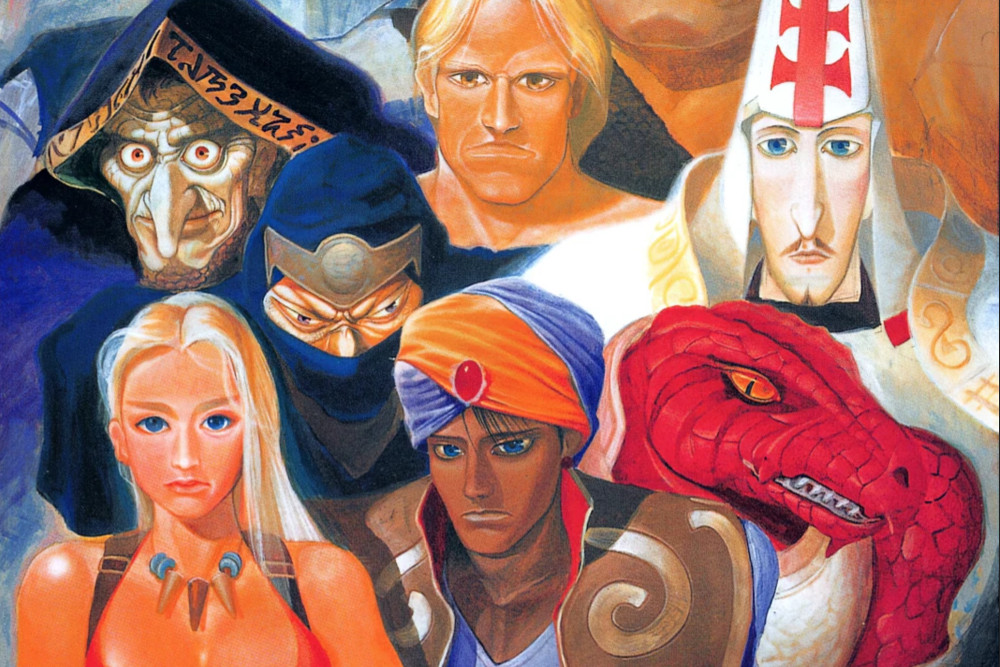
Final Thought: A quick discussion of the port: I played this in its Final Fight: Double Impact incarnation, and it’s great. All kinds of display options! There’s also (apparently) a ton of archival art and stuff but, annoyingly, you’ve got to unlock it all by playing the game in lots of particular ways and I just can’t be arsed. Ah well. Here’s an awesome bit of Magic Sword art that’s really stuck with me, though.
Developed/Published by: A.G. Cartlidge / Gemini Released: 1983 Completed: 02/12/2024 Completion: Delivered five presents to Santa.
Altogether now, in our best Noddy Holder impression: It’s CHRISTMAS! And here at exp. Towers that means we… play through ropey old Christmas games that we’ve dug up because maybe it’ll make us feel festive, although normally it just makes us shake our head in despair, thinking about a situation where anyone received these games and then had to play them because they didn’t have anything else to play.
So here’s Sleighbells1 for BBC Micro, which I think is the first time that arguably the UK’s most important home computer has shown up here on exp.. As part of the BBC’s Computer Literacy Project, it exposed entire generations to computers for the first time (and the BBC Micro was still being used in some schools until the mid/late 90s so it crossed from Boomers all the way to late Millennials). While I think that the most understandable point of comparison for non-Brits might be the Apple II, being a more expensive, sort of schooly “real” computer, I don’t think that really captures the utopian nature of the BBC Micro and the associated project (which you can read all about in NESTA’s excellent “The Legacy of the BBC Micro” white paper): an attempt to create a wide cultural change where the general British public would become truly educated in the tools that were going to change the entire world. To not just watch computers change everything: but take part in it.
When you think about that–and especially when you read the white paper–you can’t help but become a bit disappointed in the world we live in now. How computers work has become completely unknown to the average person, and our ability to control them has become ever sanded off as we get pushed into walled gardens and proprietary systems, and our governments seem to have absolutely no imagination in trying to actually transform society, at best hoping corporations might help regions “level up” rather than just suck money out, but mostly trying to keep enough blame on immigrants and minorities that struggling people don’t stop and consider a better world might be possible.
Sorry, this isn’t very Christmassy, is it?
Now. I’d love to follow this train of thought to explain something that I’ve often wondered about–that the BBC Micro seems to get discussed so much less in retro circles than contemporaries like the ZX Spectrum. Is it possible that utopian promises, long dashed, simply make us too ashamed to remember the venerable Micro? That it reminds us, always, that another United Kingdom was possible?
Not really. It’s just that the BBC Micro was really expensive, most people only played educational games or used LOGO on it, and commercial games outside of a venerable few were… a bit crap. Even compared to the likes of the Speccy.
But back to Sleighbells. While it does seem like Santa’s Sleigh Ride is the first Christmas game ever (look, I’m just not going to count Christmas Show and Tell) I keep finding new Christmas games that could easily be the second–it seems like 1983 was a big year for Christmas for some reason.
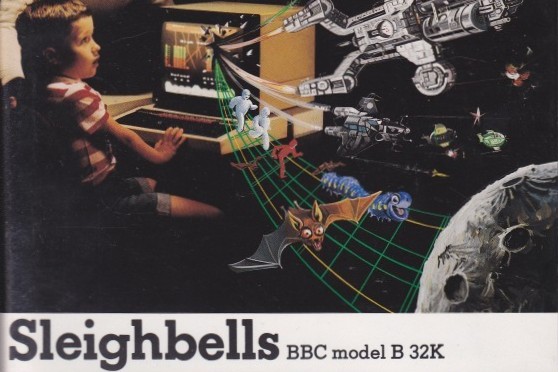
Packaged in generic box art and featuring absolutely no sleigh bells, Sleighbells is a multi-screen game that probably has some arcade inspiration but I’d be very hard pushed to work out what it is. Narratively, Jack Frost, who always seems to have a problem with Santa, has stolen all the presents, and so as Santa’s assistant you have to venture into his secret cave and steal them all back. You do this across four screens:
On the first screen, you have to get to the entrance while avoiding a gang of snowmen who make a beeline towards you.
On the second, you just have to run through the cave, avoiding the snowflakes that fall.
On the third, you… do the same thing again, but there are snowmen popping out of the ground and there’s a bat flying about that will kill you literally the instant the level begins unless you move forward immediately. Fun!
On the fourth, you’re supposed to catch the presents being pushed off ledges by… spiders(?) and move them to the left of the screen. The presents can squash you and that bloody bat is still there, but there’s absolutely no time pressure or anything so the first time I played this I just stood thinking I was “collecting” presents and wondering when the level was going to time out until I realised I had to move them one by one to the edge of the screen.
And that’s it, although it loops if you haven’t gone completely doolally with all the excitement.
This is, of course, rubbish, only remarkable because of how annoyingly difficult it seems at first (the snowmen mob you immediately, and that bat can fuck off) but once you get it it’s just a test of patience really. It does have a very festive title screen with a bleepy rendition of Jingle Bells, but that’s about as far as I’ll go.
Festive vibes ranking: LOW
Will I ever play it again? No!
Final Thought: Something I would be remiss to mention is that the spirit of the BBC Micro does live on in the form of the Raspberry Pi, which does see lots of ordinary people learning how to hack away at a very open computer format, even it is usually just to get a media server running, or a emulation box. It might have been nice, as Ian Livingston pitched, if the device had led to a second Computer Literacy Project as the BBC Nano though.
It’s Sleigh Bells on the title screen, but “Sleighbells” on the box. I guess I’ve decided house style is to say the box is correct. But this probably doesn’t come up much outside of slapdash home computer games. ↩︎
Developed/Published by: Human Entertainment / Nintendo Released: 13/12/1991 Completed: n/a Completion: Won a few matches in exhibition and then tournament, but didn’t keep going for reasons I’ll explain.
There’s an international football tournament on, which means that, as usual, I want to play a football game so I can imagine that Scottish people could ever be good at football. As I didn’t have anything particular to play in mind I took a look for what was immediately accessible and fell upon Super Soccer, the SNES’s first footy game, and one which has some nostalgia for me.
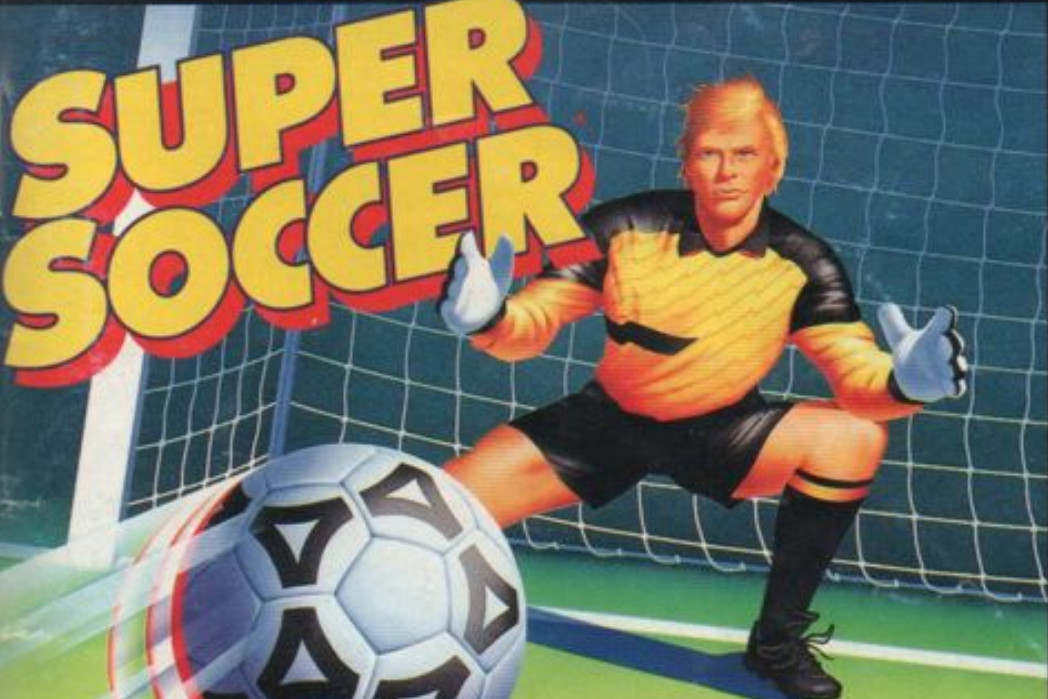
An unusual sort of nostalgia, really, because I won’t ever have played it at the time. I mostly remember this as being one of the early hyped titles of the system in the UK. It wasn’t a launch title–I believe that the system launched with Super Mario World as the pack in and just F-Zero and Super Tennis on offer—but had to have come out pretty sharpish (Wikipedia actually lists it as releasing on the same day in the UK as the system, which feels wrong to me). Using mode 7 to create a 3D effect at a time when the most “3D” a football game would have felt was the three-quarters side-on view seen first in Atari’s Basketball (and when most people would consider top-down titles like Kick Off superior anyway) it really looked like a huge step up to me at the time, and I remember pouring over the screenshots in TOTAL! (my Nintendo magazine of choice) with this image sticking out in my mind, featuring the TOTAL! writers cartoony personas:
Even at the time though, I remember thinking… wasn’t the game going to be much harder if you’re running towards the screen?
Yes, Super Soccer has the exact problem that a small child in the early 90s could foresee, and a few others too. But let’s not get too negative too quickly, because in its way, Super Soccer plays a decent game of football. Er… sort of. You’ve got the ability to target a pass (and change who you target), do a low pass/shot, and a high shot when you’ve got the ball. When you don’t, you can do the traditional sliding tackle, but also the more unusual “shoulder barge” to knock your opponent away from the ball. This is generally considered by players a bit of a liberty that Super Soccer is taking with the rules of association football, but I have to say it functionally doesn’t work any different from non-sliding tackles you generally get in other games, except that the punishment is a bit reversed. In most games, sliding tackles are the dangerous ones, likely to end up in a yellow or a red card, here your shoulder barge does seem to be implied to be more of a rugby tackle and you can easily end up with a red immediately off them, which generally seems to come if you do it from behind (but it might also be totally random–I ended up with a game with 4 players being sent off, so I can’t really be sure.) There’s a bit of risk/reward, let’s say.
Once you get used to the controls–and if you’re playing in the direction where you can see the goal–this is… fine! The most major issue really is that there’s no indication of which player you’re actually controlling, so in particular the targeted pass seems basically useless because it’s got that thing where you pass, but you’re moving in a direction, so the guy you’re passing to you switch to control and they… run away from the ball. In general though the ball sticks to your player so you can rely on careful low passes and dodging around to try and keep possession, and when defending just hope for the best. Goals aren’t effortless, but really only because it’s hard to get into position for them; if you can basically line yourself up just inside the goal posts on either side you’ll almost certainly score, which makes them a bit underwhelming. Or impossible, if you’re running towards the screen, because the goal doesn’t even come on screen until you’re practically running the ball into the keeper’s hands.
This would be a perfectly fine knock-around footy game–and I bet it was for anyone who had two controllers and at least one mate–but for the fact that it’s so bare-bones. The first huge problem, of course, is that you can’t play Scotland in it, which immediately docks it half the score it would get if I gave out scores. You could, like… play Italy or something and just pretend they’re Scotland, I guess. The second problem is that the tournament mode is just a slog through every team in the game from the worst to the best–not really a tournament at all.
I was sad to not be offered a group stage and knockout rounds, but it’s something I could live with bar one other aspect of the tournament mode: You’re locked to 5 minute halves, and the game stops the clock regularly (you know, unlike actual football) meaning that the average tournament game you’ll play will take upwards of 15 minutes. I looked up a longplay on YouTube and the poor guy had to play over three and a half hours!
It’s a bit strange considering exhibition mode lets you choose halves of 1 to 99(!) minutes long, and I suppose the question that might be raised in people’s minds might be “well, if the game is good, does it matter how long the halves are?”
It’s weird, right? It feels like it shouldn’t, but pacing is everything. Football is all about that hunger for a goal or that desperate defence, and without a sensible time limit in either direction tedium starts to set in. The time limit in a football game is like the health bar of a boss. It doesn’t matter if it’s fun to dodge their attacks or wail on them; the longer it takes, the worse it feels, even if you’re just going to do the same thing to the next enemy.
(It’s worth noting that the official greatest game of all time, Sensible Soccer, limits halves to 90 seconds.)
It’s made worse here really by the fact that half the time you’re playing facing the screen, meaning you generally get 5 minutes to try and score enough that the next five you’re just clinging on trying to defend. It’s like the game was designed to feature the kind of boring fucking football that ruins international tournaments. “Score one lads, then settle in.”
All that said with 90 second halves I’d probably have played this through. There’s a very funny wee twist at the end where the ref steals the trophy and forces you to play the ultimate Nintendo team to truly become world champions, but it’s hardly worth getting there for it as it is.
Will I ever play it again? I did save my mid-tournament playthough but this is one best left in memory.
Final Thought: There are some interesting… well, mildly interesting changes between the original “Super Formation Soccer” release from Human in Japan and the global release from Nintendo, including slightly changing the player sprites which barely feels worth the effort, but there must have been some reason???
Developed/Published by: Parker Brothers Released: 7/1982 Completed: 21/04/2023 Completion: Got a high score of 1216 on easiest, but also played it in smart bombs/solid walker modes. I could do better! Trophies / Achievements: n/a
As a hardcore follower of everything I’ve been up to, I’m sure you already know I’ve been working my way through Llamasoft: The Jeff Minter Story, but what you won’t know, probably, is that when I reached Attack of the Mutant Camels I had a minor crisis: do I go on and play it without the foreknowledge of The Empire Strikes Back for Atari 2600, or do I go back and play that, even though it’s jumping several years on from where I’ve got in the Atari 2600 catalogue? But today is also the last day to pre-order a physical copy of exp. 2601, so writing about another Atari 2600 is almost promotional.
It gets me started on playing through all the Star Wars games chronologically, too, because it’s, surprisingly, the very first licensed Star Wars game. You’d probably think that would be Star Wars in the arcade (the very first arcade game I ever played, fact fans!) what with it being based on the first movie and everything, but nope, it’s this, released over a year earlier but still two years after The Empire Strikes Back. It’s unclear if the decision to go with The Empire Strikes Back was an attempt to catch the (two year old) zeitgeist or was design led–there’s an interesting contemporary interview with the designer Sam Kjellman and programmer Rex Bradford in the January 1983 issue of Electronic Fun with Computers and Games where Kjellman says “we considered the Death Star scene in the first movie” but there’s not much to make of it either way (there’s a great paper prototype image in the article, though.) And weirdly… Atari’s arcade Star Wars would be released the same month as Return of the Jedi in cinemas!
The Empire Strikes Back is a post-Defender game–one of the earliest, in fact, to not simply be a direct clone, following really only Choplifter on Apple II (Chopper Command, ironically also helicopter based but a “true” Defender clone predates it on the Atari 2600, though). Using the Battle of Hoth as its setting, the player controls a snowspeeder and is attempting to defend Echo Base from the approaching AT-AT Walkers, with a game over if they manage to make it to the base (which unfortunately isn’t marked in any way other than it is, I guess, just off to the right somewhere.) Unlike the movie, however, where AT-ATs are famously impervious to the snowspeeders attacks, here you are stuck shooting them to death, with each taking 48 shots to die, colour cycling so you know how damaged they are, because you can’t knock them over or anything. In fact, rather hilariously, the manual makes a point of the fact that you can’t shoot their legs, which is probably the one bit of them that would make sense to shoot.
There are, however, lots of surprising quirks and designerly touches to what would, otherwise, be a fairly straightforward shooter. The game has the usual overblown “32 games” claim that 2600 games basically always did (4 modes in single and two player, with five difficulty levels, basically) but the modes include the ability to make the walkers solid (which actually feels sort of more right, even if it is harder) and to add “smart bombs” which the walkers can fire and which follow you around and you need to shoot to survive (which I can take or leave). Whichever mode you play, walkers occasionally reveal flashing weak points you can shoot to destroy them instantly, which creates this interesting risk-reward as you have to fly around them to try and shoot the weak point in time, putting yourself in danger.
Most interestingly, however, you can actually repair your snowspeeder by landing it, up to two repairs per life, with your snowspeeder able to take up to five hits. And if you can survive for two minutes without dying, you “use the force” and are invincible for 20 seconds and can then repair your snowspeeder up to two more times. So the game also layers on damage management–you don’t want to be constantly repairing, because you lose precious time and you only get two, so you have to very carefully track how many hits you’ve taken, especially as the walkers get more and more powerful the more you take down. There’s honestly quite a lot going on.
There is, however, no ending to the assault, as it’s a pure score chase. Released earlier in the 2600’s lifetime it might have been saddled with a time limit (after two minutes and forty-five seconds the rebels escape…) but it’s definitely better this way even if you really don’t get a breather. This fact, however, leads to the rather absurd fact that Video Review magazine enlisted SF author and legendary prick Harlan Ellison to write a review of this despite the fact that he had never played a video game and clearly hated them. Readable in a couple of his essay collections (I borrowed a copy of Sleepless Nights in the Procrustrean Bed from archive.org, which cements how essential its borrowing library is for research) it’s a genuinely rather unhinged screed in which Ellison accidentally implies that he’s had sex with a non-zero number of ten year-olds:
“No ten-year-old I’ve ever encountered can write Moby Dick, create a Sistine Chapel fresco, or fuck with any degree of expertise.”
I guess at least he didn’t enjoy it???
Anyway, he spends most of it whining that you can’t win, referencing the Myth of Sisyphus because, you know, he’s sooo clever.
I’m not particularly interested in having an argument with a long-dead self-confessed nonce–in fact I rather enjoy that he was so pleased with his zingers that he wrote a post-script a year later where he crows over the video game crash. And I suspect he forgot all about this by the time he would, hypocritically, declare himself “greatly amused by the prospect of ‘a game that you cannot possibly win’” with Cyberdreams 1995 adaptation of I Have No Mouth and I Must Scream (according to the Digital Antiquarian in a brilliant article as always.) But I will say that Kjellman and Bradford’s take on The Empire Strikes Back is better than it really has any right to be. The controls are far from perfect, and the game struggles massively with the fact that your snowspeeder’s position on screen often makes it hard to react quickly to walkers or their attacks. You can almost see the Llamasoft inspiration in how much the game makes you feel like you’re an annoying fly, buzzing around a quadruped, as you have to carefully “loop” your snowspeeder around in front of or behind the ship trying to maximise your hits (unless you have to suddenly dash for a weak point.) But there’s something there, and you can strategise–the manual recommends a farming strategy where you weaken the front and back walkers so you can have more time destroy the ones in the middle, and while it’s hardly Geometry Wars or anything, there’s a pleasure in attempting it.
Enough of a pleasure, actually, that I played this for much longer than I expected. For 1982–the year of Dig Dug and Deadline–The Empire Strikes Back ain’t bad! Lighten up, Harlan!!!
Will I ever play it again? I could be convinced to. I suspect I’d rather play it again than the next Star Wars game chronologically: Star Wars: Jedi Arena.
Final Thought: Ellison ends his postscript, joyful at the video game crash:
“At moments like these, I find my reluctant acceptance of the transient nature of the human race ameliorated. Perhaps the cockroaches won’t take over in my lifetime.
On the other hand, the spirit of James Watt is still with us.”
I’m not quite sure why, but saying so feels very exposing. Maybe it’s because before playing Hi-Fi Rush I had no idea what it actually was, and the game’s bright anime-adjacent stylings somewhat had me discounting it out of hand, so I assume the extremely cool people who read this would be doing the same.
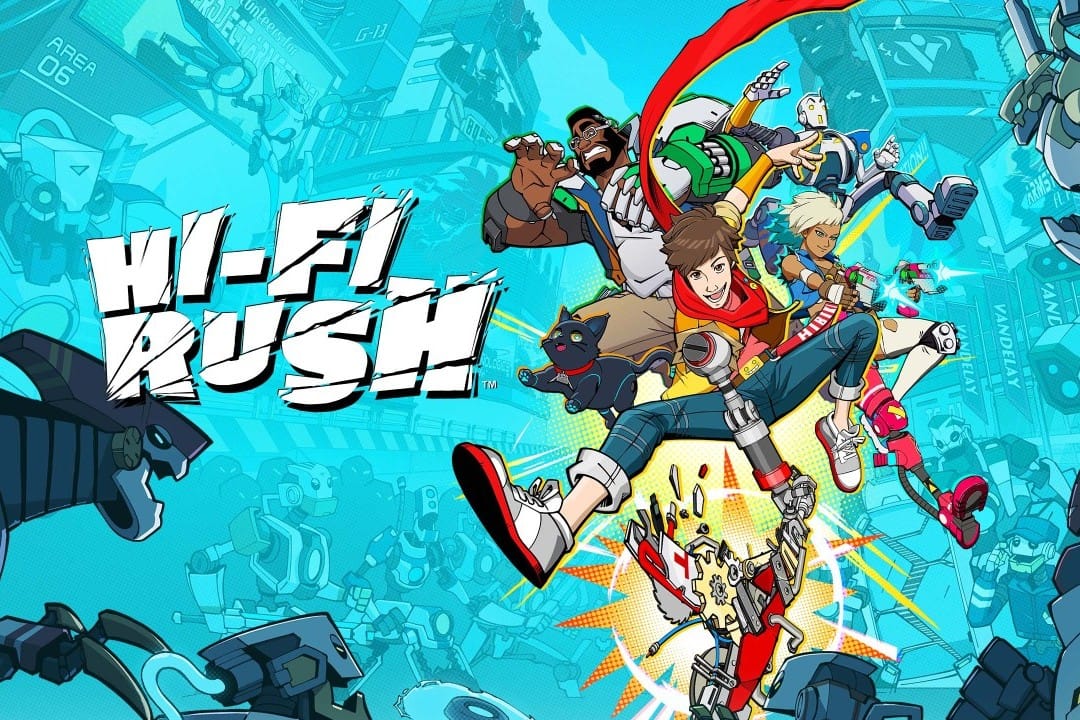
Maybe it’s also just that Hi-Fi Rush is… pretty straightforward? It’s not particularly trying to move the medium forward (although I think it does some clever stuff) it’s just trying to be very, very good at what it’s doing. And what it’s doing, actually, isn’t so much “anime” as “full on Sega blue skies” while being an incredible competent 3D action platformer/brawler with a likable (dare I say loveable) cast of heroic misfits telling a simple but effectively structured narrative with some very savvy music choices.
The thing is that… succeeding at something that hits that many beats isn’t actually… easy? Something I’m most struck by is actually those characters. By now we’ve all seen the nadir of Marvel-inspired quip-a-thons thanks to the likes of that Forsaken trailer, but even looking at something like, say, Guardians of the Galaxy, where they have something that (at least previously) had worked, it’s remarkable how flat it falls. Here, you have a goofy, act-first-think-later hero, Chai, the cleverer-than-him female leader, Peppermint, the funny robot, CNMN, etc. in a very simple “baddies are doing bad things, let’s get the different things we need to defeat them” story, but it completely pops because there’s been care to keep the story rolling naturally so you flow through it and grow into caring about them. I’m so insanely curmugeonly that I can’t believed to ride that line for me. But they did!
Now you could say, “ah, but the secret weapon here is that the game uses actual songs that you actually like! That always works!” But it doesn’t work if all the pieces don’t fit together. There’s no better example than one of the game’s latter levels that uses The Prodigy’s Invaders Must Die. It plays at a moment where narratively all hell is breaking loose. It feels like you’re in a climax of an action movie, not just because the music is playing, but because the story has taken you there. That the level design is clever enough to cool down, let the music pull back a little, and then kick it back in for a climax? Absolute chef kiss.
(It only really gets better from there, too. Ending strong is rarely something I think video games aspire to, but Hi Fi Rush is sensibly around the 10 hour mark and the last three levels or so rip. Did the appearance of The Joy Formidable on the soundtrack literally make me emotional? Yes. Yes it did.)
Now interestingly, I haven’t actually played any other Tango Gameworks titles so I don’t really know if I should have expected rock-solid play, but either way I was surprised by how well it does. What makes Hi Fi Rush genius, I think, is that it takes a type of game I am incapable of not button-mashing through and adds a rhythm action component that doesn’t expect but rather, uh… politely asks you to hit your combos on rhythm. And it works!
I can criticise it, somewhat, however They quickly add quite a lot of subtleties to the combat and don’t tutoralise them heavily enough–I didn’t understand how to use Chai’s “partner combos” until well over half-way through the game, and I don’t know if I ever got comfortable with parries because standing around waiting for enemies to attack seemed the antithesis of everything else I was doing. There end up being a lot of buttons and you have to internalise the order of your partners and switching between them rapidly in situations where there are like 3 different kinds of enemies at once meaning at times combat is just a total stramash. But even then, there’s always the beat to follow. It’s very clever.
Anyway. I loved this. It’s one of my favourite things I’ve played in years. Your mileage may vary!
Will I ever play it again? When it finished I wanted to play it more. That literally never happens. I sort of hope there’s a sequel, but the story of this is so pleasantly complete that I’m not sure if there should be one.
Final Thought: I may also be a bit of a sucker for this game because you’re always accompanied by a black cat. Inspired by the game director’s!
Developed/Published by: Melbourne House System: Commodore 64 Released: 1984 Completed: 11/12/2023 Completion: Beat it with a score of 100 out of 100.
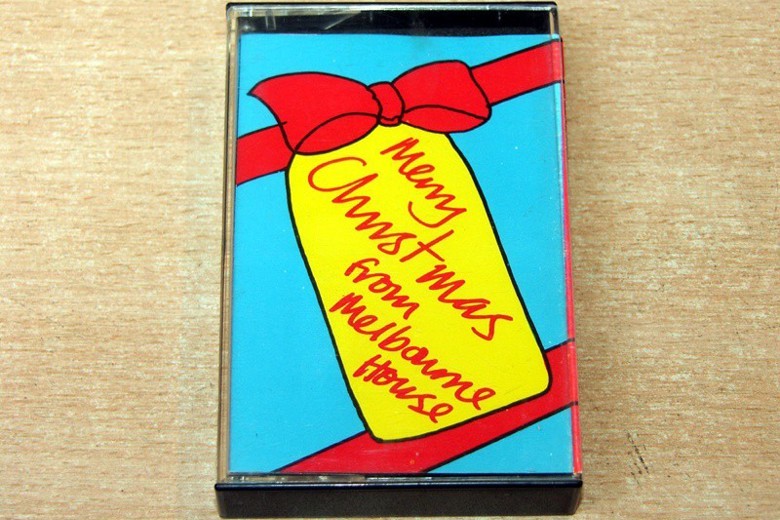
It’s 1984 and the Christmas cash-in market is finally mature, with five whole games released for home computers (at the very least.) Alphabetically first in my list (because Icon Software chose to go with “Xmas” on their merry release) Merry Christmas From Melbourne House is a slight cheat because it’s really just a tiny tech demo/bit of marketing, but it was sold, costing 95p (the price of tape duplication and postage?) for readers of Commodore User (it was actually in the December issue and the deadline was December 17th to get your money to them, which makes me wonder how many people played this long after things stopped being festive.)
It is though, honestly, what I was kind of expecting from A Christmas Adventure. It’s a short, very easy little adventure game that… passes about half an hour and actually manages to feel Christmassy.
Like A Christmas Adventure, you’re tasked with making sure Santa can get away from the north pole to deliver presents, but in a shocking twist… YOU are Santa. The game’s blurb claims he’s “attempting to stop an industrial dispute” that “is threatening the delivery of toys to children of the world” and it sounds like jolly old saint nick is a fat cat like the rest of ‘em, and out of solidarity with the elves and workers everywhere I spent quite a bit of time typing things like “GIVE ELVES RAISE” and “PROVIDE TIME OFF” but the parser never understood it, so I almost didn’t finish this.
The plot is a bit oversold anyway, considering the solution is pretty much “Get off your fat arse and pack your sack of toys yourself, Santa.”
As you’re not doing all that much, the parser is adequate, and the graphics are… genuinely quite evocative. They are important too–the toys you have to pack are all on one screen. I don’t generally like this design in graphic text adventures–where you don’t get told everything in text (I’m a VERBOSE man in Infocom games)–and having to work out directions here was not my favourite, But it worked well enough, and I was even charmed by the full screen advert for Melbourne House games.
Anyway, lemme see how much 95p is in today’s money. £3.77. I can’t really say people got their money’s worth here, but they could do a lot worse.
Festive vibes ranking: HIGH
Will I ever play it again? I’m good.
Final Thought: Joe Pranevich over at The Adventurer’s Guild played through this as well if you’d like to read something more in-depth about it, with the bonus that one of the developers, Dave Johnston, shows up in the comments, revealing that it was developed “in a matter on weeks using an in-house text engine and a tweaked sprite engine based on Way of the Exploding Fist code” and that he didn’t even have a copy. They paid people at Melbourne House so poorly that they couldn’t raise 95p???
Developed/Published by: Chartscan Data, Inc. System: Apple II Released: 12/1983 Completed: 11/12/2023 Completion: Couldn’t get Rudolph to drink his bloody milk.
Well, it’s been two years since I thought I’d “have a look at the earliest Christmas games” and I managed to play… one of them. And then last year I was sick for most of December so I didn’t really play anything other than tapping miserably at Marvel Snap. But I’m back, baby!
First up, I owe almost all understanding of this game to Joe Pranevich over at The Adventurer’s Guild who has written an insanely detailed post on it which I highly recommend reading, but I’ll summarise some of the findings here.
A Christmas Adventure is generally considered online to be the second Christmas-themed video game ever released commercially, following the somewhat bizarre Santa’s Sleigh Ride, but I’ve since discovered that there’s several ZX Spectrum games with a 1983 date (including one, potentially lost media, called A Christmas Adventure as well???) so there’s probably more out there for like… the Dragon 32 and shit. But let’s talk about this one anyway. What makes it more interesting than just potentially being the second Christmas-themed video game ever is that it isn’t just, as you might expect, a Christmas cash-in, but an attempt by a French Canadian fellow named Frank Winstan to make video games that acted as greeting cards. Mind how for a while personalised children’s books were all the rage, and you got this crappy book where a jpeg of your child’s face was awkwardly stuck on the main character? Like that basically, with the idea that they’d start with this Christmas “card” and then do… well probably Easter, and then branch out to like… “Happy 43rd Birthday: the adventure” or “Sorry Your Grandma is Dead: the adventure” I guess!
Unfortunately (or not) due to time pressures they never quite managed to get the company off the ground, with this selling poorly its first Christmas, although Winstan would continue to work on it through 1986(!) updating and improving it. As far as I know, I’m playing a version from the same era ion Pranevich did, which seems to be a later version than the one you can watch on Youtube.
Anyway. A Christmas Adventure is an early graphical text adventure; originally released in 1983, it would be contemporary with the very end of Sierra’s Hi-Res Adventure line before they’d go on to make the more sophisticated King’s Quest, and surprisingly, very few other examples, making this… sorta cutting edge?
What does feel cutting edge actually is the opening cinematic, which you have to flip the disk to see, which includes an animation where you fly to Santa’s Ice Palace. Sierra’s Hi-Res Adventures have insanely terrible art (well, apart from Dark Crystal I’d say, which has a near stained-glass window approach) so getting something that generally looks like it’s had a bit of effort put in is rather nice.
Telling that classic story, “Santa’s been kidnapped and only YOU can save him” after the intro you’re dropped in his house and have to wander about picking things up and using them to save him. I very quickly hit the issue that has stopped me bothering to play any of Sierra’s early output: the parser is terrible. Doing literally anything is a nightmare, and I will fully admit I had to use Pranevich’s article to walk me through the game, and he had to hex edit it just to understand how to solve it!
It’s confusing, because this is a commercial concept based on greetings cards. Now, I imagine nowadays you can probably get “escape room” greeting cards where you have to like, solve a fucking cypher or whatever to see something that says “We’re getting divorced” (and if there isn’t, I should get on that) but in general, if you’re giving someone a gift like that you want them to… enjoy it? I really assumed that this would be very simple. You know, for kids. I mean you’re saving SANTA. Not Santana (ft. Rob Thomas) which would of course be for cool adults only.
I suppose I’ve said it before, but maybe people in 1983 were made of sterner stuff; less likely to give up. I guess some puzzles in this are easy, like dressing up like Santa to fool his safe, or the disk that tells you the password right on it (Santa’s Jewish???) But then like… there’s a time machine. And there’s just so much wrestling with the parser to get anything done. Typing “HELP” gives you a list of words that the parser understands which is, 100%, a lie, because almost all the words don’t work.
Ultimately, it’s the reason I couldn’t finish this. In his article, Pranevich was able to feed Rudolph, but despite having stuck the “was’bask+mlk” in the fireplace I could not feed him. I went through every possible thing I could imagine, really tried to get Martin Luther King out of that was’bask, but I’m starting to believe the archive.org version of this is just bugged. It is what it is, and I watched the ending on youtube (and for good measure used the HELP to see the message as well.)
Feels a bit harsh to say this isn’t good despite the fact it it is, er… not good, just because it’s an interesting attempt at something that just seems to have come at the wrong time and with some rather wrong-headed ideas about how challenging it has to be. Also: it didn’t make me feel Christmassy at all!
Festive vibes ranking: Despite the setting… LOW
Will I ever play it again? I have a save. If anyone can tell me what to type to get Rudolph to eat I’m making that bastard eat.
Final Thought: It’s worth noting that you can really feel the developers–at least Frank Winstan?–cared about this project because it’s full of little touches. I love that Santa has a poster of Bob and Doug McKenzie’s backdrop up (as Canadian a reference as you’re going to get) and there’s non-sequiturs like Pac-Man showing up for a hot minute.
Do you have any famous works that you’ve always been… scared to start? I don’t mean intimidated–I haven’t read say, Infinite Jest not because it’s long, but because [jerk-off motion]–but that something is talked of in such hushed breaths that you’re worried it just won’t live up to whatever you might have imagined?
I have it a lot, and because I generally try to read as little as possible about things before I experience them, it’s not so much that I’m imagining these incredible things, as much as there’s this astonishing possibility space out there that it almost feels… wrong to cut it down to just the one thing. Schrodingers’ video game.
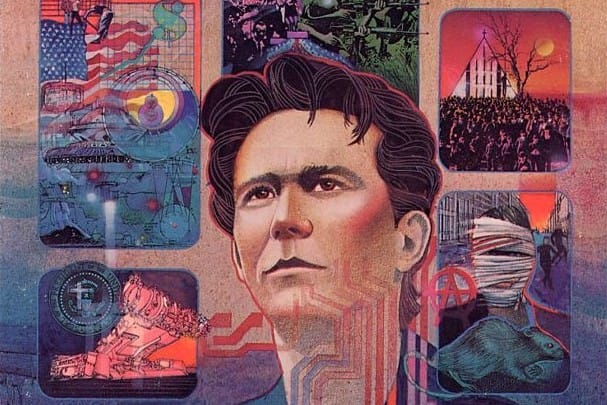
For A Mind Forever Voyaging, all I’ve known until now is its striking cover art, and that it’s Steven Meretzky’s attempt to grapple with Regan’s then-recent re-election by landslide. So it was with some trepidation that I started pouring over the box, feelies and manual.
The manual is worth reading, with the most empathetic piece of writing I’ve experienced by 1985 in video games, as we’re introduced to the game’s central concept: you, the player, are “PRISM” who, raised in a perfect simulation believing themselves to be the real person Perry Simm, discovers that, well, no, they’re actually just an AI.
It gave me enough pause that I actually put the game down and didn’t start it for several more weeks! If anything, the possibility space had got larger.
A Mind Forever Voyaging, now I’ve played it, is kind of a hard one to discuss. On hand, it’s flawed. As deeply flawed as any Infocom I’ve played up to this point has been, and for many of the same reasons. On the other, it’s a genuinely captivating piece of speculative (interactive) fiction that will probably stick with me forever, not least because while it might over-extend itself on specifics, politically and thematically it is one hundred percent correct.
Let’s get to those specifics. First up, the game really requires you to read the manual. While it’s nothing as complicated as Suspended (which I still can’t believe was only Infocom’s sixth game) there’s a similar sort of “mode switching” as you begin not able to walk about and pick up stuff but can simply switch between locations in communication mode (largely able to just see the same locations, or veg out and watch the news) or read backstory in library mode. It’s really here that you get to what could be considered the game’s most major flaw–how self directed the player has to be for most of the time.
This isn’t the same as something like Planetfall, where the player is primed “you’re stuck on this planet bro” it’s actually literally like “you’re a computer and there’s nothing to do?”
There are big swathes of this game where you’re stuck typing “wait” or even resorting to “wait 120 minutes” which I found almost… shocking. It’s made all the more baffling by the fact that the game has a news network that you can “watch” but when you’re in the mode time passes at a crawl, meaning that you’ll probably burn through basically the entire thing (hundreds of lines of script) just waiting to get to the first simulation!
The meat of the game is in that simulation, however, and this was a massive surprise to me. The game presents what is pretty much the only direction the player gets–that as PRISM, you’re supposed to do a lot of very mundane things in a simulation of a small town, Rockvil, ten years in the future, like eat in a restaurant and speak to a clergyman–record them, and then deliver the recordings to see if the government’s transparently republic agenda known as “the plan” will work. It’s here the game takes a massive diversion from what I’d expect from a Infocom game at this point, because you enter a genuinely huge recreation of a town that is nigh-unmappable, with hundreds of rooms and most rooms having as many exits as there are compass points.
Don’t get me wrong, this is a meticulous recreation of a town and is an extremely intentionally designed space, but it’s also not a “designed space” as any video game developer would know it now. I quickly gave up any pretense of mapping the space–relying on the one decent map I could find online–and began wandering.
And wander I did. To be honest, you don’t genuinely need a map outside of the one that comes in the manual, as you aren’t really needing to hunt anything out. As has been written elsewhere, in A Mind Forever Voyaging, you are an observer, not an active participant, and as a result, simply wandering as your wont takes you and recording what you find interesting or pertinent is genuinely enough to progress.
Of course, that’s as long as you understand that, because once you’ve managed to “complete” the tutorial-like first simulation, the game literally goes “oh, we don’t have anything for you to do now. Entertain yourself.”
I know that it’s easy to accuse modern players of wanting everything on a silver platter (or at least, with a silver arrow pointing in the direction of the platter) but I really do find it hard to believe that even players in 1985 didn’t find this kind of thing frustrating. Noodle around long enough, and you’ll work out that you can get to a simulation twenty years in the future. But what do to there? Might as well just record the same stuff you did ten years in the future, right?
And it’s here we hit what is–confusingly–A Mind Forever Voyaging’s most glaring flaw but also what might be the thing about it that makes it the most memorable. For the majority of the game all you do is revisit Rockvil and record how it changes across the years. It’s repetitive, and by the fifth time you do it you are almost certainly tired of the same interactions.
But it’s also a perfect experience in seeing the slow decline of society under rule by Republican values. In 1985, this was just a scary warning of how the future could look. In 2022, it’s a sharp shock to the player, showing them how much has been lost and how much more will be lost if we continue the way we have. It is too easy to experience the decline of our civilisation as a frog, slowly boiling, and A Mind Forever Voyaging asks you to remember what temperature the water actually is.
As Steven Meretzky noted in 2017, everything came true. The game features a border force who act as judge, jury and executioner; viciously racist policing, and the complete MAGA-fication of politics long before anyone even imagined such a thing. Even the things that seem far fetched in the moment–a supreme court giving the ok to religious fundamentalists seizing government property?–doesn’t seem that absurd when you ask “could the current supreme court have sided with the far-right extremists in the Occupation of the Malheur National Wildlife Refuge?” the answer is yes, obviously yes.
And isn’t it disturbing that you’ve probably already forgotten about it?
It is painful, genuinely painful at points, to be playing a game that shows horrible things happening in a decade to represent a society that is past the point of no return and recognise that these things are already happening around us. That Meretzky was far too kind to expect things to not have gone to totally hell until 2050 at the earliest.
To be honest, a game like A Mind Forever Voyaging is as vital now as it’s ever been, and while I can’t recommend it without caveats, I actually rather like that I’m not completely certain that my instincts on its subtler “flaws” are correct or not. Lack of direction and the need to endlessly wait at points? Yeah, those are bad. But I can’t decide if choosing to create a huge, often samey and empty Rockvil is actually worse than making something more tightly designed. Rockvil might feel more real to me because I had to traipse through several parking empty parking lots; I can’t tell if it’s an acceptable price to pay that so many descriptions are generic (I got tired of things being described as a “totally ordinary [noun]”). Wouldn’t it be more interesting to have puzzles to solve? Like, shouldn’t I have to steal a ration card to make the ration card fraud arrest happen so I can record it? Or would the ludic nature of that undo that sense that Rockvil is real, and I’m genuinely experiencing it?
With modern eyes, I think I would prefer the latter (tighter, have some puzzles) but I don’t actually blame Meretzky for going the other direction at all–especially considering the one puzzle in the game (avoiding being killed in act 3) involves, annoyingly, having to wait (again!) in the right place at the right time to even notice what’s going on (I really don’t know what the hell was going on with Infocom’s playtesters sometimes.) But the only thing I really don’t think works in the game is the saccharine epilogue. The digital antiquarian goes into probably too much detail on it, but he successfully raises that A Mind Forever Voyaging’s setting, movingly portrayed or not, doesn’t make a ton of sense if you go one level down, and ultimately only serves as backdrop for a polemic, which would ring more true I think without the San Junipero wish-fufillment. There’s no guarantees a utopia awaits if we do the right thing now. It requires constant vigilance.
(And I have to agree that casting Perry Simm as mere observer does him a disservice–memory was at a premium even with a new extended Z-Machine interpreter allowing 128k instead of 64k to fit the game into, but that the game’s descriptions are often so dispassionate, and we never see or experience Simm grapple with his new existence as an AI is a disappointment. But A Mind Forever Voyaging is already doing so much, probably too much.)
So after all that, how do I feel now that A Mind Forever Voyaging is the thing that it is, rather than whatever I imagined it could be? Incredible, honestly. I’m richer for having played it, warts and all.
Will I ever play it again? It’s an interesting question. I’m not sure I’d choose to play it again–the slow decline of society is… slow. However, it’s a game I would relish showing to others.
Final Thought: Late summer/early autumn in 1985 was insane. A Mind Forever Voyaging was quickly followed by Super Mario Bros. in September and that was followed by Ultima IV days later. Hard to argue that these three don’t represent in many ways the peak of creativity in video games even now.
Developed/Published by: Namco Released: 06/08/1985 Completed: 18/08/2022 Completion: Played a few levels in both the original dungeon and the secret “Another Dungeon” but life is too short. Version Played: Namco Museum Archives Trophies / Achievements: n/a
You know, I’ve had fun playing the old games I’ve got access to; I’ve discovered some hidden gems, rediscovered old favourites… but there’s definitely points where I’ve honestly wondered how video games as a medium didn’t merely survive but thrive post 1983 crash. Because to be honest, the last chunk of games–action games, anyway–have been pretty miserable. The Famicom’s output has been totally uninspired, and every arcade game is so brutal and relentless that there’s no time to get hooked–you just die.
So, no matter my own attempt to understand these games within their actual context, it’s been really hard to get into them. I’m still playing them in the 2020s, and I’m still me.
And this Famicom port of The Tower of Druaga is a perfect example of that friction. I don’t like the The Tower of Druaga. You can read all about that here. But it’s also insanely seminal and was a genuine phenomenon in Japan. I’m sure Namco’s Famicom port was hotly anticipated and as far as I understand it was a massive hit. And academically? I understand it completely.
Because this is a great port! Sure, it’s got the muted colours of a Famicom/NES release and like Mappy chops down the level sizes (7 tiles vertically rather than 9) but most importantly not only does it feel similar but all of the hidden bollocks (I mean treasure) are unlocked as in the arcade (bar some very minor differences) allowing you to actually throw yourself into finishing the game without having to spend a small fortune in 100 yen coins–you can even continue! I can understand totally why you’d be running out to get this for your Famicom in 1985.
But it’s 2022 and this is still just unbearable to play. I just can’t put myself in the shoes of a wee guy in 1985 playing this and (apparently) enjoying it. Booting this up and being faced with just how slow Gil moves on the first level? It’s revolting. How boring were things in 1985 that I would sit there, playing this with the tips page of Famitsu (or whatever) open?
What makes my total inability to get this worse is that this version even includes an entire extra dungeon, with a whole new range of inscrutable things to do required to complete it. It’s actually hard to argue with the insane value here and how thrilled you’d be to discover this! But to me, in 2022, it’s like finishing a plate of rocks and being served a plate of glass.
That said, it’s a matter of months in 1985 before dessert shows up, and it’s literally ice cream. I know why the video game industry survived a crash and then whatever this is: Super Mario Bros.
(Oh, but I’ve got Namco’s Battle City to play first. Dang it!)
Will I ever play it again? Thankfully, these are the only two versions of The Tower of Druaga I have access to. I know the Game Boy version has bosses and things (sort of interesting) and I believe the PC Engine version is significantly different (more of an action RPG thing) but I’ll stick to ice cream from here on out.
Final Thought: Struck by the fact that as I’m back into collecting Game Boy games and I hope one day to go back to Japan to pick up an bunch of cheap fodder, I’ll already be seeking Namco’s Game Boy compilation cartridges meaning I may end up with a copy of the Game Boy version after all via Namco Gallery Vol. 2. I’ve never been one for toppings on ice cream really, but guess I might as well sprinkle some broken glass on it…








 Unlock with Patreon


![The Tower Of Druaga [Famicom] (Namco, 1985)](https://expzine.com/wp-content/uploads/2026/04/the-tower-of-druaga-famicom-header.jpg)

