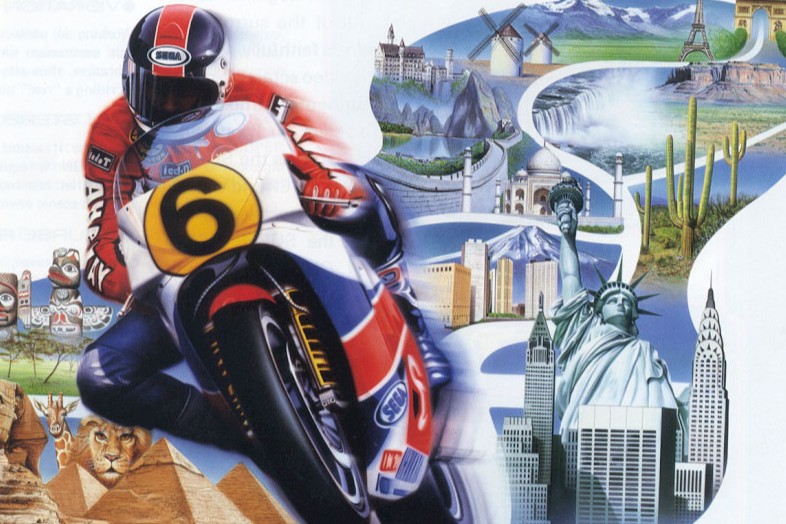
Developed/Published by: Sega Released: April 1987 Completed: 17th August, 2015 Completion: Finished all the courses, including the world tour. And without any saving or anything like that. Trophies / Achievements: n/a
Super Hang-On, guys. I know what you’re thinking, because it’s what I was thinking too. “Ugh, isn’t this the earliest of the Super Scaler games? I mean it’s really boring, right? Just racing on a two lane highway for ages. Barely any more evolved than Pole Position.”
What an idiot I was and what an idiot you are. This is the wrongest wrong, and I guess it took those wizards at M2 with their 3D Super Hang-On release for 3DS in 2013 to show me my wrong wrongieness for the wrongitudinal wrong it wring wrong wubba wran
(Sorry readers. Let’s take a little intermission here to listen to Super Hang-On’s super cool chilltimes music. Ahh, that’s better.)
Super Hang-On is fantastic. I don’t know why I believed we’d all decided it wasn’t very interesting. Maybe it looks a bit boring in stills, and likely, Outrun, with its wide roads, loads of cars and set dressing, just seems like it’s better. But here’s the deal with Super Hang-On: it’s an incredibly clever and subtle example of pseudo-3D racing. The game is about two things: 1) avoiding the many, many other racers on the narrow-ass road by carefully weaving through them, even as they attempt to murder you because they hate you 2) using “turbo” (which boosts your max speed by like 50km/h) carefully when you know you won’t fly off the aforementioned narrow-ass road or right into another racer who, also aforementioned, wants to murder you.
This is but two very simple mechanics. Together, they are perfect. Playing Super Hang-On on 3DS is almost painful, because you more or less death grip your 3DS with a brutal intensity as you try and edge through the field at the maximum speed you can manage. And you have to, because the time limits are absurdly strict.
Which is one of the reasons the M2 version is so great. There are a variety of settings which—and this is maybe the one real negative I have to give—are a bit obscure (I’m still not 100% sure what they all do) but with some fiddling you can get the game to “challenging” rather than “you will never finish this, puny humans.”
It’s possible this image doesn’t capture just how great the 3DS version of Super Hang-On is.
And the other settings are all great. Playing it using the gyro is actually really fun, the screen tilting is great (if you want to use it) and the 3D is fantastic even if it still doesn’t agree with me at all (I wonder if the New 3DS1 would fix that) so I sadly had to not really use it. It’s the perfect release, although if I was super greedy I’d want them to include the track from Hang-On too?
Maybe this one does? Wheee!
Super Hang-On is not optional. It’s an amazing example of a clear, simple game design that’s absolutely thrilling to play. I played this for hours and hours and hours and I’ll go back to it, to finish the “sit down” version of the courses probably (even if they’re only mildly different? I haven’t tried them yet.) It’s great.
Will I ever play it again? Yes.
Final Thought: And I must say: Super Hang-On looks great, too. It’s maybe hard to see that when everything is flying past at 324km/h, but if you sit and watch the credits you can see how intricate the level furniture and backgrounds and colour choices are. Super Hang-On might actually be one of those perfect things, you know? A flawless pearl for people who like a specific kind of pearl (I’m not saying everyone is going to love this pearl. It’s just as good at being a pearl as a pearl can be.) [“Stop saying pearl!”—Ed.]
Developed/Published by: Ubisoft Montreal (+Ubisoft Massive/Red Storm/Shanghai/Reflections) / Ubisoft Released: November 29th, 2012 Completed: 16th August, 2015 Completion: Finished all the story missions and did a fair smattering of everything else in the game. Trophies / Achievements: 635/1000
A few years ago, and it must be several because apparently this came out in 2012, I saw the writer of this game give a talk at the Montreal International Game Summit. I was actually pretty impressed. He talked about something which I completely agree with, which is that if you’re going to make a narrative video game, you have to treat the player as an actor, consider their interactions as diegetic to the story, and invite them to play the role, not merely cast them in it.
(I’m wildly paraphrasing, and probably even inserting my own ideas there. But you do that when you listen to someone you think you agree with.)
Anyway, Far Cry 3 came out some time later, and it got a lot of coverage based on what the writer said the story was about, and I thought “I should probably play that, see if he just talks a mean pie, or whether he can actually bake one.” (I don’t think that’s a saying.)
If I consider Far Cry 3’s story as a pie (let’s stick with this) our writer chum has essentially described a pie with a really interesting, even surprising flavour, and then given me something that looked ok from a distance, but as soon as I stuck a fork in it, a crow flew out smoking a huge blunt revealing absolutely nothing under the crust otherwise. Meanwhile, he’s going “you know, 4 and 20 blackbirds, man! Like… 420! GET IT?”
What I’m saying is that Far Cry 3’s story, even within the context of a talk that I thought was quite good, makes the person who wrote it look like an actual idiot.
But let’s stop picking at this poor guy who I don’t want to name because it’s mean even though you can google him in like, less time than it took me to write this sentence. Let’s talk about Far Cry 3.
Far Cry 3, the game, is fucking great. Like, super super fun if you’re looking for an open-world shooty mcstealth-me-do. Ignore all of the story guffins and you’ve got a great environment that’s stuffed full of things to do. Things like hunting animals, which I avoided almost totally, but most enjoyably loads and loads of enemy outposts to capture. There’s little to beat sneaking up on an outpost, marking all of the enemies, planning and executing how you’re going to take it, and then sneaking up on every enemy, one by one, and silently murdering them.
It makes me sounds like a psychopath, I know. But I haven’t played a modern stealth game in ages, and apparently Far Cry 3 nails it. By making it easy to see enemies by marking them, they get around that “not aware of my surroundings totally” FPS problem. Enemies react to deaths and hunt you down, but there’s so much foliage, and it works perfectly as a hiding spot, that as long as you keep moving, you can evade them. It feels right; like watching an 80s action film, the bit where they go into an enemy jungle camp and slit dudes’ throats. And as the game progresses, you get more skills (faster stealthy walking, new silent takedowns) that make you feel more and more powerful, so it’s always rewarding.
It’s so good!
Which makes it weird that most of the main game missions are awful mayhem with a million (sometimes spawning) baddies that you more or less have to grit your teeth through. Several missions, actually, I didn’t even get what direction to go in, I was so busy being shot to pieces. Ultimately, they were a slog, leading to me cheaping out on a lot of them (usually by going around the mission zone rather than through.)
And most of them don’t really make sense why you’re doing them, anyway. Lets go back to that blunt-smoking crow, the story.
Basically, Far Cry 3 says “I’m going to be really clever rumination on the nature of violence, ok. Like, all this violent shit you do in a video game, right? I mean what would happen if an actual normal guy had to do that stuff, right? I mean, what would happen then, right? I mean he’d totally go Colonel Kurtz, right? You’ve seen Apocalypse Now, right? Total classic.”
It does this by setting up that you’re some trust fund twat (Jason Brody) on an expensive holiday with his awful, shitty, garbage friends and brothers, they land on an island, all get kidnapped and when your capable military-trained brother (not super important but he does make a point of mentioning it in the first 5 minutes) bites a bullet you are rescued, given the “Tatau” (tattoos) by a magic kindly black man (yeah!) and set loose to rescue your friends. Which across time morphs into getting revenge and/or trying to become the Ultimate Warrior (you know, that guy from WWF) on the island at the behest of a sexy native princess, Citra.
To be honest, the story just made me angry, and not in a way where the guy who wrote it would be like “yes, it’s what I was trying to do” because if he was trying to make me angry by, for example, making his native leader a sexy barefoot woman who’s also wearing a crop-top and short skirt, well, fuck him. If he’s trying to in some ways critique the “white saviour” idea by arguing Jason Brody is a pawn, it doesn’t work, at all. Considering it barely comes up.
You see, there’s something interesting about the story in Far Cry 3, and it made me reflect upon what (apparently) I think game publishers think the player expects from their open world games. Basically, in Far Cry 3, you have a variety of “mission givers.” At first it’s the magical black guy, but then it’s like, some junkie white guy, then it’s a really, really bad and gross Australian guy apparently meant to engender homosexual panic in the player (probably a worse character than Citra) then it’s… look, basically it goes on. You get passed between these thin caricatures who you never really get to know.
And it’s apparently because, like, video games have a variety of mission givers? I mean, is this sort of thing literally because of Grand Theft Auto? Like, remember how in Grand Theft Auto 3, you’d do some missions for one gang, then you’d unlock the next island and do them for another gang? Like that?
All I could think was… why am I not just repeatedly dealing with the same small cast of characters? Getting to know them as time goes by? I mean, if you want a perfect, perfect example of this, it’s that the game sets up Vaas, the crazy pirate guy with the big scar, as your antagonist. They even heavily hint that he’s some sort of “other side of the coin” for Jason Brody. He keeps trying to kill you in (embarrassingly laughable) stupid ways (like seriously, he captures you like four times, and only on the last is he like “oh wait, put a bullet in him.”) And he’s a real dick. However, you murder him in a dream sequence halfway through the game because (of course) you’re going to a new island and so they need another baddie for the next island.
Why?
Why are you suddenly battling Hoyt, a flavourless South African baddie? With the help of yet another new mission giver (Sam, who I quite liked, to be honest, in his pleasing Germaninity.)
It’s the kind of thing that doesn’t make any sense, unless everyone has collectively agreed that in video games, you have to get a new mission giver in each new area, and if you unlock a big new bit of the game, well, you should have a different baddie.
This is stupid and it should stop.
Anyway! As a result, Far Cry 3 doesn’t take you anywhere. Your friends remain distant annoying wanks that you only save at the end because the sexy native princess is fucking mental and acts like an even bigger wank so you’re like “fuck you lady.” Jason Brody keeps sort of implying he’s going pure Colonel Kurtz (there’s some laughable end credits “I’m a monster now!” patter) but considering from the very beginning you’re literally shoving machetes in people’s guts and it’s not like you do much worse than that, it doesn’t ring true. And all the dream sequence stuff actually does the opposite of what it’s supposed to—it takes away the feeling of control over the key murders Jason commits, makes them unreal, so you don’t really feel them. In fact, I at points I was like “wait, is this going to turn out to be ‘it was all a dream…’???”
It doesn’t, and in the end you’re only not a classic white saviour out of happenstance, but you do get to be a guy who did lots of awesome murders and then escaped scot free apart from the mental trauma, which as a player you don’t feel at all so it’s fine.
Great shooting, though.
Will I ever play it again? No, and if you want an interesting fact I could have played it longer, finishing off all the outposts and stuff, but with Far Cry 3: Blood Dragon and 4 out there, I was like “If I want to do more of that, I’ll do it in one of those.” I’ll probably play Blood Dragon to mix it up, so that should make it clear just how joyfully playable this was despite the awful, awful writing.
Final Thought: Feel free to compare and contrast to my thoughts on Far Cry 2, a game which I think is utterly flawed (and definitely, totally, not fun) but which I think needed design changes to salvage the story. Here the game works so well that it slightly ruins the premise that this type of thing needs a narrative. To make it work at all you’d have to totally re-write it to make it a triangle between Vaas, Citra and the friends, making them all compelling, rather than confusing (Vaas), idiotic (Citra) and annoying (the friends).
Oh, did you know it turns out Vaas and Citra are brother and sister? There’s fuck all point to it, but it comes up. it’s so stupid.
Anyway, you can use fire arrows in Far Cry 3 while still rolling stealth and the fire is just as great as it was in Far Cry 2. 10/10 (for the fire.)
Developed/Published by: Hipster Whale, 3 Sprockets / Bandai Namco Entertainment Released: August 19th, 2015 Completed: 22nd August, 2015 Completion: I scored 12,583 points and I was like “ok, I get it.” Trophies / Achievements: n/a
First up, I’ve previously written up Crossy Road, and you might want to read that first, because it’s fairly obvious that Crossy Road is the design core of Pac-Man 256, which, when you think about it, is kind of weird. “Make a Pac-Man game based on Frogger.” (Actually, this could be kind of a cool jam idea: retro mash-up. I suppose people do this already, but legitimate design mash-up, not just slamming two games together without considering the game systems. It’d be easy to make Pac-Man Frogger where, I don’t know, it’s just Frogger, but the cars are ghosts! Or whatever.)
So. I played Pac-Man 256, immediately thought it was gash, and was prepared to put it down until Sage Solitare’s designer Zach Gage said it sounded like I hadn’t “really” played it after somemildquestionson Twitter, which was like a red rag to a bull honestly. I played it quite extensively for several days, and so I think I’m totally in a good position to critique this. Let’s begin.
Pac-Man 256 is… half a design. It’s a really good example of a game where they came up with the idea, said “why it practically designs itself!” and that was it. If you’re not familiar with it, and don’t want to download it and see, here’s the deal with Pac-Man 256: you’re Pac-Man. He’s on an endless isometric Pac-level. if he doesn’t keep moving forward, the “kill screen” glitch catches up with him and kills him. There’s all the usual stuff—ghosts, power pills, fruit—but there’s also a mechanic where you can use one continue each game (so you get one life, basically) and three optional power-ups, which you can pick up the same way you do power-pills, and which work in a similar fashion (it makes you invisible to ghosts! or a giant pac-man who eats ghosts!) but if you pick one of those up, you can’t pick-up a power-pill and vice versa. Oh, and fruit works as a multiplier for a while, not just a straight point-gain.
This all sounds good! There are some issues, however. You see, Pac-Man was a game about cleaning the whole stage, not about driving endlessly forward. Pac-Man 256 adds a dot-chain mechanic where you get a bonus for perfectly eating 256 dots in a row (with no missing/turning back, apart from on corners or something, there’s a weird quirk where certain missing dot spaces are fine?) but this is rather hard to do, especially as there can be serious clumps of ghosts, and big swathes without dots. As far as I can tell, this is to incentivise playing the game different ways; maybe this time you’re going for chains rather than just points.
Now, I’m going to claim something that might be talking out of my arse, but I think not even Pac-Man Championship Edition was about chaining individual dots (correct me if I’m wrong) but about clearing sides as fast as possible. Simply because the nature of Pac-Man is it’s a game where you have to navigate around the movement of the ghosts. Pac-Man CE designed the level sides to be eaten in a long combo, but very clearly so; I can’t see any similar pattern in the generation of Pac-Man 256, and it’s a flaw; the game really does put you into positions where you think “urgh, if I want to keep this chain going, I’ll have to avoid that fruit” which is really weird, but it seems intentional—fruit usually has large dot gaps around them. (Also, I’ve seen it implied power-up spawns are connected to dot-chains, so the risk/reward is to bypass fruit for power-ups… maybe. This may be true, but it’s not a great design, for reasons I’ll outline.)
Then, thanks to scrolling, you’re never clear on where ghosts are, or how many of them there are. taking any long straight route is often suicide; you’ll generally find yourself boxed in and have to use a continue. Unlike a Frogger-based game where this is fine, here you’re in tunnels, so you have zero wiggle room. You can’t dodge to the side unless there’s a path there. It’s easy—stunningly easy—to get yourself into a no-win situation that you couldn’t forsee, which is a fairly huge issue for a Pac-Man game.
So the game loses that cleaning mechanic for a survival one, with a dot-chain mechanic that doesn’t gel with its score mechanic, and scrolling that means you can often suicide. It also doesn’t, for some reason, measure distance; perhaps the dot-chain mechanic is meant to replace that, so there’s a conflict in the player’s aims that I feel is never satisfied, as “forward” is not always “higher score.”
Maybe they removed distance, due to an issue I had with Crossy Road (not that they know I had the issue, just that it also weighed on their minds.) Remember how I complained that it was boring to climb back to a distance you had reached in the aim of a higher score? Well, one of the absolute strangest things about Pac-Man 256 is that they came really, really close to solving it. As it stands, it’s the same situation. Once I reached 12,000+ points, I couldn’t stomach trying for higher…
Actually, wait, let me take a detour here. One way that I think they did intend to solve the problem is in the unlockable power-ups. If you just keep playing, you’ll unlock and pay for more powerful power-ups that can last longer and longer, so higher scores are easily achievable. It’s not so much a game design than a bit of microtransaction design (you can pay for coins, so if you pay to unlock everything you’ll be able to compete at the highest level). It actually managed to totally de-incentivise me (what’s the point in playing to earn the lower difficulty level that will grant me scores I can’t achieve now?) but the idea certainly seems to be that as you’re more powerful, the race to let’s say 12,000 points is quicker. (There are even three point-aiding power-ups, that take a long-ass time to unlock.)
The thing is, of course, is that’s a crap bodge of a solution for anyone who actually likes skill-based games. There’s a solution right under their noses, though. Playing the game, one of the weirdest and most unfair things is fruit. Sometimes you hit a 2x fruit. Sometimes you hit a 6x one. Maybe you hit a 6x one straight away and start tearing up! Maybe you don’t. I might be wrong (in fact, I just played it for a wee while there, and I’m pretty sure I’m not, but I’m open) but this has no connection to anything. It’s just random, and means that like a lot of randomly generated games, you’re just waiting for a good “seed” to get a high early score. If you’re going to have multipliers, why not connect them to something?
High multiplier fruit only appear once you’ve chained a certain number of dots. High multiplier fruit are difficult to get to (and not just “they break your chain”—fruit is consistently better). High multiplier fruit makes the game much harder—but the reward much faster.
I’d much, much rather be playing a game where I hit a 12x multiplier and died reaching 12,000 in a twelfth of the time than laboriously wait for a good “seed.” It’s just boring.
Pac-Man 256 is one of those things that looks genius, but doesn’t pay off at all. In comparison to the beautiful Pac-Man Championship Edition (not DX, that’s a dilution) it’s just horrible—if you just made Pac-Man CE endless it would still be better than this. The game simply never manages to gel moving forward and dot-chaining endlessly with the core Pac-Man of screen-clearing and performing skillful manoeuvres to chain ghost kills or collect fruit. It falls between two chairs, and if you’ve ever done that, it’s a pain in the arse.
Will I ever play it again? Doubt it. You don’t improve the design of a game like this after release, you just release hats for Pac-Man that people can pay for. Have they done that yet?
Final Thought: I’m not going to write about Sage Solitaire (though I could) but I’ll use it as an example to defend Pac-Man 256. Sage Solitaire has a lot of the “seeding” issues that you could say these games have (and, indeed, solitaire always does) but it’s mitigated by the fact that you’re playing with a known 52 card deck. A dedicated enough player can “do the work” to get the best result they can. However, the point of Solitaire, as far as I can tell, is not to min-max. You’re playing it to pass the time in an amusing diversion. it’s a time-waster. It’s entirely possible that here I’m a poker player in a room of solitaire fans. If you enjoy Pac-Man 256 (or Crossy Road) as a time-waster, you don’t really care how long it takes to get your high score, and in fact the unlockable power-ups are a great, fun incentive to keep returning. You’re just playing a modern solitaire.
I think there are so many more beautiful things to play than solitaire.
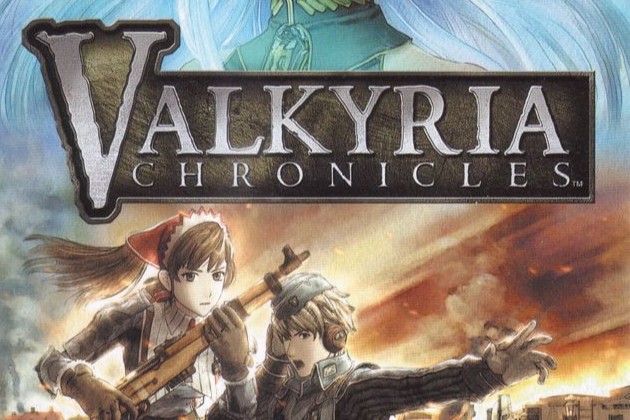
Developed/Published by: Sega Released: November 4th, 2008 Completed: 9th August, 2015 Completion: Finished the story mode, including the bonus missions. Trophies / Achievements: n/a
Negativity is rubbish, isn’t it? I feel bad that the previous review topped the page for an extra week (I’m trying to stick to one update a week, every Tuesday, unless I ever have a huge, huge backlog) so I’m quite happy I now get to gush endlessly about Valkyria Chronicles. Because I loved it.
Valkyria Chronicles isn’t a perfect game—there are some issues with its tactical battle system, and I’ll get to that—but it’s a deeply surprising one. Set in an alternate universe going through a vague approximation of World War II (drawing design elements from WWI for good measure) it crosses real-time movement with turn-based tactics that removes grids and simplifies things like overwatch (as enemies and you just shoot on the opponent’s turn if they happen to be running past.) Oh, and it’s all done with a heavy coating of “anime”, with loads of cut-scenes and stuff that keep you up with the goings on of your militia troop. It’s not quite anime XCOM, but it’s close.
It’s an odd one this, readers. On one hand it was largely developed by the team that worked on the never-translated Sakura Wars series (the originator of anime x tactics, as a cross between robot battles and dating simulation) and you can tell—there are plenty of pretty anime ladies, the game is mostly seen from the lens of a “will they, won’t they” love story between the protagonists and it’s often light and even funny. On the other, it’s more mature than I’d generally expect from any video game. Being an allegory (of sorts) for World War II, it deals with racism against a specific group, goes as far as representing concentration camps, and even reflects upon the use of nuclear weapons (in an abstracted fashion, but it’s quite obvious what they’re showing.)
Indeed, Valkyria Chronicles managed something which I didn’t think I’d be susceptible to, which is that I was genuinely surprised when a main character died. In fact, I was stunned, couldn’t believe they’d do it. It’s the closest I can imagine to experiencing the “Aeris” moment (which I felt nothing for, like all cool video game dudes) and unlike that one it did actually make sense (as characters can die in Valkyria Chronicles).
Not to mention that by the “militia” nature of the player’s squad, the characters you use are a fair mix of gender and sexuality (if not race, as such, unless you count the game’s made up Darcsen race) all of whom are as capable as the other. To some extent it was probably to allow male players the “harem anime” feel of something like Sakura Wars, but for me it was… nice (?) to see men and women fighting in a war together as equals.
(Although, I do admit sniper Marina Wulfstan was 100% my waifu. Pretty much nothing better than selecting her and using her amazing sniper skills to wipe out most of the enemies on the map in the space of a turn if you can keep feeding her ammo. Maybe even better than using Banshee in Ghost Recon: Shadow Wars. And anyway, I fancied her because of her amazing capability, not her nice hair and cold attitude. I think.)
(Although, to be honest, the game does include some bonus segments like a “Squad R&R” that’s absolutely, totally one of those “beach episodes” from an anime, in that it’s mostly an excuse to see the girls wear swimsuits.)
(Although, the one character that’s clearly coded as gay, Jann, is, let me say… stereotypical. I loved him and used him every mission, but I can totally understand people having difficulties with this.)
Basically what I’m saying is that there are definitely some things about Valkyria Chronicles that aren’t totally defendable, but there are also loads of things about it that make it more thoughtful than most other games out there, even if I’m pretty sure that’s sometimes entirely accidental. The game really does try and make you think about the cost of war, even when one of the character is, like, ranting about how much they love vegetables or something. It can be broad, but the characters and world draw you into it.
And it is great to play! The real-time/turn-based mix keeps you close to your troops rather than a distant overlord which increases your engagement, and upgrading your squad and tanks is rewarding (even if it is a little slower than I’d like.) If there are problems, it’s that certain game mechanics, like “potentials” (bonuses based on certain conditions) trigger so infrequently when they beg to be planned around, accuracy is too low across the board (outside of snipers, expect some frequent reloading if you need to hit something) and I’d have preferred more, shorter missions than the 20-odd often epic missions (expect them to take about 2 hours a piece). But those are all pretty quibbly, to be honest.
Valkyria Chronicles took me a while to beat—I took a big break in the middle for some reason, I can’t remember why—but I loved it and wouldn’t change anything. In fact I’m raring to play the sequel now. Couldn’t recommend it more if you have any interest in tactics games with a side of anime. Which I realise now is, uh, specific.
Will I ever play it again? Valkyria Chronicles has one of those classic, epilogue heavy Japanese endings where everything is wrapped up as tightly as possible (including, confusingly, telling the futures of a few characters who weren’t even that involved?) but which, as far as the main characters were concerned, made me go “ah, that’s nice” in a way where I’d put it down and just enjoy the memories. But I can see coming back to this as it’s got a “New Game+” mode and I didn’t actually fully level everyone up. So yeah, maybe, when I’m an old man.
Final Thought: I liked this enough I’m going to buy the art book, because apparently it’s got lots of stuff about the development in it. I have literally never done this before. Anyway, Valkyria Chronicles is regularly like $5 on Steam or whatever, you should buy it.
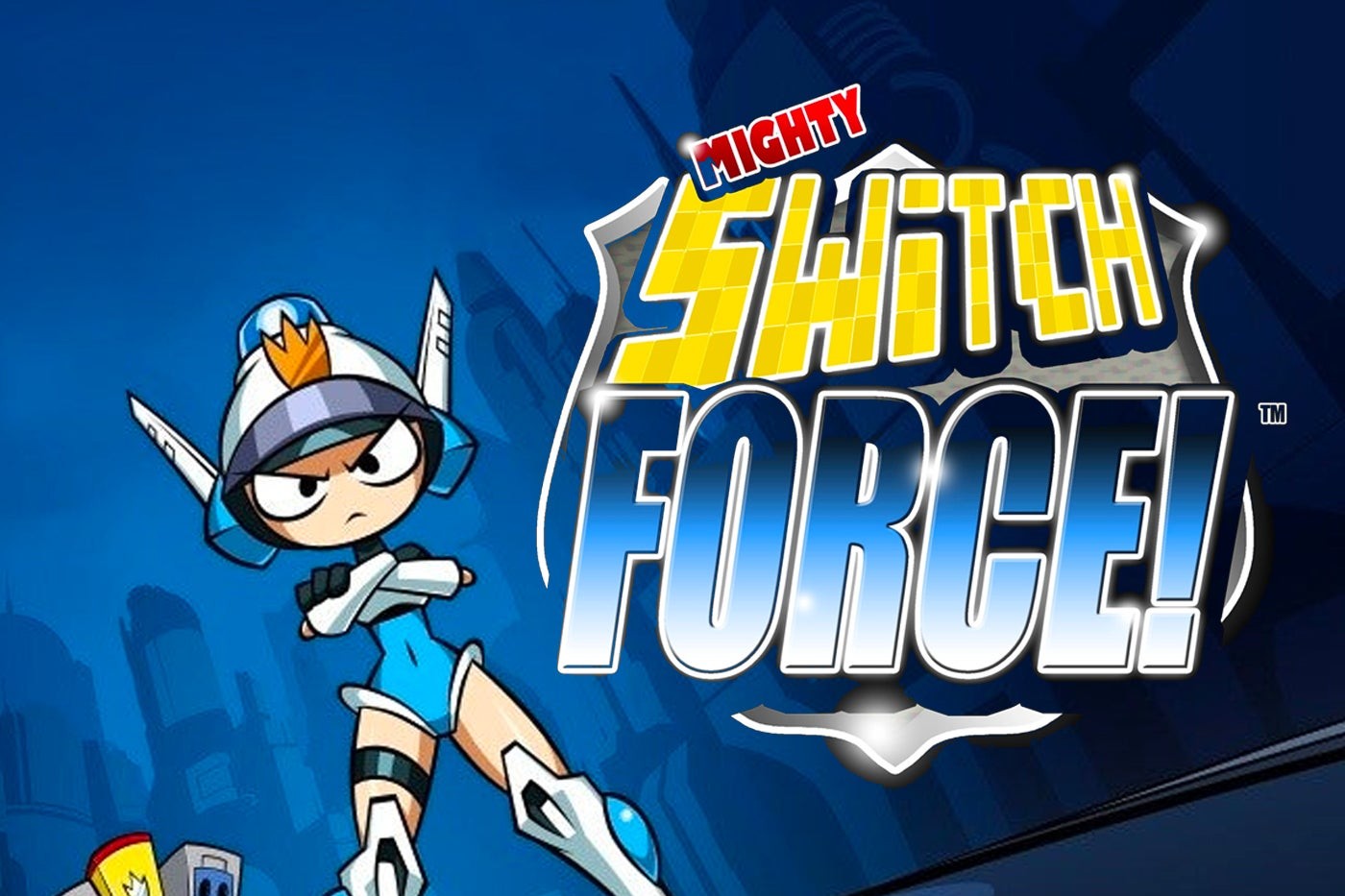
Developed/Published by: Wayforward Technologies Released: December 22nd, 2011 Completed: 21st June, 2015 Completion: Finished all main levels. Trophies / Achievements: n/a
Wayforward are my bête noire. I sincerely cannot think of a studio that more gets on my tits. Why? well because in pretty much every game they’ve ever made, they’ve got stunning, just stunning art. And yet playing their games is like… let me put it this way. It’s like Scarlett Johansson whispering in your ear that she’s absolutely gagging for it, and then you get her home and she explains she was gagging for you to throw a hotdog as far as you could in an empty warehouse. Repeatedly. Oh, and she won’t be there while you do it, but you do need to do it for about eight hours or so. (I genuinely wish I had a more gender-neutral idea of my disappointment of Wayforward, but them’s the breaks.)
They just make boring-ass games due to their incredibly uninteresting, generic level design. And yet, thanks to their lovely art (and, I’m told, hilariously low bids) they get basically every single brand that I think to myself “that would make a superb game.” Consider their Adventure Time and Regular Show games. Or, instead, just develop a machine that murders dreams, and murder your dreams!
(I tell you, when they’re announced as doing the Steven Universe game, it will the the true symbol that we as a species are unsaveable.)
“Hang on, Mathew,” you’re saying, “this is some insane hyperbole. It’s like you’re one of those types. You know who I mean.”
I suppose it is a bit over-the-top, but the missed opportunities are galling. Galling. However, bête noire or not, it’s not like I don’t live in hope! I’ve actually even got a copy of Aliens Infestation on my to-play pile, and when I saw this in the ol’ Humble Bundle, I thought “why not.” Especially as I’d been told by someone that it was good, right down to the level design.
So here’s what I have to say about Mighty Switch Force: it’s your usual boring Wayforward shite, but at least it’s only got sixteen levels.
Will I ever play it again? No.
Final Thought: Mighty Switch Force is a puzzle-platformer where the trick is that you “switch” the position of blocks in 3D space in 2D game—so basically pushing blocks forward and back. You use this to, for example, kill enemies in front of a block, or create platforms. It is, by all accounts, a decent idea! And as usual the art is nice, though notably it’s really samey (this is kind of a Wayforward thing, actually, once the shine has worn off in any Wayforward game) in that I never really noticed the level art changing. I’m going to be charitable here and say that the problem with Mighty Switch Force is that it can’t decide if it wants to be a true puzzle-platformer or an action-platformer with a twist. Some levels are puzzles, but it’s choked by the fact that the amount of screen you can see isn’t enough for a game where you’re searching for things and manipulating the level, and the levels that are straightforward action are killed by the fact that enemies have no inherent challenge. I mean, seriously, one just, like, floats there. So your main fun interaction is basically “jump, and do a switch before you land so there’s a platform there.”
Oh, and to emphasise the lack of commitment to the idea, the final level automates switching, changing the game more or less entirely and there’s even a final boss that doesn’t use any of the switching mechanic like, at all???
It just doesn’t work. It’s dull and unfocused. As I said: usual Wayforward shite.
Developed/Published by: Intelligent Systems / Nintendo Released: December 8th, 2011 Completed: 14th June, 2015 Completion: Finished all the puzzles. Trophies / Achievements: n/a
I started playing this ages and ages ago, got about half-way through, got bored and stopped, and only recently, with the release of that new Pushmo free-to-play thing (Stretchmo?) did I think “god, I should finish this so I can remove it from the front page of my 3DS.”
And so I did! To be honest I’m less “finish this immediately” about puzzle-me-dos compared to most other games, generally because, unlike a lot of games, you usually don’t forget how to play it/forget what’s going on in the story/lose the “skill” you’ve built up by playing it if you don’t play it for ages. So, for example, I’ve got a copy of Mario’s Picross on my 3DS that I probably won’t polish off until about 2023 (I thought I’d finished it, but then a whole new chunk of levels unlocked.)
Anyway, Pushmo. Pushmo has the most adorbs hero—Mallo, who is a wee sumo guy with a emoticon cat face—and you basically use this wee cutie to pull and push blocks so you can get to the top of a structure. It’s a fairly elegant puzzle game; you’re generally dealing with concepts like needing a block above you pulled out further than the block beneath it, so you need to pull another block out, or do some “side-pulls” or take a trip around the structure to come at it from a different angle. It’s all pretty clear and at that level that once you’ve got the basics down, it’s a pleasant mental workout to see how you’re going to do a structure. Occasionally, though, they play a sneaky trick where you have to use Mallo’s platforming ability to do something, which can throw you off (leaping to a block that’s far away, or, the worst, edging out and jumping around a block.) Not a fan of that.
But it’s good! Pushmo got a lot of criticism when it came out for being really, really slow to get going, but for whatever reason that didn’t bother me. What did bother me—and it’s probably what other people were really complaining about—is that the majority of the levels are just… blocks. It’s not super interesting to look at, and whenever you get to one of the chunks of levels that are art—you know, you’re climbing a flower, or a goomba, or something—it’s a sad wee thrill. And when you unlock the next chunk and it’s just blocks, it’s crushing.
Of course, the reason for that is that the levels that use art aren’t as tightly designed—there’s a lot of blocks you don’t end up using, so it’s not as “pure.” So there’s a friction in the design there, as where I (the player) want something fun to look at (even though, really, it adds nothing) but if I was always given that, I probably wouldn’t be picking up the fundamentals as well as I should (and there’s always new puzzlely tricks in Pushmo, right up until the end).
In the end I couldn’t shake the feeling that Pushmo was a bit dull, though, because of all those boring if successful pure levels. Hmm.
Will I ever play it again? No, and ultimately I’m not that interested in any of the sequels.
Final Thought: Mallo is popular enough that there are plushes of him, and oh god, squee town right there. Maybe if I’m lucky they’ll put him in a game I like more. Or maybe they’ll put him in Smash…
Developed/Published by: Namco Released: March 10th, 1998 Completed: 3rd June, 2015 Completion: Finished the game, but didn’t rescue all the wee guys to unlock the extra vision. Trophies / Achievements: n/a
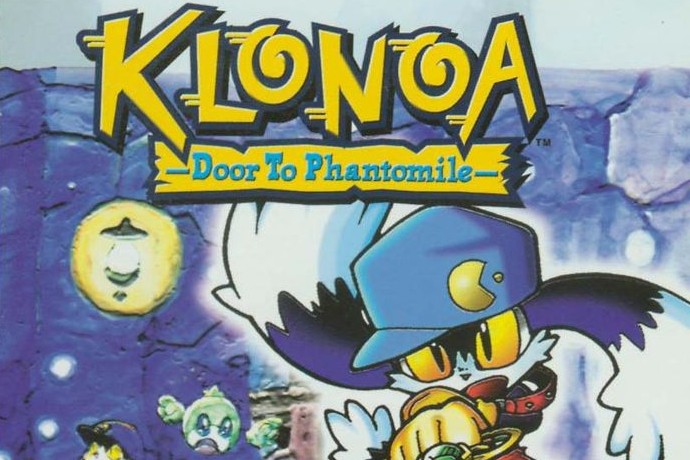
Klonoa: Door to Phantomile is one of those 2.5D platformers that used to be all the rage back in the day. Remember them? The one that always stands out in my mind is Pandemonium, probably because it was published by Crystal Dynamics and in all the video game magazines of the time. I thought it was completely ugly and was totally uninterested in it; after all, at the time of Pandemonium everyone was going ga-ga for Mario 64 (and, to be honest, at that point I was still mainly a PC gamer.)
It’s quite surprising to find that Klonoa came out as late as two years after! It’s a slightly strange one, pals. On one hand it’s a short and fairly simplistic platformer (there’s only about 12 levels, some of which can be long-ish) on the other it’s got loads of slightly complex if vague world-building and the kind of plot (and certainly antagonist) you’d expect from a Final Fantasy game or something.
Oh, and it’s got the cutest cat-rabbit hero in a Pac-Man cap (note: if you don’t like cats you won’t think he’s very cute, but he looks just like a cat I know, Pixel, so I love him.)
As a platformer, it’s awkward if interesting—Klonoa has a simple jump and a brief hover that lacks too much lateral movement, but can “grab” enemies and by throwing them down jump higher. It works like a double jump, and although the game starts without too much use of it, by the end you’re using grabs and throws to chain together fairly lengthy climbs, and it’s pretty good!
I was a good deal less fond of the type of things I’ve been mollycoddled out of by now, though—die at a boss and you have to play the entire level over, and if you do something daft like beating a level with only one life and save, when you start the next level you’re stuck with one life even if you use a continue! One boss (Joka) is a surprising difficulty spike (and I do mean spike, nothing else in the game is as hard) that very nearly put me off this whole thing entirely.
In this incarnation, Klonoa: Door to Phantomile is somewhat dated, so I’d assume you’re better off playing the re-release on Wii (thankfully just called Klonoa). Either way it’s a charming and pleasingly short little title with a very Japanese sensibility that we seem to be losing.
Will I ever play it again? I’d play the Wii version if I ever found it for pennies.
Final Thought: That Japanese sensibility: if you want a perfect example of what has been lost, consider the “we should modify our game so people in the West will like it” re-design of Klonoa that they pitched. I’m not sure I can think of a better example of how utterly incorrect Japanese-style pandering to Western tastes can get, and it’s been endemic in the industry for years.
Developed/Published by: Team Bondi / Rockstar Games Released: 17th May, 2011 Completed: 31st May, 2015 Completion: Finished the story (all cases with five stars) and half the street cases. Trophies / Achievements: 50%
Someone on Twitter—actually wait, christ, that’s the second or third time I’ve started one of these by referencing Twitter, I’ll have to sort that out but I guess I’ve committed—mentioned this game apropos of nothing, saying something along the lines of “Ah, L.A. Noire, a terrible game executed brilliantly, or the other way around, I can’t remember.”
He got it right the first time.
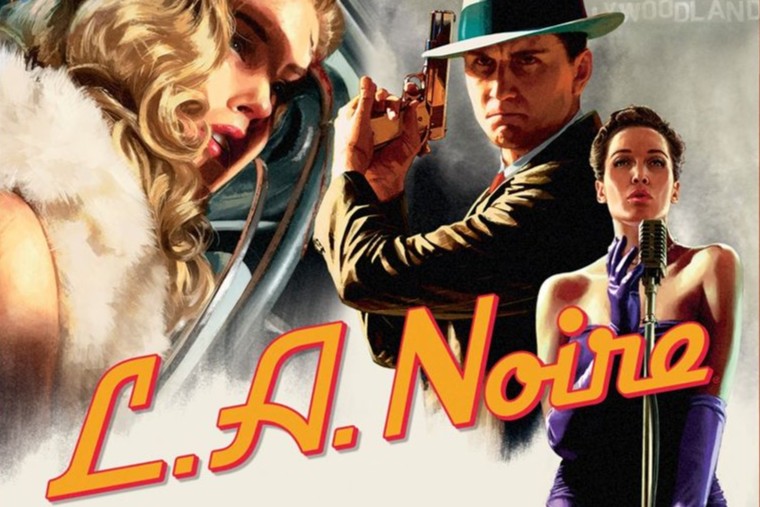
Taken purely as a spectacle of effort and polish, L.A. Noire, even four years later, is a marvel. The kind of marvel where you’d have to respect what Team Bondi did, if it wasn’t for the fact that it came at massive human cost (according to rumour) and got the company murdered by Rockstar Games anyway. Here they’ve recreated way, way too much of Los Angeles in 1947 in absurd (if imperfect) detail, have created an insanely subtle facial animation system, and it’s all generally quite stunning, except for the fact that the game system is a terrible garbage hidden-object adventure dribbled into a generic Rockstar third person-em-up.
Actually—I don’t really hate Rockstar’s “all of our games feel the same” thing that much; there’s something to be said for consistency and they’ve very slowly improved it since the PS2 era, I guess. Certainly, I adored (and remember fondly) Bully, and didn’t hate Red Dead Redemption even though, much like L.A. Noire, there are aspects that are just so garbagey it undercuts everything. What’s funny here, though, is you do the “video gamey” stuff so rarely—you know, the shooting, brawling and car-chasing—that every time it happened I’d forgotten all the buttons, leading to hero cop Cole Phelps usually struggling to detach from cover, or popping out of cover and not knowing how to fire his gun.
But look, basically L.A. Noire wants to be a really good neo-noir flick, right? Not so much a Big Sleep but a Chinatown or (most incredibly obviously) L.A. Confidential. So you play Cole Phelps, a goody-goody cop with a secret tragic backstory that relates to the war, as he wobbles his way up the ladder, trying to solve lots of awful lady-murders while also dealing with wider conspiracy and corruption.
Sounds decent enough! Unfortunately the game is this: go to a place. Walk around the place, waiting for music cues that let you know if you can pick a thing up. Is it a clue? ok. No? Put it down then, ya dingus! Then, interview the suspect that’s there. They say things, and you have three options: believe them? Doubt them? Or are they telling a LIE! While working this out, the subtle facial animation system is used so that liars will do clever, subtle things like look off to the side and screw their mouth up in a “what I just said was untrue” way.
(This is really hard to explain in text, but the actors were clearly told to mug as hard as possible. It’s really, really stupid looking.)
Best thing, of course, is that despite the mugging they usually make ambiguous statements that it’s really hard to know whether to “doubt” or call a lie, often because they’re functionally true. I’d actually say the whole system is broken—the original options were “coax” “force” and “lie,” which is a bit better, but the weird “you only get one chance to get it right” thing is just pish. Shouldn’t a good cop probably doubt everything a suspect says? Lies always force you to use a piece of evidence to prove it, why can’t I just use the evidence against the suspect in the first place? And so on, forever.
Anyway, you do these two boring things for the entire game, sometimes broken up with shooty-fighty-drivey times. It’d be nice if this was worth it thanks to the story… but it’s not. Now, I could write a very long article about how ill-thought out the story is, in how it’s presented to the player and, in general, constructed. But I’m just going to give you one good example. The entire middle of the game, when Phelps is working homicide, is more or less on the trail of a single serial killer. You keep arresting people for the crimes, even though you, the player, are like “this is stupid, the wider plot is telling me these people didn’t do it” (even though the game keeps placing these suspects with massive amounts of evidence against them.) So you keep being forced to do stuff you know is wrong, but “correct” to progress. That’s great. What’s even better though is as you play you’re like “hmm, who is this killer going to be, anyway? Has to be someone meaningful, otherwise this breaks all story rules. And how did he plant all that evidence, anyway???”
No, it’s just some fucking guy that you saw for about three seconds earlier in the game. And they never explain how all the evidence like bloody weapons and stuff got planted. And it doesn’t matter anyway, because not one second of this extensive section of game has anything to do with the overarching plot. At all.
It’s roughly as worthwhile as the middle hour of LA Confidential, if the middle hour of LA Confidential was the main characters going to Des Moines, Iowa, and taking part in a hula hoop competition. Which it isn’t.
L.A. Noire is a disaster. It’s lovely to drive around for a while in it, walk about, take in a digital LA… but god, don’t play the “game” part.
Will I ever play it again? No, I really did suck the marrow from the bones of this, even getting mayhem related achievements to see if that made it more fun, etc. It didn’t.
Final Thought: I have to admit that, having been to LA many times, I wasn’t that blown away by the recreation because it’s not perfect. So something like Cole’s (originator of the French Dip!) isn’t really there, it’s a cafe that looks a bit like it. The Bradbury building is there, but you can’t go inside so… I guess 1947 is, surprisingly, just too far in the past for it to really connect any deeper than, say, looking at photos of old LA. I do wish for an LA that kept streetcars and had a more… how can I say… consistent downtown, but that’s another story entirely.
Developed/Published by: System 3 / Maximum Games Released: 22nd April 2014 Completed: 20th May, 2015 Completion: Finished Marathon mode. Trophies / Achievements: 42%
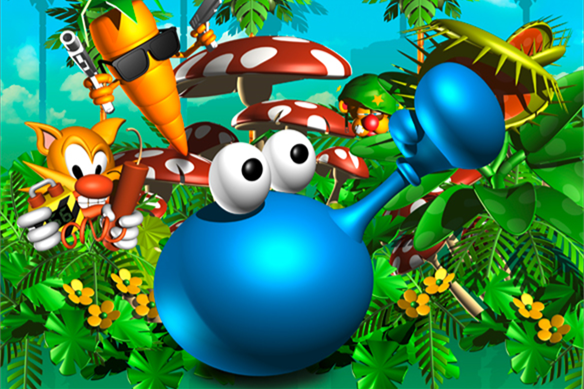
Yes, here’s why I played Super Putty. You see, I started playing this on a whim, and it’s such a total wreck I was like “wait, why is this a legendary lost Amiga game?” so had to go back and play Putty.
Putty, as described, isn’t good, but it is beautiful, and in an alternate universe where someone with a consistent design philosophy made it, it’s great. Putty Squad, in its “on Amiga/SNES” format, is a big departure from the original Putty—gone are the tight levels, instead these big sprawling things. It’s much more a “traditional” Amiga platformer if there is such a thing, largely forgetting Putty’s “puttyness.” It’s still nice looking—if less striking—but loses a lot from the levels no longer being tight vertical scrollers, and is generally, a bit generic.
Putty Squad’s re-release, however, has some of weirdest decisions ever. First off, we lose all of the pixel art, which is tragic, and it’s all replaced with what I can charitably describe as “mid-90s CGI.” In fact, it’s so much of that time—think of games like Constructor, which it turns out as I google it was developed by System 3—that I’m suspicious that if the art hasn’t been lying about since then (look at this cover of Amiga Power, or the SNES release cover) or that literally the same person did it now, using the same tools after not having touched a computer since 1997.
It’s sort of funny? A kind of “retro” no one is really asking for, but released as a 2014 improvement to a 1994 game that wouldn’t really cut it in 1997.
So, it’s ugly, in a funny way, and you do see way more of the level thanks to the resolution, but above all someone at System 3 decided that the platforming action was archaic and no one was going to enjoy it, so they gave Putty the ability to, at any and all times, pump himself up and float. This means that you can, literally, avoid all of the platforming and huge swathes of the levels. It’s so daft, actually, that I spent some time trying to work out if it was a bug, but it’s not.
Not to say Putty Squad isn’t still hard—just like Putty (and, it seems, more so than the original intended release of Putty Squad) every level is a mess of enemies you just have to try and survive. So it’s not really a platform game, more sort of a weird muddle where you fly about as a floating putty, landing occasionally to rescue the red putties, take unavoidable damage and then hope you can survive enough to the end of the level.
After playing Super Putty and this, I can still imagine this perfect vertically-scrolling Putty game that’s a bit puzzley but also a challenging, fun platformer, with amazing pixel art. It would be really good on Playstation Vita. This isn’t.
Will I ever play it again? No, but I enjoyed this as a piece of history and slice of weird Western-developed kusoge, so I’m going to keep my physical copy.
Final Thought: If you’re gagging to play a modern update of a western platformer, you can’t go wrong with Rayman Origins. It’s more beautiful than the original pixel art and is just generally a fun wee romp. So there.
Developed/Published by: System 3 / U.S. Gold Released: 1993 Completed: 19th May, 2015 Completion: Finished it, but with the unlimited live cheat because christ. Trophies / Achievements: n/a
This opening might be a little “inside baseball” (a reference which is, ironically, “inside baseball” because I have no idea what inside baseball is or was) but recently there was discussion on Twitter about something or other—actually i think it was on Super Mario Sunshine, which I involved myself in because of words I had over it in my write-up of Super Mario 3D Land—and Tim Rogers (Videoball) humorously dismissed Bennett Foddy (QWOP)’s opinion by saying something along the lines of “yeah, but you like Amiga platformers.”
Now, I like Amiga platformers, and there’s a reason for this, similar to why I enjoy a lot of games that can be characterised fairly or not as “kusoge”; they often do something absolutely unexpected from what is expected of their genre or accepted conventions. A lot of Amiga (actually, I’ll round this out to “home computer”) platformers come from a strange world where Mario might have been mentioned in passing, but his design wasn’t dominant. Neither was a visual style defined by Japanese artists. As a result, you end up with lots and lots of weird, often wildly unplayable worlds and ideas; everything from sedate problem solving with Dizzy to insane, drugged-out messes like Top Banana.
I think they’re fascinating! It’s like looking at the evolution of a distant tribe, and then once contact has been made, seeing what happens—seeing Sonic-inspired games like Oscar or (famously) Zool come into being.
Anyway, here’s Super Putty, and if you’re wondering why I’m playing Super Putty rather than Putty (my original intention) it’s because, and here’s another quirk of home computer games, there was only one fire button on old home computer joysticks. As a result, developers had to get quite… innovative to get characters to do the range of things you’d expect. In the case of Putty, which hinges on Putty’s ability to stretch and morph and absorb, what they did was add an insane lag on your first input. It genuinely takes about a second for Putty to respond. I couldn’t hack it, almost gave up entirely and realized that this wouldn’t cut it on the SNES, where a mildly-improved version was released. Hurrah!
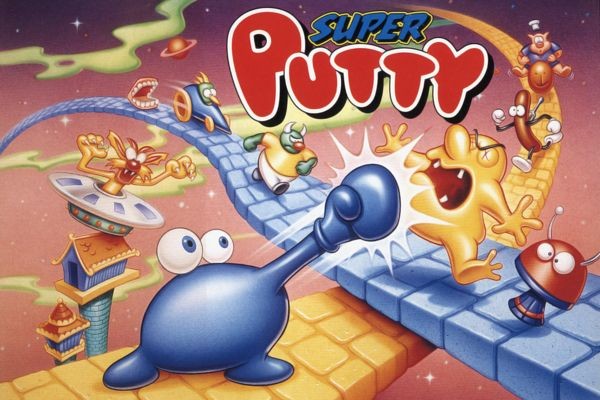
I think Super Putty is gorgeous. I love this kind of western pixel art—of the era of the Bitmap Brothers, etc.—and if you look at one of the level maps, it’s just stunning. Abstract but evocative, clean and clear.
It’s a shame, then, that Super Putty is a design mess for no good reason at all. You’ve got a pliable hero with plenty of options for puzzles, and a plot that revolves around collecting robots and taking them to the exit, all in really nice, vertically-scrolling levels. But in classic Amiga-platformer stylee, instead of all that it’s a mad survive-em-up, with millions of baddies spawning on screen, loads of points where you can’t avoid being hit, things that hurt you even though it’s not obvious, and so on.
Rather than doing anything clever, the game devolves into abusing Putty’s “smart bomb” explosion to try and avoid mobbed areas, gritting your teeth through the enemies you can’t seem to kill for no clear reason, and brute forcing your way through. I certainly can’t imagine trying to do this without infinite lives.
I must say though, that had I got this in the Amiga 600 bundle I pined for, I’d have played the shit out of it, lag or not, and would remember it fondly. It does look great, Putty is charming indeed, and if it was more of a Dizzy than a Top Banana it’d be perfect. Ah well.
Will I ever play it again? No but if you can guess why I played it in the first place…
Final Thought: Apparently the Amiga 600 was manufactured in the town I grew up in, which means that if my dad had known that I’d probably have ended up with a dodgy one from a guy down the pub rather than the flash 386DX I got instead. The PC was the right choice.




![Pushmo [aka Pullblox] (Intelligent Systems, 2011)](https://expzine.com/wp-content/uploads/2026/08/pushmo_header.jpg)