I don’t do these that often, but when I feel like I know the developer really well–maybe too well to honestly critique their work–I cadge an interview with them. Here it’s a really deep design interview with Brandon Sheffield that’s probably obsolete because it’s so specific to the PS Vita(!) version of Gunhouse. Looking forward to another round when Demon School comes out (wishlist now, etc.)
Hey, do you hate in-line advertising? We do too! We’re only ever going to do it here at the start of our newsletter posts because we want you to get these missives in your inbox a day early. Sorry!
exp. Du Cinéma
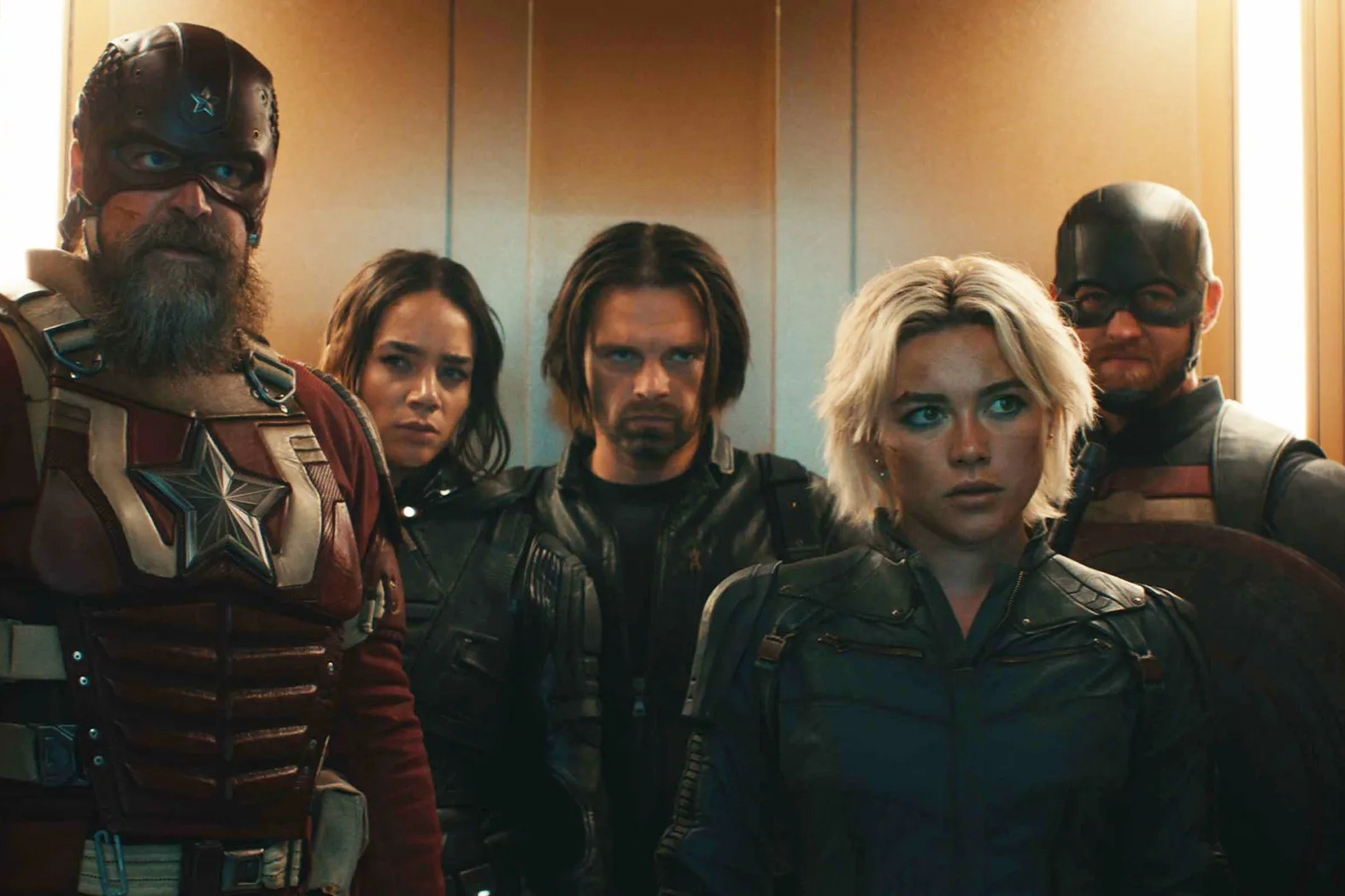
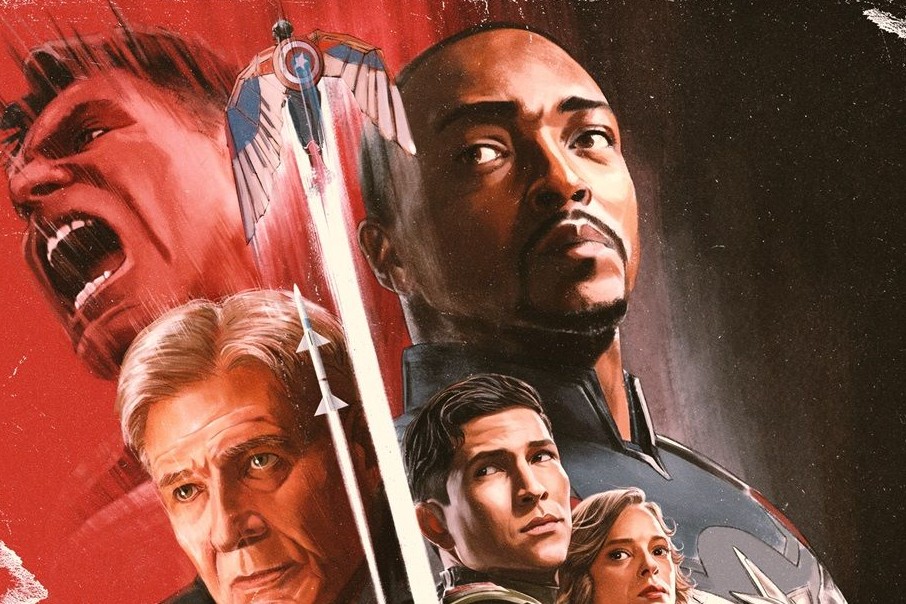
Thunderbolts* (2025)
The main issue with Thunderbolts* isn’t really the film’s fault: it is, of course, the MCU’s. Because—and I think this is borne out in how fatigued and almost indifferent the positive reactions to this movie are—if the MCU is a banquet you can never leave, Thunderbolts* is like receiving a perfectly delicious hotdog after being forced to down a cup of cold sick. It’s a good hotdog! But you still sort of wish you were anywhere else.
You can feel the weight of the MCU machine—gotta advertise those future movies—but they actually work to get you on side rather than relying on that alone. That they were able to immediately and unceremoniously kill a character no one likes? Unbelievably funny, gives you just enough to make you go “oh, maybe this was made people who actually like movies.”
Not only that, that they might actually want the images you see on screen to be cool and enjoyable? The action is clear (they do a fun riff on some iconic Terminator imagery) and it even hits the comedy beats well enough that I actually laughed out loud at points. There are even… themes! And it manages to tell a complete story!!!
Christ, that kind of praise really is grim, isn’t it? But I suppose that’s where we are. Ultimately, I liked it! But I kept thinking “please don’t make me drink any more sick.”
“Our scorching Summer issue features 38 reviews of new ZX Spectrum games, Type-ins, interviews and loads more.”
And Finally…
Mikolai over at Forgotten Worlds wrote a cute blog about their experience of publishing zines using the JRPG as a metaphor, er, a few months ago. But it came up in my feed recently and is an interesting manifesto/guide if you’ve ever considered it yourself. Give it a read!
Next week on exp.: “You don’t have to put on the red light.”
This week in the exp. Dispatch we’ve got an exclusive PICO-8 capsule review, an exp. Du Cinéma that didn’t feel long enough to give its own post, as well as all the usual week’s round-up and zine links. Incredible value!!!
Hey, do you hate in-line advertising? We do too! We’re only ever going to do it here at the start of our newsletter posts because we want you to get these missives in your inbox a day early. Sorry!
Panic would probably not be best pleased that I turned another article on something they published into a rumination on the place of AI in creativity, but I’m proud of this one. I really think it’s worth subscribing for!
On one hand, I think it’s good I have this record of games I’ve played. On the other hand, I have no recollection of playing this at all, so does it matter that I did?
exp. Capsule Reviews
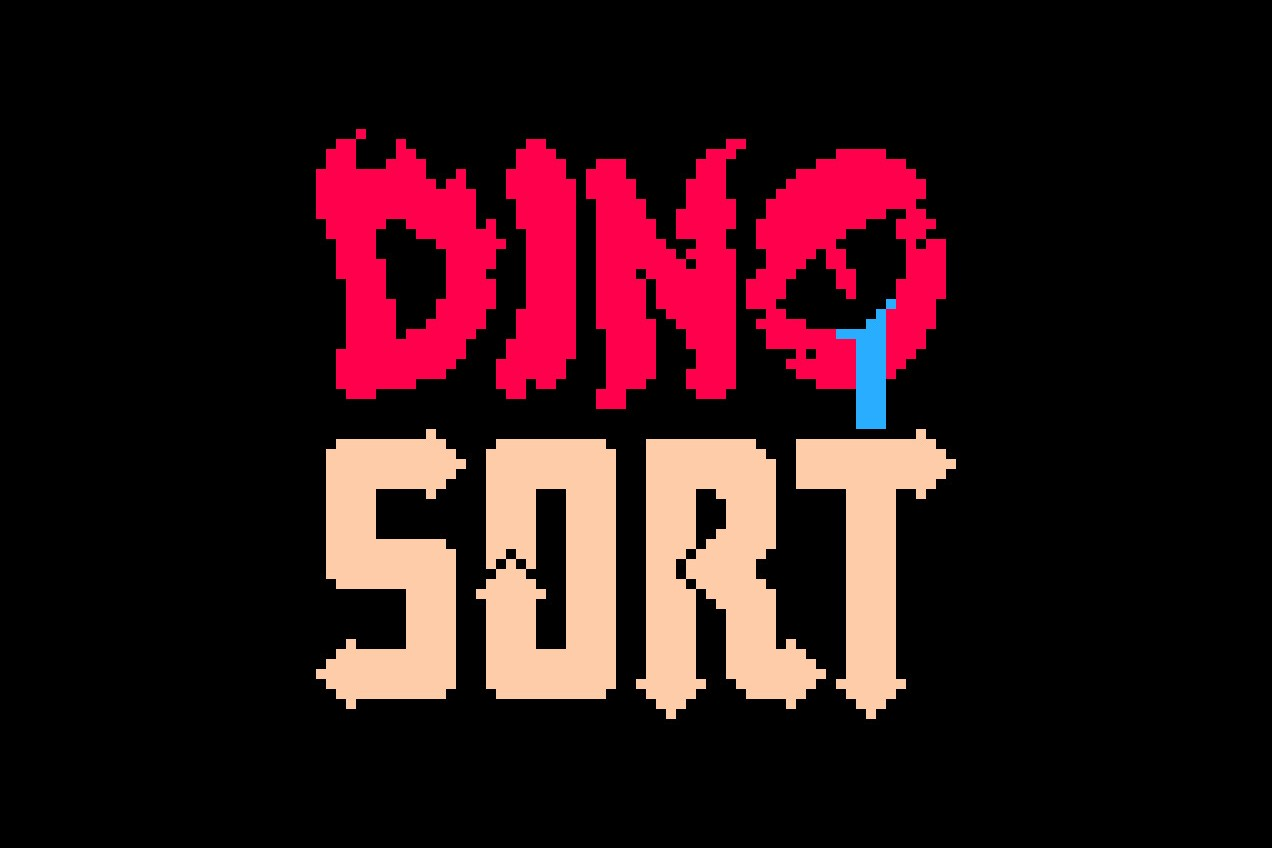
Dino Sort (Adam Atomic, 2025)
I wrote about getting into PICO-8 games recently by way of Adam Atomic’s Prince of Prussia and owning a Chinese emulation handheld (a subscriber exclusive) and Adam recently dropped Dino Sort which I don’t think I can justify an entire post for, so isn’t it brilliant I have this newsletter now?
Anyway, Dino Sort is a brilliant wee game where you shuffle around dinosaurs to get them into the right positions based on their personal requirements (e.g. “don’t put me next to a predator”) very much in the style of Rush Hour. There are 26 designed puzzles which will probably take you, I don’t know, forty-five minutes to polish off or something, and though it will require some logic and lateral thinking, it’s good because at least I never ended up in one of those situations where untangling all my dinosaurs was going to be annoying or impossible the way it would be in a Sokoban game or something (god I hate Sokoban.)
Also as someone who actually hates when a puzzle game has a billion puzzles–the “infinite pizza” problem, you eventually get sick of even pizza–I loved that this was something I could pick up, play and put down, but if you really wanted to keep playing this, you can because it generates a daily puzzle every day. They’re of varying quality, but just think, you could play it every day instead of doing a Wordle, because The New York Times can fuck off.
exp. Du Cinéma
Pee-Wee As Himself (2025)
Pee-Wee—or should I say, Paul Reubens—has had an outsized influence on culture more than people give him credit for, deeply affecting the brains of a generation of millennials (my brain included) and helping define kitsch as a force in the 80s and 90s. He deserves his flowers, and as praised as this documentary has been, I can’t help but find it a bit… slight.
Archive footage is catnip for me, and there’s absolutely hunners of it here, but you get the sense here that either due to the loss of Reubens or his intransigence they couldn’t quite pull this together into something that feels complete. It limits itself to a chonological telling of Reubens’ life and struggles to make connections to knit anything close to a statement together.
(I wonder if they had plans to build to Reubens walking around a museum of all the things he’d collected as a physical representation of his life, but even that I question.)
For someone with as complicated a life (and who is actively passive aggressive here!) the attempt at haigography comes across as disingenuous. It just seems wrong to portray (for example) Phil Hartman in such a one-sided fashion, or to gloss over the idea that people might be fair in feeling that the original Pee-Wee show was created by a collective and Reubens maybe didn’t treat a lot of people well on the way up.
But in turn, his personal and legal troubles aren’t given the depth you’d expect either—especially considering his final statement makes it clear how one in particular so deeply coloured his later life. It almost feels as uncomfortable as Reubens in discussing it. He was stitched up! You may have to go into uncomfortable detail to exonerate him, but why hold back? Interrogate it!
Maybe it’s fine. Like all of us, Paul Reubens was messy and incomplete, so it makes as much sense as anything for this documentary to be the same. This is just what people are. They leave us, and maybe you try and dig through what they left and try and make sense of it. But better, I think, to enjoy what they gave you while they were alive.
“Presenting issue 1 of the World’s Cheapest ZX Spectrum magazine … This inaugural Springtime edition covers games released in Q1 2025.”
And Finally…
Doujinshi are essentially zines, so I suppose I could just have put this in the “Other Zines” section, but I tremendously enjoyed reading this ROMchip translation of Hiromasa Iwasaki’s 2024 doujinshi Legend 7: Why Do 2D Games Usually Go to the Right?
It’s really one of those things that, if you know anything about video game development, actually seems really obvious, but you’ve probably never thought about in detail before. Officially sad now that I didn’t know about this zine before so I could have been hunting out copies of it (though I’d struggle to read much of it in the original language.) But better late than never.
Next week on exp.: I jump a little bit forward from GAMP No Nazo in 1986, and a winner is me!
We live in an age of AI encroaching on everything we do. An age in which in particular it is going to have a noticeable effect on creativity, as the big guys look to it as a solution to that pesky problem of “having all the value being created by workers” and (some) small guys look to it, perhaps naively, perhaps without diligence, as a way to create work that competes.
And indeed, this has already happened to Panic, the publisher of Despelote, who found their second season of releases for the Playdate handheld infected–and I will use that pejorative–by generative AI, by a developer looking for shortcuts (as covered in a recent article.)
This kind of use is likely to become endemic in the games industry–for another example, 11 Bit Studios’ The Alters has also been discovered to have used ChatGPT for “placeholder” text.
The question I have however, is if these developers understand that generative AI is a flattening force. It is a product created by feeding it everything we’ve ever created, built only to mulch it up and spit it back out as slurry. Now, the big guys don’t care. What they want is a fat pipe of chemical lowest common denominator.
But how are you going to stand out if you fertilise your fields with that? Little knowing that it eats the fields it lies upon?
Maybe those who are using it to “compete” don’t care either. Maybe you just have to get what you can and get out before it’s all over. Maybe you can fool yourself there’ll be a Mars here too, once the earth is salted.
—
But instead of that… why not embrace your humanity? Why not spend all your effort on making something that reflects… you? Instead of creating what is common, what everyone recognises, why not create work that not everyone recognises, but in which they can find commonalities? Why not make something like Despelote?
An AI could not make Despelote. Only a human can, because only we are able to make the non-obvious connections in the story of our lives.
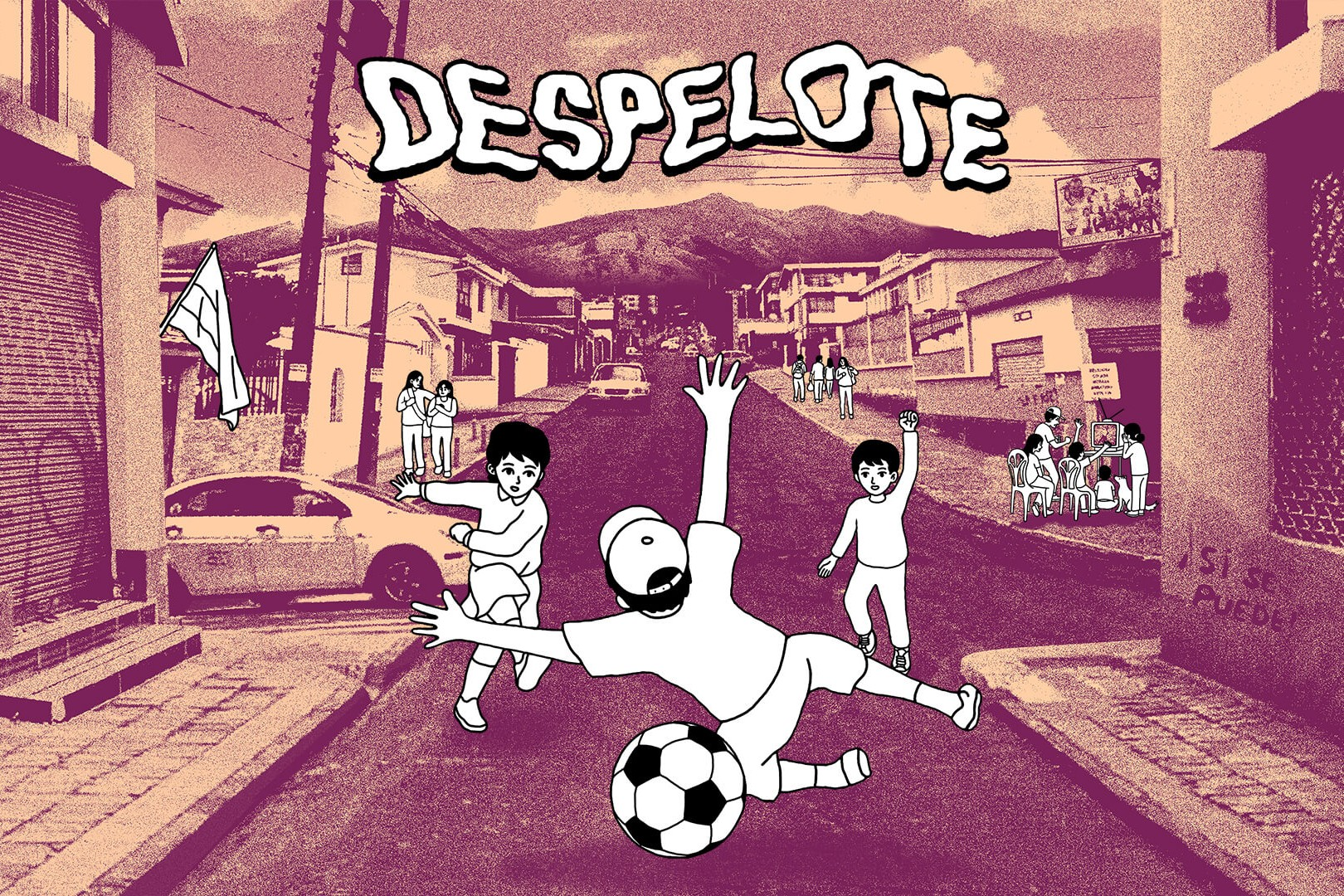
Here, designer Julián Cordero recreates the experience of being a child in Ecuador, but specifically during the Ecuadorian national football team’s historic qualifying campaign for the 2002 World Cup.
This is probably not the most obvious setting you can imagine when you are creating a game about the world of children and how it interacts with the world of adults. Similarly non-obvious are the decisions made in which to represent this, which it does in a form that I feel only video games could manage–while also introducing (in my opinion) a new kind of cinematic flair. One that does not look to mainstream cinema’s style but the art house.
It opens with you playing what appears to be a retro game: Tino Tini’s Soccer 99. Despite this being a reference to Dino Dini, and Kick Off 2 and the like being fucking rubbish (sorry, this is a Sensible Soccer house) this is actually a brilliant wee overhead-view football game that could be released on its own terms, with a simple and rewarding “flick-to-kick” control scheme. But as you play, you start to overhear your parents talking, and then, cinematically, quite unlike any other game I’ve played, the camera slowly pulls away from the television, until finally, your dad turns off the telly.
In Despelote, as it would have been for any of us, such is your lot as a child. You find yourself pulled around by your parents, told what to do–and given limited amounts of free time. And what matters is in that free time you don’t really have anything to do. You can run around, maybe you’ll find a ball to kick (beautifully, controlled just as in Tino Tini’s Soccer) but there’s nothing to hunt out, nothing to unlock, no rules for playing with the ball. It’s just you, some other kids who might want to aimlessly kick a ball about, and a world of strangers, almost all of whom are captivated by the ongoing football matches on the telly (unfortunately the game doesn’t really allow you to just stand and watch too–though you’re likely to run and check on the score when you pass a TV.)
I’m not going to lie–after the shine of kicking a ball wears off (which really does feel fucking great) and you realise what’s happening, Despelote is properly boring, and if you’re a progression-focused twat like me, you’ll probably really struggle with it. While it’s not exactly Jeanne Dielman (and you can play through Despelote in nearly half the time it would take you to get through that) it’s working in that kind of perhaps punishing milieu. It wants you to feel the boredom and frustration of the limits of childhood–and to strain against them as a child does.
Throughout, you get flashes of how Julián will grow up, how his love affair with football will evolve as he does; fragments of memory that ask you to remember that these childhood afternoons that maybe felt so boring were actually fleeting, and you can never have them back. It’s not as much about being Julián as it is about you–what these moments make you think about, how you remember your childhood. I remember my own childhood. Scotland in Italia 90. Then a flash of sitting in a car on a rainy day. Now I’m at an uncle’s, watching the penalties that ended the 1994 World Cup. Now I’m drunk for the first time, years later…
I remember.
I suppose there’s some concern about American exceptionalism here–after all, the Yanks don’t really like “soccer”. Maybe it’s unfair to imagine the American “gamer”, unable to take the steps from soccer to their own sports obsessions. After all, their “world” championships only include their teams [“And Canada’s!”–Canadiana Ed.] so that sense of a national collective that crosses political and societal boundaries may be a step too far. Maybe to many, Despelote is just foreign, and boring.
But that, to me, represents the state of the art. The boredom of Despelote is not what has stuck with me–what has stuck with me is the themes, the ideas. Someone is saying something–something about themselves, and hoping that it makes a connection with you, your experience.
It’s not perfect, but it’s human. These days, what more can I ask?
Will I ever play it again? It says all it needs to, once.
Final Thought: One of the more interesting background facts about Despelote is, of course, that Julián Cordero’s father directed Ratas, ratones, rateros, the “first Ecuadorian film with international-standard production values” which gives reason to why this game features (in my opinion) a different sort of cinematic influence. But I think this influence has also leads to one of the most amazing cameos I’ve ever seen in a video game: a DVD of Fishing With John!!!
“Madam President, in order to save billions of lives, it is imperative that you sign off on nuclear attacks on London, Paris, Moscow, Beijing, Islamabad, Delhi, Pyongyang and Tel Aviv, and sacrifice one American city as contrition.”
“You know as the President of the United States of America, I could never do that.”
“I understand completely. We’ll nuke two American cities and spare Tel Aviv.”
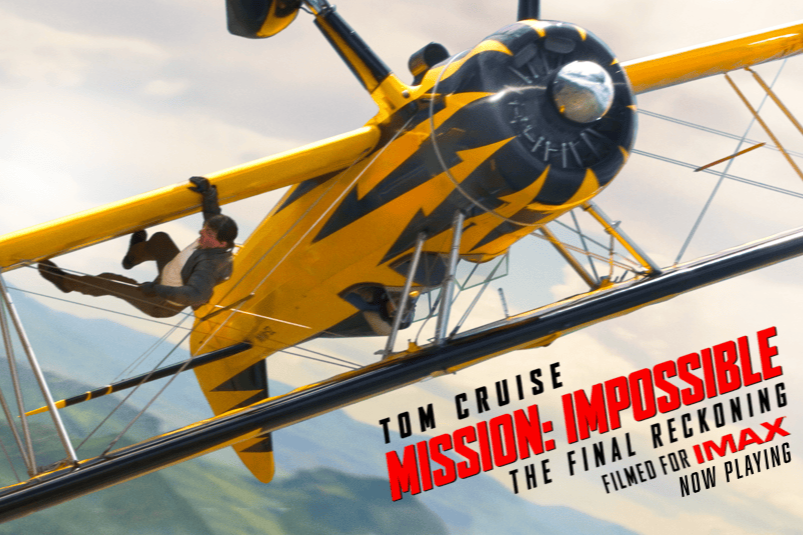
Bad! I’d consider myself somewhat ambivalent on the Mission: Impossible franchise as a whole—even the good ones are sort of patchy—but as derivative as Dead Reckoning was, I considered it still a jolly good time at the movies. This however is interminable. The first sequence explains what’s going on as if you’re going to suddenly be prompted to press start, but then every sequence after that, for what feels like three hours, is just characters saying over and over again how Tom Cruise (I mean… Ethan Hunt) is the ultimate human, not simply humanity’s chosen defender but the only one who could possibly defeat the antagonist. And that everything he had ever done was correct, even though it didn’t seem like it at the time. And if they’re not saying that, they’re recounting that the stakes are the complete annihilation of all life on Earth to the point where it feels completely meaningless.
And bizarrely for a film that goes to such efforts to heighten the stakes, the action sequences badly lack them, because Tom Cruise (er, Ethan Hunt) is an invincible godlike being. There’s a lengthy underwater sequence that’s tense because Cruise is told repeatedly “if you do this, or that, you’ll 100% die” but then he breaks those rules and is completely fine. Then there’s an entire biplane sequence over a macguffin that legitimately makes no sense because it was already established that Cruise was trying to give the baddie the macguffin anyway!!!
It does end in the most hilarious dispatching of an antagonist since probably Beyond The Black Rainbow, though. I seriously couldn’t believe how goofy it was.
If you like any of the non-Tom Cruise characters, well, they get pretty much nothing to do. Excited to see Pom Klementieff again? Well, her character stands around to say a sentence in French now and again and to get absolutely no closure—and to be honest, she’s one of the lucky ones.
Also this movie ends without Tom Cruise even doing what he said he was going to do? They spend all this time talking about how destroying the “Entity” would “destroy cyberspace”—literally they never refer to the internet, it’s always “cyberspace”—so I was kind of hoping for an Escape from LA ending here (greatest ending in cinema history) but no.
The only reason that I’d assume this movie keeps the door slightly open for a sequel after all is that Tom Cruise was certain that this was finally going to be the one where a stunt killed him and he could finally rest.
No such luck for him, but I don’t know why they have to punish the rest of us for it.
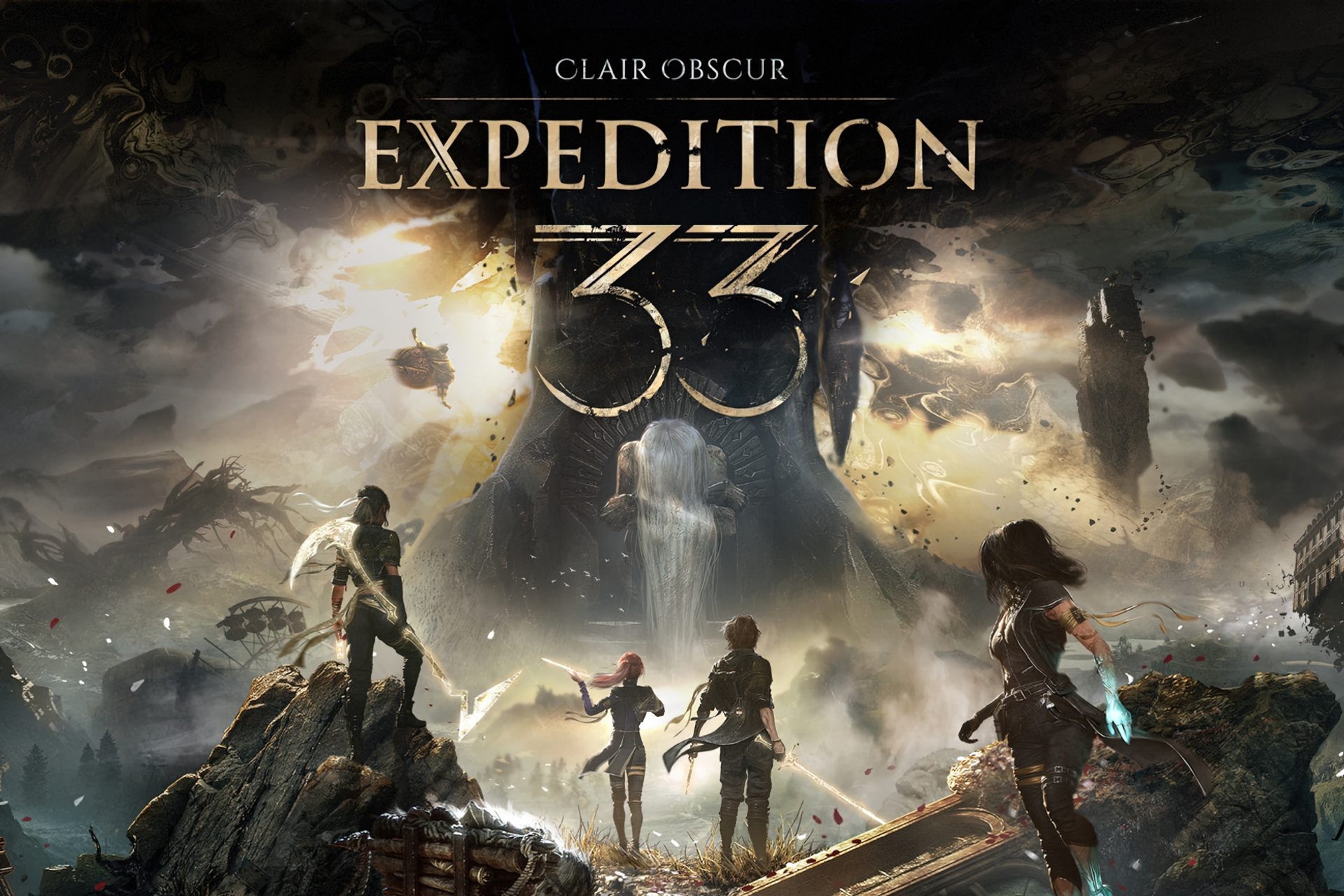
Developed/Published by: Sandfall Interactive / Kepler Interactive Released: 24/04/25 Completed: 27/05/25 Completion: Completed it, but let’s not get ahead of ourselves with too many details yet.
Alright, so in order for me to critique Clair Obscur: Expedition 33, I’m going to have to go into far too much detail on why video games are hard to critique, a problem that left me as the only video game critic in the world (as far as I know.)
[If you really don’t want to read the next thousand-odd words at any point you can skip ahead. But don’t come crying to me if you don’t understand where I’m coming from.]
Video games are hard to critique because video games aren’t really just “one thing.” They don’t neatly fit into a single form where the audience can make an assumption that they know what the (ahem) experience of “experiencing” it is (is there a better way to say that?) While there are exceptions, of course, you can generally expect when you sit down to watch a film, you’re going to sit down and watch it. When you sit down to listen to an album, er, you sit down and listen to it.
(Other experiences are available.)
Now, absolutely, that’s the broadest expression of what you’re doing–consider it the first layer of experience. The hope, of course, is that in experiencing the work, you are absorbed to the point where you forget anything about your existence as a “person on a surface in a location” and instead exist in the world that is being presented–consider that the second layer of experience.
Now, that second layer does not remain static in the face of genre or stylistic choices. To take film as an example, editing, soundtrack, many “artificial” things happen that do not line up with our linear, continuous experience in the first layer. In some respects, these artificialites are not simply absorbed, we recognise them, we work with them. There can be some level of interactivity (if not affect upon) the works–we knit together a non-linear narrative as it goes. Our eyes scan the screen in a movie, our focus dances from instrument to voice at the insistence of the songwriting on an album.
Games, however, have a less “clean” line between the two layers of experience. “Play” is a different experience than “watch” in that first layer, and both change the type of absorption you experience in the second layer: you may be embodying a character rather than empathising. You may be in competition rather than conversation. And then within that genre and stylistic choices make different demands: maybe you are in “play” mode a lot. Maybe you are in “watch mode” a lot. Maybe the type of play changes.
As I’ve played a lot of old games by now, I’ve become interested in, and written about, the “transition points” of video games where technology has allowed newer forms to emerge. Don’t consider this definitive of the state of the art, but for the sake of my hypothesis, a summary:
Games begin as competition: think Pong or Breakout. There’s no narrative. You are, essentially, playing a game as people know it either against another or “the computer”. A sport. You may be able to win, but you may just be seeking a high score. Play, not watch.
Games evolve to have a narrative “reason” for the experience: think Space Invaders. There’s a framing, if not a narrative. If you can win, it’s not the “goal” as much as it is an end-point for “besting” the machine. Play, not watch, but with narrative context.
Games make the narrative a distinct part of the experience: think even as simple as Super Mario Bros. Suddenly the game becomes about the story. You’re “rescuing a princess”. Narrative is doled out like “reward” for your success in the game. When you finish the game, it’s like finishing a book. You can put it down. Play and watch!
It’s here that the concepts of “diegetic” and “non-diegetic” story come into play. The diegetic narrative in Super Mario Bros. is that you’re rescuing a princess. The non-diegetic story is that you’ve run forward and jumped over a block and then you ran into a koopa and you died and then you came back to life and you ran forward…
In some respects, this non-diegetic story is part of the magic of video games, in that it affects both layers of experience at the same time. On the first layer, you’re not sitting and watching: you’re pushing left, then A. But it seamlessly translates on the second layer to running left, and then jumping. But it doesn’t represent narrative.
So then you get games that try and make the narrative a “part” of the play, at various levels of success. Maybe you’re finding the narrative in the world via logs (not great). Maybe you’re pushing buttons during the cut-scenes (eurgh.) Maybe your character’s death and rebirth is explained via narrative, or you get to make choices that change the narrative–at some level of manageable granularity. Maybe they simply try and make what you’re doing in the game make such rock-solid sense diegetically that it all works seamlessly. Maybe they do that by forcing the player to do things whether they want to or not (and then smugly admonish them for it later).
It’s not, exactly, a solved problem. Nor is it, essentially, actually a problem. It simply reflects the nature of video games as an experience. Sometimes you are playing them. Sometimes you are watching them. Sometimes the mechanics are thematic with narrative, sometimes they aren’t. The first layer you inhabit changes (“I’m watching. I’m playing”) though this may not affect the second layer (“I’m rescuing a princess.”)
I don’t think there’s a kind of game that represents this split better than the JRPG.
Now, again, I don’t want to imply that I think there’s anything wrong with the way JRPGs use narrative and play. But they have, to me, always represented a particularly aggressive split between watching and playing (though don’t let me stop you yelling “but what about Hideo Kojima” or something.) JRPG battles, something you do famously a lot, almost exclusively happen in an “alternate reality” from the rest of the game right down to how you interface with them. Not even play maintains a consistency of experience.
[cough]
So that’s why when I write about Clair Obscur: Expedition 33, it feels ridiculous to try and write about it as a complete work. Because my remembered experience of it does not reflect something I can critique as a whole. The game merges exploration and a battle system to a narrative which, to be completely honest, never engage in a way where one was in my mind during the other. It’s entirely possible that it’s different for you–I’d be interested to know what you felt the game might be doing to make that possible for you–but ultimately what it means this is a tale of two parts. A game and a narrative.
Er, though we need more preamble…
Clair Obscur: Expedition 33: The First Impressions
Now, the thing about Clair Obscur is that I wasn’t originally interested in it at all. With a surfeit of JRPGs available–in fact, a surfeit of Persona-style JRPGs available–the idea of playing a Western one with “realistic” seeming graphics didn’t have much interest for me at all. But then friend-of-exp. Justin Decloux (buy his Blu-rays!) gushed about how much he loved it while other buzz was swelling, so I thought–fuck it. I’m trying to keep up with the cutting edge now! It can’t all be obscure Famicom releases!
I went in almost completely blind: I knew it was about a bunch of French people taking on an enemy, the Paintress, who every year killed the segment of the population who had reached a certain age, and it was a JRPG. But it wasn’t until I began playing it that I understood it wasn’t a “Logan’s Run” style “once you’re thirty, you die!” situation but a “every year the age counts down–so time is running out for everyone” situation. Compelling!
And Clair Obscur has a wonderful introduction, as we’re introduced to the main characters on the day of the Gommage, the day each year that section of the population is lost, and the day before the expeditioners head off on their quest to defeat the Paintress. Very quickly you learn about the hero Gustave, his ward Maelle, and experience the pain of his loss of a “what could have been” in Sophie, an old lover.
As a purely narrative experience, I genuinely thought it was incredible. I’ve never been so moved by a video game so quickly, with tears coming to my eyes. All the stakes were right there. I was blown away.
Anyway, then the wheels started to come off a bit.
Clair Obscur: Expedition 33: The Game
I’ll preface this by saying I think Clair Obscur is a very solid game. But it’s messy. Overambitious.
I’ll also start with the criticism that you might think is the most unfair. The world of Clair Obscur, once you are outside of Lumière… I don’t like it!!!
Everything is way, way too visually busy, and yet there’s very little I think to be absorbed by. Every location seems to be over-textured, noisy, but my most major issue is with enemies, who feel completely characterless and often unparsable; annoying to look at not in the way Michael Bay’s Transformers are but in a way that made me think of them anyway. I had no sense of awe when taking them on.
Which is a shame, because really here it’s the battle system that’s the star.
I say that, probably, because the environments do not feature good level design. Like, at all.
Clair Obscur: Expedition 33 has led to a lot of column inches (well… social media posts) about the lack of a mini-map, and I have to say that I would generally not be terrifically bothered by that if it wasn’t for the fact that Clair Obscur just does the exact RPG map thing which everyone already hates: you come to a crossroads. Do you go left or right? Is there anything telling you which way to go? No? Uh…
Yep, this is a game where I’d say for a significant portion of the running time you don’t have any good sense if you’re going in the “right” direction, and I think the messy environment art doesn’t help at all. It’s particularly problematic when the game features super-hard “battle system skill check” enemies on side-paths, and in the very first area I reached one and was like “wait, why the fuck is this game suddenly impossible, how am I ever going to complete this” when the actual way I was supposed to go was nearby, but not obvious at all.
So the “no map” issue people keep bringing up is one of those things where you have to look at the “note behind the note” to understand what the issue truly is. Er, not that it helps. It’s too late to do anything about it.
To get to the battle system: it’s excellent, with caveats. On the basic level, it is a traditional turn-based battle system, but featuring both quick-time events and dodging/parry mechanics based on timing. This creates an interesting problem: you need the reward for doing these to be high enough that you want to do them, but not so high that they need to be done perfectly every time. It’s interesting that the intuitive design–attacks are QTEs with on-screen prompts, dodging/parries are purely reactionary–probably makes it harder to balance, as decreased damage output only prolongs fights, whereas taking more damage fails them more quickly, yet QTEs are simply easier than parries.
Not that I’d switch them around, but Clair Obscur doesn’t exactly nail the mechanics–and has a strange sort of take on them anyway. The decision seems to have been made that the baseline is that the player isn’t really supposed to be successful at dodging–certainly not successful at parrying–very much at all because it’s so powerful (you don’t take a hit at all!) so enemies from the very beginning of the game have annoying, tricksy attacks, with odd windups, slowdowns and so on, so you have to learn each enemy very well before you can survive a battle without taking hits.
But!
The game also makes a lot of attacks able to nearly one-shot your characters! Clair Obscur makes the decision to be economical in its enemy encounter rate–you see them in the levels, there aren’t that many, they only respawn when you reach checkpoints–but expansive in battle length, so the design decisions seemingly made here is that players will, during lengthy battles, survive via healing enough to get to the point where they can start to dodge and parry. And the game is quite forgiving with healing and revives, giving you a fresh set every checkpoint.
My belief is that they tried to create a battle system with no “lows” or sense of grind, where every battle feels winnable, but hard fought, and always engaging. And I’d argue that they were mostly successful once the player re-aligns their expectations to that.
For example: you don’t have to hold onto healing/revives, so just use them. And you shouldn’t be trying to parry until you learn how to dodge that enemy’s attacks, because the timing is so severe. (I basically gave up on parries completely.)
Even at that though… I did get bored and annoyed with it at times, and I do wonder how much that has to do with how overcomplicated, yet oddly derivative, the character designs are. Each hero has an extremely specific design style–several of which are wholesale cribbed from Slay The Spire, which I understand, but feels… odd–and they all have huge skill trees. As with largely giving up on parries, I’ll be honest and say that I didn’t get how to upgrade my characters until I just sucked it up and followed a “best builds” guide, but even when I played around, the issue seems to be that each character’s design is played in such a specific way that it can be somewhat samey. Slay the Spire character designs work because you don’t actually know what cards you’re going to have in hand each turn–you’re working to build your deck across the game until you do. Here, you know what you’re playing each turn, and you just do that while hoping to hit your timings.
Don’t get me wrong. It’s still good, it’s generally enjoyable, but I do notice that the weaknesses are never more stark than when the game asks you to hone in on mechanics such as when you’re fighting the optional bosses (that you generally stumble into by accident.)
But the game is also forgiving: you can bump it down to easy whenever you like at no cost, so you can do it whenever something gets on your tits. I played through this on normal, bumping down to easy on optional bosses (who can still one shot you at that level!) and only had a touch of grinding at one or two points, not that I can remember why.
If this was all Clair Obscur was: no narrative, just a dungeon crawl, people would still like it a lot, and I think I’d still like it a lot. But it’s not just that, is it.
Clair Obscur: Expedition 33: The Narrative
Clair Obscur’s narrative is a fucking bin fire.
[deep breath]
Sorry, ok. You probably remember me saying in my first impressions that “I’ve never been so moved by a video game so quickly” by the game’s prologue. Which is true.
But as for the rest of the game… I hope you like information being obscured from the player unnaturally! Like, one of your favourite things should definitely be characters not asking the obvious question anyone would in the situation!
Now, you can write a story however you like. Personal taste and all. But from my perspective, I consider it a weakness when I can tell a story has been written to get to an emotional or narrative beat no matter what. When reality or characterisation falls to the wayside because you have to hit this beat and you have to hit it here.
One of the interesting things about Clair Obscur is that as much as the game is divided cleanly between “play” and “narrative” the narrative feels like it doesn’t show up as much as you’d expect–at least, the backbone of the narrative. Each area (“dungeon” equivalents) plays out with a little chatter, but a lot of character work and story is relegated to when you make camp, and as you can only do that outside of the dungeons if often has to be forced. You really feel the segmentation, and when the big narrative moments come, they are in stark relief, and it’s at the end of each act this “need to hit the beat” is clearest.
I have come to the conclusion that the narrative has been designed to manipulate you into feeling certain ways only to then work to contradict your feeling. But they don’t have the chops to make this smooth or believable. In fact, this is the first game I’ve played since (cringe) Bioshock Infinite where I felt I should just look up a timeline to actually try and understand what’s going in the game to make sure I wasn’t totally off base with my feelings on it–while it wasn’t completely necessary, ultimately, it did help (and I highly recommend this one by Nor if you want a look yourself.)
But let’s get into it.
Obviously, spoilers are going to start showing up… now. If you want to play this, and I’m not saying you shouldn’t exactly, you should consider my conclusion “fun but flawed!” and flip away from this tab to come back to in like 26 hours. See you soon!
Look, I’ll give them something. I didn’t know, at all, that I was going to get Aeris’d. It should have been obvious with Gustave’s wee skill tree and everything and it’s incredible that when I looked up a build for him I never got spoiled. But this a perfect example of a “we have to make this beat happen.”
Gustave fights a guy who killed the entire rest of the expedition, while already wounded to… to what exactly? Maelle is trapped, he’s not buying her time. Why is the baddie killing Gustave at this point anyway? This just happened to happen after most of the party jumped off a cliff?
It’s bollocks, and it’s fake, and I felt annoyed, not sad.
So then new protagonist Verso shows up, and proceeds to… not be asked by any of the characters any of the questions you’d probably ask. They just go on an adventure with him because he showed up and so that a character can later find incriminating information and go “oh no!” that leads to… well it doesn’t lead to much at all does it. They get to the end, they kill the Paintress and then… oh no! That wasn’t the real baddie!
Which is revealed by Verso reading a letter from his sister. Meaning that Verso didn’t know something that, based on everything else (not least that he killed the Paintress to free her, my interpretation being with the knowledge this was his “real” mother) he would probably know. Ok!
At which point we learn that this entire thing was all bollocks anyway because everyone lives in a painting created by the “real” (dead) Verso and his mother and father were fighting in it using their powers of creation and destruction. Ok!
Look, I kind of get the Act One To Act Two switch, as poorly handled as it was. I think there’s something kind of interesting in ripping away a character that I really enjoyed to replace them with Temu Jack Sparrow and then let me mistrust them (more than my party did!) to the point that I don’t use them in battles and let them get really behind in experience (which eventually matters).
But the Act Two to Act Three switch is just utterly mental in a way that I don’t think any player can prepare for, playing a weird sort of trick on the player for being absorbed in the second layer of experience. “Actually all these characters you’ve grown to love aren’t real.” “What, you mean like because they’re in a video game? I know that, but I’m absorbed in the reality of the narrative.” “No, because they’re paintings that think they’re real people… in a video game.”
I’m not going to get involved in a “if you prick us, do we not bleed?” analysis of this third-order existence because the game doesn’t go deep on it itself, instead revealing that, ultimately, every time they talked about how the painting in which the entire game happens has a “part of verso’s soul in it” they meant literally, and his soul was essentially a small boy that was being tortured to keep the painting alive.
That’s right folks. It’s Omelas. You’ve been living in Omelas. How do you feel now!!!
Well, it turns out a lot of you people out there are fine with Omelas. I mean I don’t need to play a video game to know that, I live in a world where Palestinian children are being murdered every day to no end, but it’s stark to see people feel annoyed that the game ends with the question “do you destroy a painting full of paint people to free a real person’s soul or do you trap all the paint people in Peaksville?” when what they want is a happy ending and damn the child.
(To be fair, the game is really fixated on making it sound like the option is between “let Maelle’s dad burn the painting or let the painting continue to exist because everything will be fine, no really, everything will be fine”.)
I need to emphasise: this is not the game you have been playing. At all. I am so thankful that the third act is just one dungeon (Unless you want to do a lot of side quest stuff) because what the hell. There’s like this perfectly interesting game about a quest to get death back to happening normally that suddenly becomes a story about a bunch of characters you’ve never met fighting over a painting.
In conclusion:
Will I ever play it again? No.
Final Thought: Alright, that’s not really a fair conclusion to my thoughts on the narrative. My conclusion, really, is to ask people to consider: what is the story they’re actually trying to tell? Because Clair Obscur: Expedition 33 feels like a game of Exquisite Corpse on an act by act basis, where the epic conclusion completely subsumes any themes or narrative you had experienced to that point to… to what? To make sure players got a choice of two endings??? They put all this effort in to force beats and then none of them seem to matter anyway???
So yes, some respects, Clair Obscur is a cautionary tale of the damage narrative can do to the layers of experiencing a game. In others, it’s a fun, flawed game with a shite story. And those are ten a penny.
I actually think this might be the worst one of these?
I say this as someone who has sat through Eternals, to which this movie, bafflingly, decides to be a direct sequel. If the MCU is going to start binning off things like Kang, they’ve really got to suck it up and start retconning entire movies and TV shows that haven’t worked out. They happened in a different universe or whatever. It’s unfair to force me to remember things that suck.
I suppose the joke is on me though because I still watched this. It feels like the kind of granularity required here is unnecessary, but watching this you understand there’s a difference between “soulless content” where people might have had “ideas”, “concepts”, perhaps even a “mindset” and “goals”–in films as bad as the aforementioned Eternals, or The Marvels–and something that seems to have been cobbled together for no other reason than to exist.
It’s entirely possible this was intended to continue the kind of “vaguely spy thriller” feel of the earlier Captain America movies, which was pounded into mush by five different writers, countless more rewrites and reshoots, ending with what’s barely a conspiracy with a shifting reason from a hidden mastermind whose reveal leads to the kind of reaction the word “nonplussed” was invented for (unless you just laugh at how stupid he looks. How can you treat Tim Blake Nelson like this?)
Like: this is a movie where a bunch of characters get Manchurian candidated, attacking when they hear a particular song, and no one says “did no one notice that song playing suddenly before all hell broke loose” in any of the sequences where they’re trying to defend the people who went loco.
But I’m getting hung up on details in a movie that even visually has no connection to reality. It’s insane a movie looks this bad. The first fight scene doesn’t have the impact a regional filmmaker working in his own backyard could manage, and every dialogue sequence makes it look like they didn’t get access to the Volume so they asked Neil Breen if they could use his setup. They compensate by making the lighting so flat and bright that for all I fucking know they might actually have been some of those places.
Ah man. I can’t resist pointing out that the climax of the opening scene is that Sam has to fight… a large man. Like just a big guy. I guess he has a beard? It’s so hilariously underwhelming. Later action sequences are no better, completely weightless and because of the complete failure of narrative, absolutely stakes free. Like… we all know you can’t beat up a hulk, so why are we watching a character attempt it for about twenty minutes?
I suppose the main thing that’s interesting about this film is its politics, which manage to split the difference between “milquetoast” and “completely toxic” somehow. I’d be very interested to know how everything here got shaped into a movie where the first Black Captain America says things like “sure he threw me in prison and let you be experimented on for 30 years against your will, but he’s the president and we should trust him now!” which manages to make Falcon And Winter Soldier (which really copped out by the end) almost look revolutionary.
It doesn’t help that one of the major character here is based on an explicity Israeli nationalist superhero, played by what appears to be an Israeli child with progeria whose make-a-wish was to be in a Marvel movie (I assume after having their top choices, “I’d like to blow up a hospital full of children sicker than me” and “make the IDM mixes I post online popular” turned down.) I like the way they pointedly say “none of us have to be defined by our past” without saying anything like “it’s doing the right thing now that matters” because, well…
Really the moment of this movie that stands out the most to me, though, is when Sam stands meekly by while an old black man is roughly thrown to the ground by cops, mustering up the strength to shout something like “wow, be gentle!” which the cops completely ignore. I’m not sure a Marvel hero has ever seemed more pathetic. You feel a deep sense of embarrassment watching it, and, to be honest, throughout the film. You ask yourself, what were these people thinking? And you realise: nothing. these people were thinking… nothing.
Alright, to explain that a bit: I find something extremely moving about Indian epic cinema. At least partially it hits because of my own cultural connection to it, but it’s also that Indian cinema doesn’t treat their culture and traditions as rarefied specimen nor their history as sacred. They can gleefully mix melodrama, music, action and more to retell their stories in a way that suits them. The white man loves to hear about how bad he was and how noble the savages were in the face of everything they had done to them–and the kind of white man who sees that kind of film is very sorry now (but “look, it’s in the past now, and it’s not like we can fix what was done…”) but Indian cinema isn’t about that. It doesn’t revise or remix for pity. It says: we get to be the heroes of our stories. This isn’t about you. We’re cool as fuck. We’ve always been cool as fuck. So get reckt.
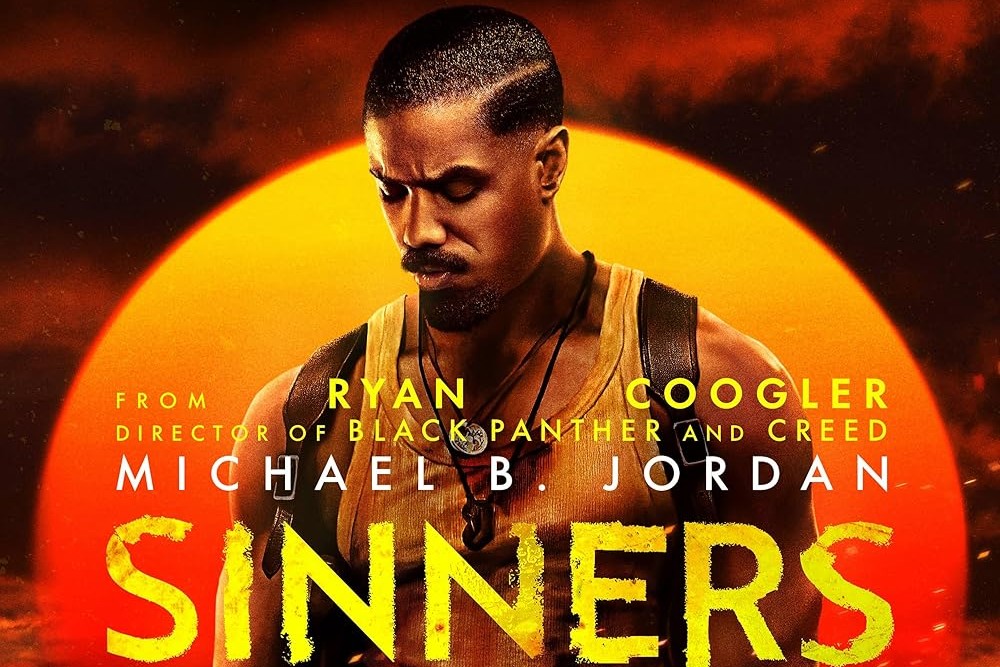
I have to admit that since seeing RRR I wondered if someone might take the baton of empowering historical revisionism and run with it for the Black American experience, and I’m thrilled that Ryan Coogler was able to escape the Marvel mines to create something like this–genre as cultural expression. Coogler explained himself that Sinners came from suffering the loss of his uncle:
“Coogler admitted that, for most of his life, he thought of the blues as ‘old man music,’ but that changed after his uncle’s death. ‘A mourning ritual for me, in a way [to] ease that feeling of guilt and loss, I would play these blues records,’ said Coogler. ‘But, I would play them with a newfound perspective, and I would kind of conjure my uncle.’”
And that’s it! Through our art, our experience of that art, we can conjure our ancestors and pay them tribute. Honour them. Show them love.
This is–obviously–barely subtext in Sinners. I suspect if you’ve been used to seeing yourself on screen the centrepiece musical sequence of this movie probably seems silly. And to be honest, Sinners is often ridiculous! But I felt nothing but a deep sense of solidarity watching this: a movie that doesn’t say “look at what we suffered” but “look at how we endured. Look at what you can never take away from us…
…and look at what we’ll do to you if you ever try again.”
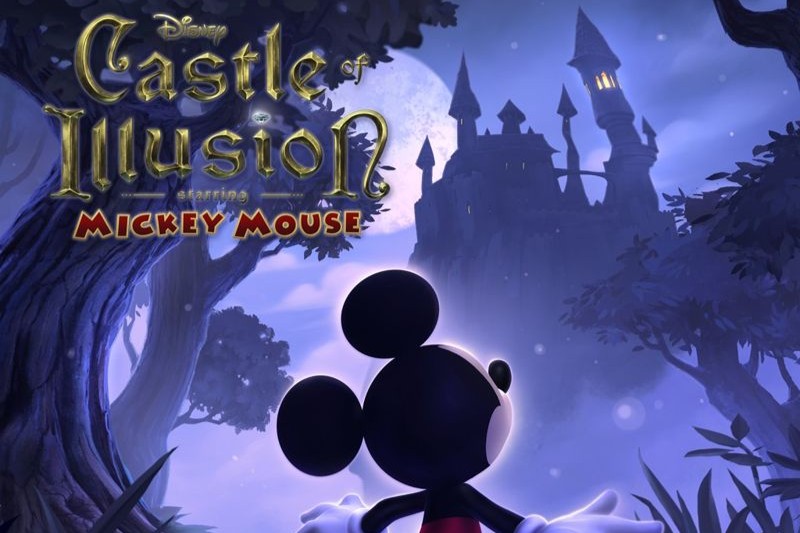
Developed/Published by: Sega Studios Australia / Sega, Disney Interactive Studios Released: September 3, 2013 Completed: 20th April, 2014 Completion: Rescued Minnie! Trophies / Achievements: 61%
Yep, I played through both version of Castle of Illusion in the same weekend.
I did this because I was sure, sure that this wasn’t going to be a remake but actually one of those “inspired by…” type things. Because with Castle of Illusion’s frankly weird level design and pretty darn dated everything else, I didn’t think they’d be that straightforward with it.
Uh, so the weird thing is that they really were. It’s not like they didn’t change some stuff. Most notably, the game goes “full 3D platformer” in certain segments (which is awful, for a reason I’ll explain in a second) and certain parts of the levels are changed (though in general their structure is amazingly faithful.) Bosses have more attack waves (usually allowing them to use the full 3D stuff a bit.) And Mickey’s jump is different.
Except… it’s also weird and terrible? It’s still floaty, it’s just as hard to aim his landing, but for some other reason? I can’t put my finger on why both jumps are terrible for different reasons (and I really can’t be arsed to go back and play them off against each other) but trust me: they’re both bad. And in the remake, not only is it bad in 2D, it’s godawful in 3D. Non-stop frustration as you slightly mis-aim Mickey and drown him in milk again and again and again.
(Because he can swim in water, but not milk. I guess that makes sense? Sorta?)
This is, genuinely, a remake of Castle of Illusion with some extra bits bolted on (most notably totally extraneous narration and loads of chat from Mickey, who… did Mickey always sound like this? He sounds so off-brand. Like a “Mikey Mouse” VHS, bought from a discount store in Orlando.) If you were going to play one version, I’d be hard pushed to say which one to bother with—probably the original—though both can be finished really quickly, and it’s really not worth the effort.
Here is the thing, though: much like with the original Castle of Illusion, it’s not like you can’t see there was talent on the team. Had this been a reimagining, not a remake, and they’d manage to make the jump less weird, I’d be happy to gamble this would actually have been pretty great.
Uh, not that it matters because Sega shut down Sega Studios Australia right after this. Alas.
Will I ever play it again? I could go back and collect more diamonds and do time trials, I guess? I’m not gonna, though.
Final Thought: Interesting fact: Emiko Yamamoto, director of the original game and who also supervised this, went on to work at Disney Interactive in Japan and has served as a producer on almost the entire Kingdom Hearts series. Huh.