Tag: 2025

  • Pipistrello And The Cursed Yoyo (Pocket Trap, 2025)

    Pipistrello And The Cursed Yoyo (Pocket Trap, 2025)

    Developed/Published by: Pocket Trap / PM Studios
    Released: 28/05/2025
    Completed: 25/09/2025
    Completion: Finished it, though with a caveat that will be explained more or less immediately.

    Don’t really have a good reason why I chose to play this above nearly everything in my to-play list recently other than, in a weird sort of bloody-minded way, I just wanted to play something that wasn’t Silksong, but you could conceivably pick up because you wanted something like that… without being like that. And hey, it says “cursed” in the title. That’s sort of spooky-adjacent, right? Fits the pre-halloween mood? Maybe?

    Pipistrello And The Cursed Yoyo was actually the perfect antidote for someone who was burned out on Silksong discourse without ever having touched it. Because feast your eyes on this:

    Image via https://gamersocialclub.ca/2025/06/23/pipistrello-and-the-cursed-yoyo-review/ because I was too lazy to take the screenshot myself. Sorry.

    Pipistrello And The Cursed Yoyo has the greatest difficulty settings I’ve ever seen. It’s genuinely amazing that it’s this granular. The game has a default difficulty and then you can just decide what parts are too much of a ballache for you. I know there’s been so much discourse over this–even before Silksong, John Walker has loved wading into it, god bless him–but here at exp. Towers we side with the idea that you should be allowed to play a game however you bloody well like. As much as I love thinking about and dissecting authorial intent in video games, as soon as the fucking thing is out the door you can treat it however you like. 

    If there’s one thing I’d possibly have wanted, it’s for the developers to include their own easy/medium/hard presets, but I actually think it works well enough that you can start the game, play for a bit and then realise what’s causing you unnecessary pain–and it doesn’t mean you’re breaking the game. It think it can be quite interesting to discuss, for example, when, where and how “runbacks” or other punishment mechanics can be a design choice that enhances, rather than detracts from a game, but I like that here they accepted that possibly you can just decide if it’s something you want to bother with or not, without fiddling with other levers if you don’t want to. I think you’re going to know pretty early if a mechanic like losing money on death feels fun or even legitimate to you or not–for me, I quickly turned it off because I was dying enough it was just going to lead to having to grind for cash, pointlessly bloating the playtime, and I’m, honestly, too old for that shit.

    (About half-way through the game I would also turn off fall damage, because the platforming challenges get extremely finicky, and the extra reload time was enough to annoy me. The game’s upgrade mechanics include upgrades specifically to reduce fall damage and cash loss, so this felt perfectly within the spirit of the design. Just a little extra edge.)

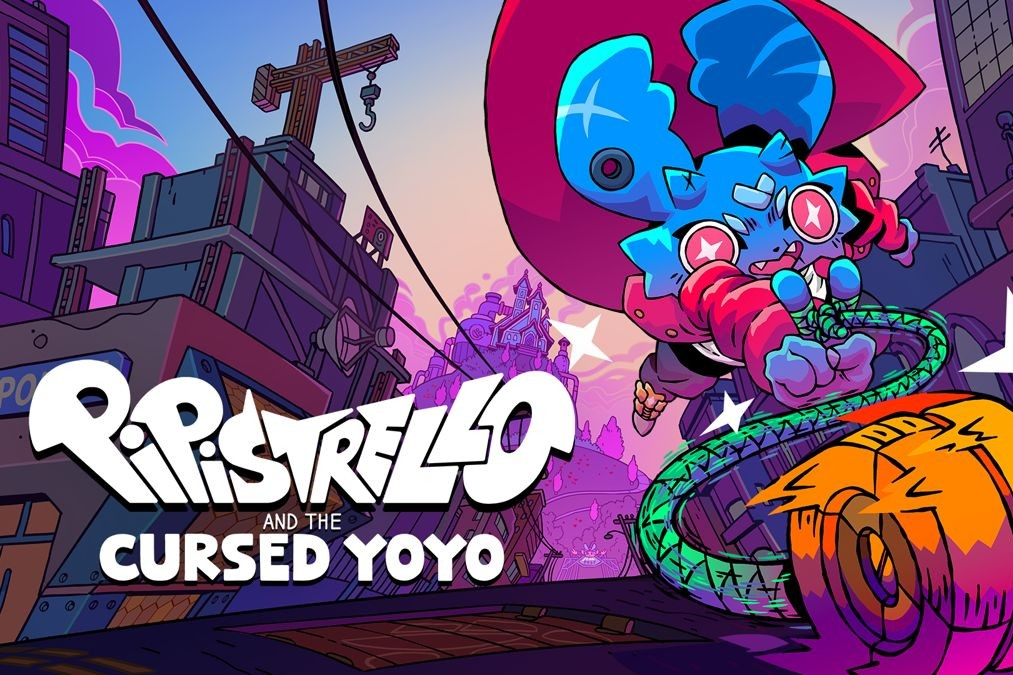
    Anyway, Pipistrello And The Cursed Yoyo is described by Pocket Trap as a “Yoyovania” but that’s not really what it is–it’s more clearly inspired by The Legend of Zelda in the Link To The Past milieu. You play Pippit (weirdly not Pipistrello, that’s their auntie?) the yoyo obsessed failchild of a family that holds a monopoly over all the energy in the city where the game takes place. Due to the monopoly squeezing every last penny from the city’s companies, the leaders of the four biggest companies decided to kill the matriarch, Madame Pipistrello, by sucking her soul into four big batteries which will provide limitless energy for their capitalist dreams (this makes sense, for reasons.) But Pippit intervenes, a fifth of Madame Pipistrello’s soul ends up in their yoyo! So off you go on a pretty clear quest: head to each company, beat up the owner, steal the battery, then once you have all four, put your auntie back together.

    This is all done via a charming, chunky top-down Zelda-a-like; designed almost exactly look like it’s being played on a Game Boy Advance (the game even opens with a 3D model of a GBA-look-a-like, and you can play the entire game on it if you want, with an LCD filter and everything.) When I started to play Pipistrello And The Cursed Yoyo, I was loving it. It’s bright, the controls are responsive, battles are fun, and there’s a great sense of progression as you explore the map collecting coins and finding new areas. But unfortunately, as the game loads on more mechanics, it starts to get… unwieldy. The bright and colourful graphics don’t have a lot of good clean “tells” on what you can do where, and while that might be because they want you to puzzle it out and experiment, it’s not so great when you’re in the middle of chaining traversal abilities to then have to work out what the next one you need to use is. And then actually executing traversal… well, it has the double whammy of the individual moves often being awkward to execute with the design expecting a high degree of competency. Every move has you pressing at least two buttons together, and moves only chain in certain ways, so when you reach the point–as you will–where you’re having to do something like six actions in one go or start again, it can get absolutely frustrating. (Again here, that the difficulty settings allow you to actually half the speed of the game is a life-saver. I won’t lie: I did it two or three times.) 

    The ultimate problem is that often you find yourself finishing a challenge and wondering–was that the way I was supposed to do that? Did I cheese it somehow? They can be so hard, or difficult to parse, that you never actually get to the point where you feel mastery, and that’s a problem. It’s even more of a problem in a game that feels like it should be open like its inspirations. Areas are obviously gated by traversal abilities, and it seems to limit you to two “dungeons” available at a time as a result, but each time it felt I went to the “wrong” one of two first and had to double back to the other one to actually progress. I really can’t tell if that is as designed, or if I just never understood traversal as well as I should have. 

    Battles are mostly fine–a good range of enemies, and intentionally designed encounters–but I think it’s here that the designers make arguably the strangest decision of all. The upgrade system is fairly normal–badges that give abilities or passives that you can equip, and permanent upgrades that you unlock–but the permanent upgrades require you to engage with a “debt” mechanic where you “pay off” the upgrade while suffering a hindrance. So, for example, you might have less life, or enemies won’t drop health.

    At best this is just annoying. While I get the idea, the implementation just means that you spend the entire game weaker than you actually are (and you can enter certain situations completely screwed–nothing like facing a boss with one health and not being able to do anything about it unless you want to return the upgrade and get less money back than you’ve paid in.) If the permanent upgrades had designed hindrances, like “you must use this loadout” or “yoyo can’t be separated from string in battle” (just off the top of my head–not specific recommendations) it could be interesting, forcing you to play in different ways than you have, but it’s usually just “the game is harder” which should make you want to just go to the difficulty menu and make the game… not harder. Again, it’s just holding you back from any rewarding feeling of mastery.

    These aspects–that the traversal is tuned towards extreme competence, and that the upgrade system means you never feel powerful–mean that Pipistrello And the Cursed Yoyo starts to outstay its welcome before you’re done with it. You can be done with the main path in something like 12 hours, and I really didn’t want to give it any more–which is sad, because when I started it I really had it in mind that I’d be searching out all the badges and unlocks, but the main path is so seemingly linear you don’t have much reason to go back on yourself with new abilities, and I just ended up wanting to push through to get it all done. It’s really only thanks to those difficulty settings that I could, honestly (if I had been stuck grinding for cash for the upgrades, I’d probably still be playing it.)

    Was it worth getting to the end? For me, yes, because I had to see where the narrative went. Not because I was loving it, particularly, but because it’s so… odd. The game has you as heir to what is basically a capitalist crime family that’s led by an awful person bleeding people dry, and then the other companies are even worse? I mean it’s not exactly Bioshock Infinite’s “If a cow ever got the chance, he’d eat you and everyone you care about” but let me just say they hardly plant any seeds for the face turn that you’re expecting will show up. I’m not sure quite what they were going for–I suppose it’s supposed to be some sort of commentary on capitalism, but it’s muddled.

    Anyway, here we have one of those classic examples of a game where finishing it kind of just put me off it, because the flaws just became more and more apparent. If it was half as long, or if I was the kind of person who was fine only playing half of something, I’d probably be raving about this. Oops!

    Will I ever play it again? There’s a new game+, which probably gives you a reason to go through the early areas again with all the abilities, but… to what end?

    Final Thought: I feel like I’ve been harsh on this one, so one thing I do want to say is that even if I did think it outstayed its welcome, it’s not for want of the designers trying. They go to extreme effort to make sure every area you visit has a new concept for you to deal with. Fans, lasers, switches, moving platforms, dark areas… each time they take an idea they leave no stone unturned, and so you’re always engaged. If you gel with this game–particularly when it comes to traversal–you really get your money’s worth here, and it’s even possible that if you’re just a little more aggressive with easing the difficulty settings than I was, you’ll hit a sweet spot either way. And for what it’s worth: I can see the counter argument that the team should have worked harder to tune the game to “avoid” having to include all these difficulty options, but the game’s issues are not ones that could be fixed by that.

    If you like the look of this, I’d still consider giving it a shot. Just… don’t try to be a hero and stick to the defaults. I don’t think it’s worth the pain.

  • The exp. Dispatch #10

    The exp. Dispatch #10

    Well, very funny to say in the last dispatch that I’d go to biweekly and then not actually send out another one for three weeks. Well, I’ve got a good excuse.

    Recently On exp.


    Announcing exp. 2602 For Pre-order Today!

    Said excuse! I suppose I did send this out to all subscribers at the start of the week. exp. 2602 has been in the works for a while, but it was put on hold when I rebuilt expzine.com, and then actually launching it got delayed even longer because I was so dissatisfied with ecommerce options like bigcartel and ko-fi (ko-fi in particular badly screwed me recently) that I decided to self-host—after all, I already have the website. I somewhat understand why people just pay to have someone else handle it all by now… but at least so far it seems to be working. Also—please consider pre-ordering! This is the last weekend before I absolutely have to get it to the printers, and your orders make sure I know how many to print!

    Subscriber Post: Elechead (Namatakahashi, 2021)

    This week’s subscriber post showed up a little late because of the announcement, so I hope people don’t overlook it. Namatakahashi is doing something really special in indie games right now.

    Unlocked Posts: Gravity Bone (Blendo Games, 2008) / Metroid (Nintendo, 1986) / Many Nights A Whisper (Deconstructeam/Selkie Harbour, 2025)

    Man, when you see the games listed out like this I really grasp how some people find it hard to hook into what I’m doing here. But my tastes are too catholic for me to limit myself to being, like, only an RPG or retro blogger or something. If you only want to read one of these, please read about Many Nights A Whisper—there’s only a few short months to find out if it stays at the top of my games of 2025 list. But uh… obviously read them all.

    From the exp. Archive: Cart Life (Hofmeier, 2010) / Soulcalibur: Broken Destiny (Project Soul, 2009) / Star Wars Pinball (Zen Studios, 2013)

    A couple of really throw-away articles here but I still think what I wrote about Cart Life hits. A “compelling and thoughtful critique” according to Eggplant‘s Rob Dubbin, so that’s nice. Surprisingly on Twitter, the website where linked articles go to die, I got some feedback on Soulcalibur: Broken Destiny too. @Yoshicookie, apparently a Kilik main, let me know it’s “actually the better version of [Soulcalibur IV], if it had proper multiplayer.” Good to know.

    exp. Capsule Review


    Blobun Mini (Cyansorcery, 2025)

    Didn’t really pay attention when downloading this because it looked so cute when it showed up in my feed–I guess I assumed it was a Crush Roller-a-like, or something. However, it turned out, concerningly, to be more of a “hard” puzzler, where you’re trying to fill in every square in a map with your cute little slimy bunny and you lose if you need to backtrack to do it. It’s not Sokoban, exactly, but it (maybe unfairly) raised memories of every game I’ve ever played where you do a complex chain of things but have fucked it up at one point in the last 100 moves and have to try and make sense of it.

    As a result I was initially considering putting this down completely, but I decided to stick with it for a bit as it’s a free PICO-8 game, so I was able to pick it up on my Trimui Brick whenever I had a spare moment (don’t leave me with my thoughts! I need to be doing something, please don’t leave me with my thoughts!) and Blobun Mini won me over for several very good reasons. 

    Firstly: every part of it glows with polish, from the charming UI through the responsive movement. Secondly, the game has an unbelievably smooth difficulty curve. It introduces new concepts carefully–and it has many for a game with just sixty levels–and every map is short enough that you never have too much to fix if you screw up. And thirdly, the game is unbelievably forgiving, with a complete rewind and even hints to start you off on each level.

    Much like Dino Sort, if you’re looking for a charming puzzler that you can pick up and put down and eventually finish you can’t really go wrong with this (I mean, it’s bloody free) and if you like it so much you can go ahead and play the “full” version of Blobun, which does look like it’s too much for me, but that’s fine.

    The only problem I have with this, actually, is that I finished every level but the last level didn’t “tick off” so it looks like I haven’t. A bug, maybe? But it’s a minor quibble.

    exp. Du Cinéma


    Superman (2025) / Evil Puddle (2025)

    Something something, catholic tastes. This is the second time a Motern Media production has shown up in this newsletter, so I assume you’re all complete converts already.

    Also reviewed: Eddington (2025), The Devil At Your Heels (1981) and Mountainhead (2025).

    Zine News


    Middle-Aged Teenage Angst Issue 1

    “Middle-Aged Teenage Angst: The Zine is now available to buy in print or as a PDF. 52 pages of new writing by me on forgotten TV, old mags, radio, wrestling, growing up, badges and, of course, music.”

    Retro Game SuperHyper Fanzine Issue #5

    “YES!! Over three years late, but I kept my promise, and the fifth issue of RGSH fanzine is finally finished and ready for you!!”

    This came out a fair few months ago now, but only came to my attention (as zines often do) thanks to Forgotten Worlds.

    ASTRO Gaming Lifestyle Magazine

    “This is a magazine that explores gaming as a lifestyle (think Nintendo Power meets curated fashion and lifestyle magazine). The book features 60 pages of my artwork alongside photography and featured community projects.”

    This is absolutely beautiful but I’m sad to note that it’s also fifty-nine dollars. I think it’s neat that there are higher-end zines and journals out there—think the amusingly similarly titled ON and [lock-on]—but I have to admit that I don’t have the funds to keep up. Maybe they’ll be up for a zine trade?

    zeenster.com

    Moheeb Zara’s free zine making app now works on mobile! Make your own zine and then charge sixty dollars for it. That’ll show ’em.

    And Finally…


    This is a fun one. I’d put off watching this until I finished Clair Obscur: Expedition 33, as I’d heard the book this talk (from two years ago!) was about heavily inspired it. When you watch this you’ll be absolutely shocked as to how much of a, well, complete rip-off Clair Obscur is, and of a book that was apparently a huge success in France! I’d be fascinated to read what French fans thought of the game—if they were just completely nonplussed by the things international audiences found fresh and exciting. Maybe that’s why the game makes such, er, big swings at the end? To differentiate it?

    Anyway, I’m absolutely gasping to read La Horde du Contrevent now. Considering I moved to Canada anyway, I should have really bothered to give a shit about French in high school. I guess if I can sell more copies of exp. 2602 I can be taken seriously as a publisher and try and get the rights? There’s an English translation sitting there waiting!

    Next week on exp.: Well, I did the Metroid, so…

  • Evil Puddle (2025)

    Evil Puddle (2025)

    When introducing Evil Puddle as the first film in his pre-TIFF Midnight Dankness screening (which raised over $4000 for PCRF and Islamic Relief Canada!) Peter Kuplowsky compared it to Eddington as a work of post-COVID cinema, and it is, I think, an excellent lens to view it from.

    Eddington is a cynical film that, if it argues anything at all, argues that we are all deeply alone–enveloped by our solipsism so completely that there is no such thing as community, and catastrophe only exposes our urge to self-preservation above all. That we are, ultimately, trapped in our own minds. Unable to see that we’re prey for higher powers and forces that we don’t–and couldn’t–understand.

    To me, this is the worst kind of satire–the kind that allows you to be smug because you’re clever enough to know how bad things are and clever enough to know there’s nothing to be done about it. A self-fulfilling inaction.

    Evil Puddle argues, instead that community is very, very real, in both narrative and form. From Matt Farley, Charlie Roxburgh and the cast of locals and fans that pitch in to play roles in their movies, Evil Puddle is a 1970s folk-horror disaster movie by way of community theatre in which some unlikely events lead to a small town’s water supply becoming, er, evil.

    Heavily featuring a magic rock, I’m unclear if after Magic Spot Farley and Roxburgh are creating a new thematic series of “magic rock” movies to follow their earlier, triumphant series of Druid movies, but the water which kills you instantly but otherwise looks completely normal and benign (you know, like, say, air with a virus in it) is the key factor here. Like classic disaster movies, the film flits between disparate characters who all face peril in different ways due to their predispositions. So, for example, you see some kids who have been using a hose to clean off rocks for a new tranquillity garden. You see a group of ne’er-do-well’s who seem to do little other than hang around a pizza parlour complaining about the free tap water. You see, er, a dance instructor and his student who happen to be learning close to a sprinkler (I think you get where this is going.)

    The movie doesn’t linger on punishing characters for their hubris–refusing to trust experts, or attempting to exploit others in their time of weakness–instead choosing to celebrate the characters who work together in even the smallest ways. Evil Puddle is unique in making one of its most rousing sequences about how sometimes the best thing you can do is accept some mild inconvenience rather than put yourself or others at risk.

    That this movie has been made by a community is what makes it all so dense with meaning. If you’ve followed the Motern Media universe for any length of time, it’s genuinely moving to see how the actors you know have aged and changed but that they’re still showing up, because that’s what people do

    It’s easy to be cynical. It’s unarguable that the tools that we use every day are being warped by big tech to isolate us ever more. But AI ain’t going to show up when you need help and it ain’t going to make a movie a tenth as good as this one, made with friends and family when they’ve got spare time, where it’s obvious when they’ve shot several scenes in single afternoons. Because you can’t replace community, you can only participate. Rather than inviting the audience to wallow in their smug inaction, it inspires. You could do this too. You can do anything you want. Someone probably wants to help!

    And the beautiful thing about Evil Puddle is that just by watching it, even if you have no idea where to start, you already get to join a community: the community of Motern Media fans. Hell, you can call Matt Farley right now if you want (his phone number is 603-644-0048. Give him a call, tell him this review sent you.) Why be smugly alone? Join us, it’s much nicer here.

    Follow Mathew on Letterboxd.

    Update (31/10/2025): Evil Puddle is available for purchase on Vimeo now!

  • Superman (2025)

    Superman (2025)

    This has been out for a while, so pretty much every position on it that can be taken has, and I don’t think mine is going to be that revelatory. But still.

    To start with the de rigeur “me and Superman” background, as a British person who didn’t get into American comics until they were a teenager and holds all the usual boring opinions about him (“he’s too powerful! Where’s the peril! Get me a loser like Peter Parker, etc.”) my entire experience of the lad is (obviously) almost completely All-Star Superman, but probably less obviously that one issue of Hitman and then that Superboy arc where he’s an apartment super (get it?) because that was drawn by Hitman artist John McCrea.

    Interestingly (maybe) if you’re really into comics you’ll already have clocked why Superman (2025) has really worked for me, because “that one issue of Hitman” where Superman shows up dwells on Superman failing (badly) and then being picked up by having it spelled out pretty directly that he’s an immigrant trying to make the best of it, and there’s really nothing more you can do than your best.

    I mean… James Gunn has to have read that one, right? Because he gets it. Superman is made as real and as vulnerable as possible here, understanding that just because you’re invincible doesn’t mean you can’t be beaten, and that Superman has no more emotional armour than anyone else. While I’ve read some criticism over just how badly Superman gets his ass kicked in this, that it comes from both directions and that Superman reacts so genuinely–so humanly–to it all is what makes it work. There are stakes: you feel your fist tightening because they stole his dog. You are right there with him all the way.

    Some of Gunn’s predilections are a bit unbalancing to the movie as a whole though. Some of the gags fall flat. He can push peril a little too far when it comes to the defenceless, and his penchant for eye trauma rivals Lucio Fulci’s. But the real issue with the film is that the big action climax doesn’t work. It’s obvious that the thematic arc of the movie is always going to end in a (largely) non-violent confrontation between Superman and Lex Luthor (played with a genuinely incredible seething hatred from Nicholas Hoult) but the other villains (well, bar one) fall completely flat, and the big “why can this guy beat Superman?” mystery is concluded in the most boring way possible. For a movie that digs up so much stuff from the DC Universe (look, I’ve got no idea who Mr. Terrific is) it’s weird that they resorted to the kind of thing we’d expect at this point from the completely shagged-out MCU. But it doesn’t put too much of a pallor on things, because in every other respect, this movie’s heart is in the right place.

    Speaking of, the movie’s much talked-about Israel/Palestine allegory is… astounding. It’s absolutely not the center of the movie, but it goes so much harder than you could ever expect when it appears. Look, we’ve all learned by this point that satire doesn’t do much. But Superman said free Palestine, and in this miserable fuckin’ world, that means something.

    Follow Mathew on Letterboxd.

  • The exp. Dispatch #9

    The exp. Dispatch #9

    I think I’m going to settle on the dispatch being biweekly–doing it every week has felt like overkill. I think I imagined this newsletter as just links to the articles of the week, but each time I’ve thought of doing that it’s felt like such poor value for your no-money that I’ve ended up doing more, so this is, probably, better for all involved. Let me know if you feel any different. Onwards!

    This Fortnight On exp.


    Subscriber Post: Many Nights A Whisper (Deconstructeam/Selkie Harbour, 2025)

    Listen to Together by Nine Inch Nails while reading this. If you know, you know.

    Unlocked Post: The Legend of Zelda (Nintendo, 1986)

    Nice to get to call out Wes Fenlon’s excellent Read Only Memo and Phil Summers’ Hand Drawn Game Guides here. Not the last time Phil’s work will be mentioned at the very least.

    Unlocked Post: VILE: Exhumed (Cadaver, 2025)

    You know, I really thought this game would create a bit more discussion online considering the context in which it was released, but I guess not!

    From the exp. Archive: Fire Emblem: Shadow Dragon (Intelligent Systems, 2008)

    Digging this old article up made me realise I never managed to cop that fancy re-release Nintendo did of the Super Famicom original, despite really trying, and then I completely forgot to download it digitally anyway. It’s really bizarre that Nintendo took to these limited releases for Fire Emblem and that Super Mario collection. Why? I guess they did limited Mario and Kirby releases in the days of the Wii, but it just seems so weird to go “you can’t buy that now” in the digital shop of infinite shelf space.

    What’s that? I’ve got a digital zine collection that I’ve only ever released temporarily? Uh… shut up.

    From the exp. Archive: Hollow Knight (Team Cherry, 2017)

    The Silksong hype is real, man. This article, despite being from 2020, was just about the most read thing on the site in the wake of it being announced. And I don’t even like Hollow Knight!

    exp. Capsule Review


    Merge Maestro (Stingless, 2025)

    Had heard rumours this was the new roguelike-like obsession of the moment, so thought I’d give it a shot–it’s not like I feel like I’m wasting my life as it is. But I bounced off this basically immediately. Of the roguelike-likes it’s most similar to Luck Be A Landlord in that it’s very simple, entirely focused on a core loop–here, playing a symbol-based Threes-like to fight a succession of waves of enemies until you either lose or win the run by beating a final boss enemy. After each wave you get to upgrade one of your symbols, each of which has a special ability, and you’re basically trying to make your deck work synergistically so that as you merge symbols you’re doing massive damage and making your board better. 

    If that sounds… fine, it… is. I mean it’s really quite generic feeling, probably not helped by the fact that is uses emojis for the symbols, and maybe if you really love Threes this will light your fire, but it’s got the same kind of problem that Luck Be A Landlord does, where there’s a billion symbols (here 300!) that all do different things and you can find yourself heading in the wrong direction based on your rolls or just not being able to pull anything together. You can get Balatro-esque insane numbers going, but I certainly couldn’t be bothered to try.

    I don’t mean to beat up on this one too much, because it’s from a small developer, completely competent, reasonably priced and I assume for the right kind of player absolute catnip. If anything I’m surprised at how much this failed to get its hooks into me. Am I burned out on the genre, or will another game draw me back into it? You know what, I’m not in a mood to find out any time soon.

    exp. Du Cinéma


    War 2 (2025) / Coolie (2025)

    Thank goodness I’m here to keep you up to date with the latest Indian cinema releases. Absolutely why you subscribe to a video game newsletter. But for real though, War 2 is a banger.

    Zine News


    ZINEDUMP

    “ZINEDUMP is a new Toronto zine fair that aims to provide a venue for the open expression for independent publications, radical art and ideas. The inaugural fest will be held on Nov. 9th between 12-5pm at the Cecil Community Centre.”

    Still time to get submissions in if you’re quick–the deadline is August 31st.

    Amiga Addict 39

    “The new issue of AA is out, in which we look at  Fast Food 2 and the history behind the Oliver Twins original!”

    Incredible to think that there’s an modern Amiga magazine that’s run for 39 issues. I haven’t been able to keep up.

    How To Report ICE

    These single page, easy to print and distribute zines give information on how to report ICE for specific cities/areas in the US.

    And Finally…


    What’s this???

    Next week on exp.: The Stampers get ripped off for the second time. Allegedly.

  • Many Nights A Whisper (Deconstructeam/Selkie Harbour, 2025)

    Many Nights A Whisper (Deconstructeam/Selkie Harbour, 2025)

    Developed/Published by: Deconstructeam, Selkie Harbour
    Released: 29/04/2025
    Completed: 23/08/2025
    Completion:

    Fuckin’ hell.

    The last couple of years have been incredible for shorter narrative video game experiences, and in a weird sort of way, it’s almost like there’s like an unspoken arms race to make them shorter–no, not shorter, more focused, more concentrated. I’m not sure at what point we reached the nadir of games–particularly those of the triple-A persuasion–being a never-ending procession of endless “content”, but there’s something deeply refreshing about the idea that whether intentionally or not, game designers have discovered there’s a value in fermenting a game design, boiling it down into a playable umami. A rich flavour that lingers and sticks with you long after in comparison to the once-prevailing wisdom that players should be faced with an endless chocolate cake and forced to eat it like they’re Bruce Bogtrotter, quality be damned. Games that say, “we’re not just chocolate cake! We’re an endless buffet!” but the entire experience is, as I once said about Horizon: Zero Dawn, like chewing through a gym mat.

    By comparison, Many Nights A Whisper gives you one thing to do. One perfect, polished thing. It gives you as much time as you want to do that thing, in a genius and thematic invitation to self-direction, though you’ll probably wrap things up within an hour, hour and a half. And I don’t think it could manage what it does any other way.

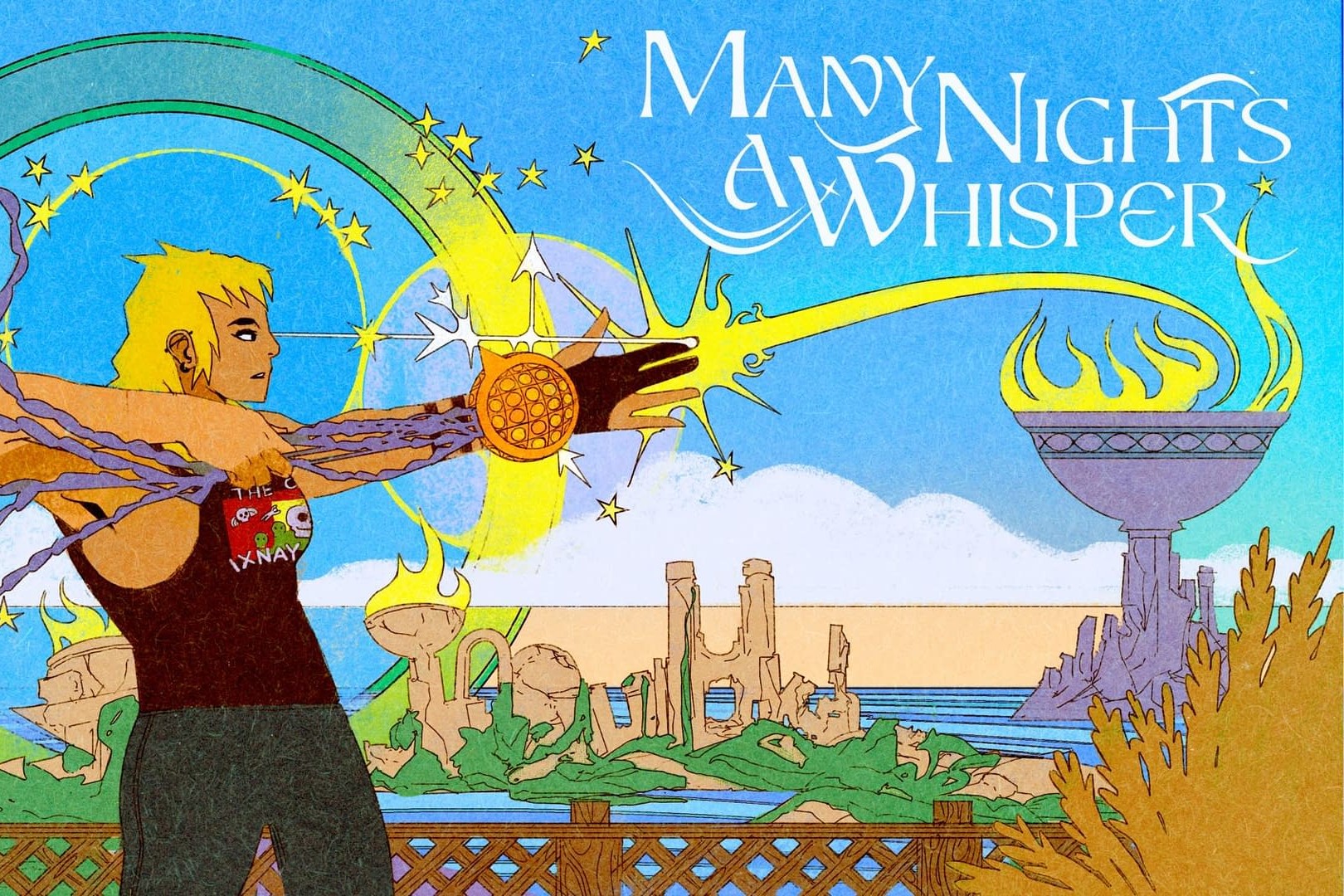
    In Many Nights A Whisper, you are the “Dreamer”, chosen to practice with a slingshot for ten years in preparation for a single shot at a distant chalice that, as part of a sacred ceremony, will ensure everyone’s wishes will come true–at least, those whose wishes are heard and accepted by the Dreamer. The game begins with the ceremony fast approaching, and as people begin to deliver their wishes, finally the Dreamer’s slingshot range is able to be expanded with hair from the cut braids of those whose wishes are accepted. And so the player is given freedom to practice their expanding slingshot against increasingly distant targets each day, and then each night, they hear and choose which wishes to accept by cutting the braids of hidden petitioners.

    And that’s it, until one day, you have to make the shot. And you really do only get one attempt.

    In a strange way, the thing that Many Nights A Whisper reminded me most of was The Bear’s incredible season three opener, “Tomorrow.” While the show itself has, ironically, lost focus completely–and to be honest, the very next episode in season three does its best to blow up its thesis, anyway, Tomorrow movingly, non-linearly, shows chef Carmy’s sometimes beautiful, sometimes painful, sometimes awful history intertwined with his work, his process for forming a new menu for the titular restaurant. Layer by layer, the episode offers an affirmation:

    You are not simply the sum of what has happened to you. You are what you choose to do with that.

    It is an aspirational song of praise to putting everything of yourself into your process. It’s like when you watch one of those NHK documentaries about a factory that hand-produces lacquer bowls, or something. You think, you are reminded, that you are a corporeal being that exists in the world. You can imagine the simple yet deep pleasure of mastering something, putting yourself into it, knowing every movement, until it becomes second nature; the work sings a song you woven not just by your hand but by the life that got you to that point.

    In a world that almost feels more virtual than real now–forever interrupted, beauty shortcut with slop, isolation and othering as policy–these things make you face up to how you’ve hardened. They make you long for a honest dialogue between yourself and the world: and make you content with the fact that being honest with yourself is maybe the only thing you can control.

    You are not your context. You are what you choose to do there.

    Many Nights A Whisper doesn’t give you a world to explore. It gives you the role of the Dreamer–designed clearly to visually reference the modern incarnation of The Legend of Zelda’s Link–in a small courtyard that only hints at the larger world. You’re wearing (and I would love to know the story behind this) an Ixnay On The Hombre t-shirt, your mentor has a big telly… but this otherwise could, if you squint, be Hyrule. Many Nights A Whisper gives you a context you already know, and an interaction you already know. Left trigger to aim, right trigger to shoot. It asks you to consider your process, and engage with just how hard you want to work by giving you a safe, understandable, recognizable space to work in, with no distractions.

    And while it does that, each night it ask you to consider why you’re doing it. Is it just because you’ve been asked? Because you want to make people’s wishes come true? Whose? Who deserves it, and who doesn’t? What is the world you want to create by your hand?

    Many Nights A Whisper describes itself as an interactive essay, which I think is a little precious. Because it is very much a video game, a visceral video game. At first, you make your little shots into nearby chalices, you accept easy, uncomplicated wishes and enjoy the reward of “levelling up” your slingshot. A few in-game days later you’re making micro-movements and cursing as you miss shots at chalices far in the distance, then trying to navigate the wishes of the selfish and confused. “I need more distance” you think, “but this person is unworthy.”

    And then, suddenly, the ceremony is due. You have one last afternoon with which to perfect the shot. Can you? Walk away from the spot you’ve chosen, line it up. Hit. Walk away, spin around, line it up. Was that right? Hit. Alright, if I get it a third time, I’ll move on. Walk away, spin around, put the Steam Deck down, make a cup of tea, dunk a chocolate digestive, fuck half of it broke off, burn your finger trying to dig it out, back to the kitchen and grab a spoon, urgh it’s too soft now, back to the Steam Deck, you know the chalice was right at this point on the screen… wait, move it here. No, there. Miss.

    Fuck.

    As someone who is extremely free with walkthroughs, save states and the rest–games are to be enjoyed–one of the meaningful things about Many Nights A Whisper is how deeply it engenders an urge to do it right. To give yourself over to the process. To try and try again to make a lacquer bowl with all the knowledge of the history that made it what it was and made you what you were. I played for real. I tried many different ways, I practised. I spent far longer than I’d expect I would have trying to get myself to the point it was second nature. Until I realised I was overthinking it. If I took a breath, stopped, and attempted a shot based simply on what felt right–a shot based entirely on the accumulation of practice, I’d make it. But if I kept trying, I’d get tangled in it. Micro-movements, losing my place. I’d start to miss. 

    So I stopped practising. There’s only so much you can prepare. I didn’t even make sure my last shot was a hit. I simply trusted in my process.

    At the ceremony, I took a breath. I closed my eyes, I thought about everything I had gone through. Was it really just an hour, or was it a lifetime? I pulled back the slingshot, and I fired.

    Will I ever play it again? I am somewhat interested in what happens if you do certain things different ways, or if certain things play out differently on different playthroughs. But at the same time, my experience was so singular, and the tension so real, that if I ever play this again it’ll be a long time yet.

    Final Thought: It’s a rare video game that I say “this could only exist as a video game” but Many Nights A Whisper is one. The preparation and tension of the shot is pitched perfectly–the game is just long enough that it feels like it matters if you fail, but not so long that it makes attempting it in the first place seem insurmountable. It is to experience, mechanically, the crunch-time moment of an underdog sports movie, layered with all your own effort to get you there, holding, quite literally, everyone’s hopes and dreams with you.

    Many Nights A Whisper is, currently, my game of the year. And it ain’t even close.

  • Coolie (2025)

    Coolie (2025)

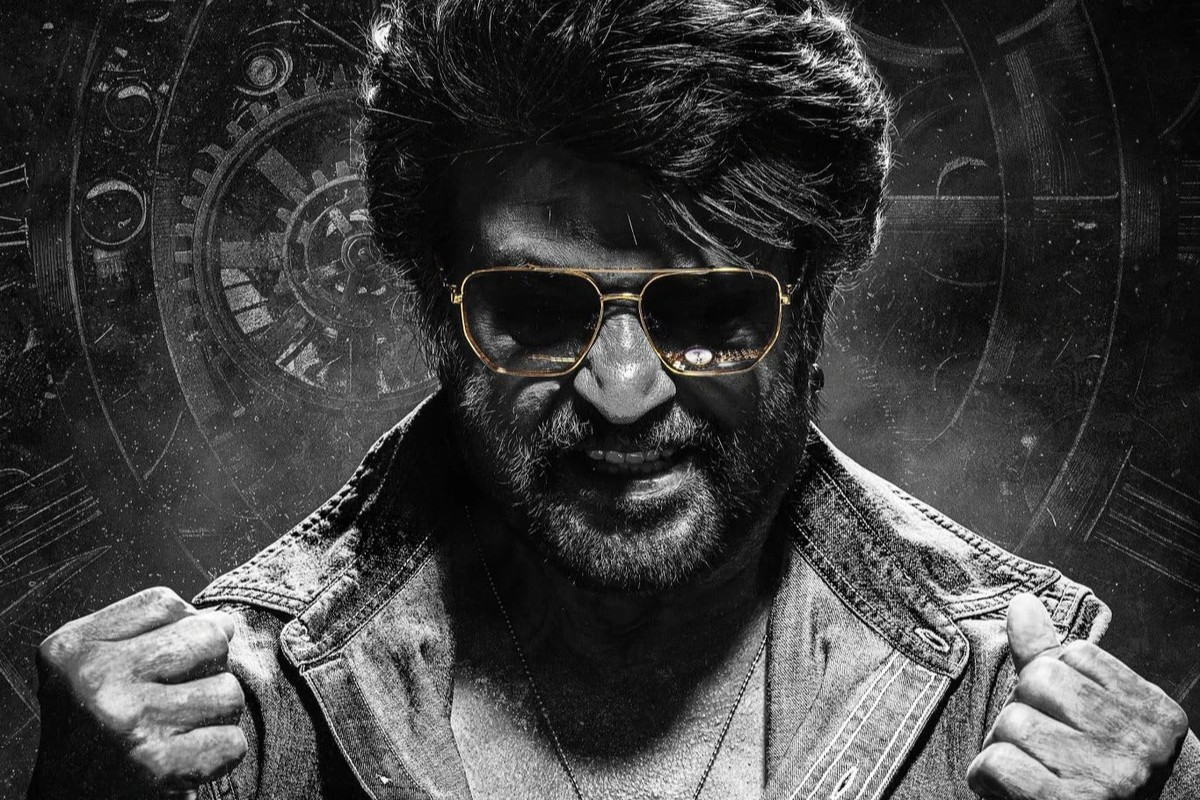
    Oh good lord. I will, of course, refer you to my review of War 2 first (which scheduling, unfortunately, placed first in my double bill of contemporary Indian cinema at the weekend) so I don’t need to go over my entire “what the fuck do people want” line of inquiry again in relation to this, Rajinikanth’s latest slog which has, somehow, outperformed it both critically and commercially.

    Look, I’ll admit it–I’m nonplussed by Rajinikanth. I basically haven’t seen anything where he wasn’t at least in his sixties, so I don’t have this long history where I can recognise his every twitch and pop for it, and I can’t really fail to notice that he’s deeply, deeply limited by being an elderly man. I don’t think there’s any shame in this! I mean Robert De Niro couldn’t pull off youthful in The Irishman, he’s in good company.

    But listen, with Lokesh at the helm, I wanted to believe. While his films tend to have a lot of build up, they eventually go absolutely bananas, and I loved Kaithi, Vikram, even Leo a lot. But I have never been so thankful that a movie wasn’t in a shared universe. Because this is absolute drivel.

    Now, the last Rajinikanth I was able to catch, Jailer, was almost unwatchable, but at least it was genuinely insane. This is just death. The setup is so neat and simple: a guy’s pal dies, so he has to investigate. Based on the title (which… listen, it’s weird that they named the film a slur) and the fact that it all revolves around a dock, you’d assume he’d go undercover as a dock worker and that would be the movie’s backbone.

    No. He pretends that he knows how to use the cremation chair(?) that his friend invented(??) but which he couldn’t get a patent for(???) so that he can get close to the baddies, who specifically need to be able to get rid of bodies faster than normal for… reasons. Alright!

    Meanwhile, the main baddie’s son is a customs officer in a love affair, and the baddies’ main enforcer is seeking out undercover cops, but maybe he’s also got secrets of his own. Oh and Rajinikanth owns a boarding house for students and his past relates to the docks… sort of. 

    Coolie is full of these overlaid tangled paths for what should be simple threads and every single one ends frayed and unsatisfying. I legitimately cannot tell you why his pal died. I understand the circumstances surrounding it, but not the why, and I genuinely think everyone making this movie forgot.

    Still, it’ll be fine because the songs and action will be good, right? [Padme meme face]

    The solution for Rajinikanth’s limited abilities… not elegant. Dancing is reduced to “putting a handkerchief in his mouth and waving it about.” Fighting? They resort to the ol’ “Steven Segal”: he stands still, waves his arms and baddies go flying. This is not entertaining. Well, there’s a couple of other dudes on the poster, right? They’ll be in the movie and do cool stuff?

    Well… let me just say I do think it should be illegal to put someone on the poster if they don’t have some sensible amount of screen time, or, like, any character at all. Kannada star Upendra appears to… stand still and punch dudes so they go flying (while Rajinikanth just stands there!) And it’s not so much that you could blink and miss Aamir Khan’s cameo so much as you’ll wish you had your eyes closed during it. Again: they’re on the bloody poster!

    Even if I was all in on Rajinikanth’s screen presence, it feels impossible to overlook that his character seems to have absolutely no plan and just dodders about. He basically creates every problem that occurs after the intermission by being a huge dumbass (then gets drunk?) and seems to only get hurt at one point because he’s just standing around looking confused.

    It’s not much better when he’s not on screen, though. The most tense and interesting part of this film I can best describe as “What if the Terminator had been played by Danny DeVito in a dog collar?” and it’s really not as good as it sounds.

    Coolie is a bloated, confused mess, and I’d have had more fun if I’d just seen War 2 twice in a row. Hell, I’d rather have watched Jailer again than this–and that’s saying something.

    Follow Mathew on Letterboxd.

  • War 2 (2025)

    War 2 (2025)

    Looking at the general opinion of this, which is, at best, middling, if not openly hostile, I’m for some reason reminded of the track KP Snacks, by obscure Scottish comedy rap act Bin Men. The one that’s not Romeo Taylor waxes lyrical about how the UK’s best mass producer of crisps and chocolate dip is “the realest fucking business out there” and concludes: “if you disagree… you’re a fucking idiot.”

    I obviously cannot bring across in text how perfectly his tone and phrasing reflects how I feel when people are being fucking idiots, so you might want to listen to 00:18 to 00:21 to understand how I stand in vicious judgment of people trying to dunk on War 2.

    Because what the fuck do you people want?

    Look, there’s plenty of reasons you might not like War 2, but they’re all the sort of thing where you shouldn’t be going to the cinema in the first place. You don’t like action films. You’re uncomfortable with your sexuality. You hate fun. But if you’re showing up at the cinema for the fucking sequel to a ridiculous, over-the-top bromantic actioner and you walk out of this without a smile on your face… I mean what is actually fucking wrong with you?

    And listen, I know what I’m talking about. I sat through Mission Impossible: The Final Reckoning, which is but three minutes shorter than this, as obsessed with making you believe its hero(es) are godlike via complicated set-pieces, and completely fucking boring.

    By comparison, in War 2 everything is at a fever pitch. The movie seems to even rush through its establishing shots to make sure that it never, ever stops being entertaining. The classic post-intermission flashback? You’re in, you’re out, lets you know everything you need to know. The comedy sidekick? Which one? There isn’t one, we don’t need them, NTR Jr’s got the jokes and (for some reason) acronyms for you.

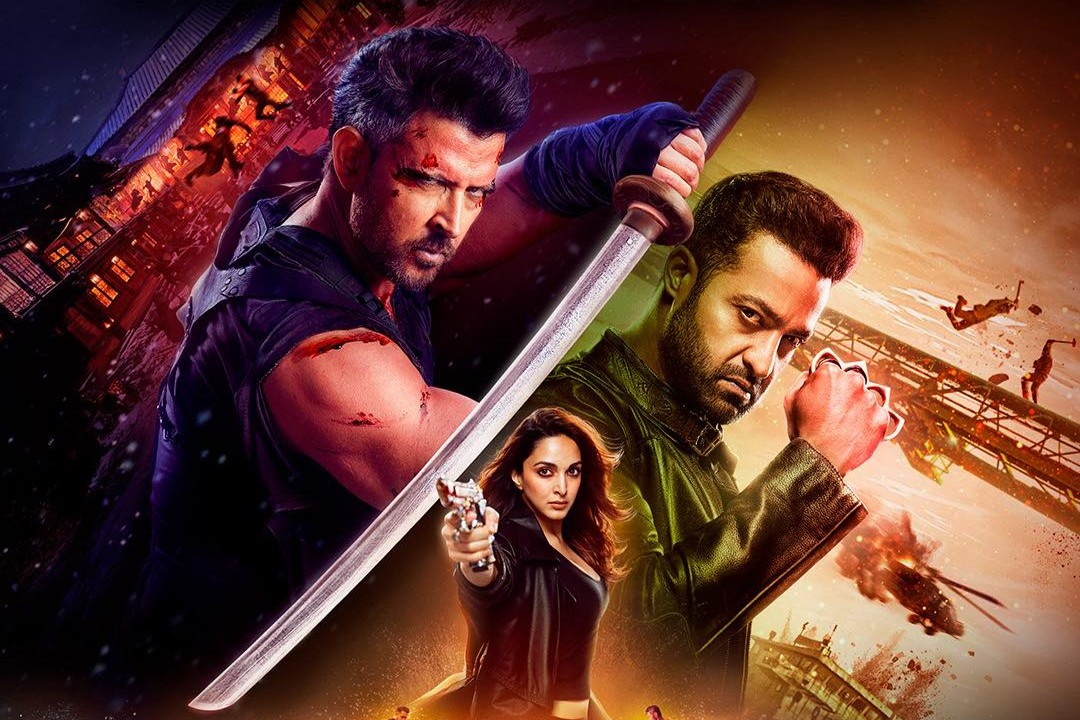
    I mean War 2 opens with Hrithik Roshan being so awesome that he tames a wolf just by looking at it, before he fights a bunch of ninjas and a helicopter—a sequence that would be the climax of basically any other film. Sounds too generic? While War 2, like its predecessor, wears its inspirations on its sleeve, it again proves that no country on earth is making action films like India, always providing a twist that I’ve never seen before. NTR Jr—who Western audiences will most likely have last seen in RRR—appears in a rescue sequence where he does something so funny and so clever with a wrecking ball that I legitimately refuse to spoil it. And a sequence involving a plane-jacking is genuinely unique.

    So War 2 goes hard. And I mean… hard. Fellas, is it gay to have a male friend? War 2 says: yes. And it’s fucking awesome. If War was a one-sided love story—poor wooden Tiger Shroff’s doomed adoration of Roshan—War 2 gives us star-crossed, uh, “good friends” in a situationship where boundaries are not respected, and everything is driven to the kind of heights that haven’t been seen since Vernon Wells’ Bennett screamed “we don’t need the girl, John” at Arnold Schwarzenegger’s John Matrix in Commando.

    If you remember the conclusion to that film—where Schwarzenegger literally “lays pipe” in his opponent—things go exactly as allegorical here, as our heroes take turns penetrating each other. You know, with weapons and that.

    There is a sequence in this movie featuring the female lead Kiara Advani, that is so aggressively sexual that I have to assume that censors required it because they feared the lights would come up after the film and it would look like the cinema was a bathhouse.

    *ahem*

    Wait, what was my point? My point is that War 2 is completely guileless in its attempt to push everything, literally everything, as far as it will go. It’s ridiculous, it’s not even asking you to take it seriously, it’s just trying to entertain you. Sure, maybe it goes a bit too far. Maybe it’s got some blindspots. But ultimately?

    War 2 is the realest fucking movie out there. And if you disagree? You’re a fucking idiot.

    Follow Mathew on Letterboxd.

  • The exp. Dispatch #8

    The exp. Dispatch #8

    This week on exp.


    Subscriber Post: VILE: Exhumed (Cadaver, 2025)

    This was a really difficult one to write about, and while I really hesitate to bang on about how exp. needs your support to continue at this level, well, it does, so please consider supporting us on Patreon (preferrably), ko-fi, or pick up a zine or the book. Here, I chose to dig into a banned game with heavy themes that reflect the current moment of moral panic, but which I found… inconclusive. Would love to hear what others thought of it, or what I wrote about it.

    Unlocked Post: Firework Thrower Kantaro’s 53 Stations of the Tokaido (Sunsoft, 1986)

    Speaking of people getting in touch to say what they thought of a game, I’m still surprised by just how many people have popped up to say they love this one. I hadn’t heard of it before!

    From the exp. Archive: Toy Soldiers: Cold War (Signal Studios, 2011)

    Wrote about this one all the way back in 2014 and was surprised to look Signal Studios up and discover that they’d quietly gone out of business in at some point in 2023, their last release a HD remaster of the original Toy Soldiers that no one liked. One of the only things I was able to dig up about the closure actually was a tweet from the official Toy Soldiers account: “TSHD was not handled well by the publisher or me—limited resource, tons of delayed/bad dev caused by idiotic public policy and other unexpected events—deals fell through—over time—resources gone—the rest is history.”

    exp. Capsule Reviews


    Mindset GO! (Magicave, 2025)

    Spent some of the last few weeks playing this mobile and web puzzler, and as it’s been made by friend-of-exp Ste Curran I can’t in good conscience give it a “proper review” but I do want to recommend it anyway. In fact I’ll go ahead and explain that I’ve already recommended it to other people as an antidote to a few things–engaging with anything from the New York Times, a propaganda company with a games arm (or vice versa) or playing any of those fucking terrible games that show up when you use any mobile app with ads (more on that on a bit though.)

    Mindset GO! is the kind of design where when you play it you think “wait, how have I never seen this before?” as it features an incredibly simple design: you’re just sorting shapes based on one or more feature that they have. If they’re a triangle, or yellow, that sort of thing. You put them into circles, which might intersect as a Venn diagram does–meaning you need to put yellow triangles there, but can put just yellow, or just triangles, elsewhere–and you don’t necessarily know what all the features required are.

    This starts embarrassingly easy, but quickly gets… difficult. The Venn diagrams become more complex, and then suddenly you’re sorting (say) wee cat faces instead of big simple shapes. The thing I most appreciated about this game is that you can feel your brain expanding as you work out systems and techniques to beat harder and harder levels. Almost subconsciously you find yourself pre-sorting shapes, or able to keep two concepts in your mind at once that you couldn’t before. It’s deeply, deeply satisfying, and it’s all wrapped up in a terrifically thoughtful UI.

    As highly as I recommend it, this is a free-to-play mobile game, and you therefore have to engage with that whole… thing. Meaning mobile ads rear their ugly head here if you don’t quickly stump up the no-ads tax, and if you’re determined to stick to free-to-play while you’re feeling the game out, every single part of this carefully curated puzzling experience is smashed to bits when what feels like out of nowhere you get an ugly, often broken slop advert for whatever the algorithm has decided you would like best (it’s certain I’m a woman in her mid-50s, obsessed with her dying plants but unable to get up from her chair to do any exercise.) This really means that you basically have to spend the $3.99 to enjoy this on mobile really before you get to the point where it gets its hooks into you. As a result, you may wish to play the web version at first, then make up an account to save your progress? 

    Weirdly, one of the main reasons to play this now is to play and enjoy the real thing before you start seeing its clones advertised in its own ad slots. Some weird AI voice saying how playing “Shape Sorter” will stop you getting Alzheimer’s, or maybe an entire fucking streamed version of “Venn Diagram Royale” you have to play through where you have to shuffle a bunch of diamonds into a circle to stop a king being squashed by, I don’t know, a big Monty Python foot or something. Why the fuck are we supposed to be saving a fucking king anyway? If god chose him god can bloody well save him from rising sand or being dropped in some lava, the sponging prick.

    Other Zines


    One More Win: Ridge Racer Type 4 Fanzine

    “Due to POPULAR DEMAND I’m doing another print run of my Ridge Racer Type 4 fanzine.”

    Retro Game Zine: Buy 3 Get 1 Free on ALL ISSUES

    “Catch up on missing issues, or jump in with some big savings. This promotion is applied at checkout and runs until the end of the month.”

    COMPUTE!’s Gazette – July 2025 (Volume 1, Issue 1)

    “For the first time in 35 years, COMPUTE!’s Gazette returns to serve the vibrant retro computing community. This premiere relaunch issue is packed with exclusive news, in-depth articles, community stories, and classic type-in programs that celebrate the golden age of computing.”

    Mega Fun Newsletter

    “I’m launching a weekly newsletter that brings together all my writings, podcasts, videos, and creative endeavours in one place for your unmeasurable pleasure. If you like what I do, you must subscribe. Your life depends on it.”

    (Ok, that last one isn’t a zine, but Justin Decloux is one of my favourite people and he does so much incredible stuff, you’re going to want to keep up. I mean you already subscribe to this rubbish, don’t you?)

    And Finally…


    This article, The LLMentalist Effect: how chat-based Large Language Models replicate the mechanisms of a psychic’s con is, I think, the most important, insightful thing you can read about the AI mania full stop. It’s from a few years ago, but if anything more important to read and understand as AI tries to create a stranglehold over the mainstream. Share it with anyone who might be buying the hype but considers themselves rational. It gets to something really key about AI: it’s not “just” a scam: it’s an illusion that preys on our urge to fool ourselves.

    Next week on exp.: A legend? No. The legend.

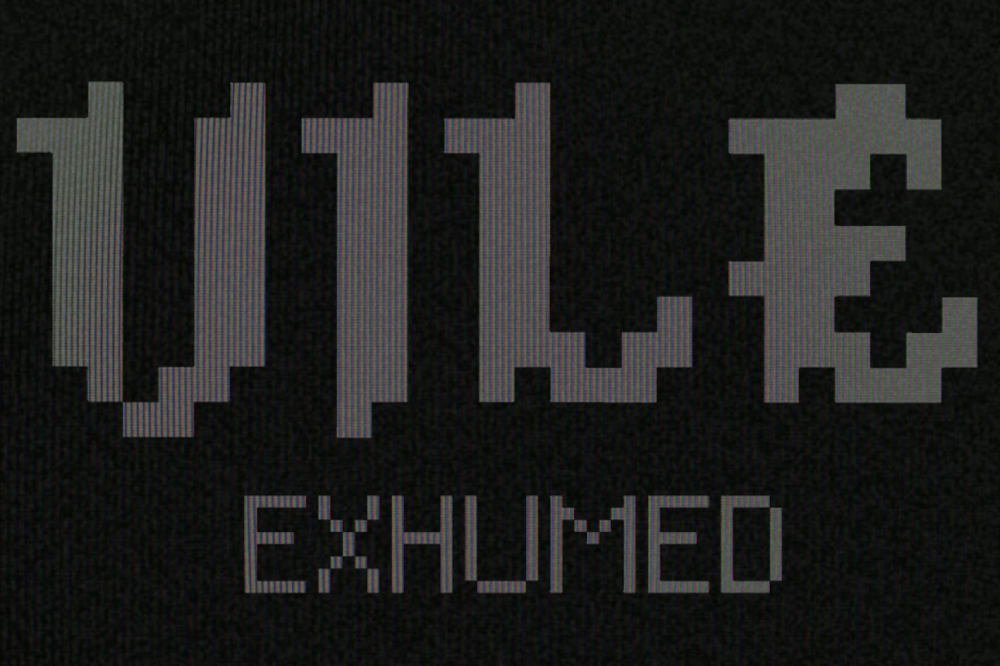
  • VILE: Exhumed (Cadaver, 2025)

    VILE: Exhumed (Cadaver, 2025)

    Developed/Published by: Cara Cadaver / DreadXP
    Released: 05/08/2025
    Completed: 06/08/2025
    Completion: Explored enough to trigger the end credits, then nosed around a little more.

    It’s impossible to talk about VILE: Exhumed without talking about the moment in time in which it finds itself released–and in fact, how it found itself released. After all, I probably wouldn’t have played it otherwise.  Originally due to be released on Steam on July 22nd, the project stalled unapproved for a month, during which Steam instituted a new rule that forbid “Content that may violate the rules and standards set forth by Steam’s payment processors and related card networks and banks, or internet network providers.” The game was delayed, and just days later on July 24th itch.io also found itself at the mercy of payment processors, deindexing all NSFW content (though it’s worth noting this specifically means making unsearchable, not removing or banning–and they were able to re-index free NSFW content a few days later.) A bunch of Australian Mary Whitehouses would later claim credit for this entire wave of morality policing.

    In this climate, Steam officially banned VILE: Exhumed on July 28th, with the stated reason that the game featured “sexual content with depictions of real people”–which were it true, could probably be a violation of payment processor requirements (unjust or not). But having played VILE: Exhumed, I can state that unless it’s well hidden, it doesn’t. What it does feature is the implication of sexual content, and while I’m certain those who love to obey in advance could waffle that’s a grey area or something, sometimes you need to tell a story that features things adults do–and considering the other things that feature in this game, the sexual implication seem like the least objectionable thing about it.

    With the game unreleasable on the main storefronts, developer Cara Cadaver and publisher DreadXP decided to take matters into their own hands and release it, in full, for free as shareware (with 50% of profits going to Toronto’s Red Door Family Shelter) on the 5th of August, and it’s in this context that I chose to play it. 

    As a game, VILE: Exhumed is in the genre I’d call digital archaeology–or at least, I would, if apparently that wasn’t already used by actual archeologists for when they use computers and that. But what I’m describing is a game where you–as a person at a computer–role play as a person at a different computer, and dig through the files to try and solve a mystery. This genre encompasses things such as Her Story to Hypnospace Outlaw, and differs, I would say, from a potential genre marker such as “digital procedural” because the computer itself is a defining characteristic as an artifact you explore and from which you excavate: the interface is part of the puzzle, part of the the game–it is not purely dressing for a cerebral exercise.

    (And “digital procedural” is a useless term in context anyway. “Procedural” is completely bogarted by procedural generation in gaming’s parlance.)

    In VILE: Exhumed, there is no context as to why you have begun digging through this old computer–the game is experienced entirely within the diegesis of it. In fact, I’d say this reflects the game’s absolute commitment to player interpretation. There are many ways to imagine yourself while playing if you’re predisposed to playing a role, and I think that can deeply change the experience.

    Whoever you are, you experience the game by clicking around–opening software, reading chat logs and e-mails, visiting webpages, even playing a game-within-a-game. VILE: Exhumed is not a long game, and nor is it one that breaks the conventions of the genre I’ve (possibly) imagined–the puzzles you are going to solve generally relate to scouring text and taking notes, hunting around screens for hidden or unexpected things, and using that to work out what passwords are, so you can trigger the appearance of new things to click or new information, which can start the cycle again.

    The pleasure of this is how non-linear it can be, and VILE: Exhumed is non-linear to the point you can trigger the ending within a handful of actions–and you’d miss an incredible amount of context if you did so (say by following a solution or something, which would defeat the entire point, anyway.) You aren’t locked into a designed narrative–your play creates the narrative. It’s very immersive!

    Which is why it’s such a great setting for horror. The most obvious comparison I would give is the found footage genre–it feels real, so it’s more immediate and visceral–and there are echoes of the V/H/S franchise here, certainly. But for me, the movies that most came to mind related more heavily to the themes on show here, such as Adam Wingard’s earlier work (Pop Skull, A Horrible Way To Die) and in particular J.T. Petty’s “pseudo-documentary” S&Man (which I highly recommend.) VILE: Exhumed is exploring something deeper about the genre of horror–prodding at the edges where fact and fiction might be blurry, where exploitation and misogyny are more clearly perceived.

    So while VILE: Exhumed may be a victim of the current moment, it is also a game that struggles with what this moment is about–and I think how you feel about that is going to be heavily affected by the lens from which you approach it. As I said above, the lens can be as simple as the “role” you imagine yourself playing. Maybe you’re a cop, digging through the computer to find evidence. Maybe you’re the owner of the computer, reliving your “great works.” Maybe you’re just… you.

    This has an effect. From one lens, for example, VILE: Exhumed could be considered moralising: representing the fans of horror and pornography as twisted by their consumption of it. Sure it uses horror to get its point across, but it’s simply rubbing your nose in it–trying to disgust you. Showing you what it really is, what the threat of unfettered access really is.

    From another, VILE: Exhumed is instead an unpleasant celebration of the unjustifiable. Your reward for success in this game is getting to pour over and enjoy gory images of misogynistic abuse and murder. 

    Now, from the artist’s statement, we know neither lens the intended experience, and I think it would be completely fair to call them bad-faith readings! But what I find challenging is the game’s dedication to the diegesis leaves it completely open to interpretation, and either viewpoint feels as valid (if extreme) to me, as strange as it may seem to see a banned game as one that can be read as in favour of its own banning.

    But VILE: Exhumed is disturbing and uncomfortable, and that it doesn’t take a moment to direct moralise–or even contextualise–what you are seeing has the double-edge of making it feel affectingly real but narratively inconclusive. It takes you on a journey to a place you simply may not wish to go and leaves you there.

    Certainly, for me, as much as it plays (cleverly) with low resolution video to imply a lot, there are certain things (notably some images of hunted animals) that I genuinely wish I’d never seen (you can choose to censor content–though it was too late for me, it’s something I recommend particularly if you don’t want to see anything with animals. And yes, I can see the double standard.) While the game is hardly the level of new French extremity, I think these representations suffer the same questions over aestheticisation. You either revel or are repulsed, without a structure to understand.

    And further, I think this correlation of horror and pornography with snuff and exploitation is the game’s most concerning invocation of “slippery slope” tropes, and it made me wish the game had more to say on consent. How as a viewer do we truly know that when we watch something extreme, that it’s actually “ok”? What if the performer says it’s ok, but is actually under duress–and under capitalism, can people truly make fully free decisions? What is the limit of consent when it comes to the infliction of bodily harm, legal or otherwise?

    These issues are not solely limited to horror or pornography–performers can be forced to perform, and regret performing many kinds of non-sexual or violent acts–but they provide an easy “gotcha” for the moralist and the potential for even the most thoughtful to err towards illiberalism, all of which has led to the situation video games have found themselves in. I’m interested in questioning that, and I don’t know if it’s a question that VILE: Exhumed is interested in, or equipped to deal with.

    The more I think about this one, the more I think it just is. You find a dusty computer that contains something horrible, a truth about the world. Maybe you knew it already, maybe it changes you. Maybe now you think what it shows should be banned–after all, look at what it could lead to! Maybe you want to see more.

    Maybe that all just says something more about you

    Will I ever play it again? No thank you!

    Final Thought: The most important thing about all of this: it doesn’t actively matter what the “point” of VILE: Exhumed is, it’s artistic merit, if it’s even any fucking good at all! While thematically disturbing, nothing you see here is even close to what you’d see in a Terrifier movie, and those are terrible, have no point or artistic merit, and literally come out in cinemas. Even if VILE: Exhumed was as graphic, it would still have the right to exist and be released as any artistic work does. Whether or not you wish to experience it is a different story.