Tag: 2025

  • Promise Mascot Agency (Kaizen Game Works, 2025)

    Promise Mascot Agency (Kaizen Game Works, 2025)

    Developed/Published by: Kaizen Game Works
    Released: 10/04/2025
    Completed: 10/03/2026
    Completion: Finished it doing pretty much everything outside of getting all the garbage and signs.

    I was a big fan of Kaizen Game Works’ Paradise Killer, even though I came to it late, and I’ll admit to being a bit hesitant about Promise Mascot Agency, considering the risk–a UK company making a game about wacky Japanese mascots?–but I was concerned before playing Paradise Killer that it’s vaporwaveyness was going to be grating, and it more-or-less worked, so I decided to give them the benefit of the doubt.

    Well, Promise Mascot Agency is a textbook example of that “difficult second album.” There’s a lot to like here, but there’s also a kind of messiness to it. If it was literally an album, there’d be some really discordant stuff on there, the kind of album where you want to skip every third or fourth track because it doesn’t work, and on which none of the other songs are quite fully-formed enough to quite get their hooks into you. Not an album, even, where you feel ambition got the better of them, just one where they noodled too much, for too long, and ended up with something that almost–but not quite–works, and to do anything else would require throwing away all the work they’d already done, and what’s there isn’t terrible, so it doesn’t deserve that.

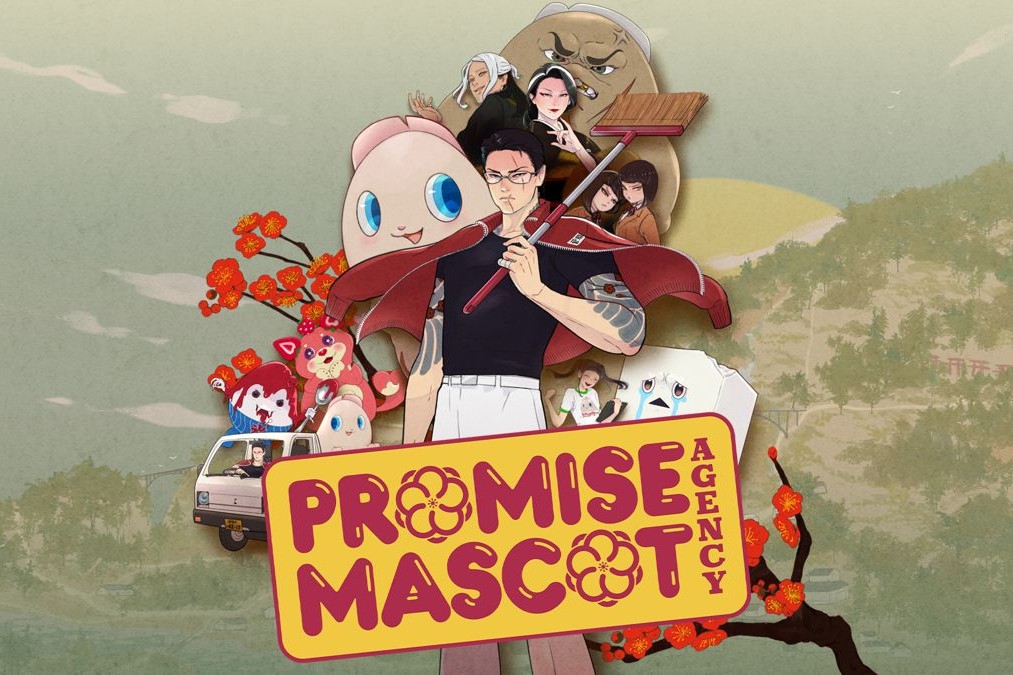
    In Promise Mascot Agency, you play Michi, aka “The Janitor”, a classic, Yakuza-series style honour-above-all super amazing guy, which means it makes perfect sense that he’s voiced by the literal Kazuma Kiryu, Takaya Kuroda. Michi and his yakuza brother, Toki (who doesn’t seems sus immediately at all) are ambushed on a job, leading to his family owing a truly absurd amount of debt and his death a requirement. Lucky for Michi, however, the family happens to own a failing mascot agency in Kaso-Machi, a town where Yakuza never go because… it’s cursed! The kind of curse that kills any Yakuza who goes there. Considering he’s a dead man anyway, Michi heads to Kaso-Machi in his shitey old kei truck, aiming to raise as much money with the help of a sentient finger before he croaks from whatever it is the curse does.

    Promise Mascot Agency is, in a lot of ways, a mechanical follow-up to Paradise Killer. Both games are open world genre mash-ups: if in Paradise Killer you were playing a sort of first-person Crackdown smooshed into a deduction game–leaping around to collect clues–in Promise Mascot Agency you’re (kind of) playing Burnout Paradise, but driving around to collect the mascots and other things you need for the management sim. You never control Michi outside of the truck, so if you’re not driving around, you’re either in cut-scenes or menus.

    Like Paradise Killer, going around the world collecting stuff is great! It’s a complete pleasure to explore, smash signs, pick things up and so on—well, past a certain point. Again like Paradise Killer, there’s an upgrade system, and while it’s better here–there are more upgrades–it’s got a problem which upgrade systems sometimes face: the upgrades don’t make the kei truck more fun they make it less shitty.

    I get it from a narrative standpoint–the truck isn’t really supposed to be some incredible off-road super car–but much like Paradise Killer, one of the very first things you’re going to want to do is just find most of the upgrades and be done with it. You don’t need them all immediately, but there are a couple that make exploration so much nicer (and more rewarding) and those ones do feel like they probably should have been handed out on the critical path close to immediately, leaving the others as nice to haves.1

    But really Promise Mascot Agency’s true problem is–sadly–the whole “mascot agency” bit. Game director Oli Clarke Smith has said that the original idea came from the team’s art director, Rachel Noy, and the original idea was a 2D Kairosoft-like, but that Smith and tech director Phil Crabtree “wanted to create something bigger.”

    They have certainly created something bigger, but it betrays the entire concept of the game. There’s no real management at all. You hire mascots–choosing their compensation–send said mascots on jobs, and that’s about it.

    That really wouldn’t be the worst thing–I’m fine with simplicity–but for the fact that for some reason there’s also a card game jammed in. When mascots go on a job, there’s a percentage chance–higher when they’re new and low rank–that they’ll fuck up the job somehow (getting stuck in a door because their head is too huge being the classic example.) The way you solve this problem is that you have “hero cards”–collected in-world–with which you can play a simple card game to defeat the problem. The problem has HP; you play cards of the required type to damage it.

    It’s not a difficult or in-depth game at all. It’s basically Top Trumps, though as you upgrade the cards by playing through the story or collecting more collectables, some cards will give you more actions or allow you to draw more cards, but generally you just play the cards with the highest damage. It feels like a really half-formed idea, and the problem is that you do it fucking endlessly.

    Now, the game gives you the option of sending mascots off with consumables that will make this game show up less, but that bumps up against the game’s design otherwise, where you’re really trying to make as much money as possible. The kind of player who doesn’t use health potions on bosses “because they might need them” isn’t going to buy and burn thousands of yen worth of consumables just to give themselves a 50% less chance of a mini game that’s “quick.”

    And as quick as it is, it’s unbelievably annoying to send a bunch of mascots off on jobs, think “ah, now I can do the thing I like: driving around collecting shit” and drive 30 seconds only to have a bunch of alerts meaning you have to play the card game three or four times.

    It’s really disastrous for Promise Mascot Agency. Unlike Paradise Killer, where collecting stuff really ties deeply into the conversations, and getting to do another conversation with new stuff is a pleasure to aim for, in Promise Mascot Agency the actual mascot agency is just an annoyance. If you’ll allow me to return to that album metaphor, it really feels like if you got an album and there was a car alarm that set off randomly in every song. And not in a good way (I feel like I need to say this for everyone who’s a fan of experimental, car alarm-based music.)

    It’s just really hard to get into an enjoyable flow with Promise Mascot Agency until you get to the point where you don’t need money any more, and when you don’t need money any more… you don’t need to send mascots off anyway!

    To be honest, the whole game is just quite oddly paced. You can blame my min-max brain again, but they introduce the idea that you need to send money back to the family in a certain chapter fairly early into the game, but before that chapter you don’t have to, and you can do basically everything else in the game. So… as soon as I realised that I could play it without slowing my accumulation of money by having to send cash back (and I could instead spend it all on town upgrades or other things that increased passive income) I did that for as long as I could stand, and then basically speedran the actual plot.

    And that plot is… ehhh. You obviously know why the job went wrong immediately, and the mystery of Kaso-Machi is… fine. Paradise Killer’s plot is pretty messy, but I found it came together well, but Promise Mascot Agency just doesn’t feel that rewarding. And it’s actually a problem of the mechanics.

    In Paradise Killer, the reason the ending works is because it’s building on everything you’ve done: your entire time spent building a case (or cases) is all used at the end, and you really do shape what happens by your play. In Promise Mascot Agency, the climax is a big mascot competition where the odds are unfairly stacked against you. Going into it, I thought “oh man, this is actually where the card game is going to matter. It’s going to really require me to have upgraded all my cards and play them in the right order to do enough damage to win.”

    But… it doesn’t. The entire end of the game is completely scripted. You can just not bother to try at all because you get deux ex machina cards in your deck after some forced losses.

    This sucks! It sucks so much! It makes all the effort you expended feel wasted and it hammers home that the card game isn’t really anything at all other than something to gum up your time spent playing this. 

    I got to the end of Promise Mascot Agency completely and utterly deflated. It’s a game that just works against itself. I had a jolly time driving around and collecting stuff, and while the story isn’t any great shakes, I liked the character designs and enjoyed some of the mascot story beats. But what’s portrayed as the core not only isn’t really there, the game would probably be better if it was removed.

    Ah well, third albums are usually good, aren’t they?

    Will I ever play it again? Rinsed this. Well, I didn’t do the races, or some of the other extra content, but I didn’t have much urge to do any of it.

    Final Thought: 

    Speaking of the character designs… Matriarch Shimazu. If I didn’t think everyone at Kaizen Game Works knows what they were doing with Matriarch Shimazu some of her later character poses makes it exceedingly clear they knew what they were doing. Let me simply say: 🥵.

    1. I suppose the argument could be made that the most necessary ones are pretty hard to miss, but they can still be missed… ↩︎
  • Consume Me (Hsia/Thompson, 2025)

    Consume Me (Hsia/Thompson, 2025)

    Developed/Published by: Jenny Jiao Hsia, AP Thompson, Jie En Lee, Violet W-P, Ken “coda” Snyder / Hexecutable
    Released: 07/08/2025
    Completed: 19/02/2026
    Completion: Finished it, A++.

    Hmm. You know, often with these essays I can tie myself in knots with structure, trying to introduce things gradually, poetically [“what are you talking about.”–Ed.] but sometimes I think it makes sense to just say things really plainly up front and then pick it apart from there. So.

    Consume Me is a solid, engaging life sim with immaculate vibes, held back by repetitive minigames, frustrating UI, ambiguous themes and an ending that is, I think, a cop out.

    Phew.

    Let’s try and work through that, eh?

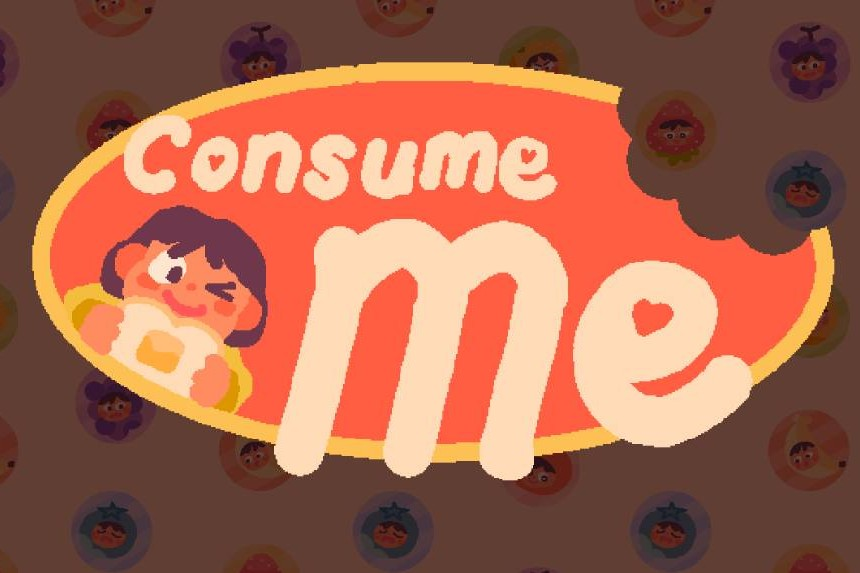
    Consume Me is an autobiographical game from Jenny Jiao Hsia and AP Thomson (who actually worked together on Fortune-499, which I didn’t even realise when I played that) and it absolutely cleared house at the IGF in 2025, picking up the Nuovo Award, Wings Award and the Seamus McNally Grand Prize. It’s self described as a game about feeling “stupid, fat, lazy, and ugly in high school” which I think basically everyone reading this probably recognises (you’re reading about a video game on the internet, don’t lie to me) and explores that via classic life sim mechanics and mini-games: days progress, and on each day there will be some set things you have to do (such as eating your lunch) and then you have a set amount of free time during which you can choose some other things to do, which affect your character’s growth, generally with the idea that you’re building your character to some ideal that either you or the game has decided. So, for example, in Consume Me you can choose to read a book to improve your academic skill; or work out to increase your athletic skill (and lose some “bites”, the game’s obfuscation of calories.)

    Like in other life sims, these actions have a cost more than just using up a time unit; they can cost you happiness, energy, or even increase your hunger, which require that you perform actions that can restore them: so, for example, you can eat a protein bar to feel fuller, or read a comic book for pleasure rather than something educational.

    Of course, your choices can be constrained. Each week you’ve got a series of goals that have (generally) been set by Jenny’s own expectations (represented by herself in the mirror making demands.) So Jenny requires that she keep to a strict diet–meaning you can’t eat too much at lunch or need to waste precious time on working out. Jenny might demand that she score particularly well on a test at school that week, requiring you read books or do practice tests–which might be difficult to fit in if she also needs to do chores. You need to walk the dog, clean the bathroom and keep up on laundry or you’ll be stuck wearing dirty clothes–though those actions at least earn allowance.

    Split up into 5 chapters of a week each, this design really works. I really appreciate that the game is very open about what it is: a strict time/resource management puzzle where you’re trying to absolutely min-max everything to reach obvious goals. If you’re familiar with life sims, you probably know that even with the ones that promise a more fuzzy “play it out and see what you get” experience can quickly devolve into min-maxing and save scumming, because it’s almost impossible to stop yourself. Better just be honest and say “this is a puzzle.”

    At first, too, it’s going to seem great. The art–by Hsia and Jie En Lee–is perfect. It’s simple and incredibly evocative; cute without being cloying. Along with the music and sound design (from Ken “coda” Snyder and Violet W-P) you feel absolutely wrapped up in Consume Me’s world. And the mini-games are pretty fun to learn. Lunches start with a balancing mechanic but that (unusually) gets completely discarded for a Blokus-like game where you’re trying to fit a small range of lunch options onto your plate without eating too many bites. When doing makeup or cleaning you control Jenny’s hand and swish it around to try and get as much done before the timer runs out. When exercising you try to position Jenny’s body to match hand and head markers, trying to move slowly because otherwise she flails around wildly. Laundry involves folding clothes; reading involves trying to keep Jenny’s eye on the book and away from distractions; walking the dog is a slightly odd game that reminds me of something or other where you’re tethered to the dog, and either you or the dog rotate around the other and you have to time actions to actually move forward (while also picking up money and letting the dog relieve themselves.)

    The problem is that as a min-max focused life sim, you are going to want to nail these minigames, and if you don’t… you’re going to want to save scum. I think there’s some important stuff to say about this in terms of the game’s themes, but if we take it purely mechanically… you are going to get sick of these minigames. They don’t change in any way across the game, and some–notably the makeup mini game–you will do every single day, possibly more than once, and that they’re quick is not really an excuse, because it gets really boring once you fully grasp how to play them.

    What’s arguably worse is that I never got comfortable with the UI. The game has that traditional life-sim look–you’ve got to have a big piece of art of the main character at all times, I genuinely agree with that–but it means that everything you need to do is in this infinite scroll menu at the bottom and other information is in the large sidebar. I don’t know what it is–maybe the way the game returns you to the main screen from mini games, maybe the lack of tiny icons for categories–but I spent significantly more time than I’d like scrolling through this menu back and forth even when I knew exactly what I wanted to do; it was easily as annoying as the interface in Zombi, and that’s from 1986 and by a group of French teenagers. I eventually worked out that by pushing the right stick(!) I could quickly switch categories, but that never solved the falderal of trying to use the sidebar, where your goals often have to be scrolled in order for you to see them all. Generally meaning that there’d be this long sequence where I had to flick back and forth between the sidebar and menu repeatedly to decide what I was going to do next, but actually doing way more scrolling and pausing the game than I intended. Not fun!!!

    To be honest, I think I could have accepted these issues if as Consume Me went on I didn’t lose sight of what it’s about. When the game begins, it’s implying itself to be a life sim satire of the pressures on a teen girl, with meaningful growth replaced with an unhealthy drive to lose weight. Indeed the game opens with a sensitive warning that the game’s focus disordered eating might be stressful or upsetting, and I think most players will cede to the game’s unhealthy demands thinking they’re playing along until the other shoe drops; the one that recasts the behaviour the game forces on you. But it doesn’t really happen! After the first chapter, the diet aspect of the game recedes into the background as just one of your tasks, and the expectations of the rest of the game’s system don’t just force but reward even more extreme, unhealthy behaviour.

    Now, that Consume Me has a nice, crunchy set of systems is perhaps the main pleasure of the game, I think it even makes sense that they’re open enough to be exploitable, but it’s interesting that the game actively encourages you to give Jenny an absolutely warped existence. At one point in-game you’re given an extra goal to do 16 activities in one day (you normally get 2) and there’s an achievement to write two essays in one day, which requires something absolutely absurd like 28 actions. This means that you have to abuse energy drinks, coffee and staying up late to hit your goals, and the issue is the game’s punishments are limited (headaches) and the things you lose–energy, happiness, fullness–are restored easily by abusing other actions like changing into clothes that increase them again or spamming zero time-cost actions. 

    As I said, I kept expecting this to all come down on Jenny’s head but it just doesn’t. Now, you could argue it would be too obvious, too moralistic, but I think it would have been interesting to use the player’s urge to min-max against them. To do something like show them that they kept Jenny up till 4am after drinking 12 energy drinks and then made her do eight yoga sessions in a row, and then show how genuinely unhealthy that would be. Maybe twist it so that it turns out that the puzzle you were supposed to be solving was giving Jenny a balanced life.

    The game instead has a mechanical implication that you can do all of these things and get away with them, because Jenny’s big “I can’t do this any more” moment has nothing to do with any of that: instead it’s that her long distance boyfriend breaks up with her (like you obviously know is going to happen.)

    Now, in some respects, I shouldn’t criticise this; it appears to be one of the most autobiographical things in the game. But at the same time, it draws into focus that Consume Me’s issue is that the decision to be autobiographical works in complete cross purpose to the game’s largely mechanically-focused play. It turns out that nothing you’re doing matters. The mechanics are not actually thematically important; indeed, after the break-up the wheels come off entirely and you experience an extensive (if interactive) endgame cutscene where Jenny imagines the future that she believed she was working towards and then the real future that Hsia has.

    This segment reminded of Despelote, another game that pulls the curtain back at the end of the game in a way that I think could feel like a cop out, but which rings true because it more cleanly lampshades the game’s fictions to help push the player towards the underlying truth. Here instead the turn to full autobiography feels purely solipsistic. The Jenny you created–or thought you were creating–is secondary to the “real” one, and it ends up with (I think) a far more cliché ending: the “well, it seemed really important when I was a teenager, but I ended up who I was going to be and that’s alright. Good actually.”

    Consume Me might be a pretty decent life sim–minigames and UI issues aside–but it’s complicated by how much it implies it’s about something important but it really isn’t about it at all. I’m not sure it’s ultimately about anything, really, which makes game rewarding you for min-maxing dieting feel… well, I don’t have enough knowledge to say if it’s actively harmful (I do think the game is pretty obvious and consistent that what Jenny is doing is ridiculous) but it does feel like there’s something ill-conceived about the entire thing.

    Oh well. It is really cute though.

    Will I ever play it again? I absolutely rinsed this, because of my min-max brain problems, so I have no reason to.

    Final Thought: Something I didn’t mention–couldn’t quite find a place for it–is that more than for its potentially problematic mechanics, Consume Me has led to some controversy for featuring a religious aspect (a bit like and Roger…). I think the game’s store description is a bit disingenuous: it says of Jesus “don’t worry! He doesn’t do anything” but he actually does: he gives you a new mechanic, praying, that solves a tremendously frustrating issue you have in the game’s chapter 5 difficulty spike.

    Probably the weirdest thing about the introduction of religion is it’s introduced with an unbelievably long section where a song that I can only describe as having “Mountain Goats energy” plays (Is it supposed to be funny? I honestly couldn’t tell.) I wouldn’t have minded religion appearing (I didn’t have a big issue with it in and Roger… and it is a part of a lot of people’s lives) other than it happens at the point in the game where you think Jenny’s demands on herself are catching up to her and the game is intentionally taking you to a point where you can’t keep up, and then it just straight up fixes the problem. It’s another example of the uneasy mix of mechanics and autobiography–I can’t believe I’m saying this, but it really does feel like Consume Me might have worked better leaning more on the and Roger…/Florence design, taking the player through the minigames to tell Hsia’s story without all the potentially problematic life sim cruft. It’s even got the same teeth brushing!

  • F1 (2025)

    F1 (2025)

    It’d be easy to dismiss this film as dadslop, and don’t get me wrong, it absolutely is dadslop, but really F1 is an exercise in reputation-washing; for F1, which itself only seems to exist to sportswash, and for Brad Pitt, who after abuse allegations needed a movie that portrayed him as the coolest man who ever lived.

    It is absurd (though sadly due to the crushing length and absolute tedium of most of this film, never hilarious) the lengths this movie goes to to make Brad Pitt seem cool. Obviously, there are articles on the “charm offensive” that Pitt has undertaken, but this movie has the mania of a low-budget vanity project that just happened to cost hundreds of million dollars. You cannot watch this film and not see a man who seems to be willing himself to be the reincarnation of Robert Redford even though at the time of filming he wasn’t dead yet. If you told me Pitt was doing weird demonic rituals, burning frames from The Natural in the middle of a pentagram, snorting them, mixing them with his blood, crying, screaming, “make me Robert Redford but cooler” I’d shrug and go “seems believable.”

    You could say I’m beating up on Pitt a bit too much here; after all Tom Cruise has been playing the greatest man who ever lived in every movie he’s made for years now, and his closets will almost certainly spring open one day with a comedy “BOI-O-OING” noise and shower everyone with a Paris Catacombs. But (bar the last) those movies seemed to still be genuinely engaged with entertaining, whereas F1 seems like it only sprung into existence because someone at Apple collated user data and worked out that F1 had a cross-cultural synergy across age groups when paired with X established actor and blah blah blah fucking blah.

    Despite being pointlessly bloated, you almost have to respect F1’s monomania. Sure, the movie is like they grabbed sport movie clichés from a bag like Scrabble tiles and scattered them without care–the movie doesn’t even bother to feature an “evil” racing team of burly Swedes or something, and it really does miss them (a shot of Lewis Hamilton snarling doesn’t count)–but you can see that they needed to expend that effort on showing that in every situation Pitt’s character is not just right but unselfishly so. The other driver on the team he’s parachuted into hates him with the burning passion of a toddler who’s been told he has to let his brother get a shot on the steering wheel, and yet Pitt does nothing but work his arse off to elevate him. He gets (understandably) annoyed once, then immediately goes back to being a cool big brother who “lets him win”. The trad. “darkest before dawn” moment only comes because he’s just so damn angry on the team’s behalf. And the movie pulls an incredible “have your cake and eat it” move in the finale, where he wins the big final race because he was trying to selflessly not win it.

    The movie drowns in hagiographic detail. There’s a section in this movie where Pitt’s character defends a member of the pit crew who made a mistake and then later gives her a pep talk; this character has basically nothing to do with anything else in the movie (indeed they have no character to speak of) and it immediately reminded me of the part of Tiger Schroff vehicle Heropanti 2 where he offers to help someone in a wheelchair who transparently doesn’t need help. You could cut this stuff!!! The movie is 155 minutes long!!!

    I suppose your question at this point might be “well, is the driving any good?” and it’s… fine. Car go fast is good, obviously, though there’s not that much of it, because we need to hear from a lot of characters restating exposition instead, and as an Apple film they don’t want you to have to look up from your laundry too much anyway. And I did find the moment in the climax where we’re supposed to experience the transcendence of speed confusing because it really reads like Brad Pitt is about to die. Of course, the only way that would have happened in this movie would have been so he could meet god, who would be like “ah man, I can’t compete. You’re just so cool.”

    Follow Mathew on Letterboxd.

  • The exp. Culture Awards 2025

    The exp. Culture Awards 2025

    exp. Is generally intended to be a video game website, but I like writing about film as well, so I think I can get away with celebrating my year in culture in general. Which I suppose makes it sound like I’m going to be sharing books and art shows I went to, but it’s just music and films and that, innit. I mean this is a video game website.

    Single Of The Year: Hayley Williams – True Believer

    Edge case here as this was, along with every other song on Hayley William’s Ego Death At A Bachelorette Party, originally put online as a “single” but isn’t actually classed as a single on things like Wikipedia. But of course, such distinction is kind of meaningless these days. As I said on Bluesky, there are echoes of Chino Moreno’s ††† here, and I can’t help but loop it.

    Album Of The Year: Deafheaven – Lonely People with Power

    Probably wasn’t going to be anything else. I was shocked when I heard Deafhaven’s Infinite Granite, concerned they were making a full shift towards shoegaze the kind of which put me right off Alcest, but I’ll admit that album has grown on me. It almost makes me feel bad that I think of Lonely People With Power in that cliche fashion as “a return to form” but, well, it is.

    Film Of The Year (Runner Up): Evil Puddle

    “Evil Puddle argues … that community is very, very real, in both narrative and form.”

    Interesting year for film. So many of the big award films this year were, frankly, absolute slogs, the worst kind of eating your greens. And here’s the bold Matt Farley embarrassing them with a shoestring budget and non-actors.

    Film Of The Year: War 2 

    “War 2 is the realest fucking movie out there. And if you disagree? You’re a fucking idiot.”

    Yes, Sinners is good–excellent, in fact–and probably what I’d go for if I was looking for the “mainstream pick.” But it’s still a pretender to the masala throne; better to go straight to the source. There was no bigger or better movie for me this year than War 2.

    (Note: if this trailer autoplays with a terrible English dub, please click through and change it to Hindi. Please.)

    TV Of The Year (Runner Up): The Rehearsal Season 2

    I was a latecomer to Nathan Fielder, but I think he’s probably this century’s greatest artist (at least so far) and I already believed that before seeing the second season of The Rehearsal. I saw some complaints that the first season was him repeating himself (Nathan For You’s Smokers Allowed/Finding Francis) but I think that was uncharitable: Fielder has been able to drill down on his artistic process (thanks, unrealistically huge amounts of money from HBO) and create the kind of work that changes the way people see the world. Simultaneously, there are things in this that are so funny it’s actually painful. I am in awe.

    TV Of The Year: Andor Season 2

    It was a close run thing, but Tony Gilroy’s ability to take Star Wars, probably the world’s biggest “IP” and owned by the most overpowering and surely risk-adverse cultural force today (Disney) and turn it into a genuinely meaningful examination of what it means to live under fascism? A show that’s willing to say the word genocide? Much like Twin Peaks: The Return, this was a TV experience of the likes I don’t think I’ll ever experience again, one which will stay with me forever.

    Previously: The exp. Game Awards 2025

  • The exp. Game Awards 2025

    The exp. Game Awards 2025

    It’s March in 2026, the proper time for you to do your X of the year post, because people who do it in December are missing an entire month, the bell-ends. I mean the Oscars aren’t until the middle of March, so if anything I’m posting this early. Anyway, without further ado:

    Retro Game Of The Year (Runner Up): Pro Wrestling (TRY, 1986)

    “I won’t lie–often when I’m playing these older games, I’m sort of just… working through them like a job. But Pro Wrestling? I just played it!”

    I thought I’d start off with something simple to ease everyone in, but turns out this is a really hard one–the best game not from 2025 that I played that year–because it’s a year I played things including the original Metroid and The Legend Of Zelda. There are some games I really enjoyed writing about, like Zombi, but I think I have to go for Pro Wrestling here because I was so impressed at how it recreated the ebb and flow of a real wrestling match on the NES as early as 1986, and that it’s still so playable today.

    Retro Game Of the Year: Leather Goddesses Of Phobos (Infocom, 1986)

    “An extremely solid classic rooms and items, bread and butter text adventure. The best I’ve played since Meretsky’s own Planetfall, and arguably the best I’ve played full stop.”

    Text adventures are an acquired taste and Infocom games are a pretty specific era, but I really have grown to love them. Unique amongst video games it really is like curling up with a lovely big book; I always imagine myself in a nice worn leather chair in a dark wood office, in front of an old IBM PC when I play them (I know I’m mixing my metaphors here.) Leather Goddesses Of Phobos is a superb Stephen Meretzky adventure, and while it’s no A Mind Forever Voyaging (a likely winner from a previous year) I just had such a great time with it and it has one of my favourite puzzles ever. An unchallenging pick, then, but what is my playing of all these retro games but looking for solace in an uncertain world, eh? Oh god… I might have unlocked something there.

    The “Live Service? More Like Death Sentence” Award: Rematch (Sloclap)

    2025 was an extension of 2024’s not just “maybe live service is not the answer” rumblings but also my own recognition that maybe live service just isn’t for me. This year I tried and put down Marvel Rivals in less than 20 minutes; I picked up and managed a few games of Helldivers 2 (even with friends) but then immediately forgot about it and the fact that it’s always updating doesn’t even remind me. But Rematch wins this award not just because it’s the one that was released this year because I thought it was genuinely great. It feels great to play–the amount of buttons is a little complex for someone like me who thinks Sensible Soccer is still the pinnacle, but it’s not ridiculous while compared to a modern FIFA (sorry, “EA Sports FC”). I thought it was going to lead to something like the period I had with Rocket League where I play it loads, almost to the exclusion of everything else, but I… didn’t. I stopped playing it after a couple of days simply because it was slow and annoying to get it booted up, through the menus and into a game, and the usual things–levelling up for cosmetics, and that–just wasn’t compelling to me at all. However, I’m beside myself imagining the universe where this is a single-player footy RPG. Oh well!

    The “It’s OK To Call Things Overrated” Award: Clair Obscur: Expedition 33 (Sandfall Interactive)

    “Clair Obscur’s narrative is a fucking bin fire.”

    As this is picking up awards all over the shop, what harm another? I wrote at brutal length about Clair Obscur with the ultimate conclusion that it was fun, but flawed [“could have saved us a lot of time and just said only that”–Ed.] before I even knew it was just a rip off of La Horde du Contrevent. But I have to give my most major recommendation to watching French video essayist Ache’s lengthy deconstruction of the white European biases of the game. Is it too far to say there’s something sort of colonialist about a JRPG getting all these plaudits simply because it’s from the west?

    The “My Favourite Essay” Award: Horses (Santa Ragione)

    “The difficulty of a work like Horses–if we accept my hypothesis that it exists in the spectrum of indigestible art–is that it is not a work about the horses, what happens to them, or Anselmo’s journey. It’s existence is, like Salò, a political act, to stand in opposition to the inauthentic, easily digestible product that floods our culture.”

    I wrote thousands of words on the idea that Horses–by being banned by Steam and Epic–fit into the same spectrum of “indigestible art” as Pier Paolo Pasolini’s Salò, or The 120 Days of Sodom. I am unbelievably proud of this essay and I’m not entirely sure where all the awards are for it (I’m sure they’re in the post) but I’ll give myself one for it now. I can do that.

    Game Of The Year (Runner Up): Evil Egg (Ivy Sly)

    Yes, I admit: I haven’t written this one up. But only because I haven’t beaten the “proper” boss. I have beaten the alternative boss, and in most cases I’d just count that, but here’s the thing: I love Evil Egg so much that I don’t want to put it down and call it “finished.” I just want to keep playing it. Evil Egg is Robotron 2084 as a light Roguelike-like with a near-Jeff Minter level of visual noise and it absolutely rips. I really struggled with if this was my game of the year, but I’m becoming more conflicted over my feelings of games that feed my addictions, that take me to the “machine zone.” However, this game is fucking free. The only thing it costs you is your time, I’m still just trying to work out how comfortable I am with that. A few more goes, though, that should help me understand.

    Game Of The Year: Many Nights A Whisper (Deconstructeam/Selkie Harbour)

    “It’s a rare video game that I say this could only exist as a video game’ but Many Nights A Whisper is one.”

    I played this in August, and I knew it was simply not going to be matched. A game that respects your time (done in the length of a film) that is thoughtful, paced well, features an enjoyable central interaction, and builds towards an unforgettable moment that you could only do in a video game. You can read what I had to say about it, but just buy it.

    Bonus: As I’ve actually never done a post like this before, here’s my previous “Games Of The Year” for the last two years, years in which I’ve been making a concerted effort to play more contemporary games than I have previously.

    Game Of The Year 2024: Thank Goodness You’re Here (Coal Supper)

    “If someone was to ask me ‘What’s the UK like?’ from now on, I’ll probably just say ‘Play Thank Goodness You’re Here!”

    Game Of The Year 2023: Hi Fi Rush (Tango Gameworks)

    “What makes Hi Fi Rush genius, I think, is that it takes a type of game I am incapable of not button-mashing through and adds a rhythm action component that doesn’t expect but rather, uh… politely asks you to hit your combos on rhythm. And it works!”

  • Öoo (NamaTakahashi, 2025)

    Öoo (NamaTakahashi, 2025)

    Developed/Published by: NamaTakahashi, tiny cactus studio / NamaTakahashi
    Released: 07/08/2025
    Completed: 14/02/2026
    Completion: Finished it!

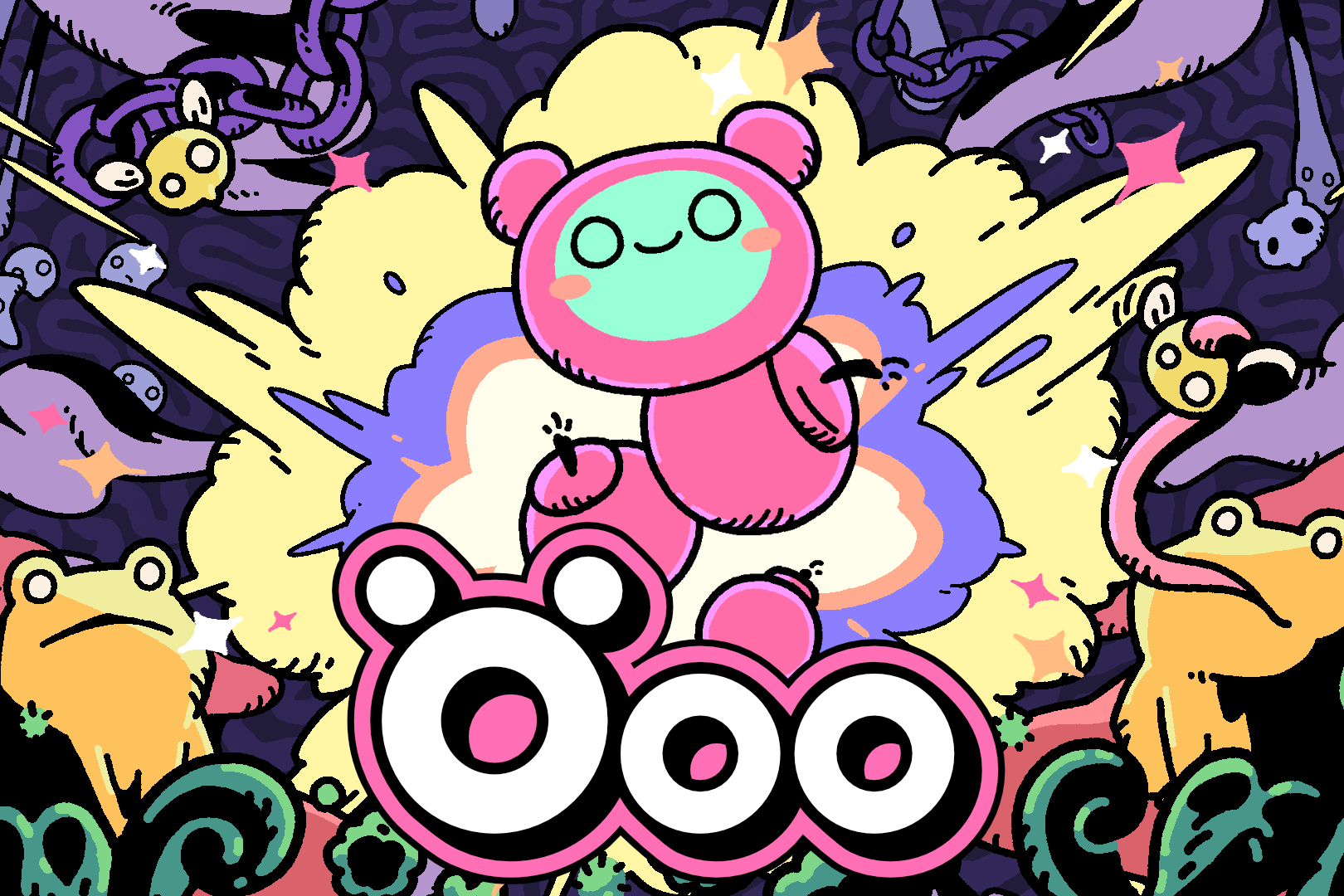
    Öoo is… perfection. I’m not sure I can phrase it any other way, actually. It’s not simply a textbook case of a game that’s doing exactly what it set out to do as well as it absolutely could, it’s doing something so clever–on a level that I didn’t think was possible–that I actually could not believe it was doing it. I actually think Öoo might be the gold standard for mechanic-first game design now. It’s that clever.

    I mean the cleverness starts with the name, doesn’t it? It’s called Öoo, and you play a wee “bomb caterpillar” that looks exactly like the title. They must have felt like a god when they worked that one out. As the caterpillar–is it named Öoo? I’m not actually sure–you find yourself snaffled up by a big bird when you were innocently planning on snacking on an apple and have to escape by, well, getting as deep into the bird’s guts as possible so you can blow up their heart and then jump out of their mouth (I mean, I’d just have waited until they yawned or something, but you do you, Öoo. Yoo doo Öoo.)

    You do this by navigating platforming challenges, but you can’t jump. Initially you can’t do much of anything, but you quickly unlock your first tail segment and then the trick is that you can drop it as a bomb and choose when it explodes–and when it does, it propels anything near it in the opposite direction the explosion hits it from. So you can, for example, drop it, stand on it, and then blow it up to propel yourself into the air to get you to a higher platform, or stand next to it to get you to blow you over a spike pit.

    One amazing thing is that the game is able to do so much with that before it even introduces the second tail segment, thanks to the thoughtful implementation of other mechanics. The game immediately introduces a generous warp system where you can easily warp between any two warp points, and then begins to gate your progress with yellow frogs who require you deliver them flies to let you pass, along with a variety of other obstacles–the usual spikes, but also blocks that need to be blown up (which may reappear on a timer) buttons to press to open or close doors and… huh, you know what? That’s about it.

    But here’s the most incredible thing about Öoo. They never give you more than the two exploding tail segments and they stop introducing new obstacles about half an hour into it, but the game is full of a sense of discovery I don’t think I’ve ever felt in the game before because (and I’m going to spoil the “trick” of the game here, so if you don’t want that spoiled, please stop reading and just play it):

    You are never truly “gated” at all by the frogs. In each situation you’re stymied by one, you just need to know how to use your caterpillar’s already existing abilities to pass it right there and then. The section of the level you’ll go and play leads to a dead end that you just warp back from and it is entirely there to teach you the mechanic you need to perform.

    I’m not sure if I can express how revelatory this is. It’s like in a movie when the hero learns they always had the power inside them and they just had to ~believe in themselves~ happening to you, repeatedly. I can’t say for sure if you’re going to have the reaction I did, but not only did I enjoy the game so much even when I understood the trick that I was happy to progress through the game in full–not stopping to try and figure out the “shortcuts”–and I definitely never knew how to do what was required to progress via frog gate until I’d done the whole thing anyway, because it was never as simple as knowing the mechanic; you needed to understand the mechanic fully.

    It is wonderful. It’s made me look at Metroidvanias, roguelikes, even “git gud” games in almost a whole new light, imaging a world where rather than making the player jump through hoops for required unlocks or permanent warps or extreme mastery players were simply shown ways to use the mechanics in new ways through play.

    I imagine this world, but I also find it hard to believe it’s possible, because I can think of every way it can go wrong immediately. And that’s why Öoo is such an incredible piece of game design. There’s a version of this game where the average player hits a gate, goes “oh, maybe if I do this” and then skips 10, 20% of the game, possibly backtracks to do it and discovers that there’s just a dead-end there and wonders “well what was the point of that.” You have to have incredible confidence to decide you can hide a solution that’s already accessible to a player from them until you want them to have it, and bloody hell does Nama Takahashi have it.

    The only caveat I have here is that was my experience, and maybe you’re king shit problem solver, and you’ll grasp what do to immediately in every situation. You cut your teeth on kaizo and never thought “well, I’ll take that other easier path instead.” But I’d be surprised if that wasn’t a statistical irrelevance in terms of players of this game (maybe only slightly heightened by people who read things like this who learn the trick in advance.) The funny thing is how much trying to break Öoo would be to not just miss the point but to actually ruin the fun completely. That rather than learn a mechanic that allows you to unlock the doors as you go you hit your head against them until they bust open.

    It would be pointless, too, because for the real heads there are loads of hidden extra hard sections to do found via hidden trophies that test your abilities as far as you can go if you really want to (in my case, not very far.)

    Öoo is short–my completed playthough clocks in at 2.4 hours–but if it were to be any longer I think either cracks would start to show or new mechanics would have to be introduced, and the perfection would be sullied. But if you want to play a puzzle platformer, there is no better option. Probably at all.

    Will I ever play it again? No. I am interested to see what Nama Takahashi does next, but good lord what an act to follow. I don’t think I could, but then I also couldn’t have come up with Öoo. It’s humbling.

    Final Thought: If you’re going to play this or Elechead, Öoo wins; but if you think you’ll play both, I recommend playing Elechead first, as it has a rougher design but you can see the evolution towards Öoo in it (whereas playing it second will just feel like a step backwards.)

  • Plug & Play (Frei/Rickenbach, 2015) / KIDS (Playables, 2019)

    Plug & Play (Frei/Rickenbach, 2015) / KIDS (Playables, 2019)

    To view this content, you must be a member of Mathew’s Patreon at $1 or more
    Already a qualifying Patreon member? Refresh to access this content.
  • Time Flies (Playables, 2025)

    Time Flies (Playables, 2025)

    Developed/Published by: Playables / Panic
    Released: 31/07/2025
    Completed: 03/02/2026
    Completion: Crossed off every fly’s bucket list.

    There’s a cliché about criticism, that the worst thing that you can have to review is something mediocre; the idea being that there’s nothing that much to say one way or another when something’s just fine. But actually, I sort of think that’s not entirely true–at least when it comes to games. Because think of the platonic ideal of the “7/10” game; a “mediocre” score under the prevailing wisdom of not using the entire scale, but often games with grand ambition they couldn’t quite match, or interesting ideas that didn’t entirely work.

    Really, the worst thing you have to review is something that’s overall good… but unremarkable. Something you enjoyed… but couldn’t find anything special about. Something successful at what it set out to do… but what it’s set out to do is forgettable.

    I think you can see where I’m going with this.

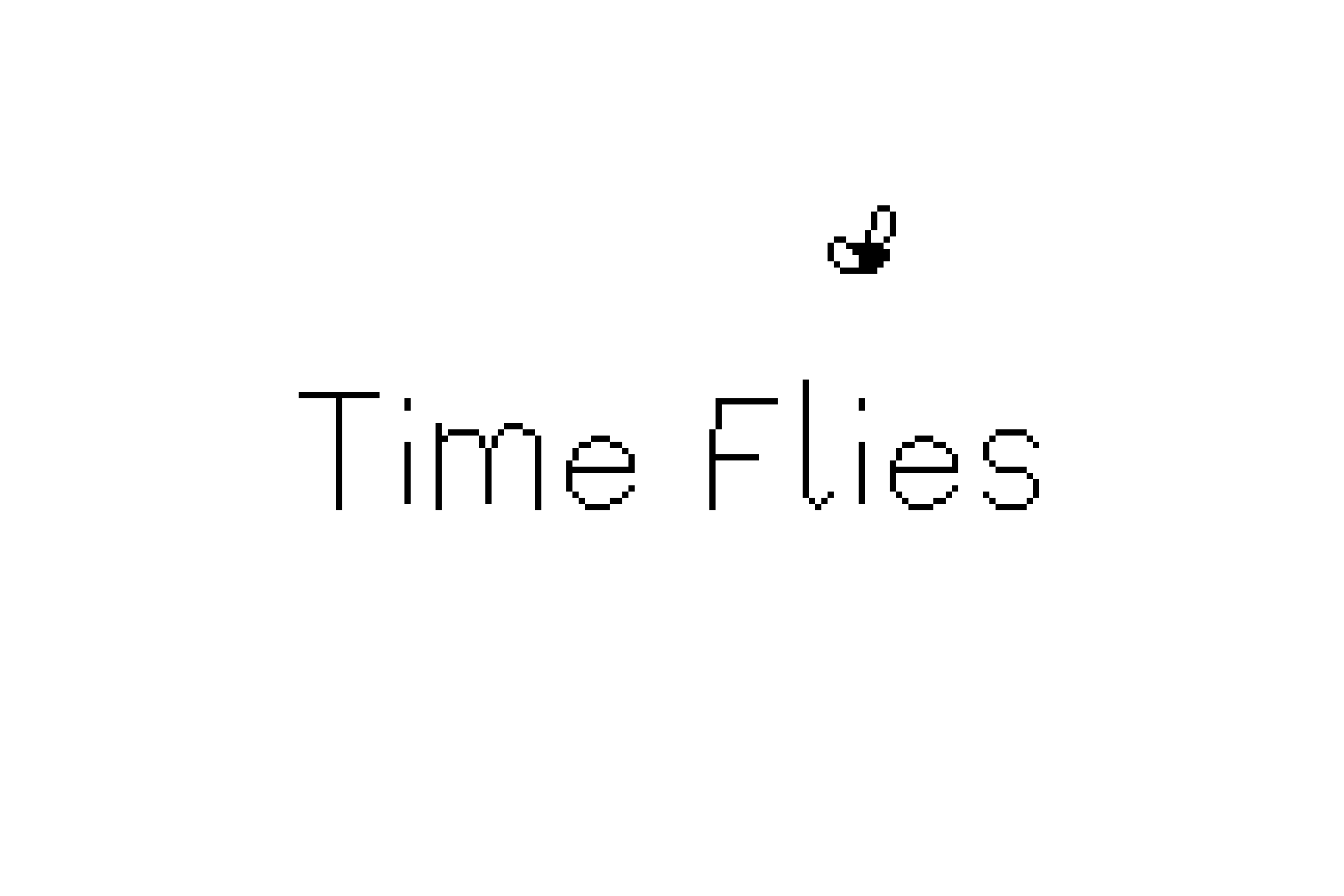
    Time Flies comes from Playables, a production company with a focus on what they describe as “playful interactive projects” (and I do think this intentional distinction from games is important) and is published by Panic. Panic, of course, behind the Playdate, but also a surprisingly large slate of games in 2025 including Despelote, a game I consider interestingly boring (and one of their 2024 releases, Thank Goodness You’re Here!, was absolutely my game of that year.) In Time Flies, you play a fly who, in its short time on earth, has a “bucket list” to cross off, and so you fly about a side-scrolling black-and-white 2D world attempt to do all the things on the list (things like “get drunk” or “read a book”) before you die. 

    The trick is that the fly’s lifespan is the length of time you have per attempt, and that lifespan is based on the average lifespan in the country you are playing the game from, with years as seconds. So, for example, in Canada I got a whopping 81.6 seconds per attempt; in other countries it could be significantly less. I’ll talk about this aspect of the game in a moment–feel free to count it in seconds–but mechanically, at least, it simply means that you have a handful of seconds to do everything, and if you don’t do all the things in one life, you simply start again with another fly.

    There are a few points of comparison here, play-wise, none of which quite fit. There’s Minit, of course, where you’ve got a minute to complete a quest (and which is also in a striking black and white) but as you keep your inventory, it’s more incremental. There’s actually Thank Goodness You’re Here, where you similarly interact with a world in a limited way to make funny things happen–though that’s more narratively driven. And then there’s the original Glider for Mac, which is probably the first thing old bastards like me will think of, and I think the most likely to be an actual source of inspiration; but that’s far more of an action game (although you do “collect clocks” in both games. Sort of.)

    Really, even with the tension of having to do everything in a single life giving Time Flies the air of a “speedrun” game, it is much more a continuation of Playables “playful interactive projects.” Yes, the fly can die if you do something like stick it on some flypaper (come on man, have some sense) but the fly is in many ways just a cursor that you’re using to make funny things happen. So, for example, you push two statues together and they kiss. That’s amusing. Or you fly back and forth over some guitar strings and it makes some noise, counting as “learning an instrument”, and you can do it for as long as you like (longer than you need to, usually.)

    “Hold on, there’s some buzzing on the recording. I’ll check the cables.”

    This is… enjoyable! And it very much does not outstay its welcome. You get four levels with a selection of things to do, and just enough play in it that you have fun flying around, doing the things, then working out the racing line to do them in one life. It’s not boring, or too difficult, and moving the fly around feels good.

    But it’s also the kind of thing that doesn’t stick with you at all. At the end of the game, all those memories flash by in the fly’s mind, all these things lost, like tears in rain, and… yeah. I did some silly stuff for a while and now it’s done.

    Now, to be fair, not everything as to be dripping in meaning, but Frei did describe the game to Stephen Totilo as a game about “the finiteness of our existence and what to do with it, with the time we have.”

    I think the use of real World Health Organization data for your lifespan is interesting–I like that it forces the majority of the assumed audience to, quickly, face up to the idea that by simply living in a Western country they get to experience more time to do more silly things. And it may simply be that, possibly, I’m just somewhat nihilist; I’ve lived long enough now to know how much I’ve already forgotten that felt so important to me at one point, so I’m not sure anything matters than the moment. It’s possible this could hit you in some way that is deeply profound.

    But I had an enjoyable 70 minutes and that’s, you know… it. And it really puts the game in a weird position for me where I basically recommend it–it’s fun, funny and I liked it–but I still feel kind of indifferent.

    Will I ever play it again? There’s only so much time on earth… I feel like something I played recently taught me that…

    Final Thought: One thing to be said is that I really appreciate Totilo talking to the developers about it and focusing on the life expectancy angle; the team’s decision to include Palestine is meaningful, even if they are using out of date statistics and most players will never notice it.

  • The exp. Dispatch #15

    The exp. Dispatch #15

    Oof, haven’t done one of these for a month. Well, let’s get to it.

    This Month On exp.


    Subscriber Posts: Thirty Flights Of Loving (Blendo Games, 2012) / UFO 50 #1: Barbuta (Suhrke, 2024)

    Thirty Flights Of Loving continues my slow Blendo Games retrospective (see Gravity Bone, Flotilla) but I’m pleased to finally start doing something I’ve been meaning to do for ages, which is work through UFO 50 (similarly slowly). I’m always looking for reasons to make my subscription seem worth it, so these are going to be subscriber exclusive. Well, it is just $1, you know…

    Unlocked Posts: Rolling Thunder (Namco, 1986) / Unfair Flips (Flowers, 2025) / Q-UP (Everybody House Games, 2025) / Mappy-Land (Namco, 1986)

    I supposed I also unlocked A Computer Christmas (Sierra, 1986), but I dunno if you want to be reading about Christmas at the end of January [only 326 shopping days left! etc.] 

    From The exp. Archive: Attack of the Friday Monsters! (Millennium Kitchen/Aquria, 2013) / Road Rash (EA, 1991) / No Heroes Allowed: No Puzzles Either! (Sony Computer Entertainment, 2014) / Ultimate Ghosts ’n Goblins (Tose, 2006)

    I’m speeding up my updating of the exp. Archive a bit because I’d like to catch up a bit faster–closer to a couple of archive posts a week, so I’ll probably not include them all here now, it’ll get unwieldy. Nice to see that my Attack of the Friday Monsters! post picked up a mild bit of traction over on Bluesky–there’s something quite ironic about the fact that in the article, from 2014, I complain about the inaccessibility of certain games, and now you can’t play Attack Of The Friday Monsters! officially either.

    exp. Du Cinéma


    Avatar: Fire And Ash (2025)

    As much as you might not want to read about Christmas, do you want to be reading about Avatar: Fire And Ash at the end of January either? But we’re in the real January doldrums and to be honest I just couldn’t be arsed to go and see Marty Supreme just to keep up or whatever.

    Also reviewed: Ballerina (2025)

    exp. Capsule Review


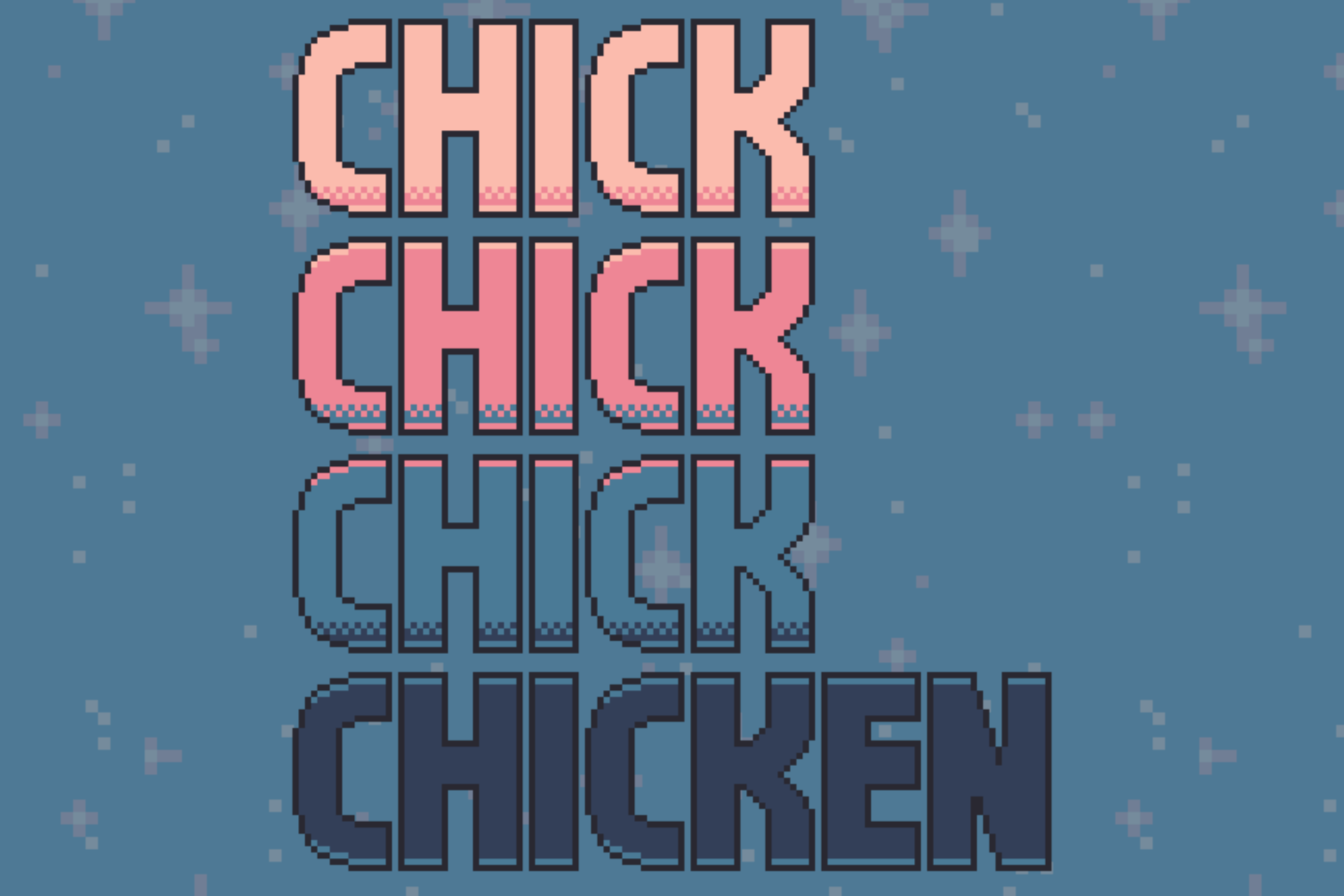
    ChickChickChick CHICKEN (Pigpud, 2026)

    Couldn’t resist this based on the graphics, a short, simple platformer that initially appears to be about quick escape, but reveals itself to be a bit more of a puzzle if you’re willing to give it another go (I won’t spoil the trick–what have to do initially is simple enough, but the “a ha” moment is rewarding anyway. Although I suppose the trailer spoils it, so just… don’t watch that first then.) Does that thing I really don’t love where a lot of jumps are designed to be either just out of reach or just in reach (be more obvious/have more leeway, please) and the graphics don’t always make it clear what you can collide with, but this is a nice way to spend ten minutes or so.

    Zine News


    Zine Things Happen: The Heavenly Special 

    “A fun new, 44-page, full-colour A5 music fanzine, featuring brand new interviews/features and lots of indie-pop silliness. #2 is dedicated to everybody’s favourite indie-pop band… Heavenly.”

    Pop Cultural Precursors Issue #2

    “Before there was Battle Bots, there was the Critter Crunch. Read the story of the world’s first robot death match at the 1989 Denver MileHiCon. Trying out a different format—an online version of an 8-page zine.”

    Breakspace Issue 4

    “Issue 4 of Break Space, reviewing 56 games for the ZX Spectrum from Q4 2025.”

    Between the Scanlines – Issue Thirty-Four

    “Between the Scanlines is a fanzine launched in October 2023. Inspired by 90s anime and video game fanzines, we hope to capture their spirit and passion for video games and media history with our own. There are typically fourteen A5 pages in each issue.”

    And Finally…


    “I Do Not Feel Safe In The Country”: International Developers Are Skipping GDC Because Of Trump’s Border Chaos

    exp. was on Aftermath! Well, sort of. I talked to Luke Plunkett, as did a group of other writers and game developers, about not going to GDC this year because of [gestures at everything].

    Next week on exp.: it’s hard to predict what’s in the cards…

  • Unfair Flips (Flowers, 2025) / Q-UP (Everybody House Games, 2025)

    Unfair Flips (Flowers, 2025) / Q-UP (Everybody House Games, 2025)

    Unfair Flips (Flowers, 2025)

    Developed/Published by: Heather Flowers
    Released: 25/09/2025
    Completed: 17/11/2025
    Completion: Nine heads with an unlikely 40% chance and then the coin landed on its side. I’m taking it.

    Q-UP (Everybody House Games, 2025)

    Developed/Published by: Everybody House Games
    Released: 5/11/2025
    Completed: 20/11/2025
    Completion: Finished it with the Medic.

    Oh, I didn’t think I’d do another one of these joint essays again so soon. However, with there being two games about flipping coins released within a couple of months of each it does feel like I’d just be repeating myself if I wrote two different articles, so here we are.

    I did a jokey question on The Insert Credit Podcast about this: “Why is coin flipping so hot right now?” despite the fact that I feel like I know the answer: it’s our old friend simultaneous discovery. Yes, I may be an agnostic, but I also apparently believe that ideas float around in the sky and fall into multiple people’s heads at the same time. And it’s more people than actually act on it too, which explains how I invented nasal strips sometime in the late 80s as a child who suffered stuffiness far too often (should have made a bigger deal of it even though my prototype—sellotape and a broken toothpick—wasn’t that great.)

    The more obvious answer, you’d think, would be Australian streamer/comedy man Tom Walker, who I best know for being on best TV show Guy Montgomery’s Guy Mont Spelling Bee, but I first heard of for playing GTA IV with all the cars set to 9999% speed. However before that, at the very start of 2024, he did a coin flipping stream, where he attempted to flip a coin heads ten times in a row, but every time he flipped ten tails in a row, he’d add an extra heads (meaning he’d have to flip eleven, or twelve…) This took over eight hours, and while there might have been other coin flipping streams before or since (he actually does joke during the stream that it’s “Mr. Beast shit”) it’s the one that seemed to stick in people’s imagination. But, and it’s an important but, Unfair Flips and Q-UP are not really about the coin flips.

    In Unfair Flips, you’re trying to flip a coin heads ten times in a row, but the game fucks with the odds in an explicitly video gamey way. The focus of Unfair Flips is probability, and a player’s ability to understand it.

    In Q-UP, however, you’re not going for an unlikely number of heads in a row–you’re playing “best of three” flips against opponents. The focus of Q-UP is the idea that in a perfectly matched ranking system–where you’d always play an opponent with equal skill level to yourself–you’d have a 50% chance of winning, so you might as well just flip a coin and skip all that playing the game.

    When I describe it like that, you’d think “alright, well, those are both really different concepts to explore, and both games explore them in really different ways. Why if they didn’t both feature coin flipping, there’d be no reason to pair them. In fact, maybe there isn’t!”

    But underlying thing that both games are exploring is twofold. One: the ways in which people do or do not trust computers, and two: that game design was broken to combat that, and in doing so a precedent was set that has allowed bad actors to create not “fun games for us to play”, but “products that dole out enough reward on a regular enough schedule to keep us chained to them.”

    [“Fucking Christ. Is this another article about how capitalism is to blame for everything?–Ed.] I promise it isn’t. Well, maybe a little.


    Something that’s really stood out to me about Unfair Flips–or rather, the discourse around it, which I’m well aware I’m massively behind–is how often people said it was a game about “how bad gamers were at understanding probability.”

    This is generally put down to “fake RNG [random number generation]” aka “bad luck protection” where if you fail on a 10% chance the next time it might be an 11% chance (or more!) while still telling you it’s a 10% chance to try and make sure you eventually get the endorphins you so richly deserve. My position is that, well, people who play games are not actually bad at understanding probability! The industry is invested in making them not actually engage with it!

    Criticise me for supposition and anecdotal evidence here if you like, but people who play video games, “gamers” if you absolutely must, often play tabletop RPGs and board and card games, and something about those is that you cannot massage the odds progressively1. Anyone who has played anything from Candy Land up is aware of the experience of hitting one after one or hitting the exact roll required for the worst outcome despite long odds, and card game players are especially in tune with the uneven way your odds can play out: I played Netrunner competitively for years, and there’s not a player of that who doesn’t understand that if you put three copies of a card in your 44 card deck, and then riffle shuffle enough to get “perfect” randomness (seven shuffles, isn’t it?) you’ll still play far more games than you like where you’re not going to draw one of those cards in the first 15 draws and instead find them all clumped at the bottom.

    Indeed, there are entire games where the reality of RNG is what makes them legendary. In Blood Bowl, a couple of bad rolls can destroy months if not years of work, and the game is almost entirely about trying to make sure you never do anything where you haven’t stacked the odds in your favour as much as possible, and you still have to expect it to go wrong. And people love it for the incredible highs and incredible lows.

    Blood Bowl is a great example, though. In video game form the game uses “real” RNG, and yet there are many players who jump online to complain that the rolls are “rigged” in some way despite there being no evidence (their evidence, of course, generally relaying to them not hitting within some range of probability with what they think is some excessive amount of logged rolls.) 

    In a video game, we are not touching the dice; we are not shuffling the cards. We’re not touching anything real, so we don’t trust it. Every game we play with a computer is like visiting the casino, but the croupier is behind a curtain and he just yells out “no, sorry, you lost. Try again?” every time. We’re already seeing an illusion, so why should we trust anything about it? I’m struck by the comparison to the conclusion from that 4 hour Defunctland video a while back everyone was wild about (it is very good): visitors to theme parks get bored, and quickly, with fully computerised characters because they don’t feel real. That there’s this seeming paradoxical aspect that you prefer a Mickey where you know there’s a guy in a suit because it’s the knowledge that there’s a fourth wall that allows you to stand on the other side of it. You can trust the parameters of the experience and understand the limits the way you can’t with a robot. 

    So I really don’t believe people are naturally bad at understanding probabilities. And I do believe that “bad luck protection” was made with a genuine attempt to give the player an edge over the house not to fix the odds but repair trust. It’s a real “note under the note” fix, so elegant I’m sure even people implementing it don’t see what the real issue is.

    The problem, of course, is that messing with odds in a way that players don’t understand presents an absolutely huge opportunity to fuck with a player’s brain chemistry to keep them playing. If you can take a player from “I don’t trust the machine’s odds” to “I am guaranteed to hit once every ten times because it says so” by repeatedly giving them slanted odds, it means you can give players the kind of shitey unfair odds that appear in gatcha games–1% chance or far worse –and they’ll keep playing or spending thinking they’re not really gambling at all.

    This is where Unfair Flips steps in. Unfair Flips starts you with a 20% chance, makes explicit that this is the real odds, and things are so boiled down to one probability, and you flip the coin so many times that you actually cannot help but see the croupier behind the curtain is (for once) playing you straight. Tails. Tails. Tails. It’s doing it, alright. Tails. Tails. Tails. By jove, it’s doing it.

    They then tie this to the exact kind of levelling system that is (if you allow the pun) the other side of the engagement coin: slowly doled out improvement that keeps you playing. Not just the hit of the “unlikely” wins, but the guaranteed hit, with enough time, of seeing a number go up.

    There really isn’t anything more to Unfair Flips, but that’s what makes it brilliant. It’s a laser sight trained on the basest tricks that game designers play on us, and there’s nowhere to hide from it. You’re not competing to beat a system, you’re not even in a casino. You’re on a treadmill.

    The only issue I have with Unfair Flips is in the end it overplays its hand [“Hang on, I thought you said we weren’t in a casino”–Ed.] by making the final flip actually only have a 10% chance of being heads with the others being gag endings. The game has already made its point about the ultimate meaninglessness of the treadmill, it does feel like a theft of something to not just play it out for real. I know it’s called Unfair Flips, but if you understand what some players might go through to get the final heads… I mean, you’ve made your point.


    Q-UP is, at heart, an e-sports parody. In body, however, it is very much an escalation-focused incremental game2, designed, as it is, by a team that included Frank Lantz, designer of Universal Paperclips. I wasn’t super hot on Universal Paperclips–as is often the case, I think I was too harsh–but I agree that it does fall prey to the old “alright, I get the idea already!” issue that your, ahem, academic kind of games can have.

    Q-UP masks this with an extravagance of mechanics. It’s kind of the joke. If a general player’s experience of an e-sport is that games boil down to a coin flip, then all of the other stuff you’re doing–your character, your loadout of items and abilities–all modify experience rather than outcomes. It’s (immediately) one of the most challenging things about Q-UP compared to the completely transparent nature of Unfair Flips–the game is all obfuscation, and poorly explains things in a way that I have to assume is also a joke (when I tried to play Marvel Rivals when it launched, it felt exactly as baffling) but doesn’t exactly lead to a smooth on-ramp.

    We were coming to this metaphor, and I apologise, but these games are two sides of the same coin. Unfair Flips lays bare the trick; Q-UP makes the lie so huge, and so ridiculous, that you see right through it. 

    It does this by making the coin flips completely meaningless. It doesn’t matter if you trust the computer or not: the game isn’t about the matches, it’s about the metagame. I know this experience. I may have bounced off Marvel Rivals immediately, but I’ve played both Dead By Daylight and Marvel Snap for far longer than I imagined I would (and the latter, in an actively unhealthy way.) In Dead By Daylight the game became more about unlocking things than it was about actually playing it by the end (I think every player of any live service game knows the experience of realising you’re logging in to collect the free currency or daily unlocks for a game you don’t actually have any interest in playing.) In Marvel Snap, it was always about climbing that monthly ladder, and that game was almost as transparent as Q-UP: pretty much every competitive deck had a win/loss ratio that hovered around a coin flip, and climbing was just about putting in the time. Rather than making sure you unlock the right cards, in Q-UP you have to make the numbers bigger, but it’s the same thing: you spend time to climb the ladder. Time is the only real currency.

    For what it’s worth: I think players understand this just as well as probability, and just like fake RNG, ranked ladder is the comforting lie that keeps us playing. God knows I played enough games of Marvel Snap aware that eventually the game would feed me a bot where I’d make up all my losses and then some.

    The problem with Q-UP merging an incremental with ranked ladder, even if it’s in service of a critique, it does the exact thing that it’s critiquing! Q-UP actually is just the treadmill for, like, eight hours, and it doesn’t really matter if the game is going “ha ha, this is stupid, right?” if you’re locked into the loop. And you can, very easily, get locked into the loop. If you gel with the systems, Q-UP pops as those numbers get ever higher. Q-UP is the kind of game where I don’t think I had a great time playing it–you really are just watching a coin flip and numbers go up–but I couldn’t stop thanks to the next unlocks or the ranking system that forms the game’s core critique.

    Q-UP’s problem, ultimately, might be the same as Universal Paperclips–the fact that once the player gets it… what then? In his essay, “Qing-UP in the Age of Tilt” Q-UP’s designer James Lantz discusses a lot of the things I’ve discussed in this essay, but he also makes a point of saying this:

    “Q-UP wasn’t built as a commentary on the state of the world. First and foremost, the game is designed to be funny, engaging and addictive.” [My emphasis.]

    This is quite apparent in that as much as the gag of Q-UP is laced through every aspect of it, the game is also extremely carefully designed. The live service-style game screens might be ironic, but they present deep and complicated systems that reward you for engaging with them. There are multiple characters with wildly different skill trees and the entire thing builds towards what is meant to be an actually competitive postgame where you’ve built your engine up incrementally with a squad to the point where you’re just making absurd numbers.

    I’ll be honest–it was overcomplicated in a way that was beyond my willingness to engage beyond “I get the joke.” I reached a point where I had to look up character builds to understand what I was doing, and… I still didn’t. The character’s skills are placed in a huge matrix that has a trigger order based on placement, if they trigger from heads or tails (and so on) and it’s about two steps beyond rewarding for me, though I know it would be catnip for many. I got to the end with a build that made sense to me, but it was missing triggers left and right, and I really had no way of working out how I would fix it.

    Alright, you make sense of this if you’re so clever.

    Q-UP also has a story (of sorts) to keep you going. It’s jammed away in the game’s email system and it’s… I guess it’s there, but it added so little to the experience I was a bit surprised they bothered. I suppose it’s supposed to be funny, but when the entire experience is sort of a joke, it’s gilding the lily and as with Baby Steps, it just didn’t click with me.

    If Unfair Flips is a dagger [“Hang on, I thought you said it was a laser sight”–Ed.] then Q-UP is some sort of a… blunderbuss. It’s still hitting the target, but it’s done it via overwhelming scattershot, and the collateral damage is, in my opinion, too much to bear.


    So what’s my conclusion? Unfair Flips and Q-UP are both very, very good at what they’ve chosen to do–one minimalist, one maximalist. They ask the audience to take the reality of the dark patterns of game development on the chin, and I hope–and believe–that both leave players with a lasting insight of things that they probably understood, but had never deeply considered. But if Unfair Flips wants you to learn your lesson, Q-UP seems to want you to keep engaging anyway.

    Will I ever play them again? I was done with Unfair Flips so hilariously quickly, I did fancy playing it again. But I learned the lesson! With Q-UP, I really just am not interested in learning any of the other characters. The design is good, but there’s the same emptiness at its heart.

    Final Thought: That Q-UP wants you to keep engaging with the systems it critiques is understandable with further context from Lantz’s essay; he makes a point of saying that neither fake RNG or Ranked Ladder are “evil.” It’s getting into something really thorny to discuss the ethics of game design, but let’s here take some shorthand and say that it’s what you do with game design that matters. Frankly, the standpoint this essay comes from is that the design patterns of Unfair Flips and Q-UP are used elsewhere to eat up people’s money, time, and ultimately their happiness, because they exist within the context of late-stage capitalism, and [“Oh for Christ’s sake. I’m cutting this essay off now”–Ed.]

    1. A tabletop DM with hidden rolls can, will, often does massage wins and losses, but that’s not really the point here. ↩︎
    2. I notice people don’t make a point of this distinction, generally. Unfair Flips is an incremental game, but it’s not focused on getting comically huge numbers. I think there’s a meaningful difference there that should be given a genre marker for clarity. I’m partial to “exponential incremental” but I got cold feet about the specificity of exponential… ↩︎