Tag: 1986

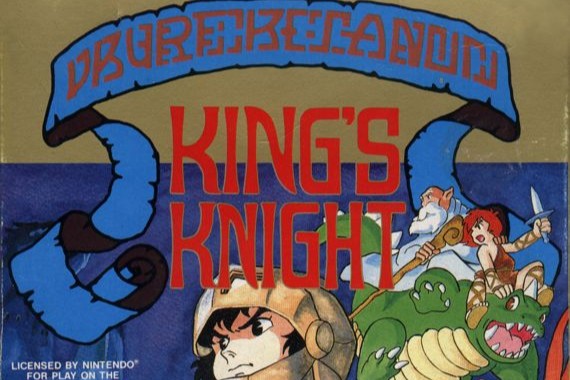
  • King’s Knight (Square, 1986)

    King’s Knight (Square, 1986)

    Developed/Published by: Square, Workss / Square
    Released: 18/09/1986
    Completed: 20/03/26
    Completion: Finished it. Saved after every level until the final level, which was an orgy of save states, I’m afraid.

    This article is featured in Pixels and Polygons Quarterly 2026 Q2! It’s available as both physical and digital editions, available from the Pixels and Polygons webstore and Patreon respectively.

    I don’t mean to do it. I don’t mean to keep adding games to my list of games to play. But when Darren Hupke of Pixels and Polygons asked if I had any articles on lesser-known Square games to hand for inclusion in a new issue, and I realised I really didn’t, I decided I’d take a look at their earliest output because playing Ubisoft’s Zombi really woke me up to the fact that the early history of even these huge, iconic companies is poorly remembered, and it’s sort of criminal because they really can be very interesting and illuminating.

    Early Square is challenging to decode. The Japanese game companies that started in arcades–or sprung into existence with the Famicom–can be easier to parse because their games were more likely released internationally, but Square is a company that sprung from Japan’s rich homegrown personal computer market–an aspect of the growing industry that often goes completely overlooked in western games writing.

    It’s another one of those things that I think shows an unusual kinship between Japan and the UK (along with things like “small island nation with outsize cultural footprint” and “horrific colonial past”): there’s an entire world of unique, interesting computers that formed a huge part of gaming culture that just goes almost completely forgotten because it didn’t “reach” America (even though in many cases versions of these games–or their game design lessons–would.)

    Now, to be fair, Japanese game companies were quicker to transition to consoles than those in the UK (it’s interesting to think that it’s really only Rare who saw the writing on the wall, endeavouring to transition to the Famicom around about the same time as its Japanese contemporaries.) And the language barrier is uniquely high here, because you’re not just dealing with Japanese, but Japanese on an 80s personal computer. Square’s very first game was “The Death Trap” a text adventure, and while I’d love that to be the earliest Square game I play and write about, it’s untranslated and the entire game’s text is in katakana (only one of the three Japanese scripts) making it unbelievably hard to parse even if you’re a skilled reader of Japanese (of which I am not.) 

    So, ironically after all I’ve said, that means the earliest game developed by Square I can successfully play is King’s Knight, their first original game for Famicom! But it’s still a meaningful one to start with, as an important predecessor to Final Fantasy, being a fantasy-themed vertically scrolling shooter designed by Hironobu Sakaguchi and featuring music from Nobuo Uematsu.

    Previously Square had really only developed adventure games, and let me say… you can tell. It feels like Sakaguchi read about Xevious, tried to mush an RPG into it, and then at no point had anyone test the game to see if it made any sense or if it was possible for an ordinary human to complete.

    You can feel though that even with the obvious inspirations, Sakaguchi is trying to do something unique with King’s Knight–or at least, something a little more clever than just a shooter with hidden secrets. The setup of King’s Knight is very much your generic fantasy codswallop; Princess Claire has been kidnapped by a dragon, and so four heroes must quest–and ultimately work together–in order to save her. There are some pretty classic “slightly lost in translation” Japanese hero names here: we have a knight, “Ray Jack”, a wizard “Kaliva”, a lizard, “Barusa” and a thief, “Toby.” Each of these heroes gets their own vertically scrolling shooter level before the final level where you use them all at once.

    Each of the heroes is featured on the Japanese title screen. They–along with the credit for Workss–are removed for the US release.

    This is one of the things where you can feel the effort to do something different. You don’t get multiple lives in King’s Knight; if a character dies, that’s it, and you just move onto the next level(!) indeed, if you manage to complete any level, it takes you to the final level so you can attempt to complete it, though it’s impossible to complete without all four heroes1.

    King’s Knight is–at its face–a brutally unforgiving game where you can’t afford to lose a single life. The design does try to take the edge off: firstly, you don’t die in a single hit; you’ve got a life bar. Secondly, the levels are covered in power-ups. This is done in a really strange implementation of the Xevious “uncover secrets” design that kicked off so much of Japanese game design in this era: your bullets destroy raised terrain, and the levels are almost entirely raised terrain. 

    You can actually jump up onto it–which has, as far as I can tell, limited use–but really what you’re going to be doing is hammering the fire button to destroy as much of it as possible. Enemies will pop out, which is supposed to make you be a bit more careful, but as they just run straight at you–and the level is covered in enemies anyway–it’s really not that much of a deterrent. You’ll otherwise reveal power-ups to increase your strength, defence, speed or jumping ability, health arrows (up arrows restore your health, down arrows hurt you) and on each level there are four “elements” that must be collected so each character can cast their spell on the final level–one of which is in a dungeon sub-level, which you also have to reveal by destroying terrain.

    King’s Knight has an uneasy puzzle game design that visually destroys the fantasy illusion, because quickly the screen is covered in up and down arrows like you’re playing Dance Dance Revolution and failing badly. I do understand where Sakaguchi is coming from. King’s Knight is a post-The Tower of Druaga title, and I suspect on seeing that game’s implementation of light RPG mechanics he was eager to take its system of upgrades and feed it back into a shooter, but didn’t want to fall into the same “work out what you have to do to progress while autoscrolling” design that Xevious’s sequel Super Xevious: GAMP no Nazo would fall into (stunningly, released the day after this in Japan.)

    The problem is that this kind of design still takes you away from the joy of playing a shooter, replacing it with the grim memorisation of a map. You barely pay attention to the enemies. Indeed, you barely pay attention to taking hits, because the levels are flooded with symbols and you just can’t afford to miss the elements or upgrades, so you rely–as much as possible–on picking up health arrows to survive.

    The power-ups (and downs) stick out like a sore thumb.

    A single mistake can end your entire run, but thankfully they realised this was shockingly cruel because King’s Knight has a rudimentary save system. After you’ve been through all the levels at least once on the title screen you can press Select instead of Start to go to a party screen that shows the power levels of each character and choose which ones to play, skipping the levels of characters you’ve fully powered up to get to the final level quicker. This doesn’t improve things much–you still have to complete the game in one sitting–but at least you don’t have to do every level to get to the final level. This splits King’s Knight into two stages: playing it until you memorise the first four levels, and then hitting your head against the brick wall of the final level endlessly.

    A lot of games of this era I can’t believe anyone completed; King’s Knight is up there, because in the final level you’re no longer just one hero but all four on screen in formation. This functionally means that your hitbox is four times the size! Just surviving would be hard enough, but the game adds a couple of new quirks to make it harder: the level is covered in statues of lions, dragons and gargoyles that require you attack them with the correct hero to kill them quickly (they attack relentlessly) which requires you move your heroes over symbols on the floor of the level to change their formation. You also need to change formation to make sure the correct hero is at the front so they can cast their magic spell at the correct time–which isn’t going to be obviously apparent (especially as there’s no feedback if you’re trying to cast the wrong spell, or the right spell at the wrong time.)

    King’s Knight, until the final level is a strange shooter that would be pretty basic and forgettable–far less engaging than something like say Twinbee–if it wasn’t for the strange terrain mechanic, but the final level is like playing a bullet-hell shooter where your character takes up a quarter of the screen. It’s made even worse by the fact you can’t control who is leading the formation easily–if you get who you want at the front, you can get stuck in areas of the screen as the change symbols suddenly become obstacles that can automatically end your run as they force you to change to the hero that can’t cast the next spell you need.

    It’s not impossible, but it’s a grim march of memorisation and luck for very little reward.

    King’s Knight was also released on MSX shortly after the Famicom release, and while it’s slower and jerkier, it has one particular aspect that you really feel the loss of in the Famicom version: there’s a status bar that lets you know your current hero’s power levels and if they’ve collected the needed elements. 

    Square obviously had some fondness for King’s Knight: not only did they release it for more Japanese home computers (the NEC PC-8801mkII SR and Sharp X1) in 1987, they’d choose it as their inaugural release for NES as Squaresoft in the USA in 1989. This is a nice edition–coming with a map and a detailed instruction booklet–but it’s a strange release because the game would have felt so dated by 1989. Not even in just comparison to other NES shooters; Square had released more technically impressive games with other publishers and Nintendo Of America would still take over publishing duties for Final Fantasy in 1990, so it was either some sort of low-stakes way for Squaresoft to get up and running, or Square simply liked the idea of starting their independent publishing in the US with the same game they did so in Japan.

    I wish I could say King’s Knight was a noble failure, but it’s simply a naive one. Too hard, too awkward and ultimately, not fun. But it does show that Sakaguchi was thinking about how to get an epic quest with four unique heroes on Famicom, so maybe it does have its place in history.

    Will I ever play it again? I’d really rather not.

    Final Thought: Another argument that Square have a particular fondness for King’s Knight is that a remake of it was released in 2017 on mobile, King’s Knight: Wrath of the Dark Dragon, retconning the game into the Final Fantasy XV. Sadly, the game was shut down in a year and is now lost. They really gotta stop doing that!!!

    1. It might be possible to get to the very end of the level with just Toby if you are superhuman, but I don’t think so. You could definitely get to the end without Kaliva, but the final boss has to be hit by all four heroes, so you’d still be unable to finish the game. ↩︎
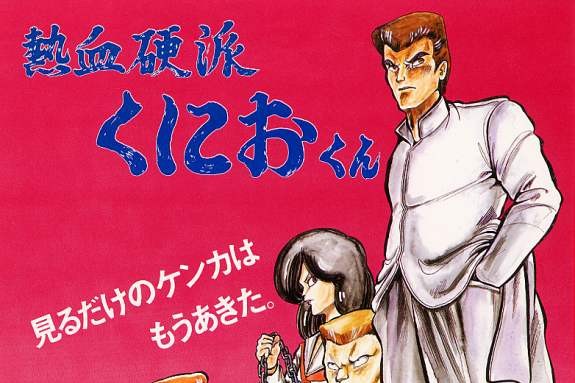
  • Nekketsu Kōha Kunio-Kun (Technōs Japan, 1986)

    Nekketsu Kōha Kunio-Kun (Technōs Japan, 1986)

    Developed/Published by: Technōs Japan/Taito
    Released: 05/1986
    Completed: 08/03/2026
    Completion: Finished it (Saving after each level.)

    It was announced on April 5th that the designer of Nekketsu Kōha Kunio-Kun, Double Dragon and more, Yoshihisa Kishimoto, had passed away. There’s a sad coincidence here, as I’d just played both Nekketsu Kōha Kunio-Kun and Double Dragon for an unrelated reason. These weren’t Kishimoto’s first games–he started at Data East and created some well-regarded laserdisc games, Thunder Storm and Road Blaster (also known as Cobra Command and Road Avenger) but they are his best known works, so as tribute I’ll be posting my articles on them this week and next.

    image via https://x.com/FlorentGorgesFR/status/2041105532522561653
    Yoshihisa Kishimoto (1961-2026)

    I hadn’t originally planned to play this–in fact, in my write-up of the Famicom’s Nekketsu Kōha Kunio-Kun I said I wouldn’t–but I had a research-related reason and the Egret Mini II’s most recent release, Arcade Collection Part I meant I suddenly had easy access to it, so it would have been an absolute dereliction of duty to not play it.

    Best known as Renegade, Nekketsu Kōha Kunio-Kun is a cornerstone video game the likes of The Tower of Druaga or Xevious, in that it would spawn an entire genre that would end up in an almost entirely different–arguably simpler–place. It’s the original “brawler” style beat ‘em up (or, as it’s known in Japan, “belt scrolling action”) though as it exists pre-genre convention, it will surprise any modern player with its stages, which are arena battles (rather than continuous levels) and combat that requires savvy positioning and careful timing, as there’s no way to credit feed (although your health is restored after each stage, there are no continues.)

    Renegade was created by Techōs Japan for Taito to appeal to a western audience and was directly inspired by Walter Hill’s New York-set The Warriors (despite that hardly being a contemporary reference; the film was over seven years old by that point) but Nekketsu Kōha Kunio-Kun is remarkable for being an early example of an–at least mildly–autobiographical game. Designer Yoshihisa Kishimoto based Kunio on himself, who as a teen found himself getting into fights on a daily basis.1 The game is strongly inspired by the unique culture of delinquency in Japan: the hero, Kunio, is a high school student driven into action to defend his bullied friend: first against “banchō” (male high school delinquents) then against “bōsōzoku” (custom motorcycle biker gangs) then “sukeban” (female high school delinquents) before finally the deadly yakuza.

    The level intros, where your pal gets his beaten up and even shot(!) aren’t replaced with anything in Renegade, to its detriment, I think.

    Nekketsu Kōha Kunio-kun is deceptive. It can be beaten in as quickly as six minutes, but only the very best players could even attempt such a feat. The game is crushingly hard even on its easiest difficulty, with enemies that intelligently swarm you and a boss in each arena who can seem invincible. The trick is that there are three buttons: a left attack, jump, and right attack. You hit the attack in the direction you are facing, and if there is an enemy behind you, you can hit the opposite attack to do a powerful back kick to make space. This is, honestly, pretty confusing if you’re more used to later games that quickly discarded such a system, but it’s a large factor in the game’s richness. You don’t try to overwhelm enemies in Nekketsu Kōha Kunio-kun; you have to carefully position yourself to avoid getting stunlocked by attacks from multiple directions, and when you face bosses, you have to consider your tactics. The bōsōzoku boss can be taken down easily with jump kicks, but the sukeban boss will always duck; meaning you’ll have to take advanced tactics like keeping a lower-level enemy on screen so that you can face them and instead use your powerful back kick on the boss.

    It can be frustrating–and it certainly doesn’t feel fair–but the game is so quick that there’s a draw to trying again with a new tactic in mind. The game does push it a little too far with the yakuza level featuring enemies who all one hit kill. With the boss able to fire a gun and kill you from afar, you have to take extremely conservative hit-and-run tactics that can make a loss absolutely gutting (with a lot of luck you can just wail on the boss as soon as he appears; if the other enemies don’t surround you, they might similarly get stunlocked and you’ll survive; it’s far from a consistent tactic, however.)

    I’m a bit surprised by how much I enjoyed this. Maybe it was the novelty of my Egret Mini II, maybe it was that I let myself save after every level, but I had fun trying to “solve” each level after getting over the initial hump of difficulty. There’s depth to the mechanics–you can throw enemies into other enemies, or off the edge of the train platform–and as your health gets restored after each level there’s a real value in trying to survive each brawl at any cost. 

    This motorbike section must have felt like such a slap in the face to those who finished the first level in arcades. You have to time your jump kicks perfectly.

    Normally I wouldn’t be so in favour of a game this hard, but my memory of the Famicom version is that– though the game was far more expansive, with multi-stage levels, a motorbike mini-game, even a maze–it was just too easy to cheese your way through. It’s better, but not as thrilling. I felt like I really had to work for my win here, and for whatever reason, that just worked for me.

    Will I ever play it again? No, but maybe this will lead to a reappraisal of Double Dragon, also on the Egret II Mini’s Arcade Collection Part 1, which I remember being straight cheeks when I played it on (of all things) Xbox 360.

    Final Thought: As much as I like the Egret II Mini (despite some issues previously mentioned) they really dropped the ball on dip switches. Nekketsu Kōha Kunio-kun has four difficulties, but they’re listed in the menu as A, B, C, D, and it’s set to B difficulty. Feels like that would make it easy to assume that’s “normal” difficulty, but the default on the machine was normal, which would maybe make that actually A position. I beat the game on A, which I thought was easier than B, but honestly, having switched difficulties around, I can’t really tell. The game is balls hard no matter what, I guess. I’ve played it longer than I would admit and when I start a fresh run I still can’t beat the first level consistently.

    1. This is sourced from a Polygon article in 2012, though as that article notes, there’s an entire book on Kishimoto’s career by Florent Gorges, Enter the Double Dragon, if you’re interested in learning more. ↩︎
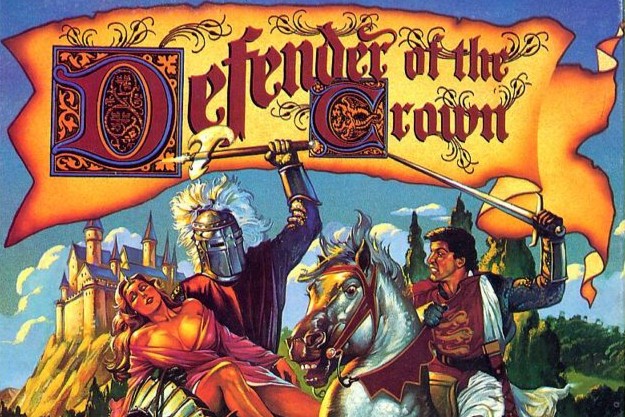
  • Defender Of The Crown (Cinemaware, 1986)

    Defender Of The Crown (Cinemaware, 1986)

    Developed/Published by: Cinemaware
    Released: 11/1986
    Completed: 22/01/2026
    Completion: Finished it by conquering the invaders, but remained unmarried…

    Defender Of The Crown is a game I’ve been eager to play, and I had a reason to boot it up a bit earlier than I intended, so I jumped at the chance. But of course, a problem immediately reared its head.

    Which version to play?

    The game is famous, really, as an Amiga game. If you’re not familiar with the story, video game agent Bob Jacobs saw a prototype Amiga in action, realised that the system provided a huge leap in the potential for video games, and went into business as Cinemaware1, with the explicit intention to create not merely Hollywood-inspired but Hollywood quality video games by (generally) making the graphics really fucking good. The first game to come from this was the Errol Flynn swashbuckler-inspired Defender Of the Crown.

    As an “Amiga first” project, you think it would be easy to choose that version to play (after all, when I played through Pirates, I decided to play the C64 version, as it is Sid Meier’s preferred version.) But the Amiga version is not generally considered the best version to actually play because of its somewhat tortured development: originally intended to be developed by Sculptured Software, Cinemaware attempting a more “Hollywood” process than keeping everything in house, Sculptured ended up so behind on schedule–indeed, seemingly with nothing useful–that the game was handed off to a previous acquaintance, R.J. Mical, to crunch until the game was in a state it could be released.

    (As usual, you can read all about this on The Digital Antiquarian. The guy’s a legend.)

    Something I’ve always wondered about Cinemaware’s early releases is just how arbitrary their release dates were. It particularly stands out with Defender Of The Crown, the Amiga version of which–and I can speak from experience, now–is slight to the point of being unfinished, with apparently weeks of work from the artist, Jim Sachs, going unused. Considering the game would be improved for basically every other release, Jacobs couldn’t have let them spend a little more time on it?

    That all said, no one can exactly agree which version of Defender Of The Crown to play. The Amiga version is the best looking, but the Atari ST version is somewhat close visually; versions on the Mac, PC, NES, even the humble CPC and C64 get design improvements. I was originally of a mind to play the Atari ST version, but I discovered that there’s a Defender Of The Crown II on CD32 that is, apparently, not a sequel but kind of an “ultimate” version of this era’s Defender Of The Crown, so I thought… well, I probably want to play that. And if I’m going to play that, I might as well just play the very original version so one day I can compare and contrast. After all, the whole selling point of the game originally was those graphics, so no point being short-changed there!

    (As my mother would say, what a roundabout road for a shortcut.)

    Now, I have played Defender Of The Crown before, briefly. My main memory of it was not quite getting the game’s mix of Risk-style strategy and simple mini-games, but thinking that when I had time I’d be able to dig into it properly, imagining it was, you know, a proper wargame.

    Playing it this time round? I learned within, hmm, an hour? that while the game initially seems challenging, there’s absolutely nothing going on. No strategic depth. No “play” in the mini-games, each solvable if you can just practice them enough. If you restart the game a few times after learning the mini-games, you will essentially become unstoppable, meaning you can rinse what was once an expensive, system-selling game in an afternoon. The emperor–or I suppose, the crown defender–has no clothes on.

    But dang does his body look good, am I right? As I said, it was the selling point, and playing it, you get it immediately. What you very quickly realise however is that those graphics quickly become a hindrance, because every time one of those big, gorgeous splash screens appear, you have to sit through the Amiga loading them off a floppy disk. Which is, and I always forget this for some reason, not fast. There’s a lot of waiting around so you can see a picture you’ve seen many times before (thank goodness, to be honest, that you can be done with the game so quickly.) 

    That zzz bubble isn’t a sleepy herald; it’s the game making it clear you’ve got some waiting to do.

    But that all said, what actually is the game?

    Set at the time of Norman conquest (but in an extremely “made it up as we went along” anachronistic fashion) Defender Of The Crown starts with Robin Hood letting you know that the king has been assassinated, the crown lost, and the kingdom in chaos, so it’s up to you (yes, you) to sort it out.

    You start by picking a Saxon hero–each of whom have different stats in leadership, jousting and swordplay, although this matters less than you’d think and the stats for one of these characters are even wrong on the selection screen–before you’re dropped onto a map of medieval England where you, two other Saxons and three invading Normans hold one castle and territory each. On each turn you have some options: to grow your army by buying soldiers, knights and catapults; to conquer territory or raid enemy castles; or to hold tournaments where you can joust for land or honour. On each turn, your opponents make the same moves (one thing I’ll say for Defender Of The Crown: it does seem to play completely fair.)

    This is pretty basic, so as well as being dressed up with the graphics, it’s also dressed up with a range of mini-games. Something fascinating about Defender Of The Crown is that it’s, at least in its Amiga incarnation, completely mouse-based. This has a bit of cost in that in none of the games is the feedback that great, which is probably the reason that, for example, the jousting section is so infamous.

    Something I find slightly annoying about Defender Of The Crown: the game is letter-boxed, but it’s not centred on the screen. It annoys me so much that I edited all the images other than the first one. You’re welcome!

    As befits it, it’s definitely got the most pomp and circumstance, and also seems to have the most confusion about it online. There’s a lot of discussion about when you need to hit the button to strike your opponent in a joust, or whatever, but if you just play it a bunch of times in a row you’ll eventually get it: at least on the Amiga, you don’t have to press anything at all, and the trick is knowing that you collide on the “upswing” so you just have to make sure that your lance is aimed at the center of your opponent’s shield at the peak of its bobbing movement. Once you know that you literally can’t lose, and it’s actually one of the quickest ways to win the game, because you can as of the second turn just joust the Normans to immediately take any of their land gains off of them and (probably) make a clear path to their castles all for the cost of some loading time and counting the amount of times you’ve bounced up and down on a horse (it’s seven, you hit them after seven. Spoilers, I guess.)

    My understanding is that Jim Sachs put in a ton of effort to represent realistic castles in a game that’s otherwise basically nonsensical.

    Once you’ve bought some catapults–each piece of land you have pays upkeep that allows you to buy units–you can attack castles, which is similarly simple to work out. You have to knock down the castle wall with a limited amount of ammo; each shot’s height is selected by “pulling” (placing your mouse) to a certain position, and it requires adjustment after each shot to make sure you’re still hitting the wall. It’s a little harder to practice this one–you have to have a castle to attack–but once you work out the first shot, you basically just have to move your mouse a few pixels up when needed and you’ve got more than enough ammo to make a few mistakes.

    This fuckin’ suuucks.

    I wish I could be as smug about the last mini-game, but sadly, I can’t. A castle raid mini-game is triggered either by choosing to raid a castle to steal gold (don’t bother, it’s not worth it) or, occasionally, when you are notified that a comely Saxon lady has been kidnapped by the dastardly Normans and needs rescued (which, amusingly, you can turn down doing.)

    This game is… awful. It’s an attempt at a side-scrolling sword-fighting game, but we’re in late 1986 so it’s not like it’s never been done before, and even being hamstrung by only being able to use the mouse is no excuse. You hold the cursor in front of your hero to move them forward, behind to move them back, and you click the mouse to attack with your rapier, with the idea being you and your companions will fight the guards until you make your way to the lady’s chamber. 

    I can really imagine what Jacobs pitched here: one of those amazing old swashbuckling scenes where the hero, like, swings in on a banner and then fights the enemy on a banquet table, all feints and parries. Instead what you get is this weird shuffling back and forth, hitting the mouse button constantly with absolutely no sense you’re doing… anything. As the only reward for doing this is a wife, it’s really not worth learning (am I right fellas? Take my wife, please? I wouldn’t even go and get her in the first place, etc.)

    Of course, I do say that as a grown man who has seen a boob or two, but I do think if I’d been playing this contemporaneously as a kid I’d have probably gone to the effort, as the real reward is a chaste love scene between your hero and the rescued lady that I’m sure set teenage loins afire (the shadows do have some unintentional, uh, implications.)

    They’re holding hands! Get your mind out of the gutter.

    Thankfully on my winning run I got everything sorted in England so quickly the Saxons didn’t have time to kidnap anyone (hmm, I didn’t get married in Pirates! either. I’ll need to get married in something soon otherwise people will start to talk.)

    The “real” game of Defender Of The Crown is actually the Risk-style strategy game. Now I’m an absolute Risk hater–random, unfair, takes fucking forever–and Defender Of The Crown is only really preferable that you’re not going to fall out with any mates over it because you can only play it single player. The game boils down to just making your campaign army as big as possible and steamrollering opponents. Every turn, send your army home, buy more soldiers (you don’t seem to really need knights) and then smash whoever gets in your way. The game even gives you a wee bit of help in that three times you can ask Robin Hood for help (he bolsters your army a wee bit) and there’s three Norman castles, so it’s pretty obvious when to use them. 

    This is the screen you’ll spend most of your time looking at–especially because the battle screen got cut from the Amiga.

    Because of the game’s design–more land means more money, more money means a bigger army–there’s really no “play” in it. If you start the game knowing what to do–grab land, win tournaments, build your army every turn, attack castles while the Norman campaign armies are in other regions–you win. It really makes this game’s smashing success seem absolutely bizarre.

    But I’ll be kind to Defender Of The Crown and say that, well, most players at the time weren’t going out of their way to min-max the experience. I’m sure most players who got this played obviously losing campaigns to the bitter end; I’m sure many people never worked out jousting and found it exciting and risky. At a certain point I’m sure they found a winning, repeatable path (you really do just get the biggest army) but the game, simple as it is, will have worked until then–a generator of minor player stories as they remembered great victories and losses.

    The funny thing is, it’s so uncinematic. For a company that was literally called Cinemaware, it’s strange that their games are so gamey. You would assume that a Errol Flynn-inspired swashbuckler would have started with a story, a script; a blend of cut-scenes and action scenes in order. In many ways I’d imagine the design would be more like the movie licenses released by Ocean later in the 80s and 90s–half-assed mini games with a cinematic connective tissue, and it would have probably been easier to make, less wasteful, and just as successful.

    Because the hero of Defender Of The Crown is undoubtedly artist Jim Sachs. Games–even in arcades, really–in this era simply didn’t look this good, so I do understand why this was mind-blowing to anyone who brought it home for their unbelievably expensive Amiga 1000 (the 500 wouldn’t show up until 1987.)

    Truly, even though I don’t think Defender Of The Crown is good (at all) Sach’s art is so beautiful and full of life that even now I think “might be nice to play Defender Of The Crown.”

    That’s insane!!!

    Will I ever play it again? Obviously, the thing to do is to play Defender Of The Crown II which, in a stunning plot twist, was developed entirely by Sachs!

    Final Thought: Of course, now I’m thinking about how that compares to the later, more fully featured but “official” Cinemaware versions of Defender Of The Crown, which doesn’t even include the second incarnation of Cinemaware in the 2000s which put out a remaster, a PS2 version, a GBA version… like maybe I should play the Atari ST version after all, just to get the full picture??? Gnngh.

    1. Well, actually as “Master Designer Software” but a bit like Tales Of The Unknown, that would be almost immediately dropped. ↩︎
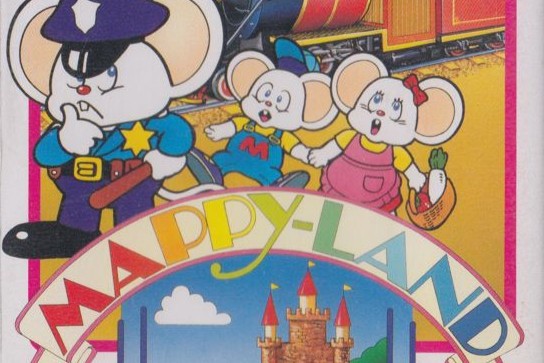
  • Mappy-Land (Namco, 1986)

    Mappy-Land (Namco, 1986)

    Developed/Published by: Tose / Namco
    Released: 26/11/1986
    Completed: 14/09/2025
    Completion: Finished it. Save state at the start of every level.

    As we all know, ACAB includes Mappy, but I’m a bit unclear on his status with the police force in Mappy-Land. He’s got his rozzer clobber on on the cover, but when you actually play the game, he’s noticeably not got his policeman’s hat on, something he was still wearing in Mappy’s arcade sequel, Hopping Mappy (which came out in early 1986). So we could suppose, like we’re the Supper Mario Broth account but for Mappy, that at some point in 1986 Mappy did something to get himself thrown off the force. Or maybe being transferred to the pogo cop division was an attempt to get him to quit, because he’s actually a tiny mouse Serpico.

    Or more likely, he just doesn’t wear his police hat while on holiday.  Mappy-Land, I suspect, is Namco–or possibly Tose, who were tasked with developing this–trying to compete with (of course) Super Mario Bros., and looking at the success of Tokyo Disneyland, which had only been open for three years by this point, and going “oh, we have a wee mouse mascot, can we do anything with that?”

    It’s not exactly a 1:1 copy or anything, but I find something very suspicious about Mappy’s redesigned sprite, with those big round ears. There’s also his new girlfriend with a strangely similar name (Mapico, in Japanese “マピ子”, “Mappygirl”). And he’s adventuring across a “land” which features levels that include, pretty transparently, analogues to Adventureland, Westernland… you go up a “main street” and end up in front of a fairytale castle!

    I mean, case-closed. Though a bit like Mappy–where you play a mouse defending a house that’s full of trampolines–the narrative is a bit confused. It would make sense to say Mappy’s on holiday at Mappy-Land (convenient for him!) and then the Meowkies have shown up to create havoc that he has to solve–you know, sort of a Die Hard thing, Mappy our John McClane, he’s forgot his hat instead of his shoes, etc.–but actually the game tells the story of Mappy’s courtship with Mapico, where he first has to collect cheese across Mappy-Land as a gift (women, what are they like, always demanding cheese, etc. etc.) Then he has to collect rings in order to marry Mapico, who apparently feels forty-eight rings is the required amount for an engagement. Then it’s tiny Christmas trees for I assume their first Christmas together (again, forty-eight seems… extravagant, unless they’re planning on running a Christmas tree outlet). Finally, in a twist, you’re collecting baseballs… because many years have passed and you’re actually collecting them for your son!!! That’s right Mappy Jr. appears, and maybe it’s one of those situations where his little league is in danger of being cancelled because they don’t have enough baseballs, and Mappy just loves his son enough to, uh, steal them from an international theme park?

    I mean what is Mappy really doing here? Look, it’s nice to see a policeman whose interaction with his wife and child isn’t solely beating them, but it’s almost like the tables have turned–he’s here ripping the trees out of a theme park and if anything the Meowkies are trying to stop him.

    Anyway, none of this actually slightly matters, because it’s all just background to the game, that no one involved in the making of thought even slightly as hard about as I just have. And, to be honest, they probably didn’t think about the game as hard as I have either. As I said above, this is clearly an attempt to Mappyise Super Mario Bros. so Namco can get in on the action, but it’s strange how they went about it. Even as early as this companies were working you just slam your IP into a left-to-right platformer with some vague design signifiers and call it a day (even Jaleco understood this with JaJaMaru No Daibouken.) Tose and Namco go a different route where they’ve decided to keep as much of Mappy’s DNA as possible. It would have been easy, I think, to just do Super Mario Bros. with more of a focus on trampolines, but instead the core here is very much what Mappy was: collect things while being relentlessly hounded by the Meowkies.

    What’s interesting, however, is what they’ve changed. Doors are completely gone, instead there are stage-specific counter attacks. Mappy gets a short hop, that allows him to (shockingly) jump over enemies if you’ve got extremely good timing. And you can collect items, up to fifteen, which you can drop to distract Meowkies–for example cat toys that they dance around and become harmless for a while, or coins that the head Meowkie, Goro, is specifically attracted to. 

    And then there are levels that break the system completely out of nowhere. The jungle stage instead features you jumping off moving trampolines to catch vines and avoid parrots (which is all a bit Donkey Kong Jr., weirdly) and then the spooky stage has you flying around with a balloon, shooting microwaves at ghosts and collecting keys.

    Things get even more complicated because not every level finishes the same way either. Generally you’re just trying to collect everything and then run off to the right–a weak sop to being inspired by Super Mario Bros.–but many times you have to do things like find a secret entrance on the level to then play another level where you have to collect an item. So on the spooky stage you either have to collect a cross in the church to scare off vampire Goro at the exit, or enter the haunted mansion (full of warp doors!) to find an alternative exit to the level (vampire Goro just hangs out in the middle of the mansion, which feels… sort of unfinished, to be honest.)

    Mappy-Land is… odd. It’s ambitious, adding probably too much to the core Mappy design, but it’s just wrong-headed in trying to do that, because the core can’t support the weight of everything that’s been added. Mappy was always a bit of a clumsy, seat-of-the-pants arcade game for me, but Mappy-Land quickly requires absolute precision and a dedication to a racing line and it doesn’t feel good at all. Maybe it’s just poor programming–sorry Tose–but the game has an infuriating number of collision edge-cases particularly with trampolines, and it makes the jungle levels especially complete bullshit as you hop on a trampoline and sort of vibrate off to your death, or fall onto one and miss it despite visually colliding with the edge. And idiosyncrasies from Mappy here make less sense. If you fall any distance onto a hard surface, you die. Unless you’ve been thrown in the air by a trampoline. So you have absurd situations where you drop down about three pixels and die, but you can fall from the top of the screen onto a hard surface if you’ve bounced off a trampoline? It’s hard to remember this in the heat of the moment, and by the third set of levels, the game intentionally uses it all against you, as you have to learn levels first before you can expect to complete them due to all the dead ends and death drops you can end up caught out by–the items help, but you really need to know how to use them and you use them in order of pickup, so you might have the exact opposite one you need to use at the wrong moment.

    Ultimately, I treated Mappy-Land as a puzzle the way, say, the original Pac-Man is–what’s the exact route you can use and recreate consistently to beat a level? Doing so I wouldn’t have had that bad a time if it wasn’t for the horrible collisions, and some later levels absolutely take the piss anyway–there’s an entire level where you can’t see where the platforms are!

    After playing something like Castlevania, Mappy-Land just looks sort of crappy [“Crappy-Land, more like”–Ed.] I get what they’re going for–big, bright, childish graphics–but it does nothing to change my mind that in this era Namco is being left behind in a big way on Famicom after Xevious: GAMP No Nazo. This is… I mean, it’s ok. But if you want to play Mappy, you should probably play Mappy and enjoy it as a wee high score challenge, because this is less good as a high score challenge and actively not something you want to play through as an adventure.

    Will I ever play it again? I shall not.

    Final Thought: Worth noting that I played the Namco Museum Archives version of this, and, weirdly, despite the fact that the game was never included in the Namcot Collection, it’s the Famicom ROM, not the NES ROM that is included. The NES version includes a continue and stage select and even a “remaining items count” (absolutely necessary–something I forgot to mention is the game doesn’t make it clear when the stage exit is open or not–or even where the stage exit even is sometimes). That’s the version you can play on the Nintendo Switch Online service, but you probably shouldn’t bother either way.

  • Rolling Thunder (Namco, 1986)

    Rolling Thunder (Namco, 1986)

    Developed/Published by: Namco
    Released: 09/11/1986
    Completed: 18/09/2025
    Completion: Finished it. Save states at each checkpoint… though I also had to use a few more in lulls just for my sanity on levels 8 and 10 for very obvious reasons.

    It’s strange, the games you remember, and the games that you don’t. I suppose it’s about the games that make an impression. Something interesting, I suppose, in my trip through these early(-ish) days of arcade games is not even how few I have any connection to, but how few I even remember seeing in arcades. They’re all from an era “before my time” but only a rarefied few managed to make a consistent enough profit to hang around until it reached my time, and even then, they were probably in some dusty old corner or a banged up cabinet in a chippy, something I probably never played but just stared at the attract mode while I waited for my mum to pick up… hmm, probably a fish supper and a sausage supper? Maybe a special fish if my nana’s over? A couple of pickled onions and a red cola?

    Personally, I rather like this separation from nostalgia. That I can really experience these games with fresh eyes. And I can’t say that Rolling Thunder represents that we’re reaching an era that we’ll start to see more things that I remember, or might have played (looking at my to-play list, it absolutely does not.) But Rolling Thunder definitely had something to it that I remember it really well. This isn’t a vague, childish memory of maybe a Gradius or a Salamander machine in the Magnum–god knows, it could have been an R-Type–this is a “I played this. I played this more than once. I will have been annoyed because I’ll have lost my credit so quickly. But I definitely put good money after bad.”

    Because Rolling Thunder looks. so. cool.

    I don’t know if I can explain it. There’s just a very clean, clear style to the graphics. Although you’re actually playing a member of the “World Crime Police Organization” on a mission to save another agent, there’s a real 60s spy flick feeling from the very first screen–like you’re James Bond, attacking the base at the end of You Only Live Twice. And the action is fast and more importantly stylish. The hero, Albatross, ducks behind cover to shoot enemies, and leaps over rails to switch between low and high ground. It looks cool as hell. It looks like it’s going to be a lot of fun to play.


    Historical Aside

    There was a meme going around on Bluesky a while ago that looked like this:

    via Bluesky

    I’m absolutely not going to disagree with it, not having sucked it up and tried to play the Portopia Serial Murder Case (yet). But history is a many faceted thing, and I think if I was going to make the meme from what I’ve learned over my time spent digging into the history via what I’ve played, it would look like this:

    The Tower of Druaga on top of Xevious, and the stalk is Spartan X.

    Now, I haven’t written about Spartan X (better known as Kung-Fu Master) because, well, I’m trying to not keep loading more games onto my to-play list (uh, more than I already do) but it’s an unbelievably important keystone. It takes the rhythm of the designer Takashi Nishiyama’s previous game, Moon Patrol, and translate it into a side-scrolling action game (one that, weirdly, starts with you scrolling right-to-left). The main thing you need to know about it is that pretty much any game you’ve ever played where dudes relentlessly stream in from a side of the screen? That’s from Spartan X. Something like My Hero is an obvious, but the DNA is over Ghosts n’ Goblins, even Super Mario Bros., and, absolutely, Rolling Thunder.


    Rolling Thunder is, actually, very fun! But it absolutely suffers for the nature of arcade games of the era (or any era, I suppose): the requirement that it remove the quarters from your pocket like you’re being held upside down and shaken by a bully. From the very beginning of the game, you have to play it in an exacting fashion, and be prepared to learn the game’s layout, because you can’t survive via reaction–you have to know what’s coming and act before it happens (literally, in many cases.)

    It’s a shame, because the core design is unbelievably solid. You can move and shoot. You can leap between the two levels (as long as there’s a railing–Albatross will only jump if it looks cool) and there are doors enemies come out of and which you can enter, which is a bit like Elevator Action but actually the only doors you want to go in are the ones that have more bullets or the machine gun upgrade, because coming in and out of a door is dangerous and confers no advantage (you can’t duck into a door to avoid taking a hit, it’s too slow, and enemies often just hang out in front of them. In fact, you quickly learn to not even stand above or below doors, because enemies might pop out and leap on you before you can do much of anything.)

    The design is a game of forward momentum, enemy and area control. You want to keep yourself positioned so you don’t get overwhelmed or surprised, take on enemies and move forward. When it works, it’s amazing. You shoot an enemy when they pop out from cover from behind cover yourself. You leap over the cover, spin around, shoot another enemy. You leap up to the higher level, pop a few more enemies, move forward so an enemy on the lower level leaps up too, you shoot them–and so on.

    The problem is that it only rarely feels like play. The game plays a genuinely ridiculous trick on the player from the off–it claims you have eight bars of health, but actually, you generally die in two hits, and often what is one or feels like one (I think headshots kill you in one, and some enemies hit you twice in quick succession.) There are no ways to regain health, and you get a maximum of one checkpoint on the often long levels (and the 5th and 10th levels have no checkpoint!) so you just can’t style it out ever. The game doesn’t have strictly deterministic enemies or enemy layout, but you can plan around the doors and spawns.

    If you do this, the game is… mostly fair for the first five levels, which the game calls “Story 1” (this is a confusing bit of framing. Story 2 feels like a second loop, but it’s actually different. There is a narrative, of sorts, to the game and levels, so is Albatross failing the first time? I’m overthinking it). A player with a patience could probably single credit the first story with some effort as long as some particular gotchas are memorised (the section where you have to jump an obstacle to get to an enemy throwing bombs at you stood out to me, but there’s also the timing of invisible, flying and fire enemies to worry about). Story 2, however, is absolutely fucking bananas.

    Something I’ve failed to mention about the design–once you’re three levels in, the game, almost quietly, introduces the ability to switch between the foreground and background planes on the lower level via doors, and that seems to allow the designer(s) to increase the chaos on screen tremendously. So no longer are you just dealing with enemies in front of you, behind you and above or below, but also in all those locations on a second plane. If you’re on the upper level and there are enemies on the background, well, they can jump up and kill you the same way the enemies in the foreground are.

    This gets pretty bad, but the true depths of Rolling Thunder are in any of the sections where it tries out being an actual platformer. Albatross is stiff in the way Arthur in Ghosts n’ Goblins is, but he’s also about twice the size and only has a short hop laterally compared to his leaps over railings. The 4th level is bad enough, but the 8th introduces a final section where you’re hopping across tiny columns after an enemy gauntlet where you literally have to position yourself correctly to avoid being killed immediately by enemies below you–I have no idea how anyone did this when they had to start from a checkpoint minutes earlier.

    As I played this via Namco Museum I had no rewind to abuse like I did in Ghost n’ Goblins, so finishing this–particularly the ridiculous final level–was an absolute test of my nerve. Rolling Thunder is so determined to strip you of your money that even the level timer is stupidly tight–I finished many levels with less than ten seconds to spare, and that was booking it as much as I could–which made me save state only when absolutely necessary. That I still finished this makes me think that the game is easier than Ghost n’ Goblins, though not by much.

    I think also that I liked it a bit more (even if it was, at times, deeply annoying and frustrating.) As the enemies are more predictable and the layouts simpler, the game is easier to learn, though for many the more reactive play in Ghosts n’ Goblins might be preferable (but at this level of difficulty, I don’t think I agree.)

    Because Rolling Thunder gates its “true” ending behind the last five, brutal levels of Story 2 I’m not certain I can give it an unequivocal thumbs up. I wish that they’d been able to ease off the gas a little bit, maybe let the levels live a little more (like a lot of these arcade games, it introduces ideas briefly, forgets them, moves on.) But I don’t know… it’s still as cool as it ever was.

    Will I ever play it again? I don’t say this for every arcade game, but if I saw this in an arcade, I’d see how much I could show off by how far I could get into this. I suspect only the second or third level, but still, most people don’t make it to the first checkpoint, so I’ll take it.

    Final Thought: Rolling Thunder received a couple of sequels, but the true legacy of the game is almost certainly that it inspired Shinobi quite directly, a series that would go on to far outlive it. Also the game’s Blogas absolutely 100% had to at least slightly inspire Blanka. I mean look at their colours! That’s basically Blanka’s alternative palette!!!

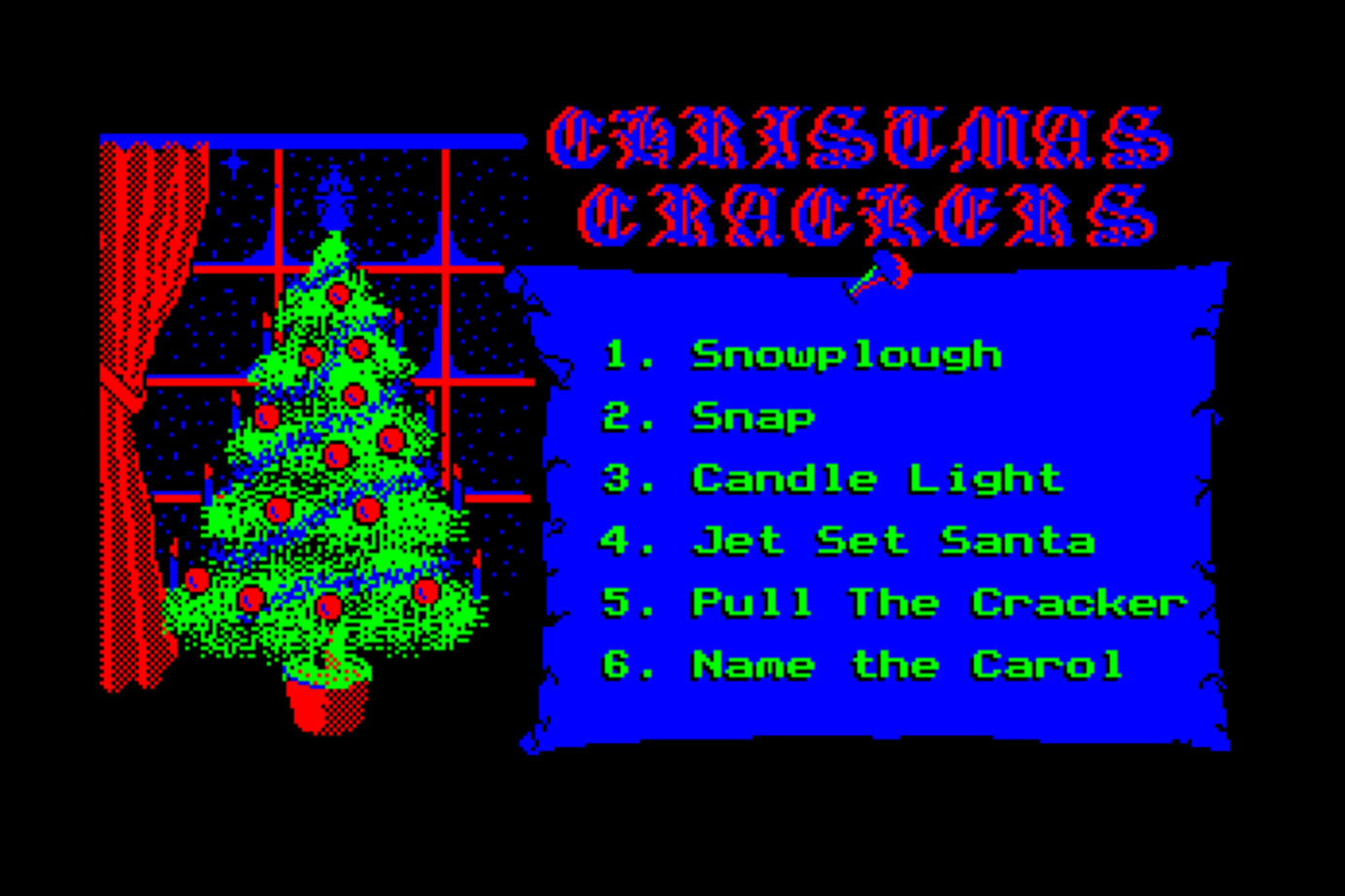
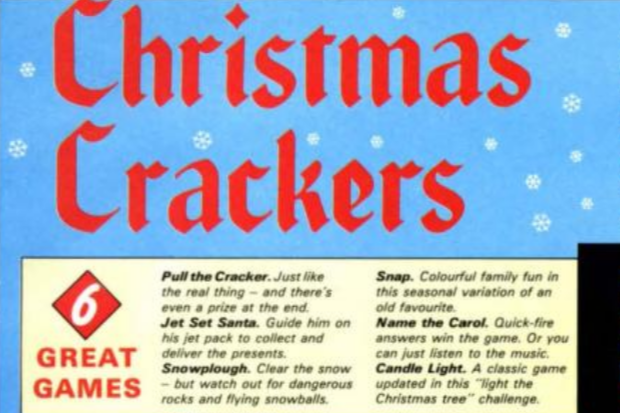
  • Christmas Crackers (Micro User, 1986) – Part 2

    Christmas Crackers (Micro User, 1986) – Part 2

    To view this content, you must be a member of Mathew’s Patreon at $1 or more
    Already a qualifying Patreon member? Refresh to access this content.
  • A Computer Christmas (Sierra, 1986)

    A Computer Christmas (Sierra, 1986)

    Developed/Published by: Sierra On-Line
    Released: 1986
    Completed: 02/12/2025
    Completion: Well, it’s not really a video game. Watched it until I was pretty sure I’d seen everything.

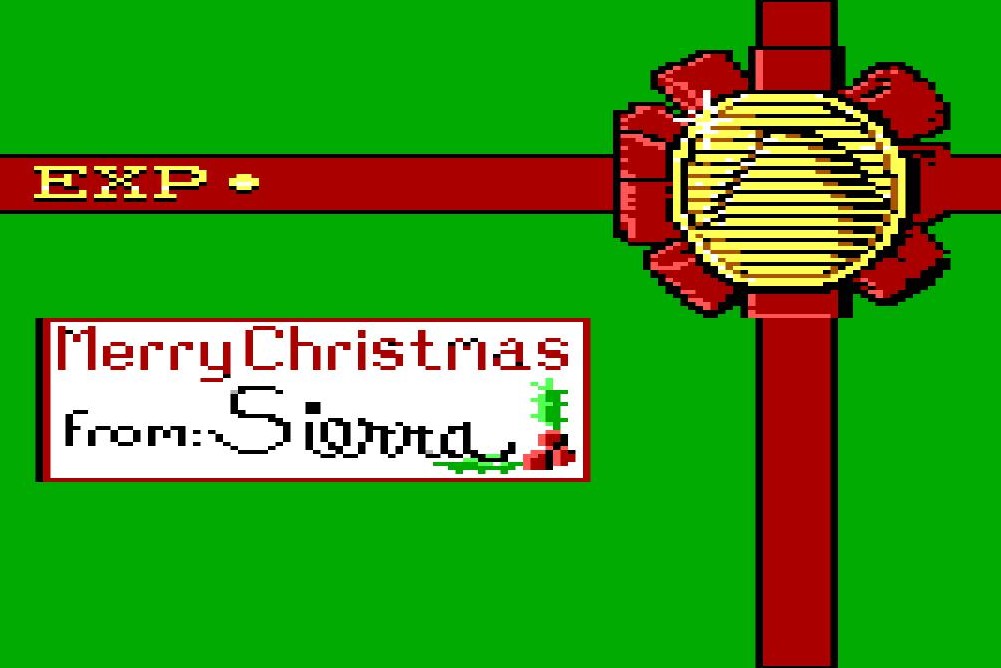
    Christmas is drawing ever closer, so let’s relax, let’s have those Christmas party vibes, and let’s just watch Sierra’s 1986 “Christmas Card” A Computer Christmas together:

    (For maximum vibes, I suggest running it for real–well, at least with emulation. You can do so, easily, at archive.org!)

    Sierra are a company that I’ve not really dug into here on exp.–I’ve really only played King’s Quest I and II–and I have to admit I’m a bit disappointed that in 2025 I didn’t get to King’s Quest III or Space Quest (especially considering their release dates land right around the time of other games I’ve been writing up, like Pro Wrestling and Alex Kidd in Miracle World.) But I got a bit stuck in an earlier PC game I was playing by another historically important developer and did that thing where you put it down for slightly too long, and I loathe to start something else.

    But I think it’s alright that we’re getting to enjoy A Computer Christmas together, now. For such a beloved company, with quite a lot of history written about it, and even though Sierra’s Christmas “cards” would become a regular occurrence–there are four between 1986 and 1992–I’m surprised by how little information is online about any of them, and especially not this first one. There’s a bit of irony to that, because it seems that essentially all the information that there ever was about Sierra’s Christmas cards was uploaded to the Sierra On-Line BBS–BBSes, of course, filling the market before internet access went mainstream.

    BBSes are not well archived and I can’t exactly ring up (209) 683-4463 to get the details, so really all I’ve got to go on for context is a random Facebook post from an Aaron Micah Wester (dug up for me by ftb1979 on the Gaming Alexandria Discord–thanks!). It’s unsourced, so I’m a bit unsure about calling it the gospel, but he notes these were something “the Williams family were very fond of” while being a “a low-pressure way for developers to experiment with various features they wanted to potentially add into their games.”

    I think it’s fair to assume that this first card was intended specifically for stores (it does, after all, say in the intro it’s intended to promote “the Christmas spirit within your store”) though Wester notes that these cards would go on to serve double duty as a way to draw more users to Sierra’s BBS (a 1988 Sierra Newsletter claims the BBS was getting 6000 calls a week, and had 25,000 active users). But this is a marketing tool first and foremost. Distributed to computer stores on disk (“Egghead Software, The WHEREHOUSE, LECHMERE, FEDCO, B Dalton Software Etc, Electronics Boutique, Babbage’s, Walden Software, or RadioShack” Wester seemingly exhaustively states) the staff were more than likely to leave the demo running running across the festive period, and as at the end of each loop of festive scenes there’s an advert for a Sierra game–here Space Quest and King’s Quest III (the ones I haven’t been able to play yet, boo!)–this was a cheeky, very Sierra way to try and push more product.

    (The card also mentions The Black Cauldron as part of the default text scroll, but doesn’t seem to include a demo for it. I forgot all about Sierra making a game for The Black Cauldron.)

    That A Computer Christmas includes ads does sour the experience of playing it, just a little–the games aren’t festive at all! I mean at least just put a Santa hat on the character sprites or something–but it doesn’t exactly ruin it. And that this card is limited to the PC beeper… well… let me just say I’ve heard a lot of horrible beepy version of Christmas music thanks to the BBC Micro by now, and this is the worst.

    Still, A Computer Christmas is a charming object, one you won’t regret leaving playing while you open your advent calendar or something. Unless you forget to mute it, I guess.

    Festive vibes ranking: HIGH (unless it’s an ad break.)

    Will I ever play it again? Onward and upwards: perhaps next Christmas I’ll try the 1988 version, which, thankfully, includes a Roland MT-32 option.

    Final Thought: Sierra’s computerised Christmas cards as stealth marketing, are, of course, not the only example of such a phenomenon. There are examples such as “Seasons Greetings from Thoughtware” from as early as 1984. Strangely, that’s as hard to find much online about as A Computer Christmas, though it is covered briefly on LGR as part of their longer video on the commercial “Jingle Disk” it turned into. Is this where Sierra got the idea? Probably not, but I suppose you never know.

  • Christmas Crackers (Micro User, 1986) – Part 1

    Christmas Crackers (Micro User, 1986) – Part 1

    To view this content, you must be a member of Mathew’s Patreon at $1 or more
    Already a qualifying Patreon member? Refresh to access this content.
  • Jingle Bells (Jack & Jill Software, 1986)

    Jingle Bells (Jack & Jill Software, 1986)

    Developed/Published by: Jack Foster, Jill Foster / Jack & Jill Software
    System: BBC Micro
    Released: 1986
    Completed: 01/12/2025
    Completion: Finished it.

    *Ahem* time to drag out the old Noddy Holder impression again. It’s CHRISTMASSS!

    (Hmm, think I’m getting better at it.)

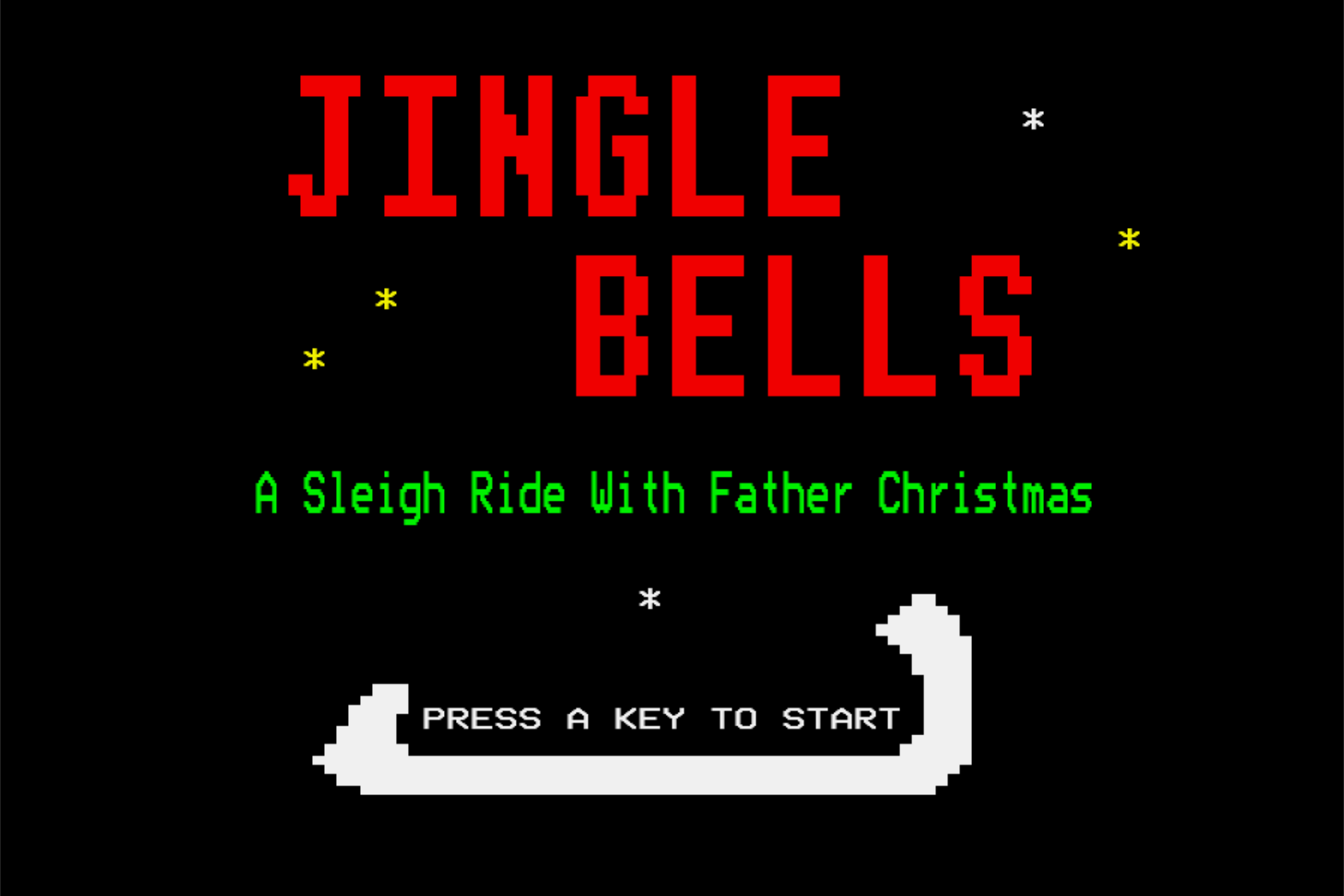
    Well, it’s December, at least, which means I get to spend the entire month playing Christmas games in an attempt to feel festive, but so far has meant I’ve accidentally mostly played BBC Micro shovelware. So I wasn’t exactly looking forward to the next game on my “as chronological and exhaustive as I can be bothered with” list: Jingle Bells, subtitled “A Sleigh Ride With Father Christmas.”

    However, it’s turned out to be a perfect bit of classic BBC Micro nostalgia: a short, very easy text adventure, the kind of thing that I’m sure was booted up for the kids at primary schools when they had some scheduled computer time in the anything-goes period right before the Christmas break.

    Developed by Jack and Jill Software, I can’t find any information about them online other than the developers were, well, Jack and Jill Foster. Brother and sister, husband and wife? Who can say? It’s like they’re the bloody White Stripes of video games! I took a dig into some contemporary issues of Micro User, Acorn User and even Beebug and couldn’t find much of anything, so I’m not completely sure if this was commercially sold. It seems very much like the kind of thing intended for schools–and the pair did develop a couple of other simple, childish adventures. The games all showed up on public domain disks at some point, but the breadcrumb trail stops there. Not that it was so much of a trail. A single crumb, at best.

    As for Jingle Bells: after the obvious–indeed, expected–intro where you get to listen to a bleepy version of Jingle Bells for the hundredth time, the game opens with you at the North Pole because–for unclear reasons–Santa had invited you to “sort out his presents for the year.” And then the dozy old bastard has forgotten where you live. And he also can’t be arsed to work it out, so it’s up to you. (There’s a cute touch where you get to type in where you live at the start: it doesn’t lead to anything but a changed signpost, but I appreciate it.)

    You solve this via some pretty standard kiddy adventuring around the North Pole. The parser is limited to classic VERB OBJECT and you can basically learn all the verbs by typing HELP (although there’s a couple of hidden ones, I don’t even think intentionally.) The game doesn’t understand it if you spell out directions properly (confusingly) so you might go through a period of typing “DOWN” pointlessly when you actually just have to type D (and it’s INV for inventory.)

    Take that you twat, you can sort out your own presents next year if you cannae remember where I live.

    The puzzles are… simple and obvious, with challenge expressed via a couple of classic design cheats: rooms that just automatically kill you so you have to start again (good when you want to rotate the kiddies off–one go each!) and a “gotcha” at the end for anyone who didn’t pick up one particular item (what is this, an Infocom game?) The game also–by virtue of you being on Santa’s sleigh–has a very funny idea of distances. One move and you’re at the South Pole from the North Pole, one other move and suddenly you’re in Australia. I laughed.

    The game doesn’t take into account that you might live in Australia, in which case you absolutely hadn’t taken a wrong turn.

    Maybe it really just is nostalgia for being in primary school talking here, but there’s a Christmassy charm to this. It’s much more playable than A Christmas Adventure, and though it’s not as pretty as Merry Christmas From Melbourne House, it’s more pleasant for being easier to understand (it doesn’t have a snow maze, for starters.) But I’m hard pressed to say much more about it. I had a nice, if very gentle, time with it. Could be worse!

    Festive vibes ranking: HIGH

    Will I ever play it again? I’m good!

    Final Thought: Because there’s so little about this game online, I thought I’d go ahead and provide a Christmas miracle:

    A full map for the game if you want to complete it yourself!It’s probably not really necessary, but if you’ve been looking for an excuse to spend fifteen minutes playing a BBC Micro game–and I mean who hasn’t–you can play Jingle Bells online right now!

  • Alex Kidd In Miracle World (Sega, 1986)

    Alex Kidd In Miracle World (Sega, 1986)

    Developed/Published by: Sega
    Released: 01/11/1986
    Completed: 1/09/2025
    Completion: Finished it. Save states were used (for some obvious reasons.)

    The discourse has long moved on, but a while ago there was a “revelation” that the extremely French CEOs of Sandfall (of Clair Obscur fame) and Lizard Cube (of Sega remake fame) didn’t play Nintendo growing up. This was one of those classic “Americans learn that their experience isn’t universal… and decide that’s stupid and wrong” online spats where everyone got annoyed at each other’s ignorance. Usually it’s like, learning people in another country prepare or enjoy a food in a slightly different way, and it’s always a bummer: that yes, the US believes its culture is the “normal one”, that the US view is dominant and pulls focus so much that even people in other countries might not know their own history, and that it’s never a learning experience for anyone because the urge to dunk on each other rather than celebrate a diverse history is completely overpowering.

    Which was interesting timing for me to play Alex Kidd in Miracle World. It’s really only the second time I’ve played a Master System game to write it up, having only previously played Fantasy Zone because I suddenly hungered to play a version of Fantasy Zone (because Fantasy Zone fuckin’ rules.) It’s interesting timing because the Master System, to me, represents so much about just how different video game culture is across the world, and how different people’s personal experiences of it can be.

    I mean, first of all, it wasn’t even originally the Master System, releasing in Japan in late 1985 as the Sega Mark III, where it failed to compete in really any way with the Famicom. It was then released in North America in 1986 around about the same time the NES went wide, only to get crushed by Nintendo’s stringent licensing agreements with third-party publishers, leaving it with a deeply limited game library.

    In Europe, however, it wasn’t released until 1987(!) and despite Sega managing to completely botch the UK launch, it managed to massively outsell the NES (as it would, quite famously, also do in Brazil under the Tectoy brand.) And then loads of games aimed at these specific markets would be released that wouldn’t see the light of day in Japan or the US!

    So the Master System was, and wasn’t, a success. It did, and didn’t, have loads of games and mindshare. And even on that you need to get a little more specific, because if you’re thinking about Europe things get even more fragmented. You might think “oh, it outsold the NES, so it was the biggest thing in games.” But of course, if you know anything about the era, you know the biggest thing in games there were home computers–at release it was competing with the Amstrad CPC, ZX Spectrum, Commodore 64, even the Atari ST and the just released Amiga 500. And depending on what country you’re from, which of those was dominant could have been completely different–I’m sure for many of the developers at Sandfall and Lizardcube, the first 8-bit computer to mind is the Amstrad CPC due to its popularity in France1 [“It should be anyway”–CPC Ed.].

    Of course, they might not have an 8-bit computer to mind at all, depending on their age. Because not everyone is tiresomely playing through games before their time (ahem), and the era you came of age in has a huge effect on how you see certain things. To get personal, I don’t think I was conscious of a video game “industry” until around 1991(!)–I am pegging this, roughly, to the point when I started getting issues of Amstrad Action [“Hurrah!”–CPC Ed.]. But I’m also aware that by then my entire experience of, say, the NES was those kiosks in Currys or Dixons that let you play Fester’s Quest for literally ten seconds. I certainly never knew anyone who had one.

    Because I didn’t come of age–or at least, understanding–in the “true” 8-bit generation, the thing about the Master System that stands out to me–even as an Amstrad CPC owner in the twilight of the 8-bit systems–was that it felt like a “poverty” system.

    This might seem cruel, and indeed, incorrect. Even in the 90s the true poverty system was probably the Atari 2600–or the 7800, still being flogged in catalogues–but you have to remember one thing: Sega’s own advertising. The Mega Drive had been released in Europe in 1990, and kids were seeing adverts like this:

    It’s impossible to overstate how unbelievably cool this seemed to me as a child. A suave adult who lived in a truck with a spinning gaming chair??? You’re just going to have to trust me on this that it didn’t sound as bad then as it sounds now, because now that’s a real “hello, human resources???”

    But the point is–why would anyone want a Sega that wasn’t the Mega Drive? That wasn’t as good as the Mega Drive, a system that looked this cool? Poverty! Poverty!!!

    And it’s from this, perhaps, that you might argue Alex Kidd In Miracle World has caught a stray. Because as the in-built game on a poverty system, it just had to be rubbish. A wee game they included for people who couldn’t get any games with the system. I mean it had to be crap–it didn’t even come on its own cartridge!

    First impressions don’t help. Sure, the Master System had really bright graphics compared to the NES’s muddy browns, but the NES was a complete non-entity in the average British schoolchild’s mind. And Alex Kidd opens with probably one of the least exciting first screens ever, where you head down and immediately have to get to grips with Alex’s weird, slippery movement.

    As we know, platform game feel in 1986 wasn’t a solved problem–I’ve said it again and again that the original Super Mario Bros. just feels sort of weird–but Alex Kidd has a really slidey, sloppy feel, a little too fast in a way that looks wrong; you feel yourself sliding a collision box around rather than controlling a character, which isn’t helped by just how strict that collision box is–there are no close shaves here. Get even close to an enemy and die.

    Alex Kidd really only makes sense, at all, once you learn that the developers were literally just trying to do everything different from Super Mario Bros. to compete with it. Shmuplations comes to the rescue again with a translation of sega.jp’s meisaku interview with developer Kotaro Hayashida, where he notes that one of the most famous things about the original Alex Kidd release–that the jump and attack buttons are reversed–was done just to make it different (“when I look back on it, it’s just nonsense” he admits.)

    I mean it’s probably why you go down at first, right? Because Mario goes right, and they’re hardly going to make the game go left (for reasons. Although Alex Kidd does go left on some levels!)

    But look, it’s 2025. Let’s not get lost in our first impressions, let’s not blame a game for going out of its way to not be Super Mario Bros. and for not being cool enough to be on the Mega Drive. I mean it’s cool enough to be included in Sega Ages, getting a great Switch port with new FM soundtrack, right? So, is Alex Kidd in Miracle World any good?

    Ehhh… look, I really tried, but it’s a mess. It’s a game that absolutely feels like a group of people attempting to best Super Mario Bros. who not only didn’t understand that game, but didn’t know how to design one in the first place. Because Alex Kidd in Miracle World really feels like a completely random grab-bag of ideas outside of it featuring a wee guy who jumps around and can destroy blocks. The story is weirdly overcomplicated (The city of… Radaxian? Prince… Egle???”) and the levels don’t have any consistency.  There is some Wonder Boy DNA as you often use vehicles that work like Wonder Boy’s skateboard, and there’s even some Balloon Trip in there too, but suddenly you’ll find yourself in a somewhat non-linear castle that feels more like a Mega Man rather than a left-to-right scrolling level as usual and you’re just expected to get on with it.

    (Something that’s interesting to note, in retrospect, is how the slightly better graphics of something like Alex Kidd In Miracle World have a strange cost to them. In Super Mario Bros. you don’t mind that everything is just blocks, because there’s a consistency to the low-fidelity. In Alex Kidd, when you come to a screen with blocks designed very transparently to make you navigate them a certain way, it just looks sort of unfinished.)

    I suppose, from another perspective, you could instead see Alex Kidd as a game that’s full of surprises and variety, and I don’t think you’d be wrong. It is bright, and cheerful, and there is a charm enough to it that keeps you playing. But it never feels good to play–keeping Alex Kidd from sliding to his doom becomes unbelievably taxing in the latter stages of the game–and there are a bunch of unbelievably annoying gotchas to kill you off all over the place (I haven’t mentioned the rock-paper-sissors bosses, but they do the same thing every time, meaning you either die and redo an entire level at best, or just use save states like a person who doesn’t have time to waste.)

    So, in a weird sort of way, finally playing Alex Kidd, I have to admit that I was wrong in considering it poverty. It’s a full game that people put real effort into, not just a tossed-off pack-in, and if you’d got a Master System you’d have played the shit out of it. There was value there.

    But I’m not wrong now in thinking it isn’t very good.

    Will I ever play it again? Of course, that’s a very personal opinion! Circling back to what I was waffling on about at the start of the article, Alex Kidd is beloved enough in some cultures that it even received a full remake, Alex Kidd in Miracle World DX, by a Spanish team created explicitly to make it. And in the spirit of celebrating the wonderful diversity of video game cultures, I’ll probably play it. Why not? Alex Kidd isn’t that long, it’d be nice to see it from the idealising eyes of some Spanish lunatics.

    Final Thought: I should probably make it clearer–and god knows that I mean to go through all the essays and clear up some of the categorising details–that because I don’t consider North America to be the most important market, when I “date” a game I just use the earliest date unless there’s a really good reason not to. So for example here with Alex Kidd in Miracle World, the release date is November 1986, the Japanese release date. This feels absolutely necessary when covering games like, say, Star Soldier, which would get released literally three years later in North America rather than Japan, completely removing it from the context required to understand it.

    1. See my article on Zombi, from just last week! ↩︎