Developed/Published by: Melbourne House System: Commodore 64 Released: 1984 Completed: 11/12/2023 Completion: Beat it with a score of 100 out of 100.
It’s 1984 and the Christmas cash-in market is finally mature, with five whole games released for home computers (at the very least.) Alphabetically first in my list (because Icon Software chose to go with “Xmas” on their merry release) Merry Christmas From Melbourne House is a slight cheat because it’s really just a tiny tech demo/bit of marketing, but it was sold, costing 95p (the price of tape duplication and postage?) for readers of Commodore User (it was actually in the December issue and the deadline was December 17th to get your money to them, which makes me wonder how many people played this long after things stopped being festive.)
It is though, honestly, what I was kind of expecting from A Christmas Adventure. It’s a short, very easy little adventure game that… passes about half an hour and actually manages to feel Christmassy.
Like A Christmas Adventure, you’re tasked with making sure Santa can get away from the north pole to deliver presents, but in a shocking twist… YOU are Santa. The game’s blurb claims he’s “attempting to stop an industrial dispute” that “is threatening the delivery of toys to children of the world” and it sounds like jolly old saint nick is a fat cat like the rest of ‘em, and out of solidarity with the elves and workers everywhere I spent quite a bit of time typing things like “GIVE ELVES RAISE” and “PROVIDE TIME OFF” but the parser never understood it, so I almost didn’t finish this.
The plot is a bit oversold anyway, considering the solution is pretty much “Get off your fat arse and pack your sack of toys yourself, Santa.”
As you’re not doing all that much, the parser is adequate, and the graphics are… genuinely quite evocative. They are important too–the toys you have to pack are all on one screen. I don’t generally like this design in graphic text adventures–where you don’t get told everything in text (I’m a VERBOSE man in Infocom games)–and having to work out directions here was not my favourite, But it worked well enough, and I was even charmed by the full screen advert for Melbourne House games.
Anyway, lemme see how much 95p is in today’s money. £3.77. I can’t really say people got their money’s worth here, but they could do a lot worse.
Festive vibes ranking: HIGH
Will I ever play it again? I’m good.
Final Thought: Joe Pranevich over at The Adventurer’s Guild played through this as well if you’d like to read something more in-depth about it, with the bonus that one of the developers, Dave Johnston, shows up in the comments, revealing that it was developed “in a matter on weeks using an in-house text engine and a tweaked sprite engine based on Way of the Exploding Fist code” and that he didn’t even have a copy. They paid people at Melbourne House so poorly that they couldn’t raise 95p???
Developed/Published by: Chartscan Data, Inc. System: Apple II Released: 12/1983 Completed: 11/12/2023 Completion: Couldn’t get Rudolph to drink his bloody milk.
Well, it’s been two years since I thought I’d “have a look at the earliest Christmas games” and I managed to play… one of them. And then last year I was sick for most of December so I didn’t really play anything other than tapping miserably at Marvel Snap. But I’m back, baby!
First up, I owe almost all understanding of this game to Joe Pranevich over at The Adventurer’s Guild who has written an insanely detailed post on it which I highly recommend reading, but I’ll summarise some of the findings here.
A Christmas Adventure is generally considered online to be the second Christmas-themed video game ever released commercially, following the somewhat bizarre Santa’s Sleigh Ride, but I’ve since discovered that there’s several ZX Spectrum games with a 1983 date (including one, potentially lost media, called A Christmas Adventure as well???) so there’s probably more out there for like… the Dragon 32 and shit. But let’s talk about this one anyway. What makes it more interesting than just potentially being the second Christmas-themed video game ever is that it isn’t just, as you might expect, a Christmas cash-in, but an attempt by a French Canadian fellow named Frank Winstan to make video games that acted as greeting cards. Mind how for a while personalised children’s books were all the rage, and you got this crappy book where a jpeg of your child’s face was awkwardly stuck on the main character? Like that basically, with the idea that they’d start with this Christmas “card” and then do… well probably Easter, and then branch out to like… “Happy 43rd Birthday: the adventure” or “Sorry Your Grandma is Dead: the adventure” I guess!
Unfortunately (or not) due to time pressures they never quite managed to get the company off the ground, with this selling poorly its first Christmas, although Winstan would continue to work on it through 1986(!) updating and improving it. As far as I know, I’m playing a version from the same era ion Pranevich did, which seems to be a later version than the one you can watch on Youtube.
Anyway. A Christmas Adventure is an early graphical text adventure; originally released in 1983, it would be contemporary with the very end of Sierra’s Hi-Res Adventure line before they’d go on to make the more sophisticated King’s Quest, and surprisingly, very few other examples, making this… sorta cutting edge?
What does feel cutting edge actually is the opening cinematic, which you have to flip the disk to see, which includes an animation where you fly to Santa’s Ice Palace. Sierra’s Hi-Res Adventures have insanely terrible art (well, apart from Dark Crystal I’d say, which has a near stained-glass window approach) so getting something that generally looks like it’s had a bit of effort put in is rather nice.
Telling that classic story, “Santa’s been kidnapped and only YOU can save him” after the intro you’re dropped in his house and have to wander about picking things up and using them to save him. I very quickly hit the issue that has stopped me bothering to play any of Sierra’s early output: the parser is terrible. Doing literally anything is a nightmare, and I will fully admit I had to use Pranevich’s article to walk me through the game, and he had to hex edit it just to understand how to solve it!
It’s confusing, because this is a commercial concept based on greetings cards. Now, I imagine nowadays you can probably get “escape room” greeting cards where you have to like, solve a fucking cypher or whatever to see something that says “We’re getting divorced” (and if there isn’t, I should get on that) but in general, if you’re giving someone a gift like that you want them to… enjoy it? I really assumed that this would be very simple. You know, for kids. I mean you’re saving SANTA. Not Santana (ft. Rob Thomas) which would of course be for cool adults only.
I suppose I’ve said it before, but maybe people in 1983 were made of sterner stuff; less likely to give up. I guess some puzzles in this are easy, like dressing up like Santa to fool his safe, or the disk that tells you the password right on it (Santa’s Jewish???) But then like… there’s a time machine. And there’s just so much wrestling with the parser to get anything done. Typing “HELP” gives you a list of words that the parser understands which is, 100%, a lie, because almost all the words don’t work.
Ultimately, it’s the reason I couldn’t finish this. In his article, Pranevich was able to feed Rudolph, but despite having stuck the “was’bask+mlk” in the fireplace I could not feed him. I went through every possible thing I could imagine, really tried to get Martin Luther King out of that was’bask, but I’m starting to believe the archive.org version of this is just bugged. It is what it is, and I watched the ending on youtube (and for good measure used the HELP to see the message as well.)
Feels a bit harsh to say this isn’t good despite the fact it it is, er… not good, just because it’s an interesting attempt at something that just seems to have come at the wrong time and with some rather wrong-headed ideas about how challenging it has to be. Also: it didn’t make me feel Christmassy at all!
Festive vibes ranking: Despite the setting… LOW
Will I ever play it again? I have a save. If anyone can tell me what to type to get Rudolph to eat I’m making that bastard eat.
Final Thought: It’s worth noting that you can really feel the developers–at least Frank Winstan?–cared about this project because it’s full of little touches. I love that Santa has a poster of Bob and Doug McKenzie’s backdrop up (as Canadian a reference as you’re going to get) and there’s non-sequiturs like Pac-Man showing up for a hot minute.
Do you have any famous works that you’ve always been… scared to start? I don’t mean intimidated–I haven’t read say, Infinite Jest not because it’s long, but because [jerk-off motion]–but that something is talked of in such hushed breaths that you’re worried it just won’t live up to whatever you might have imagined?
I have it a lot, and because I generally try to read as little as possible about things before I experience them, it’s not so much that I’m imagining these incredible things, as much as there’s this astonishing possibility space out there that it almost feels… wrong to cut it down to just the one thing. Schrodingers’ video game.
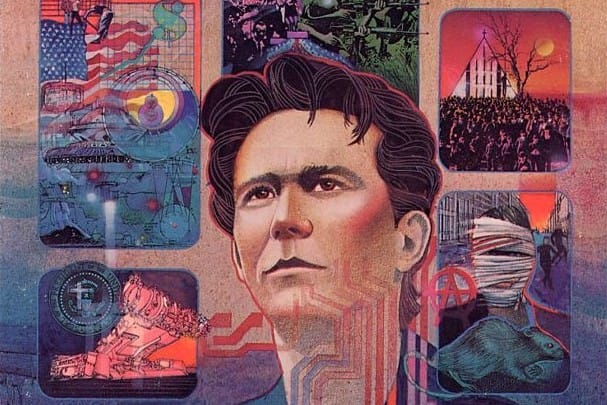
For A Mind Forever Voyaging, all I’ve known until now is its striking cover art, and that it’s Steven Meretzky’s attempt to grapple with Regan’s then-recent re-election by landslide. So it was with some trepidation that I started pouring over the box, feelies and manual.
The manual is worth reading, with the most empathetic piece of writing I’ve experienced by 1985 in video games, as we’re introduced to the game’s central concept: you, the player, are “PRISM” who, raised in a perfect simulation believing themselves to be the real person Perry Simm, discovers that, well, no, they’re actually just an AI.
It gave me enough pause that I actually put the game down and didn’t start it for several more weeks! If anything, the possibility space had got larger.
A Mind Forever Voyaging, now I’ve played it, is kind of a hard one to discuss. On hand, it’s flawed. As deeply flawed as any Infocom I’ve played up to this point has been, and for many of the same reasons. On the other, it’s a genuinely captivating piece of speculative (interactive) fiction that will probably stick with me forever, not least because while it might over-extend itself on specifics, politically and thematically it is one hundred percent correct.
Let’s get to those specifics. First up, the game really requires you to read the manual. While it’s nothing as complicated as Suspended (which I still can’t believe was only Infocom’s sixth game) there’s a similar sort of “mode switching” as you begin not able to walk about and pick up stuff but can simply switch between locations in communication mode (largely able to just see the same locations, or veg out and watch the news) or read backstory in library mode. It’s really here that you get to what could be considered the game’s most major flaw–how self directed the player has to be for most of the time.
This isn’t the same as something like Planetfall, where the player is primed “you’re stuck on this planet bro” it’s actually literally like “you’re a computer and there’s nothing to do?”
There are big swathes of this game where you’re stuck typing “wait” or even resorting to “wait 120 minutes” which I found almost… shocking. It’s made all the more baffling by the fact that the game has a news network that you can “watch” but when you’re in the mode time passes at a crawl, meaning that you’ll probably burn through basically the entire thing (hundreds of lines of script) just waiting to get to the first simulation!
The meat of the game is in that simulation, however, and this was a massive surprise to me. The game presents what is pretty much the only direction the player gets–that as PRISM, you’re supposed to do a lot of very mundane things in a simulation of a small town, Rockvil, ten years in the future, like eat in a restaurant and speak to a clergyman–record them, and then deliver the recordings to see if the government’s transparently republic agenda known as “the plan” will work. It’s here the game takes a massive diversion from what I’d expect from a Infocom game at this point, because you enter a genuinely huge recreation of a town that is nigh-unmappable, with hundreds of rooms and most rooms having as many exits as there are compass points.
Don’t get me wrong, this is a meticulous recreation of a town and is an extremely intentionally designed space, but it’s also not a “designed space” as any video game developer would know it now. I quickly gave up any pretense of mapping the space–relying on the one decent map I could find online–and began wandering.
And wander I did. To be honest, you don’t genuinely need a map outside of the one that comes in the manual, as you aren’t really needing to hunt anything out. As has been written elsewhere, in A Mind Forever Voyaging, you are an observer, not an active participant, and as a result, simply wandering as your wont takes you and recording what you find interesting or pertinent is genuinely enough to progress.
Of course, that’s as long as you understand that, because once you’ve managed to “complete” the tutorial-like first simulation, the game literally goes “oh, we don’t have anything for you to do now. Entertain yourself.”
I know that it’s easy to accuse modern players of wanting everything on a silver platter (or at least, with a silver arrow pointing in the direction of the platter) but I really do find it hard to believe that even players in 1985 didn’t find this kind of thing frustrating. Noodle around long enough, and you’ll work out that you can get to a simulation twenty years in the future. But what do to there? Might as well just record the same stuff you did ten years in the future, right?
And it’s here we hit what is–confusingly–A Mind Forever Voyaging’s most glaring flaw but also what might be the thing about it that makes it the most memorable. For the majority of the game all you do is revisit Rockvil and record how it changes across the years. It’s repetitive, and by the fifth time you do it you are almost certainly tired of the same interactions.
But it’s also a perfect experience in seeing the slow decline of society under rule by Republican values. In 1985, this was just a scary warning of how the future could look. In 2022, it’s a sharp shock to the player, showing them how much has been lost and how much more will be lost if we continue the way we have. It is too easy to experience the decline of our civilisation as a frog, slowly boiling, and A Mind Forever Voyaging asks you to remember what temperature the water actually is.
As Steven Meretzky noted in 2017, everything came true. The game features a border force who act as judge, jury and executioner; viciously racist policing, and the complete MAGA-fication of politics long before anyone even imagined such a thing. Even the things that seem far fetched in the moment–a supreme court giving the ok to religious fundamentalists seizing government property?–doesn’t seem that absurd when you ask “could the current supreme court have sided with the far-right extremists in the Occupation of the Malheur National Wildlife Refuge?” the answer is yes, obviously yes.
And isn’t it disturbing that you’ve probably already forgotten about it?
It is painful, genuinely painful at points, to be playing a game that shows horrible things happening in a decade to represent a society that is past the point of no return and recognise that these things are already happening around us. That Meretzky was far too kind to expect things to not have gone to totally hell until 2050 at the earliest.
To be honest, a game like A Mind Forever Voyaging is as vital now as it’s ever been, and while I can’t recommend it without caveats, I actually rather like that I’m not completely certain that my instincts on its subtler “flaws” are correct or not. Lack of direction and the need to endlessly wait at points? Yeah, those are bad. But I can’t decide if choosing to create a huge, often samey and empty Rockvil is actually worse than making something more tightly designed. Rockvil might feel more real to me because I had to traipse through several parking empty parking lots; I can’t tell if it’s an acceptable price to pay that so many descriptions are generic (I got tired of things being described as a “totally ordinary [noun]”). Wouldn’t it be more interesting to have puzzles to solve? Like, shouldn’t I have to steal a ration card to make the ration card fraud arrest happen so I can record it? Or would the ludic nature of that undo that sense that Rockvil is real, and I’m genuinely experiencing it?
With modern eyes, I think I would prefer the latter (tighter, have some puzzles) but I don’t actually blame Meretzky for going the other direction at all–especially considering the one puzzle in the game (avoiding being killed in act 3) involves, annoyingly, having to wait (again!) in the right place at the right time to even notice what’s going on (I really don’t know what the hell was going on with Infocom’s playtesters sometimes.) But the only thing I really don’t think works in the game is the saccharine epilogue. The digital antiquarian goes into probably too much detail on it, but he successfully raises that A Mind Forever Voyaging’s setting, movingly portrayed or not, doesn’t make a ton of sense if you go one level down, and ultimately only serves as backdrop for a polemic, which would ring more true I think without the San Junipero wish-fufillment. There’s no guarantees a utopia awaits if we do the right thing now. It requires constant vigilance.
(And I have to agree that casting Perry Simm as mere observer does him a disservice–memory was at a premium even with a new extended Z-Machine interpreter allowing 128k instead of 64k to fit the game into, but that the game’s descriptions are often so dispassionate, and we never see or experience Simm grapple with his new existence as an AI is a disappointment. But A Mind Forever Voyaging is already doing so much, probably too much.)
So after all that, how do I feel now that A Mind Forever Voyaging is the thing that it is, rather than whatever I imagined it could be? Incredible, honestly. I’m richer for having played it, warts and all.
Will I ever play it again? It’s an interesting question. I’m not sure I’d choose to play it again–the slow decline of society is… slow. However, it’s a game I would relish showing to others.
Final Thought: Late summer/early autumn in 1985 was insane. A Mind Forever Voyaging was quickly followed by Super Mario Bros. in September and that was followed by Ultima IV days later. Hard to argue that these three don’t represent in many ways the peak of creativity in video games even now.
Developed/Published by: Naughty Dog / Sony Interactive Entertainment Released: 19/6/2020 Completed: 24/05/2022 Completion: Finished it. Trophies / Achievements: 78%
This write-up contains massive spoilers for The Last of Us and The Last of Us Part II, unavoidably.
Abby died. Ellie killed her, in the theatre.
Again.
And again.
And again.
It was what was right. It was what I wanted, it was what Abby deserved.
So why wouldn’t the game finish?
Why did the the game make me keep playing Abby, doing things I didn’t want to do–attacking Ellie? In fact, why was the game making Ellie a boss? I thought… were the designers of this serious? Were they expecting me to feel… conflicted? To possibly feel like I was on Abby’s side, after what she did, and then after spending all that time on what was, ultimately, a totally irrelevant ten hours???
They couldn’t be that foolish, could they? Did they have that much hubris that they thought this story work?
So maybe I switched the game all the way down to “very light” and thought, hell, I could be wrong. Maybe they’re actually going to pay off this story.
They didn’t.
So yeah, Abby died. Ellie killed her, in the theatre.
Will I ever play it again? I will never play this again. I intend never think about this game again after writing about it here.
Final Thought: …Damn. Neil Druckmann. Man. Turning out to be a Ken Levine… it’s almost sad! It’s really depressing, actually, that the reaction to The Last of Us Part II–like basically everything these days–got tied up in tired culture war bullshit, because it only serves to undermine any extremely legitimate criticism of a badly conceived story poorly told. To be honest, I’d love to leave my write-up here, but there’s this worry that you’ll read this and be like “oh, this guy hates Abby because she’s got muscular arms!” or something.
It’s genuinely quite hard to know where to begin, but if you need my problem in precis, it is simply that The Last of Us Part II manages to tie itself into knots in how it feels about interactive storytelling. On one hand, it decides that despite the fact if you’re playing “The Last of Us Part II” you’ve already spent 10+ hours being Joel and that the previous game used that to (very effectively) make you feel like you’ve personally led Ellie across the United States, growing ever closer to her, that the player will have enough distance that, sure, they’ll be shocked, but they’ll be more “interested in how the story plays out” than “hating Abby with a fire that could burn out a thousand suns”. But then they assume that if you spend 10+ hours being Abby, you’ll get close enough to her that you’ll start to see things her way… even though you’ve just spent 10+ hours playing Ellie, with your hatred only growing.
And through this, they seem to… forget(?) That Abby’s revenge is not merely for something the player did, but something they goosed the player up to do. There’s a horrible smugness to the game standing in judgement of the player, especially when they don’t know how the player actually felt about what the previous game literally forced them to do (if they wanted to see the end of the game) and I know others didn’t approach it with quite as much of a righteous fury as I did.
It’s even worse than that, really, because they actually have to do one of the weakest-ass retcons to make standing in judgement work! At the end of the game the Fireflies are real dicks, who unjustifiably are about to kill essentially a child without giving them any say in the matter… but Part II makes it clear that it was very hard for them! They felt sad about it! Also it was the only thing they could do, and they needed to do it immediately! Also… Abby would have let it happen to her, so really, what a monster you are! We mean, uh, what a monster Joel was!
It is, I can not put too fine a point on it, just the most embarrassingly desperate writing. It’s forced and it simply does not ring true, not to the player’s experience and not to, well, anything. Sucks for Naughty Dog, but we’re all currently living through a global pandemic where it turns out vaccines are not a panacea, and even if Covid turned your head into a fucking mushroom half the US wouldn’t want to take it and you’d never reach the required immunity, meaning the Fireflies were as likely to kill a lassie and get fuck all out if it as anything else. So fuck off.
I don’t even really understand some of the storytelling decisions from really any angle. Even structurally; when playing the only way I could basically justify spending the second half of the game playing Abby was going to be that her side of the game–playing, as it does, out across the three days of Ellie’s half–would feature her following Ellie’s trail of destruction and seeing the cost of that, or somehow presenting a meaningful mirror. But… actually her side of the game is almost entirely completely irrelevant story about TWO OTHER CHARACTERS!!!
Sorry, I’m actually yelling now, but it’s not actually just idiotic it’s actually sort of offensive? I’m no expert (and on this point I’m happy to accept if people feel I’m in the wrong here) but The Last of Us has previously handled a queer story naturally, but The Last of Us II goes big on using a trans character that basically only exists to make us like Abby more and I found it, well, I found it fucked up?
I mean, this is where the culture war bullshit gets iffy, actually–because it’s completely fair to say that the narrative in “Abby’s side” isn’t what a player wants to be spending their time on in this game, and definitely not at the point where they get to it. Not because queer and trans stories and representation aren’t valuable! But this feels very clearly like a queer/trans story being used not shared; and it only gets even dodgier in my opinion when you read up and realise that the entire WLF vs. Seraphites angle is meant to be some kind of allegory for Israel and Palestine; the technically superior WLF versus backwards religious zealots with bad opinions but guess what: they just might be as bad as each other!
(If I’d read that a lot of Druckmann’s inspiration for this came from his sympathy for the IDF I would never ever have fucking played this. I mean what the fuck.)
I’ll be honest… I’m tired of thinking about this stupid fucking game; I meant what I said above in my “Will I ever play it again?” It has made me more depressed than I’ve probably ever been about triple-A video games as a form for storytelling and it has literally taken me weeks to sit down and write this because it just bummed me out so hard. I keep thinking… did they actually think this was profound? Then I remember how the game has an entire EXTRA THIRD at the end that adds nothing except to make the entire experience only more miserable and make Ellie seem like an idiot, culminating in her making a decision that she literally would not make because she DOESN’T KNOW WHAT THE PLAYER KNOWS!
FUCK!
(It’s actually quite funny to read Druckmann dither noncommittally about why she makes that decision in interview in a way that makes it clear it was a necessary story decision, not a character decision.)
Anyway, please don’t ever waste your time with this. The game has less intelligent things to say than the deleted scenes from Austin Powers (that got left in the UK release, making it a better movie, honestly.) I mean, watch this. Now that’s some powerful storytelling!!!
Developed/Published by: Al Iapicca, Bob Johnston / Energy Games Released: 1981 Completed: 05/12/2021 Completion: I played it. We’ll go as far as that. Trophies / Achievements: n/a
It’s the holiday season, and I was struck recently that I never make a point of playing any Christmassy games during the period. I mean I don’t even get Christmas Nights out! Shocking really. Considering I’m going through my backlog chronologically, I thought I’d see what the earliest Christmas games were, and I’m surprised to find that this, a little-known Apple II game that, like, came in a ziploc bag in 1981 is the first Christmas game ever–unless you particularly want to count a type-in memory game from Softside Magazine that just happened to use Christmas words. Well, unless Mobygames is wrong, which I guess it could be.
Update (05/12/2025): It seems a copy of this showed up on eBay this year, a rare opportunity to see the game as it looked, ziploc and all.
Anyway, this is a very strange little shooter where you control an absolutely massive Santa flying behind a huge blue Rudolph (I assume all the other reindeer are to his right depth-wise in a row). You move right to left (odd) must shoot… Pac-men? And… stars? While trying to drop presents into the chimneys below that you can (surprisingly) control the direction of a bit. All of which you do at about one frame a second, if that.
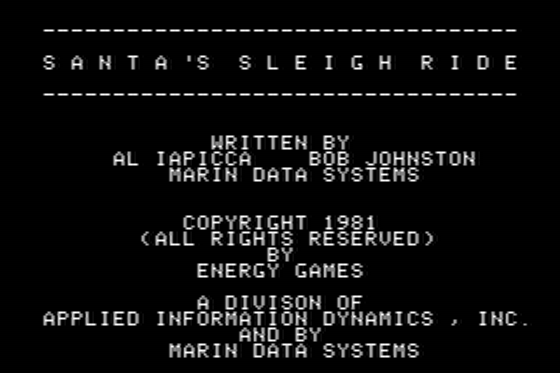
It’s, obviously, not very good, and it doesn’t particularly make you feel Christmassy outside of a beepy version of Jingle Bells right at the start (it’s silent the rest of the time.) It seems like the programmers (Al Iapicca and/or Bob Johnston of Marin Data Systems, according to the title screen) couldn’t work out how to make Santa only move up and down when you held the direction, so as soon as you hit A or Z he just… goes in that direction until you push the opposite one1. It’s also clear–unless the game has the slowest ramp-up of difficulty ever–that they couldn’t manage to get more than one enemy on screen at a time with all the chimneys moving too, so there’s points where you’re just like… should I go off and make a cup of tea and come back?
Not that having more enemies on screen would be a good idea–Santa is so bloody massive and slow [“oi!”–Santa] that it’s hard to really do anything. It’s not exactly, hard–if you’re dedicated you can slowly line up your shots and avoid the birds that you can’t kill, all while dropping presents–but it’s really, really hard to want to.
That all said… I have this weird suspicion that this was inspired by Defender (which came out in early 1981) of all things. Sure, you can’t turn around, but there’s a Defendery-ness to the stars, Rudolph shoots a similar laser and dropping presents feels inspired by the rescues in Defender, so maybe they thought “you know what would make Defender better? A MASSIVE SANTA.”
It doesn’t, but you know what? It was 1981. They weren’t to know where games would go. Here’s to the dreamers.
Festive vibes ranking: You’re constantly staring at a huge Santa. HIGH
Will I ever play it again? I barely played it the first time.
Final Thought: Thinking about this in the context of 1981, the Apple II had had an extremely impressive year, with seminal RPGs Ultima and Wizardry coming out, and system defining titles including Swashbuckler and Castle Wolfenstein also being released. With inflation considered, it’s wild to imagine how anyone afforded the “affordable” Apple II (the price translates to about five grand now!) but let’s assume you lived in one of those mansions from a John Hughes movies in the 80s and you excitedly ran downstairs on Christmas morning–you could just about accept that your granny bought you Santa’s Sleigh Ride by asking a clerk in a “mom-and-pop” computer store (if this managed any form of actual distribution at all) but you’d be hoping your parents picked up one or two of the other titles I’ve mentioned so you weren’t bored ten minutes later and have to *shudder* go and play outside.
This is apparently an issue with input on the Apple II, though it’s hardly ideal. ↩︎
Developed/Published by: Dani Bunten Berry / EA Released: 11/1983 Completed: 24/06/2021 Completion: Beat Tournament mode against 3 AI with a colony score of 110,000+ Trophies / Achievements: n/a
MULE is an interesting one. I was trying to think what the cinema equivalent is, as a sort of easy metaphor: a classic that was lauded (if never particularly imitated) by a generation of filmmakers that goes almost completely unwatched these days. It’s not one of the obvious ones (you know, Super Mario Bros. as Birth of a Nation, or something); it’s too sophisticated to be something super early (Space Invaders as Journey to the Moon) and so I just can’t place it. The Red Shoes, perhaps?
The thing is though–and I suppose it’s the reason I’m trying to draw the metaphor–is that if you want to watch The Red Shoes and see what the likes of Scorcese have raved about, you can do so easily–it’s streamable on about nine different services, free with subscription or even ad-supported; you can buy it on a Criterion blu-ray and get a boat load of special features to give you context. Nothing is holding you back.
Here’s how you can play MULE: you can pay $8 to Good Old Games to play the trash PC port that is totally unrepresentative (it’s maybe also available on Origin, but I haven’t looked.)
Ok, so you don’t want to do that (and it’s not Good Old Games’ fault: they near-exclusively sell PC games). So here’s how you play MULE “as intended”: You have to download an Atari 800 emulator or understand how to make something like Retroarch make that happen. Then you have to find a ROM (watch out! You might download a pirate one that crashes if you catch the wumpus!). Then you have to find the BIOS files that will let the emulator run the Atari 800. Oh and don’t forget that the Atari 800 emulator requires a bit of fiddling to make that work. And because you want to see the game as intended, you’ve either now got to make this run on that CRT you’ve got lying around for this sort of thing or run it through a shader, preferably with a nice border so it looks like you’re running it on an old TV.
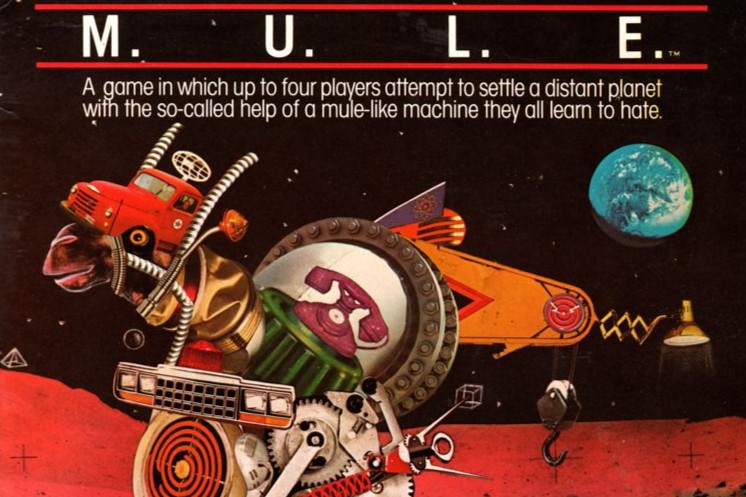
Oh, and for context, you’re going to want to look up the (beautiful) box and manual online.
The alternative, is, of course, to buy an Atari 800, monitor, a copy of the game (good luck finding it for less than $200) and four joysticks.
This is, clearly, absurd. Now don’t get me wrong; there are lost films and inaccessible films. But MULE is out there, and in the history of games it’s at least as important as The Red Shoes is to cinema. But you have to be extremely dedicated to play it–and worse, if you don’t need to be (for example, you pass an Atari 800 in a “VIDEOGAMES!!!” exhibition at a museum) it will be completely impossible to grasp.
So anyway, that sucks, because if you’re a student of games and their history you should play MULE, and not just because it’s honestly still pretty fun. Because it’s passed into this position that people only talk of it from the second or third hand–often to pay tribute to the pioneering Dani Bunten Berry–and I actually feel a bit sad about that. We pay tribute to those who came before us by playing their work, not just talking about it.
[“OK, now start the criticising”–Ed.]
How dare you… ahhh you got me. I think MULE is super cool but here’s the thing that happens after you put in all that work: you go “mannnn this is olddddd” because MULE is old, and “80s personal computer” harsh. It’s at its heart almost a board game, but it’s slathered in early “we haven’t quite worked all this out” design decisions that sorta made sense at the time but also extremely don’t now.
It’s played like this: you and up to three other players (though it’s always played with four) are settling a planet; each round you have to select a plot of land (from plains, mountains or river) and then select a mule, equip it to either mine ore, collect energy or farm food, which it can do on any plot (well, you can’t mine on river tiles) but gain the most benefit from doing so on the equivalent tile. After everyone has done so, a random event happens (a solar storm makes more energy production, for example) each commodity is consumed by your community and the surplus is traded: either to or from other players or to or from the town store. And then the next round happens (oh, and sometimes you can buy plots of land at auction, not just take them when given.)
It’s actually pretty graspable, but the quirk is the law of supply and demand. With particular lands (and land placement) you can create massive surpluses of certain goods, and you can also choose to ignore some goods even though your community needs them. “I’ll make so much money selling this ore” you think, “that I’ll be able to buy as much food as I need.”
Trading happens in a format that must have inspired the negotiations in Theme Park (“Ah yes, I know exactly the mini-game”–every reader, who is as decrepit as me) where you walk your characters down or up the screen to meet at a value, with the quirk that if the store doesn’t have any of a good to sell you the sellers can walk back infinitely (well, within the set time limit) to bleed you dry. (And the computers will do this…) BUT–if they do this, they’re in danger of the colony getting a bad score at the end of the game! So it’s all about the balance of winning (individually) without losing (as a collective). Man sounds like those clowns in congress should play some MULE, am I right???
So far so good, right? The problem is it’s the early 80s, so all of this is done with a one-button stick where you have to control your character and make them walk into the mule pen and then walk out with the mule and then walk into the outfitter and then walk to your plot and then the timer runs out because you didn’t make enough food, or because moving your character is janky as hell. And selecting your plot of land? Oh that’s a reaction test as a cursor moves along the screen (faster on the higher difficulties) meaning the PC is gonna screw you out of half your lands (and mis-timing is going to screw you out of the other half.) And because there’s not that much space on the screen, actually fully understanding supply and demand in context… isn’t going to totally happen. You need to remember how much of a good you need to buy to not be in shortage. How the shop price affects things and changes is… obscure.
Which is not even to raise the nadir of MULE: random “punishment” events. Yep, this was designed well before balancing was really a thing, and they had the best intentions at heart, but “lift up the low boats” wasn’t a thing– “smash the high ones with a tsunami” was. It’s a bummer because it doesn’t really work. It’s super clever to make the winning players play first (so it’s easier for the worse off to strategise) but some players can get into such a commanding position that losing some money here or there isn’t that bad. And instead, things tend to happen like you scrimping and saving, finally getting your engine up and running, lots of ore coming in… and a pirate ship shows up, takes all your ore on a turn when the players ahead of you all switched to energy and food, and now you’re stuck with nothing to sell and no way to afford the energy or food you need to keep your plots going. It is the dogshit worst.
That said, while MULE has the capability to cause (and must have caused) Monopoly-esque meltdowns, the game is still dang fun if you can get into the mindset. The AI is hilariously vindictive–I love that it will screw you on land auctions if you try and force the price up to screw them (it’s all about timing when to walk backwards…) and that they’ll be extremely selective as to when to buy from you, even if it hurts them (I’d swear it knows it doesn’t need food towards the end of the game…) and if you save-scum away only the bullshit punishments or mis-clicks (be generous; it’s 2021) the core here is so dang solid–and it only really makes sense as a video game, because I’ll be fucked if I’m calculating the new cost of mules based on the previous trading period using a table in a board game manual or something.
Is it a classic I’ll return to again and again? No, not really. Is it something that any student of video games should play once, twice, three times at least? Of course, and if there’s anything you take from this it’s criminal that they probably won’t.
Will I ever play it again? I am desperate to play this on tournament mode with three other experienced (but not too experienced) players IRL. No joke desperate. I think there some of my issues (the misclicks; the punishments) stop becoming as massive an issue when you’re playing with more than two people…
Final Thought: Shout out to TreyM for their classic CRT overlays! This kind of thing really doesn’t feel right without them–and they’ll continue to help me experience things “in context” as much as I can when I get to the likes of Rescue on Fractalus…
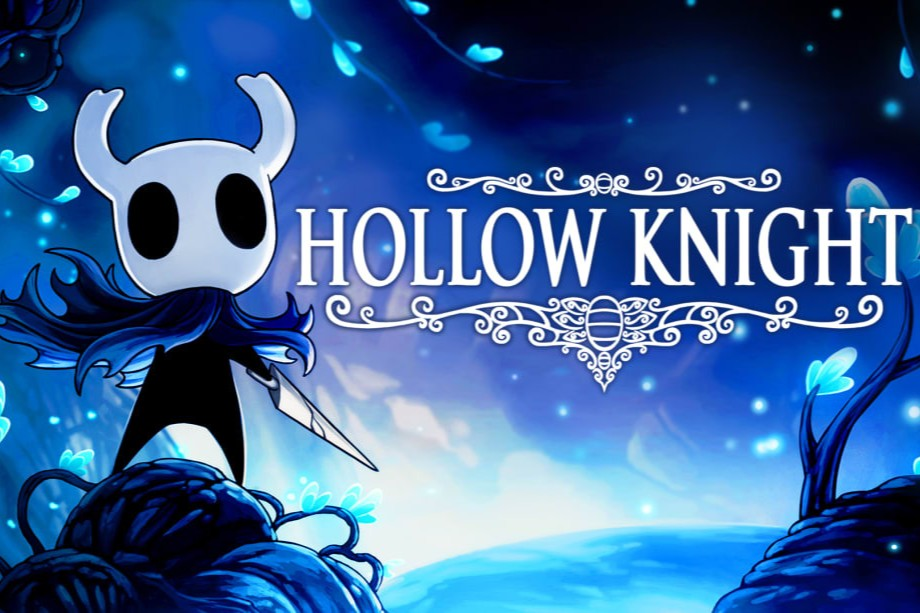
Developed/Published by: Team Cherry Released: 24/02/2017 Completed: 09/12/2020 Completion: Finished the main story with a percentage north of 100%. Trophies / Achievements: 48%
Kinda funny, but not that funny to be writing at this today [”months earlier”-Ed.] after listening to the Greatest Games Ever Insert Credit Show where Tim Rogers enthused that this was the best Metroidvania ever and Brandon Sheffield hated it very, very much.
Might as well cut to the chase and say I like it far, far less than Tim Rogers but don’t hate it quite as much as Brandon Sheffield (but then, I played it more than an hour, and if I’d stopped at an hour I might have.) However, this is me falling headlong into “no, it’s the children who are wrong” territory because I’m going to say that is pretty much everything I hate in Metroidvania design (level design in general, even) and I’m truly, truly baffled by why this is so lauded. I mean, this is a game that opens with a short tutorial segment (fine, good) but then throws you into a level with multiple long pathways, no map unless you pick the right path quickly, and extremely samey graphics across the area meaning you just stumble around second guessing every move. I mean the whole “you don’t get a map in a section until you find the guy who has the map”… people like that? And don’t get me started on how the game doesn’t let you see yourself on the map unless you waste one of your equip slots. That’s honestly unpleasant.
I mean the level design is bad enough on the macro level, but each area is also chock-a-block with blind drops, punishment drops, and enemies that take forever to kill because you have to engage with a punitive weapon levelling system that, frankly, you’ll won’t be able to engage with unless you literally look up where to get the materials.
This kind of complaint, however, is the exact type of thing that breeds what has to be one of my most hated “extremely online gamer” takes, which to respond to a complaint something is just tediously hard or obtuse by telling folk to “Git gud”. Here’s my response: the game should get good.
Anyway, what I did with Hollow Knight was ignore everyone who says you shouldn’t look anything up because I ain’t got time for that and just start to actually roll through it using a map to find the traversal skills etc. While I never ever actually liked the level design basically ever, the game only really starts to become anything worth your time once you’ve unlocked dashing and even then it wasn’t until I unlocked the ability to dash through enemies and damage them that I gelled with it at all (especially because you can’t cancel the dash or backdash, meaning until the point dashing was safer I didn’t like it).
Even at that, a bit like with Celeste, I didn’t ever really care for how the main character controlled, nor how battles felt or having to go and get your “shade” any time you died so you could get your money back (guess what! It was never hard to do that, my stomach only ever sank at the waste of time.)
The problem is of course is that metroidvania design is so… more-ish? I played this wayyyy longer than I needed to because it’s actually fairly trivial to beat this if you “git gud” and just do the exact main quest, but instead I unlocked all the abilities, fully upgraded my sword, got all the equips… I mean, I basically dredged this because even if I wasn’t really having fun in the moment I was always so close to doing the next thing and so I did.
Anyway I beat it and the spell was broken.
Will I ever play it again? No, and no fucking way will I play a sequel or anything like that.
Final Thought: Hollow Knight is… not good. There’s no excuse for lengthy, tedious mapping and no excuse for punishing, tedious level design. Or the terrible introduction to the game or pacing/planning of the unlocks (I mean come on, the first unlock being a spell instead of dash, which is so core to the experience; lol). That said, you’ll probably stockholm syndrome yourself into thinking it’s the bee’s knees because there’s just so much content. Plus, to be honest, there’s some charming animation and even if I didn’t like the setting or any of the world design (so bland! So samey!!!) I actually thought the soundtrack was nice. In conclusion: the children are wrong!!!
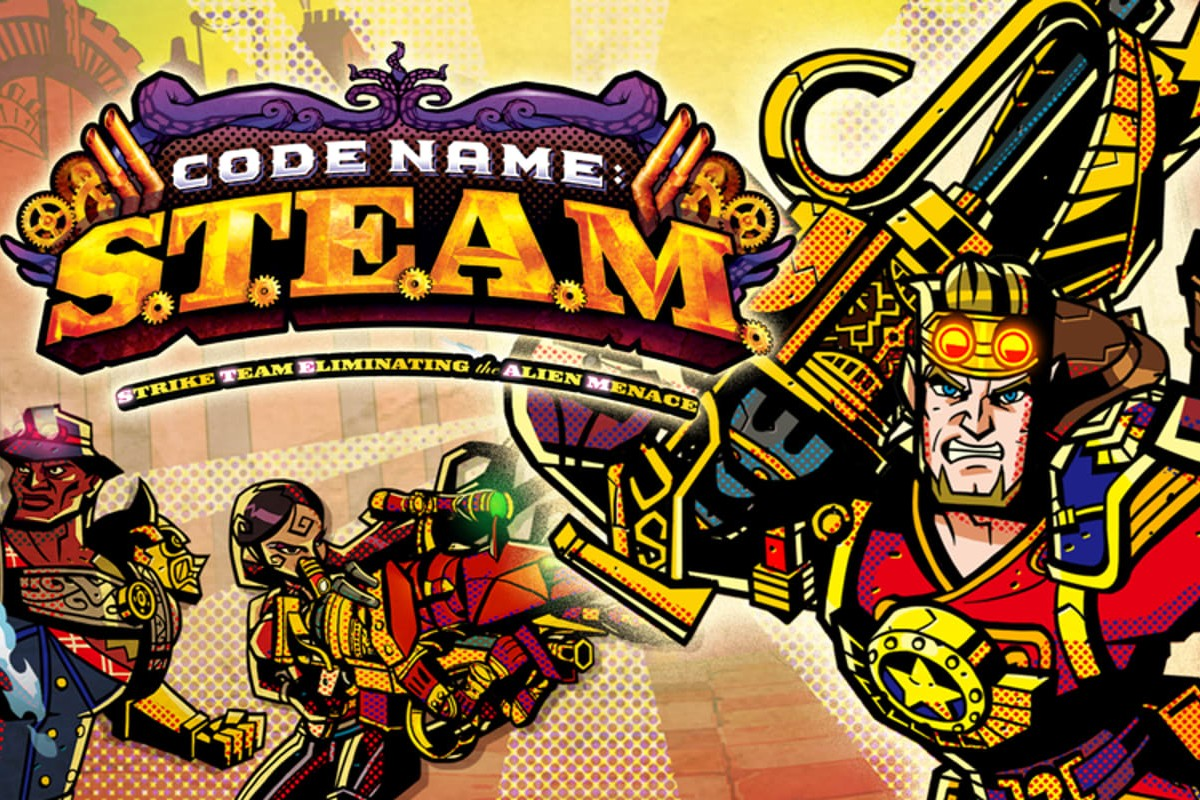
Developed/Published by: Intelligent Systems / Nintendo Released: March 13th, 2015 Completed: 25th April, 2017 Completion: Finished all the levels, collecting all but eight of the gears. Trophies / Achievements: n/a
Here’s another Nintendo failure, then! You know, I do like to complain that Nintendo only seem to pump out games in just a few franchises (Mario, Zelda, recently Fire Emblem) but here’s what happens whenever they put anything else out: it tanks. So no wonder they’re getting the idea that people just want the same thing over and over until they run it into the ground. And honestly, sometimes it’s fair that the things they release fail, because they’re insanely misguided (Metroid: Federation Force) but then it’s also sad because Nintendo then learns the wrong lesson from them (“people hate Metroid”).
I mean, the lesson they might have learned here—Intelligent System’s attempt at a Valkyria Chronicles-esque third-person strategy title—is probably “don’t let Intelligent Systems do anything except Fire Emblem” because bloody hell I can’t keep up with the number of Fire Emblems that have come out. (Remember Advance Wars? It’s been almost ten years, guys.)
And, frankly: it’s a shame. Because I liked Code Name: STEAM. I know, that’s insane. I hate everything. And let me state as caveat that I immediately installed the patch that allows you to speed up the enemy turns. But Code Name: STEAM is a completely serviceable strategy title that—outside of a few frustrations—I found completely pleasant.
Now, I can agree: it’s a bit weird looking. It doesn’t manage to nail the comic book look it wants, and the enemies are somewhat… dull. However, it’s got a weirdly interesting and diverse cast drawn from literature. It gets some points, for example, for gender-swapping Zorro (was this secretly why it failed? Neckbeard boycott?) but loses some for having Dorothy bare her midriff (why?) but maybe it gains those back by including Queen Califa. I’m not a perfect arbiter of points, ok?
It does have some other flaws. Many (most?) people complain about the lack of a true tactical view, but that didn’t bother me because it’s obviously not what they’re trying to do. With free movement before you commit (hindered by enemy overwatch attacks), it’s a game about careful scouting and much more about the feel of being in a small attack squad. I do think the game is much too stingy with its steam-based action points, meaning you travel through levels very slowly, and the game doesn’t have any good sense of a progression of power—all of the unlocks are similar in power levels, just different, when it could have done with more steam being offered as you unlock new boilers (for some reason, most boilers don’t refill fully each turn, and the ones that refill slowly that you unlock I found unusable. Rather a big misstep, I feel.)
I’d say the main mistakes they’ve made are in working against the slow, methodical play style that the limited action points engender. To mix things up they add a lot of “pressure”—first with baddies that spawn in (behind you, usually) which is a mild irritant, and then just the worst: “spotter” baddies in levels featuring mortar attacks. They spawn and you have to get out of their line of sight or take a severe hit. Of course, so you can’t stall, you can’t kill them (just move them, hopefully out of sight, but it’s generally awkward to do) and this is insanely frustrating with the limited amount of action points on offer. There are certain levels where you will be harried to the point scouting is impossible, and you get situations where you stumble forward, get shot by a baddie with knock-back, and then land directly in the path of the spotter you thought you were escaping, and die by mortar. Oh, and there’s a couple of difficulty-spike levels outside of that: one with mounted guns that don’t have a clear range (frustrating) and another with a bunch of exploding enemies dropping in that I found… ragey.
Honestly, at least one of these levels had me considering stopping playing, and that’s really awful, because the game is so close to being an all-round nice time like Valkyria Chronicles. The final boss is a pain in the arse too, admittedly—but at least it’s nothing like the final boss of Fire Emblem: Shadow Dragon, my last dalliance with an Intelligent Systems game.
However, the levels in which it works—it really works. In general the map design is clever, with a good mix of complex indoor and outdoor spaces, and while generally it’s a bad idea to split up your team of four, the level where you’re forced to do was a particularly fun one, I thought. There are far more fun levels than frustrating ones, it’s just the annoying ones are going to stick in your craw (I mean, they’re ultimately why I didn’t collect all the gears you can find in levels, and I wanted to.)
I’m gonna say that it’s weird to me that Code Name: STEAM didn’t get a fairer shake when it was released. It was slated by almost all reviewers with them almost all concentrating on the (pre-patch) lengthy wait between turns, and I guess that one mistake wrecked any chance of it managing critical acclaim at least.
Well: It’s got the only critical acclaim it truly needs: that I liked it. I mean, I didn’t love it or anything but I had a nice time. That should be more than enough!
Will I ever play it again? I won’t, but the sequel they tease at the end I would have played, except it shall never exist.
Final Thought: I recommend this, actually. I’m gonna… recommend it. Really! Because when I picked it up it was $5, and pretty much any store is gonna have it for pennies. You can do so much worse.
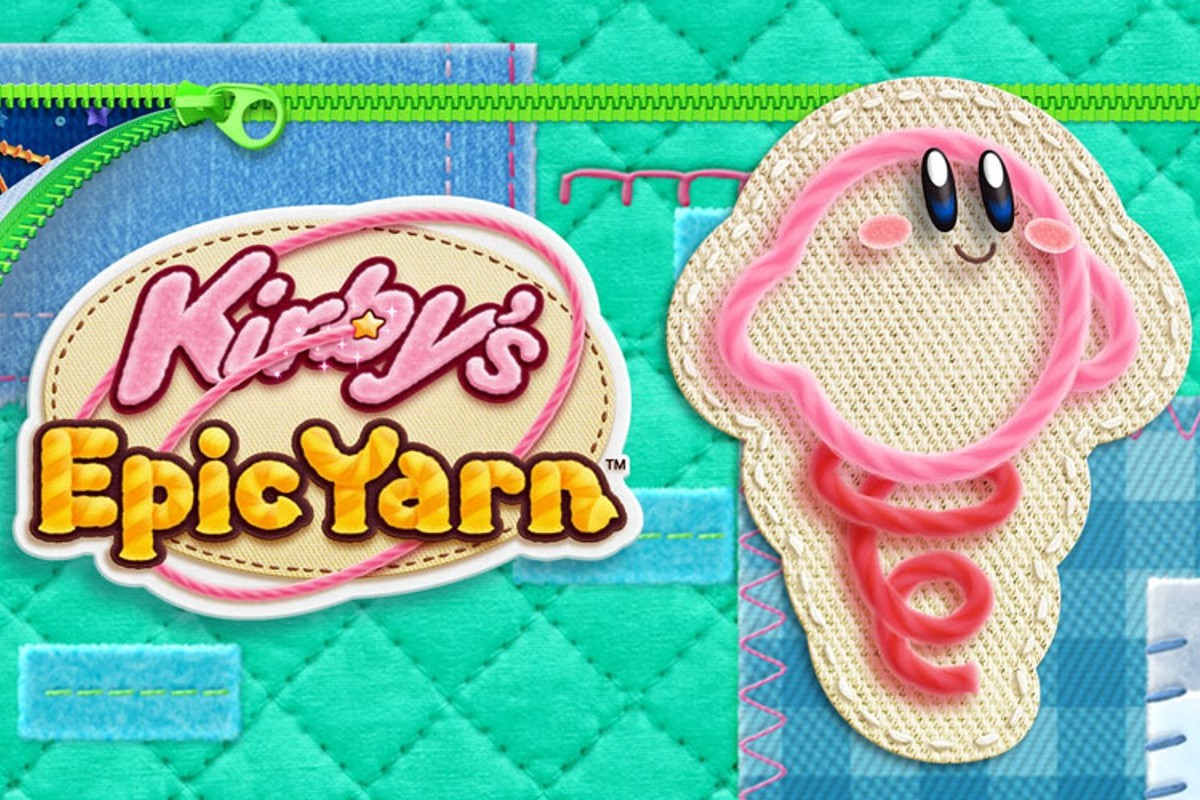
Developed/Published by: Good-Feel / Nintendo Released: October 17th, 2010 Completed: 28th November, 2014 Completion: Finished all the levels. Didn’t 100% collect everything or anything, but close (cannae be arsed to boot it up to find out exactly how close.) Trophies / Achievements: n/a
Do you like Starbucks? I really don’t. In fact, I go absolutely out of my way to not use Starbucks. I hate it when I’m at, say, an airport, and the only way I can get a hot tea is from a Starbucks. I mean, look at that, I’ve written “hot tea” there because I’ve gotten so used to being beaten down by Americanisations from places like Starbucks that I don’t just say tea. Thing is, it’s not like Starbucks is that bad. It’s bland, and competent. It’s really, when you get down to it, not offensive.
You might want to guess here where I’m going with this, but Kirby’s Epic Yarn isn’t Starbucks. No. What Kirby’s Epic Yarn is like is… well, imagine a person who loves Starbucks, right? They love it. And so they decides to start their own coffee place, very much based on Starbucks. Their coffee shop attempts to have Starbucks-style coffee, Starbucks-style music, Starbucks-style decor. But, by virtue of being made from the sweat of an individual, it doesn’t come out quite that way. The coffee is a little more interesting. The music is some interesting jazz. And the decor has a really cute, handmade feel. This person hasn’t got anything wrong, they’ve just made something much more personal, more “real” despite basing their design on something bland, corporate and forgettable.
It’s the kind of place that you’d go—hell, I’d go—and I wouldn’t hate it, you know? I’d appreciate the cute touches that they put in. The cushions, or the art. I’d find myself having a perfectly pleasant time there. None of that edge of irritation that Starbucks engenders—where it’s so bland, you feel annoyed that it’s been calculated to not annoy you.
But I’d, without really thinking about it, not bother to go back.
That’s Kirby’s Epic Yarn. It’s cute, full of lovely touches. Genuinely sweet, really. But the core… well it’s just another forgettable 2D platformer, isn’t it? If you’re going to put all this effort into making something lovely, please don’t base it on a Starbucks.
Will I ever play it again? Nope. And this goes on the sad pile of “Nintendo games I won’t keep” which is rare indeed.
Final Thought: I honestly thought Jeff and Casey Time had taken music from this game. I was pretty sure they’d lifted one of the tracks… maybe Lava Landing? (which is amazing, give it a listen!) but it turns out that it’s an original piece of music, The Infinite Tea Time. Also amazing but really nothing like Lava Landing. This is therefore proof I, and you, should watch Jeff and Casey Time again because it was really good and it’s clearly been too long.


 Unlock with Patreon