Category: Every Game I’ve Finished

  • Pipistrello And The Cursed Yoyo (Pocket Trap, 2025)

    Pipistrello And The Cursed Yoyo (Pocket Trap, 2025)

    Developed/Published by: Pocket Trap / PM Studios
    Released: 28/05/2025
    Completed: 25/09/2025
    Completion: Finished it, though with a caveat that will be explained more or less immediately.

    Don’t really have a good reason why I chose to play this above nearly everything in my to-play list recently other than, in a weird sort of bloody-minded way, I just wanted to play something that wasn’t Silksong, but you could conceivably pick up because you wanted something like that… without being like that. And hey, it says “cursed” in the title. That’s sort of spooky-adjacent, right? Fits the pre-halloween mood? Maybe?

    Pipistrello And The Cursed Yoyo was actually the perfect antidote for someone who was burned out on Silksong discourse without ever having touched it. Because feast your eyes on this:

    Image via https://gamersocialclub.ca/2025/06/23/pipistrello-and-the-cursed-yoyo-review/ because I was too lazy to take the screenshot myself. Sorry.

    Pipistrello And The Cursed Yoyo has the greatest difficulty settings I’ve ever seen. It’s genuinely amazing that it’s this granular. The game has a default difficulty and then you can just decide what parts are too much of a ballache for you. I know there’s been so much discourse over this–even before Silksong, John Walker has loved wading into it, god bless him–but here at exp. Towers we side with the idea that you should be allowed to play a game however you bloody well like. As much as I love thinking about and dissecting authorial intent in video games, as soon as the fucking thing is out the door you can treat it however you like. 

    If there’s one thing I’d possibly have wanted, it’s for the developers to include their own easy/medium/hard presets, but I actually think it works well enough that you can start the game, play for a bit and then realise what’s causing you unnecessary pain–and it doesn’t mean you’re breaking the game. It think it can be quite interesting to discuss, for example, when, where and how “runbacks” or other punishment mechanics can be a design choice that enhances, rather than detracts from a game, but I like that here they accepted that possibly you can just decide if it’s something you want to bother with or not, without fiddling with other levers if you don’t want to. I think you’re going to know pretty early if a mechanic like losing money on death feels fun or even legitimate to you or not–for me, I quickly turned it off because I was dying enough it was just going to lead to having to grind for cash, pointlessly bloating the playtime, and I’m, honestly, too old for that shit.

    (About half-way through the game I would also turn off fall damage, because the platforming challenges get extremely finicky, and the extra reload time was enough to annoy me. The game’s upgrade mechanics include upgrades specifically to reduce fall damage and cash loss, so this felt perfectly within the spirit of the design. Just a little extra edge.)

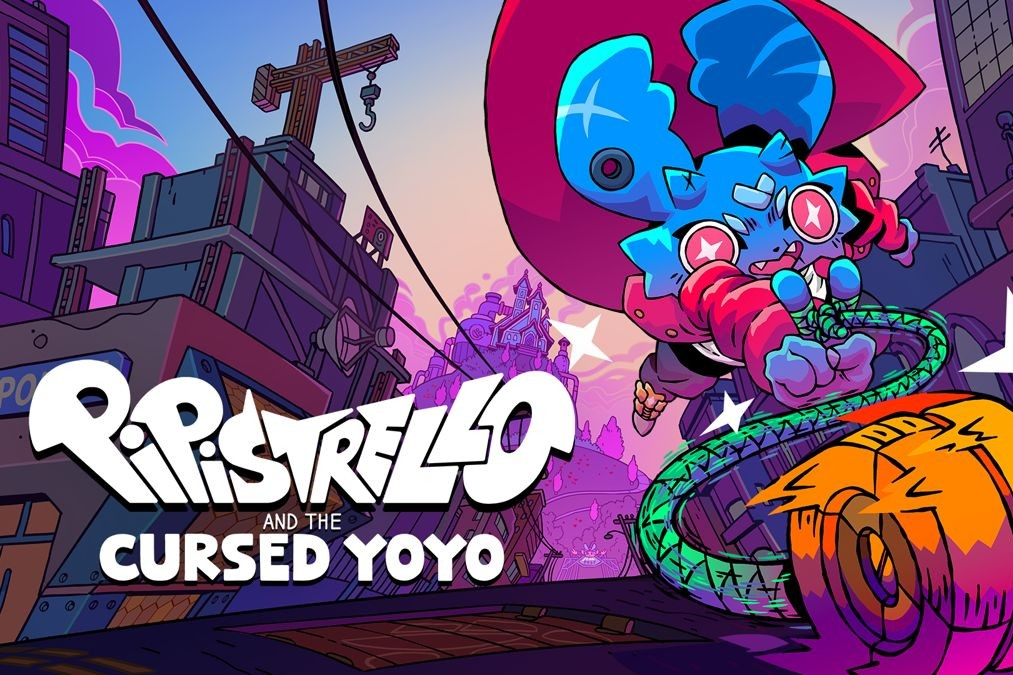
    Anyway, Pipistrello And The Cursed Yoyo is described by Pocket Trap as a “Yoyovania” but that’s not really what it is–it’s more clearly inspired by The Legend of Zelda in the Link To The Past milieu. You play Pippit (weirdly not Pipistrello, that’s their auntie?) the yoyo obsessed failchild of a family that holds a monopoly over all the energy in the city where the game takes place. Due to the monopoly squeezing every last penny from the city’s companies, the leaders of the four biggest companies decided to kill the matriarch, Madame Pipistrello, by sucking her soul into four big batteries which will provide limitless energy for their capitalist dreams (this makes sense, for reasons.) But Pippit intervenes, a fifth of Madame Pipistrello’s soul ends up in their yoyo! So off you go on a pretty clear quest: head to each company, beat up the owner, steal the battery, then once you have all four, put your auntie back together.

    This is all done via a charming, chunky top-down Zelda-a-like; designed almost exactly look like it’s being played on a Game Boy Advance (the game even opens with a 3D model of a GBA-look-a-like, and you can play the entire game on it if you want, with an LCD filter and everything.) When I started to play Pipistrello And The Cursed Yoyo, I was loving it. It’s bright, the controls are responsive, battles are fun, and there’s a great sense of progression as you explore the map collecting coins and finding new areas. But unfortunately, as the game loads on more mechanics, it starts to get… unwieldy. The bright and colourful graphics don’t have a lot of good clean “tells” on what you can do where, and while that might be because they want you to puzzle it out and experiment, it’s not so great when you’re in the middle of chaining traversal abilities to then have to work out what the next one you need to use is. And then actually executing traversal… well, it has the double whammy of the individual moves often being awkward to execute with the design expecting a high degree of competency. Every move has you pressing at least two buttons together, and moves only chain in certain ways, so when you reach the point–as you will–where you’re having to do something like six actions in one go or start again, it can get absolutely frustrating. (Again here, that the difficulty settings allow you to actually half the speed of the game is a life-saver. I won’t lie: I did it two or three times.) 

    The ultimate problem is that often you find yourself finishing a challenge and wondering–was that the way I was supposed to do that? Did I cheese it somehow? They can be so hard, or difficult to parse, that you never actually get to the point where you feel mastery, and that’s a problem. It’s even more of a problem in a game that feels like it should be open like its inspirations. Areas are obviously gated by traversal abilities, and it seems to limit you to two “dungeons” available at a time as a result, but each time it felt I went to the “wrong” one of two first and had to double back to the other one to actually progress. I really can’t tell if that is as designed, or if I just never understood traversal as well as I should have. 

    Battles are mostly fine–a good range of enemies, and intentionally designed encounters–but I think it’s here that the designers make arguably the strangest decision of all. The upgrade system is fairly normal–badges that give abilities or passives that you can equip, and permanent upgrades that you unlock–but the permanent upgrades require you to engage with a “debt” mechanic where you “pay off” the upgrade while suffering a hindrance. So, for example, you might have less life, or enemies won’t drop health.

    At best this is just annoying. While I get the idea, the implementation just means that you spend the entire game weaker than you actually are (and you can enter certain situations completely screwed–nothing like facing a boss with one health and not being able to do anything about it unless you want to return the upgrade and get less money back than you’ve paid in.) If the permanent upgrades had designed hindrances, like “you must use this loadout” or “yoyo can’t be separated from string in battle” (just off the top of my head–not specific recommendations) it could be interesting, forcing you to play in different ways than you have, but it’s usually just “the game is harder” which should make you want to just go to the difficulty menu and make the game… not harder. Again, it’s just holding you back from any rewarding feeling of mastery.

    These aspects–that the traversal is tuned towards extreme competence, and that the upgrade system means you never feel powerful–mean that Pipistrello And the Cursed Yoyo starts to outstay its welcome before you’re done with it. You can be done with the main path in something like 12 hours, and I really didn’t want to give it any more–which is sad, because when I started it I really had it in mind that I’d be searching out all the badges and unlocks, but the main path is so seemingly linear you don’t have much reason to go back on yourself with new abilities, and I just ended up wanting to push through to get it all done. It’s really only thanks to those difficulty settings that I could, honestly (if I had been stuck grinding for cash for the upgrades, I’d probably still be playing it.)

    Was it worth getting to the end? For me, yes, because I had to see where the narrative went. Not because I was loving it, particularly, but because it’s so… odd. The game has you as heir to what is basically a capitalist crime family that’s led by an awful person bleeding people dry, and then the other companies are even worse? I mean it’s not exactly Bioshock Infinite’s “If a cow ever got the chance, he’d eat you and everyone you care about” but let me just say they hardly plant any seeds for the face turn that you’re expecting will show up. I’m not sure quite what they were going for–I suppose it’s supposed to be some sort of commentary on capitalism, but it’s muddled.

    Anyway, here we have one of those classic examples of a game where finishing it kind of just put me off it, because the flaws just became more and more apparent. If it was half as long, or if I was the kind of person who was fine only playing half of something, I’d probably be raving about this. Oops!

    Will I ever play it again? There’s a new game+, which probably gives you a reason to go through the early areas again with all the abilities, but… to what end?

    Final Thought: I feel like I’ve been harsh on this one, so one thing I do want to say is that even if I did think it outstayed its welcome, it’s not for want of the designers trying. They go to extreme effort to make sure every area you visit has a new concept for you to deal with. Fans, lasers, switches, moving platforms, dark areas… each time they take an idea they leave no stone unturned, and so you’re always engaged. If you gel with this game–particularly when it comes to traversal–you really get your money’s worth here, and it’s even possible that if you’re just a little more aggressive with easing the difficulty settings than I was, you’ll hit a sweet spot either way. And for what it’s worth: I can see the counter argument that the team should have worked harder to tune the game to “avoid” having to include all these difficulty options, but the game’s issues are not ones that could be fixed by that.

    If you like the look of this, I’d still consider giving it a shot. Just… don’t try to be a hero and stick to the defaults. I don’t think it’s worth the pain.
  • Castlevania (Konami, 1986)

    Castlevania (Konami, 1986)

    Developed/Published by: Konami
    Released: 26/09/1986
    Completed: 09/09/2025
    Completion: Finished it. I did do a save state before Dracula though, to avoid repeating an exploit.

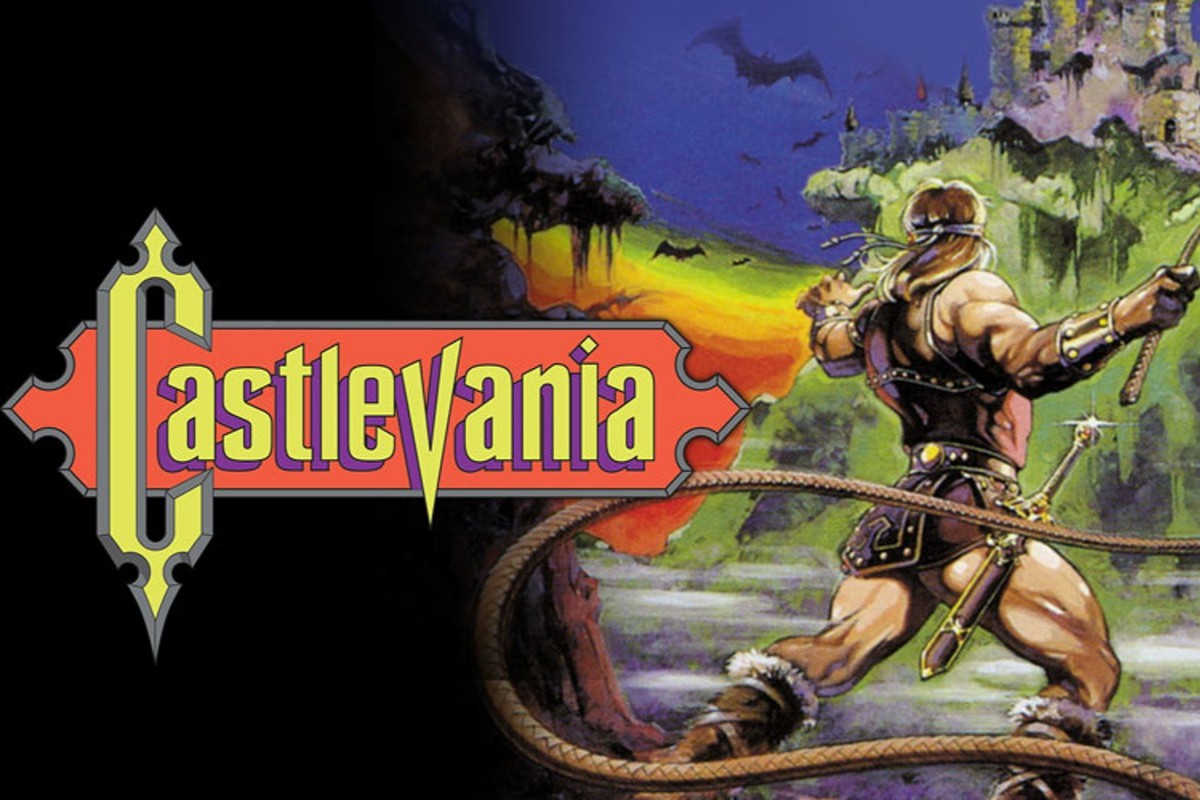
    I’ve been in the trenches of 1986 for such a long time by this point that I feel like, sometimes, I lose a bit of perspective, so as I reach Castlevania, released within two months of Metroid (and also on the Famicom Disk System) it’s good to take a minute to reflect again on the strength of the release calendar for the Famicom. It’s not just Nintendo’s groundbreaking output, for example, it’s also incredible arcade hits such as Gradius and Ghosts n’ Goblins coming home in solid ports.

    And with the influence of The Legend of Zelda and especially Metroid going to take more time to disseminate, I think it’s important to consider Castlevania within the post-Super Mario Bros. milieu where the arcade still reigns supreme as the state of the art. You went to the arcade and wanted to play games that good at home, and developers wanted to sell people on their “arcade quality” experiences, even if there was no arcade title attached.

    I’m assuming you can see where I’m going with this, but the interesting thing about Castlevania is as much as it is tied to the Metroidvania genre–and would begin dipping its toes into that within a month–the first game is no more attempting to create an expansive, “home” experience than Konami’s earlier port of Gradius is. If you’re being generous, you could claim that Castlevania is Konami’s attempt to make the style that’s already worked so well for them in the scrolling shooter for the arcade–short, hard games with impactful, unique levels and standout bosses–translate to the side-scrolling action game/platformer for the home. If you’re not being so generous, you could say this is Konami’s rip-off of Ghosts n’ Goblins.

    That one probably works better.

    I don’t think it’s unfair, really! Ghosts n’ Goblins is a good port, but it looks weedy. It’s hard not to imagine Konami, given the extra power of the Famicom Disk System, thinking that they could simply do something better, and the hallmarks are all there. A spooky setting. A stiff, inflexible hero who struggles with platforming. Limited power increases and different weapons to collect, which all have important situational uses. When you look at the original Japanese titles it looks even more sus. Ghosts n’ Goblins is “Demon World Village” Castlevania is “Demon Castle Dracula” (to not get too into the weeds on this, Demon isn’t spelled exactly the same, but they do both use the kanji 魔.) And if you don’t consider that case closed? Well, there’s also the difficulty.

    The bloody difficulty.

    Unlike Ghosts n’ Goblins, Castlevania absolutely lulled me into a false sense of security at the start. There’s no Red Arremer here as a harsh wakeup call, and the first boss, a bat (which does have a bit of the Red Arremer about them) is easily dealt with if you have the axe subweapon, which is literally in a candle right before them.

    Once you’re in the second level, however, all bets are off, as you’re suddenly facing the dreaded medusa heads paired with the fact that you lose a life if you fall into a pit (easy to do as you get stunned and knocked back on getting hit) and it only gets worse from there. There are some absolutely hair pulling moments.

    Really, Castlevania feels like a game that shouldn’t work, because hero Simon Belmont is so slow and it’s such a challenge to react to anything. But the game has a weird sort of pleasure in its heavy, exacting feel. Simon slowly moves forward and really feels like he’s absolutely thumping the enemies in front of him, and a bit like a shooter it’s all about finding your racing line through the game, collecting the right subweapon at the right time and learning where the meat Dracula has stuffed in his walls are for safety (good poll if they ever add polls to Bluesky: would you eat Dracula’s wall meat? Yes / No / If I was really hungry, I guess). 

    There’s also an intriguingly vestigial sort of hidden, sort of experience system–if you use subweapons a lot enemies eventually drop upgrades that let you have up to three on screen–but it’s foiled by the fact you want to switch subweapons a lot and you lose the upgrades when you do (why!!!) but if you can master it you can absolutely cheese some of the bosses–I mean, it’s how I saw the end of this…

    I even like that Dracula’s Castle sort of makes sense as a layout. I mean, it doesn’t really, but I like that they made the drop that happens after you fight the mummies sort of the correct length, and then you might be surprised that the “clock tower” section of this game is so short, but it’s tall and thin… like a clock tower!

    The brutal difficulty of Castlevania makes some sense on the Famicom Disk System because you could save at any stage(!) and when the game was re-released on cartridge in Japan it got an easy mode–although it removes knockback on hit, which just seems weird (if you’re interested, it’s included in the Rumbleminz SNES port, the method by which I played this.)

    Ultimately, if Konami set out to best Ghosts n’ Goblins… well… they did!

    Will I ever play it again? I will play its many, many remakes and… side-makes?

    Final Thought: Yeah, so, the weird thing about Castlevania is that it came out on Famicom Disk System just a month before it came out on MSX2 (a version generally known as Vampire Killer, as it was titled that in Europe.) Although Vampire Killer shares graphics, enemies, and is still a trudge through Dracula’s castle, individual level design differs completely, as levels are non-linear and you’re expected to search them for a wider range of items, upgrades and keys to unlock doors to the next level!

    Annoyingly, I can’t find good information on why the games are so different, outside of pretty generic speculation (“now, PC games drive like this [mimes driving like a huge nerd] and Famicom games drive like this…”) so it’s really hard to say what concept “came first.” if the MSX version was the original idea, then my Ghosts n’ Goblins hypothesis–my Ghosts n’ Goblothesis–is incorrect. 

    I do feel like it would be a bit unusual if both games weren’t directed by the same man, elusive series creator Hitoshi Akamatsu, and Castlevania II would go on to be much more of an adventure, which would be a mark against my goblothesis, but weirdly according to an amazing shmuplations translation, Akamatsu was inspired by The Maze of Galious, which is itself a post-Vampire Killer design, so who knows. I guess I can get closer to finding out if I play it, so let’s see how long I can avoid that for.

    Update 2025/10/01: Actual game historian Kate Willaert got in touch over on Bluesky with some critical context:

    “My understanding, from delving into this era of Konami, is that the two versions of Castlevania were developed in parallel, with the teams possibly sharing ideas with each other, and so neither game is “first” nor the “real” one. See also MSX vs. FC Goonies, which laid the groundwork for this game … While it’s possible that Ghosts N Goblins inspired some surface elements, my personal theory is that the foundation of Castlevania can be found in the computer game Aztec, which was fairly popular among a particular generation of Japanese game devs.”

  • The exp. Dispatch #10

    The exp. Dispatch #10

    Well, very funny to say in the last dispatch that I’d go to biweekly and then not actually send out another one for three weeks. Well, I’ve got a good excuse.

    Recently On exp.


    Announcing exp. 2602 For Pre-order Today!

    Said excuse! I suppose I did send this out to all subscribers at the start of the week. exp. 2602 has been in the works for a while, but it was put on hold when I rebuilt expzine.com, and then actually launching it got delayed even longer because I was so dissatisfied with ecommerce options like bigcartel and ko-fi (ko-fi in particular badly screwed me recently) that I decided to self-host—after all, I already have the website. I somewhat understand why people just pay to have someone else handle it all by now… but at least so far it seems to be working. Also—please consider pre-ordering! This is the last weekend before I absolutely have to get it to the printers, and your orders make sure I know how many to print!

    Subscriber Post: Elechead (Namatakahashi, 2021)

    This week’s subscriber post showed up a little late because of the announcement, so I hope people don’t overlook it. Namatakahashi is doing something really special in indie games right now.

    Unlocked Posts: Gravity Bone (Blendo Games, 2008) / Metroid (Nintendo, 1986) / Many Nights A Whisper (Deconstructeam/Selkie Harbour, 2025)

    Man, when you see the games listed out like this I really grasp how some people find it hard to hook into what I’m doing here. But my tastes are too catholic for me to limit myself to being, like, only an RPG or retro blogger or something. If you only want to read one of these, please read about Many Nights A Whisper—there’s only a few short months to find out if it stays at the top of my games of 2025 list. But uh… obviously read them all.

    From the exp. Archive: Cart Life (Hofmeier, 2010) / Soulcalibur: Broken Destiny (Project Soul, 2009) / Star Wars Pinball (Zen Studios, 2013)

    A couple of really throw-away articles here but I still think what I wrote about Cart Life hits. A “compelling and thoughtful critique” according to Eggplant‘s Rob Dubbin, so that’s nice. Surprisingly on Twitter, the website where linked articles go to die, I got some feedback on Soulcalibur: Broken Destiny too. @Yoshicookie, apparently a Kilik main, let me know it’s “actually the better version of [Soulcalibur IV], if it had proper multiplayer.” Good to know.

    exp. Capsule Review


    Blobun Mini (Cyansorcery, 2025)

    Didn’t really pay attention when downloading this because it looked so cute when it showed up in my feed–I guess I assumed it was a Crush Roller-a-like, or something. However, it turned out, concerningly, to be more of a “hard” puzzler, where you’re trying to fill in every square in a map with your cute little slimy bunny and you lose if you need to backtrack to do it. It’s not Sokoban, exactly, but it (maybe unfairly) raised memories of every game I’ve ever played where you do a complex chain of things but have fucked it up at one point in the last 100 moves and have to try and make sense of it.

    As a result I was initially considering putting this down completely, but I decided to stick with it for a bit as it’s a free PICO-8 game, so I was able to pick it up on my Trimui Brick whenever I had a spare moment (don’t leave me with my thoughts! I need to be doing something, please don’t leave me with my thoughts!) and Blobun Mini won me over for several very good reasons. 

    Firstly: every part of it glows with polish, from the charming UI through the responsive movement. Secondly, the game has an unbelievably smooth difficulty curve. It introduces new concepts carefully–and it has many for a game with just sixty levels–and every map is short enough that you never have too much to fix if you screw up. And thirdly, the game is unbelievably forgiving, with a complete rewind and even hints to start you off on each level.

    Much like Dino Sort, if you’re looking for a charming puzzler that you can pick up and put down and eventually finish you can’t really go wrong with this (I mean, it’s bloody free) and if you like it so much you can go ahead and play the “full” version of Blobun, which does look like it’s too much for me, but that’s fine.

    The only problem I have with this, actually, is that I finished every level but the last level didn’t “tick off” so it looks like I haven’t. A bug, maybe? But it’s a minor quibble.

    exp. Du Cinéma


    Superman (2025) / Evil Puddle (2025)

    Something something, catholic tastes. This is the second time a Motern Media production has shown up in this newsletter, so I assume you’re all complete converts already.

    Also reviewed: Eddington (2025), The Devil At Your Heels (1981) and Mountainhead (2025).

    Zine News


    Middle-Aged Teenage Angst Issue 1

    “Middle-Aged Teenage Angst: The Zine is now available to buy in print or as a PDF. 52 pages of new writing by me on forgotten TV, old mags, radio, wrestling, growing up, badges and, of course, music.”

    Retro Game SuperHyper Fanzine Issue #5

    “YES!! Over three years late, but I kept my promise, and the fifth issue of RGSH fanzine is finally finished and ready for you!!”

    This came out a fair few months ago now, but only came to my attention (as zines often do) thanks to Forgotten Worlds.

    ASTRO Gaming Lifestyle Magazine

    “This is a magazine that explores gaming as a lifestyle (think Nintendo Power meets curated fashion and lifestyle magazine). The book features 60 pages of my artwork alongside photography and featured community projects.”

    This is absolutely beautiful but I’m sad to note that it’s also fifty-nine dollars. I think it’s neat that there are higher-end zines and journals out there—think the amusingly similarly titled ON and [lock-on]—but I have to admit that I don’t have the funds to keep up. Maybe they’ll be up for a zine trade?

    zeenster.com

    Moheeb Zara’s free zine making app now works on mobile! Make your own zine and then charge sixty dollars for it. That’ll show ’em.

    And Finally…


    This is a fun one. I’d put off watching this until I finished Clair Obscur: Expedition 33, as I’d heard the book this talk (from two years ago!) was about heavily inspired it. When you watch this you’ll be absolutely shocked as to how much of a, well, complete rip-off Clair Obscur is, and of a book that was apparently a huge success in France! I’d be fascinated to read what French fans thought of the game—if they were just completely nonplussed by the things international audiences found fresh and exciting. Maybe that’s why the game makes such, er, big swings at the end? To differentiate it?

    Anyway, I’m absolutely gasping to read La Horde du Contrevent now. Considering I moved to Canada anyway, I should have really bothered to give a shit about French in high school. I guess if I can sell more copies of exp. 2602 I can be taken seriously as a publisher and try and get the rights? There’s an English translation sitting there waiting!

    Next week on exp.: Well, I did the Metroid, so…

  • Elechead (Namatakahashi, 2021)

    Elechead (Namatakahashi, 2021)

    Developed/Published by: Namatakahashi, Tsuyomi / Namatakahashi
    Released: 14/10/2021
    Completed: 31/08/2025
    Completion: Hard to say if the game has a “good” and a “bad” ending, so let’s just say I saw one of the endings.

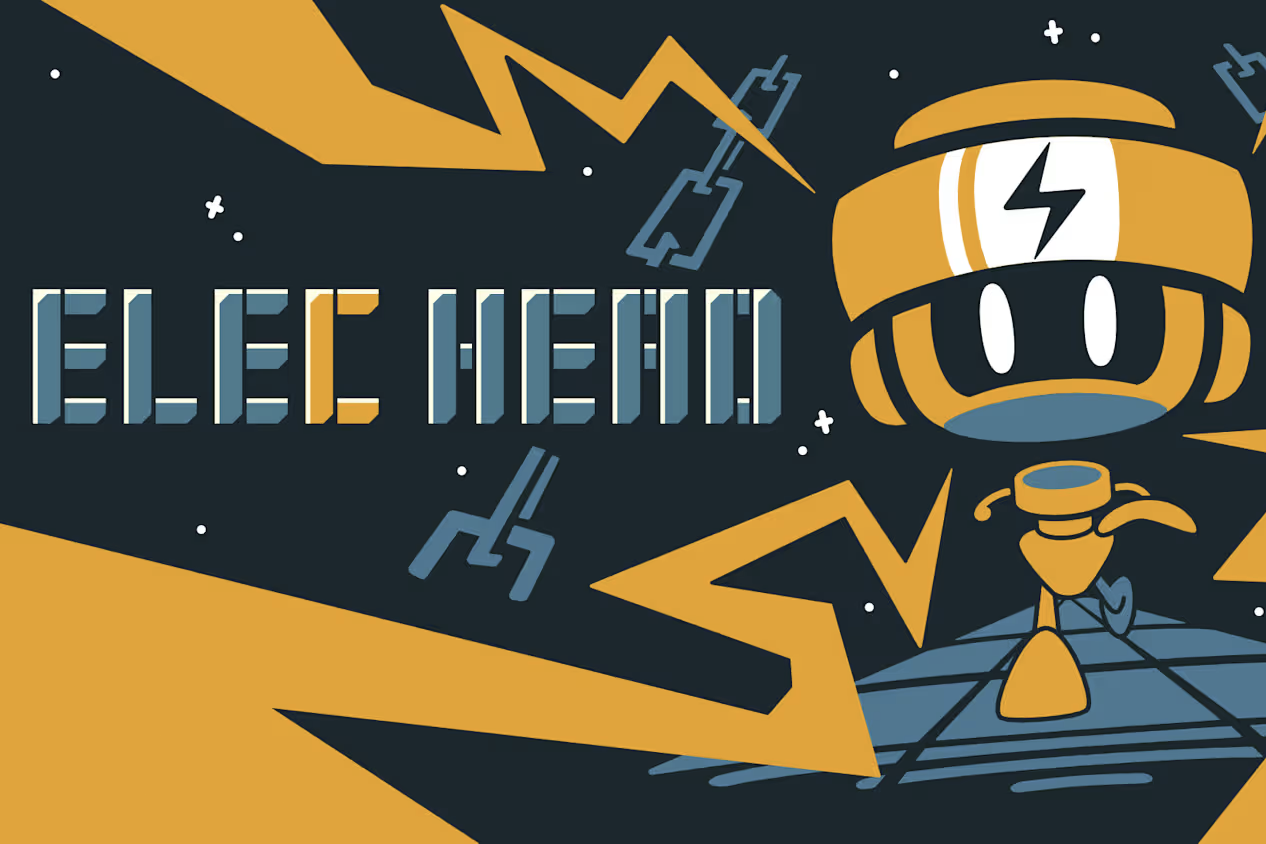
    Saw people talking about Öoo, the latest Namatakahashi game, so of course I had to look up what they’ve made before that, saw that they’d made a game called Elechead, and played that instead.

    And I’m glad I did!

    I talked a lot about process in my recent essay on Many Nights A Whisper, and I think Elechead represents a more expected way of centering a low number of game mechanics (or especially, single game mechanic) in a video game: not focused on the player’s process toward a singular mastery, but on playing with the player’s believed mastery, taking the mechanics and bending them, requiring lateral thinking and moments of inspiration to progress.

    In Elechead, it’s something so simple and clever that I’m surprised I haven’t seen it before. It’s actually described wordlessly in game and even on the Steam page (perhaps, originally, to avoid localisation issues–even the settings menu relies on pictograms). You’re a wee robot with an electric charge. Anything you stand on is powered. So, for example, if you stand on a platform that moves, it moves. If you stand on a platform with some bulbs attached, those bulbs light (in game, creating a dangerous barrier.)  As soon as you jump, everything turns off; when you land again, everything turns back on. Instantly.
    The game plays like that for a bit longer than I expected it would, before it introduces its main twist: your head is what holds the charge, and you can fling it off and run around as a headless body for ten seconds. So where previously you might face a barrier and just have to jump to break the connection to get through it, now you might have to throw your head across to make a connection somewhere else–and then get there in time.

    The thing that stands out about Elechead is that it sucks the bones of its concept, and that it does so with a thoughtful difficulty curve (well, to an extent). There’s always a new way at looking at your abilities or how they interact with the world, and what you will be able to do can be surprising. It’s generally deeply satisfying when you work out what you need to do, but if there’s an issue, it’s that the game relies on a couple of (in my opinion) bad mannered “tricks” to stymie you: hidden paths with no “tell” (in walls, or off screen) and a final upgrade that’s completely hidden behind one of them (my understanding is that you can beat the game without it, but I struggled even with it…)

    It’s a bit of a shame, because the game leads to a climax that I really loved. If you’ll allow mild spoilers, the game is a linear trip through a series of puzzles (outside of some side paths to collectibles) and when you reach the end, you simply get a few hints to where you were actually supposed to go. But heading backwards requires you revisit puzzles you’ve already seen and solve them in entirely different ways as you reach what appear to be the game’s tutorialising “one way” valves!

    So I don’t love that this game stretches the player slightly beyond what’s fair, but that does mean it fits into the milieu of Japanese video games inspired by Xevious and Tower of Druaga.

    What, you thought I was going to get through an article without mentioning them?

    Will I ever play it again? Probably not, but I enjoyed this so much I’m having to pace myself to not just start Öoo immediately. 

    Final Thought: Weirdly, after I beat this, I looked up some playthroughs on YouTube, and everyone skips showing the trip backwards, my favourite bit! They do the collectibles ending and take an unrewarding shortcut to the other ending. You’ll only have yourself to blame if you do this. Just remember that things can be hidden in walls and off screen and you’ll be fine.

  • Gravity Bone (Blendo Games, 2008)

    Gravity Bone (Blendo Games, 2008)

    Developed/Published by: Blendo Games
    Released: 28/08/08
    Completed: 05/07/25
    Completion: Completed it.

    Blendo Games’ Skin Deep was released this year, and as is often the case, a new game makes me go “oh yeah, I haven’t really played much or anything by that developer” and I therefore feel like I have to start from the beginning. In this case, I’d previously played this and Blendo Games’ Flotilla (which I believe I still have on Xbox Live Indie Games?) but Gravity Bone only takes twenty minutes so I thought I’d run through it again (I don’t think I’m going to get the Xbox out for Flotilla, though it’s also still on Steam.)

    Anyway, Gravity Bone is still well worth running through in 2025 (you can too if you like, and then come back.) It worked fairly well for something made in 2008 even if it did crash consistently if I went into the menu and I was never able to get the graphics looking right in full screen (I wouldn’t even bother trying to get it working on a Steam Deck. But, again, it’s twenty minutes long.)

    What strikes me about Gravity Bone now is actually similar to what Kieron Gillen said about it way back in 2009–the confidence it has. A tiny spy thriller with blocky characters, designed with intentionality. The janky nature of playing it now could be detrimental, but the work shines through–like pulling up a scratchy digital transfer of an old short movie that was never matched.

    To get into spoiler territory (again, for a game that’s twenty minutes long) I love that the game breaks the “rule of three”. You complete your first easy mission. Your second mission is a little more complex, featuring tools to use and in a very “2000s FPS” way, some tricky jumping. And then, before you can move on… you get shot.

    Suddenly everything you expect from a game is broken. You can’t just follow what you’re being told to do. You’ve got to get up and chase your assailant, surely you’ll catch them. But then… you die.

    But as you die, you “remember” everything that brought you there. Suddenly you are no longer just  in control of an avatar doing as you were told–you understand you were playing a person, as you see their life flash before their eyes. It’s… surprising. And then? Truly? It’s actually quite moving.

    You are taken from a pure video game experience to an emotional one, something that few games have managed in experiences that number in the tens of hours. I don’t want to oversell it too much, but while they say brevity is the soul of wit, Gravity Bone has wit and soul in its brief run time. 

    Will I ever play it again? If you haven’t heard, it’s only twenty minutes. But even at that…

    Final Thought: Spoilers: in the time between starting to write this article and finishing it I did in fact decide I just had to play Flotilla after all. What am I like.

  • Metroid (Nintendo, 1986)

    Metroid (Nintendo, 1986)

    Developed/Published by: Nintendo R&D1, Intelligent Systems / Nintendo
    Released: 06/08/1986
    Completed: 28/08/2025
    Completion: Killed Mother Brain in less than three hours.

    I hope it was obvious from the conclusion of my article on The Legend of Zelda that the game I was referring to was this, Metroid, but I suppose the real heads might have been like “well, The Mysterious Murasame Castle is pretty good, I guess…”

    Metroid is a game I was absolutely certain I was never going to beat. After all, I’ve beaten Metroid: Zero Mission, isn’t that good enough?

    But the original is a game I’ve picked up and put down a few times out of my urge to really understand the Metroidvania genre’s beginnings, and the reason I’ve put it down is probably the reason most people do: the obvious lack of any sort of map (never mind an automap.) That would be bad though, but when you combine that with the game’s reliance on completely hidden paths for progression, and an early difficulty that is, I think, worse than The Legend of Zelda… Metroid just isn’t very enjoyable. It doesn’t seem worth the effort.

    Sadly, unlike The Legend of Zelda, there isn’t a wee hack in pulling up the manual, because it doesn’t offer the kind of help you actually need. While it does offer lots of useful hints on what Samus and enemies can do, the included map is very vague. With the graphics in each area quite samey (look, you tell one corridor or shaft apart from the other) you really need to therefore either have a map already to hand or be mapping the game out as you go, and I think my resistance to the original Metroid has always been that while in a game like Wizardry or The Bard’s Tale you can take your time to draw out maps, here you’re stopping during an action game, which apart from just being sort of annoying, is an active flow breaker.

    Thankfully, it’s 2025, and I again have to thank two people–romhacker Infidelity and Hand Drawn Game Guides artist Phil Summers–for making Metroid manageable. Infidelity has ported Metroid to SNES creating what is easily the ultimate version of the game, with the Famicom Disk System saving, the addition of a mini-map(!) and even the ability to combine the wave beam and ice beam like later games. And Phil Summers’ Hand Drawn Game Guide for Metroid might be the perfect thing to hand for a player who doesn’t want to just follow a walkthrough beat-by-beat: it offers a route through the game, but the maps and tips leave a lot of the exploration and discovery up to the player.

    It’s a shame, to be honest, that even with all of that, I still just don’t like Metroid all that much. In fact, I’d argue that the Metroidvania “vision” here is still so far off that this is very much a fish with limbs flopping about gasping for air compared to an actual amphibian. Er… Metroidphibian.

    When you start playing Metroid, there is some familiarity outside of the franchise signifiers–the opening area gives you some rope, but works to funnel you towards the necessary early pickups before the game opens up. But quickly you realise Metroid is far less interested in the now de rigueur “I can’t go there / unlock ability / now I can go there” loop than just killing you as much as possible and getting you lost. The upgrades which are required for progression act generally as just “keys” to new areas and don’t provide you the means to solve puzzles or allow you to interact with them in interesting ways (even the morph ball goes strangely underused) so you mostly find yourself shooting/bombing walls or hoping lava pits have a false bottom when stuck after you’ve got them all. And like other games of the era, Metroid makes sure to often punish you for doing that, giving you plenty of pointless dead ends that just sap you of health as you try to survive.

    In fact, I’m struck by how the game poorly rewards exploration beyond getting the necessary upgrades, and then how short the game actually is once you have them outside of forced backtracking–kill two minibosses and then head to the final section to kill Mother Brain, a section which is completely linear.

    As a result of all of this, you realise familiarity with modern Metroidvanias is really a hindrance when playing Metroid. For example, beam upgrades (ice or wave) don’t seem to actually increase your power much if at all, so unlike later games, Metroid seems tuned around using your missiles on regular enemies. You’d think therefore that missile upgrades would make exploration worth it, but you end up getting bogged down just to have five more missiles in your quota, where if you beeline to the bosses, each one gives you an almost absurd 75!

    And you’ll want to do this because the drop rate on health and missiles is so miserable that every trip down a dead end (or worse, a corridor you’ve forgotten you’ve seen already) requires what feels like never-ending grinding of the game’s infinite spawners. When you first see them, you think “that’ll save me sometime” but after your first ten, twenty minutes waiting for enough health to fill one tank, you realise you’re far better  just running through the levels trying to rely on screw attack jumps to avoid combat (which does, generally, work.)

    That even goes for the last section of the game which should be tense and exciting as you finally face off against the Metroids, but no, you’re better off… freezing them and running past. To add insult to injury, Mother Brain is just a complete pain in the arse. It’s an endurance test–have enough health that you can survive being shot the whole time while you pound her with missiles.

    I suppose that the escape is a fairly-exacting platforming challenge is kind of funny, though.

    Much like The Legend of Zelda, though, Metroid feels like a product that makes more sense in its original context of players with bags of time and nothing much else to play. Bar one very annoying thing–that you have no way of shooting things shorter than Samus, which really makes the opening of the game frustrating and much harder than it should be–Metroid controls well, and I assume the players willing to map got a lot out of it, and those who didn’t probably just eventually got Samus powered up and to the end by sheer effort (the zone between “I have the morph ball and missiles” and “I have enough energy tanks and the screw attack to survive to explore” is so miserable, however, I do find it hard to imagine.)

    Even if I find that hard to imagine, I don’t find it hard to see how Metroid captured people’s imaginations. I’m not sure it has quite the same completeness of vision as The Legend of Zelda (or The Mysterious Muramase Castle, for that matter) but the visuals and especially the sound really give the game a uniquely lonely feel; a solo decent into a deadly and foreign cave system (I do love that the name of this game is a portmanteau of “metro” and “android”–I can almost imagine one of the designers, lost in one of Tokyo’s many confusing train stations, thinking “there’s probably a game in this.”)

    And maybe it’s just the fact that it’s a side-on 2D platformer, but even more so than with The Legend of Zelda/Sabre Wulf, Rare has a case that Metroid is heavily inspired by Underwurlde, if not an outright rip off. Not just the shafts with platforming challenge (which would be enough) but that areas of the map are locked off without using a particular weapon. 

    Separated at birth??? Alright, this one doesn’t look as damning as the Sabre Wulf one but trust me.

    If I was being really harsh, I’d point out there were plenty of platfomers of the era with big maps to explore, things to collect and keys to use, from the obscure to the very well known. Impossible Mission. Saboteur. Citadel. Journey To The Centre Of The Earth. And many of these games play well, too!

    So I after playing it all the way through, I do feel like I still have some questions if Metroid really does deserve the crown as originator, but then I also suppose we also live in a world where we don’t play Beneath Apple Manor-likes.

    Will I ever play it again? Well, there’s no Satellaview version of this, so I really have played the “best” version of it I could. I’ll play Zero Mission again, though, which I remember as being the peak of the franchise, and I can’t remember if that’s controversial or not.

    Final Thought: Of course, there’s also the other side of the Metroidvania… the vania. And the first game in that franchise doesn’t even attempt to be a Metroidvania. It’s even got a new SNES port too…

  • The exp. Dispatch #9

    The exp. Dispatch #9

    I think I’m going to settle on the dispatch being biweekly–doing it every week has felt like overkill. I think I imagined this newsletter as just links to the articles of the week, but each time I’ve thought of doing that it’s felt like such poor value for your no-money that I’ve ended up doing more, so this is, probably, better for all involved. Let me know if you feel any different. Onwards!

    This Fortnight On exp.


    Subscriber Post: Many Nights A Whisper (Deconstructeam/Selkie Harbour, 2025)

    Listen to Together by Nine Inch Nails while reading this. If you know, you know.

    Unlocked Post: The Legend of Zelda (Nintendo, 1986)

    Nice to get to call out Wes Fenlon’s excellent Read Only Memo and Phil Summers’ Hand Drawn Game Guides here. Not the last time Phil’s work will be mentioned at the very least.

    Unlocked Post: VILE: Exhumed (Cadaver, 2025)

    You know, I really thought this game would create a bit more discussion online considering the context in which it was released, but I guess not!

    From the exp. Archive: Fire Emblem: Shadow Dragon (Intelligent Systems, 2008)

    Digging this old article up made me realise I never managed to cop that fancy re-release Nintendo did of the Super Famicom original, despite really trying, and then I completely forgot to download it digitally anyway. It’s really bizarre that Nintendo took to these limited releases for Fire Emblem and that Super Mario collection. Why? I guess they did limited Mario and Kirby releases in the days of the Wii, but it just seems so weird to go “you can’t buy that now” in the digital shop of infinite shelf space.

    What’s that? I’ve got a digital zine collection that I’ve only ever released temporarily? Uh… shut up.

    From the exp. Archive: Hollow Knight (Team Cherry, 2017)

    The Silksong hype is real, man. This article, despite being from 2020, was just about the most read thing on the site in the wake of it being announced. And I don’t even like Hollow Knight!

    exp. Capsule Review


    Merge Maestro (Stingless, 2025)

    Had heard rumours this was the new roguelike-like obsession of the moment, so thought I’d give it a shot–it’s not like I feel like I’m wasting my life as it is. But I bounced off this basically immediately. Of the roguelike-likes it’s most similar to Luck Be A Landlord in that it’s very simple, entirely focused on a core loop–here, playing a symbol-based Threes-like to fight a succession of waves of enemies until you either lose or win the run by beating a final boss enemy. After each wave you get to upgrade one of your symbols, each of which has a special ability, and you’re basically trying to make your deck work synergistically so that as you merge symbols you’re doing massive damage and making your board better. 

    If that sounds… fine, it… is. I mean it’s really quite generic feeling, probably not helped by the fact that is uses emojis for the symbols, and maybe if you really love Threes this will light your fire, but it’s got the same kind of problem that Luck Be A Landlord does, where there’s a billion symbols (here 300!) that all do different things and you can find yourself heading in the wrong direction based on your rolls or just not being able to pull anything together. You can get Balatro-esque insane numbers going, but I certainly couldn’t be bothered to try.

    I don’t mean to beat up on this one too much, because it’s from a small developer, completely competent, reasonably priced and I assume for the right kind of player absolute catnip. If anything I’m surprised at how much this failed to get its hooks into me. Am I burned out on the genre, or will another game draw me back into it? You know what, I’m not in a mood to find out any time soon.

    exp. Du Cinéma


    War 2 (2025) / Coolie (2025)

    Thank goodness I’m here to keep you up to date with the latest Indian cinema releases. Absolutely why you subscribe to a video game newsletter. But for real though, War 2 is a banger.

    Zine News


    ZINEDUMP

    “ZINEDUMP is a new Toronto zine fair that aims to provide a venue for the open expression for independent publications, radical art and ideas. The inaugural fest will be held on Nov. 9th between 12-5pm at the Cecil Community Centre.”

    Still time to get submissions in if you’re quick–the deadline is August 31st.

    Amiga Addict 39

    “The new issue of AA is out, in which we look at  Fast Food 2 and the history behind the Oliver Twins original!”

    Incredible to think that there’s an modern Amiga magazine that’s run for 39 issues. I haven’t been able to keep up.

    How To Report ICE

    These single page, easy to print and distribute zines give information on how to report ICE for specific cities/areas in the US.

    And Finally…


    What’s this???

    Next week on exp.: The Stampers get ripped off for the second time. Allegedly.

  • Many Nights A Whisper (Deconstructeam/Selkie Harbour, 2025)

    Many Nights A Whisper (Deconstructeam/Selkie Harbour, 2025)

    Developed/Published by: Deconstructeam, Selkie Harbour
    Released: 29/04/2025
    Completed: 23/08/2025
    Completion:

    Fuckin’ hell.

    The last couple of years have been incredible for shorter narrative video game experiences, and in a weird sort of way, it’s almost like there’s like an unspoken arms race to make them shorter–no, not shorter, more focused, more concentrated. I’m not sure at what point we reached the nadir of games–particularly those of the triple-A persuasion–being a never-ending procession of endless “content”, but there’s something deeply refreshing about the idea that whether intentionally or not, game designers have discovered there’s a value in fermenting a game design, boiling it down into a playable umami. A rich flavour that lingers and sticks with you long after in comparison to the once-prevailing wisdom that players should be faced with an endless chocolate cake and forced to eat it like they’re Bruce Bogtrotter, quality be damned. Games that say, “we’re not just chocolate cake! We’re an endless buffet!” but the entire experience is, as I once said about Horizon: Zero Dawn, like chewing through a gym mat.

    By comparison, Many Nights A Whisper gives you one thing to do. One perfect, polished thing. It gives you as much time as you want to do that thing, in a genius and thematic invitation to self-direction, though you’ll probably wrap things up within an hour, hour and a half. And I don’t think it could manage what it does any other way.

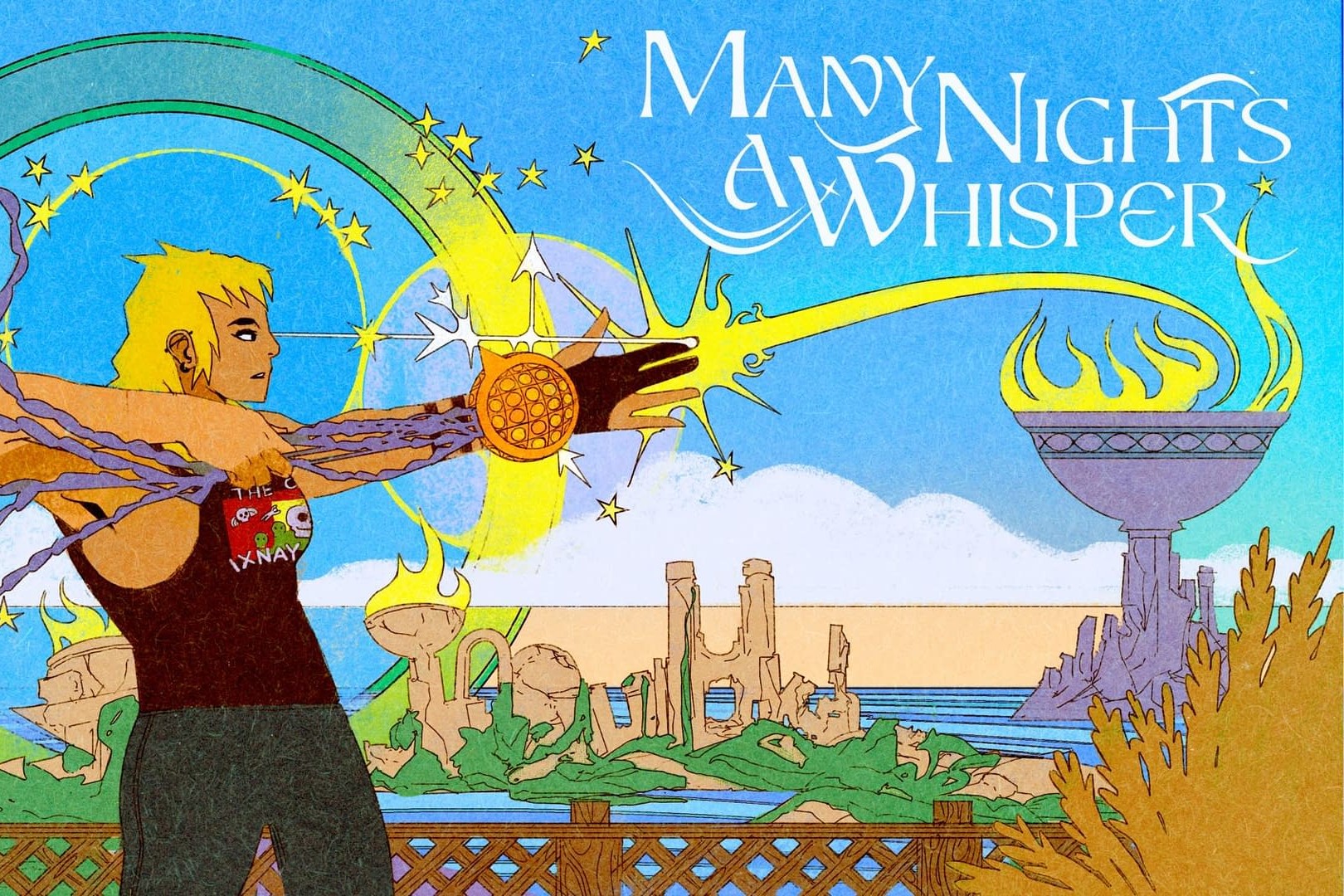
    In Many Nights A Whisper, you are the “Dreamer”, chosen to practice with a slingshot for ten years in preparation for a single shot at a distant chalice that, as part of a sacred ceremony, will ensure everyone’s wishes will come true–at least, those whose wishes are heard and accepted by the Dreamer. The game begins with the ceremony fast approaching, and as people begin to deliver their wishes, finally the Dreamer’s slingshot range is able to be expanded with hair from the cut braids of those whose wishes are accepted. And so the player is given freedom to practice their expanding slingshot against increasingly distant targets each day, and then each night, they hear and choose which wishes to accept by cutting the braids of hidden petitioners.

    And that’s it, until one day, you have to make the shot. And you really do only get one attempt.

    In a strange way, the thing that Many Nights A Whisper reminded me most of was The Bear’s incredible season three opener, “Tomorrow.” While the show itself has, ironically, lost focus completely–and to be honest, the very next episode in season three does its best to blow up its thesis, anyway, Tomorrow movingly, non-linearly, shows chef Carmy’s sometimes beautiful, sometimes painful, sometimes awful history intertwined with his work, his process for forming a new menu for the titular restaurant. Layer by layer, the episode offers an affirmation:

    You are not simply the sum of what has happened to you. You are what you choose to do with that.

    It is an aspirational song of praise to putting everything of yourself into your process. It’s like when you watch one of those NHK documentaries about a factory that hand-produces lacquer bowls, or something. You think, you are reminded, that you are a corporeal being that exists in the world. You can imagine the simple yet deep pleasure of mastering something, putting yourself into it, knowing every movement, until it becomes second nature; the work sings a song you woven not just by your hand but by the life that got you to that point.

    In a world that almost feels more virtual than real now–forever interrupted, beauty shortcut with slop, isolation and othering as policy–these things make you face up to how you’ve hardened. They make you long for a honest dialogue between yourself and the world: and make you content with the fact that being honest with yourself is maybe the only thing you can control.

    You are not your context. You are what you choose to do there.

    Many Nights A Whisper doesn’t give you a world to explore. It gives you the role of the Dreamer–designed clearly to visually reference the modern incarnation of The Legend of Zelda’s Link–in a small courtyard that only hints at the larger world. You’re wearing (and I would love to know the story behind this) an Ixnay On The Hombre t-shirt, your mentor has a big telly… but this otherwise could, if you squint, be Hyrule. Many Nights A Whisper gives you a context you already know, and an interaction you already know. Left trigger to aim, right trigger to shoot. It asks you to consider your process, and engage with just how hard you want to work by giving you a safe, understandable, recognizable space to work in, with no distractions.

    And while it does that, each night it ask you to consider why you’re doing it. Is it just because you’ve been asked? Because you want to make people’s wishes come true? Whose? Who deserves it, and who doesn’t? What is the world you want to create by your hand?

    Many Nights A Whisper describes itself as an interactive essay, which I think is a little precious. Because it is very much a video game, a visceral video game. At first, you make your little shots into nearby chalices, you accept easy, uncomplicated wishes and enjoy the reward of “levelling up” your slingshot. A few in-game days later you’re making micro-movements and cursing as you miss shots at chalices far in the distance, then trying to navigate the wishes of the selfish and confused. “I need more distance” you think, “but this person is unworthy.”

    And then, suddenly, the ceremony is due. You have one last afternoon with which to perfect the shot. Can you? Walk away from the spot you’ve chosen, line it up. Hit. Walk away, spin around, line it up. Was that right? Hit. Alright, if I get it a third time, I’ll move on. Walk away, spin around, put the Steam Deck down, make a cup of tea, dunk a chocolate digestive, fuck half of it broke off, burn your finger trying to dig it out, back to the kitchen and grab a spoon, urgh it’s too soft now, back to the Steam Deck, you know the chalice was right at this point on the screen… wait, move it here. No, there. Miss.

    Fuck.

    As someone who is extremely free with walkthroughs, save states and the rest–games are to be enjoyed–one of the meaningful things about Many Nights A Whisper is how deeply it engenders an urge to do it right. To give yourself over to the process. To try and try again to make a lacquer bowl with all the knowledge of the history that made it what it was and made you what you were. I played for real. I tried many different ways, I practised. I spent far longer than I’d expect I would have trying to get myself to the point it was second nature. Until I realised I was overthinking it. If I took a breath, stopped, and attempted a shot based simply on what felt right–a shot based entirely on the accumulation of practice, I’d make it. But if I kept trying, I’d get tangled in it. Micro-movements, losing my place. I’d start to miss. 

    So I stopped practising. There’s only so much you can prepare. I didn’t even make sure my last shot was a hit. I simply trusted in my process.

    At the ceremony, I took a breath. I closed my eyes, I thought about everything I had gone through. Was it really just an hour, or was it a lifetime? I pulled back the slingshot, and I fired.

    Will I ever play it again? I am somewhat interested in what happens if you do certain things different ways, or if certain things play out differently on different playthroughs. But at the same time, my experience was so singular, and the tension so real, that if I ever play this again it’ll be a long time yet.

    Final Thought: It’s a rare video game that I say “this could only exist as a video game” but Many Nights A Whisper is one. The preparation and tension of the shot is pitched perfectly–the game is just long enough that it feels like it matters if you fail, but not so long that it makes attempting it in the first place seem insurmountable. It is to experience, mechanically, the crunch-time moment of an underdog sports movie, layered with all your own effort to get you there, holding, quite literally, everyone’s hopes and dreams with you.

    Many Nights A Whisper is, currently, my game of the year. And it ain’t even close.

  • The Legend of Zelda (Nintendo, 1986)

    The Legend of Zelda (Nintendo, 1986)

    Developed/Published by: Nintendo R&D4 / Nintendo
    Released: 21/02/1986
    Completed: 17/08/2025
    Completion: Beat it for the second time! 

    Well, I can’t be playing obscure ones all the bloody time.

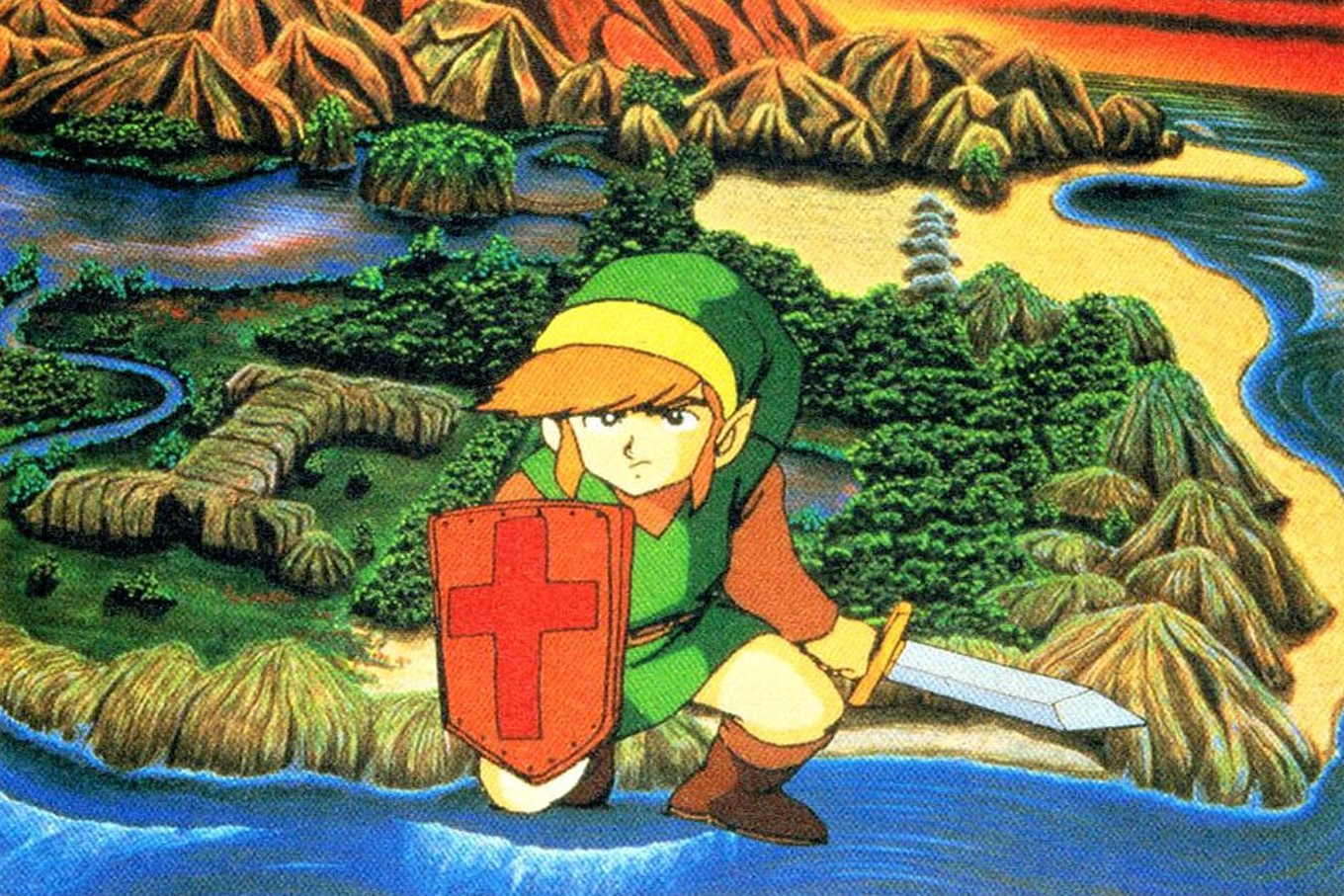
    I have a long history with The Legend of Zelda, as a lot of people do, though like many–if not most(?)–non-Americans/non-Japanese, my history does not begin with the original game. For me it started with Link’s Awakening, and I wouldn’t play the original until 2004 when I was able to treat myself to a Famicom Edition Gameboy Advance SP and a copy of the Famicom Mini Series Legend of Zelda. I remember being so excited to finally play such an iconic game, picking it up, getting completely lost, dying a million times when struggling with the stiff controls, and then deciding the cute little box was just a nice thing to have on my shelf and moving on with my life.

    I would go on to finish The Legend of Zelda years later–trading off the controller with BancyCo’s Benjamin Rivers–and even wrote a limited zine about that experience (I keep meaning to do a proper “history of exp.” page on this website, and I will, but today is not that day.) That completion–around 2011–meant I classed The Legend of Zelda as “previously completed” on the big “I’m not neurodivergent I promise” spreadsheet I keep, and I didn’t intend to return to it until I read in Wes Fenlon’s excellent newsletter Read Only Memo (worth subscribing to! As long as you’ve subscribed to mine too, obviously) about romhacker infidelity’s SNES port, which could be considered completely faithful while still featuring a bunch of lovely quality of life fixes. And considering I have a wee emulation device I adore, and found myself with a bunch of downtime due to some work I’d picked up that involved a lot of sitting around waiting for things to happen, I thought… why not? It’d make a nice change, and refresh my context for 1986.

    Something that is really important to mention, though, is that this time I came prepared. Now, I can’t remember if the wee Famicom Mini version of The Legend of Zelda came with a reproduction manual or not–I don’t have it to hand–but I’m assuming it didn’t (or if it did, I overlooked it, because what is this, a manual for ants, etc.) but I’ve long learned my lesson since I was downloading Infocom games and being baffled by them–you read the manual. And when you do, well… The Legend of Zelda isn’t baffling at all.

    Well, for a bit. And it’s still hard as balls initially, but we’ll get to that. I was shocked when I read through the manual–and this is true of the Japanese manual too–that it literally explains, cleanly and clearly, all the things you can get, all the enemies you’ll face, gives you instruction on what you’re trying to do, and then includes a complete walkthrough on how to get to the first dungeon (and guidance on how to get to the second.) I guess I’d never looked at the box closely before, where it literally says “Includes invaluable maps and strategic playing tips.”

    I’m reminded of that classic bit of weirdly banal Shigeru Miyamoto lore, that he likes to learn a city by walking it (who doesn’t) and imagined him going “I mean I do start with a map and a destination though. It only makes sense. I don’t just walk out the door and start wandering. I’d get lost.”

    Because, of course, this does all make sense! No one at Nintendo is thinking “well, people will be playing this without the manual in the future.” Back then, the manual was part of the product, and it really does a great job in getting you through the early stage of the game… at which point you can throw yourself into getting properly lost, equipped with more hearts and weapons to survive it.


    Historical Aside

    Christ, what’s going on here? A boxout? I haven’t done one of those before. Now, despite what I’m saying about the manual here and the game being intended to make sense with it, there is a possible–if unlikely–alternative which relates to a rumoured influence on The Legend of Zelda. John and Ste Pickford are quoted as saying that one of the Stampers, founders of Rare, had referred to The Legend of Zelda as “Miyamoto’s rip-off of Sabre Wulf”. Now, The Legend of Zelda actually does have notable similarities to Sabre Wulf and Rare’s earlier title Atic Atac, and one of the interesting things about Sabre Wulf is it comes with a manual that tells you almost nothing at all–I suspect many players didn’t even decipher that they were supposed to collect four pieces of an amulet from it. 

    Separated at birth?

    So if you take the Stampers at their word–and remember, they were tight as fuck with Nintendo, meeting with the company potentially as early as 1985–the complete bafflement I and many players first met The Legend of Zelda with could have been as intended as anything.


    The thing about the opening of The Legend of Zelda though… no matter what, it’s fucking hard. You’ve got three hearts, a weedy sword unless you’re at max hearts (which won’t last long) a shield that barely blocks anything, and you have to get comfortable with moving and attacking only on the four cardinal directions while your opponents seem to move near randomly. Playing it “for real” I died a lot, but the game is also shockingly forgiving for the era, bringing you back to life at the start with everything you’d collected intact–even dying in dungeons just brings you back to the start.

    This has the great effect that exploration and experimentation always feels worth it. You can delve into a dungeon just to see what’s down there, wander to a new area to see what you can find, and do “suicide runs” to get a necessary item if you know where it is. It’d be sort of perfect if the game wasn’t so stingy that you respawn with just three hearts filled no matter how many you have, because they have an abysmal drop rate. (I won’t lie, towards the end I did abuse save states just to quickly cheat at the gambling game so I could keep myself stocked up with potions. Life did eventually start to feel too short.)

    Because the game is so open, it does resort to (klaxons at the ready?) the Xevious/The Tower of Druaga “find the hidden stuff to progress” design. I am inclined to be a little more forgiving than usual here because of the open world and that the game does drop hints, even if they are obscure in Japanese and mangled in English. Back then everyone had a lot more time, a lot fewer games to get through, and the communal solve experience had continued from The Tower of Druaga in arcades to The Tower of Druaga at home (in Japan at least.) But I’m sure many kids, stymied, just took to bombing every wall and setting fire to every bush, and I can’t really justify that–the game definitely doesn’t drop enough hints, and there are definitely too many moments that can bring your progress to a dead-stop without outside help.

    Thankfully, in 2025 I was just able to refer to Phil Summers’ incredible Hand-Drawn Game Guide, which… look, it’s cheating, it’s a walkthrough, but it’s got such an easy, homegrown charm, it’s like your pal is helping you through the game. I can’t recommend it more highly if you’re approaching this game for the first time–read the manual, follow it, then as soon as you get too bored or lost, or just don’t feel like you’re making enough progress, just start referring to it.

    And anyway, you still have to beat the bloody thing yourself! If I have a real criticism of The Legend of Zelda it’s that it just doesn’t feel that great to play. The extremely stiff feeling of combat never goes away, and the enemies that require you manoeuvre carefully to hit them like Darknuts and Wizzrobes can absolutely suck a dick. Wizzrobes in particular, which are fucking everywhere in the last few dungeons. Unsatisfyingly, the end of the game does feel like a bit of a sprint as you basically try and dodge as much combat as possible, because it offers no reward. The terrible health drop rate is quite a negative, honestly.

    Saying it doesn’t feel that great probably sounds completely disqualifying for The Legend of Zelda, but I do have to mention again that it exists in the context of 1986 in Japan, and was still close to cutting-edge when released just over a year later in the rest of the world. Despite what the Stampers might have said, and even despite the existence of things like Ultima IV, at this point no one has put as complete a package together as Nintendo has. For the second time after Super Mario Bros. they’ve created something new out of whole cloth and no one else even saw it coming.

    Will I ever play it again? After all of this, I’m suddenly reminded what I was actually going to do when I intended to “replay” this was to play through BS Zelda for Satellaview. Oops. Well, I can still do that whenever I like.

    Final Thought: The craziest thing about Nintendo creating something this new, this different, this polished?

    They’ll do it again in a matter of months.

  • The exp. Dispatch #8

    The exp. Dispatch #8

    This week on exp.


    Subscriber Post: VILE: Exhumed (Cadaver, 2025)

    This was a really difficult one to write about, and while I really hesitate to bang on about how exp. needs your support to continue at this level, well, it does, so please consider supporting us on Patreon (preferrably), ko-fi, or pick up a zine or the book. Here, I chose to dig into a banned game with heavy themes that reflect the current moment of moral panic, but which I found… inconclusive. Would love to hear what others thought of it, or what I wrote about it.

    Unlocked Post: Firework Thrower Kantaro’s 53 Stations of the Tokaido (Sunsoft, 1986)

    Speaking of people getting in touch to say what they thought of a game, I’m still surprised by just how many people have popped up to say they love this one. I hadn’t heard of it before!

    From the exp. Archive: Toy Soldiers: Cold War (Signal Studios, 2011)

    Wrote about this one all the way back in 2014 and was surprised to look Signal Studios up and discover that they’d quietly gone out of business in at some point in 2023, their last release a HD remaster of the original Toy Soldiers that no one liked. One of the only things I was able to dig up about the closure actually was a tweet from the official Toy Soldiers account: “TSHD was not handled well by the publisher or me—limited resource, tons of delayed/bad dev caused by idiotic public policy and other unexpected events—deals fell through—over time—resources gone—the rest is history.”

    exp. Capsule Reviews


    Mindset GO! (Magicave, 2025)

    Spent some of the last few weeks playing this mobile and web puzzler, and as it’s been made by friend-of-exp Ste Curran I can’t in good conscience give it a “proper review” but I do want to recommend it anyway. In fact I’ll go ahead and explain that I’ve already recommended it to other people as an antidote to a few things–engaging with anything from the New York Times, a propaganda company with a games arm (or vice versa) or playing any of those fucking terrible games that show up when you use any mobile app with ads (more on that on a bit though.)

    Mindset GO! is the kind of design where when you play it you think “wait, how have I never seen this before?” as it features an incredibly simple design: you’re just sorting shapes based on one or more feature that they have. If they’re a triangle, or yellow, that sort of thing. You put them into circles, which might intersect as a Venn diagram does–meaning you need to put yellow triangles there, but can put just yellow, or just triangles, elsewhere–and you don’t necessarily know what all the features required are.

    This starts embarrassingly easy, but quickly gets… difficult. The Venn diagrams become more complex, and then suddenly you’re sorting (say) wee cat faces instead of big simple shapes. The thing I most appreciated about this game is that you can feel your brain expanding as you work out systems and techniques to beat harder and harder levels. Almost subconsciously you find yourself pre-sorting shapes, or able to keep two concepts in your mind at once that you couldn’t before. It’s deeply, deeply satisfying, and it’s all wrapped up in a terrifically thoughtful UI.

    As highly as I recommend it, this is a free-to-play mobile game, and you therefore have to engage with that whole… thing. Meaning mobile ads rear their ugly head here if you don’t quickly stump up the no-ads tax, and if you’re determined to stick to free-to-play while you’re feeling the game out, every single part of this carefully curated puzzling experience is smashed to bits when what feels like out of nowhere you get an ugly, often broken slop advert for whatever the algorithm has decided you would like best (it’s certain I’m a woman in her mid-50s, obsessed with her dying plants but unable to get up from her chair to do any exercise.) This really means that you basically have to spend the $3.99 to enjoy this on mobile really before you get to the point where it gets its hooks into you. As a result, you may wish to play the web version at first, then make up an account to save your progress? 

    Weirdly, one of the main reasons to play this now is to play and enjoy the real thing before you start seeing its clones advertised in its own ad slots. Some weird AI voice saying how playing “Shape Sorter” will stop you getting Alzheimer’s, or maybe an entire fucking streamed version of “Venn Diagram Royale” you have to play through where you have to shuffle a bunch of diamonds into a circle to stop a king being squashed by, I don’t know, a big Monty Python foot or something. Why the fuck are we supposed to be saving a fucking king anyway? If god chose him god can bloody well save him from rising sand or being dropped in some lava, the sponging prick.

    Other Zines


    One More Win: Ridge Racer Type 4 Fanzine

    “Due to POPULAR DEMAND I’m doing another print run of my Ridge Racer Type 4 fanzine.”

    Retro Game Zine: Buy 3 Get 1 Free on ALL ISSUES

    “Catch up on missing issues, or jump in with some big savings. This promotion is applied at checkout and runs until the end of the month.”

    COMPUTE!’s Gazette – July 2025 (Volume 1, Issue 1)

    “For the first time in 35 years, COMPUTE!’s Gazette returns to serve the vibrant retro computing community. This premiere relaunch issue is packed with exclusive news, in-depth articles, community stories, and classic type-in programs that celebrate the golden age of computing.”

    Mega Fun Newsletter

    “I’m launching a weekly newsletter that brings together all my writings, podcasts, videos, and creative endeavours in one place for your unmeasurable pleasure. If you like what I do, you must subscribe. Your life depends on it.”

    (Ok, that last one isn’t a zine, but Justin Decloux is one of my favourite people and he does so much incredible stuff, you’re going to want to keep up. I mean you already subscribe to this rubbish, don’t you?)

    And Finally…


    This article, The LLMentalist Effect: how chat-based Large Language Models replicate the mechanisms of a psychic’s con is, I think, the most important, insightful thing you can read about the AI mania full stop. It’s from a few years ago, but if anything more important to read and understand as AI tries to create a stranglehold over the mainstream. Share it with anyone who might be buying the hype but considers themselves rational. It gets to something really key about AI: it’s not “just” a scam: it’s an illusion that preys on our urge to fool ourselves.

    Next week on exp.: A legend? No. The legend.