Developed/Published by: Wrong Organ / Critical Reflex Released: 26/09/2024 Completed: 07/01/2025 Completion: Finished it.
If you can’t tell, recently I’ve been trying to play more games from 2024 to “catch up” on the zeitgeist, and it’s definitely been revealing to me that we live in a golden age of short, interesting video games. The kind of thing where you look it up on How Long To Beat and decide to just get it and install it immediately, because you can get through it. It doesn’t need to go on a backlog! You can just play it!
Imagine how “final facial expression from that Vince McMahon [“bad man!”–Ed.] meme” I was when I saw Mouthwashing was literally two hours.
I mean that’s the length of a movie!
I praised Indika heavily for its incredible high fidelity visuals, saying something along the lines of “it wouldn’t work otherwise” so I rather like that along comes Mouthwashing, a similarly narrative-heavy game that looks like a PS1 game and… also looks fucking amazing and works! Turns out–and stick with me here–”art direction” might be a more important component of video games than “it looks real.” Indika uses high fidelity pointedly. Mouthwashing uses low fidelity pointedly.
A psychological horror game set on a crashed, “blue collar future” space freighter (think Alien) you play the ship’s acting captain across a series of months as the food slowly runs out and the remaining crew–including yourself–get increasingly unmoored from reality; while as the player, you start to understand what’s really going on and what really happened.
I’ll be straight, immediately: I liked Mouthwashing, but I didn’t love it. It does some things incredibly well–it uses glitches and crashes that make you think the game has actually hung to transition across the non-linear narrative, and it’s always effective–but it doesn’t really come together.
In some respects, the game suffers from the fact I played Indika almost directly before it, a game that nails its interactivity when it matters (well, apart from those retro game flashbacks, but they dont linger in the mind.) Mouthwashing feels more like a visual novel where you have to walk between nodes for the most part (nothing wrong with that) but there are moments where it expects you to play it like a game, and due to the fact that it can’t suddenly go out of its way to explain mechanics to you, there’s a lot of stumbling about and failing which, sadly, pull you right out of the narrative that it’s trying to get you deeper into. And then the feedback for the mechanics are so poor you might not be entirely sure you’re even doing it right (I had to look up at least one section as a result. Not ideal.)
To be frank, also, the story doesn’t actually pay off. There’s a lot of interesting world-building in Mouthwashing–I love the reveal of what the ship is carrying, and how pointless it makes everything feel–but the characters are poorly sketched, without a lot of depth (the one female character, who is so important to the whole thing, is terribly served) and I think it makes the extremely heavy implications of the denoument feel sort of problematic. While I won’t spoil anything, I think there is a certain care you have to have over the kind of character you are asking the player to embody, and I don’t think Mouthwashing takes enough care over that.
However: the game does manage to be successfully creepy at points, and has an excellent line in low-poly body horror; I think it’s meaningful it’s trying to be more than just that. It may simply be a case of a team reaching for something they aren’t quite equipped for–but I respect them for giving it a shot.
Will I ever play it again? I don’t think I’ll ever need to.
Final Thought: Mouthwashing takes two hours, it’s interesting, it’s trying something, it looks amazing. More games should be doing this. Maybe they are! I love it.
Developed/Published by: Interplay Productions / EA (original), Krome Studios / InXile Entertainment (remaster) Released: 12/1985 Completed: 05/02/2025 Completion: Finished it.
I’ve been itching to play an old school western RPG recently–really want to see some numbers go up–and got really excited when I discovered The Gold Box Companion, a companion app for SSI’s legendary Dungeons and Dragons RPGs that–because I was too young for them at the time–completely passed me by.
However… I couldn’t help but feel I’d be skipping a bit too far forward on my (personally imposed) chronology if I jumped to playing Pools of Radiance–I wasn’t satisfied when I played Pirates! that I had the historical context I wanted–that I nosed around a bit to see if there was something I’d previously skipped that might fit the bill.
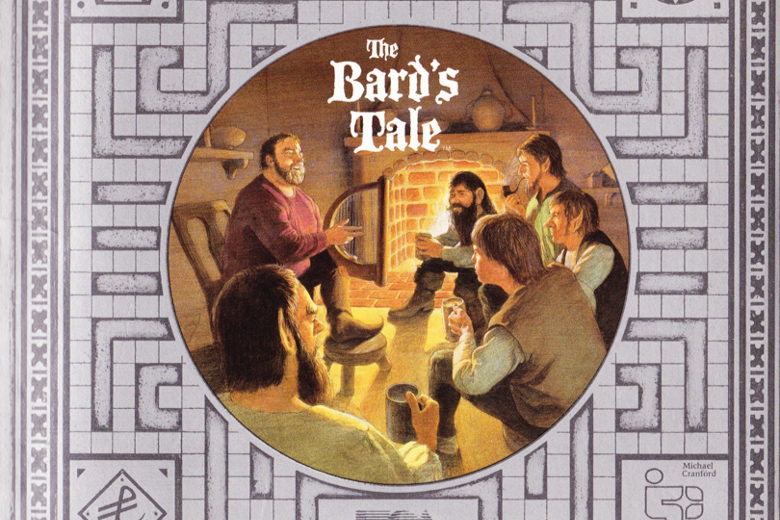
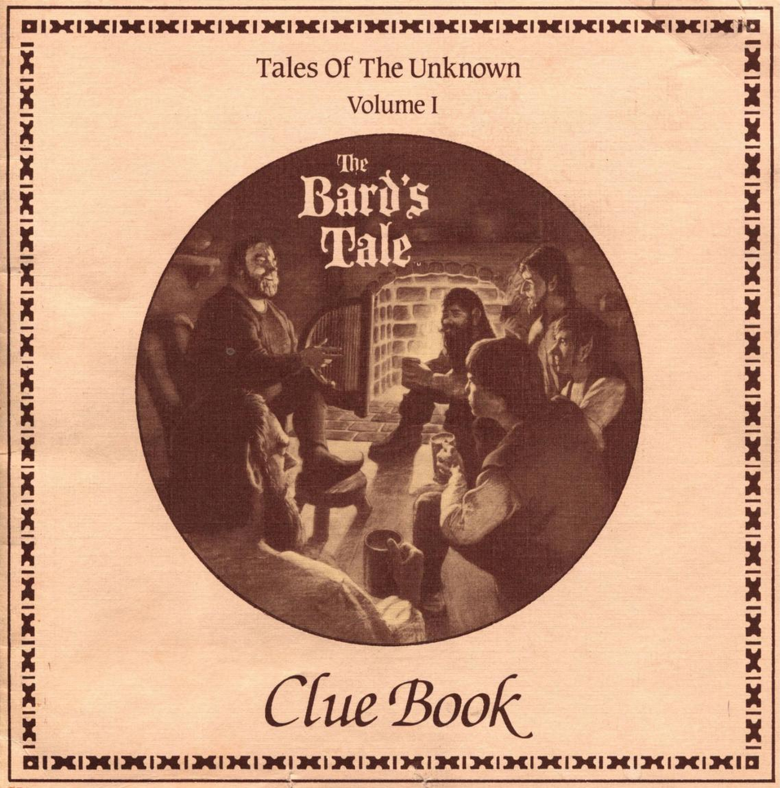
Hence: The Bard’s Tale.
Now, I’d previously skipped this because I’d heard that it was, frankly, a bit boring. Actually, I was basing that entirely on The Digital Antiquarian saying “long before the end of the first Bard’s Tale it’s starting to get a bit tedious” which probably isn’t entirely fair. But what drew me back was that The Bard’s Tale is one of those games that I think many who grew up in the “video game magazine” generation have–a game that I read about two sentences about but was always longing for.
It’s funny the things that lodge in your mind, isn’t it? Here’s the reader’s letter from Amstrad Action that’s stuck with me since literally 1991:
“Well, if this dork wants it so badly, it must be great!”
What’s funny is that in the intervening, uh, thirty years [“lies. The 90s are ten years ago”–Ed.] I managed to forget, I guess, that Amstrad Action’s “Balrog” ran an entire “The Bard’s Tale Club” section culminating with a short walkthrough just a few issues earlier.
Interestingly, I think this is one of those things where I can see myself maturing in real time–in the matter of months I went from a wean who skipped the Balrog section because it wasn’t about, like, arcade games, to a wee guy who was at least interested in them. That or a guy pretending to be a gnome caught my eye.
All I remember is that I’d missed my chance to get The Bard’s Tale. So, here I am, thirty [“ten… I’ll go as far as fifteen”–Ed.] years later, finally living my childish dreams.
First: if I’d got this in 1991 I’d have been completely baffled by it. Within a few short years I’d be playing Ultima Underworld, but I didn’t really even play that properly, and The Bard’s Tale requires, like Wizardry, a deep understanding of RPG character creation and party management. And also like Wizardry, it’s about as brutal as an RPG can get, killing your party or giving them debilitating, expensive-to-cure status effects that require you shlep all the way back to a temple to solve, in maps that wrap (no! Not again!!!) and are absolutely louping with spinners, traps and dark zones.
In some respects, I’m lucky that I mostly relied on luck and parental largesse to get computer games.
I’m also lucky that there’s a remake of The Bard’s Tale in the form of Krome Studios’ The Bards Tale Trilogy: Remastered, which rights-holder InXile Entertainment had them make (after, interestingly, a remaster from the team of one of the original developers, Rebecca Heineman unfortunately fell through). I’ll be honest, I was originally not planning on playing it, because it has genuinely awful Super2xSal-quality upscaled art. The game looks like this:
When in its best contemporary ports, it looked like this:
I know which I’d rather look at, though in some respects I thank god that the remake came out before they could us AI to upscale it all and make something that looked even worse. The benefit of playing this (nasty) looking versions outweigh the pain of looking at it though, because not only does it make a lot of quality of life improvements such as a shared inventory and doubled experience, it plays perfectly with a controller–so you can even play it with a Steam Deck comfortably.
If you’re a purist, however (and I don’t actually blame you) I have to admit that the version I played isn’t exactly The Bard’s Tale, as the “trilogy” version aligns all three games design, so in this version there are distance mechanics in the combat (enemies can start some distance from you and you have to advance on them) and bows and arrows are added, which I suspect changes the feel of the combat quite a bit. But to be honest, I can live with it. And I never used bows and arrows anyway.
Enough personal history. For the real history, you can of course go to someone like the aforementioned Digital Antiquarian, but it’s worth noting that even though The Bard’s Tale entered my own personal history in 1991, it was released in 1985 and is, I think surprisingly to modern eyes, the best selling computer RPG of the 1980s, selling a reported 407,000 copies.
I say surprisingly because The Bard’s Tale hasn’t lingered in the cultural imagination the way that RPGs such as Wizardry or Ultima have. It wasn’t first; it didn’t inspire much (Japanese RPGs were already divergent by 1985) and the series didn’t evolve any better than Wizardry did. By 1991, the year I discovered it, a cash-in construction set was released for anyone who hadn’t already moved on to the more active style of dungeon crawler begat by Dungeon Master, and it wouldn’t be seen again until The Bard’s Tale in 2004, which is a Bard’s Tale game in name only.
If you’re wondering what made The Bard’s Tale so successful, but then so irrelevant, it comes down to the fact that it is, ultimately, just a Wizardry clone that happened to come out on the popular C64 with nicer graphics than Wizardry years before Wizardry would reach the system, and be pushed by the already mature (and not yet fully soulless) EA.
Designed by Michael Cranford, it was his second attempt to directly make a Wizardry killer after HesWare’s apparently flawed Maze Master. For some reason, The Bard’s Tale is particularly known for the development team all sniping at each other publicly for years after the game’s launch (it even makes the Wikipedia) but it’s all so “he said, she said” and feels kind of… un-illuminating about the game. At least, it doesn’t add anything. The only part I find particularly interesting is that this game is officially called “Tales Of The Unknown: Volume I: The Bard’s Tale” because (and there is some argument over this) the series was supposed to be called “Tales Of The Unknown” but–and this might be a sign of EA’s encroaching soullessness–it was felt “The Bard’s Tale” was better known, so it got dropped.
(And if you’re wondering why I find that interesting, it’s because it would happen again with The Legend of Kyrandia, which was actually supposed to be the “Fables & Fiends” series. I’m not sure how many more examples of this there are.)
Anyway. As I said above, writing about the experience of playing The Bard’s Tale feels almost exactly like writing about Wizardry, bar for a few twists (I like to believe if they’d kept to “Tales Of The Unknown” maybe the sequels would have diverged more.) The main twist people get excited about is that you navigate the town in the same way that you navigate the dungeons (step-by-step 3D movement) but let me tell you this–it just means you have to do an annoying amount of schlepping about and fighting piddly enemies when you want to heal or level up, and I’d honestly rather a menu. The thing I felt like I felt I did the most in The Bard’s Tale was stand around outside the “Review Board” save scumming to try and make sure my level up rolls were good…
The rest of the game, despite featuring several dungeons, ultimately boils down to what you’ll do in Wizardry–try and find the best way to grind so you can kill the final boss. In the original game, this was a particular repeatable battle, which led to one of my best ever “this is too specific, that’s not how memes work” memes, clattering out to complete silence:
What a hilarious meme! You should repost this a hundred times.
But in the remake, which has a smoother curve (and only lets you do this battle once) you can get away with just ordinary grinding (thankfully). Now, the game does actually feature some puzzle solving–you do have to find and collect certain items–but moreso than Wizardry, I realised how much I miss a “proper” quest and side-quest system. Here you have to notice text prompts when you step in certain squares (which zoom off the screen immediately in the remake which means you’ll never see them–a big mistake) and piece them together, but getting deeper into dungeons is grimly unrewarding when that’s all you get. I started my game mapping this properly, but the maps get worse than Wizardry even faster! So much of the dungeons in this game are made up of “dark” squares that you feel like you’re navigating almost the entire game blind, to the point where I almost can’t imagine trying to complete this without having another map at hand and the in-game automap (I can hear the hardcore crusty RPG types rolling their eyes here…)
It could be alleviated, perhaps, if you could enjoy the combat, but there is almost no strategy to it. While it may partially be a flaw of the remake (where the updates fly off the screen at a hundred miles an hour) The Bard’s Tale has a bizarre difficulty scaling where you start by having your entire team killed by a single mouse holding a feather duster and about an hour later are fighting a squad of forty vampires at once. While it’s extremely funny to imagine them trying to all squeeze into a corridor, the problem is that your melee characters are just meat shields for your magic users. I made myself up the kind of squad that gets recommended for The Bard’s Tale and as much effort as I put into my critical-hit focused “Hunter” character (usually my favourite kind of RPG character! I love them crits!) I barely noticed them doing anything at all with their piddly single hit on one enemy compared to my magic users, who by mid-game have a spell that can wipe out every enemy you’re facing in a battle at once.
The game’s focus on the magic users makes it seem even odder that the series ended up going under The Bard’s Tale moniker. While your melee types are stuck in their starting class, your magic users are expected to change class each time they fill their classes’ spellbook, and they start again from level one keeping all their stats (quite unlike Wizardry…) meaning that by the end of the game you have spellcasters who look like Arnold Schwarzenegger in his prime hiding behind a flesh wall. The only reason you can’t ignore melee completely is that your magic users’ armour class is so bad–and that matters when you’re facing off against four squads of sixty enemies at least some of whom might get an individual hit off each before you’re able to hit them with the equivalent of a nuclear bomb.
(This magic user focus is symbolic of author intent, however. As Michael Cranford would explain in his GDC post-mortem of The Bard’s Tale and its sequel, he was “bored” by melee combat and was interested in making a game with seven different spell-casting classes that your characters would learn until they were able to become archmages, with melee combat your fallback when you ran out of mana. Although this was cut back to four classes with the archmage showing up in the sequel, this original idea explains everything about why The Bard’s Tale plays the way it does.)
But let’s be real here: the majority of The Bard’s Tale you spend not save-scumming level ups to make sure your spell-casters can mow down enemies like they’ve got a gatling gun is spend stumbling around in the dark or in battles you barely notice happening. The only real moments of tension are when you get given one of the many annoying status effects (reload–it’s not worth the hassle) or when you have to get out of the dungeon, because the game (sort of interestingly?) gives you absolutely no way to regenerate mana unless you’re outside1, so your grinding sessions are always limited by how long your mana lasts. But because you get so many level-ups with your magic users, it’s not much of a problem (by the middle of the game, I was staying down collecting three or four level ups before bothering to climb back out of a dungeon.)
The problem, sometimes, with playing a game like this is that devoid of the context–an old home computer, months of free time, it being the fucking 1980s–you play it as the object it is, rather than the experience it represented. Everything I’ve said is all true, but if you were loading this up on your C64 (or Amstrad!) with a bundle of paper maps in front of you and the latest “Bard’s Tale Club” tips, nursing your RPG party across months, slowly getting deeper into each dungeon, finding and writing down all the clues, I can see The Bard’s Tale as the evolution–a small evolution, but an evolution–of the Wizardry design it is.
You could recreate this if you really wanted! But the problem is that there are simply more fun, deeper, more interesting, less punishing ways to spend your time not even now–even then. Playing the first The Bard’s Tale, the same as playing the first Wizardry, you understand why they died out so quickly for not adapting. When they aren’t all you’ve got, they aren’t what you want.
The funny thing is, that I’ll still remember The Bard’s Tale fondly. Not for when I played it–but when I imagined it.
It looked like this on the CPC, too. Still better.
Will I ever play it again? You can continue the series seamlessly in The Bard’s Tale Trilogy, but the dungeons in the first game are so horrible I would never do this to myself.
Final Thought: Alright, you’ve read everything I’ve written and you still want to play this. You want to say you’ve played the most important RPGs! I get it. So next time, for supporters only: How to beat The Bard’s Tale!
You can find magic items that let you regenerate mana in dungeons but I never found any. And there’s the occasional regen spot in a dungeon, but I only found a couple. So the point stands, largely. ↩︎
Developed/Published by: Studio MDHR Released: 17/09/2017 Completed: 29/01/2025 Completion: Finished it.
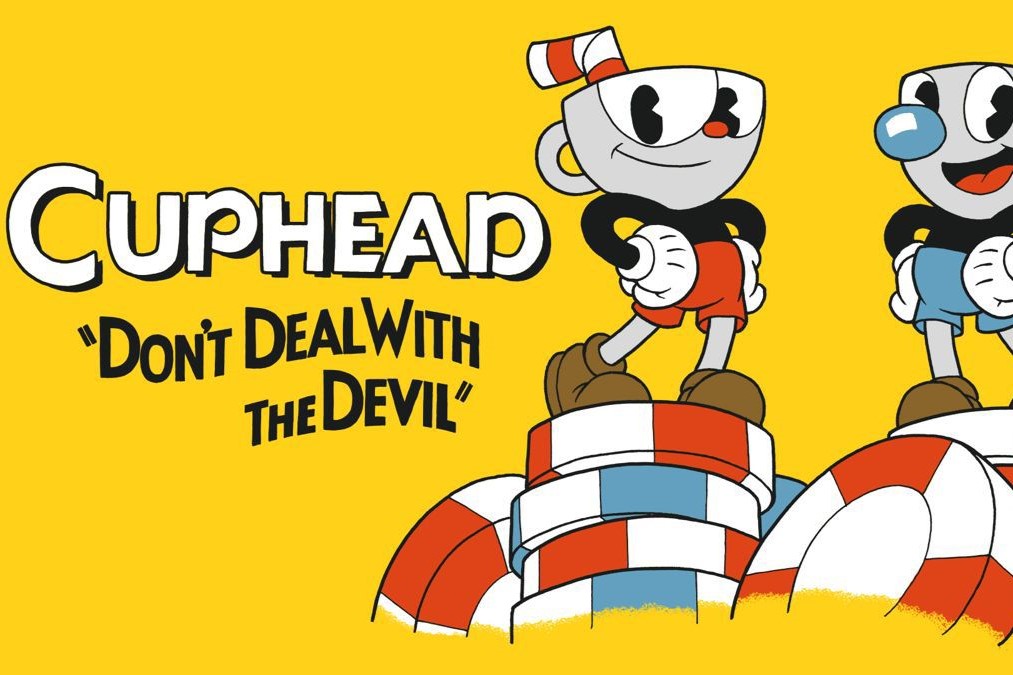
Well, it’s only taken nearly 8 years but I returned to Cuphead after bouncing off it immediately at launch, but I get Cuphead now. Apologies if this has been obvious to you for almost a decade, but… it’s Alien Soldier.
Cuphead is just Alien Soldier!!!
While in some respects, this is a mea culpa, let me stick to my guns by saying that Cuphead does close to doing nothing to explain what it’s trying to do, and actively seems to obscure it. When you start playing the game unless you’re extremely contrary, the very first thing you’ll do is play one of the game’s (rare!) Run ‘n Gun levels, which, and I am not being hyperbolic, is absolutely miserable. The level is immediately insanely busy, while Cuphead controls well, feedback on your attacks is terrible, hitboxes are unforgiving, and with only 3 hit points and no way to recover, you’ll die quickly.
If you’re me, it will just seem like a “git gud” ballache that isn’t worth your time.
The thing is, Cuphead is Alien Soldier. It’s not Metal Slug. It’s not even really Gunstar Heroes (even if it does take a bunch of inspiration from it.) The game is a succession of boss battles, not video game levels.
The Run ‘n Gun levels are just boss battles.
I dunno, maybe this was obvious to you. The levels are not to be played and reacted to. They are, as the rest of the game, to be practiced and learned.
Now, they’re still–I’d say– one of the worst parts of the game, in that they’re some of the least balanced content (in my opinion.) The trick with Cuphead, though–which isn’t immediately learned–is that almost no part of the game is more than about two minutes long!
In some respects, Cuphead is a more perfect example of video game form and function than I could have imagined. Visually inspired by the rhythmic cartoons of the 1930s but design inspired by the strict boss battles of the 90s, each level is a short “cartoon” that you have to play to the beat of to complete.
It’s interesting. You have almost no “play” in the expressive sense–a Cuphead level is played almost like a song, where you are just one member in the band. You can riff a little, but it’s no jam–everyone else is playing to the sheet, and if you miss your cue, it’s all going to come tumbling down.
It does, of course, make me wonder again as to the value of these certain kinds of play. In seeing Cuphead through, I had to dedicate myself to learning each level and boss battle till I could play it from memory. I could have dedicated that time to learning how to play an actual song with an instrument. You could argue that the value I got was in seeing the obviously incredible art, but I mean… I could just look at that.
But as I said above: every level is only about two minutes long, and I was surprised to discover that I’m generally “gud” enough at this exact kind of video game that once I learned what I was supposed to be doing (memorisation, not reacting) I was able to polish this off in under eight hours total, with (probably) about two of those on the unbelievably annoying, blatantly Gunstar Heroes-inspired Casino boss-rush that more or less caps the game.
You will see this what feels like eleven billion times.
That boss-rush, I think, sums up the weirdest thing about Cuphead, a game that famously took seven years to complete, because it’s the one part where you’ll actually sit with the game’s art and animation because you’ll be stuck there for so long. Otherwise? Cuphead is full of insanely carefully made art an animation that you see for like… a few seconds, and which is never used again. It’s so… conflicting.
On one hand, it does actually look amazing. On the other, any “normal” game developer, on creating an insanely expressive walking plant (or whatever) would go “alright, that’s the base enemy for the first world” and make a bunch of levels featuring it. Here it’s in about a third of one level then never seen again. There are entire bosses that I saw once because I beat them quickly (turns out I was particularly good at the levels which are shooters?)
(On the other, special third hand, I will admit that packing the game with filler just because you made a bunch of incredible assets isn’t actually an improvement. But here there’s no time to get comfortable with anything, never mind luxuriate in it, unless you really just want to replay the game on higher difficulties. Which I don’t.)
Another part of the game a “normal” game developer might have issue with is that the enemies and bosses have such specific and expressive animations and routines that there’s no place for actual feedback. There are no interrupts; as you shoot an enemy, some white flashes are the most you’re going to get. If I’m being completely fair, this was often true in the 90s, but I’m not sure I’ve ever played a game where my shots felt so… irrelevant. Like, they’re absolutely not, you have to be hitting the enemies, but as they cycle through their heavily animated stages, there’s this sense that they’d just… still do it if you weren’t shooting them. You actually don’t have any sense of how close you were to changing stages or defeating them unless you die.
So the part of the game that’s going to stick with you is the Casino, because it’s where the game design “shines” the most, while also being the most annoying (as it breaks the “two minute” rule.) There are nine bosses each of whom could be used as an entire boss in any other platformer, and by the end they were burned into my mind, as I had to work out how to most efficiently get through the level through my weapon and power up selections (though I haven’t highlighted it, that every boss is a puzzle of working out which loadout works best for you is one of the most enjoyable parts, and most obviously Alien Solider-inspired.)
It turned out that after beating my head against it using the “smoke bomb” dodge–which was allowing me to cheap out on a few of the earlier bosses–it turned out that it was better for me to take the earlier pain by using the P. Sugar (one free automatic parry) which would allow me to more easily beat the final boss of the stage.
It’s something that I wouldn’t have worked out if I hadn’t had to play it for so long, but did I enjoy that? Well, I felt the incredible shiver of relief endorphins on my winning run, but I can’t especially say it was worth it.
There’s a lot of artistry in Cuphead to go with a single-minded dedication to a particular kind of game design. I can say now that I respect it for what it is, and I’m glad it was over quickly.
Will I ever play it again? There’s a DLC, but I don’t actively see the point. This is one of those “ok, I get it” kind of games.
Final Thought: As I mentioned above, Cuphead took seven years, and as a game developer myself, I can’t help but wonder about some… inconsistencies(?) in the game’s setting that make me wonder if they were fixes to make up for cuts. Notably, not every cut-scene is animated, with some following a “storybook” format and some not, and the “storybook” concept doesn’t make any sense because all of the other signifiers imply that you’re not reading a book you’re watching a classic cartoon.
If it was a result of late changes, as a video game developer myself I can relate… whatever you have to do to get the game out the door in the end!
Developed/Published by: Odd Meter / 11 Bit Studios Released: 2/5/2024 Completed: 20/01/2025 Completion: Finished it.
Alright so we’re on our third game in a row with a female protagonist whose name begins with “I” but at least it’s not Iris, and she’s not a motorbike. I call that progress.
A bit like with 1000xRESIST, however, it’s rather hard to explain Indika without giving the entire game away, and this is a game that the less you know about it going in the more it will surprise and delight you. So to cut to the chase: I really think you should play Indika. If you haven’t yet, it’ll take less than four hours, and you could probably play it on the big telly with a loved one if you like to do things like that (and if you think they’re up to the game’s heavy themes.) So you can do that and come back here whenever you like.
…
Alright, just us who’ve already played the game then?
Indika hooked me, I’d say, when, while performing the game’s first “mission” of pointlessly schlepping water from a well to a barrel, Indika’s internal monologue/the devil says:
“The sisters *loved* Indika. Christian love is known to be patient, merciful and faithful. However, in a lowly, human sense, they didn’t love her that much.
…To be completely honest, they didn’t love her at all.”
It is a beautiful piece of writing that immediately lets you know everything about Indika’s situation; and it is performed with incredible relish by actor Silas Carson, who (improbably) played both “one of the racist trade federation aliens” and “the conehead Jedi” in the Star Wars prequels.
Although if I’d been thinking, I’d have played this through in Russian, the English dub is so insanely good I’m not completely certain that it isn’t primary–or at least, it’s valid in the way that if you’re watching a Spaghetti Western it can often not be any more “correct” to watch it in Italian based on how they were made. Carson gives a performance that puts me in mind of Malcolm McDowell at his most demonic, and Isabella Inchbald might be even better with a performance that isn’t so much restrained as laden with the restraint that Indika performs.
If Indika was just the narrative, just the story of a woman trapped by context, I think I’d still love it. But what blows me away about Indika is that the game investigates and critiques its own video game form as it goes. In a strange way, Indika couldn’t exist as it does without the big-budget high-fidelity third-person action games it critiques, but via its critique it shows that, if you take an actual moral position, if you actually try and tell a story, if you [gulp] try and create art… the form is just as valid???
I won’t pretend that this aspect of Indika isn’t often a bit blatant. I do not, completely, love the use of pixel art and older video game tropes. I’ve seen people riff that Indika is “Nuncharted” but I really want to impress upon you that the “joke” is not that you’re playing a nun in an Unreal Engine game that looks insane. The commentary is, well, I think it’s dual. On one very simple level, it’s that you can make a high-fidelity third-person game where your main character doesn’t have to shoot anyone. On a deeper level, it’s that everything these games make you do is absolutely fucking pointless, and it intentionally tries to disillusion you with it to make your experience resonate with Indika’s!!!
I truly believe this is brilliant. Sure, as I noted above, the use of some tropes is perhaps to blatant–the levelling system might lead to the game’s greatest gotcha, but it’s weirdly neutered by the game telling you what it’s doing too early (or at all, actually.) But I don’t think there’s any mistake in that one of the things you do in this game is move ladders about literally exactly the same way you do in The Last of Us, which in context is so, so funny. Taking perhaps the most ridiculous example of “interactivity” from a series with absolutely the most bloated sense of self-importance to make you question the value of it all. I adored it.
To be completely fair, I can understand if you were to bounce of Indika because it is, ultimately, using this to give an unyielding, strident opinion of religion–there’s really no wiggle room on it (if you bounce off of it because it’s taking the piss out of video games, I’ll leave it at “oh dear.”) But I love that this game has an unashamed point of view and I love how it takes you there.
Will I ever play it again? I’d actually rather like to play this again, one day, on an absolutely psychopathically high spec system. Maybe some decades later…
Final Thought: This isn’t really an essay for people who haven’t played Indika, but I do feel that if you’ve read this far and haven’t played it, and got excited to, I should mention again that the game intentionally deals with some legitimately heavy themes that I think some people might find genuinely distressing–I suggest you look up content warnings if you aren’t comfortable going into things blind.
Developed/Published by: Twisted Pixel Games / Microsoft Game Studios Released: 22/11/2013 Completed: 17/01/2025 Completion: Finished it.
Picked this one up because I saw Coury from My Life in Gaming recommend it, somewhat out of nowhere on the channel’s “The Games We Played in 2024” episode (always extremely enjoyable). It caught my eye particularly because it features FMV with James Gunn (filmed basically seconds before he’d take off with Guardians of the Galaxy), Tom Savini and Lloyd Kaufman, and that’s… really weird! It feels like something I’d have noticed at the time, not least because Twisted Pixel were on my radar as one of the teams of the “Xbox Live Arcade” era (thanks to releases like ‘Splosion Man.)
Well, I learned I’d missed not just Lococycle but a lot in the last decade, because not only had they moved on from being a Microsoft Games studio, they’d actually become part of Meta (boo!!!) and have spent their time making VR games for an audience of I assume very few, which is a bit of a bummer. Their last release was short VR beat-em-up Path of the Warrior in 2019, so I hope they’re doing alright (trying to destroy Meta from within, preferably.)
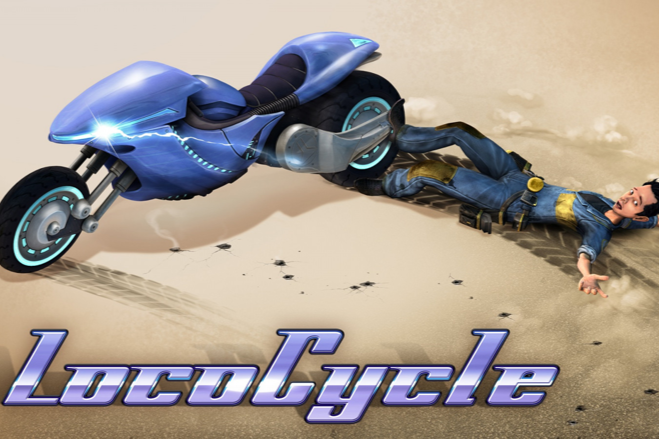
Anyway, I have to remark that it’s absolutely hilarious that I’d somehow manage to play two games in a row that heavily feature a character called Iris, except in this case she’s a sentient motorbike that can’t speak Spanish.
Yep, there’s no throughline with 1000xRESIST here [“no one would have imagined there was”–Ed.] though I have to say I’m impressed with just how stupid Lococycle is willing to be. It feels like a game where everything about it was decided based on the phrase “it would be funny if..” and then no one bothered to check if it that was actually that funny or not. I mean, this is a game where the main gag is that you’re controlling a bike that has a mechanic being dragged behind it because his trouser leg is tangled on the bike’s exhaust! And then the guy is played by Freddy Rodríguez in the FMV! That guy’s a real actor!
The game itself is pretty simple, but I’m going to go ahead and say it’s a pretty clever way for them to do a narrative game without having to resort to making something that’s not much more than a visual novel–or making it possible for the player to mess too much with the pacing based on how they play. Because every level has a constant forward momentum (you’re on a bike!) each level essentially runs on a timeline–waves of enemies and narrative hit when they want it to.
But it doesn’t entirely feel on-rails; you have to control the bike, and there’s just (just) enough variety to cover the game’s four hour runtime. You have the basic, Spy Hunter “chase and shoot enemies”, then a take on the classic Arkham Asylum counter combo system, and finally a bunch of quick time events that are (thankfully) easy and I believe impossible to actually fail. There’s a few other mini-games (one to repair the bike via on-screen inputs, etc.) and a mild upgrade system, too.
It’s nothing that special, and I think it could still have been a bit shorter (you’re definitely done with it at the end) but it’s all rewarding enough in the moment. The FMV videos really stand out because they have the strange pacing of low budget regional filmmaking and the non-sequitur dialogue is, if not improvised, amusingly non-professional. I can imagine lots of people being turned off by this, but I’m someone who seeks out things like Shower of Screams and is in heaven for the entire running time (seriously, watch it) so the entirely “off” nature of all the FMV here is a rare pleasure–it’s not intentionally bad in a way you’re meant to enjoy ironically, it’s just… awkward, and that awkwardness gets you on side. You find it charming.
I mean they managed to get Robert Patrick to play an evil motorbike and read some of the daftest dialogue he’s probably ever had put in front of him, and watching it you just think how lovely it is that he doesn’t take himself too seriously.
Anyway. Sure, Lococycle isn’t the greatest but I appreciate that there’s nothing else out there like it!
Will I ever play it again? I can’t imagine that I will.
Final Thought: For any historians out there, something really wonderful about the release is that there’s so much behind the scenes documentation in the game, with videos of all their shooting days and loads of photos of concept art and renders. I don’t get the sense that this did particularly well (it was an Xbox One launch title, oof) but I love that if you want to know literally everything there is to know about this game, it’s all right there!
Man, I just don’t know where to start with this one.
01
With 1000xRESIST, it’s good to go in blind. But not too blind. It’s important to understand that 1000xRESIST is a story first and foremost, but it’s also much preferable to not know what that story is at all.
02
The conflict, in my mind, is the eternal one: play vs storytelling. 1000xRESIST starts with the flash-forward–never my favourite trope–and throws you back to the beginning to play through a section that features fixed camera angles and no map, having you wander around lost picking up only the barest fragments of narrative–all of which reflect things that you ultimately won’t understand for hours. It’s a surprisingly cold, unwelcoming experience, and it was really only the plaudits that pulled me through.
-01
As is often the case, as I stumble to a year’s end I think about all the games, movies and music of the previous year that are on people’s “best of the year!” lists and that I never seemed to get around to, and then I start trying to cram it all down before I get too far into the next year and end up struggling to catch up in that one.
This year, it felt necessary to play 1000xRESIST, because it’s probably the game I heard about the most with the most universal praise–without actually learning anything specific about it. I guess it looked like… maybe a kind of third person action adventure, or something?
07
The thing about 1000xRESIST is that it’s never actually that fun to play. It cycles through interface and mechanic–third person, first person, some light “Gravity Rush” notes–but in many if not most cases you’re just walking between visual novel nodes. In at least one section that you return to repeatedly you do get a map–you even get a vague radar to help you navigate–but running around it to pick up extra beats is… at best boring, and at worst, annoying and tedious.
03
But once you are through the first segment, and the game starts to reveal more openly what it’s actually about… 1000xRESIST feels revelatory. After a significant period of time when it felt like every movie and TV show was about trauma, one does struggle to not roll their eyes at a work that is quite focused on the idea of “intergenerational trauma” but 1000xRESIST works to actually interrogate that idea from multiple vectors. What starts as cold SF peels one layer away to show a previous generation, and then one before that…
-02
“Every life, a universe.”
04
I think for many people, 1000xRESIST will speak to them so directly. It spoke to me. It reminds me of Venba, a game that I found deeply, deeply personal, dealing with many of the same themes, but it also faces up to many things about our current moment: how to not just survive totalitarianism, pandemics, isolation, but how we can find meaning, joy, connection. Reasons to continue.
08
The game’s true “mechanic” isn’t movement in the world–it’s movement in time. More rarely than you’d expect, you jump between nodes of memory, which allows you to, for example, move between spaces you couldn’t in one time, or more generally see specific moments that allow you to unlock more. It’s almost always extremely straightforward–I actually spend far more time in some segments where you were expected to find things in the levels that didn’t even feature the mechanic.
How much does the mechanic add? I’m not sure. This article’s framing is a lie; if you’ve skipped around the numbers, trying to piece it together in “order”–you don’t ever do anything like that in the game (though you do have to, in your own mind, later). You really just go through the story in order–like you’re reading an article on a page.
05
I think 1000xRESIST’s most damning failing is that it is so engaged with reflecting its themes that it just goes on too long. It sounds harsh for a game that I polished off in a neat seven hours, but the game has a split structure–a second round of mystery–that felt like when a Netflix series cuts away from what you’re actually interested in for an entire episode to drag things out.
06
The music is extremely good for a soundtrack this expansive (85 tracks???) and the effort exerted here pays off; the music does what good music does–fills in a lot of the blanks.
10
1000xRESIST takes a strange turn, right at the end, where it acquiesces to being a video game in a way that it hasn’t before. Is it cathartic?
NO
YES
Epilogue (no)
1000xResist is a game about memory, really. But it makes a decision to show us probably the most consequential character never from their POV; no matter how many memories we see of them, we never know them. There are blank spaces, at points, where you might feel holes can be poked; things don’t fit together. Maybe you don’t like this person, in the end. I know I wasn’t impressed. Did they deserve my catharsis, my forgiveness?
Developed/Published by: PanicBarn / No More Robots Released: 31/01/2020 Completed: 10/01/2025 Completion: Got the “good” ending!
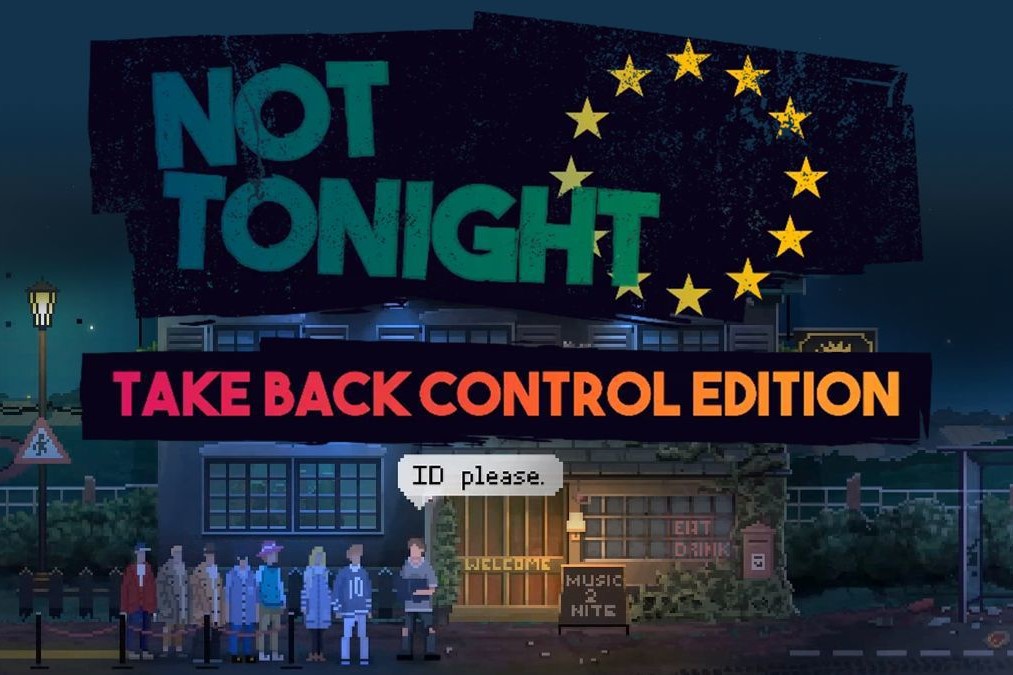
It’s 2025 and we’re coming up on five years of Brexit, so what better time to play Not Tonight, PanicBarn’s Brexit satire? It’s not just because I scrolled backwards on my Switch to find the earliest game that I’d bought and not played or anything. It’s definitely because of the anniversary.
A long time ago, I was critical of Papers, Please for casting the player as a border agent in a fictional non-western country, arguing that it would bite far more if you were actually playing a TSA agent or something. To be honest, I do think I was being a bit inflexible (I mean, allegory is fine! I love Andor!!!) but it’s really nice to play Not Tonight and see a game that is not just like “I know writers who use subtext, and they’re cowards” but positively gleeful about it. The contrast between Papers, Please and Not Tonight had me going: you know what? Garth Marenghi was right.
In Not Tonight, you play as a Brit who has been stripped of their citizenship due to the vagaries of Brexit, and you are forced by an odious immigration agent to work as a bouncer in order to survive and pay him off. To not be completely bleak however the game also features a thread of resistance, as you can in small ways work to undermine the government’s ever-increasing xenophobia.
In some respects, Not Tonight feels more vital than ever. The game presents a UK that gets more and more shite as the game goes on, and I think there’s a chance that if you played it even a few months earlier you might have gone “well, the UK is getting more and more shite, but it’s not as bad as this game is making it out to be.” However, in the cold light of a Trump re-election and the lame-duck Labour government grasping at straws that all seem to say “fuck immigrants” or “uh… AI?” on them, it’s hard not to see a future coming quickly in which things get worse much quicker. I mean while I was playing this there was a huge right-wing civil war over skilled visas in the USA, that bell-end Elon Musk argued Nigel Farage wasn’t right-wing enough for him (because he wouldn’t support literal white supremacist Stephen Yaxley-Lennon!?) and a poll showed that if another election happened Reform would smash it.
It really does feel like we’re living on the precipice of another event like when Liz Truss crashed the UK economy, except instead of it all being taken back and months later Liz Truss claiming that it’s libelous for anyone to say she crashed the UK economy, whoever in charge will skip right to delusion without the “take it all back” part.
It’s grim.
Anyway, Not Tonight is very much “Brexit Papers, Please” in terms of most of the play is going to be looking at documents under time pressure, and choosing to let people in or not, with penalties and failure tied to, well, how well you can look at documents under pressure. Initially I was like “this isn’t fun” and then I was like “oh yeah, this is fun” but the problem is that you hit “this is repetitive” way, way before the game is over.
As much as Not Tonight adds wrinkles to the proceedings–now you have to scan people, now the criteria are different, etc.–the game can’t really escape that you’re doing the same few inputs over and over basically forever. There does come a point where the game is almost second nature, and you’re just speeding through it, but I can’t say that bends the experience around to “fun” again. It’s more sort of… blessedly untroubling.
I suppose it could have been much worse–the game takes place across 3 months in a year, and when you start playing it’s January, and about halfway through the month you definitely think “fuck I can’t do twelve months of this shit.” It’s probably about a month too long, but there’s a rule of three so I know why they stretched it out a bit.
(To be honest, the problem might be that the months break the rule of three by being four weeks long, and each month that last week feels like filler. I guess PanicBarn will have to take this up with the Babylonians.)
So, it’s too long, and–most disappointingly–the game fizzles out completely at the end, with a climax that feels rushed and unrewarding. In fact, it’s a touch undermining; the game is thematically strong in its sense of place, but narratively doesn’t seem to work towards any meaningful critique. I didn’t need some sort of “Love Conquers All” Brazil ending, but a “and then everything was fine” title card is the worst of both worlds.
Despite saying all that, I liked Not Tonight, and I think it is because of the context I played it in–it may be a broad satire, but it’s not like it’s not right! Things are fucked!
Will I ever play it again? There’s a DLC that came with it that continues the story on with a side-character that I find the idea of charming enough, but as I said above, the game outstays its welcome just enough that I’m not too bothered about playing it. Maybe one day though, after a long enough break.
Final Thought: Something the game misses interrogating too deeply, sadly, is the player’s own role in post-Brexit society. It doesn’t take any moral stance on if it’s acceptable to work turning away potentially desperate people when you work jobs on the border as you are forced to and have no way to subvert your role, which I think is a bit too “only following orders” for my liking. In the same sphere in the game design there’s a exploit of sorts in that if you buy a particular set of clothes you can sell drugs with no cost to your “social score” and be massively rich by about halfway through the game, and I was struck that I didn’t just sell drugs to make the money–I did it because I was embodying the role of someone who didn’t give a fuck about anything except my own selfish survival because of how the country was treating me.
I think both of those things would have been really interesting to force the player to consider, and the subtleties of culpability would have helped the satire hit home harder. I mean, I already know things are fucked, and I know it’s the fault of the cunts in charge. But I also think it’s fair to be asked: well, what am I doing about it? What are you doing about it?
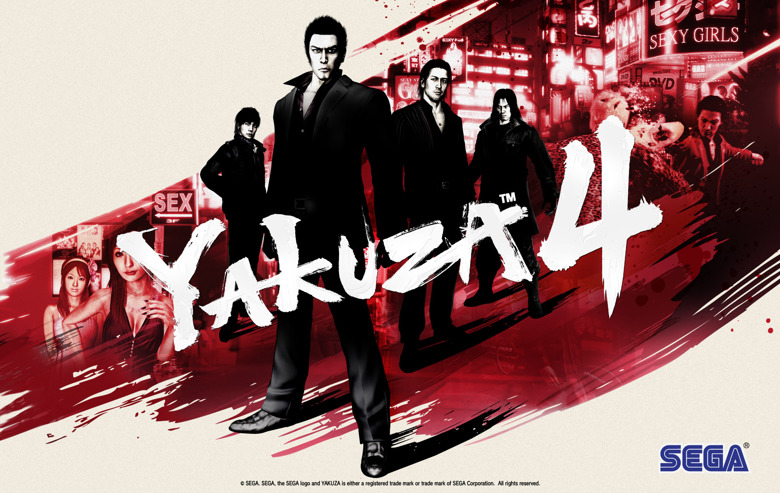
Developed/Published by: Sega CS1 R&D / Sega Released: 15/03/2011 Completed: 18/12/2024 Completion: Finished the story and all substories (other than the hostess club ones.)
Well, it’s taken me five years to play another game in this series, thanks to a global pandemic meaning my PS3 was in storage miles and miles away from me, and because one of the main roles, Masayoshi Tanimura, was recast for the remastered version, I absolutely refused to play it first (it’s like wanting to play a Lucasarts adventure in EGA. You want to see the original author’s intent!)
Anyway, it’s a good thing too, because–as I mentioned the last time I was on the Insert Credit podcast–Yakuza 4 takes ages to install and while it’s installing it’s the only place you hear the vocal version of the main theme, “For Faith” and it absolutely slaps. They literally just play it about ten times in a row, setting a precedent where I play it ten times in a row. I find it hard to believe there will be a better track across the entire series (though I’m excited to find out if there is) because I have to be honest that nothing from 1, 2, or 3 stuck with me.
You should listen to this while reading the rest of the article, right?
Unfortunately, outside of one of the most hype tracks ever, Yakuza 4 is… kind of a mess? It’s not actively the fault of the Yakuza core, which is all there and accounted for, but simply that the game feels like it’s a billion hours long and the narrative is… genuinely nonsensical.
Taking place a year after Yakuza 3, with Kiryu still running an orphanage in Okinawa, the plot hinges on a massacre of 18 yakuza in 1985 in a botched hit on a clan chairman. We play and follow the stories of Shun Akiyama, a loan shark(!), Masayoshi Tanimura, a corrupt cop(!!) and Taiga Saejima, the guy who did the massacre(!!!) gradually unravelling the mystery of what happened and why it connects their lives, before Kiryu has to show up and (ostensibly) pull all the threads together in a humdinger of a climax.
This does not, exactly, go as you might hope. First let me say that one of my absolute favourite thing about the Yakuza games is that it is a rule that you are playing the kindest, nicest person who ever lived, but who will also, at a drop of a hat, beat you within an inch of your life with the nearest piece of roadworks. It reaches absolutely absurd levels here as our loan shark turns out to be giving his money away without even charging interest [“come on man, at least charge inflation”–Investment Ed.] our corrupt cop turns out to be shaking people down to support and protect immigrants who otherwise have no legal recourse, and our mass murderer turns out to (spoilers!) have never killed anyone at all!!!
This “our heroes are the most honorable men to have ever lived” gimmick is especially funny here because if you look a bit deeper it gets a bit confusing. Our loan shark does a surprising amount of funnelling desperate people into sex work as a condition of a loan (sex work is work, but it definitely feels like coercion) our corrupt cop turns a blind eye to some seriously fucked up stuff to get kickbacks, and Saejima… definitely intended to kill those dudes!
The problem ultimately is that compared to the (relatively) straightforward stories of 2 and 3, 4 gets lost in a web of increasingly unbelievable twists even as it should be following a fairly straightforward episodic form. You have never seen any piece of media where this many characters get shot to death and then turn out to never have been shot at all. Indeed my favourite bit in the game might be when a character says “ok I’m going to kill these two people now” before a cliffhanger, only for one of the characters you just thought were shot to show up in basically the next scene and for another character to attempt to explain away why he said that. It doesn’t work.
The game was written by Masayoshi Yokoyama as the other games have been, but I have to wonder if the script was in flux for a long time, or if there was meddling from the top down. Notably, Kiryu feels absolutely inessential to the plot here. His chapter front loads about an hour of cutscenes and he doesn’t really do anything except any substories you choose to do. It’s possible he wasn’t originally planned to be included, but maybe they just liked the idea of the fourth game having four protagonists.
The game generally feels unbalanced–the first character you play, Akiyama, does seem to have the most interesting stuff to do, and he’s the most charming, interesting non-Kiryu protagonist–and I was disappointed in the substories this time around. Maybe it’s just that I’m four games in, but “go to place, beat up guys, go to other place, beat up guys” isn’t that interesting the hundredth time you do it, and the stories generally aren’t interesting enough to make up for it.
As usual, there are a zillion mini games, but this time round managing hostesses is made as tedious as possible (you have to walk around the club listening to people and constantly dressing your hostesses differently???) and the only other in-depth mode is a martial artist manager that I wasn’t too excited for either.
This is still a Yakuza game, though, and it’s still entertaining! I love strolling Kamurocho and I still enjoyed the fighting even if I didn’t love having four different fighting styles to remember in the climax. The issues really do relate to the story, which constantly undercuts any opportunity to be moving by constantly being confusing or ridiculous. The game actually ends with an intense one-on-one battle for each of the protagonists to a different arrangement of For Faith and it should have made me so hype but for at least three out of four battles I was confused as to why they were happening.
Unfortunately, I’ve heard that Yakuza 5 doesn’t make massively more sense, but hopefully it won’t take another five years to get to it.
Will I ever play it again? Of the Yakuzas I’ve played, this definitely feels like the most inessential to play. 1 and 2 have Kiwami versions (although I believe that 2 has some cuts and visual downgrading in its remaster) and 3 was chopped to ribbons in localisation, whereas this one has everything in the remastered version. So probably not!
Final Thought: Actually, it might take five years to get there, considering I’ve got two PSP exclusive Yakuzas and Yakuza Dead Souls to get through first. There are so many of these!!!
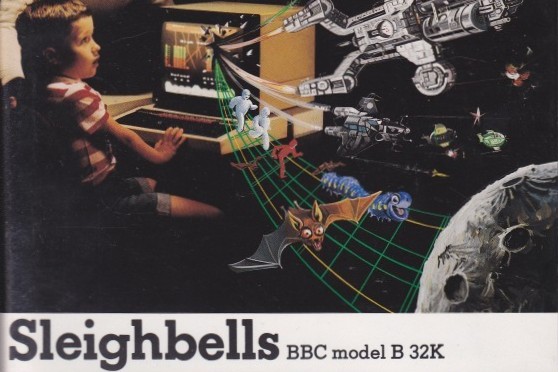
Developed/Published by: A.G. Cartlidge / Gemini Released: 1983 Completed: 02/12/2024 Completion: Delivered five presents to Santa.
Altogether now, in our best Noddy Holder impression: It’s CHRISTMAS! And here at exp. Towers that means we… play through ropey old Christmas games that we’ve dug up because maybe it’ll make us feel festive, although normally it just makes us shake our head in despair, thinking about a situation where anyone received these games and then had to play them because they didn’t have anything else to play.
So here’s Sleighbells1 for BBC Micro, which I think is the first time that arguably the UK’s most important home computer has shown up here on exp.. As part of the BBC’s Computer Literacy Project, it exposed entire generations to computers for the first time (and the BBC Micro was still being used in some schools until the mid/late 90s so it crossed from Boomers all the way to late Millennials). While I think that the most understandable point of comparison for non-Brits might be the Apple II, being a more expensive, sort of schooly “real” computer, I don’t think that really captures the utopian nature of the BBC Micro and the associated project (which you can read all about in NESTA’s excellent “The Legacy of the BBC Micro” white paper): an attempt to create a wide cultural change where the general British public would become truly educated in the tools that were going to change the entire world. To not just watch computers change everything: but take part in it.
When you think about that–and especially when you read the white paper–you can’t help but become a bit disappointed in the world we live in now. How computers work has become completely unknown to the average person, and our ability to control them has become ever sanded off as we get pushed into walled gardens and proprietary systems, and our governments seem to have absolutely no imagination in trying to actually transform society, at best hoping corporations might help regions “level up” rather than just suck money out, but mostly trying to keep enough blame on immigrants and minorities that struggling people don’t stop and consider a better world might be possible.
Sorry, this isn’t very Christmassy, is it?
Now. I’d love to follow this train of thought to explain something that I’ve often wondered about–that the BBC Micro seems to get discussed so much less in retro circles than contemporaries like the ZX Spectrum. Is it possible that utopian promises, long dashed, simply make us too ashamed to remember the venerable Micro? That it reminds us, always, that another United Kingdom was possible?
Not really. It’s just that the BBC Micro was really expensive, most people only played educational games or used LOGO on it, and commercial games outside of a venerable few were… a bit crap. Even compared to the likes of the Speccy.
But back to Sleighbells. While it does seem like Santa’s Sleigh Ride is the first Christmas game ever (look, I’m just not going to count Christmas Show and Tell) I keep finding new Christmas games that could easily be the second–it seems like 1983 was a big year for Christmas for some reason.
Packaged in generic box art and featuring absolutely no sleigh bells, Sleighbells is a multi-screen game that probably has some arcade inspiration but I’d be very hard pushed to work out what it is. Narratively, Jack Frost, who always seems to have a problem with Santa, has stolen all the presents, and so as Santa’s assistant you have to venture into his secret cave and steal them all back. You do this across four screens:
On the first screen, you have to get to the entrance while avoiding a gang of snowmen who make a beeline towards you.
On the second, you just have to run through the cave, avoiding the snowflakes that fall.
On the third, you… do the same thing again, but there are snowmen popping out of the ground and there’s a bat flying about that will kill you literally the instant the level begins unless you move forward immediately. Fun!
On the fourth, you’re supposed to catch the presents being pushed off ledges by… spiders(?) and move them to the left of the screen. The presents can squash you and that bloody bat is still there, but there’s absolutely no time pressure or anything so the first time I played this I just stood thinking I was “collecting” presents and wondering when the level was going to time out until I realised I had to move them one by one to the edge of the screen.
And that’s it, although it loops if you haven’t gone completely doolally with all the excitement.
This is, of course, rubbish, only remarkable because of how annoyingly difficult it seems at first (the snowmen mob you immediately, and that bat can fuck off) but once you get it it’s just a test of patience really. It does have a very festive title screen with a bleepy rendition of Jingle Bells, but that’s about as far as I’ll go.
Festive vibes ranking: LOW
Will I ever play it again? No!
Final Thought: Something I would be remiss to mention is that the spirit of the BBC Micro does live on in the form of the Raspberry Pi, which does see lots of ordinary people learning how to hack away at a very open computer format, even it is usually just to get a media server running, or a emulation box. It might have been nice, as Ian Livingston pitched, if the device had led to a second Computer Literacy Project as the BBC Nano though.
It’s Sleigh Bells on the title screen, but “Sleighbells” on the box. I guess I’ve decided house style is to say the box is correct. But this probably doesn’t come up much outside of slapdash home computer games. ↩︎


 Unlock with Patreon