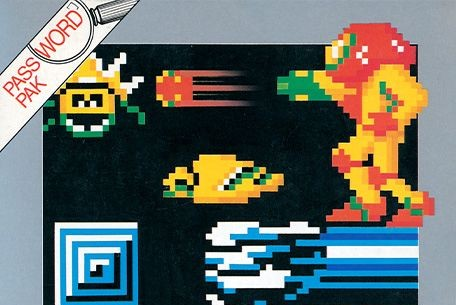

Developed/Published by: Nintendo R&D1, Intelligent Systems / Nintendo
Released: 06/08/1986
Completed: 28/08/2025
Completion: Killed Mother Brain in less than three hours.
I hope it was obvious from the conclusion of my article on The Legend of Zelda that the game I was referring to was this, Metroid, but I suppose the real heads might have been like “well, The Mysterious Murasame Castle is pretty good, I guess…”
Metroid is a game I was absolutely certain I was never going to beat. After all, I’ve beaten Metroid: Zero Mission, isn’t that good enough?
But the original is a game I’ve picked up and put down a few times out of my urge to really understand the Metroidvania genre’s beginnings, and the reason I’ve put it down is probably the reason most people do: the obvious lack of any sort of map (never mind an automap.) That would be bad though, but when you combine that with the game’s reliance on completely hidden paths for progression, and an early difficulty that is, I think, worse than The Legend of Zelda… Metroid just isn’t very enjoyable. It doesn’t seem worth the effort.
Sadly, unlike The Legend of Zelda, there isn’t a wee hack in pulling up the manual, because it doesn’t offer the kind of help you actually need. While it does offer lots of useful hints on what Samus and enemies can do, the included map is very vague. With the graphics in each area quite samey (look, you tell one corridor or shaft apart from the other) you really need to therefore either have a map already to hand or be mapping the game out as you go, and I think my resistance to the original Metroid has always been that while in a game like Wizardry or The Bard’s Tale you can take your time to draw out maps, here you’re stopping during an action game, which apart from just being sort of annoying, is an active flow breaker.
Thankfully, it’s 2025, and I again have to thank two people–romhacker Infidelity and Hand Drawn Game Guides artist Phil Summers–for making Metroid manageable. Infidelity has ported Metroid to SNES creating what is easily the ultimate version of the game, with the Famicom Disk System saving, the addition of a mini-map(!) and even the ability to combine the wave beam and ice beam like later games. And Phil Summers’ Hand Drawn Game Guide for Metroid might be the perfect thing to hand for a player who doesn’t want to just follow a walkthrough beat-by-beat: it offers a route through the game, but the maps and tips leave a lot of the exploration and discovery up to the player.
It’s a shame, to be honest, that even with all of that, I still just don’t like Metroid all that much. In fact, I’d argue that the Metroidvania “vision” here is still so far off that this is very much a fish with limbs flopping about gasping for air compared to an actual amphibian. Er… Metroidphibian.
When you start playing Metroid, there is some familiarity outside of the franchise signifiers–the opening area gives you some rope, but works to funnel you towards the necessary early pickups before the game opens up. But quickly you realise Metroid is far less interested in the now de rigueur “I can’t go there / unlock ability / now I can go there” loop than just killing you as much as possible and getting you lost. The upgrades which are required for progression act generally as just “keys” to new areas and don’t provide you the means to solve puzzles or allow you to interact with them in interesting ways (even the morph ball goes strangely underused) so you mostly find yourself shooting/bombing walls or hoping lava pits have a false bottom when stuck after you’ve got them all. And like other games of the era, Metroid makes sure to often punish you for doing that, giving you plenty of pointless dead ends that just sap you of health as you try to survive.
In fact, I’m struck by how the game poorly rewards exploration beyond getting the necessary upgrades, and then how short the game actually is once you have them outside of forced backtracking–kill two minibosses and then head to the final section to kill Mother Brain, a section which is completely linear.
As a result of all of this, you realise familiarity with modern Metroidvanias is really a hindrance when playing Metroid. For example, beam upgrades (ice or wave) don’t seem to actually increase your power much if at all, so unlike later games, Metroid seems tuned around using your missiles on regular enemies. You’d think therefore that missile upgrades would make exploration worth it, but you end up getting bogged down just to have five more missiles in your quota, where if you beeline to the bosses, each one gives you an almost absurd 75!
And you’ll want to do this because the drop rate on health and missiles is so miserable that every trip down a dead end (or worse, a corridor you’ve forgotten you’ve seen already) requires what feels like never-ending grinding of the game’s infinite spawners. When you first see them, you think “that’ll save me sometime” but after your first ten, twenty minutes waiting for enough health to fill one tank, you realise you’re far better just running through the levels trying to rely on screw attack jumps to avoid combat (which does, generally, work.)
That even goes for the last section of the game which should be tense and exciting as you finally face off against the Metroids, but no, you’re better off… freezing them and running past. To add insult to injury, Mother Brain is just a complete pain in the arse. It’s an endurance test–have enough health that you can survive being shot the whole time while you pound her with missiles.
I suppose that the escape is a fairly-exacting platforming challenge is kind of funny, though.
Much like The Legend of Zelda, though, Metroid feels like a product that makes more sense in its original context of players with bags of time and nothing much else to play. Bar one very annoying thing–that you have no way of shooting things shorter than Samus, which really makes the opening of the game frustrating and much harder than it should be–Metroid controls well, and I assume the players willing to map got a lot out of it, and those who didn’t probably just eventually got Samus powered up and to the end by sheer effort (the zone between “I have the morph ball and missiles” and “I have enough energy tanks and the screw attack to survive to explore” is so miserable, however, I do find it hard to imagine.)
Even if I find that hard to imagine, I don’t find it hard to see how Metroid captured people’s imaginations. I’m not sure it has quite the same completeness of vision as The Legend of Zelda (or The Mysterious Muramase Castle, for that matter) but the visuals and especially the sound really give the game a uniquely lonely feel; a solo decent into a deadly and foreign cave system (I do love that the name of this game is a portmanteau of “metro” and “android”–I can almost imagine one of the designers, lost in one of Tokyo’s many confusing train stations, thinking “there’s probably a game in this.”)
And maybe it’s just the fact that it’s a side-on 2D platformer, but even more so than with The Legend of Zelda/Sabre Wulf, Rare has a case that Metroid is heavily inspired by Underwurlde, if not an outright rip off. Not just the shafts with platforming challenge (which would be enough) but that areas of the map are locked off without using a particular weapon.

If I was being really harsh, I’d point out there were plenty of platfomers of the era with big maps to explore, things to collect and keys to use, from the obscure to the very well known. Impossible Mission. Saboteur. Citadel. Journey To The Centre Of The Earth. And many of these games play well, too!
So I after playing it all the way through, I do feel like I still have some questions if Metroid really does deserve the crown as originator, but then I also suppose we also live in a world where we don’t play Beneath Apple Manor-likes.
Will I ever play it again? Well, there’s no Satellaview version of this, so I really have played the “best” version of it I could. I’ll play Zero Mission again, though, which I remember as being the peak of the franchise, and I can’t remember if that’s controversial or not.
Final Thought: Of course, there’s also the other side of the Metroidvania… the vania. And the first game in that franchise doesn’t even attempt to be a Metroidvania. It’s even got a new SNES port too…