Tag: nintendo

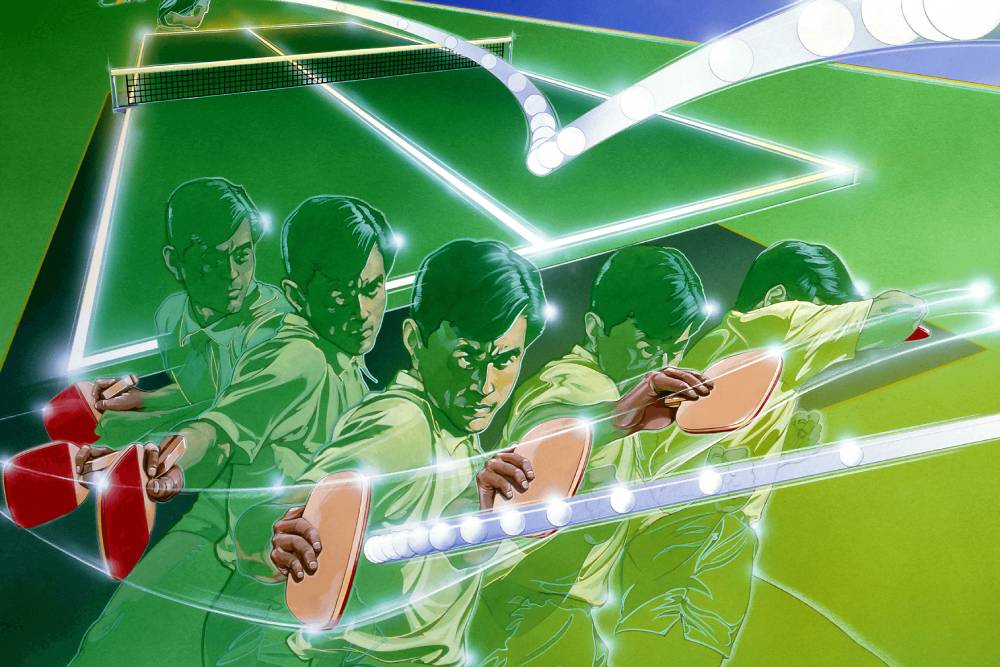
  • Smash Ping Pong (Konami, 1987)

    Smash Ping Pong (Konami, 1987)

    Developed/Published by: Konami / Nintendo
    Released: 30/05/1987
    Completed: 09/04/2025
    Completion: Beat a computer opponent!

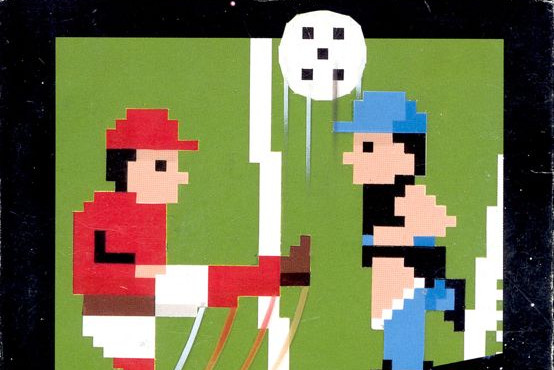
    Smash Ping Pong is a bit of a mystery in the Famicom Disk System line-up, and Nintendo’s history in general. Created, and originally released, by Konami in arcades (and on other home systems such as MSX) as Konami’s Ping Pong, for some reason Nintendo put it out on the FDS themselves. This is especially odd when Konami were one of the few third-party developers to go all-in on the FDS–like Nintendo: their new releases were on disk, not cartridge.

    There’s a few possibilities as to how Nintendo ended up publishing this, but it does seem to stem from its very likely background as a port that Konami had kicking around in the back of a cupboard unreleased. In fact, The Cutting Room Floor says as much: that there is “ample evidence” that it’s a salvaged cartridge release, most damning that the game code includes a serial number that aligns with “missing” serial numbers from Konami’s early Famicom lineup.

    The question really is: why put a game that’s already a couple of years old by this point out on the FDS? Well, Nintendo will have almost certainly been looking for more games to help quickly fill out the add-on’s catalogue, and sports games are a perennial filler.

    Or, perhaps Konami considered it more profitable to fob Smash Ping Pong off on Nintendo to handle all the publishing duties for, considering the Famicom Disk System’s licensing terms anyway, which requested partial copyright ownership and royalties compared to the complete wild west of Famicom cartridges.

    But having said all that, it might just be that someone at Nintendo really liked Konami Ping Pong! Because… it’s really good?

    I’ll admit to not having much experience with ping pong games before this–I’ve never played the much loved Rockstar Table Tennis, for example–so I don’t know if what Smash Ping Pong does is unusual or influential, but I am extremely impressed with a design that cleverly side-steps any questions like “well, why not just play a tennis video game, aren’t they the same?”

    You see, in Smash Ping Pong, you don’t control the movement of your paddle. Your disembodied hand and paddle already track the position of the ball. The game is instead entirely about which strikes you use, and the timing of your strikes.

    While this takes a bit of getting used to–and the speed of the game doesn’t help, but then it is ping pong–savvily the game only features three kinds of strikes: drive (a fast strike) cut (a slower strike) and smash (self explanatory?), chosen with a tap of the d-pad, plus the ability to change if you’re holding the paddle fore or backhand by holding A, which can change the direction of the strike.

    It is shockingly elegant, and I think is one of the best examples of a game trying to replicate the experience of playing a sport at least at this early stage I’ve seen. You don’t have to think about positioning–in ping pong, it’s about hitting the ball, not about getting into position to hit the ball, right? And so it’s all about watching the ball and getting into a rally, trying to force your opponent into a mistake. You don’t need to think too much, but you do need to practice and learn how to guide the ball in an advantageous way, when to change strikes, when to change to fore or back hand.

    Screenshots really don’t bring across how exciting this game is to play.

    There is some “give” to the design though. When a strike goes awry, either from your or your opponent, a tone is played to make it clear this is a slow, easy ball that you can smash–usually an easy point unless you’re at the far end of the table and don’t change hand position. 

    It just… works, and while it does suffer from the classic “one player is at the back of the screen” issue of this kind of game (though it switches positions to keep it fair) Famicom owners who played it probably found this one of the most balanced and engaging sports games for two players on the system. Not as flashy as Pro Wrestling, but a good companion.

    It does fall down a bit on single player though. You can select difficulties and play either first to 11 or first to 21 matches, but there’s no tournament or campaign mode; you just play a single match and you’re done, at best a practice mode to get you up to speed to play another human. They do try for some character–the Famicom Disk System mascot Diskun shows up, and Donkey Kong is in the crowd (he probably didn’t want to go see the tennis, what with Mario being there) but it’s not quite enough to keep the attention.

    I guess you could imagine upping difficulty as a tournament, but it’s hardly satisfying.

    I’ve talked previously about the kind of “curated” collection you would want to end up with if you were a Famicom collector–a selection of games you might actually play on occasion rather than just have on shelves–and this would 100% be in mine along with Pro Wrestling. Didn’t expect that at all.

    Will I ever play it again? I would love to. It’s funny, while playing this I was struck by the question of how often “retro” gamers actually play these old games with other people, or if they do just sit in collections. Because this is ripe to be rediscovered–it doesn’t feel like a design where you’re better off playing a newer ping pong game instead, because it’s so focused and complete as it is.

    Final Thought: I liked this so much I wanted to see if it was fondly remembered by Japanese players so looked it up Nintendo’s handy Famicom 40th Anniversary site, only to learn, tragically, that it didn’t even get a sniff at the “What do you think of when you hear ‘sports game’?” poll, which had rank rubbish like Volleyball in ninth.

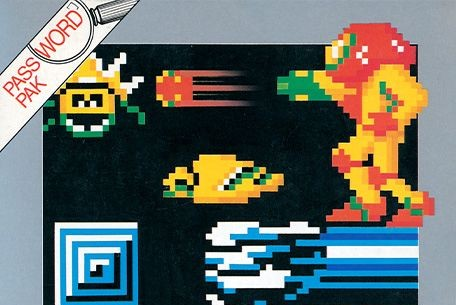
  • Metroid (Nintendo, 1986)

    Metroid (Nintendo, 1986)

    Developed/Published by: Nintendo R&D1, Intelligent Systems / Nintendo
    Released: 06/08/1986
    Completed: 28/08/2025
    Completion: Killed Mother Brain in less than three hours.

    I hope it was obvious from the conclusion of my article on The Legend of Zelda that the game I was referring to was this, Metroid, but I suppose the real heads might have been like “well, The Mysterious Murasame Castle is pretty good, I guess…”

    Metroid is a game I was absolutely certain I was never going to beat. After all, I’ve beaten Metroid: Zero Mission, isn’t that good enough?

    But the original is a game I’ve picked up and put down a few times out of my urge to really understand the Metroidvania genre’s beginnings, and the reason I’ve put it down is probably the reason most people do: the obvious lack of any sort of map (never mind an automap.) That would be bad though, but when you combine that with the game’s reliance on completely hidden paths for progression, and an early difficulty that is, I think, worse than The Legend of Zelda… Metroid just isn’t very enjoyable. It doesn’t seem worth the effort.

    Sadly, unlike The Legend of Zelda, there isn’t a wee hack in pulling up the manual, because it doesn’t offer the kind of help you actually need. While it does offer lots of useful hints on what Samus and enemies can do, the included map is very vague. With the graphics in each area quite samey (look, you tell one corridor or shaft apart from the other) you really need to therefore either have a map already to hand or be mapping the game out as you go, and I think my resistance to the original Metroid has always been that while in a game like Wizardry or The Bard’s Tale you can take your time to draw out maps, here you’re stopping during an action game, which apart from just being sort of annoying, is an active flow breaker.

    Thankfully, it’s 2025, and I again have to thank two people–romhacker Infidelity and Hand Drawn Game Guides artist Phil Summers–for making Metroid manageable. Infidelity has ported Metroid to SNES creating what is easily the ultimate version of the game, with the Famicom Disk System saving, the addition of a mini-map(!) and even the ability to combine the wave beam and ice beam like later games. And Phil Summers’ Hand Drawn Game Guide for Metroid might be the perfect thing to hand for a player who doesn’t want to just follow a walkthrough beat-by-beat: it offers a route through the game, but the maps and tips leave a lot of the exploration and discovery up to the player.

    It’s a shame, to be honest, that even with all of that, I still just don’t like Metroid all that much. In fact, I’d argue that the Metroidvania “vision” here is still so far off that this is very much a fish with limbs flopping about gasping for air compared to an actual amphibian. Er… Metroidphibian.

    When you start playing Metroid, there is some familiarity outside of the franchise signifiers–the opening area gives you some rope, but works to funnel you towards the necessary early pickups before the game opens up. But quickly you realise Metroid is far less interested in the now de rigueur “I can’t go there / unlock ability / now I can go there” loop than just killing you as much as possible and getting you lost. The upgrades which are required for progression act generally as just “keys” to new areas and don’t provide you the means to solve puzzles or allow you to interact with them in interesting ways (even the morph ball goes strangely underused) so you mostly find yourself shooting/bombing walls or hoping lava pits have a false bottom when stuck after you’ve got them all. And like other games of the era, Metroid makes sure to often punish you for doing that, giving you plenty of pointless dead ends that just sap you of health as you try to survive.

    In fact, I’m struck by how the game poorly rewards exploration beyond getting the necessary upgrades, and then how short the game actually is once you have them outside of forced backtracking–kill two minibosses and then head to the final section to kill Mother Brain, a section which is completely linear.

    As a result of all of this, you realise familiarity with modern Metroidvanias is really a hindrance when playing Metroid. For example, beam upgrades (ice or wave) don’t seem to actually increase your power much if at all, so unlike later games, Metroid seems tuned around using your missiles on regular enemies. You’d think therefore that missile upgrades would make exploration worth it, but you end up getting bogged down just to have five more missiles in your quota, where if you beeline to the bosses, each one gives you an almost absurd 75!

    And you’ll want to do this because the drop rate on health and missiles is so miserable that every trip down a dead end (or worse, a corridor you’ve forgotten you’ve seen already) requires what feels like never-ending grinding of the game’s infinite spawners. When you first see them, you think “that’ll save me sometime” but after your first ten, twenty minutes waiting for enough health to fill one tank, you realise you’re far better  just running through the levels trying to rely on screw attack jumps to avoid combat (which does, generally, work.)

    That even goes for the last section of the game which should be tense and exciting as you finally face off against the Metroids, but no, you’re better off… freezing them and running past. To add insult to injury, Mother Brain is just a complete pain in the arse. It’s an endurance test–have enough health that you can survive being shot the whole time while you pound her with missiles.

    I suppose that the escape is a fairly-exacting platforming challenge is kind of funny, though.

    Much like The Legend of Zelda, though, Metroid feels like a product that makes more sense in its original context of players with bags of time and nothing much else to play. Bar one very annoying thing–that you have no way of shooting things shorter than Samus, which really makes the opening of the game frustrating and much harder than it should be–Metroid controls well, and I assume the players willing to map got a lot out of it, and those who didn’t probably just eventually got Samus powered up and to the end by sheer effort (the zone between “I have the morph ball and missiles” and “I have enough energy tanks and the screw attack to survive to explore” is so miserable, however, I do find it hard to imagine.)

    Even if I find that hard to imagine, I don’t find it hard to see how Metroid captured people’s imaginations. I’m not sure it has quite the same completeness of vision as The Legend of Zelda (or The Mysterious Muramase Castle, for that matter) but the visuals and especially the sound really give the game a uniquely lonely feel; a solo decent into a deadly and foreign cave system (I do love that the name of this game is a portmanteau of “metro” and “android”–I can almost imagine one of the designers, lost in one of Tokyo’s many confusing train stations, thinking “there’s probably a game in this.”)

    And maybe it’s just the fact that it’s a side-on 2D platformer, but even more so than with The Legend of Zelda/Sabre Wulf, Rare has a case that Metroid is heavily inspired by Underwurlde, if not an outright rip off. Not just the shafts with platforming challenge (which would be enough) but that areas of the map are locked off without using a particular weapon. 

    Separated at birth??? Alright, this one doesn’t look as damning as the Sabre Wulf one but trust me.

    If I was being really harsh, I’d point out there were plenty of platfomers of the era with big maps to explore, things to collect and keys to use, from the obscure to the very well known. Impossible Mission. Saboteur. Citadel. Journey To The Centre Of The Earth. And many of these games play well, too!

    So I after playing it all the way through, I do feel like I still have some questions if Metroid really does deserve the crown as originator, but then I also suppose we also live in a world where we don’t play Beneath Apple Manor-likes.

    Will I ever play it again? Well, there’s no Satellaview version of this, so I really have played the “best” version of it I could. I’ll play Zero Mission again, though, which I remember as being the peak of the franchise, and I can’t remember if that’s controversial or not.

    Final Thought: Of course, there’s also the other side of the Metroidvania… the vania. And the first game in that franchise doesn’t even attempt to be a Metroidvania. It’s even got a new SNES port too…

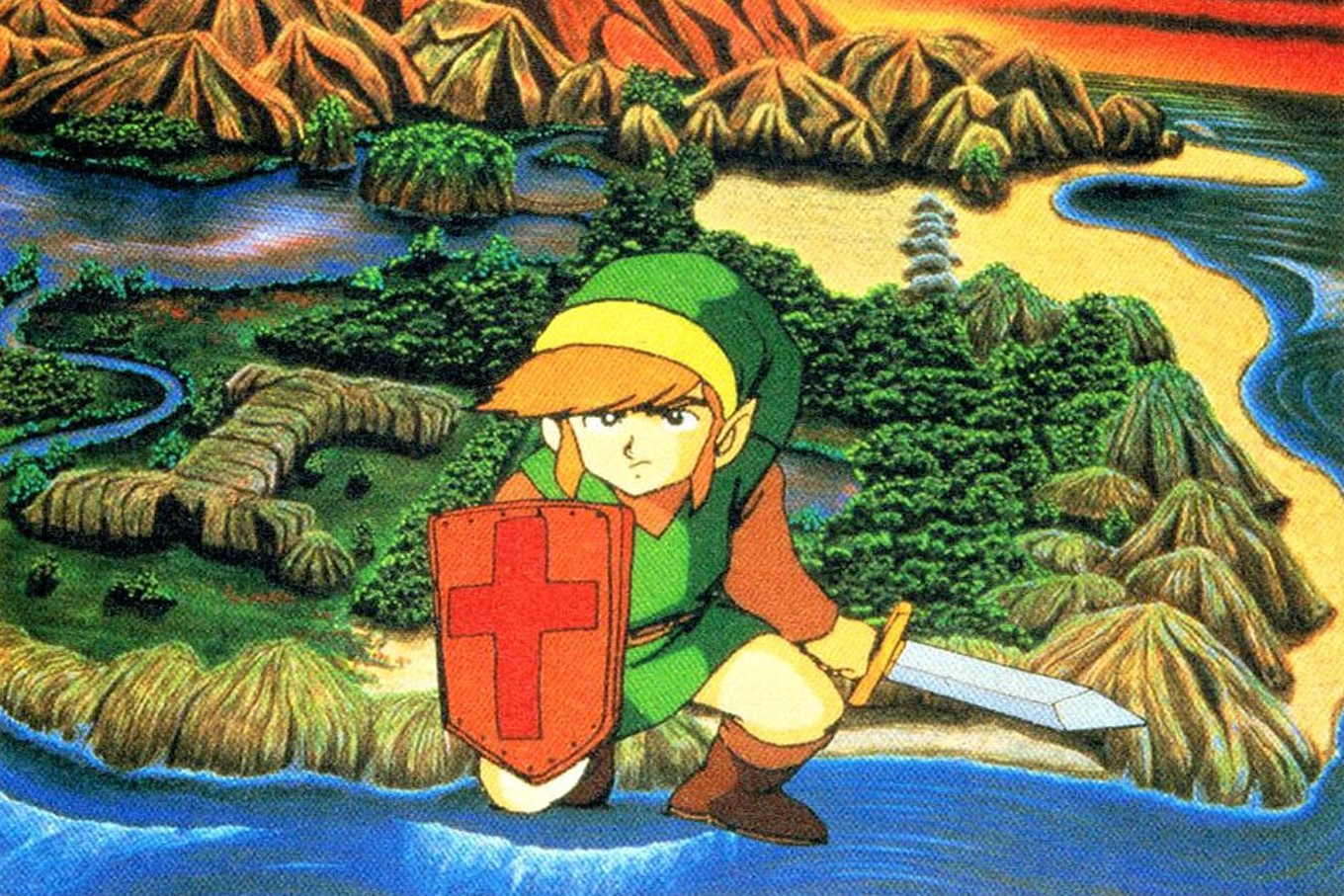
  • The Legend of Zelda (Nintendo, 1986)

    The Legend of Zelda (Nintendo, 1986)

    Developed/Published by: Nintendo R&D4 / Nintendo
    Released: 21/02/1986
    Completed: 17/08/2025
    Completion: Beat it for the second time! 

    Well, I can’t be playing obscure ones all the bloody time.

    I have a long history with The Legend of Zelda, as a lot of people do, though like many–if not most(?)–non-Americans/non-Japanese, my history does not begin with the original game. For me it started with Link’s Awakening, and I wouldn’t play the original until 2004 when I was able to treat myself to a Famicom Edition Gameboy Advance SP and a copy of the Famicom Mini Series Legend of Zelda. I remember being so excited to finally play such an iconic game, picking it up, getting completely lost, dying a million times when struggling with the stiff controls, and then deciding the cute little box was just a nice thing to have on my shelf and moving on with my life.

    I would go on to finish The Legend of Zelda years later–trading off the controller with BancyCo’s Benjamin Rivers–and even wrote a limited zine about that experience (I keep meaning to do a proper “history of exp.” page on this website, and I will, but today is not that day.) That completion–around 2011–meant I classed The Legend of Zelda as “previously completed” on the big “I’m not neurodivergent I promise” spreadsheet I keep, and I didn’t intend to return to it until I read in Wes Fenlon’s excellent newsletter Read Only Memo (worth subscribing to! As long as you’ve subscribed to mine too, obviously) about romhacker infidelity’s SNES port, which could be considered completely faithful while still featuring a bunch of lovely quality of life fixes. And considering I have a wee emulation device I adore, and found myself with a bunch of downtime due to some work I’d picked up that involved a lot of sitting around waiting for things to happen, I thought… why not? It’d make a nice change, and refresh my context for 1986.

    Something that is really important to mention, though, is that this time I came prepared. Now, I can’t remember if the wee Famicom Mini version of The Legend of Zelda came with a reproduction manual or not–I don’t have it to hand–but I’m assuming it didn’t (or if it did, I overlooked it, because what is this, a manual for ants, etc.) but I’ve long learned my lesson since I was downloading Infocom games and being baffled by them–you read the manual. And when you do, well… The Legend of Zelda isn’t baffling at all.

    Well, for a bit. And it’s still hard as balls initially, but we’ll get to that. I was shocked when I read through the manual–and this is true of the Japanese manual too–that it literally explains, cleanly and clearly, all the things you can get, all the enemies you’ll face, gives you instruction on what you’re trying to do, and then includes a complete walkthrough on how to get to the first dungeon (and guidance on how to get to the second.) I guess I’d never looked at the box closely before, where it literally says “Includes invaluable maps and strategic playing tips.”

    I’m reminded of that classic bit of weirdly banal Shigeru Miyamoto lore, that he likes to learn a city by walking it (who doesn’t) and imagined him going “I mean I do start with a map and a destination though. It only makes sense. I don’t just walk out the door and start wandering. I’d get lost.”

    Because, of course, this does all make sense! No one at Nintendo is thinking “well, people will be playing this without the manual in the future.” Back then, the manual was part of the product, and it really does a great job in getting you through the early stage of the game… at which point you can throw yourself into getting properly lost, equipped with more hearts and weapons to survive it.


    Historical Aside

    Christ, what’s going on here? A boxout? I haven’t done one of those before. Now, despite what I’m saying about the manual here and the game being intended to make sense with it, there is a possible–if unlikely–alternative which relates to a rumoured influence on The Legend of Zelda. John and Ste Pickford are quoted as saying that one of the Stampers, founders of Rare, had referred to The Legend of Zelda as “Miyamoto’s rip-off of Sabre Wulf”. Now, The Legend of Zelda actually does have notable similarities to Sabre Wulf and Rare’s earlier title Atic Atac, and one of the interesting things about Sabre Wulf is it comes with a manual that tells you almost nothing at all–I suspect many players didn’t even decipher that they were supposed to collect four pieces of an amulet from it. 

    Separated at birth?

    So if you take the Stampers at their word–and remember, they were tight as fuck with Nintendo, meeting with the company potentially as early as 1985–the complete bafflement I and many players first met The Legend of Zelda with could have been as intended as anything.


    The thing about the opening of The Legend of Zelda though… no matter what, it’s fucking hard. You’ve got three hearts, a weedy sword unless you’re at max hearts (which won’t last long) a shield that barely blocks anything, and you have to get comfortable with moving and attacking only on the four cardinal directions while your opponents seem to move near randomly. Playing it “for real” I died a lot, but the game is also shockingly forgiving for the era, bringing you back to life at the start with everything you’d collected intact–even dying in dungeons just brings you back to the start.

    This has the great effect that exploration and experimentation always feels worth it. You can delve into a dungeon just to see what’s down there, wander to a new area to see what you can find, and do “suicide runs” to get a necessary item if you know where it is. It’d be sort of perfect if the game wasn’t so stingy that you respawn with just three hearts filled no matter how many you have, because they have an abysmal drop rate. (I won’t lie, towards the end I did abuse save states just to quickly cheat at the gambling game so I could keep myself stocked up with potions. Life did eventually start to feel too short.)

    Because the game is so open, it does resort to (klaxons at the ready?) the Xevious/The Tower of Druaga “find the hidden stuff to progress” design. I am inclined to be a little more forgiving than usual here because of the open world and that the game does drop hints, even if they are obscure in Japanese and mangled in English. Back then everyone had a lot more time, a lot fewer games to get through, and the communal solve experience had continued from The Tower of Druaga in arcades to The Tower of Druaga at home (in Japan at least.) But I’m sure many kids, stymied, just took to bombing every wall and setting fire to every bush, and I can’t really justify that–the game definitely doesn’t drop enough hints, and there are definitely too many moments that can bring your progress to a dead-stop without outside help.

    Thankfully, in 2025 I was just able to refer to Phil Summers’ incredible Hand-Drawn Game Guide, which… look, it’s cheating, it’s a walkthrough, but it’s got such an easy, homegrown charm, it’s like your pal is helping you through the game. I can’t recommend it more highly if you’re approaching this game for the first time–read the manual, follow it, then as soon as you get too bored or lost, or just don’t feel like you’re making enough progress, just start referring to it.

    And anyway, you still have to beat the bloody thing yourself! If I have a real criticism of The Legend of Zelda it’s that it just doesn’t feel that great to play. The extremely stiff feeling of combat never goes away, and the enemies that require you manoeuvre carefully to hit them like Darknuts and Wizzrobes can absolutely suck a dick. Wizzrobes in particular, which are fucking everywhere in the last few dungeons. Unsatisfyingly, the end of the game does feel like a bit of a sprint as you basically try and dodge as much combat as possible, because it offers no reward. The terrible health drop rate is quite a negative, honestly.

    Saying it doesn’t feel that great probably sounds completely disqualifying for The Legend of Zelda, but I do have to mention again that it exists in the context of 1986 in Japan, and was still close to cutting-edge when released just over a year later in the rest of the world. Despite what the Stampers might have said, and even despite the existence of things like Ultima IV, at this point no one has put as complete a package together as Nintendo has. For the second time after Super Mario Bros. they’ve created something new out of whole cloth and no one else even saw it coming.

    Will I ever play it again? After all of this, I’m suddenly reminded what I was actually going to do when I intended to “replay” this was to play through BS Zelda for Satellaview. Oops. Well, I can still do that whenever I like.

    Final Thought: The craziest thing about Nintendo creating something this new, this different, this polished?

    They’ll do it again in a matter of months.

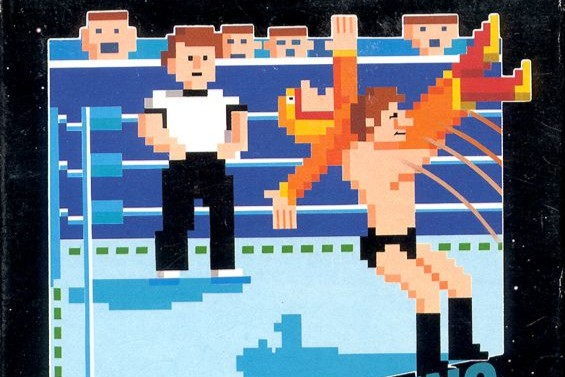
  • Pro Wrestling (TRY, 1986)

    Pro Wrestling (TRY, 1986)

    Developed/Published by: TRY / Nintendo
    Released: 21/10/1986
    Completed: 05/04/2025
    Completion: Defeated The Great Puma!

    Nintendo’s output on the fledgling Famicom/NES is… patchy. And nowhere is it more patchy than when it came to video game representations of sport, where they can somehow manage to literally solve golf game design and then months later be willing to put their name on things like Soccer and Volleyball, which are, frankly, absolutely horrendous. Even with Nintendo warming up by late 1986–they’ve just put out Metroid, for example–you can’t help but expect Pro Wrestling to be a bit of a dog, considering the sport (or at least, sport-adjacent entertainment) has a lot of terrible, lazy video games to its name, and this specific release is most famous in gaming circles for having a win screen that declares “A winner is you!” which probably was funny once.

    Well, it isn’t a dog! A bit like how Nintendo lucked into working with Satoru Iwata on Golf, with Pro Wrestling they also managed to hire someone who knew exactly what the fuck they were doing: Masato Masuda.

    Masato Masuda–who passed away in 2014 at the untimely age of 48, sadly–is best known by the wrestling hardcore as the creator of Fire Pro Wrestling, generally considered the greatest and most important wrestling video game franchise (even by people who love AKI’s wrestling games like me) and according to an interview in CONTINUE Pro Wrestling was made “mostly by [himself]” with “someone else who did the graphics.”

    Although not a sport that would see as many games released as, say, golf, wrestling was reaching its zenith in popularity worldwide, so before Pro Wrestling there were several high profile releases from Sega and Technos that I’m sure Masuda will have tried, and two wrestling games would appear before this on Famicom: Tag Team Match: M.U.S.C.L.E. and Tag Team Wrestling (both of which would appear on the NES before Pro Wrestling, too.)

    So–not having played any of those–I can’t make any educated claims that Masuda was “solving” anything about wrestling games with Pro Wrestling. But whatever prior art existed for him to pull from, Masuda understood a few things:

    • Pro wrestling is about unique characters.
    • Pro wrestling is about grappling–and the wide range of moves that result.
    • Pro wrestling isn’t about winning or losing–it’s about ebb and flow.

    Now, I won’t pretend that Pro Wrestling clicked for me immediately. It has the immediate problem of any 2D games where you can move in and out of the screen–not being exactly sure where you need to be to connect with attacks–and the systems by design are a little obscure. Succeeding in pulling off moves from grapples can feel a bit random, too. Does initiating the grapple confer advantage? Does it even track who initiates? Actually, how do you initiate a grapple? Is it timing? I’m button bashing, but sometimes I don’t go as hard and still win?

    As far as I can tell–from nosing around a bit–the game relies on a stamina system with regeneration, with lots of “triggers” based on stamina levels. So you’re basically trying to wear down your opponent’s stamina enough that they don’t get up long enough so you can pin them, but if you’re slow–or they start beating you up, their stamina recovers.

    (This matters because as you play through the game, enemies seem to gain stamina and regenerate faster.)

    The genius of this system is that it ties into the ebb and flow of a “real” wresting match perfectly. You have to wear down your opponent to pull off bigger moves, but they can also suddenly go on a tear by kicking you in the face before you manage the grapple you’ve been building towards. You can misjudge when to pin, get a kick out, and have the entire match turn on its head. And vice versa! If a match isn’t going well, it’s can sometimes only take a single correct move to swing the momentum back.

    Pro Wrestling also features, well, all the actual features of a wrestling match. Not only is the referee who has to run into position, you can jump of the turnbuckle, throw your opponent out of the ring and then leap onto them, get ring outs, and so on. The building blocks are all there for every match to tell a story.

    This is aided, of course, by the game’s memorable characters such as Star Man and The Amazon (famously inspiring Blanka.) Each character has individual special moves–the Amazon’s all illegal moves that can end with him begging innocence to the referee, amusingly–and are inspired by real wrestlers. Fighter Hayabusa is transparently based on Antonio Inoki for example, though Giant Panther will always be debated–I suspect he’s actually based on Fritz Von Erich, the patriarch of the Von Erich family due to the use of the Iron Claw, that he famously feuded with Inoki and that it doesn’t look like any of his sons–but that’s pure conjecture.

    But the point is that with whichever character you choose, there’s something special to work for, and it adds to the narrative you create through play–you survive the Amazon cheating like crazy, pull off the iron claw and pin! The crowd goes wild!

    I won’t lie–often when I’m playing these older games, I’m sort of just… working through them like a job. But Pro Wrestling? I just played it! Once I was comfortable with how it played, I settled on King Slender (the Ric Flair analogue) because he had an easy move to pull off (the backbreaker–he’s the only character with a move you can pull off by pressing A only from a grapple) and had fun until I hit a genuine brick wall.

    Pro Wrestling isn’t a long game–it’s built around winning five matches to become the VWA champion, then ten title defenses until you take on “Great Puma” to become VWA/VWF champion–three loops of the roster. But by the third loop your opponents are unstoppable–they regenerate stamina quickly, pull of grapples faster. I couldn’t go any further.

    And really, that’s ultimately Pro Wrestling’s weakness–it all works up to a point, and then as a player you have to go “ok, how can I cheese this.”

    For me, that was starting again with Fighter Hayabusa, abusing his “Back Brain Kick” and ring-outs. While it’s not a guarantee, if you can get your opponent on the mat and then position yourself right (Hayabusa’s midriff around where your opponent’s body is lying) you should be able to kick them in the head as soon as they stand up, and spamming this at the start will alow you to either start pulling off grapples or let you throw them out of the ring and then just run them into the barriers till they can’t get up quickly enough.

    It would be some demoralising, terrible wrestling for the audience, but at least for me it’s what I had to resort to for the last chunk of matches.

    However–that’s if you’re determined to beat this (maybe you have a blog or something where you’ve tied yourself to doing that.) I assume most players who played this either just had fun playing a wrestling career–it does track wins and losses, and you can just play it–or took part in two-player matches, where all the obscurites of stamina and grappling probably lead to absolutely epic battles. I certainly haven’t played a better two-player game on NES or Famicom by this point in 1986–and I may not for a while!

    Will I ever play it again? Unlikely, but not impossible!

    Final Thought: A funny and strange fact about “A Winner Is You” is that it isn’t even the original win quote. Seems that in the original release of this it just said “Winner Is You” and in a later revision they “fixed” the English by just sticking an A at the beginning.

    Which is a really strange fix! You’d assume someone who actually spoke English might have pointed out that’s not better–and it’s not like “You Win!” has a character limit or something.

    The fix also seems to have changed a “bug”–that if you play King Slender it takes longer to get to the first championship. This was something I didn’t mind and originally assumed was “balance” because King Slender’s back breaker seems so powerful–though when I got later in the game and realised I could basically never pull it off, my opinion on that changed somewhat…

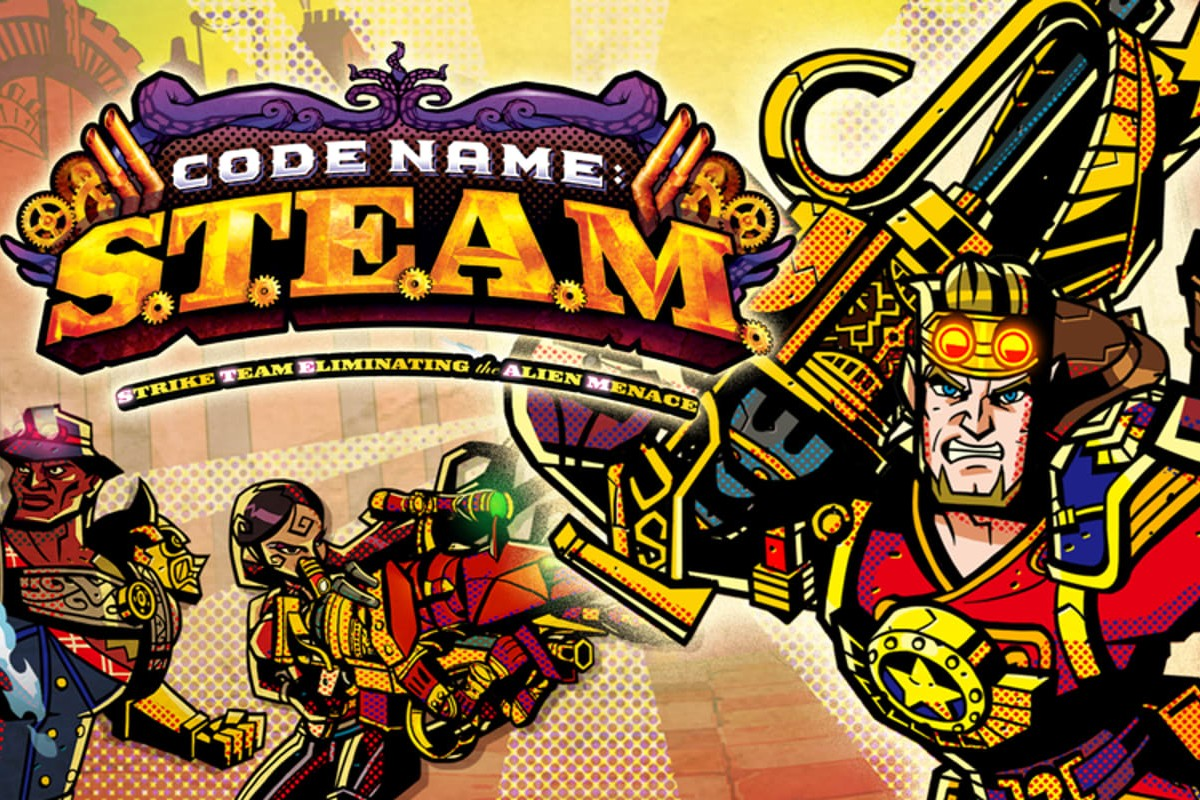
  • Code Name: S.T.E.A.M. (Intelligent Systems, 2015)

    Code Name: S.T.E.A.M. (Intelligent Systems, 2015)

    Developed/Published by: Intelligent Systems / Nintendo
    Released: March 13th, 2015
    Completed: 25th April, 2017
    Completion: Finished all the levels, collecting all but eight of the gears.
    Trophies / Achievements: n/a

    Here’s another Nintendo failure, then! You know, I do like to complain that Nintendo only seem to pump out games in just a few franchises (Mario, Zelda, recently Fire Emblem) but here’s what happens whenever they put anything else out: it tanks. So no wonder they’re getting the idea that people just want the same thing over and over until they run it into the ground. And honestly, sometimes it’s fair that the things they release fail, because they’re insanely misguided (Metroid: Federation Force) but then it’s also sad because Nintendo then learns the wrong lesson from them (“people hate Metroid”).

    I mean, the lesson they might have learned here—Intelligent System’s attempt at a Valkyria Chronicles-esque third-person strategy title—is probably “don’t let Intelligent Systems do anything except Fire Emblem” because bloody hell I can’t keep up with the number of Fire Emblems that have come out. (Remember Advance Wars? It’s been almost ten years, guys.)

    And, frankly: it’s a shame. Because I liked Code Name: STEAM. I know, that’s insane. I hate everything. And let me state as caveat that I immediately installed the patch that allows you to speed up the enemy turns. But Code Name: STEAM is a completely serviceable strategy title that—outside of a few frustrations—I found completely pleasant.

    Now, I can agree: it’s a bit weird looking. It doesn’t manage to nail the comic book look it wants, and the enemies are somewhat… dull. However, it’s got a weirdly interesting and diverse cast drawn from literature. It gets some points, for example, for gender-swapping Zorro (was this secretly why it failed? Neckbeard boycott?) but loses some for having Dorothy bare her midriff (why?) but maybe it gains those back by including Queen Califa. I’m not a perfect arbiter of points, ok?

    It does have some other flaws. Many (most?) people complain about the lack of a true tactical view, but that didn’t bother me because it’s obviously not what they’re trying to do. With free movement before you commit (hindered by enemy overwatch attacks), it’s a game about careful scouting and much more about the feel of being in a small attack squad. I do think the game is much too stingy with its steam-based action points, meaning you travel through levels very slowly, and the game doesn’t have any good sense of a progression of power—all of the unlocks are similar in power levels, just different, when it could have done with more steam being offered as you unlock new boilers (for some reason, most boilers don’t refill fully each turn, and the ones that refill slowly that you unlock I found unusable. Rather a big misstep, I feel.)

    I’d say the main mistakes they’ve made are in working against the slow, methodical play style that the limited action points engender. To mix things up they add a lot of “pressure”—first with baddies that spawn in (behind you, usually) which is a mild irritant, and then just the worst: “spotter” baddies in levels featuring mortar attacks.  They spawn and you have to get out of their line of sight or take a severe hit. Of course, so you can’t stall, you can’t kill them (just move them, hopefully out of sight, but it’s generally awkward to do) and this is insanely frustrating with the limited amount of action points on offer. There are certain levels where you will be harried to the point scouting is impossible, and you get situations where you stumble forward, get shot by a baddie with knock-back, and then land directly in the path of the spotter you thought you were escaping, and die by mortar. Oh, and there’s a couple of difficulty-spike levels outside of that: one with mounted guns that don’t have a clear range (frustrating) and another with a bunch of exploding enemies dropping in that I found… ragey.

    Honestly, at least one of these levels had me considering stopping playing, and that’s really awful, because the game is so close to being an all-round nice time like Valkyria Chronicles. The final boss is a pain in the arse too, admittedly—but at least it’s nothing like the final boss of Fire Emblem: Shadow Dragon, my last dalliance with an Intelligent Systems game.

    However, the levels in which it works—it really works. In general the map design is clever, with a good mix of complex indoor and outdoor spaces, and while generally it’s a bad idea to split up your team of four, the level where you’re forced to do was a particularly fun one, I thought. There are far more fun levels than frustrating ones, it’s just the annoying ones are going to stick in your craw (I mean, they’re ultimately why I didn’t collect all the gears you can find in levels, and I wanted to.)

    I’m gonna say that it’s weird to me that Code Name: STEAM didn’t get a fairer shake when it was released. It was slated by almost all reviewers with them almost all concentrating on the (pre-patch) lengthy wait between turns, and I guess that one mistake wrecked any chance of it managing critical acclaim at least.

    Well: It’s got the only critical acclaim it truly needs: that I liked it. I mean, I didn’t love it or anything but I had a nice time. That should be more than enough!

    Will I ever play it again? I won’t, but the sequel they tease at the end I would have played, except it shall never exist.

    Final Thought: I recommend this, actually. I’m gonna… recommend it. Really! Because when I picked it up it was $5, and pretty much any store is gonna have it for pennies. You can do so much worse.

    This essay is featured in Every Game I’ve Finished 14>24.

  • Super Mario 3D Land (Nintendo, 2011)

    Super Mario 3D Land (Nintendo, 2011)

    Developed/Published by: Nintendo EAD Tokyo / Nintendo
    Released: November 13th, 2011
    Completed: 21st April, 2015
    Completion: Finished the first eight worlds, the eight special worlds, beat Bowser Twice. Three stars on my file.
    Trophies / Achievements: n/a

    Huh! So I liked Super Mario Bros. Deluxe so much that I just wanted to keep playing it, but as that doesn’t get me through my backlog I decided to go back to Super Mario 3D Land—which I’d been playing on-and-off since I got my 3DS—and finish it off, which surprisingly I did quite quickly because I only needed a few more star coins to unlock the last two levels of the Special worlds to finish it off (along with beating Bowser again.)

    So, I’ve been effusive with praise for the original Super Mario Bros. but to be honest, since he went into the third dimension with Super Mario 64, I haven’t been the biggest booster of the Mario series. I liked Mario 64 well enough—eventually sitting down and beating it late into the N64’s life. I actually thought Super Mario Sunshine was lovely and will hold that it’s underrated for no clear reason (well, those collect blue coin missions were shite, but that kind of thing is a standard of the series now so…) But Super Mario Galaxy didn’t grab me. I finished it, but in a kind of listless fashion, and I wasn’t that interested in the sequel so I never bothered with it.

    (Though I did like Super Mario Galaxy’s story. Totally non-diegetic, but it was nice.)

    I picked up Super Mario 3D Land free with the 3DS I think—one of those Club Nintendo deals—and I’ll be honest, I worked my way through the first world with the same kind of sluggish, listless feel I had for Super Mario Galaxy. Now, I feel like I should have been finding it interesting, but… here’s the thing: difficulty is a tough thing to balance.

    3D Super Mario games have one problem they’ll never accurately fix (that of being unable to perfectly see where you’re going to land in the third dimension) and that’s always an annoying “difficulty” of them. To some extent they’ve worked to mitigate that—making Super Mario Galaxy about jumping on spheres so you’ve got more view/forgiving gravity; making 3D Land on the 3DS, where you can use actual depth (if you get on with the 3D, which I don’t.)

    However, I think the issue is more that the games are, that difficulty aside, really, really easy for ages. Super Mario 3D Land is, in some respect, a back-to-basics 3D Mario, akin to a large, prettier, collection of the secret stages of Super Mario Sunshine, which as everyone knows, were the best bits. That the levels are short is great, that they don’t get challenging until you’ve finished the entire first eight worlds, less so.

    Thing is, I’m complaining from the position of a seasoned Mario… playing guy. If you’re just a normal human, this is probably not a problem at all! And your skills grow with the game. It’s not totally without challenge, anyway.

    So I’m in the weird position where I was bored—genuinely bored—of this game for hours. But, then it got quite good, apart from the really challenging levels where suddenly you jump and fall off a platform because you couldn’t tell where Mario was going to land. But still, in the end, I liked it. I’d have played it longer, if there were more levels (of the difficult variety.)

    Basically what I’m saying is these games need a “look I’m already really good at Mario, ok” setting.

    Will I ever play it again? I doubt it, but having grown to like it, I’d happily play that Wii U sequel. I wouldn’t have said that half way through the game though.

    Final Thought: It’s annoying that you can only unlock Luigi halfway through the game, and he’s got his weird jump that means, now you’re already muscle-memoried Mario’s way of being, you don’t want to use him. That’s rubbish. Luigi is obviously better, I want to play him through the whole game next time. Maybe if you select the “I’m already really good at Mario” setting at the start you play as Luigi in all the remixed-to-be-harder levels! I’d be satisfied with that.

  • Super Mario Bros. Deluxe (Nintendo, 1999)

    Super Mario Bros. Deluxe (Nintendo, 1999)

    Developed/Published by: Nintendo R&D 2 / Nintendo
    Released: May 1st, 1999
    Completed: 21st April, 2015
    Completion: Finished Super Mario Bros. (once as Mario, using saves, once as Luigi, using no saves but one of the 1-up tricks.)
    Trophies / Achievements: n/a

    Super Mario Bros. is a masterpiece. That probably doesn’t sound like that crazy a revelation, but I don’t know about you but I haven’t thought about Super Mario Bros. in a long time! It’s real easy to give lip service to its place as one of the building blocks of video games as we know them without thinking of it as a work in its own right, and if you go back and play it—especially after not thinking about it for a long time—it’s… superb?

    Ok, Super Mario Bros. Deluxe isn’t exactly the original Super Mario Bros.. It’s a Game Boy Color port. It suffers due to the interesting decision to keep it pixel-perfect: there’s less screen space on a Game Boy Color, so you only see about a third of what you’d see on the NES. If you’ve played Super Mario Bros. it feels absolutely insane to be playing with such a small field of view, and if you’re like me and you’ve played Super Mario Bros. but not for ages, this, combined with Mario’s inertia and the harsh collision detection makes the initial experience… unpleasant.

    It’s actually quite crazy to go back to the original Super Mario Bros. after years of molly-coddling—dying because you haven’t landed on a Koopa just right, being killed by being touched by a single pixel of a Hammer Bros. hammer, or just sliding into an enemy due to inertia… it’s stunningly unforgiving. Combined with the limited screen space you’d think this would make the game unplayable to a modern audience, but here’s the thing: it isn’t. You just slow down, you take your time, and you play a challenging platformer (that once you hook into, isn’t that challenging.)

    In fact, it just forces you to unlearn a lot of lazy things you’ve probably learned to do in platformers. I don’t know about you, but I play basically every platformer since Super Mario Bros. 3 by holding down “run” at all times and going for it. I basically play them all as endless runners. Run into something and die? Ah, I know where it is for next time. Here, you can’t do that, because you’ve got to inch through the levels more deliberately, and if you’re running all the time, your inertia will kill you.

    At this slower pace, I think I really started to appreciate Super Mario Bros. on a level I hadn’t before! It’s just a great game. Did you know I’d never actually finished Super Mario Bros.? I’d played it so much (especially in its Super Mario All-Stars incarnation) but always got stymied in World 8 (8-2 is a nightmare) and while here I was able to cheap out with its forgiving “save every level” I finished it without any save-states at least.

    Anyway. You might ask why not just play the NES version of Super Mario Bros.. Well, if you’re interested, Super Mario Deluxe is the template for the Mario games that followed in a slightly segmented fashion. While the original game is untouched, you unlock the ability to play every level searching for red coins, a high score and Yoshi eggs. Again, this lets you look at levels in a way you haven’t before—I haven’t been bothered to do all of them (the high scores required are harsh!) but it’s better/more interesting than finding the three big coins in New Super Mario Bros. or whatever (a series I don’t rate at all.)

    There’s also a slightly harder version of the original game (disappointingly not that different, but it’s a cool addition) and a version of The Lost Levels (modified heavily, unfortunately, due to the screen size and the like making it impossible otherwise.)

    Look, Super Mario Bros. is great. You should revisit it, in any form you can. I think Super Mario Bros. Deluxe is actually a pretty decent way to do that!

    Will I ever play it again? Immediately after beating it I started playing the star levels and then I felt just like playing through the original again so I did, beating it without saves. Yeah, I’ll play this again.

    Final Thought: Super Mario Bros. is great but placing a Hammer Bro right at the end of 8-4 (a level you can’t get a mushroom on) is cheap as hell. Come on.

    (Though if you’re interested—my second playthough I beat 8-3 as fire-flower Luigi and then walked through 8-4 easily. It’s a game of many depths and layers.)

  • Starship Defense [aka Starship Patrol](Q-Games, 2009)

    Starship Defense [aka Starship Patrol](Q-Games, 2009)

    Developed/Published by: Q-Games / Nintendo
    Released: December 18th, 2009
    Completed: 15th April, 2015
    Completion: Finished all 30 levels, 16 perfects.
    Trophies / Achievements: n/a

    I feel like I’ve talked about tower defence here already, but apparently I haven’t. Must have been on Twitter, then.

    Here’s my thoughts on tower defence games: I have a “they’re hypnotically… ok”/hate relationship with them? They’ve got a loop that is undeniably compelling—build a thing, watch it perform, did it work? Repeat—but they also (often) have a problem that comes with that: if you don’t know what the thing you are building is supposed to do exactly, you’re going to be annoyed as you watch it fail. Also because the games tend to have multiple waves, unless you’ve been building for future waves—in a way that will feel sub-optimal for earlier waves, likely—you can get wiped out towards the end in a way that can feel somewhat annoying.

    These problems are definitely apparent in Starship Defense! I picked it up in a “god, apparently I have all these Nintendo points on my DSi” splurge right before Club Nintendo ended in the hope it would raise some more Club Nintendo points (I think it got me 10) and because I’ve generally been interested in Q-Games’ output on Nintendo systems. I had managed to forget totally that I hated Pixeljunk Monsters (their earlier tower defence) and didn’t really like Trajectile (or at least, I tired of it quickly.)

    Anyway. Starship Defense looks nice—it’s almost a pencil-on-paper look, but not quite. Maybe they just thought it was too dull when they did it with black space. And I like the feel of the top screen being a Galaxian-like formation of baddies. Unfortunately, I just wasn’t crazy about the tower defence. You only get a glimpse of the route enemies will take right before they start to take it, and it makes planning for future waves difficult. Enemies are split up into two kinds, normal and stealth (stealth being the “flying” enemies you usually get in other tower defence games) and there are only three weapons that can attack stealth enemies, only one of which is cheap/immediately available, and it’s weak and unsuited for attacking other enemies, so you need to know exactly when and how to combat the stealth waves.

    (This is problematic, because there are several special, expensive weapons you will never use because it only makes sense to use the one most powerful weapon that damages both stealth and normal enemies. I beat the game, generally, using only 4 of 8 weapons.)

    I suppose tower defence games are for people who want to replay levels to get a perfect—in some respects my criticism of Starship Defense is personal. I’d much rather be playing a game where I’d be able to change tactics on the fly or have enough information, in advance, that mistakes would be my fault rather than the fault of ignorance. I don’t find it fun to replay a level where I’ve “solved” a bunch of waves to get to the wave where I should have done something different, and the game even discourages tactics changes (destroying a weapon costs energy, so you can’t switch a weapon’s position without, generally, paying double.)

    Starship Defense still offers that pride, however. Pride of having a really nice, weapon-loaded ship, and seeing it get to work. And it’s only got 30 levels, so it’s a nice “hit” of tower defence if that’s what you’re looking for?

    Will I ever play it again? Nah. And I hope this reminds me not to play a tower defence game again unless it does something really, really different.

    Final Thought: It’s slightly disappointing this didn’t take more cues from vertically scrolling shooters, with enemies flying in Galaxian formations, or the player placing fighters that can only move left/right in rows? There’s probably something there!

  • Wario Ware D.I.Y. (Nintendo, 2009)

    Wario Ware D.I.Y. (Nintendo, 2009)

    Developed/Published by: Intelligent Systems, Nintendo SPD / Nintendo
    Released: 29th April, 2009
    Completed: 10th February, 2015
    Completion: Finished all the Nintendo-developed Wario Ware games and read all the 4-koma!
    Trophies / Achievements: n/a

    Aye, so… I actually started this in, like… March 2014, because that was around when Nintendo had announced it was closing the servers for a whole raft of Nintendo DS and Wii games, and this was one of them. I was all “oh no! I’ll need to download all of those good levels people made and save them to my cart!”

    However, turns out that while my Nintendo DSi will connect to my router, a lot of these (all?) of the Nintendo DS games don’t actually use the on-system wi-fi connection (or something?) and so couldn’t actually connect to my modern router. I could have faffed about with my router settings, but I wasn’t actually bothered, so I forgot all about it after finishing Fire Emblem: Shadow Dragon (which I finished, ok, shut up.)

    Without the ability to upload levels I’ll be honest I didn’t actually bother my arse trying out the level creation stuff, and anyway that’s my actual job so fuck that for a game of soldiers. And without the ability to download levels, I was stuck with the pre-installed ones, which, much like Wario Ware: Touched! all use the touch screen, so they’re crap compared to the brilliant ones on the GBA. Totally forgettable and dull.

    But at least there aren’t too many of them! The best thing about Wario Ware D.I.Y. is, however, the weird inclusion of loads of 4-koma. If you’re not familiar, 4-koma are a very Japanese style of four panel comic strip, usually super absurdist and often quite wordy compared to your usual, western style of three panel comic strip. These are great. They’re all super funny and you have to unlock them by playing Wario Ware D.I.Y. every day, which sucks, but it’s something to return to, which I did every time I remembered, which, apparently, was rarely, because it nearly took me a full year.

    However, the 150-odd 4-koma were worth every penny, even if nothing else about this is particularly good post server shut down.

    Will I ever play it again? Nope.

    Final Thought: A brand-new game idea!

  • Tomodachi Life (Nintendo, 2013)

    Tomodachi Life (Nintendo, 2013)

    Developed/Published by: Nintendo SPD / Nintendo
    Released: 18th April, 2013
    Completed: 3rd February, 2015
    Completion: Unlocked all the places on the island, I guess?
    Trophies / Achievements: n/a

    I went home for Christmas this year—as I am wont to do—and before I went a read a funny tweet by my, yours and everybody’s beardy pal Brandon “tha B-dogg” Boyer, where he said “I’ve been playing Tomodachi Life for 7 months & no one has ever even expressed vague interest in dating my Mii and it’s incomprehensibly sad.”

    Now, I’m sure most of you took from that “ha ha, his Mii is such a sad bastard” and went on with your life, but I went “Christ, he’s played it for seven months? I should really give this a go after all.”

    It’s weird, because I was so, so, so excited for Tomodachi Life when it was announced. If you watch the early trailers, it seems so incredibly full of potential. Like it’s just going to be super, super hilarious and fun to play.

    But then people I knew got it, and they were all like “no, this is quite boring, actually” and put it down after a few hours, maybe a few days. So I just didn’t bother to try it.

    And now I have! Trading it off with Fantasy Life in the ol’ 3DS slot. I dutifully checked in on my wee Mii society, every day… except I realised a couple of days ago that I haven’t even looked at it in nearly a month. I didn’t even notice that I wasn’t playing it. It was so uncompelling that my brain just, more or less, erased Tomodachi Life from my memory.

    So I guess I have to say I’m done with it.

    “But wait!” you ask. “What is Tomodachi Life?”

    Well, my confused friend, it’s a video game where you put all your wee pals on an island, with personalities that sorta correspond to the Myers-Brigg types (I think) that you sort out yourself, and wait for the magic to happen.

    What this means is that you click on the apartment they live in, and they say something like “I’m hungry” so you give them a crème brûlée. Or they tell you someone they want to be friends with, or they’re asleep, or they give you something like a bath set so you can watch them bathe (uhh…) You can also decorate their apartments and dress them up, that sort of thing. But mostly, the game is “click on apartment, resolve need, click on other apartment.”

    Occasionally they do stuff! like have funny dreams, or interact with other Miis in a silly way. It’s cute, but in that way where you go “heh.”

    The problem with Tomodachi Life is that the interaction with the game is so stupefyingly repetitive and uninteresting. It led me into this long thought on why EA had never just straight up done a Sims game with Miis, which then reminded me they’d actually done a game called “MySims” which was Mii-like but not actually Miis. What’s up with that? I’m going to say it’s corporate hubris, because when I think of Tomodachi Life but instead it’s, you know, a basic “The Sims” with Miis, and it’s got a lot of the wackiness of this, it seems like a real winner. Like something that would actually be good. Stupid corporate hubris!

    Don’t get me wrong. I’m actually glad that they went out of their way to localise this game. But it seems like there’s something cultural about this game that doesn’t translate, and it’s the (likely stereotypical) idea that Japanese people aren’t very open in public, so seeing friends and loved ones acting crazy is really, really wild. I feel like I remember someone describing the game as analogous to a Japanese variety show, and that sounds spot on. It doesn’t translate because seeing people do strange things just isn’t enough—as in The Sims series, we need context to make it really hit home, as being openly silly isn’t transgressive or shocking in the same way.

    Anyway, Tomodachi Life is bad, and I don’t know why tha B-dogg has played it for seven months. It’s joining that ignoble list of games where I’m straight up deleting my saves. Sorry, wee dopplegangers of my pals.

    Will I ever play it again? No, but I still hope they make (and localise) sequels.

    Final Thought: tha B-dogg, in my game, successfully dated Nikki, the wee lassie who used to be the mascot for Swapnote. So he can have some success… with fictional characters, in someone else’s copy of the game.