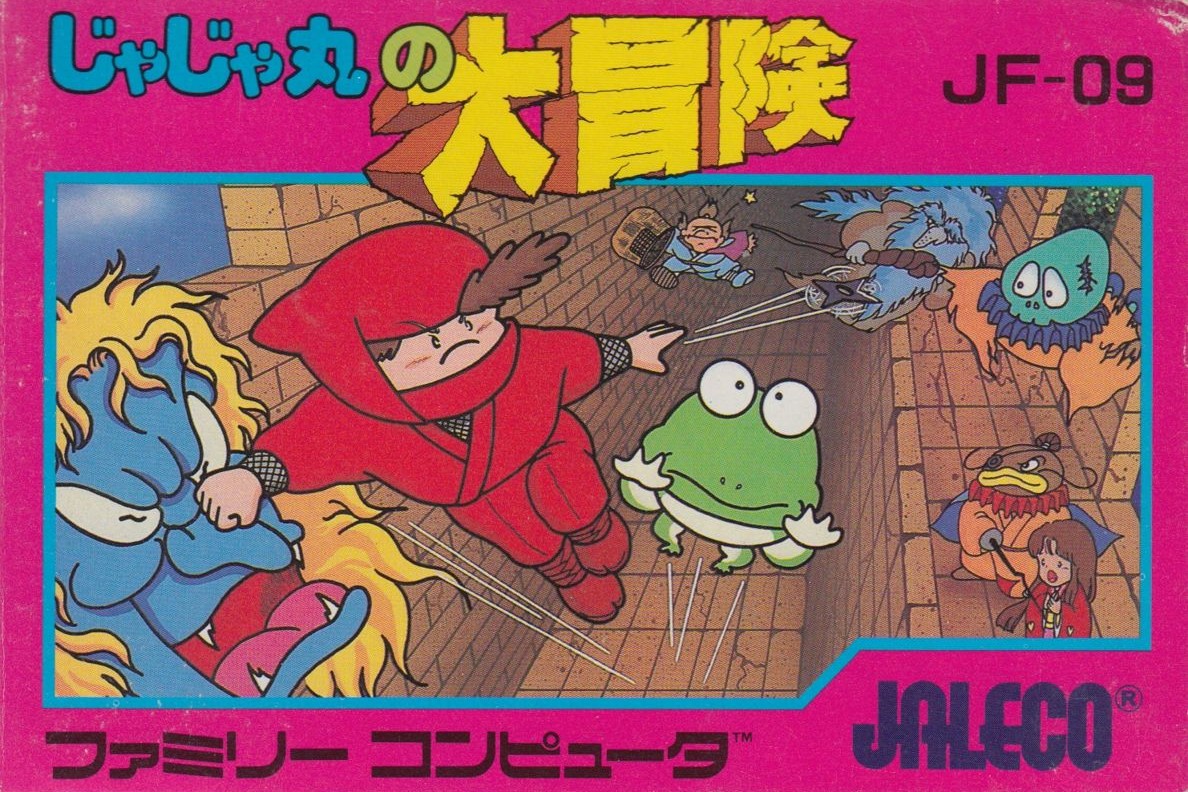
Developed/Published by: Jaelco Released: 22/08/1986 Completed: 13/04/2025 Completion: Completed all 20 different levels (it loops.)
Well, more fool me. When I wrote about Ninja Jajamaru-kun, the game that precedes this in the series, I wrote that it “[didn’t do] enough to make me put up with ININ’s bullshit to get the sequels.”
Unfortunately, having a bunch of Nintendo gold coins to use up before they expired and seeing the Ninja JaJaMaru: Retro Collection going for $2.99 made me go “well, it’s basically free, why not.”
I’ll tell you why not: because… do ININ even like retro games? Are they just an avenue to prey on a group of willing suckers–i.e. retro game collectors? Because not only is the Ninja JaJaMaru: Retro Collection bare bones, it doesn’t even work correctly.
Now, feel free to consider this anecdotal because I’ve only tested this on my Nintendo Switch Lite–and no youtubers or the like have really covered this release in depth (I imagine it’s niche enough to not have done that well.) But if you try and play JaJaMaru no Daibouken with the included CRT shader on it creates so much slowdown that you actually can’t play the game. It completely tanks.
It runs fine if you don’t have the CRT shader on, but, frankly, I’m a CRT boy. I don’t care if it’s even that good a shader or filter (notable exception: the excretable one on the Astro City Mini) just as long as it does something to muddy up the graphics. The games were literally designed to be seen on a tiny crappy telly via a noisy RF cable, so it just feels wrong to me to see them all crispy and HD.
So that was $2.99 down the fucking drain–but at least I haven’t dropped money on the Turrican Anthology or something [“yet”–Ed.] But let it not be said I’m one for giving up. Thanks to my trusty Trimui Brick I could quickly and easily get set up to play this through with an acceptable CRT filter, and I suppose that’s the way I’ll play the rest of this collection (god knows I’m not picking up a Switch 2 to try and see if it improves the performance of a CRT shader…)
But, uh, let’s actually talk about JaJaMaru no Daibouken, eh?
It’s rubbish.
Will I ever play it again? No!
Final Thought: Oh, alright, I should probably say more than that. So… I suppose the interesting thing is that JaJaMaru no Daibouken came out just under a year after Super Mario Bros. (Ninja JaJaMaru-kun was released after Super Mario Bros. too, actually) and it’s the first obvious Super Mario Bros. clone I’ve played chronologically. Sure, it’s possible Pac-Land for Famicom was rushed out after matter of weeks in development (though unlikely) but that was based on a pre-existing design, and Wonder Boy doesn’t feel that much like Super Mario Bros. when we’re being completely honest.
But JaJaMaru no Daibouken feels like exactly what you get if you ask someone to take the art and engine from Ninja JaJaMaru-kun and turn it into Super Mario Bros.: it’s got side-scrolling levels, blocks JaJaMaru has to hit with his head to get coins and power-ups out of, and… well, I mean, that’s enough. It’s not exactly the Great Giana Sisters, but the “hit blocks with your head” thing is enough. Case closed!
I’ve previously mentioned that the original Super Mario Bros. doesn’t actually feel that good to play–we’ve just all misremembered that, because the later ones do–so I can’t really beat up on JaJaMaru no Daibouken for not controlling that well (floaty jumps and that.) What I can beat it up for is just being so bloody half-arsed. Levels look like they just threw down blocks in any old combination, and although the game features 20 levels, but half of those are boss battles that you don’t even have to complete–if you die, you just go to the next level and don’t even lose a life. And the game doesn’t have an ending or anything, it just loops. Which actually leads to the ridiculous situation that you can reach the “final” boss, fail to rescue Princess Sakura, and then… just go to the second loop. Deeply uninspiring.
JaJaMaru no Daibouken keeps a lot of the flavour of the (by this point) established JaJaMaru franchise, though, which doesn’t as much feel like something they did to differentiate as much as it’s just what they had lying around. The power-ups act like they do in the previous game and JaJaMaru’s uncontrollable frog pal Gamapakkun shows up too, albeit rarely. Though weirdly, the most interesting mechanic from JaJaMaru-kun, that you have to jump on enemies heads so you can shoot them, doesn’t show up here! (Maybe they thought it was getting too close to Giana Sisters-esque “let’s get sued” territory.) There’s an annoying learning curve in that you’ll never know which enemies kill you on touch and which don’t until, well, you’ve been killed by them, and weirdly one enemy that shows up right at the end, the Tanuki, can’t be killed but you can jump on their head to stun them. So… half of a mechanic from JaJaMaru-kun, for one enemy, just to confuse us, as a treat.
It’s all very inconsistent, but because of the terrible level design, you quickly work out that you’re just supposed to run through the levels ignoring all the enemies as much as possible. While it’s true this is optimum for Super Mario Bros. too, the level design there ensures you engage with enemies in interesting ways. Here your engagement is generally things like “oh an enemy spawned directly in front of me and killed me with a projectile before I could react.” or… actually it’s usually that one.
JaJaMaru no Daibouken is over very quickly, so it’s a very minor waste of life. But it is a waste, I won’t lie.
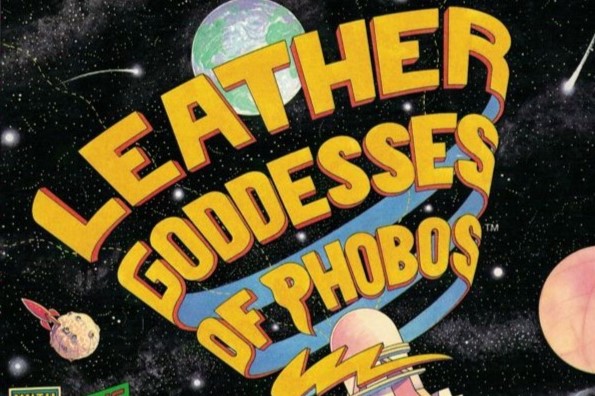
Developed/Published by: Infocom Released: 22/08/1986 Completed: 18/04/2025 Completion: Completed it. 304/304 points (though points are random and I believe you get them all just in the process of beating the game.)
Phworr, eh lads? Etc.
Right, that’s me got all the 90’s video game magazine parlance out of the way [“you forgot ‘or something’ and to do a made-up Ed’s note”–made-up Ed.] so I can put my “pretending to be a serious games historian” hat on for the first Infocom game I’ve played since Trinity–surprisingly, all the way back in 2023. If you’ve been following along, you’ll be aware I’ve been picking and choosing Infocom games to play through, leaning towards the work of Steven Meretzky, and I’ve been looking forward to playing this for a while, his “return” to a more normal sort of adventure game after the big swing (and commercial miss) of A Mind Forever Voyaging.
Based on a joke title Meretzky posted on a whiteboard featuring upcoming releases for Infocom, Leather Goddesses of Phobos is a strange release, I think. Infocom had always made games for adults, but never “adult” games, and there hadn’t really been any commercial “adult” games for years at this point. Softporn Adventure came out in 1981, and unless you’re Portuguese and have fond memories of Paradise Cafe for ZX Spectrum that was about your lot. So it seems like quite a gamble for Infocom to release something that appears so risque–but then Leather Goddesses of Phobos isn’t really an adult game at all. In fact, it’s barely smutty at its most extreme, and Meretzky, wanting to drum up a bit of controversy after the failure of an anti-Reaganite art game, decided “sex sells” and Infocom as a group went for it: digging through Meretzky’s papers, he sent a sheet of possible game ideas to the other imps (this may have been the standard procedure at Infocom?) for his next game, and Leather Goddesses of Phobos won out, where its sexual content was expressed as “very soft-core; see Barbarella as an example.” (it doesn’t even go that far, to my eyes.)
(The sheet is quite illuminating in general, a kind of ideation that I recognise as a game developer. We have another attempt, I think, to court a bit of controversy with “The Interactive Bible”, an interesting if not-yet-fully-baked design idea “Blazing Parsers” and then something that’s optimistically trying to make making a game quicker, “The Viable Idea.” Personally, I’m sad we never saw an Infocom spaghetti western.)
Unlike some other Infocom releases, I don’t really have any personal history with Leather Goddesses of Phobos outside of memories of the (very) mildly titillating screenshots of its sequel, Gas Pump Girls Meet the Pulsating Inconvenience from Planet X! In fact, the main thing I have to say is that I only realised this wasn’t called “Leather Goddess of Phobos” after playing it for a bit, which won’t make me cry “Mandela Effect” as much as “Goddesses is such an inelegant word, it’s bizarre it isn’t just Leather Goddess. My brain was correct, reality wasn’t.”
But anyway, what is it actually like to play Leather Goddess(es) of Phobos?
I’ve been a bit up and down on the Infocom games I’ve played–some might say unnecessarily hard on them, judging them by the coddled standards of 2025. But Leather Goddesses of Phobos gets off to a good start. Unlike Trinity, where you essentially never know what you’re actually trying to do overall, Leather Goddesses of Phobos more or less immediately has a character hand you a laundry list of items to collect, and then you go “oh, I guess I just have to collect these, then.”
As good as that is, it’s also a little… underwhelming. Having picked and chosen, I’m aware that I’ve not seen everything that Infocom has to offer, but I’m still surprised that I haven’t played an Infocom game since Deadline (their third game) that gave me any sense of anything except a static world. Leather Goddesses of Phobos gives you a Floyd-like companion (Trent, or Tiffany) but they barely seem to exist, and even when you meet characters in the world they feel so… un-interactive. Maybe, at best, they take part in a little vignette.
I suppose with Leather Goddesses of Phobos I’m really realising–and perhaps chafing against–the limitations of the text adventure at least in the mid-1980s. In some respects, you want a text adventure to have the feeling of a book; limitless, enveloping imagination. But in other respects, you want to play it like a game. You want to be reacted to. It’s probably, why, to be honest, characters have been so sparse in these games–because when you try and interact with a character, and they don’t do anything, or it feels wrong, the illusion of being on an adventure is broken. You’re not reading a book, you’re on a dark ride and suddenly the lights slam on and you’re aware you’re looking at a mannequin, not the king of Mars.
Somehow, the fact that characters in Deadline might like… walk into another room just abated that, and I’m not asking for characters to roam across the planet here, but maybe if they piped up a bit more. Felt a bit more worth talking to. The issue with making a “funny” game is that so much of comedy is character work, and here, really, the only character is the parser.
But I’m being a bit harsh, because Leather Goddesses of Phobos is otherwise an extremely solid classic rooms and items, bread and butter text adventure. The best I’ve played since Meretsky’s own Planetfall, and arguably the best I’ve played full stop. It’s understandable, accessible, and I never had to use an Invisiclue to the point where it just told me what to do–well, except in one particular case.
That one I’m just going to spoil, actually. One of the things that makes Leather Goddesses of Phobos work so well is how well integrated the feelies are. Sure, I don’t have the box to hand, but there’s a comic which includes a couple of direct hints for some puzzles, a map which is unbelievably necessary and helpful, and a scratch and sniff card, which I’m sure nearly 40 years later is completely useless even if you opened a brand new box, but which is a really cute and silly B movie-adjacent idea that’s perfectly fitting. One of the things it does is prompt you to “smell” things in the game to work out what they are (which it thankfully tells you in text–scratch and sniff cards have always barely worked). Early in the game (for me–the game is fairly open ended) you sniff and discover some chocolate, which, of course, you’ll hang on to. Later, for reasons, your mind will be transferred into a gorilla. But you’re not strong enough to break out of the cage. I assume you can see where this is going: you need to eat the chocolate to get strong enough to break out of the cage.
You know, that famous thing about gorillas. That chocolate makes them strong.
This is, obviously, nonsense. The only animal-related fact I know about chocolate is that it kills dogs and I certainly wasn’t hanging onto it in the game expecting I’d use it to kill a poodle or something [“you said ‘or something’ after all”–90s Ed.] Considering that banana is one of the most recognisable smells you could possibly use on a scratch-and-sniff card, I had to assume that Meretsky simply thought that giving you a banana would be too obvious a solution so went with the impossible to work out chocolate, but I couldn’t find anything in his notes to reflect that. According to the ever reliable Digital Antiquarian, Meretsky tested the scratch and sniff scents on the other imps to select the most recognisable scents to then use in the game, and I do think it adds insult to injury that one of those chosen scents actually *was* banana! But it’s used elsewhere!!!
I even found a playtester who complained about this exact puzzle:
“It is reasonable to not eat the chocolate and even suspect the sugar rush, but why oh why would you put the chocolate in the cage?”
I suppose he’s more complaining that this game features more than one puzzle which requires hindsight, and to be honest, they should have fixed those too. But in general, Leather Goddess of Phobos is logical and fair, while still managing to make puzzles funny and clever–the best of The Hitchiker’s Guide To The Galaxy without the worst of it. There’s a puzzle about kissing a frog that will immediately put you in mind of the famous babel fish (and which made me laugh out loud) and a puzzle involving a mysterious machine and wordplay that is so perfect and silly that it’s maybe one of my favourite things in an adventure game ever–possibly worth the price of admission alone.
The game does still undercut itself though–for seemingly no reason. There are definitely ways to manufacture yourself a no-win, dead man-walking situation, for example, all of which I miraculously managed to dodge due to the order I did things in, and I definitely had a few puzzles where by all rights I was just lucky to not have to resort to clues. One object on your list you need to specifically look somewhere you might not look to find, and then you need to be really specific with the parser to do what you need to do to get it. Another requires a vignette that you need to be in time for (though that one I immediately sussed what was up–the “dead end” was just so suspicious to me. But I reached it almost at the end of the game–if I’d got there early, I could have had to replay nearly the entire game.)
The game’s maze–which people find famously annoying–is a perfect example of how the game undercuts itself. You have the map in hand. You have the required clue. If you’re patient, it’s actually really satisfying to navigate it, and I did so… and then the torch I was using burned out, and I had to do the whole thing again much more efficiently. Close to hundreds of turns. It was so unnecessary! I was having fun!!! Why punish me for not being perfect!!!
These moments, however, are far rarer than you’d expect. I noted above that the game is fairly open ended, and I’m not sure if there’s a “preferred” way to work through the game, but as I said above in my playthrough I never entered a vignette where I didn’t have something to hand I needed (though it’s possible, I’m sure) and if I got stuck somewhere there was always somewhere else to go for me to solve something else. I never put this down annoyed–well, apart from the fucking maze. Well, not the fucking maze–the fucking torch (I honestly did think the maze was clever.)
I think the thing about Leather Goddesses of Phobos is… it’s probably as good as one of these things is going to get without a much more modern design philosophy. You know what you need to do and every time you sit down and play it you get a little closer to doing it–and it’s charming while you do it. But it’s never sexy. I did play it on the “LEWD” setting and took every opportunity for a bonk, because I’m still thirteen at heart, but my dander remained unfrothed; it doesn’t even reach the heights of Alter Ego! I guess I’ll see how I get on with [checks to-play list] Leisure Suit Larry??? Eugh!
Will I ever play it again? You know, it’s possible. It’s not likely, but it’s possible. And I will play Gas Pump Girls Meet the Pulsating Inconvenience from Planet X!, which I don’t believe anyone likes. Because why not.
Final Thought: In some respects, Leather Goddesses of Phobos suffers for not being something special like A Mind Forever Voyaging, but it also sort of is, as the last true success Infocom would release before the company began an unstoppable slide into oblivion, and for that alone it should be celebrated. At the very least, if you like text adventures, though, you know how to play them, and you can live with the idea you might have to reload a save on occasion, this is a solid couple of tevenings. Oh sorry, I mistyped… tevenings. There must be a mysterious machine around here somewhere for that…
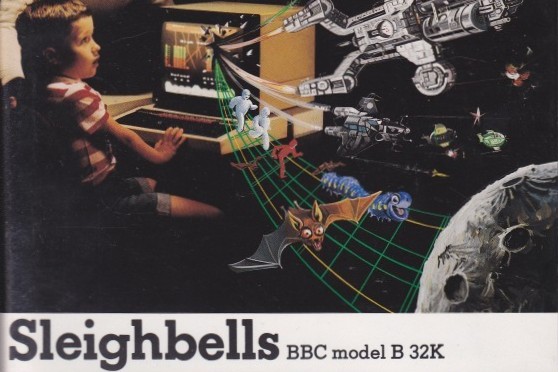
Developed/Published by: A.G. Cartlidge / Gemini Released: 1983 Completed: 02/12/2024 Completion: Delivered five presents to Santa.
Altogether now, in our best Noddy Holder impression: It’s CHRISTMAS! And here at exp. Towers that means we… play through ropey old Christmas games that we’ve dug up because maybe it’ll make us feel festive, although normally it just makes us shake our head in despair, thinking about a situation where anyone received these games and then had to play them because they didn’t have anything else to play.
So here’s Sleighbells1 for BBC Micro, which I think is the first time that arguably the UK’s most important home computer has shown up here on exp.. As part of the BBC’s Computer Literacy Project, it exposed entire generations to computers for the first time (and the BBC Micro was still being used in some schools until the mid/late 90s so it crossed from Boomers all the way to late Millennials). While I think that the most understandable point of comparison for non-Brits might be the Apple II, being a more expensive, sort of schooly “real” computer, I don’t think that really captures the utopian nature of the BBC Micro and the associated project (which you can read all about in NESTA’s excellent “The Legacy of the BBC Micro” white paper): an attempt to create a wide cultural change where the general British public would become truly educated in the tools that were going to change the entire world. To not just watch computers change everything: but take part in it.
When you think about that–and especially when you read the white paper–you can’t help but become a bit disappointed in the world we live in now. How computers work has become completely unknown to the average person, and our ability to control them has become ever sanded off as we get pushed into walled gardens and proprietary systems, and our governments seem to have absolutely no imagination in trying to actually transform society, at best hoping corporations might help regions “level up” rather than just suck money out, but mostly trying to keep enough blame on immigrants and minorities that struggling people don’t stop and consider a better world might be possible.
Sorry, this isn’t very Christmassy, is it?
Now. I’d love to follow this train of thought to explain something that I’ve often wondered about–that the BBC Micro seems to get discussed so much less in retro circles than contemporaries like the ZX Spectrum. Is it possible that utopian promises, long dashed, simply make us too ashamed to remember the venerable Micro? That it reminds us, always, that another United Kingdom was possible?
Not really. It’s just that the BBC Micro was really expensive, most people only played educational games or used LOGO on it, and commercial games outside of a venerable few were… a bit crap. Even compared to the likes of the Speccy.
But back to Sleighbells. While it does seem like Santa’s Sleigh Ride is the first Christmas game ever (look, I’m just not going to count Christmas Show and Tell) I keep finding new Christmas games that could easily be the second–it seems like 1983 was a big year for Christmas for some reason.
Packaged in generic box art and featuring absolutely no sleigh bells, Sleighbells is a multi-screen game that probably has some arcade inspiration but I’d be very hard pushed to work out what it is. Narratively, Jack Frost, who always seems to have a problem with Santa, has stolen all the presents, and so as Santa’s assistant you have to venture into his secret cave and steal them all back. You do this across four screens:
On the first screen, you have to get to the entrance while avoiding a gang of snowmen who make a beeline towards you.
On the second, you just have to run through the cave, avoiding the snowflakes that fall.
On the third, you… do the same thing again, but there are snowmen popping out of the ground and there’s a bat flying about that will kill you literally the instant the level begins unless you move forward immediately. Fun!
On the fourth, you’re supposed to catch the presents being pushed off ledges by… spiders(?) and move them to the left of the screen. The presents can squash you and that bloody bat is still there, but there’s absolutely no time pressure or anything so the first time I played this I just stood thinking I was “collecting” presents and wondering when the level was going to time out until I realised I had to move them one by one to the edge of the screen.
And that’s it, although it loops if you haven’t gone completely doolally with all the excitement.
This is, of course, rubbish, only remarkable because of how annoyingly difficult it seems at first (the snowmen mob you immediately, and that bat can fuck off) but once you get it it’s just a test of patience really. It does have a very festive title screen with a bleepy rendition of Jingle Bells, but that’s about as far as I’ll go.
Festive vibes ranking: LOW
Will I ever play it again? No!
Final Thought: Something I would be remiss to mention is that the spirit of the BBC Micro does live on in the form of the Raspberry Pi, which does see lots of ordinary people learning how to hack away at a very open computer format, even it is usually just to get a media server running, or a emulation box. It might have been nice, as Ian Livingston pitched, if the device had led to a second Computer Literacy Project as the BBC Nano though.
It’s Sleigh Bells on the title screen, but “Sleighbells” on the box. I guess I’ve decided house style is to say the box is correct. But this probably doesn’t come up much outside of slapdash home computer games. ↩︎
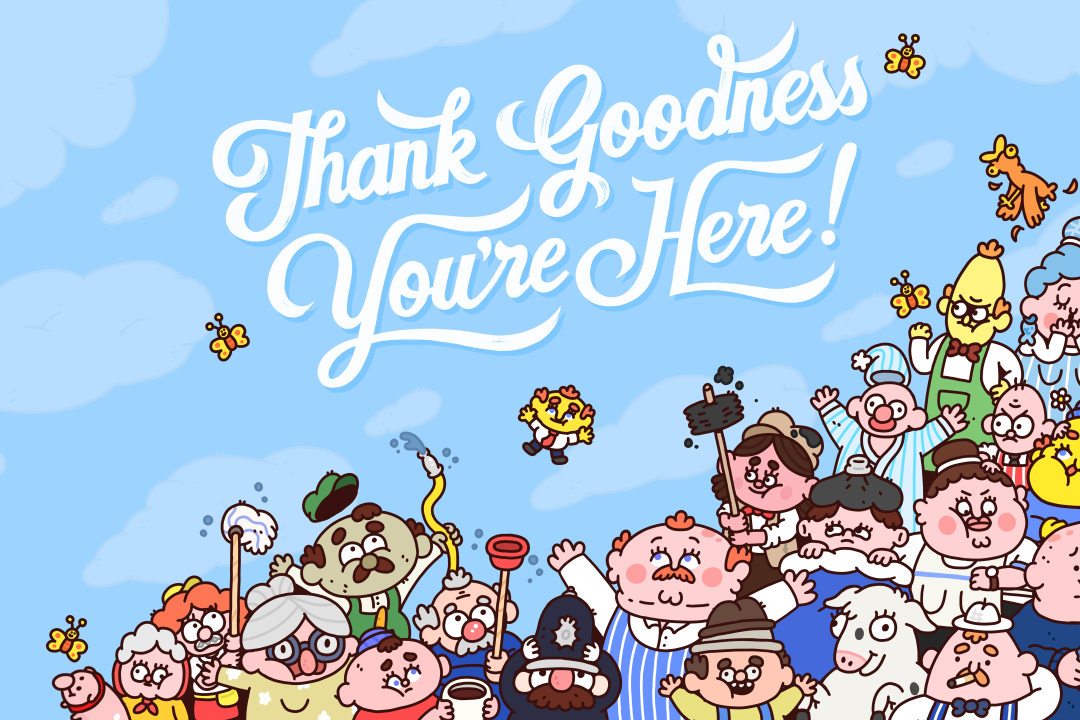
It seems contrarian for me to open this by saying this is definitely the best game of 2024 and it’s definitely going to be my favourite game of the year… but it’s true.
The thing, I suppose, that makes that kind of wild, declarative statement seem so difficult to declare is that… games are just so broad, aren’t they? Playing something like Thank Goodness You’re Here! is so unbelievably different from playing, say, my favourite game of last year, Hi-Fi Rush, that it doesn’t feel as easy to say as declaring one movie “the best film of the year.” I mean in that case, you still just sit there and watch a movie. There’s not quite the same… granularity of experience. I mean even if you were talking indie games, Balatro touches such a different part of my brain from Thank Goodness You’re Here! So how could I ever, really, compare them?
Well, you know what? Sometimes you gotta just stick your flag somewhere, and my flag goes in the top of a Yorkshire pudding, and when it unfurls it’s the flag… of Yorkshire. Which surprised me, because I’m Scottish, so normally it goes in the top of a Scotch pie, and it’s a Saltire, so I guess I really like Thank Goodness You’re Here!
To describe it, though, which is what you’ve paid for, Thank Goodness You’re Here is a non-evil Untitled Goose Game. You play, in some respects similarly, an agent of chaos in a small town: a tiny man with… jaundice(?) who has been sent to the town of Barnsworth to help the mayor, but end up in the tangle of everyone’s lives. You help them do things that sound explicitly rather simple like mowing a lawn to buying some soup… but it’s not simple at all.
Unlike Untitled Goose Game, your tiny man isn’t just a wee dick; you’re actually helping people, it just happens to be in a very anarchic fashion. You rise to the level of the town, rather than lowering it, so outside of a few smacky bum-bums, you never feel like you’re bullying anyone… well maybe that guy with the chimney. But the joke works.
It would be regressive to describe this game as “weird” or “crazy.” What it is, and what makes it so brilliant, is that it’s so British. If you love the era of British comedy that brought us things like Look Around You or Alan Partridge, you’ll feel right at home here, and I was genuinely laughing all the way through this. Mileage may vary: some jokes and sequences are unbelievably puerile, some are a little smutty; some are… disturbing, but there’s a joyful nature to this whole thing, and it’s all so rapid fire that if something falls flat, it’s not long before you’re laughing about something else.
I think also that the game has a near-perfect take on interactivity for this kind of story-based experience. Outside of special sequences basically all you can do is slap things or jump, but everything is reactive, and the level design is cleverly focused; your path through the game is a sequence of designed loops that you can’t deviate from, but as a result you don’t suffer from the kind of downtime you can struggle with in more open adventures and which can ruin immersion.
Here you’ll never return to an area and discover it static, how you left it, and have to waffle around trying to find X or Y; you’re always moving forward onto Z. I can hear the criticisms, but at least for me this never felt restrictive; the only issue I really had was feeling that I had to put the game down regularly lest I finish it too quickly–though it’s surprisingly lengthy for something featuring so much bespoke art and sequences, at almost five hours.
To be honest, the game manages something that I wish designers of interactive experiences–think your Meow Wolfs, your Sleep No Mores–would learn from, which is how to always be guiding your player forward through a space and yet still allow them to experience it at their own pace. Sure, it has the benefit of being able to lock doors behind you, and there aren’t 300 other tiny men with jaundice trying to do everything in it at the same time (though I’d love to see that?) but I couldn’t help but be impressed with the flow.
(This may relate to me seeing Sleep No More before it closes just before playing this, finding it a hard to navigate mess of meaningless rooms in a warehouse and thinking it was fucking rubbish.)
The reason, really, that this is my game of the year already is that it’s trying to do something specific and it’s doing it as unbelievably fucking well as anyone probably could. Your dexterity won’t be challenged, your brain won’t be taxed, but they don’t need to be. Sure it’s a funhouse mirror, but if someone was to ask me “What’s the UK like?” from now on, I’ll probably just say “Play Thank Goodness You’re Here!”
Will I ever play it again? Absolutely. Not for a long time, I think, but I didn’t technically see “everything” according to the achievements, and I’d like to.
Final Thought: For categorisation sake, I would like to mention that I do think that Thank Goodness You’re Here! is largely specifically English, and Northern English at that, but there are enough commonalities and it features a big role for Davey Swatpaz that I think it’s fair to think of it as extremely British anyway. And speaking of the excellent casting, Matt Berry is in this and as always he’s brilliant. There are few games where I’d say “I really hope you run out and buy this” but there are few things that are such polished diamonds, and even though this was funded by Panic, who apparently have enough money that they can piss it up on a wall on the world’s most niche handheld (hey, I still bought it) smaller games are having such a rough time of it that when they’re good we should really, you know, reward that. Don’t just do it for me; do it for Tiny Tom. Or Big Ron.*
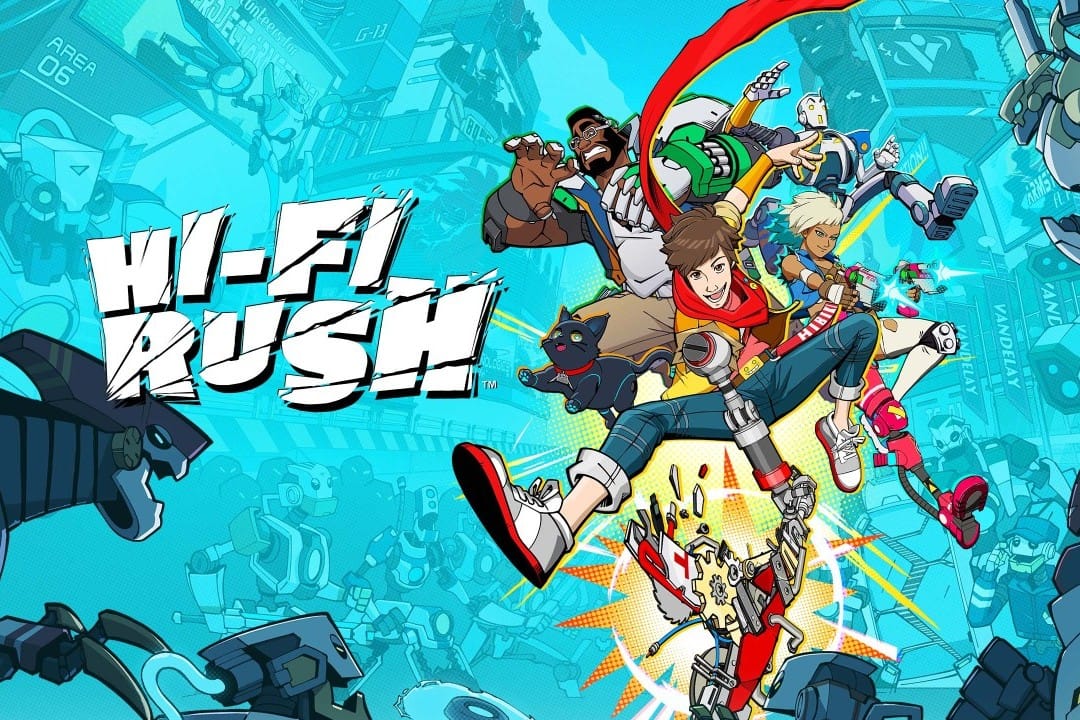
I’m not quite sure why, but saying so feels very exposing. Maybe it’s because before playing Hi-Fi Rush I had no idea what it actually was, and the game’s bright anime-adjacent stylings somewhat had me discounting it out of hand, so I assume the extremely cool people who read this would be doing the same.
Maybe it’s also just that Hi-Fi Rush is… pretty straightforward? It’s not particularly trying to move the medium forward (although I think it does some clever stuff) it’s just trying to be very, very good at what it’s doing. And what it’s doing, actually, isn’t so much “anime” as “full on Sega blue skies” while being an incredible competent 3D action platformer/brawler with a likable (dare I say loveable) cast of heroic misfits telling a simple but effectively structured narrative with some very savvy music choices.
The thing is that… succeeding at something that hits that many beats isn’t actually… easy? Something I’m most struck by is actually those characters. By now we’ve all seen the nadir of Marvel-inspired quip-a-thons thanks to the likes of that Forsaken trailer, but even looking at something like, say, Guardians of the Galaxy, where they have something that (at least previously) had worked, it’s remarkable how flat it falls. Here, you have a goofy, act-first-think-later hero, Chai, the cleverer-than-him female leader, Peppermint, the funny robot, CNMN, etc. in a very simple “baddies are doing bad things, let’s get the different things we need to defeat them” story, but it completely pops because there’s been care to keep the story rolling naturally so you flow through it and grow into caring about them. I’m so insanely curmugeonly that I can’t believed to ride that line for me. But they did!
Now you could say, “ah, but the secret weapon here is that the game uses actual songs that you actually like! That always works!” But it doesn’t work if all the pieces don’t fit together. There’s no better example than one of the game’s latter levels that uses The Prodigy’s Invaders Must Die. It plays at a moment where narratively all hell is breaking loose. It feels like you’re in a climax of an action movie, not just because the music is playing, but because the story has taken you there. That the level design is clever enough to cool down, let the music pull back a little, and then kick it back in for a climax? Absolute chef kiss.
(It only really gets better from there, too. Ending strong is rarely something I think video games aspire to, but Hi Fi Rush is sensibly around the 10 hour mark and the last three levels or so rip. Did the appearance of The Joy Formidable on the soundtrack literally make me emotional? Yes. Yes it did.)
Now interestingly, I haven’t actually played any other Tango Gameworks titles so I don’t really know if I should have expected rock-solid play, but either way I was surprised by how well it does. What makes Hi Fi Rush genius, I think, is that it takes a type of game I am incapable of not button-mashing through and adds a rhythm action component that doesn’t expect but rather, uh… politely asks you to hit your combos on rhythm. And it works!
I can criticise it, somewhat, however They quickly add quite a lot of subtleties to the combat and don’t tutoralise them heavily enough–I didn’t understand how to use Chai’s “partner combos” until well over half-way through the game, and I don’t know if I ever got comfortable with parries because standing around waiting for enemies to attack seemed the antithesis of everything else I was doing. There end up being a lot of buttons and you have to internalise the order of your partners and switching between them rapidly in situations where there are like 3 different kinds of enemies at once meaning at times combat is just a total stramash. But even then, there’s always the beat to follow. It’s very clever.
Anyway. I loved this. It’s one of my favourite things I’ve played in years. Your mileage may vary!
Will I ever play it again? When it finished I wanted to play it more. That literally never happens. I sort of hope there’s a sequel, but the story of this is so pleasantly complete that I’m not sure if there should be one.
Final Thought: I may also be a bit of a sucker for this game because you’re always accompanied by a black cat. Inspired by the game director’s!
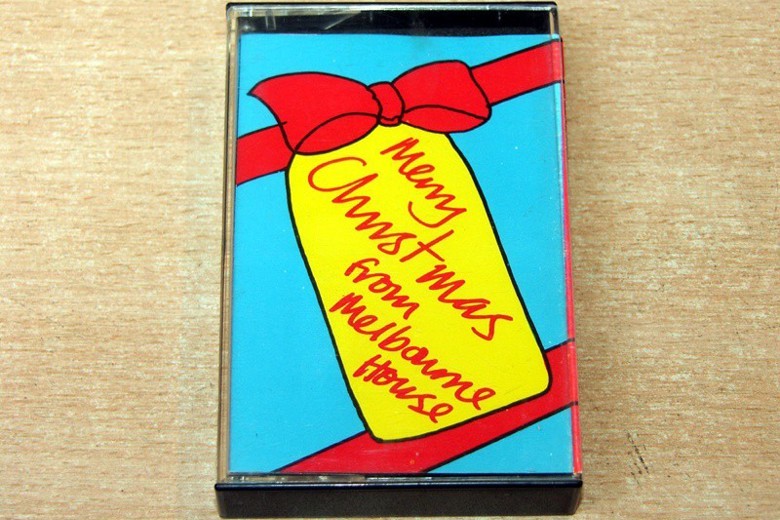
Developed/Published by: Melbourne House System: Commodore 64 Released: 1984 Completed: 11/12/2023 Completion: Beat it with a score of 100 out of 100.
It’s 1984 and the Christmas cash-in market is finally mature, with five whole games released for home computers (at the very least.) Alphabetically first in my list (because Icon Software chose to go with “Xmas” on their merry release) Merry Christmas From Melbourne House is a slight cheat because it’s really just a tiny tech demo/bit of marketing, but it was sold, costing 95p (the price of tape duplication and postage?) for readers of Commodore User (it was actually in the December issue and the deadline was December 17th to get your money to them, which makes me wonder how many people played this long after things stopped being festive.)
It is though, honestly, what I was kind of expecting from A Christmas Adventure. It’s a short, very easy little adventure game that… passes about half an hour and actually manages to feel Christmassy.
Like A Christmas Adventure, you’re tasked with making sure Santa can get away from the north pole to deliver presents, but in a shocking twist… YOU are Santa. The game’s blurb claims he’s “attempting to stop an industrial dispute” that “is threatening the delivery of toys to children of the world” and it sounds like jolly old saint nick is a fat cat like the rest of ‘em, and out of solidarity with the elves and workers everywhere I spent quite a bit of time typing things like “GIVE ELVES RAISE” and “PROVIDE TIME OFF” but the parser never understood it, so I almost didn’t finish this.
The plot is a bit oversold anyway, considering the solution is pretty much “Get off your fat arse and pack your sack of toys yourself, Santa.”
As you’re not doing all that much, the parser is adequate, and the graphics are… genuinely quite evocative. They are important too–the toys you have to pack are all on one screen. I don’t generally like this design in graphic text adventures–where you don’t get told everything in text (I’m a VERBOSE man in Infocom games)–and having to work out directions here was not my favourite, But it worked well enough, and I was even charmed by the full screen advert for Melbourne House games.
Anyway, lemme see how much 95p is in today’s money. £3.77. I can’t really say people got their money’s worth here, but they could do a lot worse.
Festive vibes ranking: HIGH
Will I ever play it again? I’m good.
Final Thought: Joe Pranevich over at The Adventurer’s Guild played through this as well if you’d like to read something more in-depth about it, with the bonus that one of the developers, Dave Johnston, shows up in the comments, revealing that it was developed “in a matter on weeks using an in-house text engine and a tweaked sprite engine based on Way of the Exploding Fist code” and that he didn’t even have a copy. They paid people at Melbourne House so poorly that they couldn’t raise 95p???
Developed/Published by: Chartscan Data, Inc. System: Apple II Released: 12/1983 Completed: 11/12/2023 Completion: Couldn’t get Rudolph to drink his bloody milk.
Well, it’s been two years since I thought I’d “have a look at the earliest Christmas games” and I managed to play… one of them. And then last year I was sick for most of December so I didn’t really play anything other than tapping miserably at Marvel Snap. But I’m back, baby!
First up, I owe almost all understanding of this game to Joe Pranevich over at The Adventurer’s Guild who has written an insanely detailed post on it which I highly recommend reading, but I’ll summarise some of the findings here.
A Christmas Adventure is generally considered online to be the second Christmas-themed video game ever released commercially, following the somewhat bizarre Santa’s Sleigh Ride, but I’ve since discovered that there’s several ZX Spectrum games with a 1983 date (including one, potentially lost media, called A Christmas Adventure as well???) so there’s probably more out there for like… the Dragon 32 and shit. But let’s talk about this one anyway. What makes it more interesting than just potentially being the second Christmas-themed video game ever is that it isn’t just, as you might expect, a Christmas cash-in, but an attempt by a French Canadian fellow named Frank Winstan to make video games that acted as greeting cards. Mind how for a while personalised children’s books were all the rage, and you got this crappy book where a jpeg of your child’s face was awkwardly stuck on the main character? Like that basically, with the idea that they’d start with this Christmas “card” and then do… well probably Easter, and then branch out to like… “Happy 43rd Birthday: the adventure” or “Sorry Your Grandma is Dead: the adventure” I guess!
Unfortunately (or not) due to time pressures they never quite managed to get the company off the ground, with this selling poorly its first Christmas, although Winstan would continue to work on it through 1986(!) updating and improving it. As far as I know, I’m playing a version from the same era ion Pranevich did, which seems to be a later version than the one you can watch on Youtube.
Anyway. A Christmas Adventure is an early graphical text adventure; originally released in 1983, it would be contemporary with the very end of Sierra’s Hi-Res Adventure line before they’d go on to make the more sophisticated King’s Quest, and surprisingly, very few other examples, making this… sorta cutting edge?
What does feel cutting edge actually is the opening cinematic, which you have to flip the disk to see, which includes an animation where you fly to Santa’s Ice Palace. Sierra’s Hi-Res Adventures have insanely terrible art (well, apart from Dark Crystal I’d say, which has a near stained-glass window approach) so getting something that generally looks like it’s had a bit of effort put in is rather nice.
Telling that classic story, “Santa’s been kidnapped and only YOU can save him” after the intro you’re dropped in his house and have to wander about picking things up and using them to save him. I very quickly hit the issue that has stopped me bothering to play any of Sierra’s early output: the parser is terrible. Doing literally anything is a nightmare, and I will fully admit I had to use Pranevich’s article to walk me through the game, and he had to hex edit it just to understand how to solve it!
It’s confusing, because this is a commercial concept based on greetings cards. Now, I imagine nowadays you can probably get “escape room” greeting cards where you have to like, solve a fucking cypher or whatever to see something that says “We’re getting divorced” (and if there isn’t, I should get on that) but in general, if you’re giving someone a gift like that you want them to… enjoy it? I really assumed that this would be very simple. You know, for kids. I mean you’re saving SANTA. Not Santana (ft. Rob Thomas) which would of course be for cool adults only.
I suppose I’ve said it before, but maybe people in 1983 were made of sterner stuff; less likely to give up. I guess some puzzles in this are easy, like dressing up like Santa to fool his safe, or the disk that tells you the password right on it (Santa’s Jewish???) But then like… there’s a time machine. And there’s just so much wrestling with the parser to get anything done. Typing “HELP” gives you a list of words that the parser understands which is, 100%, a lie, because almost all the words don’t work.
Ultimately, it’s the reason I couldn’t finish this. In his article, Pranevich was able to feed Rudolph, but despite having stuck the “was’bask+mlk” in the fireplace I could not feed him. I went through every possible thing I could imagine, really tried to get Martin Luther King out of that was’bask, but I’m starting to believe the archive.org version of this is just bugged. It is what it is, and I watched the ending on youtube (and for good measure used the HELP to see the message as well.)
Feels a bit harsh to say this isn’t good despite the fact it it is, er… not good, just because it’s an interesting attempt at something that just seems to have come at the wrong time and with some rather wrong-headed ideas about how challenging it has to be. Also: it didn’t make me feel Christmassy at all!
Festive vibes ranking: Despite the setting… LOW
Will I ever play it again? I have a save. If anyone can tell me what to type to get Rudolph to eat I’m making that bastard eat.
Final Thought: It’s worth noting that you can really feel the developers–at least Frank Winstan?–cared about this project because it’s full of little touches. I love that Santa has a poster of Bob and Doug McKenzie’s backdrop up (as Canadian a reference as you’re going to get) and there’s non-sequiturs like Pac-Man showing up for a hot minute.
Do you have any famous works that you’ve always been… scared to start? I don’t mean intimidated–I haven’t read say, Infinite Jest not because it’s long, but because [jerk-off motion]–but that something is talked of in such hushed breaths that you’re worried it just won’t live up to whatever you might have imagined?
I have it a lot, and because I generally try to read as little as possible about things before I experience them, it’s not so much that I’m imagining these incredible things, as much as there’s this astonishing possibility space out there that it almost feels… wrong to cut it down to just the one thing. Schrodingers’ video game.
For A Mind Forever Voyaging, all I’ve known until now is its striking cover art, and that it’s Steven Meretzky’s attempt to grapple with Regan’s then-recent re-election by landslide. So it was with some trepidation that I started pouring over the box, feelies and manual.
The manual is worth reading, with the most empathetic piece of writing I’ve experienced by 1985 in video games, as we’re introduced to the game’s central concept: you, the player, are “PRISM” who, raised in a perfect simulation believing themselves to be the real person Perry Simm, discovers that, well, no, they’re actually just an AI.
It gave me enough pause that I actually put the game down and didn’t start it for several more weeks! If anything, the possibility space had got larger.
A Mind Forever Voyaging, now I’ve played it, is kind of a hard one to discuss. On hand, it’s flawed. As deeply flawed as any Infocom I’ve played up to this point has been, and for many of the same reasons. On the other, it’s a genuinely captivating piece of speculative (interactive) fiction that will probably stick with me forever, not least because while it might over-extend itself on specifics, politically and thematically it is one hundred percent correct.
Let’s get to those specifics. First up, the game really requires you to read the manual. While it’s nothing as complicated as Suspended (which I still can’t believe was only Infocom’s sixth game) there’s a similar sort of “mode switching” as you begin not able to walk about and pick up stuff but can simply switch between locations in communication mode (largely able to just see the same locations, or veg out and watch the news) or read backstory in library mode. It’s really here that you get to what could be considered the game’s most major flaw–how self directed the player has to be for most of the time.
This isn’t the same as something like Planetfall, where the player is primed “you’re stuck on this planet bro” it’s actually literally like “you’re a computer and there’s nothing to do?”
There are big swathes of this game where you’re stuck typing “wait” or even resorting to “wait 120 minutes” which I found almost… shocking. It’s made all the more baffling by the fact that the game has a news network that you can “watch” but when you’re in the mode time passes at a crawl, meaning that you’ll probably burn through basically the entire thing (hundreds of lines of script) just waiting to get to the first simulation!
The meat of the game is in that simulation, however, and this was a massive surprise to me. The game presents what is pretty much the only direction the player gets–that as PRISM, you’re supposed to do a lot of very mundane things in a simulation of a small town, Rockvil, ten years in the future, like eat in a restaurant and speak to a clergyman–record them, and then deliver the recordings to see if the government’s transparently republic agenda known as “the plan” will work. It’s here the game takes a massive diversion from what I’d expect from a Infocom game at this point, because you enter a genuinely huge recreation of a town that is nigh-unmappable, with hundreds of rooms and most rooms having as many exits as there are compass points.
Don’t get me wrong, this is a meticulous recreation of a town and is an extremely intentionally designed space, but it’s also not a “designed space” as any video game developer would know it now. I quickly gave up any pretense of mapping the space–relying on the one decent map I could find online–and began wandering.
And wander I did. To be honest, you don’t genuinely need a map outside of the one that comes in the manual, as you aren’t really needing to hunt anything out. As has been written elsewhere, in A Mind Forever Voyaging, you are an observer, not an active participant, and as a result, simply wandering as your wont takes you and recording what you find interesting or pertinent is genuinely enough to progress.
Of course, that’s as long as you understand that, because once you’ve managed to “complete” the tutorial-like first simulation, the game literally goes “oh, we don’t have anything for you to do now. Entertain yourself.”
I know that it’s easy to accuse modern players of wanting everything on a silver platter (or at least, with a silver arrow pointing in the direction of the platter) but I really do find it hard to believe that even players in 1985 didn’t find this kind of thing frustrating. Noodle around long enough, and you’ll work out that you can get to a simulation twenty years in the future. But what do to there? Might as well just record the same stuff you did ten years in the future, right?
And it’s here we hit what is–confusingly–A Mind Forever Voyaging’s most glaring flaw but also what might be the thing about it that makes it the most memorable. For the majority of the game all you do is revisit Rockvil and record how it changes across the years. It’s repetitive, and by the fifth time you do it you are almost certainly tired of the same interactions.
But it’s also a perfect experience in seeing the slow decline of society under rule by Republican values. In 1985, this was just a scary warning of how the future could look. In 2022, it’s a sharp shock to the player, showing them how much has been lost and how much more will be lost if we continue the way we have. It is too easy to experience the decline of our civilisation as a frog, slowly boiling, and A Mind Forever Voyaging asks you to remember what temperature the water actually is.
As Steven Meretzky noted in 2017, everything came true. The game features a border force who act as judge, jury and executioner; viciously racist policing, and the complete MAGA-fication of politics long before anyone even imagined such a thing. Even the things that seem far fetched in the moment–a supreme court giving the ok to religious fundamentalists seizing government property?–doesn’t seem that absurd when you ask “could the current supreme court have sided with the far-right extremists in the Occupation of the Malheur National Wildlife Refuge?” the answer is yes, obviously yes.
And isn’t it disturbing that you’ve probably already forgotten about it?
It is painful, genuinely painful at points, to be playing a game that shows horrible things happening in a decade to represent a society that is past the point of no return and recognise that these things are already happening around us. That Meretzky was far too kind to expect things to not have gone to totally hell until 2050 at the earliest.
To be honest, a game like A Mind Forever Voyaging is as vital now as it’s ever been, and while I can’t recommend it without caveats, I actually rather like that I’m not completely certain that my instincts on its subtler “flaws” are correct or not. Lack of direction and the need to endlessly wait at points? Yeah, those are bad. But I can’t decide if choosing to create a huge, often samey and empty Rockvil is actually worse than making something more tightly designed. Rockvil might feel more real to me because I had to traipse through several parking empty parking lots; I can’t tell if it’s an acceptable price to pay that so many descriptions are generic (I got tired of things being described as a “totally ordinary [noun]”). Wouldn’t it be more interesting to have puzzles to solve? Like, shouldn’t I have to steal a ration card to make the ration card fraud arrest happen so I can record it? Or would the ludic nature of that undo that sense that Rockvil is real, and I’m genuinely experiencing it?
With modern eyes, I think I would prefer the latter (tighter, have some puzzles) but I don’t actually blame Meretzky for going the other direction at all–especially considering the one puzzle in the game (avoiding being killed in act 3) involves, annoyingly, having to wait (again!) in the right place at the right time to even notice what’s going on (I really don’t know what the hell was going on with Infocom’s playtesters sometimes.) But the only thing I really don’t think works in the game is the saccharine epilogue. The digital antiquarian goes into probably too much detail on it, but he successfully raises that A Mind Forever Voyaging’s setting, movingly portrayed or not, doesn’t make a ton of sense if you go one level down, and ultimately only serves as backdrop for a polemic, which would ring more true I think without the San Junipero wish-fufillment. There’s no guarantees a utopia awaits if we do the right thing now. It requires constant vigilance.
(And I have to agree that casting Perry Simm as mere observer does him a disservice–memory was at a premium even with a new extended Z-Machine interpreter allowing 128k instead of 64k to fit the game into, but that the game’s descriptions are often so dispassionate, and we never see or experience Simm grapple with his new existence as an AI is a disappointment. But A Mind Forever Voyaging is already doing so much, probably too much.)
So after all that, how do I feel now that A Mind Forever Voyaging is the thing that it is, rather than whatever I imagined it could be? Incredible, honestly. I’m richer for having played it, warts and all.
Will I ever play it again? It’s an interesting question. I’m not sure I’d choose to play it again–the slow decline of society is… slow. However, it’s a game I would relish showing to others.
Final Thought: Late summer/early autumn in 1985 was insane. A Mind Forever Voyaging was quickly followed by Super Mario Bros. in September and that was followed by Ultima IV days later. Hard to argue that these three don’t represent in many ways the peak of creativity in video games even now.
Developed/Published by: Naughty Dog / Sony Interactive Entertainment Released: 19/6/2020 Completed: 24/05/2022 Completion: Finished it. Trophies / Achievements: 78%
This write-up contains massive spoilers for The Last of Us and The Last of Us Part II, unavoidably.
Abby died. Ellie killed her, in the theatre.
Again.
And again.
And again.
It was what was right. It was what I wanted, it was what Abby deserved.
So why wouldn’t the game finish?
Why did the the game make me keep playing Abby, doing things I didn’t want to do–attacking Ellie? In fact, why was the game making Ellie a boss? I thought… were the designers of this serious? Were they expecting me to feel… conflicted? To possibly feel like I was on Abby’s side, after what she did, and then after spending all that time on what was, ultimately, a totally irrelevant ten hours???
They couldn’t be that foolish, could they? Did they have that much hubris that they thought this story work?
So maybe I switched the game all the way down to “very light” and thought, hell, I could be wrong. Maybe they’re actually going to pay off this story.
They didn’t.
So yeah, Abby died. Ellie killed her, in the theatre.
Will I ever play it again? I will never play this again. I intend never think about this game again after writing about it here.
Final Thought: …Damn. Neil Druckmann. Man. Turning out to be a Ken Levine… it’s almost sad! It’s really depressing, actually, that the reaction to The Last of Us Part II–like basically everything these days–got tied up in tired culture war bullshit, because it only serves to undermine any extremely legitimate criticism of a badly conceived story poorly told. To be honest, I’d love to leave my write-up here, but there’s this worry that you’ll read this and be like “oh, this guy hates Abby because she’s got muscular arms!” or something.
It’s genuinely quite hard to know where to begin, but if you need my problem in precis, it is simply that The Last of Us Part II manages to tie itself into knots in how it feels about interactive storytelling. On one hand, it decides that despite the fact if you’re playing “The Last of Us Part II” you’ve already spent 10+ hours being Joel and that the previous game used that to (very effectively) make you feel like you’ve personally led Ellie across the United States, growing ever closer to her, that the player will have enough distance that, sure, they’ll be shocked, but they’ll be more “interested in how the story plays out” than “hating Abby with a fire that could burn out a thousand suns”. But then they assume that if you spend 10+ hours being Abby, you’ll get close enough to her that you’ll start to see things her way… even though you’ve just spent 10+ hours playing Ellie, with your hatred only growing.
And through this, they seem to… forget(?) That Abby’s revenge is not merely for something the player did, but something they goosed the player up to do. There’s a horrible smugness to the game standing in judgement of the player, especially when they don’t know how the player actually felt about what the previous game literally forced them to do (if they wanted to see the end of the game) and I know others didn’t approach it with quite as much of a righteous fury as I did.
It’s even worse than that, really, because they actually have to do one of the weakest-ass retcons to make standing in judgement work! At the end of the game the Fireflies are real dicks, who unjustifiably are about to kill essentially a child without giving them any say in the matter… but Part II makes it clear that it was very hard for them! They felt sad about it! Also it was the only thing they could do, and they needed to do it immediately! Also… Abby would have let it happen to her, so really, what a monster you are! We mean, uh, what a monster Joel was!
It is, I can not put too fine a point on it, just the most embarrassingly desperate writing. It’s forced and it simply does not ring true, not to the player’s experience and not to, well, anything. Sucks for Naughty Dog, but we’re all currently living through a global pandemic where it turns out vaccines are not a panacea, and even if Covid turned your head into a fucking mushroom half the US wouldn’t want to take it and you’d never reach the required immunity, meaning the Fireflies were as likely to kill a lassie and get fuck all out if it as anything else. So fuck off.
I don’t even really understand some of the storytelling decisions from really any angle. Even structurally; when playing the only way I could basically justify spending the second half of the game playing Abby was going to be that her side of the game–playing, as it does, out across the three days of Ellie’s half–would feature her following Ellie’s trail of destruction and seeing the cost of that, or somehow presenting a meaningful mirror. But… actually her side of the game is almost entirely completely irrelevant story about TWO OTHER CHARACTERS!!!
Sorry, I’m actually yelling now, but it’s not actually just idiotic it’s actually sort of offensive? I’m no expert (and on this point I’m happy to accept if people feel I’m in the wrong here) but The Last of Us has previously handled a queer story naturally, but The Last of Us II goes big on using a trans character that basically only exists to make us like Abby more and I found it, well, I found it fucked up?
I mean, this is where the culture war bullshit gets iffy, actually–because it’s completely fair to say that the narrative in “Abby’s side” isn’t what a player wants to be spending their time on in this game, and definitely not at the point where they get to it. Not because queer and trans stories and representation aren’t valuable! But this feels very clearly like a queer/trans story being used not shared; and it only gets even dodgier in my opinion when you read up and realise that the entire WLF vs. Seraphites angle is meant to be some kind of allegory for Israel and Palestine; the technically superior WLF versus backwards religious zealots with bad opinions but guess what: they just might be as bad as each other!
(If I’d read that a lot of Druckmann’s inspiration for this came from his sympathy for the IDF I would never ever have fucking played this. I mean what the fuck.)
I’ll be honest… I’m tired of thinking about this stupid fucking game; I meant what I said above in my “Will I ever play it again?” It has made me more depressed than I’ve probably ever been about triple-A video games as a form for storytelling and it has literally taken me weeks to sit down and write this because it just bummed me out so hard. I keep thinking… did they actually think this was profound? Then I remember how the game has an entire EXTRA THIRD at the end that adds nothing except to make the entire experience only more miserable and make Ellie seem like an idiot, culminating in her making a decision that she literally would not make because she DOESN’T KNOW WHAT THE PLAYER KNOWS!
FUCK!
(It’s actually quite funny to read Druckmann dither noncommittally about why she makes that decision in interview in a way that makes it clear it was a necessary story decision, not a character decision.)
Anyway, please don’t ever waste your time with this. The game has less intelligent things to say than the deleted scenes from Austin Powers (that got left in the UK release, making it a better movie, honestly.) I mean, watch this. Now that’s some powerful storytelling!!!








 Unlock with Patreon