In this week’s Dispatch: after playing Wheels of Aurelia, I decided to look at its main inspiration, Il Sorpasso. And a capsule review of Luth Haroon’s INSERT/DATE/HERE.
Hey, do you hate in-line advertising? We do too! We’re only ever going to do it here at the start of our newsletter posts because we want you to get these missives in your inbox a day early. Sorry!
Wheels of Aurelia is now delisted on the App Store, though in some respects the story of the control tech companies have over access to art has evolved in the face of both Steam and itch.io delisting/deindexing NSFW games under demand from payment processors reacting to the pressure of far-right activists. There’s a great resource here that can help you pressure the payment processors in return.
I made myself sick of Threes before 2048 was even a glimmer in a cloner’s eye, and I think it’s important to reflect that the things that ultimately stopped me playing it were very deeply considered: there’s a great Wired article that goes into just how deeply they thought about it all.
How do you feel? Did you keep clicking? Did you stop? Did you just close the window after it said game over, or did you continue? How long did you click?
…
When INSERT/DATE/HERE was shared by friend-of-the-zine Mare Sheppard, it was made clear what it was about–and I don’t think when you start playing, that you can really have any doubt what you’re doing from the first click anyway. It made me think of the “Death From Above” sequence from Call of Duty 4: Modern Warfare, which (in a reading which absolutely requires the author be stone-dead in your mind) I always read as a meaningful juxtaposition of how some people kill by pushing a button vs. the gritty reality of on-the-ground warfare. A touch of nuance with your exciting Hollywood-style story where any action is justified by the fact you’re fighting “real” baddies.
But the reality of this kind of warfare is the person pushing the button doesn’t even really think about if they’re fighting baddies. They aren’t thinking about them as people at all. And if they did, they wouldn’t care.
In INSERT/DATE/HERE we face a genocide that has been streamlined into a series of clicks, likely performed by a drone operator, miles away, sitting in a chair in front of a computer just as you are. What they are doing has been so disconnected that it is as if they are poor, special Enders, allowed to do what they’re doing without ever really having to understand it. So disconnected that the clicks you just performed could very well have been as real. The perfection of dehumanisation.
I clicked. I clicked until I hit my quota and then I watched what that actually meant. And then I clicked, over four hundred times, to symbolically bury every single person I killed–until it was clear that not every one could be found. Because of course, many of the murdered will never be found, or counted, or their existence will simply be disputed, whether we have seen it with our own eyes or not. As I write the window remains open, knowing that there will be no closure, there is nothing I can do, and that tomorrow the same thing will happen again.
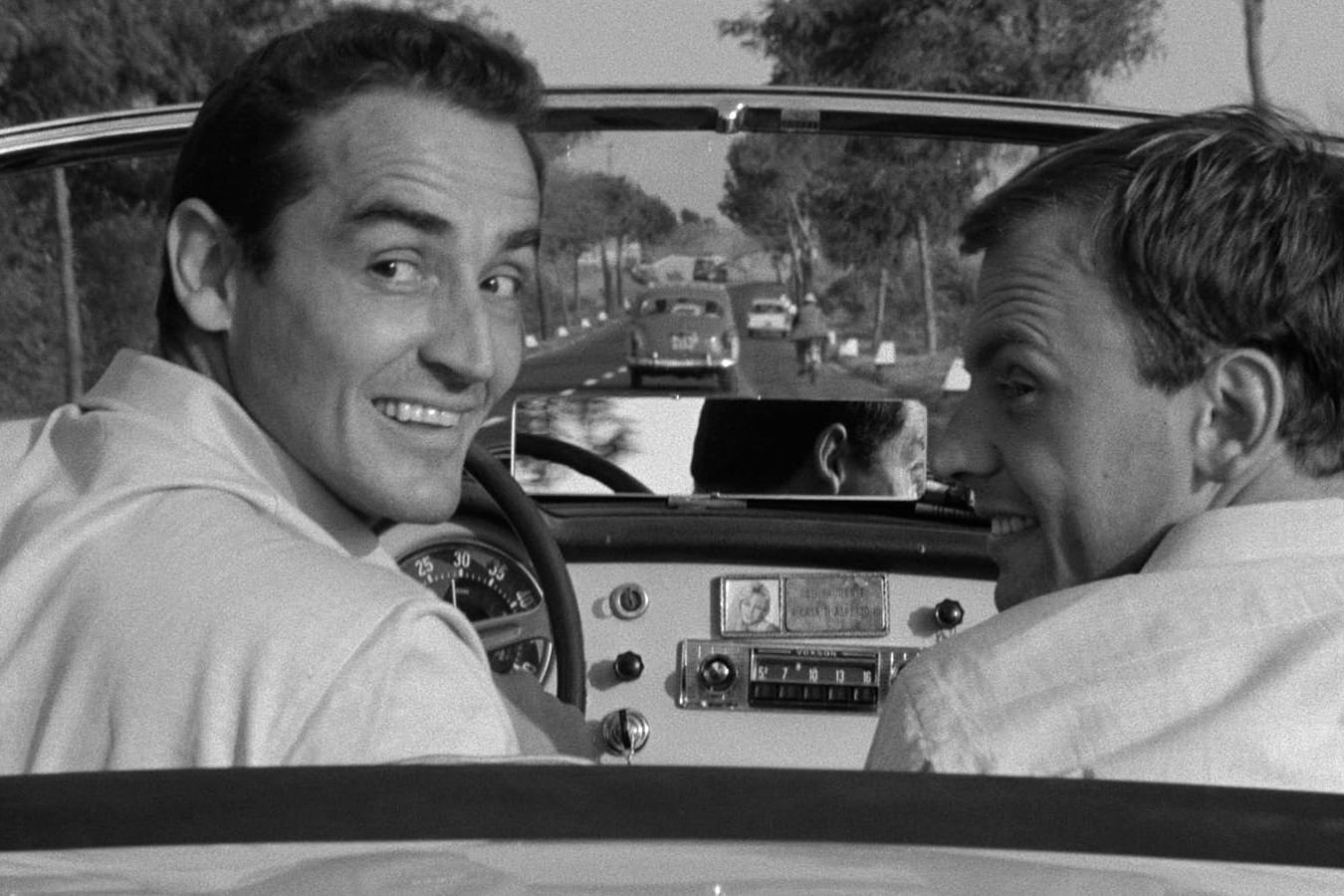
Claimed as an inspiration for Wheels of Aurelia by Santa Ragione, I was interested to discover the influence to be less straightforward than the setting of the Via Aurelia, with both game and film using the beautiful setting to try and dig more deeply into the Italian society of their era.
Italy is in the honeymoon period of post-fascism in Il Sorpasso, while in Wheels of Aurelia, the characters have already lived through a decade of the “Years of Lead.” In some respects, both works lull you into a false sense of security that they really aren’t about much more than what you see. In Il Sorpasso, it immediately feels… expected. Almost formulaic. A shy student lets a brash character, Bruno, use his telephone, and seems to end up kidnapped out of politeness. Their adventure, of course, opens him up. Maybe he’ll start to believe in himself?
Well… no. In retrospect Il Sorpasso is prescient in theme: that trying to be carefree in the face of your failures may ultimately have a cost to those who believe you. Bruno is charming, insightful, but his failures are not that he’s blunt or that he’s incapable of taking anything seriously. It’s that he’s a would-be rapist and an absentee father, one who returns to find his teenage daughter in a relationship with an elderly pedophile* and after realizing his own irrelevance does his best to at least get some money out of it—but ends up abandoned, with only his mousey thrall left to impress. But his lesson has worked too well, and as always, it’s the next generation that suffer.
If you’re unfamiliar with commedia all’italiana (Italian-style comedy)—and listen, I was—that something called a “comedy” could be not just so annoying (Bruno honks his fucking car horn a million times in this) but so deeply bleak comes as a surprise. The cinematography is stunning, the women are beautiful, but Il Sorpasso says: don’t let it fool you. As Wheels of Aurelia explores, for many, it did.
*I had to look this up, the age of consent in Italy is fucking 14 even today. Christ.
A huge collection of free zines focusing on individual Palestinian families seeking support that you could just print out and leave places (whether or not you’re American.)
And Finally…
Matt Farley’s 2013 film, Local Legends, is streaming for free on Youtube for the next week (until the end of July) and it is, arguably, the best, most honest statement on how it feels to make art–to make anything–in the modern world. You should watch it.
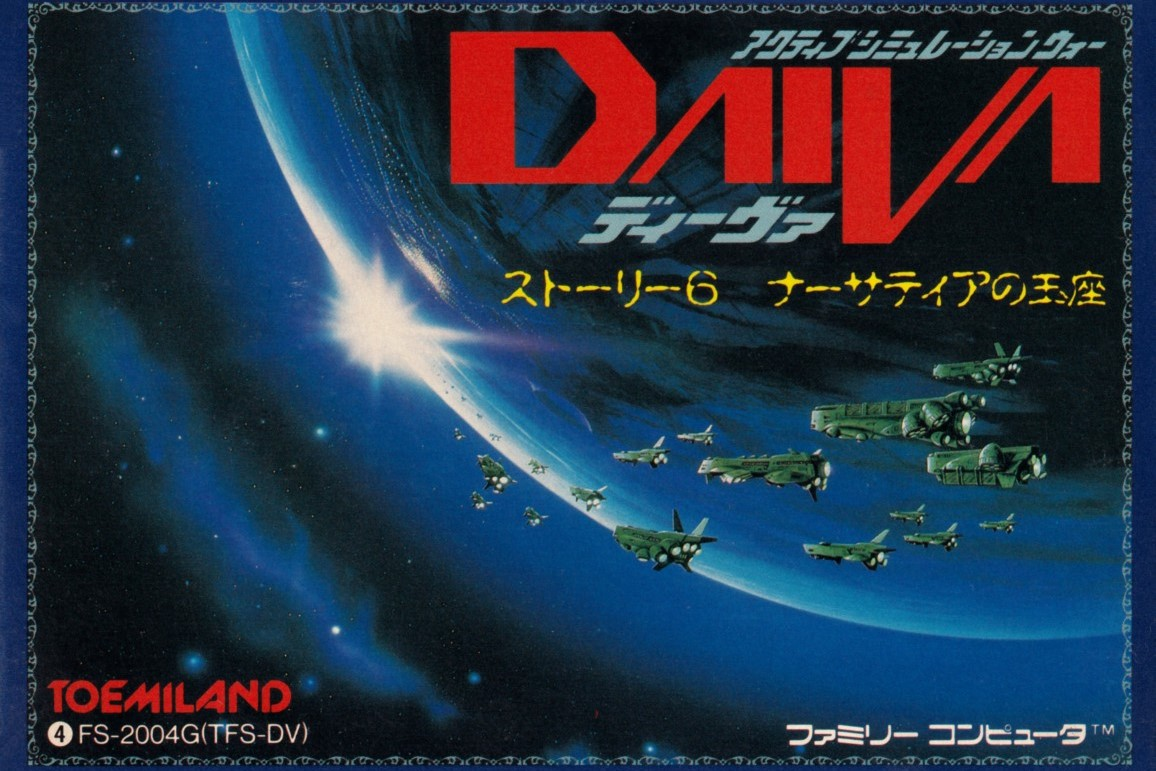
Developed/Published by: T&E Soft / Toshiba EMI Released: 11/1986 Completed: 08/04/2025 Completion: Liberated all 14 planets, but didn’t discover the enemy homeworld of Nirsartia.
There are a few Famicom-only games that Nintendo have released in the West on their Switch Online service–and far more that they haven’t. Which makes it so absolutely bizarre that in 2022 they released this, DAIVA Story 6: Imperial of Nirsartia, an action/strategy hybrid that’s almost completely forgotten, on the service.
You could assume it’s that they were looking to fatten up the service with something where the rights were easy, but this was released before things like Golf and Mach Rider! And it’s not like it’s been released by a company who has put a lot up on Switch Online–as far as I can see, the current rights holder D4 haven’t released any other games via Switch Online before or since!
But let’s get into what DAIVA Story 6 is, because it’s… complicated. You see, in 1986, T&E Soft, largely still fresh off the success of Hydlide, wanted to make a new game, but couldn’t align on if they were going to make a strategy game or an action game. So they just… slammed them together. And then they had to face the question of what system to make the primary platform. Realising that if they made one game and then ported it to other systems they wouldn’t be using those systems to the best of their abilities, they decided on a completely bonkers plan: to make seven different games all of which use the same game design, but which make the most of each system and which feature a deep, interconnected narrative based on Indian mythology (but in space.)
According to information sourced from The Untold History of Japanese Game Developers Vol. 2, this undertaking would turn out to be so insane that the lead developer, Yasuo Yoshikawa, would go blind.
(Temporarily, but still.)
Strangely, despite being the sixth game in the series, as the simplest game, Daiva Story 6 was released first, with the rest of the games following shortly after (apart from the seventh and final which unifies the stories of the previous six–due to the aforementioned blindness, it would be released somewhat later and be somewhat different, being entirely a grand strategy game with no action aspect.)
To be honest–none of this particularly matters if you’re only going to be playing Daiva Story 6, because it’s got barely any narrative apparent in it. In Daiva Story 6, you cycle between three modes:
An overhead section where you control a space ship flying between different planets. Planets start the action levels, but there are also enemy ships in space that begin in ship-to-ship battles, and you can return to your home planet to increase your squadron of ships for said battles.
The ship-to-ship tactical battles, where you position your ships each turn and then watch them fire missiles and lasers back and forth with enemies.
The action levels: a side-scrolling shooter where you control a mech that can jump and fire. Before each level you get to place three power ups during the level–a smart bomb, some missiles, and a health refill.
Daiva Story 6 is… not good. If it was just the action levels, it would be a forgettably janky Famicom game–not quite Mystery of Convoy, but close enough. Really the main reason to know the lineage is it explains the why of why you’re doing these three disparate, undercooked modes: they feel like the kind of thing you’d play on a Japanese PC of the era and they are!
But they are so undercooked in an attempt to make them accessible. The overhead section is ultimately just a menu. The only thing that really stands out about it is that the enemy ships sometimes attack planets you’ve liberated, which is a lot less than the other games, which have you actively assigning defenses to planets, making manufacturing orders and so on.
The ship-to-ship battles seem to have almost no tactics at all, just being a war of attrition outside of some tricks like lasers but not missiles firing through asteroids. And I can’t tell if this was intentional or not, but you never have to do them. You can just let planets get captured and then redo the action level again, which is probably quicker.
The action levels, which should be the highlight are, uh… not. I love that you can place the power-ups, which is apparently a more detailed system in the PC versions (you can earn more power ups, etc.) but the power-ups outside of the health refill (aka “just place it before the boss”) need perfect foresight to place anywhere even mildly useful.
They also made the really strange decision to make you just… not collide with any of the level. The levels auto-scroll, which makes me think they just didn’t have a solution for what would happen if the character got stuck on the level. What this means is that while you can jump around, you are generally best just trying to keep your mech at the lowest part of the level.
Proper collisions have to be something they gave up on because, like, the levels have sequences that read like you were meant to hop across lava via platforms and stuff. Instead you just… stand still and scroll through it.
It feels insanely janky and unfinished, and as a result the game veers between “completely trivial” on anything but the hardest difficulty, and “complete fucking bullet hell” on the hardest–one of which is boring, and the other which is, well, unfair, because the controls are so crappy and floaty (every level has a differing amount of gravity, which could be sort of interesting, but it adds little.)
Unfortunately, the game requires you beat it on the hardest difficulty to unlock the “true” ending that ties into all the other games (which also, seemingly, had insane requirements to get their true endings.) I was not going to bother with this because… it’s boring! Even if the game didn’t feel crappy to play, it’s extremely samey–every action level feels the same, and because there’s no point to the ship battles, I didn’t do them.
Basically: not worth going blind over.
Will I ever play it again? I really do think it’s quite interesting that they made seven of these in a year. And listen, I did watch (skip around) some Youtube playthroughs of the different PC versions to compare and contrast. But I’ll never play any of them.
Final Thought: If your imagination was captured by this mania, the good news is that you actually could play (almost) all of them thanks to D4’s hilariously expansive Project EGG emulation service.
It seems that all of the games apart from the second, “Memory in Durga” for the FM-77AV are available on the platform, though it requires a monthly fee–and no, none of the games have shown up on Project Egg’s “EGGCONSOLE” releases for Nintendo Switch.
Although this has all reminded me of the existence of EGGCONSOLE, I wonder what’s there that I might like to play? Gotta be better than this, surely?
Developed/Published by: Santa Ragione Released: 20/09/2016 Completed: 16/07/25 Completion: Completed seven endings and unlocked every checkpoint.
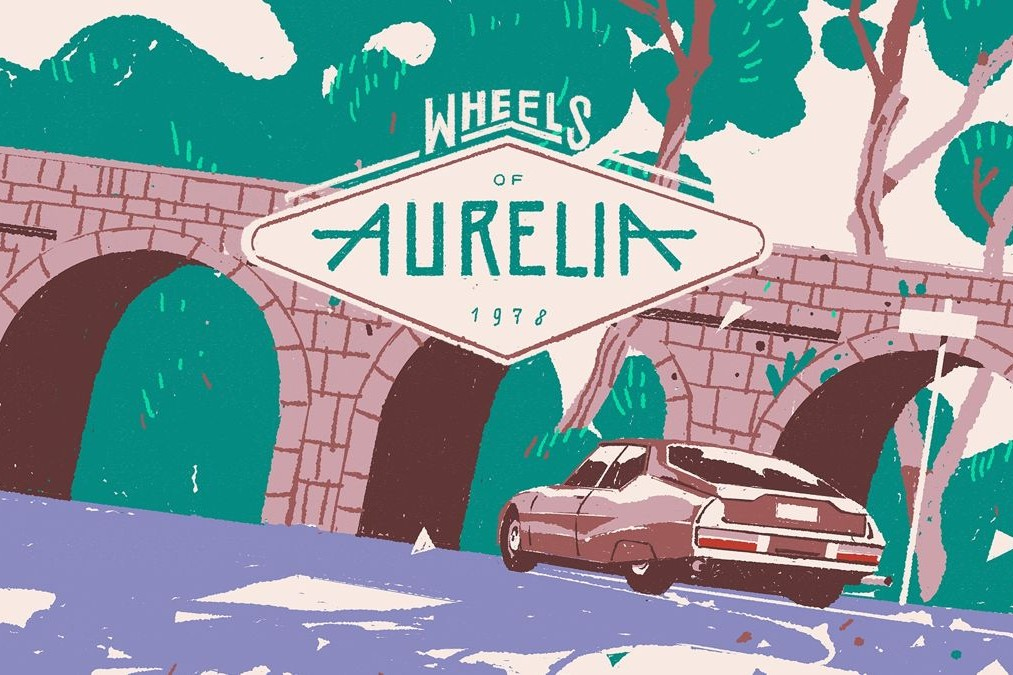
Wheels of Aurelia is being delisted from the App Store on July 25th because of Apple’s anti-art App Store requirements, and as it’s been made free by the developer in response, I thought I should pick it up and play it through. While Wheels of Aurelia will be available on other platforms–and if you’re reading this after it’s been delisted, you can pick it up there–it’s not exactly a preservation issue, it really does speak to the complete devaluation of creative work in our tech industry-led culture. Companies like Apple expect apps to be updated regularly, but of course, a game can just be… what it is (never mind the fact that a lot of apps don’t really need to be updated or changed much, if at all, either.) And let’s not forget the cultural vandalism of binning off everything from the old 32-bit App Store rather than working to keep them accessible.
Apple are cunts, basically. And I think this matters in the case of Wheels of Aurelia for the same reason I wrote about Despelote in the context of our AI slopscape: Wheels of Aurelia is a genuine attempt to make a human work, but one that is still, specifically, a video game.
Set in Italy in the 1970s, the player is cast as Lella, a woman taking a road trip to France for mysterious reasons, accompanied by Olga, who she met only the night before and has her own reasons for taking the trip. In some respects, the game could be described as a visual novel, but I think that’s a little reductive–I’d call it a “car conversation simulator”, because it captures the feel of something any driver will know well–when you’re engaged in a conversation while driving and are able to split your attention seamlessly between the conversation and the road.
Here it’s cleverly provided by making the driving as simple as possible. You head forward automatically and can switch lanes to overtake and speed up (a bit) by swiping but that’s really it. While you’re driving, the conversation flows, and you can choose between a few different responses each time you’re prompted. So as you drive, you’re mostly listening, or thinking about what you’re going to say next, only occasionally making a point of taking active control of the car.
I really have to emphasise that this is the ideal video game interpretation of the car conversation. If the driving was literally any more complicated, I’d have to think about it, and when I’m driving, I don’t think about it. I’m just… driving!
Something else I appreciate about this is that it doesn’t tell one long narrative. It actually does the one thing I always want games to do–make it impossible to see it all in one playthrough, make each playthrough short, but make each playthrough tell a whole story. Wheels of Aurelia, if you play it once, is very short–less than twenty minutes. But as you play, you can pick up hitchhikers. You can change your travelling companion. You can choose which town to head to next. And you can always choose to say something different.
I thought I’d be done with one playthrough, honestly, but through the dialogue the game doesn’t just progress a narrative, but paints a portrait of Italy in the late 70s. Like Ecuador in the early 2000s, it’s nowhere I know anything in particular about, and the game (cleverly, I think) gives you encyclopedia entries (sourced from Wikipedia–now that’s some savvy effort-saving) to fill out anything in detail that you like–though I was happy to let it just flow, to feel immersed in my lack of perfect context.
The thing I would say surprised me most is that I actually wished it was a little longer per playthrough! I appreciate that the game doesn’t shy away from serious, adult topics, but the endings feel a little sudden, like you haven’t spent quite enough time with the characters to get totally comfortable with them. While you draw more of them out each playthrough, it feels like you’re just capturing a snapshot of someone’s life–and the endings imply a little too much by comparison. It can feel unearned. And if you’re a completionist, I suspect that trying to see every ending here will get pretty repetitive–better to just play it until you’ve had your fill and leave some things unknown.
Sometimes there are just games that just… do what they’re trying to do. Wheels of Aurelia is one of them. There’s no “update” that they could make that would be worth it to make Apple happy: it deserves to exist, and be played, as it is.
Will I ever play it again? There are many endings I haven’t seen. Ironically, this is kind of a perfect iOS game–I can imagine picking it up and giving it a run through to get an ending I hadn’t seen at some point in the future while I’m in a waiting room or something.
Final Thought: I was interested to read that one major inspiration for this was the Italian film Il Sorpasso, as the movie it immediately put me in mind of was the Italian film Rabid Dogs. Though that is tonally incredibly different…
Developed/Published by: Popcannibal Released: 07/03/25 Completed: 10/07/25 Completion: Completed it.
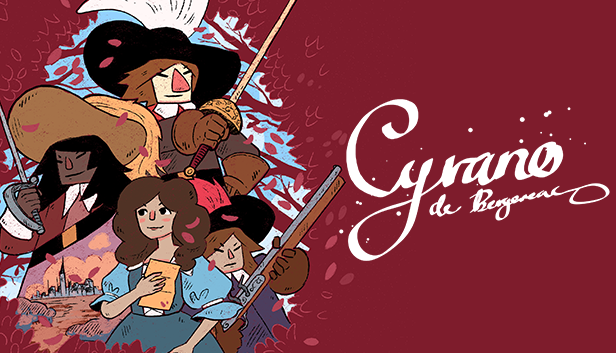
I was looking for something quick to play through and I saw that I’d noted that this recently (re-)released adaptation of Edmond Rostand’s play Cyrano de Bergerac was under an hour, so I decided to give it a run through.
The most interesting way to think about Cyrano is that it feels like one of those “abridged” books for children–it’s a gentle, extremely pleasant introduction to one of the classics. The likelihood is that while you’re familiar with the concept (poetic man with large nose helps attractive thicko woo the woman he secretly loves) and you probably know one famous scene from many, many parodies (the one where Cyrano feeds Christian lines to charm Roxanne) you probably don’t know anything else about the story or setting–and Cyrano provides the broad strokes in charming fashion.
While you get to enjoy the story, the majority of your interaction comes from JRPG-style battles and “letter writing” and the way these two sections connect is really fun and interesting, even if they’re individually a touch simplistic. The JRPG battles are so simple, in fact, they tend towards unbalanced. You can’t choose which enemy to hit and healing is weak, meaning it’s more luck than tactics. But each enemy defeated gives you a playing card, and each playing card has (most of) a line of poetry on it, so when time comes for Cyrano to write Roxanne a letter, you make the best poker hand you can from the cards you have managed to collect, and then those cards form the basis of the letter, upon which you can type your own flourishes for fun.
I genuinely think this is quite a brilliant concept and I couldn’t help but wish that perhaps the game was longer and the mechanics given more space to flesh out–get crunchier, more tactical. You can’t, for example, roam around to get into more battles and get new cards. There are no upgrades to cards or gear or whatever. This is completely fine for something of this length, but it’s a mechanic ripe for exploration if anyone wants to.
Something also worth mentioning about the letter writing: Cyrano was originally released in 2021 as part of a pack to support LudoNarraCon, and this new version’s main addition is to add controller support–allowing this to, for example, be played on Steam Deck. But because the game features you adding your own text to letters, you need to at least be using a soft keyboard, which as we all know, sucks. You can just skip this aspect completely as it has no mechanical effect, but it does mean you’re not taking part in a fun aspect of the game that personalises it for you (at the end it shows you all the letters you wrote) so that’s kind of a bummer. It would have been nice if there was a “I don’t want to type” version that just filled out the whole sentences on the cards for you–even if it would be less funny.
I’m quibbling, however. Cyrano is a good example of how much work a strong narrative and a breezy runtime can do for a game–especially when paired with lovely, appropriate art. You do feel like you’re enjoying a play, and at the end I found myself rather moved–Cyrano is a classic for a reason.
Will I ever play it again? It’s not going to play out any differently. But it does make me fancy watching another adaptation. Maybe that Steve Martin one???
Final Thought: The most surprising thing about Cyrano is that it doesn’t feature the most famous scene! I thought it might feature it still using the poker-hand letter writing mechanic, but it’s excised. In fact, the version of the story here shuffles about and changes things more than I expected–all the more reason to revisit the story elsewhere.
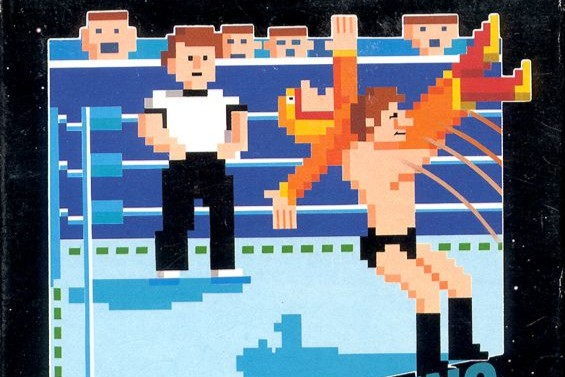
Developed/Published by: TRY / Nintendo Released: 21/10/1986 Completed: 05/04/2025 Completion: Defeated The Great Puma!
Nintendo’s output on the fledgling Famicom/NES is… patchy. And nowhere is it more patchy than when it came to video game representations of sport, where they can somehow manage to literally solve golf game design and then months later be willing to put their name on things like Soccer and Volleyball, which are, frankly, absolutely horrendous. Even with Nintendo warming up by late 1986–they’ve just put out Metroid, for example–you can’t help but expect Pro Wrestling to be a bit of a dog, considering the sport (or at least, sport-adjacent entertainment) has a lot of terrible, lazy video games to its name, and this specific release is most famous in gaming circles for having a win screen that declares “A winner is you!” which probably was funny once.
Well, it isn’t a dog! A bit like how Nintendo lucked into working with Satoru Iwata on Golf, with Pro Wrestling they also managed to hire someone who knew exactly what the fuck they were doing: Masato Masuda.
Masato Masuda–who passed away in 2014 at the untimely age of 48, sadly–is best known by the wrestling hardcore as the creator of Fire Pro Wrestling, generally considered the greatest and most important wrestling video game franchise (even by people who love AKI’s wrestling games like me) and according to an interview in CONTINUE Pro Wrestling was made “mostly by [himself]” with “someone else who did the graphics.”
Although not a sport that would see as many games released as, say, golf, wrestling was reaching its zenith in popularity worldwide, so before Pro Wrestling there were several high profile releases from Sega and Technos that I’m sure Masuda will have tried, and two wrestling games would appear before this on Famicom: Tag Team Match: M.U.S.C.L.E. and Tag Team Wrestling (both of which would appear on the NES before Pro Wrestling, too.)
So–not having played any of those–I can’t make any educated claims that Masuda was “solving” anything about wrestling games with Pro Wrestling. But whatever prior art existed for him to pull from, Masuda understood a few things:
Pro wrestling is about unique characters.
Pro wrestling is about grappling–and the wide range of moves that result.
Pro wrestling isn’t about winning or losing–it’s about ebb and flow.
Now, I won’t pretend that Pro Wrestling clicked for me immediately. It has the immediate problem of any 2D games where you can move in and out of the screen–not being exactly sure where you need to be to connect with attacks–and the systems by design are a little obscure. Succeeding in pulling off moves from grapples can feel a bit random, too. Does initiating the grapple confer advantage? Does it even track who initiates? Actually, how do you initiate a grapple? Is it timing? I’m button bashing, but sometimes I don’t go as hard and still win?
As far as I can tell–from nosing around a bit–the game relies on a stamina system with regeneration, with lots of “triggers” based on stamina levels. So you’re basically trying to wear down your opponent’s stamina enough that they don’t get up long enough so you can pin them, but if you’re slow–or they start beating you up, their stamina recovers.
(This matters because as you play through the game, enemies seem to gain stamina and regenerate faster.)
The genius of this system is that it ties into the ebb and flow of a “real” wresting match perfectly. You have to wear down your opponent to pull off bigger moves, but they can also suddenly go on a tear by kicking you in the face before you manage the grapple you’ve been building towards. You can misjudge when to pin, get a kick out, and have the entire match turn on its head. And vice versa! If a match isn’t going well, it’s can sometimes only take a single correct move to swing the momentum back.
Pro Wrestling also features, well, all the actual features of a wrestling match. Not only is the referee who has to run into position, you can jump of the turnbuckle, throw your opponent out of the ring and then leap onto them, get ring outs, and so on. The building blocks are all there for every match to tell a story.
This is aided, of course, by the game’s memorable characters such as Star Man and The Amazon (famously inspiring Blanka.) Each character has individual special moves–the Amazon’s all illegal moves that can end with him begging innocence to the referee, amusingly–and are inspired by real wrestlers. Fighter Hayabusa is transparently based on Antonio Inoki for example, though Giant Panther will always be debated–I suspect he’s actually based on Fritz Von Erich, the patriarch of the Von Erich family due to the use of the Iron Claw, that he famously feuded with Inoki and that it doesn’t look like any of his sons–but that’s pure conjecture.
But the point is that with whichever character you choose, there’s something special to work for, and it adds to the narrative you create through play–you survive the Amazon cheating like crazy, pull off the iron claw and pin! The crowd goes wild!
I won’t lie–often when I’m playing these older games, I’m sort of just… working through them like a job. But Pro Wrestling? I just played it! Once I was comfortable with how it played, I settled on King Slender (the Ric Flair analogue) because he had an easy move to pull off (the backbreaker–he’s the only character with a move you can pull off by pressing A only from a grapple) and had fun until I hit a genuine brick wall.
Pro Wrestling isn’t a long game–it’s built around winning five matches to become the VWA champion, then ten title defenses until you take on “Great Puma” to become VWA/VWF champion–three loops of the roster. But by the third loop your opponents are unstoppable–they regenerate stamina quickly, pull of grapples faster. I couldn’t go any further.
And really, that’s ultimately Pro Wrestling’s weakness–it all works up to a point, and then as a player you have to go “ok, how can I cheese this.”
For me, that was starting again with Fighter Hayabusa, abusing his “Back Brain Kick” and ring-outs. While it’s not a guarantee, if you can get your opponent on the mat and then position yourself right (Hayabusa’s midriff around where your opponent’s body is lying) you should be able to kick them in the head as soon as they stand up, and spamming this at the start will alow you to either start pulling off grapples or let you throw them out of the ring and then just run them into the barriers till they can’t get up quickly enough.
It would be some demoralising, terrible wrestling for the audience, but at least for me it’s what I had to resort to for the last chunk of matches.
However–that’s if you’re determined to beat this (maybe you have a blog or something where you’ve tied yourself to doing that.) I assume most players who played this either just had fun playing a wrestling career–it does track wins and losses, and you can just play it–or took part in two-player matches, where all the obscurites of stamina and grappling probably lead to absolutely epic battles. I certainly haven’t played a better two-player game on NES or Famicom by this point in 1986–and I may not for a while!
Will I ever play it again? Unlikely, but not impossible!
Final Thought: A funny and strange fact about “A Winner Is You” is that it isn’t even the original win quote. Seems that in the original release of this it just said “Winner Is You” and in a later revision they “fixed” the English by just sticking an A at the beginning.
Which is a really strange fix! You’d assume someone who actually spoke English might have pointed out that’s not better–and it’s not like “You Win!” has a character limit or something.
The fix also seems to have changed a “bug”–that if you play King Slender it takes longer to get to the first championship. This was something I didn’t mind and originally assumed was “balance” because King Slender’s back breaker seems so powerful–though when I got later in the game and realised I could basically never pull it off, my opinion on that changed somewhat…
We live in an age of AI encroaching on everything we do. An age in which in particular it is going to have a noticeable effect on creativity, as the big guys look to it as a solution to that pesky problem of “having all the value being created by workers” and (some) small guys look to it, perhaps naively, perhaps without diligence, as a way to create work that competes.
And indeed, this has already happened to Panic, the publisher of Despelote, who found their second season of releases for the Playdate handheld infected–and I will use that pejorative–by generative AI, by a developer looking for shortcuts (as covered in a recent article.)
This kind of use is likely to become endemic in the games industry–for another example, 11 Bit Studios’ The Alters has also been discovered to have used ChatGPT for “placeholder” text.
The question I have however, is if these developers understand that generative AI is a flattening force. It is a product created by feeding it everything we’ve ever created, built only to mulch it up and spit it back out as slurry. Now, the big guys don’t care. What they want is a fat pipe of chemical lowest common denominator.
But how are you going to stand out if you fertilise your fields with that? Little knowing that it eats the fields it lies upon?
Maybe those who are using it to “compete” don’t care either. Maybe you just have to get what you can and get out before it’s all over. Maybe you can fool yourself there’ll be a Mars here too, once the earth is salted.
—
But instead of that… why not embrace your humanity? Why not spend all your effort on making something that reflects… you? Instead of creating what is common, what everyone recognises, why not create work that not everyone recognises, but in which they can find commonalities? Why not make something like Despelote?
An AI could not make Despelote. Only a human can, because only we are able to make the non-obvious connections in the story of our lives.
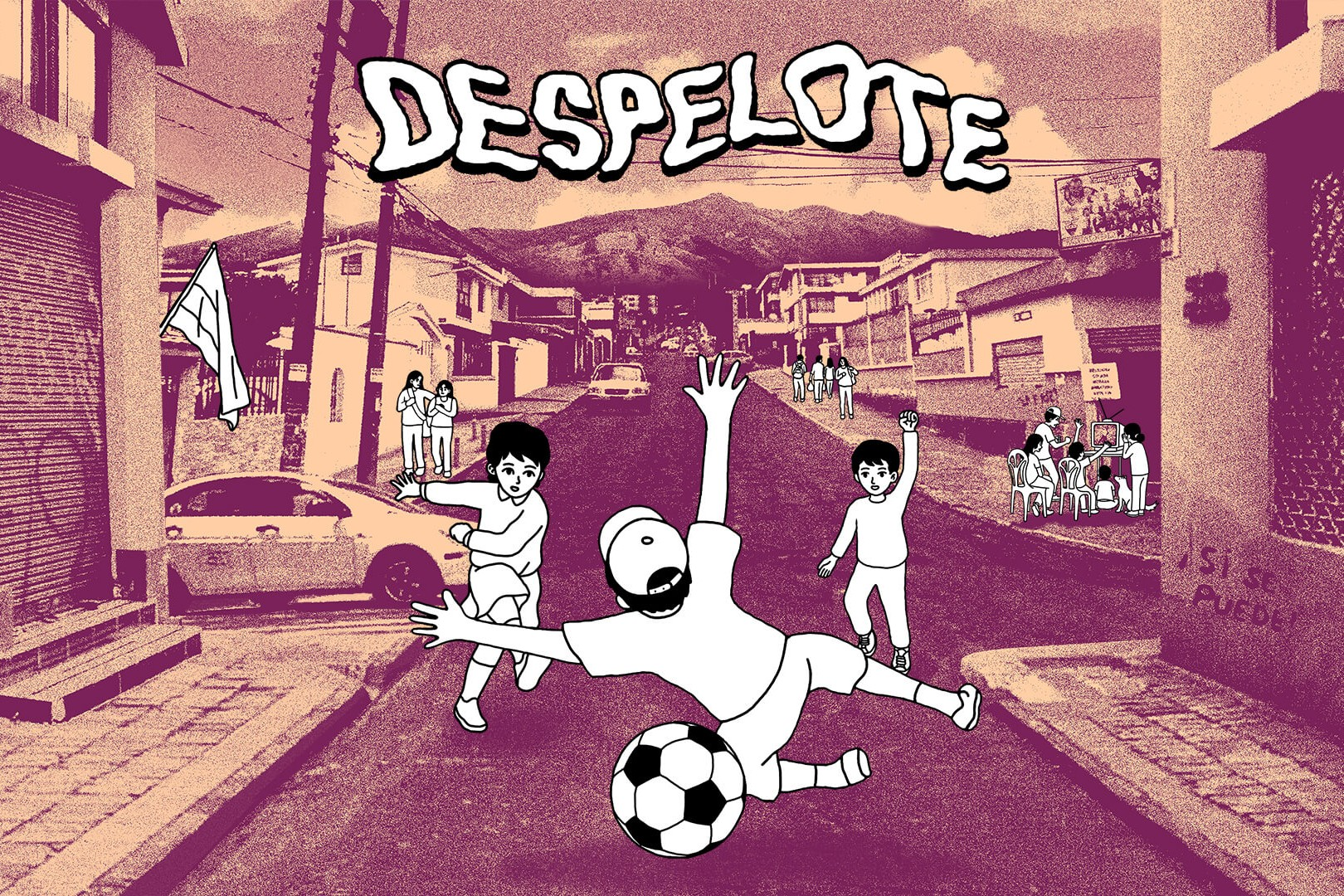
Here, designer Julián Cordero recreates the experience of being a child in Ecuador, but specifically during the Ecuadorian national football team’s historic qualifying campaign for the 2002 World Cup.
This is probably not the most obvious setting you can imagine when you are creating a game about the world of children and how it interacts with the world of adults. Similarly non-obvious are the decisions made in which to represent this, which it does in a form that I feel only video games could manage–while also introducing (in my opinion) a new kind of cinematic flair. One that does not look to mainstream cinema’s style but the art house.
It opens with you playing what appears to be a retro game: Tino Tini’s Soccer 99. Despite this being a reference to Dino Dini, and Kick Off 2 and the like being fucking rubbish (sorry, this is a Sensible Soccer house) this is actually a brilliant wee overhead-view football game that could be released on its own terms, with a simple and rewarding “flick-to-kick” control scheme. But as you play, you start to overhear your parents talking, and then, cinematically, quite unlike any other game I’ve played, the camera slowly pulls away from the television, until finally, your dad turns off the telly.
In Despelote, as it would have been for any of us, such is your lot as a child. You find yourself pulled around by your parents, told what to do–and given limited amounts of free time. And what matters is in that free time you don’t really have anything to do. You can run around, maybe you’ll find a ball to kick (beautifully, controlled just as in Tino Tini’s Soccer) but there’s nothing to hunt out, nothing to unlock, no rules for playing with the ball. It’s just you, some other kids who might want to aimlessly kick a ball about, and a world of strangers, almost all of whom are captivated by the ongoing football matches on the telly (unfortunately the game doesn’t really allow you to just stand and watch too–though you’re likely to run and check on the score when you pass a TV.)
I’m not going to lie–after the shine of kicking a ball wears off (which really does feel fucking great) and you realise what’s happening, Despelote is properly boring, and if you’re a progression-focused twat like me, you’ll probably really struggle with it. While it’s not exactly Jeanne Dielman (and you can play through Despelote in nearly half the time it would take you to get through that) it’s working in that kind of perhaps punishing milieu. It wants you to feel the boredom and frustration of the limits of childhood–and to strain against them as a child does.
Throughout, you get flashes of how Julián will grow up, how his love affair with football will evolve as he does; fragments of memory that ask you to remember that these childhood afternoons that maybe felt so boring were actually fleeting, and you can never have them back. It’s not as much about being Julián as it is about you–what these moments make you think about, how you remember your childhood. I remember my own childhood. Scotland in Italia 90. Then a flash of sitting in a car on a rainy day. Now I’m at an uncle’s, watching the penalties that ended the 1994 World Cup. Now I’m drunk for the first time, years later…
I remember.
I suppose there’s some concern about American exceptionalism here–after all, the Yanks don’t really like “soccer”. Maybe it’s unfair to imagine the American “gamer”, unable to take the steps from soccer to their own sports obsessions. After all, their “world” championships only include their teams [“And Canada’s!”–Canadiana Ed.] so that sense of a national collective that crosses political and societal boundaries may be a step too far. Maybe to many, Despelote is just foreign, and boring.
But that, to me, represents the state of the art. The boredom of Despelote is not what has stuck with me–what has stuck with me is the themes, the ideas. Someone is saying something–something about themselves, and hoping that it makes a connection with you, your experience.
It’s not perfect, but it’s human. These days, what more can I ask?
Will I ever play it again? It says all it needs to, once.
Final Thought: One of the more interesting background facts about Despelote is, of course, that Julián Cordero’s father directed Ratas, ratones, rateros, the “first Ecuadorian film with international-standard production values” which gives reason to why this game features (in my opinion) a different sort of cinematic influence. But I think this influence has also leads to one of the most amazing cameos I’ve ever seen in a video game: a DVD of Fishing With John!!!
Developed/Published by: Namco, Tose / Namco Released: 19/09/1986 Completed: 28/04/2025 Completion: Completed it–but with a complete collapse in dignity, having to abuse save states starting around area 14.
Well, it’s been a while since the Xevious klaxon has gone off here in exp. towers–I think the last time we mentioned it was actually Tower of Babel–but here it goes off because we’re only bloody playing the first “real” sequel to Xevious! And it’s yet another Famicom game with Nazo, aka “Mystery” in the title. They were mystery mad in Japan in the mid-80s!!!
If three years feels like quite a gap for a game as successful and influential as Xevious to get a sequel, it’s worth mentioning that this is actually the fourth game in the franchise. Xevious in the arcades got an update in the form of Super Xevious (to which this has no relation) and then–and this is true–Xevious creator Masanobu Endo made a game starring an enemy tank from Xevious, Grobda, because he thought it’d be funny.
Grobda seems pretty forgotten now–and I don’t think “the top-grossing arcade game in Japan for December 1984” is quite enough to believe it was that much of a success. But of course, we know that Xevious itself was a huge success on Famicom–so it only makes sense for Namco to bang out a sequel. In this case, Endo probably didn’t think it was funny–he was on record as believing that a direct sequel to Xevious was unnecessary, and he’d left the company a year earlier.
With Endo’s guiding hand missing, Namco–with the aid of Tose–did something that I think on paper makes sense. They looked at the huge success of Xevious, an Endo joint. They looked at the huge success of The Tower of Druaga (oh dear, set that klaxon off as well) also an Endo joint. They looked at how Tower of Druaga’s mystery design had been implemented into basically every other game coming out at this point, and thought: well, it’s chocolate and peanut butter, innit? Smash ‘em!!!
So with Xevious: GAMP No Nazo, you play Xevious levels where you have to do a particular action to progress–this is actually a bit less punitive than the original Tower of Druaga, where you can keep playing through the game with no way to win because you missed something. This can be as simple as defeating a boss (hardly a secret) or as annoying as finding hidden things in the level or interacting counter-intuitively with enemies.
To put none too fine a point on it, this doesn’t work. At all. It’s obvious that at least Japanese players had become comfortable working through obscure fucking nonsense without the cameraderie of the arcade, but a vertically scrolling shooter puts pressure on you in a way that Tower of Druaga’s mazes didn’t–you can’t navigate back to something you’ve missed, and having to do an extra loop in GAMP No Nazo to get back there is brutally punitive.
Because GAMP No Nazo is miserably hard. There’s no sense here of the push-and-pull “intelligence” of the enemies of the original, just walls of bullets and, frankly, unfair bullshit from the very start. The first level sets the tone by featuring clouds that obscure enemies and bullets meaning you can be killed by something you can’t even see.
Trying to find what’s required to get to the next level just isn’t fun because of the high tension and sense of a “wasted run” when you get to a point and progress. The things you’re asked to do aren’t very interesting, either–while I’m hardly going to ask for the misery of The Tower of Druaga and having to, like, kill enemies in order, or something, the game only thinks to do something obvious like offer you different routes in levels like… twice.
You can choose to play this like Xevious: to see how far you get, how high your score goes by just memorising all the requirements, which isn’t actually so bad. And the game… sort of works. But it’s not as fun as the original, feeling more predictable and rote before getting ever more absurdly difficult, and I certainly wasn’t sure why I was bothering at a point–each time I’d think “maybe this is ok, actually” I’d start a new run to try and get further and get killed by enemies hidden by clouds immediately, sapping any urge to continue.
Namco might have been able to get away with this bar for the fact that it’s mid-late 1986 and the Famicom has already seen the likes of Gradius and Metroid, and Castlevania is out in a week. They went big with this one–no more numbered boxes, a special golden cartridge–which raises the question if they knew they had a pig on hand that they hoped more lustrous lips might help. Because it feels like Namco is getting left behind in both tech and design on the Famicom: GAMP No Nazo doesn’t look or play any better than the original, and that came out in 1984! At this point, the Famicom is Konami’s to lose…
Will I ever play it again? It isn’t worth it.
Final Thought: Namco, obviously, will be ok. But the sad thing, really, is that Xevious won’t be. The series that really started it all will limp on with a few sequels, but won’t ever be an important factor in the shooter genre ever again.
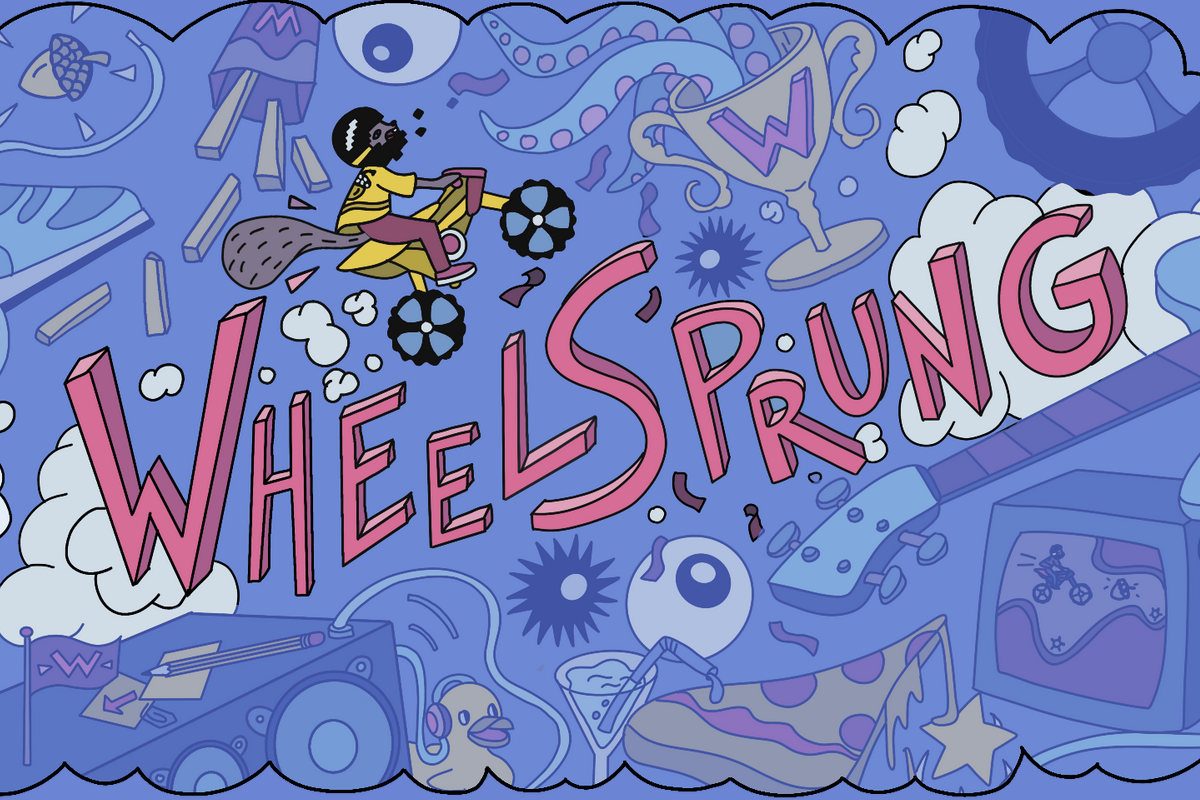
The second of Playdate’s signature “seasons”–bundles of games for the becranked handheld launched on a weekly basis for a set number of weeks–launched on May 29th this year, and on the 6th of June, friend-of-exp. Brandon Sheffield posted this:
Wasn't feeling Wheelsprung in the new Playdate Season 2 drop, something felt off for me. And well! There you go. play.date/games/wheels…
And… surprising? If you’re unfamiliar with Panic, the Portland-based Mac app developer who have been flush enough to not just put out a boutique handheld but even do things like put out Katamari Damacy t-shirts back in the day just because they could (I had the silver one, and I still miss it) they’re supposed to be one of the good ones. Their publishing arm put out Thank Goodness You’re Here, the official exp. Game Of The Year 2024, a beautiful, hand-crafted experience of regional and human specificity, and have just recently released the similarly human work Despelote, so it seems odd that they’d be so ok with our era of AI slopification that they’d not only allow it on Playdate but intentionally publish products featuring it.
The developer of Wheelsprung, Nino van Hooff, did respond to Sheffield on Bluesky, stating:
“Github Copilot was used for auto-completing single lines of code … As for text: I used chat gpt as a kind of dictionary and to explore level names. It might come up with Rolling Ripple and I would use that as inspiration for Ripple Ride.”
Rolling Ripple? This kind of “I used it but only in genuinely unnecessary ways” sounds more like a slippery slope to me. You couldn’t ask your co-developer or playtesters or QA team or publisher for level names? You couldn’t… finish writing the lines yourself?
As someone who hadn’t picked up Playdate Season 2 yet, and who has a strict “no AI” policy, I was interested to know what Panic had to say over this. So I got in touch with them and though it took a while, they did actually get back to me. Cabel Sasser, Panic’s co-founder:
“We hadn’t considered the possibility that a Season Two game might use LLMs, and in hindsight, that was naive — we take full responsibility for that. In the future, we’ll change our Season application and make sure we ask detailed questions about any LLM use in submitted games up-front, setting proper expectations early on.”
But considering they missed this, did any of the other Playdate Season 2 games feature GenAI?
“We tripled checked, and no other Season 2 games use any LLM-generated content.”
Alright then, but what if you’ve got a similar “no AI” policy to mine, but you’ve already bought in?
“If a customer feels hoodwinked by Wheelsprung’s use of LLMs, we totally understand, and they can reach out to our support team directly. While we’re not sure what we can do yet (it’s very complicated) but we’re working on some ideas.”
So there you go. Though this is disappointing, it does sound like the concerns have been heard, and while I’ll continue to hold off purchasing Playdate S2 (and it’s what I’ll advise) I don’t feel I have to scrap an article on Despelote that I already had in progress now (phew). If you’ve already picked up Season 2, I do suggest getting in touch with their support–at least to let your opposition to GenAI/LLMs be known. Let’s not just hope that Panic will decide to implement a blanket ban on GenAI/LLM use in titles they publish or on Playdate–let’s make it clear that’s the right move.
And for what it’s worth: though I’ve just written an entire article on this, I’m not interested in the public shaming of the developer (or Panic). I simply hope this is a lesson in the insidious ways GenAI is being made inescapable and how it is being positioned to encroach on human creativity subtly enough that people overlook it. Think of the tools you use in your practice–there’s probably some stupid fucking AI button somewhere, promising to make your work just a little bit easier. It won’t, and it’ll make what you’re doing a little less human. A little less you.
But they want you to click it anyway. So they can pretend what they’re offering is actually useful, so they can raise more money to drop more city-sized data centers that suck up more lakes of water and more fossil fuel, ever accelerating our planet’s death spiral. Fuck that. Let’s be better than that. Let’s be one of the good ones.
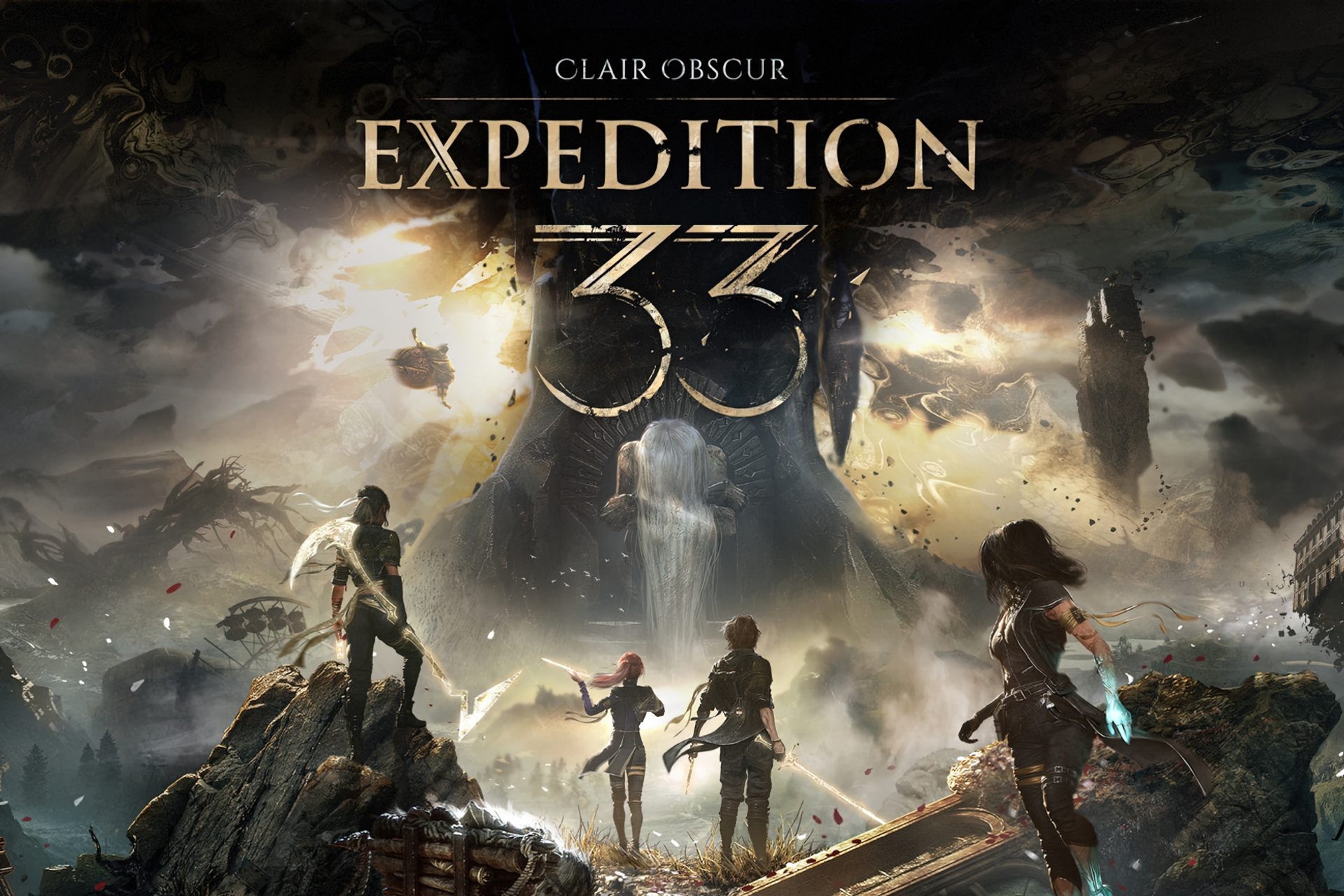
Developed/Published by: Sandfall Interactive / Kepler Interactive Released: 24/04/25 Completed: 27/05/25 Completion: Completed it, but let’s not get ahead of ourselves with too many details yet.
Alright, so in order for me to critique Clair Obscur: Expedition 33, I’m going to have to go into far too much detail on why video games are hard to critique, a problem that left me as the only video game critic in the world (as far as I know.)
[If you really don’t want to read the next thousand-odd words at any point you can skip ahead. But don’t come crying to me if you don’t understand where I’m coming from.]
Video games are hard to critique because video games aren’t really just “one thing.” They don’t neatly fit into a single form where the audience can make an assumption that they know what the (ahem) experience of “experiencing” it is (is there a better way to say that?) While there are exceptions, of course, you can generally expect when you sit down to watch a film, you’re going to sit down and watch it. When you sit down to listen to an album, er, you sit down and listen to it.
(Other experiences are available.)
Now, absolutely, that’s the broadest expression of what you’re doing–consider it the first layer of experience. The hope, of course, is that in experiencing the work, you are absorbed to the point where you forget anything about your existence as a “person on a surface in a location” and instead exist in the world that is being presented–consider that the second layer of experience.
Now, that second layer does not remain static in the face of genre or stylistic choices. To take film as an example, editing, soundtrack, many “artificial” things happen that do not line up with our linear, continuous experience in the first layer. In some respects, these artificialites are not simply absorbed, we recognise them, we work with them. There can be some level of interactivity (if not affect upon) the works–we knit together a non-linear narrative as it goes. Our eyes scan the screen in a movie, our focus dances from instrument to voice at the insistence of the songwriting on an album.
Games, however, have a less “clean” line between the two layers of experience. “Play” is a different experience than “watch” in that first layer, and both change the type of absorption you experience in the second layer: you may be embodying a character rather than empathising. You may be in competition rather than conversation. And then within that genre and stylistic choices make different demands: maybe you are in “play” mode a lot. Maybe you are in “watch mode” a lot. Maybe the type of play changes.
As I’ve played a lot of old games by now, I’ve become interested in, and written about, the “transition points” of video games where technology has allowed newer forms to emerge. Don’t consider this definitive of the state of the art, but for the sake of my hypothesis, a summary:
Games begin as competition: think Pong or Breakout. There’s no narrative. You are, essentially, playing a game as people know it either against another or “the computer”. A sport. You may be able to win, but you may just be seeking a high score. Play, not watch.
Games evolve to have a narrative “reason” for the experience: think Space Invaders. There’s a framing, if not a narrative. If you can win, it’s not the “goal” as much as it is an end-point for “besting” the machine. Play, not watch, but with narrative context.
Games make the narrative a distinct part of the experience: think even as simple as Super Mario Bros. Suddenly the game becomes about the story. You’re “rescuing a princess”. Narrative is doled out like “reward” for your success in the game. When you finish the game, it’s like finishing a book. You can put it down. Play and watch!
It’s here that the concepts of “diegetic” and “non-diegetic” story come into play. The diegetic narrative in Super Mario Bros. is that you’re rescuing a princess. The non-diegetic story is that you’ve run forward and jumped over a block and then you ran into a koopa and you died and then you came back to life and you ran forward…
In some respects, this non-diegetic story is part of the magic of video games, in that it affects both layers of experience at the same time. On the first layer, you’re not sitting and watching: you’re pushing left, then A. But it seamlessly translates on the second layer to running left, and then jumping. But it doesn’t represent narrative.
So then you get games that try and make the narrative a “part” of the play, at various levels of success. Maybe you’re finding the narrative in the world via logs (not great). Maybe you’re pushing buttons during the cut-scenes (eurgh.) Maybe your character’s death and rebirth is explained via narrative, or you get to make choices that change the narrative–at some level of manageable granularity. Maybe they simply try and make what you’re doing in the game make such rock-solid sense diegetically that it all works seamlessly. Maybe they do that by forcing the player to do things whether they want to or not (and then smugly admonish them for it later).
It’s not, exactly, a solved problem. Nor is it, essentially, actually a problem. It simply reflects the nature of video games as an experience. Sometimes you are playing them. Sometimes you are watching them. Sometimes the mechanics are thematic with narrative, sometimes they aren’t. The first layer you inhabit changes (“I’m watching. I’m playing”) though this may not affect the second layer (“I’m rescuing a princess.”)
I don’t think there’s a kind of game that represents this split better than the JRPG.
Now, again, I don’t want to imply that I think there’s anything wrong with the way JRPGs use narrative and play. But they have, to me, always represented a particularly aggressive split between watching and playing (though don’t let me stop you yelling “but what about Hideo Kojima” or something.) JRPG battles, something you do famously a lot, almost exclusively happen in an “alternate reality” from the rest of the game right down to how you interface with them. Not even play maintains a consistency of experience.
[cough]
So that’s why when I write about Clair Obscur: Expedition 33, it feels ridiculous to try and write about it as a complete work. Because my remembered experience of it does not reflect something I can critique as a whole. The game merges exploration and a battle system to a narrative which, to be completely honest, never engage in a way where one was in my mind during the other. It’s entirely possible that it’s different for you–I’d be interested to know what you felt the game might be doing to make that possible for you–but ultimately what it means this is a tale of two parts. A game and a narrative.
Er, though we need more preamble…
Clair Obscur: Expedition 33: The First Impressions
Now, the thing about Clair Obscur is that I wasn’t originally interested in it at all. With a surfeit of JRPGs available–in fact, a surfeit of Persona-style JRPGs available–the idea of playing a Western one with “realistic” seeming graphics didn’t have much interest for me at all. But then friend-of-exp. Justin Decloux (buy his Blu-rays!) gushed about how much he loved it while other buzz was swelling, so I thought–fuck it. I’m trying to keep up with the cutting edge now! It can’t all be obscure Famicom releases!
I went in almost completely blind: I knew it was about a bunch of French people taking on an enemy, the Paintress, who every year killed the segment of the population who had reached a certain age, and it was a JRPG. But it wasn’t until I began playing it that I understood it wasn’t a “Logan’s Run” style “once you’re thirty, you die!” situation but a “every year the age counts down–so time is running out for everyone” situation. Compelling!
And Clair Obscur has a wonderful introduction, as we’re introduced to the main characters on the day of the Gommage, the day each year that section of the population is lost, and the day before the expeditioners head off on their quest to defeat the Paintress. Very quickly you learn about the hero Gustave, his ward Maelle, and experience the pain of his loss of a “what could have been” in Sophie, an old lover.
As a purely narrative experience, I genuinely thought it was incredible. I’ve never been so moved by a video game so quickly, with tears coming to my eyes. All the stakes were right there. I was blown away.
Anyway, then the wheels started to come off a bit.
Clair Obscur: Expedition 33: The Game
I’ll preface this by saying I think Clair Obscur is a very solid game. But it’s messy. Overambitious.
I’ll also start with the criticism that you might think is the most unfair. The world of Clair Obscur, once you are outside of Lumière… I don’t like it!!!
Everything is way, way too visually busy, and yet there’s very little I think to be absorbed by. Every location seems to be over-textured, noisy, but my most major issue is with enemies, who feel completely characterless and often unparsable; annoying to look at not in the way Michael Bay’s Transformers are but in a way that made me think of them anyway. I had no sense of awe when taking them on.
Which is a shame, because really here it’s the battle system that’s the star.
I say that, probably, because the environments do not feature good level design. Like, at all.
Clair Obscur: Expedition 33 has led to a lot of column inches (well… social media posts) about the lack of a mini-map, and I have to say that I would generally not be terrifically bothered by that if it wasn’t for the fact that Clair Obscur just does the exact RPG map thing which everyone already hates: you come to a crossroads. Do you go left or right? Is there anything telling you which way to go? No? Uh…
Yep, this is a game where I’d say for a significant portion of the running time you don’t have any good sense if you’re going in the “right” direction, and I think the messy environment art doesn’t help at all. It’s particularly problematic when the game features super-hard “battle system skill check” enemies on side-paths, and in the very first area I reached one and was like “wait, why the fuck is this game suddenly impossible, how am I ever going to complete this” when the actual way I was supposed to go was nearby, but not obvious at all.
So the “no map” issue people keep bringing up is one of those things where you have to look at the “note behind the note” to understand what the issue truly is. Er, not that it helps. It’s too late to do anything about it.
To get to the battle system: it’s excellent, with caveats. On the basic level, it is a traditional turn-based battle system, but featuring both quick-time events and dodging/parry mechanics based on timing. This creates an interesting problem: you need the reward for doing these to be high enough that you want to do them, but not so high that they need to be done perfectly every time. It’s interesting that the intuitive design–attacks are QTEs with on-screen prompts, dodging/parries are purely reactionary–probably makes it harder to balance, as decreased damage output only prolongs fights, whereas taking more damage fails them more quickly, yet QTEs are simply easier than parries.
Not that I’d switch them around, but Clair Obscur doesn’t exactly nail the mechanics–and has a strange sort of take on them anyway. The decision seems to have been made that the baseline is that the player isn’t really supposed to be successful at dodging–certainly not successful at parrying–very much at all because it’s so powerful (you don’t take a hit at all!) so enemies from the very beginning of the game have annoying, tricksy attacks, with odd windups, slowdowns and so on, so you have to learn each enemy very well before you can survive a battle without taking hits.
But!
The game also makes a lot of attacks able to nearly one-shot your characters! Clair Obscur makes the decision to be economical in its enemy encounter rate–you see them in the levels, there aren’t that many, they only respawn when you reach checkpoints–but expansive in battle length, so the design decisions seemingly made here is that players will, during lengthy battles, survive via healing enough to get to the point where they can start to dodge and parry. And the game is quite forgiving with healing and revives, giving you a fresh set every checkpoint.
My belief is that they tried to create a battle system with no “lows” or sense of grind, where every battle feels winnable, but hard fought, and always engaging. And I’d argue that they were mostly successful once the player re-aligns their expectations to that.
For example: you don’t have to hold onto healing/revives, so just use them. And you shouldn’t be trying to parry until you learn how to dodge that enemy’s attacks, because the timing is so severe. (I basically gave up on parries completely.)
Even at that though… I did get bored and annoyed with it at times, and I do wonder how much that has to do with how overcomplicated, yet oddly derivative, the character designs are. Each hero has an extremely specific design style–several of which are wholesale cribbed from Slay The Spire, which I understand, but feels… odd–and they all have huge skill trees. As with largely giving up on parries, I’ll be honest and say that I didn’t get how to upgrade my characters until I just sucked it up and followed a “best builds” guide, but even when I played around, the issue seems to be that each character’s design is played in such a specific way that it can be somewhat samey. Slay the Spire character designs work because you don’t actually know what cards you’re going to have in hand each turn–you’re working to build your deck across the game until you do. Here, you know what you’re playing each turn, and you just do that while hoping to hit your timings.
Don’t get me wrong. It’s still good, it’s generally enjoyable, but I do notice that the weaknesses are never more stark than when the game asks you to hone in on mechanics such as when you’re fighting the optional bosses (that you generally stumble into by accident.)
But the game is also forgiving: you can bump it down to easy whenever you like at no cost, so you can do it whenever something gets on your tits. I played through this on normal, bumping down to easy on optional bosses (who can still one shot you at that level!) and only had a touch of grinding at one or two points, not that I can remember why.
If this was all Clair Obscur was: no narrative, just a dungeon crawl, people would still like it a lot, and I think I’d still like it a lot. But it’s not just that, is it.
Clair Obscur: Expedition 33: The Narrative
Clair Obscur’s narrative is a fucking bin fire.
[deep breath]
Sorry, ok. You probably remember me saying in my first impressions that “I’ve never been so moved by a video game so quickly” by the game’s prologue. Which is true.
But as for the rest of the game… I hope you like information being obscured from the player unnaturally! Like, one of your favourite things should definitely be characters not asking the obvious question anyone would in the situation!
Now, you can write a story however you like. Personal taste and all. But from my perspective, I consider it a weakness when I can tell a story has been written to get to an emotional or narrative beat no matter what. When reality or characterisation falls to the wayside because you have to hit this beat and you have to hit it here.
One of the interesting things about Clair Obscur is that as much as the game is divided cleanly between “play” and “narrative” the narrative feels like it doesn’t show up as much as you’d expect–at least, the backbone of the narrative. Each area (“dungeon” equivalents) plays out with a little chatter, but a lot of character work and story is relegated to when you make camp, and as you can only do that outside of the dungeons if often has to be forced. You really feel the segmentation, and when the big narrative moments come, they are in stark relief, and it’s at the end of each act this “need to hit the beat” is clearest.
I have come to the conclusion that the narrative has been designed to manipulate you into feeling certain ways only to then work to contradict your feeling. But they don’t have the chops to make this smooth or believable. In fact, this is the first game I’ve played since (cringe) Bioshock Infinite where I felt I should just look up a timeline to actually try and understand what’s going in the game to make sure I wasn’t totally off base with my feelings on it–while it wasn’t completely necessary, ultimately, it did help (and I highly recommend this one by Nor if you want a look yourself.)
But let’s get into it.
Obviously, spoilers are going to start showing up… now. If you want to play this, and I’m not saying you shouldn’t exactly, you should consider my conclusion “fun but flawed!” and flip away from this tab to come back to in like 26 hours. See you soon!
Look, I’ll give them something. I didn’t know, at all, that I was going to get Aeris’d. It should have been obvious with Gustave’s wee skill tree and everything and it’s incredible that when I looked up a build for him I never got spoiled. But this a perfect example of a “we have to make this beat happen.”
Gustave fights a guy who killed the entire rest of the expedition, while already wounded to… to what exactly? Maelle is trapped, he’s not buying her time. Why is the baddie killing Gustave at this point anyway? This just happened to happen after most of the party jumped off a cliff?
It’s bollocks, and it’s fake, and I felt annoyed, not sad.
So then new protagonist Verso shows up, and proceeds to… not be asked by any of the characters any of the questions you’d probably ask. They just go on an adventure with him because he showed up and so that a character can later find incriminating information and go “oh no!” that leads to… well it doesn’t lead to much at all does it. They get to the end, they kill the Paintress and then… oh no! That wasn’t the real baddie!
Which is revealed by Verso reading a letter from his sister. Meaning that Verso didn’t know something that, based on everything else (not least that he killed the Paintress to free her, my interpretation being with the knowledge this was his “real” mother) he would probably know. Ok!
At which point we learn that this entire thing was all bollocks anyway because everyone lives in a painting created by the “real” (dead) Verso and his mother and father were fighting in it using their powers of creation and destruction. Ok!
Look, I kind of get the Act One To Act Two switch, as poorly handled as it was. I think there’s something kind of interesting in ripping away a character that I really enjoyed to replace them with Temu Jack Sparrow and then let me mistrust them (more than my party did!) to the point that I don’t use them in battles and let them get really behind in experience (which eventually matters).
But the Act Two to Act Three switch is just utterly mental in a way that I don’t think any player can prepare for, playing a weird sort of trick on the player for being absorbed in the second layer of experience. “Actually all these characters you’ve grown to love aren’t real.” “What, you mean like because they’re in a video game? I know that, but I’m absorbed in the reality of the narrative.” “No, because they’re paintings that think they’re real people… in a video game.”
I’m not going to get involved in a “if you prick us, do we not bleed?” analysis of this third-order existence because the game doesn’t go deep on it itself, instead revealing that, ultimately, every time they talked about how the painting in which the entire game happens has a “part of verso’s soul in it” they meant literally, and his soul was essentially a small boy that was being tortured to keep the painting alive.
That’s right folks. It’s Omelas. You’ve been living in Omelas. How do you feel now!!!
Well, it turns out a lot of you people out there are fine with Omelas. I mean I don’t need to play a video game to know that, I live in a world where Palestinian children are being murdered every day to no end, but it’s stark to see people feel annoyed that the game ends with the question “do you destroy a painting full of paint people to free a real person’s soul or do you trap all the paint people in Peaksville?” when what they want is a happy ending and damn the child.
(To be fair, the game is really fixated on making it sound like the option is between “let Maelle’s dad burn the painting or let the painting continue to exist because everything will be fine, no really, everything will be fine”.)
I need to emphasise: this is not the game you have been playing. At all. I am so thankful that the third act is just one dungeon (Unless you want to do a lot of side quest stuff) because what the hell. There’s like this perfectly interesting game about a quest to get death back to happening normally that suddenly becomes a story about a bunch of characters you’ve never met fighting over a painting.
In conclusion:
Will I ever play it again? No.
Final Thought: Alright, that’s not really a fair conclusion to my thoughts on the narrative. My conclusion, really, is to ask people to consider: what is the story they’re actually trying to tell? Because Clair Obscur: Expedition 33 feels like a game of Exquisite Corpse on an act by act basis, where the epic conclusion completely subsumes any themes or narrative you had experienced to that point to… to what? To make sure players got a choice of two endings??? They put all this effort in to force beats and then none of them seem to matter anyway???
So yes, some respects, Clair Obscur is a cautionary tale of the damage narrative can do to the layers of experiencing a game. In others, it’s a fun, flawed game with a shite story. And those are ten a penny.
Developed/Published by: Namco Released: 22/08/1986 Completed: 15/04/2025 Completion: Got the “Happy Ending” by shooting down the Air Successor in Mission 26. Version Played: Namco Museum Archives Vol. 1
Sky Kid is, with some reservations, a wee hidden gem of an arcade game. I described it as a “strange little dead-end in the side-scrolling shooter universe” when I wrote about it, and while I stand by that, I wonder now if my framing is a little wrong because of the post-Xevious, post-Gradius context. Playing Sky Kid again in its NES port, I was struck by the thought that it might be as much inspired by something like Choplifter. While it doesn’t match in terms of design really at all, there’s a spiritual lineage: one is a “simulation” of being a helicopter pilot, and the other is a “simulation” of being a biplane pilot. The concerns in either are not that of Xevious/Gradius, where you move a frictionless collision box around, but one where you have to use your helicopter/plane using its actual characteristics to survive and succeed.
I do think taken in that framing I like Sky Kid even more. Revisiting the arcade version before giving this version a run through I was struck by how bright and attractive it is, the pleasure of doing loops, and how unbelievably rewarding it was to nail an enemy base with a bomb dead on.
Sky Kid on NES is an excellent recreation of that in terms of play, but unfortunately, it just doesn’t look anywhere near as good due to the NES’s more muted colors. At this point in the NES (or rather, Famicom) lifecycle, it’s a bit of a disappointment, with for example Ghosts ‘n Goblins doing a much better job of capturing the character of the original game despite having the NES palette to work with. It’s not as bad as Pac-Land, but it doesn’t look much better. Someone over at Namco was letting them down.
There is some effort made here to make this a different(-ish) experience from the arcade–there are more levels, a few of them are shooting galleries, you get some wee interstitial animations–but we’re still not at the point where NES games are diverging from their arcade counterparts to be particularly deeper or richer, and Sky Kid gets every bit as frustrating as it was in the arcade as you work your way towards the end of this. In fact, maybe more frustrating. As in the original, the design doesn’t support bullet hell, but bullet hell is what it gives you.
As with the original, this plays better as a score attack, but I think when you have the chance to come home with a copy of The Legend of Zelda or Metroid by this point… well, it’s not even been a year since Sky Kid came out in arcades and it already feels out of date. A biplane in a world of jet fighters: charming, but you ain’t picking it.
Will I ever play it again? I like the arcade version. I have the arcade version. This one isn’t necessary.
Final Thought: What I don’t have is Sky Kid Deluxe, the arcade update which has a range of minor differences. It was released by Arcade Archives for Switch and PS4, which I definitely support in theory, but absolutely cannot justify purchasing because… well, I’ve played Sky Kid twice now. That’ll do. Maybe I’ll see it in an arcade one day, I’d like to.










![Sky Kid [NES] (Namco, 1986)](https://expzine.com/wp-content/uploads/2025/06/sky-kid-nes-front-cover.jpg)
