Tag: video games

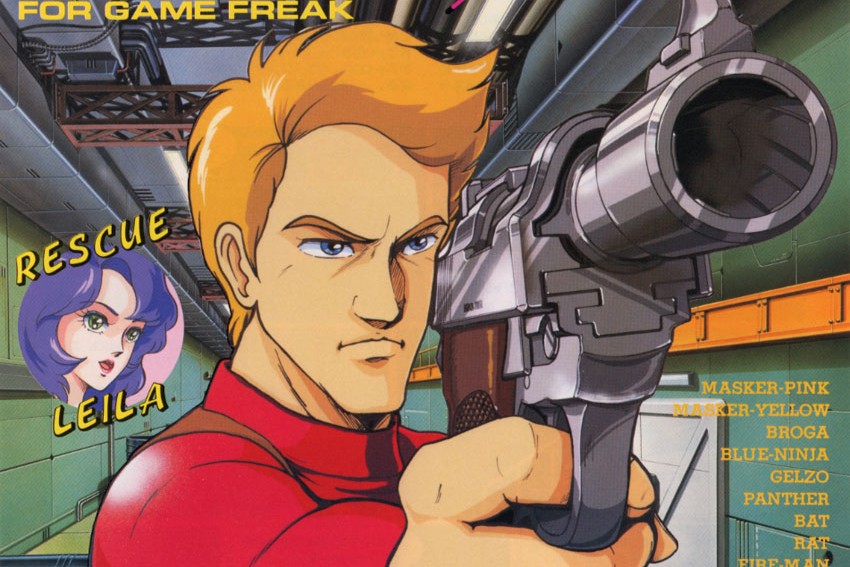
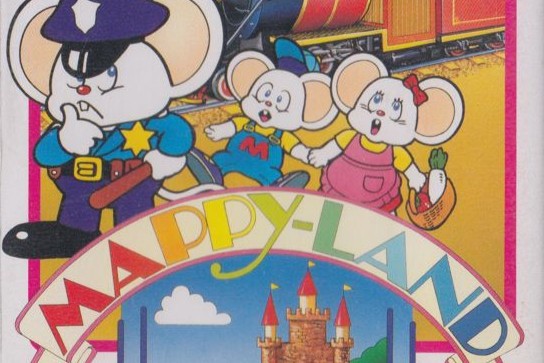
  • Mappy-Land (Namco, 1986)

    Mappy-Land (Namco, 1986)

    Developed/Published by: Tose / Namco
    Released: 26/11/1986
    Completed: 14/09/2025
    Completion: Finished it. Save state at the start of every level.

    As we all know, ACAB includes Mappy, but I’m a bit unclear on his status with the police force in Mappy-Land. He’s got his rozzer clobber on on the cover, but when you actually play the game, he’s noticeably not got his policeman’s hat on, something he was still wearing in Mappy’s arcade sequel, Hopping Mappy (which came out in early 1986). So we could suppose, like we’re the Supper Mario Broth account but for Mappy, that at some point in 1986 Mappy did something to get himself thrown off the force. Or maybe being transferred to the pogo cop division was an attempt to get him to quit, because he’s actually a tiny mouse Serpico.

    Or more likely, he just doesn’t wear his police hat while on holiday.  Mappy-Land, I suspect, is Namco–or possibly Tose, who were tasked with developing this–trying to compete with (of course) Super Mario Bros., and looking at the success of Tokyo Disneyland, which had only been open for three years by this point, and going “oh, we have a wee mouse mascot, can we do anything with that?”

    It’s not exactly a 1:1 copy or anything, but I find something very suspicious about Mappy’s redesigned sprite, with those big round ears. There’s also his new girlfriend with a strangely similar name (Mapico, in Japanese “マピ子”, “Mappygirl”). And he’s adventuring across a “land” which features levels that include, pretty transparently, analogues to Adventureland, Westernland… you go up a “main street” and end up in front of a fairytale castle!

    I mean, case-closed. Though a bit like Mappy–where you play a mouse defending a house that’s full of trampolines–the narrative is a bit confused. It would make sense to say Mappy’s on holiday at Mappy-Land (convenient for him!) and then the Meowkies have shown up to create havoc that he has to solve–you know, sort of a Die Hard thing, Mappy our John McClane, he’s forgot his hat instead of his shoes, etc.–but actually the game tells the story of Mappy’s courtship with Mapico, where he first has to collect cheese across Mappy-Land as a gift (women, what are they like, always demanding cheese, etc. etc.) Then he has to collect rings in order to marry Mapico, who apparently feels forty-eight rings is the required amount for an engagement. Then it’s tiny Christmas trees for I assume their first Christmas together (again, forty-eight seems… extravagant, unless they’re planning on running a Christmas tree outlet). Finally, in a twist, you’re collecting baseballs… because many years have passed and you’re actually collecting them for your son!!! That’s right Mappy Jr. appears, and maybe it’s one of those situations where his little league is in danger of being cancelled because they don’t have enough baseballs, and Mappy just loves his son enough to, uh, steal them from an international theme park?

    I mean what is Mappy really doing here? Look, it’s nice to see a policeman whose interaction with his wife and child isn’t solely beating them, but it’s almost like the tables have turned–he’s here ripping the trees out of a theme park and if anything the Meowkies are trying to stop him.

    Anyway, none of this actually slightly matters, because it’s all just background to the game, that no one involved in the making of thought even slightly as hard about as I just have. And, to be honest, they probably didn’t think about the game as hard as I have either. As I said above, this is clearly an attempt to Mappyise Super Mario Bros. so Namco can get in on the action, but it’s strange how they went about it. Even as early as this companies were working you just slam your IP into a left-to-right platformer with some vague design signifiers and call it a day (even Jaleco understood this with JaJaMaru No Daibouken.) Tose and Namco go a different route where they’ve decided to keep as much of Mappy’s DNA as possible. It would have been easy, I think, to just do Super Mario Bros. with more of a focus on trampolines, but instead the core here is very much what Mappy was: collect things while being relentlessly hounded by the Meowkies.

    What’s interesting, however, is what they’ve changed. Doors are completely gone, instead there are stage-specific counter attacks. Mappy gets a short hop, that allows him to (shockingly) jump over enemies if you’ve got extremely good timing. And you can collect items, up to fifteen, which you can drop to distract Meowkies–for example cat toys that they dance around and become harmless for a while, or coins that the head Meowkie, Goro, is specifically attracted to. 

    And then there are levels that break the system completely out of nowhere. The jungle stage instead features you jumping off moving trampolines to catch vines and avoid parrots (which is all a bit Donkey Kong Jr., weirdly) and then the spooky stage has you flying around with a balloon, shooting microwaves at ghosts and collecting keys.

    Things get even more complicated because not every level finishes the same way either. Generally you’re just trying to collect everything and then run off to the right–a weak sop to being inspired by Super Mario Bros.–but many times you have to do things like find a secret entrance on the level to then play another level where you have to collect an item. So on the spooky stage you either have to collect a cross in the church to scare off vampire Goro at the exit, or enter the haunted mansion (full of warp doors!) to find an alternative exit to the level (vampire Goro just hangs out in the middle of the mansion, which feels… sort of unfinished, to be honest.)

    Mappy-Land is… odd. It’s ambitious, adding probably too much to the core Mappy design, but it’s just wrong-headed in trying to do that, because the core can’t support the weight of everything that’s been added. Mappy was always a bit of a clumsy, seat-of-the-pants arcade game for me, but Mappy-Land quickly requires absolute precision and a dedication to a racing line and it doesn’t feel good at all. Maybe it’s just poor programming–sorry Tose–but the game has an infuriating number of collision edge-cases particularly with trampolines, and it makes the jungle levels especially complete bullshit as you hop on a trampoline and sort of vibrate off to your death, or fall onto one and miss it despite visually colliding with the edge. And idiosyncrasies from Mappy here make less sense. If you fall any distance onto a hard surface, you die. Unless you’ve been thrown in the air by a trampoline. So you have absurd situations where you drop down about three pixels and die, but you can fall from the top of the screen onto a hard surface if you’ve bounced off a trampoline? It’s hard to remember this in the heat of the moment, and by the third set of levels, the game intentionally uses it all against you, as you have to learn levels first before you can expect to complete them due to all the dead ends and death drops you can end up caught out by–the items help, but you really need to know how to use them and you use them in order of pickup, so you might have the exact opposite one you need to use at the wrong moment.

    Ultimately, I treated Mappy-Land as a puzzle the way, say, the original Pac-Man is–what’s the exact route you can use and recreate consistently to beat a level? Doing so I wouldn’t have had that bad a time if it wasn’t for the horrible collisions, and some later levels absolutely take the piss anyway–there’s an entire level where you can’t see where the platforms are!

    After playing something like Castlevania, Mappy-Land just looks sort of crappy [“Crappy-Land, more like”–Ed.] I get what they’re going for–big, bright, childish graphics–but it does nothing to change my mind that in this era Namco is being left behind in a big way on Famicom after Xevious: GAMP No Nazo. This is… I mean, it’s ok. But if you want to play Mappy, you should probably play Mappy and enjoy it as a wee high score challenge, because this is less good as a high score challenge and actively not something you want to play through as an adventure.

    Will I ever play it again? I shall not.

    Final Thought: Worth noting that I played the Namco Museum Archives version of this, and, weirdly, despite the fact that the game was never included in the Namcot Collection, it’s the Famicom ROM, not the NES ROM that is included. The NES version includes a continue and stage select and even a “remaining items count” (absolutely necessary–something I forgot to mention is the game doesn’t make it clear when the stage exit is open or not–or even where the stage exit even is sometimes). That’s the version you can play on the Nintendo Switch Online service, but you probably shouldn’t bother either way.

  • Unfair Flips (Flowers, 2025) / Q-UP (Everybody House Games, 2025)

    Unfair Flips (Flowers, 2025) / Q-UP (Everybody House Games, 2025)

    Unfair Flips (Flowers, 2025)

    Developed/Published by: Heather Flowers
    Released: 25/09/2025
    Completed: 17/11/2025
    Completion: Nine heads with an unlikely 40% chance and then the coin landed on its side. I’m taking it.

    Q-UP (Everybody House Games, 2025)

    Developed/Published by: Everybody House Games
    Released: 5/11/2025
    Completed: 20/11/2025
    Completion: Finished it with the Medic.

    Oh, I didn’t think I’d do another one of these joint essays again so soon. However, with there being two games about flipping coins released within a couple of months of each it does feel like I’d just be repeating myself if I wrote two different articles, so here we are.

    I did a jokey question on The Insert Credit Podcast about this: “Why is coin flipping so hot right now?” despite the fact that I feel like I know the answer: it’s our old friend simultaneous discovery. Yes, I may be an agnostic, but I also apparently believe that ideas float around in the sky and fall into multiple people’s heads at the same time. And it’s more people than actually act on it too, which explains how I invented nasal strips sometime in the late 80s as a child who suffered stuffiness far too often (should have made a bigger deal of it even though my prototype—sellotape and a broken toothpick—wasn’t that great.)

    The more obvious answer, you’d think, would be Australian streamer/comedy man Tom Walker, who I best know for being on best TV show Guy Montgomery’s Guy Mont Spelling Bee, but I first heard of for playing GTA IV with all the cars set to 9999% speed. However before that, at the very start of 2024, he did a coin flipping stream, where he attempted to flip a coin heads ten times in a row, but every time he flipped ten tails in a row, he’d add an extra heads (meaning he’d have to flip eleven, or twelve…) This took over eight hours, and while there might have been other coin flipping streams before or since (he actually does joke during the stream that it’s “Mr. Beast shit”) it’s the one that seemed to stick in people’s imagination. But, and it’s an important but, Unfair Flips and Q-UP are not really about the coin flips.

    In Unfair Flips, you’re trying to flip a coin heads ten times in a row, but the game fucks with the odds in an explicitly video gamey way. The focus of Unfair Flips is probability, and a player’s ability to understand it.

    In Q-UP, however, you’re not going for an unlikely number of heads in a row–you’re playing “best of three” flips against opponents. The focus of Q-UP is the idea that in a perfectly matched ranking system–where you’d always play an opponent with equal skill level to yourself–you’d have a 50% chance of winning, so you might as well just flip a coin and skip all that playing the game.

    When I describe it like that, you’d think “alright, well, those are both really different concepts to explore, and both games explore them in really different ways. Why if they didn’t both feature coin flipping, there’d be no reason to pair them. In fact, maybe there isn’t!”

    But underlying thing that both games are exploring is twofold. One: the ways in which people do or do not trust computers, and two: that game design was broken to combat that, and in doing so a precedent was set that has allowed bad actors to create not “fun games for us to play”, but “products that dole out enough reward on a regular enough schedule to keep us chained to them.”

    [“Fucking Christ. Is this another article about how capitalism is to blame for everything?–Ed.] I promise it isn’t. Well, maybe a little.


    Something that’s really stood out to me about Unfair Flips–or rather, the discourse around it, which I’m well aware I’m massively behind–is how often people said it was a game about “how bad gamers were at understanding probability.”

    This is generally put down to “fake RNG [random number generation]” aka “bad luck protection” where if you fail on a 10% chance the next time it might be an 11% chance (or more!) while still telling you it’s a 10% chance to try and make sure you eventually get the endorphins you so richly deserve. My position is that, well, people who play games are not actually bad at understanding probability! The industry is invested in making them not actually engage with it!

    Criticise me for supposition and anecdotal evidence here if you like, but people who play video games, “gamers” if you absolutely must, often play tabletop RPGs and board and card games, and something about those is that you cannot massage the odds progressively1. Anyone who has played anything from Candy Land up is aware of the experience of hitting one after one or hitting the exact roll required for the worst outcome despite long odds, and card game players are especially in tune with the uneven way your odds can play out: I played Netrunner competitively for years, and there’s not a player of that who doesn’t understand that if you put three copies of a card in your 44 card deck, and then riffle shuffle enough to get “perfect” randomness (seven shuffles, isn’t it?) you’ll still play far more games than you like where you’re not going to draw one of those cards in the first 15 draws and instead find them all clumped at the bottom.

    Indeed, there are entire games where the reality of RNG is what makes them legendary. In Blood Bowl, a couple of bad rolls can destroy months if not years of work, and the game is almost entirely about trying to make sure you never do anything where you haven’t stacked the odds in your favour as much as possible, and you still have to expect it to go wrong. And people love it for the incredible highs and incredible lows.

    Blood Bowl is a great example, though. In video game form the game uses “real” RNG, and yet there are many players who jump online to complain that the rolls are “rigged” in some way despite there being no evidence (their evidence, of course, generally relaying to them not hitting within some range of probability with what they think is some excessive amount of logged rolls.) 

    In a video game, we are not touching the dice; we are not shuffling the cards. We’re not touching anything real, so we don’t trust it. Every game we play with a computer is like visiting the casino, but the croupier is behind a curtain and he just yells out “no, sorry, you lost. Try again?” every time. We’re already seeing an illusion, so why should we trust anything about it? I’m struck by the comparison to the conclusion from that 4 hour Defunctland video a while back everyone was wild about (it is very good): visitors to theme parks get bored, and quickly, with fully computerised characters because they don’t feel real. That there’s this seeming paradoxical aspect that you prefer a Mickey where you know there’s a guy in a suit because it’s the knowledge that there’s a fourth wall that allows you to stand on the other side of it. You can trust the parameters of the experience and understand the limits the way you can’t with a robot. 

    So I really don’t believe people are naturally bad at understanding probabilities. And I do believe that “bad luck protection” was made with a genuine attempt to give the player an edge over the house not to fix the odds but repair trust. It’s a real “note under the note” fix, so elegant I’m sure even people implementing it don’t see what the real issue is.

    The problem, of course, is that messing with odds in a way that players don’t understand presents an absolutely huge opportunity to fuck with a player’s brain chemistry to keep them playing. If you can take a player from “I don’t trust the machine’s odds” to “I am guaranteed to hit once every ten times because it says so” by repeatedly giving them slanted odds, it means you can give players the kind of shitey unfair odds that appear in gatcha games–1% chance or far worse –and they’ll keep playing or spending thinking they’re not really gambling at all.

    This is where Unfair Flips steps in. Unfair Flips starts you with a 20% chance, makes explicit that this is the real odds, and things are so boiled down to one probability, and you flip the coin so many times that you actually cannot help but see the croupier behind the curtain is (for once) playing you straight. Tails. Tails. Tails. It’s doing it, alright. Tails. Tails. Tails. By jove, it’s doing it.

    They then tie this to the exact kind of levelling system that is (if you allow the pun) the other side of the engagement coin: slowly doled out improvement that keeps you playing. Not just the hit of the “unlikely” wins, but the guaranteed hit, with enough time, of seeing a number go up.

    There really isn’t anything more to Unfair Flips, but that’s what makes it brilliant. It’s a laser sight trained on the basest tricks that game designers play on us, and there’s nowhere to hide from it. You’re not competing to beat a system, you’re not even in a casino. You’re on a treadmill.

    The only issue I have with Unfair Flips is in the end it overplays its hand [“Hang on, I thought you said we weren’t in a casino”–Ed.] by making the final flip actually only have a 10% chance of being heads with the others being gag endings. The game has already made its point about the ultimate meaninglessness of the treadmill, it does feel like a theft of something to not just play it out for real. I know it’s called Unfair Flips, but if you understand what some players might go through to get the final heads… I mean, you’ve made your point.


    Q-UP is, at heart, an e-sports parody. In body, however, it is very much an escalation-focused incremental game2, designed, as it is, by a team that included Frank Lantz, designer of Universal Paperclips. I wasn’t super hot on Universal Paperclips–as is often the case, I think I was too harsh–but I agree that it does fall prey to the old “alright, I get the idea already!” issue that your, ahem, academic kind of games can have.

    Q-UP masks this with an extravagance of mechanics. It’s kind of the joke. If a general player’s experience of an e-sport is that games boil down to a coin flip, then all of the other stuff you’re doing–your character, your loadout of items and abilities–all modify experience rather than outcomes. It’s (immediately) one of the most challenging things about Q-UP compared to the completely transparent nature of Unfair Flips–the game is all obfuscation, and poorly explains things in a way that I have to assume is also a joke (when I tried to play Marvel Rivals when it launched, it felt exactly as baffling) but doesn’t exactly lead to a smooth on-ramp.

    We were coming to this metaphor, and I apologise, but these games are two sides of the same coin. Unfair Flips lays bare the trick; Q-UP makes the lie so huge, and so ridiculous, that you see right through it. 

    It does this by making the coin flips completely meaningless. It doesn’t matter if you trust the computer or not: the game isn’t about the matches, it’s about the metagame. I know this experience. I may have bounced off Marvel Rivals immediately, but I’ve played both Dead By Daylight and Marvel Snap for far longer than I imagined I would (and the latter, in an actively unhealthy way.) In Dead By Daylight the game became more about unlocking things than it was about actually playing it by the end (I think every player of any live service game knows the experience of realising you’re logging in to collect the free currency or daily unlocks for a game you don’t actually have any interest in playing.) In Marvel Snap, it was always about climbing that monthly ladder, and that game was almost as transparent as Q-UP: pretty much every competitive deck had a win/loss ratio that hovered around a coin flip, and climbing was just about putting in the time. Rather than making sure you unlock the right cards, in Q-UP you have to make the numbers bigger, but it’s the same thing: you spend time to climb the ladder. Time is the only real currency.

    For what it’s worth: I think players understand this just as well as probability, and just like fake RNG, ranked ladder is the comforting lie that keeps us playing. God knows I played enough games of Marvel Snap aware that eventually the game would feed me a bot where I’d make up all my losses and then some.

    The problem with Q-UP merging an incremental with ranked ladder, even if it’s in service of a critique, it does the exact thing that it’s critiquing! Q-UP actually is just the treadmill for, like, eight hours, and it doesn’t really matter if the game is going “ha ha, this is stupid, right?” if you’re locked into the loop. And you can, very easily, get locked into the loop. If you gel with the systems, Q-UP pops as those numbers get ever higher. Q-UP is the kind of game where I don’t think I had a great time playing it–you really are just watching a coin flip and numbers go up–but I couldn’t stop thanks to the next unlocks or the ranking system that forms the game’s core critique.

    Q-UP’s problem, ultimately, might be the same as Universal Paperclips–the fact that once the player gets it… what then? In his essay, “Qing-UP in the Age of Tilt” Q-UP’s designer James Lantz discusses a lot of the things I’ve discussed in this essay, but he also makes a point of saying this:

    “Q-UP wasn’t built as a commentary on the state of the world. First and foremost, the game is designed to be funny, engaging and addictive.” [My emphasis.]

    This is quite apparent in that as much as the gag of Q-UP is laced through every aspect of it, the game is also extremely carefully designed. The live service-style game screens might be ironic, but they present deep and complicated systems that reward you for engaging with them. There are multiple characters with wildly different skill trees and the entire thing builds towards what is meant to be an actually competitive postgame where you’ve built your engine up incrementally with a squad to the point where you’re just making absurd numbers.

    I’ll be honest–it was overcomplicated in a way that was beyond my willingness to engage beyond “I get the joke.” I reached a point where I had to look up character builds to understand what I was doing, and… I still didn’t. The character’s skills are placed in a huge matrix that has a trigger order based on placement, if they trigger from heads or tails (and so on) and it’s about two steps beyond rewarding for me, though I know it would be catnip for many. I got to the end with a build that made sense to me, but it was missing triggers left and right, and I really had no way of working out how I would fix it.

    Alright, you make sense of this if you’re so clever.

    Q-UP also has a story (of sorts) to keep you going. It’s jammed away in the game’s email system and it’s… I guess it’s there, but it added so little to the experience I was a bit surprised they bothered. I suppose it’s supposed to be funny, but when the entire experience is sort of a joke, it’s gilding the lily and as with Baby Steps, it just didn’t click with me.

    If Unfair Flips is a dagger [“Hang on, I thought you said it was a laser sight”–Ed.] then Q-UP is some sort of a… blunderbuss. It’s still hitting the target, but it’s done it via overwhelming scattershot, and the collateral damage is, in my opinion, too much to bear.


    So what’s my conclusion? Unfair Flips and Q-UP are both very, very good at what they’ve chosen to do–one minimalist, one maximalist. They ask the audience to take the reality of the dark patterns of game development on the chin, and I hope–and believe–that both leave players with a lasting insight of things that they probably understood, but had never deeply considered. But if Unfair Flips wants you to learn your lesson, Q-UP seems to want you to keep engaging anyway.

    Will I ever play them again? I was done with Unfair Flips so hilariously quickly, I did fancy playing it again. But I learned the lesson! With Q-UP, I really just am not interested in learning any of the other characters. The design is good, but there’s the same emptiness at its heart.

    Final Thought: That Q-UP wants you to keep engaging with the systems it critiques is understandable with further context from Lantz’s essay; he makes a point of saying that neither fake RNG or Ranked Ladder are “evil.” It’s getting into something really thorny to discuss the ethics of game design, but let’s here take some shorthand and say that it’s what you do with game design that matters. Frankly, the standpoint this essay comes from is that the design patterns of Unfair Flips and Q-UP are used elsewhere to eat up people’s money, time, and ultimately their happiness, because they exist within the context of late-stage capitalism, and [“Oh for Christ’s sake. I’m cutting this essay off now”–Ed.]

    1. A tabletop DM with hidden rolls can, will, often does massage wins and losses, but that’s not really the point here. ↩︎
    2. I notice people don’t make a point of this distinction, generally. Unfair Flips is an incremental game, but it’s not focused on getting comically huge numbers. I think there’s a meaningful difference there that should be given a genre marker for clarity. I’m partial to “exponential incremental” but I got cold feet about the specificity of exponential… ↩︎
  • Rolling Thunder (Namco, 1986)

    Rolling Thunder (Namco, 1986)

    Developed/Published by: Namco
    Released: 09/11/1986
    Completed: 18/09/2025
    Completion: Finished it. Save states at each checkpoint… though I also had to use a few more in lulls just for my sanity on levels 8 and 10 for very obvious reasons.

    It’s strange, the games you remember, and the games that you don’t. I suppose it’s about the games that make an impression. Something interesting, I suppose, in my trip through these early(-ish) days of arcade games is not even how few I have any connection to, but how few I even remember seeing in arcades. They’re all from an era “before my time” but only a rarefied few managed to make a consistent enough profit to hang around until it reached my time, and even then, they were probably in some dusty old corner or a banged up cabinet in a chippy, something I probably never played but just stared at the attract mode while I waited for my mum to pick up… hmm, probably a fish supper and a sausage supper? Maybe a special fish if my nana’s over? A couple of pickled onions and a red cola?

    Personally, I rather like this separation from nostalgia. That I can really experience these games with fresh eyes. And I can’t say that Rolling Thunder represents that we’re reaching an era that we’ll start to see more things that I remember, or might have played (looking at my to-play list, it absolutely does not.) But Rolling Thunder definitely had something to it that I remember it really well. This isn’t a vague, childish memory of maybe a Gradius or a Salamander machine in the Magnum–god knows, it could have been an R-Type–this is a “I played this. I played this more than once. I will have been annoyed because I’ll have lost my credit so quickly. But I definitely put good money after bad.”

    Because Rolling Thunder looks. so. cool.

    I don’t know if I can explain it. There’s just a very clean, clear style to the graphics. Although you’re actually playing a member of the “World Crime Police Organization” on a mission to save another agent, there’s a real 60s spy flick feeling from the very first screen–like you’re James Bond, attacking the base at the end of You Only Live Twice. And the action is fast and more importantly stylish. The hero, Albatross, ducks behind cover to shoot enemies, and leaps over rails to switch between low and high ground. It looks cool as hell. It looks like it’s going to be a lot of fun to play.


    Historical Aside

    There was a meme going around on Bluesky a while ago that looked like this:

    via Bluesky

    I’m absolutely not going to disagree with it, not having sucked it up and tried to play the Portopia Serial Murder Case (yet). But history is a many faceted thing, and I think if I was going to make the meme from what I’ve learned over my time spent digging into the history via what I’ve played, it would look like this:

    The Tower of Druaga on top of Xevious, and the stalk is Spartan X.

    Now, I haven’t written about Spartan X (better known as Kung-Fu Master) because, well, I’m trying to not keep loading more games onto my to-play list (uh, more than I already do) but it’s an unbelievably important keystone. It takes the rhythm of the designer Takashi Nishiyama’s previous game, Moon Patrol, and translate it into a side-scrolling action game (one that, weirdly, starts with you scrolling right-to-left). The main thing you need to know about it is that pretty much any game you’ve ever played where dudes relentlessly stream in from a side of the screen? That’s from Spartan X. Something like My Hero is an obvious, but the DNA is over Ghosts n’ Goblins, even Super Mario Bros., and, absolutely, Rolling Thunder.


    Rolling Thunder is, actually, very fun! But it absolutely suffers for the nature of arcade games of the era (or any era, I suppose): the requirement that it remove the quarters from your pocket like you’re being held upside down and shaken by a bully. From the very beginning of the game, you have to play it in an exacting fashion, and be prepared to learn the game’s layout, because you can’t survive via reaction–you have to know what’s coming and act before it happens (literally, in many cases.)

    It’s a shame, because the core design is unbelievably solid. You can move and shoot. You can leap between the two levels (as long as there’s a railing–Albatross will only jump if it looks cool) and there are doors enemies come out of and which you can enter, which is a bit like Elevator Action but actually the only doors you want to go in are the ones that have more bullets or the machine gun upgrade, because coming in and out of a door is dangerous and confers no advantage (you can’t duck into a door to avoid taking a hit, it’s too slow, and enemies often just hang out in front of them. In fact, you quickly learn to not even stand above or below doors, because enemies might pop out and leap on you before you can do much of anything.)

    The design is a game of forward momentum, enemy and area control. You want to keep yourself positioned so you don’t get overwhelmed or surprised, take on enemies and move forward. When it works, it’s amazing. You shoot an enemy when they pop out from cover from behind cover yourself. You leap over the cover, spin around, shoot another enemy. You leap up to the higher level, pop a few more enemies, move forward so an enemy on the lower level leaps up too, you shoot them–and so on.

    The problem is that it only rarely feels like play. The game plays a genuinely ridiculous trick on the player from the off–it claims you have eight bars of health, but actually, you generally die in two hits, and often what is one or feels like one (I think headshots kill you in one, and some enemies hit you twice in quick succession.) There are no ways to regain health, and you get a maximum of one checkpoint on the often long levels (and the 5th and 10th levels have no checkpoint!) so you just can’t style it out ever. The game doesn’t have strictly deterministic enemies or enemy layout, but you can plan around the doors and spawns.

    If you do this, the game is… mostly fair for the first five levels, which the game calls “Story 1” (this is a confusing bit of framing. Story 2 feels like a second loop, but it’s actually different. There is a narrative, of sorts, to the game and levels, so is Albatross failing the first time? I’m overthinking it). A player with a patience could probably single credit the first story with some effort as long as some particular gotchas are memorised (the section where you have to jump an obstacle to get to an enemy throwing bombs at you stood out to me, but there’s also the timing of invisible, flying and fire enemies to worry about). Story 2, however, is absolutely fucking bananas.

    Something I’ve failed to mention about the design–once you’re three levels in, the game, almost quietly, introduces the ability to switch between the foreground and background planes on the lower level via doors, and that seems to allow the designer(s) to increase the chaos on screen tremendously. So no longer are you just dealing with enemies in front of you, behind you and above or below, but also in all those locations on a second plane. If you’re on the upper level and there are enemies on the background, well, they can jump up and kill you the same way the enemies in the foreground are.

    This gets pretty bad, but the true depths of Rolling Thunder are in any of the sections where it tries out being an actual platformer. Albatross is stiff in the way Arthur in Ghosts n’ Goblins is, but he’s also about twice the size and only has a short hop laterally compared to his leaps over railings. The 4th level is bad enough, but the 8th introduces a final section where you’re hopping across tiny columns after an enemy gauntlet where you literally have to position yourself correctly to avoid being killed immediately by enemies below you–I have no idea how anyone did this when they had to start from a checkpoint minutes earlier.

    As I played this via Namco Museum I had no rewind to abuse like I did in Ghost n’ Goblins, so finishing this–particularly the ridiculous final level–was an absolute test of my nerve. Rolling Thunder is so determined to strip you of your money that even the level timer is stupidly tight–I finished many levels with less than ten seconds to spare, and that was booking it as much as I could–which made me save state only when absolutely necessary. That I still finished this makes me think that the game is easier than Ghost n’ Goblins, though not by much.

    I think also that I liked it a bit more (even if it was, at times, deeply annoying and frustrating.) As the enemies are more predictable and the layouts simpler, the game is easier to learn, though for many the more reactive play in Ghosts n’ Goblins might be preferable (but at this level of difficulty, I don’t think I agree.)

    Because Rolling Thunder gates its “true” ending behind the last five, brutal levels of Story 2 I’m not certain I can give it an unequivocal thumbs up. I wish that they’d been able to ease off the gas a little bit, maybe let the levels live a little more (like a lot of these arcade games, it introduces ideas briefly, forgets them, moves on.) But I don’t know… it’s still as cool as it ever was.

    Will I ever play it again? I don’t say this for every arcade game, but if I saw this in an arcade, I’d see how much I could show off by how far I could get into this. I suspect only the second or third level, but still, most people don’t make it to the first checkpoint, so I’ll take it.

    Final Thought: Rolling Thunder received a couple of sequels, but the true legacy of the game is almost certainly that it inspired Shinobi quite directly, a series that would go on to far outlive it. Also the game’s Blogas absolutely 100% had to at least slightly inspire Blanka. I mean look at their colours! That’s basically Blanka’s alternative palette!!!

  • The exp. Dispatch #14

    The exp. Dispatch #14

    A dispatch a little earlier than has become usual, but it’s the last newsletter of the year and feels like I should get it in before Christmas happens and we end up in that weird no-man’s land between it and the New Year.

    This Fortnight On exp.


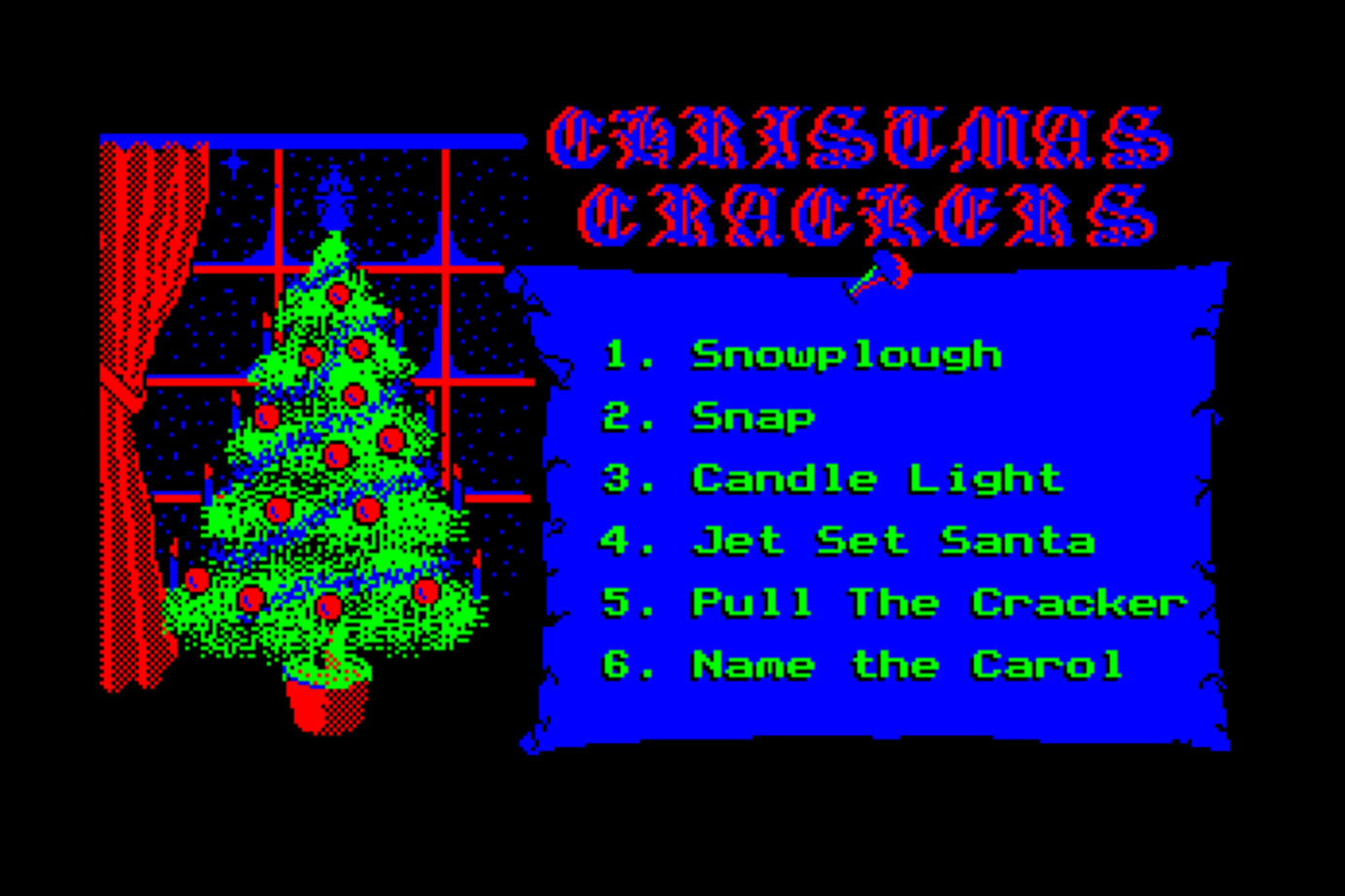
    Subscriber Posts: A Computer Christmas (Sierra, 1986) / Christmas Crackers (Micro User, 1986) – Part 1 (Subscriber Exclusive) / Christmas Crackers (Micro User, 1986) – Part 2 (Subscriber Exclusive)

    Going with A Computer Christmas as my last pre-Christmas new article is going for a kind of sophisticated, adult Christmas shindig vibe; Christmas Crackers is more that last day at primary school when you’re allowed to bring in any toys you like and the teacher lets you play games on the computer. Of course, if they’d booted up Christmas Crackers you might prefer to wait your turn to see if you could get a game of Crossbows and Catapults with the older kid that brought it in, because it looks amazing (you won’t, and you never will, so you’ll just have to imagine how amazing it is… hang on, they made a new version in 2024??? Finally I can stop imagini… oh it’s $90.)

    Unlocked Posts: Horses (Santa Ragione, 2025) / Jingle Bells (Jack & Jill Software, 1986)

    If you follow me on Bluesky you’re probably sick of me posting about my Horses essay, but I’m just so dang proud of it/it just took a long time ok? Better for me to make a bigger point of drawing the first map for Jingle Bells that exists online, an experience more enjoyable and festive than close reading Salò, or The 120 Days of Sodom, let me tell you.

    From The exp. Archive: Merry Christmas From Melbourne House (Melbourne House, 1984) / Santa (Artic Computing, 1983) (Subscriber Exclusive) / A Christmas Adventure (Chartscan Data, 1983)

    A subscriber exclusive in the archive as well! It’s nice to be able to offer a few of these at certain times in the year to say thanks to those who support my writing.

    exp. Du Cinéma


    The Running Man (2025)

    Definitely didn’t originally plan on writing this up as extensively as I did, but sometimes inspiration just takes you. Wish it had for Wright and company.

    Also reviewed: Wake Up Dead Man (2025) / The Ballad of Wallace Island (2025)

    exp. Capsule Review


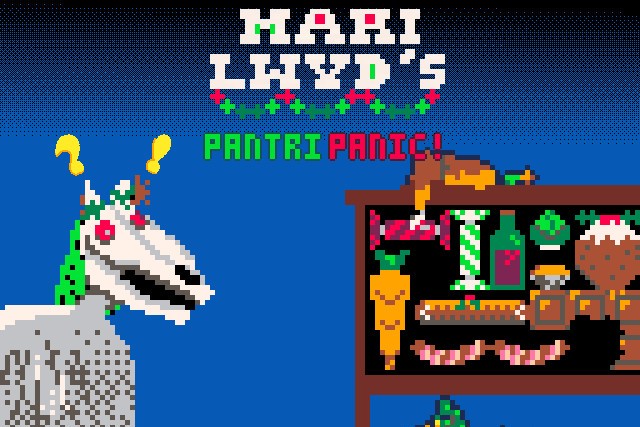
    Mari Lwyd’s Pantri Panic (Wynne, 2025)

    Yes, I’ve been playing Christmas games chronologically (more or less) but when I saw this pop up in my feed I felt I had to play it, as I love unique customs!!! And Mari Lywd is… a pretty unique custom.

    Mari Lwyd’s Pantri Panic was made by Rhys Wynne for the Pico-8 Advent Calendar Jam 2025 (of which there are a huge selection of Christmassy games to play, but this is the one I played.) As admitted by Wynne, it’s a version of the Blokus/Tetris mash-up game design where you place shapes on a grid until they can’t fit, but rather than be a series of grid-filling puzzles, each time you make a line it disappears, opening up space so you can hopefully keep going.

    I’ll be honest—I don’t entirely gel with this game design; I find it slightly uneasy to be playing Tetris on four sides with a wider range of block shapes. And it’s a shame Mari Lywd is just window dressing (there’s probably an interesting idea in a game where you have to keep thinking up new songs to stop a horse skull getting into your house, but I think that’s somewhat out of scope here.)

    That said, this is a pleasant diversion, and another great example of the pick-up-and-play Pico-8 puzzler. It particularly gains serious points for including a different Christmas song (Nadolig Llawen i chi gyd) rather than Jingle Bells again.

    Festive Vibes Ranking: HIGH (if you’re Welsh) MEDIUM (if you’re not)

    Zine News


    Gen Zine: DIY publications find new life as a form of resistance against Trump

    Zines get covered in The Guardian. We’ve made it, lads!

    Retro Game Zine Quarterly 2026 Q1

    Darren Hupke has always been very kind about exp. and he’s been a shockingly prolific zinester, putting out quality zines on a monthly basis, but he’s sensibly decided to slow a little to provide more coverage in a less logistically challenging fashion with a new quarterly zine. You can back the new Kickstarter now.

    (And if you missed the 2025 zines, you can pre-order the annual now too!)

    Cranko #4

    Speaking of prolific, it’s incredible that after appearing from nowhere there’s already four issues of this Playdate focused zine. I can’t keep up!

    Notable Books 2025 by Aaron King

    “A 20-page zine about notable books I read in 2025 (short description, thoughts, feelings, grudges held).”

    How To Print Your Own Zines From Home! (Video)

    JP Coovert takes you through how to print up an A5/half-letter zine at home in a quick little video, so you’ve got no excuse. He’s talking about TTRPG zines—I’ve often wondered how zine oldheads feel about how much “zine” has become synonymous with self-published TTRPGs in some circles—but it works for any kind of zine you’d like to make.

    (If you don’t want to watch a video, or use a computer to make your zine, check out this neat guide from Julia Gfrörer.)

    Mutual Aid


    Help Andrew & Savannah’s Family Stay Afloat

    “There but for the grace of god, go I” goes the saying, and as someone also struggling with unemployment in the games industry (and who expects to see games industry people in need like this a lot more) I want to share Andrew Elmore’s fundraiser to help support him as he tries to keep him and his family going after being laid off by Bungie in 2023. It hurts to read and recognise in myself the words “there is so much—SO MUCH—work that I can do!! But nobody wants any of it anymore, I guess!?” It’s tough out there, but maybe we can get through it if we help each other when we’re able.

    And Finally…


    I shared No Games For Genocide last Dispatch in the And Finally… spot (which is actually supposed to be something funny/nice, but never mind) but I’d like to highlight People Make Games’ superb video on the movement. For what it’s worth: I’ve signed the pledge and exp. won’t be covering Xbox-published games. Please consider signing too.

    Next week on exp.: I spend the week eating chocolate and watching the old films that they always put on the telly (maybe this is the year I finally watch The Railway Children.) When I return: Quentin Tarantino’s favourite arcade game.

  • Christmas Crackers (Micro User, 1986) – Part 2

    Christmas Crackers (Micro User, 1986) – Part 2

    To view this content, you must be a member of Mathew’s Patreon at $1 or more
    Already a qualifying Patreon member? Refresh to access this content.
  • A Computer Christmas (Sierra, 1986)

    A Computer Christmas (Sierra, 1986)

    Developed/Published by: Sierra On-Line
    Released: 1986
    Completed: 02/12/2025
    Completion: Well, it’s not really a video game. Watched it until I was pretty sure I’d seen everything.

    Christmas is drawing ever closer, so let’s relax, let’s have those Christmas party vibes, and let’s just watch Sierra’s 1986 “Christmas Card” A Computer Christmas together:

    (For maximum vibes, I suggest running it for real–well, at least with emulation. You can do so, easily, at archive.org!)

    Sierra are a company that I’ve not really dug into here on exp.–I’ve really only played King’s Quest I and II–and I have to admit I’m a bit disappointed that in 2025 I didn’t get to King’s Quest III or Space Quest (especially considering their release dates land right around the time of other games I’ve been writing up, like Pro Wrestling and Alex Kidd in Miracle World.) But I got a bit stuck in an earlier PC game I was playing by another historically important developer and did that thing where you put it down for slightly too long, and I loathe to start something else.

    But I think it’s alright that we’re getting to enjoy A Computer Christmas together, now. For such a beloved company, with quite a lot of history written about it, and even though Sierra’s Christmas “cards” would become a regular occurrence–there are four between 1986 and 1992–I’m surprised by how little information is online about any of them, and especially not this first one. There’s a bit of irony to that, because it seems that essentially all the information that there ever was about Sierra’s Christmas cards was uploaded to the Sierra On-Line BBS–BBSes, of course, filling the market before internet access went mainstream.

    BBSes are not well archived and I can’t exactly ring up (209) 683-4463 to get the details, so really all I’ve got to go on for context is a random Facebook post from an Aaron Micah Wester (dug up for me by ftb1979 on the Gaming Alexandria Discord–thanks!). It’s unsourced, so I’m a bit unsure about calling it the gospel, but he notes these were something “the Williams family were very fond of” while being a “a low-pressure way for developers to experiment with various features they wanted to potentially add into their games.”

    I think it’s fair to assume that this first card was intended specifically for stores (it does, after all, say in the intro it’s intended to promote “the Christmas spirit within your store”) though Wester notes that these cards would go on to serve double duty as a way to draw more users to Sierra’s BBS (a 1988 Sierra Newsletter claims the BBS was getting 6000 calls a week, and had 25,000 active users). But this is a marketing tool first and foremost. Distributed to computer stores on disk (“Egghead Software, The WHEREHOUSE, LECHMERE, FEDCO, B Dalton Software Etc, Electronics Boutique, Babbage’s, Walden Software, or RadioShack” Wester seemingly exhaustively states) the staff were more than likely to leave the demo running running across the festive period, and as at the end of each loop of festive scenes there’s an advert for a Sierra game–here Space Quest and King’s Quest III (the ones I haven’t been able to play yet, boo!)–this was a cheeky, very Sierra way to try and push more product.

    (The card also mentions The Black Cauldron as part of the default text scroll, but doesn’t seem to include a demo for it. I forgot all about Sierra making a game for The Black Cauldron.)

    That A Computer Christmas includes ads does sour the experience of playing it, just a little–the games aren’t festive at all! I mean at least just put a Santa hat on the character sprites or something–but it doesn’t exactly ruin it. And that this card is limited to the PC beeper… well… let me just say I’ve heard a lot of horrible beepy version of Christmas music thanks to the BBC Micro by now, and this is the worst.

    Still, A Computer Christmas is a charming object, one you won’t regret leaving playing while you open your advent calendar or something. Unless you forget to mute it, I guess.

    Festive vibes ranking: HIGH (unless it’s an ad break.)

    Will I ever play it again? Onward and upwards: perhaps next Christmas I’ll try the 1988 version, which, thankfully, includes a Roland MT-32 option.

    Final Thought: Sierra’s computerised Christmas cards as stealth marketing, are, of course, not the only example of such a phenomenon. There are examples such as “Seasons Greetings from Thoughtware” from as early as 1984. Strangely, that’s as hard to find much online about as A Computer Christmas, though it is covered briefly on LGR as part of their longer video on the commercial “Jingle Disk” it turned into. Is this where Sierra got the idea? Probably not, but I suppose you never know.

  • Christmas Crackers (Micro User, 1986) – Part 1

    Christmas Crackers (Micro User, 1986) – Part 1

    To view this content, you must be a member of Mathew’s Patreon at $1 or more
    Already a qualifying Patreon member? Refresh to access this content.
  • Horses (Santa Ragione, 2025)

    Horses (Santa Ragione, 2025)

    Developed/Published by: Santa Ragione
    Released: 02/12/2025
    Completed: 04/12/2025
    Completion: Finished it.

    “Artists must create, critics defend, and democratic people support . . . works so extreme that they become unacceptable even to the broadest minds of the new State.”

    –Pier Paolo Pasolini, in a 1974 debate as quoted by Naomi Green in their essay “Salò: Breaking the Rules”.

    Horses has been out for exactly a week, and I’m certain that if you’re reading this you’re already sick of the discourse (damn my adherence to schedule!) We actually raced through the talking points in record time, to be honest, it was barely a couple of days before we got the “well, you know, it’s actually not that good/what’s all the fuss about really” essays. Milking horses in real life is impractical and low-yield, and here we’ve reached the point where we’re drawing dust.

    However, that doesn’t really change the material facts of the matter: irrespective of quality, Horses is an artistic work that has been de-facto banned from the two major storefronts–due to opaque processes and without recourse. I’ve written about this happening before–in fact this year–when Cara Cadaver’s VILE: Exhumed was banned from Steam (and then released for free) due to what appears to have been a misunderstanding of that game’s use of real footage as pornography and the wider context of morality policing by payment processors. 

    Interestingly, Santa Ragione are at pains to point out that this ban occurred in June 2023(!) and that it “has nothing to do with the recent restriction on adult content pushed by payment processors.”

    There’s an urge to try and uncover the reasoning for the ban, but it’s to stumble about in the dark. Santa Ragione concentrate on–as much of the discourse has–that an unfinished sequence in a version “scrambled together” for early submission featuring a child riding on the back of a naked woman triggered the ban, but after the ban of VILE: Exhumed, I’m not so sure that (even benign) FMV footage or payment processors as a factor can’t entirely be ignored as, at least, a supplemental reason to keep the ban enforced. In particular with the ban from Epic, who didn’t choose to ban the game until December 1st(!) with the stated reason that they don’t sell AO rated games1 (despite Santa Ragione’s protestation that Horses had received PEGI 18 and ERSB M ratings) it smells to me like a simple pre-emptive decision to avoid controversy that could lather up into the kind of issue with payment processors that could affect their bottom line. It’s just easier.

    So really, it’s not so much the specific reasoning for the ban that matters2, but the context: that we exist in a world where art not cannot exist without being a commodity–Santa Ragione cannot merely hope that people experience their art, but that they purchase it–and where wide access to that commodity is tied to an oligopoly (if we’re being kind to the Epic Games Store) or monopoly (if we’re not) who have absolute power over the market. It is satisfying to poke at the hypocrisies of a storefront like Steam, but it is, ultimately, a problem of capitalism.

    If you’ve read this site for any length of time, you’re probably sick of me saying things are capitalism’s fault. Well, they are, and the interesting thing about Horses is that this issue of commodification under the ultimate power of an opaque system is critiqued by the work itself. And this has echoes with another piece of Italian art which I have seen paid lip-service to in other essays on Horses: Pier Paolo Pasolini’s Salò, or The 120 Days of Sodom.

    It is not easy to find a usable representative image of Salò, but this will do.

    Pasolini is a complicated figure with a huge legacy, though one that has been somewhat narrowed in the popular imagination due to the reputation of Salò (his other transgressive works like Teorema don’t really get a look in) which, unfortunately, I’m not going to help. What’s important here is that Salò existed as a work contemporary to 1970s Italy, an era of intense political turmoil only “post-fascist” in so much that it came after the fall of both Mussolini and the Italian Social Republic (which forms the setting for Salò), and in a period where Pasolini was concerned with the “new facism” of neo-capitalism.

    In an era where art is being flattened into a homogenous, global product, it is important to understand Santa Ragione as human creators whose cultural specificity does not necessarily line up with the enforced Western (American) default, and that is reflected in this era also obviously being of great importance to Santa Ragione. Their game Wheels of Aurelia–itself embroiled in a delisting controversy–is set in this period, and movies such as Il Sorpasso (1962) and Rabid Dogs (1974) clearly inspired it. There is no such clean line of inspiration between Salò and Horses but I see a continuation of thought between them.

    The thing about Salò, or The 120 Days of Sodom is that its reputation precedes it. Portraying, as it does, the the torture, rape and murder of teenage victims by four powerful fascists and their collaborators, it generally features high on not just “most scary” and “most disturbing” lists but “movies you should never watch” lists, and continues to be banned in some countries. But if taken merely as a series of images, in 2025 it really isn’t… that bad. Would it be able to feature on the Criterion Collection if it was? I’m not so sure. Watching it now, you wonder what Pasolini would have made of the internet, and in particular the sea of easily accessible pornography where you can see the participants of things that the fascists of Salò could not perceive. If Salò was to rage against the idea that fascist dehumanisation was being continued via the commodification of the body and ultimately captures the mind, what would he make of the masses willingly3 performing online what was once considered unwatchable? More disturbing things are streamed online from bedrooms in middle America than we ever see in Salò. Indeed, in Salò Pasolini uses a cold, distant gaze to implicate us; could he have perceived a future where not just the camera is drawn so close, but the audience can tip to push things ever further?

    But what sets Salò apart is that it is not titillating4. It is not intended to excite, even shock seems like a side-effect. In fact, it was an attempt to create a work that was indigestible.

    “I told myself: I have to react and make products that are as inconsumable as possible. I know it’s utopian, because everything ends up being consumed. At the same time, I know that there is something inconsumable in art, and we need to stress the inconsumable quality of art. Therefore, with all my forces, I will try and produce difficult and indigestible works.”

    Pier Paolo Pasolini, Le Regole Di Un’illisione, as quoted by Simona Bondavalli in their essay “Lost in the Pig House: Vision and Consumption in Pier Paolo Pasolini’s Porcile.

    This, for me, chimes all too well with Horses.

    Horses is a cinematic game–in that it directly and intentionally references the form of surrealist cinema (which notably, is distinct from Pasolini’s style.) It’s in black and white; almost completely silent (using intertitles for dialogue) and features the continuous sound of a projector. Combined with the farm setting, the game feels like it is set somewhere within Mussolini’s reign, but like Salò, there are anachronistic elements (though they are more apparent: a VHS tape, for example.)

    The player takes the role of Anselmo, sent to spend two weeks at a farm to learn the meaning of work. We know nothing about Anselmo–we don’t even know if he knows what’s going on at the farm before he gets there, though he seems unhappy about the prospect of working there either way. The farm–as you certainly know by now–is run by a disturbed farmer who keeps a group of men and women as “horses” by drugging them and locking horse masks onto them. He is supported in this by his “dog”, Fido, similarly a man in a dog mask, and then you, the player as Anselmo, as you do video game farming tasks for him: picking carrots, feeding the dog, chopping wood, before you become increasingly entwined in the control of the “horses.”

    As I said above, I do not believe Salò is intended as a direct inspiration, but there are parallels. The first that will come to mind is a sequence in Salò where the victims are treated as dogs, one of whom is harshly beaten when he does not cooperate (although this is a short, stand-alone sequence rather than the victims’ continual state.) More is the parallel of Salò’s men of power: the Duke, the Bishop, the Magistrate and the President, who have their parallels in the game’s farmer, businessman, vet and priest. I think it’s unlikely the analogue was intended–the characters are much less deeply intertwined in Horses–but their inclusion as symbols of fascist systems cannot be overlooked.

    In the essay Disney, Salò, and Pasolini’s Inconsumable Art, Owen Schalk summarises Pasolini’s “indigestible work” by way of Barthes “suspended meaning”:

    “This technique is not meant to expel meaning. Rather, it creates a sense of ambiguity in which meaning is not directly signified and is therefore suspended, refusing to provide the viewer with easily digestible symbols … Rather than producing art with the intention of manipulating consumers through predictable emotional patterns and easily understandable symbols, suspended meaning challenges easy digestibility by introducing deliberately indigestible elements to the work.”

    Although I think Horses is widely accepted as a narrative game, I think Horses intended “tactic” is to introduce a game with the signifiers and mechanics of the “farming” genre, which runs the breadth of Stardew Valley to Farming Simulator, in order to maximise the impact of its indigestible symbols. The game implies that it has a daily schedule design with tasks to check off, but discards and warps that at will almost immediately, creating something that frustrates and disconcerts as much as the setting.

    And Horses does not–cannot–rely on the dispassionate extremity of Salò to be indigestible. If in Salò we must look directly at the human body, abused, in Horses we must look directly at the uncanny valley, itself a desecration of the human form. There’s been criticism of how goofy a game with such heavy themes looks, but the grotesque puppetry of the horses makes a mockery of them and is as symbolic of their devaluation and dehumanisation.

    As an indigestible work I think Horses, like Salò, frustrates. Indeed, it makes me question the suitability of linear narrative video games for it unless designers are willing to push the form further. In cinema, the audience is implicated by their gaze; in games, the player is implicated by their play. Even in a film as indigestible as Salò, we debate and try to bargain with it, hopelessly. Why don’t they refuse? Why don’t they rise up? The film’s only glimpse of a kind of resistance that shakes the fascist’s power comes from a collaborator and only after we’ve seen a succession of the weakest characters turn on each other to save their skin–despite the fact that they are living through something unbearable. Film is very good at making us feel helpless, because there, we are. But games are almost all empowerment fantasies, and the ones that try to break us down so often offer us only the alternative of “the only way to win is not to play” rather than make us collaborators so we can continue even if in misery.

    As Anselmo, we must play along whether we want to or not. Every player certainly thinks “well, I’d just leave” but… they can’t. The gate is closed, and there is no escape. Whether or not the stakes for Anselmo exist, at first we don’t feel them without the ability to truly test them. If Anselmo isn’t allowed to escape, let me try. I’ll reload. If Anselmo can walk off the farm whenever he likes, let him. I’ll do it. Make me collaborate, don’t force me to. 

    The strange thing is, at its best, Horses does engage with this issue head on. Later in the game, your position as collaborator cemented, a horse will not cooperate. The farmer’s dog gives you an option of how to deal with the horse: to offer, as the cliché goes, the carrot or the stick. Each carrot you offer returns no cooperation and leads to the stick becoming bigger and more dangerous, and the dog angrier. I found myself pleading for the horse to just cooperate, because I knew the next thing I would have to do was beat it. 

    Whether or not I truly had a choice over that doesn’t matter, because I willingly gave those carrots. Horses made me not just perform the act of collaboration, but embody it, and it made me feel shame in a way the early game’s railroading does not.

    The scene that has received the most commentary however is the scene that Santa Ragione believes caused all the trouble and where Horses shows its hand: when the businessman’s5 daughter makes it clear that no one is under any illusions about what the horses are, and that the horses are people who represent a threat to the system.

    I think you could argue that this represents a flaw in my argument that Horses is indigestible art; after all, if you spell it out this clearly, isn’t that quite… understandable? But under that criteria, Salò would also fail for making its setting explicit. Even in Salò the victims are not random (one is notably called out as from a “family of subversives.”) But to return to Schalk: “the technique is not meant to expel meaning.”

    The difficulty of a work like Horses–if we accept my hypothesis that it exists in the spectrum of indigestible art–is that it is not a work about the horses, what happens to them, or Anselmo’s journey. It’s existence is, like Salò, a political act, to stand in opposition to the inauthentic, easily digestible product that floods our culture. 

    I chafe at every mention that Horses is “like an A24 horror” considering the formulaic nature of “elevated horror.” I wrote earlier that I wondered what Pasolini would make of modern pornography; I don’t need to wonder what he would think of the Netflixication of cinema, work designed to go down so smoothly you don’t have to engage with it at all. We seemed to have crossed a rubicon where it’s not even that mass culture is inauthentic; it no longer seems to actually exist. The audience is so captured by capital they create viewing numbers to maintain a stock price while themselves receiving no value; a subscription to white noise to fold laundry to.

    In this sphere, the value of Horses is that it must be engaged with, and it is ultimately that which makes it a threat to the hegemony of capital. At its best it does not just see the danger of commodification on our body and mind: it makes us feel it, perform it, and, ashamed, intend to refuse it. 

    Salò was not banned because of shock value alone. It may be an extreme example, but it suffered extra scrutiny for the same reason works as benign as To Kill A Mockingbird: an audience roused out of its slumber is a dangerous one. In 1975 Pasolini saw a world where the audience had to choke on the indigestible to wake. Horses may be more obvious, more on-the-nose in narrative by interactivity, but in doing so it takes the indigestible and asks the audience to not just wake from choking on it, but to spit it out. 

    You may think I’m giving Horses too much credit here–or implying conspiracy in its banning. But the same way that audiences are enveloped by the miasma of capitalism, companies like Steam and Epic are unconsciously risk averse in protection of the numbers. Santa Ragione focuses on the possibility that a little girl riding a naked woman was the reason for the ban; but I wonder if they’ve considered it was what she said that was. That she gave the game away.

    “Each of us is a cog in the machine; we must all do our duty so society can function properly. So dangerous ideas are a concern for everyone.”

    Will I ever play it again? I’ve already spit it out.

    Final Thought: If I find one flaw in my argument, it is that Horses ultimately concludes in a very “video gamey” way. Pasolini famously struggled with the ending of Salò, ending on an abrupt non sequitur after taking things as far as they can go. Horses instead asks the player to engage with an actual puzzle (which comes as a surprise; the solution is also a little vague in game, meaning I can imagine a lot of players get stuck here, and I personally found it annoying to the point of it breaking immersion). It leads to heroic rescue and ultimately escape–one which implies reclamation and reconciliation. Depending on your viewpoint, this hopeful ending either continues the themes as a call to action for the awakened viewer or the kind of satisfying resolution that allows a return to slumber; the indigestible made digestible. The question is, I suppose, as always, what you are willing to swallow.

    1. It has been mocked elsewhere but that this rule has an explicit carve out for crypto (“the only exception is for products in cases where an AO rating was applied solely due to the usage of blockchain or NFT technology”) is toe-curlingly embarrassing. ↩︎
    2. Although after saying all of that I have to also attach Paolo Pedercini’s idea that it might relate to the fact that by just being called “Horses” it contaminates searches to a genre that horse-mad weans would be looking up, like if you called a game “tractors” and it was all about tractors with big floppy dongs flopping about. Hang on, let me get on the asset store… ↩︎
    3. I should say supposedly willing here to be specific, but I don’t want to get too far afield of my main point in the moment. I touch on this in my essay on VILE: Exhumed, but there is an irony in that in Salò we can see a crying victim be debased with awareness that the shoot was actually pretty jolly, full of football games and risotto meals, but you really have no way to judge if in even vanilla pornography the performers are willing participants, as capitalism is always a coercive element. ↩︎
    4. I would argue it is titillating, intentionally, until the rules are inverted at the villa, but again, I’m in danger of getting lost in the weeds here. ↩︎
    5. This character is never referred to as such, and is a designation I’ve made on the statements of his daughter: “My father makes sure that [the farmer’s] business opportunities keep growing.” ↩︎
  • The exp. Dispatch #13

    The exp. Dispatch #13

    This Month On exp.


    Subscriber Post: Jingle Bells (Jack & Jill Software, 1986)

    As has become traditional, in the month of December I try and make sure I write up as many Christmas games as I can manage. This year I’m going to try and keep to my intent to write up new (preferrably 2025) games when I can, so it’s (sadly) not going to be all Christmas, all the time, but it’s good to start the month off with one, and I’ve already got some subscriber-exclusive Christmas essays brewing, so if you want to make sure you’re as full of Christmas cheer as possible and haven’t already joined the Patreon

    Unlocked Posts: and Roger (Tearyhand Studio, 2025) / Florence (Mountains, 2018) / Flotilla (Blendo Games, 2010) / Baby Steps (Cuzzillo/Boch/Foddy, 2025)

    Uh, that looks like four articles but it’s actually three. This is the first time I’ve broken the format to talk about two games at once, but I think it was necessary, and I don’t think it’s going to be the last time.

    From The exp. Archive: Super Stardust Portable (Housemarque, 2008) / Batman: Arkham City (Rocksteady Studios, 2011) / ModNation Racers (San Diego Studio, 2010) / Santa’s Sleigh Ride (Energy Games, 1981)

    I’m jumping forward in the archive a bit so I can further juice the Chrimbofication of exp. this month to include a chunk of the Christmas essays I’ve written across the years (although I only started doing it in 2021.)

    exp. Du Cinéma


    Frankenstein (2025) / The Life And Death of Colonel Blimp (1943)

    I didn’t expect to post my article on The Life And Death Of Colonel Blimp to the main site—I expected it would be short enough that I’d be happy to just leave it on Letterboxd—but it took more paragraphs, and more redrafting, than I expected (this is actually the second version of the essay I wrote.) It was only when I read the Criterion essay that I accepted that the movie was difficult enough to get a handle on that I felt satisfied that my perspective was worth sharing—and if so, why not do it properly. I think maybe I’m being a bit too precious about how long and detailed an article has to be to get upgraded to a “real” post; several of the essays below (notably Predator: Badlands and Sentimental Value) probably deserved it.

    Also reviewed: Who Killed the Montreal Expos? (2025) / Predator: Killer of Killers (2025) / Predator: Badlands (2025) / Sentimental Value (2025) / The Running Man (1987)

    exp. Capsule Review


    Small Worlds (Schute, 2010)

    Friend-of-exp. Jim McGinley shared this example of a lost art—the Flash game—and I had, I guess, missed it completely, so it’s possible you did too. Winner of the Jayisgames 6th Casual Gameplay Design Competition” and playable on archive.org, it’s a short platformer where you jump around, gradually revealing beautiful pixel-art scenes that express a kind of melancholy. One section (you’ll know the one) veers slightly into annoying if you don’t nail certain jumps, but this feels the way snow globes look in whimsical, heartfelt movies, and not the way they are in real life, which is nothing. Well worth your time.

    Zine News


    Retro Game Zine Issue 012

    “Retro Game Zine Issue 012 investigates the cyberpunk Kojima cult classic, Snatcher!”

    Funland Zine No. 5

    “Yoshiro Kimura on life on Earth. Luke Vincent on life on alien worlds (or at least SLC). Kaitlin Tremblay on death in the cosmos.”

    FREEZE-ZX Issue 2

    “Here’s a taste of what’s inside: A retrospective of Auf Wiedersehen Monty from Gremlin Graphics. An exclusive interview with Gremlin’s graphics developer, Terry Lloyd … And yes—a special centrefold map to enjoy.”

    Logos From Planet Blip

    I haven’t had a chance to play (watch?) Blippo+ yet, but when they announced this they described it as a zine, so I’m more interested than I was already (which was interested).

    Zine Things Happen

    “From the author of Sarah Records’ These Things Happen, comes a new 40-page, full-colour music fanzine. Feat. Blueboy, Josie, Beth Arzy, Swansea Sound.”

    And Finally…


    “SIGN OUR BOYCOTT XBOX PLEDGE: We are asking gamers, game workers, streamers & journalists to join us in boycotting & divesting from Xbox, to force Microsoft to end its complicity in the genocide of Palestinians. We’ve provided concrete actions everyone can take. Sign here: nogamesforgenocide.com.”

    Next week on exp.: When suddenly Johnny gets the feeling he’s being surrounded by…

  • Jingle Bells (Jack & Jill Software, 1986)

    Jingle Bells (Jack & Jill Software, 1986)

    Developed/Published by: Jack Foster, Jill Foster / Jack & Jill Software
    System: BBC Micro
    Released: 1986
    Completed: 01/12/2025
    Completion: Finished it.

    *Ahem* time to drag out the old Noddy Holder impression again. It’s CHRISTMASSS!

    (Hmm, think I’m getting better at it.)

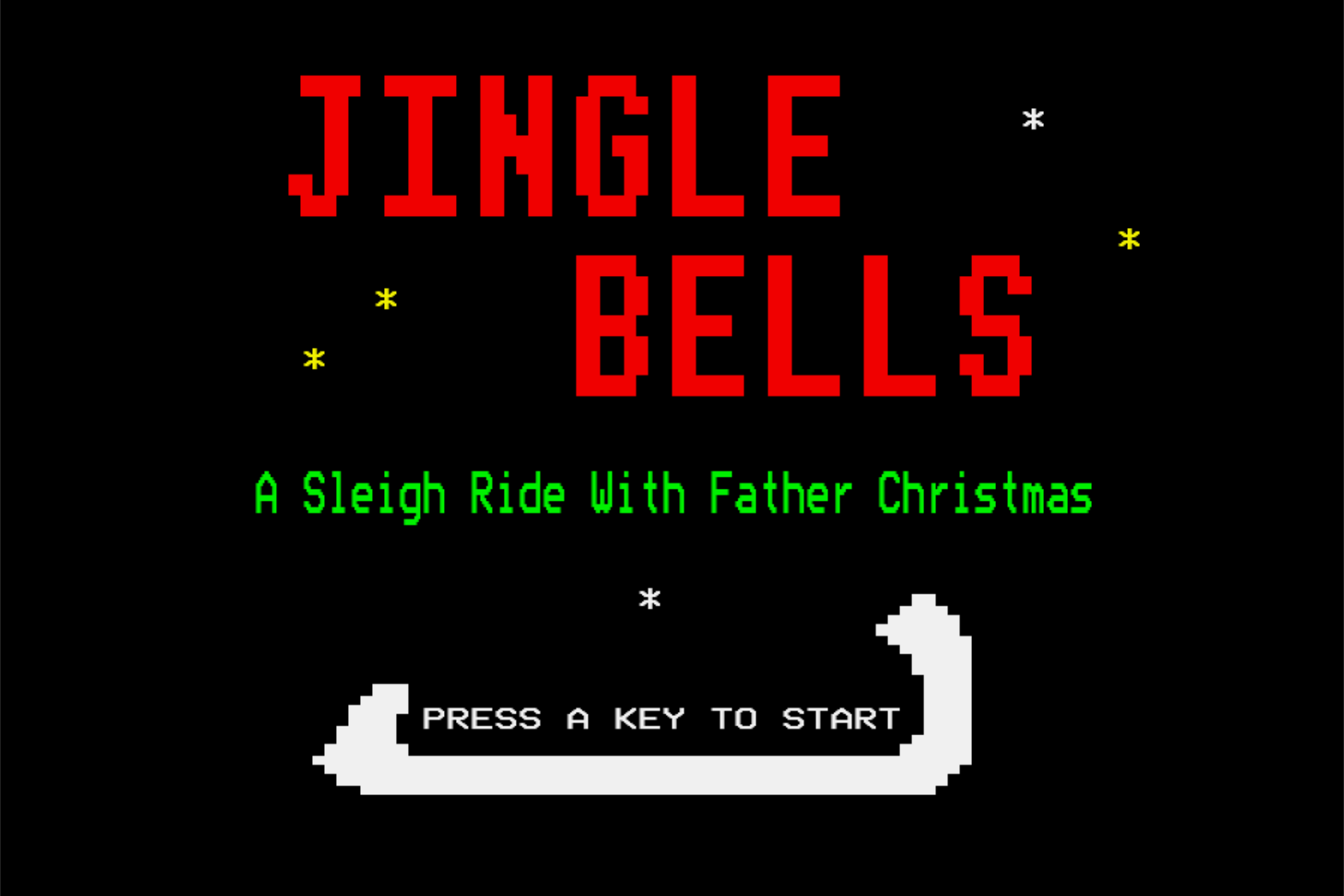
    Well, it’s December, at least, which means I get to spend the entire month playing Christmas games in an attempt to feel festive, but so far has meant I’ve accidentally mostly played BBC Micro shovelware. So I wasn’t exactly looking forward to the next game on my “as chronological and exhaustive as I can be bothered with” list: Jingle Bells, subtitled “A Sleigh Ride With Father Christmas.”

    However, it’s turned out to be a perfect bit of classic BBC Micro nostalgia: a short, very easy text adventure, the kind of thing that I’m sure was booted up for the kids at primary schools when they had some scheduled computer time in the anything-goes period right before the Christmas break.

    Developed by Jack and Jill Software, I can’t find any information about them online other than the developers were, well, Jack and Jill Foster. Brother and sister, husband and wife? Who can say? It’s like they’re the bloody White Stripes of video games! I took a dig into some contemporary issues of Micro User, Acorn User and even Beebug and couldn’t find much of anything, so I’m not completely sure if this was commercially sold. It seems very much like the kind of thing intended for schools–and the pair did develop a couple of other simple, childish adventures. The games all showed up on public domain disks at some point, but the breadcrumb trail stops there. Not that it was so much of a trail. A single crumb, at best.

    As for Jingle Bells: after the obvious–indeed, expected–intro where you get to listen to a bleepy version of Jingle Bells for the hundredth time, the game opens with you at the North Pole because–for unclear reasons–Santa had invited you to “sort out his presents for the year.” And then the dozy old bastard has forgotten where you live. And he also can’t be arsed to work it out, so it’s up to you. (There’s a cute touch where you get to type in where you live at the start: it doesn’t lead to anything but a changed signpost, but I appreciate it.)

    You solve this via some pretty standard kiddy adventuring around the North Pole. The parser is limited to classic VERB OBJECT and you can basically learn all the verbs by typing HELP (although there’s a couple of hidden ones, I don’t even think intentionally.) The game doesn’t understand it if you spell out directions properly (confusingly) so you might go through a period of typing “DOWN” pointlessly when you actually just have to type D (and it’s INV for inventory.)

    Take that you twat, you can sort out your own presents next year if you cannae remember where I live.

    The puzzles are… simple and obvious, with challenge expressed via a couple of classic design cheats: rooms that just automatically kill you so you have to start again (good when you want to rotate the kiddies off–one go each!) and a “gotcha” at the end for anyone who didn’t pick up one particular item (what is this, an Infocom game?) The game also–by virtue of you being on Santa’s sleigh–has a very funny idea of distances. One move and you’re at the South Pole from the North Pole, one other move and suddenly you’re in Australia. I laughed.

    The game doesn’t take into account that you might live in Australia, in which case you absolutely hadn’t taken a wrong turn.

    Maybe it really just is nostalgia for being in primary school talking here, but there’s a Christmassy charm to this. It’s much more playable than A Christmas Adventure, and though it’s not as pretty as Merry Christmas From Melbourne House, it’s more pleasant for being easier to understand (it doesn’t have a snow maze, for starters.) But I’m hard pressed to say much more about it. I had a nice, if very gentle, time with it. Could be worse!

    Festive vibes ranking: HIGH

    Will I ever play it again? I’m good!

    Final Thought: Because there’s so little about this game online, I thought I’d go ahead and provide a Christmas miracle:

    A full map for the game if you want to complete it yourself!It’s probably not really necessary, but if you’ve been looking for an excuse to spend fifteen minutes playing a BBC Micro game–and I mean who hasn’t–you can play Jingle Bells online right now!