Tag: namco

  • Mappy-Land (Namco, 1986)

    Mappy-Land (Namco, 1986)

    Developed/Published by: Tose / Namco
    Released: 26/11/1986
    Completed: 14/09/2025
    Completion: Finished it. Save state at the start of every level.

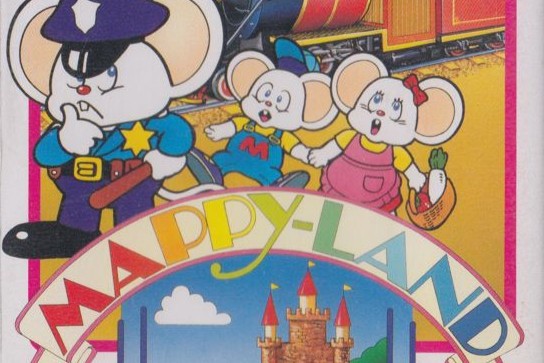
    As we all know, ACAB includes Mappy, but I’m a bit unclear on his status with the police force in Mappy-Land. He’s got his rozzer clobber on on the cover, but when you actually play the game, he’s noticeably not got his policeman’s hat on, something he was still wearing in Mappy’s arcade sequel, Hopping Mappy (which came out in early 1986). So we could suppose, like we’re the Supper Mario Broth account but for Mappy, that at some point in 1986 Mappy did something to get himself thrown off the force. Or maybe being transferred to the pogo cop division was an attempt to get him to quit, because he’s actually a tiny mouse Serpico.

    Or more likely, he just doesn’t wear his police hat while on holiday.  Mappy-Land, I suspect, is Namco–or possibly Tose, who were tasked with developing this–trying to compete with (of course) Super Mario Bros., and looking at the success of Tokyo Disneyland, which had only been open for three years by this point, and going “oh, we have a wee mouse mascot, can we do anything with that?”

    It’s not exactly a 1:1 copy or anything, but I find something very suspicious about Mappy’s redesigned sprite, with those big round ears. There’s also his new girlfriend with a strangely similar name (Mapico, in Japanese “マピ子”, “Mappygirl”). And he’s adventuring across a “land” which features levels that include, pretty transparently, analogues to Adventureland, Westernland… you go up a “main street” and end up in front of a fairytale castle!

    I mean, case-closed. Though a bit like Mappy–where you play a mouse defending a house that’s full of trampolines–the narrative is a bit confused. It would make sense to say Mappy’s on holiday at Mappy-Land (convenient for him!) and then the Meowkies have shown up to create havoc that he has to solve–you know, sort of a Die Hard thing, Mappy our John McClane, he’s forgot his hat instead of his shoes, etc.–but actually the game tells the story of Mappy’s courtship with Mapico, where he first has to collect cheese across Mappy-Land as a gift (women, what are they like, always demanding cheese, etc. etc.) Then he has to collect rings in order to marry Mapico, who apparently feels forty-eight rings is the required amount for an engagement. Then it’s tiny Christmas trees for I assume their first Christmas together (again, forty-eight seems… extravagant, unless they’re planning on running a Christmas tree outlet). Finally, in a twist, you’re collecting baseballs… because many years have passed and you’re actually collecting them for your son!!! That’s right Mappy Jr. appears, and maybe it’s one of those situations where his little league is in danger of being cancelled because they don’t have enough baseballs, and Mappy just loves his son enough to, uh, steal them from an international theme park?

    I mean what is Mappy really doing here? Look, it’s nice to see a policeman whose interaction with his wife and child isn’t solely beating them, but it’s almost like the tables have turned–he’s here ripping the trees out of a theme park and if anything the Meowkies are trying to stop him.

    Anyway, none of this actually slightly matters, because it’s all just background to the game, that no one involved in the making of thought even slightly as hard about as I just have. And, to be honest, they probably didn’t think about the game as hard as I have either. As I said above, this is clearly an attempt to Mappyise Super Mario Bros. so Namco can get in on the action, but it’s strange how they went about it. Even as early as this companies were working you just slam your IP into a left-to-right platformer with some vague design signifiers and call it a day (even Jaleco understood this with JaJaMaru No Daibouken.) Tose and Namco go a different route where they’ve decided to keep as much of Mappy’s DNA as possible. It would have been easy, I think, to just do Super Mario Bros. with more of a focus on trampolines, but instead the core here is very much what Mappy was: collect things while being relentlessly hounded by the Meowkies.

    What’s interesting, however, is what they’ve changed. Doors are completely gone, instead there are stage-specific counter attacks. Mappy gets a short hop, that allows him to (shockingly) jump over enemies if you’ve got extremely good timing. And you can collect items, up to fifteen, which you can drop to distract Meowkies–for example cat toys that they dance around and become harmless for a while, or coins that the head Meowkie, Goro, is specifically attracted to. 

    And then there are levels that break the system completely out of nowhere. The jungle stage instead features you jumping off moving trampolines to catch vines and avoid parrots (which is all a bit Donkey Kong Jr., weirdly) and then the spooky stage has you flying around with a balloon, shooting microwaves at ghosts and collecting keys.

    Things get even more complicated because not every level finishes the same way either. Generally you’re just trying to collect everything and then run off to the right–a weak sop to being inspired by Super Mario Bros.–but many times you have to do things like find a secret entrance on the level to then play another level where you have to collect an item. So on the spooky stage you either have to collect a cross in the church to scare off vampire Goro at the exit, or enter the haunted mansion (full of warp doors!) to find an alternative exit to the level (vampire Goro just hangs out in the middle of the mansion, which feels… sort of unfinished, to be honest.)

    Mappy-Land is… odd. It’s ambitious, adding probably too much to the core Mappy design, but it’s just wrong-headed in trying to do that, because the core can’t support the weight of everything that’s been added. Mappy was always a bit of a clumsy, seat-of-the-pants arcade game for me, but Mappy-Land quickly requires absolute precision and a dedication to a racing line and it doesn’t feel good at all. Maybe it’s just poor programming–sorry Tose–but the game has an infuriating number of collision edge-cases particularly with trampolines, and it makes the jungle levels especially complete bullshit as you hop on a trampoline and sort of vibrate off to your death, or fall onto one and miss it despite visually colliding with the edge. And idiosyncrasies from Mappy here make less sense. If you fall any distance onto a hard surface, you die. Unless you’ve been thrown in the air by a trampoline. So you have absurd situations where you drop down about three pixels and die, but you can fall from the top of the screen onto a hard surface if you’ve bounced off a trampoline? It’s hard to remember this in the heat of the moment, and by the third set of levels, the game intentionally uses it all against you, as you have to learn levels first before you can expect to complete them due to all the dead ends and death drops you can end up caught out by–the items help, but you really need to know how to use them and you use them in order of pickup, so you might have the exact opposite one you need to use at the wrong moment.

    Ultimately, I treated Mappy-Land as a puzzle the way, say, the original Pac-Man is–what’s the exact route you can use and recreate consistently to beat a level? Doing so I wouldn’t have had that bad a time if it wasn’t for the horrible collisions, and some later levels absolutely take the piss anyway–there’s an entire level where you can’t see where the platforms are!

    After playing something like Castlevania, Mappy-Land just looks sort of crappy [“Crappy-Land, more like”–Ed.] I get what they’re going for–big, bright, childish graphics–but it does nothing to change my mind that in this era Namco is being left behind in a big way on Famicom after Xevious: GAMP No Nazo. This is… I mean, it’s ok. But if you want to play Mappy, you should probably play Mappy and enjoy it as a wee high score challenge, because this is less good as a high score challenge and actively not something you want to play through as an adventure.

    Will I ever play it again? I shall not.

    Final Thought: Worth noting that I played the Namco Museum Archives version of this, and, weirdly, despite the fact that the game was never included in the Namcot Collection, it’s the Famicom ROM, not the NES ROM that is included. The NES version includes a continue and stage select and even a “remaining items count” (absolutely necessary–something I forgot to mention is the game doesn’t make it clear when the stage exit is open or not–or even where the stage exit even is sometimes). That’s the version you can play on the Nintendo Switch Online service, but you probably shouldn’t bother either way.
  • Rolling Thunder (Namco, 1986)

    Rolling Thunder (Namco, 1986)

    Developed/Published by: Namco
    Released: 09/11/1986
    Completed: 18/09/2025
    Completion: Finished it. Save states at each checkpoint… though I also had to use a few more in lulls just for my sanity on levels 8 and 10 for very obvious reasons.

    It’s strange, the games you remember, and the games that you don’t. I suppose it’s about the games that make an impression. Something interesting, I suppose, in my trip through these early(-ish) days of arcade games is not even how few I have any connection to, but how few I even remember seeing in arcades. They’re all from an era “before my time” but only a rarefied few managed to make a consistent enough profit to hang around until it reached my time, and even then, they were probably in some dusty old corner or a banged up cabinet in a chippy, something I probably never played but just stared at the attract mode while I waited for my mum to pick up… hmm, probably a fish supper and a sausage supper? Maybe a special fish if my nana’s over? A couple of pickled onions and a red cola?

    Personally, I rather like this separation from nostalgia. That I can really experience these games with fresh eyes. And I can’t say that Rolling Thunder represents that we’re reaching an era that we’ll start to see more things that I remember, or might have played (looking at my to-play list, it absolutely does not.) But Rolling Thunder definitely had something to it that I remember it really well. This isn’t a vague, childish memory of maybe a Gradius or a Salamander machine in the Magnum–god knows, it could have been an R-Type–this is a “I played this. I played this more than once. I will have been annoyed because I’ll have lost my credit so quickly. But I definitely put good money after bad.”

    Because Rolling Thunder looks. so. cool.

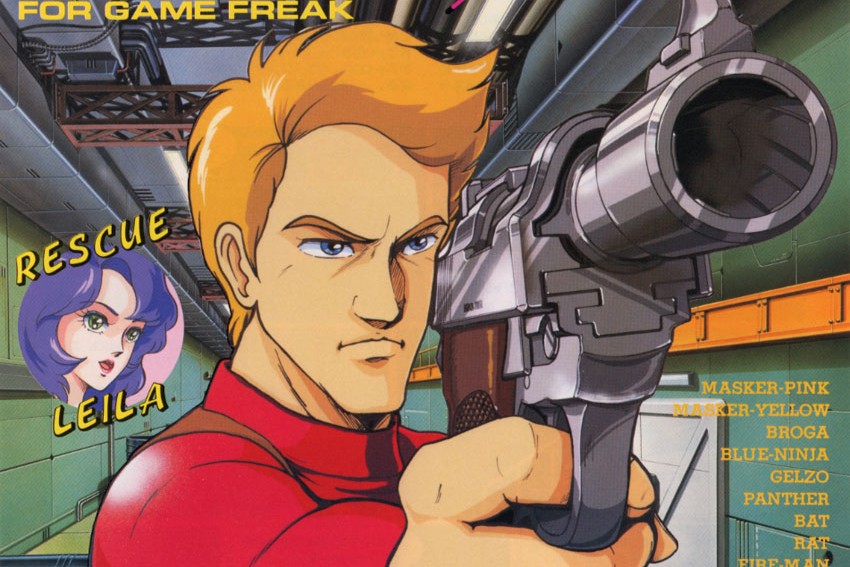
    I don’t know if I can explain it. There’s just a very clean, clear style to the graphics. Although you’re actually playing a member of the “World Crime Police Organization” on a mission to save another agent, there’s a real 60s spy flick feeling from the very first screen–like you’re James Bond, attacking the base at the end of You Only Live Twice. And the action is fast and more importantly stylish. The hero, Albatross, ducks behind cover to shoot enemies, and leaps over rails to switch between low and high ground. It looks cool as hell. It looks like it’s going to be a lot of fun to play.


    Historical Aside

    There was a meme going around on Bluesky a while ago that looked like this:

    via Bluesky

    I’m absolutely not going to disagree with it, not having sucked it up and tried to play the Portopia Serial Murder Case (yet). But history is a many faceted thing, and I think if I was going to make the meme from what I’ve learned over my time spent digging into the history via what I’ve played, it would look like this:

    The Tower of Druaga on top of Xevious, and the stalk is Spartan X.

    Now, I haven’t written about Spartan X (better known as Kung-Fu Master) because, well, I’m trying to not keep loading more games onto my to-play list (uh, more than I already do) but it’s an unbelievably important keystone. It takes the rhythm of the designer Takashi Nishiyama’s previous game, Moon Patrol, and translate it into a side-scrolling action game (one that, weirdly, starts with you scrolling right-to-left). The main thing you need to know about it is that pretty much any game you’ve ever played where dudes relentlessly stream in from a side of the screen? That’s from Spartan X. Something like My Hero is an obvious, but the DNA is over Ghosts n’ Goblins, even Super Mario Bros., and, absolutely, Rolling Thunder.


    Rolling Thunder is, actually, very fun! But it absolutely suffers for the nature of arcade games of the era (or any era, I suppose): the requirement that it remove the quarters from your pocket like you’re being held upside down and shaken by a bully. From the very beginning of the game, you have to play it in an exacting fashion, and be prepared to learn the game’s layout, because you can’t survive via reaction–you have to know what’s coming and act before it happens (literally, in many cases.)

    It’s a shame, because the core design is unbelievably solid. You can move and shoot. You can leap between the two levels (as long as there’s a railing–Albatross will only jump if it looks cool) and there are doors enemies come out of and which you can enter, which is a bit like Elevator Action but actually the only doors you want to go in are the ones that have more bullets or the machine gun upgrade, because coming in and out of a door is dangerous and confers no advantage (you can’t duck into a door to avoid taking a hit, it’s too slow, and enemies often just hang out in front of them. In fact, you quickly learn to not even stand above or below doors, because enemies might pop out and leap on you before you can do much of anything.)

    The design is a game of forward momentum, enemy and area control. You want to keep yourself positioned so you don’t get overwhelmed or surprised, take on enemies and move forward. When it works, it’s amazing. You shoot an enemy when they pop out from cover from behind cover yourself. You leap over the cover, spin around, shoot another enemy. You leap up to the higher level, pop a few more enemies, move forward so an enemy on the lower level leaps up too, you shoot them–and so on.

    The problem is that it only rarely feels like play. The game plays a genuinely ridiculous trick on the player from the off–it claims you have eight bars of health, but actually, you generally die in two hits, and often what is one or feels like one (I think headshots kill you in one, and some enemies hit you twice in quick succession.) There are no ways to regain health, and you get a maximum of one checkpoint on the often long levels (and the 5th and 10th levels have no checkpoint!) so you just can’t style it out ever. The game doesn’t have strictly deterministic enemies or enemy layout, but you can plan around the doors and spawns.

    If you do this, the game is… mostly fair for the first five levels, which the game calls “Story 1” (this is a confusing bit of framing. Story 2 feels like a second loop, but it’s actually different. There is a narrative, of sorts, to the game and levels, so is Albatross failing the first time? I’m overthinking it). A player with a patience could probably single credit the first story with some effort as long as some particular gotchas are memorised (the section where you have to jump an obstacle to get to an enemy throwing bombs at you stood out to me, but there’s also the timing of invisible, flying and fire enemies to worry about). Story 2, however, is absolutely fucking bananas.

    Something I’ve failed to mention about the design–once you’re three levels in, the game, almost quietly, introduces the ability to switch between the foreground and background planes on the lower level via doors, and that seems to allow the designer(s) to increase the chaos on screen tremendously. So no longer are you just dealing with enemies in front of you, behind you and above or below, but also in all those locations on a second plane. If you’re on the upper level and there are enemies on the background, well, they can jump up and kill you the same way the enemies in the foreground are.

    This gets pretty bad, but the true depths of Rolling Thunder are in any of the sections where it tries out being an actual platformer. Albatross is stiff in the way Arthur in Ghosts n’ Goblins is, but he’s also about twice the size and only has a short hop laterally compared to his leaps over railings. The 4th level is bad enough, but the 8th introduces a final section where you’re hopping across tiny columns after an enemy gauntlet where you literally have to position yourself correctly to avoid being killed immediately by enemies below you–I have no idea how anyone did this when they had to start from a checkpoint minutes earlier.

    As I played this via Namco Museum I had no rewind to abuse like I did in Ghost n’ Goblins, so finishing this–particularly the ridiculous final level–was an absolute test of my nerve. Rolling Thunder is so determined to strip you of your money that even the level timer is stupidly tight–I finished many levels with less than ten seconds to spare, and that was booking it as much as I could–which made me save state only when absolutely necessary. That I still finished this makes me think that the game is easier than Ghost n’ Goblins, though not by much.

    I think also that I liked it a bit more (even if it was, at times, deeply annoying and frustrating.) As the enemies are more predictable and the layouts simpler, the game is easier to learn, though for many the more reactive play in Ghosts n’ Goblins might be preferable (but at this level of difficulty, I don’t think I agree.)

    Because Rolling Thunder gates its “true” ending behind the last five, brutal levels of Story 2 I’m not certain I can give it an unequivocal thumbs up. I wish that they’d been able to ease off the gas a little bit, maybe let the levels live a little more (like a lot of these arcade games, it introduces ideas briefly, forgets them, moves on.) But I don’t know… it’s still as cool as it ever was.

    Will I ever play it again? I don’t say this for every arcade game, but if I saw this in an arcade, I’d see how much I could show off by how far I could get into this. I suspect only the second or third level, but still, most people don’t make it to the first checkpoint, so I’ll take it.

    Final Thought: Rolling Thunder received a couple of sequels, but the true legacy of the game is almost certainly that it inspired Shinobi quite directly, a series that would go on to far outlive it. Also the game’s Blogas absolutely 100% had to at least slightly inspire Blanka. I mean look at their colours! That’s basically Blanka’s alternative palette!!!

  • Super Xevious: GAMP No Nazo (Namco, 1986)

    Super Xevious: GAMP No Nazo (Namco, 1986)

    Developed/Published by: Namco, Tose / Namco
    Released: 19/09/1986
    Completed: 28/04/2025
    Completion: Completed it–but with a complete collapse in dignity, having to abuse save states starting around area 14.

    Well, it’s been a while since the Xevious klaxon has gone off here in exp. towers–I think the last time we mentioned it was actually Tower of Babel–but here it goes off because we’re only bloody playing the first “real” sequel to Xevious! And it’s yet another Famicom game with Nazo, aka “Mystery” in the title. They were mystery mad in Japan in the mid-80s!!!

    If three years feels like quite a gap for a game as successful and influential as Xevious to get a sequel, it’s worth mentioning that this is actually the fourth game in the franchise. Xevious in the arcades got an update in the form of Super Xevious (to which this has no relation) and then–and this is true–Xevious creator Masanobu Endo made a game starring an enemy tank from Xevious, Grobda, because he thought it’d be funny.

    Grobda seems pretty forgotten now–and I don’t think “the top-grossing arcade game in Japan for December 1984” is quite enough to believe it was that much of a success. But of course, we know that Xevious itself was a huge success on Famicom–so it only makes sense for Namco to bang out a sequel. In this case, Endo probably didn’t think it was funny–he was on record as believing that a direct sequel to Xevious was unnecessary, and he’d left the company a year earlier. 

    With Endo’s guiding hand missing, Namco–with the aid of Tose–did something that I think on paper makes sense. They looked at the huge success of Xevious, an Endo joint. They looked at the huge success of The Tower of Druaga (oh dear, set that klaxon off as well) also an Endo joint. They looked at how Tower of Druaga’s mystery design had been implemented into basically every other game coming out at this point, and thought: well, it’s chocolate and peanut butter, innit? Smash ‘em!!!

    So with Xevious: GAMP No Nazo, you play Xevious levels where you have to do a particular action to progress–this is actually a bit less punitive than the original Tower of Druaga, where you can keep playing through the game with no way to win because you missed something. This can be as simple as defeating a boss (hardly a secret) or as annoying as finding hidden things in the level or interacting counter-intuitively with enemies. 

    To put none too fine a point on it, this doesn’t work. At all. It’s obvious that at least Japanese players had become comfortable working through obscure fucking nonsense without the cameraderie of the arcade, but a vertically scrolling shooter puts pressure on you in a way that Tower of Druaga’s mazes didn’t–you can’t navigate back to something you’ve missed, and having to do an extra loop in GAMP No Nazo to get back there is brutally punitive.

    Because GAMP No Nazo is miserably hard. There’s no sense here of the push-and-pull “intelligence” of the enemies of the original, just walls of bullets and, frankly, unfair bullshit from the very start. The first level sets the tone by featuring clouds that obscure enemies and bullets meaning you can be killed by something you can’t even see.

    Trying to find what’s required to get to the next level just isn’t fun because of the high tension and sense of a “wasted run” when you get to a point and progress. The things you’re asked to do aren’t very interesting, either–while I’m hardly going to ask for the misery of The Tower of Druaga and having to, like, kill enemies in order, or something, the game only thinks to do something obvious like offer you different routes in levels like… twice.

    You can choose to play this like Xevious: to see how far you get, how high your score goes by just memorising all the requirements, which isn’t actually so bad. And the game… sort of works. But it’s not as fun as the original, feeling more predictable and rote before getting ever more absurdly difficult, and I certainly wasn’t sure why I was bothering at a point–each time I’d think “maybe this is ok, actually” I’d start a new run to try and get further and get killed by enemies hidden by clouds immediately, sapping any urge to continue.

    Namco might have been able to get away with this bar for the fact that it’s mid-late 1986 and the Famicom has already seen the likes of Gradius and Metroid, and Castlevania is out in a week. They went big with this one–no more numbered boxes, a special golden cartridge–which raises the question if they knew they had a pig on hand that they hoped more lustrous lips might help. Because it feels like Namco is getting left behind in both tech and design on the Famicom: GAMP No Nazo doesn’t look or play any better than the original, and that came out in 1984! At this point, the Famicom is Konami’s to lose…

    Will I ever play it again? It isn’t worth it.

    Final Thought: Namco, obviously, will be ok. But the sad thing, really, is that Xevious won’t be. The series that really started it all will limp on with a few sequels, but won’t ever be an important factor in the shooter genre ever again. 

  • Sky Kid [Famicom/NES] (Namco, 1986)

    Sky Kid [Famicom/NES] (Namco, 1986)

    Developed/Published by: Namco
    Released: 22/08/1986
    Completed: 15/04/2025
    Completion: Got the “Happy Ending” by shooting down the Air Successor in Mission 26.
    Version Played: Namco Museum Archives Vol. 1

    Sky Kid is, with some reservations, a wee hidden gem of an arcade game. I described it as a “strange little dead-end in the side-scrolling shooter universe” when I wrote about it, and while I stand by that, I wonder now if my framing is a little wrong because of the post-Xevious, post-Gradius context. Playing Sky Kid again in its NES port, I was struck by the thought that it might be as much inspired by something like Choplifter. While it doesn’t match in terms of design really at all, there’s a spiritual lineage: one is a “simulation” of being a helicopter pilot, and the other is a “simulation” of being a biplane pilot. The concerns in either are not that of Xevious/Gradius, where you move a frictionless collision box around, but one where you have to use your helicopter/plane using its actual characteristics to survive and succeed.

    I do think taken in that framing I like Sky Kid even more. Revisiting the arcade version before giving this version a run through I was struck by how bright and attractive it is, the pleasure of doing loops, and how unbelievably rewarding it was to nail an enemy base with a bomb dead on.

    Sky Kid on NES is an excellent recreation of that in terms of play, but unfortunately, it just doesn’t look anywhere near as good due to the NES’s more muted colors. At this point in the NES (or rather, Famicom) lifecycle, it’s a bit of a disappointment, with for example Ghosts ‘n Goblins doing a much better job of capturing the character of the original game despite having the NES palette to work with. It’s not as bad as Pac-Land, but it doesn’t look much better. Someone over at Namco was letting them down.

    There is some effort made here to make this a different(-ish) experience from the arcade–there are more levels, a few of them are shooting galleries, you get some wee interstitial animations–but we’re still not at the point where NES games are diverging from their arcade counterparts to be particularly deeper or richer, and Sky Kid gets every bit as frustrating as it was in the arcade as you work your way towards the end of this. In fact, maybe more frustrating. As in the original, the design doesn’t support bullet hell, but bullet hell is what it gives you.

    As with the original, this plays better as a score attack, but I think when you have the chance to come home with a copy of The Legend of Zelda or Metroid by this point… well, it’s not even been a year since Sky Kid came out in arcades and it already feels out of date. A biplane in a world of jet fighters: charming, but you ain’t picking it.

    Will I ever play it again? I like the arcade version. I have the arcade version. This one isn’t necessary.

    Final Thought: What I don’t have is Sky Kid Deluxe, the arcade update which has a range of minor differences. It was released by Arcade Archives for Switch and PS4, which I definitely support in theory, but absolutely cannot justify purchasing because… well, I’ve played Sky Kid twice now. That’ll do. Maybe I’ll see it in an arcade one day, I’d like to.

  • The Tower Of Druaga [Famicom] (Namco, 1985)

    The Tower Of Druaga [Famicom] (Namco, 1985)

    Developed/Published by: Namco
    Released: 06/08/1985
    Completed: 18/08/2022
    Completion: Played a few levels in both the original dungeon and the secret “Another Dungeon” but life is too short.
    Version Played: Namco Museum Archives
    Trophies / Achievements: n/a

    You know, I’ve had fun playing the old games I’ve got access to; I’ve discovered some hidden gems, rediscovered old favourites… but there’s definitely points where I’ve honestly wondered how video games as a medium didn’t merely survive but thrive post 1983 crash. Because to be honest, the last chunk of games–action games, anyway–have been pretty miserable. The Famicom’s output has been totally uninspired, and every arcade game is so brutal and relentless that there’s no time to get hooked–you just die.

    So, no matter my own attempt to understand these games within their actual context, it’s been really hard to get into them. I’m still playing them in the 2020s, and I’m still me.

    And this Famicom port of The Tower of Druaga is a perfect example of that friction. I don’t like the The Tower of Druaga. You can read all about that here. But it’s also insanely seminal and was a genuine phenomenon in Japan. I’m sure Namco’s Famicom port was hotly anticipated and as far as I understand it was a massive hit. And academically? I understand it completely.

    Because this is a great port! Sure, it’s got the muted colours of a Famicom/NES release and like Mappy chops down the level sizes (7 tiles vertically rather than 9) but most importantly not only does it feel similar but all of the hidden bollocks (I mean treasure) are unlocked as in the arcade (bar some very minor differences) allowing you to actually throw yourself into finishing the game without having to spend a small fortune in 100 yen coins–you can even continue! I can understand totally why you’d be running out to get this for your Famicom in 1985.

    But it’s 2022 and this is still just unbearable to play. I just can’t put myself in the shoes of a wee guy in 1985 playing this and (apparently) enjoying it. Booting this up and being faced with just how slow Gil moves on the first level? It’s revolting. How boring were things in 1985 that I would sit there, playing this with the tips page of Famitsu (or whatever) open? 

    What makes my total inability to get this worse is that this version even includes an entire extra dungeon, with a whole new range of inscrutable things to do required to complete it. It’s actually hard to argue with the insane value here and how thrilled you’d be to discover this! But to me, in 2022, it’s like finishing a plate of rocks and being served a plate of glass.

    That said, it’s a matter of months in 1985 before dessert shows up, and it’s literally ice cream. I know why the video game industry survived a crash and then whatever this is: Super Mario Bros.

    (Oh, but I’ve got Namco’s Battle City to play first. Dang it!)

    Will I ever play it again? Thankfully, these are the only two versions of The Tower of Druaga I have access to. I know the Game Boy version has bosses and things (sort of interesting) and I believe the PC Engine version is significantly different (more of an action RPG thing) but I’ll stick to ice cream from here on out.

    Final Thought: Struck by the fact that as I’m back into collecting Game Boy games and I hope one day to go back to Japan to pick up an bunch of cheap fodder, I’ll already be seeking Namco’s Game Boy compilation cartridges meaning I may end up with a copy of the Game Boy version after all via Namco Gallery Vol. 2. I’ve never been one for toppings on ice cream really, but guess I might as well sprinkle some broken glass on it…

  • The Tower Of Druaga (Namco, 1984)

    The Tower Of Druaga (Namco, 1984)

    Developed/Published by: Namco
    Released: 06/1986
    Completed: 23/11/2021
    Completion: Got all the required chests and beat it.
    Trophies / Achievements: n/a

    Wizardry: Proving Grounds of the Mad Overlord is one of the most important games in Japanese RPG history (despite not being Japanese itself), and here’s the other side of the coin: arguably the most important game to the action RPG genre: The Tower of Druaga.

    The Tower of Druaga is known for a couple of things. One, that it’s built around the player performing obtuse, un-explained behaviors to make chests appear that without which the player cannot complete the game; and two, that although it was a smash-hit in Japan (second top grossing machine of 1984) it never received a wide release in US or European arcades and so goes almost completely unknown in the west.

    (I’d actually be fascinated to find any articles or information about The Tower of Druaga being released in the west—there’s very little to google for in English about it, so it would require proper digging. That’s how unsuccessful it was here.)

    That said, Namco has a dedication to making “fetch” (The Tower of Druaga fandom) happen, because it keeps sticking it on every collection it does and you get weird things like how in Pac-Man 99 there’s The Tower of Druaga DLC and that. This probably seems weird, but it’s a side-effect of the fact that “fetch” happened in Japan and it would be a waste of time to remove The Tower of Druaga ROMs or references from western releases plus people would obviously complain even if they’ll never play it.

    Anyway. Should you play it? I didn’t come away recommending Wizardry, though I found it very educational to play. And Tower of Druaga has an obvious influence on The Legend of Zelda, Ys, and so on, so you can feel its DNA in some respects coursing through practically everything we play nowadays. It’s similarly educational, then, but holy lord do not touch this with a fucking bargepole.

    I’ll give props to the team who put Namco Museum together, though. On the Switch version, you’re a mere push of the X button away from seeing what idiotic thing you have to do to find the next chest, and it even informs you if you need it or not (well, that said, it accidentally claims one of the Balance items is a trap. It isn’t, you 100% need it.) This turns the game from “a completely impossible treasure hunt” into “a nigh impossible puzzle.”

    I think I imagined this would play… better? I know it’s from 1984 and that, but I just assumed it would have a Pac-Manny sort of responsiveness. No such luck, as the game locks improvements behind treasure chests and at the start of the game you control a pitifully slow hero who swings his weapon lethargically and is killed by touching anything. At the end of the game you control a slow hero who swings his weapon… still pretty slowly, to be honest? who dies after touching nearly everything.

    This might be fine, except within a few levels you are navigating a maze where wizards near-randomly teleport and can fire spells at you through walls that kill you immediately unless you make sure you’re facing the spell with your shield. They’re supposed to not spawn any closer than two squares from you, but if you’re moving it doesn’t update that so you can easily walk into them as they spawn in, too, which is amazing. And if two guys shoot a spell at you from different directions? Sucks to be you I guess. Oh and when you stab them you’ll not get any feedback that they’re dead. Again, sucks to be you.

    I’m fascinated by the idea that in 1984 Japanese arcades were awash with people who were pumping in 100 yen coins into this and enjoying it. That’s a lot of money for 1984! Famously, the game encouraged a communal aspect, where players worked out how to make the (brutally necessary) treasure chests appear, and I imagine that in arcades across the land there had to be notepads lying out where players jotted down their discoveries. However, this blows me away because the game is just so unrelentingly brutal, with several “gotcha” levels where it feels like wizards are upon you immediately, requiring you move instantly and specifically or die, and requirements that I genuinely can’t imagine working out or performing with any success in arcade conditions.

    I mean this game, near the end, requires you defeat six enemies on one level in a specific order… and then do it again on the next? Enemies that move faster and massively outpower you? It’s not so much that I can’t imagine anyone working these kind of things out–it’s that I can’t imagine players reaching the level of virtuosity where they could, for example, get to level 30 enough times that walking around the level and surviving they’d eventually work out that you needed to walk on a specific square three times. Players must have maddened themselves touching every wall, standing in place, spinning in circles—all things you need to do to progress, while just surviving.

    I beat this by saving every level—I couldn’t save during any levels, because I was worried I’d fuck up somehow and Namco Museum only allows a single save–and this took me literal hours. The final level is an exercise in brutality as you cannot defeat Druaga if you’ve taken a spell hit before he appears, and yet the game gives you such poor feedback you can easily take a spell hit you don’t notice while fighting a wizard who attacks you from four directions at once.

    I’d love to see a master of Tower of Druaga play this. While playing it, the hardest levels quickly devolved to become Pac-Man like memorisation strategies—I knew that if at the start of the level I moved in a particular way, I’d spawn enemies here and there and could therefore survive, but if I ever died I’d have to reload because on my next life I’d not be able to make the same thing happen. Did people’s guides, or do official guides, show you how to navigate the maps a bit like How To Win At Pac-Man? It’s the only way I can imagine seeing this through to level 60 on a single credit.

    I am, to be honest, baffled by Tower of Druaga. The mania that surrounded it you’d expect to have dissipated when people realised how insane the requirements were, but the game had multiple successful home conversions in Japan (I believe the Famicom version was a massive hit) and people love it so much that many of the conversions include even harder, more obtuse dungeons to play though! I had hoped that playing with solution in hand this would be a fun arcade title that felt good to play and I just had to puzzle out how to complete a level, not what to do but no such luck. This is a miserable exercise in dying and reloading and I wouldn’t wish it on anyone.

    Will I ever play it again? I’ll be taking a quick look at the Famicom version as part of Namco Museum Archives on the Switch, but I find it massively unlikely I’ll play it more than a couple of times.

    Final Thought: Something else wild about the Tower of Druaga: the hero (Gil) actually has a health bar, but it’s hidden from the player. And the bad version of important pick-ups look exactly the same as the good versions! The game goes out of its way to make you not know what’s going on. How. Did. Japanese. Players. Like. This.