To view this content, you must be a member of Mathew’s Patreon at $1 or more
Already a qualifying Patreon member? Refresh to access this content.

When introducing Evil Puddle as the first film in his pre-TIFF Midnight Dankness screening (which raised over $4000 for PCRF and Islamic Relief Canada!) Peter Kuplowsky compared it to Eddington as a work of post-COVID cinema, and it is, I think, an excellent lens to view it from.
Eddington is a cynical film that, if it argues anything at all, argues that we are all deeply alone–enveloped by our solipsism so completely that there is no such thing as community, and catastrophe only exposes our urge to self-preservation above all. That we are, ultimately, trapped in our own minds. Unable to see that we’re prey for higher powers and forces that we don’t–and couldn’t–understand.
To me, this is the worst kind of satire–the kind that allows you to be smug because you’re clever enough to know how bad things are and clever enough to know there’s nothing to be done about it. A self-fulfilling inaction.
Evil Puddle argues, instead that community is very, very real, in both narrative and form. From Matt Farley, Charlie Roxburgh and the cast of locals and fans that pitch in to play roles in their movies, Evil Puddle is a 1970s folk-horror disaster movie by way of community theatre in which some unlikely events lead to a small town’s water supply becoming, er, evil.
Heavily featuring a magic rock, I’m unclear if after Magic Spot Farley and Roxburgh are creating a new thematic series of “magic rock” movies to follow their earlier, triumphant series of Druid movies, but the water which kills you instantly but otherwise looks completely normal and benign (you know, like, say, air with a virus in it) is the key factor here. Like classic disaster movies, the film flits between disparate characters who all face peril in different ways due to their predispositions. So, for example, you see some kids who have been using a hose to clean off rocks for a new tranquillity garden. You see a group of ne’er-do-well’s who seem to do little other than hang around a pizza parlour complaining about the free tap water. You see, er, a dance instructor and his student who happen to be learning close to a sprinkler (I think you get where this is going.)
The movie doesn’t linger on punishing characters for their hubris–refusing to trust experts, or attempting to exploit others in their time of weakness–instead choosing to celebrate the characters who work together in even the smallest ways. Evil Puddle is unique in making one of its most rousing sequences about how sometimes the best thing you can do is accept some mild inconvenience rather than put yourself or others at risk.
That this movie has been made by a community is what makes it all so dense with meaning. If you’ve followed the Motern Media universe for any length of time, it’s genuinely moving to see how the actors you know have aged and changed but that they’re still showing up, because that’s what people do.
It’s easy to be cynical. It’s unarguable that the tools that we use every day are being warped by big tech to isolate us ever more. But AI ain’t going to show up when you need help and it ain’t going to make a movie a tenth as good as this one, made with friends and family when they’ve got spare time, where it’s obvious when they’ve shot several scenes in single afternoons. Because you can’t replace community, you can only participate. Rather than inviting the audience to wallow in their smug inaction, it inspires. You could do this too. You can do anything you want. Someone probably wants to help!
And the beautiful thing about Evil Puddle is that just by watching it, even if you have no idea where to start, you already get to join a community: the community of Motern Media fans. Hell, you can call Matt Farley right now if you want (his phone number is 603-644-0048. Give him a call, tell him this review sent you.) Why be smugly alone? Join us, it’s much nicer here.
Follow Mathew on Letterboxd.
Update (31/10/2025): Evil Puddle is available for purchase on Vimeo now!

This has been out for a while, so pretty much every position on it that can be taken has, and I don’t think mine is going to be that revelatory. But still.
To start with the de rigeur “me and Superman” background, as a British person who didn’t get into American comics until they were a teenager and holds all the usual boring opinions about him (“he’s too powerful! Where’s the peril! Get me a loser like Peter Parker, etc.”) my entire experience of the lad is (obviously) almost completely All-Star Superman, but probably less obviously that one issue of Hitman and then that Superboy arc where he’s an apartment super (get it?) because that was drawn by Hitman artist John McCrea.
Interestingly (maybe) if you’re really into comics you’ll already have clocked why Superman (2025) has really worked for me, because “that one issue of Hitman” where Superman shows up dwells on Superman failing (badly) and then being picked up by having it spelled out pretty directly that he’s an immigrant trying to make the best of it, and there’s really nothing more you can do than your best.
I mean… James Gunn has to have read that one, right? Because he gets it. Superman is made as real and as vulnerable as possible here, understanding that just because you’re invincible doesn’t mean you can’t be beaten, and that Superman has no more emotional armour than anyone else. While I’ve read some criticism over just how badly Superman gets his ass kicked in this, that it comes from both directions and that Superman reacts so genuinely–so humanly–to it all is what makes it work. There are stakes: you feel your fist tightening because they stole his dog. You are right there with him all the way.
Some of Gunn’s predilections are a bit unbalancing to the movie as a whole though. Some of the gags fall flat. He can push peril a little too far when it comes to the defenceless, and his penchant for eye trauma rivals Lucio Fulci’s. But the real issue with the film is that the big action climax doesn’t work. It’s obvious that the thematic arc of the movie is always going to end in a (largely) non-violent confrontation between Superman and Lex Luthor (played with a genuinely incredible seething hatred from Nicholas Hoult) but the other villains (well, bar one) fall completely flat, and the big “why can this guy beat Superman?” mystery is concluded in the most boring way possible. For a movie that digs up so much stuff from the DC Universe (look, I’ve got no idea who Mr. Terrific is) it’s weird that they resorted to the kind of thing we’d expect at this point from the completely shagged-out MCU. But it doesn’t put too much of a pallor on things, because in every other respect, this movie’s heart is in the right place.
Speaking of, the movie’s much talked-about Israel/Palestine allegory is… astounding. It’s absolutely not the center of the movie, but it goes so much harder than you could ever expect when it appears. Look, we’ve all learned by this point that satire doesn’t do much. But Superman said free Palestine, and in this miserable fuckin’ world, that means something.
Follow Mathew on Letterboxd.

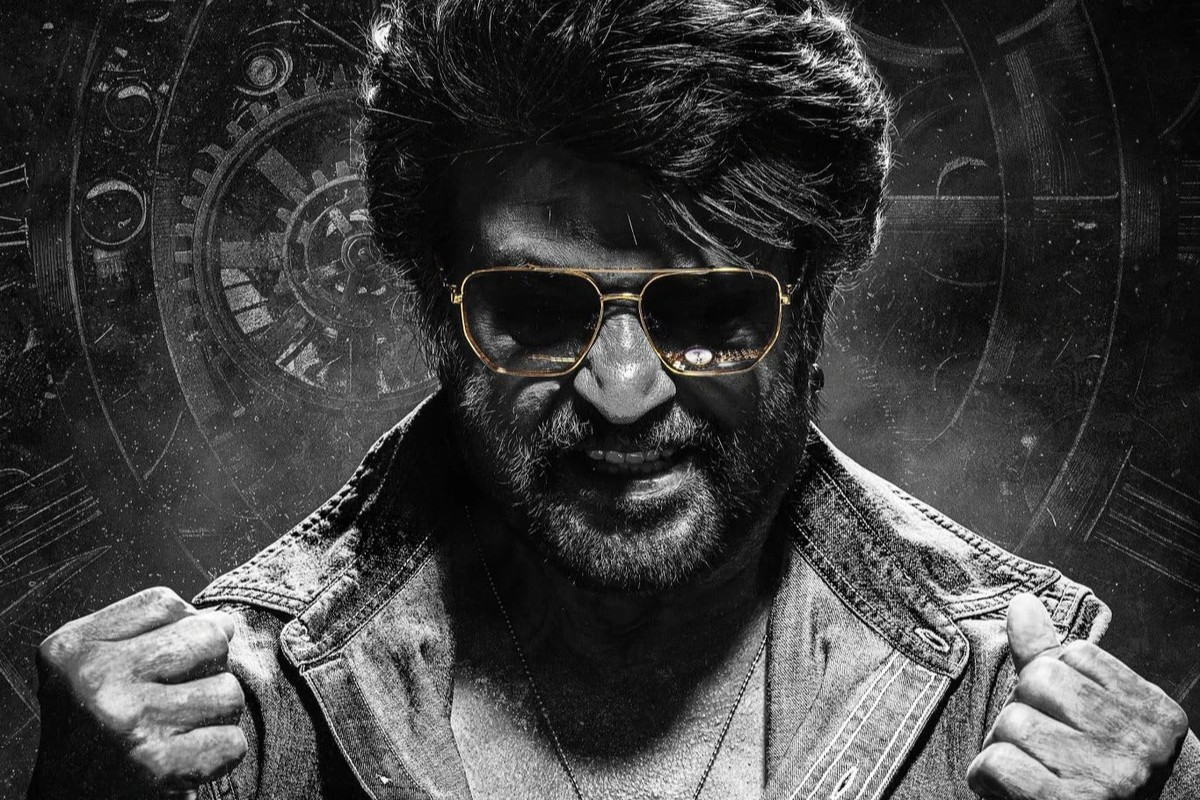
Oh good lord. I will, of course, refer you to my review of War 2 first (which scheduling, unfortunately, placed first in my double bill of contemporary Indian cinema at the weekend) so I don’t need to go over my entire “what the fuck do people want” line of inquiry again in relation to this, Rajinikanth’s latest slog which has, somehow, outperformed it both critically and commercially.
Look, I’ll admit it–I’m nonplussed by Rajinikanth. I basically haven’t seen anything where he wasn’t at least in his sixties, so I don’t have this long history where I can recognise his every twitch and pop for it, and I can’t really fail to notice that he’s deeply, deeply limited by being an elderly man. I don’t think there’s any shame in this! I mean Robert De Niro couldn’t pull off youthful in The Irishman, he’s in good company.
But listen, with Lokesh at the helm, I wanted to believe. While his films tend to have a lot of build up, they eventually go absolutely bananas, and I loved Kaithi, Vikram, even Leo a lot. But I have never been so thankful that a movie wasn’t in a shared universe. Because this is absolute drivel.
Now, the last Rajinikanth I was able to catch, Jailer, was almost unwatchable, but at least it was genuinely insane. This is just death. The setup is so neat and simple: a guy’s pal dies, so he has to investigate. Based on the title (which… listen, it’s weird that they named the film a slur) and the fact that it all revolves around a dock, you’d assume he’d go undercover as a dock worker and that would be the movie’s backbone.
No. He pretends that he knows how to use the cremation chair(?) that his friend invented(??) but which he couldn’t get a patent for(???) so that he can get close to the baddies, who specifically need to be able to get rid of bodies faster than normal for… reasons. Alright!
Meanwhile, the main baddie’s son is a customs officer in a love affair, and the baddies’ main enforcer is seeking out undercover cops, but maybe he’s also got secrets of his own. Oh and Rajinikanth owns a boarding house for students and his past relates to the docks… sort of.
Coolie is full of these overlaid tangled paths for what should be simple threads and every single one ends frayed and unsatisfying. I legitimately cannot tell you why his pal died. I understand the circumstances surrounding it, but not the why, and I genuinely think everyone making this movie forgot.
Still, it’ll be fine because the songs and action will be good, right? [Padme meme face]
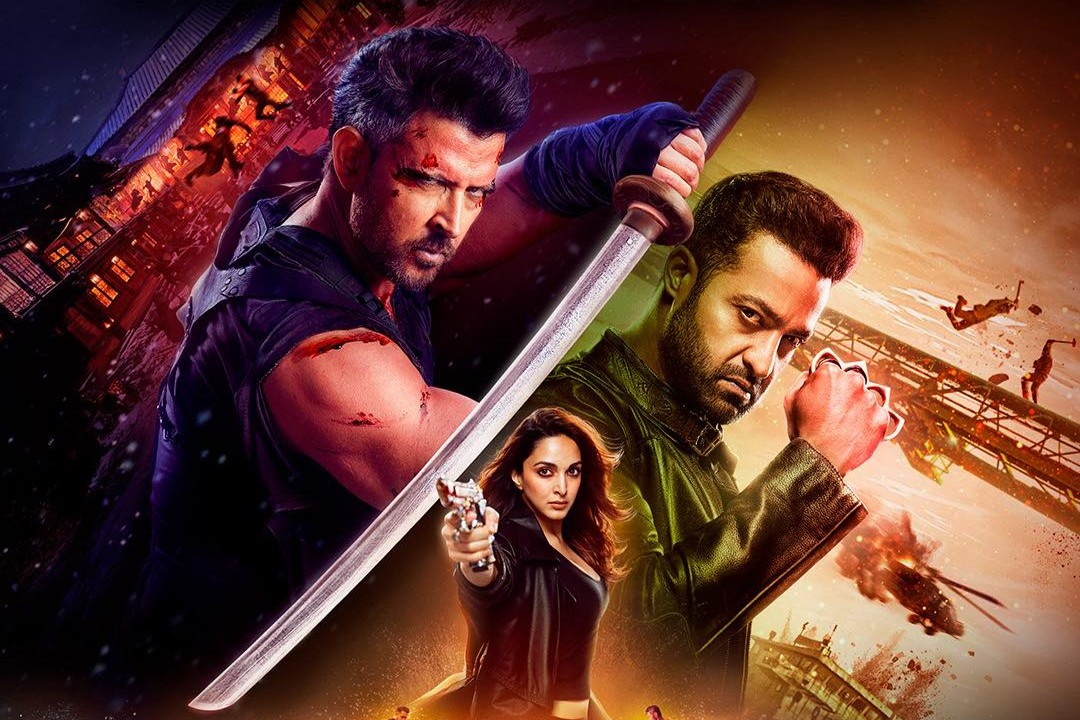
The solution for Rajinikanth’s limited abilities… not elegant. Dancing is reduced to “putting a handkerchief in his mouth and waving it about.” Fighting? They resort to the ol’ “Steven Segal”: he stands still, waves his arms and baddies go flying. This is not entertaining. Well, there’s a couple of other dudes on the poster, right? They’ll be in the movie and do cool stuff?
Well… let me just say I do think it should be illegal to put someone on the poster if they don’t have some sensible amount of screen time, or, like, any character at all. Kannada star Upendra appears to… stand still and punch dudes so they go flying (while Rajinikanth just stands there!) And it’s not so much that you could blink and miss Aamir Khan’s cameo so much as you’ll wish you had your eyes closed during it. Again: they’re on the bloody poster!
Even if I was all in on Rajinikanth’s screen presence, it feels impossible to overlook that his character seems to have absolutely no plan and just dodders about. He basically creates every problem that occurs after the intermission by being a huge dumbass (then gets drunk?) and seems to only get hurt at one point because he’s just standing around looking confused.
It’s not much better when he’s not on screen, though. The most tense and interesting part of this film I can best describe as “What if the Terminator had been played by Danny DeVito in a dog collar?” and it’s really not as good as it sounds.
Coolie is a bloated, confused mess, and I’d have had more fun if I’d just seen War 2 twice in a row. Hell, I’d rather have watched Jailer again than this–and that’s saying something.
Follow Mathew on Letterboxd.

Looking at the general opinion of this, which is, at best, middling, if not openly hostile, I’m for some reason reminded of the track KP Snacks, by obscure Scottish comedy rap act Bin Men. The one that’s not Romeo Taylor waxes lyrical about how the UK’s best mass producer of crisps and chocolate dip is “the realest fucking business out there” and concludes: “if you disagree… you’re a fucking idiot.”
I obviously cannot bring across in text how perfectly his tone and phrasing reflects how I feel when people are being fucking idiots, so you might want to listen to 00:18 to 00:21 to understand how I stand in vicious judgment of people trying to dunk on War 2.
Because what the fuck do you people want?
Look, there’s plenty of reasons you might not like War 2, but they’re all the sort of thing where you shouldn’t be going to the cinema in the first place. You don’t like action films. You’re uncomfortable with your sexuality. You hate fun. But if you’re showing up at the cinema for the fucking sequel to a ridiculous, over-the-top bromantic actioner and you walk out of this without a smile on your face… I mean what is actually fucking wrong with you?
And listen, I know what I’m talking about. I sat through Mission Impossible: The Final Reckoning, which is but three minutes shorter than this, as obsessed with making you believe its hero(es) are godlike via complicated set-pieces, and completely fucking boring.
By comparison, in War 2 everything is at a fever pitch. The movie seems to even rush through its establishing shots to make sure that it never, ever stops being entertaining. The classic post-intermission flashback? You’re in, you’re out, lets you know everything you need to know. The comedy sidekick? Which one? There isn’t one, we don’t need them, NTR Jr’s got the jokes and (for some reason) acronyms for you.
I mean War 2 opens with Hrithik Roshan being so awesome that he tames a wolf just by looking at it, before he fights a bunch of ninjas and a helicopter—a sequence that would be the climax of basically any other film. Sounds too generic? While War 2, like its predecessor, wears its inspirations on its sleeve, it again proves that no country on earth is making action films like India, always providing a twist that I’ve never seen before. NTR Jr—who Western audiences will most likely have last seen in RRR—appears in a rescue sequence where he does something so funny and so clever with a wrecking ball that I legitimately refuse to spoil it. And a sequence involving a plane-jacking is genuinely unique.
So War 2 goes hard. And I mean… hard. Fellas, is it gay to have a male friend? War 2 says: yes. And it’s fucking awesome. If War was a one-sided love story—poor wooden Tiger Shroff’s doomed adoration of Roshan—War 2 gives us star-crossed, uh, “good friends” in a situationship where boundaries are not respected, and everything is driven to the kind of heights that haven’t been seen since Vernon Wells’ Bennett screamed “we don’t need the girl, John” at Arnold Schwarzenegger’s John Matrix in Commando.
If you remember the conclusion to that film—where Schwarzenegger literally “lays pipe” in his opponent—things go exactly as allegorical here, as our heroes take turns penetrating each other. You know, with weapons and that.
There is a sequence in this movie featuring the female lead Kiara Advani, that is so aggressively sexual that I have to assume that censors required it because they feared the lights would come up after the film and it would look like the cinema was a bathhouse.
*ahem*
Wait, what was my point? My point is that War 2 is completely guileless in its attempt to push everything, literally everything, as far as it will go. It’s ridiculous, it’s not even asking you to take it seriously, it’s just trying to entertain you. Sure, maybe it goes a bit too far. Maybe it’s got some blindspots. But ultimately?
War 2 is the realest fucking movie out there. And if you disagree? You’re a fucking idiot.
Follow Mathew on Letterboxd.

In this week’s Dispatch: after playing Wheels of Aurelia, I decided to look at its main inspiration, Il Sorpasso. And a capsule review of Luth Haroon’s INSERT/DATE/HERE.
Hey, do you hate in-line advertising? We do too! We’re only ever going to do it here at the start of our newsletter posts because we want you to get these missives in your inbox a day early. Sorry!

Even I wonder why I wrote about this one but it is on Switch Online in the west!


Wheels of Aurelia is now delisted on the App Store, though in some respects the story of the control tech companies have over access to art has evolved in the face of both Steam and itch.io delisting/deindexing NSFW games under demand from payment processors reacting to the pressure of far-right activists. There’s a great resource here that can help you pressure the payment processors in return.

I made myself sick of Threes before 2048 was even a glimmer in a cloner’s eye, and I think it’s important to reflect that the things that ultimately stopped me playing it were very deeply considered: there’s a great Wired article that goes into just how deeply they thought about it all.

Play INSERT/DATE/HERE and then come back, ok?
How do you feel? Did you keep clicking? Did you stop? Did you just close the window after it said game over, or did you continue? How long did you click?
…
When INSERT/DATE/HERE was shared by friend-of-the-zine Mare Sheppard, it was made clear what it was about–and I don’t think when you start playing, that you can really have any doubt what you’re doing from the first click anyway. It made me think of the “Death From Above” sequence from Call of Duty 4: Modern Warfare, which (in a reading which absolutely requires the author be stone-dead in your mind) I always read as a meaningful juxtaposition of how some people kill by pushing a button vs. the gritty reality of on-the-ground warfare. A touch of nuance with your exciting Hollywood-style story where any action is justified by the fact you’re fighting “real” baddies.
But the reality of this kind of warfare is the person pushing the button doesn’t even really think about if they’re fighting baddies. They aren’t thinking about them as people at all. And if they did, they wouldn’t care.
In INSERT/DATE/HERE we face a genocide that has been streamlined into a series of clicks, likely performed by a drone operator, miles away, sitting in a chair in front of a computer just as you are. What they are doing has been so disconnected that it is as if they are poor, special Enders, allowed to do what they’re doing without ever really having to understand it. So disconnected that the clicks you just performed could very well have been as real. The perfection of dehumanisation.
I clicked. I clicked until I hit my quota and then I watched what that actually meant. And then I clicked, over four hundred times, to symbolically bury every single person I killed–until it was clear that not every one could be found. Because of course, many of the murdered will never be found, or counted, or their existence will simply be disputed, whether we have seen it with our own eyes or not. As I write the window remains open, knowing that there will be no closure, there is nothing I can do, and that tomorrow the same thing will happen again.
Free Palestine. Donate: gazadirect.com (verified direct aid campaigns) / UNRWA / PCRF / MSF

Claimed as an inspiration for Wheels of Aurelia by Santa Ragione, I was interested to discover the influence to be less straightforward than the setting of the Via Aurelia, with both game and film using the beautiful setting to try and dig more deeply into the Italian society of their era.
Italy is in the honeymoon period of post-fascism in Il Sorpasso, while in Wheels of Aurelia, the characters have already lived through a decade of the “Years of Lead.” In some respects, both works lull you into a false sense of security that they really aren’t about much more than what you see. In Il Sorpasso, it immediately feels… expected. Almost formulaic. A shy student lets a brash character, Bruno, use his telephone, and seems to end up kidnapped out of politeness. Their adventure, of course, opens him up. Maybe he’ll start to believe in himself?
Well… no. In retrospect Il Sorpasso is prescient in theme: that trying to be carefree in the face of your failures may ultimately have a cost to those who believe you. Bruno is charming, insightful, but his failures are not that he’s blunt or that he’s incapable of taking anything seriously. It’s that he’s a would-be rapist and an absentee father, one who returns to find his teenage daughter in a relationship with an elderly pedophile* and after realizing his own irrelevance does his best to at least get some money out of it—but ends up abandoned, with only his mousey thrall left to impress. But his lesson has worked too well, and as always, it’s the next generation that suffer.
If you’re unfamiliar with commedia all’italiana (Italian-style comedy)—and listen, I was—that something called a “comedy” could be not just so annoying (Bruno honks his fucking car horn a million times in this) but so deeply bleak comes as a surprise. The cinematography is stunning, the women are beautiful, but Il Sorpasso says: don’t let it fool you. As Wheels of Aurelia explores, for many, it did.
*I had to look this up, the age of consent in Italy is fucking 14 even today. Christ.
A free one-page trifold zine by CrimethInc. that you could print out and just leave places (if you’re an American.)
A huge collection of free zines focusing on individual Palestinian families seeking support that you could just print out and leave places (whether or not you’re American.)
Matt Farley’s 2013 film, Local Legends, is streaming for free on Youtube for the next week (until the end of July) and it is, arguably, the best, most honest statement on how it feels to make art–to make anything–in the modern world. You should watch it.
Next week on exp.: A trip to paradise.