Tag: 1986

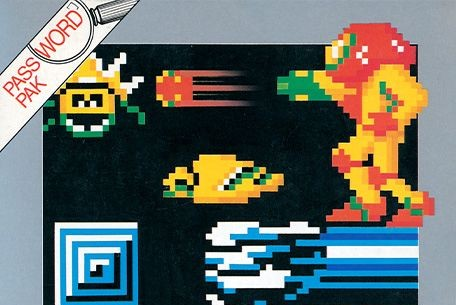
  • Metroid (Nintendo, 1986)

    Metroid (Nintendo, 1986)

    Developed/Published by: Nintendo R&D1, Intelligent Systems / Nintendo
    Released: 06/08/1986
    Completed: 28/08/2025
    Completion: Killed Mother Brain in less than three hours.

    I hope it was obvious from the conclusion of my article on The Legend of Zelda that the game I was referring to was this, Metroid, but I suppose the real heads might have been like “well, The Mysterious Murasame Castle is pretty good, I guess…”

    Metroid is a game I was absolutely certain I was never going to beat. After all, I’ve beaten Metroid: Zero Mission, isn’t that good enough?

    But the original is a game I’ve picked up and put down a few times out of my urge to really understand the Metroidvania genre’s beginnings, and the reason I’ve put it down is probably the reason most people do: the obvious lack of any sort of map (never mind an automap.) That would be bad though, but when you combine that with the game’s reliance on completely hidden paths for progression, and an early difficulty that is, I think, worse than The Legend of Zelda… Metroid just isn’t very enjoyable. It doesn’t seem worth the effort.

    Sadly, unlike The Legend of Zelda, there isn’t a wee hack in pulling up the manual, because it doesn’t offer the kind of help you actually need. While it does offer lots of useful hints on what Samus and enemies can do, the included map is very vague. With the graphics in each area quite samey (look, you tell one corridor or shaft apart from the other) you really need to therefore either have a map already to hand or be mapping the game out as you go, and I think my resistance to the original Metroid has always been that while in a game like Wizardry or The Bard’s Tale you can take your time to draw out maps, here you’re stopping during an action game, which apart from just being sort of annoying, is an active flow breaker.

    Thankfully, it’s 2025, and I again have to thank two people–romhacker Infidelity and Hand Drawn Game Guides artist Phil Summers–for making Metroid manageable. Infidelity has ported Metroid to SNES creating what is easily the ultimate version of the game, with the Famicom Disk System saving, the addition of a mini-map(!) and even the ability to combine the wave beam and ice beam like later games. And Phil Summers’ Hand Drawn Game Guide for Metroid might be the perfect thing to hand for a player who doesn’t want to just follow a walkthrough beat-by-beat: it offers a route through the game, but the maps and tips leave a lot of the exploration and discovery up to the player.

    It’s a shame, to be honest, that even with all of that, I still just don’t like Metroid all that much. In fact, I’d argue that the Metroidvania “vision” here is still so far off that this is very much a fish with limbs flopping about gasping for air compared to an actual amphibian. Er… Metroidphibian.

    When you start playing Metroid, there is some familiarity outside of the franchise signifiers–the opening area gives you some rope, but works to funnel you towards the necessary early pickups before the game opens up. But quickly you realise Metroid is far less interested in the now de rigueur “I can’t go there / unlock ability / now I can go there” loop than just killing you as much as possible and getting you lost. The upgrades which are required for progression act generally as just “keys” to new areas and don’t provide you the means to solve puzzles or allow you to interact with them in interesting ways (even the morph ball goes strangely underused) so you mostly find yourself shooting/bombing walls or hoping lava pits have a false bottom when stuck after you’ve got them all. And like other games of the era, Metroid makes sure to often punish you for doing that, giving you plenty of pointless dead ends that just sap you of health as you try to survive.

    In fact, I’m struck by how the game poorly rewards exploration beyond getting the necessary upgrades, and then how short the game actually is once you have them outside of forced backtracking–kill two minibosses and then head to the final section to kill Mother Brain, a section which is completely linear.

    As a result of all of this, you realise familiarity with modern Metroidvanias is really a hindrance when playing Metroid. For example, beam upgrades (ice or wave) don’t seem to actually increase your power much if at all, so unlike later games, Metroid seems tuned around using your missiles on regular enemies. You’d think therefore that missile upgrades would make exploration worth it, but you end up getting bogged down just to have five more missiles in your quota, where if you beeline to the bosses, each one gives you an almost absurd 75!

    And you’ll want to do this because the drop rate on health and missiles is so miserable that every trip down a dead end (or worse, a corridor you’ve forgotten you’ve seen already) requires what feels like never-ending grinding of the game’s infinite spawners. When you first see them, you think “that’ll save me sometime” but after your first ten, twenty minutes waiting for enough health to fill one tank, you realise you’re far better  just running through the levels trying to rely on screw attack jumps to avoid combat (which does, generally, work.)

    That even goes for the last section of the game which should be tense and exciting as you finally face off against the Metroids, but no, you’re better off… freezing them and running past. To add insult to injury, Mother Brain is just a complete pain in the arse. It’s an endurance test–have enough health that you can survive being shot the whole time while you pound her with missiles.

    I suppose that the escape is a fairly-exacting platforming challenge is kind of funny, though.

    Much like The Legend of Zelda, though, Metroid feels like a product that makes more sense in its original context of players with bags of time and nothing much else to play. Bar one very annoying thing–that you have no way of shooting things shorter than Samus, which really makes the opening of the game frustrating and much harder than it should be–Metroid controls well, and I assume the players willing to map got a lot out of it, and those who didn’t probably just eventually got Samus powered up and to the end by sheer effort (the zone between “I have the morph ball and missiles” and “I have enough energy tanks and the screw attack to survive to explore” is so miserable, however, I do find it hard to imagine.)

    Even if I find that hard to imagine, I don’t find it hard to see how Metroid captured people’s imaginations. I’m not sure it has quite the same completeness of vision as The Legend of Zelda (or The Mysterious Muramase Castle, for that matter) but the visuals and especially the sound really give the game a uniquely lonely feel; a solo decent into a deadly and foreign cave system (I do love that the name of this game is a portmanteau of “metro” and “android”–I can almost imagine one of the designers, lost in one of Tokyo’s many confusing train stations, thinking “there’s probably a game in this.”)

    And maybe it’s just the fact that it’s a side-on 2D platformer, but even more so than with The Legend of Zelda/Sabre Wulf, Rare has a case that Metroid is heavily inspired by Underwurlde, if not an outright rip off. Not just the shafts with platforming challenge (which would be enough) but that areas of the map are locked off without using a particular weapon. 

    Separated at birth??? Alright, this one doesn’t look as damning as the Sabre Wulf one but trust me.

    If I was being really harsh, I’d point out there were plenty of platfomers of the era with big maps to explore, things to collect and keys to use, from the obscure to the very well known. Impossible Mission. Saboteur. Citadel. Journey To The Centre Of The Earth. And many of these games play well, too!

    So I after playing it all the way through, I do feel like I still have some questions if Metroid really does deserve the crown as originator, but then I also suppose we also live in a world where we don’t play Beneath Apple Manor-likes.

    Will I ever play it again? Well, there’s no Satellaview version of this, so I really have played the “best” version of it I could. I’ll play Zero Mission again, though, which I remember as being the peak of the franchise, and I can’t remember if that’s controversial or not.

    Final Thought: Of course, there’s also the other side of the Metroidvania… the vania. And the first game in that franchise doesn’t even attempt to be a Metroidvania. It’s even got a new SNES port too…
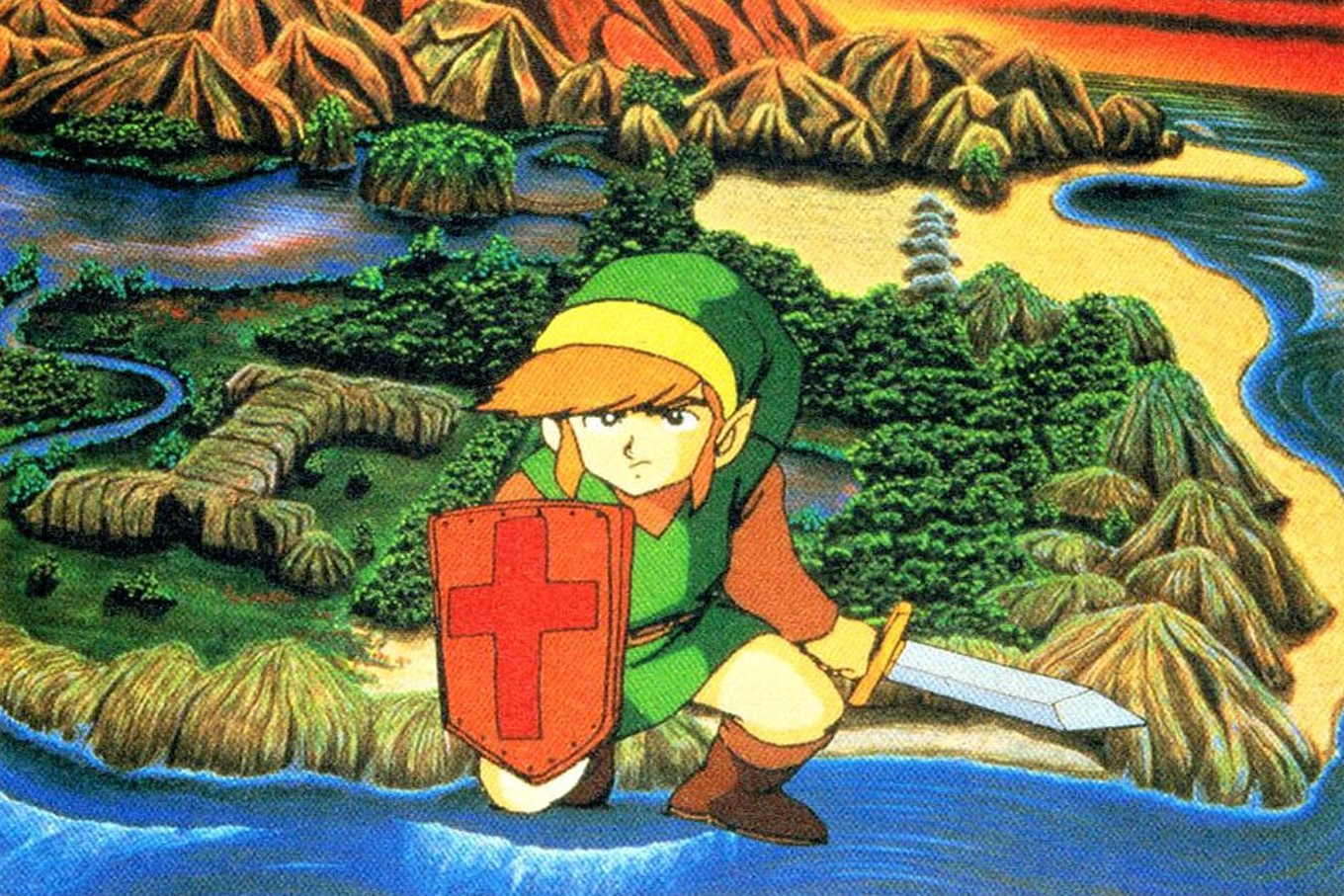
  • The Legend of Zelda (Nintendo, 1986)

    The Legend of Zelda (Nintendo, 1986)

    Developed/Published by: Nintendo R&D4 / Nintendo
    Released: 21/02/1986
    Completed: 17/08/2025
    Completion: Beat it for the second time! 

    Well, I can’t be playing obscure ones all the bloody time.

    I have a long history with The Legend of Zelda, as a lot of people do, though like many–if not most(?)–non-Americans/non-Japanese, my history does not begin with the original game. For me it started with Link’s Awakening, and I wouldn’t play the original until 2004 when I was able to treat myself to a Famicom Edition Gameboy Advance SP and a copy of the Famicom Mini Series Legend of Zelda. I remember being so excited to finally play such an iconic game, picking it up, getting completely lost, dying a million times when struggling with the stiff controls, and then deciding the cute little box was just a nice thing to have on my shelf and moving on with my life.

    I would go on to finish The Legend of Zelda years later–trading off the controller with BancyCo’s Benjamin Rivers–and even wrote a limited zine about that experience (I keep meaning to do a proper “history of exp.” page on this website, and I will, but today is not that day.) That completion–around 2011–meant I classed The Legend of Zelda as “previously completed” on the big “I’m not neurodivergent I promise” spreadsheet I keep, and I didn’t intend to return to it until I read in Wes Fenlon’s excellent newsletter Read Only Memo (worth subscribing to! As long as you’ve subscribed to mine too, obviously) about romhacker infidelity’s SNES port, which could be considered completely faithful while still featuring a bunch of lovely quality of life fixes. And considering I have a wee emulation device I adore, and found myself with a bunch of downtime due to some work I’d picked up that involved a lot of sitting around waiting for things to happen, I thought… why not? It’d make a nice change, and refresh my context for 1986.

    Something that is really important to mention, though, is that this time I came prepared. Now, I can’t remember if the wee Famicom Mini version of The Legend of Zelda came with a reproduction manual or not–I don’t have it to hand–but I’m assuming it didn’t (or if it did, I overlooked it, because what is this, a manual for ants, etc.) but I’ve long learned my lesson since I was downloading Infocom games and being baffled by them–you read the manual. And when you do, well… The Legend of Zelda isn’t baffling at all.

    Well, for a bit. And it’s still hard as balls initially, but we’ll get to that. I was shocked when I read through the manual–and this is true of the Japanese manual too–that it literally explains, cleanly and clearly, all the things you can get, all the enemies you’ll face, gives you instruction on what you’re trying to do, and then includes a complete walkthrough on how to get to the first dungeon (and guidance on how to get to the second.) I guess I’d never looked at the box closely before, where it literally says “Includes invaluable maps and strategic playing tips.”

    I’m reminded of that classic bit of weirdly banal Shigeru Miyamoto lore, that he likes to learn a city by walking it (who doesn’t) and imagined him going “I mean I do start with a map and a destination though. It only makes sense. I don’t just walk out the door and start wandering. I’d get lost.”

    Because, of course, this does all make sense! No one at Nintendo is thinking “well, people will be playing this without the manual in the future.” Back then, the manual was part of the product, and it really does a great job in getting you through the early stage of the game… at which point you can throw yourself into getting properly lost, equipped with more hearts and weapons to survive it.


    Historical Aside

    Christ, what’s going on here? A boxout? I haven’t done one of those before. Now, despite what I’m saying about the manual here and the game being intended to make sense with it, there is a possible–if unlikely–alternative which relates to a rumoured influence on The Legend of Zelda. John and Ste Pickford are quoted as saying that one of the Stampers, founders of Rare, had referred to The Legend of Zelda as “Miyamoto’s rip-off of Sabre Wulf”. Now, The Legend of Zelda actually does have notable similarities to Sabre Wulf and Rare’s earlier title Atic Atac, and one of the interesting things about Sabre Wulf is it comes with a manual that tells you almost nothing at all–I suspect many players didn’t even decipher that they were supposed to collect four pieces of an amulet from it. 

    Separated at birth?

    So if you take the Stampers at their word–and remember, they were tight as fuck with Nintendo, meeting with the company potentially as early as 1985–the complete bafflement I and many players first met The Legend of Zelda with could have been as intended as anything.


    The thing about the opening of The Legend of Zelda though… no matter what, it’s fucking hard. You’ve got three hearts, a weedy sword unless you’re at max hearts (which won’t last long) a shield that barely blocks anything, and you have to get comfortable with moving and attacking only on the four cardinal directions while your opponents seem to move near randomly. Playing it “for real” I died a lot, but the game is also shockingly forgiving for the era, bringing you back to life at the start with everything you’d collected intact–even dying in dungeons just brings you back to the start.

    This has the great effect that exploration and experimentation always feels worth it. You can delve into a dungeon just to see what’s down there, wander to a new area to see what you can find, and do “suicide runs” to get a necessary item if you know where it is. It’d be sort of perfect if the game wasn’t so stingy that you respawn with just three hearts filled no matter how many you have, because they have an abysmal drop rate. (I won’t lie, towards the end I did abuse save states just to quickly cheat at the gambling game so I could keep myself stocked up with potions. Life did eventually start to feel too short.)

    Because the game is so open, it does resort to (klaxons at the ready?) the Xevious/The Tower of Druaga “find the hidden stuff to progress” design. I am inclined to be a little more forgiving than usual here because of the open world and that the game does drop hints, even if they are obscure in Japanese and mangled in English. Back then everyone had a lot more time, a lot fewer games to get through, and the communal solve experience had continued from The Tower of Druaga in arcades to The Tower of Druaga at home (in Japan at least.) But I’m sure many kids, stymied, just took to bombing every wall and setting fire to every bush, and I can’t really justify that–the game definitely doesn’t drop enough hints, and there are definitely too many moments that can bring your progress to a dead-stop without outside help.

    Thankfully, in 2025 I was just able to refer to Phil Summers’ incredible Hand-Drawn Game Guide, which… look, it’s cheating, it’s a walkthrough, but it’s got such an easy, homegrown charm, it’s like your pal is helping you through the game. I can’t recommend it more highly if you’re approaching this game for the first time–read the manual, follow it, then as soon as you get too bored or lost, or just don’t feel like you’re making enough progress, just start referring to it.

    And anyway, you still have to beat the bloody thing yourself! If I have a real criticism of The Legend of Zelda it’s that it just doesn’t feel that great to play. The extremely stiff feeling of combat never goes away, and the enemies that require you manoeuvre carefully to hit them like Darknuts and Wizzrobes can absolutely suck a dick. Wizzrobes in particular, which are fucking everywhere in the last few dungeons. Unsatisfyingly, the end of the game does feel like a bit of a sprint as you basically try and dodge as much combat as possible, because it offers no reward. The terrible health drop rate is quite a negative, honestly.

    Saying it doesn’t feel that great probably sounds completely disqualifying for The Legend of Zelda, but I do have to mention again that it exists in the context of 1986 in Japan, and was still close to cutting-edge when released just over a year later in the rest of the world. Despite what the Stampers might have said, and even despite the existence of things like Ultima IV, at this point no one has put as complete a package together as Nintendo has. For the second time after Super Mario Bros. they’ve created something new out of whole cloth and no one else even saw it coming.

    Will I ever play it again? After all of this, I’m suddenly reminded what I was actually going to do when I intended to “replay” this was to play through BS Zelda for Satellaview. Oops. Well, I can still do that whenever I like.

    Final Thought: The craziest thing about Nintendo creating something this new, this different, this polished?

    They’ll do it again in a matter of months.

  • Firework Thrower Kantaro’s 53 Stations of the Tokaido (Sunsoft, 1986)

    Firework Thrower Kantaro’s 53 Stations of the Tokaido (Sunsoft, 1986)

    Developed/Published by: TOSE / Sunsoft
    Released: 1986
    Completed: 24/07/25
    Completion: Kantaro got all the way to Momoko–but I did use a warp at the last possible moment. Saved at the start of every level.

    Strange happenstance that after so recently writing about a game that features a country’s most famous road that I should write about another, in this case Japan’s Tokaido. I guess I’ll have to pick up a copy of King of Route 66 next (yes, I’m seriously considering this.)

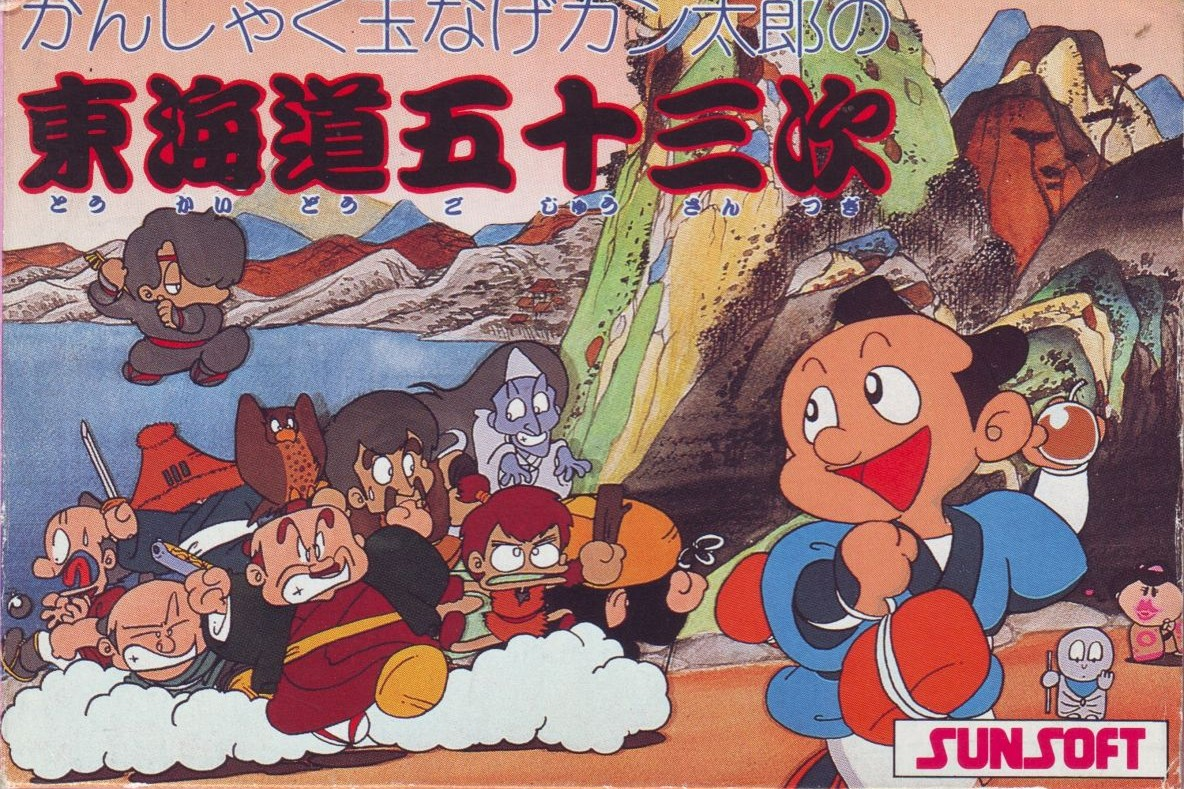
    With a name so long it could probably be a light novel (or, *cough*, JAV) Firework Thrower Kantaro’s 53 Stations of the Tokaido (directly translated from the original Japanese, かんしゃく玉投げカン太郎の東海道五十三次) is a deeply forgotten game that has really only bubbled up for being included in Sunsoft’s recent “Sunsoft Is Back!” retro compilation. But I will say: it’s actually fairly interesting: an Atlantis No Nazo-a-like.

    Released less than three months later, Firework Thrower Kantaro (is there a good abbreviation for this? FTK53SOTT? I guess the answer is no) seems to be an attempt to take the Atlantis No Nazo playstyle, improve it and situate it in an (almost) completely linear experience compared to Atlantis No Nazo’s bonkers, warp-heavy speedrun design.

    While I don’t have a source for this outside of The History of Sunsoft Volume 1, Firework Thrower Kantaro was apparently created by TOSE rather than internally at Sunsoft (as Atlantis No Nazo was) so it does seem like the company was tasked in making “another” Atlantis No Nazo at short notice, possibly to the point that they were given the game’s code. I have no source for that and have no idea how common that would have been in Japan at the time–it does seem unlikely, but maybe TOSE were already deeply trusted by that point–but the characters control similarly and defeat enemies by throwing slowly arcing projectiles. In Atlantis No Nazo you’re throwing dynamite and having to wait for it to explode but in Fireworks Thrower Kantaro you’re (thankfully) throwing fireworks that actually explode on impact, which immediately makes things a lot more playable.

    And while the game is essentially a linear trek through the fifty three stations of the Tokaido–a shocking bit of false advertising, by the way, there are only twenty-one levels–it’s not as simple as that. Because (get your klaxons at the ready) continues the endless inspiration of Xevious [honk] and The Tower of Druaga [honk] as well as Super Mario Bros. [hon-squee] (I’ll have to get my klaxon replaced, I’ve worn it out. Not surprising at this rate.) While you can attempt to “brute force” your way through the levels, you are actually expected to consistently find hidden items in the stages which allow you to get past certain enemies and obstacles. 

    In fact, you can’t beat the game without doing so. Thankfully the game doesn’t require you do any stupid nonsense like The Tower of Druaga and instead just relies on the original Xevious’ system of just shooting unmarked areas of the stage to reveal the pickups. 

    What that ultimately means is that you just have to be hammering the fire button at all times and then trying to remember where things appear. Annoyingly, the game is weirdly exacting about where explosions happen for things to appear, and this game is so generally unloved that the only solution that I could find that pointed out where a lot of (but definitely not all!) items were was in Japanese.

    As a result of this design, I actually started Fireworks Thrower Kantaro over several times before giving it a “proper” go, and the collectible system has some give in it, but it seems highly related to how skilled you can become at the game as you play it–because it is hard.

    Like Wynn before him, Kantaro can be sluggish at the most annoying times, and the game has some weird, probably buggy quirks like an inability to duck when you’re directly next to objects. While you’re never going to be overwhelmed by enemies, they are unpredictable and kill you instantly, meaning that even if you’re only facing off against one old man leaping about and another one who shoots you periodically with a gun one wrong move can screw up your run. 

    But the game does have forgiving checkpoints and some early opportunities to rack up extra lives for those who’d like to iron-man it. If you can collect three scrolls–which you use to ward off evil ghosts that appear and kill you otherwise–you get a pair of geta so light that Kantaro can hop across the clouds, where you can find the occasional cloud that just racks up so much high score that you come away with three lives (unless you land wrong and vibrate off it–frustrating.)

    Other collectibles also have specific uses. You need ofuda to pass certain checkpoints or the enemy there will cling onto you, slowing you down. You need to spend an eye-watering five coins to ward off the prostitutes(!) that chase you around in the areas that (in the name of historical accuracy) they actually stalked. You need swords to take down… weird looking blokes (I’m not sure what their deal is.) And you need two coins to pay to make “bridges” to cross certain water features. 

    Not all of these are an automatic failure–with skill, you can for example jump across rooftops to avoid eager sex workers. But certain things, like showing up without the coins you need for a bridge, end your run entirely.

    Of the collectibles, the coins have the most interesting economy. If you can collect ten you are actually able to warp three or six levels ahead, which makes you really not want to spend them on anything but bridges. I was only able to do this right at the end of the game and I struggle to see how you could do it much earlier, but I suspect even with the help of a guide I was either missing a decent number of collectibles or just not good enough at the game (if you faff around too much bombing everywhere, eventually the game does start to spawn enough enemies that you just won’t survive.)

    Anyway. Having said all of that, Fireworks Thrower Kantaro is, at best… fine. It’s not as interesting or as replayable as Atlantis No Nazo, though it does feel much better to play. It’s somewhat unique in how specific the setting is, though if you wanted to get your feudal Japan on, the first game in the Goemon franchise did come out just a few months earlier. The hidden objects that can ruin runs aren’t as annoying as, say Xevious: GAMP No Nazo, but they don’t exactly make the game more fun, just a memory or note-taking test. I enjoyed it while I was playing it more than say, JaJaMaru No Daibouken, but as I’ve said before: in 1986 you could already have The Legend of Zelda for your Famicom, or just wait a month for Metroid.

    Will I ever play it again? I’m good!

    Final Thought: As far as retro collections go, Sunsoft Is Back! Is… decent! The CRT filter is too clean and bright for the NES/Famicom in my opinion, and doesn’t allow you to turn off curvature, which I dislike, but it’s alright, there’s a wee museum, you get the manuals (untranslated, but just hold up your phone and google translate if you absolutely have to?) and it’s just generally pleasant enough. You can quibble them only including three games, but you can already play Route 16 Turbo and Atlantis No Nazo on Switch Online I suppose (well, the former if you install the Japanese version of the app, which you should.)

  • DAIVA Story 6: Imperial of Nirsartia (T&E Soft, 1986)

    DAIVA Story 6: Imperial of Nirsartia (T&E Soft, 1986)

    Developed/Published by: T&E Soft / Toshiba EMI
    Released: 11/1986
    Completed: 08/04/2025
    Completion: Liberated all 14 planets, but didn’t discover the enemy homeworld of Nirsartia.

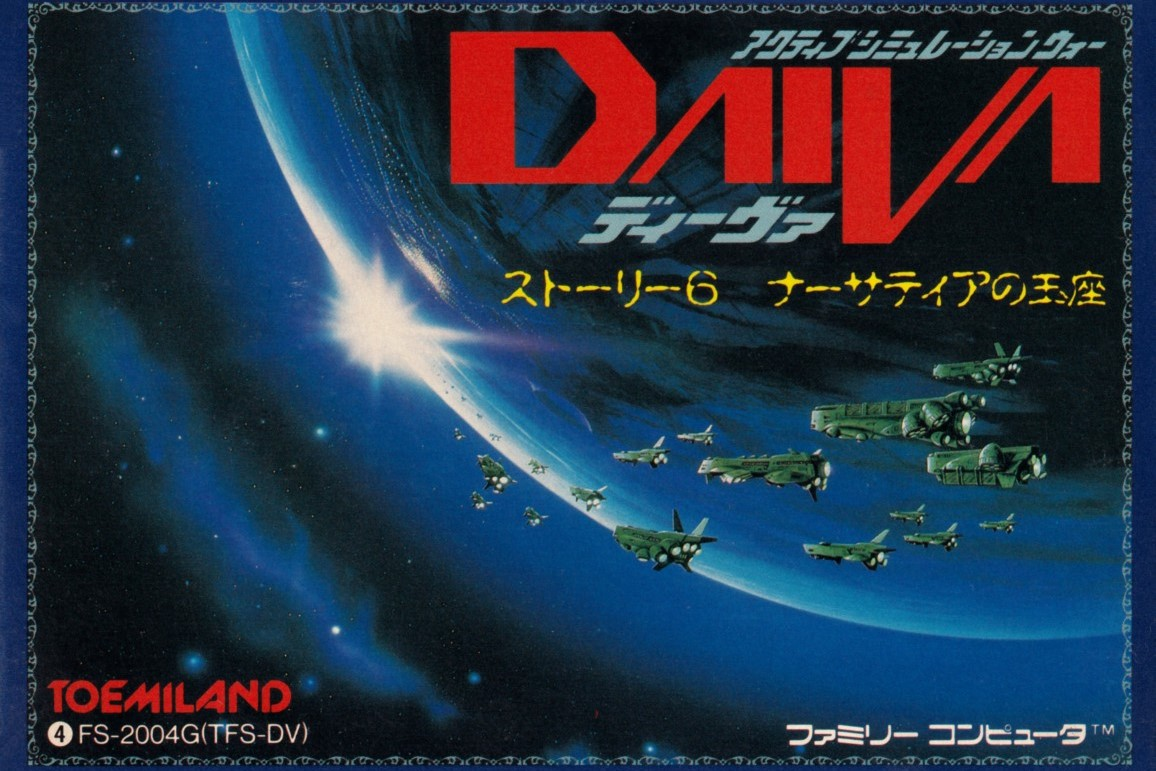
    There are a few Famicom-only games that Nintendo have released in the West on their Switch Online service–and far more that they haven’t. Which makes it so absolutely bizarre that in 2022 they released this, DAIVA Story 6: Imperial of Nirsartia, an action/strategy hybrid that’s almost completely forgotten, on the service.

    You could assume it’s that they were looking to fatten up the service with something where the rights were easy, but this was released before things like Golf and Mach Rider! And it’s not like it’s been released by a company who has put a lot up on Switch Online–as far as I can see, the current rights holder D4 haven’t released any other games via Switch Online before or since!

    But let’s get into what DAIVA Story 6 is, because it’s… complicated. You see, in 1986, T&E Soft, largely still fresh off the success of Hydlide, wanted to make a new game, but couldn’t align on if they were going to make a strategy game or an action game. So they just… slammed them together. And then they had to face the question of what system to make the primary platform. Realising that if they made one game and then ported it to other systems they wouldn’t be using those systems to the best of their abilities, they decided on a completely bonkers plan: to make seven different games all of which use the same game design, but which make the most of each system and which feature a deep, interconnected narrative based on Indian mythology (but in space.)

    According to information sourced from The Untold History of Japanese Game Developers Vol. 2, this undertaking would turn out to be so insane that the lead developer, Yasuo Yoshikawa, would go blind.

    (Temporarily, but still.)

    Strangely, despite being the sixth game in the series, as the simplest game, Daiva Story 6 was released first, with the rest of the games following shortly after (apart from the seventh and final which unifies the stories of the previous six–due to the aforementioned blindness, it would be released somewhat later and be somewhat different, being entirely a grand strategy game with no action aspect.)

    To be honest–none of this particularly matters if you’re only going to be playing Daiva Story 6, because it’s got barely any narrative apparent in it. In Daiva Story 6, you cycle between three modes:

    An overhead section where you control a space ship flying between different planets. Planets start the action levels, but there are also enemy ships in space that begin in ship-to-ship battles, and you can return to your home planet to increase your squadron of ships for said battles.

    The ship-to-ship tactical battles, where you position your ships each turn and then watch them fire missiles and lasers back and forth with enemies.

    The action levels: a side-scrolling shooter where you control a mech that can jump and fire. Before each level you get to place three power ups during the level–a smart bomb, some missiles, and a health refill.

    Daiva Story 6 is… not good. If it was just the action levels, it would be a forgettably janky Famicom game–not quite Mystery of Convoy, but close enough. Really the main reason to know the lineage is it explains the why of why you’re doing these three disparate, undercooked modes: they feel like the kind of thing you’d play on a Japanese PC of the era and they are!

    But they are so undercooked in an attempt to make them accessible. The overhead section is ultimately just a menu. The only thing that really stands out about it is that the enemy ships sometimes attack planets you’ve liberated, which is a lot less than the other games, which have you actively assigning defenses to planets, making manufacturing orders and so on. 

    The ship-to-ship battles seem to have almost no tactics at all, just being a war of attrition outside of some tricks like lasers but not missiles firing through asteroids. And I can’t tell if this was intentional or not, but you never have to do them. You can just let planets get captured and then redo the action level again, which is probably quicker.

    The action levels, which should be the highlight are, uh… not. I love that you can place the power-ups, which is apparently a more detailed system in the PC versions (you can earn more power ups, etc.) but the power-ups outside of the health refill (aka “just place it before the boss”) need perfect foresight to place anywhere even mildly useful. 

    They also made the really strange decision to make you just… not collide with any of the level. The levels auto-scroll, which makes me think they just didn’t have a solution for what would happen if the character got stuck on the level. What this means is that while you can jump around, you are generally best just trying to keep your mech at the lowest part of the level.

    Proper collisions have to be something they gave up on because, like, the levels have sequences that read like you were meant to hop across lava via platforms and stuff. Instead you just… stand still and scroll through it.

    It feels insanely janky and unfinished, and as a result the game veers between “completely trivial” on anything but the hardest difficulty, and “complete fucking bullet hell” on the hardest–one of which is boring, and the other which is, well, unfair, because the controls are so crappy and floaty (every level has a differing amount of gravity, which could be sort of interesting, but it adds little.)

    Unfortunately, the game requires you beat it on the hardest difficulty to unlock the “true” ending that ties into all the other games (which also, seemingly, had insane requirements to get their true endings.) I was not going to bother with this because… it’s boring! Even if the game didn’t feel crappy to play, it’s extremely samey–every action level feels the same, and because there’s no point to the ship battles, I didn’t do them. 

    Basically: not worth going blind over.

    Will I ever play it again? I really do think it’s quite interesting that they made seven of these in a year. And listen, I did watch (skip around) some Youtube playthroughs of the different PC versions to compare and contrast. But I’ll never play any of them.

    Final Thought: If your imagination was captured by this mania, the good news is that you actually could play (almost) all of them thanks to D4’s hilariously expansive Project EGG emulation service. 

    It seems that all of the games apart from the second, “Memory in Durga” for the FM-77AV are available on the platform, though it requires a monthly fee–and no, none of the games have shown up on Project Egg’s “EGGCONSOLE” releases for Nintendo Switch. 

    Although this has all reminded me of the existence of EGGCONSOLE, I wonder what’s there that I might like to play? Gotta be better than this, surely?

  • Pro Wrestling (TRY, 1986)

    Pro Wrestling (TRY, 1986)

    Developed/Published by: TRY / Nintendo
    Released: 21/10/1986
    Completed: 05/04/2025
    Completion: Defeated The Great Puma!

    Nintendo’s output on the fledgling Famicom/NES is… patchy. And nowhere is it more patchy than when it came to video game representations of sport, where they can somehow manage to literally solve golf game design and then months later be willing to put their name on things like Soccer and Volleyball, which are, frankly, absolutely horrendous. Even with Nintendo warming up by late 1986–they’ve just put out Metroid, for example–you can’t help but expect Pro Wrestling to be a bit of a dog, considering the sport (or at least, sport-adjacent entertainment) has a lot of terrible, lazy video games to its name, and this specific release is most famous in gaming circles for having a win screen that declares “A winner is you!” which probably was funny once.

    Well, it isn’t a dog! A bit like how Nintendo lucked into working with Satoru Iwata on Golf, with Pro Wrestling they also managed to hire someone who knew exactly what the fuck they were doing: Masato Masuda.

    Masato Masuda–who passed away in 2014 at the untimely age of 48, sadly–is best known by the wrestling hardcore as the creator of Fire Pro Wrestling, generally considered the greatest and most important wrestling video game franchise (even by people who love AKI’s wrestling games like me) and according to an interview in CONTINUE Pro Wrestling was made “mostly by [himself]” with “someone else who did the graphics.”

    Although not a sport that would see as many games released as, say, golf, wrestling was reaching its zenith in popularity worldwide, so before Pro Wrestling there were several high profile releases from Sega and Technos that I’m sure Masuda will have tried, and two wrestling games would appear before this on Famicom: Tag Team Match: M.U.S.C.L.E. and Tag Team Wrestling (both of which would appear on the NES before Pro Wrestling, too.)

    So–not having played any of those–I can’t make any educated claims that Masuda was “solving” anything about wrestling games with Pro Wrestling. But whatever prior art existed for him to pull from, Masuda understood a few things:

    • Pro wrestling is about unique characters.
    • Pro wrestling is about grappling–and the wide range of moves that result.
    • Pro wrestling isn’t about winning or losing–it’s about ebb and flow.

    Now, I won’t pretend that Pro Wrestling clicked for me immediately. It has the immediate problem of any 2D games where you can move in and out of the screen–not being exactly sure where you need to be to connect with attacks–and the systems by design are a little obscure. Succeeding in pulling off moves from grapples can feel a bit random, too. Does initiating the grapple confer advantage? Does it even track who initiates? Actually, how do you initiate a grapple? Is it timing? I’m button bashing, but sometimes I don’t go as hard and still win?

    As far as I can tell–from nosing around a bit–the game relies on a stamina system with regeneration, with lots of “triggers” based on stamina levels. So you’re basically trying to wear down your opponent’s stamina enough that they don’t get up long enough so you can pin them, but if you’re slow–or they start beating you up, their stamina recovers.

    (This matters because as you play through the game, enemies seem to gain stamina and regenerate faster.)

    The genius of this system is that it ties into the ebb and flow of a “real” wresting match perfectly. You have to wear down your opponent to pull off bigger moves, but they can also suddenly go on a tear by kicking you in the face before you manage the grapple you’ve been building towards. You can misjudge when to pin, get a kick out, and have the entire match turn on its head. And vice versa! If a match isn’t going well, it’s can sometimes only take a single correct move to swing the momentum back.

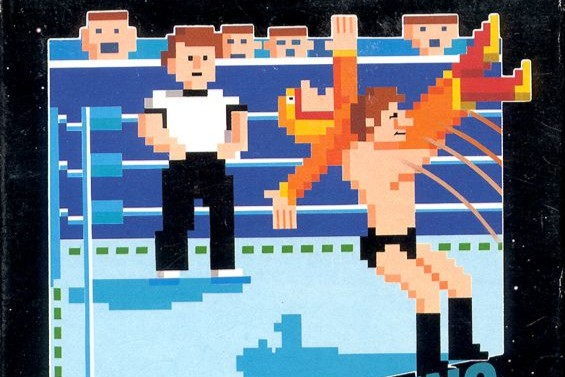
    Pro Wrestling also features, well, all the actual features of a wrestling match. Not only is the referee who has to run into position, you can jump of the turnbuckle, throw your opponent out of the ring and then leap onto them, get ring outs, and so on. The building blocks are all there for every match to tell a story.

    This is aided, of course, by the game’s memorable characters such as Star Man and The Amazon (famously inspiring Blanka.) Each character has individual special moves–the Amazon’s all illegal moves that can end with him begging innocence to the referee, amusingly–and are inspired by real wrestlers. Fighter Hayabusa is transparently based on Antonio Inoki for example, though Giant Panther will always be debated–I suspect he’s actually based on Fritz Von Erich, the patriarch of the Von Erich family due to the use of the Iron Claw, that he famously feuded with Inoki and that it doesn’t look like any of his sons–but that’s pure conjecture.

    But the point is that with whichever character you choose, there’s something special to work for, and it adds to the narrative you create through play–you survive the Amazon cheating like crazy, pull off the iron claw and pin! The crowd goes wild!

    I won’t lie–often when I’m playing these older games, I’m sort of just… working through them like a job. But Pro Wrestling? I just played it! Once I was comfortable with how it played, I settled on King Slender (the Ric Flair analogue) because he had an easy move to pull off (the backbreaker–he’s the only character with a move you can pull off by pressing A only from a grapple) and had fun until I hit a genuine brick wall.

    Pro Wrestling isn’t a long game–it’s built around winning five matches to become the VWA champion, then ten title defenses until you take on “Great Puma” to become VWA/VWF champion–three loops of the roster. But by the third loop your opponents are unstoppable–they regenerate stamina quickly, pull of grapples faster. I couldn’t go any further.

    And really, that’s ultimately Pro Wrestling’s weakness–it all works up to a point, and then as a player you have to go “ok, how can I cheese this.”

    For me, that was starting again with Fighter Hayabusa, abusing his “Back Brain Kick” and ring-outs. While it’s not a guarantee, if you can get your opponent on the mat and then position yourself right (Hayabusa’s midriff around where your opponent’s body is lying) you should be able to kick them in the head as soon as they stand up, and spamming this at the start will alow you to either start pulling off grapples or let you throw them out of the ring and then just run them into the barriers till they can’t get up quickly enough.

    It would be some demoralising, terrible wrestling for the audience, but at least for me it’s what I had to resort to for the last chunk of matches.

    However–that’s if you’re determined to beat this (maybe you have a blog or something where you’ve tied yourself to doing that.) I assume most players who played this either just had fun playing a wrestling career–it does track wins and losses, and you can just play it–or took part in two-player matches, where all the obscurites of stamina and grappling probably lead to absolutely epic battles. I certainly haven’t played a better two-player game on NES or Famicom by this point in 1986–and I may not for a while!

    Will I ever play it again? Unlikely, but not impossible!

    Final Thought: A funny and strange fact about “A Winner Is You” is that it isn’t even the original win quote. Seems that in the original release of this it just said “Winner Is You” and in a later revision they “fixed” the English by just sticking an A at the beginning.

    Which is a really strange fix! You’d assume someone who actually spoke English might have pointed out that’s not better–and it’s not like “You Win!” has a character limit or something.

    The fix also seems to have changed a “bug”–that if you play King Slender it takes longer to get to the first championship. This was something I didn’t mind and originally assumed was “balance” because King Slender’s back breaker seems so powerful–though when I got later in the game and realised I could basically never pull it off, my opinion on that changed somewhat…

  • Super Xevious: GAMP No Nazo (Namco, 1986)

    Super Xevious: GAMP No Nazo (Namco, 1986)

    Developed/Published by: Namco, Tose / Namco
    Released: 19/09/1986
    Completed: 28/04/2025
    Completion: Completed it–but with a complete collapse in dignity, having to abuse save states starting around area 14.

    Well, it’s been a while since the Xevious klaxon has gone off here in exp. towers–I think the last time we mentioned it was actually Tower of Babel–but here it goes off because we’re only bloody playing the first “real” sequel to Xevious! And it’s yet another Famicom game with Nazo, aka “Mystery” in the title. They were mystery mad in Japan in the mid-80s!!!

    If three years feels like quite a gap for a game as successful and influential as Xevious to get a sequel, it’s worth mentioning that this is actually the fourth game in the franchise. Xevious in the arcades got an update in the form of Super Xevious (to which this has no relation) and then–and this is true–Xevious creator Masanobu Endo made a game starring an enemy tank from Xevious, Grobda, because he thought it’d be funny.

    Grobda seems pretty forgotten now–and I don’t think “the top-grossing arcade game in Japan for December 1984” is quite enough to believe it was that much of a success. But of course, we know that Xevious itself was a huge success on Famicom–so it only makes sense for Namco to bang out a sequel. In this case, Endo probably didn’t think it was funny–he was on record as believing that a direct sequel to Xevious was unnecessary, and he’d left the company a year earlier. 

    With Endo’s guiding hand missing, Namco–with the aid of Tose–did something that I think on paper makes sense. They looked at the huge success of Xevious, an Endo joint. They looked at the huge success of The Tower of Druaga (oh dear, set that klaxon off as well) also an Endo joint. They looked at how Tower of Druaga’s mystery design had been implemented into basically every other game coming out at this point, and thought: well, it’s chocolate and peanut butter, innit? Smash ‘em!!!

    So with Xevious: GAMP No Nazo, you play Xevious levels where you have to do a particular action to progress–this is actually a bit less punitive than the original Tower of Druaga, where you can keep playing through the game with no way to win because you missed something. This can be as simple as defeating a boss (hardly a secret) or as annoying as finding hidden things in the level or interacting counter-intuitively with enemies. 

    To put none too fine a point on it, this doesn’t work. At all. It’s obvious that at least Japanese players had become comfortable working through obscure fucking nonsense without the cameraderie of the arcade, but a vertically scrolling shooter puts pressure on you in a way that Tower of Druaga’s mazes didn’t–you can’t navigate back to something you’ve missed, and having to do an extra loop in GAMP No Nazo to get back there is brutally punitive.

    Because GAMP No Nazo is miserably hard. There’s no sense here of the push-and-pull “intelligence” of the enemies of the original, just walls of bullets and, frankly, unfair bullshit from the very start. The first level sets the tone by featuring clouds that obscure enemies and bullets meaning you can be killed by something you can’t even see.

    Trying to find what’s required to get to the next level just isn’t fun because of the high tension and sense of a “wasted run” when you get to a point and progress. The things you’re asked to do aren’t very interesting, either–while I’m hardly going to ask for the misery of The Tower of Druaga and having to, like, kill enemies in order, or something, the game only thinks to do something obvious like offer you different routes in levels like… twice.

    You can choose to play this like Xevious: to see how far you get, how high your score goes by just memorising all the requirements, which isn’t actually so bad. And the game… sort of works. But it’s not as fun as the original, feeling more predictable and rote before getting ever more absurdly difficult, and I certainly wasn’t sure why I was bothering at a point–each time I’d think “maybe this is ok, actually” I’d start a new run to try and get further and get killed by enemies hidden by clouds immediately, sapping any urge to continue.

    Namco might have been able to get away with this bar for the fact that it’s mid-late 1986 and the Famicom has already seen the likes of Gradius and Metroid, and Castlevania is out in a week. They went big with this one–no more numbered boxes, a special golden cartridge–which raises the question if they knew they had a pig on hand that they hoped more lustrous lips might help. Because it feels like Namco is getting left behind in both tech and design on the Famicom: GAMP No Nazo doesn’t look or play any better than the original, and that came out in 1984! At this point, the Famicom is Konami’s to lose…

    Will I ever play it again? It isn’t worth it.

    Final Thought: Namco, obviously, will be ok. But the sad thing, really, is that Xevious won’t be. The series that really started it all will limp on with a few sequels, but won’t ever be an important factor in the shooter genre ever again. 

  • Sky Kid [NES] (Namco, 1986)

    Sky Kid [NES] (Namco, 1986)

    Developed/Published by: Namco
    Released: 22/08/1986
    Completed: 15/04/2025
    Completion: Got the “Happy Ending” by shooting down the Air Successor in Mission 26.
    Version Played: Namco Museum Archives Vol. 1

    Sky Kid is, with some reservations, a wee hidden gem of an arcade game. I described it as a “strange little dead-end in the side-scrolling shooter universe” when I wrote about it, and while I stand by that, I wonder now if my framing is a little wrong because of the post-Xevious, post-Gradius context. Playing Sky Kid again in its NES port, I was struck by the thought that it might be as much inspired by something like Choplifter. While it doesn’t match in terms of design really at all, there’s a spiritual lineage: one is a “simulation” of being a helicopter pilot, and the other is a “simulation” of being a biplane pilot. The concerns in either are not that of Xevious/Gradius, where you move a frictionless collision box around, but one where you have to use your helicopter/plane using its actual characteristics to survive and succeed.

    I do think taken in that framing I like Sky Kid even more. Revisiting the arcade version before giving this version a run through I was struck by how bright and attractive it is, the pleasure of doing loops, and how unbelievably rewarding it was to nail an enemy base with a bomb dead on.

    Sky Kid on NES is an excellent recreation of that in terms of play, but unfortunately, it just doesn’t look anywhere near as good due to the NES’s more muted colors. At this point in the NES (or rather, Famicom) lifecycle, it’s a bit of a disappointment, with for example Ghosts ‘n Goblins doing a much better job of capturing the character of the original game despite having the NES palette to work with. It’s not as bad as Pac-Land, but it doesn’t look much better. Someone over at Namco was letting them down.

    There is some effort made here to make this a different(-ish) experience from the arcade–there are more levels, a few of them are shooting galleries, you get some wee interstitial animations–but we’re still not at the point where NES games are diverging from their arcade counterparts to be particularly deeper or richer, and Sky Kid gets every bit as frustrating as it was in the arcade as you work your way towards the end of this. In fact, maybe more frustrating. As in the original, the design doesn’t support bullet hell, but bullet hell is what it gives you.

    As with the original, this plays better as a score attack, but I think when you have the chance to come home with a copy of The Legend of Zelda or Metroid by this point… well, it’s not even been a year since Sky Kid came out in arcades and it already feels out of date. A biplane in a world of jet fighters: charming, but you ain’t picking it.

    Will I ever play it again? I like the arcade version. I have the arcade version. This one isn’t necessary.

    Final Thought: What I don’t have is Sky Kid Deluxe, the arcade update which has a range of minor differences. It was released by Arcade Archives for Switch and PS4, which I definitely support in theory, but absolutely cannot justify purchasing because… well, I’ve played Sky Kid twice now. That’ll do. Maybe I’ll see it in an arcade one day, I’d like to.

  • JaJaMaru No Daibouken (Jaelco, 1986)

    JaJaMaru No Daibouken (Jaelco, 1986)

    Developed/Published by: Jaelco
    Released: 22/08/1986
    Completed: 13/04/2025
    Completion: Completed all 20 different levels (it loops.)

    Well, more fool me. When I wrote about Ninja Jajamaru-kun, the game that precedes this in the series, I wrote that it “[didn’t do] enough to make me put up with ININ’s bullshit to get the sequels.”

    Unfortunately, having a bunch of Nintendo gold coins to use up before they expired and seeing the Ninja JaJaMaru: Retro Collection going for $2.99 made me go “well, it’s basically free, why not.”

    I’ll tell you why not: because… do ININ even like retro games? Are they just an avenue to prey on a group of willing suckers–i.e. retro game collectors? Because not only is the Ninja JaJaMaru: Retro Collection bare bones, it doesn’t even work correctly.

    Now, feel free to consider this anecdotal because I’ve only tested this on my Nintendo Switch Lite–and no youtubers or the like have really covered this release in depth (I imagine it’s niche enough to not have done that well.) But if you try and play JaJaMaru no Daibouken with the included CRT shader on it creates so much slowdown that you actually can’t play the game. It completely tanks.

    It runs fine if you don’t have the CRT shader on, but, frankly, I’m a CRT boy. I don’t care if it’s even that good a shader or filter (notable exception: the excretable one on the Astro City Mini) just as long as it does something to muddy up the graphics. The games were literally designed to be seen on a tiny crappy telly via a noisy RF cable, so it just feels wrong to me to see them all crispy and HD.

    So that was $2.99 down the fucking drain–but at least I haven’t dropped money on the Turrican Anthology or something [“yet”–Ed.] But let it not be said I’m one for giving up. Thanks to my trusty Trimui Brick I could quickly and easily get set up to play this through with an acceptable CRT filter, and I suppose that’s the way I’ll play the rest of this collection (god knows I’m not picking up a Switch 2 to try and see if it improves the performance of a CRT shader…)

    But, uh, let’s actually talk about JaJaMaru no Daibouken, eh?

    It’s rubbish.

    Will I ever play it again? No!

    Final Thought: Oh, alright, I should probably say more than that. So… I suppose the interesting thing is that JaJaMaru no Daibouken came out just under a year after Super Mario Bros. (Ninja JaJaMaru-kun was released after Super Mario Bros. too, actually) and it’s the first obvious Super Mario Bros. clone I’ve played chronologically.  Sure, it’s possible Pac-Land for Famicom was rushed out after matter of weeks in development (though unlikely) but that was based on a pre-existing design, and Wonder Boy doesn’t feel that much like Super Mario Bros. when we’re being completely honest.

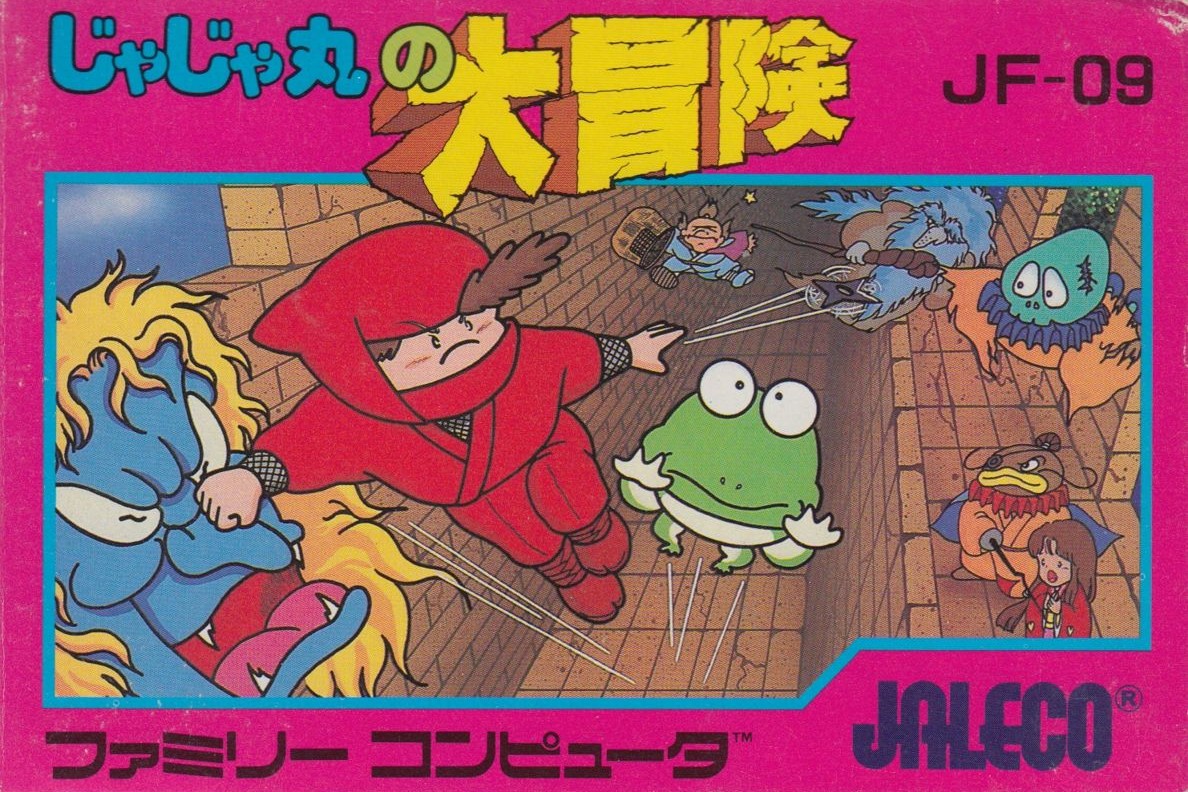
    But JaJaMaru no Daibouken feels like exactly what you get if you ask someone to take the art and engine from Ninja JaJaMaru-kun and turn it into Super Mario Bros.: it’s got side-scrolling levels, blocks JaJaMaru has to hit with his head to get coins and power-ups out of, and… well, I mean, that’s enough. It’s not exactly the Great Giana Sisters, but the “hit blocks with your head” thing is enough. Case closed!

    I’ve previously mentioned that the original Super Mario Bros. doesn’t actually feel that good to play–we’ve just all misremembered that, because the later ones do–so I can’t really beat up on JaJaMaru no Daibouken for not controlling that well (floaty jumps and that.) What I can beat it up for is just being so bloody half-arsed. Levels look like they just threw down blocks in any old combination, and although the game features 20 levels, but half of those are boss battles that you don’t even have to complete–if you die, you just go to the next level and don’t even lose a life. And the game doesn’t have an ending or anything, it just loops. Which actually leads to the ridiculous situation that you can reach the “final” boss, fail to rescue Princess Sakura, and then… just go to the second loop. Deeply uninspiring.

    JaJaMaru no Daibouken keeps a lot of the flavour of the (by this point) established JaJaMaru franchise, though, which doesn’t as much feel like something they did to differentiate as much as it’s just what they had lying around. The power-ups act like they do in the previous game and JaJaMaru’s uncontrollable frog pal Gamapakkun shows up too, albeit rarely. Though weirdly, the most interesting mechanic from JaJaMaru-kun, that you have to jump on enemies heads so you can shoot them, doesn’t show up here! (Maybe they thought it was getting too close to Giana Sisters-esque “let’s get sued” territory.) There’s an annoying learning curve in that you’ll never know which enemies kill you on touch and which don’t until, well, you’ve been killed by them, and weirdly one enemy that shows up right at the end, the Tanuki, can’t be killed but you can jump on their head to stun them. So… half of a mechanic from JaJaMaru-kun, for one enemy, just to confuse us, as a treat.

    It’s all very inconsistent, but because of the terrible level design, you quickly work out that you’re just supposed to run through the levels ignoring all the enemies as much as possible. While it’s true this is optimum for Super Mario Bros. too, the level design there ensures you engage with enemies in interesting ways. Here your engagement is generally things like “oh an enemy spawned directly in front of me and killed me with a projectile before I could react.” or… actually it’s usually that one.

    JaJaMaru no Daibouken is over very quickly, so it’s a very minor waste of life. But it is a waste, I won’t lie.

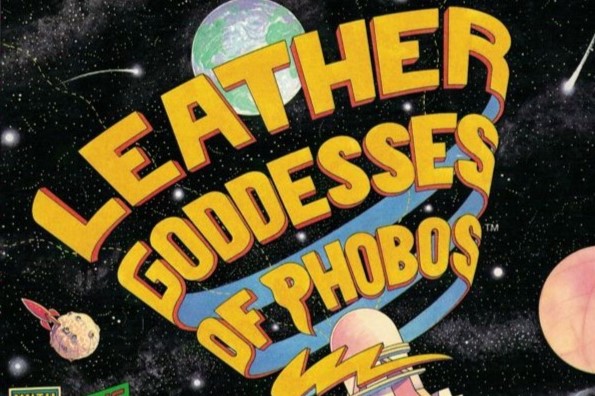
  • Leather Goddesses of Phobos (Infocom, 1986)

    Leather Goddesses of Phobos (Infocom, 1986)

    Developed/Published by: Infocom
    Released: 22/08/1986
    Completed: 18/04/2025
    Completion: Completed it. 304/304 points (though points are random and I believe you get them all just in the process of beating the game.)

    Phworr, eh lads? Etc.

    Right, that’s me got all the 90’s video game magazine parlance out of the way [“you forgot ‘or something’ and to do a made-up Ed’s note”–made-up Ed.] so I can put my “pretending to be a serious games historian” hat on for the first Infocom game I’ve played since Trinity–surprisingly, all the way back in 2023. If you’ve been following along, you’ll be aware I’ve been picking and choosing Infocom games to play through, leaning towards the work of Steven Meretzky, and I’ve been looking forward to playing this for a while, his “return” to a more normal sort of adventure game after the big swing (and commercial miss) of A Mind Forever Voyaging.

    Based on a joke title Meretzky posted on a whiteboard featuring upcoming releases for Infocom, Leather Goddesses of Phobos is a strange release, I think. Infocom had always made games for adults, but never “adult” games, and there hadn’t really been any commercial “adult” games for years at this point. Softporn Adventure came out in 1981, and unless you’re Portuguese and have fond memories of Paradise Cafe for ZX Spectrum that was about your lot. So it seems like quite a gamble for Infocom to release something that appears so risque–but then Leather Goddesses of Phobos isn’t really an adult game at all. In fact, it’s barely smutty at its most extreme, and Meretzky, wanting to drum up a bit of controversy after the failure of an anti-Reaganite art game, decided “sex sells” and Infocom as a group went for it: digging through Meretzky’s papers, he sent a sheet of possible game ideas to the other imps (this may have been the standard procedure at Infocom?) for his next game, and Leather Goddesses of Phobos won out, where its sexual content was expressed as “very soft-core; see Barbarella as an example.” (it doesn’t even go that far, to my eyes.)

    (The sheet is quite illuminating in general, a kind of ideation that I recognise as a game developer. We have another attempt, I think, to court a bit of controversy with “The Interactive Bible”, an interesting if not-yet-fully-baked design idea “Blazing Parsers” and then something that’s optimistically trying to make making a game quicker, “The Viable Idea.” Personally, I’m sad we never saw an Infocom spaghetti western.)

    Unlike some other Infocom releases, I don’t really have any personal history with Leather Goddesses of Phobos outside of memories of the (very) mildly titillating screenshots of its sequel, Gas Pump Girls Meet the Pulsating Inconvenience from Planet X! In fact, the main thing I have to say is that I only realised this wasn’t called “Leather Goddess of Phobos” after playing it for a bit, which won’t make me cry “Mandela Effect” as much as “Goddesses is such an inelegant word, it’s bizarre it isn’t just Leather Goddess. My brain was correct, reality wasn’t.”

     But anyway, what is it actually like to play Leather Goddess(es) of Phobos?

    I’ve been a bit up and down on the Infocom games I’ve played–some might say unnecessarily hard on them, judging them by the coddled standards of 2025. But Leather Goddesses of Phobos gets off to a good start. Unlike Trinity, where you essentially never know what you’re actually trying to do overall, Leather Goddesses of Phobos more or less immediately has a character hand you a laundry list of items to collect, and then you go “oh, I guess I just have to collect these, then.”

    As good as that is, it’s also a little… underwhelming. Having picked and chosen, I’m aware that I’ve not seen everything that Infocom has to offer, but I’m still surprised that I haven’t played an Infocom game since Deadline (their third game) that gave me any sense of anything except a static world. Leather Goddesses of Phobos gives you a Floyd-like companion (Trent, or Tiffany) but they barely seem to exist, and even when you meet characters in the world they feel so… un-interactive. Maybe, at best, they take part in a little vignette.

    I suppose with Leather Goddesses of Phobos I’m really realising–and perhaps chafing against–the limitations of the text adventure at least in the mid-1980s. In some respects, you want a text adventure to have the feeling of a book; limitless, enveloping imagination. But in other respects, you want to play it like a game. You want to be reacted to. It’s probably, why, to be honest, characters have been so sparse in these games–because when you try and interact with a character, and they don’t do anything, or it feels wrong, the illusion of being on an adventure is broken. You’re not reading a book, you’re on a dark ride and suddenly the lights slam on and you’re aware you’re looking at a mannequin, not the king of Mars.

    Somehow, the fact that characters in Deadline might like… walk into another room just abated that, and I’m not asking for characters to roam across the planet here, but maybe if they piped up a bit more. Felt a bit more worth talking to. The issue with making a “funny” game is that so much of comedy is character work, and here, really, the only character is the parser.

    But I’m being a bit harsh, because Leather Goddesses of Phobos is otherwise an extremely solid classic rooms and items, bread and butter text adventure. The best I’ve played since Meretsky’s own Planetfall, and arguably the best I’ve played full stop. It’s understandable, accessible, and I never had to use an Invisiclue to the point where it just told me what to do–well, except in one particular case.

    That one I’m just going to spoil, actually. One of the things that makes Leather Goddesses of Phobos work so well is how well integrated the feelies are. Sure, I don’t have the box to hand, but there’s a comic which includes a couple of direct hints for some puzzles, a map which is unbelievably necessary and helpful, and a scratch and sniff card, which I’m sure nearly 40 years later is completely useless even if you opened a brand new box, but which is a really cute and silly B movie-adjacent idea that’s perfectly fitting. One of the things it does is prompt you to “smell” things in the game to work out what they are (which it thankfully tells you in text–scratch and sniff cards have always barely worked). Early in the game (for me–the game is fairly open ended) you sniff and discover some chocolate, which, of course, you’ll hang on to. Later, for reasons, your mind will be transferred into a gorilla. But you’re not strong enough to break out of the cage. I assume you can see where this is going: you need to eat the chocolate to get strong enough to break out of the cage.

    You know, that famous thing about gorillas. That chocolate makes them strong.

    This is, obviously, nonsense. The only animal-related fact I know about chocolate is that it kills dogs and I certainly wasn’t hanging onto it in the game expecting I’d use it to kill a poodle or something [“you said ‘or something’ after all”–90s Ed.] Considering that banana is one of the most recognisable smells you could possibly use on a scratch-and-sniff card, I had to assume that Meretsky simply thought that giving you a banana would be too obvious a solution so went with the impossible to work out chocolate, but I couldn’t find anything in his notes to reflect that. According to the ever reliable Digital Antiquarian, Meretsky tested the scratch and sniff scents on the other imps to select the most recognisable scents to then use in the game, and I do think it adds insult to injury that one of those chosen scents actually *was* banana! But it’s used elsewhere!!!

    I even found a playtester who complained about this exact puzzle:

    “It is reasonable to not eat the chocolate and even suspect the sugar rush, but why oh why would you put the chocolate in the cage?”

    I suppose he’s more complaining that this game features more than one puzzle which requires hindsight, and to be honest, they should have fixed those too. But in general, Leather Goddess of Phobos is logical and fair, while still managing to make puzzles funny and clever–the best of The Hitchiker’s Guide To The Galaxy without the worst of it. There’s a puzzle about kissing a frog that will immediately put you in mind of the famous babel fish (and which made me laugh out loud) and a puzzle involving a mysterious machine and wordplay that is so perfect and silly that it’s maybe one of my favourite things in an adventure game ever–possibly worth the price of admission alone.

    The game does still undercut itself though–for seemingly no reason. There are definitely ways to manufacture yourself a no-win, dead man-walking situation, for example, all of which I miraculously managed to dodge due to the order I did things in, and I definitely had a few puzzles where by all rights I was just lucky to not have to resort to clues. One object on your list you need to specifically look somewhere you might not look to find, and then you need to be really specific with the parser to do what you need to do to get it. Another requires a vignette that you need to be in time for (though that one I immediately sussed what was up–the “dead end” was just so suspicious to me. But I reached it almost at the end of the game–if I’d got there early, I could have had to replay nearly the entire game.)

    The game’s maze–which people find famously annoying–is a perfect example of how the game undercuts itself. You have the map in hand. You have the required clue. If you’re patient, it’s actually really satisfying to navigate it, and I did so… and then the torch I was using burned out, and I had to do the whole thing again much more efficiently. Close to hundreds of turns. It was so unnecessary! I was having fun!!! Why punish me for not being perfect!!!

    These moments, however, are far rarer than you’d expect. I noted above that the game is fairly open ended, and I’m not sure if there’s a “preferred” way to work through the game, but as I said above in my playthrough I never entered a vignette where I didn’t have something to hand I needed (though it’s possible, I’m sure) and if I got stuck somewhere there was always somewhere else to go for me to solve something else. I never put this down annoyed–well, apart from the fucking maze. Well, not the fucking maze–the fucking torch (I honestly did think the maze was clever.)

    I think the thing about Leather Goddesses of Phobos is… it’s probably as good as one of these things is going to get without a much more modern design philosophy. You know what you need to do and every time you sit down and play it you get a little closer to doing it–and it’s charming while you do it. But it’s never sexy. I did play it on the “LEWD” setting and took every opportunity for a bonk, because I’m still thirteen at heart, but my dander remained unfrothed; it doesn’t even reach the heights of Alter Ego! I guess I’ll see how I get on with [checks to-play list] Leisure Suit Larry??? Eugh!

    Will I ever play it again? You know, it’s possible. It’s not likely, but it’s possible. And I will play Gas Pump Girls Meet the Pulsating Inconvenience from Planet X!, which I don’t believe anyone likes. Because why not.

    Final Thought: In some respects, Leather Goddesses of Phobos suffers for not being something special like A Mind Forever Voyaging, but it also sort of is, as the last true success Infocom would release before the company began an unstoppable slide into oblivion, and for that alone it should be celebrated. At the very least, if you like text adventures, though, you know how to play them, and you can live with the idea you might have to reload a save on occasion, this is a solid couple of tevenings. Oh sorry, I mistyped… tevenings. There must be a mysterious machine around here somewhere for that…