To view this content, you must be a member of Mathew’s Patreon at $1 or more
Already a qualifying Patreon member? Refresh to access this content.

Developed/Published by: Interplay Productions / EA (original), Krome Studios / InXile Entertainment (remaster)
Released: 12/1985
Completed: 05/02/2025
Completion: Finished it.
I’ve been itching to play an old school western RPG recently–really want to see some numbers go up–and got really excited when I discovered The Gold Box Companion, a companion app for SSI’s legendary Dungeons and Dragons RPGs that–because I was too young for them at the time–completely passed me by.
However… I couldn’t help but feel I’d be skipping a bit too far forward on my (personally imposed) chronology if I jumped to playing Pools of Radiance–I wasn’t satisfied when I played Pirates! that I had the historical context I wanted–that I nosed around a bit to see if there was something I’d previously skipped that might fit the bill.
Hence: The Bard’s Tale.
Now, I’d previously skipped this because I’d heard that it was, frankly, a bit boring. Actually, I was basing that entirely on The Digital Antiquarian saying “long before the end of the first Bard’s Tale it’s starting to get a bit tedious” which probably isn’t entirely fair. But what drew me back was that The Bard’s Tale is one of those games that I think many who grew up in the “video game magazine” generation have–a game that I read about two sentences about but was always longing for.
It’s funny the things that lodge in your mind, isn’t it? Here’s the reader’s letter from Amstrad Action that’s stuck with me since literally 1991:

What’s funny is that in the intervening, uh, thirty years [“lies. The 90s are ten years ago”–Ed.] I managed to forget, I guess, that Amstrad Action’s “Balrog” ran an entire “The Bard’s Tale Club” section culminating with a short walkthrough just a few issues earlier.
Interestingly, I think this is one of those things where I can see myself maturing in real time–in the matter of months I went from a wean who skipped the Balrog section because it wasn’t about, like, arcade games, to a wee guy who was at least interested in them. That or a guy pretending to be a gnome caught my eye.
All I remember is that I’d missed my chance to get The Bard’s Tale. So, here I am, thirty [“ten… I’ll go as far as fifteen”–Ed.] years later, finally living my childish dreams.
First: if I’d got this in 1991 I’d have been completely baffled by it. Within a few short years I’d be playing Ultima Underworld, but I didn’t really even play that properly, and The Bard’s Tale requires, like Wizardry, a deep understanding of RPG character creation and party management. And also like Wizardry, it’s about as brutal as an RPG can get, killing your party or giving them debilitating, expensive-to-cure status effects that require you shlep all the way back to a temple to solve, in maps that wrap (no! Not again!!!) and are absolutely louping with spinners, traps and dark zones.
In some respects, I’m lucky that I mostly relied on luck and parental largesse to get computer games.
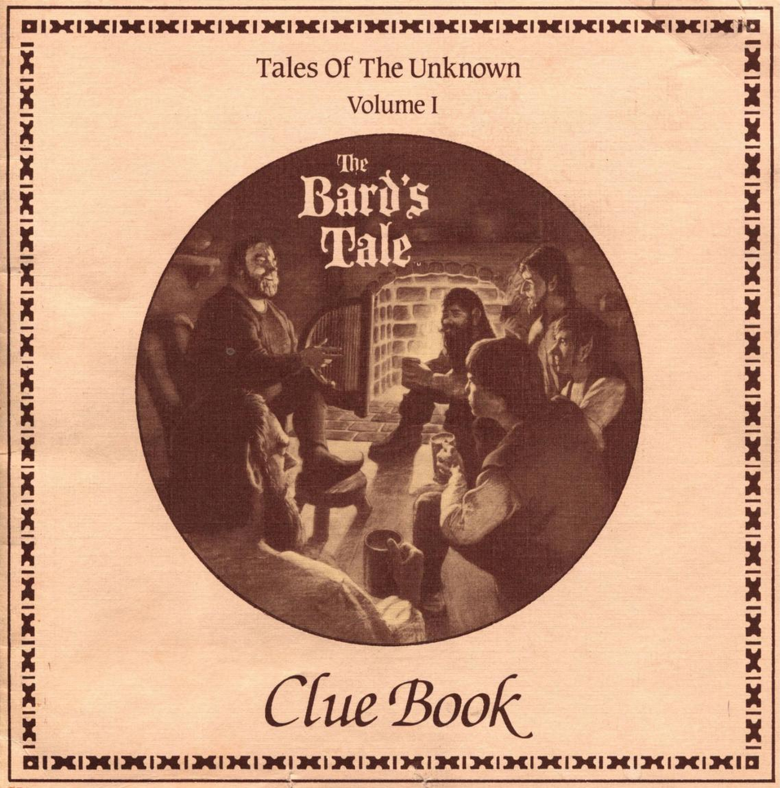
I’m also lucky that there’s a remake of The Bard’s Tale in the form of Krome Studios’ The Bards Tale Trilogy: Remastered, which rights-holder InXile Entertainment had them make (after, interestingly, a remaster from the team of one of the original developers, Rebecca Heineman unfortunately fell through). I’ll be honest, I was originally not planning on playing it, because it has genuinely awful Super2xSal-quality upscaled art. The game looks like this:

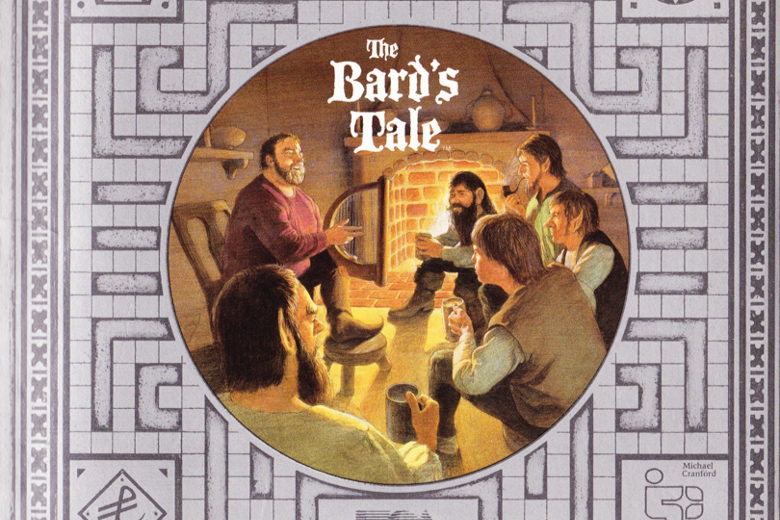
When in its best contemporary ports, it looked like this:

I know which I’d rather look at, though in some respects I thank god that the remake came out before they could us AI to upscale it all and make something that looked even worse. The benefit of playing this (nasty) looking versions outweigh the pain of looking at it though, because not only does it make a lot of quality of life improvements such as a shared inventory and doubled experience, it plays perfectly with a controller–so you can even play it with a Steam Deck comfortably.
If you’re a purist, however (and I don’t actually blame you) I have to admit that the version I played isn’t exactly The Bard’s Tale, as the “trilogy” version aligns all three games design, so in this version there are distance mechanics in the combat (enemies can start some distance from you and you have to advance on them) and bows and arrows are added, which I suspect changes the feel of the combat quite a bit. But to be honest, I can live with it. And I never used bows and arrows anyway.
Enough personal history. For the real history, you can of course go to someone like the aforementioned Digital Antiquarian, but it’s worth noting that even though The Bard’s Tale entered my own personal history in 1991, it was released in 1985 and is, I think surprisingly to modern eyes, the best selling computer RPG of the 1980s, selling a reported 407,000 copies.
I say surprisingly because The Bard’s Tale hasn’t lingered in the cultural imagination the way that RPGs such as Wizardry or Ultima have. It wasn’t first; it didn’t inspire much (Japanese RPGs were already divergent by 1985) and the series didn’t evolve any better than Wizardry did. By 1991, the year I discovered it, a cash-in construction set was released for anyone who hadn’t already moved on to the more active style of dungeon crawler begat by Dungeon Master, and it wouldn’t be seen again until The Bard’s Tale in 2004, which is a Bard’s Tale game in name only.
If you’re wondering what made The Bard’s Tale so successful, but then so irrelevant, it comes down to the fact that it is, ultimately, just a Wizardry clone that happened to come out on the popular C64 with nicer graphics than Wizardry years before Wizardry would reach the system, and be pushed by the already mature (and not yet fully soulless) EA.
Designed by Michael Cranford, it was his second attempt to directly make a Wizardry killer after HesWare’s apparently flawed Maze Master. For some reason, The Bard’s Tale is particularly known for the development team all sniping at each other publicly for years after the game’s launch (it even makes the Wikipedia) but it’s all so “he said, she said” and feels kind of… un-illuminating about the game. At least, it doesn’t add anything. The only part I find particularly interesting is that this game is officially called “Tales Of The Unknown: Volume I: The Bard’s Tale” because (and there is some argument over this) the series was supposed to be called “Tales Of The Unknown” but–and this might be a sign of EA’s encroaching soullessness–it was felt “The Bard’s Tale” was better known, so it got dropped.
(And if you’re wondering why I find that interesting, it’s because it would happen again with The Legend of Kyrandia, which was actually supposed to be the “Fables & Fiends” series. I’m not sure how many more examples of this there are.)
Anyway. As I said above, writing about the experience of playing The Bard’s Tale feels almost exactly like writing about Wizardry, bar for a few twists (I like to believe if they’d kept to “Tales Of The Unknown” maybe the sequels would have diverged more.) The main twist people get excited about is that you navigate the town in the same way that you navigate the dungeons (step-by-step 3D movement) but let me tell you this–it just means you have to do an annoying amount of schlepping about and fighting piddly enemies when you want to heal or level up, and I’d honestly rather a menu. The thing I felt like I felt I did the most in The Bard’s Tale was stand around outside the “Review Board” save scumming to try and make sure my level up rolls were good…
The rest of the game, despite featuring several dungeons, ultimately boils down to what you’ll do in Wizardry–try and find the best way to grind so you can kill the final boss. In the original game, this was a particular repeatable battle, which led to one of my best ever “this is too specific, that’s not how memes work” memes, clattering out to complete silence:

But in the remake, which has a smoother curve (and only lets you do this battle once) you can get away with just ordinary grinding (thankfully). Now, the game does actually feature some puzzle solving–you do have to find and collect certain items–but moreso than Wizardry, I realised how much I miss a “proper” quest and side-quest system. Here you have to notice text prompts when you step in certain squares (which zoom off the screen immediately in the remake which means you’ll never see them–a big mistake) and piece them together, but getting deeper into dungeons is grimly unrewarding when that’s all you get. I started my game mapping this properly, but the maps get worse than Wizardry even faster! So much of the dungeons in this game are made up of “dark” squares that you feel like you’re navigating almost the entire game blind, to the point where I almost can’t imagine trying to complete this without having another map at hand and the in-game automap (I can hear the hardcore crusty RPG types rolling their eyes here…)
It could be alleviated, perhaps, if you could enjoy the combat, but there is almost no strategy to it. While it may partially be a flaw of the remake (where the updates fly off the screen at a hundred miles an hour) The Bard’s Tale has a bizarre difficulty scaling where you start by having your entire team killed by a single mouse holding a feather duster and about an hour later are fighting a squad of forty vampires at once. While it’s extremely funny to imagine them trying to all squeeze into a corridor, the problem is that your melee characters are just meat shields for your magic users. I made myself up the kind of squad that gets recommended for The Bard’s Tale and as much effort as I put into my critical-hit focused “Hunter” character (usually my favourite kind of RPG character! I love them crits!) I barely noticed them doing anything at all with their piddly single hit on one enemy compared to my magic users, who by mid-game have a spell that can wipe out every enemy you’re facing in a battle at once.
The game’s focus on the magic users makes it seem even odder that the series ended up going under The Bard’s Tale moniker. While your melee types are stuck in their starting class, your magic users are expected to change class each time they fill their classes’ spellbook, and they start again from level one keeping all their stats (quite unlike Wizardry…) meaning that by the end of the game you have spellcasters who look like Arnold Schwarzenegger in his prime hiding behind a flesh wall. The only reason you can’t ignore melee completely is that your magic users’ armour class is so bad–and that matters when you’re facing off against four squads of sixty enemies at least some of whom might get an individual hit off each before you’re able to hit them with the equivalent of a nuclear bomb.
(This magic user focus is symbolic of author intent, however. As Michael Cranford would explain in his GDC post-mortem of The Bard’s Tale and its sequel, he was “bored” by melee combat and was interested in making a game with seven different spell-casting classes that your characters would learn until they were able to become archmages, with melee combat your fallback when you ran out of mana. Although this was cut back to four classes with the archmage showing up in the sequel, this original idea explains everything about why The Bard’s Tale plays the way it does.)
But let’s be real here: the majority of The Bard’s Tale you spend not save-scumming level ups to make sure your spell-casters can mow down enemies like they’ve got a gatling gun is spend stumbling around in the dark or in battles you barely notice happening. The only real moments of tension are when you get given one of the many annoying status effects (reload–it’s not worth the hassle) or when you have to get out of the dungeon, because the game (sort of interestingly?) gives you absolutely no way to regenerate mana unless you’re outside1, so your grinding sessions are always limited by how long your mana lasts. But because you get so many level-ups with your magic users, it’s not much of a problem (by the middle of the game, I was staying down collecting three or four level ups before bothering to climb back out of a dungeon.)
The problem, sometimes, with playing a game like this is that devoid of the context–an old home computer, months of free time, it being the fucking 1980s–you play it as the object it is, rather than the experience it represented. Everything I’ve said is all true, but if you were loading this up on your C64 (or Amstrad!) with a bundle of paper maps in front of you and the latest “Bard’s Tale Club” tips, nursing your RPG party across months, slowly getting deeper into each dungeon, finding and writing down all the clues, I can see The Bard’s Tale as the evolution–a small evolution, but an evolution–of the Wizardry design it is.
You could recreate this if you really wanted! But the problem is that there are simply more fun, deeper, more interesting, less punishing ways to spend your time not even now–even then. Playing the first The Bard’s Tale, the same as playing the first Wizardry, you understand why they died out so quickly for not adapting. When they aren’t all you’ve got, they aren’t what you want.
The funny thing is, that I’ll still remember The Bard’s Tale fondly. Not for when I played it–but when I imagined it.

Will I ever play it again? You can continue the series seamlessly in The Bard’s Tale Trilogy, but the dungeons in the first game are so horrible I would never do this to myself.
Final Thought: Alright, you’ve read everything I’ve written and you still want to play this. You want to say you’ve played the most important RPGs! I get it. So next time, for supporters only: How to beat The Bard’s Tale!


Developed/Published by: Infocom
Released: 14/8/1985
Completed: 17/11/2022
Completion: Finished it.
Trophies / Achievements: n/a
Do you have any famous works that you’ve always been… scared to start? I don’t mean intimidated–I haven’t read say, Infinite Jest not because it’s long, but because [jerk-off motion]–but that something is talked of in such hushed breaths that you’re worried it just won’t live up to whatever you might have imagined?
I have it a lot, and because I generally try to read as little as possible about things before I experience them, it’s not so much that I’m imagining these incredible things, as much as there’s this astonishing possibility space out there that it almost feels… wrong to cut it down to just the one thing. Schrodingers’ video game.
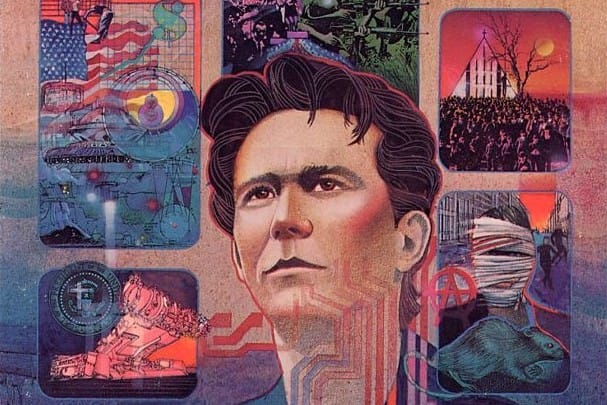
For A Mind Forever Voyaging, all I’ve known until now is its striking cover art, and that it’s Steven Meretzky’s attempt to grapple with Regan’s then-recent re-election by landslide. So it was with some trepidation that I started pouring over the box, feelies and manual.
The manual is worth reading, with the most empathetic piece of writing I’ve experienced by 1985 in video games, as we’re introduced to the game’s central concept: you, the player, are “PRISM” who, raised in a perfect simulation believing themselves to be the real person Perry Simm, discovers that, well, no, they’re actually just an AI.
It gave me enough pause that I actually put the game down and didn’t start it for several more weeks! If anything, the possibility space had got larger.
A Mind Forever Voyaging, now I’ve played it, is kind of a hard one to discuss. On hand, it’s flawed. As deeply flawed as any Infocom I’ve played up to this point has been, and for many of the same reasons. On the other, it’s a genuinely captivating piece of speculative (interactive) fiction that will probably stick with me forever, not least because while it might over-extend itself on specifics, politically and thematically it is one hundred percent correct.
Let’s get to those specifics. First up, the game really requires you to read the manual. While it’s nothing as complicated as Suspended (which I still can’t believe was only Infocom’s sixth game) there’s a similar sort of “mode switching” as you begin not able to walk about and pick up stuff but can simply switch between locations in communication mode (largely able to just see the same locations, or veg out and watch the news) or read backstory in library mode. It’s really here that you get to what could be considered the game’s most major flaw–how self directed the player has to be for most of the time.
This isn’t the same as something like Planetfall, where the player is primed “you’re stuck on this planet bro” it’s actually literally like “you’re a computer and there’s nothing to do?”
There are big swathes of this game where you’re stuck typing “wait” or even resorting to “wait 120 minutes” which I found almost… shocking. It’s made all the more baffling by the fact that the game has a news network that you can “watch” but when you’re in the mode time passes at a crawl, meaning that you’ll probably burn through basically the entire thing (hundreds of lines of script) just waiting to get to the first simulation!
The meat of the game is in that simulation, however, and this was a massive surprise to me. The game presents what is pretty much the only direction the player gets–that as PRISM, you’re supposed to do a lot of very mundane things in a simulation of a small town, Rockvil, ten years in the future, like eat in a restaurant and speak to a clergyman–record them, and then deliver the recordings to see if the government’s transparently republic agenda known as “the plan” will work. It’s here the game takes a massive diversion from what I’d expect from a Infocom game at this point, because you enter a genuinely huge recreation of a town that is nigh-unmappable, with hundreds of rooms and most rooms having as many exits as there are compass points.
Don’t get me wrong, this is a meticulous recreation of a town and is an extremely intentionally designed space, but it’s also not a “designed space” as any video game developer would know it now. I quickly gave up any pretense of mapping the space–relying on the one decent map I could find online–and began wandering.
And wander I did. To be honest, you don’t genuinely need a map outside of the one that comes in the manual, as you aren’t really needing to hunt anything out. As has been written elsewhere, in A Mind Forever Voyaging, you are an observer, not an active participant, and as a result, simply wandering as your wont takes you and recording what you find interesting or pertinent is genuinely enough to progress.
Of course, that’s as long as you understand that, because once you’ve managed to “complete” the tutorial-like first simulation, the game literally goes “oh, we don’t have anything for you to do now. Entertain yourself.”
I know that it’s easy to accuse modern players of wanting everything on a silver platter (or at least, with a silver arrow pointing in the direction of the platter) but I really do find it hard to believe that even players in 1985 didn’t find this kind of thing frustrating. Noodle around long enough, and you’ll work out that you can get to a simulation twenty years in the future. But what do to there? Might as well just record the same stuff you did ten years in the future, right?
And it’s here we hit what is–confusingly–A Mind Forever Voyaging’s most glaring flaw but also what might be the thing about it that makes it the most memorable. For the majority of the game all you do is revisit Rockvil and record how it changes across the years. It’s repetitive, and by the fifth time you do it you are almost certainly tired of the same interactions.
But it’s also a perfect experience in seeing the slow decline of society under rule by Republican values. In 1985, this was just a scary warning of how the future could look. In 2022, it’s a sharp shock to the player, showing them how much has been lost and how much more will be lost if we continue the way we have. It is too easy to experience the decline of our civilisation as a frog, slowly boiling, and A Mind Forever Voyaging asks you to remember what temperature the water actually is.
As Steven Meretzky noted in 2017, everything came true. The game features a border force who act as judge, jury and executioner; viciously racist policing, and the complete MAGA-fication of politics long before anyone even imagined such a thing. Even the things that seem far fetched in the moment–a supreme court giving the ok to religious fundamentalists seizing government property?–doesn’t seem that absurd when you ask “could the current supreme court have sided with the far-right extremists in the Occupation of the Malheur National Wildlife Refuge?” the answer is yes, obviously yes.
And isn’t it disturbing that you’ve probably already forgotten about it?
It is painful, genuinely painful at points, to be playing a game that shows horrible things happening in a decade to represent a society that is past the point of no return and recognise that these things are already happening around us. That Meretzky was far too kind to expect things to not have gone to totally hell until 2050 at the earliest.
To be honest, a game like A Mind Forever Voyaging is as vital now as it’s ever been, and while I can’t recommend it without caveats, I actually rather like that I’m not completely certain that my instincts on its subtler “flaws” are correct or not. Lack of direction and the need to endlessly wait at points? Yeah, those are bad. But I can’t decide if choosing to create a huge, often samey and empty Rockvil is actually worse than making something more tightly designed. Rockvil might feel more real to me because I had to traipse through several parking empty parking lots; I can’t tell if it’s an acceptable price to pay that so many descriptions are generic (I got tired of things being described as a “totally ordinary [noun]”). Wouldn’t it be more interesting to have puzzles to solve? Like, shouldn’t I have to steal a ration card to make the ration card fraud arrest happen so I can record it? Or would the ludic nature of that undo that sense that Rockvil is real, and I’m genuinely experiencing it?
With modern eyes, I think I would prefer the latter (tighter, have some puzzles) but I don’t actually blame Meretzky for going the other direction at all–especially considering the one puzzle in the game (avoiding being killed in act 3) involves, annoyingly, having to wait (again!) in the right place at the right time to even notice what’s going on (I really don’t know what the hell was going on with Infocom’s playtesters sometimes.) But the only thing I really don’t think works in the game is the saccharine epilogue. The digital antiquarian goes into probably too much detail on it, but he successfully raises that A Mind Forever Voyaging’s setting, movingly portrayed or not, doesn’t make a ton of sense if you go one level down, and ultimately only serves as backdrop for a polemic, which would ring more true I think without the San Junipero wish-fufillment. There’s no guarantees a utopia awaits if we do the right thing now. It requires constant vigilance.
(And I have to agree that casting Perry Simm as mere observer does him a disservice–memory was at a premium even with a new extended Z-Machine interpreter allowing 128k instead of 64k to fit the game into, but that the game’s descriptions are often so dispassionate, and we never see or experience Simm grapple with his new existence as an AI is a disappointment. But A Mind Forever Voyaging is already doing so much, probably too much.)
So after all that, how do I feel now that A Mind Forever Voyaging is the thing that it is, rather than whatever I imagined it could be? Incredible, honestly. I’m richer for having played it, warts and all.
Will I ever play it again? It’s an interesting question. I’m not sure I’d choose to play it again–the slow decline of society is… slow. However, it’s a game I would relish showing to others.
Final Thought: Late summer/early autumn in 1985 was insane. A Mind Forever Voyaging was quickly followed by Super Mario Bros. in September and that was followed by Ultima IV days later. Hard to argue that these three don’t represent in many ways the peak of creativity in video games even now.
![The Tower Of Druaga [Famicom] (Namco, 1985)](https://expzine.com/wp-content/uploads/2026/04/the-tower-of-druaga-famicom-header.jpg)

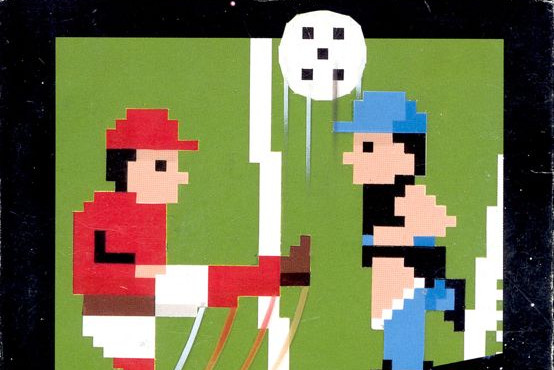
Developed/Published by: Namco
Released: 06/08/1985
Completed: 18/08/2022
Completion: Played a few levels in both the original dungeon and the secret “Another Dungeon” but life is too short.
Version Played: Namco Museum Archives
Trophies / Achievements: n/a
You know, I’ve had fun playing the old games I’ve got access to; I’ve discovered some hidden gems, rediscovered old favourites… but there’s definitely points where I’ve honestly wondered how video games as a medium didn’t merely survive but thrive post 1983 crash. Because to be honest, the last chunk of games–action games, anyway–have been pretty miserable. The Famicom’s output has been totally uninspired, and every arcade game is so brutal and relentless that there’s no time to get hooked–you just die.
So, no matter my own attempt to understand these games within their actual context, it’s been really hard to get into them. I’m still playing them in the 2020s, and I’m still me.
And this Famicom port of The Tower of Druaga is a perfect example of that friction. I don’t like the The Tower of Druaga. You can read all about that here. But it’s also insanely seminal and was a genuine phenomenon in Japan. I’m sure Namco’s Famicom port was hotly anticipated and as far as I understand it was a massive hit. And academically? I understand it completely.
Because this is a great port! Sure, it’s got the muted colours of a Famicom/NES release and like Mappy chops down the level sizes (7 tiles vertically rather than 9) but most importantly not only does it feel similar but all of the hidden bollocks (I mean treasure) are unlocked as in the arcade (bar some very minor differences) allowing you to actually throw yourself into finishing the game without having to spend a small fortune in 100 yen coins–you can even continue! I can understand totally why you’d be running out to get this for your Famicom in 1985.
But it’s 2022 and this is still just unbearable to play. I just can’t put myself in the shoes of a wee guy in 1985 playing this and (apparently) enjoying it. Booting this up and being faced with just how slow Gil moves on the first level? It’s revolting. How boring were things in 1985 that I would sit there, playing this with the tips page of Famitsu (or whatever) open?
What makes my total inability to get this worse is that this version even includes an entire extra dungeon, with a whole new range of inscrutable things to do required to complete it. It’s actually hard to argue with the insane value here and how thrilled you’d be to discover this! But to me, in 2022, it’s like finishing a plate of rocks and being served a plate of glass.
That said, it’s a matter of months in 1985 before dessert shows up, and it’s literally ice cream. I know why the video game industry survived a crash and then whatever this is: Super Mario Bros.
(Oh, but I’ve got Namco’s Battle City to play first. Dang it!)
Will I ever play it again? Thankfully, these are the only two versions of The Tower of Druaga I have access to. I know the Game Boy version has bosses and things (sort of interesting) and I believe the PC Engine version is significantly different (more of an action RPG thing) but I’ll stick to ice cream from here on out.
Final Thought: Struck by the fact that as I’m back into collecting Game Boy games and I hope one day to go back to Japan to pick up an bunch of cheap fodder, I’ll already be seeking Namco’s Game Boy compilation cartridges meaning I may end up with a copy of the Game Boy version after all via Namco Gallery Vol. 2. I’ve never been one for toppings on ice cream really, but guess I might as well sprinkle some broken glass on it…


Developed/Published by: Intelligent Systems / Nintendo
Released: 2/2/1985
Completed: 12/07/2022
Completion: Beat four levels of difficulty while fighting off boredom as “GBR” which because they’re the team in blue I decided were actually Scotland. Take that, “Federal Republic of Germany”!
Version Played: Switch Online
Trophies / Achievements: n/a
Well, I’ve suffered through Tennis, and Baseball, and all these other frankly pretty rancid early NES games from Nintendo, so how bad can Soccer be? I mean, I like football, so at least I can accurately judg–[starts projectile vomiting]
It’s… it’s bad, guys. It’s bad. Something that has struck me about Nintendo’s NES sports games is how perfunctory they are. There’s no charm, no spark, and no sense that anyone involved is trying to make a fun video game as much as tick off the box that says “the Famicom has a [name of sport] game”. And apart from some slightly nicer graphics, you’re really not feeling a massive jump from pre-crash video gaming here.
Soccer, for example, is as bare-bones as you get, offering the ability to play friendlies against a variety of (identical) six-a-side teams with a five point difficulty setting. Six-a-side is disappointing (but not particularly unusual in this era) but what’s really the problem here is that the game is so slowww. Actually… not just slow, horribly disjointed? You see, Soccer has the (I guess) noble aims to simulate the experience of actually dribbling a ball, with players kicking the ball each time they move, but rather than fluid movement it’s more like the way toddlers play football–they run to the ball, stop moving, kick the ball, and so on. This makes everything not just slow, but feel unresponsive, as you really can’t do anything unless you’re at the right point in an animation, making it all feel a bit random.
Of course, as with all of the other sports games for NES, my mistake ultimately is to be playing this against the AI, which here might be more horrible than anything we’ve seen before. The opposing team and your teammates seem to have no intelligence on any level of difficulty (the small pitch doesn’t give them much to do, to be fair) and raising difficulty just means that if you put it on the highest level instead of scoring every time the opposing goalie will make a beeline for you when you get close to the goal and take the ball off you (there’s really no lateral movement when you’re dribbling in this game it’s so slow and unresponsive.)
I sort of can’t imagine this was especially enjoyed by people playing it in multiplayer though.
Will I ever play it again? No.
Final Thought: I was mildly interested if I’ve been unnecessarily unfair with judging this with modern eyes considering this is from 1985, and in my head I was like “this is bloody worse than a Spectrum game.” Well, if I’m going to be completely fair… the Spectrum did honestly had better (and deeper) footy games! with Jon Ritman’s first Match Day (released in 1984) is at least as good as this, never mind Match Day II or the likes of Microprose Soccer (Sensible Soccer’s predecessor) showing up a few years later in ‘88.
My suspicion, actually, is that Nintendo’s Soccer is essentially a clone of International Soccer, released for the Commodore 64 in 1983, but as usual I have no way to verify that because… how would I. I have no idea if Nintendo designers had even seen a Commodore 64 at the time. But there’s more than enough similarity between these… and somehow Nintendo’s version still comes off worse!