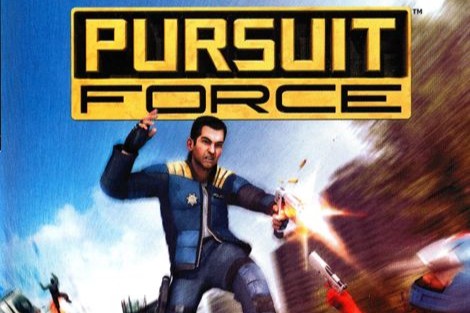
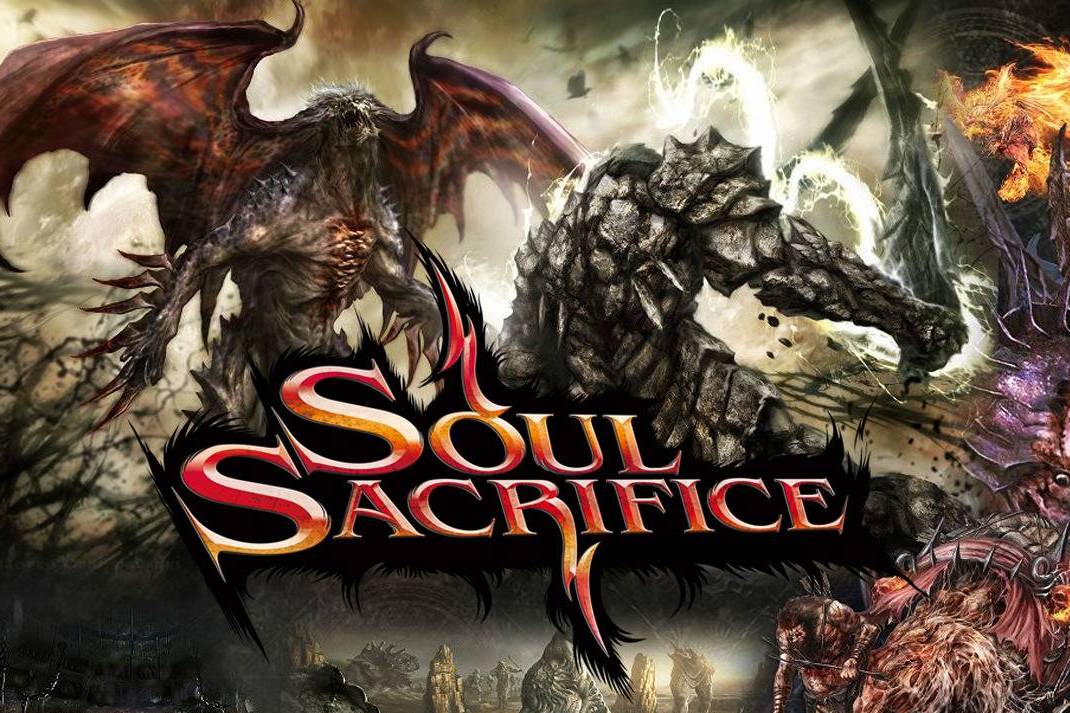
Developed/Published by: Bigbig Studios / Sony Computer Entertainment Released: November 18th, 2005 Completed: 24th May, 2014 Completion: Completed the career mode. Trophies / Achievements: N/A
This was supposed to be a nice palate cleanser after Soul Sacrifice, which was, honestly, a bit of a mistake, as I went from one game that was an awful grind with a ludicrously hard final boss to a game with totally absurd difficulty spikes that made me want to chew my own face off.
Which is super sad because Pursuit Force could have been really cute and fun?
Basically, Pursuit Force is one of those games… well, look, it was developed by Bigbig Studios, one of those mid-sized developers that seemed to have been totally squeezed out in the modern industry. Remember mid-sized developers? They’d always make games like this: ambitious, 3D, sorta buggy and unpolished. Bigbig is dead now, because this sort of thing was unsustainable, apparently.
It’s a shame, because Pursuit Force has this scrappy charm. You’re part of the titular force, who for the most part drive their fancy vehicles really fast, then leap off them onto criminal vehicles, hang on for dear life and then shoot the drivers right in the face. They generally repeat this until they’ve got to the end of the level. It’s not sophisticated! But it feels super awesome to leap from vehicle to vehicle, which I don’t think very many games have done (I believe this is a thing you can do in Vin Diesel-em-up The Wheelman?) and it doesn’t actually get boring. They mix it up a bit (sometimes you have to stick to one vehicle, etc.) and I have to give them props for only putting in two “tail a vehicle” missions (though none would be better.)
Unfortunately, there are a million problems. Notably, vehicles handle poorly (with weird physics; I’d swear the motorcycle’s brakes are on the front wheel, which screws everything up) and there are odd bugs. Most missions don’t have any checkpoints, and they can be super long. And many missions require you play perfectly.
(To go into that in detail they require you play specifically perfectly. Some missions have such a tight time limit you can’t take time to avoid gunfire and just have to survive. Other missions have a tight time limit, but you need to avoid gunfire to not die. Some missions you can’t make the time limit without stealing cars, others you have to steal cars to make the time limit. The missions are weird “what does the designer want me to do?” puzzles, and not to get a gold medal or anything, just to survive. It’s overcooked.)
In fact, some missions are so hard I have to wonder if they even tested them because my wins felt like total flukes. I imagine they checked if you could finish them at all and said “good enough.”
The most disappointing thing is that for the first few missions I really dug Pursuit Force. I was certain I was going to like it! And then I didn’t. The end.
Will I ever play it again? No.
Final Thought: Weirdly, about half the missions are boat missions. Someone on the team must have really liked boats! However, someone else on the team should have pointed out that boats are rubbish.
Oh, and there are on-foot bits and turret sections that are crap too. They really went out of their way to seize failure from the jaws of victory, here.
Developed/Published by: Marvelous AQL, SCE Japan Studio, Comcept / Sony Computer Entertainment Released: May 13th, 2013 Completed: 20th May, 2014 Completion: Completed the main story mode, four of the Fellow Sorcerers chapters, and five and a bit of the Inside Avalon chapters. Trophies / Achievements: 51%
If you’ve been wondering where I’ve been for a month, well, it’s because of this bloody slog.
A slog that fooled me into thinking it wasn’t going to be a slog. You see, several months ago I played through the demo of Soul Sacrifice (I’d probably just got the Vita, or something, and wanted to see some stuff on it) and I was pleasantly surprised to see how extensive the demo was, consisting of the entire first chapter. I thought it had a pretty compelling story-me-do, too—a student sorcerer is paired with another and grows closer to their partner as they realise that, due to the sacrificial nature of their magic, one must sacrifice the other to graduate.
It was silly, very much Hot Topic teenager pathos and angst, but it passed a few hours pleasantly and I thought “you know, I’d probably continue to play this if I had the whole thing.”
Later, I did! That’s PlayStation Plus for you.
To step back a bit, here’s the deets: Soul Sacrifice is a Monster Hunter-a-like. By which I mean it’s a game where you kill giant monsters repeatedly to gain stuff you can craft, so you can kill bigger giant monsters… repeatedly. In fact, the reason I decided to go back and finish Soul Sacrifice was that I’d randomly got in the mood for a Monster Hunter, and after playing Monster Hunter Freedom Unite briefly I was reminded of all the things that were annoying about the series (mostly: the incredible awkwardness of almost everything, and boring padding like collection missions). So I thought maybe Soul Sacrifice was going to be a bit better than an old PSP game at scratching the itch.
I suppose it did scratch that itch? In a flesh-tearing sorta way.
You see, in Monster Hunter, you (on average) pick up a decent amount of stuff for crafting. And you generally have one weapon that you’ve got the hots for. in Soul Sacrifice, it’s a bit more complex. You have six spaces for spells in a mission, every single spell has a limited number of uses per mission (which can be topped up by sacrificing some grunts) and for every mission you complete you get handed somewhere between one or two new spells.
Doesn’t sound so bad, but to properly upgrade a spell? you need sixteen copies. Beat a mission and of an individual spell you might get one or two copies. So your options are: grind, or piggyback on to some multiplayer games where the other players are much higher level (to be honest, I didn’t even work out how to play online until about half-way through, as you have to quit out to a menu I forgot all about.)
Basically, Soul Sacrifice takes the grinding element of Monster Hunter to an extreme. To make things worse, I thought it was going to avoid all those boring “collect X macguffins” missions, but it’s got those, so…
It’s all a bit badly explained, too. I didn’t work out until about the last chapter that one of the main ideas is to use one elemental attack on an enemy until it affects them, then use another elemental attack to knock them down for big damage (so, you know, freeze them, then hit them with lighting.) Doing that kind of thing is actually super satisfying (even if it does, unlike Monster Hunter, turn most battles into just running up to the enemy and spamming attacks in the hope they never get their shit together enough to respond) though I probably enjoyed punching monsters with a huge elemental fist best—if you’ve ever hit a monster in Monster Hunter with a Great Sword, you know what I’m talking about.
Cannae say that it was good enough feeling to make the time spent grinding worth it, mind.
Look, point being: the whole thing was a chore, and to add insult to injury the story stops being even vaguely interesting after the first chapter (realistically, the tone just massively outstays its welcome.) Learn from my mistakes, people.
Will I ever play it again? Nope!
Final Thought: It’s got the absolute best thing in it too: a final boss that’s ridiculously hard, has multiple stages (with unskippable cut-scenes) and if you die you have to go through a bunch of menus and cut-scenes to have another go. It’s 2014, people. If you do this kind of thing you should be strapped to some kind of a machine that kicks you in the balls every five minutes for eternity.
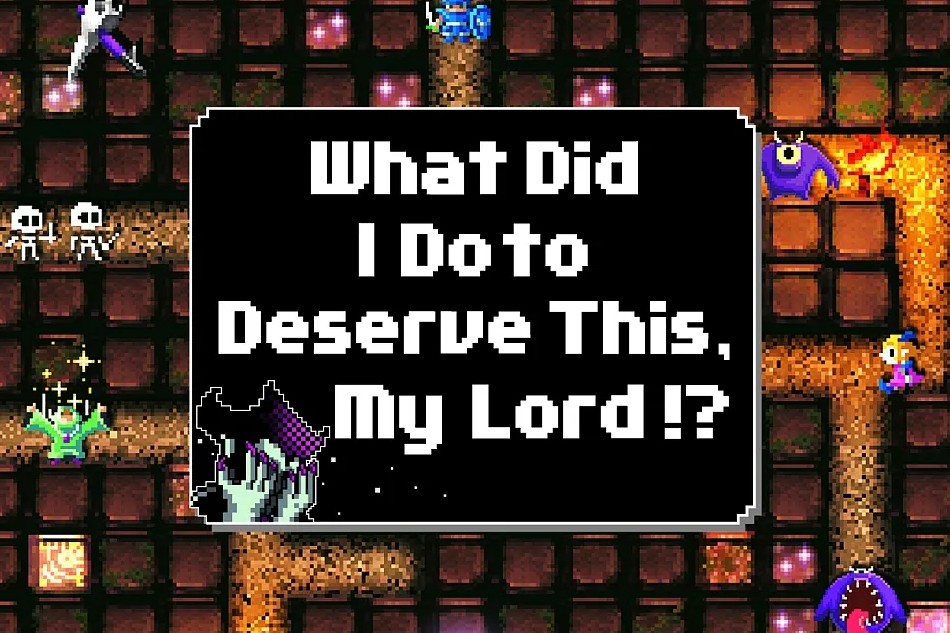
Developed/Published by: Acquire / Nippon Ichi Software Released: December 6th, 2007 (Japanese release as 勇者のくせになまいきだ) Completed: 23rd April, 2014 Completion: Completed Challenge mode. Trophies / Achievements: n/a
What Did I Do To Deserve This, My Lord? is one of those games that represents the perils of creativity. It’s got one of those not-really-very-interesting-by-now high concepts—what if you were the dungeon master?—but it takes it in a totally different direction from the likes of Dungeon Keeper. Instead, whoever it was that had the initial idea looked at game dungeons and didn’t think of them as “designed” but “evolved.” So instead of designing the dungeon, you dig it out, and you hope that the creatures you reveal move around, spread nutrients and mate to create stronger creatures. A process that you (generally) have little to no control over.
You can definitely see that the reference points are different from something like Dungeon Keeper—the “slimemosses” that are the first creatures you deal with are obviously inspired by the Slimes from Dragon Quest—and to some extent that has influenced the design, but in general the “dungeon as ecosystem” doesn’t have a precedent; when you play it, it really does feel like something totally different. The peril, of course, is that as different as it is, it just doesn’t gel.
With What Did I Do To Deserve This, My Lord? the problem is that the ecosystem is totally unmanageable and often inscrutable. Slimemosses, no matter how carefully you attempt to create the right kind of paths, just never seem to want to spread nutrients the way you want them to. Look away from a section of a dungeon for a minute and the more powerful creatures may have eaten all the weaker ones, and are now dying of starvation. And when the heroes arrive? Maybe they don’t go down the route you want them to; maybe even if they do your dragons—so expensive and difficult to create—ignore them until it’s too late.
It’s all utterly random—or at least, it’s random in that way that all your time spent playing is attempting to desperately mitigate the random factor, rather than feeling any sense of control. It’s the kind of design where I can’t really fathom how large the task would be to fix it; making creatures more predictable, maybe, or making sure they can’t remove nutrients from blocks that can make a more powerful creature. Even at that, what about when you get to that point where you’ve dug out too much of the dungeon? There are a lot of “give up and start again” points, no matter how close you think you are to “getting it.” It’s like a tower defense game, where you can’t guarantee that your towers are going to actually shoot at the enemy, or even stay where you placed them.
There are a million things going on underneath the hood—I haven’t even really discussed how you have a dig limit, monster upgrading, all the other weird interactions—and What Did I Do To Deserve This, My Lord? feels like a jam game they just kept building on top of without making sure each aspect worked with every other. Seems like an ironic oversight in a game about attempting to perfectly balance an ecosystem.
Will I ever play it again? I didn’t actually finish the main game mode! It’s an eight level single dungeon challenge, but as explained above, the game is just too random to make it worth trying to finish. So I won’t be playing it again, no.
Final Thought: So, the bit I did finish was the challenge mode, which is the bit where you’re like “ah, the developers obviously have a very clear understanding of the game’s systems” because it asks you to do some incredibly difficult edge-case challenges (like breeding slimemosses from a dungeon with no nutrients, etc.) You’d think this would teach you how to play the game really well, but actually even if you know how to do these things it’s meaningless in a live-fire exercise. Alas.
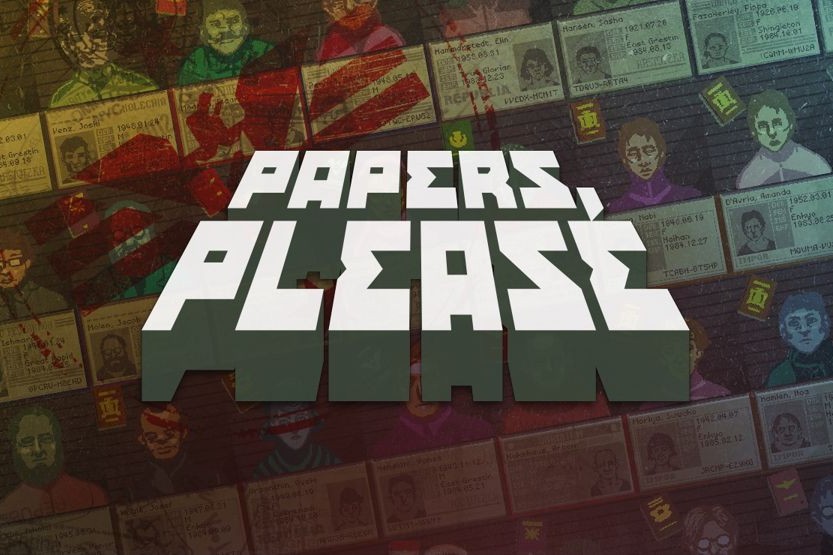
Developed/Published by: Lucas Pope Released: August 8, 2013 Completed: 20th April, 2014 Completion: Finished it seeing five different endings (two that I’d consider “proper” endings.) Trophies / Achievements: 10/13
I loved The Republia Times. Loved it. In fact, I think if you’re the kind of good-looking go-getter that reads this site, you should just go ahead and play it if you haven’t already.
…
Great, isn’t it? Especially the sting in the tail. Oh man, that’s what elevated it to a masterful piece of game-design-as-satire in my mind. It genuinely manages something that few games ever have, and to think it was just a wee warm-up for a game jam!
Anyway, here’s Papers, Please, set in the same “world” as The Republia Times, dealing with some of the same issues, and of course cleaning up at the IGF and GDC awards because it’s about real stuff and isn’t supposed to actually be fun.
Papers, Please… I am… ambivalent about it. Critiquing the game design alone, well, it’s sort-of… I guess I could describe it as a dynamic, timed hidden-object game. You only have so much time each day, you have to check people’s documents for errors, there isn’t quite enough space on your desk, and (intentionally) the controls are slightly awkward. So you’re trying to find the error (if there is one) and get to the next person so you can make more money. Each day there are more and more possible errors, more documents, and more mistakes you can make. And so your days pass, somewhere between a high-tension challenge and a boring grind. Somewhere in there.
I guess if you like hidden object-style games, it’s cool? The nice thing about The Republia Times is that it didn’t outstay its welcome. Papers, Please does, and hard. If you want to get to one of the proper endings, you’re going to be playing it for thirty days. After seven you’ll be like “ok, yeah, I got it.”
However, that’s not all there is to Papers, Please. There’s a story to the story mode (“duh”—everyone) and while it’s very very loosely sketched, you’ll make choices: people you might let through even if they don’t have the right papers, or to help some people and hinder others. The weird thing about Papers, Please is that these people all appear in exactly the same way every time. So while most of the people who stop in are generated, you know that the third person on day three is going to do a certain thing. Now don’t give me shit for this after my Rymdkapsel write-up but it seems strange that it has to be this way—there are a bunch of different characters who appear, and with a shorter game (fourteen days, maybe, rather than thirty) they could be randomised in, yes, a rogue-like-like style to make a different experience every time.
However, with the number of different endings you’ve achieved tracked and the saves cleverly branched by the game, it does seem that Lucas Pope has intentionally designed it so that you can replay the game from certain points with the knowledge you have from previous runs to make different things happen. It’s not how I’d have done it—or how I want it to be—but it seems fair enough (I’m interested in his reasoning, though.)
There’s a bigger problem, though. About halfway through Papers, Please I thought to myself “you know, this would be pretty cool on iPad.”
And then I realised something. Papers, Please could easily be put out on the App Store. In fact, I’m pretty sure that Apple would feature it. And this is a company that aggressively bans games based on content (Phone Story, Sweatshop HD, Endgame: Syria, Intern Saga… the list goes on) famously saying “If you want to criticise a religion, write a book.”
Why is that? Well, it’s because the satire of Papers, Please is toothless. Yes, you play a border agent, but who is being critiqued here? Generic Eastern European states in the eighties? One of the most astounding things about Papers, Please is how even when you are at your most strict, if anything the indignities you pile upon people trying to get into Arstotzka are less strict than those on anyone trying to get into America. And Arstotzka literally suffers a terrorist attack at the border every other day. Take your shoes off. Have your items x-rayed. If that’s not good enough, they can go through your bags. Don’t want to consent to a full back-scatter scan? “Enhanced pat-down.” Why are you travelling here? Business or pleasure? Where are you staying? What are you bringing in? How do you know these people? Are you trying to work?
And so on, forever. And the profiling—you only have to look at Did Rami Get Randomly Checked to see how pervasive it is.
If Papers, Please was about being an American TSA agent, it would actually be saying something just by actually representing how absurd it is the hoops they make you jump through—and to what extent your privacy is abused.
But it doesn’t, so it could easily be approved for the App Store.
Funny, that.
Will I ever play it again? Nope.
Final Thought: Maybe the saddest thing about Papers, Please is that unlike The Republia Times I can’t even see any satire in the story, anyway. Arstotzka is… bad? For some reason that isn’t super clear? You might want to escape, but maybe not? There’s one ending that comes close to making you feel that shiver of horror (I won’t spoil it, but it involves forged passports) but it doesn’t push it too far. The fact that there are “good” endings is actually pretty shocking to me.
Oh, and the game rewards you with achievements for making the “right” decision in several cases. Come on.
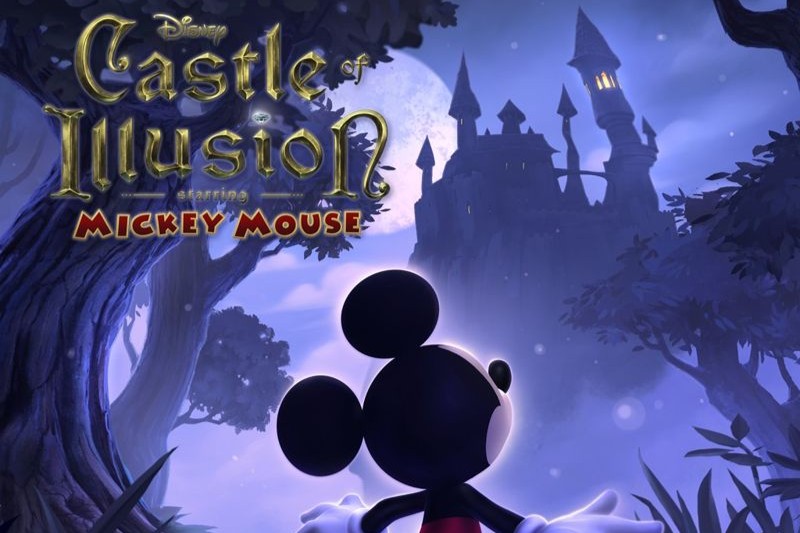
Developed/Published by: Sega Studios Australia / Sega, Disney Interactive Studios Released: September 3, 2013 Completed: 20th April, 2014 Completion: Rescued Minnie! Trophies / Achievements: 61%
Yep, I played through both version of Castle of Illusion in the same weekend.
I did this because I was sure, sure that this wasn’t going to be a remake but actually one of those “inspired by…” type things. Because with Castle of Illusion’s frankly weird level design and pretty darn dated everything else, I didn’t think they’d be that straightforward with it.
Uh, so the weird thing is that they really were. It’s not like they didn’t change some stuff. Most notably, the game goes “full 3D platformer” in certain segments (which is awful, for a reason I’ll explain in a second) and certain parts of the levels are changed (though in general their structure is amazingly faithful.) Bosses have more attack waves (usually allowing them to use the full 3D stuff a bit.) And Mickey’s jump is different.
Except… it’s also weird and terrible? It’s still floaty, it’s just as hard to aim his landing, but for some other reason? I can’t put my finger on why both jumps are terrible for different reasons (and I really can’t be arsed to go back and play them off against each other) but trust me: they’re both bad. And in the remake, not only is it bad in 2D, it’s godawful in 3D. Non-stop frustration as you slightly mis-aim Mickey and drown him in milk again and again and again.
(Because he can swim in water, but not milk. I guess that makes sense? Sorta?)
This is, genuinely, a remake of Castle of Illusion with some extra bits bolted on (most notably totally extraneous narration and loads of chat from Mickey, who… did Mickey always sound like this? He sounds so off-brand. Like a “Mikey Mouse” VHS, bought from a discount store in Orlando.) If you were going to play one version, I’d be hard pushed to say which one to bother with—probably the original—though both can be finished really quickly, and it’s really not worth the effort.
Here is the thing, though: much like with the original Castle of Illusion, it’s not like you can’t see there was talent on the team. Had this been a reimagining, not a remake, and they’d manage to make the jump less weird, I’d be happy to gamble this would actually have been pretty great.
Uh, not that it matters because Sega shut down Sega Studios Australia right after this. Alas.
Will I ever play it again? I could go back and collect more diamonds and do time trials, I guess? I’m not gonna, though.
Final Thought: Interesting fact: Emiko Yamamoto, director of the original game and who also supervised this, went on to work at Disney Interactive in Japan and has served as a producer on almost the entire Kingdom Hearts series. Huh.
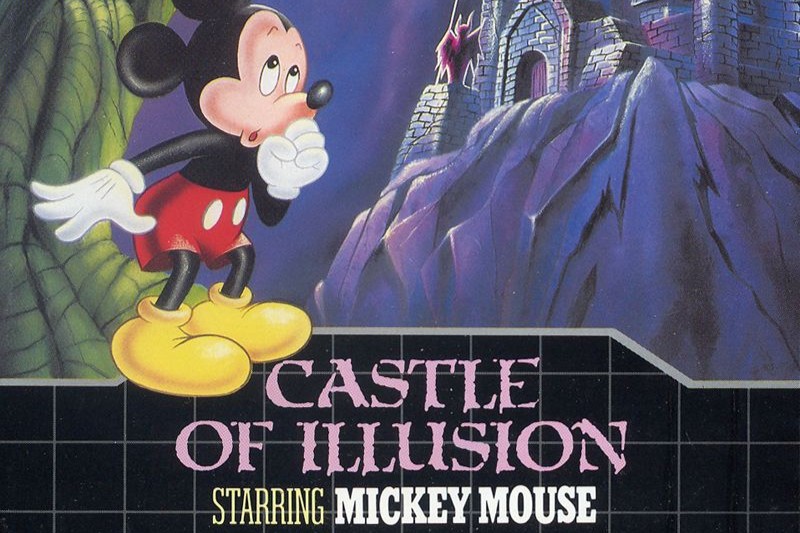
Developed/Published by: Sega Released: 21/11/1990 Completed: 19th April, 2014 Completion: Rescued Minnie! Trophies / Achievements: n/a
I have strong memories of Castle of Illusion as one of the games that people marvelled at in video game magazines of the time for being particularly beautiful and holding promise for what was then the “next generation,” so this weekend discovering that M2 had ported it to PS3 was too good to resist.
It’s interesting, then, that on playing Castle of Illusion—a “pre-Sonic” Mega Drive title—that the thing I find most remarkable is how much it reminds me that even by the time of the Mega Drive video games were… under-developed? It’s hard to explain I guess, but the thing I most remember of playing games in the 80s, particularly on the home computers popular in the UK, is that sense that developers either got to this point where they went “ok, good enough” or that they didn’t actually know that games could be better than that. It’s fondly remembered, perhaps, but Castle of Illusion has that half-baked feel where you can see some bits are done absolutely expertly—Mickey’s animation is lovely, the cut-scenes are sweet, and certain stages definitely have their moments—but there are other parts where you have to question why it was there that they stopped.
I mean, Mickey’s jump. It’s just the weirdest, floaty, awkward jump. One of those jumps where you feel like you’re pushing a bitmap around, not controlling a character. No “game feel” at all; something you notice in the many many bits where the ceiling is low enough that Mickey clonks his head over and over.
Or the enemies, who do that thing where they just move towards the right of the screen at a steady velocity, and respawn if you walk them off screen. No sense that they’re actual beings who are actually there. I’m definitely reminded as to how far ahead of the game Nintendo was with the Mario series compared to everyone else at this point; it’s actually crazy to consider that anyone would have played Super Mario Bros. 3 as a developer and then be happy to put this out. I’m not talking about world maps or secrets, the things that I suppose made Mario 3 feel so amazing at the time; I’m talking about making sure the jump feels good, the level design supports it, and the enemies feel worth jumping on.
The level design is weird too. The first two levels are completely linear, but then from level three onwards you can’t actually progress unless you explore (totally counter-intuitively in level three, too, as it involves you falling into water you don’t know you can swim in.) Indeed, the game’s wrapper—Mickey going in each castle’s door, one by one—is presented “in engine” which makes me think maybe these levels were supposed to be approached in any order, and to be generally non-linear, but that got snipped off at some point.
That’s total speculation, of course.
I didn’t actually have a bad time finishing this, however. There’s a pleasant enough pace, and once you’re comfortable with its quirks it’s very much your average early platformer (one that’s nice enough to get through thanks to M2’s good port and freely-available save states.) It doesn’t stand out to the point where you should particularly feel the need to play it, though.
Will I ever play it again? Nope.
Final Thought: I’m a bit sad this game isn’t as pretty or as good as I read it was in the magazines of the time. The vision of games I built in my mind from reading many, many more game magazines than playing games is something I come up against regularly now I have access to any game I want; even now I can look at the cover of Castle of Illusion and imagine something exciting, something just beyond my reach.
Developed/Published by: Grapefrukt Released: May 7th, 2013 Completed: 18th April, 2014 Completion: I researched all the monoliths. Trophies / Achievements: n/a
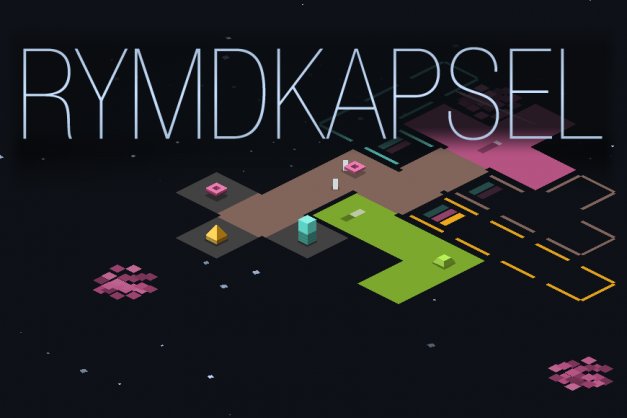
I had played Rymdkapsel on release, but I thought the core concept—placing tetrominoes down to create a space station, choosing if they’re corridors, barracks, weapons rooms or so on—was so cool that after touching it briefly I put it down thinking “at some point in the future, when I’ve got more time, I’ll really dig into this.”
(God knows why I chose this weekend, and right before bedtime, too.)
I must admit: I’m a little disappointed in Rymdkapsel. It’s my own fault in some ways. You see, Rymdkapsel is a small, short, single experience. Your station is centrally located between four mysterious monoliths, and you reach your corridor tentacles out to research them, all the while making sure you don’t run out of materials and are well defended by weapons rooms. It’s really really cool. But once you’ve done that—and it should only take a few hours—you’re, uh, done.
Now, before you cry foul, you can continue playing—there’s definitely an ending if you can get through 23 waves of enemies, and there’s a relaxing zen mode for stress-free building—but I’m kind of surprised because the design promises so much more than one canned experience.
Yeah, I’ll say it… I wish this was a rogue-like-like. I know, I know. Everything is a rogue-like-like now. But I don’t see why with Rymdkapsel I don’t constantly have different monoliths to find or why the enemies aren’t different each time (well, to an extent). I can definitely see playing this over and over if there were differences every time I played. It doesn’t make the basic experience of playing the game the first time any worse—actually, I totally recommend playing Rymdkapsel, it’s great—it’s just… why am I not still playing it?
Will I ever play it again? I really want to, which is the odd thing. But I can’t spend my time re-playing the same experience, I have this site to think about!
Final Thought: I mean, look, I can see some problems; you probably can’t let a single space station get too big, or it’ll make the game unwieldy. But it could stay a short, just very varied, experience, I think? There are some other things that would have to be considered, too. In this version, you can sneakily place and then delete corridors to ensure you get the right shapes you want, which you’d probably want to avoid to make the rogue-like-like harder. And in that case, well, Rymdkapsel is described as a “meditative space strategy” which is definitely a step down from the intense, “you are going to die, and soon” experience of most rogue-inspired titles. So maybe this isn’t an ideal twist.
Developed/Published by: Studio Liverpool / Sony Computer Entertainment Released: February 22nd, 2012 Completed: 15th April, 2014 Completion: Finished the single-player campaign with all elite passes, played one section of the online campaign, and played a few chunks of the Wipeout HD/Fury campaigns. Trophies / Achievements: 34%
With Kurt Cobain’s suicide on April 5th twenty years ago generally considered to line up with the birth of Britpop—as if his head exploded into a bloom of English roses—it’s fairly fitting that I found myself digging into the last outing of the Wipeout franchise while the British press felt the timing was right to masturbate itself silly with retrospectives of a romanticised past.
Wipeout was a PlayStation UK launch title on the 29th of September, 1995, so right at the height of Britpop-mania; Wonderwall was released just two weeks earlier. It’s hard not to feel pangs of horror that a series that once felt so futuristic (by way of The Designer’s Republic) is now nineteen years old, but as with Britpop, Wipeout’s place is to line up as an example of what was once British exceptionalism. When I think of this period of post-Cobain US, I layer a sickly, orange television-transmission filter over a country spinning its wheels culturally while it waited for nu metal to be invented. Twisted Metal defined the “extreme” angle of the PlayStation’s marketing in the US, still locked into the “Genesis does what Nintendon’t” mindset; ugly, nihilistic car combat with evil clown iconography. Like nu metal, the only thing that could make it seem cool is that your parents might confiscate it.
Wipeout, however, was something different. For whatever reason, Sony managed something in the nineties that it didn’t manage to quite keep up as the world got smaller—PlayStation in the UK was “cool.” Lara Croft on the cover of The Face, Wipeout demo pods at legendary club Cream. Wipeout wasn’t about chugging Mountain Dew and yelling at your mom to stay out of your room, Wipeout was about running a few laps while you waited for your mates to come round after TFI Friday finished so you could go down the pub and “have it large.”
Honestly, if you asked me to visualise a copy of Wipeout for PlayStation, it’s actually impossible to do it without seeing it lying on a pile of copies of Select magazine next to a packet of Rizlas, probably dusted with left-over cannabis resin.
(And if that doesn’t make any sense at all, well, you weren’t in the UK in the nineties.)
But, of course, I have a complicated relationship with Britpop. I said English roses for a reason; for after all, on the world stage, Britain is England, and Britpop was an English movement that, fair or foul, the rest of the UK was tugged along with. It was never really my movement, and when it came down to it, my key memories aren’t playing Wipeout and listening to Suede, it’s playing Wave Race 64 and listening to Arab Strap.
So when I return to these things, there’s a familiarity, yet a distance. An understanding of what the promise was—Britpop is gonna save us from the indignity of either America’s miserabilism or its manufactured pop / games are finally going to be cool—but too much knowledge that it was never going to come true.
And yet, I have a fondness for Britpop—and Wipeout—because it did try. It might not have been fighting my battle, but there was an inherent optimism I respect. And like the reunion of a Britpop band from twenty years ago, with Wipeout 2048 you can definitely tell what it was they were trying for originally… except it doesn’t look quite the same.
Wipeout 2048 was sadly the last game Studio Liverpool (née Psygnosis) would ship, and one does have to wonder if the changing face of what PlayStation is and was led to a game like Wipeout 2048, which lost all the swagger and self-belief of the Designers Republic and European dance as the years passed, ending up here, with generic futurism and bland EDM.
Underneath that, however, it’s still Wipeout. I remember playing Wipeout 2097 at its height and being utterly frustrated by just how difficult it was, because when you’re dealing with floating racers all the things that you expect about vehicles (how they turn, what happens when they hit walls, what braking means) are all out of the window. I never learned how to play it, and I could never find anyone to explain how you play it either. So let me inform you if you don’t know: Wipeout is a proper racing sim that just happens to have, uh, weapon-equipped floating vehicles. You’re trying to get around the tracks by maintaining a proper racing line, braking early and accelerating properly. You can use air brakes to slow on turns, but they don’t help you drift or anything (well, there’s this “side-shift” thing, but I never got much use out of it). You don’t want to hit walls, but they don’t slow you down as much as you might think (you know, like Gran Tusimo). It’s actually weird to realise years later that the Wipeout series is as serious as Gran Turismo despite its trappings. It’s a series you have to dedicate yourself to—for at least a while—and I was surprised that I dedicated myself to Wipeout 2048 enough to get the “elite pass” in every part of the campaign (definitely helped by the fact they were all single races—no tedious tournaments—although I really hate the “Zone” mode introduced with Wipeout Fusion.)
One you learn it, the game does feel good, even if the level design and campaign never really seems to live up to it (combat events are a nadir.) You can see what people liked about it. It’s just that, like Britpop, it had its time, you know? You can’t play the same songs, just older and uglier, and still expect to stand above.
Will I ever play it again? No. There are loads of levels left in the Wipeout HD/Fury campaigns but I actually found them much less inspiring than Wipeout 2048’s main campaign so I won’t bother.
Final Thought: According to BBC 6 Music, the best Britpop song was voted to be Common People by Pulp. A band who I don’t think ever deserved to be called it, there’s something insidious about marketing a movement such that a song as clear-eyed and angry as Common People was seen at the time and still is seen as a shouty sort of pub sing-a-long, ripe for jokey karaoke covers by William Shatner. I heard it recently and it made me think about Cart Life again. When I think of what Cart Life is lacking, it’s that conviction in Jarvis Cocker’s voice when he screams about exactly how it feels to be a “common person”—simultaneously derided and romanticised for what they are thought to be, never considered truly as who they are.
“You will never understand / how it feels to live your life / with no meaning or control / and with nowhere left to go / you are amazed that they exist / and they burn so bright / whilst you can only wonder why.”
Developed/Published by: Acquire, Japan Studio / Sony Computer Entertainment Released: March 18th, 2010 Completed: 29th March, 2014 Completion: Finished the main campaign without letting a single person die/go unsaved. Hurrah! Trophies / Achievements: n/a
Oh, hello! Patchwork Heroes is a game I actually wrote about already—for exp. issue infinity—and so I don’t think I should write about it again. And, yeah, I wrote about it without having finished it. Deal with it. I kind of forgot about the game for a while but returned to it last weekend and polished it off. I’m not going to discuss it any more than that—look, if you wanted to hear what I had to say, you should have bought a copy of the zine three years ago, ok—well, other than to say you should buy it, you can download it for the PS Vita and it’s lovely. Just buy it.
Will I ever play it again? A tougher question than usual. I can see myself playing it again, yeah, but I’d (as usual) rather see a sequel.
Final Thought: It’s funny how if you really like a game, failing a lot and having to replay it just isn’t a problem, eh? Towards the end of Patchwork Heroes there’s actually a few unfair twists (hell, it’s a Japanese video game, that’s the way they make things harder) but I always had this sense I could deal with it, that I could do better. So I would spend hours not really getting further but still enjoying it. And yet in so many games when I hit a high challenge it’s such an unpleasant stumbling block. Was I ever really enjoying them at all?
Developed/Published by: Richard Hofmeier Released: July 29, 2010 Completed: 27th March, 2014 Completion: I didn’t. This is the first time on this site I have a game I can officially state I gave up on. Trophies / Achievements: n/a
Before we get into the article: you can pre-order a copy of exp. 2602, my brand new zine, right now. If you haven’t picked up any issues yet, there’s a discounted bundle of all three zines! Patreon members get an even bigger discount: subscriptions start at just $1!
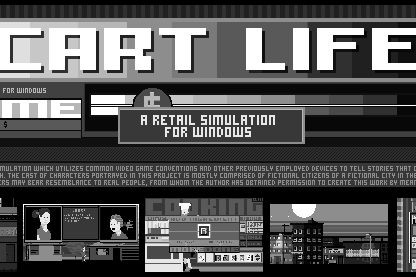
I wasn’t going to write about Cart Life! As I played it for a while and gave up on it, I was prepared to let it slink off into the dark. However, I was asked by a few people (not least Incredibly Strange Games’ Chris Charla) why I didn’t like Cart Life, so I kind of feel honour bound to outline why I couldn’t bring myself to even finish one of the stories in Cart Life.
Full disclosure: I played every one for at least two-three days of in-game time, and in every case multiple times.
So, Cart Life then. After this year’s IGF and GDC Awards, where Papers Please cleaned up, I decided to go back and find out what it was that made the last two award-show defining titles the titles you—at a glance—can deduce are obviously depressing, intentionally boring, and glibly worthy. I’ll talk about Papers Please in future! But I wanted to trust that these games were being chosen for what they actually are, not what they represent vis-a-vis a “trend.” (I’m not convinced.)
But what is Cart Life?
Cart Life is a weird sort of mash-up of adventure game and Lemonade Tycoon-esque simulator. There’s sort of a dash of The Sims, too. Basically, you have a hero—one of three street vendors—and they have a goal, something simple like “get enough money together for a deposit on a flat within a week.” They’ve also got to eat, sleep, and feed their addiction (smoking, or coffee, for example.)
So, what you do is you get them up in the morning, you get them over to their cart, and you spend their day doing monotonous tasks. Then you either do something vaguely social/story-related if there’s time, or go to sleep and have pointedly bad dreams. And there’s never, ever enough time in the day.
That there’s never enough time in the day is an obvious point for a game to make, but it’s a point that Cart Life is making, and it’s what kind of leads to what I consider my main criticism of it:
Without already being extremely video game literate, Cart Life is impossibly off-putting. Yet with an extreme level of game literacy, Cart Life presents a challenge that obscures anything it’s trying to say.
This is possibly a little hard to explain, but to put it roughly: Cart Life uses its video gamey aspects: world navigation, maps, menus, “mini-games” to represent the challenge the characters face. But if you’re not already very familiar with this kind of thing, the idiosyncrasies of the system and general lack of useful tutorials are insurmountable. And this isn’t something I could call useful to the meaning to the game, as it’s definitely a struggle with the “top layer” of the content.
Of course, if you can become familiar with how to play the game, as I did… it’s too easy to get drawn into a system where you are determined to absolutely murder the challenge; to “min-max” your play. Didn’t spend the day just right or make enough money? Reload the last save.
This is probably controversial! In fact, I can imagine that many (most?) players of Cart Life doggedly played a “failing” hero right to the end (where it turns out it’s the taking part that counts, anyway.) However, having played many, many first days where I made mistakes because I didn’t understand how to play, once I did I was in the mindset that I could always do better. It was after beginning Melanie’s story for the fifth time or so where I managed to run a “perfect” first day (set up the cart, get the permit and a bus pass, even walk her daughter home from school) that I was like “gah, fuck this.” (Admittedly because I’d min-maxed so hard that I went to bed at 6pm, woke up at 3am the next day and broke the game completely.)
In an earlier article I talked briefly about how when and why you stopped playing a game is also educational, just in a different way from doggedly getting to the end to suck the marrow from the bones of its design. With Cart Life, I stopped because I found the tension of “being a game” and “being meaningful” impossible to relate when presented the design of Cart Life.
There are several interviews with Richard Hofmeier where he talks about how the game is supposed to not so much be depressing, but to instil in the player that kind of pride a wage slave worker gets from doing a boring, repetitive task well. I’m going to set aside how arguably patronising that is—there’s a rougher, more polemic article I could write about how Cart Life’s success is related to a safe, private othering of the working poor by the kind of middle-classes who would write and talk about and vote for an “art” game—and say that having been a wage slave, Cart Life is weak at this. I know how it feels to cut the plastic ties on a bundle of newspapers or a cardboard box, and it doesn’t feel like switching my hands to the keyboard to type “cut the ties,” an experience which in every case I thought “urgh, how irritating.”
You don’t think “how irritating” when doing a job like that. You think “just a few more then it’s break time” or “fuck, these bindings are cutting into my hand” or you escape into your own mind entirely because it’s all you’ve really got to do.
I just don’t see the challenge of the game as accurately representing the challenge of these lives, something that I think Hofmeier admits (he’s stated in interviews that actual vendor cart owners respond least positively to his game, and I do understand his artistic urge to make dealing with newspapers involve text.)
But If you want a key example: Andrus is an immigrant. As an immigrant myself, one who was pretty sure he was speaking English, I discovered that when I moved to Canada I spoke Scots and no one understood me. Just talking to people became a difficult navigation of the right words to use. A challenge.
Andrus? He speaks awkwardly, yeah. But if I want to talk to anyone in the game, I just hit “up” and he does all the work for me.
Will I ever play it again? Hofmeier has made the game open source and I’m definitely interested to see if anyone is interested in picking the game up and murdering the bugs which plague it. I actually doubt we’ll see a complete, non-glitchy version of the game, but if we did, I’d consider taking another run at it, tempering my urge to min-max or “be a gamer.”
Final Thought: I wouldn’t let Andrus smoke. No matter how bad his cough got, how poorly treated by the cough drops from the store, I wouldn’t let him smoke. I never said the game didn’t succeed in some ways.