Author: Mathew Kumar

  • ModNation Racers (San Diego Studio, 2010)

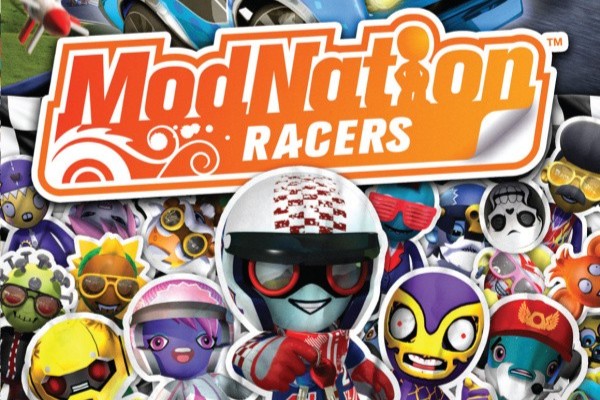
    ModNation Racers (San Diego Studio, 2010)

    Developed/Published by: San Diego Studio / Sony Computer Entertainment
    Released: 25th May, 2010
    Completed: 7th July, 2014
    Completion: Finished the campaign.
    Trophies / Achievements: n/a

    If you have a question, it’s probably “Don’t you mean ModNation Racers: Road Trip?” and it would be a fair (if surprisingly specific!) question; I’d expect nothing less. However, I’m actually talking about the PSP version, which I chose to play for two reasons: one, I was able to download it on my Vita thanks to apocalicense 2014 (where Sony accidentally let you download all PSP games on Vita, even the ones you aren’t supposed to be able to) and two, because this one has cut-scenes and I guess I was interested in the “world-building” of a game largely sold on its level creation/sharing?

    Anyway. I remember this being announced at E3 in 2009, and the general feeling being that, yeah, vinyl toys are a pretty cool thing to crib for when it comes to character creation, but that in comparison to “Play, Create, Share” stablemate LittleBigPlanet… well, no matter what you tried to make in ModNation Racers, you’d end up with a racetrack.

    It’s true, and kind of an interesting framing of how we think about games. A side-scrolling platform game level? That could be any number of things! But a kart racing game racetrack is always a racetrack.

    The thing about LittleBigPlanet, of course, is that a LittleBigPlanet game level… is always a LittleBigPlanet game level. If you want to start designing a platform game, you want to decide how your hero moves. In LittleBigPlanet, your hero moves like total garbage. With possibly the floatiest, worst jump in any game that’s ever been taken seriously, along with that “three Z planes” thing that literally everyone hates, there’s a good reason that every story I’ve ever heard about someone who makes LittleBigPlanet levels getting hired in the industry, it’s onto the LittleBigPlanet team.

    (Absurdly, of course, for LittleBigPlanet 3 they haven’t unlocked the levers of Sackboy’s movement, instead adding more characters with their own specific quirks; The “create” part of the “Play, Create, Share” slogan is something that has been paid lip service at best, let’s all be honest.)

    But my point is this: if ModNation Racers was a solid kart racer, being able to build a good race track should teach you more, much more than building a LittleBigPlanet level, in terms of pacing, challenge, excitement, all those other things you want to know when crafting an experience for a player.

    Nae luck, ModNation Racers is crap as well.

    Will I ever play it again? Nope.

    Final Thought: “But!” you cry, “You played the PSP version, you lunatic!“ I could install the Vita version! but I’m not going to, because Mario Kart is still good on the Nintendo DS, dig? I’ll give the series this, it’s way way easier to build a racetrack than it is to build an LittleBigPlanet level.

    Which probably makes it extra weird that the pre-made tracks in ModNation Racers are so boring.
  • Batman: Arkham City (Rocksteady Studios, 2011)

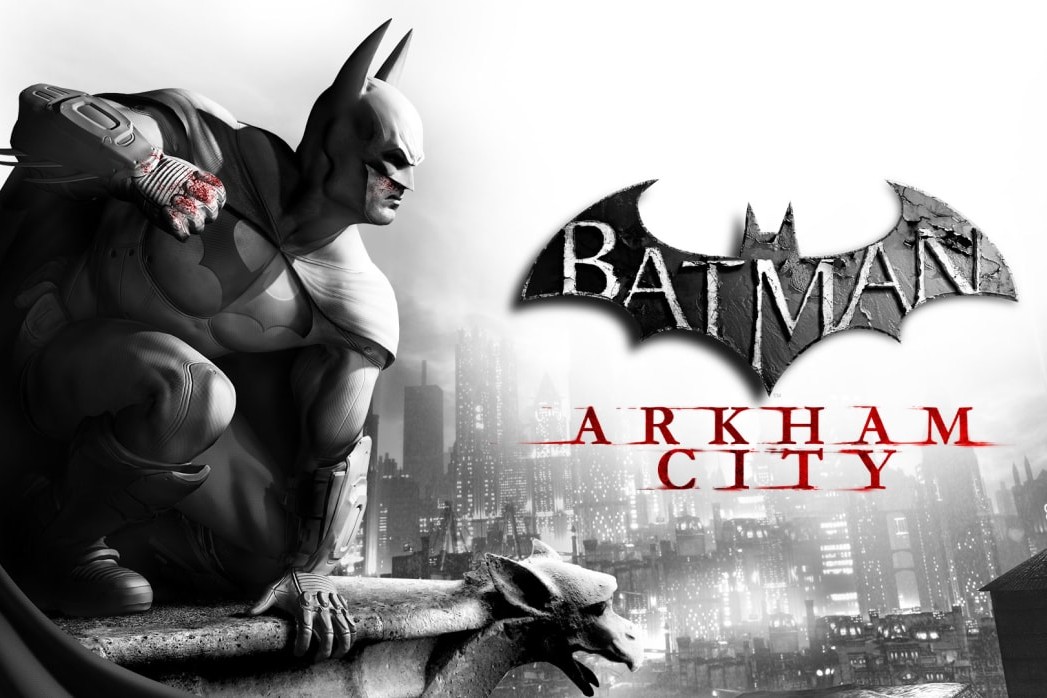
    Batman: Arkham City (Rocksteady Studios, 2011)

    Developed/Published by: Rocksteady Studios / Warner Bros. Interactive Entertainment
    Released: October 18, 2011
    Completed: 20th June, 2014
    Completion: Finished Batman and Catwoman’s chapters and did all the side quests that aren’t “collect X macguffins.” More or less, anyway.
    Trophies / Achievements: 400/1250

    Ah, Batman. Greater minds than mine have probably written about the symbolism of this beloved pervert, but for my money it’s always seemed absurd that Superman—an alien, gifted his power through no effort of his own—is the American poster boy. Bats is the American Dream; the perfect representation of that childish id: “if I can just get rich enough, I can do whatever I want.“

    (in this case, “whatever I want” equalling “get super ripped and live out my sadistic fantasy of dressing in leather, pretending to be an animal, and battering fuck out of people.”)

    What’s more American than the super-rich having limitless power? Of that power being used fetishistically? On the micro-scale, used for revenge on anyone who has ever slighted them, on the macro-scale, used in an endless war that doesn’t seem to feed anything but hubris?

    (I’m not even going to get into Frank Miller’s deranged Tea Party take; a Batman blinded by hatred of a Superman gifted his powers, a Batman, likely, who’d lament even any innocent bystanders hurt having their bones mended on the taxpayers’ dollar.)

    So yeah, Batman. He speaks to the deep, dark wishes of the hair-trigger slighted (probably why he goes down so well with the comics industrial persecution-complex): power, money, hatred. I’m not going to lie; this kind of fantasy is fun, rooted in the id as it is. 

    I mean, I loved Arkham Asylum. The plot was tosh, but we can forgive it being crammed with too many villains what with it being set in, uh, the prison where all the villains are held. It otherwise managed something really special: one, it was a new take on the “metroidvania” in third-person (so tightly designed around solid environments) and two, it knitted together several disparate play “scenes,” all individually excellent and carefully segmented (in turn, investigation/exploration, group hand-to-hand combat, and stealth “predator” sequences.)

    It was about as close as video games get to a polished bullet aimed with a sniper’s precision. Which means it makes obvious sense that the sequel should be completely fucked up in order to fit the milieu of all other modern AAA video games.

    I’m going to make an assumption from here on in; it was an external producer’s fault. Because I can’t see why the team would have made a sequence of decisions that chafe so incredibly obviously with what Arkham Asylum was. Here’s how I imagine it went.

    “Great news, guys! Arkham Asylum was a huge hit, and we want a sequel! However, it needs to be an open-world game now.”

    “Well, you see, Arkham Asylum had this metroidvania thing going on, you slowly unlocked the world as you unlocked your—“

    “Naw, fuck that. Also we want the levelling-up thing to be really important, so have loads of upgrades.”

    “That was quite finely tuned—“

    “Shut up. Plus add fucking tons of collectibles. Like five hundred. And add side quests, but they’re mostly more collectibles.”

    “Anything else?”

    “Make sure there are a million gadgets straight away, and when you need them to traverse it’s actually a surprise, or right after you unlock them and never again. And make sure you have to unlock things that teach you systems, like timing your strikes rather than button bashing, so you never learn them. Oh! And mash up your three styles of play in an inelegant, uncomfortable way, especially in the open world.”

    “Can we at least make each of the locations in the open-world like, a small, carefully designed metroidvania?”

    “No, make those crap as well.”

    “Uh…”

    “Look, this shouldn’t be a surprise, your art direction was already over-the-top brooding dark and mad sexist. It’s not like you’ve got perfect taste or anything. In fact, make this one way more ugly and sexist. Ooh, actually, make sure the plot is total balls, starting in the middle unless people bought a tie-in comic, or something, and ending in a way that’s actually totally laughable and that the writer of this would spoil right here but, you know, people might still want to play it. “

    “‘The writer of this?””

    Will I ever play it again? No, but the actual tragedy you should note is that I played Asylum far past the point where I could have been done with it, collecting all the collectibles and doing all the challenge missions. As soon as I beat this I stopped.

    Final Thought: Both Arkham Origins and the upcoming Arkham Knight follow the template of City, which means it worked. What I can’t understand is why when City came out people didn’t react the way I did, which is “why did you go out of your way to break something that worked so well?“

    This essay is featured in Every Game I’ve Finished 14>24.

  • Super Stardust Portable (Housemarque, 2008)

    Super Stardust Portable (Housemarque, 2008)

    Developed/Published by: Housemarque / Sony Computer Entertainment
    Released: November 25th, 2008
    Completed: 31st May, 2014
    Completion: Beat all the planets in arcade mode. Not in one go or anything, mind.
    Trophies / Achievements: N/A

    I must have bought this bloody forever ago and just never played it. Here’s why I didn’t, I bet: I was sick of twin stick shooters when I bought it, but it’ll have been on sale so I was banking it for a rainy day.

    I can honestly remember when the only twin stick shooters for years were Robotron 2084 and Smash TV (well, and Total Carnage, but it’s pish.) Then after Geometry Wars they were bloody everywhere (though wasn’t Mutant Storm before that?) and even though I’d put Robotron 2084 on my desert island disks, I was definitely burned out on them.

    The why of that, of course, is that so many of the new wave of twin stick shooters are totally flavourless. Geometry Wars isn’t, but I’d definitely say Mutant Storm is a perfect example of platonic blah. Games where none of the enemies stick in your mind, where there’s just no visual style, where there’s probably some tactics for high scores, but it’s impossible to care enough to try for them.

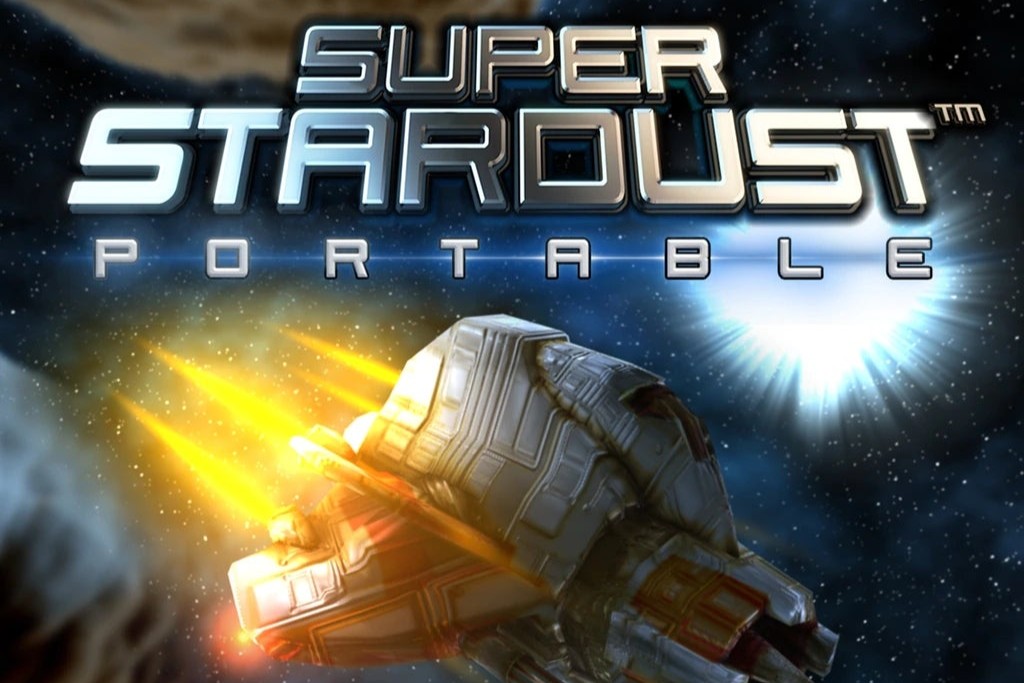
    Can you guess where I’m going with this? Why yes! Super Stardust Portable is one of those games. The one thing that makes Super Stardust HD stand out—the actually neat playing-the-game-on-a-rotating-planet aspect—is totally missing from this because they’ve zoomed the view in (PSP couldn’t handle it, or whatever.) And without that, this game could not be more generic.

    Which is a bit odd! Because if you go back and look at the original Stardust and Super Stardust on the Amiga there’s bags of weird Euro-game charm. Actually, they were much more purely Asteroids-inspired; I wonder offhand if they could have made a rotate and shoot-em-up instead of a twin stick title, or if that kind of thing is just too old hat (I’m going to say… yes. But they could maybe have gone the Time Pilot/Luftrausers direction.)

    The graphics could be totally bonkers, just look at how it looked on the Amiga! Then look above, and feel yourself falling asleep. Of course, the game is a bit more intense than that, what with all the asteroid bits flying about, the three weapons (each better at different things) and multiplier shenanigans. 

    But it’s still boring.

    Will I ever play it again? I really can’t see why I would.

    Final Thought: There were some cool tunnel shooter bits in Stardust/Super Stardust, too, that are totally missing from any of these later games. I’d so rather have spent a few hours playing one of them rather than this on my Vita, honestly.

  • Pursuit Force (Bigbig Studios, 2005)

    Pursuit Force (Bigbig Studios, 2005)

    Developed/Published by: Bigbig Studios / Sony Computer Entertainment
    Released: November 18th, 2005
    Completed: 24th May, 2014
    Completion: Completed the career mode.
    Trophies / Achievements: N/A

    This was supposed to be a nice palate cleanser after Soul Sacrifice, which was, honestly, a bit of a mistake, as I went from one game that was an awful grind with a ludicrously hard final boss to a game with totally absurd difficulty spikes that made me want to chew my own face off.

    Which is super sad because Pursuit Force could have been really cute and fun?

    Basically, Pursuit Force is one of those games… well, look, it was developed by Bigbig Studios, one of those mid-sized developers that seemed to have been totally squeezed out in the modern industry. Remember mid-sized developers? They’d always make games like this: ambitious, 3D, sorta buggy and unpolished. Bigbig is dead now, because this sort of thing was unsustainable, apparently.

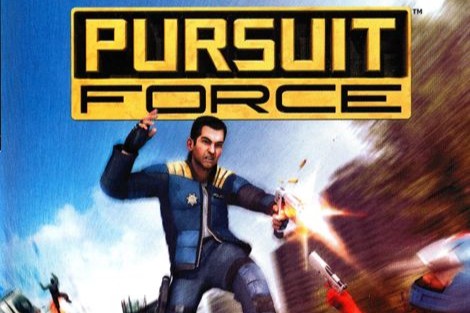
    It’s a shame, because Pursuit Force has this scrappy charm. You’re part of the titular force, who for the most part drive their fancy vehicles really fast, then leap off them onto criminal vehicles, hang on for dear life and then shoot the drivers right in the face. They generally repeat this until they’ve got to the end of the level. It’s not sophisticated! But it feels super awesome to leap from vehicle to vehicle, which I don’t think very many games have done (I believe this is a thing you can do in Vin Diesel-em-up The Wheelman?) and it doesn’t actually get boring. They mix it up a bit (sometimes you have to stick to one vehicle, etc.) and I have to give them props for only putting in two “tail a vehicle” missions (though none would be better.)

    Unfortunately, there are a million problems. Notably, vehicles handle poorly (with weird physics; I’d swear the motorcycle’s brakes are on the front wheel, which screws everything up) and there are odd bugs. Most missions don’t have any checkpoints, and they can be super long. And many missions require you play perfectly.

    (To go into that in detail they require you play specifically perfectly. Some missions have such a tight time limit you can’t take time to avoid gunfire and just have to survive. Other missions have a tight time limit, but you need to avoid gunfire to not die. Some missions you can’t make the time limit without stealing cars, others you have to steal cars to make the time limit. The missions are weird “what does the designer want me to do?” puzzles, and not to get a gold medal or anything, just to survive. It’s overcooked.)

    In fact, some missions are so hard I have to wonder if they even tested them because my wins felt like total flukes. I imagine they checked if you could finish them at all and said “good enough.” 

    The most disappointing thing is that for the first few missions I really dug Pursuit Force. I was certain I was going to like it! And then I didn’t. The end.

    Will I ever play it again? No.

    Final Thought: Weirdly, about half the missions are boat missions. Someone on the team must have really liked boats! However, someone else on the team should have pointed out that boats are rubbish. 

    Oh, and there are on-foot bits and turret sections that are crap too. They really went out of their way to seize failure from the jaws of victory, here.

  • Soul Sacrifice (Marvelous/Japan Studio, 2013)

    Soul Sacrifice (Marvelous/Japan Studio, 2013)

    Developed/Published by: Marvelous AQL, SCE Japan Studio, Comcept / Sony Computer Entertainment
    Released: May 13th, 2013
    Completed: 20th May, 2014
    Completion: Completed the main story mode, four of the Fellow Sorcerers chapters, and five and a bit of the Inside Avalon chapters.
    Trophies / Achievements: 51%

    If you’ve been wondering where I’ve been for a month, well, it’s because of this bloody slog.

    A slog that fooled me into thinking it wasn’t going to be a slog. You see, several months ago I played through the demo of Soul Sacrifice (I’d probably just got the Vita, or something, and wanted to see some stuff on it) and I was pleasantly surprised to see how extensive the demo was, consisting of the entire first chapter. I thought it had a pretty compelling story-me-do, too—a student sorcerer is paired with another and grows closer to their partner as they realise that, due to the sacrificial nature of their magic, one must sacrifice the other to graduate.

    It was silly, very much Hot Topic teenager pathos and angst, but it passed a few hours pleasantly and I thought “you know, I’d probably continue to play this if I had the whole thing.”

    Later, I did! That’s PlayStation Plus for you.

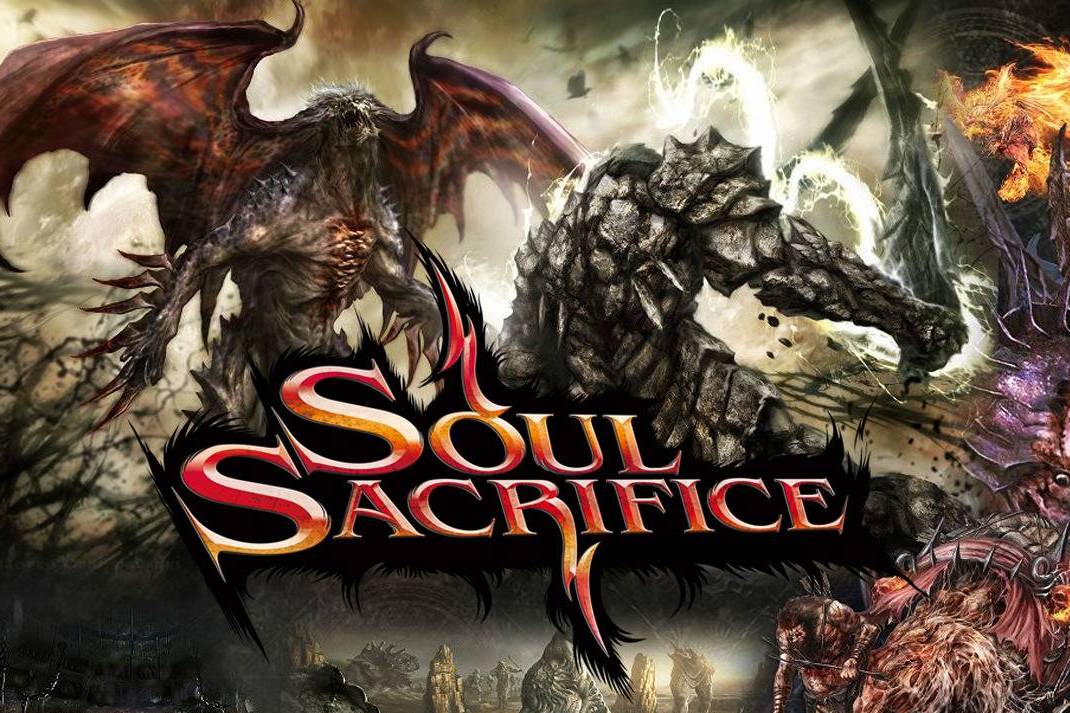
    To step back a bit, here’s the deets: Soul Sacrifice is a Monster Hunter-a-like. By which I mean it’s a game where you kill giant monsters repeatedly to gain stuff you can craft, so you can kill bigger giant monsters… repeatedly. In fact, the reason I decided to go back and finish Soul Sacrifice was that I’d randomly got in the mood for a Monster Hunter, and after playing Monster Hunter Freedom Unite briefly I was reminded of all the things that were annoying about the series (mostly: the incredible awkwardness of almost everything, and boring padding like collection missions). So I thought maybe Soul Sacrifice was going to be a bit better than an old PSP game at scratching the itch.

    I suppose it did scratch that itch? In a flesh-tearing sorta way.

    You see, in Monster Hunter, you (on average) pick up a decent amount of stuff for crafting. And you generally have one weapon that you’ve got the hots for. in Soul Sacrifice, it’s a bit more complex. You have six spaces for spells in a mission, every single spell has a limited number of uses per mission (which can be topped up by sacrificing some grunts) and for every mission you complete you get handed somewhere between one or two new spells.

    Doesn’t sound so bad, but to properly upgrade a spell? you need sixteen copies. Beat a mission and of an individual spell you might get one or two copies. So your options are: grind, or piggyback on to some multiplayer games where the other players are much higher level (to be honest, I didn’t even work out how to play online until about half-way through, as you have to quit out to a menu I forgot all about.)

    Basically, Soul Sacrifice takes the grinding element of Monster Hunter to an extreme. To make things worse, I thought it was going to avoid all those boring “collect X macguffins” missions, but it’s got those, so…

    It’s all a bit badly explained, too. I didn’t work out until about the last chapter that one of the main ideas is to use one elemental attack on an enemy until it affects them, then use another elemental attack to knock them down for big damage (so, you know, freeze them, then hit them with lighting.) Doing that kind of thing is actually super satisfying (even if it does, unlike Monster Hunter, turn most battles into just running up to the enemy and spamming attacks in the hope they never get their shit together enough to respond) though I probably enjoyed punching monsters with a huge elemental fist best—if you’ve ever hit a monster in Monster Hunter with a Great Sword, you know what I’m talking about.

    Cannae say that it was good enough feeling to make the time spent grinding worth it, mind.

    Look, point being: the whole thing was a chore, and to add insult to injury the story stops being even vaguely interesting after the first chapter (realistically, the tone just massively outstays its welcome.) Learn from my mistakes, people.

    Will I ever play it again? Nope!

    Final Thought: It’s got the absolute best thing in it too: a final boss that’s ridiculously hard, has multiple stages (with unskippable cut-scenes) and if you die you have to go through a bunch of menus and cut-scenes to have another go. It’s 2014, people. If you do this kind of thing you should be strapped to some kind of a machine that kicks you in the balls every five minutes for eternity.

  • What Did I Do To Deserve This, My Lord? (Acquire/Japan Studio, 2007)

    What Did I Do To Deserve This, My Lord? (Acquire/Japan Studio, 2007)

    Developed/Published by: Acquire / Nippon Ichi Software
    Released: December 6th, 2007 (Japanese release as 勇者のくせになまいきだ)
    Completed: 23rd April, 2014
    Completion: Completed Challenge mode.
    Trophies / Achievements: n/a

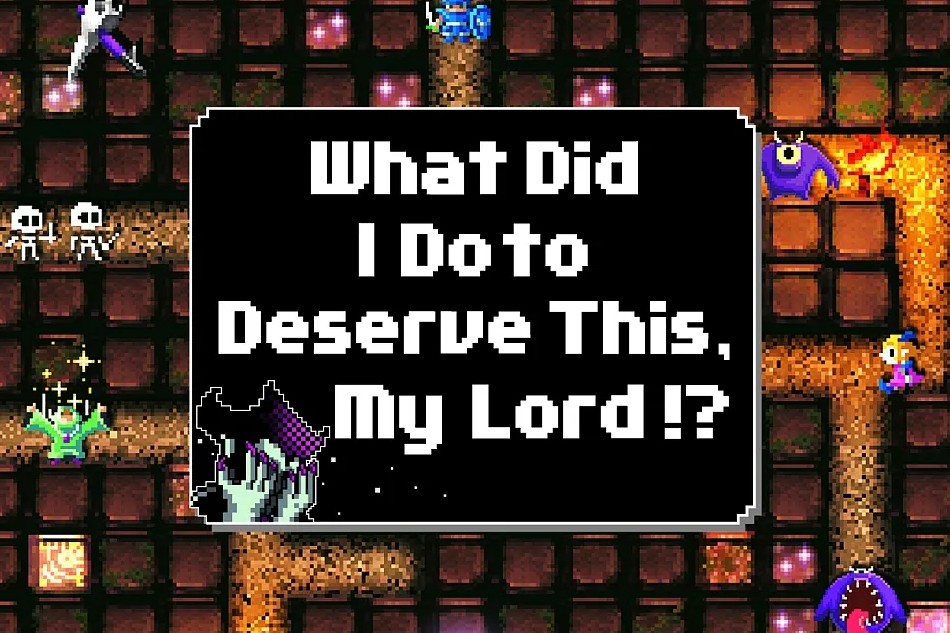
    What Did I Do To Deserve This, My Lord? is one of those games that represents the perils of creativity. It’s got one of those not-really-very-interesting-by-now high concepts—what if you were the dungeon master?—but it takes it in a totally different direction from the likes of Dungeon Keeper. Instead, whoever it was that had the initial idea looked at game dungeons and didn’t think of them as “designed” but “evolved.” So instead of designing the dungeon, you dig it out, and you hope that the creatures you reveal move around, spread nutrients and mate to create stronger creatures. A process that you (generally) have little to no control over.

    You can definitely see that the reference points are different from something like Dungeon Keeper—the “slimemosses” that are the first creatures you deal with are obviously inspired by the Slimes from Dragon Quest—and to some extent that has influenced the design, but in general the “dungeon as ecosystem” doesn’t have a precedent; when you play it, it really does feel like something totally different.  The peril, of course, is that as different as it is, it just doesn’t gel. 

    With What Did I Do To Deserve This, My Lord? the problem is that the ecosystem is totally unmanageable and often inscrutable. Slimemosses, no matter how carefully you attempt to create the right kind of paths, just never seem to want to spread nutrients the way you want them to. Look away from a section of a dungeon for a minute and the more powerful creatures may have eaten all the weaker ones, and are now dying of starvation. And when the heroes arrive? Maybe they don’t go down the route you want them to; maybe even if they do your dragons—so expensive and difficult to create—ignore them until it’s too late.

    It’s all utterly random—or at least, it’s random in that way that all your time spent playing is attempting to desperately mitigate the random factor, rather than feeling any sense of control. It’s the kind of design where I can’t really fathom how large the task would be to fix it; making creatures more predictable, maybe, or making sure they can’t remove nutrients from blocks that can make a more powerful creature. Even at that, what about when you get to that point where you’ve dug out too much of the dungeon? There are a lot of “give up and start again” points, no matter how close you think you are to “getting it.” It’s like a tower defense game, where you can’t guarantee that your towers are going to actually shoot at the enemy, or even stay where you placed them.

    There are a million things going on underneath the hood—I haven’t even really discussed how you have a dig limit, monster upgrading, all the other weird interactions—and What Did I Do To Deserve This, My Lord? feels like a jam game they just kept building on top of without making sure each aspect worked with every other. Seems like an ironic oversight in a game about attempting to perfectly balance an ecosystem.

    Will I ever play it again? I didn’t actually finish the main game mode! It’s an eight level single dungeon challenge, but as explained above, the game is just too random to make it worth trying to finish. So I won’t be playing it again, no.

    Final Thought: So, the bit I did finish was the challenge mode, which is the bit where you’re like “ah, the developers obviously have a very clear understanding of the game’s systems” because it asks you to do some incredibly difficult edge-case challenges (like breeding slimemosses from a dungeon with no nutrients, etc.) You’d think this would teach you how to play the game really well, but actually even if you know how to do these things it’s meaningless in a live-fire exercise. Alas.

  • Papers Please (Pope, 2013)

    Papers Please (Pope, 2013)

    Developed/Published by: Lucas Pope
    Released: August 8, 2013
    Completed: 20th April, 2014
    Completion: Finished it seeing five different endings (two that I’d consider “proper” endings.)
    Trophies / Achievements: 10/13

    I loved The Republia Times. Loved it. In fact, I think if you’re the kind of good-looking go-getter that reads this site, you should just go ahead and play it if you haven’t already.

    Great, isn’t it? Especially the sting in the tail. Oh man, that’s what elevated it to a masterful piece of game-design-as-satire in my mind. It genuinely manages something that few games ever have, and to think it was just a wee warm-up for a game jam!

    Anyway, here’s Papers, Please, set in the same “world” as The Republia Times, dealing with some of the same issues, and of course cleaning up at the IGF and GDC awards because it’s about real stuff and isn’t supposed to actually be fun. 

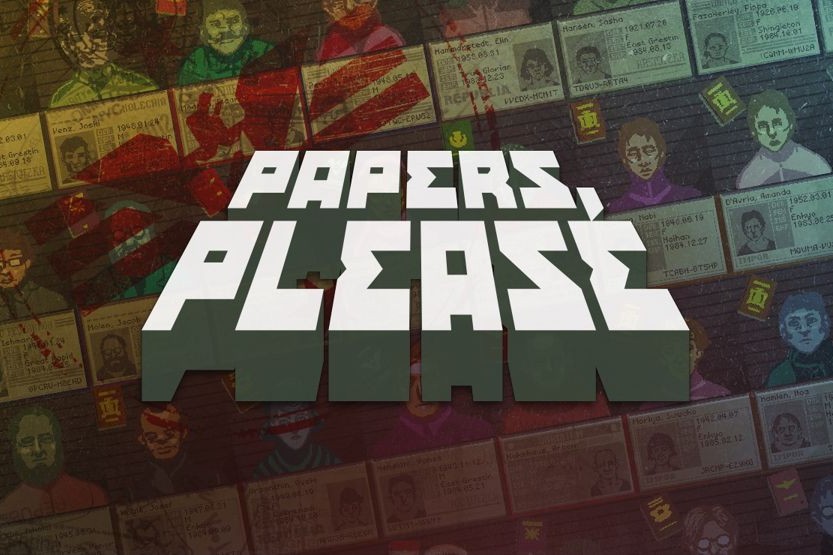
    Papers, Please… I am… ambivalent about it. Critiquing the game design alone, well, it’s sort-of… I guess I could describe it as a dynamic, timed hidden-object game. You only have so much time each day, you have to check people’s documents for errors, there isn’t quite enough space on your desk, and (intentionally) the controls are slightly awkward. So you’re trying to find the error (if there is one) and get to the next person so you can make more money. Each day there are more and more possible errors, more documents, and more mistakes you can make. And so your days pass, somewhere between a high-tension challenge and a boring grind. Somewhere in there.

    I guess if you like hidden object-style games, it’s cool? The nice thing about The Republia Times is that it didn’t outstay its welcome. Papers, Please does, and hard. If you want to get to one of the proper endings, you’re going to be playing it for thirty days. After seven you’ll be like “ok, yeah, I got it.”

    However, that’s not all there is to Papers, Please. There’s a story to the story mode (“duh”—everyone) and while it’s very very loosely sketched, you’ll make choices: people you might let through even if they don’t have the right papers, or to help some people and hinder others. The weird thing about Papers, Please is that these people all appear in exactly the same way every time. So while most of the people who stop in are generated, you know that the third person on day three is going to do a certain thing. Now don’t give me shit for this after my Rymdkapsel write-up but it seems strange that it has to be this way—there are a bunch of different characters who appear, and with a shorter game (fourteen days, maybe, rather than thirty) they could be randomised in, yes, a rogue-like-like style to make a different experience every time.

    However, with the number of different endings you’ve achieved tracked and the saves cleverly branched by the game, it does seem that Lucas Pope has intentionally designed it so that you can replay the game from certain points with the knowledge you have from previous runs to make different things happen. It’s not how I’d have done it—or how I want it to be—but it seems fair enough (I’m interested in his reasoning, though.)

    There’s a bigger problem, though. About halfway through Papers, Please I thought to myself “you know, this would be pretty cool on iPad.”

    And then I realised something. Papers, Please could easily be put out on the App Store. In fact, I’m pretty sure that Apple would feature it. And this is a company that aggressively bans games based on content (Phone Story, Sweatshop HD, Endgame: Syria, Intern Saga… the list goes on) famously saying “If you want to criticise a religion, write a book.”

    Why is that? Well, it’s because the satire of Papers, Please is toothless. Yes, you play a border agent, but who is being critiqued here? Generic Eastern European states in the eighties? One of the most astounding things about Papers, Please is how even when you are at your most strict, if anything the indignities you pile upon people trying to get into Arstotzka are less strict than those on anyone trying to get into America. And Arstotzka literally suffers a terrorist attack at the border every other day. Take your shoes off. Have your items x-rayed. If that’s not good enough, they can go through your bags. Don’t want to consent to a full back-scatter scan? “Enhanced pat-down.” Why are you travelling here? Business or pleasure? Where are you staying? What are you bringing  in? How do you know these people? Are you trying to work?

    And so on, forever. And the profiling—you only have to look at Did Rami Get Randomly Checked to see how pervasive it is.

    If Papers, Please was about being an American TSA agent, it would actually be saying something just by actually representing how absurd it is the hoops they make you jump through—and to what extent your privacy is abused.

    But it doesn’t, so it could easily be approved for the App Store.

    Funny, that.

    Will I ever play it again? Nope.

    Final Thought: Maybe the saddest thing about Papers, Please is that unlike The Republia Times I can’t even see any satire in the story, anyway. Arstotzka is… bad? For some reason that isn’t super clear? You might want to escape, but maybe not? There’s one ending that comes close to making you feel that shiver of horror (I won’t spoil it, but it involves forged passports) but it doesn’t push it too far. The fact that there are “good” endings is actually pretty shocking to me.

    Oh, and the game rewards you with achievements for making the “right” decision in several cases. Come on.

    This essay is featured in Every Game I’ve Finished 14>24.

  • Castle of Illusion Starring Mickey Mouse (Sega, 2013)

    Castle of Illusion Starring Mickey Mouse (Sega, 2013)

    Developed/Published by: Sega Studios Australia / Sega, Disney Interactive Studios 
    Released: September 3, 2013
    Completed: 20th April, 2014
    Completion: Rescued Minnie!
    Trophies / Achievements: 61%

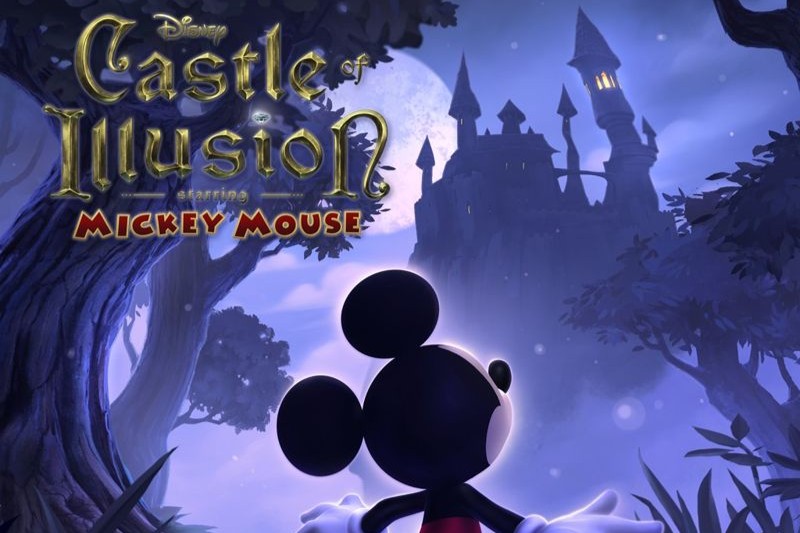
    Yep, I played through both version of Castle of Illusion in the same weekend.

    I did this because I was sure, sure that this wasn’t going to be a remake but actually one of those “inspired by…” type things. Because with Castle of Illusion’s frankly weird level design and pretty darn dated everything else, I didn’t think they’d be that straightforward with it.

    Uh, so the weird thing is that they really were. It’s not like they didn’t change some stuff. Most notably, the game goes “full 3D platformer” in certain segments (which is awful, for a reason I’ll explain in a second) and certain parts of the levels are changed (though in general their structure is amazingly faithful.) Bosses have more attack waves (usually allowing them to use the full 3D stuff a bit.) And Mickey’s jump is different.

    Except… it’s also weird and terrible? It’s still floaty, it’s just as hard to aim his landing, but for some other reason? I can’t put my finger on why both jumps are terrible for different reasons (and I really can’t be arsed to go back and play them off against each other) but trust me: they’re both bad. And in the remake, not only is it bad in 2D, it’s godawful in 3D. Non-stop frustration as you slightly mis-aim Mickey and drown him in milk again and again and again.

    (Because he can swim in water, but not milk. I guess that makes sense? Sorta?)

    This is, genuinely, a remake of Castle of Illusion with some extra bits bolted on (most notably totally extraneous narration and loads of chat from Mickey, who… did Mickey always sound like this? He sounds so off-brand. Like a “Mikey Mouse” VHS, bought from a discount store in Orlando.) If you were going to play one version, I’d be hard pushed to say which one to bother with—probably the original—though both can be finished really quickly, and it’s really not worth the effort.

    Here is the thing, though: much like with the original Castle of Illusion, it’s not like you can’t see there was talent on the team. Had this been a reimagining, not a remake, and they’d manage to make the jump less weird, I’d be happy to gamble this would actually have been pretty great.

    Uh, not that it matters because Sega shut down Sega Studios Australia right after this. Alas.

    Will I ever play it again? I could go back and collect more diamonds and do time trials, I guess? I’m not gonna, though.

    Final Thought: Interesting fact: Emiko Yamamoto, director of the original game and who also supervised this, went on to work at Disney Interactive in Japan and has served as a producer on almost the entire Kingdom Hearts series. Huh.

  • Castle of Illusion Starring Mickey Mouse (Sega, 1990)

    Castle of Illusion Starring Mickey Mouse (Sega, 1990)

    Developed/Published by: Sega
    Released: 21/11/1990
    Completed: 19th April, 2014
    Completion: Rescued Minnie!
    Trophies / Achievements: n/a

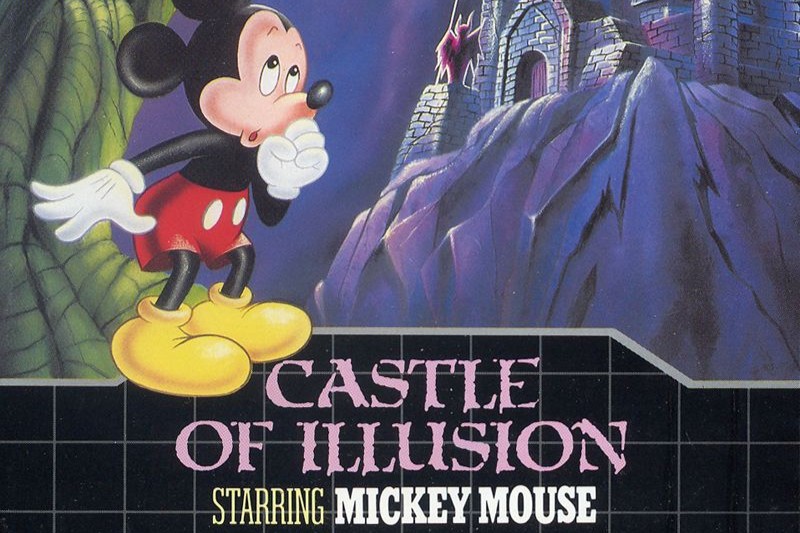
    I have strong memories of Castle of Illusion as one of the games that people marvelled at in video game magazines of the time for being particularly beautiful and holding promise for what was then the “next generation,” so this weekend discovering that M2 had ported it to PS3 was too good to resist.

    It’s interesting, then, that on playing Castle of Illusion—a “pre-Sonic” Mega Drive title—that the thing I find most remarkable is how much it reminds me that even by the time of the Mega Drive video games were… under-developed? It’s hard to explain I guess, but the thing I most remember of playing games in the 80s, particularly on the home computers popular in the UK, is that sense that developers either got to this point where they went “ok, good enough” or that they didn’t actually know that games could be better than that. It’s fondly remembered, perhaps, but Castle of Illusion has that half-baked feel where you can see some bits are done absolutely expertly—Mickey’s animation is lovely, the cut-scenes are sweet, and certain stages definitely have their moments—but there are other parts where you have to question why it was there that they stopped.

    I mean, Mickey’s jump. It’s just the weirdest, floaty, awkward jump. One of those jumps where you feel like you’re pushing a bitmap around, not controlling a character. No “game feel” at all; something you notice in the many many bits where the ceiling is low enough that Mickey clonks his head over and over.

    Or the enemies, who do that thing where they just move towards the right of the screen at a steady velocity, and respawn if you walk them off screen. No sense that they’re actual beings who are actually there. I’m definitely reminded as to how far ahead of the game Nintendo was with the Mario series compared to everyone else at this point; it’s actually crazy to consider that anyone would have played Super Mario Bros. 3 as a developer and then be happy to put this out. I’m not talking about world maps or secrets, the things that I suppose made Mario 3 feel so amazing at the time; I’m talking about making sure the jump feels good, the level design supports it, and the enemies feel worth jumping on.

    The level design is weird too. The first two levels are completely linear, but then from level three onwards you can’t actually progress unless you explore (totally counter-intuitively in level three, too, as it involves you falling into water you don’t know you can swim in.) Indeed, the game’s wrapper—Mickey going in each castle’s door, one by one—is presented “in engine” which makes me think maybe these levels were supposed to be approached in any order, and to be generally non-linear, but that got snipped off at some point.

    That’s total speculation, of course.

    I didn’t actually have a bad time finishing this, however. There’s a pleasant enough pace, and once you’re comfortable with its quirks it’s very much your average early platformer (one that’s nice enough to get through thanks to M2’s good port and freely-available save states.) It doesn’t stand out to the point where you should particularly feel the need to play it, though.

    Will I ever play it again? Nope.

    Final Thought: I’m a bit sad this game isn’t as pretty or as good as I read it was in the magazines of the time. The vision of games I built in my mind from reading many, many more game magazines than playing games is something I come up against regularly now I have access to any game I want; even now I can look at the cover of Castle of Illusion and imagine something exciting, something just beyond my reach.

  • Rymdkapsel (Grapefrukt, 2013)

    Rymdkapsel (Grapefrukt, 2013)

    Developed/Published by: Grapefrukt
    Released: May 7th, 2013
    Completed: 18th April, 2014
    Completion: I researched all the monoliths.
    Trophies / Achievements: n/a

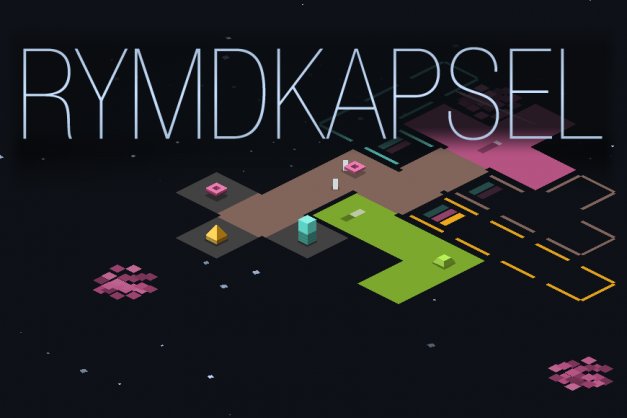
    I had played Rymdkapsel on release, but I thought the core concept—placing tetrominoes down to create a space station, choosing if they’re corridors, barracks, weapons rooms or so on—was so cool that after touching it briefly I put it down thinking “at some point in the future, when I’ve got more time, I’ll really dig into this.”

    (God knows why I chose this weekend, and right before bedtime, too.)

    I must admit: I’m a little disappointed in Rymdkapsel. It’s my own fault in some ways. You see, Rymdkapsel is a small, short, single experience. Your station is centrally located between four mysterious monoliths, and you reach your corridor tentacles out to research them, all the while making sure you don’t run out of materials and are well defended by weapons rooms. It’s really really cool. But once you’ve done that—and it should only take a few hours—you’re, uh, done.

    Now, before you cry foul, you can continue playing—there’s definitely an ending if you can get through 23 waves of enemies, and there’s a relaxing zen mode for stress-free building—but I’m kind of surprised because the design promises so much more than one canned experience.

    Yeah, I’ll say it… I wish this was a rogue-like-like. I know, I know. Everything is a rogue-like-like now. But I don’t see why with Rymdkapsel I don’t constantly have different monoliths to find or why the enemies aren’t different each time (well, to an extent). I can definitely see playing this over and over if there were differences every time I played. It doesn’t make the basic experience of playing the game the first time any worse—actually, I totally recommend playing Rymdkapsel, it’s great—it’s just… why am I not still playing it?

    Will I ever play it again? I really want to, which is the odd thing. But I can’t spend my time re-playing the same experience, I have this site to think about!

    Final Thought:  I mean, look, I can see some problems; you probably can’t let a single space station get too big, or it’ll make the game unwieldy. But it could stay a short, just very varied, experience, I think? There are some other things that would have to be considered, too. In this version, you can sneakily place and then delete corridors to ensure you get the right shapes you want, which you’d probably want to avoid to make the rogue-like-like harder. And in that case, well, Rymdkapsel is described as a “meditative space strategy” which is definitely a step down from the intense, “you are going to die, and soon” experience of most rogue-inspired titles. So maybe this isn’t an ideal twist.

    But it’s one I’d like to see!

    This essay is featured in Every Game I’ve Finished 14>24.