Author: Mathew Kumar

  • Hollow Knight (Team Cherry, 2017)

    Hollow Knight (Team Cherry, 2017)

    Developed/Published by: Team Cherry
    Released: 24/02/2017
    Completed: 09/12/2020
    Completion: Finished the main story with a percentage north of 100%.
    Trophies / Achievements: 48%

    Kinda funny, but not that funny to be writing at this today [”months earlier”-Ed.] after listening to the Greatest Games Ever Insert Credit Show where Tim Rogers enthused that this was the best Metroidvania ever and Brandon Sheffield hated it very, very much.

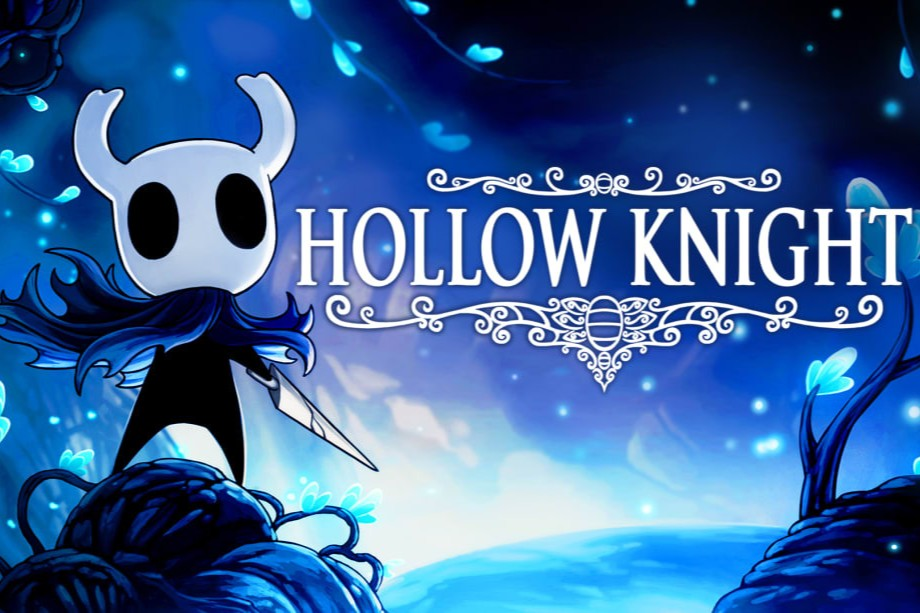
    Might as well cut to the chase and say I like it far, far less than Tim Rogers but don’t hate it quite as much as Brandon Sheffield (but then, I played it more than an hour, and if I’d stopped at an hour I might have.) However, this is me falling headlong into “no, it’s the children who are wrong” territory because I’m going to say that is pretty much everything I hate in Metroidvania design (level design in general, even) and I’m truly, truly baffled by why this is so lauded. I mean, this is a game that opens with a short tutorial segment (fine, good) but then throws you into a level with multiple long pathways, no map unless you pick the right path quickly, and extremely samey graphics across the area meaning you just stumble around second guessing every move. I mean the whole “you don’t get a map in a section until you find the guy who has the map”… people like that? And don’t get me started on how the game doesn’t let you see yourself on the map unless you waste one of your equip slots. That’s honestly unpleasant.

    I mean the level design is bad enough on the macro level, but each area is also chock-a-block with blind drops, punishment drops, and enemies that take forever to kill because you have to engage with a punitive weapon levelling system that, frankly, you’ll won’t be able to engage with unless you literally look up where to get the materials.

    This kind of complaint, however, is the exact type of thing that breeds what has to be one of my most hated “extremely online gamer” takes, which to respond to a complaint something is just tediously hard or obtuse by telling folk to “Git gud”. Here’s my response: the game should get good. 

    Anyway, what I did with Hollow Knight was ignore everyone who says you shouldn’t look anything up because I ain’t got time for that and just start to actually roll through it using a map to find the traversal skills etc. While I never ever actually liked the level design basically ever, the game only really starts to become anything worth your time once you’ve unlocked dashing and even then it wasn’t until I unlocked the ability to dash through enemies and damage them that I gelled with it at all (especially because you can’t cancel the dash or backdash, meaning until the point dashing was safer I didn’t like it).

    Even at that, a bit like with Celeste, I didn’t ever really care for how the main character controlled, nor how battles felt or having to go and get your “shade” any time you died so you could get your money back (guess what! It was never hard to do that, my stomach only ever sank at the waste of time.)

    The problem is of course is that metroidvania design is so… more-ish? I played this wayyyy longer than I needed to because it’s actually fairly trivial to beat this if you “git gud” and just do the exact main quest, but instead I unlocked all the abilities, fully upgraded my sword, got all the equips… I mean, I basically dredged this because even if I wasn’t really having fun in the moment I was always so close to doing the next thing and so I did.

    Anyway I beat it and the spell was broken.

    Will I ever play it again? No, and no fucking way will I play a sequel or anything like that.

    Final Thought: Hollow Knight is… not good. There’s no excuse for lengthy, tedious mapping and no excuse for punishing, tedious level design. Or the terrible introduction to the game or pacing/planning of the unlocks (I mean come on, the first unlock being a spell instead of dash, which is so core to the experience; lol). That said, you’ll probably stockholm syndrome yourself into thinking it’s the bee’s knees because there’s just so much content. Plus, to be honest, there’s some charming animation and even if I didn’t like the setting or any of the world design (so bland! So samey!!!) I actually thought the soundtrack was nice. In conclusion: the children are wrong!!!
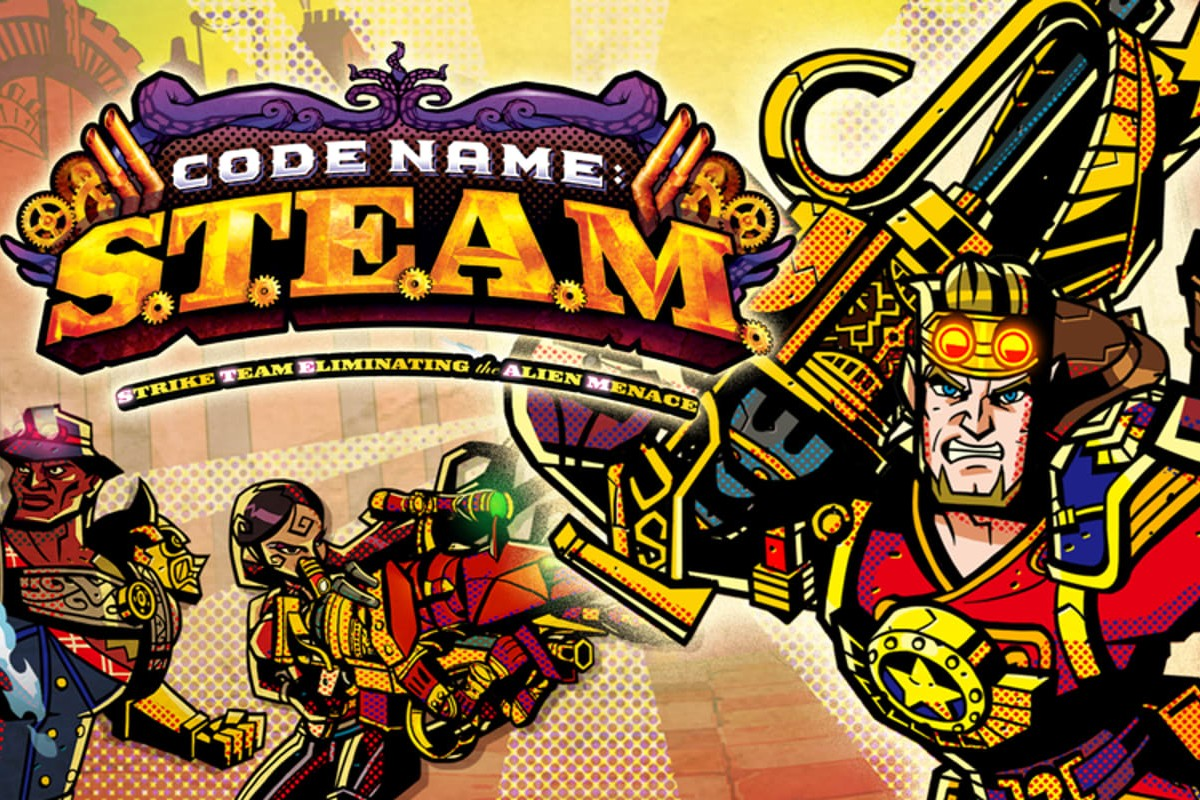
  • Code Name: S.T.E.A.M. (Intelligent Systems, 2015)

    Code Name: S.T.E.A.M. (Intelligent Systems, 2015)

    Developed/Published by: Intelligent Systems / Nintendo
    Released: March 13th, 2015
    Completed: 25th April, 2017
    Completion: Finished all the levels, collecting all but eight of the gears.
    Trophies / Achievements: n/a

    Here’s another Nintendo failure, then! You know, I do like to complain that Nintendo only seem to pump out games in just a few franchises (Mario, Zelda, recently Fire Emblem) but here’s what happens whenever they put anything else out: it tanks. So no wonder they’re getting the idea that people just want the same thing over and over until they run it into the ground. And honestly, sometimes it’s fair that the things they release fail, because they’re insanely misguided (Metroid: Federation Force) but then it’s also sad because Nintendo then learns the wrong lesson from them (“people hate Metroid”).

    I mean, the lesson they might have learned here—Intelligent System’s attempt at a Valkyria Chronicles-esque third-person strategy title—is probably “don’t let Intelligent Systems do anything except Fire Emblem” because bloody hell I can’t keep up with the number of Fire Emblems that have come out. (Remember Advance Wars? It’s been almost ten years, guys.)

    And, frankly: it’s a shame. Because I liked Code Name: STEAM. I know, that’s insane. I hate everything. And let me state as caveat that I immediately installed the patch that allows you to speed up the enemy turns. But Code Name: STEAM is a completely serviceable strategy title that—outside of a few frustrations—I found completely pleasant.

    Now, I can agree: it’s a bit weird looking. It doesn’t manage to nail the comic book look it wants, and the enemies are somewhat… dull. However, it’s got a weirdly interesting and diverse cast drawn from literature. It gets some points, for example, for gender-swapping Zorro (was this secretly why it failed? Neckbeard boycott?) but loses some for having Dorothy bare her midriff (why?) but maybe it gains those back by including Queen Califa. I’m not a perfect arbiter of points, ok?

    It does have some other flaws. Many (most?) people complain about the lack of a true tactical view, but that didn’t bother me because it’s obviously not what they’re trying to do. With free movement before you commit (hindered by enemy overwatch attacks), it’s a game about careful scouting and much more about the feel of being in a small attack squad. I do think the game is much too stingy with its steam-based action points, meaning you travel through levels very slowly, and the game doesn’t have any good sense of a progression of power—all of the unlocks are similar in power levels, just different, when it could have done with more steam being offered as you unlock new boilers (for some reason, most boilers don’t refill fully each turn, and the ones that refill slowly that you unlock I found unusable. Rather a big misstep, I feel.)

    I’d say the main mistakes they’ve made are in working against the slow, methodical play style that the limited action points engender. To mix things up they add a lot of “pressure”—first with baddies that spawn in (behind you, usually) which is a mild irritant, and then just the worst: “spotter” baddies in levels featuring mortar attacks.  They spawn and you have to get out of their line of sight or take a severe hit. Of course, so you can’t stall, you can’t kill them (just move them, hopefully out of sight, but it’s generally awkward to do) and this is insanely frustrating with the limited amount of action points on offer. There are certain levels where you will be harried to the point scouting is impossible, and you get situations where you stumble forward, get shot by a baddie with knock-back, and then land directly in the path of the spotter you thought you were escaping, and die by mortar. Oh, and there’s a couple of difficulty-spike levels outside of that: one with mounted guns that don’t have a clear range (frustrating) and another with a bunch of exploding enemies dropping in that I found… ragey.

    Honestly, at least one of these levels had me considering stopping playing, and that’s really awful, because the game is so close to being an all-round nice time like Valkyria Chronicles. The final boss is a pain in the arse too, admittedly—but at least it’s nothing like the final boss of Fire Emblem: Shadow Dragon, my last dalliance with an Intelligent Systems game.

    However, the levels in which it works—it really works. In general the map design is clever, with a good mix of complex indoor and outdoor spaces, and while generally it’s a bad idea to split up your team of four, the level where you’re forced to do was a particularly fun one, I thought. There are far more fun levels than frustrating ones, it’s just the annoying ones are going to stick in your craw (I mean, they’re ultimately why I didn’t collect all the gears you can find in levels, and I wanted to.)

    I’m gonna say that it’s weird to me that Code Name: STEAM didn’t get a fairer shake when it was released. It was slated by almost all reviewers with them almost all concentrating on the (pre-patch) lengthy wait between turns, and I guess that one mistake wrecked any chance of it managing critical acclaim at least.

    Well: It’s got the only critical acclaim it truly needs: that I liked it. I mean, I didn’t love it or anything but I had a nice time. That should be more than enough!

    Will I ever play it again? I won’t, but the sequel they tease at the end I would have played, except it shall never exist.

    Final Thought: I recommend this, actually. I’m gonna… recommend it. Really! Because when I picked it up it was $5, and pretty much any store is gonna have it for pennies. You can do so much worse.

    This essay is featured in Every Game I’ve Finished 14>24.

  • Kirby’s Epic Yarn (Good-Feel, 2010)

    Kirby’s Epic Yarn (Good-Feel, 2010)

    Developed/Published by: Good-Feel / Nintendo
    Released: October 17th, 2010
    Completed: 28th November, 2014
    Completion: Finished all the levels. Didn’t 100% collect everything or anything, but close (cannae be arsed to boot it up to find out exactly how close.)
    Trophies / Achievements: n/a

    Do you like Starbucks? I really don’t. In fact, I go absolutely out of my way to not use Starbucks. I hate it when I’m at, say, an airport, and the only way I can get a hot tea is from a Starbucks. I mean, look at that, I’ve written “hot tea” there because I’ve gotten so used to being beaten down by Americanisations from places like Starbucks that I don’t just say tea. Thing is, it’s not like Starbucks is that bad. It’s bland, and competent. It’s really, when you get down to it, not offensive.

    You might want to guess here where I’m going with this, but Kirby’s Epic Yarn isn’t Starbucks. No. What Kirby’s Epic Yarn is like is… well, imagine a person who loves Starbucks, right? They love it. And so they decides to start their own coffee place, very much based on Starbucks. Their coffee shop attempts to have Starbucks-style coffee, Starbucks-style music, Starbucks-style decor. But, by virtue of being made from the sweat of an individual, it doesn’t come out quite that way. The coffee is a little more interesting. The music is some interesting jazz. And the decor has a really cute, handmade feel. This person hasn’t got anything wrong, they’ve just made something much more personal, more “real” despite basing their design on something bland, corporate and forgettable.

    It’s the kind of place that you’d go—hell, I’d go—and I wouldn’t hate it, you know? I’d appreciate the cute touches that they put in. The cushions, or the art. I’d find myself having a perfectly pleasant time there. None of that edge of irritation that Starbucks engenders—where it’s so bland, you feel annoyed that it’s been calculated to not annoy you.

    But I’d, without really thinking about it, not bother to go back.

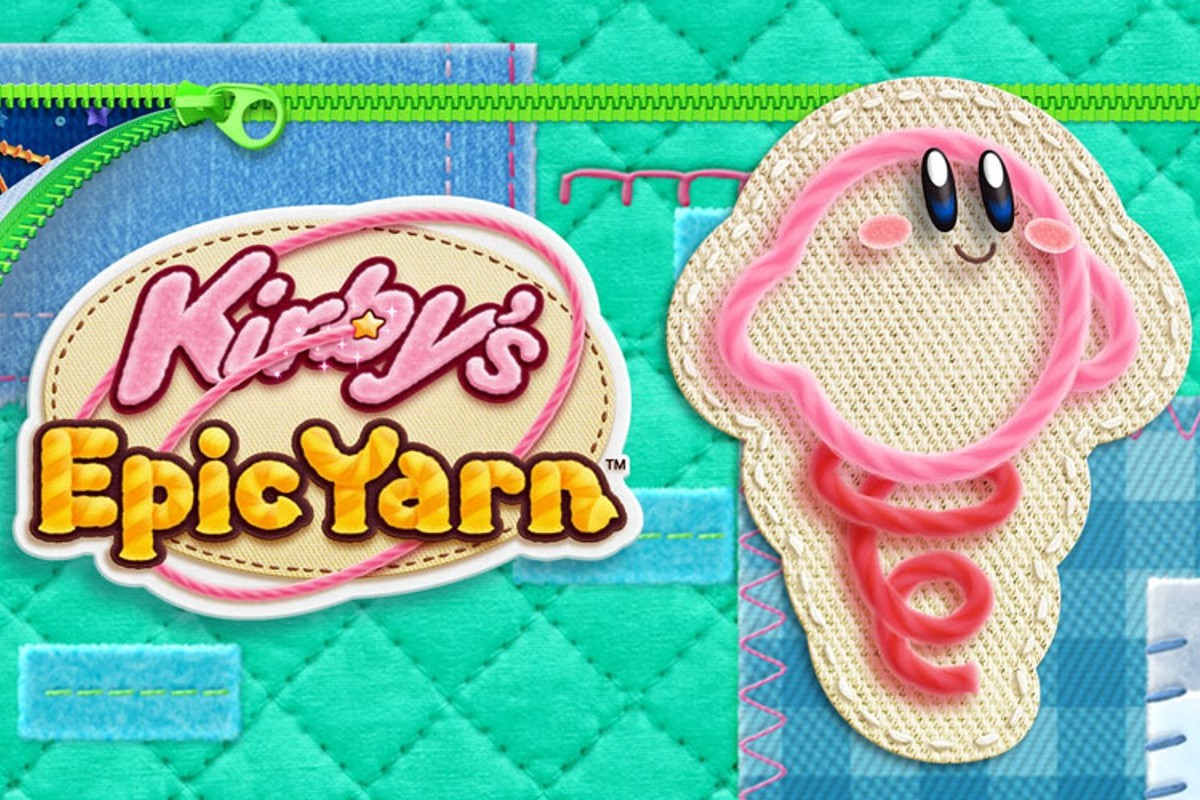
    That’s Kirby’s Epic Yarn. It’s cute, full of lovely touches. Genuinely sweet, really. But the core… well it’s just another forgettable 2D platformer, isn’t it? If you’re going to put all this effort into making something lovely, please don’t base it on a Starbucks.

    Will I ever play it again? Nope. And this goes on the sad pile of “Nintendo games I won’t keep” which is rare indeed.

    Final Thought: I honestly thought Jeff and Casey Time had taken music from this game. I was pretty sure they’d lifted one of the tracks… maybe Lava Landing? (which is amazing, give it a listen!) but it turns out that it’s an original piece of music, The Infinite Tea Time. Also amazing but really nothing like Lava Landing. This is therefore proof I, and you, should watch Jeff and Casey Time again because it was really good and it’s clearly been too long.

  • Pocket League Story (Kairosoft, 2012)

    Pocket League Story (Kairosoft, 2012)

    Developed/Published by: Kairosoft
    Released: Jan 5th, 2012
    Completed: 17th November, 2014
    Completion: One full career with a high score of 101,601. Beat every league and every cup except the Prin team match. They’ve got max stats! It’s nigh impossible!
    Trophies / Achievements: n/a

    We’ve talked about football several times here, but here’s a thing! I have no idea what a football manager does. I’ve never managed to get into any of those Football Manager-type games (nae luck, Kevin Toms!) because I just don’t care about club football, but I got back into Pocket League Story recently after—more or less—realising it had been sitting on my phone for the past year (or two?) when I stopped midway through a career in it. I’d just watched Scotland beat Ireland so it seemed like a good idea.

    Anyway, then I watched Scotland get pumped 3-1 by England, seeing Gordon Strachan just sort of occasionally get up during the match, yell and point, getting increasingly grumpy looking in the stupid chairs that the sponsors make them sit in (they’re a car manufacturer, so they make them sit in race car seats… I assume. If that’s what they usually sit in, that’s absurd.) I thought… how does he affect the game while he’s there? When he puts a new guy on, does he whisper in his ear “do this, tell the guys to start doing this tactic”? Something like that?

    I mean, when you’re running a national team… does he get up every day and go into the office? After the match, does he sit down with tapes of it, pinpoint the mistakes, make edited highlights, talk to the team individually or as a group, talk them through what went wrong, find out why from their viewpoint, and work on what they do next?

    I really have absolutely no idea. I mean, I assume something like that happens, there’s four months till the next match, and even though all the players have their club teams to go to, I’d like to believe they do post-mortem matches with the players and plan extensively for the next one. But who knows? They might just all go home after, meet for a few days training directly before the next match, and be done with it.

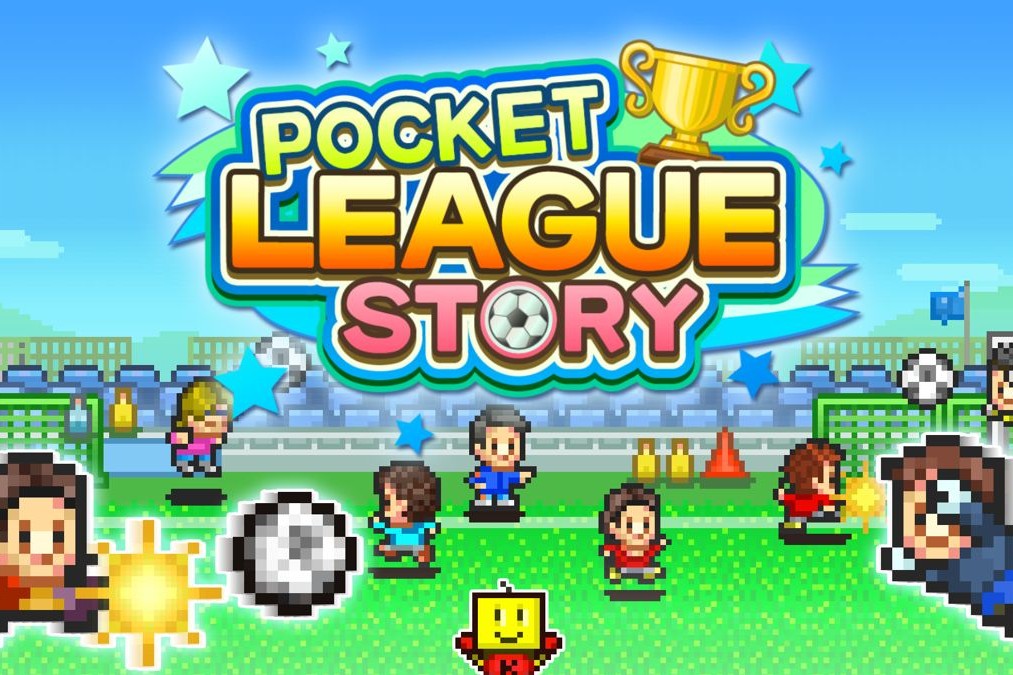
    Anyway. playing Pocket League Story is a bit like watching Gordon Strachan, you can’t really do anything while the matches are happening, other than possibly tap a player to make them go on fire (uh, not that Strachan has that ability… I think???) which makes them more likely to avoid being tackled/score. You don’t have much of a say in anything, you just sort of watch money flow in, build wee cute buildings, try and get sponsors, and buy new players when you have cash (which has a really weird mechanic in that you give them the money, then try and convince them to join. If they don’t, you lose the money. I pumped millions of dollars into trying to hire a monkey. A monkey.)

    It’s hypnotic anyway, because watching numbers go up is brilliant, as we all know. Having an unstoppable team of powered-up football men doing footballing seems brilliant, even if you didn’t do really do anything. Which made me realise something: a watched game is a played game. After that England match I played the match over and over again in my head, thinking what should have happened at certain points. If only he’d done this, or if they’d made a change in tactics there. I played the game over and over in my head. Made me think that in some respects people who watch sports are—really—playing the game, more or less as much as I played this. In conclusion: sports are cool, don’t cuss people for enjoying watching sports. Unless it’s cricket, cricket is fucking crap.

    Will I ever play it again? No way! I really really shouldn’t play any more Kairosoft games, they’re all pretty timewastey. However, I’m sure at some point in my life I will, regretfully, install Grand Prix Story. Maybe that counts as “playing it again?” I mean it’s basically the same thing.

    Final Thought: My favourite thing about Pocket League Story is that I had David Beckam(’s facsimile) play for my team for ages, and I replaced him with the monkey. The monkey was better.

  • Castlevania: Aria of Sorrow (Konami, 2003)

    Castlevania: Aria of Sorrow (Konami, 2003)

    Developed/Published by: Konami Computer Entertainment Tokyo / Konami
    Released: May 6th, 2003
    Completed: 15th November, 2014
    Completion: 99.8% map completion. I have no idea which tiny secret area I missed. Gah. However, I saw all three endings anyway.
    Trophies / Achievements: n/a

    Look, if you tied me to a chair and demanded I tell you which Metroidvania is the best Metroidvania, well, first I’d say “Jesus, you didn’t have to tie me to a chair. I’ll just tell you, ok?” and then I’d say it’s…

    It’s Metroid: Zero Mission. There’s no debate here. If you’re planning on tying me to that chair again to attempt to change my opinion to something stupid, like Super Metroid, well, you’re going to have to… actually to be honest I’d probably just agree with you long enough to get out of the room/basement/storage locker/wherever it is you tend to do your tying of people to chairs to find out and then change their opinions.

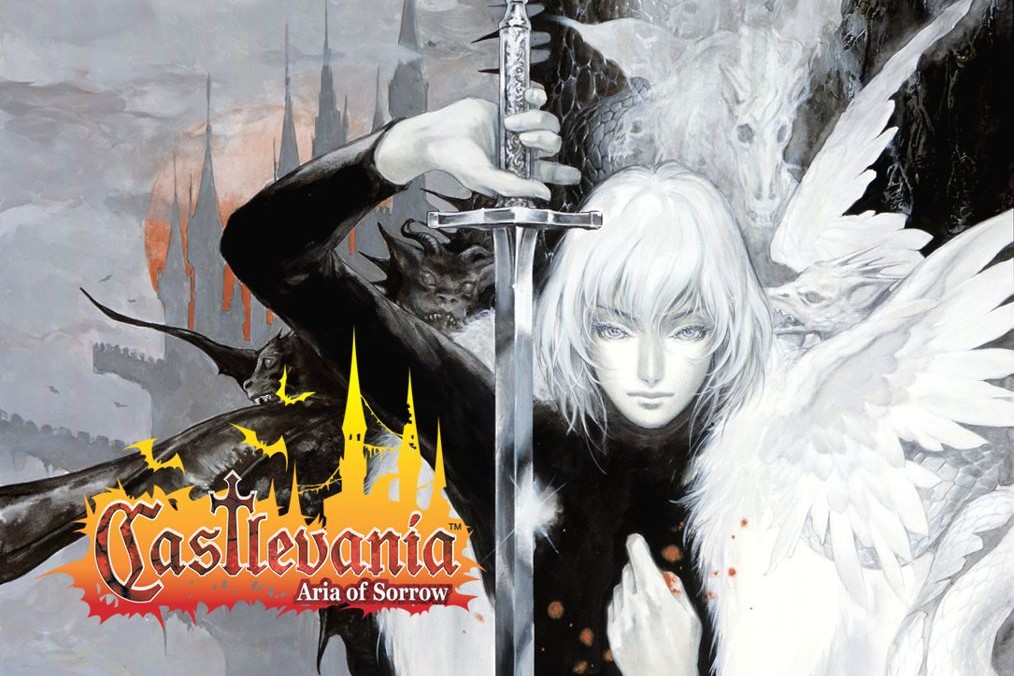
    Anyway. Metroid: Zero Mission is great, and it’s on the GBA, which had a lot of good Metroidvanias (remember when there was a turf war where some people wanted to call them Castleroids? Ah, simpler days.) Case point: Aria of Sorrow! It’s a good one! I probably liked Harmony of Dissonance more, even if the music in that sounds like a piano being dropped down a fight of stairs onto a mariachi band. Oh, and the the graphics are kind of bonkers; meanwhile Aria of Sorrow looks amazing—very consistent in a way that Castlevania games sometimes struggle with.

    I dunno, though. Look, it’s your basic IGA-led Castlevania, you know? Really big, sprawling castle that makes no spacial sense. There’s a setting-related excuse thought—the castle is some sort of dimension of its own, as a result it’s just mad—but in this one I was really struck by how, I dunno, randomly designed Castlevanias can be. There’s definitely a thread to the design—players are going to go here first, before they can go there, because they need that—but you often get a sense that the rooms are just “well, this one is a corridor, and this one is a 4×4 cube” and the challenge is designed this way “put respawning skeletons in that one, and a bunch of axe armours in that one.”

    I mean, there’s a good reason people wax lyrical about Dracula X (or the other, more linear Castlevanias) they’re very carefully designed into a moment-to-moment experience. Here, there might not be a clear “encounter” or design to a room; it’s just a space with some stuff in it. In retrospect it’s that which makes the castle design feels weird in Castlevanias; the rooms don’t have to make sense (a kitchen doesn’t have to be a working kitchen) but they have to make sense as a designed play-space. Mario levels make no sense at all, but they’re so carefully designed as experiences that we accept that Bowser’s castle is constructed of wobbly blocks that dip themselves in lava, cannons that constantly fire, etc. in a way we don’t with a Castlevania. Or at least, I don’t.

    I mean, really, the one section that stands out in every Castlevania is probably the Clock Tower, simply because they’re always so clearly modelled on the Clock Towers from Dracula X—entirely about the experience of dodging harpies and Medusa heads while climbing cogs. Sure, it’s frustrating, but it’s designed.

    To be honest, Aria of Sorrow is a really strong example of something that’s become endemic in games right now—weak or non-existent level design being utterly papered over with collectibles and RPG systems. I mean, Aria of Sorrow feels good to play (I will never get sick of the ol’ “dodge back out of enemy attack, move forward and attack” dance) and everything you do gets you more exploration percentage, more levels and new weapons and things. There’s always something new to kill or new to kill something with, and it works; the game might be sloppy and empty as a designed experience, but the “feel” is superb. And, you know? Here that’s enough. I ain’t gonna complain.

    Will I ever play it again? Yeah. I can see myself playing this again, it’s nice and short. I’ll have to finish all the DS Castlevanias first though… no, really!

    Final Thought: I know you’ve probably spent the majority of this article preparing the ropes and your special torture chair simply because I don’t like Super Metroid very much, but please don’t let this distract you from Aria of Sorrow’s perfectly pleasant time. Maybe let it distract you from the game’s story though, which is total bobbins and the one thing I found annoying.

  • Steel Diver (Nintendo, 2011)

    Steel Diver (Nintendo, 2011)

    Developed/Published by: Nintendo EAD Group No. 5, Vitei / Nintendo
    Released: March 27th, 2011
    Completed: 2nd November, 2014
    Completion: I finished all the missions. Didn’t bother my arse with the time trials or anything like that.
    Trophies / Achievements: n/a

    I’ve taken a while to write this one because I felt that if I sat down and wrote my little… well, whatever it is these are, reviews, or journal entries or summat, right away, I’d just be going fucking mental here. Because this is one of those stupid games where it’s a total breeze right until the end, where the final boss is just totally stupidly hard for no particularly good reason, and you just end up wanting to snap your god damn 3DS in half, hold it tightly in one hand, fly to Japan and then shove it right up the arse of the director of the game (in this case, Takaya Imamura.) Now, I don’t know where Takaya Imamura lives exactly and he apparently produced F-Zero GX, so that would, probably, be a bit of an overreaction. However, I’ve noticed that Nintendo really, really love stupid difficulty spikes in their second/third tier releases (Super Princess Peach, for some reason, really sticks out in my mind… it was years ago I played it and I still want to fly to Japan and shove a broken DS up at least one arse) so I suppose I should be used to this by now.

    Anyway. Steel Diver was a weird launch game for the 3DS that no one liked, in fact, no one liked it so much that I bought it for three dollars. Three dollars sealed. Seemed like a bargain, I thought. After all, on the back of the box it looks like a cute little sub sim thing! I think I bought Pilotwings Resort for about a fiver at the same time and that was delightful, just delightful, so how bad could Steel Diver be? (Let’s forget about the boss, for a minute.)

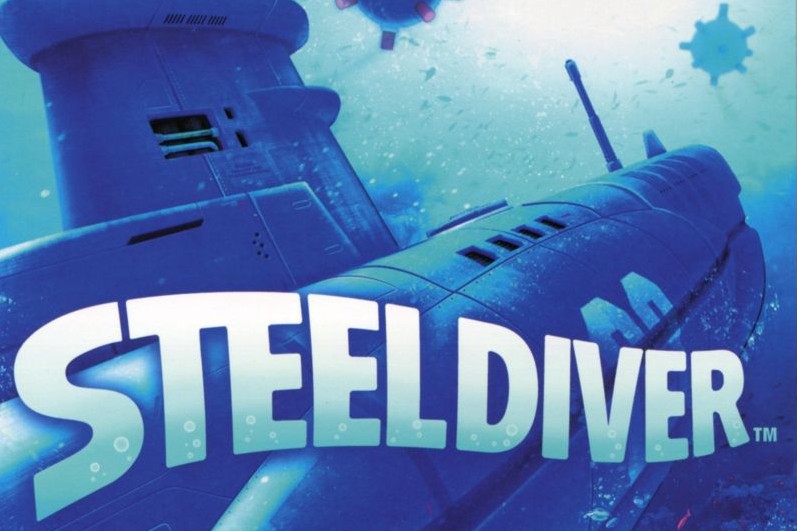
    It’s bad. It’s bad because it, in classic “we have this input form, we have to use it” style that you’d have thought Nintendo would have been over by the time of the 3DS, you control it totally through the touch screen. Which turns a submarine sim into a game that’s entirely about choosing to either move the slider that’s “depth” or the one that’s “speed.”

    Sometimes you have to fire torpedoes! But mostly you’re trying to make sure you don’t bump into things by going “erk, going to fast, have to slow down” or “crap, the sea floor is going up, have to raise depth.”

    It’s stupefying. Brilliantly, the game is designed so you never actually have to fight enemy subs (just go past them, there’s no reason to fight them, no score or points or anything) which I guess is “realistic” but sure does make them seem pointless. And when you do have to get into a fight, using the stylus to push some sliders slowly and fire torpedoes… it’s like using the 3DS stylus to get good bits of jam out of a mouldy jam jar. A tedious and lamentable thing to find yourself doing.

    Honestly. Steel Diver isn’t a game super worthy of rage. Because you shouldn’t be getting to the point where you’re fighting the last boss. Just about as far as you should go is opening it to get the Club Nintendo code and then closing the box again forever.

    Will I ever play it again? ha ha ha ha [begins to choke on own mirth]

    Final Thought: Y’all ever play that Radar Mission? Steel Diver is someone at Nintendo going “hey remember we released a sub game for the Game Boy when it came out? That was a good idea, lets do it again.” Steel Diver even comes with a weird, off-brand Battleships-a-like that you can play with another 3DS owner, but you don’t want to do that because it’s the equivalent of asking a friend if they want to sit in a ditch and eat bogies with you.

  • Bugs vs. Tanks (Comcept, 2013)

    Bugs vs. Tanks (Comcept, 2013)

    Developed/Published by: Comcept / Level-5 
    Released: June 20th, 2013
    Completed: 28th October, 2014
    Completion: I finished all the missions, including the extra ones, unlocking all the tanks that you can unlock from said missions!
    Trophies / Achievements: n/a

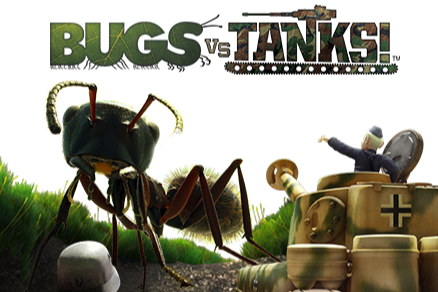
    Bugs vs. Tanks is not very good. At absolute best you can sort of think of it like an Earth Defense Force game, except there’s no buildings being destroyed, or really that many bugs on screen at one time, or, uh, any particularly interesting weapons.

    But it does have all of the slightly wonky graphics and rough controls you expect from Earth Defense Force? And giant bugs, obviously the main comparison point?

    Basically, you play short levels where you shoot at bugs with your tank (though weirdly, firing is automatic at default.) occasionally finding new tanks. It’s very, very… blah. If not an Earth Defense Force game, it’s definitely in the ilk of the Simple Series that spawned it, feeling like a phoned-in cheapy title, but sadly not one with any interesting ideas to back it up as such. Keiji Inafune worked on it, apparently, in (probably) yet another case of a named Japanese developer saying “it would be cool if…” and then never checking in on the team again.

    Having said all this though I still played it all the way through and went back to unlock tanks. Why, you might ask? Well, because tanks are quite interesting and when you unlock them you can look at them in a gallery, and read a tiny bit of text about them. It the ideal game for someone who’s slightly interested in WWII tanks, but not so interested that they’ve read up about them already? Specific!

    Will I ever play it again? I have no excuse but if someone is ever like “want to play the co-op missions” I’d totally do it.

    Final Thought: Bug vs. Tanks isn’t very good and yet I’ve just admitted I’d play it more. It simply passed some time in an agreeable fashion. I have no excuse… well, maybe co-op’s really good, you know? Like Earth Defense Force, the game that this game really isn’t very like at all (apart from the giant bug thing.)

    This essay is featured in Every Game I’ve Finished 14>24.

  • Dragon’s Crown (Vanillaware, 2013)

    Dragon’s Crown (Vanillaware, 2013)

    Developed/Published by: Vanillaware / Atlus
    Released: July 25th, 2013
    Completed: 25th October, 2014
    Completion: Defeated the final boss.
    Trophies / Achievements: 21%

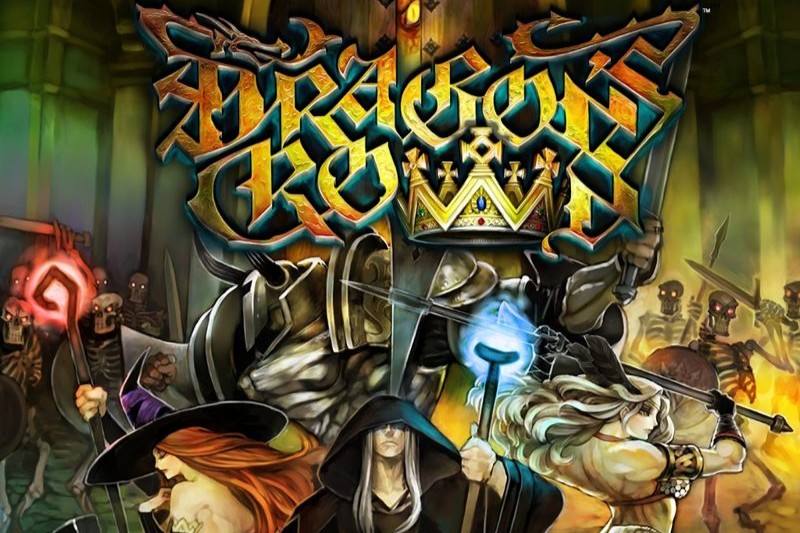
    I really, really, really did not enjoy Dragon’s Crown. I think it’s crap. Really, stunningly, confusingly-because-people-seemed-to-like-it-and-as-a-result-I-was-looking-forward-to-it crap. Boring, repetitive crap. Have I said it’s crap enough yet.

    So… what’s the deal, anyway? I’ll show my hand here and admit I’ve never played another Vanillaware game, despite also owning Odin Sphere (picked up for a fiver many moons ago) and Muramasa for Vita (I thought I’d play this first though?). However, I really do like side-scrolling punch-me-dos. I mean, I genuinely like the Dungeons and Dragons games that obviously inspired this. And obviously, it’s nice looking, even if the art isn’t to my taste really in any way at all.

    I mean, it’s probably that art, which looks nice in stills, but makes the game seem really… I don’t know, static when you’re playing it. It’s totally one of those side-scrollers where you feel like you’re fighting cardboard cutouts, you know? Where if you’re slightly to the side you miss them completely. Which isn’t amazing when you’re playing the Elf, and every arrow you fire just seems to whizz past your enemies harmlessly because you’re a pixel off (I might be exaggerating here, but it’s how it felt.)

    It just doesn’t feel rewarding to hit things, or move about, or really do anything moment-to-moment. It all feels clunky, and restrictive, and then you get your 3 AI companions (because, of course, you don’t get to unlock online play until you’re over half-way through the game) and if the game felt like cardboard cutouts before, now it feels like cardboard cutouts you’ve scribbled all over, thrown glitter at and then blown up with a small explosive. The screen just becomes a mass off, well, fuck knows to be honest, spells and attacks and bodies any time there’s a skirmish, and you pretty much dodge and then start to spam your most powerful attacks in the hope you’re really hitting anything.

    (If you don’t, it’s fine because you’ll definitely survive to the end of the level anyway, it’s really not that hard. At least until the bastarding final boss, where you’ve got to do it in two lives and have to grind/hope you’ve unlocked powerful enough AI to survive it. Hurrah.)

    Anyway. Yeah, I know you’re probably thinking like “how different is this from the Dungeons and Dragons games, really?” so… ok! I’ll have to go back and play those new ports then, eh? Rather than just base this on my memories of playing it years ago. Maybe I’ll be eating some humble pie!

    Of course, that really won’t change that Dragon’s Crown is definitely crap.

    Will I ever play it again? Never ever ever ever. Not even multiplayer. I played it a bit but zzz.

    Final Thought: I really struggled to find something interesting to say about this, to be honest. I totally get that you’re supposed to really get into pushing your way through the levels as a group, playing the (cute but easily missed) cooking game and then, when spent, sort through your loot, but… man, if it just doesn’t feel good, why bother? I mean I’m talking about a game here that feels less good to me than repeatedly clicking the mouse in Torchlight or something. I mean really.

  • Pix The Cat (Pastagames, 2014)

    Pix The Cat (Pastagames, 2014)

    Developed/Published by: Pastagames 
    Released: October 8th, 2014
    Completed: 24th October, 2014
    Completion: Hmm. You can’t really beat this, I just played the main arcade mode a lot and stopped.
    Trophies / Achievements: 47%

    Oh dear, oh dear. It’s been a tough few weeks here at exp. Towers, with the last batch of games we’ve been playing all being… pish, to be honest. And we quite like the plucky chaps at Pastagames, who’ve made (notably) Arkedo Series 03: Pixel and Pix n’ Love Rush, which are both pretty durn charming retro-inspired titles, so we dipped into Pix The Cat in the hope it would lift the doldrums.

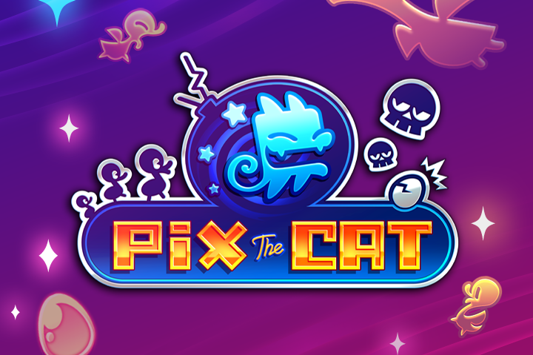
    I, uh, don’t like Pix The Cat, though. I feel sorta bad about it! Best described as a rough reimagining of Pac-Man Championship Edition DX (that’s the second one with the ghost trails) you play Pix (the cat), who has to (for reasons obscure) hatch duck eggs by walking over them then drop said hatched ducklings off in particular zones. This is complicated by the fact he can’t walk into his own trail of ducks (or they all explode) or start dropping them off before he’s hatched all the eggs (because then he loses his bonus.) It’s a game about quickly working out the best route through the screen—or being able to wing it well enough—performing that and then moving to the next screen, getting faster and faster until you hit fever time and everything is worth loads of points, you’re going really, really fast, and if you hit one thing you lose it.

    It sounds pretty good! Simple, yet solid. However, this is not the case. You see, while it’s inspired by Pac-Man clearly, with strict, Pac-Man-me-do controls, it’s got very open levels. This is a subtle complaint, but you know how in Pac-Man you’re always in a tunnel? it means that when you have to make a turn, you’re always sure you’re going to turn down the route you aim, even if you’re going really, really fast—because there will be a buffer between tunnels (the, er, not-tunnel bit.) In Pix The Cat, you’re often having to make very fast turns, even in instant zig-zags, to avoid hitting stuff like drop-off zones or enemies, and it’s super frustrating to suddenly miss an egg, or screw up your entire chance of a perfect because you turned a fraction too soon or too late. In fact I’d say 100% of my mess-ups are because of that. Now, you can easily say “well, you just need better reactions.”But my thoughts are more on the line of “why is this more fun than, say, designing the levels to avoid this problem?” I don’t think it is.

    (You might say “but Snake has wide open levels, and that’s fine!” again I refer to the level design—successful versions of Snake don’t litter the level with things to avoid in difficult zig-zags as well as your own tail. So there.)

    It’s got this one “main” arcade mode, which is again, like Pac-Man, in that you basically do the same levels in the same order every time. Now, they do change slightly. Very slightly. But they’re not different in any meaningful way. And there’s still a timer. As a result, the game reveals itself to be about absolutely perfecting performance through memorisation in order to get a high score. It’s so hard, actually, to get a good score that the game is entirely about not making a single error, hitting fever time and never losing it (which you won’t manage, it’s bloody hard). This is unfortunate! Because there’s a daily challenge mode, with a… I’d imagine random, but I’m not sure, level where you first time through aren’t going to know what’s coming and have to just muddle through as best you can. It’s more… roguelike-likey and I guess therefore it’s interesting how the seeping roguelike-likeyness of games these days means that ones that don’t do it seem at a disadvantage. I don’t really see why the main mode of this is so locked to memorisation and repetition rather than being at least a bit easier and more random to reward skilful play. It’s really weird, honestly.

    Oh, it also does this thing that seems clever, that you “zoom” deeper and deeper into the screen as each level is a tiny part of a bigger level, but it looks all wrong because the tiny levels don’t… ah, god, I’m going to describe this wrong technically, but they’ve got a higher pixel density than the level you’re playing (or something) so it looks really, really bad and incongruous. Boo to that, man.

    Pix The Cat just doesn’t work! On any level! It’s like they had a lot of good ideas, but got them all very slightly wrong. Like they all sat down to program, and put their hands on the keyboard one key to the left. Ah well.

    Will I ever play it again? No. It’s too hard to unlock the “dessert” mode (hard, basically) and not rewarding enough to make me keep trying. And it’s got two other modes, “nostalgia” and “laboratory” which are full of short individual levels but I just could not bring myself to care.

    Final Thought: You can play the daily challenge mode more than once each day. I mean, if that isn’t an example of not quite getting it I don’t know what is.

  • Crazy Taxi: City Rush (Hardlight, 2014)

    Crazy Taxi: City Rush (Hardlight, 2014)

    Developed/Published by: Hardlight / Sega
    Released: July 31th, 2014
    Completed: 14th October, 2014
    Completion: Unlocked the second island.
    Trophies / Achievements: 82/420

    I love Crazy Taxi! Love it. In fact, I pretty much love all of Sega’s “experience” arcade games from roughly that era—Top Skater particularly, if you ever played that one—but Crazy Taxi the one that Sega seemed to be most fond of… exploiting (it just made a lot of money, I guess?) it with ports and sequels a go-go, even if some of them have been pretty stinky. And so it’s come to this. A free-to-play iOS game that’s obviously based on Temple Run, rather than, you know, Crazy Taxi. Reduced to a re-skin.

    But wait! Supposedly series creator Kenji Kanno was involved! I mean, the game was developed by Hardlight, Leamington Spa-based developer of, uh, Sega’s previous Temple Run re-skin, Sonic Dash, but maybe it’s interesting?

    I’ll be frank: I downloaded this thinking I’d play it for literally a few minutes just out of a morbid interest, dash off some words about how you can’t make something free-to-play without considering the context and design of the original game, and call it a day. However, I of course ended up playing this for about two weeks fairly solidly because, of course, free-to-play has to be compelling.

    Don’t worry though! Crazy Taxi: City Rush is still crap. I just love Crazy Taxi, I’ve never actually played Temple Run and to be honest, this is probably my first deep time spent with the current brand of “give us your money, give us it now” style of free-to-play, so on some level it was probably just kind of educational.

    Not that it’s particularly unique. It’s the usual thing. Everything you do you have to wait to do again. Everything you have to wait for you can spend to speed up. Everything you can buy, you can spend to buy it quicker, or to buy it at all; the really good stuff you want you can never earn enough of the right currency for. You’re always being given offers or special events that, surprise, you have to spend to enjoy or take advantage of. And if you don’t spend anything, you have to watch adverts all the bloody time.

    Well, I didn’t spend a penny, in stark contrast to New Star Soccer. I probably would happily have spent a buck to disable adverts, but it started at $2.99 to do that (when you buy some diamonds, or whatever) or $4.99 for a starter pack, and that was too rich for my blood. I put up with the adverts.

    The game itself is really—well, at least slightly—interesting as a case study. You’d think that Crazy Taxi would make a perfect translation into free-to-play land, with it basically being a game where you try to survive as long as possible by repeatedly getting fares. In fact, I would have assumed that’s how this game would have worked; move between traffic in a Temple Run style, pick up passengers and take them places, even if it’s just “on rails.” Get hit too much and it’s game over. However, it’s even lesser than that, in that there’s no timer-free “survival” mode. You simply take jobs, say picking up four passengers, from the menu screens, do a quick mission for about 20-30 seconds either succeeding or failing, and you’re done.

    It’s really not very much like Crazy Taxi at all? I mean, it absolutely manages to nail that Crazy Taxi look. I wouldn’t have found it as compelling as I did if some receptor in my brain wasn’t telling me I was playing Crazy Taxi even though I plainly wasn’t, on some level. The decision to not use the “endless runner” template seems bonkers considering it was already encoded in the DNA, but if you’re wanting people to be returning to the game over and over, in bits, and feel forced to spend money, it makes more sense to offer such a lame piecemeal experience?

    It’s got all the other gating that you’d expect from free-to-play too, with everything needing to be unlocked, your taxi needing to be upgraded, and so on, requiring non-stop grinding to get anywhere (and it’s not transparent about this: the main missions become too hard to compete with from the second one, and you need to basically fully upgrade a taxi to get anywhere.)

    Interestingly, though, I really wanted to like this. Temple Run is copied for a reason and Crazy Taxi is a brilliant setting, but what broke my back was actually unlocking the second island, where I was forced to spend my hard-earned cash on a new, totally underpowered car (that I didn’t want) and then told I couldn’t drive my old car on the island. Obviously that’s to force me into the exact same treadmill I was on on the first island—grind, grind grind—but I rather mistakenly believed that the next island would just offer me tougher or longer missions that would (at some point) force me to upgrade to another car. Nope. Just the same boring loop, but now it felt arbitrary and unfair. Strange the things that can put you off, eh?

    Will I ever play it again? Nope. Literally just deleted it. Goodbye, all my hard-earned upgrades and 261 diamonds (still not enough to buy the car I wanted, that I could only drive on the first island anyway.)

    Final Thought: Kenji Kanno’s involvement on this game was, and I guarantee this, being sent a build at one point and sending back an e-mail with some vague and generally meaningless input. Or he said “you should put Hulk Hogan in the game for weeks and weeks” because that’s what they’ve done for some fuckin’ reason.