Author: Mathew Kumar

  • Wheels of Aurelia (Santa Ragione, 2016)

    Wheels of Aurelia (Santa Ragione, 2016)

    Developed/Published by: Santa Ragione
    Released: 20/09/2016
    Completed: 16/07/25
    Completion: Completed seven endings and unlocked every checkpoint.

    Wheels of Aurelia is being delisted from the App Store on July 25th because of Apple’s anti-art App Store requirements, and as it’s been made free by the developer in response, I thought I should pick it up and play it through. While Wheels of Aurelia will be available on other platforms–and if you’re reading this after it’s been delisted, you can pick it up there–it’s not exactly a preservation issue, it really does speak to the complete devaluation of creative work in our tech industry-led culture. Companies like Apple expect apps to be updated regularly, but of course, a game can just be… what it is (never mind the fact that a lot of apps don’t really need to be updated or changed much, if at all, either.) And let’s not forget the cultural vandalism of binning off everything from the old 32-bit App Store rather than working to keep them accessible.

    Apple are cunts, basically. And I think this matters in the case of Wheels of Aurelia for the same reason I wrote about Despelote in the context of our AI slopscape: Wheels of Aurelia is a genuine attempt to make a human work, but one that is still, specifically, a video game.

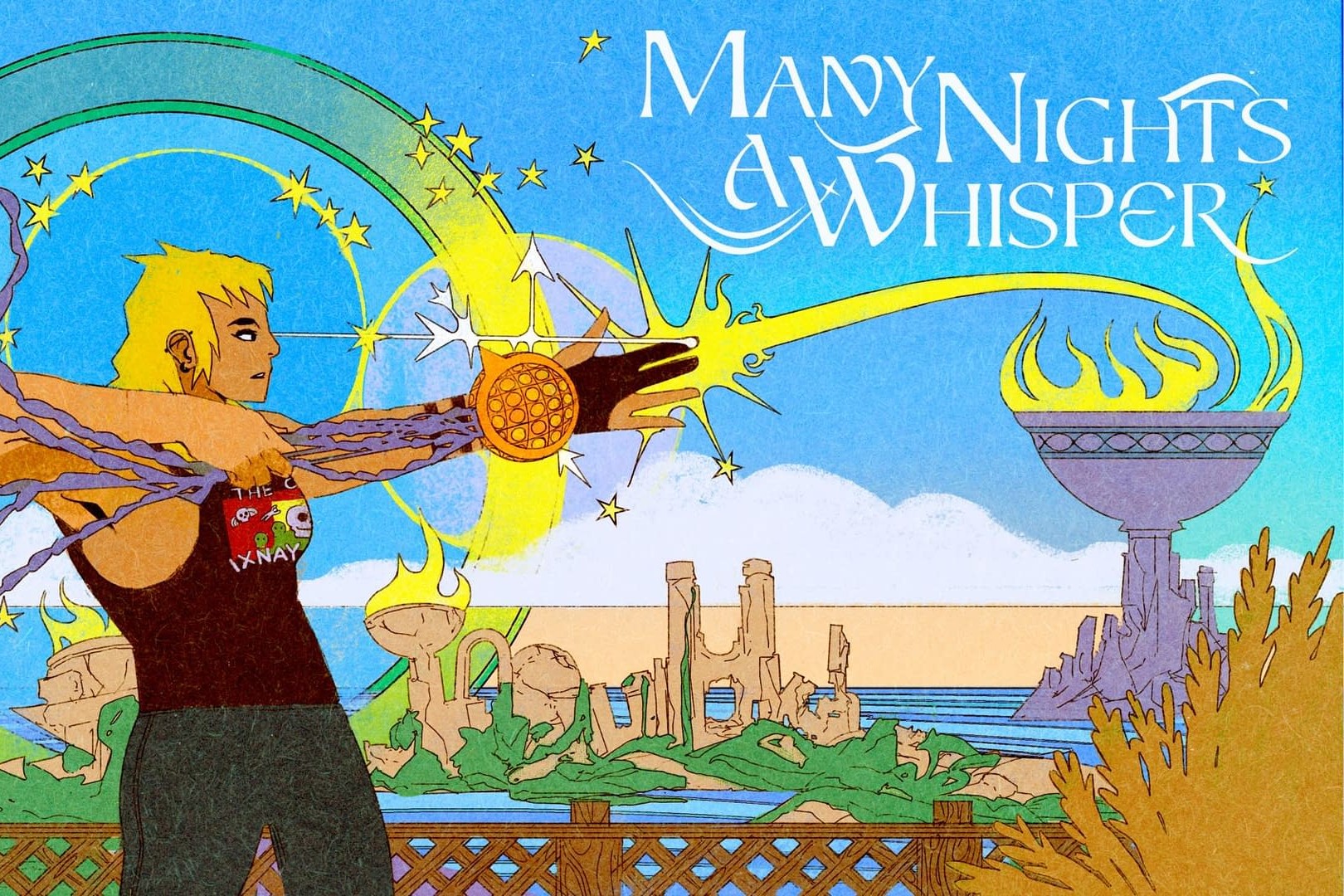
    Set in Italy in the 1970s, the player is cast as Lella, a woman taking a road trip to France for mysterious reasons, accompanied by Olga, who she met only the night before and has her own reasons for taking the trip. In some respects, the game could be described as a visual novel, but I think that’s a little reductive–I’d call it a “car conversation simulator”, because it captures the feel of something any driver will know well–when you’re engaged in a conversation while driving and are able to split your attention seamlessly between the conversation and the road.

    Here it’s cleverly provided by making the driving as simple as possible. You head forward automatically and can switch lanes to overtake and speed up (a bit) by swiping but that’s really it. While you’re driving, the conversation flows, and you can choose between a few different responses each time you’re prompted. So as you drive, you’re mostly listening, or thinking about what you’re going to say next, only occasionally making a point of taking active control of the car.

    I really have to emphasise that this is the ideal video game interpretation of the car conversation. If the driving was literally any more complicated, I’d have to think about it, and when I’m driving, I don’t think about it. I’m just… driving!

    Something else I appreciate about this is that it doesn’t tell one long narrative. It actually does the one thing I always want games to do–make it impossible to see it all in one playthrough, make each playthrough short, but make each playthrough tell a whole story. Wheels of Aurelia, if you play it once, is very short–less than twenty minutes. But as you play, you can pick up hitchhikers. You can change your travelling companion. You can choose which town to head to next. And you can always choose to say something different.

    I thought I’d be done with one playthrough, honestly, but through the dialogue the game doesn’t just progress a narrative, but paints a portrait of Italy in the late 70s. Like Ecuador in the early 2000s, it’s nowhere I know anything in particular about, and the game (cleverly, I think) gives you encyclopedia entries (sourced from Wikipedia–now that’s some savvy effort-saving) to fill out anything in detail that you like–though I was happy to let it just flow, to feel immersed in my lack of perfect context.

    The thing I would say surprised me most is that I actually wished it was a little longer per playthrough! I appreciate that the game doesn’t shy away from serious, adult topics, but the endings feel a little sudden, like you haven’t spent quite enough time with the characters to get totally comfortable with them. While you draw more of them out each playthrough, it feels like you’re just capturing a snapshot of someone’s life–and the endings imply a little too much by comparison. It can feel unearned. And if you’re a completionist, I suspect that trying to see every ending here will get pretty repetitive–better to just play it until you’ve had your fill and leave some things unknown.

    Sometimes there are just games that just… do what they’re trying to do. Wheels of Aurelia is one of them. There’s no “update” that they could make that would be worth it to make Apple happy: it deserves to exist, and be played, as it is.

    Will I ever play it again? There are many endings I haven’t seen. Ironically, this is kind of a perfect iOS game–I can imagine picking it up and giving it a run through to get an ending I hadn’t seen at some point in the future while I’m in a waiting room or something.

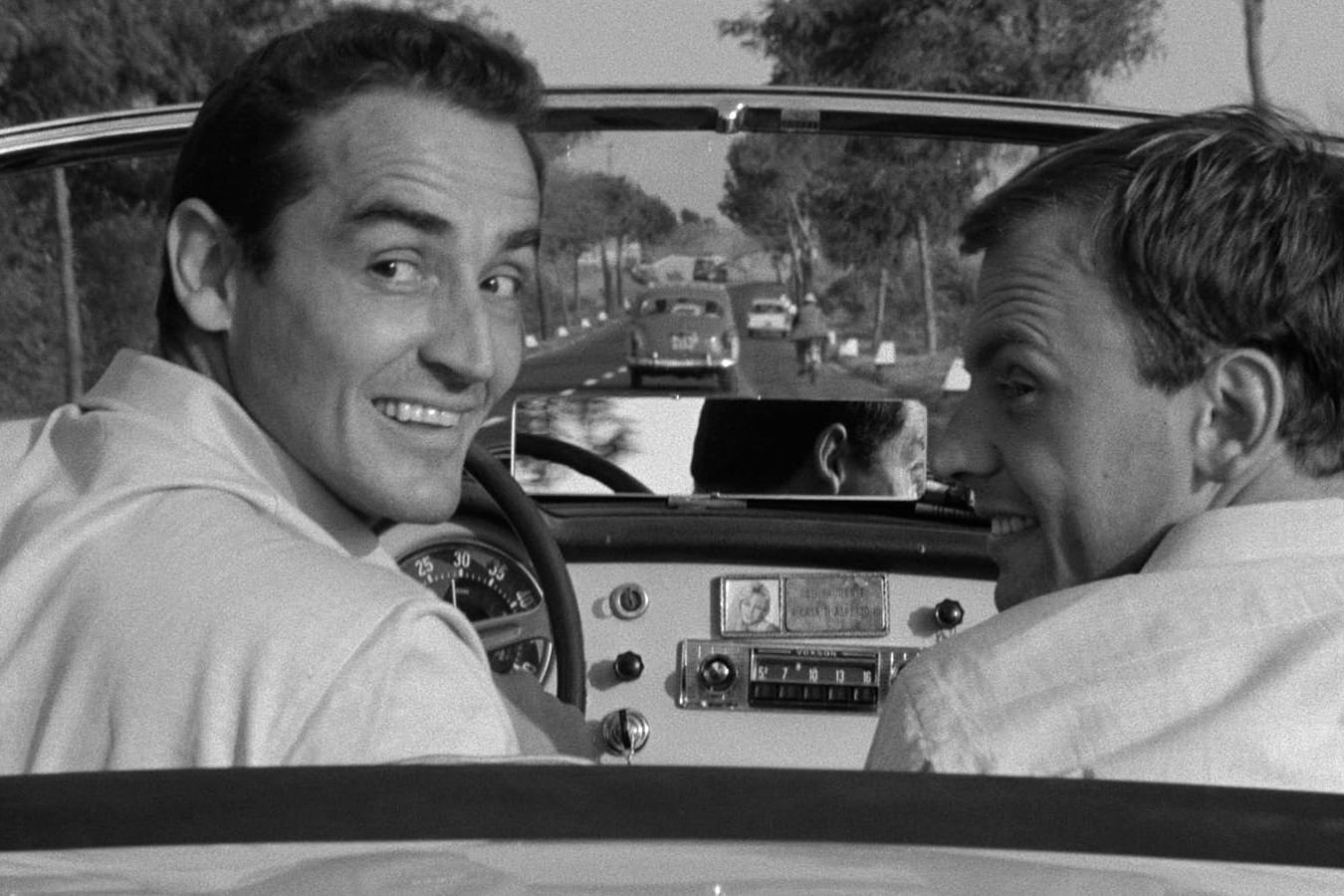
    Final Thought: I was interested to read that one major inspiration for this was the Italian film Il Sorpasso, as the movie it immediately put me in mind of was the Italian film Rabid Dogs. Though that is tonally incredibly different…

  • Cyrano (Popcannibal, 2025)

    Cyrano (Popcannibal, 2025)

    Developed/Published by: Popcannibal
    Released: 07/03/25
    Completed: 10/07/25
    Completion: Completed it.

    I was looking for something quick to play through and I saw that I’d noted that this recently (re-)released adaptation of Edmond Rostand’s play Cyrano de Bergerac was under an hour, so I decided to give it a run through.

    The most interesting way to think about Cyrano is that it feels like one of those “abridged” books for children–it’s a gentle, extremely pleasant introduction to one of the classics. The likelihood is that while you’re familiar with the concept (poetic man with large nose helps attractive thicko woo the woman he secretly loves) and you probably know one famous scene from many, many parodies (the one where Cyrano feeds Christian lines to charm Roxanne) you probably don’t know anything else about the story or setting–and Cyrano provides the broad strokes in charming fashion.

    While you get to enjoy the story, the majority of your interaction comes from JRPG-style battles and “letter writing” and the way these two sections connect is really fun and interesting, even if they’re individually a touch simplistic. The JRPG battles are so simple, in fact, they tend towards unbalanced. You can’t choose which enemy to hit and healing is weak, meaning it’s more luck than tactics. But each enemy defeated gives you a playing card, and each playing card has (most of) a line of poetry on it, so when time comes for Cyrano to write Roxanne a letter, you make the best poker hand you can from the cards you have managed to collect, and then those cards form the basis of the letter, upon which you can type your own flourishes for fun.

    I genuinely think this is quite a brilliant concept and I couldn’t help but wish that perhaps the game was longer and the mechanics given more space to flesh out–get crunchier, more tactical. You can’t, for example, roam around to get into more battles and get new cards. There are no upgrades to cards or gear or whatever. This is completely fine for something of this length, but it’s a mechanic ripe for exploration if anyone wants to.

    Something also worth mentioning about the letter writing: Cyrano was originally released in 2021 as part of a pack to support LudoNarraCon, and this new version’s main addition is to add controller support–allowing this to, for example, be played on Steam Deck. But because the game features you adding your own text to letters, you need to at least be using a soft keyboard, which as we all know, sucks. You can just skip this aspect completely as it has no mechanical effect, but it does mean you’re not taking part in a fun aspect of the game that personalises it for you (at the end it shows you all the letters you wrote) so that’s kind of a bummer. It would have been nice if there was a “I don’t want to type” version that just filled out the whole sentences on the cards for you–even if it would be less funny.

    I’m quibbling, however. Cyrano is a good example of how much work a strong narrative and a breezy runtime can do for a game–especially when paired with lovely, appropriate art. You do feel like you’re enjoying a play, and at the end I found myself rather moved–Cyrano is a classic for a reason.

    Will I ever play it again? It’s not going to play out any differently. But it does make me fancy watching another adaptation. Maybe that Steve Martin one???

    Final Thought: The most surprising thing about Cyrano is that it doesn’t feature the most famous scene! I thought it might feature it still using the poker-hand letter writing mechanic, but it’s excised. In fact, the version of the story here shuffles about and changes things more than I expected–all the more reason to revisit the story elsewhere.

  • The exp. Dispatch #4

    The exp. Dispatch #4

    This week on exp.


    Subscriber Post: Pro Wrestling (TRY, 1986)

    I have (generally) been unimpressed with Nintendo’s black box output, but along with Golf, this one was a really nice surprise.

    Unlocked Post: Despelote (Cordero/Valbuena, 2025)

    The only article you’re going to read about a video game that includes a reference to Jeanne Dielman and Fishing With John. Probably.

    From The exp. Archives: Gunhouse (Necrosoft, 2014)

    I don’t do these that often, but when I feel like I know the developer really well–maybe too well to honestly critique their work–I cadge an interview with them. Here it’s a really deep design interview with Brandon Sheffield that’s probably obsolete because it’s so specific to the PS Vita(!) version of Gunhouse. Looking forward to another round when Demon School comes out (wishlist now, etc.)

    exp. Du Cinéma


    Thunderbolts* (2025)

    The main issue with Thunderbolts* isn’t really the film’s fault: it is, of course, the MCU’s. Because—and I think this is borne out in how fatigued and almost indifferent the positive reactions to this movie are—if the MCU is a banquet you can never leave, Thunderbolts* is like receiving a perfectly delicious hotdog after being forced to down a cup of cold sick. It’s a good hotdog! But you still sort of wish you were anywhere else.

    You can feel the weight of the MCU machine—gotta advertise those future movies—but they actually work to get you on side rather than relying on that alone. That they were able to immediately and unceremoniously kill a character no one likes? Unbelievably funny, gives you just enough to make you go “oh, maybe this was made people who actually like movies.”

    Not only that, that they might actually want the images you see on screen to be cool and enjoyable? The action is clear (they do a fun riff on some iconic Terminator imagery) and it even hits the comedy beats well enough that I actually laughed out loud at points. There are even… themes! And it manages to tell a complete story!!!

    Christ, that kind of praise really is grim, isn’t it? But I suppose that’s where we are. Ultimately, I liked it! But I kept thinking “please don’t make me drink any more sick.”

    Follow Mathew on Letterboxd.

    Other Zines


    Kill Or Be Killed: A No More Heroes Fanzine

    “Preorders for KILL OR BE KILLED ZINE are OFFICIALLY OPEN! They’ll be available until August 5th.”

    BreakSpace – Issue 2

    “Our scorching Summer issue features 38 reviews of new ZX Spectrum games, Type-ins, interviews and loads more.”

    And Finally…


    Mikolai over at Forgotten Worlds wrote a cute blog about their experience of publishing zines using the JRPG as a metaphor, er, a few months ago. But it came up in my feed recently and is an interesting manifesto/guide if you’ve ever considered it yourself. Give it a read!

    Next week on exp.: “You don’t have to put on the red light.”

  • Pro Wrestling (TRY, 1986)

    Pro Wrestling (TRY, 1986)

    Developed/Published by: TRY / Nintendo
    Released: 21/10/1986
    Completed: 05/04/2025
    Completion: Defeated The Great Puma!

    Nintendo’s output on the fledgling Famicom/NES is… patchy. And nowhere is it more patchy than when it came to video game representations of sport, where they can somehow manage to literally solve golf game design and then months later be willing to put their name on things like Soccer and Volleyball, which are, frankly, absolutely horrendous. Even with Nintendo warming up by late 1986–they’ve just put out Metroid, for example–you can’t help but expect Pro Wrestling to be a bit of a dog, considering the sport (or at least, sport-adjacent entertainment) has a lot of terrible, lazy video games to its name, and this specific release is most famous in gaming circles for having a win screen that declares “A winner is you!” which probably was funny once.

    Well, it isn’t a dog! A bit like how Nintendo lucked into working with Satoru Iwata on Golf, with Pro Wrestling they also managed to hire someone who knew exactly what the fuck they were doing: Masato Masuda.

    Masato Masuda–who passed away in 2014 at the untimely age of 48, sadly–is best known by the wrestling hardcore as the creator of Fire Pro Wrestling, generally considered the greatest and most important wrestling video game franchise (even by people who love AKI’s wrestling games like me) and according to an interview in CONTINUE Pro Wrestling was made “mostly by [himself]” with “someone else who did the graphics.”

    Although not a sport that would see as many games released as, say, golf, wrestling was reaching its zenith in popularity worldwide, so before Pro Wrestling there were several high profile releases from Sega and Technos that I’m sure Masuda will have tried, and two wrestling games would appear before this on Famicom: Tag Team Match: M.U.S.C.L.E. and Tag Team Wrestling (both of which would appear on the NES before Pro Wrestling, too.)

    So–not having played any of those–I can’t make any educated claims that Masuda was “solving” anything about wrestling games with Pro Wrestling. But whatever prior art existed for him to pull from, Masuda understood a few things:

    • Pro wrestling is about unique characters.
    • Pro wrestling is about grappling–and the wide range of moves that result.
    • Pro wrestling isn’t about winning or losing–it’s about ebb and flow.

    Now, I won’t pretend that Pro Wrestling clicked for me immediately. It has the immediate problem of any 2D games where you can move in and out of the screen–not being exactly sure where you need to be to connect with attacks–and the systems by design are a little obscure. Succeeding in pulling off moves from grapples can feel a bit random, too. Does initiating the grapple confer advantage? Does it even track who initiates? Actually, how do you initiate a grapple? Is it timing? I’m button bashing, but sometimes I don’t go as hard and still win?

    As far as I can tell–from nosing around a bit–the game relies on a stamina system with regeneration, with lots of “triggers” based on stamina levels. So you’re basically trying to wear down your opponent’s stamina enough that they don’t get up long enough so you can pin them, but if you’re slow–or they start beating you up, their stamina recovers.

    (This matters because as you play through the game, enemies seem to gain stamina and regenerate faster.)

    The genius of this system is that it ties into the ebb and flow of a “real” wresting match perfectly. You have to wear down your opponent to pull off bigger moves, but they can also suddenly go on a tear by kicking you in the face before you manage the grapple you’ve been building towards. You can misjudge when to pin, get a kick out, and have the entire match turn on its head. And vice versa! If a match isn’t going well, it’s can sometimes only take a single correct move to swing the momentum back.

    Pro Wrestling also features, well, all the actual features of a wrestling match. Not only is the referee who has to run into position, you can jump of the turnbuckle, throw your opponent out of the ring and then leap onto them, get ring outs, and so on. The building blocks are all there for every match to tell a story.

    This is aided, of course, by the game’s memorable characters such as Star Man and The Amazon (famously inspiring Blanka.) Each character has individual special moves–the Amazon’s all illegal moves that can end with him begging innocence to the referee, amusingly–and are inspired by real wrestlers. Fighter Hayabusa is transparently based on Antonio Inoki for example, though Giant Panther will always be debated–I suspect he’s actually based on Fritz Von Erich, the patriarch of the Von Erich family due to the use of the Iron Claw, that he famously feuded with Inoki and that it doesn’t look like any of his sons–but that’s pure conjecture.

    But the point is that with whichever character you choose, there’s something special to work for, and it adds to the narrative you create through play–you survive the Amazon cheating like crazy, pull off the iron claw and pin! The crowd goes wild!

    I won’t lie–often when I’m playing these older games, I’m sort of just… working through them like a job. But Pro Wrestling? I just played it! Once I was comfortable with how it played, I settled on King Slender (the Ric Flair analogue) because he had an easy move to pull off (the backbreaker–he’s the only character with a move you can pull off by pressing A only from a grapple) and had fun until I hit a genuine brick wall.

    Pro Wrestling isn’t a long game–it’s built around winning five matches to become the VWA champion, then ten title defenses until you take on “Great Puma” to become VWA/VWF champion–three loops of the roster. But by the third loop your opponents are unstoppable–they regenerate stamina quickly, pull of grapples faster. I couldn’t go any further.

    And really, that’s ultimately Pro Wrestling’s weakness–it all works up to a point, and then as a player you have to go “ok, how can I cheese this.”

    For me, that was starting again with Fighter Hayabusa, abusing his “Back Brain Kick” and ring-outs. While it’s not a guarantee, if you can get your opponent on the mat and then position yourself right (Hayabusa’s midriff around where your opponent’s body is lying) you should be able to kick them in the head as soon as they stand up, and spamming this at the start will alow you to either start pulling off grapples or let you throw them out of the ring and then just run them into the barriers till they can’t get up quickly enough.

    It would be some demoralising, terrible wrestling for the audience, but at least for me it’s what I had to resort to for the last chunk of matches.

    However–that’s if you’re determined to beat this (maybe you have a blog or something where you’ve tied yourself to doing that.) I assume most players who played this either just had fun playing a wrestling career–it does track wins and losses, and you can just play it–or took part in two-player matches, where all the obscurites of stamina and grappling probably lead to absolutely epic battles. I certainly haven’t played a better two-player game on NES or Famicom by this point in 1986–and I may not for a while!

    Will I ever play it again? Unlikely, but not impossible!

    Final Thought: A funny and strange fact about “A Winner Is You” is that it isn’t even the original win quote. Seems that in the original release of this it just said “Winner Is You” and in a later revision they “fixed” the English by just sticking an A at the beginning.

    Which is a really strange fix! You’d assume someone who actually spoke English might have pointed out that’s not better–and it’s not like “You Win!” has a character limit or something.

    The fix also seems to have changed a “bug”–that if you play King Slender it takes longer to get to the first championship. This was something I didn’t mind and originally assumed was “balance” because King Slender’s back breaker seems so powerful–though when I got later in the game and realised I could basically never pull it off, my opinion on that changed somewhat…

  • The exp. Dispatch #3

    The exp. Dispatch #3

    This week in the exp. Dispatch we’ve got an exclusive PICO-8 capsule review, an exp. Du Cinéma that didn’t feel long enough to give its own post, as well as all the usual week’s round-up and zine links. Incredible value!!!

    This week on exp.


    Subscriber Post: Despelote (Cordero/Valbuena, 2025)

    Panic would probably not be best pleased that I turned another article on something they published into a rumination on the place of AI in creativity, but I’m proud of this one. I really think it’s worth subscribing for!

    Unlocked Post: Super Xevious: GAMP No Nazo (Namco, 1986)

    Last call on this meme. Last call!

    From The exp. Archives: Thomas Was Alone (Mike Bithell, 2012)

    On one hand, I think it’s good I have this record of games I’ve played. On the other hand, I have no recollection of playing this at all, so does it matter that I did?

    exp. Capsule Reviews


    Dino Sort (Adam Atomic, 2025)

    I wrote about getting into PICO-8 games recently by way of Adam Atomic’s Prince of Prussia and owning a Chinese emulation handheld (a subscriber exclusive) and Adam recently dropped Dino Sort which I don’t think I can justify an entire post for, so isn’t it brilliant I have this newsletter now?

    Anyway, Dino Sort is a brilliant wee game where you shuffle around dinosaurs to get them into the right positions based on their personal requirements (e.g. “don’t put me next to a predator”) very much in the style of Rush Hour. There are 26 designed puzzles which will probably take you, I don’t know, forty-five minutes to polish off or something, and though it will require some logic and lateral thinking, it’s good because at least I never ended up in one of those situations where untangling all my dinosaurs was going to be annoying or impossible the way it would be in a Sokoban game or something (god I hate Sokoban.)

    Also as someone who actually hates when a puzzle game has a billion puzzles–the “infinite pizza” problem, you eventually get sick of even pizza–I loved that this was something I could pick up, play and put down, but if you really wanted to keep playing this, you can because it generates a daily puzzle every day. They’re of varying quality, but just think, you could play it every day instead of doing a Wordle, because The New York Times can fuck off.

    exp. Du Cinéma


    Pee-Wee As Himself (2025)

    Pee-Wee—or should I say, Paul Reubens—has had an outsized influence on culture more than people give him credit for, deeply affecting the brains of a generation of millennials (my brain included) and helping define kitsch as a force in the 80s and 90s. He deserves his flowers, and as praised as this documentary has been, I can’t help but find it a bit… slight.

    Archive footage is catnip for me, and there’s absolutely hunners of it here, but you get the sense here that either due to the loss of Reubens or his intransigence they couldn’t quite pull this together into something that feels complete. It limits itself to a chonological telling of Reubens’ life and struggles to make connections to knit anything close to a statement together.

    (I wonder if they had plans to build to Reubens walking around a museum of all the things he’d collected as a physical representation of his life, but even that I question.)

    For someone with as complicated a life (and who is actively passive aggressive here!) the attempt at haigography comes across as disingenuous. It just seems wrong to portray (for example) Phil Hartman in such a one-sided fashion, or to gloss over the idea that people might be fair in feeling that the original Pee-Wee show was created by a collective and Reubens maybe didn’t treat a lot of people well on the way up.

    But in turn, his personal and legal troubles aren’t given the depth you’d expect either—especially considering his final statement makes it clear how one in particular so deeply coloured his later life. It almost feels as uncomfortable as Reubens in discussing it. He was stitched up! You may have to go into uncomfortable detail to exonerate him, but why hold back? Interrogate it!

    Maybe it’s fine. Like all of us, Paul Reubens was messy and incomplete, so it makes as much sense as anything for this documentary to be the same. This is just what people are. They leave us, and maybe you try and dig through what they left and try and make sense of it. But better, I think, to enjoy what they gave you while they were alive.

    Follow Mathew on Letterboxd.

    Other Zines


    Did you know it’s International Zine Month? Well it is.

    Between the Scanlines – Issue Thirty-Three

    “Wi-fi connected C64s, epic 90s sci-fi 4X, Dreamcast 9.9.99 memories from James Webster, and John Bunday l shares his love for Streets of Rage 3!”

    BreakSpace – Issue One

    “Presenting issue 1 of the World’s Cheapest ZX Spectrum magazine … This inaugural Springtime edition covers games released in Q1 2025.”

    And Finally…


    Doujinshi are essentially zines, so I suppose I could just have put this in the “Other Zines” section, but I tremendously enjoyed reading this ROMchip translation of Hiromasa Iwasaki’s 2024 doujinshi Legend 7: Why Do 2D Games Usually Go to the Right?

    It’s really one of those things that, if you know anything about video game development, actually seems really obvious, but you’ve probably never thought about in detail before. Officially sad now that I didn’t know about this zine before so I could have been hunting out copies of it (though I’d struggle to read much of it in the original language.) But better late than never.

    Next week on exp.: I jump a little bit forward from GAMP No Nazo in 1986, and a winner is me!

  • Despelote (Cordero/Valbuena, 2025)

    Despelote (Cordero/Valbuena, 2025)

    Developed/Published by: Julián Cordero, Sebastián Valbuena / Panic
    Released:
    01/05/25
    Completed: 18/06/25
    Completion: Completed it.

    Despelote is boring.

    But maybe that’s what’s important about it.

    We live in an age of AI encroaching on everything we do. An age in which in particular it is going to have a noticeable effect on creativity, as the big guys look to it as a solution to that pesky problem of “having all the value being created by workers” and (some) small guys look to it, perhaps naively, perhaps without diligence, as a way to create work that competes.

    And indeed, this has already happened to Panic, the publisher of Despelote, who found their second season of releases for the Playdate handheld infected–and I will use that pejorative–by generative AI, by a developer looking for shortcuts (as covered in a recent article.)

    This kind of use is likely to become endemic in the games industry–for another example, 11 Bit Studios’ The Alters has also been discovered to have used ChatGPT for “placeholder” text.

    The question I have however, is if these developers understand that generative AI is a flattening force. It is a product created by feeding it everything we’ve ever created, built only to mulch it up and spit it back out as slurry. Now, the big guys don’t care. What they want is a fat pipe of chemical lowest common denominator. 

    But how are you going to stand out if you fertilise your fields with that? Little knowing that it eats the fields it lies upon?

    Maybe those who are using it to “compete” don’t care either. Maybe you just have to get what you can and get out before it’s all over. Maybe you can fool yourself there’ll be a Mars here too, once the earth is salted.

    — 

    But instead of that… why not embrace your humanity? Why not spend all your effort on making something that reflects… you? Instead of creating what is common, what everyone recognises, why not create work that not everyone recognises, but in which they can find commonalities? Why not make something like Despelote?

    An AI could not make Despelote. Only a human can, because only we are able to make the non-obvious connections in the story of our lives. 

    Here, designer Julián Cordero recreates the experience of being a child in Ecuador, but specifically during the Ecuadorian national football team’s historic qualifying campaign for the 2002 World Cup.

    This is probably not the most obvious setting you can imagine when you are creating a game about the world of children and how it interacts with the world of adults. Similarly non-obvious are the decisions made in which to represent this, which it does in a form that I feel only video games could manage–while also introducing (in my opinion) a new kind of cinematic flair. One that does not look to mainstream cinema’s style but the art house.

    It opens with you playing what appears to be a retro game: Tino Tini’s Soccer 99. Despite this being a reference to Dino Dini, and Kick Off 2 and the like being fucking rubbish (sorry, this is a Sensible Soccer house) this is actually a brilliant wee overhead-view football game that could be released on its own terms, with a simple and rewarding “flick-to-kick” control scheme. But as you play, you start to overhear your parents talking, and then, cinematically, quite unlike any other game I’ve played, the camera slowly pulls away from the television, until finally, your dad turns off the telly. 

    In Despelote, as it would have been for any of us, such is your lot as a child. You find yourself pulled around by your parents, told what to do–and given limited amounts of free time. And what matters is in that free time you don’t really have anything to do. You can run around, maybe you’ll find a ball to kick (beautifully, controlled just as in Tino Tini’s Soccer) but there’s nothing to hunt out, nothing to unlock, no rules for playing with the ball. It’s just you, some other kids who might want to aimlessly kick a ball about, and a world of strangers, almost all of whom are captivated by the ongoing football matches on the telly (unfortunately the game doesn’t really allow you to just stand and watch too–though you’re likely to run and check on the score when you pass a TV.)

    I’m not going to lie–after the shine of kicking a ball wears off (which really does feel fucking great) and you realise what’s happening, Despelote is properly boring, and if you’re a progression-focused twat like me, you’ll probably really struggle with it. While it’s not exactly Jeanne Dielman (and you can play through Despelote in nearly half the time it would take you to get through that) it’s working in that kind of perhaps punishing milieu. It wants you to feel the boredom and frustration of the limits of childhood–and to strain against them as a child does.

    Throughout, you get flashes of how Julián will grow up, how his love affair with football will evolve as he does; fragments of memory that ask you to remember that these childhood afternoons that maybe felt so boring were actually fleeting, and you can never have them back. It’s not as much about being Julián as it is about you–what these moments make you think about, how you remember your childhood. I remember my own childhood. Scotland in Italia 90. Then a flash of sitting in a car on a rainy day. Now I’m at an uncle’s, watching the penalties that ended the 1994 World Cup. Now I’m drunk for the first time, years later…

    I remember.

    I suppose there’s some concern about American exceptionalism here–after all, the Yanks don’t really like “soccer”. Maybe it’s unfair to imagine the American “gamer”, unable to take the steps from soccer to their own sports obsessions. After all, their “world” championships only include their teams [“And Canada’s!”–Canadiana Ed.] so that sense of a national collective that crosses political and societal boundaries may be a step too far. Maybe to many, Despelote is just foreign, and boring.

    But that, to me, represents the state of the art. The boredom of Despelote is not what has stuck with me–what has stuck with me is the themes, the ideas. Someone is saying something–something about themselves, and hoping that it makes a connection with you, your experience.

    It’s not perfect, but it’s human. These days, what more can I ask?

    Will I ever play it again? It says all it needs to, once.

    Final Thought: One of the more interesting background facts about Despelote is, of course, that Julián Cordero’s father directed Ratas, ratones, rateros, the “first Ecuadorian film with international-standard production values” which gives reason to why this game features (in my opinion) a different sort of cinematic influence. But I think this influence has also leads to one of the most amazing cameos I’ve ever seen in a video game: a DVD of Fishing With John!!!

  • The exp. Dispatch #2

    The exp. Dispatch #2

    This week on exp.


    Actual Journalism: I Asked Panic About GenAI in Playdate Season 2​

    An unusual week on exp. because I did some actual journalism. I’m really not sure why more outlets didn’t pick this up in the first place–isn’t it news that there’s a game that uses AI in Playdate Season 2? I think it is! Anyway, I got some quotes. A few people have mentioned maybe I should have followed up with them to nail down if they’re going to allow AI on Playdate in future or not–and they’re right. But this kind of thing isn’t the focus of the site! If I end up having to do this again, I’ll put some more thought into it.

    (To be fair, also, they made me wait two weeks for a response.)

    Subscriber Post: Super Xevious: GAMP No Nazo (Namco, 1986)

    I thought this meme I made was very funny. I guess lots of people didn’t see it, it was a busy news day. Yeah… that’s it.

    Unlocked Post: Clair Obscur: Expedition 33 (Sandfall Interactive, 2025)​

    Clair Obscur has stayed in the headlines a bit, this article on Digital Trends begging people to be normal about it then when discussing good criticism of the game, somehow forgetting to link this epic article. It’s ok, I’ll forgive them.

    From The exp. Archives: Sonic The Hedgehog 2 (Sega, 1992)​

    Old me’s tone of voice annoying me in this one. The iconoclastic wee twat.

    Other Zines


    ​This Queer Online Zine Can Only Be Read Via an Ancient Internet Protocol​

    And here was me thinking I was being old school by having a website. I’ll need to try harder. This newsletter is moving to, uh, Gopher.

    ​Rulebooks for Radicals by Greg Loring-Albright​

    “If games can’t change the world, why bother to make them? I lay out my answers in zine form, including some tips on how to get started making games if you haven’t before.”

    And Finally…


    Friend of exp. Raigan Burns pointed out after reading our article on Sky Kid that Sopwith, a Canadian MS-DOS game, actually predates it by a year or so and is extremely similar. I think it’s sort of unlikely that someone at Namco saw this and decided to rip it off, but it also seems so close to be as unlikely to be simultaneous invention either. Mr. Namco, if you’re reading this, get in touch!

    Next week on exp.: Footy Footy Footy, Ball Ball Ball!

  • Super Xevious: GAMP No Nazo (Namco, 1986)

    Super Xevious: GAMP No Nazo (Namco, 1986)

    Developed/Published by: Namco, Tose / Namco
    Released: 19/09/1986
    Completed: 28/04/2025
    Completion: Completed it–but with a complete collapse in dignity, having to abuse save states starting around area 14.

    Well, it’s been a while since the Xevious klaxon has gone off here in exp. towers–I think the last time we mentioned it was actually Tower of Babel–but here it goes off because we’re only bloody playing the first “real” sequel to Xevious! And it’s yet another Famicom game with Nazo, aka “Mystery” in the title. They were mystery mad in Japan in the mid-80s!!!

    If three years feels like quite a gap for a game as successful and influential as Xevious to get a sequel, it’s worth mentioning that this is actually the fourth game in the franchise. Xevious in the arcades got an update in the form of Super Xevious (to which this has no relation) and then–and this is true–Xevious creator Masanobu Endo made a game starring an enemy tank from Xevious, Grobda, because he thought it’d be funny.

    Grobda seems pretty forgotten now–and I don’t think “the top-grossing arcade game in Japan for December 1984” is quite enough to believe it was that much of a success. But of course, we know that Xevious itself was a huge success on Famicom–so it only makes sense for Namco to bang out a sequel. In this case, Endo probably didn’t think it was funny–he was on record as believing that a direct sequel to Xevious was unnecessary, and he’d left the company a year earlier. 

    With Endo’s guiding hand missing, Namco–with the aid of Tose–did something that I think on paper makes sense. They looked at the huge success of Xevious, an Endo joint. They looked at the huge success of The Tower of Druaga (oh dear, set that klaxon off as well) also an Endo joint. They looked at how Tower of Druaga’s mystery design had been implemented into basically every other game coming out at this point, and thought: well, it’s chocolate and peanut butter, innit? Smash ‘em!!!

    So with Xevious: GAMP No Nazo, you play Xevious levels where you have to do a particular action to progress–this is actually a bit less punitive than the original Tower of Druaga, where you can keep playing through the game with no way to win because you missed something. This can be as simple as defeating a boss (hardly a secret) or as annoying as finding hidden things in the level or interacting counter-intuitively with enemies. 

    To put none too fine a point on it, this doesn’t work. At all. It’s obvious that at least Japanese players had become comfortable working through obscure fucking nonsense without the cameraderie of the arcade, but a vertically scrolling shooter puts pressure on you in a way that Tower of Druaga’s mazes didn’t–you can’t navigate back to something you’ve missed, and having to do an extra loop in GAMP No Nazo to get back there is brutally punitive.

    Because GAMP No Nazo is miserably hard. There’s no sense here of the push-and-pull “intelligence” of the enemies of the original, just walls of bullets and, frankly, unfair bullshit from the very start. The first level sets the tone by featuring clouds that obscure enemies and bullets meaning you can be killed by something you can’t even see.

    Trying to find what’s required to get to the next level just isn’t fun because of the high tension and sense of a “wasted run” when you get to a point and progress. The things you’re asked to do aren’t very interesting, either–while I’m hardly going to ask for the misery of The Tower of Druaga and having to, like, kill enemies in order, or something, the game only thinks to do something obvious like offer you different routes in levels like… twice.

    You can choose to play this like Xevious: to see how far you get, how high your score goes by just memorising all the requirements, which isn’t actually so bad. And the game… sort of works. But it’s not as fun as the original, feeling more predictable and rote before getting ever more absurdly difficult, and I certainly wasn’t sure why I was bothering at a point–each time I’d think “maybe this is ok, actually” I’d start a new run to try and get further and get killed by enemies hidden by clouds immediately, sapping any urge to continue.

    Namco might have been able to get away with this bar for the fact that it’s mid-late 1986 and the Famicom has already seen the likes of Gradius and Metroid, and Castlevania is out in a week. They went big with this one–no more numbered boxes, a special golden cartridge–which raises the question if they knew they had a pig on hand that they hoped more lustrous lips might help. Because it feels like Namco is getting left behind in both tech and design on the Famicom: GAMP No Nazo doesn’t look or play any better than the original, and that came out in 1984! At this point, the Famicom is Konami’s to lose…

    Will I ever play it again? It isn’t worth it.

    Final Thought: Namco, obviously, will be ok. But the sad thing, really, is that Xevious won’t be. The series that really started it all will limp on with a few sequels, but won’t ever be an important factor in the shooter genre ever again. 

  • I Asked Panic About GenAI in Playdate Season 2

    I Asked Panic About GenAI in Playdate Season 2

    The second of Playdate’s signature “seasons”–bundles of games for the becranked handheld launched on a weekly basis for a set number of weeks–launched on May 29th this year, and on the 6th of June, friend-of-exp. Brandon Sheffield posted this:

    Wasn't feeling Wheelsprung in the new Playdate Season 2 drop, something felt off for me. And well! There you go. play.date/games/wheels…

    [image or embed]

    — Brandon Sheffield (@brandon.insertcredit.com) June 6, 2025 at 6:44 PM

    Well, that’s not good.

    And… surprising? If you’re unfamiliar with Panic, the Portland-based Mac app developer who have been flush enough to not just put out a boutique handheld but even do things like put out Katamari Damacy t-shirts back in the day just because they could (I had the silver one, and I still miss it) they’re supposed to be one of the good ones. Their publishing arm put out Thank Goodness You’re Here, the official exp. Game Of The Year 2024, a beautiful, hand-crafted experience of regional and human specificity, and have just recently released the similarly human work Despelote, so it seems odd that they’d be so ok with our era of AI slopification that they’d not only allow it on Playdate but intentionally publish products featuring it.

    The developer of Wheelsprung, Nino van Hooff, did respond to Sheffield on Bluesky, stating:

    “Github Copilot was used for auto-completing single lines of code … As for text: I used chat gpt as a kind of dictionary and to explore level names. It might come up with Rolling Ripple and I would use that as inspiration for Ripple Ride.”

    Rolling Ripple? This kind of “I used it but only in genuinely unnecessary ways” sounds more like a slippery slope to me. You couldn’t ask your co-developer or playtesters or QA team or publisher for level names? You couldn’t… finish writing the lines yourself?

    As someone who hadn’t picked up Playdate Season 2 yet, and who has a strict “no AI” policy, I was interested to know what Panic had to say over this. So I got in touch with them and though it took a while, they did actually get back to me. Cabel Sasser, Panic’s co-founder:

    “We hadn’t considered the possibility that a Season Two game might use LLMs, and in hindsight, that was naive — we take full responsibility for that. In the future, we’ll change our Season application and make sure we ask detailed questions about any LLM use in submitted games up-front, setting proper expectations early on.”

    But considering they missed this, did any of the other Playdate Season 2 games feature GenAI?

    “We tripled checked, and no other Season 2 games use any LLM-generated content.”

    Alright then, but what if you’ve got a similar “no AI” policy to mine, but you’ve already bought in?

    “If a customer feels hoodwinked by Wheelsprung’s use of LLMs, we totally understand, and they can reach out to our support team directly. While we’re not sure what we can do yet (it’s very complicated) but we’re working on some ideas.”

    So there you go. Though this is disappointing, it does sound like the concerns have been heard, and while I’ll continue to hold off purchasing Playdate S2 (and it’s what I’ll advise) I don’t feel I have to scrap an article on Despelote that I already had in progress now (phew). If you’ve already picked up Season 2, I do suggest getting in touch with their support–at least to let your opposition to GenAI/LLMs be known. Let’s not just hope that Panic will decide to implement a blanket ban on GenAI/LLM use in titles they publish or on Playdate–let’s make it clear that’s the right move.

    And for what it’s worth: though I’ve just written an entire article on this, I’m not interested in the public shaming of the developer (or Panic). I simply hope this is a lesson in the insidious ways GenAI is being made inescapable and how it is being positioned to encroach on human creativity subtly enough that people overlook it. Think of the tools you use in your practice–there’s probably some stupid fucking AI button somewhere, promising to make your work just a little bit easier. It won’t, and it’ll make what you’re doing a little less human. A little less you.

    But they want you to click it anyway. So they can pretend what they’re offering is actually useful, so they can raise more money to drop more city-sized data centers that suck up more lakes of water and more fossil fuel, ever accelerating our planet’s death spiral. Fuck that. Let’s be better than that. Let’s be one of the good ones.

  • The exp. Dispatch #1

    The exp. Dispatch #1

    Hello and welcome to the very first exp. Dispatch! A little later than I expected for a variety of reasons. But at least with the delay I fixed the mailing address so this doesn’t just go immediately into your spam box, like the confirmation emails for, uh, about half of the people who have subscribed, who therefore won’t be reading this in their inboxes. Oops!

    This week on exp.


    exp. was on rare sale at the Toronto Games Week Indie Game Emporium last Sunday the 15th! There’s a decent chance if you’re reading this you signed up for the newsletter while there, so thanks!

    Subscriber Post: Clair Obscur (Sandfall Interactive, 2025)​

    Really proud of this one, and I think it speaks for itself. It should do—it’s four thousand words long. If you aren’t a subscriber, you can subscribe on Patreon to read this right now!

    Unlocked Post: Sky Kid [NES] (Namco, 1986)

    I’ve updated my way of titling posts, and it’s here I was like… “er…” because I forgot sometimes I write articles about games released in specific versions after I’ve written about a “primary” version. This doesn’t really matter for anything modern–everything comes out on everything–but it does when I’ve got, like, four versions of Ghosts n’ Goblins or something on the backlog. Anyway, I settled on square brackets. Yes, this kind of thrilling peek behind the curtain is what you’re going to get if you’re subscribed to this newsletter.

    From The exp. Archives: Saints Row III (Volition, 2011)​

    While I get the archive up and running on the site properly, I might as well prompt people to read some really, really old stuff, because not all of it made into Every Game I’ve Finished 14>24 (buy now! etc.) This has since been remastered, though I’m sure these ancient thoughts hold up. Thoughts that mostly made me now go “would be nice to replay Sleeping Dogs, I never wrote that one up.”

    exp. du Cinéma: Mission Impossible: The Final Reckoning​

    Good joke at the start of this one, IMHO.

    Other Zines


    ​But what can I do? How to fight the trans panic by Ruth Pearce​

    “The zine is written particularly with allies in mind. It provides some background information on the UK’s anti-trans moral panic, and offers some suggestions for easy things people can do.”

    Secret Passages #2​

    The Secret Passage #2 Kickstarter is almost over, but there’s still time to back it!

    Mutual Aid


    CRT Pixels is a Bluesky account I’ve been following for a while who shows off why I’m such a stickler for playing retro games with CRT shaders or on real hardware when I can–it’s how the art was supposed to look, innit. Their partner was recently diagnosed with Stage 4 breast cancer and a gofundme was started for support because, of course, America is a hellzone. If you know me personally, you’ll know I lost my best friend to a shock stage 4 cancer diagnosis, so this one hit home. Support if you can.

    And Finally…


    Hey look! A mildly viral post on Bluesky!

    Next week on exp.: A return to 1986, to write about a sequel to a game that it feels like we mention in 90% of our essays.