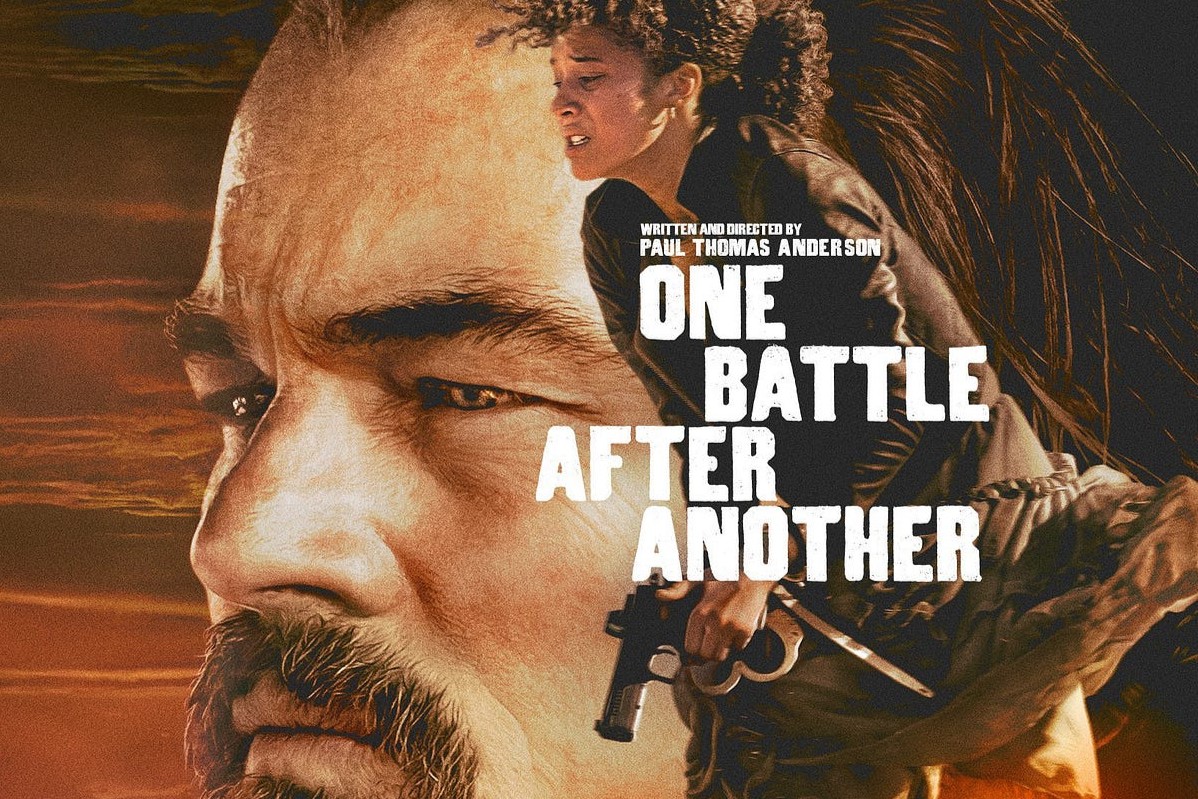
Been thinking about this one a lot since I saw it, rolling it around and considering if it’s worth giving my take on it, but I keep coming back to my frustrations with it in the face of what feels like a weirdly universal uncritical praise, so I guess I can’t keep my mouth shut.
The thing I keep thinking about, really, is how incredible the middle of this film is. The entire segment where we see real community action at work, as Benecio Del Toro’s Sergio St. Carlos leads us through their worst case scenario–an aggressive immigration raid–with efficiency, thought and care right down to his interactions with individuals. It is beautiful, moving, a masterful piece of film-making, and I think almost certainly going to be one of the very best things I saw this year.
It’s what makes it so frustrating to me that the rest of the film’s treatment of activism and fascism is so… hacky, and that it’s been given such a pass. Paul Thomas Anderson is a filmmaker who doesn’t mistake setting for story, but here I do think he does our current moment a disservice, whether or not the reflection is mere happenstance.
I feel like Anderson views (for example) the opening sequences of revolutionaries as “inspired by” or within the spectrum of the blaxploitation era, but I find something so… unpleasant about a well-off, successful white man writing black revolutionaries as largely ineffectual thrill-seekers who get off on their notoriety, considering the actual era contained movies of revolutionary power such as The Spook Who Sat By The Door (a movie Anderson must be familiar with.) I’m not offended by the image of him giggling behind his MacBook as he writes out a character called “Junglepussy” but isn’t it just sort of… embarrassing to sit there watching the result, however well made?
Potentially not as embarrassing for all involved as his later treatment of the “revolution”. Look, I know we all hate two-factor authentication but the password stuff has to be some of the direst “student revolutionaries should get a job” hack comedy possible. Absolute fucking baby food for the smug middle-class cunts that are the general audience for a Paul Thomas Anderson movie. And the “Christmas Adventurers Club” stuff isn’t much better. We were all happy to see Kevin Tighe, but abdicating the responsibility for fascism to small groups of white men in hidden backrooms when we know it happens via large groups of white men in front of our fucking eyes sucks. As many people have pointed out, the most chilling character in the movie is the military guy who dispassionately, chillingly dismantles a group of teenagers, and he’s a non-professional actor who was actually in Homeland Security.
[takes breath]
Anyway, while I’m at it, and while you’re potentially rolling your eyes at how humourless I am, facial disfigurement as a punchline can also fuck off. And the ending being our main characters enjoying consumerism and a weak sort of “it’s up to the next generation” beat? What was I saying about baby food for middle-class cunts?
It all, ultimately, makes the claim that this film is some sort of actual political statement feel like wish-casting from both the leftist cinéaste and the right wing chud. It’s the setting for a story about family, and that’s about it. I wish it wasn’t so ironic and detached, but at least it’s not about how much he wanted to fuck his art teacher again.
But as I said, I think about the middle of this movie all the time, and I loved the payoff in the climax (even if I did get a little tired of the undulations, sorry.) I respect the craft, but I guess with PTA for me it always comes down to if I’m buying what he’s selling rather than just appreciating what he’s doing. Here? Not so much.
Follow Mathew on Letterboxd.