Tag: ubisoft

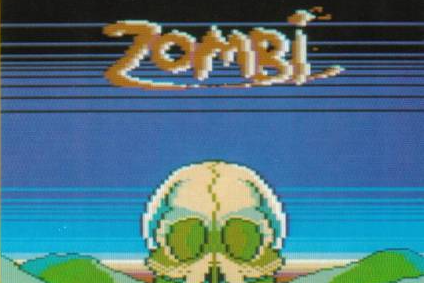
  • Zombi (Ubisoft, 1986)

    Zombi (Ubisoft, 1986)

    Developed/Published by: Ubi Soft (it used to have a space in it…)
    Released: 1986
    Completed: 28/10/2025
    Completion: Everyone escaped!

    Man. We’ve absolutely got to get access to old games sorted. I’ve talked about this previously–most notably when discussing MULE–but I think it’s good to reflect on the fact that Zombi is the first game ever released by one of the most recognisable game publishers in the world, Ubisoft, and in order to play it I had to scrabble around online to find it–and then scrabble around even longer to find it English. And then have to fiddle around with emulators because emulating old home computers is just not as plug-and-play as emulating old consoles is.

    Now, you could argue that Ubisoft might prefer that Zombi not be accessible, because one of the first things that you’ll learn about it is that it’s a completely blatant rip-off of George Romero’s Dawn of the Dead, to the point where–and I’ll go into more detail on this later–you actively need to know the plot of the film to understand how to progress in the game. Which makes sense, considering the game is called “Zombi”, the literal title of Dario Argento’s cut (released, fact fans, nine months before George Romero’s definitive version in non-English speaking countries.) The game was, at best, on some shaky legal ground (you’d think they’d just have ripped off Night of The Living Dead instead–no copyright issues there). For their part, Ubisoft haven’t tried to paint it out of their history–they do mention it right on their website–but its 2012 Wii U title ZombiU has absolutely no connection to it, and then re-releasing that as Zombi on Steam and elsewhere does go some to making finding their first game absolutely more of a ballache, whether that’s intentional or not.

    (It could be worse, I suppose–most of Ubisoft’s other earliest titles, such as Fer &  Flamme (“Iron & Flame”) weren’t even released in English, leaving the likes of the poor old CRPG Addict absolutely flailing.)

    As Ubisoft’s first game, it would probably serve us to dig into the founding of Ubisoft a bit, because it explains quite a lot. Ubisoft began as the Guillemot’s family business (though the family, in effect, does still control it) selling, uh, the things farmers need to farmers. The five sons of the family, however, had bigger ideas: first selling audio CDs (then a brand new technology), then computers and software, before realising that they could buy hardware and software from the UK–where it was half the price of a French distributor–and resell it on to French consumers undercutting competitors and still making a tidy profit. Before long they were engaging in a roaring trade of computer games, and so obviously decided they had to take the next step in (ahem) vertical integration: making the games themselves.

    Well, not exactly themselves, obviously. It’s not like the brothers got their hands dirty with that. As was usual for the time, they got school children to do it for them. Yannick Cadin–still a high school student, though eighteen so I am being a bit hyperbolic by calling him a child–would code the game despite having (in his own words) “never written a program of more than 100 lines in assembler”, along with graphic designer Patrick Daher and screenwriter Alexandre Bonan under Sylvie Hugonnier1, all of whom appear in Zombi as the main characters (though if Cadin looks like his video game equivalent, he’s a terrifying fellow.)

    What makes this even more interesting is that as a French company, the games that Ubisoft will have been importing will almost certainly have been for the Amstrad CPC, because the system was uniquely popular there, meaning that Ubisoft’s first game would be a CPC exclusive for several years until it’s ported to the usual suspects (Spectrum, C64, Amiga, ST, and PC.)

    As a result, I really wanted to play this through on CPC, as it was, after all, my first computer, and I so rarely have a decent excuse to play anything on it. Zombi on Amstrad CPC looks like this:

    At least, this is the version that everyone seems to have online. Intriguingly, in Retro Gamer Issue 204 there’s a claim that there were “separate versions for 64k and 128k machines (the latter benefited from more detailed graphics)” though it’s completely unsourced and I can’t find any other reference to it or difference in versions online. What’s important either way is that Zombi is an absolutely fascinating example of one of my favourite things about this era of game development, something I’ve talked about many times–the fact that genre has not ossified. There are no expectations.

    Zombi is, sort of, a dungeon crawler, with the dungeon here a shopping mall. It’s also sort of a graphic adventure, because most of the game is about collecting objects and then using them in particular ways. But, there are zombies roaming, and you have to fight them in real time, so it’s sort of an action game–maybe the first survival horror! On top of that, characters have to eat, and sleep, so it’s also sort of a pure survival game. And at the same time, it isn’t even that simple, because you have four characters, and you can use them all separately, switching between them whenever you like!

    It is a lot, an astoundingly broad game design for a teenager at a completely inexperienced company to pull off, and apparently it only took about six months (Cadin, modestly, claims it could have been done a lot faster.) What gets so interesting about it is that there seems to have been absolutely no thought taken to make anything about the way Zombi tries to pull its disparate genre ideas together match anything gamers of 1986 might have already seen.

    Now, to be fair, it is France, it is 1986, and it is the Amstrad CPC. Games such as The Bard’s Tale wouldn’t hit that system for a couple of years, so I really can’t say if the Zombi team had ever seen a first-person dungeon crawler. But if they had, they apparently rejected samey corridors to instead prioritise making each location visually unique over every other consideration, because the interface is completely bonkers.

    Most apparent will be the menu at the bottom of the screen. The Amstrad CPC didn’t have mouse as a default input, so they had to get creative, meaning that you have to scroll back and forth through a list of everything you might want to do (bafflingly, the scroll direction was backward from my input, which I imagine must be how they intended it.) That already makes doing really anything awkward. But navigating is even more insane. Rather than a “dungeon” it’s better to imagine the world of Zombi the same way as a text adventure–each screen you see is a series of rooms with distinct entrances and exits. However, the game doesn’t tell you what exits there are. While you can work some of them out by what you can see, in many cases (for example, things behind you) you have to blindly attempt moving there–and the game on CPC has absolutely no feedback when you do anything wrong. You almost can’t be sure you’ve even done anything in many cases.

    (Well, unless you’re outside, in which case you stumble into a horde of zombies and immediately die. Or if you move backwards off the mall’s balcony without a rope, and fall to your death.)

    You don’t navigate the world by doing anything sensible like moving with the arrow keys, however. Instead on screen a tiny wireframe representation of the space appears, and then you have to select what direction you go (for example, selecting the outer frame to move backwards.) It is completely inelegant in a way that somehow also feels like a stroke of genius, in that it’s arguably far clearer than movement in an early first-person dungeon crawler (think how many times you could move in those wireframes and not actually be sure you moved) but is also unbelievably clunky and frustrating.

    You can see the wireframe representation in the middle here. I’m trying to move right.

    The game has some other quirks–similarly stylistic, similarly related to developer immaturity. The game honestly looks good for the system, with a stark grey and black palette (that again makes me wonder why they didn’t go for Night of the Living Dead) and the clever decision to make anything on screen you can interact with pop with a bright blue colour. The game feels genuinely atmospheric and lonely as you creep around the dead mall, scavenging for what you need, but it does seem that they didn’t quite know how to get the zombies into the game in an exciting way. When you’re in a room with a zombie, they’re just given a portrait on the same line as your heroes portraits, and after a number of seconds you’re officially attacked. What this means is that you have to bash keys rhythmically (boo!) to beat them to death with your hands, taking damage the whole time. You can avoid this if you have a ranged weapon–you can use the gun before you’re attacked, and take part in a simple, almost golf swing-meter like system where you just have to hit the button at the right time to kill them.

    Unfortunately, navigating the menu to get to the gun in time was, for me, like trying to solve a Rubik’s cube behind my back, and so, unfortunately (and I’m not proud of it) I had to give up on the Amstrad CPC version for my own sanity. Thankfully, when the game was ported to Atari ST and Amiga four years later, Alexander Yarmitsky took over porting duties and changed the interface to something more contemporary, so I pulled up the Amiga version to try it there.

    In the ported version2 all the weird controls are replaced with, thankfully, a cursor-based system and direction arrows around the screen so movement makes more sense (well, there’s some double duty taken where “forward” and “back” also mean “up” and “down” but I’ll take it.) You can also see zombies now, who sort of… toddle across the screen so you can headshot them with the cursor before they attack you. It’s maybe too easy, but it’s certainly more engaging.

    I’d love to say that makes the Atari ST or Amiga version definitive, but… it’s in full colour! Not only does this remove all of the atmosphere, it means that you literally can’t tell where any of the interactibles are on the screen, turning what was a perfectly understandable adventure game into a baffling pixel hunt. It is… ruinous, and it really means that if you want to make sense of the game you have to use a walkthrough (and probably a map).

    This is something you’ll want to do after a while, because you’re eventually going to need something to do. If there’s one truly disappointing thing about Zombi–outside of there not being the perfect mama bear option for me, our retro game Goldilocks–it’s that as just a survival game it’s not that interesting. It’s neat to wander the level, kill the zombies, and have to eat and sleep, but there’s no incident. I think as a kid it could have been something I loved to noodle around in–there’s a lot of space for your imagination–but the CPC’s controls just kill any thought that I would have.

    When you actually intend to beat the game, it’s weirdly trivial (when it’s not tedious) as long as you can actually spot where the things you need are and know the plot of the movie. First you have to block all the entrances to the mall; then you have to kill all the zombies and put them in cold storage so they don’t reanimate (I’m not sure if you have to turn the electricity on in the basement to do this, but I did.) Once you’ve done that, the mall is immediately attacked by Hells Angels, and you just need to steal petrol from their truck for your helicopter, get in and escape. 

    If it wasn’t for having to trawl the whole map for every zombie–don’t forget you can move backwards, because I missed one and had to cover the map about three times–and then lug them down to the cold storage, only being able to carry about three at a time, this would be over in about ten minutes. But I don’t even think they made you kill and store all the zombies to pad the game out–I think it’s just because, well, that’s what happens in Dawn of the Dead, isn’t it?

    I’m not quite entirely sure how to explain it, but a raw enthusiasm for the source material shines through via touches like that, and even if functionally they’re not good game design, something about Zombi is charming. I don’t know if I recommend it as such, but I think if there was a monochrome “can see objects” version with the updated controls I actually think I would.

    At the very least, more people should know about it. I guess I’ve done my bit!

    Will I ever play it again? Come on Ubisoft, release a 40th anniversary ultimate version with the proper colours. I dare you. 

    Final Thought: If you want to play through this, the best help is (surprisingly) Amiga Action’s walkthrough, even though as an Amiga Power boy I’d never admit it. They do screw up the map a bit–they don’t distinguish between inside and outside on the first level so it’s confusing, so you might want to use it in conjunction with this other map which is, sadly, unsourced (but I assume from one of the many French CPC mags.) Or just draw around the mall interior with a pen or something. But as usual, I recommend not just jumping straight to the walkthrough–it’s more fun to noodle around first, even just the big beats I gave you above should be enough to get you through the game really if you’re willing to map it yourself.

    (Actually, that’s a lie. Even with the map and solution I usually couldn’t find where to click on most of the screens to use buttons and things without basically clicking everywhere. Sigh.)

    1. This is a bit of an assumption. Most sites explicitly state Hugonnier was director of marketing/PR, but Cadin refers to a “certain Sylvie” who “explain[d] that she was approached to set up a video game publishing house and, as she ha[d] some experience in this field, she [was to be] the director of this new company.” Surely the same person. ↩︎
    2. Well, in the ported version for Atari ST, Amiga and the ZX Spectrum. Cadin ported the PC version and doggedly stuck to his original control scheme and the Commodore 64 porting team followed his lead. Unfortunate. ↩︎

  • Far Cry 3 (Ubisoft, 2012)

    Far Cry 3 (Ubisoft, 2012)

    Developed/Published by: Ubisoft Montreal (+Ubisoft Massive/Red Storm/Shanghai/Reflections) / Ubisoft
    Released: November 29th, 2012
    Completed: 16th August, 2015
    Completion: Finished all the story missions and did a fair smattering of everything else in the game.
    Trophies / Achievements: 635/1000

    A few years ago, and it must be several because apparently this came out in 2012, I saw the writer of this game give a talk at the Montreal International Game Summit. I was actually pretty impressed. He talked about something which I completely agree with, which is that if you’re going to make a narrative video game, you have to treat the player as an actor, consider their interactions as diegetic to the story, and invite them to play the role, not merely cast them in it.

    (I’m wildly paraphrasing, and probably even inserting my own ideas there. But you do that when you listen to someone you think you agree with.)

    Anyway, Far Cry 3 came out some time later, and it got a lot of coverage based on what the writer said the story was about, and I thought “I should probably play that, see if he just talks a mean pie, or whether he can actually bake one.” (I don’t think that’s a saying.)

    If I consider Far Cry 3’s story as a pie (let’s stick with this) our writer chum has essentially described a pie with a really interesting, even surprising flavour, and then given me something that looked ok from a distance, but as soon as I stuck a fork in it, a crow flew out smoking a huge blunt revealing absolutely nothing under the crust otherwise. Meanwhile, he’s going “you know, 4 and 20 blackbirds, man! Like… 420! GET IT?”

    What I’m saying is that Far Cry 3’s story, even within the context of a talk that I thought was quite good, makes the person who wrote it look like an actual idiot.

    But let’s stop picking at this poor guy who I don’t want to name because it’s mean even though you can google him in like, less time than it took me to write this sentence. Let’s talk about Far Cry 3.

    Far Cry 3, the game, is fucking great. Like, super super fun if you’re looking for an open-world shooty mcstealth-me-do. Ignore all of the story guffins and you’ve got a great environment that’s stuffed full of things to do. Things like hunting animals, which I avoided almost totally, but most enjoyably loads and loads of enemy outposts to capture. There’s little to beat sneaking up on an outpost, marking all of the enemies, planning and executing how you’re going to take it, and then sneaking up on every enemy, one by one, and silently murdering them.

    It makes me sounds like a psychopath, I know. But I haven’t played a modern stealth game in ages, and apparently Far Cry 3 nails it. By making it easy to see enemies by marking them, they get around that “not aware of my surroundings totally” FPS problem. Enemies react to deaths and hunt you down, but there’s so much foliage, and it works perfectly as a hiding spot, that as long as you keep moving, you can evade them. It feels right; like watching an 80s action film, the bit where they go into an enemy jungle camp and slit dudes’ throats. And as the game progresses, you get more skills (faster stealthy walking, new silent takedowns) that make you feel more and more powerful, so it’s always rewarding.

    It’s so good!

    Which makes it weird that most of the main game missions are awful mayhem with a million (sometimes spawning) baddies that you more or less have to grit your teeth through. Several missions, actually, I didn’t even get what direction to go in, I was so busy being shot to pieces. Ultimately, they were a slog, leading to me cheaping out on a lot of them (usually by going around the mission zone rather than through.)

    And most of them don’t really make sense why you’re doing them, anyway. Lets go back to that blunt-smoking crow, the story.

    Basically, Far Cry 3 says “I’m going to be really clever rumination on the nature of violence, ok. Like, all this violent shit you do in a video game, right? I mean what would happen if an actual normal guy had to do that stuff, right? I mean, what would happen then, right? I mean he’d totally go Colonel Kurtz, right? You’ve seen Apocalypse Now, right? Total classic.”

    It does this by setting up that you’re some trust fund twat (Jason Brody) on an expensive holiday with his awful, shitty, garbage friends and brothers, they land on an island, all get kidnapped and when your capable military-trained brother (not super important but he does make a point of mentioning it in the first 5 minutes) bites a bullet you are rescued, given the “Tatau” (tattoos) by a magic kindly black man (yeah!) and set loose to rescue your friends. Which across time morphs into getting revenge and/or trying to become the Ultimate Warrior (you know, that guy from WWF) on the island at the behest of a sexy native princess, Citra.

    To be honest, the story just made me angry, and not in a way where the guy who wrote it would be like “yes, it’s what I was trying to do” because if he was trying to make me angry by, for example, making his native leader a sexy barefoot woman who’s also wearing a crop-top and short skirt, well, fuck him. If he’s trying to in some ways critique the “white saviour” idea by arguing Jason Brody is a pawn, it doesn’t work, at all. Considering it barely comes up.

    You see, there’s something interesting about the story in Far Cry 3, and it made me reflect upon what (apparently) I think game publishers think the player expects from their open world games. Basically, in Far Cry 3, you have a variety of “mission givers.” At first it’s the magical black guy, but then it’s like, some junkie white guy, then it’s a really, really bad and gross Australian guy apparently meant to engender homosexual panic in the player (probably a worse character than Citra) then it’s… look, basically it goes on. You get passed between these thin caricatures who you never really get to know.

    And it’s apparently because, like, video games have a variety of mission givers? I mean, is this sort of thing literally because of Grand Theft Auto? Like, remember how in Grand Theft Auto 3, you’d do some missions for one gang, then you’d unlock the next island and do them for another gang? Like that?

    All I could think was… why am I not just repeatedly dealing with the same small cast of characters? Getting to know them as time goes by? I mean, if you want a perfect, perfect example of this, it’s that the game sets up Vaas, the crazy pirate guy with the big scar, as your antagonist. They even heavily hint that he’s some sort of “other side of the coin” for Jason Brody. He keeps trying to kill you in (embarrassingly laughable) stupid ways (like seriously, he captures you like four times, and only on the last is he like “oh wait, put a bullet in him.”) And he’s a real dick. However, you murder him in a dream sequence halfway through the game because (of course) you’re going to a new island and so they need another baddie for the next island.

    Why?

    Why are you suddenly battling Hoyt, a flavourless South African baddie? With the help of yet another new mission giver (Sam, who I quite liked, to be honest, in his pleasing Germaninity.)

    It’s the kind of thing that doesn’t make any sense, unless everyone has collectively agreed that in video games, you have to get a new mission giver in each new area, and if you unlock a big new bit of the game, well, you should have a different baddie.

    This is stupid and it should stop.

    Anyway! As a result, Far Cry 3 doesn’t take you anywhere. Your friends remain distant annoying wanks that you only save at the end because the sexy native princess is fucking mental and acts like an even bigger wank so you’re like “fuck you lady.” Jason Brody keeps sort of implying he’s going pure Colonel Kurtz (there’s some laughable end credits “I’m a monster now!” patter) but considering from the very beginning you’re literally shoving machetes in people’s guts and it’s not like you do much worse than that, it doesn’t ring true. And all the dream sequence stuff actually does the opposite of what it’s supposed to—it takes away the feeling of control over the key murders Jason commits, makes them unreal, so you don’t really feel them. In fact, I at points I was like “wait, is this going to turn out to be ‘it was all a dream…’???”

    It doesn’t, and in the end you’re only not a classic white saviour out of happenstance, but you do get to be a guy who did lots of awesome murders and then escaped scot free apart from the mental trauma, which as a player you don’t feel at all so it’s fine.

    Great shooting, though.

    Will I ever play it again? No, and if you want an interesting fact I could have played it longer, finishing off all the outposts and stuff, but with Far Cry 3: Blood Dragon and 4 out there, I was like “If I want to do more of that, I’ll do it in one of those.” I’ll probably play Blood Dragon to mix it up, so that should make it clear just how joyfully playable this was despite the awful, awful writing.

    Final Thought: Feel free to compare and contrast to my thoughts on Far Cry 2, a game which I think is utterly flawed (and definitely, totally, not fun) but which I think needed design changes to salvage the story. Here the game works so well that it slightly ruins the premise that this type of thing needs a narrative. To make it work at all you’d have to totally re-write it to make it a triangle between Vaas, Citra and the friends, making them all compelling, rather than confusing (Vaas), idiotic (Citra) and annoying (the friends).

    Oh, did you know it turns out Vaas and Citra are brother and sister? There’s fuck all point to it, but it comes up. it’s so stupid.

    Anyway, you can use fire arrows in Far Cry 3 while still rolling stealth and the fire is just as great as it was in Far Cry 2. 10/10 (for the fire.)

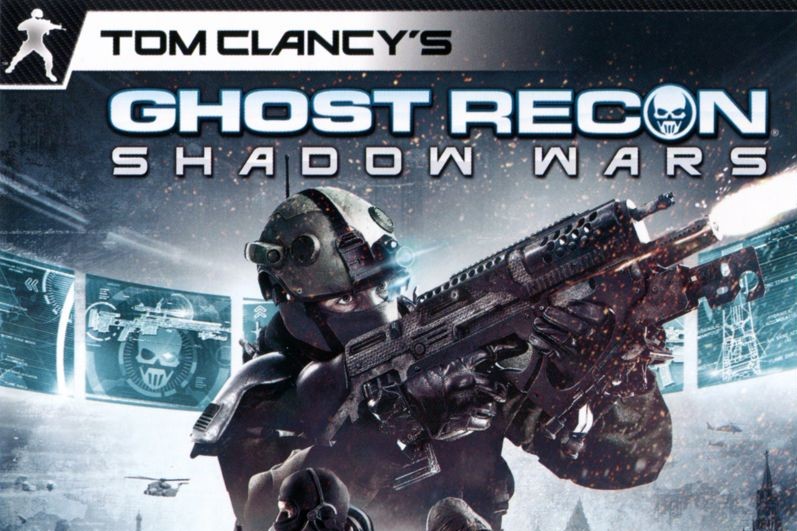
  • Tom Clancy’s Ghost Recon: Shadow Wars (Ubisoft, 2011)

    Tom Clancy’s Ghost Recon: Shadow Wars (Ubisoft, 2011)

    Developed/Published by: Ubisoft Sofia / Ubisoft
    Released: 25th March, 2011
    Completed: 16th March, 2015
    Completion: Finished campaign mode on Veteran!
    Trophies / Achievements: n/a

    Fancy pillaging a bit of personal history? Well, Tom Clancy’s Ghost Recon: Shadow Wars might be interesting because it’s a Julian Gollop-designed tactics title (he of X-Com, Laser Squad, Chaos, and so on) but this write-up is interesting because I believe (though don’t quote me on it) my review of his previous Nintendo tactics-me-up Rebelstar: Tactical Command for Eurogamer is the first game review I was ever paid for. I’m like “2005! Not that long ago” but then I’m suddenly like “fuuu… ten years ago.”

    Anyway, give it a read if you want to read a review of a Julian Gollop game that I enjoyed, but was a bit disappointed in because there wasn’t much to it other than the pleasantness of the core systems. Er, before you read me outline roughly the same thing about Ghost Recon: Shadow Wars.

    Actually, that’s unfair! Ghost Recon: Shadow Wars was a game I found totally entertaining. I’d say it overstays its welcome a bit in length, and it’s interesting to consider how harshly simplified it is even from Rebelstar—for example, your characters have no action point systems, it’s just one move and one shoot, unless you get up to certain shenanigans—but it’s still a perfectly fun diversion if you’re looking for a tactics-em-up.

    The biggest problem—and probably the main reason it gets a bit tiresome towards the end—is that it’s saddled with the whole “Tom Clancy’s Tom Clancy” thing. As a result, it goes out of its way to be super boring. There’s a plot that’s pretty much ripped from the headlines before they knew what the headlines were going to be (Russia invading Ukraine) but it’s about as exciting as if the game had come in a brown paper bag labelled “video game” and everything in the game was a cube (note: that is probably actually more interesting.) Yes, there’s some (mild) banter between your squad, but they’re rarely ever more than their class to you.

    That’s fine though! The classes are fun, from exploding a whole squad of dudes with a rocket launcher to (my personal favourite) manipulating “command points” to allow your stealthiest Ghost Banshee kill several enemies in a single turn (I think my record was six or seven enemies, which felt amazing.)

    When it comes down to it, talking up Ghost Recon: Shadow Wars feels sorta like trying to talk up a puzzle game like Sudoku, or something. It’s like… it’s fun! But how to make it sound exciting when the wrapper is so—intentionally, in some respects—dull?

    Wait… I hate Sudoku. Forget that. Basically: I enjoyed Ghost Recon: Shadow Wars and I’m glad I played it. There.

    Will I ever play it again? Nope!

    Final Thought: You don’t see it in the game, really, but if you look at the top-screen art for the game in the 3DS menu, you’ll see that the character models have a really cool, low-poly style. Really made me sad that wasn’t more on show.

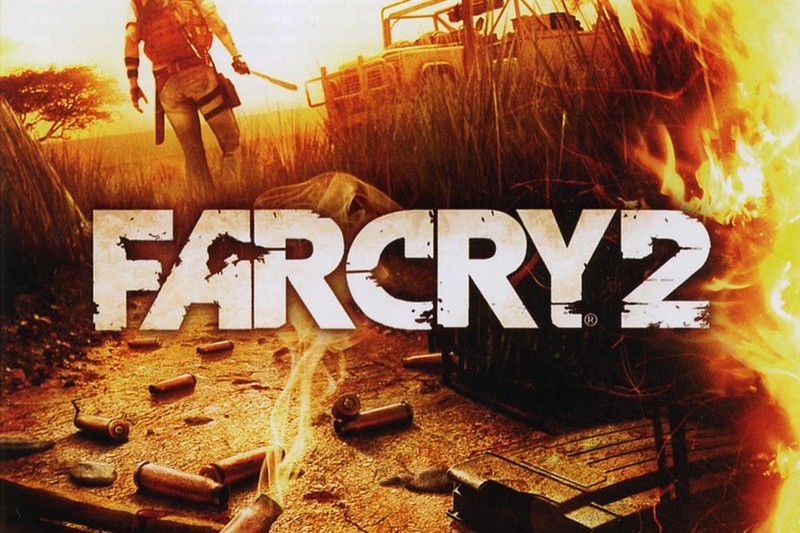
  • Far Cry 2 (Ubisoft, 2008)

    Far Cry 2 (Ubisoft, 2008)

    Developed/Published by: Ubisoft Montreal / Ubisoft
    Released: October 21st, 2008
    Completed: 15th December, 2014
    Completion: Finished the main story missions, saw the ending. I did some of the other missions, but not to any particular end.
    Trophies / Achievements: n/a

    So! I’ve already written an entire article about Far Cry 2 in this space here, just before Christmas, actually, but I’ve deleted it now because I didn’t like it. The article that is. Far Cry 2?

    I also did not like it.

    As you can probably tell, what with this being the second article I’ve tried to write about Far Cry 2, it’s a difficult game to write about. There’s several angles, you know? And when I try and tie them all up together, well, they end up a half-formed mess. Like Far Cry 2!

    Let’s look at it this way. You know when you watch a movie, right, and then some character does something obviously, stupidly illogical, or there’s some gigantic idiotic plot hole? You know, when you’re watching, like, Prometheus (for some god forsaken reason) and you’re like “how is the guy with mapping robots lost” or “why is that guy touching and annoying a creature that’s so obviously dangerous?” You know, those things?

    Whenever I think of these things, I always sort of imagine my dream job, which is to be the person who, once everyone has decided to make a film, reads the script and says things like “how is she running around after just having abdominal surgery?” or stands on set and stops things to ask “why don’t they just run in a different direction from the giant spinning wheel of death?”

    If they doesn’t get a satisfactory answer, well, they stop production until they get one/changes are made.

    I was sort of thinking about this job while playing Far Cry 2, to be honest. Now, I’m well aware that game development is different from movie development. In game development, I feel like it’s harder to spot errors that are going to come up at the earliest stages, and frankly, when you have big ideas (and it’s clear Far Cry 2 is a big idea) you’re obviously going to fall short in some ways and have to patch things over as best you can and hope it doesn’t fall apart. (This obviously happens with big studio pictures too, but I’m already way off topic here.)

    Far Cry 2 is a game where you are driven into town by a civilian, past checkpoints, and then afterwards, you never see another civilian and every checkpoint is psychotic. Why?

    In Far Cry 2 you have malaria, but you can’t buy malaria pills or get them off the factions you have to help the underground resistance. Why?

    Your target, the Jackal, doesn’t only spare your life but save it repeatedly. Why?

    You never actually do anything that leads you to the Jackal, and no one ever promises you information on him outside of a loading screen tool-tip, despite that supposedly being your aim. Why?

    Both sides try to kill you at all times, even when you’re doing missions for them. Why?

    And so on (and I could go on.) Look, I can hear the arguments people would make against what I’m saying—in fact, I’ve heard them before, because people have long had arguments about this game over things like the checkpoints respawning, going on about how the game is systemically interesting anyway, etc.—but my point is here that these kind of things are never explained in a way that makes them make sense to the audience, and that kind of thing is important to me as a player, ok?

    Playing it, I got the sense—or maybe I wanted to believe—that Far Cry 2 started as a game with a dynamic war happening across the game’s map, where when you sided with one faction they’d treat you as an ally (i.e. you can pass through their checkpoints, etc.) and conquer map zones back and forth (likely pointlessly, as is in line with the game’s ‘point’ as far as I saw it.) A game where every battle was chaos, with crowds of civilians trying to avoid getting shot. A game where malaria was something more than an annoying timer until you had to do another short, pointless mission. Something a lot more open ended, actually. But they had to cut it all down because that’s hard to actually do. I want to believe—I genuinely want to believe—that the answer to every “why?” is just “because it’s what we ended up with, ok?”

    Or, maybe, as is often the case, it’s the fact that game development, like movie development, doesn’t have “why-men” but producers and CEOs and the like who say things like “no, we can’t have civilians being shot” or really any number of things that make this game less than what it feels like it could be.

    Far Cry 2 is one of those games where you feel like “the only way to win is to not play” but not in a clever way where you’re like “ahhh” but in the actual way where you’re better if you don’t bother.

    Will I ever play it again? No.

    Final Thought: The fire looks amazing, though. Is there another game/series where fire looks this good? I should have played the entire thing as a pyromaniac instead of my usual decision to roll stealth. It’s so good!