Tag: tose

  • Mappy-Land (Namco, 1986)

    Mappy-Land (Namco, 1986)

    Developed/Published by: Tose / Namco
    Released: 26/11/1986
    Completed: 14/09/2025
    Completion: Finished it. Save state at the start of every level.

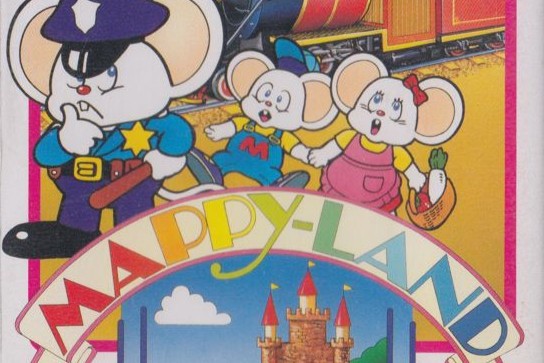
    As we all know, ACAB includes Mappy, but I’m a bit unclear on his status with the police force in Mappy-Land. He’s got his rozzer clobber on on the cover, but when you actually play the game, he’s noticeably not got his policeman’s hat on, something he was still wearing in Mappy’s arcade sequel, Hopping Mappy (which came out in early 1986). So we could suppose, like we’re the Supper Mario Broth account but for Mappy, that at some point in 1986 Mappy did something to get himself thrown off the force. Or maybe being transferred to the pogo cop division was an attempt to get him to quit, because he’s actually a tiny mouse Serpico.

    Or more likely, he just doesn’t wear his police hat while on holiday.  Mappy-Land, I suspect, is Namco–or possibly Tose, who were tasked with developing this–trying to compete with (of course) Super Mario Bros., and looking at the success of Tokyo Disneyland, which had only been open for three years by this point, and going “oh, we have a wee mouse mascot, can we do anything with that?”

    It’s not exactly a 1:1 copy or anything, but I find something very suspicious about Mappy’s redesigned sprite, with those big round ears. There’s also his new girlfriend with a strangely similar name (Mapico, in Japanese “マピ子”, “Mappygirl”). And he’s adventuring across a “land” which features levels that include, pretty transparently, analogues to Adventureland, Westernland… you go up a “main street” and end up in front of a fairytale castle!

    I mean, case-closed. Though a bit like Mappy–where you play a mouse defending a house that’s full of trampolines–the narrative is a bit confused. It would make sense to say Mappy’s on holiday at Mappy-Land (convenient for him!) and then the Meowkies have shown up to create havoc that he has to solve–you know, sort of a Die Hard thing, Mappy our John McClane, he’s forgot his hat instead of his shoes, etc.–but actually the game tells the story of Mappy’s courtship with Mapico, where he first has to collect cheese across Mappy-Land as a gift (women, what are they like, always demanding cheese, etc. etc.) Then he has to collect rings in order to marry Mapico, who apparently feels forty-eight rings is the required amount for an engagement. Then it’s tiny Christmas trees for I assume their first Christmas together (again, forty-eight seems… extravagant, unless they’re planning on running a Christmas tree outlet). Finally, in a twist, you’re collecting baseballs… because many years have passed and you’re actually collecting them for your son!!! That’s right Mappy Jr. appears, and maybe it’s one of those situations where his little league is in danger of being cancelled because they don’t have enough baseballs, and Mappy just loves his son enough to, uh, steal them from an international theme park?

    I mean what is Mappy really doing here? Look, it’s nice to see a policeman whose interaction with his wife and child isn’t solely beating them, but it’s almost like the tables have turned–he’s here ripping the trees out of a theme park and if anything the Meowkies are trying to stop him.

    Anyway, none of this actually slightly matters, because it’s all just background to the game, that no one involved in the making of thought even slightly as hard about as I just have. And, to be honest, they probably didn’t think about the game as hard as I have either. As I said above, this is clearly an attempt to Mappyise Super Mario Bros. so Namco can get in on the action, but it’s strange how they went about it. Even as early as this companies were working you just slam your IP into a left-to-right platformer with some vague design signifiers and call it a day (even Jaleco understood this with JaJaMaru No Daibouken.) Tose and Namco go a different route where they’ve decided to keep as much of Mappy’s DNA as possible. It would have been easy, I think, to just do Super Mario Bros. with more of a focus on trampolines, but instead the core here is very much what Mappy was: collect things while being relentlessly hounded by the Meowkies.

    What’s interesting, however, is what they’ve changed. Doors are completely gone, instead there are stage-specific counter attacks. Mappy gets a short hop, that allows him to (shockingly) jump over enemies if you’ve got extremely good timing. And you can collect items, up to fifteen, which you can drop to distract Meowkies–for example cat toys that they dance around and become harmless for a while, or coins that the head Meowkie, Goro, is specifically attracted to. 

    And then there are levels that break the system completely out of nowhere. The jungle stage instead features you jumping off moving trampolines to catch vines and avoid parrots (which is all a bit Donkey Kong Jr., weirdly) and then the spooky stage has you flying around with a balloon, shooting microwaves at ghosts and collecting keys.

    Things get even more complicated because not every level finishes the same way either. Generally you’re just trying to collect everything and then run off to the right–a weak sop to being inspired by Super Mario Bros.–but many times you have to do things like find a secret entrance on the level to then play another level where you have to collect an item. So on the spooky stage you either have to collect a cross in the church to scare off vampire Goro at the exit, or enter the haunted mansion (full of warp doors!) to find an alternative exit to the level (vampire Goro just hangs out in the middle of the mansion, which feels… sort of unfinished, to be honest.)

    Mappy-Land is… odd. It’s ambitious, adding probably too much to the core Mappy design, but it’s just wrong-headed in trying to do that, because the core can’t support the weight of everything that’s been added. Mappy was always a bit of a clumsy, seat-of-the-pants arcade game for me, but Mappy-Land quickly requires absolute precision and a dedication to a racing line and it doesn’t feel good at all. Maybe it’s just poor programming–sorry Tose–but the game has an infuriating number of collision edge-cases particularly with trampolines, and it makes the jungle levels especially complete bullshit as you hop on a trampoline and sort of vibrate off to your death, or fall onto one and miss it despite visually colliding with the edge. And idiosyncrasies from Mappy here make less sense. If you fall any distance onto a hard surface, you die. Unless you’ve been thrown in the air by a trampoline. So you have absurd situations where you drop down about three pixels and die, but you can fall from the top of the screen onto a hard surface if you’ve bounced off a trampoline? It’s hard to remember this in the heat of the moment, and by the third set of levels, the game intentionally uses it all against you, as you have to learn levels first before you can expect to complete them due to all the dead ends and death drops you can end up caught out by–the items help, but you really need to know how to use them and you use them in order of pickup, so you might have the exact opposite one you need to use at the wrong moment.

    Ultimately, I treated Mappy-Land as a puzzle the way, say, the original Pac-Man is–what’s the exact route you can use and recreate consistently to beat a level? Doing so I wouldn’t have had that bad a time if it wasn’t for the horrible collisions, and some later levels absolutely take the piss anyway–there’s an entire level where you can’t see where the platforms are!

    After playing something like Castlevania, Mappy-Land just looks sort of crappy [“Crappy-Land, more like”–Ed.] I get what they’re going for–big, bright, childish graphics–but it does nothing to change my mind that in this era Namco is being left behind in a big way on Famicom after Xevious: GAMP No Nazo. This is… I mean, it’s ok. But if you want to play Mappy, you should probably play Mappy and enjoy it as a wee high score challenge, because this is less good as a high score challenge and actively not something you want to play through as an adventure.

    Will I ever play it again? I shall not.

    Final Thought: Worth noting that I played the Namco Museum Archives version of this, and, weirdly, despite the fact that the game was never included in the Namcot Collection, it’s the Famicom ROM, not the NES ROM that is included. The NES version includes a continue and stage select and even a “remaining items count” (absolutely necessary–something I forgot to mention is the game doesn’t make it clear when the stage exit is open or not–or even where the stage exit even is sometimes). That’s the version you can play on the Nintendo Switch Online service, but you probably shouldn’t bother either way.
  • Firework Thrower Kantaro’s 53 Stations of the Tokaido (Sunsoft, 1986)

    Firework Thrower Kantaro’s 53 Stations of the Tokaido (Sunsoft, 1986)

    Developed/Published by: TOSE / Sunsoft
    Released: 1986
    Completed: 24/07/25
    Completion: Kantaro got all the way to Momoko–but I did use a warp at the last possible moment. Saved at the start of every level.

    Strange happenstance that after so recently writing about a game that features a country’s most famous road that I should write about another, in this case Japan’s Tokaido. I guess I’ll have to pick up a copy of King of Route 66 next (yes, I’m seriously considering this.)

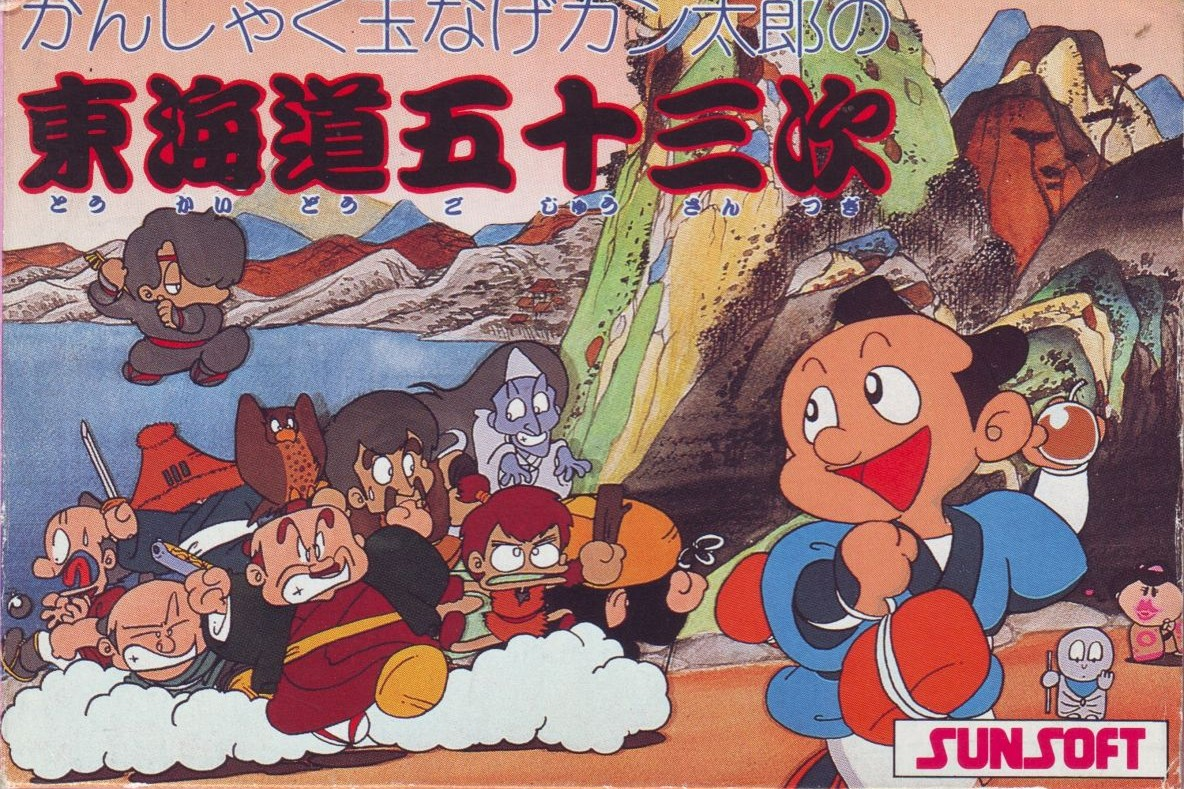
    With a name so long it could probably be a light novel (or, *cough*, JAV) Firework Thrower Kantaro’s 53 Stations of the Tokaido (directly translated from the original Japanese, かんしゃく玉投げカン太郎の東海道五十三次) is a deeply forgotten game that has really only bubbled up for being included in Sunsoft’s recent “Sunsoft Is Back!” retro compilation. But I will say: it’s actually fairly interesting: an Atlantis No Nazo-a-like.

    Released less than three months later, Firework Thrower Kantaro (is there a good abbreviation for this? FTK53SOTT? I guess the answer is no) seems to be an attempt to take the Atlantis No Nazo playstyle, improve it and situate it in an (almost) completely linear experience compared to Atlantis No Nazo’s bonkers, warp-heavy speedrun design.

    While I don’t have a source for this outside of The History of Sunsoft Volume 1, Firework Thrower Kantaro was apparently created by TOSE rather than internally at Sunsoft (as Atlantis No Nazo was) so it does seem like the company was tasked in making “another” Atlantis No Nazo at short notice, possibly to the point that they were given the game’s code. I have no source for that and have no idea how common that would have been in Japan at the time–it does seem unlikely, but maybe TOSE were already deeply trusted by that point–but the characters control similarly and defeat enemies by throwing slowly arcing projectiles. In Atlantis No Nazo you’re throwing dynamite and having to wait for it to explode but in Fireworks Thrower Kantaro you’re (thankfully) throwing fireworks that actually explode on impact, which immediately makes things a lot more playable.

    And while the game is essentially a linear trek through the fifty three stations of the Tokaido–a shocking bit of false advertising, by the way, there are only twenty-one levels–it’s not as simple as that. Because (get your klaxons at the ready) continues the endless inspiration of Xevious [honk] and The Tower of Druaga [honk] as well as Super Mario Bros. [hon-squee] (I’ll have to get my klaxon replaced, I’ve worn it out. Not surprising at this rate.) While you can attempt to “brute force” your way through the levels, you are actually expected to consistently find hidden items in the stages which allow you to get past certain enemies and obstacles. 

    In fact, you can’t beat the game without doing so. Thankfully the game doesn’t require you do any stupid nonsense like The Tower of Druaga and instead just relies on the original Xevious’ system of just shooting unmarked areas of the stage to reveal the pickups. 

    What that ultimately means is that you just have to be hammering the fire button at all times and then trying to remember where things appear. Annoyingly, the game is weirdly exacting about where explosions happen for things to appear, and this game is so generally unloved that the only solution that I could find that pointed out where a lot of (but definitely not all!) items were was in Japanese.

    As a result of this design, I actually started Fireworks Thrower Kantaro over several times before giving it a “proper” go, and the collectible system has some give in it, but it seems highly related to how skilled you can become at the game as you play it–because it is hard.

    Like Wynn before him, Kantaro can be sluggish at the most annoying times, and the game has some weird, probably buggy quirks like an inability to duck when you’re directly next to objects. While you’re never going to be overwhelmed by enemies, they are unpredictable and kill you instantly, meaning that even if you’re only facing off against one old man leaping about and another one who shoots you periodically with a gun one wrong move can screw up your run. 

    But the game does have forgiving checkpoints and some early opportunities to rack up extra lives for those who’d like to iron-man it. If you can collect three scrolls–which you use to ward off evil ghosts that appear and kill you otherwise–you get a pair of geta so light that Kantaro can hop across the clouds, where you can find the occasional cloud that just racks up so much high score that you come away with three lives (unless you land wrong and vibrate off it–frustrating.)

    Other collectibles also have specific uses. You need ofuda to pass certain checkpoints or the enemy there will cling onto you, slowing you down. You need to spend an eye-watering five coins to ward off the prostitutes(!) that chase you around in the areas that (in the name of historical accuracy) they actually stalked. You need swords to take down… weird looking blokes (I’m not sure what their deal is.) And you need two coins to pay to make “bridges” to cross certain water features. 

    Not all of these are an automatic failure–with skill, you can for example jump across rooftops to avoid eager sex workers. But certain things, like showing up without the coins you need for a bridge, end your run entirely.

    Of the collectibles, the coins have the most interesting economy. If you can collect ten you are actually able to warp three or six levels ahead, which makes you really not want to spend them on anything but bridges. I was only able to do this right at the end of the game and I struggle to see how you could do it much earlier, but I suspect even with the help of a guide I was either missing a decent number of collectibles or just not good enough at the game (if you faff around too much bombing everywhere, eventually the game does start to spawn enough enemies that you just won’t survive.)

    Anyway. Having said all of that, Fireworks Thrower Kantaro is, at best… fine. It’s not as interesting or as replayable as Atlantis No Nazo, though it does feel much better to play. It’s somewhat unique in how specific the setting is, though if you wanted to get your feudal Japan on, the first game in the Goemon franchise did come out just a few months earlier. The hidden objects that can ruin runs aren’t as annoying as, say Xevious: GAMP No Nazo, but they don’t exactly make the game more fun, just a memory or note-taking test. I enjoyed it while I was playing it more than say, JaJaMaru No Daibouken, but as I’ve said before: in 1986 you could already have The Legend of Zelda for your Famicom, or just wait a month for Metroid.

    Will I ever play it again? I’m good!

    Final Thought: As far as retro collections go, Sunsoft Is Back! Is… decent! The CRT filter is too clean and bright for the NES/Famicom in my opinion, and doesn’t allow you to turn off curvature, which I dislike, but it’s alright, there’s a wee museum, you get the manuals (untranslated, but just hold up your phone and google translate if you absolutely have to?) and it’s just generally pleasant enough. You can quibble them only including three games, but you can already play Route 16 Turbo and Atlantis No Nazo on Switch Online I suppose (well, the former if you install the Japanese version of the app, which you should.)

  • Ultimate Ghosts ’n Goblins (Tose, 2006)

    Ultimate Ghosts ’n Goblins (Tose, 2006)

    Developed/Published by: Tose / Capcom
    Released: 29th August, 2006
    Completed: 23rd August, 2014
    Completion: Rescued Princess Prin-Prin.
    Trophies / Achievements: n/a

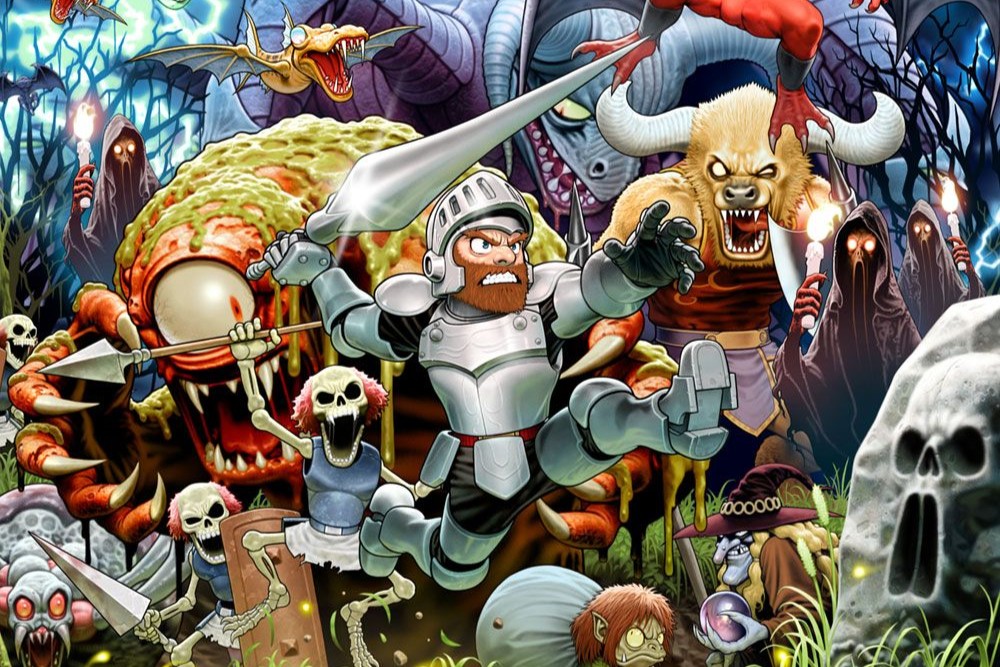
    I’ve been watching Game Centre CX again! I’d fallen out of the habit, but recently I got off my arse and organised my collection of Iron Chef episodes and started watching them in order (can you believe they made fifty-six episodes of Iron Chef in 1994? That’s more than one a week!) and it put me in mood for some Game Centre CX too. And after watching the Kacho valiantly battle his way through Ghouls ’n Ghosts on Megadrive, I thought I might as well give this a shot, because it’s been in my collection for donkeys.

    You probably know the drill with the Ghosts ’n Goblins series: it’s absurdly difficult, and it changes from “Ghosts ’n Goblins” to “Ghouls ’n Ghosts” and back again confusingly. Most of the games are incredibly similar, differing only vaguely in terms of hero Arthur’s abilities and enemies. But then, plenty of series are even more restricted than that (you know, look at any side-scrolling shooter series) and it’s not like we complain about them (unless we do? We might!)

    Probably the most interesting thing about the series is that the very first hit right around the time of Super Mario Bros., so you have to remember that this didn’t come from a context where that was what platformers were. In fact, it kind of feels like a series from an alternate dimension where Super Mario never really happened.

    It’s a dimension where a locked-in jump is the done thing. It’s also one where randomly spawning and aggressively player-seeking enemies are the done thing. So while your jump is completely predictable, the enemies aren’t.

    Can you tell where this is going?

    I mean, you obviously can if you’ve ever played the series. The games just aren’t fair. You can do your best to deal with these enemies—and I’ve seen players far above my abilities perform absurd feats—but you’re going to commit to a jump, or throw a weapon at the wrong time, and you’ll die (usually by being knocked off a platform.)

    It’s not good! Or fun! In fact in level 3-2 of this—a level where you have to survive on a small moving platform for quite some time, while attacked from all sides—I was pretty close to breaking my Vita in half. I had to beat it twice, too (and in fact, to “fully” complete the game I’d have to beat it at least once more). The game doesn’t even really offer much in the way of the kind of streamlining we’ve come to expect from our masocore; no quick restarts, limited lives meaning you have to continue from the start of the level at some point and often struggle on with a lost cause number of lives, etc.

    The worst thing that Ultimate Ghosts ’n Goblins does however is that rather than previous games, where you just have to survive the levels, in this one you’re supposed to find all the hidden nooks and crannies (and I do mean hidden: a large amount of the game is about triggering chests by jumping in certain, totally unmarked, parts of the levels) in order to gain enough gold rings, or witch ingredients, or magic spells, to complete the game fully. 

    The game chooses just about the most uncomfortable twist on the unlock abilities design possible, by making sure you can’t collect plenty of stuff until you have magic spells that do things you don’t expect (the turn-things-to-stone spell that causes gravestones to explode is… alternate dimension logical I guess?) or very specifically have this one shield that allows you to fly.

    The shield’s a weird one, to be honest, considering the Ghosts ’n Goblins franchise has basically never involved this level of control in-air. It changes the game almost entirely from the minute you get it into one that’s not about the inflexible jumping but the much more flexible (if temporary) flying. It doesn’t make you die any less (well, maybe a bit less) but you’re much more in control. It’s an odd twist that the level design works around, and that doesn’t make you feel better about the levels you’ve struggled through to that point (and it doesn’t come until very late in the game…) In a game that’s otherwise A to B linear being asked to jump back and forth in insanely difficult levels that you feel, by rights, that you’ve completed, just to collect some things because you can now fly… it just doesn’t work.

    It explains why they re-released this in Japan with all of that stuff removed, though!

    Will I ever play it again? Uhh… I really did sort of want to collect all the rings and “fully” finish it. But the hidden bits are so annoying that life is just too short. If you could download the Japanese version to Vita, I would maybe consider it. But… no.

    Final Thought: I’m not really sure what excuse I have for, ultimately, not having a bad time playing this, though. Not that I liked it, but that I didn’t feel that it was a total waste of time. The nice PSP-era graphics, which are maybe in that sweet spot of dated for me right now? That as stiff as the game is and unfair the enemies are, there’s this responsiveness that means that it feels good, and you want to succeed even in the face of frustration?

    Probably that stuff?