Tag: square enix

  • Paranormasight: The Seven Mysteries of Honjo (Xeen, 2023)

    Paranormasight: The Seven Mysteries of Honjo (Xeen, 2023)

    Developed/Published by: Xeen / Square Enix
    Released: 08/03/2023
    Completed: 17/10/2026
    Completion: Got all the endings!

    A new Paranormasight game came out earlier this year, but I’d missed the first game in the series. As eager as I was to play it, I thought it’d be best to wait until the season was right. And so I did!

    To be completely honest, it probably wasn’t necessary. While Paranormasight is spooky, the creepy moments and jump-scares are very front-loaded; the rest of the game settles into more of the “mystery novel” milieu, as characters cross paths and work in tandem (intentionally or not) to stop a forthcoming tragedy, and ultimately “solve” the seven mysteries of Honjo. I suppose it was in the title…

    This isn’t bad (at all!) and horror films and stories are often procedurals, but I was surprised by how much the game lets off the gas after its dark and creepy prologue. But it’s probably because Paranormasight is very dense: there are a lot of characters to keep track of, several murders to try to connect, deep lore to parse, and timelines to line up. The game is thinky, not spooky.

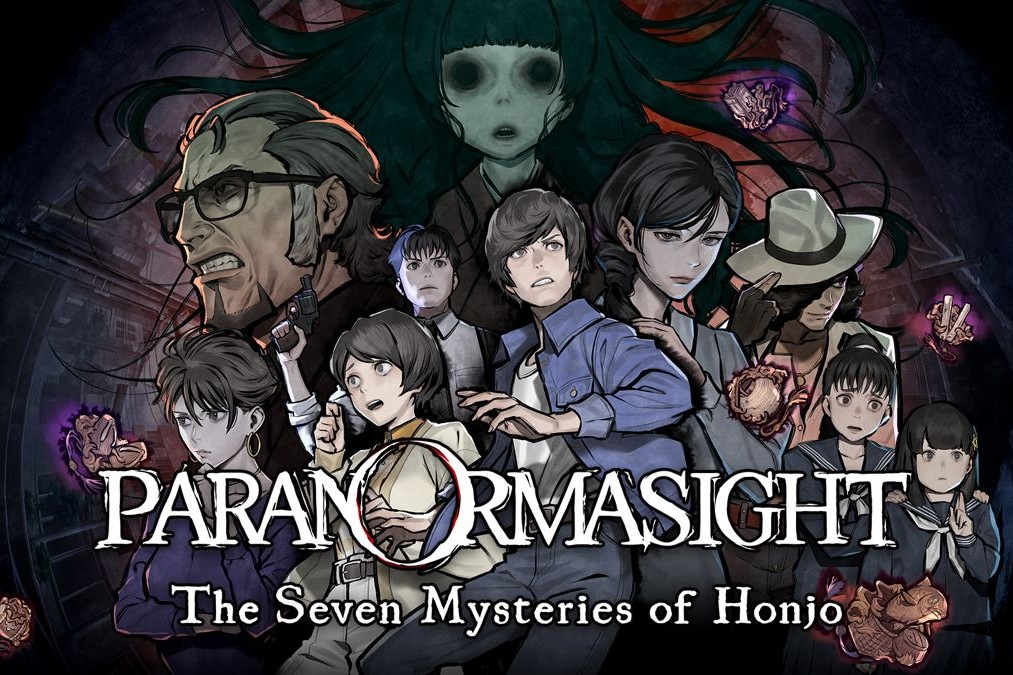
    In Paranormasight, you play four different characters in 1980s Tokyo. The game’s prologue features Shogo Okiie, a fairly normal guy who’s ended up looking into the seven mysteries to impress a girl. After that, you can move largely at will between three other protagonists: Harue Shigima, a housewife anguished by the loss of her son, who believes the seven mysteries may be able to resurrect him. Yakko Sakazaki, who is using the paranormal to investigate the death of a classmate. And Tetsu Tsusumi, a hard-boiled detective investigating the murders that are occurring due to the curses that are connected with the seven mysteries.

    Although generally described as a visual novel, Paranormasight is very much on the side of the genre that errs towards its roots in Japanese adventure games. While it features timeline jumping–which I tend to think of as a visual novel design “thing”–the meat of the game is instead in the patient exhaustion of options that you see in Japanese adventures, where you might have to talk to someone three or four times to get everything out of them, and maybe even go off, do something else and then return to them to actually progress. 

    The Phoenix Wright games are probably the most popular example of this, though Paranormasight has one really nice, player-focused change: as soon as you’ve exhausted an option you get a wee tick beside it, so you know there’s no point still doing it–and if there isn’t a tick, and you’re getting the same response repeatedly, you’ll know you’ve got to do something else and come back to exhaust the option.

    I can understand why certain visual novel fans might find this a bit annoying in Paranormasight. In a lot of the game you’re not really performing any particular lateral thinking to move the story forward–while the game does have a few things like inventory puzzles, as is fairly normal for Japanese adventures they’re used very sparingly compared to their western equivalents–you’re mostly just doing things like talking to one character four times, then another character in the same room a couple of times, then going back to the first character to complete the scene.

    Luckily, Paranormasight’s world and characters are extremely engaging from the off. The team have worked really hard to make the game embody 1980s Japan, and I love that it’s not just obvious signifiers like rotary telephones, but that a “bad girl” character has a proper sukeban blowout hairstyle, or private detective Richter Kai’s shōjo manga good looks (like he’d stepped off the pages of Aim For The Ace.)

    The problem is that the characters and world can only take the game so far. They’re supporting a story that is largely entertainingly complex and twisty, but there’s so much to it that it slows down significantly after the exciting, pacey prologue, and comes to a dead stop at the climax. Paranormasight ends with an extremely hard puzzle that requires you pour over the files and make connections that aren’t really very obvious–imagine a thriller where the climax is the heroes popping down the reference library for a few hours–and when you finally work that out (or just look it up) the concluding puzzle requires you remember something that happened basically at the start of the game (which you could have missed) and then do an action that you haven’t had to do anywhere else.

    It’s unfortunately very deflating, and it’s made worse that the climax makes everything you did feel bizarrely pointless. Without giving too much away, visual novel timeline shenanigans can too often lean heavily on “what if?” and in Paranormasight this decision makes when and where you can jump–and who you can and can’t save–feel kind of arbitrary. It’s really not helped that the game’s villains largely work behind the scenes, leading to a frankly unsatisfying denouement.

    This probably sounds like I’m really down on Paranormasight, but I’m not. Well, not entirely, anyway. It’s simply that the game starts so strongly that it can’t maintain the high. You can feel them put all their best ideas into the start–there’s one meta element that while hardly ground breaking, is so amusing and clever that it did make me laugh out loud–and they end up with nowhere to go from there. I’d still largely recommend it, but it’s a real “it’s the journey, not the destination” kind of game: more for people who love figuring out a complicated mystery rather than those looking for a breezy spook-a-thon.

    Will I ever play it again? No, but I’m excited to play The Mermaid’s Curse and see what they’ve learned.

    Final Thought: One really lovely (and funny) thing about Paranormasight: it’s set in Sumida City, Tokyo and goes out of its way to represent the area realistically, being made with “the full support and cooperation of Sumida City Tourism Division, the local museum, the tourist association, and the local community.” I genuinely love that the tourism division was like “your game is about how our city is cursed, and that people get murdered here? Sign us up!”
  • Dragon Quest Heroes: Torneko’s Mystery Dungeon -Classic HD- (Square Enix, 2026)

    Dragon Quest Heroes: Torneko’s Mystery Dungeon -Classic HD- (Square Enix, 2026)

    Developed/Published by: Square Enix
    Released: 09/09/2026
    Completed: 15/09/2026
    Completion: Returned to the surface with the Chest of Cheer!

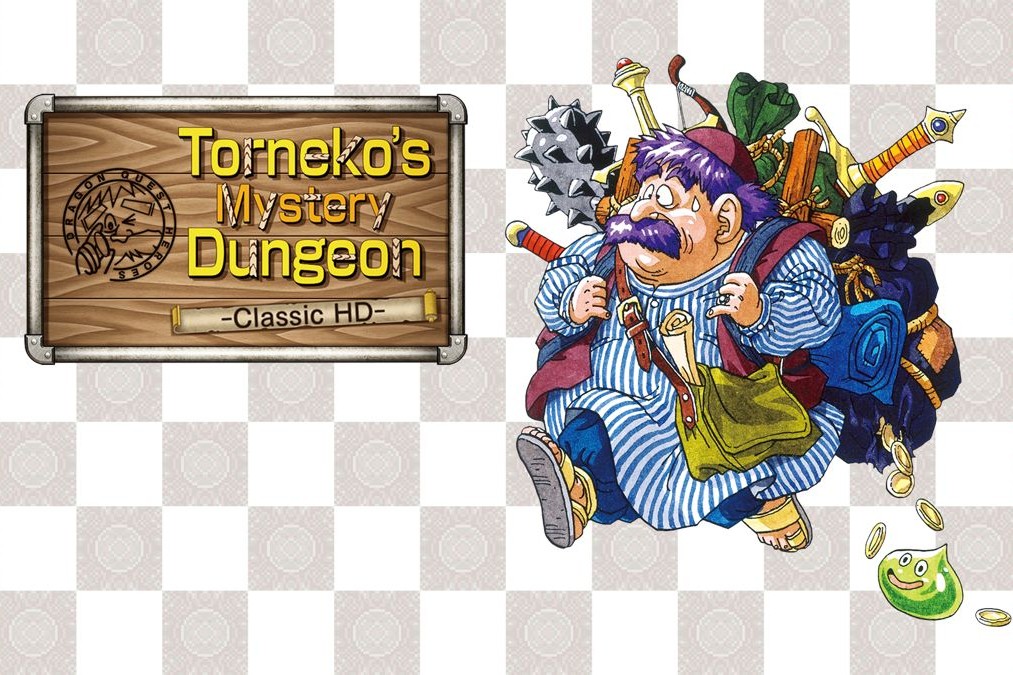
    On the 9th September I stuck on the Nintendo Direct, which isn’t something I always do (if I remember I’ll put it on in the background) and one thing caught my eye: a re-release of Torneko’s Mystery Dungeon, the first game in Chunsoft’s beloved Mystery Dungeon franchise. Chunsoft has their own original IP for the franchise, Shiren The Wanderer, and the series has also seen instalments in the Final Fantasy and Pokemon franchises… in fact even the Etrian Odyssey and The Tower of Druaga franchises! It’s a game design that’s got legs, obviously, having been directly inspired by Rogue (so a true Roguelike) but it all started here.

    I’m not sure why I got so particularly excited by this that I picked it up on the same day. I mean I’ve got Shiren the Wanderer for DS and I’ve never finished it, along with countless other Roguelike and Roguelike-likes either abandoned or on the docket. Maybe I was just looking for the excuse to be excited about something, and, honestly, as you know by now, I love starting franchises at the beginning, and with no official release of Torneko’s Mystery Dungeon until now…

    And yet, I’ve really struggled with if I should write about this one. Shortly after its release–and after I’d played it for at least six hours–John Harris posted a new instalment of his @play Roguelike article where he provided a lot of tips that will be particularly helpful to people playing any version of Torneko’s Mystery Dungeon for the first time, but also noted:

    “I note that the credits to this game have a section for AI content. I don’t think that necessarily means it was used to make this game.”

    This, obviously, made me pause. It was hardly conclusive (though I did post about it on Bluesky to let people know) so I had to decide: do I keep playing this version, which I was already finding a bit flawed? Or was that just a sunk cost fallacy?

    I looked for the game credits to see if I could confirm the information. But.

    You can’t see the credits unless you finish the game–which in this case, means trekking down to the 27th floor, getting the “Chest of Cheer” and trekking back up. And this is a Roguelike. And I’ve never beaten Shiren the Wanderer, so…

    Well, you know I had to do it to ‘em. There weren’t any long play videos online to look up to try and see the credits, so I just thought–let’s do it.

    I’ll say this. Torneko’s Mystery Dungeon is a good “first” proper Roguelike, because while it’s not easy–in fact, it absolutely doesn’t help the player in any way, when it says randomly generated, it means it–the game has less stuff in it than a lot of later games, meaning that there’s only so much you need to know. And it’s a true Roguelike, in that if you get lucky, you can finish it on your first go–there’s absolutely no requirement here that you grind up unlocks to get to the point where you can actually finish it. It’s random, but it’s “fair.”

    So I got a bit lucky and was able to finish Torneko’s Mystery Dungeon, an extremely satisfying thing to do. And then there it was. The entire segment of the credits that credited the people that worked on “AI and Engine Development.”

    I have to say… it’s not looking good. The obvious rationalisation you might want to make is “well, when they say AI, they might mean enemy AI.” But Torneko’s Mystery Dungeon is a Roguelike, and it’s a very simple one, where every enemy apart from a few (that move randomly) just move directly towards Torneko by the quickest route they can manage. Even characters that, say, steal from Torneko and then flee seem to just be moving randomly unless they are a square or two away from Torneko, at which point they flee again.

    I could program this, and I’m not even a coder. No team is required. And that it says “AI and Engine Development” implies–or at least, I am inferring–that AI was involved in creating the engine for this HD remake.

    Now, does that mean that this is a complete vibe coded botch job? Well, not absolutely. But as many people including Harris have pointed out, the version launched had some frustrating issues, with laggy inputs and frustratingly slow, unskippable dialogue boxes in battles, which smell a bit… vibey.1

    I approached Square Enix for comment and (unsurprisingly) got nothing, so I can’t say for sure. However, the thing about Torneko’s Mystery Dungeon is that it’s a great, great game, and even if the HD remake wasn’t vibe coded, it’s really not the best way to play it. 

    To review this version: It’s fine. The new 2.5D style is hardly HD2D (although I know everyone is getting sick of that style by now) really just replicating the original simple graphics but a bit 3D, and that’s… about it for actual differences. Otherwise it’s just the same, so really all you’re getting is the graphics tilted slightly and a bit of a lighting effect. The game’s major addition is the “Streaming Up a Storm: My Dungeon, Your Rules (β)” DLC which adds audience participation if you’re streaming the game–I love the idea, but haven’t tried it and wouldn’t call it a major selling point.

    If you don’t want to stream the game, the best way to play the game is almost certainly going to be the original version. If you’re willing to put up with Japanese, you can pick up a cart only copy of the game for less than this new HD version goes for, and there’s a fan translation available. The only thing you might miss from the remake is the cute papercraft intro, but you can look that up online so you’re fine.

    There really is no reason to not play the version that looks like this.

    To be honest, Torneko’s Mystery Dungeon -Classic HD- is a bit of a sad situation. This is a truly fucking great game, and you should want to support it, considering there are two more Torneko sequels out there that it’d be cool to see out there in English. But, frankly, not like this. It’s a no-win situation. You buy this version and support it and Square Enix think: well, slopping out a crappy port is all we need to do! And you don’t support it and they think: making old games available isn’t worth our time.

    When all they really need to do was to show a tiny bit of care.

    So we’re back at square [“Enix?”–Ed.] one, really: no one is going to care for game history but us. Keep circulating the tapes.

    Will I ever play it again? Unless Square Enix get back to me and unequivocally state they didn’t touch AI while developing this, no, never. As much as when this was released I got stars in my eyes imagining my new career streaming this.

    Final Thought: And for everything that I’ve said, I really do want to state: Torneko’s Mystery Dungeon is a great introduction to true Roguelikes. It’s very manageable and you can learn the game’s techniques as you go and understand why it’s so captivating. I was reminded how great these games are at creating diegetic stories. My very first game where I was 19 floors deep(!) found myself in a monster den, read the scroll of sanctuary that would have saved me (because I didn’t grasp I needed to just drop it) and immediately died. The following game where I didn’t find a weapon for 13 levels, arrived in a monster den, cast bang twice, killed everyone, excitedly moved towards a weapon and… fell through the floor. Or my winning run, where I had to resort to throwing herbs at dragons just to get past them, and then the terrifying climb back up through the dangerous levels I’d just experienced with almost no items to hand. Thank god for the sustaining ring. If you know, you know.

    1. There has since been a patch, but this came in just after I finished the game, annoyingly. I can’t speak to how much the game has been improved or not. ↩︎
  • Space Invaders Extreme (Taito, 2008)

    Space Invaders Extreme (Taito, 2008)

    Developed/Published by: Taito / Square Enix
    Released: June 17th, 2008
    Completed: 21st September 2015
    Completion: Finished it on the easiest path, saw the final level of all the other paths.
    Trophies / Achievements: n/a

    Should I count this one? I’m not completely sure. I saw the credits, but the final levels of all but the easiest path (the game uses an Outrun-esque branching path… well, not that Outrun-esque, it’s performance-based) the final level is so annoyingly hard I just couldn’t be bothered. I saw them. I felt like that was enough.

    Anyway. Space Invaders Extreme! A tribute for Space Invaders’ 30th Anniversary, it took the “modernisation” approach of things like Pac-Man C.E. (which, now that I think about it, was probably one of the only things like that about at the time) where the game is, you know, similar, but given a modern look that’s supposed to feel retro without actually being retro, and made faster and more intense in the meantime.

    And for the most part, this works! There’s a fairly clean basic system at hand here. The game has your invaders slowly creeping their way down the screen the way they do, and you want to kill four of the same colour to get them to drop a power-up for your weapon, and basically keep doing that to keep yourself killing efficiently. There are some kinks, of course, with special flashing UFOs and so on that let you enter special little challenges and unlock “fever time” for even more points, and if you get down to it the scoring system is really, really complex, but overall it’s got that nice aspect where there are only a few things you really need to do to understand enough to challenge yourself on a higher level than “just survive” (and those things help you survive, anyway) that it’s pretty good!

    I’m not completely convinced by it, though. It’s obvious that the designers felt that the main game wasn’t quite enough, and the mini-challenges that take you out of the main game (dumping you back in fever time) are jarring and pretty dumb (they feel unnecessary and flow-damaging) and the range of invader types isn’t quite as clever as you’d hope. Some invaders are pretty much impervious to the otherwise best weapon (the laser) with the other power-up weapons not having the same kind of handicap, which just feels like an irritating nerf rather than good design, and as the game gets harder, some invaders just bomb right down at top speed as soon as they’re hit once and kill you. You can prepare and work around this, but in some cases you’ll find yourself on the other side of some enemy fire as they’re bombing down, and you’re like “well, I guess I’m losing a life here.” Instant kill bullets hitting you is fine, instant kill enemies that don’t even need to hit you? Pretty bad.

    It’s those, actually, that made the last levels so unpleasant and so give-uppy, because they’re outright unfair, and the game got down to that thing that I’m just not a fan of in shooters—memorisation. Unless you were willing to know to have this weapon here, that weapon there, to be in this place, which I wasn’t, I don’t think you can get through them.

    So, yeah. Great game until they over-egg the design in the name of creating a stronger challenge. Not a bad game, just an unnecessarily flawed one.

    Will I ever play it again? I have Space Invaders Extreme 2 on DS! I’m gonna play that one, maybe it’s an improvement?

    Final Thought: This reminds me that I spent 500 Wii Points on Space Invaders Get Even even though I knew it was basically only a demo because I wanted to try it. It seemed pretty cool? But I really have no idea because there wasn’t anywhere near enough in the $5 demo to understand if I wanted to drop $15 on the rest. Alas.