Developed/Published by: Sony Computer Entertainment Released: 15th April, 2014 Completed: 10th September, 2014 Completion: Beat all the levels? I think there’s more levels in a hard mode, but I don’t care. Trophies / Achievements: 57%
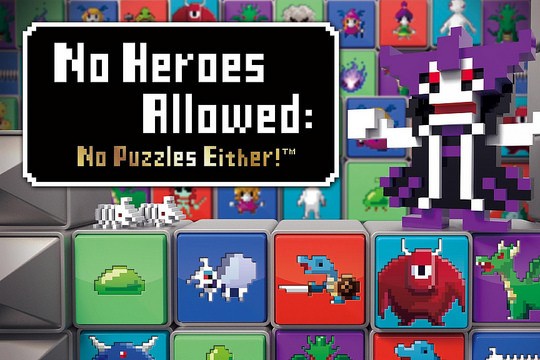
I’m stunned that I finished this, honestly. Stunned. Booted up shortly after I finished the PSP original, I imagined I’d play a few levels of this free-to-play match-three-me-do and hit the paywall and be done with it.
Perhaps admirably, there isn’t a hardcore paywall with No Puzzles Either! (God, that title’s annoying. Makes it seem like I’m shouting every sentence. I’m going to drop that exclamation mark.) Basically, the game tries to make you pay by being stingy with playtime. You can store a maximum of three “picks” without paying; each pick being one play of a level, each pick takes eight hours to be refreshed. The first time I saw this I thought it was eight minutes, and was like “man, that’s just annoying enough.” Eight hours is on a whole ‘nother level… except for the fact that it rounds up to 24 hours for all three to be refreshed, meaning that you can dip in and play this once a day. Which adds a rather ok rhythm, somewhat undoing any reason you’d have to pay up unless you were just desperate to play more immediately. I wasn’t.
And yet… cumulatively, I played this for sixteen hours. Sixteen hours total of me playing three match-three levels and unlocking and raising the monsters that form the block types. Sixteen hours that included days where I wasted my three plays totally on either grinding to try and capture one of the many, many rare heroes that allow you to upgrade monster blocks in particular ways, or bashing against one of the brick-wall tough levels that you either have to be over-levelled for or spend one of the paid-for consumables (which you can also gain randomly, but it’s even more rare than the rare heroes.)
Do I have any excuse for this? Not really. To be honest, it’s the odd side-effect of the fact that I could play it once a day and no more. It made sure that I returned to it, regularly, in a ritual—a low-rent Vesper.5—that also ensured I didn’t spend any money on it. Because what would be the point? The best thing to spend money on would be the consumables, but if I just kept playing long enough I’d win eventually. And why pay a tenner to unlock infinite playtime? I’d just play it in a sprint, and I probably wouldn’t even enjoy it.
I mean, not to say that I necessarily enjoyed No Puzzles Either. It was just this thing I did every day, apart from those days I didn’t. 2-3 minutes, frittered away, across months. But it’s done now.
Will I ever play it again? No.
Final Thought: The only reason I beat this was because I used my last block-clearing consumable on the last level at a point where I was sure I would win. I would not have bothered grinding to get another consumable or beat the level any other way, so I should probably have had some hella endorphins because of the high stakes. And yet… I didn’t. Man, I really didn’t view this game as anything except a timewaster.
Developed/Published by: San Diego Studio / Sony Computer Entertainment Released: 25th May, 2010 Completed: 7th July, 2014 Completion: Finished the campaign. Trophies / Achievements: n/a
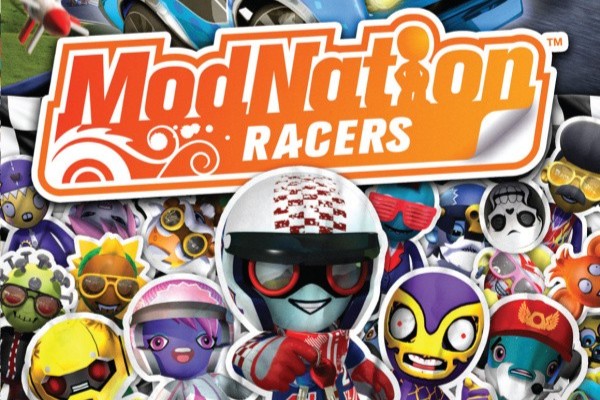
If you have a question, it’s probably “Don’t you mean ModNation Racers: Road Trip?” and it would be a fair (if surprisingly specific!) question; I’d expect nothing less. However, I’m actually talking about the PSP version, which I chose to play for two reasons: one, I was able to download it on my Vita thanks to apocalicense 2014 (where Sony accidentally let you download all PSP games on Vita, even the ones you aren’t supposed to be able to) and two, because this one has cut-scenes and I guess I was interested in the “world-building” of a game largely sold on its level creation/sharing?
Anyway. I remember this being announced at E3 in 2009, and the general feeling being that, yeah, vinyl toys are a pretty cool thing to crib for when it comes to character creation, but that in comparison to “Play, Create, Share” stablemate LittleBigPlanet… well, no matter what you tried to make in ModNation Racers, you’d end up with a racetrack.
It’s true, and kind of an interesting framing of how we think about games. A side-scrolling platform game level? That could be any number of things! But a kart racing game racetrack is always a racetrack.
The thing about LittleBigPlanet, of course, is that a LittleBigPlanet game level… is always a LittleBigPlanet game level. If you want to start designing a platform game, you want to decide how your hero moves. In LittleBigPlanet, your hero moves like total garbage. With possibly the floatiest, worst jump in any game that’s ever been taken seriously, along with that “three Z planes” thing that literally everyone hates, there’s a good reason that every story I’ve ever heard about someone who makes LittleBigPlanet levels getting hired in the industry, it’s onto the LittleBigPlanet team.
(Absurdly, of course, for LittleBigPlanet 3 they haven’t unlocked the levers of Sackboy’s movement, instead adding more characters with their own specific quirks; The “create” part of the “Play, Create, Share” slogan is something that has been paid lip service at best, let’s all be honest.)
But my point is this: if ModNation Racers was a solid kart racer, being able to build a good race track should teach you more, much more than building a LittleBigPlanet level, in terms of pacing, challenge, excitement, all those other things you want to know when crafting an experience for a player.
Nae luck, ModNation Racers is crap as well.
Will I ever play it again? Nope.
Final Thought: “But!” you cry, “You played the PSP version, you lunatic!“ I could install the Vita version! but I’m not going to, because Mario Kart is still good on the Nintendo DS, dig? I’ll give the series this, it’s way way easier to build a racetrack than it is to build an LittleBigPlanet level.
Which probably makes it extra weird that the pre-made tracks in ModNation Racers are so boring.
Developed/Published by: Bigbig Studios / Sony Computer Entertainment Released: November 18th, 2005 Completed: 24th May, 2014 Completion: Completed the career mode. Trophies / Achievements: N/A
This was supposed to be a nice palate cleanser after Soul Sacrifice, which was, honestly, a bit of a mistake, as I went from one game that was an awful grind with a ludicrously hard final boss to a game with totally absurd difficulty spikes that made me want to chew my own face off.
Which is super sad because Pursuit Force could have been really cute and fun?
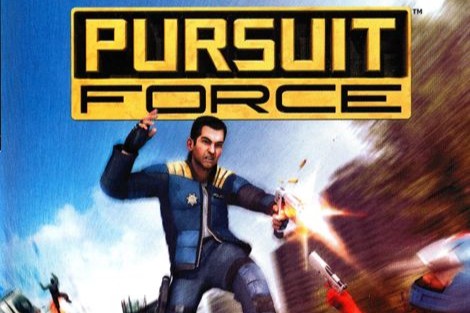
Basically, Pursuit Force is one of those games… well, look, it was developed by Bigbig Studios, one of those mid-sized developers that seemed to have been totally squeezed out in the modern industry. Remember mid-sized developers? They’d always make games like this: ambitious, 3D, sorta buggy and unpolished. Bigbig is dead now, because this sort of thing was unsustainable, apparently.
It’s a shame, because Pursuit Force has this scrappy charm. You’re part of the titular force, who for the most part drive their fancy vehicles really fast, then leap off them onto criminal vehicles, hang on for dear life and then shoot the drivers right in the face. They generally repeat this until they’ve got to the end of the level. It’s not sophisticated! But it feels super awesome to leap from vehicle to vehicle, which I don’t think very many games have done (I believe this is a thing you can do in Vin Diesel-em-up The Wheelman?) and it doesn’t actually get boring. They mix it up a bit (sometimes you have to stick to one vehicle, etc.) and I have to give them props for only putting in two “tail a vehicle” missions (though none would be better.)
Unfortunately, there are a million problems. Notably, vehicles handle poorly (with weird physics; I’d swear the motorcycle’s brakes are on the front wheel, which screws everything up) and there are odd bugs. Most missions don’t have any checkpoints, and they can be super long. And many missions require you play perfectly.
(To go into that in detail they require you play specifically perfectly. Some missions have such a tight time limit you can’t take time to avoid gunfire and just have to survive. Other missions have a tight time limit, but you need to avoid gunfire to not die. Some missions you can’t make the time limit without stealing cars, others you have to steal cars to make the time limit. The missions are weird “what does the designer want me to do?” puzzles, and not to get a gold medal or anything, just to survive. It’s overcooked.)
In fact, some missions are so hard I have to wonder if they even tested them because my wins felt like total flukes. I imagine they checked if you could finish them at all and said “good enough.”
The most disappointing thing is that for the first few missions I really dug Pursuit Force. I was certain I was going to like it! And then I didn’t. The end.
Will I ever play it again? No.
Final Thought: Weirdly, about half the missions are boat missions. Someone on the team must have really liked boats! However, someone else on the team should have pointed out that boats are rubbish.
Oh, and there are on-foot bits and turret sections that are crap too. They really went out of their way to seize failure from the jaws of victory, here.
Developed/Published by: Studio Liverpool / Sony Computer Entertainment Released: February 22nd, 2012 Completed: 15th April, 2014 Completion: Finished the single-player campaign with all elite passes, played one section of the online campaign, and played a few chunks of the Wipeout HD/Fury campaigns. Trophies / Achievements: 34%
With Kurt Cobain’s suicide on April 5th twenty years ago generally considered to line up with the birth of Britpop—as if his head exploded into a bloom of English roses—it’s fairly fitting that I found myself digging into the last outing of the Wipeout franchise while the British press felt the timing was right to masturbate itself silly with retrospectives of a romanticised past.
Wipeout was a PlayStation UK launch title on the 29th of September, 1995, so right at the height of Britpop-mania; Wonderwall was released just two weeks earlier. It’s hard not to feel pangs of horror that a series that once felt so futuristic (by way of The Designer’s Republic) is now nineteen years old, but as with Britpop, Wipeout’s place is to line up as an example of what was once British exceptionalism. When I think of this period of post-Cobain US, I layer a sickly, orange television-transmission filter over a country spinning its wheels culturally while it waited for nu metal to be invented. Twisted Metal defined the “extreme” angle of the PlayStation’s marketing in the US, still locked into the “Genesis does what Nintendon’t” mindset; ugly, nihilistic car combat with evil clown iconography. Like nu metal, the only thing that could make it seem cool is that your parents might confiscate it.
Wipeout, however, was something different. For whatever reason, Sony managed something in the nineties that it didn’t manage to quite keep up as the world got smaller—PlayStation in the UK was “cool.” Lara Croft on the cover of The Face, Wipeout demo pods at legendary club Cream. Wipeout wasn’t about chugging Mountain Dew and yelling at your mom to stay out of your room, Wipeout was about running a few laps while you waited for your mates to come round after TFI Friday finished so you could go down the pub and “have it large.”
Honestly, if you asked me to visualise a copy of Wipeout for PlayStation, it’s actually impossible to do it without seeing it lying on a pile of copies of Select magazine next to a packet of Rizlas, probably dusted with left-over cannabis resin.
(And if that doesn’t make any sense at all, well, you weren’t in the UK in the nineties.)
But, of course, I have a complicated relationship with Britpop. I said English roses for a reason; for after all, on the world stage, Britain is England, and Britpop was an English movement that, fair or foul, the rest of the UK was tugged along with. It was never really my movement, and when it came down to it, my key memories aren’t playing Wipeout and listening to Suede, it’s playing Wave Race 64 and listening to Arab Strap.
So when I return to these things, there’s a familiarity, yet a distance. An understanding of what the promise was—Britpop is gonna save us from the indignity of either America’s miserabilism or its manufactured pop / games are finally going to be cool—but too much knowledge that it was never going to come true.
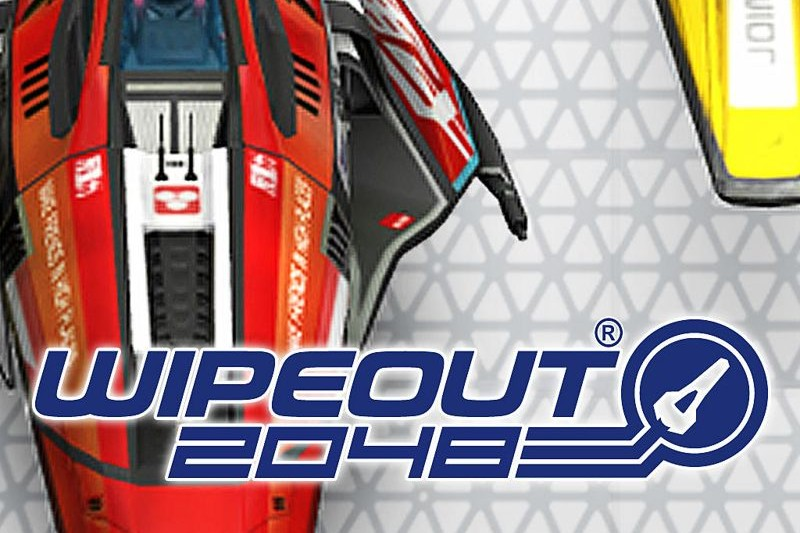
And yet, I have a fondness for Britpop—and Wipeout—because it did try. It might not have been fighting my battle, but there was an inherent optimism I respect. And like the reunion of a Britpop band from twenty years ago, with Wipeout 2048 you can definitely tell what it was they were trying for originally… except it doesn’t look quite the same.
Wipeout 2048 was sadly the last game Studio Liverpool (née Psygnosis) would ship, and one does have to wonder if the changing face of what PlayStation is and was led to a game like Wipeout 2048, which lost all the swagger and self-belief of the Designers Republic and European dance as the years passed, ending up here, with generic futurism and bland EDM.
Underneath that, however, it’s still Wipeout. I remember playing Wipeout 2097 at its height and being utterly frustrated by just how difficult it was, because when you’re dealing with floating racers all the things that you expect about vehicles (how they turn, what happens when they hit walls, what braking means) are all out of the window. I never learned how to play it, and I could never find anyone to explain how you play it either. So let me inform you if you don’t know: Wipeout is a proper racing sim that just happens to have, uh, weapon-equipped floating vehicles. You’re trying to get around the tracks by maintaining a proper racing line, braking early and accelerating properly. You can use air brakes to slow on turns, but they don’t help you drift or anything (well, there’s this “side-shift” thing, but I never got much use out of it). You don’t want to hit walls, but they don’t slow you down as much as you might think (you know, like Gran Tusimo). It’s actually weird to realise years later that the Wipeout series is as serious as Gran Turismo despite its trappings. It’s a series you have to dedicate yourself to—for at least a while—and I was surprised that I dedicated myself to Wipeout 2048 enough to get the “elite pass” in every part of the campaign (definitely helped by the fact they were all single races—no tedious tournaments—although I really hate the “Zone” mode introduced with Wipeout Fusion.)
One you learn it, the game does feel good, even if the level design and campaign never really seems to live up to it (combat events are a nadir.) You can see what people liked about it. It’s just that, like Britpop, it had its time, you know? You can’t play the same songs, just older and uglier, and still expect to stand above.
Will I ever play it again? No. There are loads of levels left in the Wipeout HD/Fury campaigns but I actually found them much less inspiring than Wipeout 2048’s main campaign so I won’t bother.
Final Thought: According to BBC 6 Music, the best Britpop song was voted to be Common People by Pulp. A band who I don’t think ever deserved to be called it, there’s something insidious about marketing a movement such that a song as clear-eyed and angry as Common People was seen at the time and still is seen as a shouty sort of pub sing-a-long, ripe for jokey karaoke covers by William Shatner. I heard it recently and it made me think about Cart Life again. When I think of what Cart Life is lacking, it’s that conviction in Jarvis Cocker’s voice when he screams about exactly how it feels to be a “common person”—simultaneously derided and romanticised for what they are thought to be, never considered truly as who they are.
“You will never understand / how it feels to live your life / with no meaning or control / and with nowhere left to go / you are amazed that they exist / and they burn so bright / whilst you can only wonder why.”