Tag: sega

  • Alex Kidd In Miracle World (Sega, 1986)

    Alex Kidd In Miracle World (Sega, 1986)

    Developed/Published by: Sega
    Released: 01/11/1986
    Completed: 1/09/2025
    Completion: Finished it. Save states were used (for some obvious reasons.)

    The discourse has long moved on, but a while ago there was a “revelation” that the extremely French CEOs of Sandfall (of Clair Obscur fame) and Lizard Cube (of Sega remake fame) didn’t play Nintendo growing up. This was one of those classic “Americans learn that their experience isn’t universal… and decide that’s stupid and wrong” online spats where everyone got annoyed at each other’s ignorance. Usually it’s like, learning people in another country prepare or enjoy a food in a slightly different way, and it’s always a bummer: that yes, the US believes its culture is the “normal one”, that the US view is dominant and pulls focus so much that even people in other countries might not know their own history, and that it’s never a learning experience for anyone because the urge to dunk on each other rather than celebrate a diverse history is completely overpowering.

    Which was interesting timing for me to play Alex Kidd in Miracle World. It’s really only the second time I’ve played a Master System game to write it up, having only previously played Fantasy Zone because I suddenly hungered to play a version of Fantasy Zone (because Fantasy Zone fuckin’ rules.) It’s interesting timing because the Master System, to me, represents so much about just how different video game culture is across the world, and how different people’s personal experiences of it can be.

    I mean, first of all, it wasn’t even originally the Master System, releasing in Japan in late 1985 as the Sega Mark III, where it failed to compete in really any way with the Famicom. It was then released in North America in 1986 around about the same time the NES went wide, only to get crushed by Nintendo’s stringent licensing agreements with third-party publishers, leaving it with a deeply limited game library.

    In Europe, however, it wasn’t released until 1987(!) and despite Sega managing to completely botch the UK launch, it managed to massively outsell the NES (as it would, quite famously, also do in Brazil under the Tectoy brand.) And then loads of games aimed at these specific markets would be released that wouldn’t see the light of day in Japan or the US!

    So the Master System was, and wasn’t, a success. It did, and didn’t, have loads of games and mindshare. And even on that you need to get a little more specific, because if you’re thinking about Europe things get even more fragmented. You might think “oh, it outsold the NES, so it was the biggest thing in games.” But of course, if you know anything about the era, you know the biggest thing in games there were home computers–at release it was competing with the Amstrad CPC, ZX Spectrum, Commodore 64, even the Atari ST and the just released Amiga 500. And depending on what country you’re from, which of those was dominant could have been completely different–I’m sure for many of the developers at Sandfall and Lizardcube, the first 8-bit computer to mind is the Amstrad CPC due to its popularity in France1 [“It should be anyway”–CPC Ed.].

    Of course, they might not have an 8-bit computer to mind at all, depending on their age. Because not everyone is tiresomely playing through games before their time (ahem), and the era you came of age in has a huge effect on how you see certain things. To get personal, I don’t think I was conscious of a video game “industry” until around 1991(!)–I am pegging this, roughly, to the point when I started getting issues of Amstrad Action [“Hurrah!”–CPC Ed.]. But I’m also aware that by then my entire experience of, say, the NES was those kiosks in Currys or Dixons that let you play Fester’s Quest for literally ten seconds. I certainly never knew anyone who had one.

    Because I didn’t come of age–or at least, understanding–in the “true” 8-bit generation, the thing about the Master System that stands out to me–even as an Amstrad CPC owner in the twilight of the 8-bit systems–was that it felt like a “poverty” system.

    This might seem cruel, and indeed, incorrect. Even in the 90s the true poverty system was probably the Atari 2600–or the 7800, still being flogged in catalogues–but you have to remember one thing: Sega’s own advertising. The Mega Drive had been released in Europe in 1990, and kids were seeing adverts like this:

    It’s impossible to overstate how unbelievably cool this seemed to me as a child. A suave adult who lived in a truck with a spinning gaming chair??? You’re just going to have to trust me on this that it didn’t sound as bad then as it sounds now, because now that’s a real “hello, human resources???”

    But the point is–why would anyone want a Sega that wasn’t the Mega Drive? That wasn’t as good as the Mega Drive, a system that looked this cool? Poverty! Poverty!!!

    And it’s from this, perhaps, that you might argue Alex Kidd In Miracle World has caught a stray. Because as the in-built game on a poverty system, it just had to be rubbish. A wee game they included for people who couldn’t get any games with the system. I mean it had to be crap–it didn’t even come on its own cartridge!

    First impressions don’t help. Sure, the Master System had really bright graphics compared to the NES’s muddy browns, but the NES was a complete non-entity in the average British schoolchild’s mind. And Alex Kidd opens with probably one of the least exciting first screens ever, where you head down and immediately have to get to grips with Alex’s weird, slippery movement.

    As we know, platform game feel in 1986 wasn’t a solved problem–I’ve said it again and again that the original Super Mario Bros. just feels sort of weird–but Alex Kidd has a really slidey, sloppy feel, a little too fast in a way that looks wrong; you feel yourself sliding a collision box around rather than controlling a character, which isn’t helped by just how strict that collision box is–there are no close shaves here. Get even close to an enemy and die.

    Alex Kidd really only makes sense, at all, once you learn that the developers were literally just trying to do everything different from Super Mario Bros. to compete with it. Shmuplations comes to the rescue again with a translation of sega.jp’s meisaku interview with developer Kotaro Hayashida, where he notes that one of the most famous things about the original Alex Kidd release–that the jump and attack buttons are reversed–was done just to make it different (“when I look back on it, it’s just nonsense” he admits.)

    I mean it’s probably why you go down at first, right? Because Mario goes right, and they’re hardly going to make the game go left (for reasons. Although Alex Kidd does go left on some levels!)

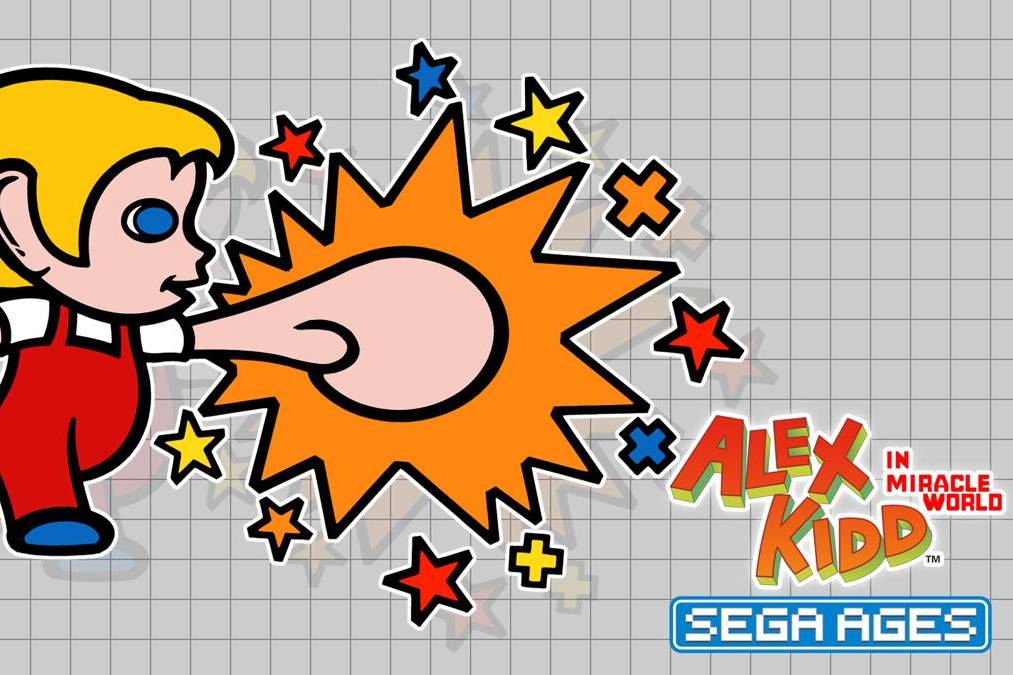
    But look, it’s 2025. Let’s not get lost in our first impressions, let’s not blame a game for going out of its way to not be Super Mario Bros. and for not being cool enough to be on the Mega Drive. I mean it’s cool enough to be included in Sega Ages, getting a great Switch port with new FM soundtrack, right? So, is Alex Kidd in Miracle World any good?

    Ehhh… look, I really tried, but it’s a mess. It’s a game that absolutely feels like a group of people attempting to best Super Mario Bros. who not only didn’t understand that game, but didn’t know how to design one in the first place. Because Alex Kidd in Miracle World really feels like a completely random grab-bag of ideas outside of it featuring a wee guy who jumps around and can destroy blocks. The story is weirdly overcomplicated (The city of… Radaxian? Prince… Egle???”) and the levels don’t have any consistency.  There is some Wonder Boy DNA as you often use vehicles that work like Wonder Boy’s skateboard, and there’s even some Balloon Trip in there too, but suddenly you’ll find yourself in a somewhat non-linear castle that feels more like a Mega Man rather than a left-to-right scrolling level as usual and you’re just expected to get on with it.

    (Something that’s interesting to note, in retrospect, is how the slightly better graphics of something like Alex Kidd In Miracle World have a strange cost to them. In Super Mario Bros. you don’t mind that everything is just blocks, because there’s a consistency to the low-fidelity. In Alex Kidd, when you come to a screen with blocks designed very transparently to make you navigate them a certain way, it just looks sort of unfinished.)

    I suppose, from another perspective, you could instead see Alex Kidd as a game that’s full of surprises and variety, and I don’t think you’d be wrong. It is bright, and cheerful, and there is a charm enough to it that keeps you playing. But it never feels good to play–keeping Alex Kidd from sliding to his doom becomes unbelievably taxing in the latter stages of the game–and there are a bunch of unbelievably annoying gotchas to kill you off all over the place (I haven’t mentioned the rock-paper-sissors bosses, but they do the same thing every time, meaning you either die and redo an entire level at best, or just use save states like a person who doesn’t have time to waste.)

    So, in a weird sort of way, finally playing Alex Kidd, I have to admit that I was wrong in considering it poverty. It’s a full game that people put real effort into, not just a tossed-off pack-in, and if you’d got a Master System you’d have played the shit out of it. There was value there.

    But I’m not wrong now in thinking it isn’t very good.

    Will I ever play it again? Of course, that’s a very personal opinion! Circling back to what I was waffling on about at the start of the article, Alex Kidd is beloved enough in some cultures that it even received a full remake, Alex Kidd in Miracle World DX, by a Spanish team created explicitly to make it. And in the spirit of celebrating the wonderful diversity of video game cultures, I’ll probably play it. Why not? Alex Kidd isn’t that long, it’d be nice to see it from the idealising eyes of some Spanish lunatics.

    Final Thought: I should probably make it clearer–and god knows that I mean to go through all the essays and clear up some of the categorising details–that because I don’t consider North America to be the most important market, when I “date” a game I just use the earliest date unless there’s a really good reason not to. So for example here with Alex Kidd in Miracle World, the release date is November 1986, the Japanese release date. This feels absolutely necessary when covering games like, say, Star Soldier, which would get released literally three years later in North America rather than Japan, completely removing it from the context required to understand it.

    1. See my article on Zombi, from just last week! ↩︎
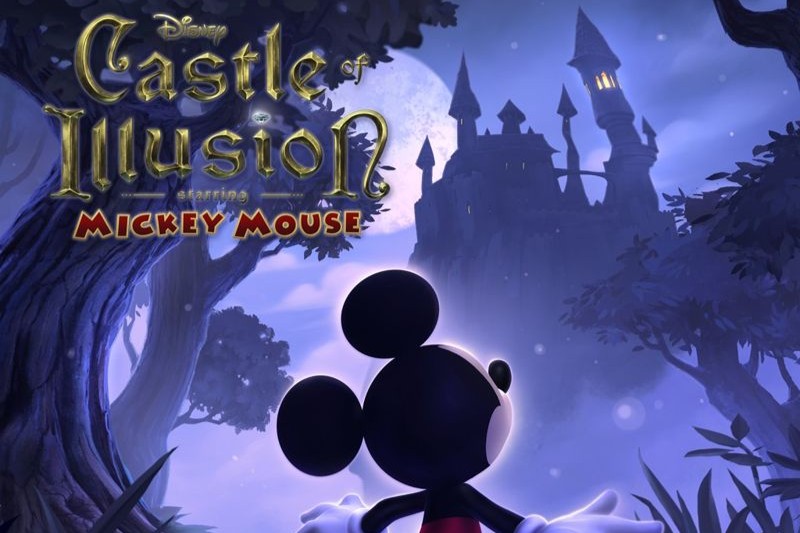
  • Castle of Illusion Starring Mickey Mouse (Sega, 2013)

    Castle of Illusion Starring Mickey Mouse (Sega, 2013)

    Developed/Published by: Sega Studios Australia / Sega, Disney Interactive Studios 
    Released: September 3, 2013
    Completed: 20th April, 2014
    Completion: Rescued Minnie!
    Trophies / Achievements: 61%

    Yep, I played through both version of Castle of Illusion in the same weekend.

    I did this because I was sure, sure that this wasn’t going to be a remake but actually one of those “inspired by…” type things. Because with Castle of Illusion’s frankly weird level design and pretty darn dated everything else, I didn’t think they’d be that straightforward with it.

    Uh, so the weird thing is that they really were. It’s not like they didn’t change some stuff. Most notably, the game goes “full 3D platformer” in certain segments (which is awful, for a reason I’ll explain in a second) and certain parts of the levels are changed (though in general their structure is amazingly faithful.) Bosses have more attack waves (usually allowing them to use the full 3D stuff a bit.) And Mickey’s jump is different.

    Except… it’s also weird and terrible? It’s still floaty, it’s just as hard to aim his landing, but for some other reason? I can’t put my finger on why both jumps are terrible for different reasons (and I really can’t be arsed to go back and play them off against each other) but trust me: they’re both bad. And in the remake, not only is it bad in 2D, it’s godawful in 3D. Non-stop frustration as you slightly mis-aim Mickey and drown him in milk again and again and again.

    (Because he can swim in water, but not milk. I guess that makes sense? Sorta?)

    This is, genuinely, a remake of Castle of Illusion with some extra bits bolted on (most notably totally extraneous narration and loads of chat from Mickey, who… did Mickey always sound like this? He sounds so off-brand. Like a “Mikey Mouse” VHS, bought from a discount store in Orlando.) If you were going to play one version, I’d be hard pushed to say which one to bother with—probably the original—though both can be finished really quickly, and it’s really not worth the effort.

    Here is the thing, though: much like with the original Castle of Illusion, it’s not like you can’t see there was talent on the team. Had this been a reimagining, not a remake, and they’d manage to make the jump less weird, I’d be happy to gamble this would actually have been pretty great.

    Uh, not that it matters because Sega shut down Sega Studios Australia right after this. Alas.

    Will I ever play it again? I could go back and collect more diamonds and do time trials, I guess? I’m not gonna, though.

    Final Thought: Interesting fact: Emiko Yamamoto, director of the original game and who also supervised this, went on to work at Disney Interactive in Japan and has served as a producer on almost the entire Kingdom Hearts series. Huh.

  • Castle of Illusion Starring Mickey Mouse (Sega, 1990)

    Castle of Illusion Starring Mickey Mouse (Sega, 1990)

    Developed/Published by: Sega
    Released: 21/11/1990
    Completed: 19th April, 2014
    Completion: Rescued Minnie!
    Trophies / Achievements: n/a

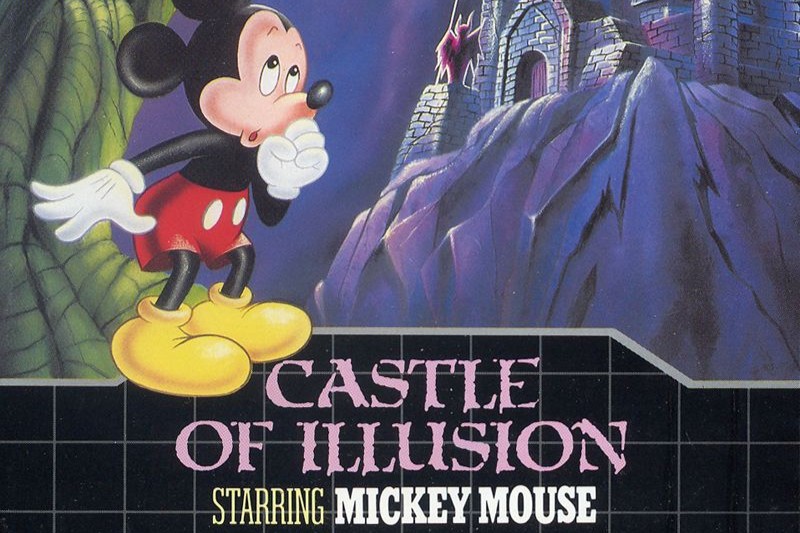
    I have strong memories of Castle of Illusion as one of the games that people marvelled at in video game magazines of the time for being particularly beautiful and holding promise for what was then the “next generation,” so this weekend discovering that M2 had ported it to PS3 was too good to resist.

    It’s interesting, then, that on playing Castle of Illusion—a “pre-Sonic” Mega Drive title—that the thing I find most remarkable is how much it reminds me that even by the time of the Mega Drive video games were… under-developed? It’s hard to explain I guess, but the thing I most remember of playing games in the 80s, particularly on the home computers popular in the UK, is that sense that developers either got to this point where they went “ok, good enough” or that they didn’t actually know that games could be better than that. It’s fondly remembered, perhaps, but Castle of Illusion has that half-baked feel where you can see some bits are done absolutely expertly—Mickey’s animation is lovely, the cut-scenes are sweet, and certain stages definitely have their moments—but there are other parts where you have to question why it was there that they stopped.

    I mean, Mickey’s jump. It’s just the weirdest, floaty, awkward jump. One of those jumps where you feel like you’re pushing a bitmap around, not controlling a character. No “game feel” at all; something you notice in the many many bits where the ceiling is low enough that Mickey clonks his head over and over.

    Or the enemies, who do that thing where they just move towards the right of the screen at a steady velocity, and respawn if you walk them off screen. No sense that they’re actual beings who are actually there. I’m definitely reminded as to how far ahead of the game Nintendo was with the Mario series compared to everyone else at this point; it’s actually crazy to consider that anyone would have played Super Mario Bros. 3 as a developer and then be happy to put this out. I’m not talking about world maps or secrets, the things that I suppose made Mario 3 feel so amazing at the time; I’m talking about making sure the jump feels good, the level design supports it, and the enemies feel worth jumping on.

    The level design is weird too. The first two levels are completely linear, but then from level three onwards you can’t actually progress unless you explore (totally counter-intuitively in level three, too, as it involves you falling into water you don’t know you can swim in.) Indeed, the game’s wrapper—Mickey going in each castle’s door, one by one—is presented “in engine” which makes me think maybe these levels were supposed to be approached in any order, and to be generally non-linear, but that got snipped off at some point.

    That’s total speculation, of course.

    I didn’t actually have a bad time finishing this, however. There’s a pleasant enough pace, and once you’re comfortable with its quirks it’s very much your average early platformer (one that’s nice enough to get through thanks to M2’s good port and freely-available save states.) It doesn’t stand out to the point where you should particularly feel the need to play it, though.

    Will I ever play it again? Nope.

    Final Thought: I’m a bit sad this game isn’t as pretty or as good as I read it was in the magazines of the time. The vision of games I built in my mind from reading many, many more game magazines than playing games is something I come up against regularly now I have access to any game I want; even now I can look at the cover of Castle of Illusion and imagine something exciting, something just beyond my reach.

  • Sonic The Hedgehog 2 (Sega, 1992)

    Sonic The Hedgehog 2 (Sega, 1992)

    Developed/Published by: Sega Technical Institute / Sega
    Released: November 24th, 1992
    Completed: 26th January, 2014
    Completion: Completed once (on Xbox 360) and then I went back and finished it with all seven Chaos Emeralds on the copy that’s included on the Sega Mega Drive Collection for PSP. Yeah, really.
    Trophies / Achievements: n/a (didn’t play it on my own Xbox 360.)

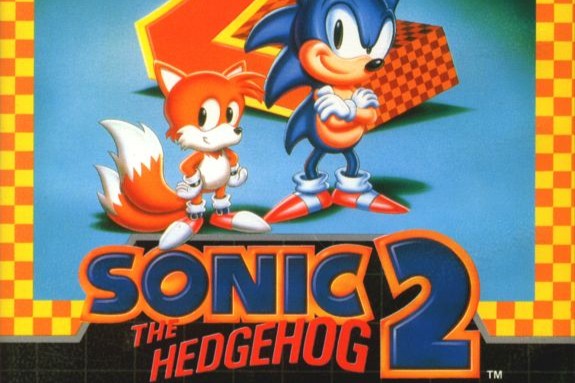
    Who would I be to critique Sonic The Hedgehog 2, eh? It’s a generally beloved entry in a franchise that’s, uh, generally beloved, as long as you’re only remembering the Mega Drive entries because you’ve been under a rock/have any sense. Well I’ll tell you who I am: ME.

    Let’s have a think about the Sonic games, being totally honest with ourselves. We’ve got a hedgehog guy (whose sprite I love perhaps irrationally; he just looks amazing) whose entire thing is “running fast.” In fact, if you’re not running fast, Sonic’s bagfuls of inertia mean that you’re slippy-sliding all over the place—or worse, desperately trying to get up enough speed to move a little bit, but not too far. And if you’ve found yourself stuck at the bottom of a ramp, be prepared to… be annoyed as you try to get him up it.

    Of course, you seasoned Sonic-a-manaics are like “but what about his spin dash, introduced in Sonic the Hedgehog 2… you twat?” to which I’ll say: it’s a hack. An inelegant hack to make up for the fact that the level design really doesn’t know what to do if you slow down at a point where it doesn’t want you to slow down.

    If you played through Sonic the Hedgehog (and I have, all the Chaos Emeralds and everything) you probably remember that after Green Hill Zone the development team seemed to have forgotten what they were trying to do with Sonic, with slow underwater zones, slow platforming levels with tiny platforms; basically they did everything they could to slow the game down. Thankfully Sonic The Hedgehog 2 isn’t quite as bad… except when it is. There are a lot more bits to run fast and free in, sure, as long as you’re willing to slam into an enemy you couldn’t see/fall into a bottomless pit/hit some spikes/whatever.

    Frankly, everything Sonic the Hedgehog 2 wants you to do is at cross purposes to that whole “Sonic go fast” core idea. You always want to collect 50 rings to get to the bonus stage, right? So what happens is that you creep through the level at a snail’s pace, collecting every ring you see, because if you run for even a second, you’ll probably hit something and lose them all. This wouldn’t be so bad if the bonus stages were something that you could wing it through, but no. I remember how the tunnels blew my mind when I was ten, but as an adult what I remember is how they are an exercise in memorisation (until, possibly, you blow up your mind.) Unlocking Super Sonic is so hard that I abused quick-saves to extremes just to do it, and it’s bloody unrewarding anyway—all you get for it is an invincible Sonic who has a suicidal level of inertia; in fact in several of the levels with difficult platforming I wanted to avoid rings!

    (And much like in Sonic the Hedgehog, collecting all the Emeralds merely gives you a very slightly different ending. Very, very, very… very slightly.)

    If you, as a kid (or whatever) managed to get Super Sonic on a Mega Drive, bloody hell, I salute you. Now get outside for some of that fresh air that your mum kept telling you to breathe across the months if not years it took.

    Will I ever play it again? No, but I’ll go onto Sonic the Hedgehog 3 soon(ish.)

    Final Thought: You can, if you like, think I’ve gone at this whole Sonic the Hedgehog thing wrongly! The levels are large and have enough different routes that they welcome replay to an extreme degree, meaning that for a kid determined to get all the Chaos Emeralds, repeated play against the extreme difficulty is close to a Spelunky-like experience. I’m exaggerating, obviously, but for a while there’s always something new to see. Unfortunately that’s mere happenstance; the game rewards memorisation and dedication rather than skill. And if you want to complain that you could just play it without trying to 100% it—and yeah, the game is pretty fun, fiddly platforming/awkward level design aside, to play casually—they shouldn’t have put all that extra stuff in then if it makes it less fun, should they?

  • Sonic & All Stars Racing Transformed (Sumo Digital, 2012)

    Sonic & All Stars Racing Transformed (Sumo Digital, 2012)

    Developed/Published by: Sumo Digital / Sega
    Released: December 18th, 2012
    Completed: 4th January, 2014 (Completed every level of “World Tour” on at least Medium difficulty, completed Grand Prix as far as unlocking Mirror Grand Prix. Reached “S Class License.”)
    Trophies / Achievements: 42%

    This is probably a good way to start (what was at one point) a Tumblr called “every game I’ve finished” considering by all accounts I haven’t really finished it, unless you strictly count getting as far as seeing the credits as a completion (and that happens mid-way through the World Tour mode, anyway.) But the astonishingly clumsily named Sonic & All Stars Racing Transformed is definitely one of those games that you eventually run out of steam on and just have to put away—especially because beating pretty much the entire game on Expert to unlock everything requires a level of dedication to a mascot racer that is beyond me.

    S&ASRT, as I’ll call it I guess, is something I’d heard praised, though in retrospect I can’t really tell why. Developed by Sumo Digital (who let’s not forget worked on the superb ports of Outrun 2) this is the kind of game that seems to exist as a very vague way to exploit Sega’s long list of brilliant IP without having to use any of it properly by, you know, making a new game in a series, because, well, it might fail. So better to slightly please people who want to see another Skies of Arcadia by including Vyse as a playable racer, but making sure Sonic, who must still be a big selling point to somebody (children? Do children even like Sonic now?) is front and center as much as possible. Boom, two demographics sorted: people who like Sonic, and people who will put up with Sonic so they can see some old Sega shit.

    This kind of thing can sort of work—Sega All Stars Tennis is actually a fairly decent way to whack on your nostalgia penis for a few hours, with, for example, the Space Harrier levels totally working—but the whole thing does, at best, leave you feeling a bit empty when compared to, you know, going back and actually playing Space Harrier. This is totally exacerbated by S&ASRT’s position as a mascot racer. You might think “oh cool! a Golden Axe level!” only to discover that you’re whipping around the course so fast that you barely pay attention to the decoration, and if you do, it’s not really super clear what about it makes it feel Golden Axey, or Shinobiey, or whateverey. The Shinobi one, for example, is just “generic Asian.” The only one that really works is the Nights level, which is impressively specific without actually being interesting.

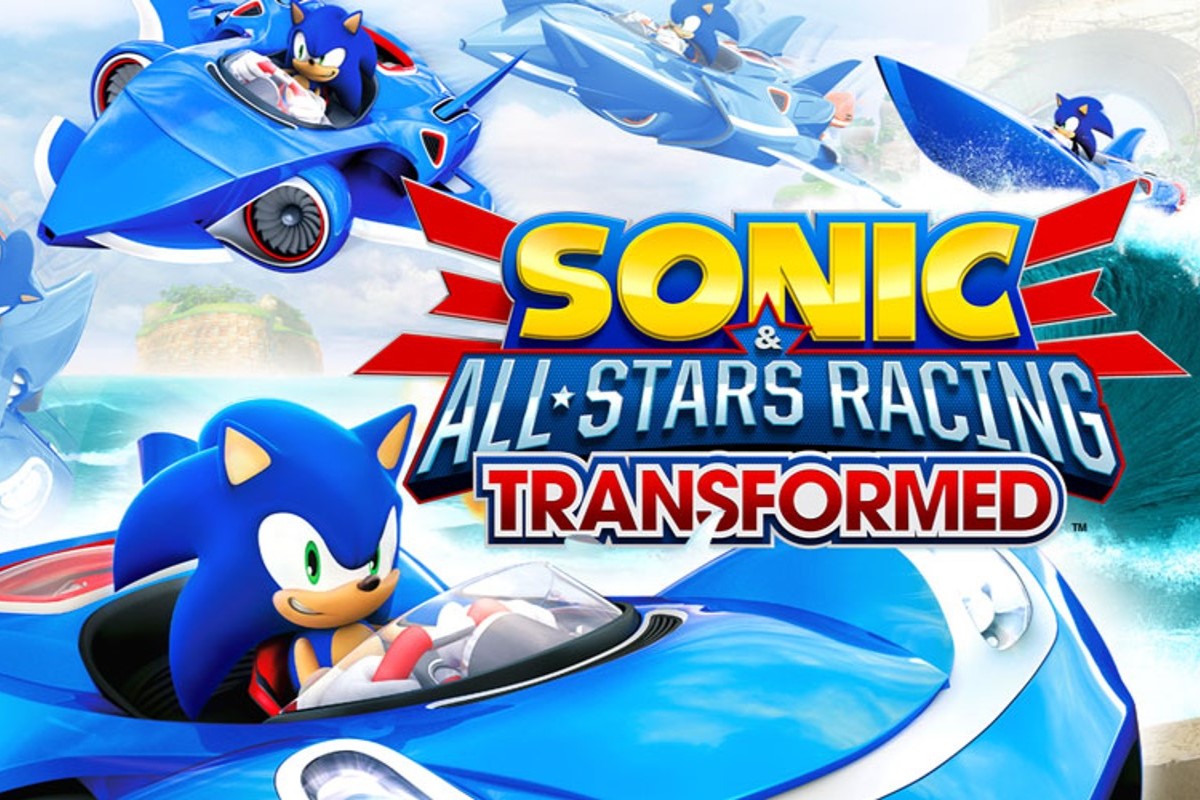
    And the racing isn’t really all that either. I mean, obviously there’s the whole “you get to switch between a car and a boat and a plane!” thing but what this largely means is that you can’t easily remember the tracks (because across three laps they can change wildly, switching you between vehicle) and the tracks are too bloody long anyway. The boats are about as fun as the hovercrafts were in Diddy Kong Racing, which you might remember as having been fun, but I can confirm were about as thrilling as pushing a Subbuteo man across treacle. The planes are fine, apart from when you can’t tell where you’re supposed to be flying, which is “usually.”

    It’s obvious that the team at Sumo Digital has a lot of talent—the cars, at least, feel lovely—and that Sega is, more or less, forcing them to phone it in (It’s a bit glitchy, the difficultly level is way out of whack, and so on.) But most importantly, does anyone actually want something like this rather than, I don’t know, seeing any of the IP here given even this level of effort by Sumo Digital on a new game? Honestly, I’d be a bit harsher on Sega here for being so glib in their “no, we do like our old IP, see?” if they didn’t have M2 working their wizard magic on the 3DS Classics line, but taken in isolation S&ASRT is a waste of everyone’s time. The problem being, of course, is that because of the mild nostalgia layer you might not mind having your time wasted for a bit, and so they’re able to get away with it.

    Will I ever play it again? I didn’t totally finish it so if I manage to finish every other game I ever want to play I could conceivably go back to mop up as many stars as I could and finish Mirror Grand Prix. Not doing so would be better for my mental health though.

    Final Thought: They include a bunch of non-Sega racers too, stupidly. From Wreck-It Ralph they include… Wreck-It Ralph. Not Vanellope von Schweetz, who is a kart racer. For fuck’s sake.

    This essay is featured in Every Game I’ve Finished 14>24.