Tag: panic

  • Time Flies (Playables, 2025)

    Time Flies (Playables, 2025)

    Developed/Published by: Playables / Panic
    Released: 31/07/2025
    Completed: 03/02/2026
    Completion: Crossed off every fly’s bucket list.

    There’s a cliché about criticism, that the worst thing that you can have to review is something mediocre; the idea being that there’s nothing that much to say one way or another when something’s just fine. But actually, I sort of think that’s not entirely true–at least when it comes to games. Because think of the platonic ideal of the “7/10” game; a “mediocre” score under the prevailing wisdom of not using the entire scale, but often games with grand ambition they couldn’t quite match, or interesting ideas that didn’t entirely work.

    Really, the worst thing you have to review is something that’s overall good… but unremarkable. Something you enjoyed… but couldn’t find anything special about. Something successful at what it set out to do… but what it’s set out to do is forgettable.

    I think you can see where I’m going with this.

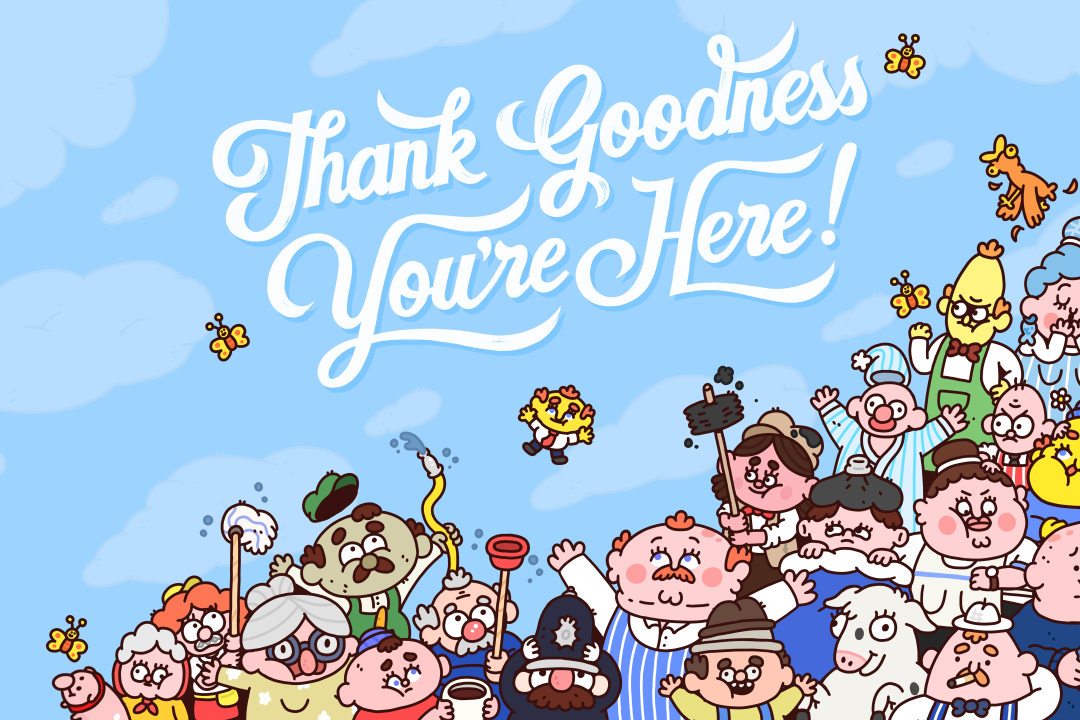
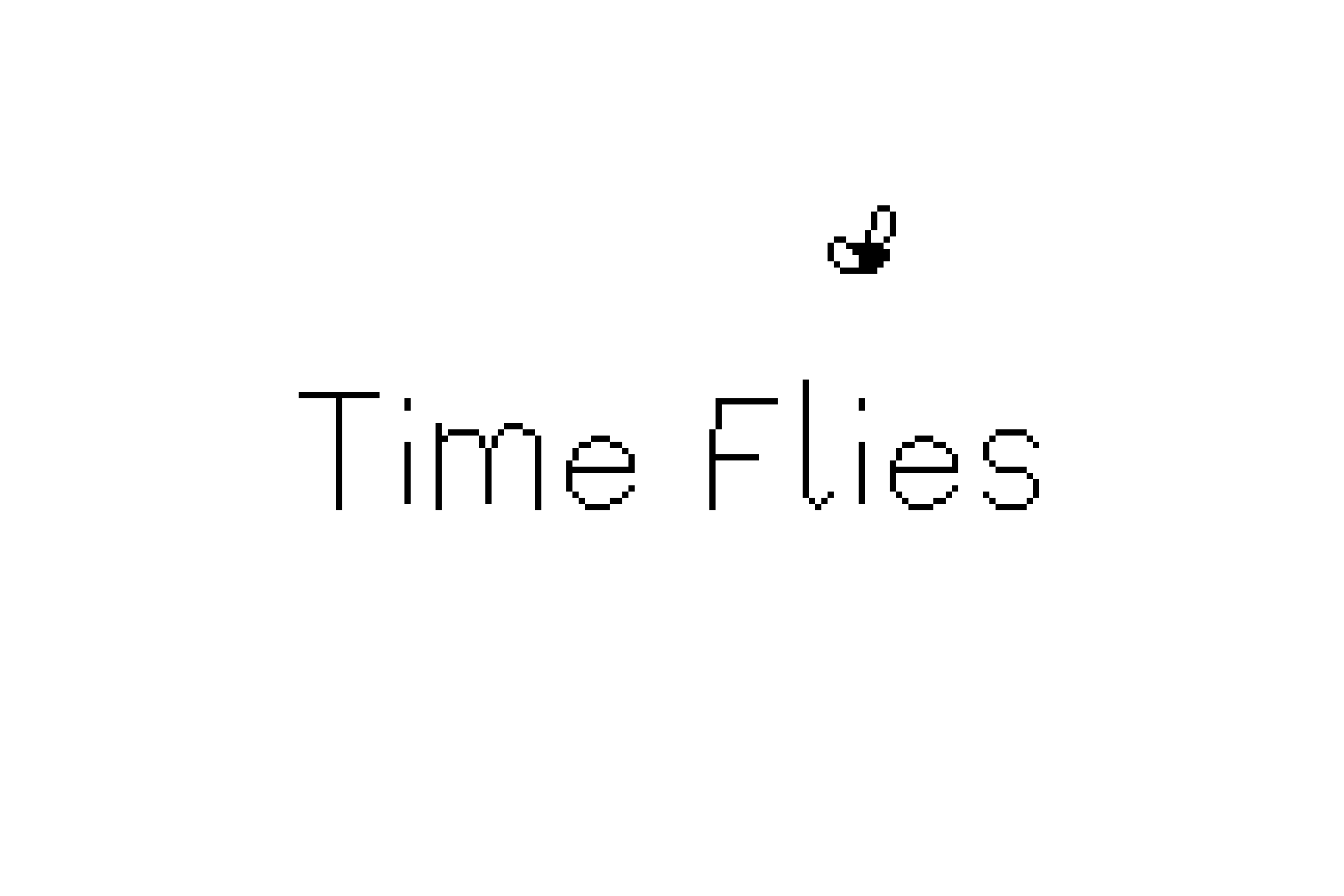
    Time Flies comes from Playables, a production company with a focus on what they describe as “playful interactive projects” (and I do think this intentional distinction from games is important) and is published by Panic. Panic, of course, behind the Playdate, but also a surprisingly large slate of games in 2025 including Despelote, a game I consider interestingly boring (and one of their 2024 releases, Thank Goodness You’re Here!, was absolutely my game of that year.) In Time Flies, you play a fly who, in its short time on earth, has a “bucket list” to cross off, and so you fly about a side-scrolling black-and-white 2D world attempt to do all the things on the list (things like “get drunk” or “read a book”) before you die. 

    The trick is that the fly’s lifespan is the length of time you have per attempt, and that lifespan is based on the average lifespan in the country you are playing the game from, with years as seconds. So, for example, in Canada I got a whopping 81.6 seconds per attempt; in other countries it could be significantly less. I’ll talk about this aspect of the game in a moment–feel free to count it in seconds–but mechanically, at least, it simply means that you have a handful of seconds to do everything, and if you don’t do all the things in one life, you simply start again with another fly.

    There are a few points of comparison here, play-wise, none of which quite fit. There’s Minit, of course, where you’ve got a minute to complete a quest (and which is also in a striking black and white) but as you keep your inventory, it’s more incremental. There’s actually Thank Goodness You’re Here, where you similarly interact with a world in a limited way to make funny things happen–though that’s more narratively driven. And then there’s the original Glider for Mac, which is probably the first thing old bastards like me will think of, and I think the most likely to be an actual source of inspiration; but that’s far more of an action game (although you do “collect clocks” in both games. Sort of.)

    Really, even with the tension of having to do everything in a single life giving Time Flies the air of a “speedrun” game, it is much more a continuation of Playables “playful interactive projects.” Yes, the fly can die if you do something like stick it on some flypaper (come on man, have some sense) but the fly is in many ways just a cursor that you’re using to make funny things happen. So, for example, you push two statues together and they kiss. That’s amusing. Or you fly back and forth over some guitar strings and it makes some noise, counting as “learning an instrument”, and you can do it for as long as you like (longer than you need to, usually.)

    “Hold on, there’s some buzzing on the recording. I’ll check the cables.”

    This is… enjoyable! And it very much does not outstay its welcome. You get four levels with a selection of things to do, and just enough play in it that you have fun flying around, doing the things, then working out the racing line to do them in one life. It’s not boring, or too difficult, and moving the fly around feels good.

    But it’s also the kind of thing that doesn’t stick with you at all. At the end of the game, all those memories flash by in the fly’s mind, all these things lost, like tears in rain, and… yeah. I did some silly stuff for a while and now it’s done.

    Now, to be fair, not everything as to be dripping in meaning, but Frei did describe the game to Stephen Totilo as a game about “the finiteness of our existence and what to do with it, with the time we have.”

    I think the use of real World Health Organization data for your lifespan is interesting–I like that it forces the majority of the assumed audience to, quickly, face up to the idea that by simply living in a Western country they get to experience more time to do more silly things. And it may simply be that, possibly, I’m just somewhat nihilist; I’ve lived long enough now to know how much I’ve already forgotten that felt so important to me at one point, so I’m not sure anything matters than the moment. It’s possible this could hit you in some way that is deeply profound.

    But I had an enjoyable 70 minutes and that’s, you know… it. And it really puts the game in a weird position for me where I basically recommend it–it’s fun, funny and I liked it–but I still feel kind of indifferent.

    Will I ever play it again? There’s only so much time on earth… I feel like something I played recently taught me that…

    Final Thought: One thing to be said is that I really appreciate Totilo talking to the developers about it and focusing on the life expectancy angle; the team’s decision to include Palestine is meaningful, even if they are using out of date statistics and most players will never notice it.
  • Despelote (Cordero/Valbuena, 2025)

    Despelote (Cordero/Valbuena, 2025)

    Developed/Published by: Julián Cordero, Sebastián Valbuena / Panic
    Released:
    01/05/25
    Completed: 18/06/25
    Completion: Completed it.

    Despelote is boring.

    But maybe that’s what’s important about it.

    We live in an age of AI encroaching on everything we do. An age in which in particular it is going to have a noticeable effect on creativity, as the big guys look to it as a solution to that pesky problem of “having all the value being created by workers” and (some) small guys look to it, perhaps naively, perhaps without diligence, as a way to create work that competes.

    And indeed, this has already happened to Panic, the publisher of Despelote, who found their second season of releases for the Playdate handheld infected–and I will use that pejorative–by generative AI, by a developer looking for shortcuts (as covered in a recent article.)

    This kind of use is likely to become endemic in the games industry–for another example, 11 Bit Studios’ The Alters has also been discovered to have used ChatGPT for “placeholder” text.

    The question I have however, is if these developers understand that generative AI is a flattening force. It is a product created by feeding it everything we’ve ever created, built only to mulch it up and spit it back out as slurry. Now, the big guys don’t care. What they want is a fat pipe of chemical lowest common denominator. 

    But how are you going to stand out if you fertilise your fields with that? Little knowing that it eats the fields it lies upon?

    Maybe those who are using it to “compete” don’t care either. Maybe you just have to get what you can and get out before it’s all over. Maybe you can fool yourself there’ll be a Mars here too, once the earth is salted.

    — 

    But instead of that… why not embrace your humanity? Why not spend all your effort on making something that reflects… you? Instead of creating what is common, what everyone recognises, why not create work that not everyone recognises, but in which they can find commonalities? Why not make something like Despelote?

    An AI could not make Despelote. Only a human can, because only we are able to make the non-obvious connections in the story of our lives. 

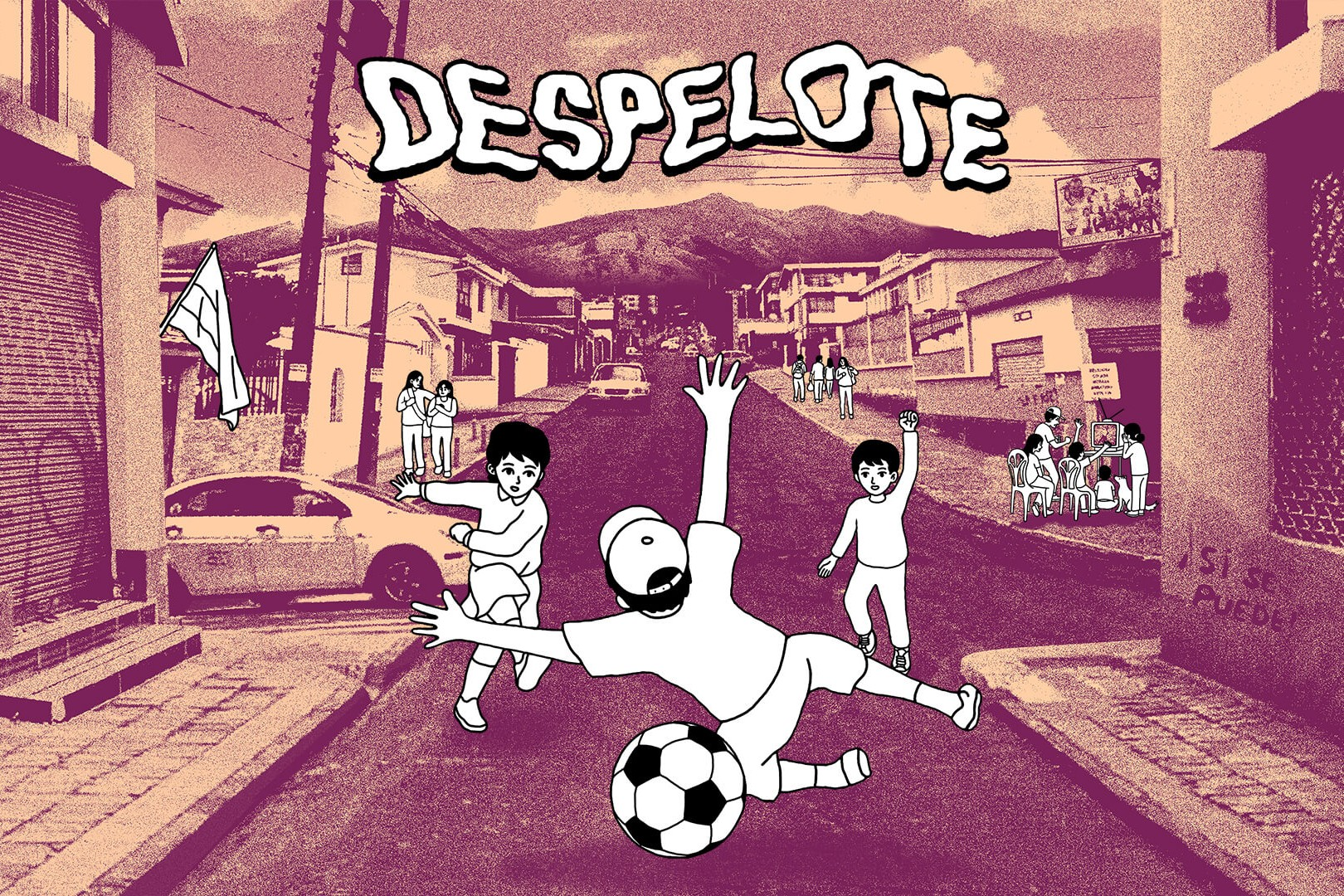
    Here, designer Julián Cordero recreates the experience of being a child in Ecuador, but specifically during the Ecuadorian national football team’s historic qualifying campaign for the 2002 World Cup.

    This is probably not the most obvious setting you can imagine when you are creating a game about the world of children and how it interacts with the world of adults. Similarly non-obvious are the decisions made in which to represent this, which it does in a form that I feel only video games could manage–while also introducing (in my opinion) a new kind of cinematic flair. One that does not look to mainstream cinema’s style but the art house.

    It opens with you playing what appears to be a retro game: Tino Tini’s Soccer 99. Despite this being a reference to Dino Dini, and Kick Off 2 and the like being fucking rubbish (sorry, this is a Sensible Soccer house) this is actually a brilliant wee overhead-view football game that could be released on its own terms, with a simple and rewarding “flick-to-kick” control scheme. But as you play, you start to overhear your parents talking, and then, cinematically, quite unlike any other game I’ve played, the camera slowly pulls away from the television, until finally, your dad turns off the telly. 

    In Despelote, as it would have been for any of us, such is your lot as a child. You find yourself pulled around by your parents, told what to do–and given limited amounts of free time. And what matters is in that free time you don’t really have anything to do. You can run around, maybe you’ll find a ball to kick (beautifully, controlled just as in Tino Tini’s Soccer) but there’s nothing to hunt out, nothing to unlock, no rules for playing with the ball. It’s just you, some other kids who might want to aimlessly kick a ball about, and a world of strangers, almost all of whom are captivated by the ongoing football matches on the telly (unfortunately the game doesn’t really allow you to just stand and watch too–though you’re likely to run and check on the score when you pass a TV.)

    I’m not going to lie–after the shine of kicking a ball wears off (which really does feel fucking great) and you realise what’s happening, Despelote is properly boring, and if you’re a progression-focused twat like me, you’ll probably really struggle with it. While it’s not exactly Jeanne Dielman (and you can play through Despelote in nearly half the time it would take you to get through that) it’s working in that kind of perhaps punishing milieu. It wants you to feel the boredom and frustration of the limits of childhood–and to strain against them as a child does.

    Throughout, you get flashes of how Julián will grow up, how his love affair with football will evolve as he does; fragments of memory that ask you to remember that these childhood afternoons that maybe felt so boring were actually fleeting, and you can never have them back. It’s not as much about being Julián as it is about you–what these moments make you think about, how you remember your childhood. I remember my own childhood. Scotland in Italia 90. Then a flash of sitting in a car on a rainy day. Now I’m at an uncle’s, watching the penalties that ended the 1994 World Cup. Now I’m drunk for the first time, years later…

    I remember.

    I suppose there’s some concern about American exceptionalism here–after all, the Yanks don’t really like “soccer”. Maybe it’s unfair to imagine the American “gamer”, unable to take the steps from soccer to their own sports obsessions. After all, their “world” championships only include their teams [“And Canada’s!”–Canadiana Ed.] so that sense of a national collective that crosses political and societal boundaries may be a step too far. Maybe to many, Despelote is just foreign, and boring.

    But that, to me, represents the state of the art. The boredom of Despelote is not what has stuck with me–what has stuck with me is the themes, the ideas. Someone is saying something–something about themselves, and hoping that it makes a connection with you, your experience.

    It’s not perfect, but it’s human. These days, what more can I ask?

    Will I ever play it again? It says all it needs to, once.

    Final Thought: One of the more interesting background facts about Despelote is, of course, that Julián Cordero’s father directed Ratas, ratones, rateros, the “first Ecuadorian film with international-standard production values” which gives reason to why this game features (in my opinion) a different sort of cinematic influence. But I think this influence has also leads to one of the most amazing cameos I’ve ever seen in a video game: a DVD of Fishing With John!!!

  • Thank Goodness You’re Here! (Coal Supper, 2024)

    Thank Goodness You’re Here! (Coal Supper, 2024)

    Developed/Published by: Coal Supper / Panic
    Released: 1/08/2024
    Completed: 7/08/2024
    Completion: Finished it!

    It seems contrarian for me to open this by saying this is definitely the best game of 2024 and it’s definitely going to be my favourite game of the year… but it’s true.

    The thing, I suppose, that makes that kind of wild, declarative statement seem so difficult to declare is that… games are just so broad, aren’t they? Playing something like Thank Goodness You’re Here! is so unbelievably different from playing, say, my favourite game of last year, Hi-Fi Rush, that it doesn’t feel as easy to say as declaring one movie “the best film of the year.” I mean in that case, you still just sit there and watch a movie. There’s not quite the same… granularity of experience. I mean even if you were talking indie games, Balatro touches such a different part of my brain from Thank Goodness You’re Here! So how could I ever, really, compare them?

    Well, you know what? Sometimes you gotta just stick your flag somewhere, and my flag goes in the top of a Yorkshire pudding, and when it unfurls it’s the flag… of Yorkshire. Which surprised me, because I’m Scottish, so normally it goes in the top of a Scotch pie, and it’s a Saltire, so I guess I really like Thank Goodness You’re Here!

    To describe it, though, which is what you’ve paid for, Thank Goodness You’re Here is a non-evil Untitled Goose Game. You play, in some respects similarly, an agent of chaos in a small town: a tiny man with… jaundice(?) who has been sent to the town of Barnsworth to help the mayor, but end up in the tangle of everyone’s lives. You help them do things that sound explicitly rather simple like mowing a lawn to buying some soup… but it’s not simple at all.

    Unlike Untitled Goose Game, your tiny man isn’t just a wee dick; you’re actually helping people, it just happens to be in a very anarchic fashion. You rise to the level of the town, rather than lowering it, so outside of a few smacky bum-bums, you never feel like you’re bullying anyone… well maybe that guy with the chimney. But the joke works.

    It would be regressive to describe this game as “weird” or “crazy.” What it is, and what makes it so brilliant, is that it’s so British. If you love the era of British comedy that brought us things like Look Around You or Alan Partridge, you’ll feel right at home here, and I was genuinely laughing all the way through this. Mileage may vary: some jokes and sequences are unbelievably puerile, some are a little smutty; some are… disturbing, but there’s a joyful nature to this whole thing, and it’s all so rapid fire that if something falls flat, it’s not long before you’re laughing about something else.

    I think also that the game has a near-perfect take on interactivity for this kind of story-based experience. Outside of special sequences basically all you can do is slap things or jump, but everything is reactive, and the level design is cleverly focused; your path through the game is a sequence of designed loops that you can’t deviate from, but as a result you don’t suffer from the kind of downtime you can struggle with in more open adventures and which can ruin immersion. 

    Here you’ll never return to an area and discover it static, how you left it, and have to waffle around trying to find X or Y; you’re always moving forward onto Z. I can hear the criticisms, but at least for me this never felt restrictive; the only issue I really had was feeling that I had to put the game down regularly lest I finish it too quickly–though it’s surprisingly lengthy for something featuring so much bespoke art and sequences, at almost five hours.

    To be honest, the game manages something that I wish designers of interactive experiences–think your Meow Wolfs, your Sleep No Mores–would learn from, which is how to always be guiding your player forward through a space and yet still allow them to experience it at their own pace. Sure, it has the benefit of being able to lock doors behind you, and there aren’t 300 other tiny men with jaundice trying to do everything in it at the same time (though I’d love to see that?) but I couldn’t help but be impressed with the flow.

    (This may relate to me seeing Sleep No More before it closes just before playing this, finding it a hard to navigate mess of meaningless rooms in a warehouse and thinking it was fucking rubbish.)

    The reason, really, that this is my game of the year already is that it’s trying to do something specific and it’s doing it as unbelievably fucking well as anyone probably could. Your dexterity won’t be challenged, your brain won’t be taxed, but they don’t need to be. Sure it’s a funhouse mirror, but if someone was to ask me “What’s the UK like?” from now on, I’ll probably just say “Play Thank Goodness You’re Here!”

    Will I ever play it again? Absolutely. Not for a long time, I think, but I didn’t technically see “everything” according to the achievements, and I’d like to.

    Final Thought: For categorisation sake, I would like to mention that I do think that Thank Goodness You’re Here! is largely specifically English, and Northern English at that, but there are enough commonalities and it features a big role for Davey Swatpaz that I think it’s fair to think of it as extremely British anyway. And speaking of the excellent casting, Matt Berry is in this and as always he’s brilliant. There are few games where I’d say “I really hope you run out and buy this” but there are few things that are such polished diamonds, and even though this was funded by Panic, who apparently have enough money that they can piss it up on a wall on the world’s most niche handheld (hey, I still bought it) smaller games are having such a rough time of it that when they’re good we should really, you know, reward that. Don’t just do it for me; do it for Tiny Tom. Or Big Ron.*

    *pie size preference depending.