Tag: ocean

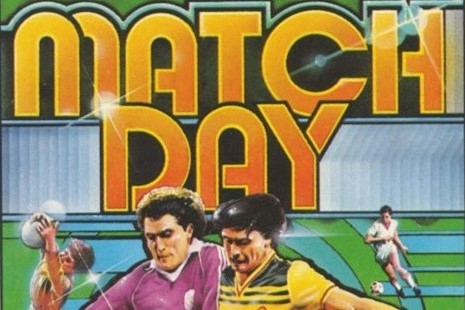
  • Match Day (Ritman/Clarke, 1984)

    Match Day (Ritman/Clarke, 1984)

    Developed/Published by: Jon Ritman, Chris Clarke / Ocean
    Released: 1984 (first reviews showed up in Jan 1985.)
    Completed: 20/06/2026
    Completion: Scored a goal, at least, in every version I played.

    It’s the World Cup, and as usual when any major football tournament comes around, I suddenly get a hankering to spend all my time engaging with football content, which means that I end up playing a football game or two.

    Of course, this World Cup is a bit… extra, isn’t it? There are so many games a day that it’s hard to find space to do anything else, and I’m lamenting that I didn’t get myself a big wallchart or something just so I could remember the dazzling number of permutations of potential brackets. But on browsing Steam to see what was what in the ol’ football world, I was surprised to see that Match Day was available. Literally Jon Ritman and Chris Clarke’s original Match Day in its ZX Spectrum, Amstrad CPC and Commodore 64 editions, along with International Match Day for the Speccy (which is just Match Day but with some extra pieces of art and they just changed the team names to international teams.) Not Match Day II, the one people have a particular fondness for. Match Day. The one from 1984. On Steam. For money.

    This seemed a bit… optimistic from publisher Pixel Games. The last time I mentioned Match Day was when I was discussing Nintendo’s shockingly rancid Soccer, where I made the (possibly controversial) statement that “Match Day was at least as good as this.” It’s a statement I more-or-less stand by–certainly if you were looking for value for money, you were getting more for less with Match Day. But in 2026, with Soccer (essentially) free on Switch with a Switch Online subscription… Pixel Games are absolutely asking for money for old rope, here. As with Soccer, only the most extremely nostalgic could squeeze some pleasure out of a game of this.

    Match Day isn’t the first home computer football game; it’s not even the first on the Spectrum. The original text–at least, the one that spawned all the imitators–was International Soccer, released on the C64 in 1983, and a pre-Batman Jon Ritman, looking for his next project, found that every publisher he asked was looking for a version of International Soccer on Spectrum. Publisher Artic would beat him to it with World Cup Football1, but it wouldn’t matter–Match Day would blow it away, becoming a top seller (and becoming well liked enough to be mentioned in Crash’s fan poll, published as late as April 1986!)

    I’ve mentioned it before, but the issue with early sports games is the effort required just to recreate the sport is such that there’s really no space to consider what would make it particularly fun as a video game, and Match Day is no different. You can recognise it as football. Sure, there aren’t the right number of players, but there are throw-ins, corners, keepers–it’s football. But on the humble Speccy, there are issues. Firstly, the colour palette is insane. The game defaults to everything being white or yellow on bright green, which (I imagine?) comes from the idea that the most important thing about football is that it’s played on green pitches with white lines and a white ball–though you can at least go into the settings and change that to black on green, which is more or less parseable.2 The main issue is that it’s slow (though not really any slower than Nintendo’s take on the sport…) and with only one button–and no ability to actually tackle, or control shot power(!)–Match Day is really sloppy and stop-start to play, as you and your opponent rely on trying to slowly block each other with your players’ weighty movements. Because players with the ball are slightly slower than opponents, this can lead to situations where it feels you get completely boxed out (or just end up passing it to your opponent and back again) especially because a cross or diagonal pass is more than likely going to end up in another throw in.

    Match Day makes you watch a long intro to each match to show off that they’d licensed the Match Of The Day theme (but not the name.)

    To be charitable, the game is a lot of scrappy midfield play chasing loose balls, very “jumpers for goalposts.” They may as well be, because the keepers are hilariously incapable. When you get control of them, you can either have them leap left or right, and that’s it. If the ball is literally next to them, slowly creeping over the line? You’re out of luck, it’s going in.

    The reason I suspect Match Day was successful is that–while it doesn’t exactly play a great, or let’s be honest, even an adequate game of football, it’s a game where you can name teams whatever you like and easily play against friends–even in tournaments of up to eight people! If you had a Speccy and at least one pal, this was definitely going to get played a lot.

    But today, Match Day is a museum piece. Essentially impossible to play (and with five minute halves, interminable to do so–a problem Super Soccer suffered too.) You’d hope then that in a modern re-release there’d be something to make the package feel worth it. Maybe I’m not asking for a Digital Eclipse-level documentary or something, but… some box art? Any context whatsoever?

    No, this is shockingly bare-bones. Like, bare-bones to the point you can tell they didn’t even bother to design a front end, it looks completely default. You get saves, rewind, and imagine resizing, but no scanlines or anything like that. There’s a real lack of care here. The first and most obvious thing they could offer is a “turbo” mode to speed the game up a bit, but they were hardly going to go that far when if you’re playing the Amstrad or C64 versions you actually have to watch the game get run from the operating system. And suspiciously the C64 version has the team names overwritten, so it’s not even a clean rom (look, I’m not saying they just downloaded it off the internet, but…) 

    Speaking of…


    Conversion Therapy

    The Amstrad version is not very fondly remembered–Retro Gamer seem to give it a kick every time they mention Match Day–and it wasn’t developed by Ritman and Clarke but by Sentient Software3. However, I do have to say… I like it better than the Spectrum version, sorry. Sure the ball’s yellow, it’s maybe a touch slower, and there’s some very weird colour corruption when players overlap, but exactly the same as far as I can tell–although Ritman says on his own site,

    “The versions for the BBC, C64 & Amstrad CPC were programmed by others who didn’t even talk to me about it.”

    I’m certain this version shares code (maybe Ocean passed it along) but happy to be corrected. Ritman does go on to say say he thought the conversions were dire, but the Amstrad version, at least, might be bearable at double speed. Still a shame about the terrible goalies though.

    The C64 version, however, is unsalvagable drivel. It’s way smoother than the Speccy or CPC versions (oh to have hardware sprites…) but it gets pretty much everything else wrong. The AI is non-existent. Opposing players seem to just stand about in a stupor, occasionally waking up to run at you and the camera doesn’t move until you’re at the very edge of the screen, so you’ve got no idea what’s coming, but it doesn’t matter because you can basically walk it into the goal every time. Absolutely shocking.

    The Pixel games release doesn’t include the BBC Micro version, but I feel like I should mention it anyway because it was, absurdly, ported by Chris Roberts, he of Wing Commander and Star Citizen fame. So there’s a game he actually finished, then.


    Match Day was important in its time and place, and I feel like I should be glad it’s “in print”–so many games aren’t–but you just can’t release it like this.

    Will I ever play it again? Aye, I’ll get the lads round for an eight-player cup one day. (I will not do this.)

    Final Thought: Literally the day Ritman handed in Match Day he saw Rare’s Knight Lore and became “determined” to make an isometric game. He went on to make Batman, and we all know how that went.

    1. Which would, of course, infamously become World Cup Carnival. You can read all about that on Super Chart Island. ↩︎
    2. The way you know which player you’re in control of is that that player’s boots are a different colour. Not an ideal system, but it works. ↩︎
    3. There are a few Sentient Softwares on Mobygames, but the most likely one is the one that made How To Be A Complete Bastard. So that’s cool. ↩︎
  • Batman (Ocean, 1986)

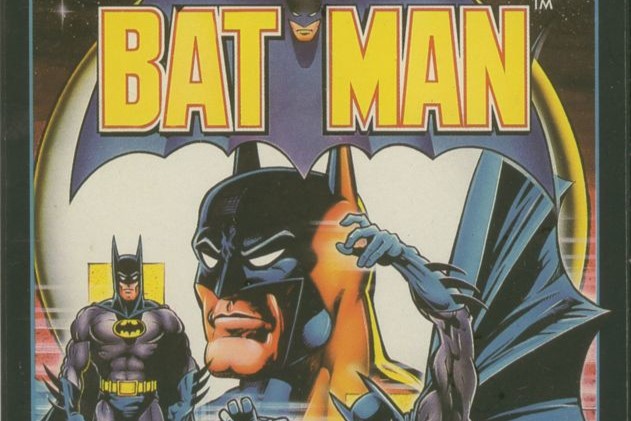
    Batman (Ocean, 1986)

    Developed/Published by: Jon Ritman, Bernie Drummond / Ocean Software
    Released: 05/1986
    Completed: 01/04/2025
    Completion: Finished it. God help me I finished it.

    It all seemed so simple.

    Jon Ritman and Bernie Drummond’s “Head Over Heels” is a big video game (or should I say, computer game) in the personal history of Mathew; bought because it was so lauded in the likes of Amstrad Action, it really did blow me away once I played it: a true adventure featuring two protagonists with different abilities that you have to use together. It seemed like a work of genius to me.

    So when I was looking over 1986’s releases, I noticed the pair’s previous isometric action adventure, Batman, and thought it might make sense to play. See if the magic of Head Over Heels was there from the beginning, and set the table for a replay of Head Over Heels at some point in the future.

    I’d consider Batman a bit of a joke in the non-UK gaming community, probably because anyone who is looking up Batman video games is going to discover that the first Batman game is a ZX Spectrum release that features Batman wandering around an isometric, bizarrely decorated Batcave looking for parts of the “Batcraft” where the enemies look like melted dogs and basically touching anything kills you. It’s just so weird, lol!!!

    What’s generally forgotten in the discussion is that in the mid-1980s, no one gave a fuck about Batman. It had been nearly twenty years since the TV show and Wikipedia notes that even Batman comics circulation had reached an “all time low” by 1985. His fortunes would turn around rapidly–The Dark Knight Returns would actually start being published before Ritman and Drummond’s Batman would come out–but considering the era, from Ocean’s perspective it will have been an opportunistic gamble: grab a cheap license on death’s door and try and squeeze some more juice out of it. And they did give it to one of their best developers, who’d already given them a lot of success with the Match Day franchise. Clearly it wouldn’t matter too much that he could barely remember who Batman was…

    Anyway–I’m just going to cut to the chase here and say that this took me about six months to finish, and as a result I’ve lost most of the specific game history I’d dug up about it and all that remains is a lot of vague “I read somewhere that Ritman said…”. So don’t quote me on anything but my memory is that Ritman has been quoted as saying that he wanted to best Knight Lore, and then Drummond came in and started drawing like a cyclops head with flippers and he was like “alright!”

    Knowing this, I should probably have played Knight Lore first, but getting into Rare’s entire back catalogue would be a whole other thing, so I can just say that even with a prior understanding of the isometric action adventure, Batman is a brutal experience.

    First things first: it’s really hard to parse visually on the original ZX Spectrum. The environments are surprisingly detailed, but because it’s all in monochrome, it’s really quite hard to discern what everything is, and no way to tell what’s going to kill you when you touch it. I had hopes that the Amstrad CPC version with its wider range of colours might fix that, but there’s no consistency from room to room so it sort of just looks insane.

    If you want to play this in 2025 with normal human eyes, there’s a fantastic remake by Retrospec (that’s, er, fifteen years old itself), or you can go back and play “Watman” a DOS remake from 2000 (so closer to the release of the original than now.) However if you’re really determined to play this (which I don’t recommend) what I recommend is to play the MSX2 remake. It’s pretty much what you’d imagine the ZX Spectrum original to be if it had full color–right down to the performance. 

    And, of course, then you get the ability to quicksave and load, because without that I’d have never been able to finish this in a million years.

    The version I played looked like this. Significantly easier to parse.

    It’s not simply that Batman is full of things that kill you. It’s that the game is designed to force you to play perfectly from the first screen. Enemies seem to have a truly random movement routine (hope you love shuffling around waiting for them to select a direction away from you) but that’s not an issue as much as that there’s no leeway in the collision detection, and in fact the game is designed around that, generally requiring that if you want to make a jump you actually have to position Batman so he’s got about one pixel left on the platform he’s “standing on” so you can reach the next. Hilariously, the manual makes excuses for this:

    “To make certain jumps it is necessary to hang by the ‘merest thread’ on the edge of the Carbon Re-inforced Batcloak – you may need practice to perfect this feature!”

    This isn’t even the funniest excuse in the manual, which also notes,

    “The Joker and the Riddler do not appear ‘in person’ in the game, as Batman is all too familiar with their image. The henchmen they have selected are unfamiliar to Batman and this further complicates his task.”

    So yes, the game is exacting. And with 150 rooms to explore, it’s also bloody confusing. It’s actually not as non-linear as you might think–a lot of directions you go don’t really head anywhere–but once you get deeper into the game your head will spin, and every game over feels like being kicked full in the groin when you realise how difficult it’s going to be to get back to where you were (although the game features a save system of sorts based on when you pick up particular collectibles, it’s unforgiving at best.)

    And on top of all that, the puzzles are intense. I will have to go back to Knight Lore to see just how complicated things are there, but it’s a bit like when you go back and look at things like Wizardry or The Bard’s Tale. You’d expect that these genre originators would be simple, but somehow they’re significantly more complicated and off-putting.

    Here, you can sense Ritman almost understanding how to provide an on-ramp for players as the game is designed that you first collect Batman’s gear, slowly growing his abilities as you go (you can’t even jump at first) in a smaller section of the map that’s particularly linear. But one of the very first puzzles will kill you multiple times because it requires that you walk the wrong way on an invisible conveyor belt and then do a pixel perfect jump????

    It soon gets absolutely absurd. I’m not going to lie. After beating my head against this game for months off and on–struggling to understand the maps I was able to find (isometric maps on paper are confusing!)–I eventually just started watching and carefully following someone’s playthrough on YouTube (a playthrough that, notably, they die a bunch of times on.)

    I usually love using contemporary maps and walkthroughs. But you try and work this from Amstrad Action Issue 9 out (it spreads over two more pages!)

    This revealed to me that certain screens had insanely unintuitive solutions that I just don’t think I’d ever have worked out. The screen where you have to catch a wizard’s hat and then catch an enemy on top of said hat otherwise they’ll block your path. The screen where you have to manipulate several teapots to reveal a completely hidden piece of the batcraft. Or my favouite, the screen where you have to time dropping a spring on the top of an enemy’s head so you can ride them and jump off at the right time to get to the exit???

    I have no idea how anyone did any of this in the first place. Playing Batman has to be ones of the most demoralising gaming experience I’ve ever had, genuinely feeling like being trapped in a carnival funhouse until I can solve a rubik’s cube while a car alarm goes off (don’t play this without making Batman’s footsteps silent…)

    I’m aware, though, that a lot of people don’t feel this way, considering it’s been remade so many times! Which actually makes me extremely worried that Head Over Heels isn’t the masterpiece that I remember it being.

    Well, guess I’ll find out soon enough!

    Will I ever play it again? I played it more than anyone ever should.

    Final Thought: Certain things just aren’t worth beating, and I’ve definitely given up on things before, but my fealty to my memory of Head Over Heels really was overpowering to the point where I thought I had to, that I would simply find something here. And to be fair, by the end of my playthrough, I was dying far less, and I could probably get through a significant chunk of the game now legitimately if I really wanted to.

    I really, really don’t want to.

    Please don’t make me.