Tag: nintendo

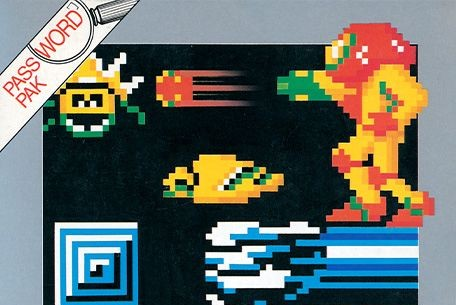
  • Metroid (Nintendo, 1986)

    Metroid (Nintendo, 1986)

    Developed/Published by: Nintendo R&D1, Intelligent Systems / Nintendo
    Released: 06/08/1986
    Completed: 28/08/2025
    Completion: Killed Mother Brain in less than three hours.

    I hope it was obvious from the conclusion of my article on The Legend of Zelda that the game I was referring to was this, Metroid, but I suppose the real heads might have been like “well, The Mysterious Murasame Castle is pretty good, I guess…”

    Metroid is a game I was absolutely certain I was never going to beat. After all, I’ve beaten Metroid: Zero Mission, isn’t that good enough?

    But the original is a game I’ve picked up and put down a few times out of my urge to really understand the Metroidvania genre’s beginnings, and the reason I’ve put it down is probably the reason most people do: the obvious lack of any sort of map (never mind an automap.) That would be bad though, but when you combine that with the game’s reliance on completely hidden paths for progression, and an early difficulty that is, I think, worse than The Legend of Zelda… Metroid just isn’t very enjoyable. It doesn’t seem worth the effort.

    Sadly, unlike The Legend of Zelda, there isn’t a wee hack in pulling up the manual, because it doesn’t offer the kind of help you actually need. While it does offer lots of useful hints on what Samus and enemies can do, the included map is very vague. With the graphics in each area quite samey (look, you tell one corridor or shaft apart from the other) you really need to therefore either have a map already to hand or be mapping the game out as you go, and I think my resistance to the original Metroid has always been that while in a game like Wizardry or The Bard’s Tale you can take your time to draw out maps, here you’re stopping during an action game, which apart from just being sort of annoying, is an active flow breaker.

    Thankfully, it’s 2025, and I again have to thank two people–romhacker Infidelity and Hand Drawn Game Guides artist Phil Summers–for making Metroid manageable. Infidelity has ported Metroid to SNES creating what is easily the ultimate version of the game, with the Famicom Disk System saving, the addition of a mini-map(!) and even the ability to combine the wave beam and ice beam like later games. And Phil Summers’ Hand Drawn Game Guide for Metroid might be the perfect thing to hand for a player who doesn’t want to just follow a walkthrough beat-by-beat: it offers a route through the game, but the maps and tips leave a lot of the exploration and discovery up to the player.

    It’s a shame, to be honest, that even with all of that, I still just don’t like Metroid all that much. In fact, I’d argue that the Metroidvania “vision” here is still so far off that this is very much a fish with limbs flopping about gasping for air compared to an actual amphibian. Er… Metroidphibian.

    When you start playing Metroid, there is some familiarity outside of the franchise signifiers–the opening area gives you some rope, but works to funnel you towards the necessary early pickups before the game opens up. But quickly you realise Metroid is far less interested in the now de rigueur “I can’t go there / unlock ability / now I can go there” loop than just killing you as much as possible and getting you lost. The upgrades which are required for progression act generally as just “keys” to new areas and don’t provide you the means to solve puzzles or allow you to interact with them in interesting ways (even the morph ball goes strangely underused) so you mostly find yourself shooting/bombing walls or hoping lava pits have a false bottom when stuck after you’ve got them all. And like other games of the era, Metroid makes sure to often punish you for doing that, giving you plenty of pointless dead ends that just sap you of health as you try to survive.

    In fact, I’m struck by how the game poorly rewards exploration beyond getting the necessary upgrades, and then how short the game actually is once you have them outside of forced backtracking–kill two minibosses and then head to the final section to kill Mother Brain, a section which is completely linear.

    As a result of all of this, you realise familiarity with modern Metroidvanias is really a hindrance when playing Metroid. For example, beam upgrades (ice or wave) don’t seem to actually increase your power much if at all, so unlike later games, Metroid seems tuned around using your missiles on regular enemies. You’d think therefore that missile upgrades would make exploration worth it, but you end up getting bogged down just to have five more missiles in your quota, where if you beeline to the bosses, each one gives you an almost absurd 75!

    And you’ll want to do this because the drop rate on health and missiles is so miserable that every trip down a dead end (or worse, a corridor you’ve forgotten you’ve seen already) requires what feels like never-ending grinding of the game’s infinite spawners. When you first see them, you think “that’ll save me sometime” but after your first ten, twenty minutes waiting for enough health to fill one tank, you realise you’re far better  just running through the levels trying to rely on screw attack jumps to avoid combat (which does, generally, work.)

    That even goes for the last section of the game which should be tense and exciting as you finally face off against the Metroids, but no, you’re better off… freezing them and running past. To add insult to injury, Mother Brain is just a complete pain in the arse. It’s an endurance test–have enough health that you can survive being shot the whole time while you pound her with missiles.

    I suppose that the escape is a fairly-exacting platforming challenge is kind of funny, though.

    Much like The Legend of Zelda, though, Metroid feels like a product that makes more sense in its original context of players with bags of time and nothing much else to play. Bar one very annoying thing–that you have no way of shooting things shorter than Samus, which really makes the opening of the game frustrating and much harder than it should be–Metroid controls well, and I assume the players willing to map got a lot out of it, and those who didn’t probably just eventually got Samus powered up and to the end by sheer effort (the zone between “I have the morph ball and missiles” and “I have enough energy tanks and the screw attack to survive to explore” is so miserable, however, I do find it hard to imagine.)

    Even if I find that hard to imagine, I don’t find it hard to see how Metroid captured people’s imaginations. I’m not sure it has quite the same completeness of vision as The Legend of Zelda (or The Mysterious Muramase Castle, for that matter) but the visuals and especially the sound really give the game a uniquely lonely feel; a solo decent into a deadly and foreign cave system (I do love that the name of this game is a portmanteau of “metro” and “android”–I can almost imagine one of the designers, lost in one of Tokyo’s many confusing train stations, thinking “there’s probably a game in this.”)

    And maybe it’s just the fact that it’s a side-on 2D platformer, but even more so than with The Legend of Zelda/Sabre Wulf, Rare has a case that Metroid is heavily inspired by Underwurlde, if not an outright rip off. Not just the shafts with platforming challenge (which would be enough) but that areas of the map are locked off without using a particular weapon. 

    Separated at birth??? Alright, this one doesn’t look as damning as the Sabre Wulf one but trust me.

    If I was being really harsh, I’d point out there were plenty of platfomers of the era with big maps to explore, things to collect and keys to use, from the obscure to the very well known. Impossible Mission. Saboteur. Citadel. Journey To The Centre Of The Earth. And many of these games play well, too!

    So I after playing it all the way through, I do feel like I still have some questions if Metroid really does deserve the crown as originator, but then I also suppose we also live in a world where we don’t play Beneath Apple Manor-likes.

    Will I ever play it again? Well, there’s no Satellaview version of this, so I really have played the “best” version of it I could. I’ll play Zero Mission again, though, which I remember as being the peak of the franchise, and I can’t remember if that’s controversial or not.

    Final Thought: Of course, there’s also the other side of the Metroidvania… the vania. And the first game in that franchise doesn’t even attempt to be a Metroidvania. It’s even got a new SNES port too…
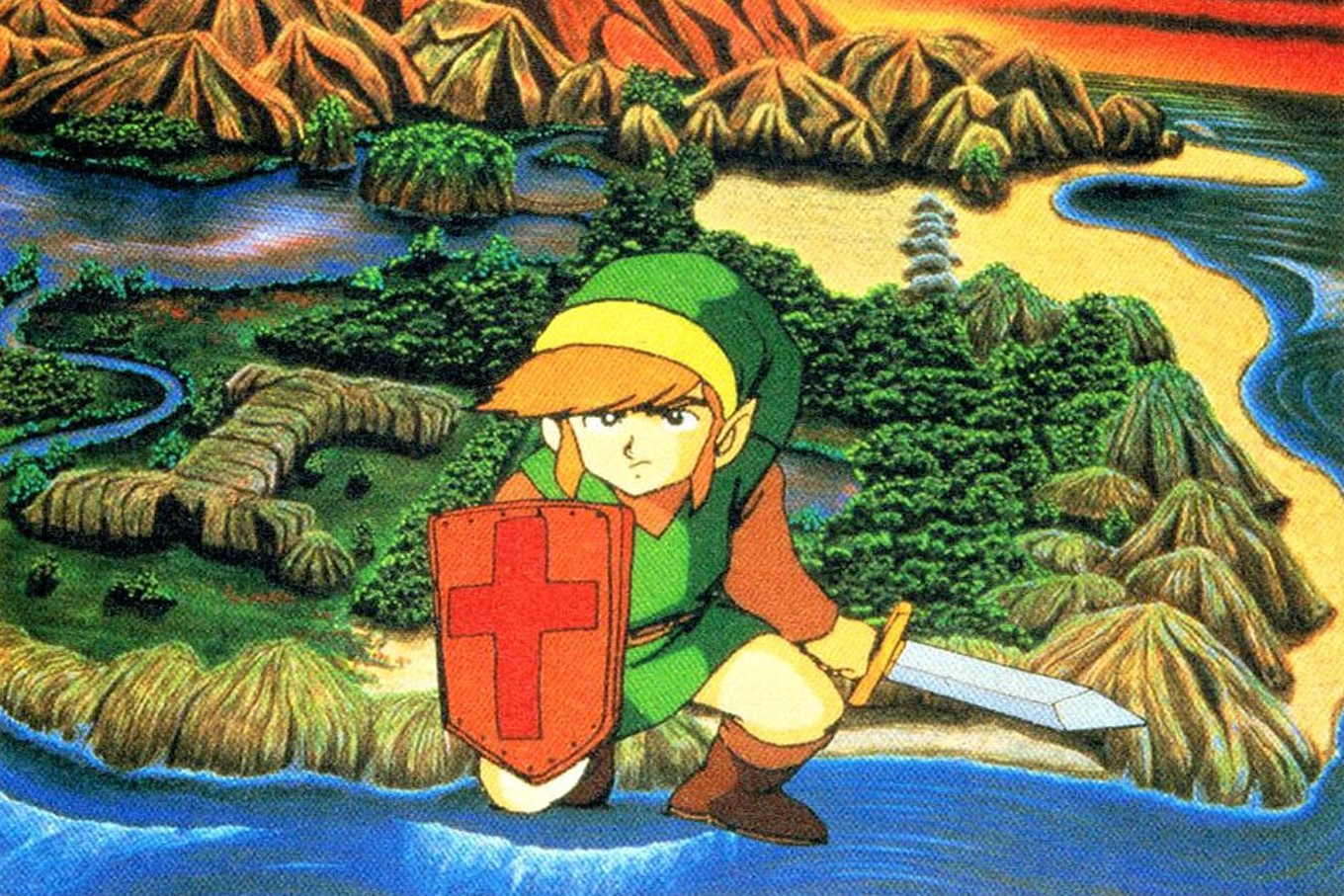
  • The Legend of Zelda (Nintendo, 1986)

    The Legend of Zelda (Nintendo, 1986)

    Developed/Published by: Nintendo R&D4 / Nintendo
    Released: 21/02/1986
    Completed: 17/08/2025
    Completion: Beat it for the second time! 

    Well, I can’t be playing obscure ones all the bloody time.

    I have a long history with The Legend of Zelda, as a lot of people do, though like many–if not most(?)–non-Americans/non-Japanese, my history does not begin with the original game. For me it started with Link’s Awakening, and I wouldn’t play the original until 2004 when I was able to treat myself to a Famicom Edition Gameboy Advance SP and a copy of the Famicom Mini Series Legend of Zelda. I remember being so excited to finally play such an iconic game, picking it up, getting completely lost, dying a million times when struggling with the stiff controls, and then deciding the cute little box was just a nice thing to have on my shelf and moving on with my life.

    I would go on to finish The Legend of Zelda years later–trading off the controller with BancyCo’s Benjamin Rivers–and even wrote a limited zine about that experience (I keep meaning to do a proper “history of exp.” page on this website, and I will, but today is not that day.) That completion–around 2011–meant I classed The Legend of Zelda as “previously completed” on the big “I’m not neurodivergent I promise” spreadsheet I keep, and I didn’t intend to return to it until I read in Wes Fenlon’s excellent newsletter Read Only Memo (worth subscribing to! As long as you’ve subscribed to mine too, obviously) about romhacker infidelity’s SNES port, which could be considered completely faithful while still featuring a bunch of lovely quality of life fixes. And considering I have a wee emulation device I adore, and found myself with a bunch of downtime due to some work I’d picked up that involved a lot of sitting around waiting for things to happen, I thought… why not? It’d make a nice change, and refresh my context for 1986.

    Something that is really important to mention, though, is that this time I came prepared. Now, I can’t remember if the wee Famicom Mini version of The Legend of Zelda came with a reproduction manual or not–I don’t have it to hand–but I’m assuming it didn’t (or if it did, I overlooked it, because what is this, a manual for ants, etc.) but I’ve long learned my lesson since I was downloading Infocom games and being baffled by them–you read the manual. And when you do, well… The Legend of Zelda isn’t baffling at all.

    Well, for a bit. And it’s still hard as balls initially, but we’ll get to that. I was shocked when I read through the manual–and this is true of the Japanese manual too–that it literally explains, cleanly and clearly, all the things you can get, all the enemies you’ll face, gives you instruction on what you’re trying to do, and then includes a complete walkthrough on how to get to the first dungeon (and guidance on how to get to the second.) I guess I’d never looked at the box closely before, where it literally says “Includes invaluable maps and strategic playing tips.”

    I’m reminded of that classic bit of weirdly banal Shigeru Miyamoto lore, that he likes to learn a city by walking it (who doesn’t) and imagined him going “I mean I do start with a map and a destination though. It only makes sense. I don’t just walk out the door and start wandering. I’d get lost.”

    Because, of course, this does all make sense! No one at Nintendo is thinking “well, people will be playing this without the manual in the future.” Back then, the manual was part of the product, and it really does a great job in getting you through the early stage of the game… at which point you can throw yourself into getting properly lost, equipped with more hearts and weapons to survive it.


    Historical Aside

    Christ, what’s going on here? A boxout? I haven’t done one of those before. Now, despite what I’m saying about the manual here and the game being intended to make sense with it, there is a possible–if unlikely–alternative which relates to a rumoured influence on The Legend of Zelda. John and Ste Pickford are quoted as saying that one of the Stampers, founders of Rare, had referred to The Legend of Zelda as “Miyamoto’s rip-off of Sabre Wulf”. Now, The Legend of Zelda actually does have notable similarities to Sabre Wulf and Rare’s earlier title Atic Atac, and one of the interesting things about Sabre Wulf is it comes with a manual that tells you almost nothing at all–I suspect many players didn’t even decipher that they were supposed to collect four pieces of an amulet from it. 

    Separated at birth?

    So if you take the Stampers at their word–and remember, they were tight as fuck with Nintendo, meeting with the company potentially as early as 1985–the complete bafflement I and many players first met The Legend of Zelda with could have been as intended as anything.


    The thing about the opening of The Legend of Zelda though… no matter what, it’s fucking hard. You’ve got three hearts, a weedy sword unless you’re at max hearts (which won’t last long) a shield that barely blocks anything, and you have to get comfortable with moving and attacking only on the four cardinal directions while your opponents seem to move near randomly. Playing it “for real” I died a lot, but the game is also shockingly forgiving for the era, bringing you back to life at the start with everything you’d collected intact–even dying in dungeons just brings you back to the start.

    This has the great effect that exploration and experimentation always feels worth it. You can delve into a dungeon just to see what’s down there, wander to a new area to see what you can find, and do “suicide runs” to get a necessary item if you know where it is. It’d be sort of perfect if the game wasn’t so stingy that you respawn with just three hearts filled no matter how many you have, because they have an abysmal drop rate. (I won’t lie, towards the end I did abuse save states just to quickly cheat at the gambling game so I could keep myself stocked up with potions. Life did eventually start to feel too short.)

    Because the game is so open, it does resort to (klaxons at the ready?) the Xevious/The Tower of Druaga “find the hidden stuff to progress” design. I am inclined to be a little more forgiving than usual here because of the open world and that the game does drop hints, even if they are obscure in Japanese and mangled in English. Back then everyone had a lot more time, a lot fewer games to get through, and the communal solve experience had continued from The Tower of Druaga in arcades to The Tower of Druaga at home (in Japan at least.) But I’m sure many kids, stymied, just took to bombing every wall and setting fire to every bush, and I can’t really justify that–the game definitely doesn’t drop enough hints, and there are definitely too many moments that can bring your progress to a dead-stop without outside help.

    Thankfully, in 2025 I was just able to refer to Phil Summers’ incredible Hand-Drawn Game Guide, which… look, it’s cheating, it’s a walkthrough, but it’s got such an easy, homegrown charm, it’s like your pal is helping you through the game. I can’t recommend it more highly if you’re approaching this game for the first time–read the manual, follow it, then as soon as you get too bored or lost, or just don’t feel like you’re making enough progress, just start referring to it.

    And anyway, you still have to beat the bloody thing yourself! If I have a real criticism of The Legend of Zelda it’s that it just doesn’t feel that great to play. The extremely stiff feeling of combat never goes away, and the enemies that require you manoeuvre carefully to hit them like Darknuts and Wizzrobes can absolutely suck a dick. Wizzrobes in particular, which are fucking everywhere in the last few dungeons. Unsatisfyingly, the end of the game does feel like a bit of a sprint as you basically try and dodge as much combat as possible, because it offers no reward. The terrible health drop rate is quite a negative, honestly.

    Saying it doesn’t feel that great probably sounds completely disqualifying for The Legend of Zelda, but I do have to mention again that it exists in the context of 1986 in Japan, and was still close to cutting-edge when released just over a year later in the rest of the world. Despite what the Stampers might have said, and even despite the existence of things like Ultima IV, at this point no one has put as complete a package together as Nintendo has. For the second time after Super Mario Bros. they’ve created something new out of whole cloth and no one else even saw it coming.

    Will I ever play it again? After all of this, I’m suddenly reminded what I was actually going to do when I intended to “replay” this was to play through BS Zelda for Satellaview. Oops. Well, I can still do that whenever I like.

    Final Thought: The craziest thing about Nintendo creating something this new, this different, this polished?

    They’ll do it again in a matter of months.

  • Pro Wrestling (TRY, 1986)

    Pro Wrestling (TRY, 1986)

    Developed/Published by: TRY / Nintendo
    Released: 21/10/1986
    Completed: 05/04/2025
    Completion: Defeated The Great Puma!

    Nintendo’s output on the fledgling Famicom/NES is… patchy. And nowhere is it more patchy than when it came to video game representations of sport, where they can somehow manage to literally solve golf game design and then months later be willing to put their name on things like Soccer and Volleyball, which are, frankly, absolutely horrendous. Even with Nintendo warming up by late 1986–they’ve just put out Metroid, for example–you can’t help but expect Pro Wrestling to be a bit of a dog, considering the sport (or at least, sport-adjacent entertainment) has a lot of terrible, lazy video games to its name, and this specific release is most famous in gaming circles for having a win screen that declares “A winner is you!” which probably was funny once.

    Well, it isn’t a dog! A bit like how Nintendo lucked into working with Satoru Iwata on Golf, with Pro Wrestling they also managed to hire someone who knew exactly what the fuck they were doing: Masato Masuda.

    Masato Masuda–who passed away in 2014 at the untimely age of 48, sadly–is best known by the wrestling hardcore as the creator of Fire Pro Wrestling, generally considered the greatest and most important wrestling video game franchise (even by people who love AKI’s wrestling games like me) and according to an interview in CONTINUE Pro Wrestling was made “mostly by [himself]” with “someone else who did the graphics.”

    Although not a sport that would see as many games released as, say, golf, wrestling was reaching its zenith in popularity worldwide, so before Pro Wrestling there were several high profile releases from Sega and Technos that I’m sure Masuda will have tried, and two wrestling games would appear before this on Famicom: Tag Team Match: M.U.S.C.L.E. and Tag Team Wrestling (both of which would appear on the NES before Pro Wrestling, too.)

    So–not having played any of those–I can’t make any educated claims that Masuda was “solving” anything about wrestling games with Pro Wrestling. But whatever prior art existed for him to pull from, Masuda understood a few things:

    • Pro wrestling is about unique characters.
    • Pro wrestling is about grappling–and the wide range of moves that result.
    • Pro wrestling isn’t about winning or losing–it’s about ebb and flow.

    Now, I won’t pretend that Pro Wrestling clicked for me immediately. It has the immediate problem of any 2D games where you can move in and out of the screen–not being exactly sure where you need to be to connect with attacks–and the systems by design are a little obscure. Succeeding in pulling off moves from grapples can feel a bit random, too. Does initiating the grapple confer advantage? Does it even track who initiates? Actually, how do you initiate a grapple? Is it timing? I’m button bashing, but sometimes I don’t go as hard and still win?

    As far as I can tell–from nosing around a bit–the game relies on a stamina system with regeneration, with lots of “triggers” based on stamina levels. So you’re basically trying to wear down your opponent’s stamina enough that they don’t get up long enough so you can pin them, but if you’re slow–or they start beating you up, their stamina recovers.

    (This matters because as you play through the game, enemies seem to gain stamina and regenerate faster.)

    The genius of this system is that it ties into the ebb and flow of a “real” wresting match perfectly. You have to wear down your opponent to pull off bigger moves, but they can also suddenly go on a tear by kicking you in the face before you manage the grapple you’ve been building towards. You can misjudge when to pin, get a kick out, and have the entire match turn on its head. And vice versa! If a match isn’t going well, it’s can sometimes only take a single correct move to swing the momentum back.

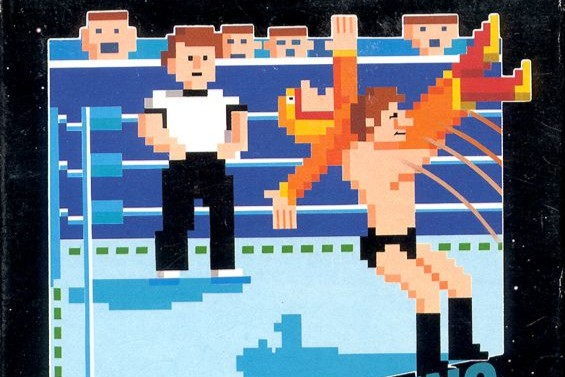
    Pro Wrestling also features, well, all the actual features of a wrestling match. Not only is the referee who has to run into position, you can jump of the turnbuckle, throw your opponent out of the ring and then leap onto them, get ring outs, and so on. The building blocks are all there for every match to tell a story.

    This is aided, of course, by the game’s memorable characters such as Star Man and The Amazon (famously inspiring Blanka.) Each character has individual special moves–the Amazon’s all illegal moves that can end with him begging innocence to the referee, amusingly–and are inspired by real wrestlers. Fighter Hayabusa is transparently based on Antonio Inoki for example, though Giant Panther will always be debated–I suspect he’s actually based on Fritz Von Erich, the patriarch of the Von Erich family due to the use of the Iron Claw, that he famously feuded with Inoki and that it doesn’t look like any of his sons–but that’s pure conjecture.

    But the point is that with whichever character you choose, there’s something special to work for, and it adds to the narrative you create through play–you survive the Amazon cheating like crazy, pull off the iron claw and pin! The crowd goes wild!

    I won’t lie–often when I’m playing these older games, I’m sort of just… working through them like a job. But Pro Wrestling? I just played it! Once I was comfortable with how it played, I settled on King Slender (the Ric Flair analogue) because he had an easy move to pull off (the backbreaker–he’s the only character with a move you can pull off by pressing A only from a grapple) and had fun until I hit a genuine brick wall.

    Pro Wrestling isn’t a long game–it’s built around winning five matches to become the VWA champion, then ten title defenses until you take on “Great Puma” to become VWA/VWF champion–three loops of the roster. But by the third loop your opponents are unstoppable–they regenerate stamina quickly, pull of grapples faster. I couldn’t go any further.

    And really, that’s ultimately Pro Wrestling’s weakness–it all works up to a point, and then as a player you have to go “ok, how can I cheese this.”

    For me, that was starting again with Fighter Hayabusa, abusing his “Back Brain Kick” and ring-outs. While it’s not a guarantee, if you can get your opponent on the mat and then position yourself right (Hayabusa’s midriff around where your opponent’s body is lying) you should be able to kick them in the head as soon as they stand up, and spamming this at the start will alow you to either start pulling off grapples or let you throw them out of the ring and then just run them into the barriers till they can’t get up quickly enough.

    It would be some demoralising, terrible wrestling for the audience, but at least for me it’s what I had to resort to for the last chunk of matches.

    However–that’s if you’re determined to beat this (maybe you have a blog or something where you’ve tied yourself to doing that.) I assume most players who played this either just had fun playing a wrestling career–it does track wins and losses, and you can just play it–or took part in two-player matches, where all the obscurites of stamina and grappling probably lead to absolutely epic battles. I certainly haven’t played a better two-player game on NES or Famicom by this point in 1986–and I may not for a while!

    Will I ever play it again? Unlikely, but not impossible!

    Final Thought: A funny and strange fact about “A Winner Is You” is that it isn’t even the original win quote. Seems that in the original release of this it just said “Winner Is You” and in a later revision they “fixed” the English by just sticking an A at the beginning.

    Which is a really strange fix! You’d assume someone who actually spoke English might have pointed out that’s not better–and it’s not like “You Win!” has a character limit or something.

    The fix also seems to have changed a “bug”–that if you play King Slender it takes longer to get to the first championship. This was something I didn’t mind and originally assumed was “balance” because King Slender’s back breaker seems so powerful–though when I got later in the game and realised I could basically never pull it off, my opinion on that changed somewhat…

  • Code Name: S.T.E.A.M. (Intelligent Systems, 2015)

    Code Name: S.T.E.A.M. (Intelligent Systems, 2015)

    Developed/Published by: Intelligent Systems / Nintendo
    Released: March 13th, 2015
    Completed: 25th April, 2017
    Completion: Finished all the levels, collecting all but eight of the gears.
    Trophies / Achievements: n/a

    Here’s another Nintendo failure, then! You know, I do like to complain that Nintendo only seem to pump out games in just a few franchises (Mario, Zelda, recently Fire Emblem) but here’s what happens whenever they put anything else out: it tanks. So no wonder they’re getting the idea that people just want the same thing over and over until they run it into the ground. And honestly, sometimes it’s fair that the things they release fail, because they’re insanely misguided (Metroid: Federation Force) but then it’s also sad because Nintendo then learns the wrong lesson from them (“people hate Metroid”).

    I mean, the lesson they might have learned here—Intelligent System’s attempt at a Valkyria Chronicles-esque third-person strategy title—is probably “don’t let Intelligent Systems do anything except Fire Emblem” because bloody hell I can’t keep up with the number of Fire Emblems that have come out. (Remember Advance Wars? It’s been almost ten years, guys.)

    And, frankly: it’s a shame. Because I liked Code Name: STEAM. I know, that’s insane. I hate everything. And let me state as caveat that I immediately installed the patch that allows you to speed up the enemy turns. But Code Name: STEAM is a completely serviceable strategy title that—outside of a few frustrations—I found completely pleasant.

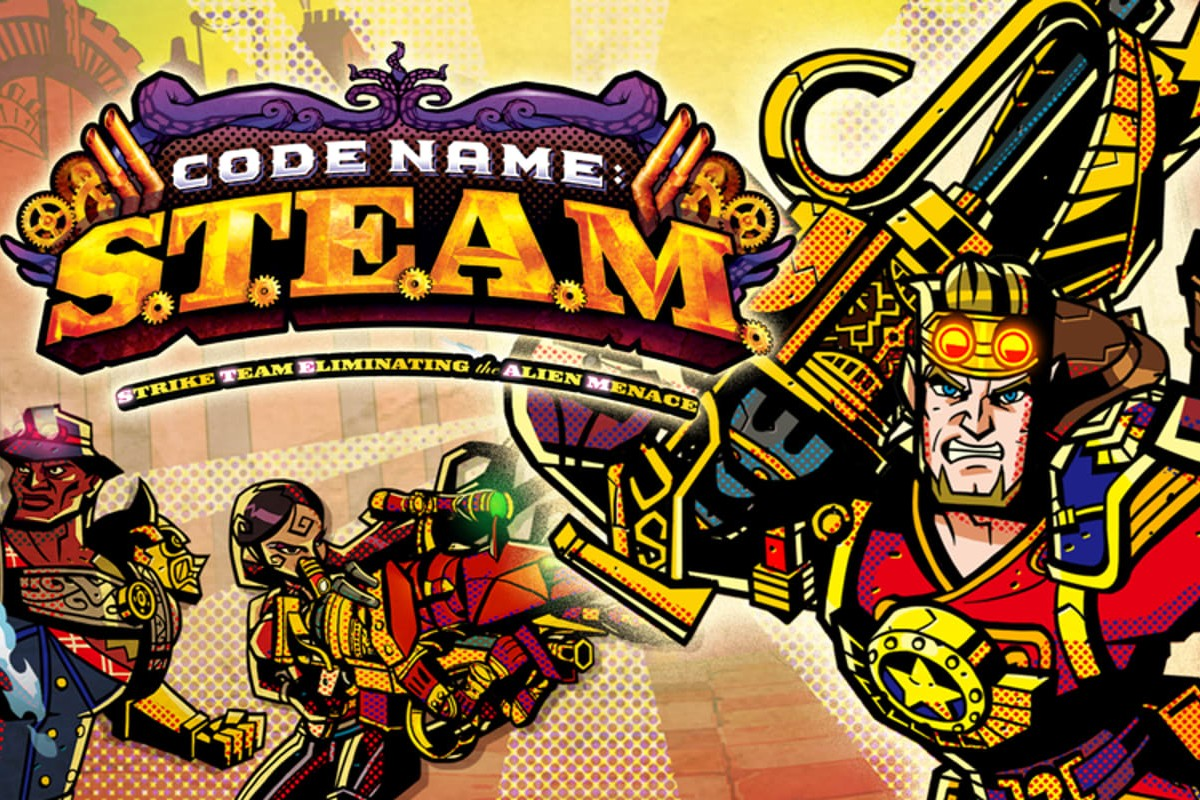
    Now, I can agree: it’s a bit weird looking. It doesn’t manage to nail the comic book look it wants, and the enemies are somewhat… dull. However, it’s got a weirdly interesting and diverse cast drawn from literature. It gets some points, for example, for gender-swapping Zorro (was this secretly why it failed? Neckbeard boycott?) but loses some for having Dorothy bare her midriff (why?) but maybe it gains those back by including Queen Califa. I’m not a perfect arbiter of points, ok?

    It does have some other flaws. Many (most?) people complain about the lack of a true tactical view, but that didn’t bother me because it’s obviously not what they’re trying to do. With free movement before you commit (hindered by enemy overwatch attacks), it’s a game about careful scouting and much more about the feel of being in a small attack squad. I do think the game is much too stingy with its steam-based action points, meaning you travel through levels very slowly, and the game doesn’t have any good sense of a progression of power—all of the unlocks are similar in power levels, just different, when it could have done with more steam being offered as you unlock new boilers (for some reason, most boilers don’t refill fully each turn, and the ones that refill slowly that you unlock I found unusable. Rather a big misstep, I feel.)

    I’d say the main mistakes they’ve made are in working against the slow, methodical play style that the limited action points engender. To mix things up they add a lot of “pressure”—first with baddies that spawn in (behind you, usually) which is a mild irritant, and then just the worst: “spotter” baddies in levels featuring mortar attacks.  They spawn and you have to get out of their line of sight or take a severe hit. Of course, so you can’t stall, you can’t kill them (just move them, hopefully out of sight, but it’s generally awkward to do) and this is insanely frustrating with the limited amount of action points on offer. There are certain levels where you will be harried to the point scouting is impossible, and you get situations where you stumble forward, get shot by a baddie with knock-back, and then land directly in the path of the spotter you thought you were escaping, and die by mortar. Oh, and there’s a couple of difficulty-spike levels outside of that: one with mounted guns that don’t have a clear range (frustrating) and another with a bunch of exploding enemies dropping in that I found… ragey.

    Honestly, at least one of these levels had me considering stopping playing, and that’s really awful, because the game is so close to being an all-round nice time like Valkyria Chronicles. The final boss is a pain in the arse too, admittedly—but at least it’s nothing like the final boss of Fire Emblem: Shadow Dragon, my last dalliance with an Intelligent Systems game.

    However, the levels in which it works—it really works. In general the map design is clever, with a good mix of complex indoor and outdoor spaces, and while generally it’s a bad idea to split up your team of four, the level where you’re forced to do was a particularly fun one, I thought. There are far more fun levels than frustrating ones, it’s just the annoying ones are going to stick in your craw (I mean, they’re ultimately why I didn’t collect all the gears you can find in levels, and I wanted to.)

    I’m gonna say that it’s weird to me that Code Name: STEAM didn’t get a fairer shake when it was released. It was slated by almost all reviewers with them almost all concentrating on the (pre-patch) lengthy wait between turns, and I guess that one mistake wrecked any chance of it managing critical acclaim at least.

    Well: It’s got the only critical acclaim it truly needs: that I liked it. I mean, I didn’t love it or anything but I had a nice time. That should be more than enough!

    Will I ever play it again? I won’t, but the sequel they tease at the end I would have played, except it shall never exist.

    Final Thought: I recommend this, actually. I’m gonna… recommend it. Really! Because when I picked it up it was $5, and pretty much any store is gonna have it for pennies. You can do so much worse.

    This essay is featured in Every Game I’ve Finished 14>24.

  • Kirby’s Epic Yarn (Good-Feel, 2010)

    Kirby’s Epic Yarn (Good-Feel, 2010)

    Developed/Published by: Good-Feel / Nintendo
    Released: October 17th, 2010
    Completed: 28th November, 2014
    Completion: Finished all the levels. Didn’t 100% collect everything or anything, but close (cannae be arsed to boot it up to find out exactly how close.)
    Trophies / Achievements: n/a

    Do you like Starbucks? I really don’t. In fact, I go absolutely out of my way to not use Starbucks. I hate it when I’m at, say, an airport, and the only way I can get a hot tea is from a Starbucks. I mean, look at that, I’ve written “hot tea” there because I’ve gotten so used to being beaten down by Americanisations from places like Starbucks that I don’t just say tea. Thing is, it’s not like Starbucks is that bad. It’s bland, and competent. It’s really, when you get down to it, not offensive.

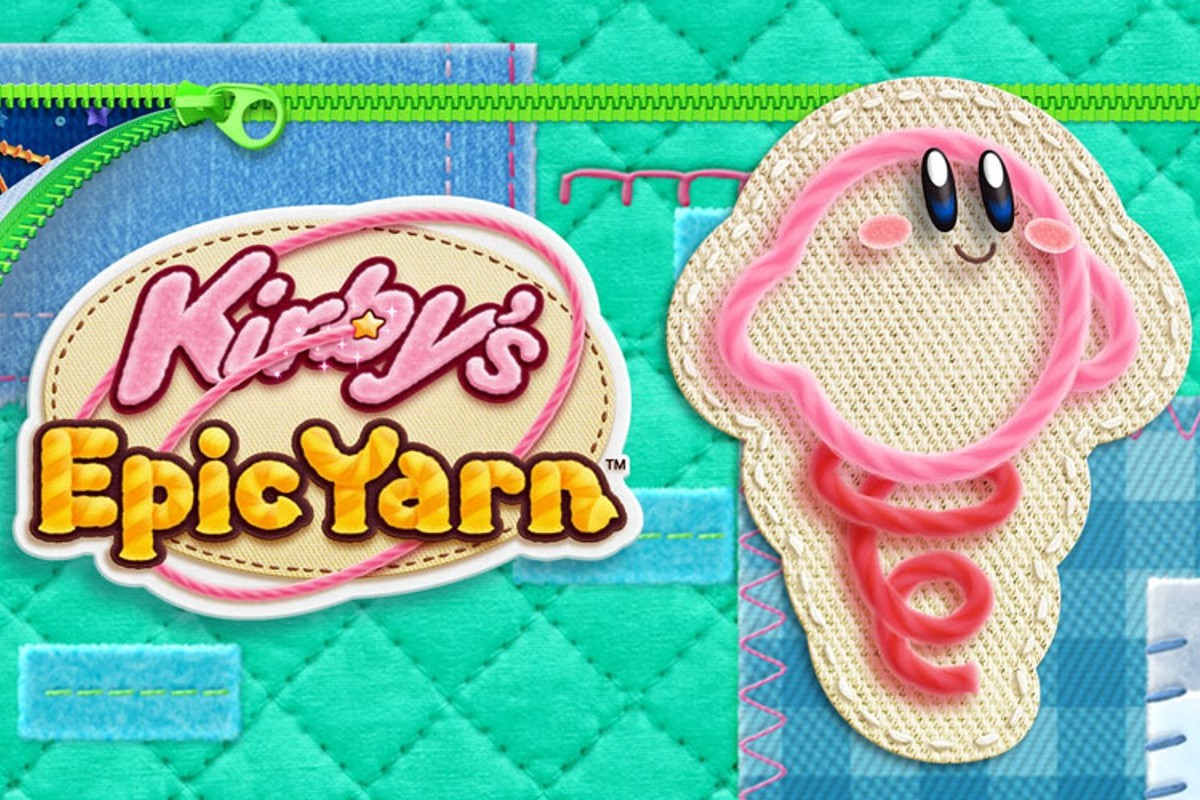
    You might want to guess here where I’m going with this, but Kirby’s Epic Yarn isn’t Starbucks. No. What Kirby’s Epic Yarn is like is… well, imagine a person who loves Starbucks, right? They love it. And so they decides to start their own coffee place, very much based on Starbucks. Their coffee shop attempts to have Starbucks-style coffee, Starbucks-style music, Starbucks-style decor. But, by virtue of being made from the sweat of an individual, it doesn’t come out quite that way. The coffee is a little more interesting. The music is some interesting jazz. And the decor has a really cute, handmade feel. This person hasn’t got anything wrong, they’ve just made something much more personal, more “real” despite basing their design on something bland, corporate and forgettable.

    It’s the kind of place that you’d go—hell, I’d go—and I wouldn’t hate it, you know? I’d appreciate the cute touches that they put in. The cushions, or the art. I’d find myself having a perfectly pleasant time there. None of that edge of irritation that Starbucks engenders—where it’s so bland, you feel annoyed that it’s been calculated to not annoy you.

    But I’d, without really thinking about it, not bother to go back.

    That’s Kirby’s Epic Yarn. It’s cute, full of lovely touches. Genuinely sweet, really. But the core… well it’s just another forgettable 2D platformer, isn’t it? If you’re going to put all this effort into making something lovely, please don’t base it on a Starbucks.

    Will I ever play it again? Nope. And this goes on the sad pile of “Nintendo games I won’t keep” which is rare indeed.

    Final Thought: I honestly thought Jeff and Casey Time had taken music from this game. I was pretty sure they’d lifted one of the tracks… maybe Lava Landing? (which is amazing, give it a listen!) but it turns out that it’s an original piece of music, The Infinite Tea Time. Also amazing but really nothing like Lava Landing. This is therefore proof I, and you, should watch Jeff and Casey Time again because it was really good and it’s clearly been too long.

  • Steel Diver (Nintendo, 2011)

    Steel Diver (Nintendo, 2011)

    Developed/Published by: Nintendo EAD Group No. 5, Vitei / Nintendo
    Released: March 27th, 2011
    Completed: 2nd November, 2014
    Completion: I finished all the missions. Didn’t bother my arse with the time trials or anything like that.
    Trophies / Achievements: n/a

    I’ve taken a while to write this one because I felt that if I sat down and wrote my little… well, whatever it is these are, reviews, or journal entries or summat, right away, I’d just be going fucking mental here. Because this is one of those stupid games where it’s a total breeze right until the end, where the final boss is just totally stupidly hard for no particularly good reason, and you just end up wanting to snap your god damn 3DS in half, hold it tightly in one hand, fly to Japan and then shove it right up the arse of the director of the game (in this case, Takaya Imamura.) Now, I don’t know where Takaya Imamura lives exactly and he apparently produced F-Zero GX, so that would, probably, be a bit of an overreaction. However, I’ve noticed that Nintendo really, really love stupid difficulty spikes in their second/third tier releases (Super Princess Peach, for some reason, really sticks out in my mind… it was years ago I played it and I still want to fly to Japan and shove a broken DS up at least one arse) so I suppose I should be used to this by now.

    Anyway. Steel Diver was a weird launch game for the 3DS that no one liked, in fact, no one liked it so much that I bought it for three dollars. Three dollars sealed. Seemed like a bargain, I thought. After all, on the back of the box it looks like a cute little sub sim thing! I think I bought Pilotwings Resort for about a fiver at the same time and that was delightful, just delightful, so how bad could Steel Diver be? (Let’s forget about the boss, for a minute.)

    It’s bad. It’s bad because it, in classic “we have this input form, we have to use it” style that you’d have thought Nintendo would have been over by the time of the 3DS, you control it totally through the touch screen. Which turns a submarine sim into a game that’s entirely about choosing to either move the slider that’s “depth” or the one that’s “speed.”

    Sometimes you have to fire torpedoes! But mostly you’re trying to make sure you don’t bump into things by going “erk, going to fast, have to slow down” or “crap, the sea floor is going up, have to raise depth.”

    It’s stupefying. Brilliantly, the game is designed so you never actually have to fight enemy subs (just go past them, there’s no reason to fight them, no score or points or anything) which I guess is “realistic” but sure does make them seem pointless. And when you do have to get into a fight, using the stylus to push some sliders slowly and fire torpedoes… it’s like using the 3DS stylus to get good bits of jam out of a mouldy jam jar. A tedious and lamentable thing to find yourself doing.

    Honestly. Steel Diver isn’t a game super worthy of rage. Because you shouldn’t be getting to the point where you’re fighting the last boss. Just about as far as you should go is opening it to get the Club Nintendo code and then closing the box again forever.

    Will I ever play it again? ha ha ha ha [begins to choke on own mirth]

    Final Thought: Y’all ever play that Radar Mission? Steel Diver is someone at Nintendo going “hey remember we released a sub game for the Game Boy when it came out? That was a good idea, lets do it again.” Steel Diver even comes with a weird, off-brand Battleships-a-like that you can play with another 3DS owner, but you don’t want to do that because it’s the equivalent of asking a friend if they want to sit in a ditch and eat bogies with you.

  • Fire Emblem: Shadow Dragon (Intelligent Systems, 2008)

    Fire Emblem: Shadow Dragon (Intelligent Systems, 2008)

    Developed/Published by: Intelligent Systems, Nintendo SPD Group No.2 / Nintendo
    Released: February 16, 2009
    Completed: 10th March, 2014
    Completion: Got all the way to the final level, gave up and watched the ending on YouTube.
    Trophies / Achievements: n/a

    It happened! Yes, this is a rare occurrence—admittedly one that’s more usual with Japanese games of an RPG or strategy persuasion, of which this is all of the above—but here’s a game where I got to the end boss, clunked against it without any acceptable way to progress, said “fuck that” to reloading an earlier save and grinding or some other tiresome solution, and just watched the ending on YouTube.

    And I was so proud of that time I toughed it out and beat the end boss of the original Persona, too.

    It’s sort of a shame! Because there was this… well, I’ll be honest and admit it was brief, but there was this brief period where I was sort of into Fire Emblem: Shadow Dragon. In fact I was thinking “heck, everyone likes Fire Emblem: Awakening so much, and this is actually ok, so I’ll probably play it some time.”

    Now? I doubt that. Because nothing dredges up all the mistakes a game has made than a bad ending. So let’s discussing!

    Fire Emblem: Shadow Dragon is the DS remake of the very first game in the Fire Emblem series, which made it feel like a pretty good place to start (especially as it’s the introduction of Marth, the first Fire Emblem character that was seen outside of Japan, albeit in a Smash Bros. title.) Unfortunately, it’s obvious that as a Famicom game originally, the first Fire Emblem was pretty basic. All the things it seems people mention about this series, like characters talking to each other in missions, are missing here. That of course shouldn’t be a problem, because the strategy core—very similar to Advance Wars—should be what you care about, right?

    Hmm. There’s a quirk! And if you’re familiar with the series, you know it already: if a character dies, they die forever. This is clearly intended to give weight to the strategy, but sadly, it doesn’t really work. You aren’t going to care about the characters, you care about how much you’ve levelled them up, and while the game does feed you new characters quite consistently—obviously to shore up your forces—you are never going to want to use them because they are never going to be better than a character that’s been with you for a while.

    So what this means is that you’re going to grind up your characters to get them to the point where it’s going to be hard for them to die (to the point, likely, where the Advance Wars-style “lances beat swords, etc.” rock paper scissors aspect become totally pointless.) Which means doing what I did, which is carefully sending your favourite characters into the arenas that are found on certain levels, and repeatedly fighting until they’re over-levelled.

    It’s boring! But, and here’s the but: once I’d over-levelled them just enough, the game became pleasantly strategic. It wasn’t an Advance Wars, no (I thought the graphics were ok, too, then I saw how beautiful the GBA Fire Emblem animations were recently and that took the shine off a bit) but it was fine. I can’t begin to imagine how unpleasantly hard the game would be if you were letting units die noble deaths or not abusing the arena, however.

    Or maybe I can! If Marth dies it’s game over, so I hadn’t been using him on the front lines, and he was woefully under-levelled by the end. The final boss? Well… The only person who can use the ultimate boss-killing weapon is Marth. Who would die after one hit, while my other once over-levelled heroes were barely able to keep on top of the constant reinforcements. So I should actually have never stopped grinding at some point earlier, removing all the strategy/challenge from the majority of the game just so I could finish the final, ludicrously unbalanced level. Great.

    Will I ever play it again? No.

    Final Thought: Pretty sure I could get lots of responses here about how I could have used a particular other character to kill the boss, or do some particular combo, or whatever. Or maybe to promise me that Awakening, with the ability to turn off permadeath, is worth playing. It’s too late, folks!