Tag: mass effect

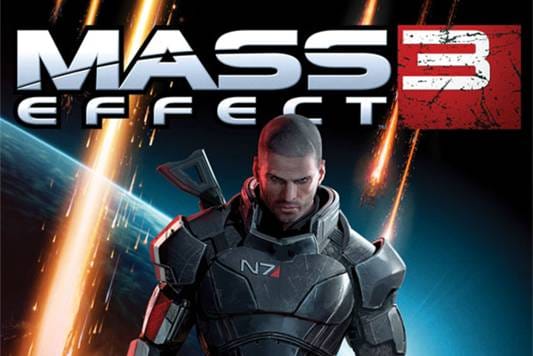
  • Mass Effect 3 (BioWare, 2012)

    Mass Effect 3 (BioWare, 2012)

    Developed/Published by: BioWare / Electronic Arts
    Released:
    March 6th, 2012
    Completed: 7th May, 2015
    Completion: Completed it with one of the good (but not best?) endings. Or something.
    Trophies / Achievements: 640/1550

    So there’s me, right at the end of Mass Effect 3, and I’m like “hmm.”

    I’m like “hmm” because I realise that even though I thought I had installed the special BioWare-makes-the-fans-happy-really-sorry-how-abrupt-the-ending-was-please-stop patch, I, uh, hadn’t. And I really, really couldn’t be arsed waiting for it to install and then playing through what might turn out to be a significant chunk of the game again to see the “proper” ending.

    So I didn’t and watched my ending “again” on YouTube with all the stuff they added.

    Now. I’m not really a fan of… uh, fans. In general, I’m one of those sorts that thinks that authors should put out their work exactly as they want it to be, and be done with it. The author dies to the audience, the audience, to the author, never existed.

    However, if the ending of Mass Effect 3 was as BioWare intended, they’re fucking idiots. No, lazy idiots. The extended cut is a botch job—stitches things together just enough that you’re like “yeah, fine, whatever” but it’s actually quite embarrassing to think they thought the original pass.

    (Whether that’s more embarrassing than fans peeing their pants in such an astonishing baby-tantrum that they went to the Federal Trade Commission in the US, I’m not sure.)

    Speaking of authors—BioWare is interesting, isn’t it? If you were to ask me who the main creative force of a lot of games were, I could name a person quite easily. Fable III—another example of a game with a garbagey ending and promises it couldn’t keep—you can place your anger at Peter Molyneux’ door. But with Mass Effect 3, or any BioWare game, I’d struggle to name any person who worked on it. Wikipedia says this bloke Casey Hudson was the director, so I’d assume the buck stopped with him. Never heard of him.

    (To move on from authors to auteurs, if you’re wondering, I don’t feel the auteur theory fits for every work. But even in a huge video game, I think it’s important that one person or a small group of people shepherd the work into a consistent whole. Otherwise you end up with drivel. And we often end up with drivel.)

    In this case, I wonder if the buck stops with Electronic Arts. EA are generally parodied as evil (I think they’re still topping the worst companies list, aren’t they?) despite the fact that everything has consolidated so much when you get down to things they’re just another massive corporation (so, evil, but no more or less evil than any of the rest of that shower.)

    Here, however, the corporate bells and whistles on Mass Effect 3 are egregious. Mass Effect 2 might have had some DLC characters and that kind of shite—pay another $20 or miss out on three chapters from the latest Game of Thrones book, imagine it—but Mass Effect 3 makes the decision that, you know, if you really want to get the best endings by raising your “galactic readiness” you should spend a lot of time playing multiplayer. And you should play the tie-in iOS game. Oh, and the tie-in app!

    If you don’t do this—or, if like me, you don’t actually realise you’re supposed to do this and can’t really do this, because it’s several years later—you’re fucked (I think you can get the best ending if you 100% the game with the extend cut patch, but I’m not totally sure. I certainly wasn’t sure what I had left over to do to get it.)

    So what you have here is a story, a narrative, a creative work, whatever you call it, absolutely and totally at the whim of a corporate treatment that says something as vapid as “we need people engaging with the brand in a holistic manner across multimedia.” Or something. Mass Effect 3 becomes “content” to be exploited.

    It’s a disaster, and to be honest, the majority of Mass Effect feels like a franchise spinning it’s wheels. No matter how you get there, you get to an ending that I characterise as “the Deus Ex.” If you’ve ever played a Deus Ex game you probably know what I mean (they all do this): you’ve just made a million decisions through the game, and right at the end they give you two or three options, usually represented with big buttons or something, none of which are exactly “good” or “bad” and none of which have anything to do your choices previous. In fact, the ending of Mass Effect 3 is almost exactly the same as the original Deus Ex if you think about it.

    Even more so than Deus Ex where it’s a let-down, here you’re like “what? This has nothing to do with the rest of the game at all???” It’s baws.

    (If you want to complain that actually, the endings you can get do relate to your decisions because of the way you collect “war assets,” there are still basically up to three endings. Everything else is so mild as to be meaningless.)

    Anyway, my point isn’t that the ending is bad and therefore I’m annoyed. My point is that I don’t think Mass Effect 3 could have been good in the culture it was developed in. Who cares about quality when you’ve got content to exploit?

    Will I ever play it again? Ha ha no. And it has made me doubt I’d play Mass Effect 4 when it inevitably comes along.

    Final Thought: You might have noticed that despite being frustrated by its problematic aspects I didn’t dislike Mass Effect 2, while I consider this one a disaster. Well, Mass Effect 3 has improvements—it looks better, combat is evolved—but it’s just not compelling. It gets off on the wrong foot immediately, I think. The stakes are so comically high—the game begins with Earth being invaded—that flying back and forth and doing missions and stuff just doesn’t seem to make any sense. I was constantly like “wouldn’t everyone on Earth be dead already?”

    Yes. I didn’t find a space opera “believable.” But the whole things ultimately makes about as much sense as Fable III and if that isn’t a sick-ass burn I don’t know what is.
  • Mass Effect 2 (BioWare, 2010)

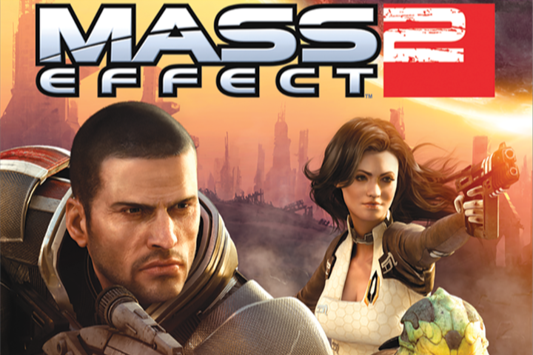
    Mass Effect 2 (BioWare, 2010)

    Developed/Published by: Bioware / Electronic Arts
    Released: 25th January, 2010
    Completed: 26th March, 2015
    Completion: Everyone survived the suicide mission.
    Trophies / Achievements: 860/1355

    A few weeks ago I had a dream—one of those sort of generic dreams where you find yourself doing a test, but you can’t read the pages—but something about it involved me starting Mass Effect 2. I can’t remember in what context or why. So, not one to go to war with destiny, I booted it up.

    Here’s an important fact: I didn’t like Mass Effect. My main memory of Mass Effect is that it was boring. Boring shooting. Boring dialogue. Boring bumping around on boring planets, before boring missions in boring, samey (sometimes exactly the same, I remember) spaces.

    However, I’d made it through the whole game so I imported my hero into Mass Effect 2 (after changing his face significantly, because he was a rum looking chap and that’s no mistake) and got down to work of saving the galaxy again or whatever.

    Now here’s where the article gets a bit… I don’t know. It’s the kind of thing I think can easily be discounted as sort of fannish complaints (despite the fact I wouldn’t consider myself a fan) relating to one of the biggest factors of the Mass Effect series and (in general) Bioware’s output—the romance system.

    You see, something I definitely respect about the Mass Effect games is that adherence to the idea that your choices stick and have consequence. In terms of game franchises that go to some effort to tailor the experience via the player’s actions from one game to the next I can more or less name this and… The Walking Dead? I’m not even sure if that’s true for The Walking Dead offhand.

    So here’s me, playing the game. I’ve shot up to my cabin on the Normandy, I’m wandering about… and I’m like… “that’s weird. Why is there a picture of Liara on my desk?”

    Liara is one of the cast in the first game; I didn’t romance her. Actually, I had sort of unintentionally conspired with the game with a really retrograde past for my hero—I’d romanced Ashley Williams (the one other possible romance target) only to, at one critical point of the game, let her die because—I can’t remember actually, but it was critical to the galaxy or whatever.

    So there’s my hero with his sad and clichépast—the woman he loved, dead because he chose the galaxy over her… except the game has decided that actually I’ve kept a torch for Liara instead.

    And it didn’t make me particularly happy that on meeting Liara during the game, she made out with me. I didn’t consent to this. I feel… genuinely uncomfortable.

    You might consider that a massive overreaction. After all,  I actually recollect the Mass Effect team—at some point, possibly while doing press for 3—discussing that Commander Shepard isn’t the player, but a character the player is guiding (this was in contrast to a more traditional RPG like Dragon Age.) It’s something that’s kind of reflected in the weirdly fuzzy dialogue, where, for some reason, it gives you lines of dialogue to choose from, and your character then might say something almost entirely different (I’ve never understood why they didn’t keep the selections down to verbs: “comfort” vs “admonish” etc.) Yet it’s a tension I ignore—Commander Shepard is me, whether they like it or not. So when something as important as my past is altered, when decisions are made for me that I have no input on, my trust has been violated.

    And this got me thinking about consent in these games. Because romance is treated as a system, and I know what they’re aiming for—that action movie scripting; the hero, the admiring female (or male! Shepard can be played as a lady) who falls into your arms before the suicide mission. The problem is—and many people have commented on it, I’m not pretending I’m somehow extra insightful—that your potential paramours basically just stand about and wait for you to force their interest. Talk to them, say the right things enough, and get some action. Push in compliments, get out sex.

    The women in this game stopped being characters, or people (and they have to be people, they have to be characters) and became playthings. Here’s me sitting, leading all three up to just the point where I have to “commit” to one—not really sure that I will commit, because I’m still annoyed about Liara—and in fact, I’m probably more interested in “Yeoman Kelly Chambers” who offensively doesn’t even get to be a real romance option because she’s not a main character.

    It actually gets to this point where two romanceable characters—Jack and Miranda—have a fight. Now, for a little background, Jack is the survivor of abuse. She’s a character that I’m not sure of the quality of, to be honest—the classic “survivor of abuse that’s really mean and difficult but also promiscuous and risk-taking, because she’s so damaged”—but when given the option of defending Jack—abused by the corporation, Cerberus, Miranda represents—or siding with Miranda who (for no good reason) chose to make a point about how “it wasn’t really Cerberus” I sided with Jack, rather than take the special magic “everyone is made happy” Paragon option.

    As a result, I could now never romance Miranda. That’s it, the algorithm decided I didn’t play the game right. I’d pushed in enough compliments but I made a nuanced choice. No sex for me!

    This kind of interaction has none of the pleasure of… you know, actually interacting with another human. The idea that I could at least make Miranda “loyal” (important to the wider, non-romance game system) again if I made all the most goody-two-shoes choices to eventually unlock a dialogue choice… it’s ridiculous, boiling Miranda down to a vending machine I have to reset my pin code to use. And consider that I clearly engaged with the story and characters to the point that this bothered me. Why put systems in place where I have to “game” my interaction with characters I saw as people to the point where I see them as robots?

    And if you engage with the “game”, the romance narratives feel dangerously naive. Have sex with Miranda and you’re treated with the saddest, 80s soft porn sequence, but your sex sequence with Jack is the culmination of the story where your interest in her “validates” her and she cries as you penetrate her with your magic penis that makes people move on from decades of abuse. That’s awful.

    Mass Effect 2’s romance system feels like… well, it feels like a joke about a programmer’s idea of how love works. The kind of thing someone with absolutely no experience would make if they tried to boil it down to the most basic systems. And as a result, consent gets lost in the shuffle. You can make that beautiful woman like you if you just say the right things, whether she’s interested or not. You decide. They don’t. And one dialogue choice “switching off” romance doesn’t make it any better; it’s still my action that made them perform one way other the other, and the system breeds entitlement of the player to the character they want; you just reload rather than role-play.

    (And look. It just doesn’t work the way it does in an action film anyway, unless we’re talking about something as stupid as a Bond film, because not every woman you see in an action film immediately has a lob on for the protagonist, and then waits for him to fire into her passively. Yes—I’m actively claiming your average action film has women with more agency when it comes to romance than Mass Effect 2. Things are different if you play as a female character, and I’ll even admit your average action film doesn’t have as many women in it as Mass Effect 2, but the issues of system and consent exist even if you’re a female Shepard firing into Garrus or whatever.)

    I didn’t romance anyone in the end. Before the suicide mission, Mathew Shepard stared longingly at his picture of Liara.

    “For fuck’s sake,” I said.

    Will I ever play it again? No, but I’ve already started Mass Effect 3. While I have very specific complaints, Mass Effect 2 is a pleasant diversion; bad narrative pacing, but nice enough shooting and a grand enough finale to make me want to keep going quite happily. Goodness, it’s almost like you can still enjoy media while acknowledging it has problematic aspects, eh?

    Final Thought: I’m cheating here but lets talk about Yeoman Kelly Chambers. At the end of the game, if you’ve romanced no-one, she’ll do a sexy dance for you in your cabin! Anyway, you can meet her fairly early in Mass Effect 3 and she’ll note that she was so disturbed by being kidnapped by “The Collectors” earlier in Mass Effect 2 that she’s suffered serious trauma about being on the Normandy and can never set foot on it again.

    That’s right! Sexy dance from a traumatised woman. Probably should have thought that through a bit.

    This essay is featured in Every Game I’ve Finished 14>24.