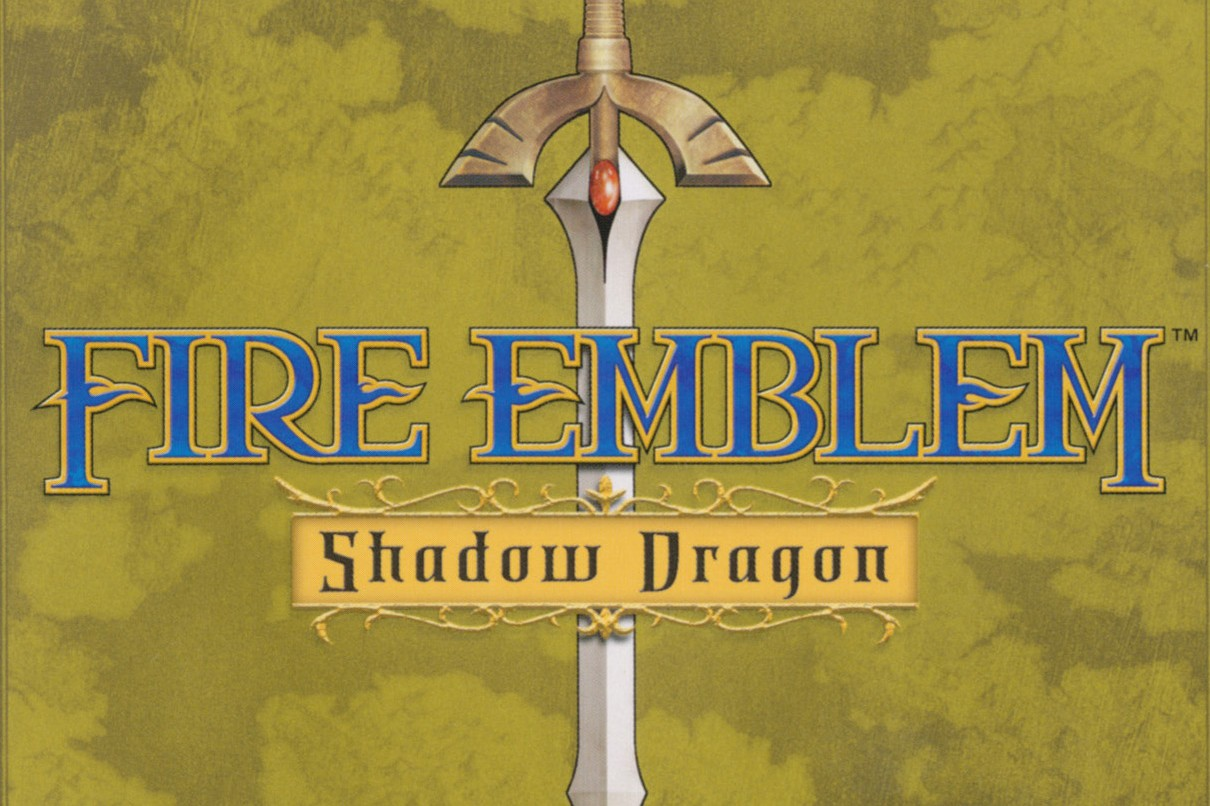

Developed/Published by: Intelligent Systems, Nintendo SPD Group No.2 / Nintendo
Released: February 16, 2009
Completed: 10th March, 2014
Completion: Got all the way to the final level, gave up and watched the ending on YouTube.
Trophies / Achievements: n/a
It happened! Yes, this is a rare occurrence—admittedly one that’s more usual with Japanese games of an RPG or strategy persuasion, of which this is all of the above—but here’s a game where I got to the end boss, clunked against it without any acceptable way to progress, said “fuck that” to reloading an earlier save and grinding or some other tiresome solution, and just watched the ending on YouTube.
And I was so proud of that time I toughed it out and beat the end boss of the original Persona, too.
It’s sort of a shame! Because there was this… well, I’ll be honest and admit it was brief, but there was this brief period where I was sort of into Fire Emblem: Shadow Dragon. In fact I was thinking “heck, everyone likes Fire Emblem: Awakening so much, and this is actually ok, so I’ll probably play it some time.”
Now? I doubt that. Because nothing dredges up all the mistakes a game has made than a bad ending. So let’s discussing!
Fire Emblem: Shadow Dragon is the DS remake of the very first game in the Fire Emblem series, which made it feel like a pretty good place to start (especially as it’s the introduction of Marth, the first Fire Emblem character that was seen outside of Japan, albeit in a Smash Bros. title.) Unfortunately, it’s obvious that as a Famicom game originally, the first Fire Emblem was pretty basic. All the things it seems people mention about this series, like characters talking to each other in missions, are missing here. That of course shouldn’t be a problem, because the strategy core—very similar to Advance Wars—should be what you care about, right?
Hmm. There’s a quirk! And if you’re familiar with the series, you know it already: if a character dies, they die forever. This is clearly intended to give weight to the strategy, but sadly, it doesn’t really work. You aren’t going to care about the characters, you care about how much you’ve levelled them up, and while the game does feed you new characters quite consistently—obviously to shore up your forces—you are never going to want to use them because they are never going to be better than a character that’s been with you for a while.
So what this means is that you’re going to grind up your characters to get them to the point where it’s going to be hard for them to die (to the point, likely, where the Advance Wars-style “lances beat swords, etc.” rock paper scissors aspect become totally pointless.) Which means doing what I did, which is carefully sending your favourite characters into the arenas that are found on certain levels, and repeatedly fighting until they’re over-levelled.
It’s boring! But, and here’s the but: once I’d over-levelled them just enough, the game became pleasantly strategic. It wasn’t an Advance Wars, no (I thought the graphics were ok, too, then I saw how beautiful the GBA Fire Emblem animations were recently and that took the shine off a bit) but it was fine. I can’t begin to imagine how unpleasantly hard the game would be if you were letting units die noble deaths or not abusing the arena, however.
Or maybe I can! If Marth dies it’s game over, so I hadn’t been using him on the front lines, and he was woefully under-levelled by the end. The final boss? Well… The only person who can use the ultimate boss-killing weapon is Marth. Who would die after one hit, while my other once over-levelled heroes were barely able to keep on top of the constant reinforcements. So I should actually have never stopped grinding at some point earlier, removing all the strategy/challenge from the majority of the game just so I could finish the final, ludicrously unbalanced level. Great.
Will I ever play it again? No.
Final Thought: Pretty sure I could get lots of responses here about how I could have used a particular other character to kill the boss, or do some particular combo, or whatever. Or maybe to promise me that Awakening, with the ability to turn off permadeath, is worth playing. It’s too late, folks!