To view this content, you must be a member of Mathew’s Patreon at $1 or more
 Unlock with Patreon
Already a qualifying Patreon member? Refresh to access this content.
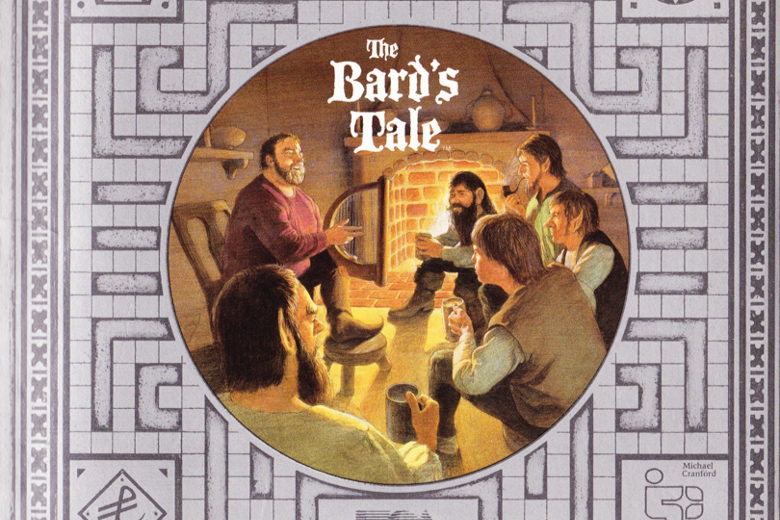
Developed/Published by: Interplay Productions / EA (original), Krome Studios / InXile Entertainment (remaster)
Released: 12/1985
Completed: 05/02/2025
Completion: Finished it.
I’ve been itching to play an old school western RPG recently–really want to see some numbers go up–and got really excited when I discovered The Gold Box Companion, a companion app for SSI’s legendary Dungeons and Dragons RPGs that–because I was too young for them at the time–completely passed me by.
However… I couldn’t help but feel I’d be skipping a bit too far forward on my (personally imposed) chronology if I jumped to playing Pools of Radiance–I wasn’t satisfied when I played Pirates! that I had the historical context I wanted–that I nosed around a bit to see if there was something I’d previously skipped that might fit the bill.
Hence: The Bard’s Tale.
Now, I’d previously skipped this because I’d heard that it was, frankly, a bit boring. Actually, I was basing that entirely on The Digital Antiquarian saying “long before the end of the first Bard’s Tale it’s starting to get a bit tedious” which probably isn’t entirely fair. But what drew me back was that The Bard’s Tale is one of those games that I think many who grew up in the “video game magazine” generation have–a game that I read about two sentences about but was always longing for.
It’s funny the things that lodge in your mind, isn’t it? Here’s the reader’s letter from Amstrad Action that’s stuck with me since literally 1991:

What’s funny is that in the intervening, uh, thirty years [“lies. The 90s are ten years ago”–Ed.] I managed to forget, I guess, that Amstrad Action’s “Balrog” ran an entire “The Bard’s Tale Club” section culminating with a short walkthrough just a few issues earlier.
Interestingly, I think this is one of those things where I can see myself maturing in real time–in the matter of months I went from a wean who skipped the Balrog section because it wasn’t about, like, arcade games, to a wee guy who was at least interested in them. That or a guy pretending to be a gnome caught my eye.
All I remember is that I’d missed my chance to get The Bard’s Tale. So, here I am, thirty [“ten… I’ll go as far as fifteen”–Ed.] years later, finally living my childish dreams.
First: if I’d got this in 1991 I’d have been completely baffled by it. Within a few short years I’d be playing Ultima Underworld, but I didn’t really even play that properly, and The Bard’s Tale requires, like Wizardry, a deep understanding of RPG character creation and party management. And also like Wizardry, it’s about as brutal as an RPG can get, killing your party or giving them debilitating, expensive-to-cure status effects that require you shlep all the way back to a temple to solve, in maps that wrap (no! Not again!!!) and are absolutely louping with spinners, traps and dark zones.
In some respects, I’m lucky that I mostly relied on luck and parental largesse to get computer games.
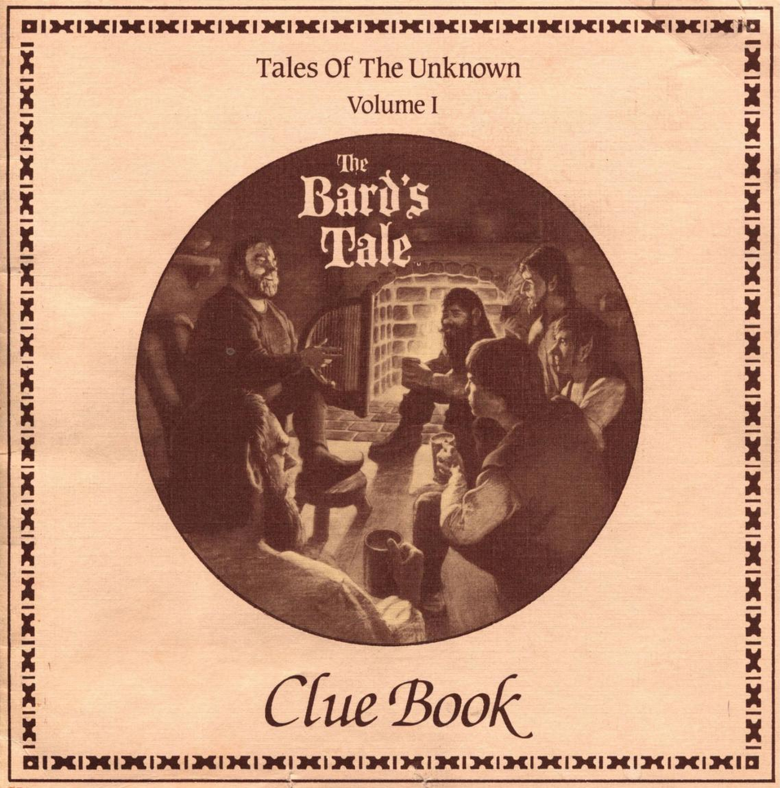
I’m also lucky that there’s a remake of The Bard’s Tale in the form of Krome Studios’ The Bards Tale Trilogy: Remastered, which rights-holder InXile Entertainment had them make (after, interestingly, a remaster from the team of one of the original developers, Rebecca Heineman unfortunately fell through). I’ll be honest, I was originally not planning on playing it, because it has genuinely awful Super2xSal-quality upscaled art. The game looks like this:

When in its best contemporary ports, it looked like this:

I know which I’d rather look at, though in some respects I thank god that the remake came out before they could us AI to upscale it all and make something that looked even worse. The benefit of playing this (nasty) looking versions outweigh the pain of looking at it though, because not only does it make a lot of quality of life improvements such as a shared inventory and doubled experience, it plays perfectly with a controller–so you can even play it with a Steam Deck comfortably.
If you’re a purist, however (and I don’t actually blame you) I have to admit that the version I played isn’t exactly The Bard’s Tale, as the “trilogy” version aligns all three games design, so in this version there are distance mechanics in the combat (enemies can start some distance from you and you have to advance on them) and bows and arrows are added, which I suspect changes the feel of the combat quite a bit. But to be honest, I can live with it. And I never used bows and arrows anyway.
Enough personal history. For the real history, you can of course go to someone like the aforementioned Digital Antiquarian, but it’s worth noting that even though The Bard’s Tale entered my own personal history in 1991, it was released in 1985 and is, I think surprisingly to modern eyes, the best selling computer RPG of the 1980s, selling a reported 407,000 copies.
I say surprisingly because The Bard’s Tale hasn’t lingered in the cultural imagination the way that RPGs such as Wizardry or Ultima have. It wasn’t first; it didn’t inspire much (Japanese RPGs were already divergent by 1985) and the series didn’t evolve any better than Wizardry did. By 1991, the year I discovered it, a cash-in construction set was released for anyone who hadn’t already moved on to the more active style of dungeon crawler begat by Dungeon Master, and it wouldn’t be seen again until The Bard’s Tale in 2004, which is a Bard’s Tale game in name only.
If you’re wondering what made The Bard’s Tale so successful, but then so irrelevant, it comes down to the fact that it is, ultimately, just a Wizardry clone that happened to come out on the popular C64 with nicer graphics than Wizardry years before Wizardry would reach the system, and be pushed by the already mature (and not yet fully soulless) EA.
Designed by Michael Cranford, it was his second attempt to directly make a Wizardry killer after HesWare’s apparently flawed Maze Master. For some reason, The Bard’s Tale is particularly known for the development team all sniping at each other publicly for years after the game’s launch (it even makes the Wikipedia) but it’s all so “he said, she said” and feels kind of… un-illuminating about the game. At least, it doesn’t add anything. The only part I find particularly interesting is that this game is officially called “Tales Of The Unknown: Volume I: The Bard’s Tale” because (and there is some argument over this) the series was supposed to be called “Tales Of The Unknown” but–and this might be a sign of EA’s encroaching soullessness–it was felt “The Bard’s Tale” was better known, so it got dropped.
(And if you’re wondering why I find that interesting, it’s because it would happen again with The Legend of Kyrandia, which was actually supposed to be the “Fables & Fiends” series. I’m not sure how many more examples of this there are.)
Anyway. As I said above, writing about the experience of playing The Bard’s Tale feels almost exactly like writing about Wizardry, bar for a few twists (I like to believe if they’d kept to “Tales Of The Unknown” maybe the sequels would have diverged more.) The main twist people get excited about is that you navigate the town in the same way that you navigate the dungeons (step-by-step 3D movement) but let me tell you this–it just means you have to do an annoying amount of schlepping about and fighting piddly enemies when you want to heal or level up, and I’d honestly rather a menu. The thing I felt like I felt I did the most in The Bard’s Tale was stand around outside the “Review Board” save scumming to try and make sure my level up rolls were good…
The rest of the game, despite featuring several dungeons, ultimately boils down to what you’ll do in Wizardry–try and find the best way to grind so you can kill the final boss. In the original game, this was a particular repeatable battle, which led to one of my best ever “this is too specific, that’s not how memes work” memes, clattering out to complete silence:

But in the remake, which has a smoother curve (and only lets you do this battle once) you can get away with just ordinary grinding (thankfully). Now, the game does actually feature some puzzle solving–you do have to find and collect certain items–but moreso than Wizardry, I realised how much I miss a “proper” quest and side-quest system. Here you have to notice text prompts when you step in certain squares (which zoom off the screen immediately in the remake which means you’ll never see them–a big mistake) and piece them together, but getting deeper into dungeons is grimly unrewarding when that’s all you get. I started my game mapping this properly, but the maps get worse than Wizardry even faster! So much of the dungeons in this game are made up of “dark” squares that you feel like you’re navigating almost the entire game blind, to the point where I almost can’t imagine trying to complete this without having another map at hand and the in-game automap (I can hear the hardcore crusty RPG types rolling their eyes here…)
It could be alleviated, perhaps, if you could enjoy the combat, but there is almost no strategy to it. While it may partially be a flaw of the remake (where the updates fly off the screen at a hundred miles an hour) The Bard’s Tale has a bizarre difficulty scaling where you start by having your entire team killed by a single mouse holding a feather duster and about an hour later are fighting a squad of forty vampires at once. While it’s extremely funny to imagine them trying to all squeeze into a corridor, the problem is that your melee characters are just meat shields for your magic users. I made myself up the kind of squad that gets recommended for The Bard’s Tale and as much effort as I put into my critical-hit focused “Hunter” character (usually my favourite kind of RPG character! I love them crits!) I barely noticed them doing anything at all with their piddly single hit on one enemy compared to my magic users, who by mid-game have a spell that can wipe out every enemy you’re facing in a battle at once.
The game’s focus on the magic users makes it seem even odder that the series ended up going under The Bard’s Tale moniker. While your melee types are stuck in their starting class, your magic users are expected to change class each time they fill their classes’ spellbook, and they start again from level one keeping all their stats (quite unlike Wizardry…) meaning that by the end of the game you have spellcasters who look like Arnold Schwarzenegger in his prime hiding behind a flesh wall. The only reason you can’t ignore melee completely is that your magic users’ armour class is so bad–and that matters when you’re facing off against four squads of sixty enemies at least some of whom might get an individual hit off each before you’re able to hit them with the equivalent of a nuclear bomb.
(This magic user focus is symbolic of author intent, however. As Michael Cranford would explain in his GDC post-mortem of The Bard’s Tale and its sequel, he was “bored” by melee combat and was interested in making a game with seven different spell-casting classes that your characters would learn until they were able to become archmages, with melee combat your fallback when you ran out of mana. Although this was cut back to four classes with the archmage showing up in the sequel, this original idea explains everything about why The Bard’s Tale plays the way it does.)
But let’s be real here: the majority of The Bard’s Tale you spend not save-scumming level ups to make sure your spell-casters can mow down enemies like they’ve got a gatling gun is spend stumbling around in the dark or in battles you barely notice happening. The only real moments of tension are when you get given one of the many annoying status effects (reload–it’s not worth the hassle) or when you have to get out of the dungeon, because the game (sort of interestingly?) gives you absolutely no way to regenerate mana unless you’re outside1, so your grinding sessions are always limited by how long your mana lasts. But because you get so many level-ups with your magic users, it’s not much of a problem (by the middle of the game, I was staying down collecting three or four level ups before bothering to climb back out of a dungeon.)
The problem, sometimes, with playing a game like this is that devoid of the context–an old home computer, months of free time, it being the fucking 1980s–you play it as the object it is, rather than the experience it represented. Everything I’ve said is all true, but if you were loading this up on your C64 (or Amstrad!) with a bundle of paper maps in front of you and the latest “Bard’s Tale Club” tips, nursing your RPG party across months, slowly getting deeper into each dungeon, finding and writing down all the clues, I can see The Bard’s Tale as the evolution–a small evolution, but an evolution–of the Wizardry design it is.
You could recreate this if you really wanted! But the problem is that there are simply more fun, deeper, more interesting, less punishing ways to spend your time not even now–even then. Playing the first The Bard’s Tale, the same as playing the first Wizardry, you understand why they died out so quickly for not adapting. When they aren’t all you’ve got, they aren’t what you want.
The funny thing is, that I’ll still remember The Bard’s Tale fondly. Not for when I played it–but when I imagined it.

Will I ever play it again? You can continue the series seamlessly in The Bard’s Tale Trilogy, but the dungeons in the first game are so horrible I would never do this to myself.
Final Thought: Alright, you’ve read everything I’ve written and you still want to play this. You want to say you’ve played the most important RPGs! I get it. So next time, for supporters only: How to beat The Bard’s Tale!
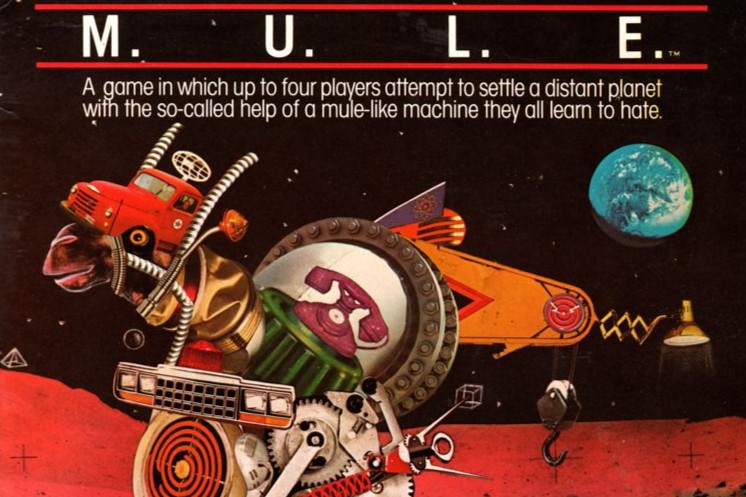

Developed/Published by: Dani Bunten Berry / EA
Released: 11/1983
Completed: 24/06/2021
Completion: Beat Tournament mode against 3 AI with a colony score of 110,000+
Trophies / Achievements: n/a
MULE is an interesting one. I was trying to think what the cinema equivalent is, as a sort of easy metaphor: a classic that was lauded (if never particularly imitated) by a generation of filmmakers that goes almost completely unwatched these days. It’s not one of the obvious ones (you know, Super Mario Bros. as Birth of a Nation, or something); it’s too sophisticated to be something super early (Space Invaders as Journey to the Moon) and so I just can’t place it. The Red Shoes, perhaps?
The thing is though–and I suppose it’s the reason I’m trying to draw the metaphor–is that if you want to watch The Red Shoes and see what the likes of Scorcese have raved about, you can do so easily–it’s streamable on about nine different services, free with subscription or even ad-supported; you can buy it on a Criterion blu-ray and get a boat load of special features to give you context. Nothing is holding you back.
Here’s how you can play MULE: you can pay $8 to Good Old Games to play the trash PC port that is totally unrepresentative (it’s maybe also available on Origin, but I haven’t looked.)
Ok, so you don’t want to do that (and it’s not Good Old Games’ fault: they near-exclusively sell PC games). So here’s how you play MULE “as intended”: You have to download an Atari 800 emulator or understand how to make something like Retroarch make that happen. Then you have to find a ROM (watch out! You might download a pirate one that crashes if you catch the wumpus!). Then you have to find the BIOS files that will let the emulator run the Atari 800. Oh and don’t forget that the Atari 800 emulator requires a bit of fiddling to make that work. And because you want to see the game as intended, you’ve either now got to make this run on that CRT you’ve got lying around for this sort of thing or run it through a shader, preferably with a nice border so it looks like you’re running it on an old TV.
Oh, and for context, you’re going to want to look up the (beautiful) box and manual online.
The alternative, is, of course, to buy an Atari 800, monitor, a copy of the game (good luck finding it for less than $200) and four joysticks.
This is, clearly, absurd. Now don’t get me wrong; there are lost films and inaccessible films. But MULE is out there, and in the history of games it’s at least as important as The Red Shoes is to cinema. But you have to be extremely dedicated to play it–and worse, if you don’t need to be (for example, you pass an Atari 800 in a “VIDEOGAMES!!!” exhibition at a museum) it will be completely impossible to grasp.
So anyway, that sucks, because if you’re a student of games and their history you should play MULE, and not just because it’s honestly still pretty fun. Because it’s passed into this position that people only talk of it from the second or third hand–often to pay tribute to the pioneering Dani Bunten Berry–and I actually feel a bit sad about that. We pay tribute to those who came before us by playing their work, not just talking about it.
[“OK, now start the criticising”–Ed.]
How dare you… ahhh you got me. I think MULE is super cool but here’s the thing that happens after you put in all that work: you go “mannnn this is olddddd” because MULE is old, and “80s personal computer” harsh. It’s at its heart almost a board game, but it’s slathered in early “we haven’t quite worked all this out” design decisions that sorta made sense at the time but also extremely don’t now.

It’s played like this: you and up to three other players (though it’s always played with four) are settling a planet; each round you have to select a plot of land (from plains, mountains or river) and then select a mule, equip it to either mine ore, collect energy or farm food, which it can do on any plot (well, you can’t mine on river tiles) but gain the most benefit from doing so on the equivalent tile. After everyone has done so, a random event happens (a solar storm makes more energy production, for example) each commodity is consumed by your community and the surplus is traded: either to or from other players or to or from the town store. And then the next round happens (oh, and sometimes you can buy plots of land at auction, not just take them when given.)
It’s actually pretty graspable, but the quirk is the law of supply and demand. With particular lands (and land placement) you can create massive surpluses of certain goods, and you can also choose to ignore some goods even though your community needs them. “I’ll make so much money selling this ore” you think, “that I’ll be able to buy as much food as I need.”

Trading happens in a format that must have inspired the negotiations in Theme Park (“Ah yes, I know exactly the mini-game”–every reader, who is as decrepit as me) where you walk your characters down or up the screen to meet at a value, with the quirk that if the store doesn’t have any of a good to sell you the sellers can walk back infinitely (well, within the set time limit) to bleed you dry. (And the computers will do this…) BUT–if they do this, they’re in danger of the colony getting a bad score at the end of the game! So it’s all about the balance of winning (individually) without losing (as a collective). Man sounds like those clowns in congress should play some MULE, am I right???
So far so good, right? The problem is it’s the early 80s, so all of this is done with a one-button stick where you have to control your character and make them walk into the mule pen and then walk out with the mule and then walk into the outfitter and then walk to your plot and then the timer runs out because you didn’t make enough food, or because moving your character is janky as hell. And selecting your plot of land? Oh that’s a reaction test as a cursor moves along the screen (faster on the higher difficulties) meaning the PC is gonna screw you out of half your lands (and mis-timing is going to screw you out of the other half.) And because there’s not that much space on the screen, actually fully understanding supply and demand in context… isn’t going to totally happen. You need to remember how much of a good you need to buy to not be in shortage. How the shop price affects things and changes is… obscure.
Which is not even to raise the nadir of MULE: random “punishment” events. Yep, this was designed well before balancing was really a thing, and they had the best intentions at heart, but “lift up the low boats” wasn’t a thing– “smash the high ones with a tsunami” was. It’s a bummer because it doesn’t really work. It’s super clever to make the winning players play first (so it’s easier for the worse off to strategise) but some players can get into such a commanding position that losing some money here or there isn’t that bad. And instead, things tend to happen like you scrimping and saving, finally getting your engine up and running, lots of ore coming in… and a pirate ship shows up, takes all your ore on a turn when the players ahead of you all switched to energy and food, and now you’re stuck with nothing to sell and no way to afford the energy or food you need to keep your plots going. It is the dogshit worst.
That said, while MULE has the capability to cause (and must have caused) Monopoly-esque meltdowns, the game is still dang fun if you can get into the mindset. The AI is hilariously vindictive–I love that it will screw you on land auctions if you try and force the price up to screw them (it’s all about timing when to walk backwards…) and that they’ll be extremely selective as to when to buy from you, even if it hurts them (I’d swear it knows it doesn’t need food towards the end of the game…) and if you save-scum away only the bullshit punishments or mis-clicks (be generous; it’s 2021) the core here is so dang solid–and it only really makes sense as a video game, because I’ll be fucked if I’m calculating the new cost of mules based on the previous trading period using a table in a board game manual or something.
Is it a classic I’ll return to again and again? No, not really. Is it something that any student of video games should play once, twice, three times at least? Of course, and if there’s anything you take from this it’s criminal that they probably won’t.
Will I ever play it again? I am desperate to play this on tournament mode with three other experienced (but not too experienced) players IRL. No joke desperate. I think there some of my issues (the misclicks; the punishments) stop becoming as massive an issue when you’re playing with more than two people…
Final Thought: Shout out to TreyM for their classic CRT overlays! This kind of thing really doesn’t feel right without them–and they’ll continue to help me experience things “in context” as much as I can when I get to the likes of Rescue on Fractalus…
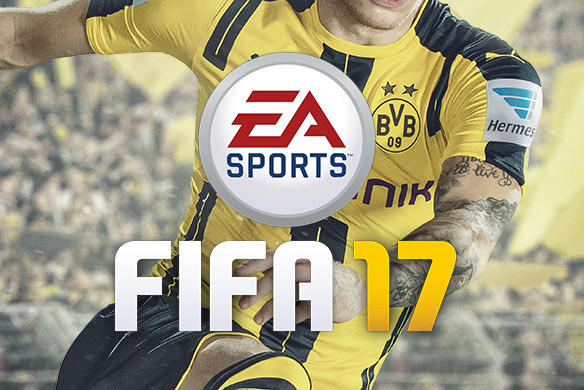

Developed/Published by: EA Vancouver, EA Romania / EA
Released: 27/09/2016
Completed: 29/08/2020
Completion: Finished a season with Partick Thistle winning everything, Scotland won the World Cup, and completed Alex Hunter’s Journey.
Trophies / Achievements:
Yes, I was still playing FIFA 17 in 2020. There’s a reason, though!
It’s a bit melancholy, really. I was moving out of my lovely wee apartment and leaving the city I’d called my home for a couple of years in a time of tremendous upheaval, and FIFA 17 was the first game I played when I moved in. I was deep in world cup fever and I fancied playing a FIFA, and at the time I was like “oh yeah, there’s that story mode they just started with FIFA 17, I’ll try that. Plus it’s like $8 now.”
Of course, at the time I didn’t even try the Journey mode. I just played all the other modes and I have such nice memories of sitting in my wee home, sweaty in the height of a heatwave, banging in goal after goal because it was too easy on Semi-Pro and too hard on Pro (lol).
Anyway, I knocked through the story mode, “The Journey” in my last couple of weeks in the flat to sort of say goodbye the way I said hello, and what a strange experience. To play a mixed-race Black kid from London while protests continued and in fact the NBA itself went on a wildcat strike right in the middle of it. I kept thinking about how Alex Hunter would have experienced race, of all the awful ways that Black football players and other players of colour have been treated on and off the pitch and I thought–ridiculously, I guess, for a yearly franchise and an instalment from three years prior [”Michael Brown was killed in 2014″–Ed.]–”I wish they could deal with this.”
Instead what you get, obviously, is cut-scenes here and there (far fewer than I expected!) a terrible meaningless Mass Effect-me-do conversation system and endless training sessions which you can’t skip because for some fucking reason Alex Hunter will pretty much always get Ds and Fs (but I still should have skipped them.) It feels like you maybe have a lot of opportunity to make the story go different directions but apparently you get game overs if you fuck anything up too badly, so you probably can’t. In fact you definitely can’t because even though I was able to keep Alex Hunter in the first team consistently Hunter’s social media is like “Alex Hunter should be in the starting eleven” so it definitely barely pays attention to what you’re doing. It’s your basic “struggle to the top” story where you suffer a setback and your pal turns out to be a prick that you have to defeat anyway.
FIFA is pretty fun though. I mean it’s no Sensible Soccer (too many fucking buttons) but it was a laugh for a while.
Will I ever play it again? Good question would be “Would you play FIFA 18 to continue Alex Hunter’s story?” Well, probably no for two reasons: 1) if you have to succeed when you’re playing in the England squad fuck that, because I’ll just turn around and pump in as many own goals as possible. 2) Apparently it’s still full of training mode shite. Maybe it’s easier to skip though.
Final Thought: As you might be able to tell I couldn’t give a fuck about English football, which made picking a team for Alex Hunter challenging. I went with Sunderland for two reasons: it was the most northern squad I could get and it said right on the selection screen they’re called the black cats and of course I bloody love black cats (even if they’ve only got three legs, like mine.) This definitely led to a hilarious sequence where Sunderland were somehow facing Middlesborough for the FA Cup.
It would be a couple of days later when I’d discover just how bloody hilarious that was by watching Sunderland Till I Die on Netflix, the weirdly entertaining docuseries following the club’s absolute implosion in the 2017-2018 season from mismanagement and having a disinterested arsehole billionaire as an owner. The lesson is that capitalism must be destroyed. The lesson is always that capitalism must be destroyed.
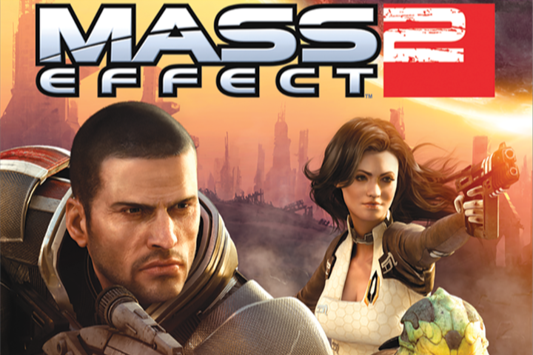

Developed/Published by: Bioware / Electronic Arts
Released: 25th January, 2010
Completed: 26th March, 2015
Completion: Everyone survived the suicide mission.
Trophies / Achievements: 860/1355
A few weeks ago I had a dream—one of those sort of generic dreams where you find yourself doing a test, but you can’t read the pages—but something about it involved me starting Mass Effect 2. I can’t remember in what context or why. So, not one to go to war with destiny, I booted it up.
Here’s an important fact: I didn’t like Mass Effect. My main memory of Mass Effect is that it was boring. Boring shooting. Boring dialogue. Boring bumping around on boring planets, before boring missions in boring, samey (sometimes exactly the same, I remember) spaces.
However, I’d made it through the whole game so I imported my hero into Mass Effect 2 (after changing his face significantly, because he was a rum looking chap and that’s no mistake) and got down to work of saving the galaxy again or whatever.
Now here’s where the article gets a bit… I don’t know. It’s the kind of thing I think can easily be discounted as sort of fannish complaints (despite the fact I wouldn’t consider myself a fan) relating to one of the biggest factors of the Mass Effect series and (in general) Bioware’s output—the romance system.
You see, something I definitely respect about the Mass Effect games is that adherence to the idea that your choices stick and have consequence. In terms of game franchises that go to some effort to tailor the experience via the player’s actions from one game to the next I can more or less name this and… The Walking Dead? I’m not even sure if that’s true for The Walking Dead offhand.
So here’s me, playing the game. I’ve shot up to my cabin on the Normandy, I’m wandering about… and I’m like… “that’s weird. Why is there a picture of Liara on my desk?”
Liara is one of the cast in the first game; I didn’t romance her. Actually, I had sort of unintentionally conspired with the game with a really retrograde past for my hero—I’d romanced Ashley Williams (the one other possible romance target) only to, at one critical point of the game, let her die because—I can’t remember actually, but it was critical to the galaxy or whatever.
So there’s my hero with his sad and clichépast—the woman he loved, dead because he chose the galaxy over her… except the game has decided that actually I’ve kept a torch for Liara instead.
And it didn’t make me particularly happy that on meeting Liara during the game, she made out with me. I didn’t consent to this. I feel… genuinely uncomfortable.
You might consider that a massive overreaction. After all, I actually recollect the Mass Effect team—at some point, possibly while doing press for 3—discussing that Commander Shepard isn’t the player, but a character the player is guiding (this was in contrast to a more traditional RPG like Dragon Age.) It’s something that’s kind of reflected in the weirdly fuzzy dialogue, where, for some reason, it gives you lines of dialogue to choose from, and your character then might say something almost entirely different (I’ve never understood why they didn’t keep the selections down to verbs: “comfort” vs “admonish” etc.) Yet it’s a tension I ignore—Commander Shepard is me, whether they like it or not. So when something as important as my past is altered, when decisions are made for me that I have no input on, my trust has been violated.
And this got me thinking about consent in these games. Because romance is treated as a system, and I know what they’re aiming for—that action movie scripting; the hero, the admiring female (or male! Shepard can be played as a lady) who falls into your arms before the suicide mission. The problem is—and many people have commented on it, I’m not pretending I’m somehow extra insightful—that your potential paramours basically just stand about and wait for you to force their interest. Talk to them, say the right things enough, and get some action. Push in compliments, get out sex.
The women in this game stopped being characters, or people (and they have to be people, they have to be characters) and became playthings. Here’s me sitting, leading all three up to just the point where I have to “commit” to one—not really sure that I will commit, because I’m still annoyed about Liara—and in fact, I’m probably more interested in “Yeoman Kelly Chambers” who offensively doesn’t even get to be a real romance option because she’s not a main character.
It actually gets to this point where two romanceable characters—Jack and Miranda—have a fight. Now, for a little background, Jack is the survivor of abuse. She’s a character that I’m not sure of the quality of, to be honest—the classic “survivor of abuse that’s really mean and difficult but also promiscuous and risk-taking, because she’s so damaged”—but when given the option of defending Jack—abused by the corporation, Cerberus, Miranda represents—or siding with Miranda who (for no good reason) chose to make a point about how “it wasn’t really Cerberus” I sided with Jack, rather than take the special magic “everyone is made happy” Paragon option.
As a result, I could now never romance Miranda. That’s it, the algorithm decided I didn’t play the game right. I’d pushed in enough compliments but I made a nuanced choice. No sex for me!
This kind of interaction has none of the pleasure of… you know, actually interacting with another human. The idea that I could at least make Miranda “loyal” (important to the wider, non-romance game system) again if I made all the most goody-two-shoes choices to eventually unlock a dialogue choice… it’s ridiculous, boiling Miranda down to a vending machine I have to reset my pin code to use. And consider that I clearly engaged with the story and characters to the point that this bothered me. Why put systems in place where I have to “game” my interaction with characters I saw as people to the point where I see them as robots?
And if you engage with the “game”, the romance narratives feel dangerously naive. Have sex with Miranda and you’re treated with the saddest, 80s soft porn sequence, but your sex sequence with Jack is the culmination of the story where your interest in her “validates” her and she cries as you penetrate her with your magic penis that makes people move on from decades of abuse. That’s awful.
Mass Effect 2’s romance system feels like… well, it feels like a joke about a programmer’s idea of how love works. The kind of thing someone with absolutely no experience would make if they tried to boil it down to the most basic systems. And as a result, consent gets lost in the shuffle. You can make that beautiful woman like you if you just say the right things, whether she’s interested or not. You decide. They don’t. And one dialogue choice “switching off” romance doesn’t make it any better; it’s still my action that made them perform one way other the other, and the system breeds entitlement of the player to the character they want; you just reload rather than role-play.
(And look. It just doesn’t work the way it does in an action film anyway, unless we’re talking about something as stupid as a Bond film, because not every woman you see in an action film immediately has a lob on for the protagonist, and then waits for him to fire into her passively. Yes—I’m actively claiming your average action film has women with more agency when it comes to romance than Mass Effect 2. Things are different if you play as a female character, and I’ll even admit your average action film doesn’t have as many women in it as Mass Effect 2, but the issues of system and consent exist even if you’re a female Shepard firing into Garrus or whatever.)
I didn’t romance anyone in the end. Before the suicide mission, Mathew Shepard stared longingly at his picture of Liara.
“For fuck’s sake,” I said.
Will I ever play it again? No, but I’ve already started Mass Effect 3. While I have very specific complaints, Mass Effect 2 is a pleasant diversion; bad narrative pacing, but nice enough shooting and a grand enough finale to make me want to keep going quite happily. Goodness, it’s almost like you can still enjoy media while acknowledging it has problematic aspects, eh?
Final Thought: I’m cheating here but lets talk about Yeoman Kelly Chambers. At the end of the game, if you’ve romanced no-one, she’ll do a sexy dance for you in your cabin! Anyway, you can meet her fairly early in Mass Effect 3 and she’ll note that she was so disturbed by being kidnapped by “The Collectors” earlier in Mass Effect 2 that she’s suffered serious trauma about being on the Normandy and can never set foot on it again.
That’s right! Sexy dance from a traumatised woman. Probably should have thought that through a bit.
This essay is featured in Every Game I’ve Finished 14>24.