Tag: cinemaware

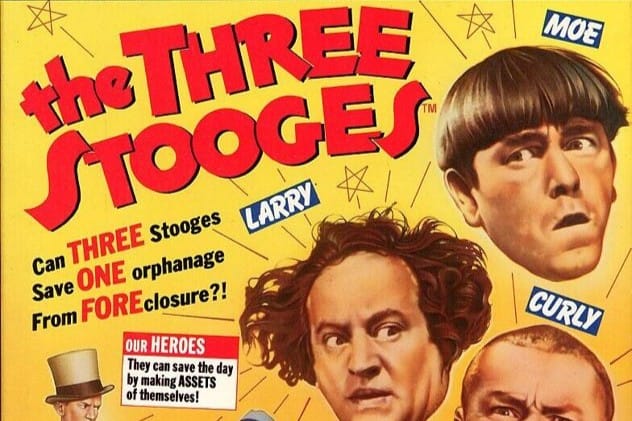
  • The Three Stooges (Cinemaware, 1987)

    The Three Stooges (Cinemaware, 1987)

    Developed/Published by: Incredible Technologies, Cinemaware / Cinemaware
    Released: 1987
    Completed: 30/01/2026
    Completion: Raised enough money to repair Ma’s orphanage… but not enough to get married to her three beautiful daughters. This is the “real” best ending; who’d inflict The Three Stooges on some women?

    As celebration of the release of The Journal Of Stoogealogical Studies Vol. 2, I’m proud to share this final excerpt from my article in said journal, “A History Of The Three Stooges In Video Games”. The Journal Of Stoogealogical Studies Vol. 2 is available only physically, and only from Amazon: .com, .ca, .co.uk (or your regional variation) so run out and get a copy today! Well, you don’t need to run anywhere, but you know what I mean.

    If there’s something that stands out about Cinemaware’s take on The Three Stooges–certainly before we have to get into the thorny issue of the game’s quality–it’s that it is the kind of work that absolutely deserves the cliched phrase “a love letter to…” because it is, from the moment you open the manual, clearly a love letter to the Stooges.

    Cinemaware’s manuals are famously more supplements providing historical context–the manual for Defender Of The Crown has pages on The Norman Conquest and the veracity of Robin Hood–but nothing matches The Three Stooges, which includes a massive thirteen page essay from “A Dedicated Stooge Fan” recounting the entire history of the Stooges from Moe running away from home in 1914 until his untimely death (and yes, that means it references Joe Besser and Curly Joe DeRita, though they obviously don’t feature in the game1). Someone at Cinemaware clearly loved the Stooges enough that they wanted to license what was–in 1987–hardly a gold-standard license, and treat it with more respect than it had likely ever been treated before.

    The opening page of the manual’s essay, which splendidly opens with both a dictionary definition and a quote from Leonard Maltin.

    It’s a slightly strange outlier in Cinemaware’s output. The company’s games were heavily influenced, of course, by the golden age of cinema–Defender Of The Crown Errol Flynn swashbucklers, It Came From The Desert ‘50s B-movies, and so on–but there was never any sense that they had to be licensed rather than just give off the affect. It’s possible that slapstick was chosen as a genre to tackle and they found it just doesn’t work without iconic characters to back it up; I find it much more likely that Cinemaware’s founder, Bob Jacobs, was just a stoogehead. After all, The Three Stooges doesn’t really fit the more “grown up” air the company was attempting to cultivate; The Three Stooges may have been from the era of classic cinema, but it was certainly the fodder of children (indeed, you only have to click on a few Youtube videos of playthroughs of this game to see how many people picked this up excitedly as children.)

    Interestingly, even if Jacobs was a stoogehead, designer John Cutter wasn’t (though he’d tell Youtuber Matt Barton that “by the end of the project I definitely was a fan.”) Designed by Cutter at Cinemaware and implemented by Incredible Technologies (who would go on to create the Golden Tee Golf games you probably remember from bars) The Three Stooges is similar to Defender Of The Crown in that it mashes together board game inspiration with minigames. Like in Defender Of The Crown, the issue with the design is that it isn’t very cinematic despite the company’s founding principles, and so it similarly relies on the idea that if you have big, flashy splash screens powered by the Amiga’s graphical capabilities things will seem cinematic. And The Three Stooges has, well, the Stooges to help: Cinemaware were able to use digitised images of the Stooges and frames from their shorts to push the illusion.


    Speaking of Defender of the Crown, The Three Stooges references it in what I think is the best joke in the game: it opens with Defender Of The Crown’s title screen, before the Stooges walk on and realise they’re in the wrong game. It works particularly well because you could easily believe Cinemaware accidentally mastered the wrong game on the disks, and I assume it caught a lot of people out.


    There’s a simple framing device–the Stooges discover an orphanage is going to be foreclosed by an evil banker if they can’t raise $5000 in a month to pay the rent; the Stooges decide they’ll take on the task. Unlike Mylstar Electronics’ The Three Stooges, aka “Brides is Brides”, there’s no fiction that this represents a specific new Three Stooges short, but if it did, it would be one of the later ones where they use a lot of old footage, because Cinemaware’s Three Stooges pulls heavily from Punch Drunks (1934), Men In Black (1934) and Dutiful But Dumb (1941) with the other minigame generally inspired by the Stooges pie-throwing antics (the manual specifically references Hoi Polloi (1935).)

    The selection of these shorts is at least vaguely interesting to me. Frames are digitised directly from Punch Drunks and Dutiful but Dumb if not Men In Black; the shorts had been released on VHS by this point, but they hadn’t come on the same tape or anything. Punch Drunks and Men In Black are (basically) the first Stooges shorts (Woman Haters doesn’t count, with all that weird rhyming) but… why Dutiful but Dumb?

    (I’m getting ahead of myself here, but it particularly stands out because it’s a reinterpretation of the sequence where an oyster in Curly’s soup keeps eating his crackers as a cracker eating contest, which–look, I know I’m splitting hairs here–makes no sense because even in game Curly is dressed as a “Vulgarian” officer. I have to believe it’s because someone at Cinemaware just really loved that sequence.)

    As with all of Cinemaware’s output, the attention to visual detail (well, on things other than “what Curly’s wearing”) means The Three Stooges looks great. But similarly it comes at the cost of a game that is… bad. Based largely on the Game Of Life, the idea is that 30 days equals thirty turns, and on each turn you “roll” (in this case, hit the fire button to stop a hand) for your preferred event.  You want to hit on the movie-inspired mini-games or free money; you don’t want to hit on the banker (at best, you lose a turn) or the mousetraps, which just snap on the hand and cost you a day.

    It’s actually here that the game’s only interesting tactical consideration lies. As the days progress, the hand gets faster and faster until it’s sheer luck what you hit. To mitigate this, you can select the “eye poke” space, which wastes a day so that you can get involved in some classic stooge hijinks where as Moe you beat the everliving fuck out of Larry and Curly as punishment for… wasting a day I guess. Doing this, for some reason, slows the hand–unless you miss repeatedly on your eye pokes and shin kicks, in which case you can end up in a worse situation than you started with. So the game, at least, involves a bit of risk/reward, in that you want to ride the game as far as you can without having to waste a day on slowing the hand–but if you wait too long, you’ll struggle to hit the required space, and probably screw yourself completely.

    That said, it’s not like the game is that punishing if you just want to muddle through it. Money isn’t hard to come by–though if you’re truly aiming for a high score (and marrying the orphanage’s comely daughters) you have to play quite strategically (you make so much more from mini games than the free money spaces that a free money space is actually a hindrance.) Anyway, those mini-games.

    Not great! If there’s something I can’t shake about The Three Stooges, it’s the idea that–like Defender Of The Crown–it was made with great intentions but also an arbitrary release date that means that it comes across as a bit unfinished. Nothing really makes this clearer than the comparison between the Punch Drunks mini-game and the others. 

    In the Punch Drunks mini game, you can see that some of the developers have inserted themselves into this classic Stooge short.

    In the Punch Drunks-inspired mini game, not only do you get a proper digitisation of some of the beats of the short (Larry breaking his “Stradivarius”) the play screen features this entertaining split screen where you see the fight ongoing as you race to get a new violin. It also plays… fine, as you move up and down on the screen to avoid obstacles and can leap them too. It’s nothing special, but it feels like it’s what it’s intended to be.

    The Men In Black-inspired mini game is almost like what you get if you tried to do the same thing with absolutely no cinematic flair whatsoever. Inspired by the racecar sequence, you get a overhead view where you really can’t tell you’re playing The Three Stooges as they race up the screen avoiding patients, and a nurse in front of you drops stuff that you can pick up (but because you’re a massive, three car collision box, you don’t really have to move to do it.) Indeed, because the nurse moves out of the way of collisions, you can just follow her movements at top speed and that’s… it.

    Curly, clearly wearing the costume of a “Vulgarian” guard.

    You could argue that the Dutiful But Dumb-inspired mini game at least uses digitised art, but it’s actually a hindrance. You’re trying to collect crackers with Curly’s spoon–which controls horribly–but the game constantly cuts back to the splash screen of Curly so we can see him react to the oysters. Basically the only way to avoid this is to be superhuman at the game and stop the oysters ever stealing a cracker, but it’s beyond me or probably anyone’s patience.

    There’s a strange sort of dilemma with The Three Stooges: when you play a mini-game that doesn’t have sufficient Stooge content, it feels unrewarding. But when you do (like in the Punch Drunks mini game) you get sick of the repetitive intro and outro and all the horrifically slow loading that results. In fact, in a full playthrough on Amiga, it feels like you’re waiting for the floppies to load more time than you do anything else. 

    The repetition also doesn’t make sense in a game that expects you to do the same minigames over and over. Alright, Larry can break his violin and have to run and get another one day after day; but why does the hospital keep hiring the Three Stooges? Why do they keep getting hired as waiters if it always ends in a pie fight?2

    You can say I’m putting too much effort into trying to make this Three Stooges game make sense; the shorts, after all, barely do. But it speaks to that Cinemaware’s concept of game design was upside down. I’ve got a great sympathy for games that try and be maximally replayable, but it’s obvious that rather than this awkward attempt at the Game Of Life, The Three Stooges should have been a kind of supercut of Stooge shorts that you just played linearly.

    I suppose one bright spot for Stoogeaholics might be the trivia sequences, which feature absurdly trivia questions that veer from easy to bafflingly hard (do you know where Larry liked to drink?) and unarguably this is a more interesting, more authentic take on the Three Stooges than Mylstar Electronics’ attempt. But it outstays its welcome almost as quickly.

    Will I ever play it again? Cinemaware loved releasing their games on every system they could, but the differences between Three Stooges versions are lower than in Defender Of The Crown, for example. I’ll be honest… there’s a chance I’ll stick the GBA version on my Trimui Brick.

    Final Thought: If there’s one thing to be said for Cinemaware’s The Three Stooges, it’s that Moe’s daughter, Joan Howard Maurer expressed that seeing it would have been a “thrill” for her father to see it, very sweetly saying it allowed her to “join in during a pie fight and zap [her] father for the first time.”

    For that alone, I’m glad they made it.
    1. Neither does Shemp, again. Poor Shemp. ↩︎
    2. You’ll notice I haven’t discussed how this game plays–well, that’s because my joystick always stopped responding in it, so I just had to avoid it. I wasn’t heartbroken over this. ↩︎
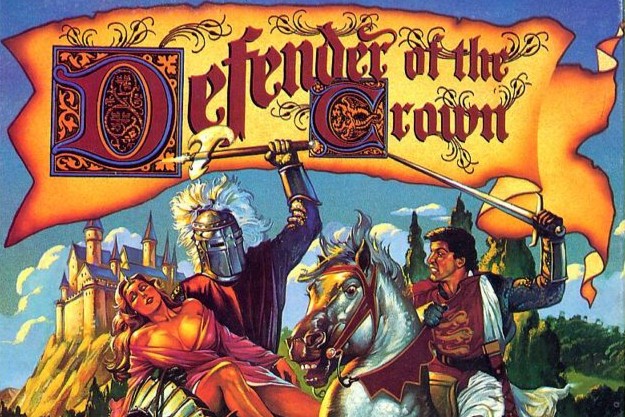
  • Defender Of The Crown (Cinemaware, 1986)

    Defender Of The Crown (Cinemaware, 1986)

    Developed/Published by: Cinemaware
    Released: 11/1986
    Completed: 22/01/2026
    Completion: Finished it by conquering the invaders, but remained unmarried…

    Defender Of The Crown is a game I’ve been eager to play, and I had a reason to boot it up a bit earlier than I intended, so I jumped at the chance. But of course, a problem immediately reared its head.

    Which version to play?

    The game is famous, really, as an Amiga game. If you’re not familiar with the story, video game agent Bob Jacobs saw a prototype Amiga in action, realised that the system provided a huge leap in the potential for video games, and went into business as Cinemaware1, with the explicit intention to create not merely Hollywood-inspired but Hollywood quality video games by (generally) making the graphics really fucking good. The first game to come from this was the Errol Flynn swashbuckler-inspired Defender Of the Crown.

    As an “Amiga first” project, you think it would be easy to choose that version to play (after all, when I played through Pirates, I decided to play the C64 version, as it is Sid Meier’s preferred version.) But the Amiga version is not generally considered the best version to actually play because of its somewhat tortured development: originally intended to be developed by Sculptured Software, Cinemaware attempting a more “Hollywood” process than keeping everything in house, Sculptured ended up so behind on schedule–indeed, seemingly with nothing useful–that the game was handed off to a previous acquaintance, R.J. Mical, to crunch until the game was in a state it could be released.

    (As usual, you can read all about this on The Digital Antiquarian. The guy’s a legend.)

    Something I’ve always wondered about Cinemaware’s early releases is just how arbitrary their release dates were. It particularly stands out with Defender Of The Crown, the Amiga version of which–and I can speak from experience, now–is slight to the point of being unfinished, with apparently weeks of work from the artist, Jim Sachs, going unused. Considering the game would be improved for basically every other release, Jacobs couldn’t have let them spend a little more time on it?

    That all said, no one can exactly agree which version of Defender Of The Crown to play. The Amiga version is the best looking, but the Atari ST version is somewhat close visually; versions on the Mac, PC, NES, even the humble CPC and C64 get design improvements. I was originally of a mind to play the Atari ST version, but I discovered that there’s a Defender Of The Crown II on CD32 that is, apparently, not a sequel but kind of an “ultimate” version of this era’s Defender Of The Crown, so I thought… well, I probably want to play that. And if I’m going to play that, I might as well just play the very original version so one day I can compare and contrast. After all, the whole selling point of the game originally was those graphics, so no point being short-changed there!

    (As my mother would say, what a roundabout road for a shortcut.)

    Now, I have played Defender Of The Crown before, briefly. My main memory of it was not quite getting the game’s mix of Risk-style strategy and simple mini-games, but thinking that when I had time I’d be able to dig into it properly, imagining it was, you know, a proper wargame.

    Playing it this time round? I learned within, hmm, an hour? that while the game initially seems challenging, there’s absolutely nothing going on. No strategic depth. No “play” in the mini-games, each solvable if you can just practice them enough. If you restart the game a few times after learning the mini-games, you will essentially become unstoppable, meaning you can rinse what was once an expensive, system-selling game in an afternoon. The emperor–or I suppose, the crown defender–has no clothes on.

    But dang does his body look good, am I right? As I said, it was the selling point, and playing it, you get it immediately. What you very quickly realise however is that those graphics quickly become a hindrance, because every time one of those big, gorgeous splash screens appear, you have to sit through the Amiga loading them off a floppy disk. Which is, and I always forget this for some reason, not fast. There’s a lot of waiting around so you can see a picture you’ve seen many times before (thank goodness, to be honest, that you can be done with the game so quickly.) 

    That zzz bubble isn’t a sleepy herald; it’s the game making it clear you’ve got some waiting to do.

    But that all said, what actually is the game?

    Set at the time of Norman conquest (but in an extremely “made it up as we went along” anachronistic fashion) Defender Of The Crown starts with Robin Hood letting you know that the king has been assassinated, the crown lost, and the kingdom in chaos, so it’s up to you (yes, you) to sort it out.

    You start by picking a Saxon hero–each of whom have different stats in leadership, jousting and swordplay, although this matters less than you’d think and the stats for one of these characters are even wrong on the selection screen–before you’re dropped onto a map of medieval England where you, two other Saxons and three invading Normans hold one castle and territory each. On each turn you have some options: to grow your army by buying soldiers, knights and catapults; to conquer territory or raid enemy castles; or to hold tournaments where you can joust for land or honour. On each turn, your opponents make the same moves (one thing I’ll say for Defender Of The Crown: it does seem to play completely fair.)

    This is pretty basic, so as well as being dressed up with the graphics, it’s also dressed up with a range of mini-games. Something fascinating about Defender Of The Crown is that it’s, at least in its Amiga incarnation, completely mouse-based. This has a bit of cost in that in none of the games is the feedback that great, which is probably the reason that, for example, the jousting section is so infamous.

    Something I find slightly annoying about Defender Of The Crown: the game is letter-boxed, but it’s not centred on the screen. It annoys me so much that I edited all the images other than the first one. You’re welcome!

    As befits it, it’s definitely got the most pomp and circumstance, and also seems to have the most confusion about it online. There’s a lot of discussion about when you need to hit the button to strike your opponent in a joust, or whatever, but if you just play it a bunch of times in a row you’ll eventually get it: at least on the Amiga, you don’t have to press anything at all, and the trick is knowing that you collide on the “upswing” so you just have to make sure that your lance is aimed at the center of your opponent’s shield at the peak of its bobbing movement. Once you know that you literally can’t lose, and it’s actually one of the quickest ways to win the game, because you can as of the second turn just joust the Normans to immediately take any of their land gains off of them and (probably) make a clear path to their castles all for the cost of some loading time and counting the amount of times you’ve bounced up and down on a horse (it’s seven, you hit them after seven. Spoilers, I guess.)

    My understanding is that Jim Sachs put in a ton of effort to represent realistic castles in a game that’s otherwise basically nonsensical.

    Once you’ve bought some catapults–each piece of land you have pays upkeep that allows you to buy units–you can attack castles, which is similarly simple to work out. You have to knock down the castle wall with a limited amount of ammo; each shot’s height is selected by “pulling” (placing your mouse) to a certain position, and it requires adjustment after each shot to make sure you’re still hitting the wall. It’s a little harder to practice this one–you have to have a castle to attack–but once you work out the first shot, you basically just have to move your mouse a few pixels up when needed and you’ve got more than enough ammo to make a few mistakes.

    This fuckin’ suuucks.

    I wish I could be as smug about the last mini-game, but sadly, I can’t. A castle raid mini-game is triggered either by choosing to raid a castle to steal gold (don’t bother, it’s not worth it) or, occasionally, when you are notified that a comely Saxon lady has been kidnapped by the dastardly Normans and needs rescued (which, amusingly, you can turn down doing.)

    This game is… awful. It’s an attempt at a side-scrolling sword-fighting game, but we’re in late 1986 so it’s not like it’s never been done before, and even being hamstrung by only being able to use the mouse is no excuse. You hold the cursor in front of your hero to move them forward, behind to move them back, and you click the mouse to attack with your rapier, with the idea being you and your companions will fight the guards until you make your way to the lady’s chamber. 

    I can really imagine what Jacobs pitched here: one of those amazing old swashbuckling scenes where the hero, like, swings in on a banner and then fights the enemy on a banquet table, all feints and parries. Instead what you get is this weird shuffling back and forth, hitting the mouse button constantly with absolutely no sense you’re doing… anything. As the only reward for doing this is a wife, it’s really not worth learning (am I right fellas? Take my wife, please? I wouldn’t even go and get her in the first place, etc.)

    Of course, I do say that as a grown man who has seen a boob or two, but I do think if I’d been playing this contemporaneously as a kid I’d have probably gone to the effort, as the real reward is a chaste love scene between your hero and the rescued lady that I’m sure set teenage loins afire (the shadows do have some unintentional, uh, implications.)

    They’re holding hands! Get your mind out of the gutter.

    Thankfully on my winning run I got everything sorted in England so quickly the Saxons didn’t have time to kidnap anyone (hmm, I didn’t get married in Pirates! either. I’ll need to get married in something soon otherwise people will start to talk.)

    The “real” game of Defender Of The Crown is actually the Risk-style strategy game. Now I’m an absolute Risk hater–random, unfair, takes fucking forever–and Defender Of The Crown is only really preferable that you’re not going to fall out with any mates over it because you can only play it single player. The game boils down to just making your campaign army as big as possible and steamrollering opponents. Every turn, send your army home, buy more soldiers (you don’t seem to really need knights) and then smash whoever gets in your way. The game even gives you a wee bit of help in that three times you can ask Robin Hood for help (he bolsters your army a wee bit) and there’s three Norman castles, so it’s pretty obvious when to use them. 

    This is the screen you’ll spend most of your time looking at–especially because the battle screen got cut from the Amiga.

    Because of the game’s design–more land means more money, more money means a bigger army–there’s really no “play” in it. If you start the game knowing what to do–grab land, win tournaments, build your army every turn, attack castles while the Norman campaign armies are in other regions–you win. It really makes this game’s smashing success seem absolutely bizarre.

    But I’ll be kind to Defender Of The Crown and say that, well, most players at the time weren’t going out of their way to min-max the experience. I’m sure most players who got this played obviously losing campaigns to the bitter end; I’m sure many people never worked out jousting and found it exciting and risky. At a certain point I’m sure they found a winning, repeatable path (you really do just get the biggest army) but the game, simple as it is, will have worked until then–a generator of minor player stories as they remembered great victories and losses.

    The funny thing is, it’s so uncinematic. For a company that was literally called Cinemaware, it’s strange that their games are so gamey. You would assume that a Errol Flynn-inspired swashbuckler would have started with a story, a script; a blend of cut-scenes and action scenes in order. In many ways I’d imagine the design would be more like the movie licenses released by Ocean later in the 80s and 90s–half-assed mini games with a cinematic connective tissue, and it would have probably been easier to make, less wasteful, and just as successful.

    Because the hero of Defender Of The Crown is undoubtedly artist Jim Sachs. Games–even in arcades, really–in this era simply didn’t look this good, so I do understand why this was mind-blowing to anyone who brought it home for their unbelievably expensive Amiga 1000 (the 500 wouldn’t show up until 1987.)

    Truly, even though I don’t think Defender Of The Crown is good (at all) Sach’s art is so beautiful and full of life that even now I think “might be nice to play Defender Of The Crown.”

    That’s insane!!!

    Will I ever play it again? Obviously, the thing to do is to play Defender Of The Crown II which, in a stunning plot twist, was developed entirely by Sachs!

    Final Thought: Of course, now I’m thinking about how that compares to the later, more fully featured but “official” Cinemaware versions of Defender Of The Crown, which doesn’t even include the second incarnation of Cinemaware in the 2000s which put out a remaster, a PS2 version, a GBA version… like maybe I should play the Atari ST version after all, just to get the full picture??? Gnngh.

    1. Well, actually as “Master Designer Software” but a bit like Tales Of The Unknown, that would be almost immediately dropped. ↩︎