Tag: 2023

  • Paranormasight: The Seven Mysteries of Honjo (Xeen, 2023)

    Paranormasight: The Seven Mysteries of Honjo (Xeen, 2023)

    Developed/Published by: Xeen / Square Enix
    Released: 08/03/2023
    Completed: 17/10/2026
    Completion: Got all the endings!

    A new Paranormasight game came out earlier this year, but I’d missed the first game in the series. As eager as I was to play it, I thought it’d be best to wait until the season was right. And so I did!

    To be completely honest, it probably wasn’t necessary. While Paranormasight is spooky, the creepy moments and jump-scares are very front-loaded; the rest of the game settles into more of the “mystery novel” milieu, as characters cross paths and work in tandem (intentionally or not) to stop a forthcoming tragedy, and ultimately “solve” the seven mysteries of Honjo. I suppose it was in the title…

    This isn’t bad (at all!) and horror films and stories are often procedurals, but I was surprised by how much the game lets off the gas after its dark and creepy prologue. But it’s probably because Paranormasight is very dense: there are a lot of characters to keep track of, several murders to try to connect, deep lore to parse, and timelines to line up. The game is thinky, not spooky.

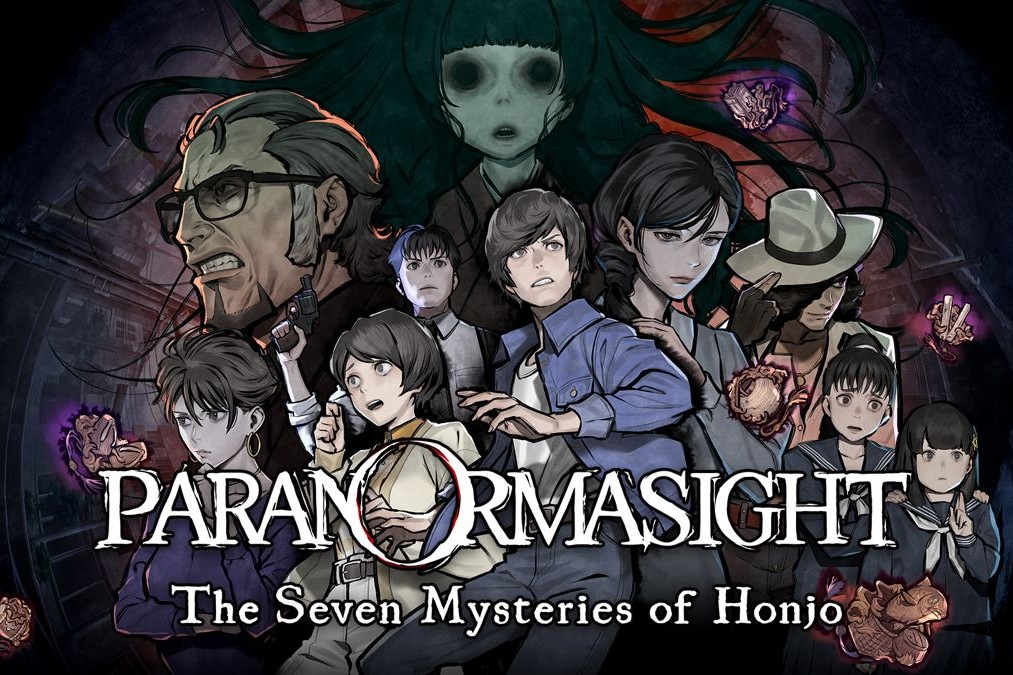
    In Paranormasight, you play four different characters in 1980s Tokyo. The game’s prologue features Shogo Okiie, a fairly normal guy who’s ended up looking into the seven mysteries to impress a girl. After that, you can move largely at will between three other protagonists: Harue Shigima, a housewife anguished by the loss of her son, who believes the seven mysteries may be able to resurrect him. Yakko Sakazaki, who is using the paranormal to investigate the death of a classmate. And Tetsu Tsusumi, a hard-boiled detective investigating the murders that are occurring due to the curses that are connected with the seven mysteries.

    Although generally described as a visual novel, Paranormasight is very much on the side of the genre that errs towards its roots in Japanese adventure games. While it features timeline jumping–which I tend to think of as a visual novel design “thing”–the meat of the game is instead in the patient exhaustion of options that you see in Japanese adventures, where you might have to talk to someone three or four times to get everything out of them, and maybe even go off, do something else and then return to them to actually progress. 

    The Phoenix Wright games are probably the most popular example of this, though Paranormasight has one really nice, player-focused change: as soon as you’ve exhausted an option you get a wee tick beside it, so you know there’s no point still doing it–and if there isn’t a tick, and you’re getting the same response repeatedly, you’ll know you’ve got to do something else and come back to exhaust the option.

    I can understand why certain visual novel fans might find this a bit annoying in Paranormasight. In a lot of the game you’re not really performing any particular lateral thinking to move the story forward–while the game does have a few things like inventory puzzles, as is fairly normal for Japanese adventures they’re used very sparingly compared to their western equivalents–you’re mostly just doing things like talking to one character four times, then another character in the same room a couple of times, then going back to the first character to complete the scene.

    Luckily, Paranormasight’s world and characters are extremely engaging from the off. The team have worked really hard to make the game embody 1980s Japan, and I love that it’s not just obvious signifiers like rotary telephones, but that a “bad girl” character has a proper sukeban blowout hairstyle, or private detective Richter Kai’s shōjo manga good looks (like he’d stepped off the pages of Aim For The Ace.)

    The problem is that the characters and world can only take the game so far. They’re supporting a story that is largely entertainingly complex and twisty, but there’s so much to it that it slows down significantly after the exciting, pacey prologue, and comes to a dead stop at the climax. Paranormasight ends with an extremely hard puzzle that requires you pour over the files and make connections that aren’t really very obvious–imagine a thriller where the climax is the heroes popping down the reference library for a few hours–and when you finally work that out (or just look it up) the concluding puzzle requires you remember something that happened basically at the start of the game (which you could have missed) and then do an action that you haven’t had to do anywhere else.

    It’s unfortunately very deflating, and it’s made worse that the climax makes everything you did feel bizarrely pointless. Without giving too much away, visual novel timeline shenanigans can too often lean heavily on “what if?” and in Paranormasight this decision makes when and where you can jump–and who you can and can’t save–feel kind of arbitrary. It’s really not helped that the game’s villains largely work behind the scenes, leading to a frankly unsatisfying denouement.

    This probably sounds like I’m really down on Paranormasight, but I’m not. Well, not entirely, anyway. It’s simply that the game starts so strongly that it can’t maintain the high. You can feel them put all their best ideas into the start–there’s one meta element that while hardly ground breaking, is so amusing and clever that it did make me laugh out loud–and they end up with nowhere to go from there. I’d still largely recommend it, but it’s a real “it’s the journey, not the destination” kind of game: more for people who love figuring out a complicated mystery rather than those looking for a breezy spook-a-thon.

    Will I ever play it again? No, but I’m excited to play The Mermaid’s Curse and see what they’ve learned.

    Final Thought: One really lovely (and funny) thing about Paranormasight: it’s set in Sumida City, Tokyo and goes out of its way to represent the area realistically, being made with “the full support and cooperation of Sumida City Tourism Division, the local museum, the tourist association, and the local community.” I genuinely love that the tourism division was like “your game is about how our city is cursed, and that people get murdered here? Sign us up!”
  • The Exit 8 (Kotake Create, 2023) / Exit 8 (2025)

    The Exit 8 (Kotake Create, 2023) / Exit 8 (2025)

    The Exit 8 (Kotake Create, 2023)

    Developed/Published by: Kotake Create / Playism
    Released: 29/11/2023
    Completed: 26/09/2026
    Completion: Finished it!

    It’s October, which it means it’s time for spooky games. Which is a great excuse to finally play The Exit 8 (yes, that’s its official title). I watched Backrooms back in July having not previously engaged with the liminal space horror genre before and I… well, I found it underwhelming to the point I couldn’t be bothered to give it a proper review on Letterboxd. I found the parts of the movie that were the most “video gamey” the most interesting though: the idea of this “level” to explore. Mapping it out. The unknown threats. And then I found all the “this is a movie, not a ‘Let’s Play’” stuff really… cringe? Probably because, like everyone, I’m tired of every horror movie being about trauma. 

    I am pleased to say that neither The Exit 8, nor its cinema adaptation, are about trauma!

    To be honest, The Exit 8 isn’t really about anything. It’s a game of pure sensation. When you describe it, it doesn’t really sound like anything. You’re trapped in a Japanese subway station corridor. If there’s something in the corridor that looks different, or something odd is happening (an “anomaly”) you should turn back. If there isn’t–move forwards. If you can manage to do this 8 times in a row, as in make your way forwards/backwards through eight different corridors, you win.

    It sounds like… first-person spot the difference. And I guess, mostly, it is. But The Exit 8 is a great example of the one night game–you know, a game that you pick up and you play through in one evening (or any time of day you can set aside.) I last experienced this with Many Nights A Whisper, last year’s exp. GOTY, and while The Exit 8 isn’t quite to that level, it’s similarly deserving of your complete focus in one playthrough.

    In fact, I don’t think it would work as well if you put it down and came back to it. I started The Exit 8 a little too late (should really have been in bed) and it was perfect, because I felt trapped. I was trapped in this corridor and couldn’t go to bed until I left it. The Exit 8 isn’t forgiving. If you make a single mistake, you have to start again right from the beginning. Because the game is so short, it wouldn’t work any other way (for what it’s worth, I finished it in an hour, but a “perfect” playthrough would be a handful of minutes.) Each time you miss something, you’re crushed–and you’re confused and annoyed with yourself. “What did I miss?” you’ll ask yourself. “I checked everywhere!” you’ll think, unable to bargain with the game–and you can’t even go back and check.

    The Exit 8 is interesting, because it’s not particularly scary. It is, however, excellently unnerving. There will be several moments where you turn the corner and immediately nope out of there because of what you’ve seen; other moments where you push a little forward, knowing it’s an anomaly, but needing to satisfy some curiosity. It’s a classic sort of haunted house, really–you choose to frighten yourself.

    The Exit 8 isn’t exactly horror–so it’s perhaps not the perfect way to kick off October (no draculas or wolfmen here!) but it’s a brilliant way to spend an hour. With the right parameters, it’s immediate and visceral in a way that it feels only games can be.


    Exit 8 (2025)

    But of course, they made a movie of it! Dropping the “The” no one usually notices it’s a savvy adaptation of the game layering story on where there isn’t one (and not even making it about trauma). It cleverly opens in first person, making you think it might be a completely straight adaptation–as an unnamed protagonist, having just received news that his ex is pregnant, suddenly finds himself in the corridors of Exit 8–but as soon as he’s in the corridors the camera pulls back and we get a more traditionally shot film.

    What’s interesting about that, though, is that it really pulls into stark relief the difference between movies and games. I just saw Resident Evil, Zach Cregger’s take on the legendary franchise, and one of the things I liked about it was how inspired it was by the actual form of video games rather than just the narrative: the forward momentum, the hero’s progression via increasingly powerful weapons. But even with that, you could never say to yourself “oh, it was like I was playing the game.”1

    In Exit 8, you kind of feel like you are playing the game. Because The Exit is “just” spot-the-difference, right? And so when you’re watching Exit 8, and you catch the anomalies, it’s kind of got the same pleasure as in the game. When the hero ends up back at zero, it’s a gut punch, almost the same.

    But it’s not the same. There’s an authored gaze, and every anomaly you “spot” is served, from the very first one. The focus, the movement of the camera, the positioning on screen. You’re being played, not the other way around.

    It’s a movie that invites an active viewer, but I admit that I kept waiting for the anomaly that wasn’t shown to me, that I had to truly catch myself, that never showed up.

    In The Exit 8, you’re on your own. If you miss something, you’ll never know what it was. If you don’t move forward, the game will never end. It’s funny to say that experiencing game and film back to back had me feeling pandered to simply by the nature of cinema. “Pfft, it shows me what I need to know? It plays itself? Christ, baby much?”

    Exit 8 does, however, do a great job imbuing the setting with meaning–even shifting viewpoints to do so. I was surprised by how moving I found a segment that (in the game) feels like a throwaway The Shining riff, for example. The Exit 8 in becoming Exit 8 becomes a story not about just observation but engagement: truly engaging with the world around you. It’s not about seeing the right thing, but doing the right thing, when it matters, and living up to the potential of what you can be.

    This is enriching in retrospect to The Exit 8, and I did wonder–would this have worked if it was there to begin with? Funnily enough, no. Ironically, the moments of struggle and catharsis must be out of our hands. We can’t learn about ourselves what the protagonist of Exit 8 does to do the thing he chooses to do, and it always sucks when they make those moments a cut-scene. Exit 8 only works as a movie the way The Exit 8 only works as a game. One with full control, one with none. One where you embody the struggle to escape, one where you empathise with it.


    Both The Exit 8 and Exit 8 are great–and they work perfectly one after the other; in fact, I’d say it’s the only way to do it. Play first, though. You’d spoil the game in a way that you can’t spoil the movie playing them out of order.

    Will I ever play it again? Not sure if I’ll give Platform 8 a shot or not. I know it’s short, but I appreciated this experience so much that I kind of want it to be singular, you know? Er, even though it involved two different forms of media. So a… plural experience?

    Final Thought: The Exit 8 is particularly fun if you’ve visited Japan and have any experience of Japanese train stations, because you’ve almost certainly: got lost in them, and have a fondness for them anyway. I appreciate that what starts as a “oh, it’s just like I’m there” quickly becomes “I’ve got to get out of here!”

    1. Something I think that’s interesting–but don’t really have a place for–is that both Exit 8 and Resident Evil are based on video games, and both are concerned with the anxiety of “growing up”, in fact having protagonists with the exact same dilemma (an unexpected baby on the way.) To prod at the anxieties of an audience in a permanent adolescence feels savvy in a way that Backrooms’ ironically backwards-looking tropes don’t, and I wonder if we’ll see a sea change in horror themes to fears for our future (considering… everything) rather than attempting to suppress our past.  ↩︎
  • Slay The Princess (Black Tabby Games, 2023)

    Slay The Princess (Black Tabby Games, 2023)

    Developed/Published by: Black Tabby Games
    Released: 23/10/2023
    Completed: 28/03/2026
    Completion: Completed it twice. I couldn’t leave them there.

    After Milk Inside…/Milk Outside… I wasn’t feeling particularly positive about this one, feeling a bit concerned that another delve into inner-voice horror might not be the right move and I should just play something nice again. But I was surprised to discover how much I loved this; it absolutely deserves its plaudits.

    It opens with a simple ask–get up to that cabin and kill a princess. I think initially this is going to go a few ways depending on what kind of player you are–you might just do it, you might fight it, or you might simply get stuck arguing with the voice that’s telling you to do it, as the game offers an either impressive or annoyingly self-aware amount of options for the kind of player who like to see where the edges are. Whatever happens, pretty soon you’re going to see some fucked up shit.

    And before very long at all (well, depending on how long you spend arguing) you’ll learn you’re stuck in a loop. I think it’s that aspect where the wheels of the game come closest to coming off, because what starts as a simple story (“just kill the bloody princess”) becomes really huge and weird and existentially complicated. There’s a lot of detail that I admit I don’t really feel is necessary (I almost longed for the abstraction of Milk Inside…); the game could benefit from leaving at least a little more to mystery.

    But it doesn’t take away from the enjoyable puzzle of trying to play the game your way. You’re not choosing who to date, here, but you’re trying to live up to your own code, reacting to what the game throws at you, and I appreciate the game often forces you into unwinnable situations. 

    Of course, like any choice-based game, they haven’t been able to cover every eventuality. On my second playthrough, where I really tried to stick to my guns, that I was occasionally forced to do things due to lack of other options really stung. At the end of the game I genuinely cared what happened, which I think really proves how well the game works (admittedly helped by the rich art and excellent voice acting.) I’m really surprised it never garnered more than an honourable mention at the 2024 IGF for Excellence in Narrative.

    It’d be a bit rich to say the game was overlooked–lord, they’ve got enough money now that they’re publishing other games–but if there’s any possibility you have overlooked it, as I had until this sudden burst of research… don’t?

    Will I ever play it again? There are a lot of more paths in that I could explore, but I’m completely satisfied.

    Final Thought: I really wish I had a more consistent theme across this “theme week”, but I’m not ashamed to admit it came down to length. Sorry Raptor Boyfriend, Doki Doki Literature Club and more, once you’re creeping past an hour or two I go back to looking at my pile of unread books. It should really stand out, to be honest, that I played Slay The Princess twice. That’s how much I liked it.

  • Hi-Fi Rush (Tango Gameworks, 2023)

    Hi-Fi Rush (Tango Gameworks, 2023)

    Developed/Published by: Tango Gameworks / Bethesda
    Released: 25/01/2023
    Completed: 09/12/2023
    Completion: Finished it!

    I loved this.

    I’m not quite sure why, but saying so feels very exposing. Maybe it’s because before playing Hi-Fi Rush I had no idea what it actually was, and the game’s bright anime-adjacent stylings somewhat had me discounting it out of hand, so I assume the extremely cool people who read this would be doing the same.

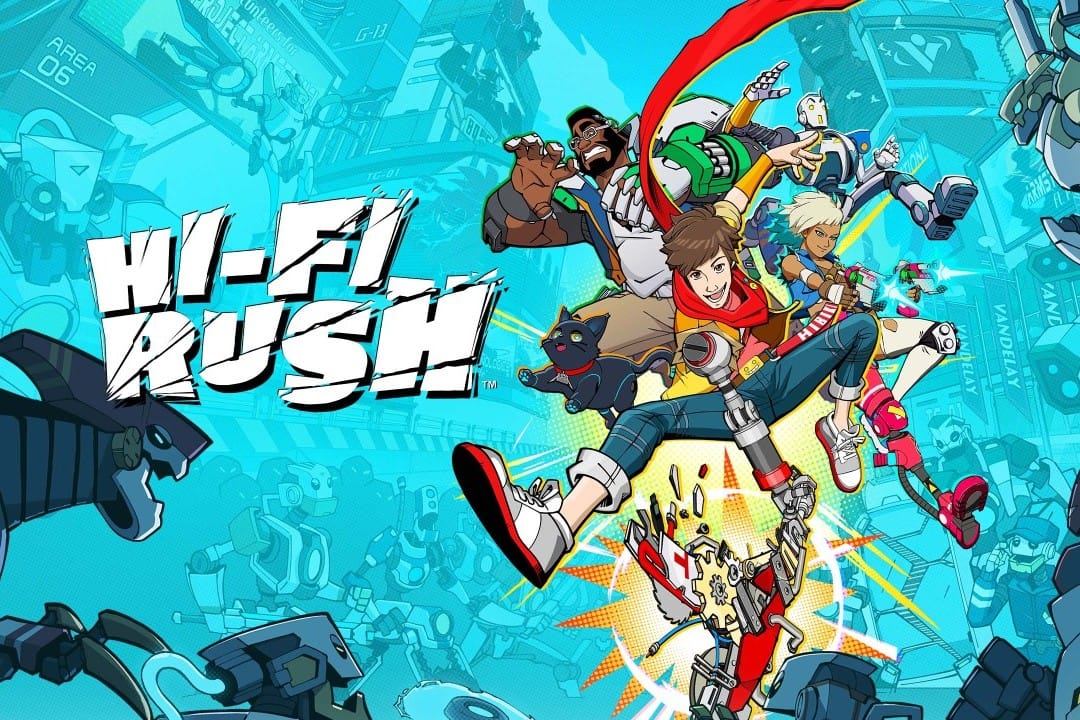
    Maybe it’s also just that Hi-Fi Rush is… pretty straightforward? It’s not particularly trying to move the medium forward (although I think it does some clever stuff) it’s just trying to be very, very good at what it’s doing. And what it’s doing, actually, isn’t so much “anime” as “full on Sega blue skies” while being an incredible competent 3D action platformer/brawler with a likable (dare I say loveable) cast of heroic misfits telling a simple but effectively structured narrative with some very savvy music choices.

    The thing is that… succeeding at something that hits that many beats isn’t actually… easy? Something I’m most struck by is actually those characters. By now we’ve all seen the nadir of Marvel-inspired quip-a-thons thanks to the likes of that Forsaken trailer, but even looking at something like, say, Guardians of the Galaxy, where they have something that (at least previously) had worked, it’s remarkable how flat it falls. Here, you have a goofy, act-first-think-later hero, Chai, the cleverer-than-him female leader, Peppermint, the funny robot, CNMN, etc. in a very simple “baddies are doing bad things, let’s get the different things we need to defeat them” story, but it completely pops because there’s been care to keep the story rolling naturally so you flow through it and grow into caring about them. I’m so insanely curmugeonly that I can’t believed to ride that line for me. But they did!

    Now you could say, “ah, but the secret weapon here is that the game uses actual songs that you actually like! That always works!” But it doesn’t work if all the pieces don’t fit together. There’s no better example than one of the game’s latter levels that uses The Prodigy’s Invaders Must Die. It plays at a moment where narratively all hell is breaking loose. It feels like you’re in a climax of an action movie, not just because the music is playing, but because the story has taken you there. That the level design is clever enough to cool down, let the music pull back a little, and then kick it back in for a climax? Absolute chef kiss.

    (It only really gets better from there, too. Ending strong is rarely something I think video games aspire to, but Hi Fi Rush is sensibly around the 10 hour mark and the last three levels or so rip. Did the appearance of The Joy Formidable on the soundtrack literally make me emotional? Yes. Yes it did.)

    Now interestingly, I haven’t actually played any other Tango Gameworks titles so I don’t really know if I should have expected rock-solid play, but either way I was surprised by how well it does. What makes Hi Fi Rush genius, I think, is that it takes a type of game I am incapable of not button-mashing through and adds a rhythm action component that doesn’t expect but rather, uh… politely asks you to hit your combos on rhythm. And it works!

    I can criticise it, somewhat, however They quickly add quite a lot of subtleties to the combat and don’t tutoralise them heavily enough–I didn’t understand how to use Chai’s “partner combos” until well over half-way through the game, and I don’t know if I ever got comfortable with parries because standing around waiting for enemies to attack seemed the antithesis of everything else I was doing. There end up being a lot of buttons and you have to internalise the order of your partners and switching between them rapidly in situations where there are like 3 different kinds of enemies at once meaning at times combat is just a total stramash. But even then, there’s always the beat to follow. It’s very clever.

    Anyway. I loved this. It’s one of my favourite things I’ve played in years. Your mileage may vary!

    Will I ever play it again? When it finished I wanted to play it more. That literally never happens. I sort of hope there’s a sequel, but the story of this is so pleasantly complete that I’m not sure if there should be one.

    Final Thought: I may also be a bit of a sucker for this game because you’re always accompanied by a black cat. Inspired by the game director’s!