
To view this content, you must be a member of exp. magazine’s Patreon at $1 or more
 Unlock with Patreon
Already a qualifying Patreon member? Refresh to access this content.
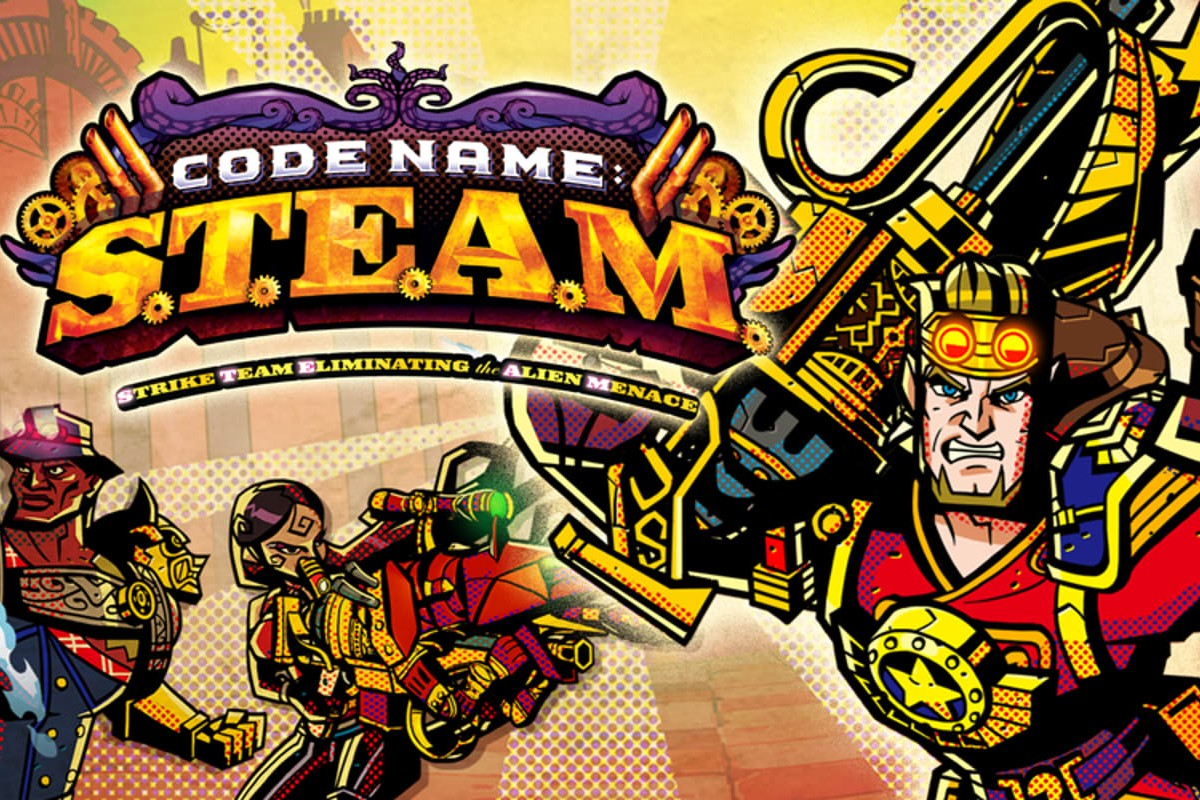

Developed/Published by: Intelligent Systems / Nintendo
Released: March 13th, 2015
Completed: 25th April, 2017
Completion: Finished all the levels, collecting all but eight of the gears.
Trophies / Achievements: n/a
Here’s another Nintendo failure, then! You know, I do like to complain that Nintendo only seem to pump out games in just a few franchises (Mario, Zelda, recently Fire Emblem) but here’s what happens whenever they put anything else out: it tanks. So no wonder they’re getting the idea that people just want the same thing over and over until they run it into the ground. And honestly, sometimes it’s fair that the things they release fail, because they’re insanely misguided (Metroid: Federation Force) but then it’s also sad because Nintendo then learns the wrong lesson from them (“people hate Metroid”).
I mean, the lesson they might have learned here—Intelligent System’s attempt at a Valkyria Chronicles-esque third-person strategy title—is probably “don’t let Intelligent Systems do anything except Fire Emblem” because bloody hell I can’t keep up with the number of Fire Emblems that have come out. (Remember Advance Wars? It’s been almost ten years, guys.)
And, frankly: it’s a shame. Because I liked Code Name: STEAM. I know, that’s insane. I hate everything. And let me state as caveat that I immediately installed the patch that allows you to speed up the enemy turns. But Code Name: STEAM is a completely serviceable strategy title that—outside of a few frustrations—I found completely pleasant.
Now, I can agree: it’s a bit weird looking. It doesn’t manage to nail the comic book look it wants, and the enemies are somewhat… dull. However, it’s got a weirdly interesting and diverse cast drawn from literature. It gets some points, for example, for gender-swapping Zorro (was this secretly why it failed? Neckbeard boycott?) but loses some for having Dorothy bare her midriff (why?) but maybe it gains those back by including Queen Califa. I’m not a perfect arbiter of points, ok?
It does have some other flaws. Many (most?) people complain about the lack of a true tactical view, but that didn’t bother me because it’s obviously not what they’re trying to do. With free movement before you commit (hindered by enemy overwatch attacks), it’s a game about careful scouting and much more about the feel of being in a small attack squad. I do think the game is much too stingy with its steam-based action points, meaning you travel through levels very slowly, and the game doesn’t have any good sense of a progression of power—all of the unlocks are similar in power levels, just different, when it could have done with more steam being offered as you unlock new boilers (for some reason, most boilers don’t refill fully each turn, and the ones that refill slowly that you unlock I found unusable. Rather a big misstep, I feel.)
I’d say the main mistakes they’ve made are in working against the slow, methodical play style that the limited action points engender. To mix things up they add a lot of “pressure”—first with baddies that spawn in (behind you, usually) which is a mild irritant, and then just the worst: “spotter” baddies in levels featuring mortar attacks. They spawn and you have to get out of their line of sight or take a severe hit. Of course, so you can’t stall, you can’t kill them (just move them, hopefully out of sight, but it’s generally awkward to do) and this is insanely frustrating with the limited amount of action points on offer. There are certain levels where you will be harried to the point scouting is impossible, and you get situations where you stumble forward, get shot by a baddie with knock-back, and then land directly in the path of the spotter you thought you were escaping, and die by mortar. Oh, and there’s a couple of difficulty-spike levels outside of that: one with mounted guns that don’t have a clear range (frustrating) and another with a bunch of exploding enemies dropping in that I found… ragey.
Honestly, at least one of these levels had me considering stopping playing, and that’s really awful, because the game is so close to being an all-round nice time like Valkyria Chronicles. The final boss is a pain in the arse too, admittedly—but at least it’s nothing like the final boss of Fire Emblem: Shadow Dragon, my last dalliance with an Intelligent Systems game.
However, the levels in which it works—it really works. In general the map design is clever, with a good mix of complex indoor and outdoor spaces, and while generally it’s a bad idea to split up your team of four, the level where you’re forced to do was a particularly fun one, I thought. There are far more fun levels than frustrating ones, it’s just the annoying ones are going to stick in your craw (I mean, they’re ultimately why I didn’t collect all the gears you can find in levels, and I wanted to.)
I’m gonna say that it’s weird to me that Code Name: STEAM didn’t get a fairer shake when it was released. It was slated by almost all reviewers with them almost all concentrating on the (pre-patch) lengthy wait between turns, and I guess that one mistake wrecked any chance of it managing critical acclaim at least.
Well: It’s got the only critical acclaim it truly needs: that I liked it. I mean, I didn’t love it or anything but I had a nice time. That should be more than enough!
Will I ever play it again? I won’t, but the sequel they tease at the end I would have played, except it shall never exist.
Final Thought: I recommend this, actually. I’m gonna… recommend it. Really! Because when I picked it up it was $5, and pretty much any store is gonna have it for pennies. You can do so much worse.
This essay is featured in Every Game I’ve Finished 14>24.


Developed/Published by: Hipster Whale, 3 Sprockets / Bandai Namco Entertainment
Released: August 19th, 2015
Completed: 22nd August, 2015
Completion: I scored 12,583 points and I was like “ok, I get it.”
Trophies / Achievements: n/a
First up, I’ve previously written up Crossy Road, and you might want to read that first, because it’s fairly obvious that Crossy Road is the design core of Pac-Man 256, which, when you think about it, is kind of weird. “Make a Pac-Man game based on Frogger.” (Actually, this could be kind of a cool jam idea: retro mash-up. I suppose people do this already, but legitimate design mash-up, not just slamming two games together without considering the game systems. It’d be easy to make Pac-Man Frogger where, I don’t know, it’s just Frogger, but the cars are ghosts! Or whatever.)
So. I played Pac-Man 256, immediately thought it was gash, and was prepared to put it down until Sage Solitare’s designer Zach Gage said it sounded like I hadn’t “really” played it after some mild questions on Twitter, which was like a red rag to a bull honestly. I played it quite extensively for several days, and so I think I’m totally in a good position to critique this. Let’s begin.
Pac-Man 256 is… half a design. It’s a really good example of a game where they came up with the idea, said “why it practically designs itself!” and that was it. If you’re not familiar with it, and don’t want to download it and see, here’s the deal with Pac-Man 256: you’re Pac-Man. He’s on an endless isometric Pac-level. if he doesn’t keep moving forward, the “kill screen” glitch catches up with him and kills him. There’s all the usual stuff—ghosts, power pills, fruit—but there’s also a mechanic where you can use one continue each game (so you get one life, basically) and three optional power-ups, which you can pick up the same way you do power-pills, and which work in a similar fashion (it makes you invisible to ghosts! or a giant pac-man who eats ghosts!) but if you pick one of those up, you can’t pick-up a power-pill and vice versa. Oh, and fruit works as a multiplier for a while, not just a straight point-gain.
This all sounds good! There are some issues, however. You see, Pac-Man was a game about cleaning the whole stage, not about driving endlessly forward. Pac-Man 256 adds a dot-chain mechanic where you get a bonus for perfectly eating 256 dots in a row (with no missing/turning back, apart from on corners or something, there’s a weird quirk where certain missing dot spaces are fine?) but this is rather hard to do, especially as there can be serious clumps of ghosts, and big swathes without dots. As far as I can tell, this is to incentivise playing the game different ways; maybe this time you’re going for chains rather than just points.
Now, I’m going to claim something that might be talking out of my arse, but I think not even Pac-Man Championship Edition was about chaining individual dots (correct me if I’m wrong) but about clearing sides as fast as possible. Simply because the nature of Pac-Man is it’s a game where you have to navigate around the movement of the ghosts. Pac-Man CE designed the level sides to be eaten in a long combo, but very clearly so; I can’t see any similar pattern in the generation of Pac-Man 256, and it’s a flaw; the game really does put you into positions where you think “urgh, if I want to keep this chain going, I’ll have to avoid that fruit” which is really weird, but it seems intentional—fruit usually has large dot gaps around them. (Also, I’ve seen it implied power-up spawns are connected to dot-chains, so the risk/reward is to bypass fruit for power-ups… maybe. This may be true, but it’s not a great design, for reasons I’ll outline.)
Then, thanks to scrolling, you’re never clear on where ghosts are, or how many of them there are. taking any long straight route is often suicide; you’ll generally find yourself boxed in and have to use a continue. Unlike a Frogger-based game where this is fine, here you’re in tunnels, so you have zero wiggle room. You can’t dodge to the side unless there’s a path there. It’s easy—stunningly easy—to get yourself into a no-win situation that you couldn’t forsee, which is a fairly huge issue for a Pac-Man game.
So the game loses that cleaning mechanic for a survival one, with a dot-chain mechanic that doesn’t gel with its score mechanic, and scrolling that means you can often suicide. It also doesn’t, for some reason, measure distance; perhaps the dot-chain mechanic is meant to replace that, so there’s a conflict in the player’s aims that I feel is never satisfied, as “forward” is not always “higher score.”
Maybe they removed distance, due to an issue I had with Crossy Road (not that they know I had the issue, just that it also weighed on their minds.) Remember how I complained that it was boring to climb back to a distance you had reached in the aim of a higher score? Well, one of the absolute strangest things about Pac-Man 256 is that they came really, really close to solving it. As it stands, it’s the same situation. Once I reached 12,000+ points, I couldn’t stomach trying for higher…
Actually, wait, let me take a detour here. One way that I think they did intend to solve the problem is in the unlockable power-ups. If you just keep playing, you’ll unlock and pay for more powerful power-ups that can last longer and longer, so higher scores are easily achievable. It’s not so much a game design than a bit of microtransaction design (you can pay for coins, so if you pay to unlock everything you’ll be able to compete at the highest level). It actually managed to totally de-incentivise me (what’s the point in playing to earn the lower difficulty level that will grant me scores I can’t achieve now?) but the idea certainly seems to be that as you’re more powerful, the race to let’s say 12,000 points is quicker. (There are even three point-aiding power-ups, that take a long-ass time to unlock.)
The thing is, of course, is that’s a crap bodge of a solution for anyone who actually likes skill-based games. There’s a solution right under their noses, though. Playing the game, one of the weirdest and most unfair things is fruit. Sometimes you hit a 2x fruit. Sometimes you hit a 6x one. Maybe you hit a 6x one straight away and start tearing up! Maybe you don’t. I might be wrong (in fact, I just played it for a wee while there, and I’m pretty sure I’m not, but I’m open) but this has no connection to anything. It’s just random, and means that like a lot of randomly generated games, you’re just waiting for a good “seed” to get a high early score. If you’re going to have multipliers, why not connect them to something?
High multiplier fruit only appear once you’ve chained a certain number of dots. High multiplier fruit are difficult to get to (and not just “they break your chain”—fruit is consistently better). High multiplier fruit makes the game much harder—but the reward much faster.
I’d much, much rather be playing a game where I hit a 12x multiplier and died reaching 12,000 in a twelfth of the time than laboriously wait for a good “seed.” It’s just boring.
Pac-Man 256 is one of those things that looks genius, but doesn’t pay off at all. In comparison to the beautiful Pac-Man Championship Edition (not DX, that’s a dilution) it’s just horrible—if you just made Pac-Man CE endless it would still be better than this. The game simply never manages to gel moving forward and dot-chaining endlessly with the core Pac-Man of screen-clearing and performing skillful manoeuvres to chain ghost kills or collect fruit. It falls between two chairs, and if you’ve ever done that, it’s a pain in the arse.
Will I ever play it again? Doubt it. You don’t improve the design of a game like this after release, you just release hats for Pac-Man that people can pay for. Have they done that yet?
Final Thought: I’m not going to write about Sage Solitaire (though I could) but I’ll use it as an example to defend Pac-Man 256. Sage Solitaire has a lot of the “seeding” issues that you could say these games have (and, indeed, solitaire always does) but it’s mitigated by the fact that you’re playing with a known 52 card deck. A dedicated enough player can “do the work” to get the best result they can. However, the point of Solitaire, as far as I can tell, is not to min-max. You’re playing it to pass the time in an amusing diversion. it’s a time-waster. It’s entirely possible that here I’m a poker player in a room of solitaire fans. If you enjoy Pac-Man 256 (or Crossy Road) as a time-waster, you don’t really care how long it takes to get your high score, and in fact the unlockable power-ups are a great, fun incentive to keep returning. You’re just playing a modern solitaire.
I think there are so many more beautiful things to play than solitaire.
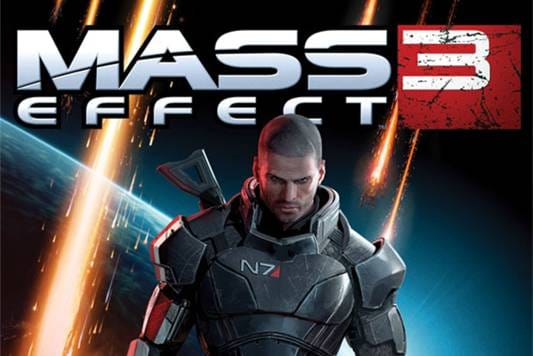

Developed/Published by: BioWare / Electronic Arts
Released: March 6th, 2012
Completed: 7th May, 2015
Completion: Completed it with one of the good (but not best?) endings. Or something.
Trophies / Achievements: 640/1550
So there’s me, right at the end of Mass Effect 3, and I’m like “hmm.”
I’m like “hmm” because I realise that even though I thought I had installed the special BioWare-makes-the-fans-happy-really-sorry-how-abrupt-the-ending-was-please-stop patch, I, uh, hadn’t. And I really, really couldn’t be arsed waiting for it to install and then playing through what might turn out to be a significant chunk of the game again to see the “proper” ending.
So I didn’t and watched my ending “again” on YouTube with all the stuff they added.
Now. I’m not really a fan of… uh, fans. In general, I’m one of those sorts that thinks that authors should put out their work exactly as they want it to be, and be done with it. The author dies to the audience, the audience, to the author, never existed.
However, if the ending of Mass Effect 3 was as BioWare intended, they’re fucking idiots. No, lazy idiots. The extended cut is a botch job—stitches things together just enough that you’re like “yeah, fine, whatever” but it’s actually quite embarrassing to think they thought the original pass.
(Whether that’s more embarrassing than fans peeing their pants in such an astonishing baby-tantrum that they went to the Federal Trade Commission in the US, I’m not sure.)
Speaking of authors—BioWare is interesting, isn’t it? If you were to ask me who the main creative force of a lot of games were, I could name a person quite easily. Fable III—another example of a game with a garbagey ending and promises it couldn’t keep—you can place your anger at Peter Molyneux’ door. But with Mass Effect 3, or any BioWare game, I’d struggle to name any person who worked on it. Wikipedia says this bloke Casey Hudson was the director, so I’d assume the buck stopped with him. Never heard of him.
(To move on from authors to auteurs, if you’re wondering, I don’t feel the auteur theory fits for every work. But even in a huge video game, I think it’s important that one person or a small group of people shepherd the work into a consistent whole. Otherwise you end up with drivel. And we often end up with drivel.)
In this case, I wonder if the buck stops with Electronic Arts. EA are generally parodied as evil (I think they’re still topping the worst companies list, aren’t they?) despite the fact that everything has consolidated so much when you get down to things they’re just another massive corporation (so, evil, but no more or less evil than any of the rest of that shower.)
Here, however, the corporate bells and whistles on Mass Effect 3 are egregious. Mass Effect 2 might have had some DLC characters and that kind of shite—pay another $20 or miss out on three chapters from the latest Game of Thrones book, imagine it—but Mass Effect 3 makes the decision that, you know, if you really want to get the best endings by raising your “galactic readiness” you should spend a lot of time playing multiplayer. And you should play the tie-in iOS game. Oh, and the tie-in app!
If you don’t do this—or, if like me, you don’t actually realise you’re supposed to do this and can’t really do this, because it’s several years later—you’re fucked (I think you can get the best ending if you 100% the game with the extend cut patch, but I’m not totally sure. I certainly wasn’t sure what I had left over to do to get it.)
So what you have here is a story, a narrative, a creative work, whatever you call it, absolutely and totally at the whim of a corporate treatment that says something as vapid as “we need people engaging with the brand in a holistic manner across multimedia.” Or something. Mass Effect 3 becomes “content” to be exploited.
It’s a disaster, and to be honest, the majority of Mass Effect feels like a franchise spinning it’s wheels. No matter how you get there, you get to an ending that I characterise as “the Deus Ex.” If you’ve ever played a Deus Ex game you probably know what I mean (they all do this): you’ve just made a million decisions through the game, and right at the end they give you two or three options, usually represented with big buttons or something, none of which are exactly “good” or “bad” and none of which have anything to do your choices previous. In fact, the ending of Mass Effect 3 is almost exactly the same as the original Deus Ex if you think about it.
Even more so than Deus Ex where it’s a let-down, here you’re like “what? This has nothing to do with the rest of the game at all???” It’s baws.
(If you want to complain that actually, the endings you can get do relate to your decisions because of the way you collect “war assets,” there are still basically up to three endings. Everything else is so mild as to be meaningless.)
Anyway, my point isn’t that the ending is bad and therefore I’m annoyed. My point is that I don’t think Mass Effect 3 could have been good in the culture it was developed in. Who cares about quality when you’ve got content to exploit?
Will I ever play it again? Ha ha no. And it has made me doubt I’d play Mass Effect 4 when it inevitably comes along.
Final Thought: You might have noticed that despite being frustrated by its problematic aspects I didn’t dislike Mass Effect 2, while I consider this one a disaster. Well, Mass Effect 3 has improvements—it looks better, combat is evolved—but it’s just not compelling. It gets off on the wrong foot immediately, I think. The stakes are so comically high—the game begins with Earth being invaded—that flying back and forth and doing missions and stuff just doesn’t seem to make any sense. I was constantly like “wouldn’t everyone on Earth be dead already?”
Yes. I didn’t find a space opera “believable.” But the whole things ultimately makes about as much sense as Fable III and if that isn’t a sick-ass burn I don’t know what is.


Developed/Published by: Playground Games / Microsoft Studios
Released: March 27th, 2015
Completed: 29th April, 2015
Completion: Finished all the races!
Trophies / Achievements: 1000/1000
The Fast & The Furious franchise is a legitimate juggernaut, with the last film breaking a billion dollars worldwide quite easily and countless (countless!) articles about its unique appeal, from waffly thoughts on its diverse casts to hipster snark over how silly the films are despite that.
I love The Fast & The Furious franchise. I love it. I love it so much that I’ve marathoned the films twice—once for six, and then again for seven—and the second time we did it we actually went to all this effort to edit the films slightly so we could fit them into a day and include things like Justin Lin’s A Better Tomorrow and straight-to-DVD short films.
I love it so much that I paid $25 to watch Furious 7 in a juddering theme park chair (D-Box) on a Saturday night and cried buckets at the touching eulogy to Paul Walker at the end. While in a juddering theme park chair.
The most amazing thing is that until that first marathon I wouldn’t have rated the series at all, having only seen the first one as a student one night when people wanted to go to the cinema but there was nothing on. And now I have such a deep adoration for a series that, I’ll happily admit, is wildly patchy in tone, content and quality.
It’s one of those things that’s rather hard to sell to people, because the series has wiggled and morphed; lazy street-race parody, 80s action throwback, superhero movie, crime drama, heist flick… and yet as it has progressed, it’s,managed to cobble together an epic through-line of continuity, revealing a deep sincerity through a belief and love for its characters that shines through.
To me, The Fast & The Furious series is what makes cinema great—no, it’s what cinema is. None of that shite about “turning your brain off.” They’re movies that say “we’re going to take you on a ride, are you coming with us?”
I think it says a lot about the viewer how they react to that.
Forza Horizon 2 Presents Fast & Furious is, and this surprises me, a wee game that is made by people who clearly also really love The Fast & The Furious. There’s not really that much to it—a few hours of driving around repurposed chunk of Forza Horizon 2’s open world—but anyone who would title the final achievement here “How Long Was That Runway?” gets it.
It’s the first realistic driving sim I’ve played in an age—since digging into Gran Turismo 3 all those years ago, a slog to be honest—and I was massively impressed with just how easy you could make it to play while still making it feel “realistic.” You can more or less get it to feel like Ridge Racer if you want, but there’s a nice middle-ground there with just enough resistance that I could feel the simulation without getting annoyed at the controller interface.
However! I was playing a The Fast & The Furious game! This is, yes, a nice racing sim, and they did do what they could to make Fast and Furious events—racing a helicopter, etc.—but with the franchise having morphed from being “mostly about cars and family” to being “mostly about everything, up to and including gun fights, kung fu, big explosions, but still cars (a bit) and definitely family” it all feels a bit pedestrian. Ludacris might be doing the voice (and his best to make it seem fast and furious) but, you know, you’re still just driving a car about town without any stakes at all.
Isn’t that weird? The series has moved on so much that the focus on car racing just feels limited, and there’s not much the Forza chaps can do about it. It’s perfectly pleasant, and at the cost of free it was a great demo for the larger game (not so much at the $10 which it costs now, though). But it is just a demo and, honestly, The Fast and The Furious franchise deserves more. Just pick up Forza Horizon 2 now it costs money.
Will I ever play it again? No, but if I’m ever a millionaire I’ll spend money on one of those insane driving set-ups with a wheel and clutch and proper stick-shift and everything and drive very slowly around Forza Horizon 8 or whatever.
Final Thought: My next trip to D-Box will probably be for Mad Max: Fury Road. Cannae wait, man.


Developed/Published by: Genius Sonority / The Pokemon Company, Nintendo
Released: February 18th, 2015
Completed: 11th April, 2015
Completion: Finished 100 levels and was like “No. No more.”
Trophies / Achievements: n/a
There are 150 levels of Pokémon Shuffle, and several more “expert levels.” I stopped at 100 because… well… I was like… “why am I playing this? This is obviously a waste of time.”
I’m not going to faff around with this one. Pokémon Shuffle is a free-to-play game, and I’ve written about a few of those before. I think most notable would be No Heroes Allowed: No Puzzles Either! because this is the Nintendo equivalent of it—match three where you’re beating up on an enemy by making the matches; consumables help you win levels when you’re struggling.
Looking back, I have no idea why I played No Heroes Allowed: No Puzzles Either! as long as I did, because I gave up on this fairly fast (fairly… for me.) It’s possibly that I would never have downloaded this if it hadn’t just shown up on my 3DS home menu. Incredibly sneaky of Nintendo to more or less force their free-to-play games on you (I think they did this with Rusty’s Real Deal Baseball also?) and like No Heroes Allowed, playing it a couple of times a day didn’t seem like such a terrible waste of downtime, even though it obviously was.
I mean… I can’t really explain it. This game is stupefying. Move things, things fall, combos happen… it’s simplistic to the point where it’s deeply uninteresting, and it never gets more strategic than being able to see potential lines of four or intersecting lines of three? So it’s just move some blocks with a stylus, wait a few hours, do it again.
Until level 90 where you literally cannot beat the level without using consumables, and I was reminded this wasn’t a way to waste time, but players’ money. I beat it using about 13000 coins worth of consumables (almost my entire savings!), finished ten more levels and was done with it.
This is a reminder: don’t start playing these games. They do nothing for you. There’s nothing there.
Will I ever play it again? I could go back and finish the last 50 levels but I’m sure there’s another “pay money please” roadblock at some point so no. Also, as established, this would be a stupid waste of my time on earth.
Final Thought: I really, really want to play through and write up Rusty’s Real Deal Baseball, I must admit. But I’ve stuck fairly well to my “no spending money on new games” rules and (I think) it costs you about $16 total. Maybe I’ll run a $16 Kickstarter.