Tag: 2013

  • Rymdkapsel (Grapefrukt, 2013)

    Rymdkapsel (Grapefrukt, 2013)

    Developed/Published by: Grapefrukt
    Released: May 7th, 2013
    Completed: 18th April, 2014
    Completion: I researched all the monoliths.
    Trophies / Achievements: n/a

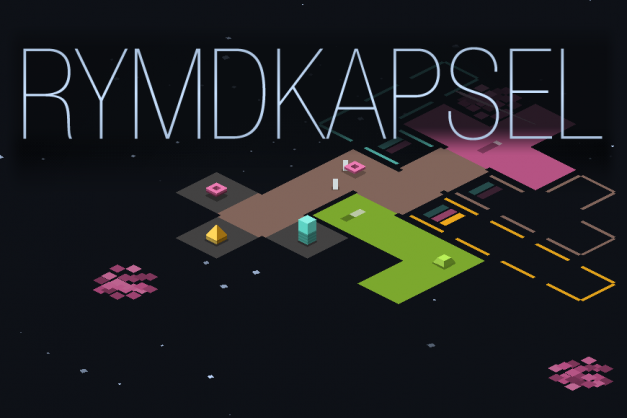
    I had played Rymdkapsel on release, but I thought the core concept—placing tetrominoes down to create a space station, choosing if they’re corridors, barracks, weapons rooms or so on—was so cool that after touching it briefly I put it down thinking “at some point in the future, when I’ve got more time, I’ll really dig into this.”

    (God knows why I chose this weekend, and right before bedtime, too.)

    I must admit: I’m a little disappointed in Rymdkapsel. It’s my own fault in some ways. You see, Rymdkapsel is a small, short, single experience. Your station is centrally located between four mysterious monoliths, and you reach your corridor tentacles out to research them, all the while making sure you don’t run out of materials and are well defended by weapons rooms. It’s really really cool. But once you’ve done that—and it should only take a few hours—you’re, uh, done.

    Now, before you cry foul, you can continue playing—there’s definitely an ending if you can get through 23 waves of enemies, and there’s a relaxing zen mode for stress-free building—but I’m kind of surprised because the design promises so much more than one canned experience.

    Yeah, I’ll say it… I wish this was a rogue-like-like. I know, I know. Everything is a rogue-like-like now. But I don’t see why with Rymdkapsel I don’t constantly have different monoliths to find or why the enemies aren’t different each time (well, to an extent). I can definitely see playing this over and over if there were differences every time I played. It doesn’t make the basic experience of playing the game the first time any worse—actually, I totally recommend playing Rymdkapsel, it’s great—it’s just… why am I not still playing it?

    Will I ever play it again? I really want to, which is the odd thing. But I can’t spend my time re-playing the same experience, I have this site to think about!

    Final Thought:  I mean, look, I can see some problems; you probably can’t let a single space station get too big, or it’ll make the game unwieldy. But it could stay a short, just very varied, experience, I think? There are some other things that would have to be considered, too. In this version, you can sneakily place and then delete corridors to ensure you get the right shapes you want, which you’d probably want to avoid to make the rogue-like-like harder. And in that case, well, Rymdkapsel is described as a “meditative space strategy” which is definitely a step down from the intense, “you are going to die, and soon” experience of most rogue-inspired titles. So maybe this isn’t an ideal twist.

    But it’s one I’d like to see!

    This essay is featured in Every Game I’ve Finished 14>24.
  • Star Wars Pinball (Zen Studios, 2013)

    Star Wars Pinball (Zen Studios, 2013)

    Developed/Published by: Zen Studios / LucasArts
    Released: February 19th, 2013
    Completed: 25th March, 2014
    Completion: It’s pinball. You can’t actually complete it, so yet again more truthfully: I just stopped playing.
    Trophies / Achievements: 27%

    Pinball is in a wee bit of a renaissance, recently. Not the physical machines (god no) but in video game-o-form, with FarSight Studios more or less kicking the whole thing off with their excellent digital re-creations of classic pinball tables in things like Pinball Hall of Fame and now their ongoing project The Pinball Arcade, which has enough of a following that they’ve managed to run fairly pricey Kickstarters for new tables and otherwise keep up a pretty regular run of new tables.

    So people who like this—admittedly fairly niche—line of game design are well served. What I think has been so important to the whole thing is a little odd, though, considering that it’s something I pretty much hate in every other kind of game. It’s achievements. 

    You see, I don’t actually think it was until I went to the Pinball Hall of Fame in Las Vegas that I ever really understood how to play Pinball. For pretty much my entire life up to that point, every table was an inscrutable jumble of flashing lights. You put in your 50p, and the entire aim of the game was “don’t let it go down the hole in the middle… or those holes down the side, but you can’t really do anything about that.”

    Not to say I didn’t like some tables! I always loved the Data East Star Wars pinball machine (which we’ll probably never see remade, thanks to this) Twilight Zone and so on. But understand them? No. It was only by spending almost an entire day at the Pinball Hall of Fame, working my way up from the most basic tables to the most modern, that I got this gradual understanding. Tables that have one feature up to tables that have a bazillion. Started to be able to pick out what I was trying to do to make points happen. Started to learn what an incredible game design challenge a pinball machine is.

    Not everyone would have this opportunity, and honestly, it still wasn’t enough. And that’s where FarSight stepped in. They added “goals” to every table, which result in achievements. Get the “Standard Goals” and you’ve basically learned the table. Get the “Wizard Goals” and you’re amazing at that table. They’re nice, granular ways to learn the table, always giving you something to aim for other than a high score, and if you’re so good that you’ve got them all, then you’re aiming for some pretty astonishing high scores and the challenge alone should be enough to keep you going. It’s really an incredible way to start to get pinball, and off the back of it I learned to really like what seemed like a confusing yet simultaneously boring table like Black Hole.

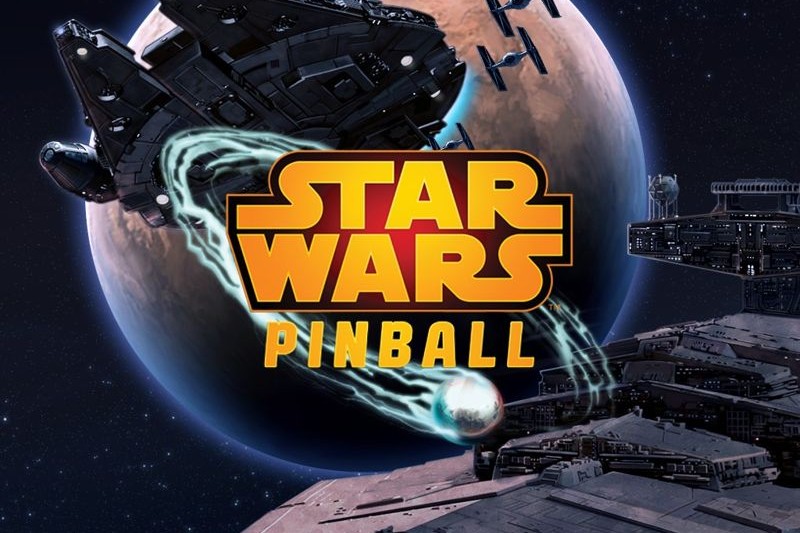
    Anyway, Star Wars Pinball is a stand-alone game from Zen Studios, basically FarSight’s only competitor with Zen Pinball. They create their own tables—which are a bit more magical, more Devil’s Crush video game pinball, than strictly realistic—and they have no fucking idea how to use achievements to teach the tables or give players an interesting challenge/range of goals. There’s three per table, every one (bar one, a Yoda-based bonus on the Empire Strikes Back table) is insanely hard to do unless you are amazing; in fact the Boba Fett table’s goals are more or less “do everything on the table” and one of the Clone Wars (spit) table’s is “do this one thing flawlessly three times in a row, NO MISTAKES.”

    It’s garbage. 

    Will I ever play it again? No.

    Final Thought: What if you don’t want goals, you just want to score points on pinball tables? The tables are ok, I’d actually say they’re overcomplicated by all the video game stuff. And you are going to get SO sick of the theme. The same quotes from the movies, over and over and over again. Barf.

  • Ikachan (Pixel, 2013)

    Ikachan (Pixel, 2013)

    Developed/Published by: Pixel / Nicalis
    Released: January 31st, 2013 (original PC version: June 23rd, 2000)
    Completed: 11th January, 2014
    Completion: Completed it!
    Trophies / Achievements: N/A
    Version Played: 3DS

    Ikachan is mostly notable as one of the games Cave Story developer Pixel (Daisuke Amaya) created before, uh, Cave Story. No, wait. I probably mean particularly notable at that, because Ikachan does feel in some ways a dry-run for Cave Story. It’s got exploration, some story, an exp./upgrade system, amnesiac hero who wakes up in a cave system… it most likely uses an earlier version of the same engine, too.

    But, um, just because it’s notable doesn’t really mean it’s that interesting. Ikachan is—literally—about an hour’s worth of content. You play a wee squid and your main interaction is to aim left or right and tap “A” to make him float about. It’s mostly an avoid-em-up (you know, carefully tap just fast enough to stay above spikes, but not go into the ones above you, etc.) and unlike Cave Story, where (and it’s been years since I played it, so I might be over-estimating it) everything comes together, in Ikachan I was struck by how… unnecessary most of the play additions beyond that feel. You can collect exp. and level up, but all it does is add some hearts (that could have been there in the first place.) You “Metroid style” unlock some abilities that allow you to open new areas… twice (each area you visit… once.) You run some VERY simple fetch quests and talk to sea urchins repeatedly in that classic “I don’t know what to do so I guess I’ll talk to all the villagers again” way.

    Oh, and there are two boss encounters (sorta) which are rubbish.

    Ikachan is probably most interesting in that it’s a short, direct example of the type of game that’s got an acceptably fun mechanic (you know, the floating thing) that it fails to exploit at all in the name of a lot of other nonsense. Indeed, after an hour (and potentially $5, though I picked this up for $3 in a sale) you’ll feel dissatisfied simply on the basis that you feel that you could have spent more time doing squid stuff (floating about) than talking to villagers and collecting fish to level up.

    This should probably have stayed a freeware game, or they should have added more squid stuff. Notice I’m not saying “make it longer.” This isn’t a time spent equals value thing. This is a “time spent doing fun core game mechanics is better than time spent doing non-essential game twaddle” thing. But look, I’m not going to tell Pixel what to do with his back catalogue. The guy developed Cave Story!

    Will I ever play it again? No.

    Final Thought: Yes yes going to see a film costs $12 and it’s an hour and a half and a coffee costs $3 and it’s done in fifteen minutes but those are totally different value propositions so I’m totally allowed to feel like the $3 I spent on this was unwise.