Developed/Published by: Comcept / Level-5 Released: June 20th, 2013 Completed: 28th October, 2014 Completion: I finished all the missions, including the extra ones, unlocking all the tanks that you can unlock from said missions! Trophies / Achievements: n/a
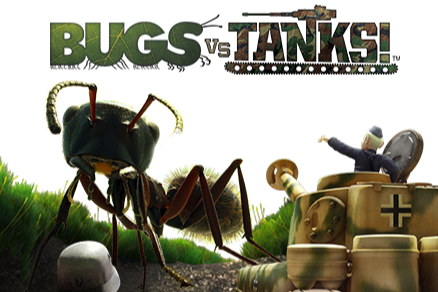
Bugs vs. Tanks is not very good. At absolute best you can sort of think of it like an Earth Defense Force game, except there’s no buildings being destroyed, or really that many bugs on screen at one time, or, uh, any particularly interesting weapons.
But it does have all of the slightly wonky graphics and rough controls you expect from Earth Defense Force? And giant bugs, obviously the main comparison point?
Basically, you play short levels where you shoot at bugs with your tank (though weirdly, firing is automatic at default.) occasionally finding new tanks. It’s very, very… blah. If not an Earth Defense Force game, it’s definitely in the ilk of the Simple Series that spawned it, feeling like a phoned-in cheapy title, but sadly not one with any interesting ideas to back it up as such. Keiji Inafune worked on it, apparently, in (probably) yet another case of a named Japanese developer saying “it would be cool if…” and then never checking in on the team again.
Having said all this though I still played it all the way through and went back to unlock tanks. Why, you might ask? Well, because tanks are quite interesting and when you unlock them you can look at them in a gallery, and read a tiny bit of text about them. It the ideal game for someone who’s slightly interested in WWII tanks, but not so interested that they’ve read up about them already? Specific!
Will I ever play it again? I have no excuse but if someone is ever like “want to play the co-op missions” I’d totally do it.
Final Thought: Bug vs. Tanks isn’t very good and yet I’ve just admitted I’d play it more. It simply passed some time in an agreeable fashion. I have no excuse… well, maybe co-op’s really good, you know? Like Earth Defense Force, the game that this game really isn’t very like at all (apart from the giant bug thing.)
Developed/Published by: Vanillaware / Atlus Released: July 25th, 2013 Completed: 25th October, 2014 Completion: Defeated the final boss. Trophies / Achievements: 21%
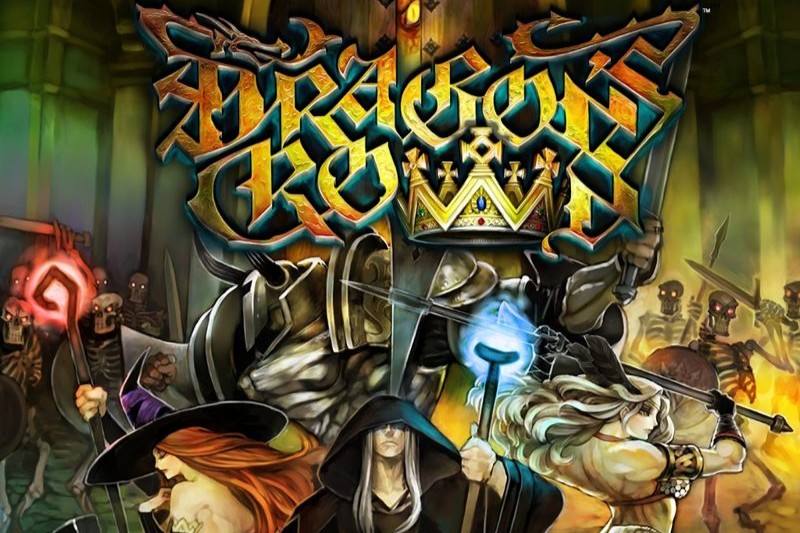
I really, really, really did not enjoy Dragon’s Crown. I think it’s crap. Really, stunningly, confusingly-because-people-seemed-to-like-it-and-as-a-result-I-was-looking-forward-to-it crap. Boring, repetitive crap. Have I said it’s crap enough yet.
So… what’s the deal, anyway? I’ll show my hand here and admit I’ve never played another Vanillaware game, despite also owning Odin Sphere (picked up for a fiver many moons ago) and Muramasa for Vita (I thought I’d play this first though?). However, I really do like side-scrolling punch-me-dos. I mean, I genuinely like the Dungeons and Dragons games that obviously inspired this. And obviously, it’s nice looking, even if the art isn’t to my taste really in any way at all.
I mean, it’s probably that art, which looks nice in stills, but makes the game seem really… I don’t know, static when you’re playing it. It’s totally one of those side-scrollers where you feel like you’re fighting cardboard cutouts, you know? Where if you’re slightly to the side you miss them completely. Which isn’t amazing when you’re playing the Elf, and every arrow you fire just seems to whizz past your enemies harmlessly because you’re a pixel off (I might be exaggerating here, but it’s how it felt.)
It just doesn’t feel rewarding to hit things, or move about, or really do anything moment-to-moment. It all feels clunky, and restrictive, and then you get your 3 AI companions (because, of course, you don’t get to unlock online play until you’re over half-way through the game) and if the game felt like cardboard cutouts before, now it feels like cardboard cutouts you’ve scribbled all over, thrown glitter at and then blown up with a small explosive. The screen just becomes a mass off, well, fuck knows to be honest, spells and attacks and bodies any time there’s a skirmish, and you pretty much dodge and then start to spam your most powerful attacks in the hope you’re really hitting anything.
(If you don’t, it’s fine because you’ll definitely survive to the end of the level anyway, it’s really not that hard. At least until the bastarding final boss, where you’ve got to do it in two lives and have to grind/hope you’ve unlocked powerful enough AI to survive it. Hurrah.)
Anyway. Yeah, I know you’re probably thinking like “how different is this from the Dungeons and Dragons games, really?” so… ok! I’ll have to go back and play those new ports then, eh? Rather than just base this on my memories of playing it years ago. Maybe I’ll be eating some humble pie!
Of course, that really won’t change that Dragon’s Crown is definitely crap.
Will I ever play it again? Never ever ever ever. Not even multiplayer. I played it a bit but zzz.
Final Thought: I really struggled to find something interesting to say about this, to be honest. I totally get that you’re supposed to really get into pushing your way through the levels as a group, playing the (cute but easily missed) cooking game and then, when spent, sort through your loot, but… man, if it just doesn’t feel good, why bother? I mean I’m talking about a game here that feels less good to me than repeatedly clicking the mouse in Torchlight or something. I mean really.
Developed/Published by: Millennium Kitchen, Aquria / Level-5 Released: July 18th, 2013 Completed: 3rd October, 2014 Completion: Finished the main story and all of the “episodes” other than that one which requires you to play the mini-game over and over and over and ov Trophies / Achievements: n/a
There are a couple of things recently in my life that have caused my face to seize up into a rictus of sheer joy. The kind of frozen, gawping wonder that you’d assume, had you caught me in the middle of it, that I’d just taken some brain candy and locked myself in the memory of going down “The Big One” in Blackpool at some innocent age, a long, long time ago.
Well, I’ve never been on “The Big One” so it wouldn’t be that. One of these two things was seeing Tilda Swinton in Snowpiercer, playing the ungodly spawn of Margaret Thatcher and Jarvis Cocker. I’m not totally sure why that tickled me so much, but it did. The other was Attack of the Friday Monsters!’s intro, which you can see here.
Oh my god, right? It’s so sweet. It’s sweet like having a man with fists made out of lugduname punching all your teeth out and then grinding them into dust to save you the indignity of watching them rot out your head because it is so sweet. The incredible on-the-nose nature of the lyrics; “I am a child,” “My dad is a dry cleaner.”
So much simplicity, but also, so much depth.
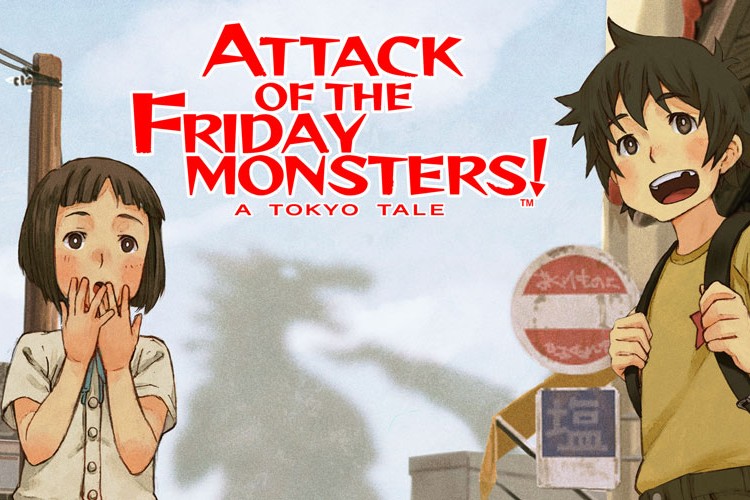
And on that level, Attack of the Friday Monsters! is an interesting one. You see, as a game, if we’re going to “review” it that way, Attack of the Friday Monsters! is deficient. It’s very, very basic. The game tells you to go a place, you go there, things happen. There isn’t really any puzzle-solving to be had. There’s a collectible card game that you’d think was really important, but you actually only play it about three times in the main story mode, and the game itself is a very simple rock-paper-scissors-a-like that might have some tactics to it but (frankly) they’re so subtle as to be basically pointless.
There’s really nothing to it at all. And yet Attack of the Friday Monsters! is deeper than many games by virtue of its setting and story. Set in a small Japanese town in a not-directly-defined period of time, it follows Sohta, who has just moved there with his family (his dad’s a dry cleaner, as pointed out in the song) and is set the task of delivering some freshly cleaned clothes on Friday, the day of the week huge monsters have a fight on the outskirts of said town (so he’s got to be home before that happens.)
It sounds “wacky” and “Japanese” to have a game where giant monsters fight near a small town and everybody just accepts it, but as is (obviously) the case there’s so much more to it than that. Directed by Kaz Ayabe, known for the (never released outside of Japan) Boku no Natsuyasumi series, Attack of the Friday Monsters! is similarly a reflection on Japanese childhood and a thoughtful take on the rhythms of Japanese life and culture that surround it. It’s much, much closer to, say, a film by Hirokazu Koreeda than it is another video game, which makes Ayabe absolutely unique as a game developer. You see, Attack of the Friday Monsters! isn’t really about the “play” as such. It’s about being a wee kid in a new town, about being told what to do by your parents, about being side-tracked, about meeting new kids, about not really feeing in control of anything about your life (because you’re a wee kid), about having to be introduced the games that the kids in your new town play, about how those games seem weird and silly, about the lies your parents tell, about the lies parents hold…
It’s about the golden age of tokusatsu in the sixties, when televisions became more usual in Japanese homes as the country left recovery from World War II and began to boom; in fact it’s about being a child at that period, and not having the experience of war first hand to see Godzilla as a metaphor the horror of nuclear warfare, but as a hero to cheer on when he battles Ghidorah, the Three-Headed Monster. It’s about that difference, that gap right there at a moment in history where Japanese adults saw something, Japanese children saw something, and that what the children believed became true, because after all, they believed it so forcefully, so unquestionably, and the adults had been helping them believe it. Because why not make believe, after so much struggle?
Attack of the Friday Monsters! is about so much more than rock-paper-scissors. It’s definitely about more than semantic quibbles of how good a “game” it is or not. It’s trying to say something bigger, and I think it’s easy to get lost and forget that’s entirely possible when we grind things down to their mechanics.
Will I ever play it again? Hmm. I’d love to play it again, maybe on a big screen, but on 3DS probably not.
Final Thought: That Ayabe can manage so much with an experience that clocks somewhere in the region of a couple of hours makes it a legitimate tragedy that Boku no Natsuyasumi has never been released for audiences beyond Japan. It would be a serious issue if Koreeda’s work had never been seen outside of his home country, for example. That art is accessible is important, and it’s something that the games industry still struggles with.
Developed/Published by: PES Productions / Konami Released: 20th September, 2013 Completed: 9th July, 2014 Completion: Won the World Cup as Scotland (on penalties versus Uruguay in a 0-0 nailbiter.) That’s all that matters, really (though I did also play Be A Legend as Messi, lazily, for a while.) Trophies / Achievements: 38%
Football! Yes, we’ve gone football mad here at exp. Towers, what with the World Cup and everything (though that’s finished by the time you’re reading this, which means that we’re no longer football mad and are instead football sane.)
Whenever there’s a big international tournament (because the Old Firm has led met to basically distrust and fear club football) I tend to like to play a footy game, and it’s almost always Sensible Soccer (I usually go to the bother of finding the most recent update files and everything.) However I decided to actually try a “modern” football game for the first time in years and years, and it was this one!
Note I put “modern” in quotes there, because the weird thing about PES 2014: Pro Evolution Soccer is that—and this is probably not news to people who buy football games every year, or whatever—it feels like a game that could have come out on PS2. I mean… it looks like one too, sorta. shonky animations, character faces that—unless they’re a star—are generic, crap crowds, awful, repetitive commentary…
It’s sorta weird! And retro! But not in a good way, like Sensible Soccer. In a way that makes me think all the way back to this series when it was International Superstar Soccer on Nintendo 64, except faster?
In fact, after playing a few quick exhibitions I decided to scale back my ambitions from “I’m gonna download all the fan-made real team information and play this seriously!” to “let’s win the World Cup with Scotland and call it a day.”
It’s important to note, however, that if you look past all the surface stuff, PES 2014 still plays a decent game of footy. Don’t play it on Beginner (at all) otherwise you’ll spank every team like they’re Brazil (a sentence that now makes sense after this World Cup) but on Regular, it’s fun! You know, football. Passes, through balls, that sort of thing. It’s not very exciting, you’d probably call it workmanlike, but scoring a goal still feels amazingly rewarding, so there’s that.
Will I ever play it again? No. Next time (Euro 2016, probably) maybe I’ll pick up a FIFA. Those feel “new” right?
Final Thought: I didn’t really discuss why I put PES 2014 down so fast, did I? Indeed, I’m sure there are many, many people out there who want to moan about my surface take on this, after all the website crows about the game’s “trueball tech” and the “M.A.S.S. (Motion Animated Stability System.)“ Even if that was all incredibly apparent, there’d still be the UI.
This is a game where, in the flagship modes are “Be a Legend” and “Master League”, you spend a lot of time in menus. It’s also a game where literally every screen has a loading screen after it. Where information that could all be on one screen is spread across two or three. Where getting from one football match to the next—even if you don’t touch or change anything—can take two or three minutes.
It’s gash; it takes all the imagined fun of “being a footballer” or “managing a football team” and replaces it with all the fun of “watching loading screens” and “turning off the music because there are only six songs” and “stopping playing this forever.”
Developed/Published by: Lucas Pope Released: August 8, 2013 Completed: 20th April, 2014 Completion: Finished it seeing five different endings (two that I’d consider “proper” endings.) Trophies / Achievements: 10/13
I loved The Republia Times. Loved it. In fact, I think if you’re the kind of good-looking go-getter that reads this site, you should just go ahead and play it if you haven’t already.
…
Great, isn’t it? Especially the sting in the tail. Oh man, that’s what elevated it to a masterful piece of game-design-as-satire in my mind. It genuinely manages something that few games ever have, and to think it was just a wee warm-up for a game jam!
Anyway, here’s Papers, Please, set in the same “world” as The Republia Times, dealing with some of the same issues, and of course cleaning up at the IGF and GDC awards because it’s about real stuff and isn’t supposed to actually be fun.
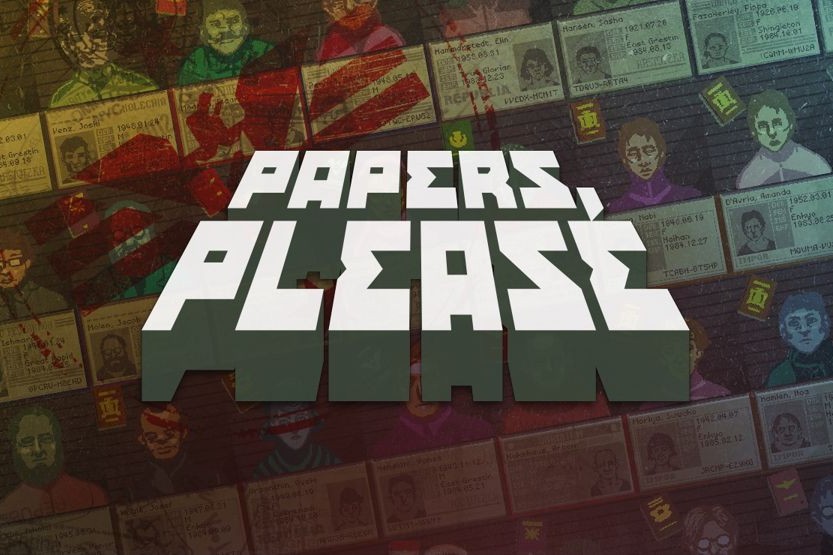
Papers, Please… I am… ambivalent about it. Critiquing the game design alone, well, it’s sort-of… I guess I could describe it as a dynamic, timed hidden-object game. You only have so much time each day, you have to check people’s documents for errors, there isn’t quite enough space on your desk, and (intentionally) the controls are slightly awkward. So you’re trying to find the error (if there is one) and get to the next person so you can make more money. Each day there are more and more possible errors, more documents, and more mistakes you can make. And so your days pass, somewhere between a high-tension challenge and a boring grind. Somewhere in there.
I guess if you like hidden object-style games, it’s cool? The nice thing about The Republia Times is that it didn’t outstay its welcome. Papers, Please does, and hard. If you want to get to one of the proper endings, you’re going to be playing it for thirty days. After seven you’ll be like “ok, yeah, I got it.”
However, that’s not all there is to Papers, Please. There’s a story to the story mode (“duh”—everyone) and while it’s very very loosely sketched, you’ll make choices: people you might let through even if they don’t have the right papers, or to help some people and hinder others. The weird thing about Papers, Please is that these people all appear in exactly the same way every time. So while most of the people who stop in are generated, you know that the third person on day three is going to do a certain thing. Now don’t give me shit for this after my Rymdkapsel write-up but it seems strange that it has to be this way—there are a bunch of different characters who appear, and with a shorter game (fourteen days, maybe, rather than thirty) they could be randomised in, yes, a rogue-like-like style to make a different experience every time.
However, with the number of different endings you’ve achieved tracked and the saves cleverly branched by the game, it does seem that Lucas Pope has intentionally designed it so that you can replay the game from certain points with the knowledge you have from previous runs to make different things happen. It’s not how I’d have done it—or how I want it to be—but it seems fair enough (I’m interested in his reasoning, though.)
There’s a bigger problem, though. About halfway through Papers, Please I thought to myself “you know, this would be pretty cool on iPad.”
And then I realised something. Papers, Please could easily be put out on the App Store. In fact, I’m pretty sure that Apple would feature it. And this is a company that aggressively bans games based on content (Phone Story, Sweatshop HD, Endgame: Syria, Intern Saga… the list goes on) famously saying “If you want to criticise a religion, write a book.”
Why is that? Well, it’s because the satire of Papers, Please is toothless. Yes, you play a border agent, but who is being critiqued here? Generic Eastern European states in the eighties? One of the most astounding things about Papers, Please is how even when you are at your most strict, if anything the indignities you pile upon people trying to get into Arstotzka are less strict than those on anyone trying to get into America. And Arstotzka literally suffers a terrorist attack at the border every other day. Take your shoes off. Have your items x-rayed. If that’s not good enough, they can go through your bags. Don’t want to consent to a full back-scatter scan? “Enhanced pat-down.” Why are you travelling here? Business or pleasure? Where are you staying? What are you bringing in? How do you know these people? Are you trying to work?
And so on, forever. And the profiling—you only have to look at Did Rami Get Randomly Checked to see how pervasive it is.
If Papers, Please was about being an American TSA agent, it would actually be saying something just by actually representing how absurd it is the hoops they make you jump through—and to what extent your privacy is abused.
But it doesn’t, so it could easily be approved for the App Store.
Funny, that.
Will I ever play it again? Nope.
Final Thought: Maybe the saddest thing about Papers, Please is that unlike The Republia Times I can’t even see any satire in the story, anyway. Arstotzka is… bad? For some reason that isn’t super clear? You might want to escape, but maybe not? There’s one ending that comes close to making you feel that shiver of horror (I won’t spoil it, but it involves forged passports) but it doesn’t push it too far. The fact that there are “good” endings is actually pretty shocking to me.
Oh, and the game rewards you with achievements for making the “right” decision in several cases. Come on.
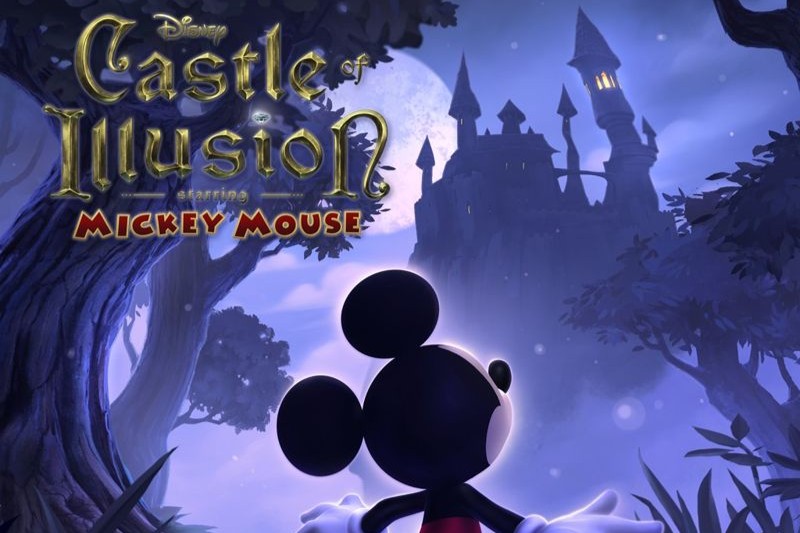
Developed/Published by: Sega Studios Australia / Sega, Disney Interactive Studios Released: September 3, 2013 Completed: 20th April, 2014 Completion: Rescued Minnie! Trophies / Achievements: 61%
Yep, I played through both version of Castle of Illusion in the same weekend.
I did this because I was sure, sure that this wasn’t going to be a remake but actually one of those “inspired by…” type things. Because with Castle of Illusion’s frankly weird level design and pretty darn dated everything else, I didn’t think they’d be that straightforward with it.
Uh, so the weird thing is that they really were. It’s not like they didn’t change some stuff. Most notably, the game goes “full 3D platformer” in certain segments (which is awful, for a reason I’ll explain in a second) and certain parts of the levels are changed (though in general their structure is amazingly faithful.) Bosses have more attack waves (usually allowing them to use the full 3D stuff a bit.) And Mickey’s jump is different.
Except… it’s also weird and terrible? It’s still floaty, it’s just as hard to aim his landing, but for some other reason? I can’t put my finger on why both jumps are terrible for different reasons (and I really can’t be arsed to go back and play them off against each other) but trust me: they’re both bad. And in the remake, not only is it bad in 2D, it’s godawful in 3D. Non-stop frustration as you slightly mis-aim Mickey and drown him in milk again and again and again.
(Because he can swim in water, but not milk. I guess that makes sense? Sorta?)
This is, genuinely, a remake of Castle of Illusion with some extra bits bolted on (most notably totally extraneous narration and loads of chat from Mickey, who… did Mickey always sound like this? He sounds so off-brand. Like a “Mikey Mouse” VHS, bought from a discount store in Orlando.) If you were going to play one version, I’d be hard pushed to say which one to bother with—probably the original—though both can be finished really quickly, and it’s really not worth the effort.
Here is the thing, though: much like with the original Castle of Illusion, it’s not like you can’t see there was talent on the team. Had this been a reimagining, not a remake, and they’d manage to make the jump less weird, I’d be happy to gamble this would actually have been pretty great.
Uh, not that it matters because Sega shut down Sega Studios Australia right after this. Alas.
Will I ever play it again? I could go back and collect more diamonds and do time trials, I guess? I’m not gonna, though.
Final Thought: Interesting fact: Emiko Yamamoto, director of the original game and who also supervised this, went on to work at Disney Interactive in Japan and has served as a producer on almost the entire Kingdom Hearts series. Huh.
Developed/Published by: Grapefrukt Released: May 7th, 2013 Completed: 18th April, 2014 Completion: I researched all the monoliths. Trophies / Achievements: n/a
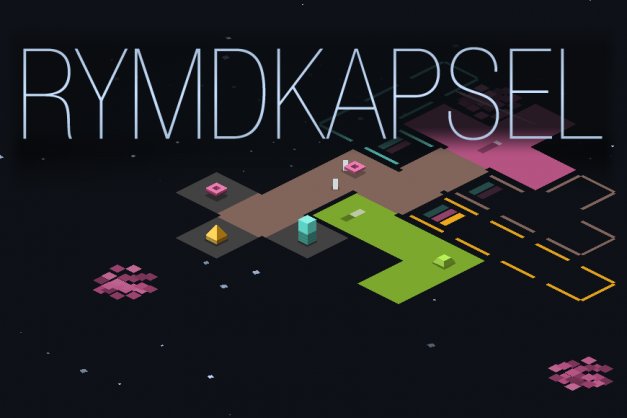
I had played Rymdkapsel on release, but I thought the core concept—placing tetrominoes down to create a space station, choosing if they’re corridors, barracks, weapons rooms or so on—was so cool that after touching it briefly I put it down thinking “at some point in the future, when I’ve got more time, I’ll really dig into this.”
(God knows why I chose this weekend, and right before bedtime, too.)
I must admit: I’m a little disappointed in Rymdkapsel. It’s my own fault in some ways. You see, Rymdkapsel is a small, short, single experience. Your station is centrally located between four mysterious monoliths, and you reach your corridor tentacles out to research them, all the while making sure you don’t run out of materials and are well defended by weapons rooms. It’s really really cool. But once you’ve done that—and it should only take a few hours—you’re, uh, done.
Now, before you cry foul, you can continue playing—there’s definitely an ending if you can get through 23 waves of enemies, and there’s a relaxing zen mode for stress-free building—but I’m kind of surprised because the design promises so much more than one canned experience.
Yeah, I’ll say it… I wish this was a rogue-like-like. I know, I know. Everything is a rogue-like-like now. But I don’t see why with Rymdkapsel I don’t constantly have different monoliths to find or why the enemies aren’t different each time (well, to an extent). I can definitely see playing this over and over if there were differences every time I played. It doesn’t make the basic experience of playing the game the first time any worse—actually, I totally recommend playing Rymdkapsel, it’s great—it’s just… why am I not still playing it?
Will I ever play it again? I really want to, which is the odd thing. But I can’t spend my time re-playing the same experience, I have this site to think about!
Final Thought: I mean, look, I can see some problems; you probably can’t let a single space station get too big, or it’ll make the game unwieldy. But it could stay a short, just very varied, experience, I think? There are some other things that would have to be considered, too. In this version, you can sneakily place and then delete corridors to ensure you get the right shapes you want, which you’d probably want to avoid to make the rogue-like-like harder. And in that case, well, Rymdkapsel is described as a “meditative space strategy” which is definitely a step down from the intense, “you are going to die, and soon” experience of most rogue-inspired titles. So maybe this isn’t an ideal twist.
Developed/Published by: Zen Studios / LucasArts Released: February 19th, 2013 Completed: 25th March, 2014 Completion: It’s pinball. You can’t actually complete it, so yet again more truthfully: I just stopped playing. Trophies / Achievements: 27%
Pinball is in a wee bit of a renaissance, recently. Not the physical machines (god no) but in video game-o-form, with FarSight Studios more or less kicking the whole thing off with their excellent digital re-creations of classic pinball tables in things like Pinball Hall of Fame and now their ongoing project The Pinball Arcade, which has enough of a following that they’ve managed to run fairly pricey Kickstarters for new tables and otherwise keep up a pretty regular run of new tables.
So people who like this—admittedly fairly niche—line of game design are well served. What I think has been so important to the whole thing is a little odd, though, considering that it’s something I pretty much hate in every other kind of game. It’s achievements.
You see, I don’t actually think it was until I went to the Pinball Hall of Fame in Las Vegas that I ever really understood how to play Pinball. For pretty much my entire life up to that point, every table was an inscrutable jumble of flashing lights. You put in your 50p, and the entire aim of the game was “don’t let it go down the hole in the middle… or those holes down the side, but you can’t really do anything about that.”
Not to say I didn’t like some tables! I always loved the Data East Star Wars pinball machine (which we’ll probably never see remade, thanks to this) Twilight Zone and so on. But understand them? No. It was only by spending almost an entire day at the Pinball Hall of Fame, working my way up from the most basic tables to the most modern, that I got this gradual understanding. Tables that have one feature up to tables that have a bazillion. Started to be able to pick out what I was trying to do to make points happen. Started to learn what an incredible game design challenge a pinball machine is.
Not everyone would have this opportunity, and honestly, it still wasn’t enough. And that’s where FarSight stepped in. They added “goals” to every table, which result in achievements. Get the “Standard Goals” and you’ve basically learned the table. Get the “Wizard Goals” and you’re amazing at that table. They’re nice, granular ways to learn the table, always giving you something to aim for other than a high score, and if you’re so good that you’ve got them all, then you’re aiming for some pretty astonishing high scores and the challenge alone should be enough to keep you going. It’s really an incredible way to start to get pinball, and off the back of it I learned to really like what seemed like a confusing yet simultaneously boring table like Black Hole.
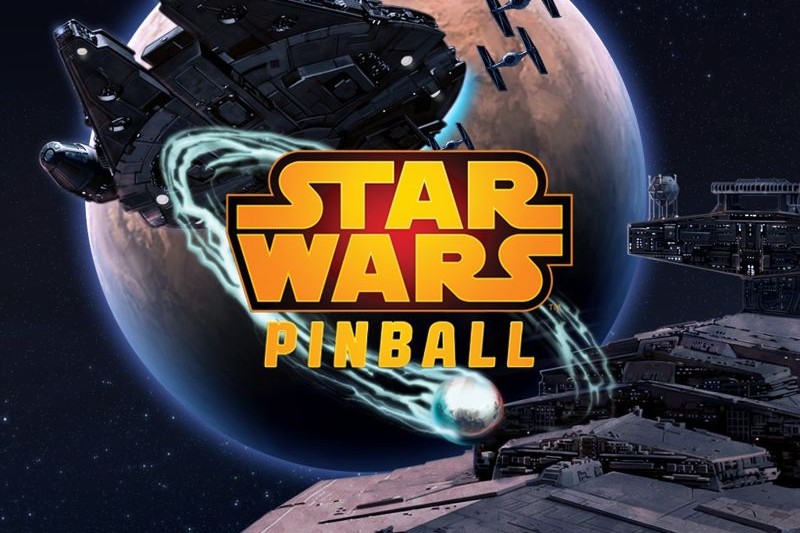
Anyway, Star Wars Pinball is a stand-alone game from Zen Studios, basically FarSight’s only competitor with Zen Pinball. They create their own tables—which are a bit more magical, more Devil’s Crush video game pinball, than strictly realistic—and they have no fucking idea how to use achievements to teach the tables or give players an interesting challenge/range of goals. There’s three per table, every one (bar one, a Yoda-based bonus on the Empire Strikes Back table) is insanely hard to do unless you are amazing; in fact the Boba Fett table’s goals are more or less “do everything on the table” and one of the Clone Wars (spit) table’s is “do this one thing flawlessly three times in a row, NO MISTAKES.”
It’s garbage.
Will I ever play it again? No.
Final Thought: What if you don’t want goals, you just want to score points on pinball tables? The tables are ok, I’d actually say they’re overcomplicated by all the video game stuff. And you are going to get SO sick of the theme. The same quotes from the movies, over and over and over again. Barf.
Developed/Published by: Pixel / Nicalis Released: January 31st, 2013 (original PC version: June 23rd, 2000) Completed: 11th January, 2014 Completion: Completed it! Trophies / Achievements: N/A Version Played: 3DS
Ikachan is mostly notable as one of the games Cave Story developer Pixel (Daisuke Amaya) created before, uh, Cave Story. No, wait. I probably mean particularly notable at that, because Ikachan does feel in some ways a dry-run for Cave Story. It’s got exploration, some story, an exp./upgrade system, amnesiac hero who wakes up in a cave system… it most likely uses an earlier version of the same engine, too.
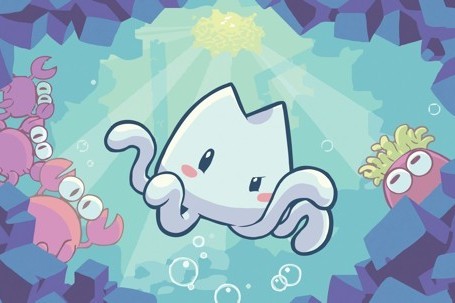
But, um, just because it’s notable doesn’t really mean it’s that interesting. Ikachan is—literally—about an hour’s worth of content. You play a wee squid and your main interaction is to aim left or right and tap “A” to make him float about. It’s mostly an avoid-em-up (you know, carefully tap just fast enough to stay above spikes, but not go into the ones above you, etc.) and unlike Cave Story, where (and it’s been years since I played it, so I might be over-estimating it) everything comes together, in Ikachan I was struck by how… unnecessary most of the play additions beyond that feel. You can collect exp. and level up, but all it does is add some hearts (that could have been there in the first place.) You “Metroid style” unlock some abilities that allow you to open new areas… twice (each area you visit… once.) You run some VERY simple fetch quests and talk to sea urchins repeatedly in that classic “I don’t know what to do so I guess I’ll talk to all the villagers again” way.
Oh, and there are two boss encounters (sorta) which are rubbish.
Ikachan is probably most interesting in that it’s a short, direct example of the type of game that’s got an acceptably fun mechanic (you know, the floating thing) that it fails to exploit at all in the name of a lot of other nonsense. Indeed, after an hour (and potentially $5, though I picked this up for $3 in a sale) you’ll feel dissatisfied simply on the basis that you feel that you could have spent more time doing squid stuff (floating about) than talking to villagers and collecting fish to level up.
This should probably have stayed a freeware game, or they should have added more squid stuff. Notice I’m not saying “make it longer.” This isn’t a time spent equals value thing. This is a “time spent doing fun core game mechanics is better than time spent doing non-essential game twaddle” thing. But look, I’m not going to tell Pixel what to do with his back catalogue. The guy developed Cave Story!
Will I ever play it again? No.
Final Thought: Yes yes going to see a film costs $12 and it’s an hour and a half and a coffee costs $3 and it’s done in fifteen minutes but those are totally different value propositions so I’m totally allowed to feel like the $3 I spent on this was unwise.