Tag: 2012

  • Thirty Flights Of Loving (Blendo Games, 2012)

    Thirty Flights Of Loving (Blendo Games, 2012)

    Developed/Published by: Blendo Games
    Released: 20/08/2012
    Completed: 18/09/2025
    Completion: Finished it.

    Thirty Flights Of Loving has loomed large in my mind for, uh, thirteen years, because I added it to my Steam wishlist and then promptly just never picked it up. An absolutely insane situation considering the game, at fifteen minutes long, is actually shorter than Gravity Bone which preceded it. I mean I waited nearly a year per minute. Well, I’ve played it now.

    Thirty Flights Of Loving, compared to Gravity Bone, is a bit more of a challenge. If Gravity Bone took what you expected about a first person game and then twisted it, Thirty Flights of Loving doesn’t even give you the grace of letting you settle in before twisting. I mean, it’s pre-twisted is what I’m saying. You open the bag that says “bagel” on it and there’s a goddamned pretzel in there.

    (I suppose in this metaphor, with Gravity Bone you’d start eating a bagel and then it would suddenly twist in front of your eyes into a pretzel? Creepy. I don’t like this metaphor any more!!!)

    Thirty Flights Of Loving is ultimately an exploration of the idea: can you do cinematic cuts in a video game? Telling, vaguely and non-linearly, the story of doomed love and a heist gone bad, the game cuts intentionally and cleverly to remove the thing you just don’t remove from video games–the “dead space” between incident. It’s shocking, actually, to head down a corridor and suddenly find yourself, well, in a new room, because the trip down the corridor adds nothing narratively.

    This is a decision that few games I know of have made outside of–of course–their cut-scenes, and I think it raises really interesting questions about the value of what we do in games. I’ve written at crushing length about the difficult path games try to walk–narrative, but play–and I suppose the disappointing thing about Thirty Flights Of Loving is that it has interaction but no “play”, where I feel like the theory–we could have cinematic cuts in games–can only be proven by giving me actual play and “cutting” when I’m not doing anything that’s actively in aid of that. After the firefight, cut to the exterior, don’t make the player navigate there–but never take the control away from the player. Just cut.

    I think for many, the potential flaw here is obvious–it’s discombobulating. I mentioned above that the cuts are shocking, which in many ways is surprising, because cuts in cinema are, famously, not shocking (proven scientifically.) Is is simply that “flow”, that hugely important state to the interactive art is broken by a cut? 

    Or does Thirty Flights Of Loving’s use of only scene cuts–keeping action continuous elsewhere–create more discontinuity when paired with its mysterious narrative? Could a game with even heavier use of cuts–cuts within scenes and cuts between scenes–work better? What would that even look like?

    I’m not sure, but it’ll probably take a game longer than fifteen minutes to work it out. Thirty Flights Of Loving does a lot with its time, managing some moments of beauty and ending with a recognisable longing. I might go so far as to say a saudade. Maybe Thirty Flights Of Loving doesn’t answer any questions, but the ones it leaves you with are worth thinking about.

    Will I ever play it again? I’ll wait another thirteen years and see how I feel.

    Final Thought: I’d be remiss not to point out something else cinematic about Thirty Flights Of Loving that really stands out–the superb score by Chris Remo. It’s a huge factor in the game’s feel.
  • Pocket League Story (Kairosoft, 2012)

    Pocket League Story (Kairosoft, 2012)

    Developed/Published by: Kairosoft
    Released: Jan 5th, 2012
    Completed: 17th November, 2014
    Completion: One full career with a high score of 101,601. Beat every league and every cup except the Prin team match. They’ve got max stats! It’s nigh impossible!
    Trophies / Achievements: n/a

    We’ve talked about football several times here, but here’s a thing! I have no idea what a football manager does. I’ve never managed to get into any of those Football Manager-type games (nae luck, Kevin Toms!) because I just don’t care about club football, but I got back into Pocket League Story recently after—more or less—realising it had been sitting on my phone for the past year (or two?) when I stopped midway through a career in it. I’d just watched Scotland beat Ireland so it seemed like a good idea.

    Anyway, then I watched Scotland get pumped 3-1 by England, seeing Gordon Strachan just sort of occasionally get up during the match, yell and point, getting increasingly grumpy looking in the stupid chairs that the sponsors make them sit in (they’re a car manufacturer, so they make them sit in race car seats… I assume. If that’s what they usually sit in, that’s absurd.) I thought… how does he affect the game while he’s there? When he puts a new guy on, does he whisper in his ear “do this, tell the guys to start doing this tactic”? Something like that?

    I mean, when you’re running a national team… does he get up every day and go into the office? After the match, does he sit down with tapes of it, pinpoint the mistakes, make edited highlights, talk to the team individually or as a group, talk them through what went wrong, find out why from their viewpoint, and work on what they do next?

    I really have absolutely no idea. I mean, I assume something like that happens, there’s four months till the next match, and even though all the players have their club teams to go to, I’d like to believe they do post-mortem matches with the players and plan extensively for the next one. But who knows? They might just all go home after, meet for a few days training directly before the next match, and be done with it.

    Anyway. playing Pocket League Story is a bit like watching Gordon Strachan, you can’t really do anything while the matches are happening, other than possibly tap a player to make them go on fire (uh, not that Strachan has that ability… I think???) which makes them more likely to avoid being tackled/score. You don’t have much of a say in anything, you just sort of watch money flow in, build wee cute buildings, try and get sponsors, and buy new players when you have cash (which has a really weird mechanic in that you give them the money, then try and convince them to join. If they don’t, you lose the money. I pumped millions of dollars into trying to hire a monkey. A monkey.)

    It’s hypnotic anyway, because watching numbers go up is brilliant, as we all know. Having an unstoppable team of powered-up football men doing footballing seems brilliant, even if you didn’t do really do anything. Which made me realise something: a watched game is a played game. After that England match I played the match over and over again in my head, thinking what should have happened at certain points. If only he’d done this, or if they’d made a change in tactics there. I played the game over and over in my head. Made me think that in some respects people who watch sports are—really—playing the game, more or less as much as I played this. In conclusion: sports are cool, don’t cuss people for enjoying watching sports. Unless it’s cricket, cricket is fucking crap.

    Will I ever play it again? No way! I really really shouldn’t play any more Kairosoft games, they’re all pretty timewastey. However, I’m sure at some point in my life I will, regretfully, install Grand Prix Story. Maybe that counts as “playing it again?” I mean it’s basically the same thing.

    Final Thought: My favourite thing about Pocket League Story is that I had David Beckam(’s facsimile) play for my team for ages, and I replaced him with the monkey. The monkey was better.

  • Street Fighter x Tekken (Capcom, 2012)

    Street Fighter x Tekken (Capcom, 2012)

    Developed/Published by: Dimps, Capcom / Capcom
    Released: 19 October, 2012
    Completed: 3rd August, 2014
    Completion: Beat the arcade mode a bunch of times (twice on the hardest setting, actually) and played a bunch of the other modes. It’ll do. 
    Trophies / Achievements: 40%

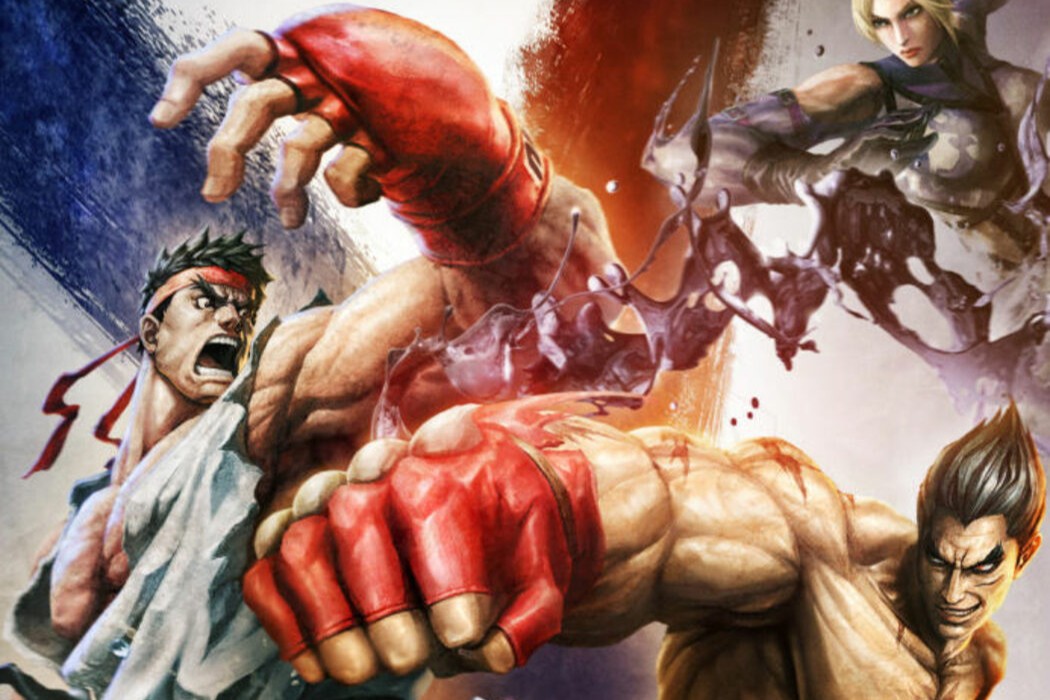
    Well, if a wee guy from France can win Evo by playing Rose with a PS1 controller, I’m sure I can stand to play Street Fighter x Tekken with a Vita, even though it’s only got four face buttons and they’re tiny.

    No, I can’t.

    Will I ever play it again? Nope.

    Final Thought: Well, obviously I played it for ages, but it’s horrible. What’s with this gem thing? Gives you bonuses or something for playing in particular ways, or being weak in others? But you’ve got all these menus to navigate to select them, and they’re totally incomprehensible in the moment, like, you have no idea what you’re opponent’s packing and how to deal with it?

    Just a total abomination. 

    However! I will give them a lot of points for making people who suffer through this game some utterly absurd cut-scenes. Abel, obsessed with petting the bear from Tekken, or Zangief and Rufus’ amazing transformation.

  • New Star Soccer (New Star Games, 2012)

    New Star Soccer (New Star Games, 2012)

    Developed/Published by: New Star Games
    Released: 11th June, 2012
    Completed: 3rd August, 2014
    Completion: Won the Scottish cup and Scottish Premier League titles (twice) and won young player of the year, club player of the year and division player of the year at 21. 
    Trophies / Achievements: n/a

    How about that Kim Kardashian game, huh? Something something free to play, something something did she even look at the game lol, blah blah stupid people zzz zzz whales? yawn yawn “video games” fart.

    Everyone’s an idiot, and I’m here to tell you why.

    Now, I haven’t played that Kim Kardashian game. In fact, like most people, I don’t ever think about Kim Kardashian, other than possibly a brief period when it turned out Kanye West married her which isn’t so much thought as much as it is “information going into my brain, pointlessly.” To be honest, I’m astounded that I know how to spell her name off the bat. Haven’t had to rely on the spell checker at all, not that it would help (it’s got a red line under it even now, and I stuck it into Google to make sure after the second time I wrote it.)

    The point is this: even in all the defensive articles I’ve read about her game—made in Toronto, fact fans, and I genuinely think it’s got great art in the context—people mostly blether about how it’s a time-waster, but in a different context.

    Here’s why people play these games and why they’re successful—and why it surprises me there aren’t more of them. They’re story generators. Stories in which you (or the character you’ve chosen to make) get to be the star. Now sure, these stories aren’t massive, or deep. In fact, they’re mundane. You aren’t saving the planet. But they’re your choices, and you invest, and you remember them.

    Take New Star Soccer, right? Here’s me, chucking it on the phone while in the depths of World Cup football madness (as it’s been officially designated by the World Health Organisation). I make me, well, me who is sixteen and has enough of a talent for football that I get hired by Dumbarton.

    Across my first season, I play… not particularly well, but I’m alright. But I notice we always get beat by East Stirlingshire. Every game we play, they pump us. I start to pay attention. I try harder in those matches. It comes down to the last match of the season… they beat us. 

    I’m traded up, joining Stenhousemuir in the second division. I play poorly. I’m subbed off several times. In disgrace I’m traded off to Raith Rovers; I start playing incredibly well. I feel bad beating Stenhousemuir, but I do it anyway.

    My character—me—gets a girlfriend. But I’m always training, or trying to improve my standing with my teammates. She badmouths my manager in the press. I immediately break-up with her. The next time I date, I’m in a better financial position, I’m in a better place with my manager and team. I make sure to spend time with her.

    New Star Soccer is simplistic and—certainly in comparison to that Kardashian game—ugly. Based almost entirely around short football matches that occasionally ask you to aim the ball in a quick football scene (you’re looking at a 90’s Football Manager-like text stream otherwise) it sounds like there’s really nothing to it. And when the game is tied to an awkward energy system requiring you regularly quaff energy drinks to keep playing (once every three matches or so. I originally thought you’d get energy back over real-world time, but you don’t) the “actual” story you’re telling is one of an insane addict, forced to pay more and more for their next fix to avoid crashing as they become a bigger and bigger star (it’s not long before your next energy drink costs more than your designer suit did.)

    But it’s all sort of easily overlooked because you’re in the cup final, and you’ve just—gulp—been given a free kick that can win the game. You haven’t been training in free kicks. Should you pass to the player to your left, or try and chip it over the wall?

    The game-literate will forever wax lyrical about the story telling possibilities of something like Dwarf Fortress or rogue-likes, or even rogue-like-likes. That sensation that you’re not just playing someone else’s story, but creating your own.

    You might sneer at Kim Kardashian’s game, or New Star Soccer as a time-waster, or a way to suck money out of the gullibles’ pockets. But they’re offering players something other games aren’t. Sneering isn’t going to change that.

    Will I ever play it again? I really wanted to win the World Cup as Scotland, but it’s two years of in-game time away. I’m stopping playing this, but god knows I might go back to it in a weak moment.

    Final Thought: I spent two dollars on this—one to turn off ads, which weren’t actually annoying enough to force it, which was good honestly—and another dollar to get some weather effects (which was super not really worth it.) You never actually have to spend real money otherwise, though; getting stuck as a substitute isn’t the worst thing in the entire world and if you’re sensible you’ll save up enough money to buy a stable as soon as possible, then race horses for a steady income. Sounds mental but it works.

  • Wipeout 2048 (Studio Liverpool, 2012)

    Wipeout 2048 (Studio Liverpool, 2012)

    Developed/Published by: Studio Liverpool / Sony Computer Entertainment
    Released: February 22nd, 2012
    Completed: 15th April, 2014
    Completion: Finished the single-player campaign with all elite passes, played one section of the online campaign, and played a few chunks of the Wipeout HD/Fury campaigns.
    Trophies / Achievements: 34%

    With Kurt Cobain’s suicide on April 5th twenty years ago generally considered to line up with the birth of Britpop—as if his head exploded into a bloom of English roses—it’s fairly fitting that I found myself digging into the last outing of the Wipeout franchise while the British press felt the timing was right to masturbate itself silly with retrospectives of a romanticised past.

    Wipeout was a PlayStation UK launch title on the 29th of September, 1995, so right at the height of Britpop-mania; Wonderwall was released just two weeks earlier. It’s hard not to feel pangs of horror that a series that once felt so futuristic (by way of The Designer’s Republic) is now nineteen years old, but as with Britpop, Wipeout’s place is to line up as an example of what was once British exceptionalism. When I think of this period of post-Cobain US, I layer a sickly, orange television-transmission filter over a country spinning its wheels culturally while it waited for nu metal to be invented. Twisted Metal defined the “extreme” angle of the PlayStation’s marketing in the US, still locked into the “Genesis does what Nintendon’t” mindset; ugly, nihilistic car combat with evil clown iconography. Like nu metal, the only thing that could make it seem cool is that your parents might confiscate it.

    Wipeout, however, was something different. For whatever reason, Sony managed something in the nineties that it didn’t manage to quite keep up as the world got smaller—PlayStation in the UK was “cool.” Lara Croft on the cover of The Face, Wipeout demo pods at legendary club Cream. Wipeout wasn’t about chugging Mountain Dew and yelling at your mom to stay out of your room, Wipeout was about running a few laps while you waited for your mates to come round after TFI Friday finished so you could go down the pub and “have it large.”

    Honestly, if you asked me to visualise a copy of Wipeout for PlayStation, it’s actually impossible to do it without seeing it lying on a pile of copies of Select magazine next to a packet of Rizlas, probably dusted with left-over cannabis resin.

    (And if that doesn’t make any sense at all, well, you weren’t in the UK in the nineties.)

    But, of course, I have a complicated relationship with Britpop. I said English roses for a reason; for after all, on the world stage, Britain is England, and Britpop was an English movement that, fair or foul, the rest of the UK was tugged along with. It was never really my movement, and when it came down to it, my key memories aren’t playing Wipeout and listening to Suede, it’s playing Wave Race 64 and listening to Arab Strap. 

    So when I return to these things, there’s a familiarity, yet a distance. An understanding of what the promise was—Britpop is gonna save us from the indignity of either America’s miserabilism or its manufactured pop / games are finally going to be cool—but too much knowledge that it was never going to come true.

    And yet, I have a fondness for Britpop—and Wipeout—because it did try. It might not have been fighting my battle, but there was an inherent optimism I respect. And like the reunion of a Britpop band from twenty years ago, with Wipeout 2048 you can definitely tell what it was they were trying for originally… except it doesn’t look quite the same.

    Wipeout 2048 was sadly the last game Studio Liverpool (née Psygnosis) would ship, and one does have to wonder if the changing face of what PlayStation is and was led to a game like Wipeout 2048, which lost all the swagger and self-belief of the Designers Republic and European dance as the years passed, ending up here, with generic futurism and bland EDM.

    Underneath that, however, it’s still Wipeout. I remember playing Wipeout 2097 at its height and being utterly frustrated by just how difficult it was, because when you’re dealing with floating racers all the things that you expect about vehicles (how they turn, what happens when they hit walls, what braking means) are all out of the window. I never learned how to play it, and I could never  find anyone to explain how you play it either. So let me inform you if you don’t know: Wipeout is a proper racing sim that just happens to have, uh, weapon-equipped floating vehicles. You’re trying to get around the tracks by maintaining a proper racing line, braking early and accelerating properly. You can use air brakes to slow on turns, but they don’t help you drift or anything (well, there’s this “side-shift” thing, but I never got much use out of it). You don’t want to hit walls, but they don’t slow you down as much as you might think (you know, like Gran Tusimo).  It’s actually weird to realise years later that the Wipeout series is as serious as Gran Turismo despite its trappings. It’s a series you have to dedicate yourself to—for at least a while—and I was surprised that I dedicated myself to Wipeout 2048 enough to get the “elite pass” in every part of the campaign (definitely helped by the fact they were all single races—no tedious tournaments—although I really hate the “Zone” mode introduced with Wipeout Fusion.)

    One you learn it, the game does feel good, even if the level design and campaign never really seems to live up to it (combat events are a nadir.) You can see what people liked about it. It’s just that, like Britpop, it had its time, you know? You can’t play the same songs, just older and uglier, and still expect to stand above.

    Will I ever play it again? No. There are loads of levels left in the Wipeout HD/Fury campaigns but I actually found them much less inspiring than Wipeout 2048’s main campaign so I won’t bother.

    Final Thought: According to BBC 6 Music, the best Britpop song was voted to be Common People by Pulp. A band who I don’t think ever deserved to be called it, there’s something insidious about marketing a movement such that a song as clear-eyed and angry as Common People was seen at the time and still is seen as a shouty sort of pub sing-a-long, ripe for jokey karaoke covers by William Shatner. I heard it recently and it made me think about Cart Life again. When I think of what Cart Life is lacking, it’s that conviction in Jarvis Cocker’s voice when he screams about exactly how it feels to be a “common person”—simultaneously derided and romanticised for what they are thought to be, never considered truly as who they are.

    “You will never understand / how it feels to live your life / with no meaning or control / and with nowhere left to go / you are amazed that they exist / and they burn so bright / whilst you can only wonder why.”

    They cut that bit from the single.

    This essay is featured in Every Game I’ve Finished 14>24.

  • Thomas Was Alone (Mike Bithell, 2012)

    Thomas Was Alone (Mike Bithell, 2012)

    Developed/Published by: Mike Bithell / Curve Studios
    Released: July 24, 2012
    Completed: 28th January, 2014
    Completion: Completed the entire game, including collecting all the little collectibles that aren’t really in the game for any good reason.
    Trophies / Achievements: 100%

    Thomas Was Alone has a really good soundtrack.

    Ah, I could leave it there, but I shouldn’t, really. Because Thomas Was Alone is definitely more remarkable than that! Even though it’s the soundtrack I liked best, it probably particularly works in the context of the game, which is an interesting attempt to properly merge some narrative with mechanics. I appreciate, actually, that it’s trying to do this by simplifying things as much as possible: it’s puzzle/platformer with story about some characters meeting, dealing with their own feelings about themselves and others, and working together. You, the player, take the role of the person making them work together by controlling them individually—using them to jump on each other’s heads to reach new platforms, and so on.

    Everything’s represented by blocks and the story is entirely told through narration from Danny Wallace, ex-journalist for TOTAL! magazine and an extra in the movie Yes Man, who I have literally just discovered was born in Dundee. Here, his English accent (sorry Danny, it’s not an insult) gives Thomas Was Alone a more intense “THIS IS BRITISH” feel than a Routemaster bus filled with black pudding and the Beatles hanging out the arse of it. It feels so whimsically Brit-me-do that I desperately want to fit it into the milieu of games like VVVVVV which are built upon earlier British games like Manic Miner and that; indeed switching characters makes me want to bring up something like Everyone’s a Wally.

    But that doesn’t really work, sadly, because while there’s definitely a really really strong argument that the game is just a load of blocks because it’s stripping things down—a bit like a science experiment—if you told me that Mike Bithell loaded up 2DToolkit in Unity, threw down some blocks and attached the default player behaviours to Thomas and said “that’ll do” I’d completely believe you. Because… it’s not really like this game feels particularly good. Some of it is stuff that you have to work around if you’re designing a game around block people. For example, making sure you make clipping the edge of a wall when jumping (because it’s a rectangle, and so are you) isn’t super annoying. Do you fiddle with the bounding box? Did Bithell do all this and fret and go “nah, nothing makes it nicer/that looks weird?” I can believe he did! But still, hmm.

    There are a lot of other quirks, too. The main one is that the story isn’t actually that simple. About twice it removes old characters and introduces new characters, and—this really isn’t spoiling anything, as the first sentence in the game makes it clear—you’re actually controlling artificial intelligences within a computer system. You can feel the whole thing straining to be a bit cleverer than it has to be. The fact that there are some references to things like Portal in it do make me feel like it’s a bit too inspired by Valve’s “if you make the player feel like they’re in on the joke, it doesn’t matter if the story fundamentals are wonky” thing.

    Now, I can imagine people strenuously arguing I’m being too literal here, but if the game is about AIs learning, the soundtrack and narration are nice, and the simplistic graphics work, but the game feel is… ehhh, do I really have to play it? Couldn’t someone just code some pathfinding AI that learns levels and watch the game play itself? It would actually bring the narrative home in a much stronger way. And I suppose that’s kind of a sad statement on narrative in games, eh?

    (At the very least, the other characters could have done something while I wasn’t playing them. They just stand there. Remember Everyone’s a Wally? Well, you don’t, but I mean when I mentioned it up there. The characters you weren’t playing wandered about with some very rudimentary AI. It made them feel real, you know?)

    Will I ever play it again? No.

    Final Thought: After everything I’ve said, here’s a thing Thomas Was Alone had going for it: it cost me $2.50 and it was less than three hours (I think, I didn’t count.) I actually had a quite nice time playing as a pre-sleep thing across a couple of nights. It was pleasant.

  • Crimson Shroud (Level-5, 2012)

    Crimson Shroud (Level-5, 2012)

    Developed/Published by: Level-5, Nex Entertainment / Level-5
    Released: December 13th, 2012
    Completed: 9th January, 2014
    Completion: Completed New Game and New Game+, getting the good ending.
    Trophies / Achievements: N/A

    Crimson Shroud, eh? Where to begin? Well, I started this blog largely to work out my usually conflicting feelings on the games that I finish (and, honestly, to work out my definitely conflicting feelings on the fact that I feel I simply must finish the games I start) so Crimson Shroud is definitely a “key text.” Because If I’m honest, all I want to—can do—when writing it up is give it a kicking for its many, many deficiencies, but by virtue of it very clearly being an auteur work and something I played largely while half-watching TV, I sorta remember it… fondly?

    So. Crimson Shroud is a game from Yasumi Matsuno (he of Vagrant Story fame) that’s supposed to make you feel like you’re playing through a table-top RPG campaign. This doesn’t really work. Yes, the visuals of the table-top figurines sort of work (though they’re oddly ugly; low-fi in a clumsy fashion) but the fact that your main interaction with the game is through very traditional Final Fantasy-esque battles—just with some dice mechanics plastered on—kind of messes it up. And then there’s the writing, which implies (like Japanese RPGs tends to) that you are the main character. It’s awkward, as the visual novel-esque way the story is represented makes it feel as if you are being told a story about characters rather than living as them—though this might be a factor of the English translation.

    Probably worse for the whole table-top RPG feeling is just how strictly the game sticks to other JRPG conventions. The game may have a limited number of locations and maybe less than twenty individual battles total, but forces you to grind one battle (two, in New Game+) endless times to hopefully get a drop required to progress. The game strongly implies that your characters would rather AVOID these battles (it even gives you a pre-battle opportunity to flee) so it’s no surprise that most people get stuck/give up in chapter two, unless they look up a FAQ (which might be intentional, who knows.)

    I’ll be honest and say that I gave up four times before that, in my lack of comfortable progress through the tutorial. It introduces a few concepts to you before it explains them or their complementary mechanics ; I kept restarting it in the hope that it would click (it eventually does: during the second chapter grind, which gives you some space to feel out the characters and battle system. This is far from ideal.)

    I think, however, that the worst of Crimson Shroud is in its UI. Throwing dice is fine—gimmicky, and it mostly just serves to slow battles down—but the part that matters most in a game without traditional levelling, the crafting and selection of gear, is tragic. I still don’t grasp how the game displays which item is better (there’s a mess of stats) and one of the most important aspects of the gear—the spells that are attached—aren’t fully shown unless you scroll down and select them individually. Any gear reorganisation takes forever and is an unpleasant headache of memorisation.

    Crimson Shroud is, by all accounts, not very good. But something about it is alluring. Matsuno has created a world with far more setting than you would expect for an eight dollar RPG, with a complex backstory that made me want to play through the New Game+ for the good ending (which is a bit of a cheat to double the game length, and one which I regret because the good ending doesn’t really explain anything.) What’s sad, of course, is that it isn’t like this world-building would be remarkable in anything except a game—I certainly wouldn’t read Crimson Shroud if it was a novel. More honestly, the game gets its hooks in by offering a very classic reward mechanic—grind, sort loot, get powerful, grind—wrapped up in a style and setting that’s just interesting enough that if you do most of the grinding with the telly on in the background you’re pretty sure you had a nice time.

    Will I ever play it again? The Japanese version has a New Game++ with parodic dialogue, which was mercifully cut from the English translation. So unless I learn Japanese as well as I’d love to (I won’t) no.

    Final Thought: I was sure I remember someone—Adam Saltsman?—describing Crimson Shroud’s story as a search for a pair of mystical panties, but I really have no idea what he was on about. One of us has misunderstood the story totally.

    This essay is featured in Every Game I’ve Finished 14>24.

  • Sonic & All Stars Racing Transformed (Sumo Digital, 2012)

    Sonic & All Stars Racing Transformed (Sumo Digital, 2012)

    Developed/Published by: Sumo Digital / Sega
    Released: December 18th, 2012
    Completed: 4th January, 2014 (Completed every level of “World Tour” on at least Medium difficulty, completed Grand Prix as far as unlocking Mirror Grand Prix. Reached “S Class License.”)
    Trophies / Achievements: 42%

    This is probably a good way to start (what was at one point) a Tumblr called “every game I’ve finished” considering by all accounts I haven’t really finished it, unless you strictly count getting as far as seeing the credits as a completion (and that happens mid-way through the World Tour mode, anyway.) But the astonishingly clumsily named Sonic & All Stars Racing Transformed is definitely one of those games that you eventually run out of steam on and just have to put away—especially because beating pretty much the entire game on Expert to unlock everything requires a level of dedication to a mascot racer that is beyond me.

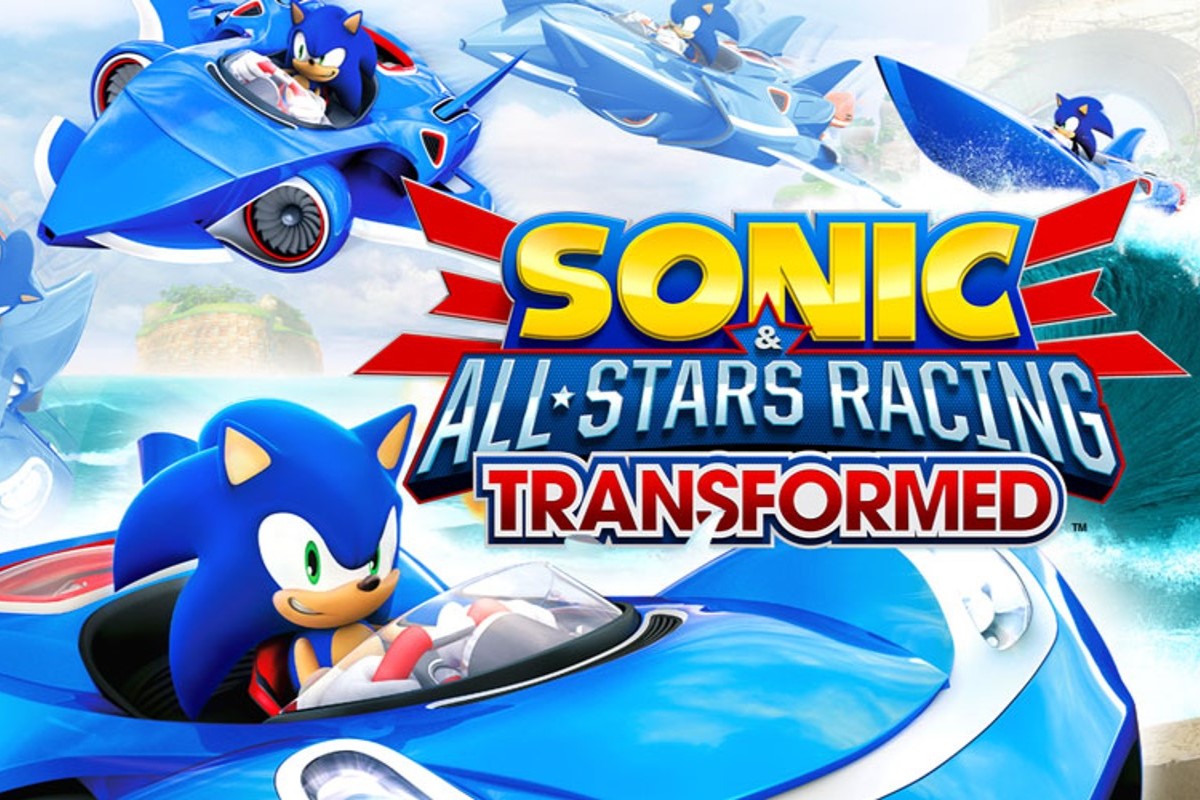
    S&ASRT, as I’ll call it I guess, is something I’d heard praised, though in retrospect I can’t really tell why. Developed by Sumo Digital (who let’s not forget worked on the superb ports of Outrun 2) this is the kind of game that seems to exist as a very vague way to exploit Sega’s long list of brilliant IP without having to use any of it properly by, you know, making a new game in a series, because, well, it might fail. So better to slightly please people who want to see another Skies of Arcadia by including Vyse as a playable racer, but making sure Sonic, who must still be a big selling point to somebody (children? Do children even like Sonic now?) is front and center as much as possible. Boom, two demographics sorted: people who like Sonic, and people who will put up with Sonic so they can see some old Sega shit.

    This kind of thing can sort of work—Sega All Stars Tennis is actually a fairly decent way to whack on your nostalgia penis for a few hours, with, for example, the Space Harrier levels totally working—but the whole thing does, at best, leave you feeling a bit empty when compared to, you know, going back and actually playing Space Harrier. This is totally exacerbated by S&ASRT’s position as a mascot racer. You might think “oh cool! a Golden Axe level!” only to discover that you’re whipping around the course so fast that you barely pay attention to the decoration, and if you do, it’s not really super clear what about it makes it feel Golden Axey, or Shinobiey, or whateverey. The Shinobi one, for example, is just “generic Asian.” The only one that really works is the Nights level, which is impressively specific without actually being interesting.

    And the racing isn’t really all that either. I mean, obviously there’s the whole “you get to switch between a car and a boat and a plane!” thing but what this largely means is that you can’t easily remember the tracks (because across three laps they can change wildly, switching you between vehicle) and the tracks are too bloody long anyway. The boats are about as fun as the hovercrafts were in Diddy Kong Racing, which you might remember as having been fun, but I can confirm were about as thrilling as pushing a Subbuteo man across treacle. The planes are fine, apart from when you can’t tell where you’re supposed to be flying, which is “usually.”

    It’s obvious that the team at Sumo Digital has a lot of talent—the cars, at least, feel lovely—and that Sega is, more or less, forcing them to phone it in (It’s a bit glitchy, the difficultly level is way out of whack, and so on.) But most importantly, does anyone actually want something like this rather than, I don’t know, seeing any of the IP here given even this level of effort by Sumo Digital on a new game? Honestly, I’d be a bit harsher on Sega here for being so glib in their “no, we do like our old IP, see?” if they didn’t have M2 working their wizard magic on the 3DS Classics line, but taken in isolation S&ASRT is a waste of everyone’s time. The problem being, of course, is that because of the mild nostalgia layer you might not mind having your time wasted for a bit, and so they’re able to get away with it.

    Will I ever play it again? I didn’t totally finish it so if I manage to finish every other game I ever want to play I could conceivably go back to mop up as many stars as I could and finish Mirror Grand Prix. Not doing so would be better for my mental health though.

    Final Thought: They include a bunch of non-Sega racers too, stupidly. From Wreck-It Ralph they include… Wreck-It Ralph. Not Vanellope von Schweetz, who is a kart racer. For fuck’s sake.

    This essay is featured in Every Game I’ve Finished 14>24.