Tag: 2011

  • Groove Coaster (Matrix Software, 2011)

    Groove Coaster (Matrix Software, 2011)

    Developed/Published by: Matrix Software / Taito
    Released:
    July 28th, 2011
    Completed: 2nd May, 2015
    Completion: Finished all the tracks in normal, gave up partway through hard. I’d seen all the content though.
    Trophies / Achievements: 34/62

    Since early man carved the first iPhone out of limestone on the African savannah, tapping his finger on the screen in time to music has been something he has wanted to do. He started with things like Tap Tap Revenge, but by the time he’d evolved into hipsterlopithecus, he demanded that the things he tapped on have some kind of relation to things from culture he could at least pretend to vaguely remember, and so the Space Invaders-themed Groove Coaster was born!

    That sounds like I’m being hard on Groove Coaster, but it’s a rhythm action game which starts with a very simple concept—your avatar (probably Space Invadersy) follows a track, points on the track appear, tap the screen when your avatar passes them. It slowly evolves so that sometimes you have to hold, some times you have to swipe, etc., but the main thing is you tap the screen in time when prompted. It’s about as simple—as digital—as rhythm action gets, which in itself is kind of interesting.

    You see, I don’t think Groove Coaster is any good at all when it tries to be challenging, and it made me realise something about a lot of rhythm action games, certainly the most well remembered ones like the Guitar Hero franchise—that they’re not really about the skill of performance in the way video games generally are. They’re more like playing music than is obvious I suppose: as a musician it’s a rare talent indeed to be able to just pick up some sheet music you’ve never seen before and play it with a band that already knows the music. In a video game, generally you want to be able to react and recover; you want to be able to perform, or believe you can succeed, from the moment you know the rules. Music is—usually—about repetition more than innate skill, and so are rhythm games; you might fail that track several times because of a noodly bit in the middle, but once you get it, get that muscle memory down, you’re golden.

    I think that’s a fairly obvious realisation, but I think this is one of those “personal realisations” where you feel out what it is you like about, and find interesting in, the medium you’re talking about. Here, with Groove Coaster, I was finding it this lovely, pleasant, spacey game to play shortly before I went to bed—tap in time to the music, while the visuals flashed in front of my sleepy eyes—but as soon as it became about the challenge, I stopped liking it.

    And Groove Coaster has a bunch of quirks, anyway. Because the track your avatar keeps following often moves and changes direction, the amount you can see in the future is severely limited (and at times, the “beats” you’re supposed to hit dance on screen at the last minute, anyway.) The tapping you perform might at one point correspond to the melody, at another, the drums, and it switches between them with no warning or visual representation. And there are invisible “ad-libs” that I could never quite work out.

    Basically, Groove Coaster sort of makes you believe it’s a casual tapper, but it’s actually just as serious about repetition and perfection as any Rock Band title was. It doesn’t mean it’s bad—though I’d argue that its quirks are flaws—but just that it’s not something I found interesting past the point where I’d heard all the songs a few times; the challenge wasn’t rewarding. That’s in stark contrast to the fantasy of a Rock Band game, where as you play on harder and harder levels, you feel more and more like you’re “really” playing the song. Here, you’re just… tapping on the screen, so it doesn’t have the leeway to forget what you’re doing is just trying and failing at challenge that requires repetition and learning more than skill.

    Will I ever play it again? No, and I’m not particularly interested in the free-to-play version Groove Coaster Zero, but if I ever saw it’s wonderfully named arcade edition, Groove Coaster 2: Heavenly Festival I’d give it a shot in multiplayer mode which sounds like a lark.

    Final Thought: Don’t get me wrong, I’m a sucker for Space Invaders style, too. They really are perfectly designed little buggers and I use a fancy Taito Station tote with Space Invaders on it all the time. And I’d totally buy this rug in a heartbeat.

  • Super Mario 3D Land (Nintendo, 2011)

    Super Mario 3D Land (Nintendo, 2011)

    Developed/Published by: Nintendo EAD Tokyo / Nintendo
    Released: November 13th, 2011
    Completed: 21st April, 2015
    Completion: Finished the first eight worlds, the eight special worlds, beat Bowser Twice. Three stars on my file.
    Trophies / Achievements: n/a

    Huh! So I liked Super Mario Bros. Deluxe so much that I just wanted to keep playing it, but as that doesn’t get me through my backlog I decided to go back to Super Mario 3D Land—which I’d been playing on-and-off since I got my 3DS—and finish it off, which surprisingly I did quite quickly because I only needed a few more star coins to unlock the last two levels of the Special worlds to finish it off (along with beating Bowser again.)

    So, I’ve been effusive with praise for the original Super Mario Bros. but to be honest, since he went into the third dimension with Super Mario 64, I haven’t been the biggest booster of the Mario series. I liked Mario 64 well enough—eventually sitting down and beating it late into the N64’s life. I actually thought Super Mario Sunshine was lovely and will hold that it’s underrated for no clear reason (well, those collect blue coin missions were shite, but that kind of thing is a standard of the series now so…) But Super Mario Galaxy didn’t grab me. I finished it, but in a kind of listless fashion, and I wasn’t that interested in the sequel so I never bothered with it.

    (Though I did like Super Mario Galaxy’s story. Totally non-diegetic, but it was nice.)

    I picked up Super Mario 3D Land free with the 3DS I think—one of those Club Nintendo deals—and I’ll be honest, I worked my way through the first world with the same kind of sluggish, listless feel I had for Super Mario Galaxy. Now, I feel like I should have been finding it interesting, but… here’s the thing: difficulty is a tough thing to balance.

    3D Super Mario games have one problem they’ll never accurately fix (that of being unable to perfectly see where you’re going to land in the third dimension) and that’s always an annoying “difficulty” of them. To some extent they’ve worked to mitigate that—making Super Mario Galaxy about jumping on spheres so you’ve got more view/forgiving gravity; making 3D Land on the 3DS, where you can use actual depth (if you get on with the 3D, which I don’t.)

    However, I think the issue is more that the games are, that difficulty aside, really, really easy for ages. Super Mario 3D Land is, in some respect, a back-to-basics 3D Mario, akin to a large, prettier, collection of the secret stages of Super Mario Sunshine, which as everyone knows, were the best bits. That the levels are short is great, that they don’t get challenging until you’ve finished the entire first eight worlds, less so.

    Thing is, I’m complaining from the position of a seasoned Mario… playing guy. If you’re just a normal human, this is probably not a problem at all! And your skills grow with the game. It’s not totally without challenge, anyway.

    So I’m in the weird position where I was bored—genuinely bored—of this game for hours. But, then it got quite good, apart from the really challenging levels where suddenly you jump and fall off a platform because you couldn’t tell where Mario was going to land. But still, in the end, I liked it. I’d have played it longer, if there were more levels (of the difficult variety.)

    Basically what I’m saying is these games need a “look I’m already really good at Mario, ok” setting.

    Will I ever play it again? I doubt it, but having grown to like it, I’d happily play that Wii U sequel. I wouldn’t have said that half way through the game though.

    Final Thought: It’s annoying that you can only unlock Luigi halfway through the game, and he’s got his weird jump that means, now you’re already muscle-memoried Mario’s way of being, you don’t want to use him. That’s rubbish. Luigi is obviously better, I want to play him through the whole game next time. Maybe if you select the “I’m already really good at Mario” setting at the start you play as Luigi in all the remixed-to-be-harder levels! I’d be satisfied with that.

  • Tom Clancy’s Ghost Recon: Shadow Wars (Ubisoft, 2011)

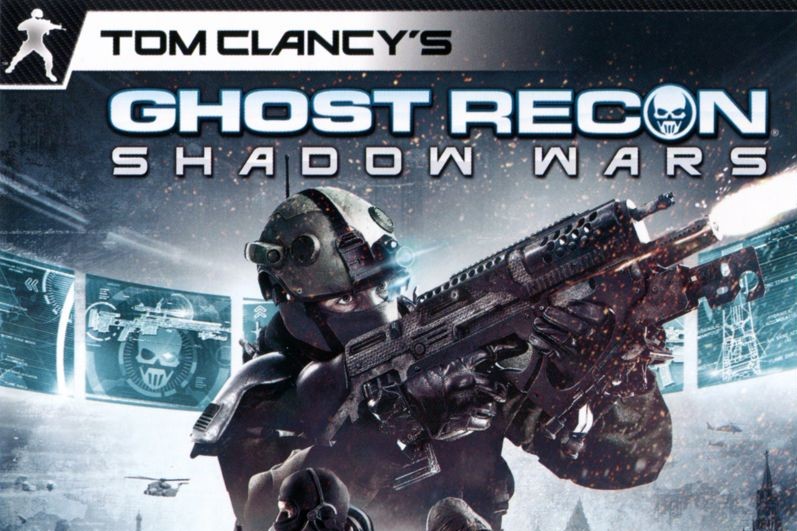
    Tom Clancy’s Ghost Recon: Shadow Wars (Ubisoft, 2011)

    Developed/Published by: Ubisoft Sofia / Ubisoft
    Released: 25th March, 2011
    Completed: 16th March, 2015
    Completion: Finished campaign mode on Veteran!
    Trophies / Achievements: n/a

    Fancy pillaging a bit of personal history? Well, Tom Clancy’s Ghost Recon: Shadow Wars might be interesting because it’s a Julian Gollop-designed tactics title (he of X-Com, Laser Squad, Chaos, and so on) but this write-up is interesting because I believe (though don’t quote me on it) my review of his previous Nintendo tactics-me-up Rebelstar: Tactical Command for Eurogamer is the first game review I was ever paid for. I’m like “2005! Not that long ago” but then I’m suddenly like “fuuu… ten years ago.”

    Anyway, give it a read if you want to read a review of a Julian Gollop game that I enjoyed, but was a bit disappointed in because there wasn’t much to it other than the pleasantness of the core systems. Er, before you read me outline roughly the same thing about Ghost Recon: Shadow Wars.

    Actually, that’s unfair! Ghost Recon: Shadow Wars was a game I found totally entertaining. I’d say it overstays its welcome a bit in length, and it’s interesting to consider how harshly simplified it is even from Rebelstar—for example, your characters have no action point systems, it’s just one move and one shoot, unless you get up to certain shenanigans—but it’s still a perfectly fun diversion if you’re looking for a tactics-em-up.

    The biggest problem—and probably the main reason it gets a bit tiresome towards the end—is that it’s saddled with the whole “Tom Clancy’s Tom Clancy” thing. As a result, it goes out of its way to be super boring. There’s a plot that’s pretty much ripped from the headlines before they knew what the headlines were going to be (Russia invading Ukraine) but it’s about as exciting as if the game had come in a brown paper bag labelled “video game” and everything in the game was a cube (note: that is probably actually more interesting.) Yes, there’s some (mild) banter between your squad, but they’re rarely ever more than their class to you.

    That’s fine though! The classes are fun, from exploding a whole squad of dudes with a rocket launcher to (my personal favourite) manipulating “command points” to allow your stealthiest Ghost Banshee kill several enemies in a single turn (I think my record was six or seven enemies, which felt amazing.)

    When it comes down to it, talking up Ghost Recon: Shadow Wars feels sorta like trying to talk up a puzzle game like Sudoku, or something. It’s like… it’s fun! But how to make it sound exciting when the wrapper is so—intentionally, in some respects—dull?

    Wait… I hate Sudoku. Forget that. Basically: I enjoyed Ghost Recon: Shadow Wars and I’m glad I played it. There.

    Will I ever play it again? Nope!

    Final Thought: You don’t see it in the game, really, but if you look at the top-screen art for the game in the 3DS menu, you’ll see that the character models have a really cool, low-poly style. Really made me sad that wasn’t more on show.

  • Batman: Arkham City (Rocksteady Studios, 2011)

    Batman: Arkham City (Rocksteady Studios, 2011)

    Developed/Published by: Rocksteady Studios / Warner Bros. Interactive Entertainment
    Released: October 18, 2011
    Completed: 20th June, 2014
    Completion: Finished Batman and Catwoman’s chapters and did all the side quests that aren’t “collect X macguffins.” More or less, anyway.
    Trophies / Achievements: 400/1250

    Ah, Batman. Greater minds than mine have probably written about the symbolism of this beloved pervert, but for my money it’s always seemed absurd that Superman—an alien, gifted his power through no effort of his own—is the American poster boy. Bats is the American Dream; the perfect representation of that childish id: “if I can just get rich enough, I can do whatever I want.“

    (in this case, “whatever I want” equalling “get super ripped and live out my sadistic fantasy of dressing in leather, pretending to be an animal, and battering fuck out of people.”)

    What’s more American than the super-rich having limitless power? Of that power being used fetishistically? On the micro-scale, used for revenge on anyone who has ever slighted them, on the macro-scale, used in an endless war that doesn’t seem to feed anything but hubris?

    (I’m not even going to get into Frank Miller’s deranged Tea Party take; a Batman blinded by hatred of a Superman gifted his powers, a Batman, likely, who’d lament even any innocent bystanders hurt having their bones mended on the taxpayers’ dollar.)

    So yeah, Batman. He speaks to the deep, dark wishes of the hair-trigger slighted (probably why he goes down so well with the comics industrial persecution-complex): power, money, hatred. I’m not going to lie; this kind of fantasy is fun, rooted in the id as it is. 

    I mean, I loved Arkham Asylum. The plot was tosh, but we can forgive it being crammed with too many villains what with it being set in, uh, the prison where all the villains are held. It otherwise managed something really special: one, it was a new take on the “metroidvania” in third-person (so tightly designed around solid environments) and two, it knitted together several disparate play “scenes,” all individually excellent and carefully segmented (in turn, investigation/exploration, group hand-to-hand combat, and stealth “predator” sequences.)

    It was about as close as video games get to a polished bullet aimed with a sniper’s precision. Which means it makes obvious sense that the sequel should be completely fucked up in order to fit the milieu of all other modern AAA video games.

    I’m going to make an assumption from here on in; it was an external producer’s fault. Because I can’t see why the team would have made a sequence of decisions that chafe so incredibly obviously with what Arkham Asylum was. Here’s how I imagine it went.

    “Great news, guys! Arkham Asylum was a huge hit, and we want a sequel! However, it needs to be an open-world game now.”

    “Well, you see, Arkham Asylum had this metroidvania thing going on, you slowly unlocked the world as you unlocked your—“

    “Naw, fuck that. Also we want the levelling-up thing to be really important, so have loads of upgrades.”

    “That was quite finely tuned—“

    “Shut up. Plus add fucking tons of collectibles. Like five hundred. And add side quests, but they’re mostly more collectibles.”

    “Anything else?”

    “Make sure there are a million gadgets straight away, and when you need them to traverse it’s actually a surprise, or right after you unlock them and never again. And make sure you have to unlock things that teach you systems, like timing your strikes rather than button bashing, so you never learn them. Oh! And mash up your three styles of play in an inelegant, uncomfortable way, especially in the open world.”

    “Can we at least make each of the locations in the open-world like, a small, carefully designed metroidvania?”

    “No, make those crap as well.”

    “Uh…”

    “Look, this shouldn’t be a surprise, your art direction was already over-the-top brooding dark and mad sexist. It’s not like you’ve got perfect taste or anything. In fact, make this one way more ugly and sexist. Ooh, actually, make sure the plot is total balls, starting in the middle unless people bought a tie-in comic, or something, and ending in a way that’s actually totally laughable and that the writer of this would spoil right here but, you know, people might still want to play it. “

    “‘The writer of this?””

    Will I ever play it again? No, but the actual tragedy you should note is that I played Asylum far past the point where I could have been done with it, collecting all the collectibles and doing all the challenge missions. As soon as I beat this I stopped.

    Final Thought: Both Arkham Origins and the upcoming Arkham Knight follow the template of City, which means it worked. What I can’t understand is why when City came out people didn’t react the way I did, which is “why did you go out of your way to break something that worked so well?“

    This essay is featured in Every Game I’ve Finished 14>24.

  • Toy Soldiers: Cold War (Signal Studios, 2011)

    Toy Soldiers: Cold War (Signal Studios, 2011)

    Developed/Published by: Signal Studios / Microsoft Studios
    Released: August 17th, 2011
    Completed: 1st March, 2014
    Completion: Completed the campaign. Didn’t have an interest in playing any of the extra stuff (survival modes, etc.)
    Trophies / Achievements: 85/300

    I really liked the original Toy Soldiers! I have a soft spot for tower defence probably borne from an entire day lost to Desktop Tower Defence; the way as you learnt it you’d modify your layout, starting with dense mazes then evolving into sparse, odd arrangements that maximise killing in a far more efficient manner… I found the design pretty thrilling actually. 

    Er, except Toy Soldiers wasn’t really like that, being one of those games where you have set places you can put towers and it’s more about knowing where and why to place things—with the added quirk of being able to control the towers and the odd vehicle. But what really worked for Toy Soldiers was just how informed the setting was: the horrors of World War I recast in (period appropriate) die-cast. You’re playing at war just as children of the time would, but being able to zoom into the machine gun and mow down literally hundreds of people—remember, it’s tower defence so you are aiming for efficiency of murder—it was readable (though I doubt intentionally) as a pointed statement on war and play.

    But Toy Soldiers: Cold War doesn’t really work! I’m not even asking for it to say as much as the original, but with the original, you really felt that Signal Studios loved old tin war toys and they were very comfortable making a game around them. Here, making a game set in the 80s, the “toy” setting feels far more pasted on, which is pretty odd unless everyone at Signal Studios is actually in their 80s and therefore have only the most surface understanding of the decade. I mean, the game has pre-level briefings that treat the war as if it’s for real, and not being played on a table top? And levels and enemies look super realistic, except sometimes there’s a cassette tape in the way?

    It’s odd, because the setting promises so much. It takes most of the inspiration from things like Red Dawn, and overlooks what playing with toys in the 80s was: a glorious the-rights-holders-wouldn’t-allow-it mash-up. We’re talking GI Joes fighting with Transformers, green army men with ugly flash being ran over by Hot Wheels with all the paint scraped off.

    They have the lightest claim that they’re doing this—the commando you can call in is larger than the enemies (GI Joe scale to army man scale) but he’s more a Rambo joke (which is actually pretty fun, I never got tired of his barks) and the final boss is a… thing. Why aren’t the enemies army man green though? Was it just in case anyone remembered those 3DO games that they made like a hundred of even though there is no human recorded in history who actually liked them?

    Ultimately Toy Soldiers: Cold War just feels generic in the way that it absolutely should not. Indeed, I even found the tower defence play a little disappointing (the placement options are limited, and a lot of the game now is getting into a vehicle to kill as much as possible of what your towers can’t get, so the balance has shifted to an action game).

    You can’t always get what you want, and I suppose what I wanted was a game with, I don’t know, My Little Pony towers that barfed Play-Doh at attacking Micro Machines. You know, some imagination.

    Will I ever play it again? No.

    Final Thought: If you wanna play one of these (but are biased against WWI for some reason) you should play Iron Brigade. I really liked Iron Brigade.

  • Saints Row: The Third (Volition, 2011)

    Saints Row: The Third (Volition, 2011)

    Developed/Published by: Volition, Inc. / THQ
    Released: November 15th, 2011
    Completed: 26th January, 2014
    Completion: Final mission completed both ways, and every activity and gang operation in Steelport completed.
    Trophies / Achievements: 50%

    The Saints Row series is one of those things that people who should know better seem to love. An open world crime-em-up that revels in its stupidity, grotesque violence and bad taste, it seems to have its worst excesses often forgiven because of a character creator that allows you to create anything; heck, a grotesquely obese woman with a man’s voice if you feel like it (which I’m sure makes the otherwise pervasive casual sexism feel utterly bizarre.)

    (I made myself, because I always do. And I managed the best facsimile of myself ever thanks to clothing options allowing you to wear a hoodie with the hood up and—something game developers always seem to miss, despite being a shower of specky bastards—glasses.)

    Do you know what, though? I’ll admit Saints Row: The Third is, at points, inspired. Where Rockstar is awkwardly determined that its work be taken seriously—Goodfellas, except Henry Hill eats at Fanny burger and drives a Vulva—Volition barely bother their arse to make it coherent. So it’s not really about the parts where the game comes apart, but where it comes together.

    For me, it was the point a few missions in where, having just fallen out of an airplane, I (and it was me) dive down to catch Shaundi, a key character, in mid air—only to notice that another airplane was preparing to collide with us. And, scripted moment it may have been, but the point where I (yeah, me, only with Nolan North’s voice) tell Shaundi “remember how happy you were when I caught you?” only to drop her, fly through the plane’s windscreen and out the other end, and catch her again… well, it was pretty much the best thing I’d seen since I last watched the bit in Fast and Furious 6 where Vin Diesel reveals he can fly. It felt like an entire cinema going mental, but I was at home.

    After that kind of genius, I mean… the fact that so much of the game is probably some of the weakest gunplay I’ve experienced since, I don’t know, Saints Row 2 is barely a dampener. The driving at least feels excellent, so when you step out of the car and you mostly stand or strafe about getting filled with bullets—hoping you can kill enough (too many) dudes that you don’t have to awkwardly run behind a wall to restore your health—you just kind of get on with it.

    To be honest, a lot of the game is—in fact, as a lot of these open-world games reveal themselves to be—a real-estate simulation. You wander/drive about, buy stores/do activities/kill dudes to claim part of the map, and you wait for the money to roll in. Saints Row: The Third does this pretty well (even if I did sort of wish I could just click on the map to buy stuff rather than have to drive there, but then there’d barely be any game at all) and as a result I did actually end up doing everything in the game so I could fill in the whole map and feel satisfied. I didn’t have a bad time doing it, but if I was going to recommend one of these games Saints Row: The Third pales in comparison with Sleeping Dogs, which manages to do open world with a fairly coherent story, memorable city and genuinely successful mechanics (all of ‘em: man shooting, face punching, thing driving). However, as far as I’ve been told, Saints Row IV re-uses the city from The Third but turns the dial so far up the series has morphed completely into a superhero title, which is rather pleasing as I’ll be happy to return to Steelport at some point in the future for some more occasionally inspired antics.

    Will I ever play it again? No.

    Final Thought: It’s not just the character creator that gives the player a sense of ownership in Saints Row: The Third. The game constantly throws THIS? or THAT? questions at you that slightly change the world/deny you other options. It doesn’t make a huge difference but it’s nice to feel that in your world you chose to—for example—blow up a tower and see that reflected for the rest of the game. Look, it’s not Mass Effect, but somehow these small changes with obvious, direct effects really worked for me, ok?