Tag: 2008

  • Gravity Bone (Blendo Games, 2008)

    Gravity Bone (Blendo Games, 2008)

    Developed/Published by: Blendo Games
    Released: 28/08/08
    Completed: 05/07/25
    Completion: Completed it.

    Blendo Games’ Skin Deep was released this year, and as is often the case, a new game makes me go “oh yeah, I haven’t really played much or anything by that developer” and I therefore feel like I have to start from the beginning. In this case, I’d previously played this and Blendo Games’ Flotilla (which I believe I still have on Xbox Live Indie Games?) but Gravity Bone only takes twenty minutes so I thought I’d run through it again (I don’t think I’m going to get the Xbox out for Flotilla, though it’s also still on Steam.)

    Anyway, Gravity Bone is still well worth running through in 2025 (you can too if you like, and then come back.) It worked fairly well for something made in 2008 even if it did crash consistently if I went into the menu and I was never able to get the graphics looking right in full screen (I wouldn’t even bother trying to get it working on a Steam Deck. But, again, it’s twenty minutes long.)

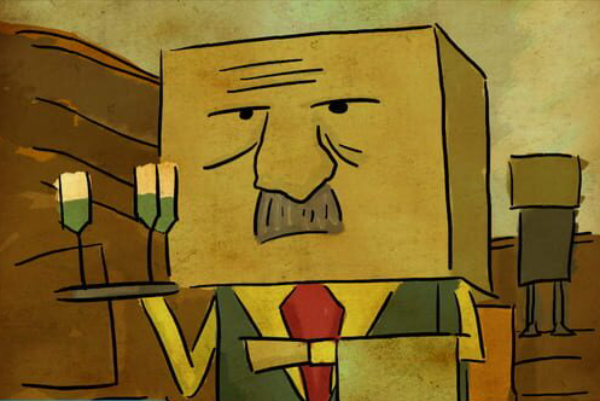
    What strikes me about Gravity Bone now is actually similar to what Kieron Gillen said about it way back in 2009–the confidence it has. A tiny spy thriller with blocky characters, designed with intentionality. The janky nature of playing it now could be detrimental, but the work shines through–like pulling up a scratchy digital transfer of an old short movie that was never matched.

    To get into spoiler territory (again, for a game that’s twenty minutes long) I love that the game breaks the “rule of three”. You complete your first easy mission. Your second mission is a little more complex, featuring tools to use and in a very “2000s FPS” way, some tricky jumping. And then, before you can move on… you get shot.

    Suddenly everything you expect from a game is broken. You can’t just follow what you’re being told to do. You’ve got to get up and chase your assailant, surely you’ll catch them. But then… you die.

    But as you die, you “remember” everything that brought you there. Suddenly you are no longer just  in control of an avatar doing as you were told–you understand you were playing a person, as you see their life flash before their eyes. It’s… surprising. And then? Truly? It’s actually quite moving.

    You are taken from a pure video game experience to an emotional one, something that few games have managed in experiences that number in the tens of hours. I don’t want to oversell it too much, but while they say brevity is the soul of wit, Gravity Bone has wit and soul in its brief run time. 

    Will I ever play it again? If you haven’t heard, it’s only twenty minutes. But even at that…

    Final Thought: Spoilers: in the time between starting to write this article and finishing it I did in fact decide I just had to play Flotilla after all. What am I like.
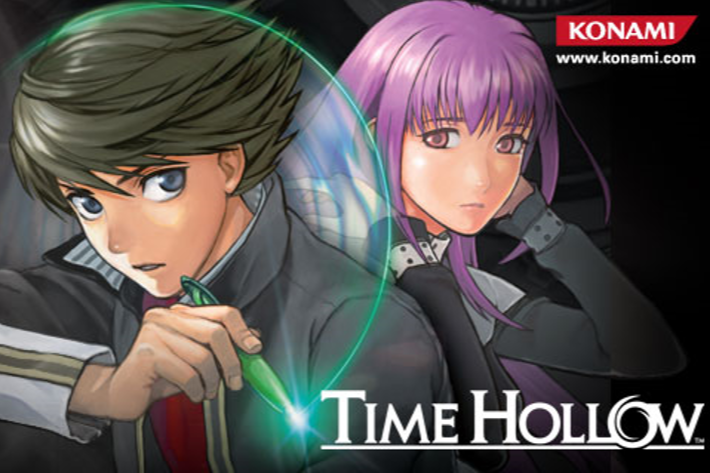
  • Time Hollow (Tenky, 2008)

    Time Hollow (Tenky, 2008)

    Developed/Published by: Tenky / Konami
    Released: 23rd September, 2008
    Completed: 21st July, 2014
    Completion: Finished it!
    Trophies / Achievements: n/a

    This has been lying in a pile of Nintendo DS games forever. Probably don’t ask me why I decided to play it now, I’m not sure I actually have a reason. Maybe that I’d went to see Patlabor: The Movie and its sequel in the cinema and felt like something anime-ey? I have no idea.

    Anyway, Time Hollow is… is this what a visual novel is? I mean, I honestly don’t know. Is the Phoenix Wright series a visual novel? If it is, this is one too, because they’re… similar. Ish. In that you wander about, collect clues (sort of) and watch talking heads talk to each other for a pretty lengthy period of time. If they have another name, it’s probably something like “visiting locations over and over and clicking the screen everywhere until you hit the right trigger for the story to continue novels”.

    Remarkably, however, I quite liked Time Hollow. It’s short (taking about as long as an average young adult novel to read, probably) and there isn’t really very much game to it, but it’s charming. This is the kind of thing where the story has to keep you interested enough to put up with all the “is it this? Is this what you want?” clicking, and for me, it did! 

    You control Ethan Kairos, who ends up in a timeline where his parents disappeared some years ago. Given a magic pen that allows him to open portals to the past (quite honestly the weakest excuse to use the DS’s touch screen ever, and you only do it about eleven times) he sets out to solve the mystery.

    It sounds pretty… anime, and the start—where you’re introduced to his school chums and the specky lassie that fancies him—sets alarm bells ringing, but written by Junko Kawano of Shadow of Memories non-fame it’s far more interesting than that. Rather than being one of those time travel things where the hero does a bunch of stuff, time changes for better or worse and he goes about fixing it if it went wrong, here it’s delightfully mixed up by giving other characters the ability to change timelines, meaning that as soon as you “fix” something, someone else might pop in, break that and leave you in a new reality that you have to get your bearings in before you can even work out what to fix.

    It’s all scripted, of course, which does mean you’re not really doing any actual work to make any of this stuff happen, but it’s all pretty logically consistent for a time travel plot, even if it doesn’t wrap up quite as neatly as I’d hope (as usual, the characters are never as smart as the players.) It’s frankly far more entertaining than it has any right to be.

    Will I ever play it again? Nah. Although I’m adding it to my collection of DS games, not just getting rid of it, so there’s that.

    Final Thought: Entirely possible that I liked this just because a pet cat is a fairly important character in the whole thing. Well drawn, cute meows, A++ cat would cat again.

  • Sid Meier’s Civilization: Revolution (Firaxis Games, 2008)

    Sid Meier’s Civilization: Revolution (Firaxis Games, 2008)

    Developed/Published by: Firaxis Games / 2K Games
    Released: 13th June, 2008
    Completed: 16th July, 2014
    Completion: Beat it with every possible victory; once on Chieftain, twice on King and twice on Deity. Done with it.
    Trophies / Achievements: 595/1000

    I’ve written before about how important Civilization is to me, and—suddenly in the mood for the series—I decided to give Civilization Revolution another shot after hating the iOS version (mostly because it was so ugly I couldn’t get past the initial learning stage.)

    I’m a huge fan of the original Civilization; it’s got what you could charitably describe as workmanlike pixel art, but within that it’s got bags and bags of charm. From the city view (nothing more thrilling than seeing a wonder appear) to touches such as the evolving styles of your advisors (modern despotism!) it’s wonderful. Just looking at some screenshots now make me casually debate stopping writing this and playing it for a while (I won’t.) 

    Of course, it isn’t perfect (I remember Gary Penn complaining in Amiga Power about how prescriptive it was about the path of a civilisation; your story might include Greece conquering the English, but you can’t decide you’re not going to invent the wheel, something the series has never really felt comfortable messing with) and I’ve probably played Civilization II more (which more or less jettisons all the charm for just generally being a bit more polished.)

    Anyway, I then didn’t like III, or IV; didn’t play the Call to Power side-stories, and while people do like Alpha Centauri, my ability to care if my space peoples have built a “hab complex” or not is zero.

    Civilization V is great, though. Still lacking that original charm (though I do like the deco stylings) but actually fixing a ton of the problems that Civilization has had since the first one—stacking units tiresomely to make armies that bash against each other tediously, most importantly—the only issue being that dipping back into it now with all the expansions felt like a bit much for me. And so, as described above, I decided to go with Civilization Revolution.

    So here’s the thing. When you get down to it, Civilization Revolution is a very slightly streamlined Civilization with modern-for-2008 graphics. That you don’t have to use settlers to upgrade the areas around your cities is about the biggest thing I can really note, to be honest. It adds some stuff from the later games—culture wars and great people—and adds some stuff that doesn’t seem to make a great deal of sense (like the ability to make armies of three units, which you can stack anyway.) 

    So why don’t I like it? When I think about playing the original, doing my own version of the “one city challenge” without really knowing I was doing it—in fact, using it as a way to tutorialise the game—I wonder, would a new player be doing the same thing? Would they fondly remember the (in my mind) irritating Sim-like advisors after they’ve graduated to Civilization V? Would they thrill as they see their cities evolve directly in the game world rather than a few menu levels down?

    Is it actually fairly successful at what it does, it’s just that I’ve been there, done that, and I like pixel art more?

    Probably.

    Will I ever play it again? I could hoover up the rest of the achievements easily but no.

    Final Thought: Here’s something quite important, though. You don’t have access to any of the levers that allow you to endlessly generate new scenarios. While in big boy Civilization you can generate a small world made up of islands with seven opponents, or a massive world with just one, here you’re stuck with pre-made scenarios. And the AI, as far as I can tell, is terrible (it doesn’t actually seem to exist until you discover it, which makes winning even on Deity rather simplistic.) So you’re probably not going to want to return to this 23 years later just by seeing some screenshots.

  • Super Stardust Portable (Housemarque, 2008)

    Super Stardust Portable (Housemarque, 2008)

    Developed/Published by: Housemarque / Sony Computer Entertainment
    Released: November 25th, 2008
    Completed: 31st May, 2014
    Completion: Beat all the planets in arcade mode. Not in one go or anything, mind.
    Trophies / Achievements: N/A

    I must have bought this bloody forever ago and just never played it. Here’s why I didn’t, I bet: I was sick of twin stick shooters when I bought it, but it’ll have been on sale so I was banking it for a rainy day.

    I can honestly remember when the only twin stick shooters for years were Robotron 2084 and Smash TV (well, and Total Carnage, but it’s pish.) Then after Geometry Wars they were bloody everywhere (though wasn’t Mutant Storm before that?) and even though I’d put Robotron 2084 on my desert island disks, I was definitely burned out on them.

    The why of that, of course, is that so many of the new wave of twin stick shooters are totally flavourless. Geometry Wars isn’t, but I’d definitely say Mutant Storm is a perfect example of platonic blah. Games where none of the enemies stick in your mind, where there’s just no visual style, where there’s probably some tactics for high scores, but it’s impossible to care enough to try for them.

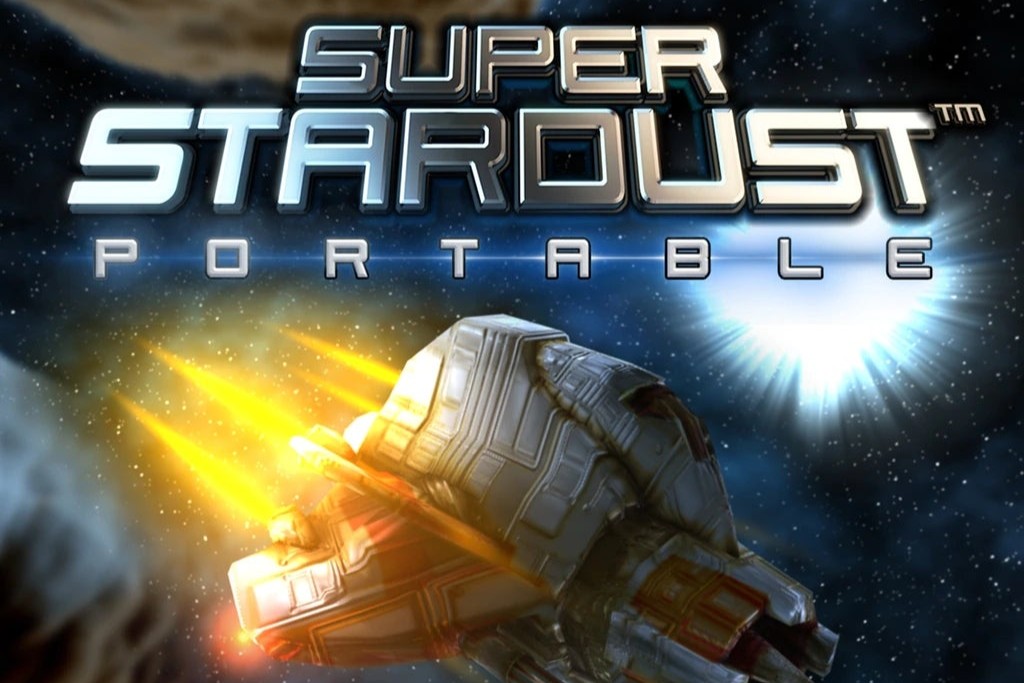
    Can you guess where I’m going with this? Why yes! Super Stardust Portable is one of those games. The one thing that makes Super Stardust HD stand out—the actually neat playing-the-game-on-a-rotating-planet aspect—is totally missing from this because they’ve zoomed the view in (PSP couldn’t handle it, or whatever.) And without that, this game could not be more generic.

    Which is a bit odd! Because if you go back and look at the original Stardust and Super Stardust on the Amiga there’s bags of weird Euro-game charm. Actually, they were much more purely Asteroids-inspired; I wonder offhand if they could have made a rotate and shoot-em-up instead of a twin stick title, or if that kind of thing is just too old hat (I’m going to say… yes. But they could maybe have gone the Time Pilot/Luftrausers direction.)

    The graphics could be totally bonkers, just look at how it looked on the Amiga! Then look above, and feel yourself falling asleep. Of course, the game is a bit more intense than that, what with all the asteroid bits flying about, the three weapons (each better at different things) and multiplier shenanigans. 

    But it’s still boring.

    Will I ever play it again? I really can’t see why I would.

    Final Thought: There were some cool tunnel shooter bits in Stardust/Super Stardust, too, that are totally missing from any of these later games. I’d so rather have spent a few hours playing one of them rather than this on my Vita, honestly.

  • Fire Emblem: Shadow Dragon (Intelligent Systems, 2008)

    Fire Emblem: Shadow Dragon (Intelligent Systems, 2008)

    Developed/Published by: Intelligent Systems, Nintendo SPD Group No.2 / Nintendo
    Released: February 16, 2009
    Completed: 10th March, 2014
    Completion: Got all the way to the final level, gave up and watched the ending on YouTube.
    Trophies / Achievements: n/a

    It happened! Yes, this is a rare occurrence—admittedly one that’s more usual with Japanese games of an RPG or strategy persuasion, of which this is all of the above—but here’s a game where I got to the end boss, clunked against it without any acceptable way to progress, said “fuck that” to reloading an earlier save and grinding or some other tiresome solution, and just watched the ending on YouTube.

    And I was so proud of that time I toughed it out and beat the end boss of the original Persona, too.

    It’s sort of a shame! Because there was this… well, I’ll be honest and admit it was brief, but there was this brief period where I was sort of into Fire Emblem: Shadow Dragon. In fact I was thinking “heck, everyone likes Fire Emblem: Awakening so much, and this is actually ok, so I’ll probably play it some time.”

    Now? I doubt that. Because nothing dredges up all the mistakes a game has made than a bad ending. So let’s discussing!

    Fire Emblem: Shadow Dragon is the DS remake of the very first game in the Fire Emblem series, which made it feel like a pretty good place to start (especially as it’s the introduction of Marth, the first Fire Emblem character that was seen outside of Japan, albeit in a Smash Bros. title.) Unfortunately, it’s obvious that as a Famicom game originally, the first Fire Emblem was pretty basic. All the things it seems people mention about this series, like characters talking to each other in missions, are missing here. That of course shouldn’t be a problem, because the strategy core—very similar to Advance Wars—should be what you care about, right?

    Hmm. There’s a quirk! And if you’re familiar with the series, you know it already: if a character dies, they die forever. This is clearly intended to give weight to the strategy, but sadly, it doesn’t really work. You aren’t going to care about the characters, you care about how much you’ve levelled them up, and while the game does feed you new characters quite consistently—obviously to shore up your forces—you are never going to want to use them because they are never going to be better than a character that’s been with you for a while.

    So what this means is that you’re going to grind up your characters to get them to the point where it’s going to be hard for them to die (to the point, likely, where the Advance Wars-style “lances beat swords, etc.” rock paper scissors aspect become totally pointless.) Which means doing what I did, which is carefully sending your favourite characters into the arenas that are found on certain levels, and repeatedly fighting until they’re over-levelled.

    It’s boring! But, and here’s the but: once I’d over-levelled them just enough, the game became pleasantly strategic. It wasn’t an Advance Wars, no (I thought the graphics were ok, too, then I saw how beautiful the GBA Fire Emblem animations were recently and that took the shine off a bit) but it was fine. I can’t begin to imagine how unpleasantly hard the game would be if you were letting units die noble deaths or not abusing the arena, however.

    Or maybe I can! If Marth dies it’s game over, so I hadn’t been using him on the front lines, and he was woefully under-levelled by the end. The final boss? Well… The only person who can use the ultimate boss-killing weapon is Marth. Who would die after one hit, while my other once over-levelled heroes were barely able to keep on top of the constant reinforcements. So I should actually have never stopped grinding at some point earlier, removing all the strategy/challenge from the majority of the game just so I could finish the final, ludicrously unbalanced level. Great.

    Will I ever play it again? No.

    Final Thought: Pretty sure I could get lots of responses here about how I could have used a particular other character to kill the boss, or do some particular combo, or whatever. Or maybe to promise me that Awakening, with the ability to turn off permadeath, is worth playing. It’s too late, folks!

  • Mirror’s Edge (DICE, 2008)

    Mirror’s Edge (DICE, 2008)

    Developed/Published by: DICE / EA 
    Released: November 12th, 2008
    Completed: 23rd February, 2014
    Completion: Completed the main game without shooting anyone. (I felt zero urge to mop up any other achievements.)
    Trophies / Achievements: 410/1250

    Mirror’s Edge is one of those games I was sure I had to play. I definitely felt that peers had recommended it, and was certainly aware that some folks were super disappointed that it never got a sequel (only there is one promised now, so it’s ok.) Except now I’ve played it and… hmm.

    It’s been five years since Mirror’s Edge came out, and playing it now is probably the first time I’ve been aware of just how long the “last” generation was. Because it feels dated. I can’t quite put my finger on it, but the fondness people feel (or felt) for Mirror’s Edge feels more like the way you might be fond of a cheap, scrappy sci-fi movie that sounds great, but really isn’t (at all.) You know, a Robot Jox or something. Something that’s super hard to get through without chewing your own face off, but you sort of want to like it anyway?

    Actually: that’s not how I feel about Mirror’s Edge. Because it’s just so bloody boring. The core seems like a decent idea! A parkour FPS! And it almost sort of works—when you are under pressure to jump and run, and the level design supports that, there’s a kind of pace that keeps it interesting. The problem is that pace isn’t maintained—I’m not clear if that it could be, admittedly—with frequent moments when the entire game slows down and you’re expected to carefully puzzle out how to climb up (or get down from) somewhere high.

    It doesn’t feel right. Parkour, every time you see it happen in one of them there action movies, always seems to be about characters being in the moment. They scan the rooftops while running, they see the next thing they need to jump off or over, and they do it. They don’t stop, walk around a bit, try jumping off a thing, realise the next thing isn’t quite close enough, die, and then repeat the whole thing about sixty more times till they get it. They just go for it.

    Now, I’m not sure how much EA got involved—I could believe this had a turbulent development, but have no idea and can’t be bothered to do any research—but the cynic in me tells me that Mirror’s Edge coming out a year after Portal might have influenced the decision to make it all a lot more puzzley. (People probably are more intent to blame the gunplay on EA, but it’s crap, obviously not how you’re meant to play the game, and likely not an arm grafted on but a vestigial one that you couldn’t snip off for fear all the patient’s guts would fall out on the floor.)

    So what Mirror’s Edge is supposed to be it is occasionally and it therefore works infrequently. Maybe that would be ok, but there are so many aspects that I’m pretty sure games are long beyond by this point: levels full of painted-on doors, guidance systems that are either spotty or unhelpful (this is the first game in years I’ve been lost in a small room in, and “runner vision” is bizarrely neutered) and challenge replaced with a determination to kill you over and over till you grind out a success by jumping just right or surviving being shot from every angle at once.

    Oh, and I lied about not doing any research: I checked out if the generally lauded game writer Rhianna Pratchett was ashamed of having worked on this, because the story is absolute pish. She is. Pratchett claims her work was butchered by EA, but I’m struggling to see even a glimmer something better in it: there’s four characters in the entire thing, one goodie protagonist, one doomed goodie mentor, one a goodie who is obviously going to turn out to be a baddie (literally the second you see them, you’ll think “well they’re going to double-cross me”) and one is a possible baddie who turns out to be a goodie. You could write the entire thing on a back of a fag packet, crumple it up and throw it in my face and I’d have a deeper emotional experience.

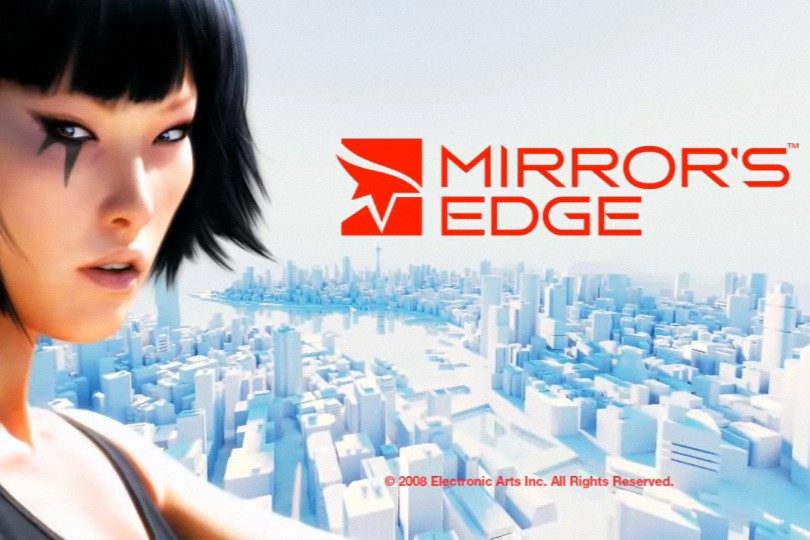
    The stark white cityscape looks quite nice though.

    Will I ever play it again? No.

    Final Thought: Mirror’s Edge will have been deep in development by the time Portal came out but going on to make the credits song of your puzzley FPS with a female protagonist caterwaul “STILL ALIVE, I’M STILL ALIVE” over and over again is just asking for trouble, EA.