To view this content, you must be a member of exp. magazine’s Patreon at $1 or more
 Unlock with Patreon
Already a qualifying Patreon member? Refresh to access this content.
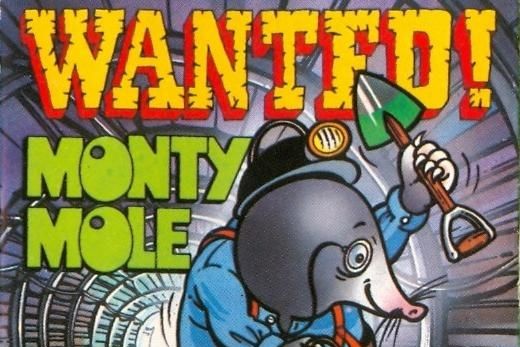

Developed/Published by: Peter Harrap / Gremlin Graphics
Released: 29/07/1984
Completed: 07/09/2026
Completion: Got to the end, having let myself save pretty liberally at screen transitions, and… somehow hadn’t collected all the coal so couldn’t actually finish it. Well, close enough!
The Monty Mole franchise is a classic British franchise, the series that put Gremlin Graphics on the map, but it’s not one that I’ve ever really engaged with before. As an Amstrad CPC owner, we didn’t get Wanted! Monty Mole, and I feel like I remember that Amstrad Action, the magazine which defined my childish tastes, considered something like the sequel Monty On The Run old and creaky by the time I was reading it.
However, the entire franchise is available to purchase on Steam and, in fact, in a collection on Nintendo Switch and Xbox. I do think it’s great that these games are commercially available, and I can’t speak to the Switch release, but the Steam releases are just the same low-effort porting job I saw in Match Day, and it’s kind of a bummer, because there’s history here that deserves more than just being lobbed up sans context.
Of course, it could be so much worse. I mean Manic Miner, probably one of the most important British games ever is being released in an AI-sodden remake that feels… it feels exactly as Hayao Miyazaki said, an insult to life itself.
The thing that gets forgotten, I feel–and I’m sorry, yes, we’re going to have another one of those “games history is global” discussions–is that even though it feels like platform game evolution went Donkey Kong–Super Mario Bros. there was so much parallel evolution going on. Donkey Kong was, of course, the originator, but if we look at the lineage of Wanted: Mighty Mole, it’s actually more like Donkey Kong–Miner 2049er–Manic Miner! Personally, I marvel about how deep and rich video games became so quickly, a Cambrian explosion ongoing at a time people think of being a crash.
I think it’s easy to say the fittest survived, but every time I return to this period–and especially when I’m touching the home computers of the era–I marvel at the ambition. It’s like people didn’t know what was possible, so they just went for it.
It doesn’t always work–to be honest, it usually didn’t work–but you’d get things that have still never quite been equalled like The Lords of Midnight. And while Wanted! Monty Mole is hardly at that level, it’s still possible to have a good time with it today–it was, after all, the winner of Crash’s Best Platform Game 1984.
One of the strangest aspects about Wanted! Monty Mole is its connection to the miners’ strike. It’s a complicated and controversial period in the history of organised labour, and I think it’s pretty easy to get the wrong idea about Wanted! Monty Mole, as it intentionally courted controversy with the setting as a marketing gimmick.
With the pitch that Monty Mole is dodging pickets, you might think you’re playing a scab (albeit a mole) who is mining in opposition to the National Union of Mineworkers, personified by its president Arthur Scargill. But it’s much more complicated than that, and it all relates to the actual facts of the strike, which had began in March 1984, just over four months before the release of Wanted! Monty Mole (designer Peter Harrap would complete the entire thing in just three of those months!)
You see, Arthur Scargill did not hold a national ballot to democratically authorise a strike, having lost three previous ballots, and instead either tried to force–or I believe in more charitable views, tried to allow the natural occurrence of–a national strike by domino effect, by supporting regional strikes and “calling for action” from all other local and regional chapters. The idea being that everyone would fall in line, especially under the pressure of “flying pickets” (striking miners who’d travel to other mines to picket them in an attempt to shame those miners into downing tools.)
I’m sure there is intelligent lefty analysis of this out there, so forgive me for my approximation (I at the very least recommend the BBC’s Miner’s Strike: A Frontline Story, which allows the miners to speak for themselves) but this does seem like just about the worst possible approach at the worst possible time. With not every miner on strike, this allowed some coal to still be produced, weakening the entire point of a strike, and flying pickets (pretty obviously) alienated many working miners who hadn’t been given a vote.
The strike would end in March 1985, with the miners comprehensively defeated by the Conservative government, ironically united behind Margaret Thatcher, who by all accounts viewed the entire thing as a convenient way to break the back of a union. It could, pretty much, not have gone worse.
And Wanted! Monty Mole represents just how tangled the situation was. Talking to Mark Hardisty in A Gremlin In The Works, Harrap is clear in his feelings, explaining that his father was a miner, and was directly affected:
“[Dad] was a democratic mineworker and he always used to say that the union would never be broken. We were solid because we had a vote … if we all voted on strike action, they would never break that. Even though Scargill was right in what he was saying … the miners never had a say. My dad never had a say.
[Scargill] is the baddie even though he was doing the right thing, or had the right intentions. He was doing it completely the wrong way.”
So Wanted! Monty Mole isn’t about a wee mole scabbing, and it’s right there on the tape inlay.

It seems that while Monty was initially intending to get down the mines and nick a bunch of coal to keep his home warm in winter, he ends up in conflict with Arthur Scargill as a result, and discovers that the only way to defeat him is the “secret ballot papers” and “vote casting scroll.”
The entire game is actually about the importance of voting and true union values in governance.
I think that’s incredible! The early history of video games does not feature a lot of games that are directly attempting to make a political point (even though, if I’m being honest, Wanted: Monty Mole is mostly “just” a wacky Manic Miner-inspired platformer.) Most obviously there’s Missile Command reflecting the nuclear anxiety of the time and making the argument that there is no winner in a nuclear war, maybe things like Dictator (a satire of banana republics) but I can’t find a game making an explicit, pointed statement like this at a moment where it could count.
(And they even offered the NUM 5p from every sale, which was foolishly ignored; considering the game sold 20,000 copies in the first six weeks, a lot of hungry miners and their families might have benefited from a donation of a thousand quid.)
Anyway. How good is Wanted! Monty Mole as a game, though?
It’s not bad, with caveats. Wanted! Monty Mole is pushing at the limits of the Manic Miner design without quite knowing where to take it. You aren’t just stealing coal across screens; you’re collecting items that you need to progress too, and the game’s world is one continuous level. But it’s all a bit… wonky. On the first screen you have to collect a bucket to see the coal at all, which is a good early teaching moment (take that, Super Mario! It’s not just Door Door that ate your lunch!) But from that point on it’s all a bit vague, generally being that picking up an item (like a drill) gives you a hit point that allows you to do things like touch candles, but if you touch an enemy first you lose that hit point and can no longer collect the coal.

Thankfully, there’s only a few sections where you have to backtrack in order to remove walls that block your way (although those are sort of buggy: collect all the coal on the screen with the wall before going back to collect a missed piece of goal and it won’t disappear) and the game is mostly “collect everything, avoid enemies.” The real issue is that collision detection is rough. Later in the game there will be a couple of sections that seem impossible without losing a life, or at one point relying on some very tight timing with a mine cart. But the design, more or less makes sense. Which is insane, because referring to A Gremlin In The Works again, Harrap designed the entire thing directly in machine code–he didn’t even plan for how screens would connect and had to match them up via testing!
On that level alone it’s a marvel it works as well as it does, especially because the world has such a sense of place–you actually do feel like you’re going down into a mine with a long chain of vertical screens. I do suspect this system is why the game doesn’t feel as tight as something like Manic Miner–screens aren’t stuffed with enemies or carefully designed challenge, it’s a bit quiet, and it’s mostly the collisions detection that you’ll come a cropper to–although there’s a chance that like me you’ll get to the end, not be able to defeat Arthur Scargill and not be sure why.
Does it “hold up”? No, not really. Did I feel a nostalgia for the era anyway, and appreciate its hidden depths? Absolutely.

Wanted: Monty Mole didn’t come out on the CPC–to be fair, the CPC 464 had only come out barely a month earlier–but it was released on the Commodore 64, in a slightly strange fashion: rather than have it ported, Gremlin founder Ian Steward took the decision to have Antony Crowther use his Son Of Blagger engine to make a parallel version of Wanted: Monty Mole seemingly without, apparently, letting either Harrap or Crowther aware they were making the same game. Once they knew (a couple of months into a three month project!) they did their best to create some parity by having the same opening screen, but the games are massively different, with Crowther’s a tight platformer with a maze-like single level featuring full directional scrolling.
It’s also absolutely awful, a single-life attrition platformer where Monty has a health bar and basically need to take damage constantly to progress because he’s almost impossible to control (maybe it was the emulation, but I found it a nightmare to get him to jump off a small platform, he usually just fell off.) The level design is extremely unclear (you have to notice which walls you can walk through) and features lots of backtracking and dead ends.
The worst thing about it? The climax with Arthur Scargill isn’t even in it–you cross an acid pit to a dead end and that’s it. You do get the poem that ends the ZX Spectrum version, at least.
There’s absolutely no reason to play this, but I suppose the C64 will have the last laugh–everyone prefers the C64 version of Monty On The Run because of the music.
Will I ever play it again? Onwards to Monty On The Run! Oh, hang on, I mean Monty Is Innocent, the one everyone forgets.
Final Thought: One of the nicest things about Monty Mole–although I didn’t directly experience it–is that it’s got a proper ending, with a poem that fills out the story and even hints at a future sequel. Considering in this era of home computer games games mostly just stopped because they ran out of memory (the absolute worst when you excitedly got an arcade conversion, accepting that it wouldn’t be “quite” as good, and found it stopping abruptly in level 3 or something) this is another example of the care put in here that makes this worth remembering.


Developed/Published by: Atari
Released: 09/1984
Completed: 05/05/2026
Completion: Destroyed the Death Star once, but on a later return trip Lando Calrissian and Nien Numb [“No! Not Nien Numb!”–Ed.] sadly died after destroying the reactor.
Uh… July the 28th… be with you? It had been a while since I played a Star Wars game, so May the 4th, despite being an annoying pun, did actually put me in mind to finally sit down and play Atari’s take on Return Of The Jedi seriously, a game that I’d say my entire of experience up to this point had been dying close to instantly because I found the fast isometric scrolling so difficult to look at, and the game so hard to control.
Here’s what I’ll say: even if you really put your head down, try and get used to what Return of the Jedi is serving up… it’s hard to look at and impossible to comfortably control (and before you ask: I did get some time with an actual machine1 with the yoke controller, and if anything that might have been worse.)
Atari’s take on Return Of The Jedi is sort of the black sheep of Atari’s Star Wars output. As it was released to capitalise on the film in a more timely manner than Atari’s Star Wars, it awkwardly precedes Atari’s arcade take on The Empire Strikes Back, and it’s the only game in the trilogy that doesn’t use vector graphics. In conversation with Retro Gamer, developer Dennis Harper recounted:
“Lyle Rains, our chief technical guy, gave me the assignment and he said that Atari had developed some innovative hardware that could store an enormous amount of playfield graphics using relatively little storage. Return Of The Jedi was to be the flagship game to show off this technology.”
Therefore–and inspired by Zaxxon–they decided to go for an isometric viewpoint, and create levels based on the climax of the film much the same way Atari’s take on Star Wars had: the speeder bike chase, the space ambush/attack on the shield generator, and the flight through the Death Star in the Millennium Falcon to destroy the reactor core.
In some respects, it’s a classic Atari arcade game of the era. It loops, you can choose to start on later levels for a score bonus, there’s as much digitised speech as they can jam in. But there’s something very unusual in it.
You won’t notice it if you start on the first level and don’t make it into the second, and so I imagine most people never saw it, because Return Of The Jedi is, as I said, extremely challenging to survive any length of time in. On the first level, you only get the speeder bike chase and the Death Star reactor core attack/escape. On the second, you experience the space ambush/shield generator attack level between them, and the game cuts between the action.
The only other example I can give of a game doing something like this, this early, is Karateka, which came out over a year later (I have no sense if Mechner had ever seen a Return Of The Jedi arcade machine) and which, arguably, is doing something a lot simpler with its cuts–simply letting you know there’s a dude running towards you. A closer comparison, really, would be something like Thirty Flights Of Loving in terms of cuts between action you’re still in control of, but that’s years later and, really, doing something different with its cinematic cuts.


In Return Of The Jedi, at one point you’re the Millennium Falcon with an X-Wing escort, fighting off TIE Fighters, then suddenly, you’re Chewbacca in a AT-ST, trying to dodge logs… then back again! Surprisingly, it’s not discombobulating at all (or at least, no more discombobulating than the game already is) and it does make me wonder, as Thirty Flights Of Loving did, if we haven’t missed something with the form by not engaging with cinematic cutting during play more. Harper believes he was the first to do this kind of cutting (I can’t find anything earlier, and I’ve annoyed the Gaming Alexandria discord enough as it is) and it came from a genuine attempt to recreate the parallel action from the film. The arcade flyer, interestingly, touts it as the “new ‘Split Wave’ movie technique.” Thanks to all that digitised speech, you get the sense of a battle across two fronts and the connection between them, with the level-ending cut-scene making clear that as you got the shield generator down on the ground, the Millennium Falcon can now get to the Death Star.
To be honest, I’m sure in a noisy arcade it just felt sort of random, and it really does require knowledge of the film to truly work, so it’s not exactly perfect, but I appreciate the attempt.
I’d probably appreciate it more, however, if Return Of The Jedi was just a little more… playable in the first place. The game is way, way way too fast when you’re actually playing it because the aspect ratio and isometric view mean you have almost no way to anticipate what’s coming. I didn’t get far–at all–and what I managed was pure grim memorisation. The isometric viewpoint plays strange little tricks, too. Flying into the Death Star? Fine. Flying out? Almost impossible. I’m certain for many people this game was just about surviving an escape from the Death Star even once–it certainly was for me.
Return Of The Jedi isn’t terrible, it just requires such a white-knuckle intensity that it’s never actually fun. If Star Wars gave you this great sense of “playing the movie” Return Of The Jedi keeps you at more of a distance and gives you a sense of “failing at recreating the movie.”
But hey. It’s still better than Death Star Battle.
Will I ever play it again? I’ll always hop on a Star Wars machine. But this? It’s just not fun!
Final Thought: One thing I particularly like about this game, however, is the strange interpretation of Star Destroyers that have a real “what if Klasky Csupo designed Star Wars?” feel to them. It’s not quite enough, but it’s something!
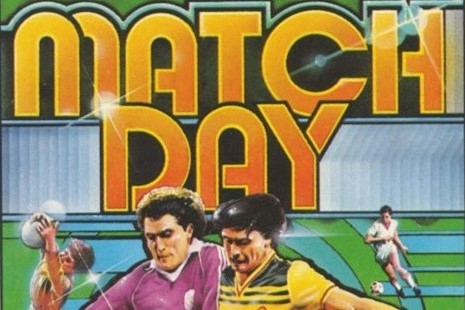

Developed/Published by: Jon Ritman, Chris Clarke / Ocean
Released: 1984 (first reviews showed up in Jan 1985.)
Completed: 20/06/2026
Completion: Scored a goal, at least, in every version I played.
It’s the World Cup, and as usual when any major football tournament comes around, I suddenly get a hankering to spend all my time engaging with football content, which means that I end up playing a football game or two.
Of course, this World Cup is a bit… extra, isn’t it? There are so many games a day that it’s hard to find space to do anything else, and I’m lamenting that I didn’t get myself a big wallchart or something just so I could remember the dazzling number of permutations of potential brackets. But on browsing Steam to see what was what in the ol’ football world, I was surprised to see that Match Day was available. Literally Jon Ritman and Chris Clarke’s original Match Day in its ZX Spectrum, Amstrad CPC and Commodore 64 editions, along with International Match Day for the Speccy (which is just Match Day but with some extra pieces of art and they just changed the team names to international teams.) Not Match Day II, the one people have a particular fondness for. Match Day. The one from 1984. On Steam. For money.
This seemed a bit… optimistic from publisher Pixel Games. The last time I mentioned Match Day was when I was discussing Nintendo’s shockingly rancid Soccer, where I made the (possibly controversial) statement that “Match Day was at least as good as this.” It’s a statement I more-or-less stand by–certainly if you were looking for value for money, you were getting more for less with Match Day. But in 2026, with Soccer (essentially) free on Switch with a Switch Online subscription… Pixel Games are absolutely asking for money for old rope, here. As with Soccer, only the most extremely nostalgic could squeeze some pleasure out of a game of this.
Match Day isn’t the first home computer football game; it’s not even the first on the Spectrum. The original text–at least, the one that spawned all the imitators–was International Soccer, released on the C64 in 1983, and a pre-Batman Jon Ritman, looking for his next project, found that every publisher he asked was looking for a version of International Soccer on Spectrum. Publisher Artic would beat him to it with World Cup Football1, but it wouldn’t matter–Match Day would blow it away, becoming a top seller (and becoming well liked enough to be mentioned in Crash’s fan poll, published as late as April 1986!)
I’ve mentioned it before, but the issue with early sports games is the effort required just to recreate the sport is such that there’s really no space to consider what would make it particularly fun as a video game, and Match Day is no different. You can recognise it as football. Sure, there aren’t the right number of players, but there are throw-ins, corners, keepers–it’s football. But on the humble Speccy, there are issues. Firstly, the colour palette is insane. The game defaults to everything being white or yellow on bright green, which (I imagine?) comes from the idea that the most important thing about football is that it’s played on green pitches with white lines and a white ball–though you can at least go into the settings and change that to black on green, which is more or less parseable.2 The main issue is that it’s slow (though not really any slower than Nintendo’s take on the sport…) and with only one button–and no ability to actually tackle, or control shot power(!)–Match Day is really sloppy and stop-start to play, as you and your opponent rely on trying to slowly block each other with your players’ weighty movements. Because players with the ball are slightly slower than opponents, this can lead to situations where it feels you get completely boxed out (or just end up passing it to your opponent and back again) especially because a cross or diagonal pass is more than likely going to end up in another throw in.

To be charitable, the game is a lot of scrappy midfield play chasing loose balls, very “jumpers for goalposts.” They may as well be, because the keepers are hilariously incapable. When you get control of them, you can either have them leap left or right, and that’s it. If the ball is literally next to them, slowly creeping over the line? You’re out of luck, it’s going in.
The reason I suspect Match Day was successful is that–while it doesn’t exactly play a great, or let’s be honest, even an adequate game of football, it’s a game where you can name teams whatever you like and easily play against friends–even in tournaments of up to eight people! If you had a Speccy and at least one pal, this was definitely going to get played a lot.
But today, Match Day is a museum piece. Essentially impossible to play (and with five minute halves, interminable to do so–a problem Super Soccer suffered too.) You’d hope then that in a modern re-release there’d be something to make the package feel worth it. Maybe I’m not asking for a Digital Eclipse-level documentary or something, but… some box art? Any context whatsoever?
No, this is shockingly bare-bones. Like, bare-bones to the point you can tell they didn’t even bother to design a front end, it looks completely default. You get saves, rewind, and imagine resizing, but no scanlines or anything like that. There’s a real lack of care here. The first and most obvious thing they could offer is a “turbo” mode to speed the game up a bit, but they were hardly going to go that far when if you’re playing the Amstrad or C64 versions you actually have to watch the game get run from the operating system. And suspiciously the C64 version has the team names overwritten, so it’s not even a clean rom (look, I’m not saying they just downloaded it off the internet, but…)
Speaking of…

The Amstrad version is not very fondly remembered–Retro Gamer seem to give it a kick every time they mention Match Day–and it wasn’t developed by Ritman and Clarke but by Sentient Software3. However, I do have to say… I like it better than the Spectrum version, sorry. Sure the ball’s yellow, it’s maybe a touch slower, and there’s some very weird colour corruption when players overlap, but exactly the same as far as I can tell–although Ritman says on his own site,
“The versions for the BBC, C64 & Amstrad CPC were programmed by others who didn’t even talk to me about it.”
I’m certain this version shares code (maybe Ocean passed it along) but happy to be corrected. Ritman does go on to say say he thought the conversions were dire, but the Amstrad version, at least, might be bearable at double speed. Still a shame about the terrible goalies though.

The C64 version, however, is unsalvagable drivel. It’s way smoother than the Speccy or CPC versions (oh to have hardware sprites…) but it gets pretty much everything else wrong. The AI is non-existent. Opposing players seem to just stand about in a stupor, occasionally waking up to run at you and the camera doesn’t move until you’re at the very edge of the screen, so you’ve got no idea what’s coming, but it doesn’t matter because you can basically walk it into the goal every time. Absolutely shocking.
The Pixel games release doesn’t include the BBC Micro version, but I feel like I should mention it anyway because it was, absurdly, ported by Chris Roberts, he of Wing Commander and Star Citizen fame. So there’s a game he actually finished, then.
Match Day was important in its time and place, and I feel like I should be glad it’s “in print”–so many games aren’t–but you just can’t release it like this.
Will I ever play it again? Aye, I’ll get the lads round for an eight-player cup one day. (I will not do this.)
Final Thought: Literally the day Ritman handed in Match Day he saw Rare’s Knight Lore and became “determined” to make an isometric game. He went on to make Batman, and we all know how that went.
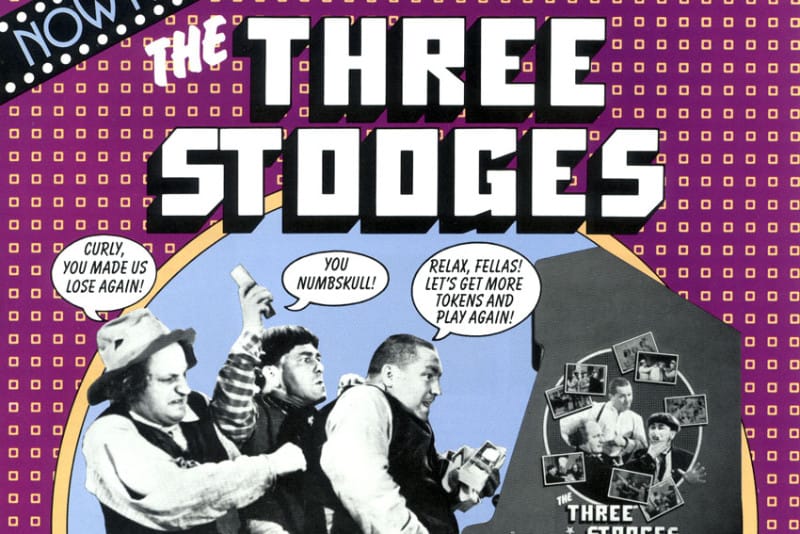

Developed/Published by: Mylstar Electronics
Released: 05/1984
Completed: 29/01/2026
Completion: Rescued Curly’s bride, Cora. It’s just the same thing again for the other two brides!
As celebration of the release of The Journal Of Stoogealogical Studies Vol. 2, I’m proud to share this first excerpt from my article in said journal, “A History Of The Three Stooges In Video Games”. The Journal Of Stoogealogical Studies Vol. 2 is available only physically, and only from Amazon: .com, .ca, .co.uk (or your regional variation) so run out and get a copy today! Well, you don’t need to run anywhere, but you know what I mean.
I’ve never been a huge fan of The Three Stooges. I remember once watching what’s generally considered a peak Stooges short, A Plumbing We Will Go, absolutely stone-faced as Will Sloan, editor of the Journal of Stoogealogical Studies, and fellow Stooge fan Justin Decloux sat next to me, crying with laughter. But I never grew up with The Three Stooges–in fact, I can’t remember ever seeing them at all on TV in the UK, while I do have strong memories of Laurel and Hardy shorts playing on BBC2. When I finally encountered The Three Stooges I viewed them as, at best, poor imitators of the best of the slapstick form. Some cursory research shows that this reflects an Atlantic divide: bolstered, perhaps, by Stan Laurel being English, and that Laurel and Hardy toured British music halls post WWII, Laurel and Hardy remained popular in the UK, with their shorts staying in rotation, whereas in the US, The Three Stooges continued to grind away into the 70s, a hegemon led by cheap syndication and desperation.
But I have warmed to the Stooges. I’ve actually got Will and Justin to thank for that. I was invited to Justin’s bachelor party where we watched a 16mm of one of their later, recycled-footage filled shorts Husbands Beware, and the sight of these old men hurting each other… if you’ll forgive me for recycling my Letterboxd review: if the old adage goes “comedy is tragedy plus time” the sight of the Stooges,ravaged by time, stumbling through a cheap lazy remake was genuinely tragic. So very, very funny!
But it’s not purely an ironic appreciation; there’s a charm to their underdog tenacity; a tenacity that ensured their brand would endure into the video game age. It may seem surprising, but The Three Stooges license has been used several times for video games, starting with Mylstar Electronics’s arcade game The Three Stooges, and I don’t think only because it was cheap and accessible–I think because the people making them genuinely were fond of the Stooges.
Released in May 1984, The Three Stooges is a product–and victim of–the legendary video game crash of 1983. Mylstar Electronics’ route to developing a Three Stooges video game began in 1976, when Columbia Pictures–owner of the majority of The Three Stooges output–purchased Gottlieb, then purely a maker of pinball machines. (It’s interesting to note there is no record of an attempt to make a Three Stooges pinball machine after this purchase, though Gottlieb would make several pinball machines based on Columbia properties in the era, such as Charlie’s Angels and Close Encounters Of The Third Kind.)
Gottlieb would have some success with arcade machines in the early 1980s with, most famously, Q*Bert, and in 1983–a year after the Coca-Cola company acquired Columbia–Gottlieb was renamed MylStar Electronics (somewhat controversially.) Mylstar Electronics would last mere months, releasing a handful of games before being shuttered in the continued aftermath of the crash. In fact, it’s believed that there were only a few hundred Three Stooges machines produced as a result, and due to poor reception, most of these machines were repurposed by arcade operators into other games, leaving–reputedly–as few as fifteen machines surviving today.
Mylstar’s The Three Stooges is poorly remembered as a result, with no retrospectives and even few contemporary sources. Electronic Games Hotline (July 29th, 1984) has the closest thing to an announcement, claiming that the game was released in celebration of the 50th Anniversary of The Three Stooges (signed, as they were, by Columbia in 1934.) The game’s most notable developers are Jeff Lee–who did the graphics for Q*Bert–and David Zabriskie, a long-time creator of audio for pinball machines, with programmer Sam Russo and designer Tom Malinowski with little else to their names.
The Three Stooges sets the tone for the Stooges in video games in some ways, most notably that it sticks to the original Columbia trio, Larry, Curly and Moe (sorry, Shemp fans.) But the most interesting thing it does is that it portrays itself as a new Stooges short: “The Three Stooges In Brides Is Brides.”


Although the game isn’t referred to as such anywhere except the title screen, it does imply that this machine did not just have the license slapped onto it–the developers had to have some interest in making the game offer a “true” Three Stooges experience, with a story (The Three Stooges must rescue their fiances from the evil Dr. “I.M.Acad M.D.”1) a genuine attempt to recreate the Stooges in pixel art from and lots of digitised speech.
Unfortunately, they made a very optimistic decision: the game is made for three simultaneous players, one playing each Stooge, and the game is absolutely terrible if you don’t play it that way.
Now, it’s entirely possible that it’s still terrible if you do play it that way–not that I expect to have much chance to find out–but the game is clearly fully designed around a group of three players working together. A single screen game, on each screen the players must attempt to destroy all the furniture to find three keys to open the door to the next screen, and they do this by picking up one of two hammers that spawn on screen. While this is going on, the police are attempting to capture The Three Stooges, while civilians get in the way–both of which can be halted by chucking pies at them, which sit around the screen on indestructible tables. But the civilians can also pick up and throw pies, complicating things further!
It’s obvious that The Three Stooges is meant to be a raucous, silly arcade game for three; the design intentionally only places two hammers on the stage so that one player is left out to either play defence (by throwing pies at enemies) or spoiler (by throwing pies at the other players so they can get the hammer.) Sadly, played solo, the game’s deficiencies are blaring. Enemies seem to move about completely randomly, and when the other two Stooges are computer controlled they become just as dangerous, making the game (I suspect) significantly harder as they cost you lives by walking into you with a hammer. The game also suffers rough, unforgiving collision detection where you’ll find yourself stuck on furniture or killed by things you thought you avoided.
The game also massively outstays its welcome. I only played up to the point where I was able to rescue the first fiancee, but it took forever, and every stage is exactly the same bar the one unique stage that has you throwing pies at singers, avoiding the notes they create (this is by far the most frustrating level, as the notes are almost impossible to avoid.) On each level you beeline to the hammer, destroy the furniture, grab the keys then leave. Without other players, there’s very little play (I do wonder, if the company had not been rapidly closed, a revision might have seen the hammer and furniture placement change more across levels.)

And the thing that should be the most charming about it–real Stooge voices–becomes insanely annoying about 30 seconds in. Every time a Stooge collides with anything, they’ll say the same stock phrase; prepare to hear “Oh a wise guy, huh?” more times in a single playthrough than the Stooges ever said during their entire Columbia Pictures run (no, really.)
The Three Stooges is an interesting curio, and one that I do believe was made with the best of intentions by people who were on some level fans. It’s certainly possible that it’s worth playing if you ever have two other Stooge fanatics to hand–I guess I should have given Sloan and Decloux a call–but I suspect that even the most hardcore group of Stoogeaholics would never have the patience to get that far.
Will I ever play it again? Sure, if I see a real machine and Will Sloan and Justin Decloux happen to be standing next to me.
Final Thought: The game features a few comedic interstitials (almost certainly inspired by Pac-Man) but the funniest thing in the entire game is that once all fiances are rescued, before the game loops, it announces “now it’s on to reruns.” Probably the most accurate representation of The Three Stooges in the entire game.
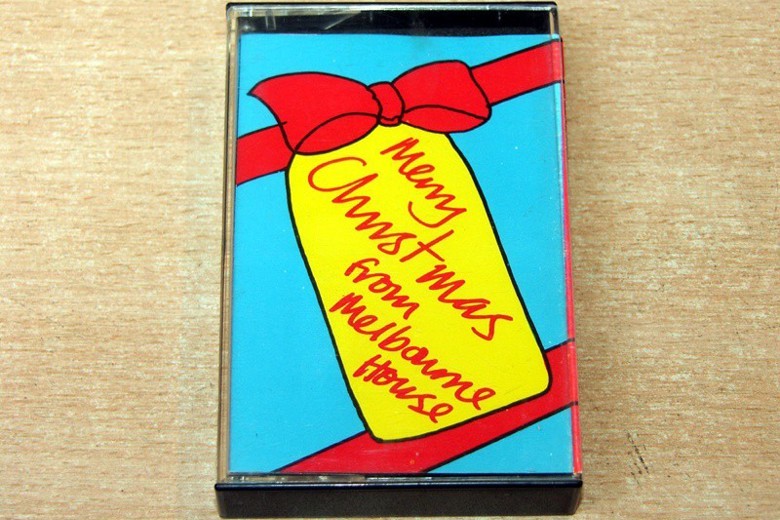

Developed/Published by: Melbourne House
System: Commodore 64
Released: 1984
Completed: 11/12/2023
Completion: Beat it with a score of 100 out of 100.
It’s 1984 and the Christmas cash-in market is finally mature, with five whole games released for home computers (at the very least.) Alphabetically first in my list (because Icon Software chose to go with “Xmas” on their merry release) Merry Christmas From Melbourne House is a slight cheat because it’s really just a tiny tech demo/bit of marketing, but it was sold, costing 95p (the price of tape duplication and postage?) for readers of Commodore User (it was actually in the December issue and the deadline was December 17th to get your money to them, which makes me wonder how many people played this long after things stopped being festive.)
It is though, honestly, what I was kind of expecting from A Christmas Adventure. It’s a short, very easy little adventure game that… passes about half an hour and actually manages to feel Christmassy.
Like A Christmas Adventure, you’re tasked with making sure Santa can get away from the north pole to deliver presents, but in a shocking twist… YOU are Santa. The game’s blurb claims he’s “attempting to stop an industrial dispute” that “is threatening the delivery of toys to children of the world” and it sounds like jolly old saint nick is a fat cat like the rest of ‘em, and out of solidarity with the elves and workers everywhere I spent quite a bit of time typing things like “GIVE ELVES RAISE” and “PROVIDE TIME OFF” but the parser never understood it, so I almost didn’t finish this.
The plot is a bit oversold anyway, considering the solution is pretty much “Get off your fat arse and pack your sack of toys yourself, Santa.”
As you’re not doing all that much, the parser is adequate, and the graphics are… genuinely quite evocative. They are important too–the toys you have to pack are all on one screen. I don’t generally like this design in graphic text adventures–where you don’t get told everything in text (I’m a VERBOSE man in Infocom games)–and having to work out directions here was not my favourite, But it worked well enough, and I was even charmed by the full screen advert for Melbourne House games.
Anyway, lemme see how much 95p is in today’s money. £3.77. I can’t really say people got their money’s worth here, but they could do a lot worse.
Festive vibes ranking: HIGH
Will I ever play it again? I’m good.
Final Thought: Joe Pranevich over at The Adventurer’s Guild played through this as well if you’d like to read something more in-depth about it, with the bonus that one of the developers, Dave Johnston, shows up in the comments, revealing that it was developed “in a matter on weeks using an in-house text engine and a tweaked sprite engine based on Way of the Exploding Fist code” and that he didn’t even have a copy. They paid people at Melbourne House so poorly that they couldn’t raise 95p???


Developed/Published by: Namco
Released: 06/1986
Completed: 23/11/2021
Completion: Got all the required chests and beat it.
Trophies / Achievements: n/a
Wizardry: Proving Grounds of the Mad Overlord is one of the most important games in Japanese RPG history (despite not being Japanese itself), and here’s the other side of the coin: arguably the most important game to the action RPG genre: The Tower of Druaga.
The Tower of Druaga is known for a couple of things. One, that it’s built around the player performing obtuse, un-explained behaviors to make chests appear that without which the player cannot complete the game; and two, that although it was a smash-hit in Japan (second top grossing machine of 1984) it never received a wide release in US or European arcades and so goes almost completely unknown in the west.
(I’d actually be fascinated to find any articles or information about The Tower of Druaga being released in the west—there’s very little to google for in English about it, so it would require proper digging. That’s how unsuccessful it was here.)
That said, Namco has a dedication to making “fetch” (The Tower of Druaga fandom) happen, because it keeps sticking it on every collection it does and you get weird things like how in Pac-Man 99 there’s The Tower of Druaga DLC and that. This probably seems weird, but it’s a side-effect of the fact that “fetch” happened in Japan and it would be a waste of time to remove The Tower of Druaga ROMs or references from western releases plus people would obviously complain even if they’ll never play it.
Anyway. Should you play it? I didn’t come away recommending Wizardry, though I found it very educational to play. And Tower of Druaga has an obvious influence on The Legend of Zelda, Ys, and so on, so you can feel its DNA in some respects coursing through practically everything we play nowadays. It’s similarly educational, then, but holy lord do not touch this with a fucking bargepole.
I’ll give props to the team who put Namco Museum together, though. On the Switch version, you’re a mere push of the X button away from seeing what idiotic thing you have to do to find the next chest, and it even informs you if you need it or not (well, that said, it accidentally claims one of the Balance items is a trap. It isn’t, you 100% need it.) This turns the game from “a completely impossible treasure hunt” into “a nigh impossible puzzle.”
I think I imagined this would play… better? I know it’s from 1984 and that, but I just assumed it would have a Pac-Manny sort of responsiveness. No such luck, as the game locks improvements behind treasure chests and at the start of the game you control a pitifully slow hero who swings his weapon lethargically and is killed by touching anything. At the end of the game you control a slow hero who swings his weapon… still pretty slowly, to be honest? who dies after touching nearly everything.

This might be fine, except within a few levels you are navigating a maze where wizards near-randomly teleport and can fire spells at you through walls that kill you immediately unless you make sure you’re facing the spell with your shield. They’re supposed to not spawn any closer than two squares from you, but if you’re moving it doesn’t update that so you can easily walk into them as they spawn in, too, which is amazing. And if two guys shoot a spell at you from different directions? Sucks to be you I guess. Oh and when you stab them you’ll not get any feedback that they’re dead. Again, sucks to be you.
I’m fascinated by the idea that in 1984 Japanese arcades were awash with people who were pumping in 100 yen coins into this and enjoying it. That’s a lot of money for 1984! Famously, the game encouraged a communal aspect, where players worked out how to make the (brutally necessary) treasure chests appear, and I imagine that in arcades across the land there had to be notepads lying out where players jotted down their discoveries. However, this blows me away because the game is just so unrelentingly brutal, with several “gotcha” levels where it feels like wizards are upon you immediately, requiring you move instantly and specifically or die, and requirements that I genuinely can’t imagine working out or performing with any success in arcade conditions.
I mean this game, near the end, requires you defeat six enemies on one level in a specific order… and then do it again on the next? Enemies that move faster and massively outpower you? It’s not so much that I can’t imagine anyone working these kind of things out–it’s that I can’t imagine players reaching the level of virtuosity where they could, for example, get to level 30 enough times that walking around the level and surviving they’d eventually work out that you needed to walk on a specific square three times. Players must have maddened themselves touching every wall, standing in place, spinning in circles—all things you need to do to progress, while just surviving.
I beat this by saving every level—I couldn’t save during any levels, because I was worried I’d fuck up somehow and Namco Museum only allows a single save–and this took me literal hours. The final level is an exercise in brutality as you cannot defeat Druaga if you’ve taken a spell hit before he appears, and yet the game gives you such poor feedback you can easily take a spell hit you don’t notice while fighting a wizard who attacks you from four directions at once.
I’d love to see a master of Tower of Druaga play this. While playing it, the hardest levels quickly devolved to become Pac-Man like memorisation strategies—I knew that if at the start of the level I moved in a particular way, I’d spawn enemies here and there and could therefore survive, but if I ever died I’d have to reload because on my next life I’d not be able to make the same thing happen. Did people’s guides, or do official guides, show you how to navigate the maps a bit like How To Win At Pac-Man? It’s the only way I can imagine seeing this through to level 60 on a single credit.
I am, to be honest, baffled by Tower of Druaga. The mania that surrounded it you’d expect to have dissipated when people realised how insane the requirements were, but the game had multiple successful home conversions in Japan (I believe the Famicom version was a massive hit) and people love it so much that many of the conversions include even harder, more obtuse dungeons to play though! I had hoped that playing with solution in hand this would be a fun arcade title that felt good to play and I just had to puzzle out how to complete a level, not what to do but no such luck. This is a miserable exercise in dying and reloading and I wouldn’t wish it on anyone.
Will I ever play it again? I’ll be taking a quick look at the Famicom version as part of Namco Museum Archives on the Switch, but I find it massively unlikely I’ll play it more than a couple of times.
Final Thought: Something else wild about the Tower of Druaga: the hero (Gil) actually has a health bar, but it’s hidden from the player. And the bad version of important pick-ups look exactly the same as the good versions! The game goes out of its way to make you not know what’s going on. How. Did. Japanese. Players. Like. This.