Tag: 1979

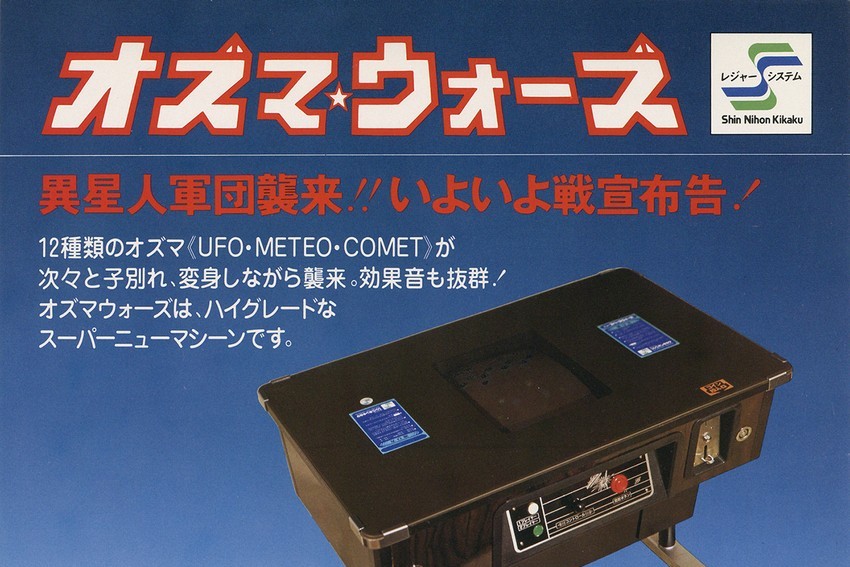
  • Ozma Wars (SNK, 1979)

    Ozma Wars (SNK, 1979)

    Developed/Published by: SNK
    Released: 11/1979
    Completed: 28/03/2026
    Completion: Got as far as I could get!
    High score: 14150 (I could do better.)


    Preface: On SNK (Now)

    About a week ago SNK and Plaion Replai announced the Neo Geo+, a modern 1:1 recreation of the original AES hardware, and the announcement was quickly followed by many people raising that SNK is 96% owned by the MISK Foundation1, a Saudi Arabian non-profit and non-governmental organization established in 2011 by Mohammed bin Salman, the Crown Prince of Saudi Arabia who is prominently featured in the Epstein Files and credibly accused of ordering the murder of journalist Jamal Khashoggi.

    This has, obviously, come up before, most notably when Fatal Fury: City of the Wolves was announced/released, because the game’s bizarre inclusion of Cristiano Ronaldo (who plays for Al Nassr FC, owned by the Public Investment Fund of Saudi Arabia) and a DJ with links to Mohammed whose inclusion annoys me so much that I don’t actually want to actually name him directly. 

    In that case, I think it was a lot easier for people to hand-wave, because even if it did hurt to see a sequel to a beloved fighting game get gummed up with weird garbage, it was perfectly easy for most people to go “well, too bad. I can always play something else.” But the Neo Geo AES has an incredible mystique for the millennial “gamer”: an incredibly expensive, luxury console that at one point offered the only way to play truly “arcade perfect” games at home. If you’re old enough, you played these games in the arcade; but you likely never ever saw an AES in the flesh, never mind played one (I’ve certainly still never played one.) It’s a gorgeous bit of kit, a classic piece of design and the games even came in big beautiful clamshell cases.

    It’s understandable why you’d covet it. More than just getting a “perfect” recreation of the hardware, there’s an urge I think from many to hope this succeeds so that companies might simply see fit to reissue their own back catalogues. After all, you can go into a record store today and buy a new copy of an album from the 80s; why can’t you do it with a Mega Drive game?2

    What I can’t understand is the people who are so desperate to ignore the reality of what they’d be supporting. The classic fallacy that “if there’s no ethical consumption, I can do what I want.” This take, long tedious by this point, is a position only held by people so intellectually incurious they can’t see their own ignorance. 

    As Wes Fenlon accepted in his excellent newsletter broaching this topic, people can ultimately do what they like. Of course they can. But to pretend there’s nothing more in our lives than wanting things and getting things is so… diminishing. 

    Rather I exist in a world where I consider values, what I want to represent, what I accept or justify, what I can’t. To see the world as rich and complicated and to exist in it, not simply consume.

    As a result of this entire discussion, it’s made me consider my own planned coverage of SNK. I’ve mentioned before that a lot of my writing here comes from my own urge to play through the many, many games I own, and from my own personal interest in game history. I played through Ozma Wars because it’s the first game on the SNK 40th Anniversary Collection, which I own, and which was originally published in 2018 (two years before the Misk Foundation would purchase its first shares in SNK.) Ozma Wars came out in 1979.

    These early SNK games have nothing to do with the company’s current ownership. But it’s not quite that clean. In writing about them, I give coverage to the SNK brand. I’ll admit that until the recent announcement it’s likely I wouldn’t have even thought about the ownership issues. It’s be easier not to! As a signee of No Games for Genocide, I’m committed to not covering Microsoft-published games, and I’ve struggled with what that means for my game history coverage. I’m eager, for example, to play through Rare’s back catalogue, but can I? They’re owned by Microsoft now, but they weren’t then?

    There isn’t an easy answer here, even if you can play all these games without ever giving anyone a penny after a quick internet search and a couple of downloads.

    Obviously, I won’t be covering the Neo Geo+ and I won’t be covering any modern SNK games. And I don’t have any games from the SNK 40th Anniversary Collection on my to-play list any time soon. I think Ozma Wars is an interesting piece of history, and loathe to discard this piece of writing, I’m going to share it. But I’ll have to consider if I’ll write any more. Perhaps that’s frustratingly inconclusive. But at least I’ve made it clear here that the company I’m writing about is a very different one now than it was then.


    If Lunar Rescue was Taito taking Space Invaders and stinking it up with some Lunar Lander, Ozma Wars is SNK taking literal Space Invaders and they… maybe create the vertically scrolling shooter?

    [Update (06/05/2026): Cosmo over on Bluesky points out that my research has failed me here, as Avenger, by Taito/Electro in 1975 is almost certainly the first vertically scrolling shooter, and vertically scrolling shooters Phantom II (Midway) and Astro Fighter (Data East) both came out in the same year as Ozma Wars. Simultaneous discovery strikes again!]

    Its status as a vertically scrolling shooter is, possibly, a controversial take. I know Wikipedia definitely has it down as a fixed shooter, because the scrolling star field is only giving the “impression” of vertical movement. And Galaxian came out before it, which also has a vertically scrolling background and far better tech, so it’s not really defendable, right?

    Well, maybe not. But it sure does feel like a vertical shooter! Galaxian doesn’t cut it on that score for me simply because of the way that the aliens simply hang around in a Space Invaders-style formation moving back and forth. Don’t get me wrong–I like Galaxian–but that’s a fixed shooter. By comparison, in Ozma Wars, the enemies are flying right at you–and they keep flying past you. Sure, it’s a “trick” but–and I hate to break it to you if this is news to you–almost everything in a video game is a trick. It’s not really happening!

    “Ah, well if you’re so clever,” I assume you want to fire back, “what about those enemies in Ozma Wars that don’t fly towards you and off the screen, then? Check and mate.”

    Well, when a boss appears in a scrolling shooter, does it suddenly turn into a fixed shooter? Maybe technically, but that’s not what we’re talking about. For the majority of Ozma Wars, it feels like you’re flying forward, dodging and weaving through enemies, taking down the ones you can hit. The only game that I was able to find that beat Ozma Wars to this feeling was Namco’s SOS, a much more basic monochrome game that came out, oddly, around about the same time as Galaxian where fighter planes fly towards the player’s fighter plane at speed, with the object to not let more than 100 pass you3. There’s no background in that one, though, so that one really is just the impression of vertical movement.

    Another tick on the “scrolling shooter” checklist: that Ozma Wars features a range of different enemies that appear in waves. You’ve got basic enemies, that fly towards you, shooting or not, but the game mixes it up far more than you’d expect. Some enemies turn on their side to be harder to shoot, some shoot missiles (that you can destroy) and there are even some “boss” type enemies; for example a ship that spawns a mass of small ships that crowd the screen.

    Indeed, there are aspects of this that might make one argue that even if they didn’t invent the scrolling shooter they maybe invented the bullet hell. After each set of waves, a comet flies on screen; after it, an enemy appears that throws so many bullets and missiles at you it’s kind of unreal–and you have to defeat it!

    The game being flooded with bullets is probably the reason they made a unique decision when arcade players were only getting used to lives systems: the game has a health system instead of a lives system, and after each set of waves a ship that’s transparently meant to be Space Battleship Yamamoto comes and refills your health. 

    It’s not a perfect system. For one, your health is constantly counting down–meaning they really tried to split the difference between the old timer systems and having lives–and the other is that you can really only take a few hits even at full health before you die. It’s worse than that, too, because if you take a hit there’s no invulnerability after, so when you face one of the more bullet hell-esque enemies, you can just die automatically, and with health counting down, at the end of a set of waves you can be taken out in as little as one hit if you’ve had to waste time on certain waves.

    I found Ozma Wars surprising, because I assumed it was really just, well, a cheap Space Invaders conversion kit. But there’s a real attempt to make something that pushes the form forward, which makes it a real shame that we have next to no information on the people that made it (well, my research hasn’t dug anything up.) The major issue with Ozma Wars isn’t so much that the design isn’t quite there but that the tech isn’t. There’s tons of flicker and a weird, slowdowny pacing; it really doesn’t play smoothly at all, and despite the ambition, that pales when compared to the reliability of Space Invaders’ big, chunky, thumping beat.

    But for 1979 this is still pretty good! It’s exciting, which is definitely more than could be said for Lunar Rescue. It would probably have been too frustrating to really stick with, but there’s something here.

    Will I ever play it again? I’d play it if I saw it in an arcade, but that seems unlikely; the only machine I have been able to source seems to be in someone’s house just outside Indianapolis…

    Final Thought: But at least it’s playable, considering SNK’s first original game, Yosaku, is currently lost media. I do sort of hold out hope it’ll be found and dumped one day, though.

    1. By way of a subsidiary, the generically named “Electronic Gaming Development Company”. Interestingly, this is a completely different entity than the Savvy Games Group, a subsidiary of the Public Investment Fund of Saudi Arabia, of which Mohammed bin Salman is chairman. That fund owns 8% of Embracer Group, of which Plain Replai is a subsidiary! ↩︎
    2. Obviously this is a fraught comparison and the modern vinyl industry is a mess, and emblematic of the messy way capitalism drives people to consume beyond reason under the guise of fandom, creating basically ever more waste on our planet of junk. But that’s an entirely different essay. ↩︎
    3. SOS is fairly amusing for featuring “coffee breaks” every 2000 points in which you get to see a (sort of muppety) girl in a bikini. Cheekily, Namco included a nudity dip switch, so in certain establishments you’d see her entirely in the buff. It’s really not that exciting, but it’s remarkable to think of Namco doing that! ↩︎
  • Lunar Rescue (Taito, 1979)

    Lunar Rescue (Taito, 1979)

    Developed/Published by: Taito
    Released: 11/1979
    Completed: 27/03/2026
    Completion: Played it as long as I could stand, getting the high score (with a mere 5520)

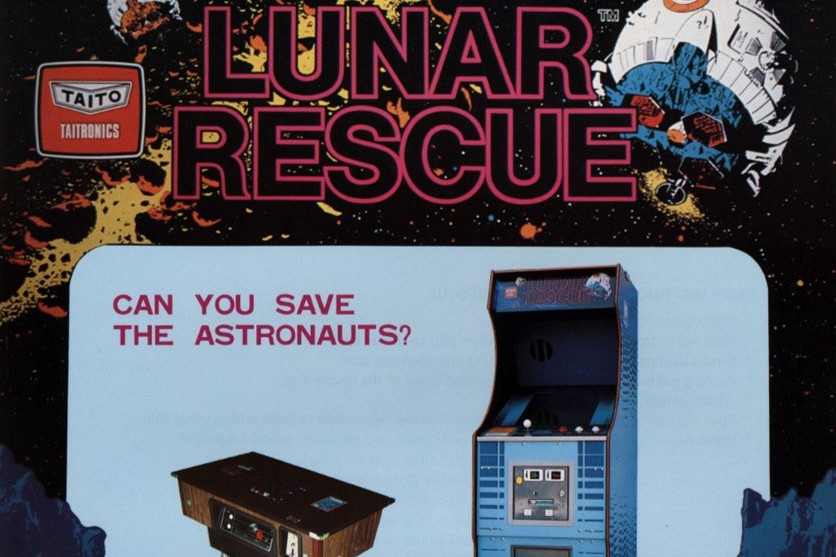
    It’s been some lean times over here at exp. Towers, but FOMO is real and lives beyond the realm of the sensible, meaning that I finally treated myself to a Taito Egret II Mini because–after foolishly not picking one up previously–the system got reissued in Japan after a period where they were only available for eye-watering prices.

    That means, of course, that I can start playing all the Taito games I’ve got in chronological order! I’ve previously written about Space Invaders (exclusive to exp. 2601) and there’s not much to be said about playing that on an Egret II Mini, but the system also includes Lunar Rescue, which I hadn’t played before. So after a quick detour to play Head On, I decided to not get hung up on playing any earlier Taito games (Space Chaser is just Head On, Field Goal is a weird Break Out, etc.) even though I could easily get Taito Memories working on now after all that falderal with Sega Ages. I’m sure I’ll end up playing games that I didn’t plan to, but let’s try and put my best foot forward here.

    Lunar Rescue seems to be Taito’s most notable post Space Invaders title, and serves also as a notable post Lunar Lander game too. It’s an interesting one in this early wild west of plagiarism because it’s really not very much like Lunar Lander at all, but it does–surely intentionally–include the word “Lunar” in its title. Lunar Lander is–of course–simply a rip-off of Moonlander, which had been kicking about since 1973. So one does have to wonder if Lunar Rescue was merely inspired by the same “inspirations”, considering that Lunar Lander came out–if release dates are even close to correct, of which I admit I have no guarantees they are–mere months before, which does seem like a pretty short turnaround even for a cabinet which uses the same tech as Space Invaders.

    There’s possibly even some simultaneous discovery going on here, because Lunar Rescue is basically a two phase game: you’re trying to land and rescue astronauts while avoiding asteroids, and then get them back to your mothership while avoiding space invaders. Yet Asteroids came out in the same month (dates allowing) so there’s really no chance that they were inspired by it!

    Unlike Asteroids or Lunar Lander, however, Lunar Rescue isn’t about the physics at all. It’s all digital control in the style of Space Invaders. There’s no slow rotations or fine control over speed here. You move left, you move right, and you can slow your ship with the fire button when landing, or speed it up (and fire lasers) when taking off. The asteroids move from left to right (and vice versa) and so do the invaders.

    As someone who genuinely appreciates Space Invaders, I had high hopes for this. Indeed, I can tell there’s some fondness for this game; a near-arcade perfect port was released for ZX Spectrum just a couple of years ago(!) but it’s slow, boring and unfair.

    Landing is boring, and hard to mess up even with your limited movement. So the real issue is taking off, where because you’re flying up the screen into invaders who shoot at you, you can easily find yourself shot by bullets you couldn’t react to–and there’s the added quirk that some ascents feature comets which you generally don’t realise until you’ve died to one. 

    Despite not featuring anything physics-based, the game still manages to lose all of the lustre of Space Invaders; the rhythm, so important to this kind of game, goes from a driving march to a kind of slow waltz, but one where your toes are constantly being tread on. After a couple of goes I really just didn’t want to play it any more, but persevered till I could beat the first level without deaths–inconsistently. 

    It’s not exactly that Lunar Rescue is bad–it’s competent, but it’s just so unbelievably unexciting. Honestly that makes it one of the very worst things I’ve played in ages, which I know is unfair, but I longed for the snappy if punishing loop of Head On every second with this.

    Will I ever play it again? No thank you!

    Final Thought: Oh! You might be wondering how I feel about the Taito Egret II Mini. It’s great. Certainly the nicest example of one of these things you can imagine. My main quibble is that it doesn’t have any scanline filters, but that problem was somewhat solved for me by RetroRGB, who recently(-ish) recommended a HDMI to component downscaler that works well enough, so now I can plug my mini systems into an actual CRT. Which is good, because the scanlines on the Astro City Mini are horrific anyway, and I’ve got a game on that system on the backlog…

  • Head On (Sega/Gremlin, 1979)

    Head On (Sega/Gremlin, 1979)

    Developed/Published by: Sega/Gremlin
    Released: 04/1979
    Completed: 18/03/20206
    Completion: Finished one screen. High score of 2685. I’ll take it.

    It’s been a while since I’ve dug this far back into gaming history, but, for reasons, I decided it was time. I’ve already played–and written about–the most important dot eater of all, Pac-Man (see exp. 2600) but Head On has incredible importance as the first maze chase dot eater. That sounds like a very specific genre, and when you look at Head On, not exactly a perfect description, considering it has really no maze to speak of. But Head On is still really important, so I went to some unnecessary effort to play it. [“You may wish to skip this following waffle. I’ll let you know when you can come back.”–Ed.]

    You see, I can’t remember if I own Sega Ages 2500 Series Vol. 23: Sega Memorial Selection, the only home release of this game, or not. I know I don’t own a physical copy–lord knows I missed my window on that–but I’m pretty sure I own it on PS3 via the Japanese PlayStation Network.

    However.

    I’ve forgotten my login for Japanese PSN; and the PS3 I know I was logged into I don’t (currently) have access to. So that’s annoying. I could burn a copy, maybe, but why not just use it as an opportunity to finally dip my toe into the exciting world of PS2 emulation?

    I know the first think you’re going to say. “Why emulate a 1979 arcade game via a 2005 PS2 compilation on a different machine? Why have a double layer of emulation?”

    To be honest, I don’t really have a good excuse. But this Memorial Selection1 included a “updated” version of Head On, and that seemed interesting and worth the effort.

    And there my troubles began. I installed Retrodeck on my Steam Deck; easy, so far so good. But then I had to find a PS2 bios. And then I put what I thought was a working copy of the Sega Memorial Selection into the right folder but the (emulated) PS2 kept giving me the red screen of sadness instead of loading it, leading to a (far too lengthy) amount of time where I kept trying different regions in the hope that would change something (it doesn’t) until I finally hit upon the idea that even if the PS2 emulator in question claimed it read the kind of file I was trying to use (CUE and BIN, which does sound like a show about a snooker player teaming up with a binman to solve mysteries)  it… doesn’t? Or at least not this one?

    So then it was having to download an ISO tool on Linux–because most people were like “oh just use the command line” and sack that on the Steam Deck–converting it… and then it worked!

    Now, I know that wasn’t very interesting [“Do you? You still wrote it down”–Ed.] but it stood out to me a bit because it reminded me that the internet is completely fucking useless now. There are some oases; archive.org you beautiful bastard. But for the most part, you search for anything and you’re either getting scam websites, or AI garbage, and the more esoteric your problem the more useless even Reddit becomes. Just one of those evenings where you think “hmm, isn’t this hobby supposed to be fun?”

    And all to play, uh… Head On. 

    [“You can come back now.”–Ed.]

    Head On is interesting in Sega’s history because it comes from the (fairly short) window of time when they were Sega/Gremlin. Now any student of video game history knows that Sega began as Service Games and was founded by Americans (gasp… or not, I mean Taito was founded by a Ukrainian, it’s fine. People from all sorts of countries can found companies. You’ll survive). Probably fewer keep at the front of their mind that between 1969-1984 they were owned by Gulf and Western (a quirk which allowed them to put out a licensed Fonz game.) And in the late 70s, they were struggling. There’s some great context from The Golden Age Arcade Historian, a now seemingly defunct blog:

    “Sega’s plan for U.S. domination had not gone very well. In fiscal year 1977, Sega actually lost almost $800,000 overall and its American arm was responsible for almost all of it … many operators were reluctant to take a chance on a new game in the midst of an industry downturn. As a result, Sega released just two new games in the American market in fiscal year 1978. If Sega was going to compete in the U.S. market they needed to do something – and fast.”

    Gremlin was also struggling. The Golden Age Arcade Historian has even more excellent research on the inexperienced company’s disastrous entry into the arcade industry with Blockade, with companies such as Atari ripping them off with games such as Dominoes while they struggled to to get Blockade to market.

    I’m sure the decision to purchase a different American arcade manufacturer came with a lot of boring business reasons that I don’t quite understand, but one wonders if they truly understood what they were buying was Lane Hauck, the company’s star game designer who, for some reason, is poorly remembered now (the best piece of writing about him is from a 1982 article in the San Diego Reader by a Jeannette DeWyze, thankfully online.)

    Hired by Gremlin on the strength of a homebrew blackjack console(!) he was the one who eventually pushed the company from “wall games” (a kind of electromechanical game) into video games, notably designing first Blockade, the true original snake game, and Depthcharge, before creating Head On.


    Depthcharge: An Aside

    In my article about Atari’s Destroyer, I said:

    “the story here is that Destroyer definitely began as a rip-off: after ripping off Gremlin’s Blockade for Dominoes, Atari seemed like they really wanted to stick the boot in, ripping off Gremlin’s slow anti-submarine shooter Depthcharge with a far flashier game.”

    Interestingly, I probably spoke too quickly. DeWyze:

    “Frank Fogleman recalls that just a few days after Gremlin had applied for legal protection of the “Depthcharge” name. Atari showed up at the copyright office to file an application under the very same name for a game that was almost identical to Gremlin’s initial prototype. Because Atari then had to change its game’s name and refile, Fogleman says Atari suffered a slight delay in coming to the marketplace … Fogleman says the incident prompted hours of speculation within Gremlin over whether Atari had pirated the idea. ‘Finally, we decided it was just coincidence. But you always wonder.’

    Hauck agrees it was probably chance. ‘When you spend a lot of hours, as I do, sitting around and trying to think up games, you soon realize that there really is a quite limited choice of what you can do.’”


    Head On was actually designed before the Sega acquisition–with a two-player mode tried and failed–and benefited greatly from it. With Space Invaders beginning the “lives” era of arcade games–most of the games before just used a timer–a designer at the Japanese arm (Hauck: “An industry veteran there who had invented every game Sega had ever done … He was a very venerated guy on the verge of retirement”2) advised that they change the game from a timer to a lives system–resulting in a game that was so popular in Japan they’d, well, give it pride of place in a Sega Ages collection.

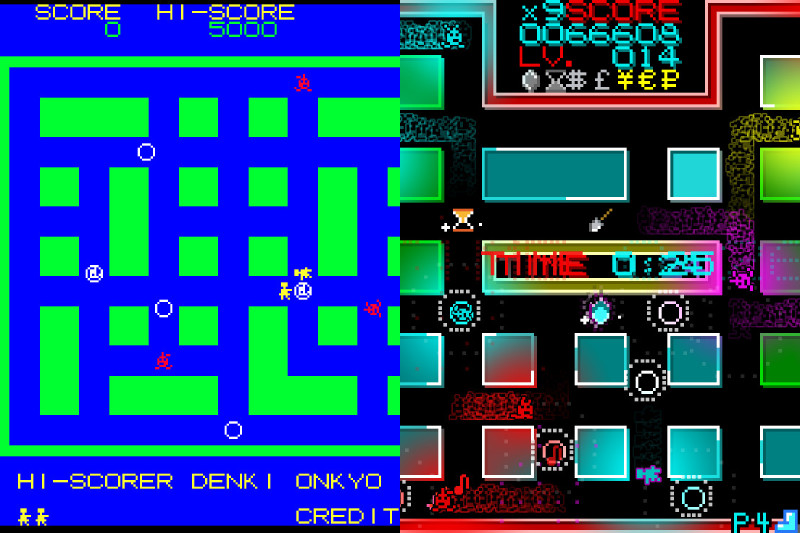
    Even with the change to a lives system, Head On is very much a game of its time. It’s the kind of thing that you could imagine could have got an “arcade perfect” port on the ZX Spectrum. In the game, there are five lanes full of dots, with gaps in which you can switch lanes. You drive a small car and can push a button to go faster, and there’s another car (more than one, later in the game) that’s going in the opposite direction of you that’s trying to cause a horrific accident by smashing into you as fast as possible before you collect all the dots. The trick is that you cannot turn around. Your only option for avoiding this other car is to change lanes, but they can (and will) change lanes as soon as you do to try and keep their target in their sights, meaning you have to play the game by savvily modifying your speed–you can change two lanes when you aren’t going full speed, which the opposing car cannot do, and as they can only change lanes at the same places you can, you can try and ensure they don’t have the opportunity to change before you pass them.

    To a modern player, Head On is… well, it’s not great. It’s punishing, because the entire map resets after every death, meaning that you can only move onto a future level if you do it in one go (though like Pac-Man, there aren’t different maps). It’s also really frustrating to control. You aren’t controlling the car like you’re driving it (push left or right) you’re pushing the car in the direction on screen you want it to go (so if it’s travelling across the screen, you need to push up or down to change lanes.) I found this unbelievably confusing; I feel like audiences in the 70s might have found this more understandable, but it’s such a different way of understanding your relationship to what’s happening on screen it’s almost unbearable, though I did (eventually) get comfortable with it. A bit, anyway.

    It also struggles with, surprisingly, complexity. Like Pac-Man, it seems to be a pattern game: you are trying to find the ideal path through the level because the enemy car is largely predictable. This means that you want to (for example) go full speed at first, and not change into the second outermost lane until the last second, and then change into the middle lane after two turns, and so on. The problem is unlike Pac-Man, where you are only focused on turning, in Head On you need to be extremely aware of when and how to change your speed to “juke” the enemy. I don’t hesitate to believe that with many more hours of practice I could walk my way through the first level, but it’s somehow much more taxing than performing Pac-Man’s patterns.

    If you put in the time–like I did, somewhat–it’s frustrating but moreish; I was determined to see the next screen. It’s responsive and quick to restart; the lure of collecting all the dots is irresistible and the lives system must have been a huge draw at the time even if–I suspect–the game was less attractive than just playing Space Invaders again (though that it’s so much faster has something to it.)


    Head On (2005)

    Obviously, I also played the “updated” 2005 version included in Sega Ages 2500 Series Vol. 23: Sega Memorial Selection; after all, I went to all that trouble. According to Sega Retro it seems to have been developed by Japan Art Media, and it makes the (strange, in my opinion) decision to change everything into lights rather than go with a car theme. There are some new collectibles that can do stupid stuff like make the map invisible based on when you pick it up, and they’ve tried to make the on ramp smoother by having more maps that start with many more ways to change lanes and enemy cars that, frankly, just don’t seem that bothered about attacking you.

    It’s just… very ugly and inessential. The text in the middle of the screen makes it look like the game is being obscured by the pause menu (it’s not–there’s not supposed to be anything there) and if the original is fast to get going, and fast to restart, this takes too long to really feel like anything. The Sega Ages 2500 remake era is not fondly remembered, and largely with good reason; it would have made far more sense to not bother to include this rubbish and instead include Head On’s sequels and derivatives. 


    Head On has a pretty huge legacy, even before Pac-Man. There’d be a sequel (Head On 2) and clones a-go-go in the arcades (such as Taito’s Space Chaser) and at home (Atari 2600’s Dodge ‘Em, which I guess you’ll be able to read about in exp. 2603). It makes it all the stranger that having basically created two of the most memorable game designs ever that Lane Hauck isn’t not just better remembered but openly celebrated. But surprisingly, after 1980 he isn’t (according to Mobygames) credited on any more video games, only following Head On with Carnival. I reached the limits of my investigative skills here, but thankfully Ethan Johnson of The History Of How We Play is working on a book about the San Diego arcade scene with a focus on Gremlin, and he was able to let me know that the last game Lane finished that was released was Tac/Scan in 1982, and that (sadly) Lane was let go from Gremlin in 1983, “after Gremlin had been sold for pieces.”

    Before that happened, though, there’s a maudlin conclusion to DeWyze’s article on him:

    “I’m really torn. Sometimes I feel like I’m a Christian Scientist pharmacist. I mean, there are super-good things to do with microcomputers, but I don’t consider this one of them. Talk to any honest speaking game designer and you find him trying to legitimize what he’s doing. I feel that way. I want to grow up and do something legitimate some day.’’

    In 2026 I hope he understands: everything he did was legitimate, and we owe him a lot.

    Will I ever play it again? I will, in the form of Dottori-kun, which was included on the Astro City Mini.

    Final Thought:  In an absolutely bizarre “it’s a small world” detail, we owe him for more than just Blockade and Head On, because he was friends with Trip Hawkins’ dad. 

    From Stanford’s Alumni magazine in 2012:

    “My father in the 1970s had worked in San Diego with a brilliant engineer named Lane Hauck who later made arcade games … Around 1971 Lane bought a PDP-8 kit and built it at home. It was a box about the size of a bureau drawer, with red lights and switches and was connected to a KSR-33 printer, the kind then used in newsrooms (like a ticker, only bigger) with the rolls of yellow paper, and it could pound out 10 characters per second. (I can hear the chugging sound even now.)

    Lane built a game called MOO, similar to what later emerged as a board game called Mastermind, where you try to guess a four-digit number. You would enter a four-digit guess on the KSR-33 keyboard and it would then tell you how many moos and cows you had. A cow was the right digit in the wrong place; a moo was the right digit in the right place. On one round of the game I got the answer in three turns and Lane was upset, he didn’t think that was possible and thought I’d only made a lucky guess. Of course I already knew I loved games and was already interested in computers and was already making board games … Playing on Lane’s PDP-8 kit was a key event on my road to determining by 1975 that I was going to make computer games and found my own company.

    Yes, I decided in the summer of 1975 that I would found EA in 1982. And as they say, the rest is history.3

    Updated 01/04/26: Ethan Johnson caught a few errors/omissions in the original article. The date of Gulf and Western’s ownership of Sega was corrected, as was the reason for Lane’s hiring, the sourcing of Shikanosuke Ochi, and Lane’s last game with Sega/Gremlin.

    1. Annoyingly, Sega have a weird (bad) habit of re-using the name “Sega Memorial Selection” using it for two Saturn compilations and a PC compilation. And the first volume of the Saturn one includes Head On as well. So I could have emulated a Saturn to emulate it. But that would have been crazy!!! ↩︎
    2. Wikipedia has this down as Shikanosuke Ochi, seemingly unsourced source: Ethan Johnson! ↩︎
    3. I suspect some people might think we should blame Hauck for this, considering what EA has turned into. But I personally have a fondness for what Hawkins was trying to do with EA, at least at first. What the company is now really doesn’t seem like his fault. ↩︎