Category: Every Game I’ve Finished

  • Putty Squad (System 3, 2013)

    Putty Squad (System 3, 2013)

    Developed/Published by: System 3 / Maximum Games
    Released: 22nd April 2014
    Completed: 20th May, 2015
    Completion: Finished Marathon mode.
    Trophies / Achievements: 42%

    Yes, here’s why I played Super Putty. You see, I started playing this on a whim, and it’s such a total wreck I was like “wait, why is this a legendary lost Amiga game?” so had to go back and play Putty.

    Putty, as described, isn’t good, but it is beautiful, and in an alternate universe where someone with a consistent design philosophy made it, it’s great. Putty Squad, in its “on Amiga/SNES” format, is a big departure from the original Putty—gone are the tight levels, instead these big sprawling things. It’s much more a “traditional” Amiga platformer if there is such a thing, largely forgetting Putty’s “puttyness.” It’s still nice looking—if less striking—but loses a lot from the levels no longer being tight vertical scrollers, and is generally, a bit generic.

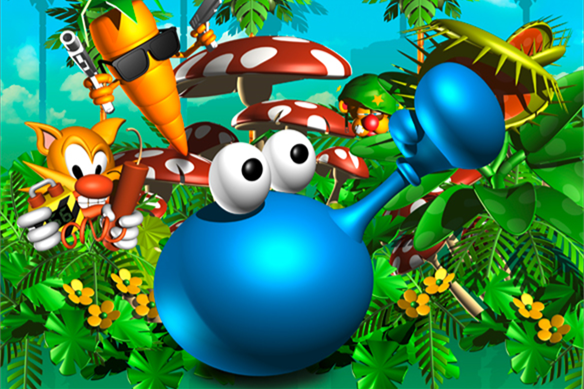
    Putty Squad’s re-release, however, has some of weirdest decisions ever. First off, we lose all of the  pixel art, which is tragic, and it’s all replaced with what I can charitably describe as “mid-90s CGI.” In fact, it’s so much of that time—think of games like Constructor, which it turns out as I google it was developed by System 3—that I’m suspicious that if the art hasn’t been lying about since then (look at this cover of Amiga Power, or the SNES release cover) or that literally the same person did it now, using the same tools after not having touched a computer since 1997.

    It’s sort of funny? A kind of “retro” no one is really asking for, but released as a 2014 improvement to a 1994 game that wouldn’t really cut it in 1997.

    So, it’s ugly, in a funny way, and you do see way more of the level thanks to the resolution, but above all someone at System 3 decided that the platforming action was archaic and no one was going to enjoy it, so they gave Putty the ability to, at any and all times, pump himself up and float. This means that you can, literally, avoid all of the platforming and huge swathes of the levels. It’s so daft, actually, that I spent some time trying to work out if it was a bug, but it’s not.

    Not to say Putty Squad isn’t still hard—just like Putty (and, it seems, more so than the original intended release of Putty Squad) every level is a mess of enemies you just have to try and survive. So it’s not really a platform game, more sort of a weird muddle where you fly about as a floating putty, landing occasionally to rescue the red putties, take unavoidable damage and then hope you can survive enough to the end of the level.

    After playing Super Putty and this, I can still imagine this perfect vertically-scrolling Putty game that’s a bit puzzley but also a challenging, fun platformer, with amazing pixel art. It would be really good on Playstation Vita. This isn’t.

    Will I ever play it again? No, but I enjoyed this as a piece of history and slice of weird Western-developed kusoge, so I’m going to keep my physical copy.

    Final Thought: If you’re gagging to play a modern update of a western platformer, you can’t go wrong with Rayman Origins. It’s more beautiful than the original pixel art and is just generally a fun wee romp. So there.
  • Super Putty (System 3, 1993)

    Super Putty (System 3, 1993)

    Developed/Published by: System 3 / U.S. Gold
    Released: 1993
    Completed: 19th May, 2015
    Completion: Finished it, but with the unlimited live cheat because christ.
    Trophies / Achievements: n/a

    This opening might be a little “inside baseball” (a reference which is, ironically, “inside baseball” because I have no idea what inside baseball is or was) but recently there was discussion on Twitter about something or other—actually i think it was on Super Mario Sunshine, which I involved myself in because of words I had over it in my write-up of Super Mario 3D Land—and Tim Rogers (Videoball) humorously dismissed Bennett Foddy (QWOP)’s opinion by saying something along the lines of “yeah, but you like Amiga platformers.”

    Now, I like Amiga platformers, and there’s a reason for this, similar to why I enjoy a lot of games that can be characterised fairly or not as “kusoge”; they often do something absolutely unexpected from what is expected of their genre or accepted conventions. A lot of Amiga (actually, I’ll round this out to “home computer”) platformers come from a strange world where Mario might have been mentioned in passing, but his design wasn’t dominant. Neither was a visual style defined by Japanese artists. As a result, you end up with lots and lots of weird, often wildly unplayable worlds and ideas; everything from sedate problem solving with Dizzy to insane, drugged-out messes like Top Banana.

    I think they’re fascinating! It’s like looking at the evolution of a distant tribe, and then once contact has been made, seeing what happens—seeing Sonic-inspired games like Oscar or (famously) Zool come into being.

    Anyway, here’s Super Putty, and if you’re wondering why I’m playing Super Putty rather than Putty (my original intention) it’s because, and here’s another quirk of home computer games, there was only one fire button on old home computer joysticks. As a result, developers had to get quite… innovative to get characters to do the range of things you’d expect. In the case of Putty, which hinges on Putty’s ability to stretch and morph and absorb, what they did was add an insane lag on your first input. It genuinely takes about a second for Putty to respond. I couldn’t hack it, almost gave up entirely and realized that this wouldn’t cut it on the SNES, where a mildly-improved version was released. Hurrah!

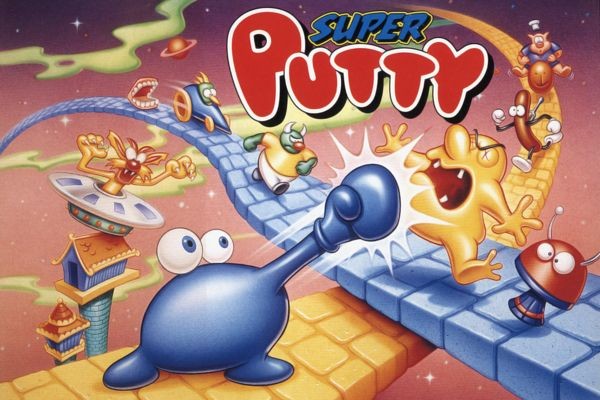
    I think Super Putty is gorgeous. I love this kind of western pixel art—of the era of the Bitmap Brothers, etc.—and if you look at one of the level maps, it’s just stunning. Abstract but evocative, clean and clear.

    It’s a shame, then, that Super Putty is a design mess for no good reason at all. You’ve got a pliable hero with plenty of options for puzzles, and a plot that revolves around collecting robots and taking them to the exit, all in really nice, vertically-scrolling levels. But in classic Amiga-platformer stylee, instead of all that it’s a mad survive-em-up, with millions of baddies spawning on screen, loads of points where you can’t avoid being hit, things that hurt you even though it’s not obvious, and so on.

    Rather than doing anything clever, the game devolves into abusing Putty’s “smart bomb” explosion to try and avoid mobbed areas, gritting your teeth through the enemies you can’t seem to kill for no clear reason, and brute forcing your way through. I certainly can’t imagine trying to do this without infinite lives.

    I must say though, that had I got this in the Amiga 600 bundle I pined for, I’d have played the shit out of it, lag or not, and would remember it fondly. It does look great, Putty is charming indeed, and if it was more of a Dizzy than a Top Banana it’d be perfect. Ah well.

    Will I ever play it again? No but if you can guess why I played it in the first place…

    Final Thought: Apparently the Amiga 600 was manufactured in the town I grew up in, which means that if my dad had known that I’d probably have ended up with a dodgy one from a guy down the pub rather than the flash 386DX I got instead. The PC was the right choice.

  • X-Scape [aka X-Returns, 3D Space Tank] (Q-Games, 2010)

    X-Scape [aka X-Returns, 3D Space Tank] (Q-Games, 2010)

    Developed/Published by: Q-Games, Nintendo SPD Production Group No. 3 / Nintendo
    Released: May 31st, 2010
    Completed: 16th May, 2015
    Completion: Finished the main story mode, but didn’t go back and 100% every planet or anything.
    Trophies / Achievements: n/a

    When I was a wean, I wanted Faceball 2000 so bad after reading about it in Total! Magazine. But I never saw a copy of it in the wild! However, I have no recollection of X (X-Scape’s Game Boy, Japan-only predecessor) ever being mentioned even in the import pages. In retrospect, I’m not sure I would have hungered for it in the same way, but it’s really, really odd it never made it out of Japan. However, the latter-day sequel did, and I decided to just play that because the original is hella clunky what with being on the original Game Boy and all that.

    Turns out, X-Scape is also hella clunky? Actually, wait, first I’ll praise it. It looks great. I love how evocative the simple polygons are of genuinely alien places (although I don’t always agree with the palette choices.) Starglider is mentioned as an obvious touchstone, but with the tanky movement and exploration, it puts me most in mind of the lonely worlds developed in the Freescape engine such as Driller, and it made me wish the game was a lot deeper.

    Because the game is, mostly, a Battlezone-a-like with some flying (not that different) and little on-rails “tunnel” sections where you just try and avoid stuff and get to the end before the time runs out (which felt should have been way more thrilling and compelling than they were.)

    There are a few problems. First, the controls aren’t great. Using the stylus is a non-starter (Too slow, awkward) and using the d-pad is imprecise but as good as you’ll manage. Then, lots of the planets have “effects” that are often infuriating. One planet might have solar flares that scramble your controls so you move backwards when trying to move forward (and so on) the other interference that causes your scanner to stop working for a while.

    This kind of thing is insane. We’ve been making games for years and years and years, and it’s astonishing to me that anyone ever things that “reversing controls” is a “fun” or “challenging” thing to happen. Now, don’t get me wrong. Not all games have to be “fun,” I’m not one of those “fun”damentalists (did you see what I did there) but X-Scape is obviously meant to be fun. Control reversals or removing functionality as “challenge” is just incredibly frustrating and shite. Everyone: never ever do this.

    Anyway, you fly between planets, do short wee missions (kill X things, do this turret section) and progress through the story, which is slight.

    It’s such a nice engine, though, I wish they had, Freescape-style, been able to use it for some more things.

    Will I ever play it again? I could finish the missions but the thought of my controls being reversed again put me right off it. No.

    Final Thought: If you’re looking for a retro-styled Q-Games developed spacey thing, do let me recommend Pixeljunk Sidescroller. Totally different, obviously, and unfairly maligned, but in my humble opinion it’s the absolute tits.

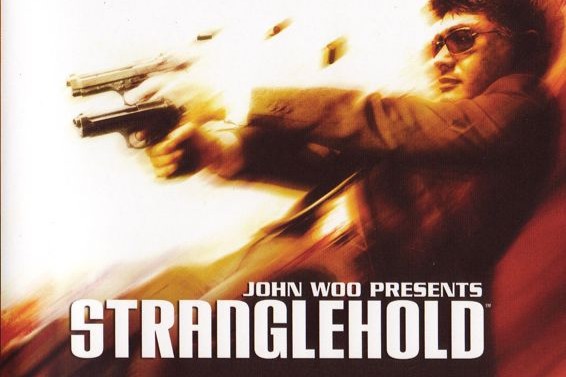
  • Stranglehold (Midway, 2007)

    Stranglehold (Midway, 2007)

    Developed/Published by: Midway Studios Chicago, Tiger Hill Entertainment / Midway Games
    Released: September 7th, 2007
    Completed: 12th May, 2015
    Completion: Finished it.
    Trophies / Achievements: n/a

    Kind of a wake-up here to just how old the “previous generation” of video games I’m still living in is, this is from eight years ago, basically making it, and I believe this is the scientific term, “old as balls.”

    Anyway, I’ve been meaning to play through it for ages because I like Hong Kong action (although John Woo has never stood out particularly to me, because he’s done so few films comparatively) and I played the demo in, probably 2007, and remember thinking it was hilarious.

    I think the demo (and first level) somewhat portrays the game under false pretence. Starring a digital Chow-Yun Fat as the same character he played in Hard Boiled in a “how exactly did they get them to agree to that” way, the first level asks the question “what if you covered Chow-Yun Fat in Vaseline and set him loose in a marketplace?”

    It’s hilarious as you slide about on everything, smashing watermelons and leaping about in slow motion at all times while shooting folk, if you remember how John Woo movies were always called “balletic” this is “balletic” in the way a dance recital for five year-olds would be, if you got them all drunk and made them perform on a waltzer.

    Unfortunately, while the rest of the game features just as much stuff to smash, the novelty wears off fast, as it becomes pretty transparent that the level design boils down to “trap the player in an arena until they kill enough baddies, run to the next arena, repeat.” Well, apart from the level where you have to endlessly destroy tables with drugs on them/place bombs (feels the same) and a really dull turret bit.

    And tragically, Chow-Yun Fat is totally wasted, as there’s a skeleton of a plot that makes far less sense and is far less compelling than your average Hong Kong film—and they usually made those up as they went along.

    It’s all a bit dull, and not helped by the fact that I’ve already played through Sleeping Dogs, United Front Games’ Hong Kong actioner, which is varied, fun and totally gets the genre right down to the compelling story. I can’t really blame Stranglehold for not being as good as a game that came out five years later… but I will anyway.

    Will I ever play it again? Nope. I don’t really regret playing it, though.

    Final Thought: Completely forgot to mention that there’s a boss fight in the middle that grinds the game to a halt because you’re not supposed to leap around during it and (in fact) I got stuck for ages because I had no idea you could crouch/crawl. Whoever it was that decided games should always have a bit where they’re like “ah-ha! now you’re not supposed to play the game the way you’ve learned for hours” should be forced to walk on their hands and eat with their feet for a year.

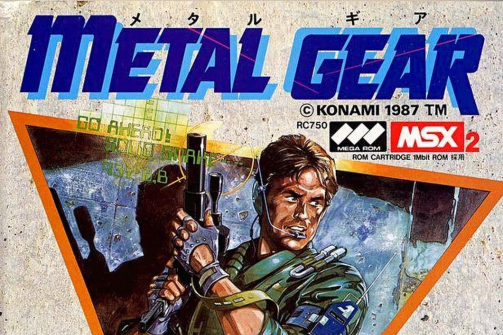
  • Metal Gear (Konami, 1987)

    Metal Gear (Konami, 1987)

    Developed/Published by: Konami
    Released: July 7th, 1987
    Completed: 10th May, 2015
    Completion: Finished it.
    Trophies / Achievements: n/a

    I’ve been meaning to play through the entire Metal Gear canon chronologically for a long, long time. Probably because I own almost every game in the series bar a few non-canon entries? And so I’ve started by finishing this, Metal Gear for the MSX2.

    I’m not particularly familiar with the MSX despite being a huge, huge fan of 1980s computers—I grew up with an Amstrad CPC 6128, so just about as obscure—so Metal Gear is the first game I’ve “played” on one (well, emulated, via Metal Gear Solid 3: Subsistence on Xbox 360).

    If you’re wondering, an MSX2 is… very much a 1980s computer, apparently. Metal Gear is simplistic and “of it’s time.” Graphics are repetitive, animation limited, input clunky. It’s not worlds-away from something you’d imagine playing on the Commodore 64, maybe, and certainly not massively steps ahead from the much derided NES version (and I’m always surprised by how clunky a lot of the NES’s games are.)

    Pretty much, Metal Gear is this: you wander about a military complex, releasing POWs, picking things up, avoiding or killing enemies (stealth works, if rudimentary—and if you get caught, you usually only have to run off the screen) until you eventually finish it. It’s actually not too punitive compared to a lot of these early games; you can stack up loads of health and ammo by repeatedly re-entering certain rooms, there are no mazes (thankfully) and not that many “why would I know to do that?” puzzles (though there are definitely more than enough to make it worth looking up an FAQ when stuck.)

    I’ve been doing the podcast Loose Cannons for a few months now (look this isn’t a pointless plug, stick with me) and one of the things we’re trying to explore by looking at the output of a movie studio, Cannon Films chronologically is what you can learn from the early releases that informed their output from then on; for example, Cannon’s early distribution of cheap erotica leading it to produce some itself. Here, I look at Metal Gear, which is a canon Metal Gear game, and there’s really not much to say. In fact, if you read the story synopsis on wikipedia you come away with more. At best, there’s one moment of fourth-wall breaking, I guess.

    Metal Gear is an 1980s computer game. It’s not unpleasant, it’s just of it’s time. The end.

    Will I ever play it again? I have no reason to, and no one else has any reason to ever play it, I’d probably say. Which sounds harsh! It’s not actually bad. It’s just… old.

    Final Thought: I’m not going to bother playing Snake’s Revenge, because it’s non-canon. I’ll be back with Metal Gear 2: Solid Snake at some point in the future. I’m looking forward to it, as it’s from three years later and post-Snatcher, which means big changes, I bet.

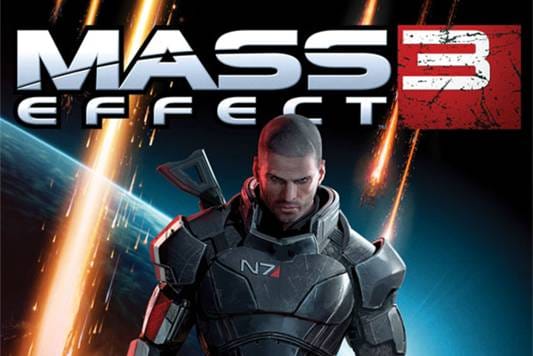
  • Mass Effect 3 (BioWare, 2012)

    Mass Effect 3 (BioWare, 2012)

    Developed/Published by: BioWare / Electronic Arts
    Released:
    March 6th, 2012
    Completed: 7th May, 2015
    Completion: Completed it with one of the good (but not best?) endings. Or something.
    Trophies / Achievements: 640/1550

    So there’s me, right at the end of Mass Effect 3, and I’m like “hmm.”

    I’m like “hmm” because I realise that even though I thought I had installed the special BioWare-makes-the-fans-happy-really-sorry-how-abrupt-the-ending-was-please-stop patch, I, uh, hadn’t. And I really, really couldn’t be arsed waiting for it to install and then playing through what might turn out to be a significant chunk of the game again to see the “proper” ending.

    So I didn’t and watched my ending “again” on YouTube with all the stuff they added.

    Now. I’m not really a fan of… uh, fans. In general, I’m one of those sorts that thinks that authors should put out their work exactly as they want it to be, and be done with it. The author dies to the audience, the audience, to the author, never existed.

    However, if the ending of Mass Effect 3 was as BioWare intended, they’re fucking idiots. No, lazy idiots. The extended cut is a botch job—stitches things together just enough that you’re like “yeah, fine, whatever” but it’s actually quite embarrassing to think they thought the original pass.

    (Whether that’s more embarrassing than fans peeing their pants in such an astonishing baby-tantrum that they went to the Federal Trade Commission in the US, I’m not sure.)

    Speaking of authors—BioWare is interesting, isn’t it? If you were to ask me who the main creative force of a lot of games were, I could name a person quite easily. Fable III—another example of a game with a garbagey ending and promises it couldn’t keep—you can place your anger at Peter Molyneux’ door. But with Mass Effect 3, or any BioWare game, I’d struggle to name any person who worked on it. Wikipedia says this bloke Casey Hudson was the director, so I’d assume the buck stopped with him. Never heard of him.

    (To move on from authors to auteurs, if you’re wondering, I don’t feel the auteur theory fits for every work. But even in a huge video game, I think it’s important that one person or a small group of people shepherd the work into a consistent whole. Otherwise you end up with drivel. And we often end up with drivel.)

    In this case, I wonder if the buck stops with Electronic Arts. EA are generally parodied as evil (I think they’re still topping the worst companies list, aren’t they?) despite the fact that everything has consolidated so much when you get down to things they’re just another massive corporation (so, evil, but no more or less evil than any of the rest of that shower.)

    Here, however, the corporate bells and whistles on Mass Effect 3 are egregious. Mass Effect 2 might have had some DLC characters and that kind of shite—pay another $20 or miss out on three chapters from the latest Game of Thrones book, imagine it—but Mass Effect 3 makes the decision that, you know, if you really want to get the best endings by raising your “galactic readiness” you should spend a lot of time playing multiplayer. And you should play the tie-in iOS game. Oh, and the tie-in app!

    If you don’t do this—or, if like me, you don’t actually realise you’re supposed to do this and can’t really do this, because it’s several years later—you’re fucked (I think you can get the best ending if you 100% the game with the extend cut patch, but I’m not totally sure. I certainly wasn’t sure what I had left over to do to get it.)

    So what you have here is a story, a narrative, a creative work, whatever you call it, absolutely and totally at the whim of a corporate treatment that says something as vapid as “we need people engaging with the brand in a holistic manner across multimedia.” Or something. Mass Effect 3 becomes “content” to be exploited.

    It’s a disaster, and to be honest, the majority of Mass Effect feels like a franchise spinning it’s wheels. No matter how you get there, you get to an ending that I characterise as “the Deus Ex.” If you’ve ever played a Deus Ex game you probably know what I mean (they all do this): you’ve just made a million decisions through the game, and right at the end they give you two or three options, usually represented with big buttons or something, none of which are exactly “good” or “bad” and none of which have anything to do your choices previous. In fact, the ending of Mass Effect 3 is almost exactly the same as the original Deus Ex if you think about it.

    Even more so than Deus Ex where it’s a let-down, here you’re like “what? This has nothing to do with the rest of the game at all???” It’s baws.

    (If you want to complain that actually, the endings you can get do relate to your decisions because of the way you collect “war assets,” there are still basically up to three endings. Everything else is so mild as to be meaningless.)

    Anyway, my point isn’t that the ending is bad and therefore I’m annoyed. My point is that I don’t think Mass Effect 3 could have been good in the culture it was developed in. Who cares about quality when you’ve got content to exploit?

    Will I ever play it again? Ha ha no. And it has made me doubt I’d play Mass Effect 4 when it inevitably comes along.

    Final Thought: You might have noticed that despite being frustrated by its problematic aspects I didn’t dislike Mass Effect 2, while I consider this one a disaster. Well, Mass Effect 3 has improvements—it looks better, combat is evolved—but it’s just not compelling. It gets off on the wrong foot immediately, I think. The stakes are so comically high—the game begins with Earth being invaded—that flying back and forth and doing missions and stuff just doesn’t seem to make any sense. I was constantly like “wouldn’t everyone on Earth be dead already?”

    Yes. I didn’t find a space opera “believable.” But the whole things ultimately makes about as much sense as Fable III and if that isn’t a sick-ass burn I don’t know what is.

  • Groove Coaster (Matrix Software, 2011)

    Groove Coaster (Matrix Software, 2011)

    Developed/Published by: Matrix Software / Taito
    Released:
    July 28th, 2011
    Completed: 2nd May, 2015
    Completion: Finished all the tracks in normal, gave up partway through hard. I’d seen all the content though.
    Trophies / Achievements: 34/62

    Since early man carved the first iPhone out of limestone on the African savannah, tapping his finger on the screen in time to music has been something he has wanted to do. He started with things like Tap Tap Revenge, but by the time he’d evolved into hipsterlopithecus, he demanded that the things he tapped on have some kind of relation to things from culture he could at least pretend to vaguely remember, and so the Space Invaders-themed Groove Coaster was born!

    That sounds like I’m being hard on Groove Coaster, but it’s a rhythm action game which starts with a very simple concept—your avatar (probably Space Invadersy) follows a track, points on the track appear, tap the screen when your avatar passes them. It slowly evolves so that sometimes you have to hold, some times you have to swipe, etc., but the main thing is you tap the screen in time when prompted. It’s about as simple—as digital—as rhythm action gets, which in itself is kind of interesting.

    You see, I don’t think Groove Coaster is any good at all when it tries to be challenging, and it made me realise something about a lot of rhythm action games, certainly the most well remembered ones like the Guitar Hero franchise—that they’re not really about the skill of performance in the way video games generally are. They’re more like playing music than is obvious I suppose: as a musician it’s a rare talent indeed to be able to just pick up some sheet music you’ve never seen before and play it with a band that already knows the music. In a video game, generally you want to be able to react and recover; you want to be able to perform, or believe you can succeed, from the moment you know the rules. Music is—usually—about repetition more than innate skill, and so are rhythm games; you might fail that track several times because of a noodly bit in the middle, but once you get it, get that muscle memory down, you’re golden.

    I think that’s a fairly obvious realisation, but I think this is one of those “personal realisations” where you feel out what it is you like about, and find interesting in, the medium you’re talking about. Here, with Groove Coaster, I was finding it this lovely, pleasant, spacey game to play shortly before I went to bed—tap in time to the music, while the visuals flashed in front of my sleepy eyes—but as soon as it became about the challenge, I stopped liking it.

    And Groove Coaster has a bunch of quirks, anyway. Because the track your avatar keeps following often moves and changes direction, the amount you can see in the future is severely limited (and at times, the “beats” you’re supposed to hit dance on screen at the last minute, anyway.) The tapping you perform might at one point correspond to the melody, at another, the drums, and it switches between them with no warning or visual representation. And there are invisible “ad-libs” that I could never quite work out.

    Basically, Groove Coaster sort of makes you believe it’s a casual tapper, but it’s actually just as serious about repetition and perfection as any Rock Band title was. It doesn’t mean it’s bad—though I’d argue that its quirks are flaws—but just that it’s not something I found interesting past the point where I’d heard all the songs a few times; the challenge wasn’t rewarding. That’s in stark contrast to the fantasy of a Rock Band game, where as you play on harder and harder levels, you feel more and more like you’re “really” playing the song. Here, you’re just… tapping on the screen, so it doesn’t have the leeway to forget what you’re doing is just trying and failing at challenge that requires repetition and learning more than skill.

    Will I ever play it again? No, and I’m not particularly interested in the free-to-play version Groove Coaster Zero, but if I ever saw it’s wonderfully named arcade edition, Groove Coaster 2: Heavenly Festival I’d give it a shot in multiplayer mode which sounds like a lark.

    Final Thought: Don’t get me wrong, I’m a sucker for Space Invaders style, too. They really are perfectly designed little buggers and I use a fancy Taito Station tote with Space Invaders on it all the time. And I’d totally buy this rug in a heartbeat.

  • Forza Horizon 2 Presents Fast & Furious (Playground Games, 2015)

    Forza Horizon 2 Presents Fast & Furious (Playground Games, 2015)

    Developed/Published by: Playground Games / Microsoft Studios
    Released: March 27th, 2015
    Completed: 29th April, 2015
    Completion: Finished all the races!
    Trophies / Achievements: 1000/1000

    The Fast & The Furious franchise is a legitimate juggernaut, with the last film breaking a billion dollars worldwide quite easily and countless (countless!) articles about its unique appeal, from waffly thoughts on its diverse casts to hipster snark over how silly the films are despite that.

    I love The Fast & The Furious franchise. I love it. I love it so much that I’ve marathoned the films twice—once for six, and then again for seven—and the second time we did it we actually went to all this effort to edit the films slightly so we could fit them into a day and include things like Justin Lin’s A Better Tomorrow and straight-to-DVD short films.

    I love it so much that I paid $25 to watch Furious 7 in a juddering theme park chair (D-Box) on a Saturday night and cried buckets at the touching eulogy to Paul Walker at the end. While in a juddering theme park chair.

    The most amazing thing is that until that first marathon I wouldn’t have rated the series at all, having only seen the first one as a student one night when people wanted to go to the cinema but there was nothing on. And now I have such a deep adoration for a series that, I’ll happily admit, is wildly patchy in tone, content and quality.

    It’s one of those things that’s rather hard to sell to people, because the series has wiggled and morphed; lazy street-race parody, 80s action throwback, superhero movie, crime drama, heist flick… and yet as it has progressed, it’s,managed to cobble together an epic through-line of continuity, revealing a deep sincerity through a belief and love for its characters that shines through.

    To me, The Fast & The Furious series is what makes cinema great—no, it’s what cinema is. None of that shite about “turning your brain off.” They’re movies that say “we’re going to take you on a ride, are you coming with us?”

    I think it says a lot about the viewer how they react to that.

    Forza Horizon 2 Presents Fast & Furious is, and this surprises me, a wee game that is made by people who clearly also really love The Fast & The Furious. There’s not really that much to it—a few hours of driving around repurposed chunk of Forza Horizon 2’s open world—but anyone who would title the final achievement here “How Long Was That Runway?” gets it.

    It’s the first realistic driving sim I’ve played in an age—since digging into Gran Turismo 3 all those years ago, a slog to be honest—and I was massively impressed with just how easy you could make it to play while still making it feel “realistic.” You can more or less get it to feel like Ridge Racer if you want, but there’s a nice middle-ground there with just enough resistance that I could feel the simulation without getting annoyed at the controller interface.

    However! I was playing a The Fast & The Furious game! This is, yes, a nice racing sim, and they did do what they could to make Fast and Furious events—racing a helicopter, etc.—but with the franchise having morphed from being “mostly about cars and family” to being “mostly about everything, up to and including gun fights, kung fu, big explosions, but still cars (a bit) and definitely family” it all feels a bit pedestrian. Ludacris might be doing the voice (and his best to make it seem fast and furious) but, you know, you’re still just driving a car about town without any stakes at all.

    Isn’t that weird? The series has moved on so much that the focus on car racing just feels limited, and there’s not much the Forza chaps can do about it. It’s perfectly pleasant, and at the cost of free it was a great demo for the larger game (not so much at the $10 which it costs now, though). But it is just a demo and, honestly, The Fast and The Furious franchise deserves more. Just pick up Forza Horizon 2 now it costs money.

    Will I ever play it again? No, but if I’m ever a millionaire I’ll spend money on one of those insane driving set-ups with a wheel and clutch and proper stick-shift and everything and drive very slowly around Forza Horizon 8 or whatever.

    Final Thought: My next trip to D-Box will probably be for Mad Max: Fury Road. Cannae wait, man.

  • G.G. Series #5: Ninja Karakuri Den (SUZAK, 2009)

    G.G. Series #5: Ninja Karakuri Den (SUZAK, 2009)

    Developed/Published by: SUZAK / Genterprise
    Released: October 14th, 2009
    Completed: 23rd April, 2015
    Completion: Finished all 60 levels at the cost of many, many continues.
    Trophies / Achievements: n/a

    I’m obsessed with weird cheapy games—well, Japanese ones, anyway. I’ve made a habit of collecting any Simple Series games I can find (like most folk in-the-know, I adore the EDF series) and I’ve always been interested in the G.G. Series, a series of really cheapy ($2) games thrown out on the DSi eShop.

    (Confusingly for collectors, there’s also the GO Series put out by Gamebridge, which includes a bunch of re-badged G.G. Series games in Europe, but in North America just seems to be a grab-bag of other weird cheap stuff.)

    Anyway, Ninja Karakuri Den is the first of the series released in North America (though the fifth in Japan) and I’m going to surprise you (possibly?) by saying I loved it. For $2, anyway. It’s a simple little game that’s anything but the Ninja JaJaMaru-kun clone you might imagine—your ninja constantly jumps, every platform he jumps from crumbles, and the idea is to modify your jump height and dash and slash to destroy all the cogs on screen while avoiding/killing enemies to progress.

    It’s great! It really is! The controls are initially a little complex until you work out you want to be dashing and slashing more or less exclusively, but most importantly they feel great. Combined with the cute graphics and just-enough-content for $2, I ain’t complaining.

    If I was to complain, I’d probably moan that there isn’t a better way to continue than just hitting retry to brute-force your way to the end, and that the bosses are a repetitive low-point of the game. And, honestly, now I’ve done all 60 levels I don’t really see a point in fighting for a high score or anything.

    Basically, Ninja Karakuri Den is one idea done well for just long enough. Could it be longer, have more enemies and maybe platform types? Sure. Did I enjoy it because it was such a pleasant surprise as I was expecting nothing good at all? Very likely!

    Will I ever play it again? No, but I’ll be happy to drop the $12 for the other six games in the series released in North America and that’s a big, big recommendation.

    Final Thought: I don’t really have any other thoughts so actually I’d like to open the floor—have you played any of the G.G. Series? Any particular stand-outs? Oh, hang on, I don’t allow comments on the site. Let me know on Bluesky?

  • Super Mario 3D Land (Nintendo, 2011)

    Super Mario 3D Land (Nintendo, 2011)

    Developed/Published by: Nintendo EAD Tokyo / Nintendo
    Released: November 13th, 2011
    Completed: 21st April, 2015
    Completion: Finished the first eight worlds, the eight special worlds, beat Bowser Twice. Three stars on my file.
    Trophies / Achievements: n/a

    Huh! So I liked Super Mario Bros. Deluxe so much that I just wanted to keep playing it, but as that doesn’t get me through my backlog I decided to go back to Super Mario 3D Land—which I’d been playing on-and-off since I got my 3DS—and finish it off, which surprisingly I did quite quickly because I only needed a few more star coins to unlock the last two levels of the Special worlds to finish it off (along with beating Bowser again.)

    So, I’ve been effusive with praise for the original Super Mario Bros. but to be honest, since he went into the third dimension with Super Mario 64, I haven’t been the biggest booster of the Mario series. I liked Mario 64 well enough—eventually sitting down and beating it late into the N64’s life. I actually thought Super Mario Sunshine was lovely and will hold that it’s underrated for no clear reason (well, those collect blue coin missions were shite, but that kind of thing is a standard of the series now so…) But Super Mario Galaxy didn’t grab me. I finished it, but in a kind of listless fashion, and I wasn’t that interested in the sequel so I never bothered with it.

    (Though I did like Super Mario Galaxy’s story. Totally non-diegetic, but it was nice.)

    I picked up Super Mario 3D Land free with the 3DS I think—one of those Club Nintendo deals—and I’ll be honest, I worked my way through the first world with the same kind of sluggish, listless feel I had for Super Mario Galaxy. Now, I feel like I should have been finding it interesting, but… here’s the thing: difficulty is a tough thing to balance.

    3D Super Mario games have one problem they’ll never accurately fix (that of being unable to perfectly see where you’re going to land in the third dimension) and that’s always an annoying “difficulty” of them. To some extent they’ve worked to mitigate that—making Super Mario Galaxy about jumping on spheres so you’ve got more view/forgiving gravity; making 3D Land on the 3DS, where you can use actual depth (if you get on with the 3D, which I don’t.)

    However, I think the issue is more that the games are, that difficulty aside, really, really easy for ages. Super Mario 3D Land is, in some respect, a back-to-basics 3D Mario, akin to a large, prettier, collection of the secret stages of Super Mario Sunshine, which as everyone knows, were the best bits. That the levels are short is great, that they don’t get challenging until you’ve finished the entire first eight worlds, less so.

    Thing is, I’m complaining from the position of a seasoned Mario… playing guy. If you’re just a normal human, this is probably not a problem at all! And your skills grow with the game. It’s not totally without challenge, anyway.

    So I’m in the weird position where I was bored—genuinely bored—of this game for hours. But, then it got quite good, apart from the really challenging levels where suddenly you jump and fall off a platform because you couldn’t tell where Mario was going to land. But still, in the end, I liked it. I’d have played it longer, if there were more levels (of the difficult variety.)

    Basically what I’m saying is these games need a “look I’m already really good at Mario, ok” setting.

    Will I ever play it again? I doubt it, but having grown to like it, I’d happily play that Wii U sequel. I wouldn’t have said that half way through the game though.

    Final Thought: It’s annoying that you can only unlock Luigi halfway through the game, and he’s got his weird jump that means, now you’re already muscle-memoried Mario’s way of being, you don’t want to use him. That’s rubbish. Luigi is obviously better, I want to play him through the whole game next time. Maybe if you select the “I’m already really good at Mario” setting at the start you play as Luigi in all the remixed-to-be-harder levels! I’d be satisfied with that.