To view this content, you must be a member of Mathew’s Patreon at $1 or more
 Unlock with Patreon
Already a qualifying Patreon member? Refresh to access this content.

Developed/Published by: NamaTakahashi, tiny cactus studio / NamaTakahashi
Released: 07/08/2025
Completed: 14/02/2026
Completion: Finished it!
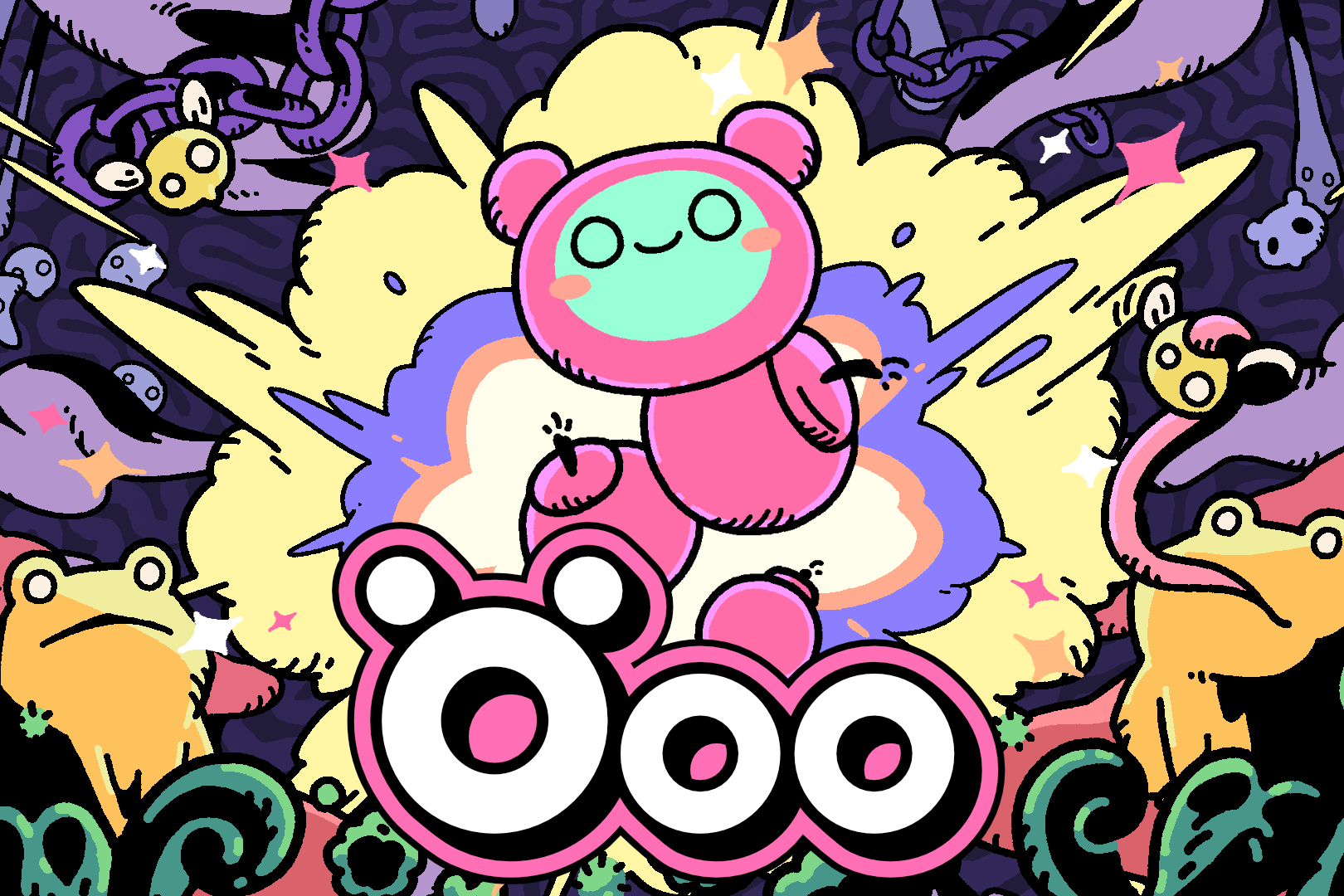
Öoo is… perfection. I’m not sure I can phrase it any other way, actually. It’s not simply a textbook case of a game that’s doing exactly what it set out to do as well as it absolutely could, it’s doing something so clever–on a level that I didn’t think was possible–that I actually could not believe it was doing it. I actually think Öoo might be the gold standard for mechanic-first game design now. It’s that clever.
I mean the cleverness starts with the name, doesn’t it? It’s called Öoo, and you play a wee “bomb caterpillar” that looks exactly like the title. They must have felt like a god when they worked that one out. As the caterpillar–is it named Öoo? I’m not actually sure–you find yourself snaffled up by a big bird when you were innocently planning on snacking on an apple and have to escape by, well, getting as deep into the bird’s guts as possible so you can blow up their heart and then jump out of their mouth (I mean, I’d just have waited until they yawned or something, but you do you, Öoo. Yoo doo Öoo.)
You do this by navigating platforming challenges, but you can’t jump. Initially you can’t do much of anything, but you quickly unlock your first tail segment and then the trick is that you can drop it as a bomb and choose when it explodes–and when it does, it propels anything near it in the opposite direction the explosion hits it from. So you can, for example, drop it, stand on it, and then blow it up to propel yourself into the air to get you to a higher platform, or stand next to it to get you to blow you over a spike pit.
One amazing thing is that the game is able to do so much with that before it even introduces the second tail segment, thanks to the thoughtful implementation of other mechanics. The game immediately introduces a generous warp system where you can easily warp between any two warp points, and then begins to gate your progress with yellow frogs who require you deliver them flies to let you pass, along with a variety of other obstacles–the usual spikes, but also blocks that need to be blown up (which may reappear on a timer) buttons to press to open or close doors and… huh, you know what? That’s about it.
But here’s the most incredible thing about Öoo. They never give you more than the two exploding tail segments and they stop introducing new obstacles about half an hour into it, but the game is full of a sense of discovery I don’t think I’ve ever felt in the game before because (and I’m going to spoil the “trick” of the game here, so if you don’t want that spoiled, please stop reading and just play it):
You are never truly “gated” at all by the frogs. In each situation you’re stymied by one, you just need to know how to use your caterpillar’s already existing abilities to pass it right there and then. The section of the level you’ll go and play leads to a dead end that you just warp back from and it is entirely there to teach you the mechanic you need to perform.
I’m not sure if I can express how revelatory this is. It’s like in a movie when the hero learns they always had the power inside them and they just had to ~believe in themselves~ happening to you, repeatedly. I can’t say for sure if you’re going to have the reaction I did, but not only did I enjoy the game so much even when I understood the trick that I was happy to progress through the game in full–not stopping to try and figure out the “shortcuts”–and I definitely never knew how to do what was required to progress via frog gate until I’d done the whole thing anyway, because it was never as simple as knowing the mechanic; you needed to understand the mechanic fully.
It is wonderful. It’s made me look at Metroidvanias, roguelikes, even “git gud” games in almost a whole new light, imaging a world where rather than making the player jump through hoops for required unlocks or permanent warps or extreme mastery players were simply shown ways to use the mechanics in new ways through play.
I imagine this world, but I also find it hard to believe it’s possible, because I can think of every way it can go wrong immediately. And that’s why Öoo is such an incredible piece of game design. There’s a version of this game where the average player hits a gate, goes “oh, maybe if I do this” and then skips 10, 20% of the game, possibly backtracks to do it and discovers that there’s just a dead-end there and wonders “well what was the point of that.” You have to have incredible confidence to decide you can hide a solution that’s already accessible to a player from them until you want them to have it, and bloody hell does Nama Takahashi have it.
The only caveat I have here is that was my experience, and maybe you’re king shit problem solver, and you’ll grasp what do to immediately in every situation. You cut your teeth on kaizo and never thought “well, I’ll take that other easier path instead.” But I’d be surprised if that wasn’t a statistical irrelevance in terms of players of this game (maybe only slightly heightened by people who read things like this who learn the trick in advance.) The funny thing is how much trying to break Öoo would be to not just miss the point but to actually ruin the fun completely. That rather than learn a mechanic that allows you to unlock the doors as you go you hit your head against them until they bust open.
It would be pointless, too, because for the real heads there are loads of hidden extra hard sections to do found via hidden trophies that test your abilities as far as you can go if you really want to (in my case, not very far.)
Öoo is short–my completed playthough clocks in at 2.4 hours–but if it were to be any longer I think either cracks would start to show or new mechanics would have to be introduced, and the perfection would be sullied. But if you want to play a puzzle platformer, there is no better option. Probably at all.
Will I ever play it again? No. I am interested to see what Nama Takahashi does next, but good lord what an act to follow. I don’t think I could, but then I also couldn’t have come up with Öoo. It’s humbling.
Final Thought: If you’re going to play this or Elechead, Öoo wins; but if you think you’ll play both, I recommend playing Elechead first, as it has a rougher design but you can see the evolution towards Öoo in it (whereas playing it second will just feel like a step backwards.)

Developed/Published by: Playables / Panic
Released: 31/07/2025
Completed: 03/02/2026
Completion: Crossed off every fly’s bucket list.
There’s a cliché about criticism, that the worst thing that you can have to review is something mediocre; the idea being that there’s nothing that much to say one way or another when something’s just fine. But actually, I sort of think that’s not entirely true–at least when it comes to games. Because think of the platonic ideal of the “7/10” game; a “mediocre” score under the prevailing wisdom of not using the entire scale, but often games with grand ambition they couldn’t quite match, or interesting ideas that didn’t entirely work.
Really, the worst thing you have to review is something that’s overall good… but unremarkable. Something you enjoyed… but couldn’t find anything special about. Something successful at what it set out to do… but what it’s set out to do is forgettable.
I think you can see where I’m going with this.
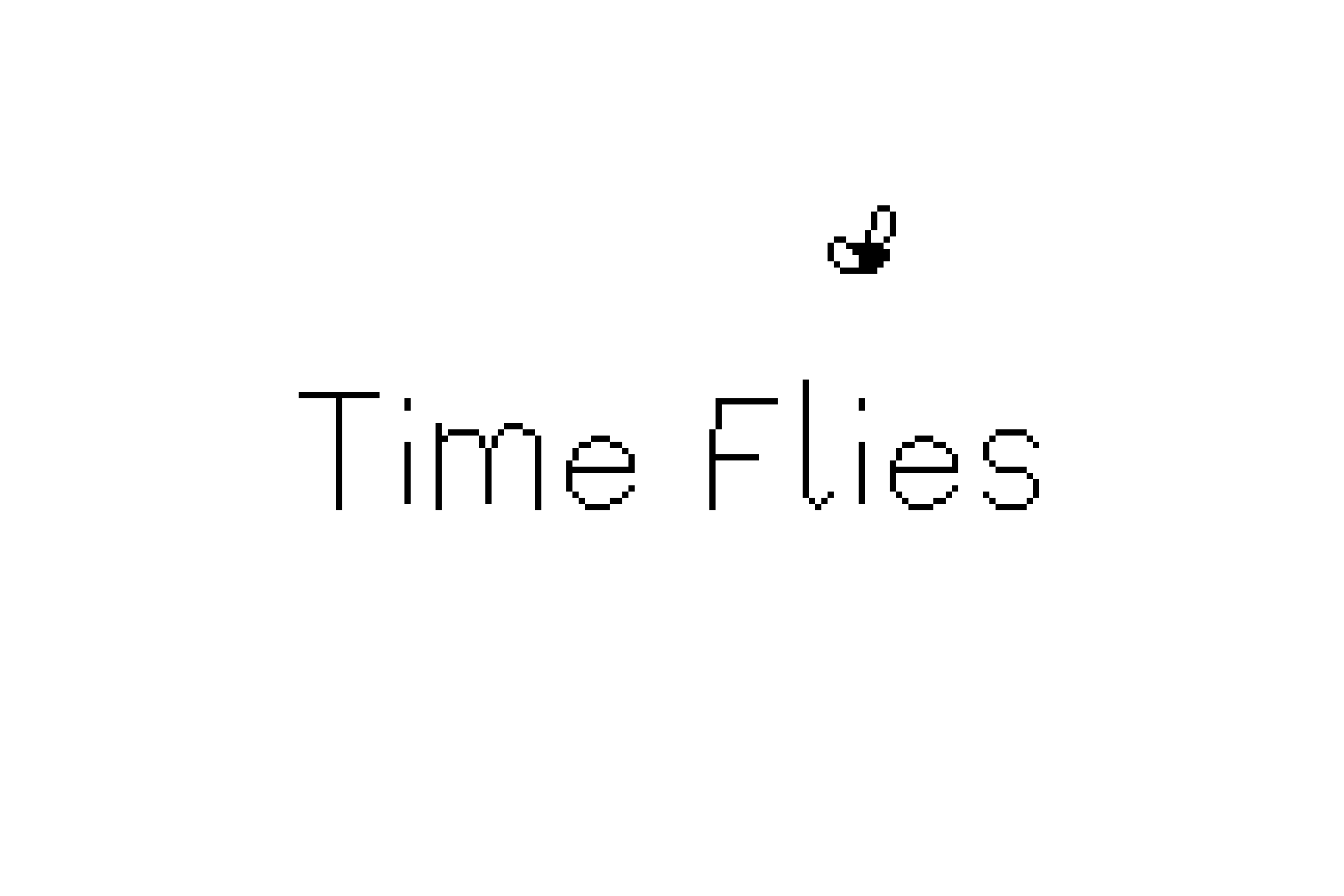
Time Flies comes from Playables, a production company with a focus on what they describe as “playful interactive projects” (and I do think this intentional distinction from games is important) and is published by Panic. Panic, of course, behind the Playdate, but also a surprisingly large slate of games in 2025 including Despelote, a game I consider interestingly boring (and one of their 2024 releases, Thank Goodness You’re Here!, was absolutely my game of that year.) In Time Flies, you play a fly who, in its short time on earth, has a “bucket list” to cross off, and so you fly about a side-scrolling black-and-white 2D world attempt to do all the things on the list (things like “get drunk” or “read a book”) before you die.
The trick is that the fly’s lifespan is the length of time you have per attempt, and that lifespan is based on the average lifespan in the country you are playing the game from, with years as seconds. So, for example, in Canada I got a whopping 81.6 seconds per attempt; in other countries it could be significantly less. I’ll talk about this aspect of the game in a moment–feel free to count it in seconds–but mechanically, at least, it simply means that you have a handful of seconds to do everything, and if you don’t do all the things in one life, you simply start again with another fly.
There are a few points of comparison here, play-wise, none of which quite fit. There’s Minit, of course, where you’ve got a minute to complete a quest (and which is also in a striking black and white) but as you keep your inventory, it’s more incremental. There’s actually Thank Goodness You’re Here, where you similarly interact with a world in a limited way to make funny things happen–though that’s more narratively driven. And then there’s the original Glider for Mac, which is probably the first thing old bastards like me will think of, and I think the most likely to be an actual source of inspiration; but that’s far more of an action game (although you do “collect clocks” in both games. Sort of.)
Really, even with the tension of having to do everything in a single life giving Time Flies the air of a “speedrun” game, it is much more a continuation of Playables “playful interactive projects.” Yes, the fly can die if you do something like stick it on some flypaper (come on man, have some sense) but the fly is in many ways just a cursor that you’re using to make funny things happen. So, for example, you push two statues together and they kiss. That’s amusing. Or you fly back and forth over some guitar strings and it makes some noise, counting as “learning an instrument”, and you can do it for as long as you like (longer than you need to, usually.)

This is… enjoyable! And it very much does not outstay its welcome. You get four levels with a selection of things to do, and just enough play in it that you have fun flying around, doing the things, then working out the racing line to do them in one life. It’s not boring, or too difficult, and moving the fly around feels good.
But it’s also the kind of thing that doesn’t stick with you at all. At the end of the game, all those memories flash by in the fly’s mind, all these things lost, like tears in rain, and… yeah. I did some silly stuff for a while and now it’s done.
Now, to be fair, not everything as to be dripping in meaning, but Frei did describe the game to Stephen Totilo as a game about “the finiteness of our existence and what to do with it, with the time we have.”
I think the use of real World Health Organization data for your lifespan is interesting–I like that it forces the majority of the assumed audience to, quickly, face up to the idea that by simply living in a Western country they get to experience more time to do more silly things. And it may simply be that, possibly, I’m just somewhat nihilist; I’ve lived long enough now to know how much I’ve already forgotten that felt so important to me at one point, so I’m not sure anything matters than the moment. It’s possible this could hit you in some way that is deeply profound.
But I had an enjoyable 70 minutes and that’s, you know… it. And it really puts the game in a weird position for me where I basically recommend it–it’s fun, funny and I liked it–but I still feel kind of indifferent.
Will I ever play it again? There’s only so much time on earth… I feel like something I played recently taught me that…
Final Thought: One thing to be said is that I really appreciate Totilo talking to the developers about it and focusing on the life expectancy angle; the team’s decision to include Palestine is meaningful, even if they are using out of date statistics and most players will never notice it.

Developed/Published by: Cinemaware
Released: 11/1986
Completed: 22/01/2026
Completion: Finished it by conquering the invaders, but remained unmarried…
Defender Of The Crown is a game I’ve been eager to play, and I had a reason to boot it up a bit earlier than I intended, so I jumped at the chance. But of course, a problem immediately reared its head.
Which version to play?
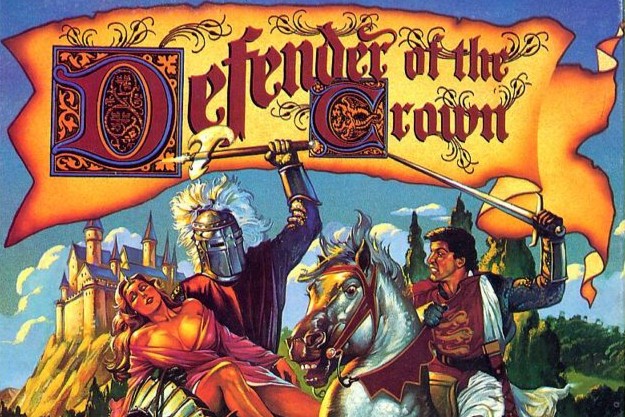
The game is famous, really, as an Amiga game. If you’re not familiar with the story, video game agent Bob Jacobs saw a prototype Amiga in action, realised that the system provided a huge leap in the potential for video games, and went into business as Cinemaware1, with the explicit intention to create not merely Hollywood-inspired but Hollywood quality video games by (generally) making the graphics really fucking good. The first game to come from this was the Errol Flynn swashbuckler-inspired Defender Of the Crown.
As an “Amiga first” project, you think it would be easy to choose that version to play (after all, when I played through Pirates, I decided to play the C64 version, as it is Sid Meier’s preferred version.) But the Amiga version is not generally considered the best version to actually play because of its somewhat tortured development: originally intended to be developed by Sculptured Software, Cinemaware attempting a more “Hollywood” process than keeping everything in house, Sculptured ended up so behind on schedule–indeed, seemingly with nothing useful–that the game was handed off to a previous acquaintance, R.J. Mical, to crunch until the game was in a state it could be released.
(As usual, you can read all about this on The Digital Antiquarian. The guy’s a legend.)
Something I’ve always wondered about Cinemaware’s early releases is just how arbitrary their release dates were. It particularly stands out with Defender Of The Crown, the Amiga version of which–and I can speak from experience, now–is slight to the point of being unfinished, with apparently weeks of work from the artist, Jim Sachs, going unused. Considering the game would be improved for basically every other release, Jacobs couldn’t have let them spend a little more time on it?
That all said, no one can exactly agree which version of Defender Of The Crown to play. The Amiga version is the best looking, but the Atari ST version is somewhat close visually; versions on the Mac, PC, NES, even the humble CPC and C64 get design improvements. I was originally of a mind to play the Atari ST version, but I discovered that there’s a Defender Of The Crown II on CD32 that is, apparently, not a sequel but kind of an “ultimate” version of this era’s Defender Of The Crown, so I thought… well, I probably want to play that. And if I’m going to play that, I might as well just play the very original version so one day I can compare and contrast. After all, the whole selling point of the game originally was those graphics, so no point being short-changed there!
(As my mother would say, what a roundabout road for a shortcut.)
Now, I have played Defender Of The Crown before, briefly. My main memory of it was not quite getting the game’s mix of Risk-style strategy and simple mini-games, but thinking that when I had time I’d be able to dig into it properly, imagining it was, you know, a proper wargame.
Playing it this time round? I learned within, hmm, an hour? that while the game initially seems challenging, there’s absolutely nothing going on. No strategic depth. No “play” in the mini-games, each solvable if you can just practice them enough. If you restart the game a few times after learning the mini-games, you will essentially become unstoppable, meaning you can rinse what was once an expensive, system-selling game in an afternoon. The emperor–or I suppose, the crown defender–has no clothes on.
But dang does his body look good, am I right? As I said, it was the selling point, and playing it, you get it immediately. What you very quickly realise however is that those graphics quickly become a hindrance, because every time one of those big, gorgeous splash screens appear, you have to sit through the Amiga loading them off a floppy disk. Which is, and I always forget this for some reason, not fast. There’s a lot of waiting around so you can see a picture you’ve seen many times before (thank goodness, to be honest, that you can be done with the game so quickly.)

But that all said, what actually is the game?
Set at the time of Norman conquest (but in an extremely “made it up as we went along” anachronistic fashion) Defender Of The Crown starts with Robin Hood letting you know that the king has been assassinated, the crown lost, and the kingdom in chaos, so it’s up to you (yes, you) to sort it out.
You start by picking a Saxon hero–each of whom have different stats in leadership, jousting and swordplay, although this matters less than you’d think and the stats for one of these characters are even wrong on the selection screen–before you’re dropped onto a map of medieval England where you, two other Saxons and three invading Normans hold one castle and territory each. On each turn you have some options: to grow your army by buying soldiers, knights and catapults; to conquer territory or raid enemy castles; or to hold tournaments where you can joust for land or honour. On each turn, your opponents make the same moves (one thing I’ll say for Defender Of The Crown: it does seem to play completely fair.)
This is pretty basic, so as well as being dressed up with the graphics, it’s also dressed up with a range of mini-games. Something fascinating about Defender Of The Crown is that it’s, at least in its Amiga incarnation, completely mouse-based. This has a bit of cost in that in none of the games is the feedback that great, which is probably the reason that, for example, the jousting section is so infamous.

As befits it, it’s definitely got the most pomp and circumstance, and also seems to have the most confusion about it online. There’s a lot of discussion about when you need to hit the button to strike your opponent in a joust, or whatever, but if you just play it a bunch of times in a row you’ll eventually get it: at least on the Amiga, you don’t have to press anything at all, and the trick is knowing that you collide on the “upswing” so you just have to make sure that your lance is aimed at the center of your opponent’s shield at the peak of its bobbing movement. Once you know that you literally can’t lose, and it’s actually one of the quickest ways to win the game, because you can as of the second turn just joust the Normans to immediately take any of their land gains off of them and (probably) make a clear path to their castles all for the cost of some loading time and counting the amount of times you’ve bounced up and down on a horse (it’s seven, you hit them after seven. Spoilers, I guess.)

Once you’ve bought some catapults–each piece of land you have pays upkeep that allows you to buy units–you can attack castles, which is similarly simple to work out. You have to knock down the castle wall with a limited amount of ammo; each shot’s height is selected by “pulling” (placing your mouse) to a certain position, and it requires adjustment after each shot to make sure you’re still hitting the wall. It’s a little harder to practice this one–you have to have a castle to attack–but once you work out the first shot, you basically just have to move your mouse a few pixels up when needed and you’ve got more than enough ammo to make a few mistakes.

I wish I could be as smug about the last mini-game, but sadly, I can’t. A castle raid mini-game is triggered either by choosing to raid a castle to steal gold (don’t bother, it’s not worth it) or, occasionally, when you are notified that a comely Saxon lady has been kidnapped by the dastardly Normans and needs rescued (which, amusingly, you can turn down doing.)
This game is… awful. It’s an attempt at a side-scrolling sword-fighting game, but we’re in late 1986 so it’s not like it’s never been done before, and even being hamstrung by only being able to use the mouse is no excuse. You hold the cursor in front of your hero to move them forward, behind to move them back, and you click the mouse to attack with your rapier, with the idea being you and your companions will fight the guards until you make your way to the lady’s chamber.
I can really imagine what Jacobs pitched here: one of those amazing old swashbuckling scenes where the hero, like, swings in on a banner and then fights the enemy on a banquet table, all feints and parries. Instead what you get is this weird shuffling back and forth, hitting the mouse button constantly with absolutely no sense you’re doing… anything. As the only reward for doing this is a wife, it’s really not worth learning (am I right fellas? Take my wife, please? I wouldn’t even go and get her in the first place, etc.)
Of course, I do say that as a grown man who has seen a boob or two, but I do think if I’d been playing this contemporaneously as a kid I’d have probably gone to the effort, as the real reward is a chaste love scene between your hero and the rescued lady that I’m sure set teenage loins afire (the shadows do have some unintentional, uh, implications.)

Thankfully on my winning run I got everything sorted in England so quickly the Saxons didn’t have time to kidnap anyone (hmm, I didn’t get married in Pirates! either. I’ll need to get married in something soon otherwise people will start to talk.)
The “real” game of Defender Of The Crown is actually the Risk-style strategy game. Now I’m an absolute Risk hater–random, unfair, takes fucking forever–and Defender Of The Crown is only really preferable that you’re not going to fall out with any mates over it because you can only play it single player. The game boils down to just making your campaign army as big as possible and steamrollering opponents. Every turn, send your army home, buy more soldiers (you don’t seem to really need knights) and then smash whoever gets in your way. The game even gives you a wee bit of help in that three times you can ask Robin Hood for help (he bolsters your army a wee bit) and there’s three Norman castles, so it’s pretty obvious when to use them.

Because of the game’s design–more land means more money, more money means a bigger army–there’s really no “play” in it. If you start the game knowing what to do–grab land, win tournaments, build your army every turn, attack castles while the Norman campaign armies are in other regions–you win. It really makes this game’s smashing success seem absolutely bizarre.
But I’ll be kind to Defender Of The Crown and say that, well, most players at the time weren’t going out of their way to min-max the experience. I’m sure most players who got this played obviously losing campaigns to the bitter end; I’m sure many people never worked out jousting and found it exciting and risky. At a certain point I’m sure they found a winning, repeatable path (you really do just get the biggest army) but the game, simple as it is, will have worked until then–a generator of minor player stories as they remembered great victories and losses.
The funny thing is, it’s so uncinematic. For a company that was literally called Cinemaware, it’s strange that their games are so gamey. You would assume that a Errol Flynn-inspired swashbuckler would have started with a story, a script; a blend of cut-scenes and action scenes in order. In many ways I’d imagine the design would be more like the movie licenses released by Ocean later in the 80s and 90s–half-assed mini games with a cinematic connective tissue, and it would have probably been easier to make, less wasteful, and just as successful.
Because the hero of Defender Of The Crown is undoubtedly artist Jim Sachs. Games–even in arcades, really–in this era simply didn’t look this good, so I do understand why this was mind-blowing to anyone who brought it home for their unbelievably expensive Amiga 1000 (the 500 wouldn’t show up until 1987.)
Truly, even though I don’t think Defender Of The Crown is good (at all) Sach’s art is so beautiful and full of life that even now I think “might be nice to play Defender Of The Crown.”
That’s insane!!!
Will I ever play it again? Obviously, the thing to do is to play Defender Of The Crown II which, in a stunning plot twist, was developed entirely by Sachs!
Final Thought: Of course, now I’m thinking about how that compares to the later, more fully featured but “official” Cinemaware versions of Defender Of The Crown, which doesn’t even include the second incarnation of Cinemaware in the 2000s which put out a remaster, a PS2 version, a GBA version… like maybe I should play the Atari ST version after all, just to get the full picture??? Gnngh.

Developed/Published by: AP Thompson
Released: 02/02/2018
Completed: 12/01/2026
Completion: Finished it!
I was looking to stretch my legs during a deep dive on some other games for research recently, and when the IGF Award shortlist was announced there was an avalanche of people in my feed expressing excitement that they could finally say how good AP Thompson’s upcoming Titanium Court was. So I took a quick look, saw that Thompson had previously made the game Fortune-499 which at least looked visually similar, and thought “why not!”
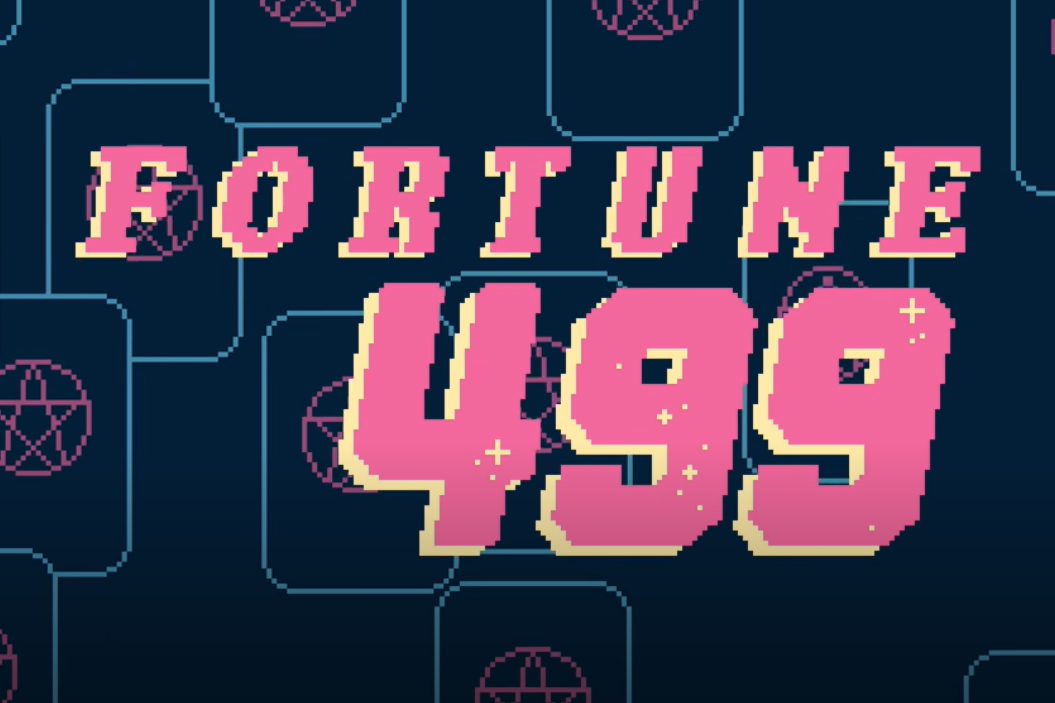
Fortune-499 is styled as a JRPG, but it has a really beautiful mechanic, one that I think–because it sounds complex, but has to play out simple–would be very easy to fuck up completely. It’s a rock paper scissors prediction deckbuilder. In each JRPG-style battle, you hit your opponent if you win rock paper scissors; you get hit if you lose, and you both take damage if you throw the same. Now, as we know from Alex Kidd, rock paper scissors is an absolutely rubbish, frustrating mechanic in a video game, but Fortune-499 fixes it completely by giving you a fortune telling deck. Before each hand you can draw up to four cards which “reveal” (well, affect the probability of) which hand your opponent is most likely to throw. So if you draw paper +4, you can be pretty confident they’ll throw paper, so throw scissors. As you play the game, you can shred cards in your deck and power up cards, so you could, for example, have a deck that’s got nothing but strong rock cards in it, meaning that you can always throw paper, because it’s extremely unlikely your opponents will ever throw anything else.
I love this design. It’s so elegant. But it’s also, I think, a little limited, which Thompson has had to work around. The game is played across a series of in-game days (which basically work as a series of dungeon levels) and after each day your deck resets, because otherwise you’d quickly build an unstoppable deck. There are also a few more mechanics layered on, which muddy things up a bit: you have magic points, and can cast spells, and stick cards aside to replay them, allowing you to break the game a bit by spamming a mana card repeatedly.
I think these design decisions are included because Thompson–probably correctly–felt that the base design didn’t really have enough challenge or variety to sustain something like a roguelike deckbuilder1 and Fortune-499 does put me in mind of Dicey Dungeons, because it similarly is less interested in letting you play out a power growth fantasy than making you solve puzzles built around the game mechanics.
The issue I have with this in Fortune-499, unfortunately, is that the puzzles are usually… annoyingly fiddly. Fortune-499 doesn’t have manual saving and on certain levels punishes you for dying by charging you to retry (boo!) but it asks you often to move around the level to trigger certain things or change your deck and spells in pretty specific ways to defeat certain enemies, and you can… just get it wrong and not really understand why. I’ll admit, I spent far too long on an early-ish puzzle that required me defeat a group of enemies at once that should have been quite obvious and easy because I hadn’t noticed something important2 and a later puzzle, that required you shaping your deck to defeat an enemy in one turn… phew (at least that one let you restart the level for free.)
It’s just a little, you know… clunky, and never quite as rewarding as you’d hope (there’s some player-hostile moves too, like a section that lets you shape your deck in preparation for a battle that doesn’t come. I get the joke, but it’s annoying!)
Narratively, too, Fortune-499 is… fine? You play a depressed, cursed witch stuck in a dead-end office job who finds their workplace infested with demons, and it largely goes the way you kind of expect it to go. Like many people these days, I’d probably fucking kill myself for a dead-end office job with any sort of salary, so that aspect is a fucking lead banana in 2026, but there are parts that work: I loved an entire section where a wizard co-worker is summoned to “help” on clearing out the demons but ignores your pre-existing knowledge, eventually cutting you out completely (when he fights an enemy that he doesn’t have to fight, and it takes forever… now that’s a player-hostile joke that works.) That thread wraps up a little too neatly, I guess, but nothing else pops quite as much–though I like that the game works its way to a conclusion both narratively and mechanically. It’s not quite as breathtaking as the conclusion of, say, Crisis Core: Final Fantasy VII, but what is?
As is sometimes the case, Fortune-499 is the unfortunate recipient of… faint praise. I love the mechanic, I found it generally pleasant enough for the three and a half hours it took, but the moments of frustration just held it back enough to get a “well, if this sounds good to you, play it, but if it doesn’t, don’t.” Dang!
Will I ever play it again? Nope!
Final Thought: Having said all this, the good aspects of Fortune-499 make me genuinely excited to play Titanium Court. Hopefully soon!

Developed/Published by: Blendo Games
Released: 20/08/2012
Completed: 18/09/2025
Completion: Finished it.
Thirty Flights Of Loving has loomed large in my mind for, uh, thirteen years, because I added it to my Steam wishlist and then promptly just never picked it up. An absolutely insane situation considering the game, at fifteen minutes long, is actually shorter than Gravity Bone which preceded it. I mean I waited nearly a year per minute. Well, I’ve played it now.
Thirty Flights Of Loving, compared to Gravity Bone, is a bit more of a challenge. If Gravity Bone took what you expected about a first person game and then twisted it, Thirty Flights of Loving doesn’t even give you the grace of letting you settle in before twisting. I mean, it’s pre-twisted is what I’m saying. You open the bag that says “bagel” on it and there’s a goddamned pretzel in there.
(I suppose in this metaphor, with Gravity Bone you’d start eating a bagel and then it would suddenly twist in front of your eyes into a pretzel? Creepy. I don’t like this metaphor any more!!!)
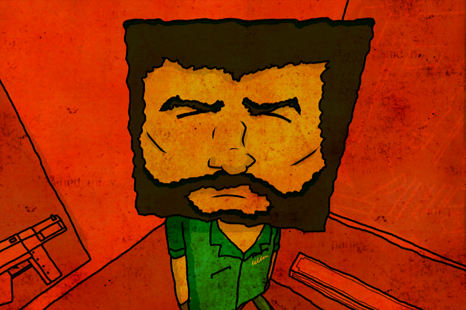
Thirty Flights Of Loving is ultimately an exploration of the idea: can you do cinematic cuts in a video game? Telling, vaguely and non-linearly, the story of doomed love and a heist gone bad, the game cuts intentionally and cleverly to remove the thing you just don’t remove from video games–the “dead space” between incident. It’s shocking, actually, to head down a corridor and suddenly find yourself, well, in a new room, because the trip down the corridor adds nothing narratively.
This is a decision that few games I know of have made outside of–of course–their cut-scenes, and I think it raises really interesting questions about the value of what we do in games. I’ve written at crushing length about the difficult path games try to walk–narrative, but play–and I suppose the disappointing thing about Thirty Flights Of Loving is that it has interaction but no “play”, where I feel like the theory–we could have cinematic cuts in games–can only be proven by giving me actual play and “cutting” when I’m not doing anything that’s actively in aid of that. After the firefight, cut to the exterior, don’t make the player navigate there–but never take the control away from the player. Just cut.
I think for many, the potential flaw here is obvious–it’s discombobulating. I mentioned above that the cuts are shocking, which in many ways is surprising, because cuts in cinema are, famously, not shocking (proven scientifically.) Is is simply that “flow”, that hugely important state to the interactive art is broken by a cut?
Or does Thirty Flights Of Loving’s use of only scene cuts–keeping action continuous elsewhere–create more discontinuity when paired with its mysterious narrative? Could a game with even heavier use of cuts–cuts within scenes and cuts between scenes–work better? What would that even look like?
I’m not sure, but it’ll probably take a game longer than fifteen minutes to work it out. Thirty Flights Of Loving does a lot with its time, managing some moments of beauty and ending with a recognisable longing. I might go so far as to say a saudade. Maybe Thirty Flights Of Loving doesn’t answer any questions, but the ones it leaves you with are worth thinking about.
Will I ever play it again? I’ll wait another thirteen years and see how I feel.
Final Thought: I’d be remiss not to point out something else cinematic about Thirty Flights Of Loving that really stands out–the superb score by Chris Remo. It’s a huge factor in the game’s feel.
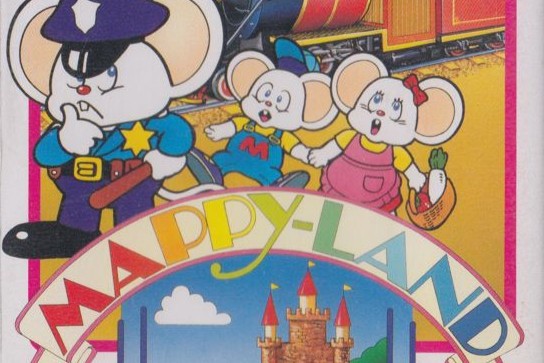

Developed/Published by: Tose / Namco
Released: 26/11/1986
Completed: 14/09/2025
Completion: Finished it. Save state at the start of every level.
As we all know, ACAB includes Mappy, but I’m a bit unclear on his status with the police force in Mappy-Land. He’s got his rozzer clobber on on the cover, but when you actually play the game, he’s noticeably not got his policeman’s hat on, something he was still wearing in Mappy’s arcade sequel, Hopping Mappy (which came out in early 1986). So we could suppose, like we’re the Supper Mario Broth account but for Mappy, that at some point in 1986 Mappy did something to get himself thrown off the force. Or maybe being transferred to the pogo cop division was an attempt to get him to quit, because he’s actually a tiny mouse Serpico.
Or more likely, he just doesn’t wear his police hat while on holiday. Mappy-Land, I suspect, is Namco–or possibly Tose, who were tasked with developing this–trying to compete with (of course) Super Mario Bros., and looking at the success of Tokyo Disneyland, which had only been open for three years by this point, and going “oh, we have a wee mouse mascot, can we do anything with that?”
It’s not exactly a 1:1 copy or anything, but I find something very suspicious about Mappy’s redesigned sprite, with those big round ears. There’s also his new girlfriend with a strangely similar name (Mapico, in Japanese “マピ子”, “Mappygirl”). And he’s adventuring across a “land” which features levels that include, pretty transparently, analogues to Adventureland, Westernland… you go up a “main street” and end up in front of a fairytale castle!
I mean, case-closed. Though a bit like Mappy–where you play a mouse defending a house that’s full of trampolines–the narrative is a bit confused. It would make sense to say Mappy’s on holiday at Mappy-Land (convenient for him!) and then the Meowkies have shown up to create havoc that he has to solve–you know, sort of a Die Hard thing, Mappy our John McClane, he’s forgot his hat instead of his shoes, etc.–but actually the game tells the story of Mappy’s courtship with Mapico, where he first has to collect cheese across Mappy-Land as a gift (women, what are they like, always demanding cheese, etc. etc.) Then he has to collect rings in order to marry Mapico, who apparently feels forty-eight rings is the required amount for an engagement. Then it’s tiny Christmas trees for I assume their first Christmas together (again, forty-eight seems… extravagant, unless they’re planning on running a Christmas tree outlet). Finally, in a twist, you’re collecting baseballs… because many years have passed and you’re actually collecting them for your son!!! That’s right Mappy Jr. appears, and maybe it’s one of those situations where his little league is in danger of being cancelled because they don’t have enough baseballs, and Mappy just loves his son enough to, uh, steal them from an international theme park?
I mean what is Mappy really doing here? Look, it’s nice to see a policeman whose interaction with his wife and child isn’t solely beating them, but it’s almost like the tables have turned–he’s here ripping the trees out of a theme park and if anything the Meowkies are trying to stop him.
Anyway, none of this actually slightly matters, because it’s all just background to the game, that no one involved in the making of thought even slightly as hard about as I just have. And, to be honest, they probably didn’t think about the game as hard as I have either. As I said above, this is clearly an attempt to Mappyise Super Mario Bros. so Namco can get in on the action, but it’s strange how they went about it. Even as early as this companies were working you just slam your IP into a left-to-right platformer with some vague design signifiers and call it a day (even Jaleco understood this with JaJaMaru No Daibouken.) Tose and Namco go a different route where they’ve decided to keep as much of Mappy’s DNA as possible. It would have been easy, I think, to just do Super Mario Bros. with more of a focus on trampolines, but instead the core here is very much what Mappy was: collect things while being relentlessly hounded by the Meowkies.
What’s interesting, however, is what they’ve changed. Doors are completely gone, instead there are stage-specific counter attacks. Mappy gets a short hop, that allows him to (shockingly) jump over enemies if you’ve got extremely good timing. And you can collect items, up to fifteen, which you can drop to distract Meowkies–for example cat toys that they dance around and become harmless for a while, or coins that the head Meowkie, Goro, is specifically attracted to.
And then there are levels that break the system completely out of nowhere. The jungle stage instead features you jumping off moving trampolines to catch vines and avoid parrots (which is all a bit Donkey Kong Jr., weirdly) and then the spooky stage has you flying around with a balloon, shooting microwaves at ghosts and collecting keys.
Things get even more complicated because not every level finishes the same way either. Generally you’re just trying to collect everything and then run off to the right–a weak sop to being inspired by Super Mario Bros.–but many times you have to do things like find a secret entrance on the level to then play another level where you have to collect an item. So on the spooky stage you either have to collect a cross in the church to scare off vampire Goro at the exit, or enter the haunted mansion (full of warp doors!) to find an alternative exit to the level (vampire Goro just hangs out in the middle of the mansion, which feels… sort of unfinished, to be honest.)
Mappy-Land is… odd. It’s ambitious, adding probably too much to the core Mappy design, but it’s just wrong-headed in trying to do that, because the core can’t support the weight of everything that’s been added. Mappy was always a bit of a clumsy, seat-of-the-pants arcade game for me, but Mappy-Land quickly requires absolute precision and a dedication to a racing line and it doesn’t feel good at all. Maybe it’s just poor programming–sorry Tose–but the game has an infuriating number of collision edge-cases particularly with trampolines, and it makes the jungle levels especially complete bullshit as you hop on a trampoline and sort of vibrate off to your death, or fall onto one and miss it despite visually colliding with the edge. And idiosyncrasies from Mappy here make less sense. If you fall any distance onto a hard surface, you die. Unless you’ve been thrown in the air by a trampoline. So you have absurd situations where you drop down about three pixels and die, but you can fall from the top of the screen onto a hard surface if you’ve bounced off a trampoline? It’s hard to remember this in the heat of the moment, and by the third set of levels, the game intentionally uses it all against you, as you have to learn levels first before you can expect to complete them due to all the dead ends and death drops you can end up caught out by–the items help, but you really need to know how to use them and you use them in order of pickup, so you might have the exact opposite one you need to use at the wrong moment.
Ultimately, I treated Mappy-Land as a puzzle the way, say, the original Pac-Man is–what’s the exact route you can use and recreate consistently to beat a level? Doing so I wouldn’t have had that bad a time if it wasn’t for the horrible collisions, and some later levels absolutely take the piss anyway–there’s an entire level where you can’t see where the platforms are!
After playing something like Castlevania, Mappy-Land just looks sort of crappy [“Crappy-Land, more like”–Ed.] I get what they’re going for–big, bright, childish graphics–but it does nothing to change my mind that in this era Namco is being left behind in a big way on Famicom after Xevious: GAMP No Nazo. This is… I mean, it’s ok. But if you want to play Mappy, you should probably play Mappy and enjoy it as a wee high score challenge, because this is less good as a high score challenge and actively not something you want to play through as an adventure.
Will I ever play it again? I shall not.
Final Thought: Worth noting that I played the Namco Museum Archives version of this, and, weirdly, despite the fact that the game was never included in the Namcot Collection, it’s the Famicom ROM, not the NES ROM that is included. The NES version includes a continue and stage select and even a “remaining items count” (absolutely necessary–something I forgot to mention is the game doesn’t make it clear when the stage exit is open or not–or even where the stage exit even is sometimes). That’s the version you can play on the Nintendo Switch Online service, but you probably shouldn’t bother either way.



Unfair Flips (Flowers, 2025)
Developed/Published by: Heather Flowers
Released: 25/09/2025
Completed: 17/11/2025
Completion: Nine heads with an unlikely 40% chance and then the coin landed on its side. I’m taking it.
Q-UP (Everybody House Games, 2025)
Developed/Published by: Everybody House Games
Released: 5/11/2025
Completed: 20/11/2025
Completion: Finished it with the Medic.
Oh, I didn’t think I’d do another one of these joint essays again so soon. However, with there being two games about flipping coins released within a couple of months of each it does feel like I’d just be repeating myself if I wrote two different articles, so here we are.
I did a jokey question on The Insert Credit Podcast about this: “Why is coin flipping so hot right now?” despite the fact that I feel like I know the answer: it’s our old friend simultaneous discovery. Yes, I may be an agnostic, but I also apparently believe that ideas float around in the sky and fall into multiple people’s heads at the same time. And it’s more people than actually act on it too, which explains how I invented nasal strips sometime in the late 80s as a child who suffered stuffiness far too often (should have made a bigger deal of it even though my prototype—sellotape and a broken toothpick—wasn’t that great.)
The more obvious answer, you’d think, would be Australian streamer/comedy man Tom Walker, who I best know for being on best TV show Guy Montgomery’s Guy Mont Spelling Bee, but I first heard of for playing GTA IV with all the cars set to 9999% speed. However before that, at the very start of 2024, he did a coin flipping stream, where he attempted to flip a coin heads ten times in a row, but every time he flipped ten tails in a row, he’d add an extra heads (meaning he’d have to flip eleven, or twelve…) This took over eight hours, and while there might have been other coin flipping streams before or since (he actually does joke during the stream that it’s “Mr. Beast shit”) it’s the one that seemed to stick in people’s imagination. But, and it’s an important but, Unfair Flips and Q-UP are not really about the coin flips.
In Unfair Flips, you’re trying to flip a coin heads ten times in a row, but the game fucks with the odds in an explicitly video gamey way. The focus of Unfair Flips is probability, and a player’s ability to understand it.
In Q-UP, however, you’re not going for an unlikely number of heads in a row–you’re playing “best of three” flips against opponents. The focus of Q-UP is the idea that in a perfectly matched ranking system–where you’d always play an opponent with equal skill level to yourself–you’d have a 50% chance of winning, so you might as well just flip a coin and skip all that playing the game.
When I describe it like that, you’d think “alright, well, those are both really different concepts to explore, and both games explore them in really different ways. Why if they didn’t both feature coin flipping, there’d be no reason to pair them. In fact, maybe there isn’t!”
But underlying thing that both games are exploring is twofold. One: the ways in which people do or do not trust computers, and two: that game design was broken to combat that, and in doing so a precedent was set that has allowed bad actors to create not “fun games for us to play”, but “products that dole out enough reward on a regular enough schedule to keep us chained to them.”
[“Fucking Christ. Is this another article about how capitalism is to blame for everything?–Ed.] I promise it isn’t. Well, maybe a little.

Something that’s really stood out to me about Unfair Flips–or rather, the discourse around it, which I’m well aware I’m massively behind–is how often people said it was a game about “how bad gamers were at understanding probability.”
This is generally put down to “fake RNG [random number generation]” aka “bad luck protection” where if you fail on a 10% chance the next time it might be an 11% chance (or more!) while still telling you it’s a 10% chance to try and make sure you eventually get the endorphins you so richly deserve. My position is that, well, people who play games are not actually bad at understanding probability! The industry is invested in making them not actually engage with it!
Criticise me for supposition and anecdotal evidence here if you like, but people who play video games, “gamers” if you absolutely must, often play tabletop RPGs and board and card games, and something about those is that you cannot massage the odds progressively1. Anyone who has played anything from Candy Land up is aware of the experience of hitting one after one or hitting the exact roll required for the worst outcome despite long odds, and card game players are especially in tune with the uneven way your odds can play out: I played Netrunner competitively for years, and there’s not a player of that who doesn’t understand that if you put three copies of a card in your 44 card deck, and then riffle shuffle enough to get “perfect” randomness (seven shuffles, isn’t it?) you’ll still play far more games than you like where you’re not going to draw one of those cards in the first 15 draws and instead find them all clumped at the bottom.
Indeed, there are entire games where the reality of RNG is what makes them legendary. In Blood Bowl, a couple of bad rolls can destroy months if not years of work, and the game is almost entirely about trying to make sure you never do anything where you haven’t stacked the odds in your favour as much as possible, and you still have to expect it to go wrong. And people love it for the incredible highs and incredible lows.
Blood Bowl is a great example, though. In video game form the game uses “real” RNG, and yet there are many players who jump online to complain that the rolls are “rigged” in some way despite there being no evidence (their evidence, of course, generally relaying to them not hitting within some range of probability with what they think is some excessive amount of logged rolls.)
In a video game, we are not touching the dice; we are not shuffling the cards. We’re not touching anything real, so we don’t trust it. Every game we play with a computer is like visiting the casino, but the croupier is behind a curtain and he just yells out “no, sorry, you lost. Try again?” every time. We’re already seeing an illusion, so why should we trust anything about it? I’m struck by the comparison to the conclusion from that 4 hour Defunctland video a while back everyone was wild about (it is very good): visitors to theme parks get bored, and quickly, with fully computerised characters because they don’t feel real. That there’s this seeming paradoxical aspect that you prefer a Mickey where you know there’s a guy in a suit because it’s the knowledge that there’s a fourth wall that allows you to stand on the other side of it. You can trust the parameters of the experience and understand the limits the way you can’t with a robot.
So I really don’t believe people are naturally bad at understanding probabilities. And I do believe that “bad luck protection” was made with a genuine attempt to give the player an edge over the house not to fix the odds but repair trust. It’s a real “note under the note” fix, so elegant I’m sure even people implementing it don’t see what the real issue is.
The problem, of course, is that messing with odds in a way that players don’t understand presents an absolutely huge opportunity to fuck with a player’s brain chemistry to keep them playing. If you can take a player from “I don’t trust the machine’s odds” to “I am guaranteed to hit once every ten times because it says so” by repeatedly giving them slanted odds, it means you can give players the kind of shitey unfair odds that appear in gatcha games–1% chance or far worse –and they’ll keep playing or spending thinking they’re not really gambling at all.
This is where Unfair Flips steps in. Unfair Flips starts you with a 20% chance, makes explicit that this is the real odds, and things are so boiled down to one probability, and you flip the coin so many times that you actually cannot help but see the croupier behind the curtain is (for once) playing you straight. Tails. Tails. Tails. It’s doing it, alright. Tails. Tails. Tails. By jove, it’s doing it.
They then tie this to the exact kind of levelling system that is (if you allow the pun) the other side of the engagement coin: slowly doled out improvement that keeps you playing. Not just the hit of the “unlikely” wins, but the guaranteed hit, with enough time, of seeing a number go up.
There really isn’t anything more to Unfair Flips, but that’s what makes it brilliant. It’s a laser sight trained on the basest tricks that game designers play on us, and there’s nowhere to hide from it. You’re not competing to beat a system, you’re not even in a casino. You’re on a treadmill.
The only issue I have with Unfair Flips is in the end it overplays its hand [“Hang on, I thought you said we weren’t in a casino”–Ed.] by making the final flip actually only have a 10% chance of being heads with the others being gag endings. The game has already made its point about the ultimate meaninglessness of the treadmill, it does feel like a theft of something to not just play it out for real. I know it’s called Unfair Flips, but if you understand what some players might go through to get the final heads… I mean, you’ve made your point.

Q-UP is, at heart, an e-sports parody. In body, however, it is very much an escalation-focused incremental game2, designed, as it is, by a team that included Frank Lantz, designer of Universal Paperclips. I wasn’t super hot on Universal Paperclips–as is often the case, I think I was too harsh–but I agree that it does fall prey to the old “alright, I get the idea already!” issue that your, ahem, academic kind of games can have.
Q-UP masks this with an extravagance of mechanics. It’s kind of the joke. If a general player’s experience of an e-sport is that games boil down to a coin flip, then all of the other stuff you’re doing–your character, your loadout of items and abilities–all modify experience rather than outcomes. It’s (immediately) one of the most challenging things about Q-UP compared to the completely transparent nature of Unfair Flips–the game is all obfuscation, and poorly explains things in a way that I have to assume is also a joke (when I tried to play Marvel Rivals when it launched, it felt exactly as baffling) but doesn’t exactly lead to a smooth on-ramp.
We were coming to this metaphor, and I apologise, but these games are two sides of the same coin. Unfair Flips lays bare the trick; Q-UP makes the lie so huge, and so ridiculous, that you see right through it.
It does this by making the coin flips completely meaningless. It doesn’t matter if you trust the computer or not: the game isn’t about the matches, it’s about the metagame. I know this experience. I may have bounced off Marvel Rivals immediately, but I’ve played both Dead By Daylight and Marvel Snap for far longer than I imagined I would (and the latter, in an actively unhealthy way.) In Dead By Daylight the game became more about unlocking things than it was about actually playing it by the end (I think every player of any live service game knows the experience of realising you’re logging in to collect the free currency or daily unlocks for a game you don’t actually have any interest in playing.) In Marvel Snap, it was always about climbing that monthly ladder, and that game was almost as transparent as Q-UP: pretty much every competitive deck had a win/loss ratio that hovered around a coin flip, and climbing was just about putting in the time. Rather than making sure you unlock the right cards, in Q-UP you have to make the numbers bigger, but it’s the same thing: you spend time to climb the ladder. Time is the only real currency.
For what it’s worth: I think players understand this just as well as probability, and just like fake RNG, ranked ladder is the comforting lie that keeps us playing. God knows I played enough games of Marvel Snap aware that eventually the game would feed me a bot where I’d make up all my losses and then some.
The problem with Q-UP merging an incremental with ranked ladder, even if it’s in service of a critique, it does the exact thing that it’s critiquing! Q-UP actually is just the treadmill for, like, eight hours, and it doesn’t really matter if the game is going “ha ha, this is stupid, right?” if you’re locked into the loop. And you can, very easily, get locked into the loop. If you gel with the systems, Q-UP pops as those numbers get ever higher. Q-UP is the kind of game where I don’t think I had a great time playing it–you really are just watching a coin flip and numbers go up–but I couldn’t stop thanks to the next unlocks or the ranking system that forms the game’s core critique.
Q-UP’s problem, ultimately, might be the same as Universal Paperclips–the fact that once the player gets it… what then? In his essay, “Qing-UP in the Age of Tilt” Q-UP’s designer James Lantz discusses a lot of the things I’ve discussed in this essay, but he also makes a point of saying this:
“Q-UP wasn’t built as a commentary on the state of the world. First and foremost, the game is designed to be funny, engaging and addictive.” [My emphasis.]
This is quite apparent in that as much as the gag of Q-UP is laced through every aspect of it, the game is also extremely carefully designed. The live service-style game screens might be ironic, but they present deep and complicated systems that reward you for engaging with them. There are multiple characters with wildly different skill trees and the entire thing builds towards what is meant to be an actually competitive postgame where you’ve built your engine up incrementally with a squad to the point where you’re just making absurd numbers.
I’ll be honest–it was overcomplicated in a way that was beyond my willingness to engage beyond “I get the joke.” I reached a point where I had to look up character builds to understand what I was doing, and… I still didn’t. The character’s skills are placed in a huge matrix that has a trigger order based on placement, if they trigger from heads or tails (and so on) and it’s about two steps beyond rewarding for me, though I know it would be catnip for many. I got to the end with a build that made sense to me, but it was missing triggers left and right, and I really had no way of working out how I would fix it.

Q-UP also has a story (of sorts) to keep you going. It’s jammed away in the game’s email system and it’s… I guess it’s there, but it added so little to the experience I was a bit surprised they bothered. I suppose it’s supposed to be funny, but when the entire experience is sort of a joke, it’s gilding the lily and as with Baby Steps, it just didn’t click with me.
If Unfair Flips is a dagger [“Hang on, I thought you said it was a laser sight”–Ed.] then Q-UP is some sort of a… blunderbuss. It’s still hitting the target, but it’s done it via overwhelming scattershot, and the collateral damage is, in my opinion, too much to bear.
So what’s my conclusion? Unfair Flips and Q-UP are both very, very good at what they’ve chosen to do–one minimalist, one maximalist. They ask the audience to take the reality of the dark patterns of game development on the chin, and I hope–and believe–that both leave players with a lasting insight of things that they probably understood, but had never deeply considered. But if Unfair Flips wants you to learn your lesson, Q-UP seems to want you to keep engaging anyway.
Will I ever play them again? I was done with Unfair Flips so hilariously quickly, I did fancy playing it again. But I learned the lesson! With Q-UP, I really just am not interested in learning any of the other characters. The design is good, but there’s the same emptiness at its heart.
Final Thought: That Q-UP wants you to keep engaging with the systems it critiques is understandable with further context from Lantz’s essay; he makes a point of saying that neither fake RNG or Ranked Ladder are “evil.” It’s getting into something really thorny to discuss the ethics of game design, but let’s here take some shorthand and say that it’s what you do with game design that matters. Frankly, the standpoint this essay comes from is that the design patterns of Unfair Flips and Q-UP are used elsewhere to eat up people’s money, time, and ultimately their happiness, because they exist within the context of late-stage capitalism, and [“Oh for Christ’s sake. I’m cutting this essay off now”–Ed.]