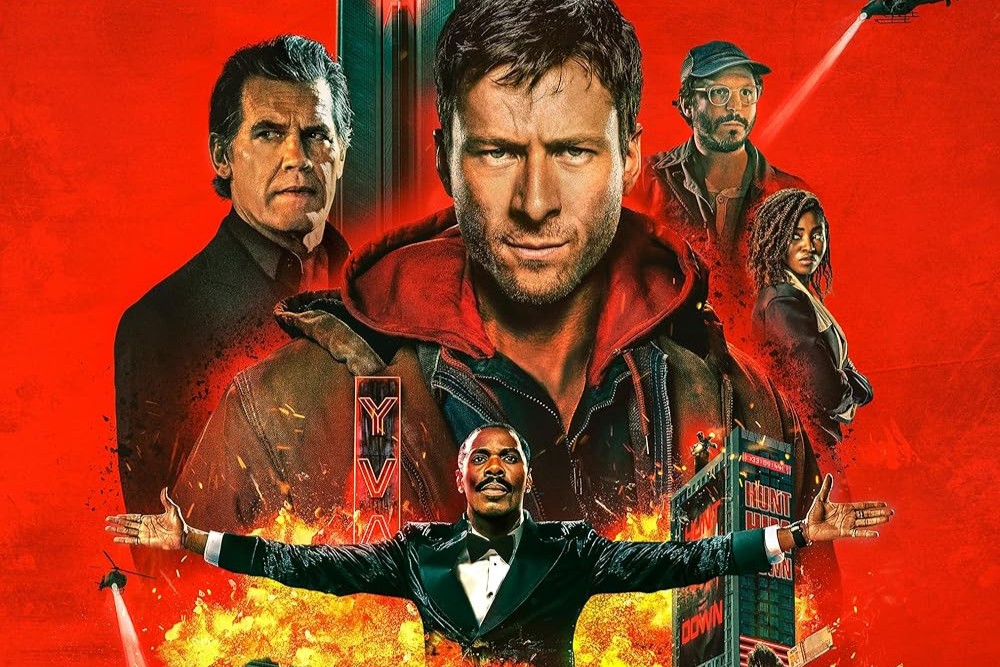
Something I’ll say for The Running Man: usually it’s annoying and pointless when a movie gets remade, but considering the original had almost no relation to Stephen King(“Richard Bachman”)’s novel, I can understand why someone might want to make a more faithful adaptation than the Schwarzenegger vehicle from 1987.
I can understand it, but that doesn’t mean it’s a good idea, and especially not in 2025. Even if The Running Man is completely new to you, in the last decades we’ve had so many variations on the concept, a few of which were legitimate cultural phenomena (The Hunger Games and especially Squid Game.) At this point, The Running Man wasn’t posed to ride the wave but paddle in its trough, and there’s no surprise that it hasn’t been able to keep its head above water.
It’d be nice, then, to say that it’s a great adaptation, has a unique spin, or is even that it’s just really fun and a great time at the movies. It would be nice to say that! But the Running Man offers no reason for its existence beyond the endemic lack of imagination in the executive class, who will dust off any old IP in the hope that it connects with the demographic the research claimed it would. I have a tremendous fondness for Edgar Wright, and I think it’s for that reason that this bummed me out so bad even after being burned by Baby Driver and Last Night in Soho.
The Running Man’s issue is that it seems to have absolutely no consistent vision, like no one really tried to think what the world of the film is and what it represents, and no willingness to hold a comprehensible political position either. It’s a strange alternate reality where they’ve got drones and self-driving cars and streetlamps smell you but runners still have to… record things to tape and post them in, for the most popular TV show ever that must be incredibly boring to watch (seriously, what do they fill the time with each night? The tedious procedural work of the hunters?) Any attempt at this being a “Verhoeven-like satire” is smashed to pieces because you can’t satirise consumerism with products like “Fun Twinks” while also having product placement all over the film. It’s unbelievably grim to imagine a director who once walked away from Marvel over creative differences giving a thumbs up after shooting the umpteenth take of a Liquid Death commercial he was going to put directly in his film. Eurgh!!!
Everything is just so flat. Glen Powell might play the world’s angriest man, able to withstand a taser out of sheer rage (wish they’d done more with that) but they don’t seem to be able to find anything to do with that, and even cut my favourite humanising factor–that he’s one of the rare people who still likes to read books–so they can jam in more of a reality TV parody that makes no sense because it just looks exactly like normal reality TV and doesn’t seem to have any jokes. His first escape is on the money, but they can’t seem to build on it, and in fact, there’s really not much action at all (concerningly, this lines up quite well with Baby Driver, which similarly runs out of steam.) Michael Cera has a bit of fun (and you know what, I liked the subversion of expectations) but Powell doesn’t even do anything in that scene and the big climax is… a small explosion on a bridge. Thrilling.
The nadir has to be the ending. I think everyone accepts that no studio is going to shoot the ending as written, and to be honest, I’m surprised that Powell’s Ben Richards still holds a woman hostage (it feels very retro, though they speedrun getting her onside so no one has to feel icky for very long.) But the decision to do what they do is so wrong-headed and unsatisfying I almost can’t believe it. This is a movie that has three (three!) separate “you thought this happened but it didn’t” fake-outs, and to end on one is such a complete collapse of the contract between audience and filmmaker you should be able to get a refund, especially because the film tries to have its cake and eat it by offering the expected payback in the coda. The lack of politics really comes to bite the film in the arse. They shed almost all of the climate change stuff from the book, and the main antagonist, despite a game performance from Josh Brolin, has none of the bite of even one of the random people they found on the street to play the billionaire spectators in Squid Game. The film also seems to forget Colman Domingo is playing a baddie, because he escapes thanks to… his contract negotiation? Was something cut earlier in the film that would have had us emotionally invest in his character?
This movie even largely fails on the “it’s nice to look at Glasgow” scale, because while I popped when I saw the back of the Savoy Centre or whatever, most of this film is slathered in so much digital smear that it might as well have been shot in the Volume. I don’t mean to bang on about haptic cinema again but Christ we really need films to look real again.
Developed/Published by: Santa Ragione Released: 02/12/2025 Completed: 04/12/2025 Completion: Finished it.
“Artists must create, critics defend, and democratic people support . . . works so extreme that they become unacceptable even to the broadest minds of the new State.”
–Pier Paolo Pasolini, in a 1974 debate as quoted by Naomi Green in their essay “Salò: Breaking the Rules”.
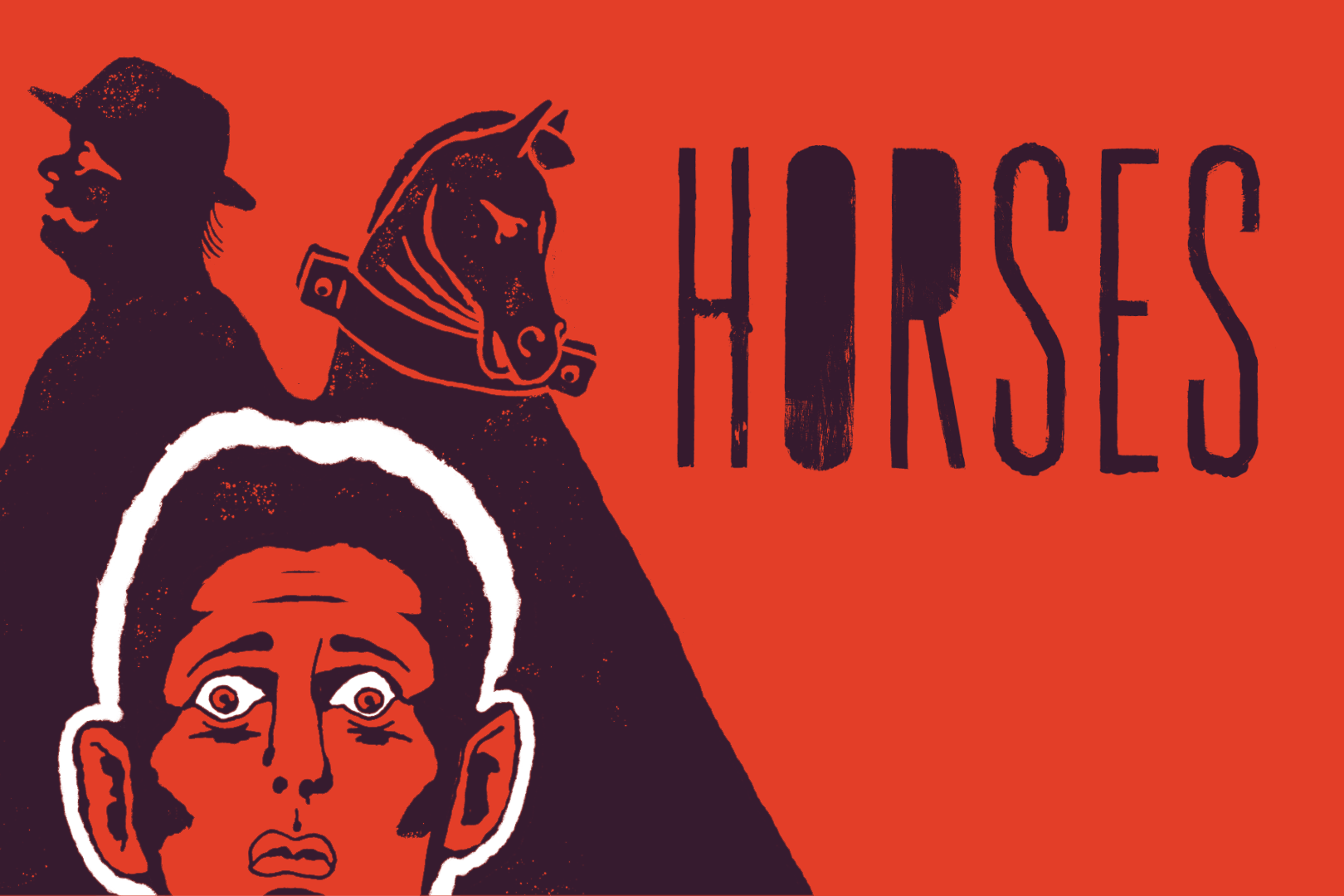
Horses has been out for exactly a week, and I’m certain that if you’re reading this you’re already sick of the discourse (damn my adherence to schedule!) We actually raced through the talking points in record time, to be honest, it was barely a couple of days before we got the “well, you know, it’s actually not that good/what’s all the fuss about really” essays. Milking horses in real life is impractical and low-yield, and here we’ve reached the point where we’re drawing dust.
However, that doesn’t really change the material facts of the matter: irrespective of quality, Horses is an artistic work that has been de-facto banned from the two major storefronts–due to opaque processes and without recourse. I’ve written about this happening before–in fact this year–when Cara Cadaver’s VILE: Exhumed was banned from Steam (and then released for free) due to what appears to have been a misunderstanding of that game’s use of real footage as pornography and the wider context of morality policing by payment processors.
Interestingly, Santa Ragione are at pains to point out that this ban occurred in June 2023(!) and that it “has nothing to do with the recent restriction on adult content pushed by payment processors.”
There’s an urge to try and uncover the reasoning for the ban, but it’s to stumble about in the dark. Santa Ragione concentrate on–as much of the discourse has–that an unfinished sequence in a version “scrambled together” for early submission featuring a child riding on the back of a naked woman triggered the ban, but after the ban of VILE: Exhumed, I’m not so sure that (even benign) FMV footage or payment processors as a factor can’t entirely be ignored as, at least, a supplemental reason to keep the ban enforced. In particular with the ban from Epic, who didn’t choose to ban the game until December 1st(!) with the stated reason that they don’t sell AO rated games1 (despite Santa Ragione’s protestation that Horses had received PEGI 18 and ERSB M ratings) it smells to me like a simple pre-emptive decision to avoid controversy that could lather up into the kind of issue with payment processors that could affect their bottom line. It’s just easier.
So really, it’s not so much the specific reasoning for the ban that matters2, but the context: that we exist in a world where art not cannot exist without being a commodity–Santa Ragione cannot merely hope that people experience their art, but that they purchase it–and where wide access to that commodity is tied to an oligopoly (if we’re being kind to the Epic Games Store) or monopoly (if we’re not) who have absolute power over the market. It is satisfying to poke at the hypocrisies of a storefront like Steam, but it is, ultimately, a problem of capitalism.
If you’ve read this site for any length of time, you’re probably sick of me saying things are capitalism’s fault. Well, they are, and the interesting thing about Horses is that this issue of commodification under the ultimate power of an opaque system is critiqued by the work itself. And this has echoes with another piece of Italian art which I have seen paid lip-service to in other essays on Horses: Pier Paolo Pasolini’s Salò, or The 120 Days of Sodom.
It is not easy to find a usable representative image of Salò, but this will do.
Pasolini is a complicated figure with a huge legacy, though one that has been somewhat narrowed in the popular imagination due to the reputation of Salò (his other transgressive works like Teorema don’t really get a look in) which, unfortunately, I’m not going to help. What’s important here is that Salò existed as a work contemporary to 1970s Italy, an era of intense political turmoil only “post-fascist” in so much that it came after the fall of both Mussolini and the Italian Social Republic (which forms the setting for Salò), and in a period where Pasolini was concerned with the “new facism” of neo-capitalism.
In an era where art is being flattened into a homogenous, global product, it is important to understand Santa Ragione as human creators whose cultural specificity does not necessarily line up with the enforced Western (American) default, and that is reflected in this era also obviously being of great importance to Santa Ragione. Their game Wheels of Aurelia–itself embroiled in a delisting controversy–is set in this period, and movies such as Il Sorpasso (1962) and Rabid Dogs (1974) clearly inspired it. There is no such clean line of inspiration between Salò and Horses but I see a continuation of thought between them.
The thing about Salò, or The 120 Days of Sodom is that its reputation precedes it. Portraying, as it does, the the torture, rape and murder of teenage victims by four powerful fascists and their collaborators, it generally features high on not just “most scary” and “most disturbing” lists but “movies you should never watch” lists, and continues to be banned in some countries. But if taken merely as a series of images, in 2025 it really isn’t… that bad. Would it be able to feature on the Criterion Collection if it was? I’m not so sure. Watching it now, you wonder what Pasolini would have made of the internet, and in particular the sea of easily accessible pornography where you can see the participants of things that the fascists of Salò could not perceive. If Salò was to rage against the idea that fascist dehumanisation was being continued via the commodification of the body and ultimately captures the mind, what would he make of the masses willingly3 performing online what was once considered unwatchable? More disturbing things are streamed online from bedrooms in middle America than we ever see in Salò. Indeed, in Salò Pasolini uses a cold, distant gaze to implicate us; could he have perceived a future where not just the camera is drawn so close, but the audience can tip to push things ever further?
But what sets Salò apart is that it is not titillating4. It is not intended to excite, even shock seems like a side-effect. In fact, it was an attempt to create a work that was indigestible.
“I told myself: I have to react and make products that are as inconsumable as possible. I know it’s utopian, because everything ends up being consumed. At the same time, I know that there is something inconsumable in art, and we need to stress the inconsumable quality of art. Therefore, with all my forces, I will try and produce difficult and indigestible works.”
Horses is a cinematic game–in that it directly and intentionally references the form of surrealist cinema (which notably, is distinct from Pasolini’s style.) It’s in black and white; almost completely silent (using intertitles for dialogue) and features the continuous sound of a projector. Combined with the farm setting, the game feels like it is set somewhere within Mussolini’s reign, but like Salò, there are anachronistic elements (though they are more apparent: a VHS tape, for example.)
The player takes the role of Anselmo, sent to spend two weeks at a farm to learn the meaning of work. We know nothing about Anselmo–we don’t even know if he knows what’s going on at the farm before he gets there, though he seems unhappy about the prospect of working there either way. The farm–as you certainly know by now–is run by a disturbed farmer who keeps a group of men and women as “horses” by drugging them and locking horse masks onto them. He is supported in this by his “dog”, Fido, similarly a man in a dog mask, and then you, the player as Anselmo, as you do video game farming tasks for him: picking carrots, feeding the dog, chopping wood, before you become increasingly entwined in the control of the “horses.”
As I said above, I do not believe Salò is intended as a direct inspiration, but there are parallels. The first that will come to mind is a sequence in Salò where the victims are treated as dogs, one of whom is harshly beaten when he does not cooperate (although this is a short, stand-alone sequence rather than the victims’ continual state.) More is the parallel of Salò’s men of power: the Duke, the Bishop, the Magistrate and the President, who have their parallels in the game’s farmer, businessman, vet and priest. I think it’s unlikely the analogue was intended–the characters are much less deeply intertwined in Horses–but their inclusion as symbols of fascist systems cannot be overlooked.
“This technique is not meant to expel meaning. Rather, it creates a sense of ambiguity in which meaning is not directly signified and is therefore suspended, refusing to provide the viewer with easily digestible symbols … Rather than producing art with the intention of manipulating consumers through predictable emotional patterns and easily understandable symbols, suspended meaning challenges easy digestibility by introducing deliberately indigestible elements to the work.”
Although I think Horses is widely accepted as a narrative game, I think Horses intended “tactic” is to introduce a game with the signifiers and mechanics of the “farming” genre, which runs the breadth of Stardew Valley to Farming Simulator, in order to maximise the impact of its indigestible symbols. The game implies that it has a daily schedule design with tasks to check off, but discards and warps that at will almost immediately, creating something that frustrates and disconcerts as much as the setting.
And Horses does not–cannot–rely on the dispassionate extremity of Salò to be indigestible. If in Salò we must look directly at the human body, abused, in Horses we must look directly at the uncanny valley, itself a desecration of the human form. There’s been criticism of how goofy a game with such heavy themes looks, but the grotesque puppetry of the horses makes a mockery of them and is as symbolic of their devaluation and dehumanisation.
As an indigestible work I think Horses, like Salò, frustrates. Indeed, it makes me question the suitability of linear narrative video games for it unless designers are willing to push the form further. In cinema, the audience is implicated by their gaze; in games, the player is implicated by their play. Even in a film as indigestible as Salò, we debate and try to bargain with it, hopelessly. Why don’t they refuse? Why don’t they rise up? The film’s only glimpse of a kind of resistance that shakes the fascist’s power comes from a collaborator and only after we’ve seen a succession of the weakest characters turn on each other to save their skin–despite the fact that they are living through something unbearable. Film is very good at making us feel helpless, because there, we are. But games are almost all empowerment fantasies, and the ones that try to break us down so often offer us only the alternative of “the only way to win is not to play” rather than make us collaborators so we can continue even if in misery.
As Anselmo, we must play along whether we want to or not. Every player certainly thinks “well, I’d just leave” but… they can’t. The gate is closed, and there is no escape. Whether or not the stakes for Anselmo exist, at first we don’t feel them without the ability to truly test them. If Anselmo isn’t allowed to escape, let me try. I’ll reload. If Anselmo can walk off the farm whenever he likes, let him. I’ll do it. Make me collaborate, don’t force me to.
The strange thing is, at its best, Horses does engage with this issue head on. Later in the game, your position as collaborator cemented, a horse will not cooperate. The farmer’s dog gives you an option of how to deal with the horse: to offer, as the cliché goes, the carrot or the stick. Each carrot you offer returns no cooperation and leads to the stick becoming bigger and more dangerous, and the dog angrier. I found myself pleading for the horse to just cooperate, because I knew the next thing I would have to do was beat it.
Whether or not I truly had a choice over that doesn’t matter, because I willingly gave those carrots. Horses made me not just perform the act of collaboration, but embody it, and it made me feel shame in a way the early game’s railroading does not.
The scene that has received the most commentary however is the scene that Santa Ragione believes caused all the trouble and where Horses shows its hand: when the businessman’s5 daughter makes it clear that no one is under any illusions about what the horses are, and that the horses are people who represent a threat to the system.
I think you could argue that this represents a flaw in my argument that Horses is indigestible art; after all, if you spell it out this clearly, isn’t that quite… understandable? But under that criteria, Salò would also fail for making its setting explicit. Even in Salò the victims are not random (one is notably called out as from a “family of subversives.”) But to return to Schalk: “the technique is not meant to expel meaning.”
The difficulty of a work like Horses–if we accept my hypothesis that it exists in the spectrum of indigestible art–is that it is not a work about the horses, what happens to them, or Anselmo’s journey. It’s existence is, like Salò, a political act, to stand in opposition to the inauthentic, easily digestible product that floods our culture.
I chafe at every mention that Horses is “like an A24 horror” considering the formulaic nature of “elevated horror.” I wrote earlier that I wondered what Pasolini would make of modern pornography; I don’t need to wonder what he would think of the Netflixication of cinema, work designed to go down so smoothly you don’t have to engage with it at all. We seemed to have crossed a rubicon where it’s not even that mass culture is inauthentic; it no longer seems to actually exist. The audience is so captured by capital they create viewing numbers to maintain a stock price while themselves receiving no value; a subscription to white noise to fold laundry to.
In this sphere, the value of Horses is that it must be engaged with, and it is ultimately that which makes it a threat to the hegemony of capital. At its best it does not just see the danger of commodification on our body and mind: it makes us feel it, perform it, and, ashamed, intend to refuse it.
Salò was not banned because of shock value alone. It may be an extreme example, but it suffered extra scrutiny for the same reason works as benign as To Kill A Mockingbird: an audience roused out of its slumber is a dangerous one. In 1975 Pasolini saw a world where the audience had to choke on the indigestible to wake. Horses may be more obvious, more on-the-nose in narrative by interactivity, but in doing so it takes the indigestible and asks the audience to not just wake from choking on it, but to spit it out.
You may think I’m giving Horses too much credit here–or implying conspiracy in its banning. But the same way that audiences are enveloped by the miasma of capitalism, companies like Steam and Epic are unconsciously risk averse in protection of the numbers. Santa Ragione focuses on the possibility that a little girl riding a naked woman was the reason for the ban; but I wonder if they’ve considered it was what she said that was. That she gave the game away.
“Each of us is a cog in the machine; we must all do our duty so society can function properly. So dangerous ideas are a concern for everyone.”
Will I ever play it again? I’ve already spit it out.
Final Thought: If I find one flaw in my argument, it is that Horses ultimately concludes in a very “video gamey” way. Pasolini famously struggled with the ending of Salò, ending on an abrupt non sequitur after taking things as far as they can go. Horses instead asks the player to engage with an actual puzzle (which comes as a surprise; the solution is also a little vague in game, meaning I can imagine a lot of players get stuck here, and I personally found it annoying to the point of it breaking immersion). It leads to heroic rescue and ultimately escape–one which implies reclamation and reconciliation. Depending on your viewpoint, this hopeful ending either continues the themes as a call to action for the awakened viewer or the kind of satisfying resolution that allows a return to slumber; the indigestible made digestible. The question is, I suppose, as always, what you are willing to swallow.
It has been mocked elsewhere but that this rule has an explicit carve out for crypto (“the only exception is for products in cases where an AO rating was applied solely due to the usage of blockchain or NFT technology”) is toe-curlingly embarrassing. ↩︎
Although after saying all of that I have to also attach Paolo Pedercini’s idea that it might relate to the fact that by just being called “Horses” it contaminates searches to a genre that horse-mad weans would be looking up, like if you called a game “tractors” and it was all about tractors with big floppy dongs flopping about. Hang on, let me get on the asset store… ↩︎
I should say supposedly willing here to be specific, but I don’t want to get too far afield of my main point in the moment. I touch on this in my essay on VILE: Exhumed, but there is an irony in that in Salò we can see a crying victim be debased with awareness that the shoot was actually pretty jolly, full of football games and risotto meals, but you really have no way to judge if in even vanilla pornography the performers are willing participants, as capitalism is always a coercive element. ↩︎
I would argue it is titillating, intentionally, until the rules are inverted at the villa, but again, I’m in danger of getting lost in the weeds here. ↩︎
This character is never referred to as such, and is a designation I’ve made on the statements of his daughter: “My father makes sure that [the farmer’s] business opportunities keep growing.” ↩︎
As has become traditional, in the month of December I try and make sure I write up as many Christmas games as I can manage. This year I’m going to try and keep to my intent to write up new (preferrably 2025) games when I can, so it’s (sadly) not going to be all Christmas, all the time, but it’s good to start the month off with one, and I’ve already got some subscriber-exclusive Christmas essays brewing, so if you want to make sure you’re as full of Christmas cheer as possible and haven’t already joined the Patreon…
Hey, do you hate in-line advertising? We do too! We’re only ever going to do it here at the start of our newsletter posts because we want you to get these missives in your inbox a day early. Sorry!
Uh, that looks like four articles but it’s actually three. This is the first time I’ve broken the format to talk about two games at once, but I think it was necessary, and I don’t think it’s going to be the last time.
I’m jumping forward in the archive a bit so I can further juice the Chrimbofication of exp. this month to include a chunk of the Christmas essays I’ve written across the years (although I only started doing it in 2021.)
I didn’t expect to post my article on The Life And Death Of Colonel Blimp to the main site—I expected it would be short enough that I’d be happy to just leave it on Letterboxd—but it took more paragraphs, and more redrafting, than I expected (this is actually the second version of the essay I wrote.) It was only when I read the Criterion essay that I accepted that the movie was difficult enough to get a handle on that I felt satisfied that my perspective was worth sharing—and if so, why not do it properly. I think maybe I’m being a bit too precious about how long and detailed an article has to be to get upgraded to a “real” post; several of the essays below (notably Predator: Badlands and Sentimental Value) probably deserved it.
Friend-of-exp. Jim McGinley shared this example of a lost art—the Flash game—and I had, I guess, missed it completely, so it’s possible you did too. Winner of the Jayisgames 6th Casual Gameplay Design Competition” and playable on archive.org, it’s a short platformer where you jump around, gradually revealing beautiful pixel-art scenes that express a kind of melancholy. One section (you’ll know the one) veers slightly into annoying if you don’t nail certain jumps, but this feels the way snow globes look in whimsical, heartfelt movies, and not the way they are in real life, which is nothing. Well worth your time.
“Here’s a taste of what’s inside: A retrospective of Auf Wiedersehen Monty from Gremlin Graphics. An exclusive interview with Gremlin’s graphics developer, Terry Lloyd … And yes—a special centrefold map to enjoy.”
I haven’t had a chance to play (watch?) Blippo+ yet, but when they announced this they described it as a zine, so I’m more interested than I was already (which was interested).
“From the author of Sarah Records’ These Things Happen, comes a new 40-page, full-colour music fanzine. Feat. Blueboy, Josie, Beth Arzy, Swansea Sound.”
And Finally…
“SIGN OUR BOYCOTT XBOX PLEDGE: We are asking gamers, game workers, streamers & journalists to join us in boycotting & divesting from Xbox, to force Microsoft to end its complicity in the genocide of Palestinians. We’ve provided concrete actions everyone can take. Sign here: nogamesforgenocide.com.”
Next week on exp.: When suddenly Johnny gets the feeling he’s being surrounded by…
All of Powell and Pressburger’s films are, in my opinion, quite strange to modern eyes (even compared to their contemporaries) with unusual tones and pacing, but for me this is absolutely the strangest yet (and that’s including A Matter Of Life And Death, which is completely bonkers.)
On the surface, our Colonel Blimp, Clive Wynne-Candy, reads as hero, played, as he is, by the iconically charming Roger Livesey. But The Life And Death of Colonel Blimp is also a harsh criticism of him–and the actions of the British Empire–when read more deeply and with historical context. It’s asking a lot of the audience to come to the film with that, and what I find most strange about The Life And Death of Colonel Blimp is how much it tries to have its cake and eat it: Candy is a fool, but he is still portrayed as a good person, the protagonist you root for, and the ultimate feeling of the film is one of apologia. I’m not sure that’s fair; or rather, I’m not sure it’s fair that audiences ever walked out feeling sorry for him.
Based on a newspaper cartoon that satirised the reactionary opinions of the British establishment, if you understand background such as the British behaviour in the Second Boer War(!) Candy comes across as not so much foolish as in outright denial even as a young man–he ends up in a duel with a German officer over dastardly Hun propaganda about the existence of concentration camps, which, of course, there were.
He’s also deeply emotionally stunted, and this is shown by him being haunted by the woman he loved and lost like he’s Francesco Dellamorte in Cemetery Man, as she re-appears as every new woman in his life. And each time he struggles, his emotional outlet is murdering exotic animals as some sort of a balm (I’m sorry but if you murder an elephant you’re a grade-A cunt.) I’m not quite able to fully translate the metaphor to the British Empire’s stymied ambitions across the early twentieth century, but it probably works.
If you see Candy as such, the true hero of the film is Candy’s pal, German officer Theo Kretschmar-Schuldorff, played by the incredible Anton Walbrook. This must have been an intense role for Walbrook, who himself escaped from the Nazis, and as Kretschmar-Schuldorff he shows the kind of insight–borne from loss–that Candy never seems to attain. The sequence in which he pleads his case as a refugee is undoubtedly one of the greatest in all of cinema, and I understand why his sympathetic portrayal was considered so controversial in the era. It’s too good. The British public might have had their minds opened and the establishment needed to make sure they’d stay snapped shut.
You can also read satire, I think, when Kretschmar-Schuldorff is sat with Candy and the British empire’s regional dictators, all stuffy old white men who swear blind they’ll do the best for Germany while they extract what they can without a care from their own fiefdoms (while, of course, leaving Germany to its ruin.) There’s something very prescient, too, about the way Candy says “I wasn’t in a foreign country, I was in Jamaica”–it reads as patently absurd and paternalistic, even though Jamaica wouldn’t achieve independence until 1962.
This does make The Life And Death Of Colonel Blimp sound like a laser-focused, forward-thinking satire, but the film takes a leisurely pace across its nearly three hours, and what’s there is a lot more subtle in context than I make it sound. The moments I have described are just part of a film that otherwise puts a lot of effort into impressing on us that Candy is, in general, a stand-up guy who believes in, and tries to do, what’s right. And the film pushes towards the apparent conclusion that he (and therefore, Britain) are only flawed in so much as they have slowly–stuck in their ways–fallen out of doing what needs to be done. That they’re trying to be too honourable, when they should instead [checks notes] fight the Nazis like… the Nazis would?
This is, in my opinion, a strange conclusion for a film that shows such incredible empathy and understanding via Kretschmar-Schuldorff, and there’s a sour taste to it in the light of the film’s own satire–and ultimately what we know now about the Allies’ conduct during the war (the bombing of Dresden would happen just a couple of years later.)
The thing is, I understand the argument that can be made against what I’ve just written–films are allowed to be complex; even contradictory–people absolutely are (I take some pleasure that The Life And Death of Colonel Blimp’s Criterion essay seems just as confused about the film as I am.) We don’t, and can’t, live only in a world of basic morality tales, of perfect good via evil, and it is a bit sad that our major cinema has so devolved to that. And The Life And Death Of Colonel Blimp is a beautiful film, full of every touch we know Powell and Pressburger for, and a performance from Walbrook in particular so good that it makes the Oscars look like a joke because he never received one.
Indeed, I think it’s telling that Churchill–an odious racist who knew everything the British were willing to do–reacted in such fury to this film. He could see what lay beneath the surface. But even with that, I can’t quite square the movie’s apparent understanding that the British Empire was not honourable in the least with the implication that it needed to plunge farther into barbarism. If I’m charitable, maybe it was simply a call for it to stop lying to itself about what it was.
Developed/Published by: Jack Foster, Jill Foster / Jack & Jill Software System: BBC Micro Released: 1986 Completed: 01/12/2025 Completion: Finished it.
*Ahem* time to drag out the old Noddy Holder impression again. It’s CHRISTMASSS!
(Hmm, think I’m getting better at it.)
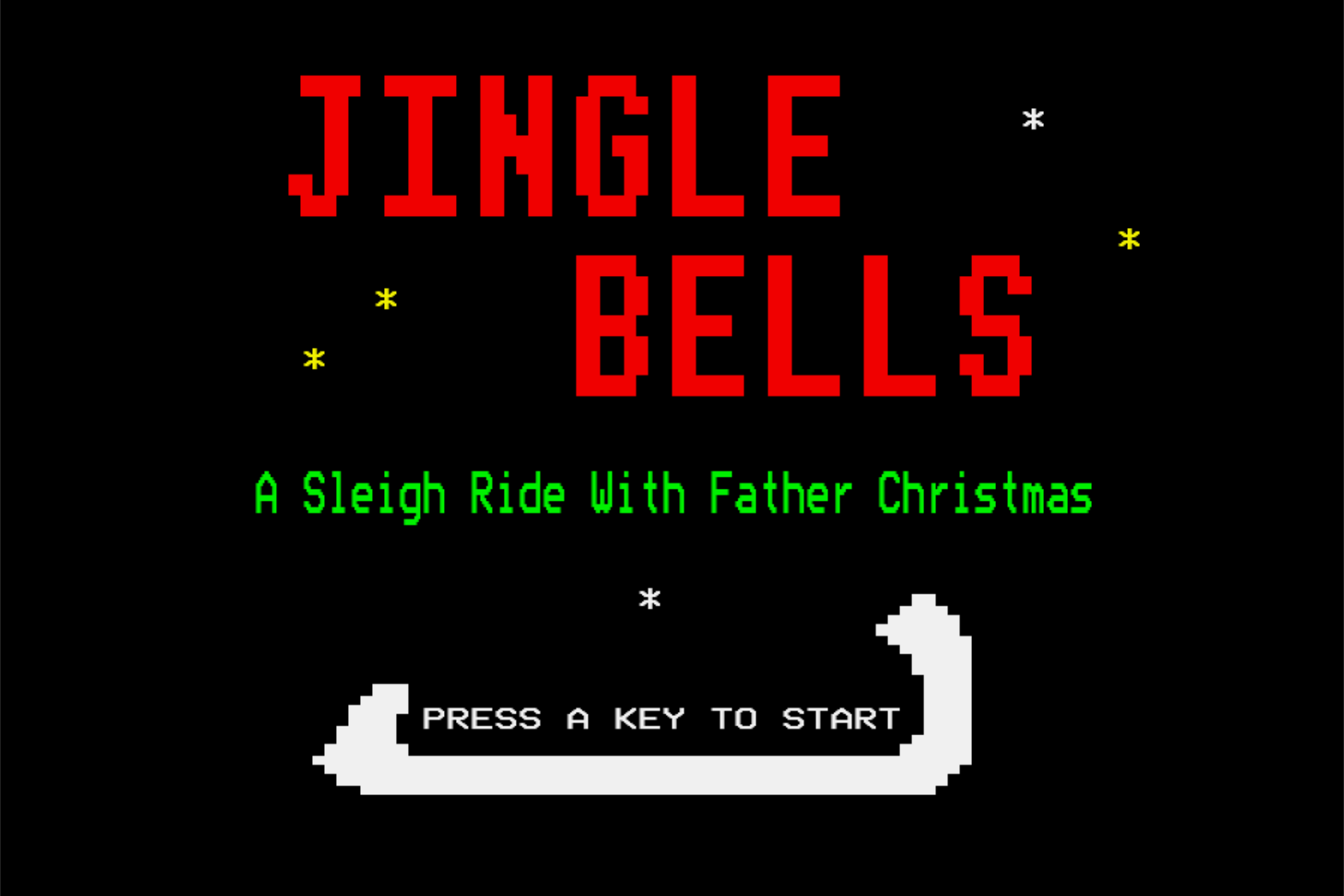
Well, it’s December, at least, which means I get to spend the entire month playing Christmas games in an attempt to feel festive, but so far has meant I’ve accidentally mostly played BBC Micro shovelware. So I wasn’t exactly looking forward to the next game on my “as chronological and exhaustive as I can be bothered with” list: Jingle Bells, subtitled “A Sleigh Ride With Father Christmas.”
However, it’s turned out to be a perfect bit of classic BBC Micro nostalgia: a short, very easy text adventure, the kind of thing that I’m sure was booted up for the kids at primary schools when they had some scheduled computer time in the anything-goes period right before the Christmas break.
Developed by Jack and Jill Software, I can’t find any information about them online other than the developers were, well, Jack and Jill Foster. Brother and sister, husband and wife? Who can say? It’s like they’re the bloody White Stripes of video games! I took a dig into some contemporary issues of Micro User, Acorn User and even Beebug and couldn’t find much of anything, so I’m not completely sure if this was commercially sold. It seems very much like the kind of thing intended for schools–and the pair did develop a couple of other simple, childish adventures. The games all showed up on public domain disks at some point, but the breadcrumb trail stops there. Not that it was so much of a trail. A single crumb, at best.
As for Jingle Bells: after the obvious–indeed, expected–intro where you get to listen to a bleepy version of Jingle Bells for the hundredth time, the game opens with you at the North Pole because–for unclear reasons–Santa had invited you to “sort out his presents for the year.” And then the dozy old bastard has forgotten where you live. And he also can’t be arsed to work it out, so it’s up to you. (There’s a cute touch where you get to type in where you live at the start: it doesn’t lead to anything but a changed signpost, but I appreciate it.)
You solve this via some pretty standard kiddy adventuring around the North Pole. The parser is limited to classic VERB OBJECT and you can basically learn all the verbs by typing HELP (although there’s a couple of hidden ones, I don’t even think intentionally.) The game doesn’t understand it if you spell out directions properly (confusingly) so you might go through a period of typing “DOWN” pointlessly when you actually just have to type D (and it’s INV for inventory.)
Take that you twat, you can sort out your own presents next year if you cannae remember where I live.
The puzzles are… simple and obvious, with challenge expressed via a couple of classic design cheats: rooms that just automatically kill you so you have to start again (good when you want to rotate the kiddies off–one go each!) and a “gotcha” at the end for anyone who didn’t pick up one particular item (what is this, an Infocom game?) The game also–by virtue of you being on Santa’s sleigh–has a very funny idea of distances. One move and you’re at the South Pole from the North Pole, one other move and suddenly you’re in Australia. I laughed.
The game doesn’t take into account that you might live in Australia, in which case you absolutely hadn’t taken a wrong turn.
Maybe it really just is nostalgia for being in primary school talking here, but there’s a Christmassy charm to this. It’s much more playable than A Christmas Adventure, and though it’s not as pretty as Merry Christmas From Melbourne House, it’s more pleasant for being easier to understand (it doesn’t have a snow maze, for starters.) But I’m hard pressed to say much more about it. I had a nice, if very gentle, time with it. Could be worse!
Festive vibes ranking: HIGH
Will I ever play it again? I’m good!
Final Thought: Because there’s so little about this game online, I thought I’d go ahead and provide a Christmas miracle:
A full map for the game if you want to complete it yourself!It’s probably not really necessary, but if you’ve been looking for an excuse to spend fifteen minutes playing a BBC Micro game–and I mean who hasn’t–you can play Jingle Bells online right now!
Developed/Published by: Gabe Cuzzillo, Maxi Boch, Bennett Foddy / Devolver Digital Released: 23/09/2025 Completed: 13/11/2025 Completion: Finished it. I took the stairs, obviously.
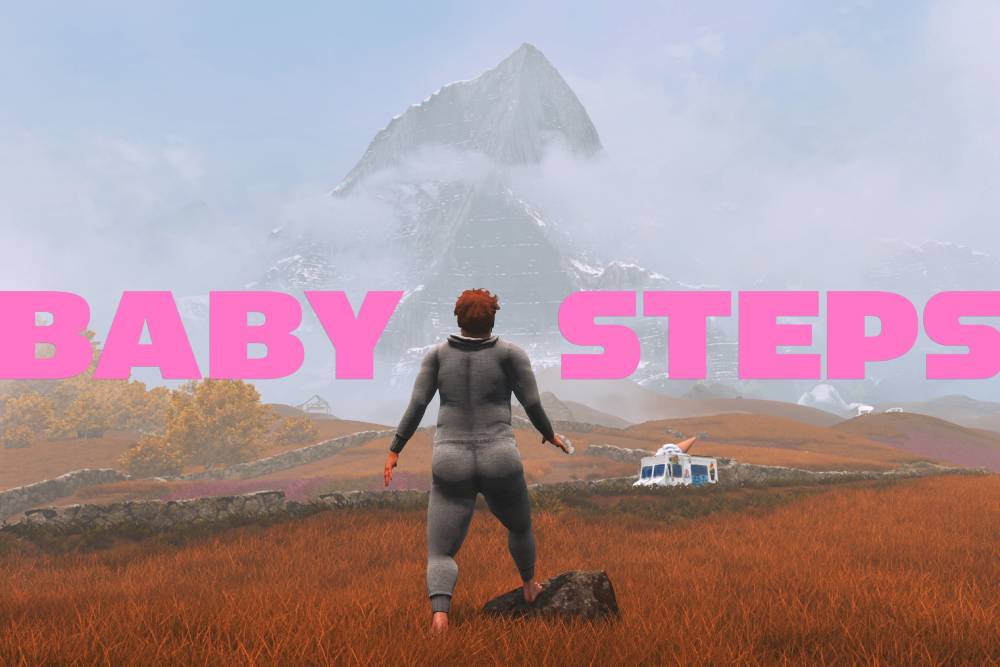
Baby Steps is incredible. I think it’s almost certainly going to be the best feeling game I play all year, if it hasn’t locked it up already. I think it’s brilliant.
But have you ever played a game that you just… disagree with?
To be clear: not that it disagrees with you like it’s some clam chowder that got left out in the sun. That you disagree with it–say on a moral, or ethical level.
With Baby Steps, it would be too strong to say that I disagree with it ethically or morally. But I do think I disagree with the principles on which it was designed. On the… mindset in which it treats the player.
But before we dig into that, let’s talk about what Baby Steps is.
Baby Steps is designed by Bennett Foddy, who developed the game alongside Gabe Cuzzillo and Maxi Boch. You likely know Bennett Foddy from QWOP or Getting Over It With Bennett Foddy, games which find comedy, pathos and of course frustration in unforgiving physical simulation (or maybe you know him best from the Best British Games Spectacular I did with him on the Insert Credit Podcast. It’s certainly how I do!) In Baby Steps, you play Nate, who is transported to a mysterious alternate reality and who then… well, it’s not entirely clear what his actual goal is. He needs the loo and probably wants to get home, but mainly he walks, hopefully forward, because that’s what you make him do.
It is this aspect–the walking–that is such a revelation. Although I’ve played QWOP (I mean who hasn’t, you can play it right now for a while if you fancy) I have to admit I never Got Around To It With Getting Over It With Bennett Foddy. So while it’s possible that game felt fucking incredible, even if it did (does) because this is a new Foddy game explicitly about moving your legs I just assumed moving any distance at all was a grim nightmare of concentration and pain like QWOP.
But it isn’t that at all! In fact, moving your legs is almost easy! Using the triggers to control each leg, once you have a rhythm you can just push forward and tap each trigger and move forward at a pace that–while not exactly an open-world sprint–is almost effortless. You might think that minor changes in elevation or little rocks and things like that are going to fuck you? Honestly, once you’ve got used to walking… no? I don’t think I’d even been playing an hour before I got used to the micro-adjustments required to keep walking over a huge tree knot without falling over–you just see when the foot connects, and you move the other one. Simple!
You will be shocked at how comfortable you’ll be moving quickly even in situations like this. Perhaps… too comfortable.
It’s even more impressive when you actually have to do something that requires a bit of finesse. Almost immediately the level design presents to you a hat hanging from a pole, that you know you can only collect if you climb a small pile of bricks. In doing that you realise that as long as one of Nate’s feet are planted securely, you can take your time lifting your leg, using the analogue stick to swing it around and into position without fear–well, much fear, things can still go wrong–of falling over. The game goes from a steady tap-tap-tap to a more interesting puzzle–about how well you can judge placement, how much patience you have, and how well you can avoid overconfidence.
At its best, Baby Steps is a pleasure to play. It’s fun just wandering around, seeing where you can go. Falling over happens–and don’t get me wrong, just because you can get into a rhythm, it doesn’t mean you won’t fall out of it, or just not recognise the movement you need to make, and trip–but it’s alright, right?
The problem with Baby Steps, for me, is that it’s not just a fun sandbox. It’s a video game with a beginning and an ending. And so, ultimately, it expects you to progress. And as you progress, the game goes from “I’m having fun moving” to “I have to get this step exactly right. And the next one too, quickly, because if I don’t I’ll slip, and I’ll have to do another five minutes of climbing just to get here… ah fuck, I fell. Well, at least I’ve done all these other difficult steps thirty times, I won’t… fuck.”
Now, absolutely, you could say “well, you don’t have to do any of this. You can play it however you like. You’re putting all of this onto the game but you’re doing it to yourself, mate.” But the world is transparently designed with paths that funnel you into challenges and with environmental art that points you in the direction you’re “supposed” to go, and those challenges go out of their way to make sure you are punished for failure with complex runbacks that only get worse the further you get in an individual challenge.
Sure, sometimes they’re just trying to make trouble for you with the direction they’re pointing (and problematically, sometimes they don’t make it clear at all where you’re supposed to go, so hope you enjoying wandering around lost) but there were many points where I couldn’t find an alternative path than the one I was beating my head against, and I’m sure any others were a ballache anyway.
So it’s here that we come to our disagreement: why does Baby Steps have to be punishing?
I know, I know. It almost sounds completely ridiculous when I say it. But there’s a weird disconnect between the pleasure of movement, the opportunity for exploration, and the complete smugness of the level design that makes sure that your failures are multiplied–and which loves to place gotchas as late as possible in a climbing chain.
The punishment works at such cross-purposes to the world, too. You know you have to get to the big obvious landmark you can see in the distance, but it’s an open(-ish) world, and you can see something interesting you might want to go and look at instead. But if the perambulation required to get there is difficult–or worse, it’s going to be difficult to get back–I didn’t want to do it, because what if it wasn’t anything, or (worse) was a gag about how I’d just done something annoying and difficult for nothing? Apparently Baby Steps has 109 cut-scenes, of which I saw something like, I don’t know, nine. Because the rest I’d have to hunt out, and fuck knows how much time and frustration it could cost me when I wanted to actually progress again.
“Hang on,” you might be saying, “I thought you said movement in this game was a pleasure. It can’t be that bad can it? Surely?”
It’s interesting, because if I’d stopped playing this game after the first few sections, I’d say that’s fair. Initially it feels like the pathing the game guides you down doesn’t so much force you into repeating the same sections to progress, but there are a lot more falls where you slide off to somewhere else and have to get up a different route, which kept things interesting. But the desert area was the death of that. They introduce sliding–meaning you need to chain steps quickly–and then I found myself in a section where–unless I’m completely wrong–I simply could not find another route. And it required crossing a bridge that, if it fell required I restart the game.
Come on. That is rubbish.
But it’s not as rubbish as the part where I had to work my way up a cave system holding a lamp, where the ending seems purposefully designed to make sure I trip and drop the lamp all the way to the bottom and have to either do the whole thing again or turn my gamma up and hope for the best (the latter worked in the end.) I think that’s the absolute nadir, but at that point the magic was lost, and the rest was just a grim march to the end, with nary a smile from me.
This. Fucking. Thing.
In a New York Times profile1 contemporary with the release of the game, Foddy wondered:
“..When I’m making games that are intentionally frustrating or annoying or boring … I’m trying to do that in a way that people will derive pleasure from. Why do people continue to do things that make them unhappy? I think that’s maybe the great mystery of being a human being.”
Because the New York Times is crap, I don’t think they dig into that deeply enough. Foddy is intelligent enough to distinguish between “pleasure” and happiness: doing drugs provide pleasure but not happiness; you can be sad and still have a wank. (Indeed, there can be a near-sexual tension to frustration; the need for a release that isn’t coming, and if it doesn’t come probably a wank does the trick, but it’s not going to make you happy.)
The problem, from my perspective, is that the reason people do a thing (play a game) that makes them unhappy is because… they want to win! There’s a goal, a payoff. It’s not that deep, and there’s the smugness of “the only way to win is not to play” in Baby Steps, and I think that’s a limited form of thinking. You designed the bloody thing!
This way of thinking is impressed–in fact, enforced–by the narrative of Baby Steps. Nate is something of a cipher, but he has signifiers. He’s a loser, he doesn’t seem to be able to communicate with anyone, or anything, particularly well. He is–and this is important–seemingly completely unable to take assistance, never mind help, which is implied to relate to his sense of masculinity, though everyone else in the game reacts in bafflement to it (oh, everyone else in the game is a man, by the way. For a game that examines the problem with men, it is funny that it doesn’t let a woman speak once).
I don’t think it’s spoiling anything to note that while Baby Steps has a narrative, all the cut scenes are improvised (Cuzzillo as Nate, Foddy as… everyone else) and that does make me wonder how deeply they planned the narrative to begin with (it certainly seems somewhat… loosely sketched.) But it does have a couple of big beats, the most important of which is a decision the player must make to either take on an absolutely insane challenge or… take the clear and obvious easy route.
The problem with this is that it’s classic, top-down narrative design. You reach a point in the game with the signposted choice that reflects ~themes~ rather than, you know, it coming from the emergent play. It’s especially egregious here, because why the fuck does the game unavoidably make me do all this insanely hard bullshit first before it allows me to throw my hands up and go “honestly mate, I don’t give a fuck?”
Because I don’t. I’ve talked before about my opinion on save states and rewinds, the fact that I’ve always loved Jeff Minter’s “start a level with your best high score that you got to that point” design concept and all of that sort of thing. I just don’t think runbacks are fun, or even interesting past a certain point, and Baby Steps is the purest runback experience there is, because every time you have to return to the challenge where you failed, you have to work for every step.
You might hope the challenges are designed so you fall only part of the way down. You would be hoping in vain.
If you ask me, I think there should be a Baby Steps: Gigachad Edition where as soon as you get tired of the game, you can press a button, Nate accepts his failings and via a magical girl-style transformation sequence Nate gets fucking ripped you can quicksave wherever you fucking like. This isn’t even a joke! I’d have explored so much more of the game and actually enjoyed the experience a lot more, and for me, the whole point of playing games is to enjoy them [“Is it? I’ve read your articles and I’m not sure I believe you”–Ed.] The “lesson” of Baby Steps doesn’t apply to me, and it certainly doesn’t at the point in the game where it’s trying to teach me it.
The point, of course, does stand in the opposite direction. “Maybe I like the misery.” If you do, no one is stopping you playing this the way you like, or with your hands behind your back or upside down. It’s all completely valid, unless you’re the kind of prick who resents the idea that other people might use the easy route. Hell you can have an extra achievement for never turning on Gigachad mode if that makes you happy. Have ten, I don’t care. But I reject when a game is like “You play it like this, and only this, and also I’m standing over here, pointing at laughing at you while you play it, for playing it.”
So yeah. Baby Steps. The best feeling game of the year, that I don’t agree with at all.
Will I ever play it again? Gigachad edition, baby! While this article has been critical, I do want to say that I actively recommend Baby Steps. But I do think you should just fuck about in it and not consider it a challenge to be beaten, because it’s so, so fun until it’s not. In fact you can make your own Gigachad edition if you like, though the quicksaving doesn’t save any items you’re holding so it’s not helpful if you’re say stuck in the cave. Uh not that I would know (I absolutely do know).
Final Thought: I really don’t know if this is adding insult to injury but one of the issues I had with Baby Steps, to be honest, is that I didn’t find the cut-scenes… that funny. Maybe I’m sugar coating that a bit: I didn’t find them funny. (Well, the one joke with the map2 that pops-up for a split second is really, really good.) Nate is so annoyingly whiny and obstinate, and if he’s just slid off a mountain forty times it generally makes you want to actually murder him (I assume Cuzzillo is spending his royalties on an armed guard.) Foddy’s characters are, mostly, twats. It’s all just so abrasive, and the game makes a point of trying to force you to watch them via skipping cut-scenes being a mini-game in themselves. Which I’m sure they also thought was funny.
But that said: even though it’s in the game as a punishment in itself, I enjoyed the twenty-eight minute cut-scene you get if you skip all the cut-scenes. It’s just Cuzzillo and Foddy being real with each other, it’s charming and easy and, unlike the rest of the game, warm. Should have had more of that!
I’m not linking the NYT despite quoting them, because fuck the New York Times. ↩︎
Something I wanted to mention here, because it didn’t really come up, is that I agree with Foddy that you can spend the whole time staring at a mini-map in an open world game, and that Baby Steps is nicer without it (on paper… the most samey-looking areas can fuck off.) ↩︎
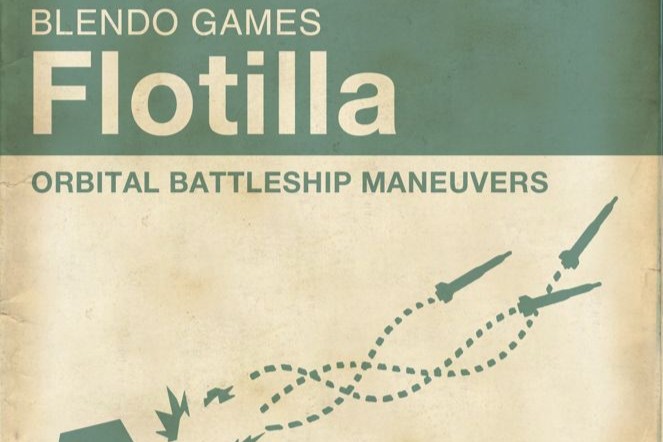
Developed/Published by: Blendo Games Released: 03/25/2010 Completed: 13/07/2025 Completion: Survived an entire run with… caveats.
Well, I didn’t get the Xbox out as I said I wouldn’t in my Gravity Bone essay, but I did decide to play some Flotilla on PC. This worked out in my favour because I almost immediately remembered why I gave up on Flotilla the first time–that I don’t have a fucking clue how to move ships in 3D space–and was then able to abuse a save mod to be able to literally not die in my first or second battle every time. I mean I literally died in the tutorial on my first run!
Flotilla is an interesting one, because it’s a good example of a “nearly there”, a work that makes you think of a huge hit that came later that just nails what it was trying to do. In this case, it’s FTL, which takes the metagame (travelling between nodes in space, experiencing events or battles) but ties it to a much more understandable battle system more inspired by board games like Space Alert and a clear drive towards a conclusion.
In some respects, it’s a shame that Flotilla wasn’t a success, because arguably FTL misses some of the spirit of Flotilla, but in others, it makes total sense. As I said above, the battle system is extremely taxing. Not only does it require the player have a really strong understanding on how to position things in 3D space on a 2D screen, you also have to be able to predict how multiple opponents will themselves move in 3D space, because turns happen simultaneously. And ships are only really vulnerable from above or below, so it’s not even a matter of just trying to make a beeline to enemies and wipe them out–you have to track how they’re oriented and consistently flank them to do any damage.
In my case, once I had worked out how to move my ships (you do x/y movement first, then z, which while not intuitive, does make sense if you can stand to constantly reposition the camera to see what you’re actually doing) I quickly learned I have no knack for prediction whatsoever. Send a ship to flank? It’d just end up miles away from the ship I intended because that ship would move in a way I didn’t expect–or somehow it would end up exposing its belly while flying directly at it. Again: I died on the tutorial.
The mistake Flotilla makes is that it’s designed to be a short, replayable experience–each run is supposed to be, like, a half an hour, as you’re cast as a starship captain with seven months to live–but thinks that makes it ok that you’ll die in the first couple of nodes tens of times because the game is hard. It doesn’t! You just feel like you’re not getting it. You never get to settle in, see the campaign play out a little.
It would be unfair to call the game complicated–the rules are very simple once you understand them. It’s just that the combination of rules, interface and simultaneous movement makes the whole thing deeply frustrating, and it stops you enjoying the metagame, which hints to everything that FTL would do. You get to experience cute events which can pay off in future events or battles, ships “level up”, and you can get useful upgrades for them. You can even expand your fleet with new and bigger ships.
You’ll probably face those bigger ships before you get any yourself though–nothing quite as demoralising as getting further than you ever have and immediately having your ships carved into pieces by a “beam ship” that the tactics now require you keep your distance from (how!!!)
One thing I do like–perhaps counter-intuitively–is that the game doesn’t have a final boss or conclusion that you’re working towards as in FTL. In FTL and other games of this sort–your Cobalt Cores, for example–you have to always be building towards that final battle. If luck doesn’t grant you the build you need or are working towards–your run is pointless. Here the end is: you die, either in battle or from your terminal illness. There is an “endless” mode (added after release) but I like that the idea of the game was just “have fun in space until you die!”
The problem is that I don’t find the battle system fun at all, so I can’t! In the end I just used save backups to play a full run, which of course, was meaningless. But it was nice to have this deadly, upgraded fleet after rescuing some cats and ripping off some hitchhikers before I shuffled off this mortal coil. Felt like I’d done something with my life.
Cats!
It’s that stuff that makes Flotilla so charming, and kind of what kept me battering my head against it so pointlessly. It’s got style. Panache. And I think if you like this type of taxing, 3D space battler, well, this is a step out of the norm and all the better for it. But it’s not for me.
Will I ever play it again? Absolutely never, no. There’s a sequel, Flotilla 2 for VR, and feel like moving ships around literally in 3D space might make it more playable. However…
Final Thought: Flotilla 2 cuts the campaign out completely! Even if I was to get fancy and pick up a Steam Frame or something being unable to rescue cats drops what feels like the unique selling point of the game (for me.) But at the same time, really the battle system is the distinguishing factor, and I don’t actually like it! So I suppose if I want to play a node-based event/battle roguelike-like with funny events, there’s like… six hundred I haven’t played. I can just play one of those.
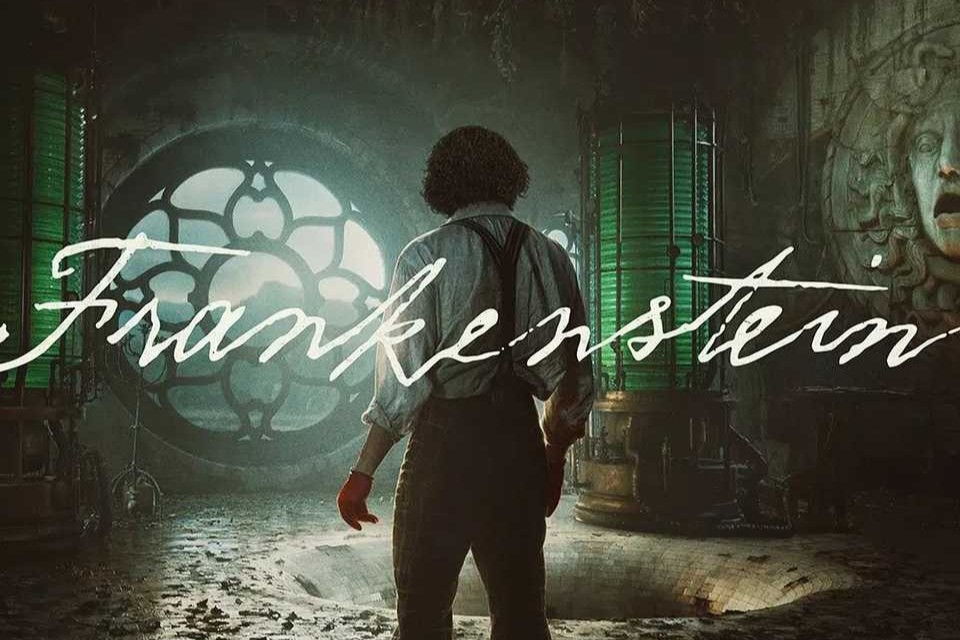
Guillermo del Toro seems like a lovely guy who cares about the craft of cinema, but if it wasn’t clear by now, Frankenstein hammers home once and for all that he has absolutely no sense for story at all. At all!
Even though it’s been adapted so many times before, I’ll give him that Frankenstein is a bit of a weird one to adapt because it has a layered structure to rival Inception, where at one point you’re reading a letter in which a sea captain is explaining the story that Victor Frankenstein told him based on the story that the creature told him. There’s a reason most adaptations don’t bother with this naive storytelling style, and it’s because it’s immediately absurd when a character tells another character their entire life story full of what would (in context) be irrelevant detail, and del Toro doesn’t help himself by picking and choosing when to be faithful to Mary Shelly and when to not. Frankenstein tells his life story to a sea captain? Check. This happens after the creature goes beast mode on the crew like you’re watching a fucking Marvel movie? Uh… check?
There are just so many bizarre and wrong-headed decisions here that it’s hard to know where to start. There’s a lot of waffle in Mary Shelley’s original novel, but Frankenstein at least creates his creature in, like, the fourth chapter. Here, del Toro shuffles all the component parts so he can spend spend literally an hour and a half on a new build-up where Elizabeth is Frankenstein’s brother’s fiance and her father (an invented character, not in the original book) is bankrolling his experiments… for his own nefarious reasons!
Even once the creature shows up, we get more invented scenes where Frankenstein abuses it because [auteur klaxon] del Toro needs to make sure we love the monster. Even though the creature’s already existing story is there to do that!
Del Toro called Frank Darabont’s script for Kenneth Branagh’s adaptation “pretty much perfect”–a version that is far closer to faithful than this, but which is reviled because it’s completely over the top–and considering Darabont has so publicly made a point that Shelley’s original work was “subtle” it’s genuinely hard to understand why del Toro has changed so many things to make them more obvious (I hope you enjoy seeing “Chekhov’s escape flume”) and then thought Oscar Isaac should in turn chew scenery with such gusto and only offer him glasses of milk to wash it down with.1
Look. It’s an adaptation, and del Toro can do what he likes, but I think that ultimately these changes add up to something that at points is so wrong that I’m not sure that del Toro is able to see anything beneath the surface. Del Toro seems determined to make anything that could be subtle unsubtle, anything quiet loud. A character literally tells Frankenstein that (gasp) he is the monster. I hope audiences cheered when that happened.
Maybe it’s just that del Toro falls so in love with the monsters and the set decoration and doing stuff that’s cool in his eyes that he loses sight of honouring the original work. In the original Frankenstein, the creature longs to be accepted but isn’t because of his appearance. He is rejected by Frankenstein, then accepted by the blind patriarch of a family that he hides from while learning from, only to be chased away by the family when they actually see him and are terrified.
Here, instead, we see the creature find the blind father killed by wolves who he then kills in an omg epic fashion before the family find him with the father’s corpse, misunderstanding things and so he has to run off. This is not the same!!!2
It seems like this is all there so [auteur klaxon] it can be clear that the only person who truly sees the monster for who they are is… a beautiful, intelligent, lonely woman. Who could have foreseen this!
I suppose what’s funny about that is the auteur touch doesn’t even really matter, because the whole thing is leading to an ending so unbelievably unearned, so forced that I almost couldn’t believe it. Frankenstein recognises what he means to the creature and they have a meaningful ~father and son~ moment. That doesn’t sound that bad but it plays out only a step below the film ending with them heading up to the ship’s deck to play catch.
Don’t get me wrong, I understand what del Toro is trying to do, but it’s like every instinct he had was wrong, completely blinded by how much he falls in love with his own vision rather than trying to make something that speaks to anyone who isn’t already fully bought into it. His Victor Frankenstein is such a relentless, one-note villain, his creature so over-the-top vicious at points yet infantile and innocent at others, that there’s no ring of truth to it. No meaningful closure. No tragedy.
No tragedy, I guess, other than del Toro believed this to be his dream project, his pinnacle, and then this is what he made.
What is the deal with Oscar Isaac? He’s so good in so many things, but then he shows up in this and things like Moon Knight with absurd, unbalancing energy. Is this what the directors want? If so… why? ↩︎
And while I’m here, and I know this is a personal bugbear, but wolf attacks are historically rare, and it’s so fucking lazy to portray them as insanely dedicated, vicious killers. And it’s especially disgusting to do that so you can show the monster you want to fuck killing them graphically (which would be even worse if it didn’t look so brutally CGI.) You’ve got all this imagination to come up with coffins with face windows and you can’t come up with something better than fucking wolf attacks? ↩︎
This year for me (and perhaps for many others) has very much been the year of the short game, and I’m not complaining. In fact, I really think it’s the direction the industry has to go towards. Sad to say but as excited as I am to play, say, the remasters of Dragon Quest I & II or Final Fantasy Tactics, they’re just getting thrown on the backlog to join the likes of Persona 3 Reload. Whereas if I hear about a game that I can play quickly and get a full experience from I jump at it. This has paid off tremendously sometimes, sometimes not, but it actually doesn’t matter as long I’ve experienced something with an idea and a point of view. My time hasn’t been wasted, when in some other games an play session the length of one of these games could be spent grinding, or cut-scenes, or on nothing very much in particular.
It does make these games a little hard to write about if I’m not actively warning you off of them, because the urge is to just say “well, play it” especially if the feeling is that going into too much detail might spoil the experience. This is a problem that feels a little more immediate than it often does with cinema, where–for whatever reason–it feels a little easier to talk around the work. You can be a bit less direct.
So before I go into too much detail on and Roger, I’d like to say that’s it’s a worthwhile experience–it’s one that I was surprised by and found deeply moving. If you consider yourself open minded and think you’re ok potentially having an ugly cry, I think you should give it a shot and you can come back here later.
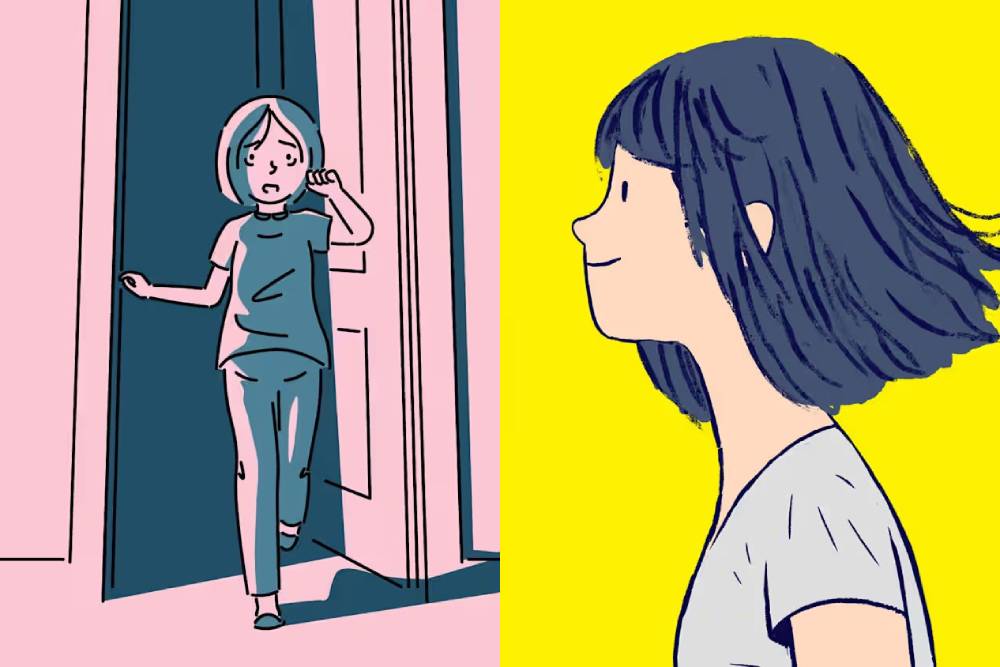
So what’s interesting about and Roger is that it’s a Florence-like. I’m not sure if it’s the first one of these! What’s particularly interesting about and Roger is that it takes the basis of Florence and infuses its interactivity with real meaning in a way that makes the originator seem completely facile.
When discussing Florence, I think it’s important to begin by discussing the conditions that the game was made under, with Mountains’ lead developer Ken Wong accused of being verbally abusive to staff. Wong has apologised, but I don’t think I would have chosen to write about it if it wasn’t, I think, really important contextually. Especially considering and Roger’s lead developer, Yona directly praised it in conversation with Patrick Klepek at Remap:
“I think it’s the most wonderful game I’ve ever played … It taught me the value of storytelling through games.”
Florence tells the complete story of a young woman’s romance with a cellist in a confident and seamless combination of motion comic and mini-game. If we’re following the inspiration chain I have to wonder if the game was particularly inspired by Jenny Jiao Hsia’s and i made sure to hold your head sideways, a “flatgame” and another beautiful short experience that I’d urge you to take some time to play whenever you have a spare moment. I’ve got no particular proof Florence was inspired by flatgames–and you can trace more gentle, linear interactive storytelling to at the very least Brøderbund’s Living Books–but the continuous nature of the experience–outside of the deeply mistaken decision to include too-frequent chapter breaks–calls them to mind. However, I think for many the easier comparison would be a narrative, less-intense Warioware, as each scene features a game mechanic that you have to learn and then perform to progress.
For example: to brush your teeth, you move the joystick back and forth. To form a speech bubble, you click jigsaw pieces together. And so on.
Florence’s issue is that these mechanics are not, in themselves, fun! They are simply roadblocks to the next scene. Rather than Warioware, it’s more like a game almost entirely made up of the way interactions work in Heavy Rain. You know how you have to move the stick to, like, open a door and if you don’t do it right, you fail? And it’s just a waste of everyone’s time? Florence, despite its short running time, can often feel like that.
There’s one interaction that works and that I think is quite clever, it’s the aforementioned “jigsaw pieces as dialogue”. On your first date, each puzzle features a lot of pieces to fit together, but on later dates the pieces become simpler and quicker to fit together. It’s the one place in which function meets form, where, just as in a burgeoning relationship, you find the conversation flowing easier and easier.
(If I was going to go deep on symbolism, however, I’d like to note the fact that the final puzzle features two jigsaw pieces fitting together, the piece with the extrusion representing the male character, and the piece that has the hollow for it to fit representing the female character. It’s a little… I don’t know… ill-considered?)
Florence also suffers because it just doesn’t have that much to say. It’s proof that interactivity isn’t enough. You are better served by reading through No Girlfriend Comics again, which I don’t think pretends to have any gravitas and says something probably more relatable.
Seriously, there’s a part of Florence that’s just this. Actually, not exactly this, you need to click through to see the animation.
The thing that bothers me most about Florence, actually, is that it doesn’t even commit to its story. To get into spoilers, after her breakup, Florence returns to the painting that she always put off. No reason for this is given: she’s shown at the start as having succumbed to routine; and it is implied that the relationship falters for the very same reason. If I’m being completely fair, these moments–big, bad breakups–lead to a lot of change in people’s lives and reorientation on what’s important, but that beat is missing here, and while maybe it’s too neat, that the game misses the chance to offer closure by, for example, having her ex be invited to her art show for a “goodbye and thank you” beat… I know you could say it’s too obvious, but to end with what really amounts to nothing speaks, frankly, of immaturity.
Florence is a pleasant, but forgettable experience. Nice, maybe a little sad, but there’s so much more going on in real people’s lives and relationships than, well, things that can be summed up in little mini games.
Such feelings would make you think that and Roger isn’t going to work at all. After all, you still progress linearly through a series of scenes, you still perform mini-games to move forward.
But and Roger understands something about its position as a video game–that we have expectations of it. We don’t expect it to cheat or lie to us. and Roger begins to do that to us immediately. Buttons you expect to click move. Then new buttons appear. When you finally press one, it doesn’t do what you expect. It’s unsettling, it’s frustrating, and it is deeply intentional.
In and Roger, you play a young girl who wakes in her home and discovers things seem to be… different. Time doesn’t seem to be working right. Performing ordinary actions is complicated. And where she expects to find her father, she finds a stranger, who is acting like everything is normal while doing things that make no sense.
In some respects, the game is a mystery: the player has to work out why these things are happening, and what’s really going on. In other ways, it’s not really a mystery at all. You understand quickly that something is heartbreakingly wrong, and nothing you do or try to do is going to be able to change that.
Above I mentioned the terrible, pointless added interactivity of Heavy Rain. I think everyone who ever plays that thinks: “This is stupid. Who can’t open a door?” and I think in context that’s fair: you’re playing an able-bodied character. People don’t think about or actively perform opening a door. You just do it automatically. Pressing “A” at a door to watch an animation of it happening is more real than “performing” the action. But what if you’re not able-bodied? What if opening a door is hard because you aren’t quite sure where the handle is, moment to moment? What if the action your brainwaves transmits doesn’t line up with what you’re trying to do?
In and Roger, the player is forced to consider that. I think there’s a possibility that the way it does it could be viewed as a gross simplification, and I think it’s important to guard against the idea that by experiencing it you truly “understand” what it means to have a disordered mind or a disabled body. But I reacted to it. I would love to know what advocacy groups think of it, but I do hope that I’m not off-base in thinking they’d approve–even if only as a tool for empathy.
and Roger does have issues. The game is intentionally frustrating, and I do think for some players that could bleed into being actively angering–there’s a few mini-games where your actions are obscure or obscured, and unlike Florence, some players may actually get stuck (interestingly, for me these were not games where the game was “messing” with me, but in the middle section that cleverly plays more straightforward.)
I think the game also makes maybe one too many big narrative swings towards the end. I think, ironically, one revelation is made to increase our empathy, make us more aware of the cost these things have on more than just the central character, but it’s disturbing and unbalances things. Earlier moments of frustration work well enough.
But at the end, and Roger destroyed me. Surprisingly so–my reaction felt like it came out of nowhere. I’ve been touched by, well, I’d say a version of what this game is about, and the game’s ultimate message: that all we can do is love; that it’s not a weakness but a strength… it hits, because it’s real. The issues that and Roger deals with is not as simple as what Florence deals with, but it’s something that at some point in your life you realise you’re going to deal with–a lot. And really love is what’s going to keep you going, no matter how hard it is.
It’s easy to roll your eyes at that, and I think there are many people who are going to bounce off of this if they don’t connect with what it’s doing or what it’s about. And many might chafe at what I assume will be the most controversial thing about and Roger–that it comes from a clearly Christian lens.
I’m an avowed agnostic, and I will say that this aspect didn’t bother me at all, because it doesn’t feel like the game proselytises at any point. In fact, I think it probably says something more about my expectations that when a character mentions praying quite naturally, my eyebrows raise in surprise.
I’ll admit, in media now we’ve come to expect “overt” reference to Christianity to say something about the character, to feature in their arc, rather than being a background detail. And this game does end with a quote from 1 Corinthians. But the game isn’t about Christianity. It’s simply one a fact of the character’s lives–and a fact of the creator Yona’s life. and Roger is richer for it, in my opinion, though I do think your mileage may vary.
But all things considered? and Roger is very good. It is thoughtful in its use of mechanics and representation of themes, while also having a strong vision behind it. And I think it just existing makes the world a slightly nicer, more empathetic place. There’s not a lot of things you can say that about.
Will I ever play them again? Although I think Florence is important to understand and Roger from a design perspective, I don’t think it matters a jot if you’ve played it before playing and Roger. In fact, I’d say you really don’t need to bother with Florence in the first place. As for and Roger? I’m not sure I could go through it again, emotionally, but I’m glad I did it once.
Final Thought: The one thing that’s a huge clanger with and Roger, and I do have to make a point of this, is the inclusion of achievements. I think it just goes against everything the game should be making you feel, and your immersion in it. If you can turn even the notifications off, please do. You just don’t need them (and no game does, in my opinion, but that’s a different story entirely.)

 Unlock with Patreon